
I did not arrive in Hakodate expecting museums to become one of the surprises of our trip. I’m not somebody who automatically searches for every museum in a city, and with only a few days in Hakodate, Audrey and I were far more interested in wandering neighbourhoods, eating our way through the city, exploring the waterfront and figuring out how everything fit together.
Then Hakodate kept putting museums in front of us.
We stumbled across a former railway ferry while wandering around the harbour and went aboard on impulse. We explored an ornate old public hall in Motomachi. When the weather turned rainy, we ducked into a museum devoted to the peoples of the north and later found ourselves inside a tiny fishing museum where a boat simulator rocked Audrey around enough to make three minutes feel perfectly sufficient.
What surprised me most was how little overlap there was between them. These were not four variations of glass cases, plaques and the slow museum shuffle. They were wildly different experiences, which makes a simple ranking less useful than it sounds.
If you only want the quick version, Seikan Ferry Memorial Ship “Mashu-maru” was my personal favourite of the museums we visited. We had never heard of it, it was not on our itinerary, and the whole visit happened because we saw a giant ship and got curious. For most first-time visitors, though, I think Old Public Hall of Hakodate Ward is probably the easiest museum-style attraction to recommend broadly, especially if Motomachi is already part of your day.
The Hakodate City Museum of Northern Peoples is the stronger choice if northern cultures and material history genuinely interest you, while the Hakodate City Northern Pacific Fishery’s Document Museum—mercifully easier to think of as the Hokuyo Museum once we get past the formal introduction—is the quirky specialist option.
Here is how I would separate the four we actually visited:
| Museum or attraction | Current adult admission | Area | Best fit | Main consideration |
|---|---|---|---|---|
| Seikan Ferry Memorial Ship “Mashu-maru” | ¥500 | Hakodate Station / waterfront | Ships, transport history, unusual museum spaces | Preserved ship with stairs and no elevator |
| Old Public Hall of Hakodate Ward | ¥300 | Motomachi | First-time visitors, architecture, historic interiors | Historic building rather than a conventional museum |
| Hakodate City Museum of Northern Peoples | ¥300 | Suehirocho / western Hakodate | Northern cultures, material history | More specialist subject matter |
| Hakodate City Northern Pacific Fishery’s Document Museum | ¥100 | Goryokaku | Fishing history, quirky museums, simulator | Less convenient if Goryokaku is not already in your plans |
Museum Ship Mashu-maru was our completely unplanned favourite
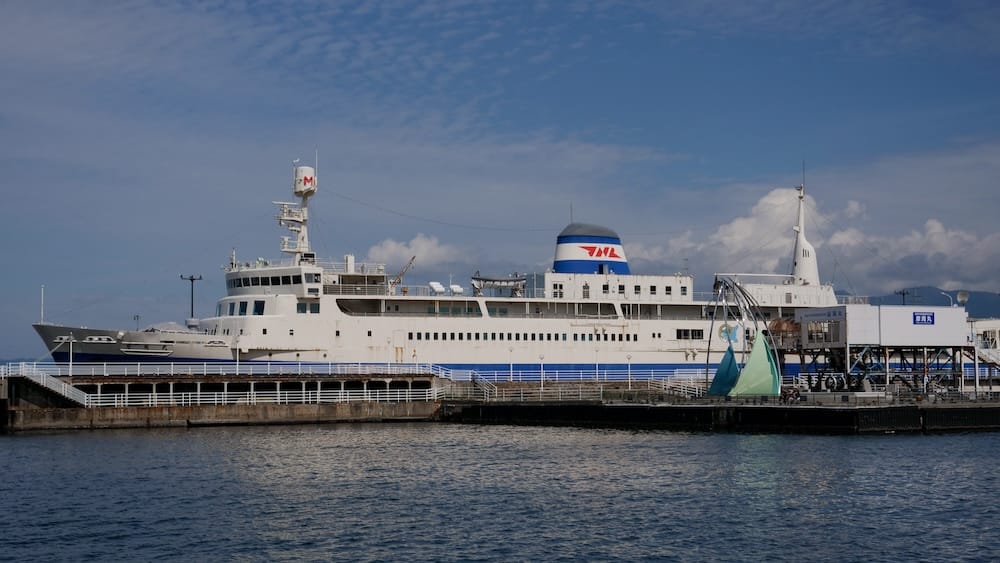
Mashu-maru benefits from having had absolutely no expectations to overcome. Audrey and I had been around Hakodate Morning Market and were wandering through the harbour area without much of a plan when we noticed an enormous ship moored nearby. It was not sitting on some carefully prepared itinerary. Quite frankly, I had never heard of it.
We basically followed the universal travel rule of seeing something large and wondering what was inside.
The ship turned out to be Seikan Ferry Memorial Ship “Mashu-maru,” a preserved railway ferry from the transport system that once connected Hokkaido with Japan’s main island before the Seikan Tunnel changed how people and freight moved across the strait. We paid admission and went aboard, and almost immediately I understood why spontaneous travel discoveries can be so much more satisfying than attractions you have mentally rehearsed before arriving.
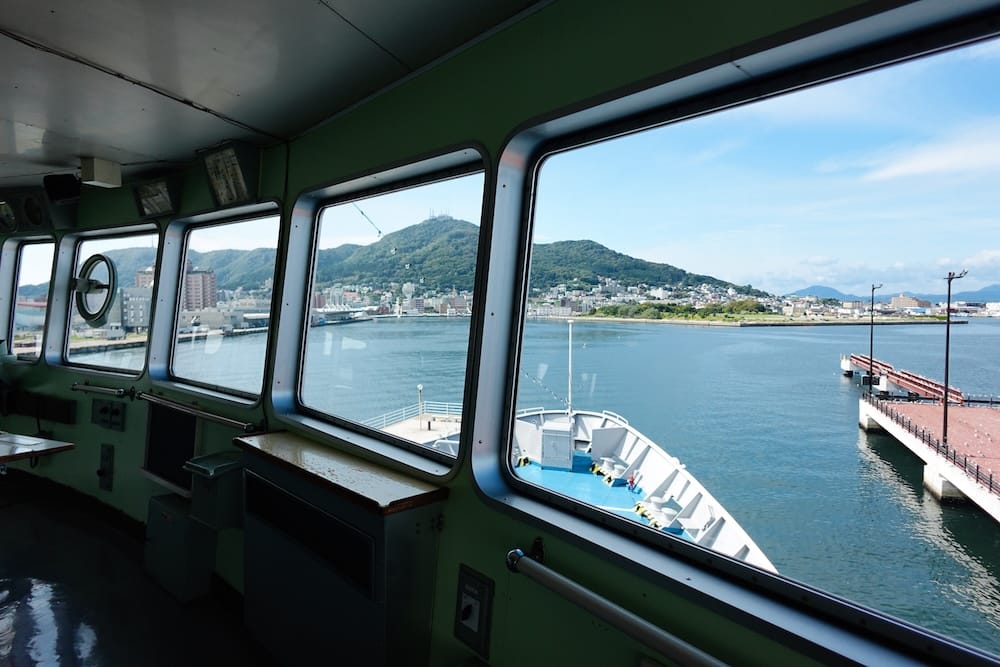
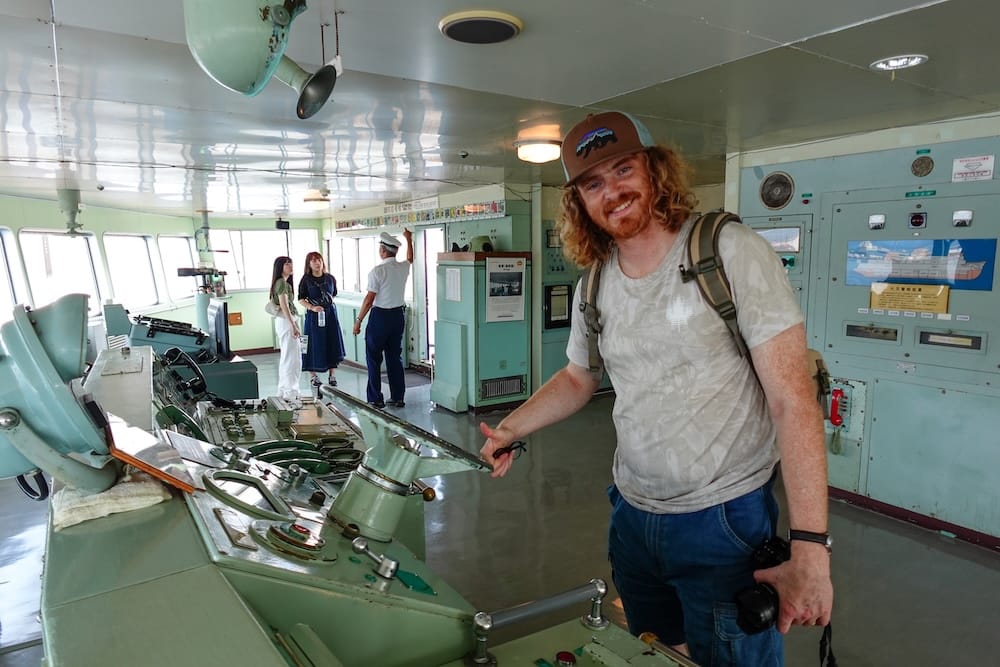
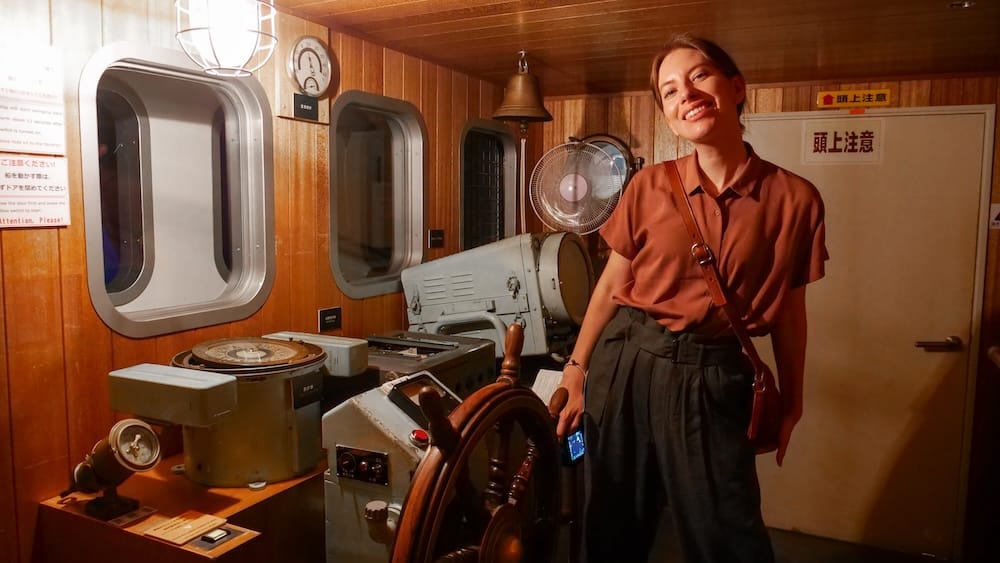
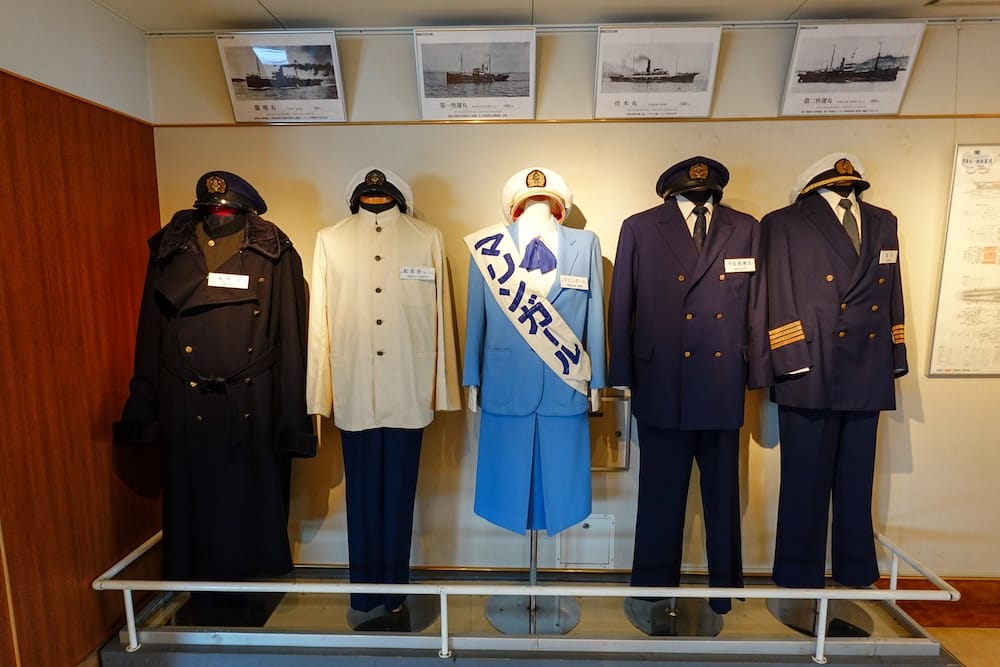
Mashu-maru did not feel like a museum where we were being funnelled past objects from a respectful distance. We could move through the ship, get close to old equipment and technology, explore former passenger spaces and interact with parts of the experience. During our visit we were pressing buttons and poking around enough that the ship itself became the exhibit rather than merely the building containing one.
That physical quality is a big part of why I liked it so much. The preserved bridge and radio room remain part of the current experience, while some working areas that cannot be entered directly are shown in other ways. I would not assume every switch, control or room is accessible exactly as it was during our visit, but Mashu-maru still offers much more of a walk-through-a-real-ship feeling than a conventional gallery visit.
It is also ridiculously easy to add if you are already around Hakodate Station or the waterfront. Mashu-maru is roughly a five-minute walk from the station, so the logistical commitment is tiny compared with attractions that require crossing the city.
Current adult admission is ¥500. The larger practical consideration is the ship itself: there is no elevator inside, and outdoor deck access can be restricted by wind, snow or ice. If stairs or mobility are an issue, that matters far more than whether the ticket costs a few hundred yen.
For me, though, Mashu-maru is the one I remember most fondly. Not because I can prove it is the best museum in Hakodate—I have not visited every museum in the city—but because we knew nothing about it, expected nothing from it and walked out delighted that we had followed our curiosity onto the ship.
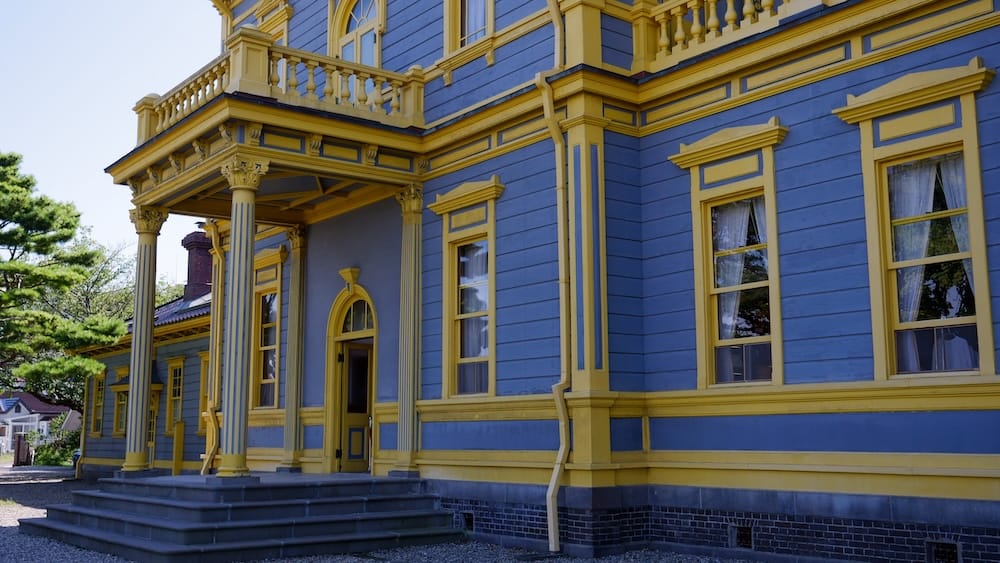
Old Public Hall of Hakodate Ward is the easiest one to recommend broadly
If somebody told me they were visiting Hakodate for the first time, had space for one museum-style attraction and did not have a particularly strong niche interest, I would probably point them toward Old Public Hall of Hakodate Ward.
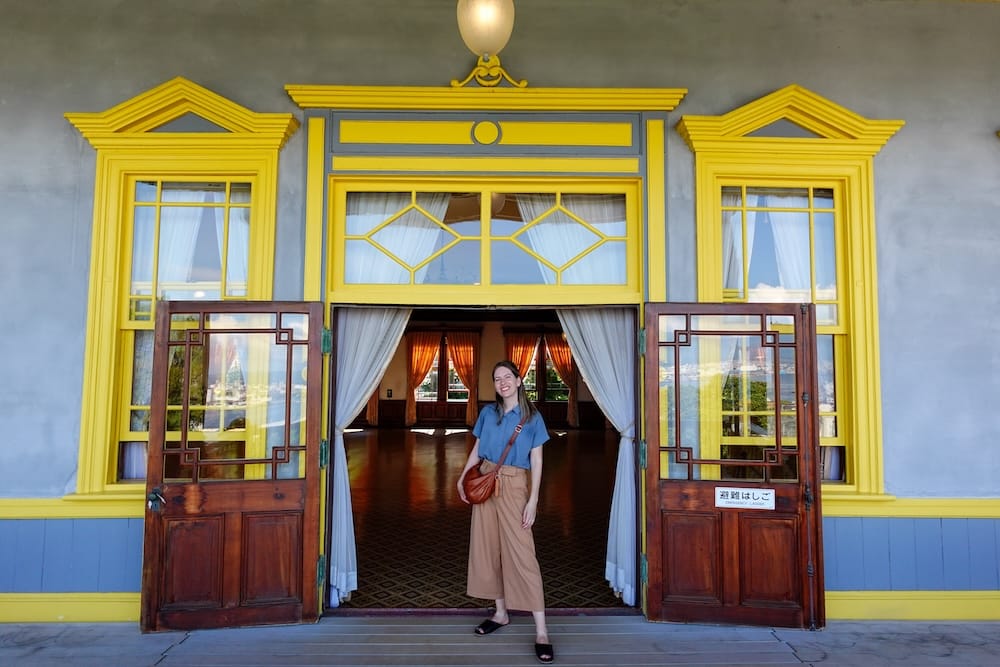
Calling it a museum stretches the category slightly. It is really a preserved historic building rather than a collection-led museum, but from a visitor’s perspective it performs much the same job: you pay admission, step into an important historic interior and learn something about Hakodate by moving through the place itself.
Audrey and I visited while exploring Motomachi. We bought our tickets, took off our shoes, put on slippers and wandered through the rooms of this blue-and-yellow Western-style building overlooking the harbour.
The building is the experience.
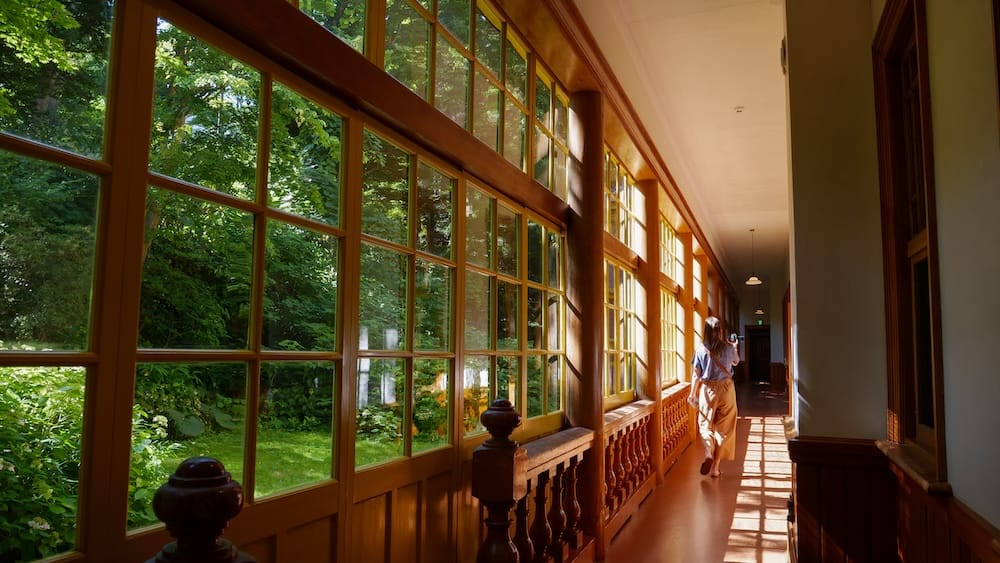
Completed in 1910, the Public Hall is a nationally designated Important Cultural Property, and it makes particular sense in Motomachi because the surrounding neighbourhood already tells the story of Hakodate through architecture. Churches, slopes, Western-influenced buildings and harbour views all sit within the same part of the city, so the Public Hall feels like a natural continuation of a Motomachi walk rather than something you have to construct a separate excursion around.
That convenience is one reason I think it works so well for first-time visitors. You do not need to care deeply about railway ferries, fishing history or a particular cultural subject before walking through the door. If you enjoy architecture, historic interiors, old buildings or simply seeing somewhere visually distinctive, there is a good chance the Public Hall will make sense to you.
Current adult admission is ¥300, and it is around a seven-minute walk from Suehirocho tram stop. There is also a historical costume experience available separately. We did not do it; we simply explored the building, which was more than enough for us.
The old building does come with old-building realities. Shoes come off, slippers go on, there are stairs inside, and strollers are not used through the interior. Those details did not create any problem for us, but they are worth knowing if mobility or family logistics are part of your decision.
If you would rather put the Public Hall into the wider context of Motomachi instead of exploring the neighbourhood completely on your own, one bookable option is this guided Motomachi, Red Brick Warehouses and scenic walking tour. It passes the Public Hall from the outside rather than replacing the interior visit. We explored Motomachi independently, so I am presenting it as an alternative rather than a tour we personally took.
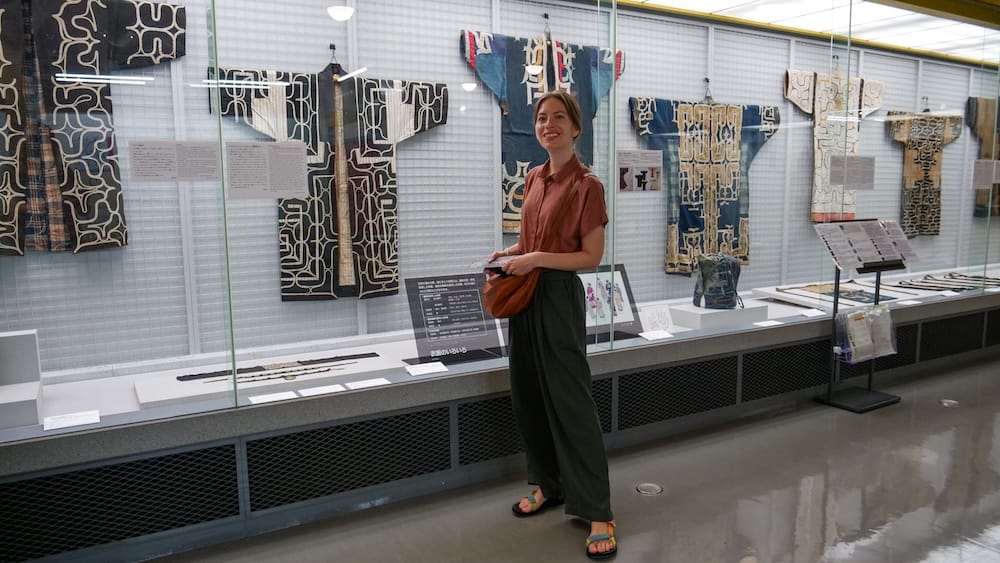
Hakodate City Museum of Northern Peoples changed my expectations
Our visit to the Hakodate City Museum of Northern Peoples came on a rainy day, when indoor attractions suddenly started looking much more appealing than another wet walk through the city.
I went in expecting something relatively narrow and heavily focused on Hokkaido. Instead, the museum opened up a much broader world than I had anticipated, with collections connected to Ainu and other northern peoples and material life across cold northern regions.
What grabbed my attention was not one single exhibit so much as the accumulated picture of people adapting to environments where cold was not an inconvenience but a basic condition of life. Clothing, tools, fishing, hunting, food and practical survival all connected in a way that made the museum feel much more immediate than I had expected.
Coming from Canada probably made some of that resonate with me. Audrey and I know what winter feels like, but our version involves insulated houses, heating systems, supermarkets and the enormous cheat code of modern technology. Looking at how people lived in severe northern climates without those conveniences gave me a different appreciation for the material on display.
At one point during the visit, I admitted that I am not much of a museum guy, which made the fact that I was having such a good time slightly inconvenient for my own argument.
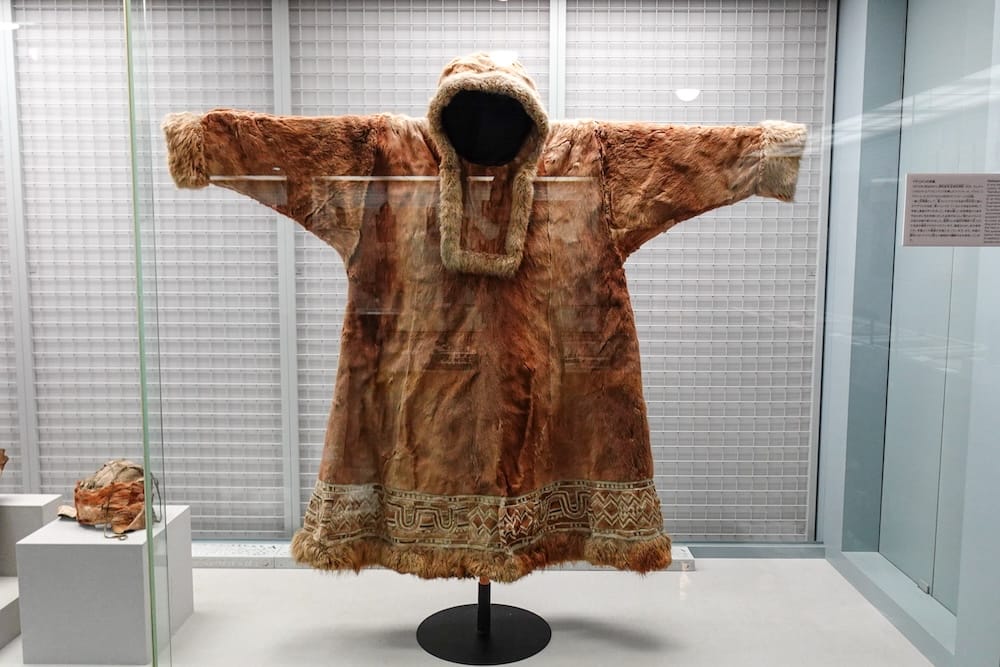
That is still one of the strongest reasons I would recommend this museum.
Current adult admission is ¥300, and it is extremely easy to reach, sitting about a one-minute walk from Suehirocho tram stop. It also participates in a common-ticket system with several nearby cultural attractions, including Old Public Hall and the Hakodate City Museum of Literature. Current adult combination prices are ¥500 for two participating facilities, ¥720 for three and ¥840 for four.
That makes the museum especially practical if you are already building a cultural afternoon around Suehirocho and Motomachi. I would not choose it simply because a bundle exists, though. This is a museum whose value rises sharply if its subject already interests you.
If you want more historical context rather than navigating the city entirely on your own, a customizable private Hakodate tour with a licensed guide lists the Museum of Northern Peoples among the stops you can choose. We did not take this tour; our museum visit was independent.
That is the main difference between this place and Old Public Hall. I can recommend the Public Hall quite comfortably without knowing much about somebody’s interests. The Museum of Northern Peoples becomes a much stronger choice when northern cultures, material history and adaptation to harsh environments already spark your curiosity.
The Hokuyo Museum is the quirky specialist choice
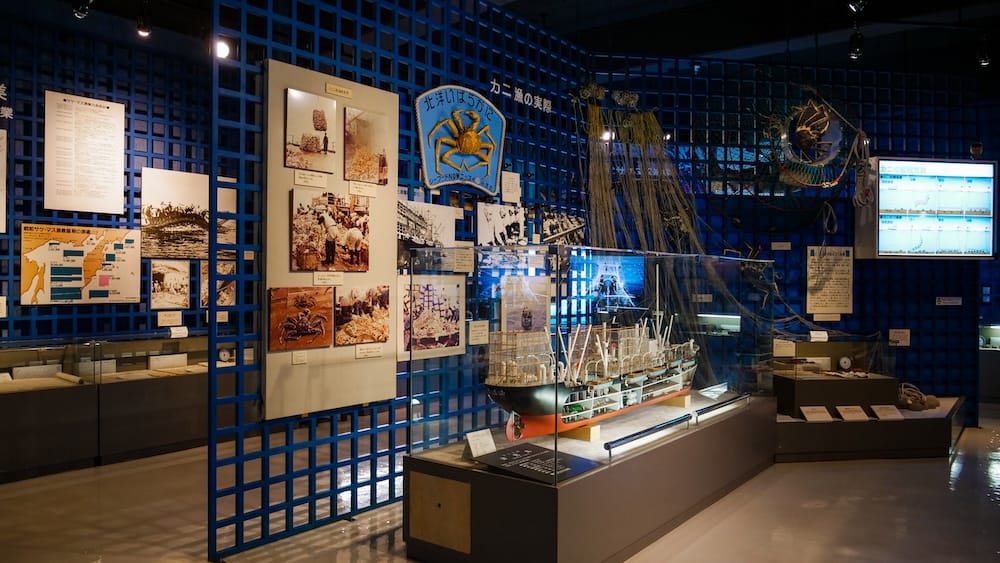
The formal English name—Hakodate City Northern Pacific Fishery’s Document Museum—is not exactly something I expect most travellers to repeat five times fast. For the rest of this article, Hokuyo Museum will do just fine.
We visited during the same rainy stretch of our Hakodate trip, when Audrey and I had started leaning into indoor attractions. This museum is smaller and more specialized than the others, focusing on Hakodate’s relationship with northern Pacific fishing.
And then there is the fishing-boat simulator.
The simulator recreates the movement of a fishing vessel in rough conditions, and during our visit Audrey spent about three minutes being rocked back and forth before emerging dizzy and extremely grateful that the experience had not lasted three hours.
It was funny because we were safely inside a museum with an obvious stop time. The actual work being represented was something else entirely. Three minutes of artificial rocking was enough to give us a tiny hint of how unpleasant rough seas can feel without requiring either of us to reconsider our career choices at any serious level.
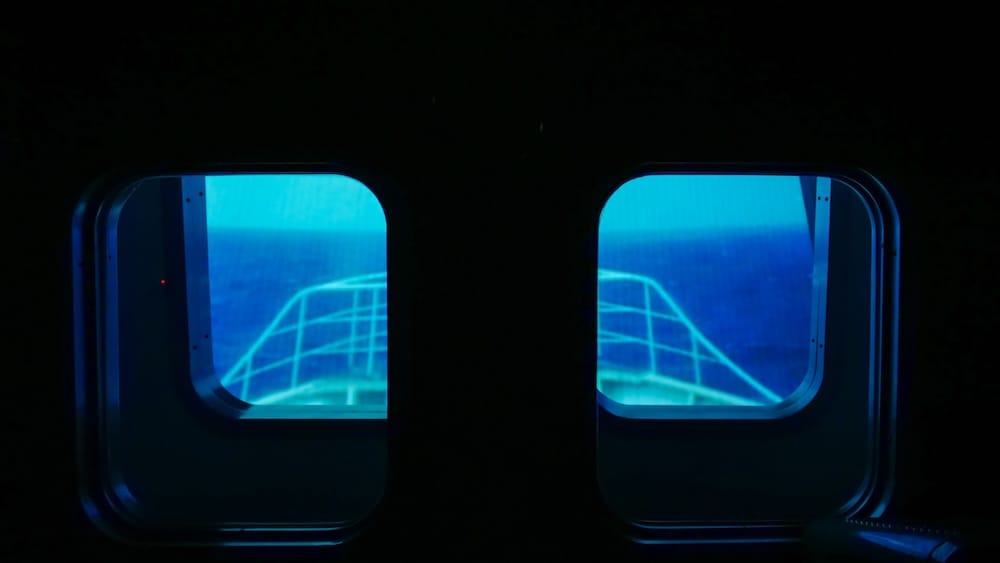
The simulator is still part of the museum today, which is important because it remains the feature that most clearly separates Hokuyo from a conventional historical display.
Adult admission is currently only ¥100. At that price, I would spend less time debating whether it provides enough monetary value and more time deciding whether it fits geographically into your trip.
The museum is in the Goryokaku area, around a ten-minute walk from Goryokaku-koen-mae. Coming from Hakodate Station by tram and then walking takes roughly 30 minutes.
If you are already visiting Goryokaku Park and Tower, that changes the calculation completely. A ¥100 fishing museum with an unusual simulator becomes a very easy little addition. If your whole day is centred around Hakodate Station, the waterfront and Motomachi, I would not cross the city just because I happened to enjoy it.
There are limits to how obedient anybody should be to a travel blog.
11:10 – Old Public Hall of Hakodate Ward
13:11 – Hakodate City Museum of Northern Peoples
16:34 – Hakodate-shi Hokuyo Museum
Other Hakodate museums worth considering
The four places above are the museums and museum-style attractions we actually experienced, but they are not the entire museum landscape in Hakodate. There are a few other options worth knowing about, especially if your interests differ from ours.
We did not visit the following museums personally, so I would treat these as researched alternatives rather than firsthand recommendations.
Hakodate City Museum is probably the most straightforward option if what you want is a conventional city museum with a broad scope. Its collections cover archaeology, Hakodate history, art, folklore and natural sciences. Regular adult admission is currently ¥100, although special exhibitions can raise that to ¥300. The museum sits in Hakodate Park, about a seven-minute walk from Aoyagicho tram stop.
Hakodate Museum of Art, Hokkaido is the obvious alternative for travellers whose main interest is art. It is in the Goryokaku area, close enough to the Hokuyo Museum that the two can make sense geographically on the same outing. The important catch is that its exhibition calendar matters: the museum closes between some exhibitions as well as on scheduled closure days, so I would check what is actually showing before making a special trip.
Hakodate City Museum of Literature focuses on writers connected with Hakodate, with manuscripts, works and personal material. Current adult admission is ¥300, and it is part of the same combination-ticket system as Old Public Hall and the Museum of Northern Peoples. If Japanese literature is genuinely one of your interests, the location makes it an easy addition to a cultural day around western Hakodate. If not, I would not add it simply to increase your museum count.
The most geographically different option is Hakodate Jomon Culture Center in Minamikayabe. It focuses on Jomon archaeology and includes the Chuku-dogu hollow clay figure, designated a National Treasure. Adult admission is currently ¥300, which sounds like a tiny commitment until you look at the transport.
From Hakodate Station, getting there takes roughly 80 minutes by bus plus about ten minutes on foot, compared with around 50 minutes by car.
That changes the nature of the visit completely. The Jomon Culture Center may be administratively in Hakodate, but this is not a quick museum stop that you casually slot between lunch and the waterfront. If Jomon archaeology is a major interest, the journey could be entirely worthwhile. On a two- or three-day first visit, however, I would treat it as a deliberate outer-Hakodate excursion.
If the distance is the main thing putting you off, there is also a half-day Jomon heritage tour from Hakodate that includes the Jomon Culture Center along with other heritage stops. We did not take this tour or visit the center ourselves, so I would treat it as a transport-and-planning option rather than a personal recommendation.
Which museum fits your Hakodate itinerary?
The more useful way to choose among Hakodate’s museums is not to rank them from one to eight and blindly follow the order. Geography matters too much for that.
If you are around Hakodate Station, Morning Market or the waterfront, Mashu-maru is the obvious low-friction option. It is only about five minutes from the station, which is exactly why we were able to discover it spontaneously instead of planning our day around it.
For Motomachi and western Hakodate, Old Public Hall and the Museum of Northern Peoples are much more natural fits. They sit within the same broad sightseeing zone, and the combination-ticket system can make visiting multiple cultural attractions there more economical if museums are genuinely a priority for you.
Around Goryokaku, Hokuyo becomes much easier to justify, particularly at ¥100, and the Hakodate Museum of Art is another nearby possibility when exhibitions are running. That pairing makes considerably more sense than zigzagging across Hakodate purely because somebody ranked a museum higher online.
If you have not booked your accommodation yet, this is one of those cases where your base can genuinely change which museums are easiest to visit. You can compare hotels near Hakodate Station for the waterfront side of the city, compare accommodation near Old Public Hall and Motomachi, or see hotels near Hakodate Goryokaku. I would choose a base for the overall trip rather than one museum alone, but the difference in geography is real.
Then there is the Jomon Culture Center, which belongs in its own mental category. The ticket is inexpensive; the travel time is not. If you decide to go, make it because the subject is important enough to justify the journey.
That is the real pattern I would use when planning museums in Hakodate: start with what interests you, then look at where you will already be.
Are Hakodate’s museums worth prioritizing?
For me, yes—but I would be selective.
I came to Hakodate without any intention of turning the trip into a museum marathon, yet we kept finding places that were much more engaging than I expected. Mashu-maru became one of my favourite spontaneous discoveries in the city. The Museum of Northern Peoples held my attention despite my generally lukewarm museum instincts. Hokuyo managed to make fishing history memorable enough that Audrey got seasick without ever leaving dry land, while Old Public Hall gave us a completely different experience again through architecture and the physical atmosphere of an old building.
That variety is what changed my opinion.
If you only have time for one museum-style attraction and you want the choice I think works for the widest range of first-time visitors, I would choose Old Public Hall of Hakodate Ward.
If you are asking which one I enjoyed most, Mashu-maru was my favourite.
And if either northern cultures or fishing history genuinely interests you, I would not think of the Museum of Northern Peoples or Hokuyo as backup choices. They simply answer different interests.
You do not need to collect Hakodate museums like stamps. Pick the one whose subject, location and style actually fit your trip, and give yourself enough time to enjoy it.
Frequently Asked Questions
Which Hakodate museum would I choose if I only had time for one?
For the widest range of first-time visitors, I would choose Old Public Hall of Hakodate Ward, especially if Motomachi is already part of your day. My personal favourite, however, was Museum Ship Mashu-maru.
Which museum was my personal favourite in Hakodate?
Mashu-maru was my favourite of the museums we visited. Audrey and I had never heard of it, found the preserved railway ferry while wandering around the waterfront and went aboard completely spontaneously.
Which Hakodate museum is cheapest among the four we visited?
The Hokuyo Museum, formally the Hakodate City Northern Pacific Fishery’s Document Museum, currently costs ¥100 for adults. Its fishing-boat simulator was also the feature we remembered most from our visit.
Which museum is easiest to visit near Hakodate Station?
Mashu-maru is the easiest fit around Hakodate Station and the waterfront because it is roughly a five-minute walk from the station. That low-friction location is part of how we discovered it without planning the visit beforehand.
Which museums fit best with sightseeing in Motomachi?
Old Public Hall of Hakodate Ward and the Hakodate City Museum of Northern Peoples both fit naturally into western Hakodate sightseeing. The Museum of Northern Peoples is about a one-minute walk from Suehirocho tram stop, while Old Public Hall is around seven minutes away.
Did we personally visit every museum mentioned in this guide?
No. We personally visited Mashu-maru, Old Public Hall of Hakodate Ward, the Hakodate City Museum of Northern Peoples and the Hokuyo Museum. Hakodate City Museum, Hakodate Museum of Art, Hakodate City Museum of Literature and Hakodate Jomon Culture Center are additional researched options rather than firsthand reviews.
This guide is also available in Spanish. [Leé la versión en castellano: Mejores museos de Hakodate: ¿cuáles valen tu tiempo?]
This article contains affiliate links. If you book through one of these links, I may earn a commission at no extra cost to you.