
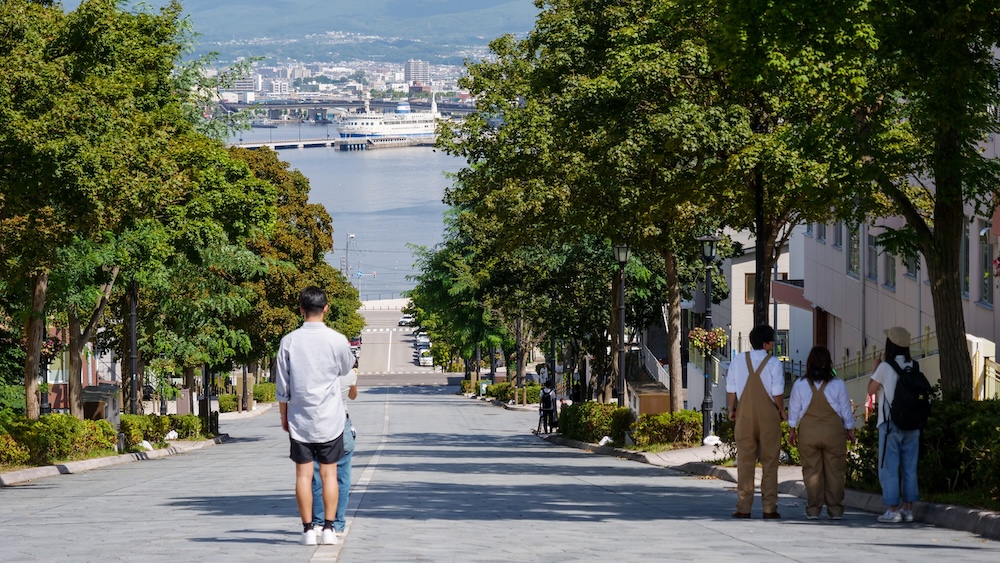
Hakodate has some seriously steep streets, but Hachimanzaka is one of the most famous. It’s also one of the most photogenic, with a beautiful view looking straight downhill toward the harbour. Of course, if you’re approaching from the waterfront, you’re going to have to earn that view with a bit of uphill walking.
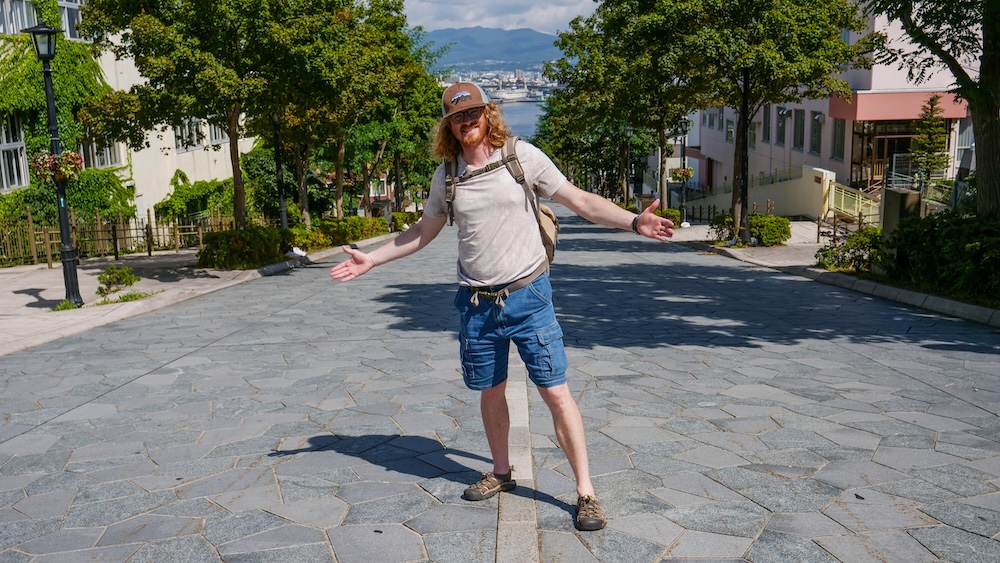
Audrey and I tackled Hachimanzaka on a hot and humid day while exploring western Hakodate. We’d already been doing plenty of sightseeing, and the hill wasn’t exactly what our legs were hoping for. Nevertheless, we climbed the whole thing, and I’m glad we did.
This was actually our first elevated viewpoint in Hakodate, before we visited Mt. Hakodate or Goryokaku Tower. Looking back, it was one of those little stops that helped us understand the city rather than simply check off another attraction.
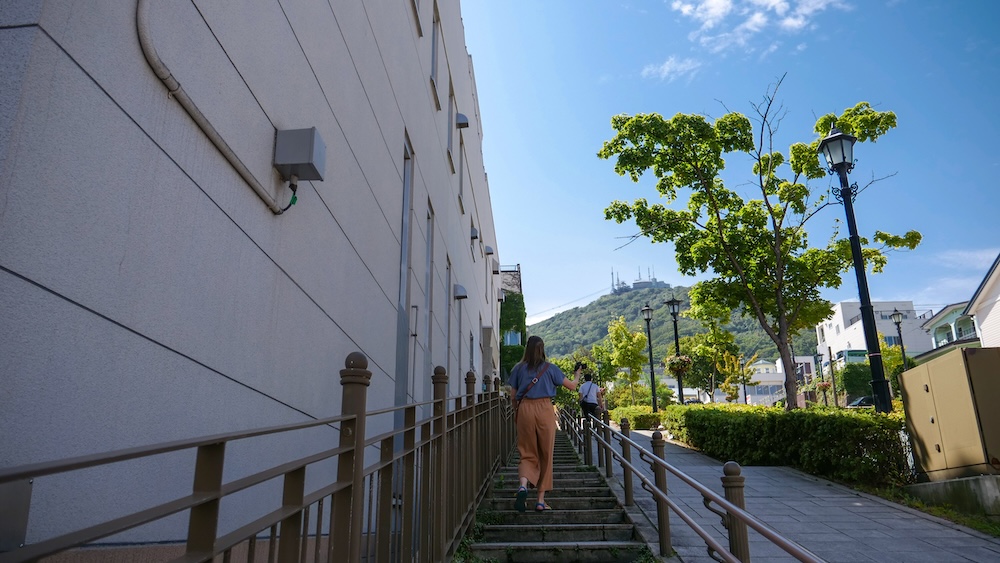
Climbing Hachimanzaka: How Steep Is It Really?
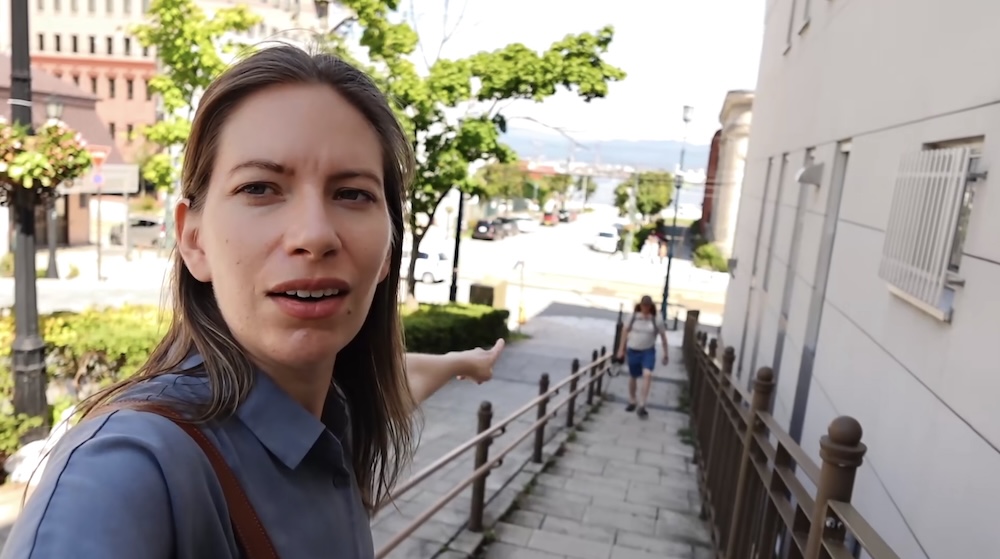
The first thing to know is that Hachimanzaka is a proper hill. It’s roughly 270 metres long, with pedestrian steps and handrails along the slope. An unhurried ascent is estimated at around seven or eight minutes, although that will depend on your fitness, the weather and how often you stop to catch your breath.
When we arrived, we could see the street climbing ahead of us, and we knew we’d be getting a workout. What made things particularly interesting was the weather. It was hot, humid, and we’d already spent a fair amount of time wandering around Hakodate.
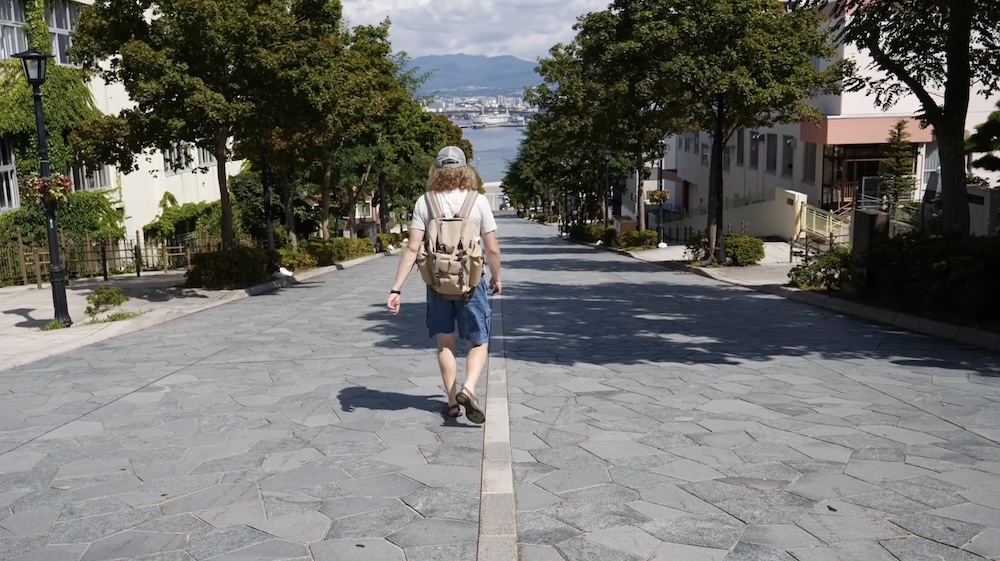
I remember us joking that we’d become Rocky Mountain people who weren’t quite accustomed to this sort of heat anymore. Apparently, give us cool mountain air and we’re happy. Throw in some humidity and suddenly climbing a city street feels like a much bigger undertaking. LOL.
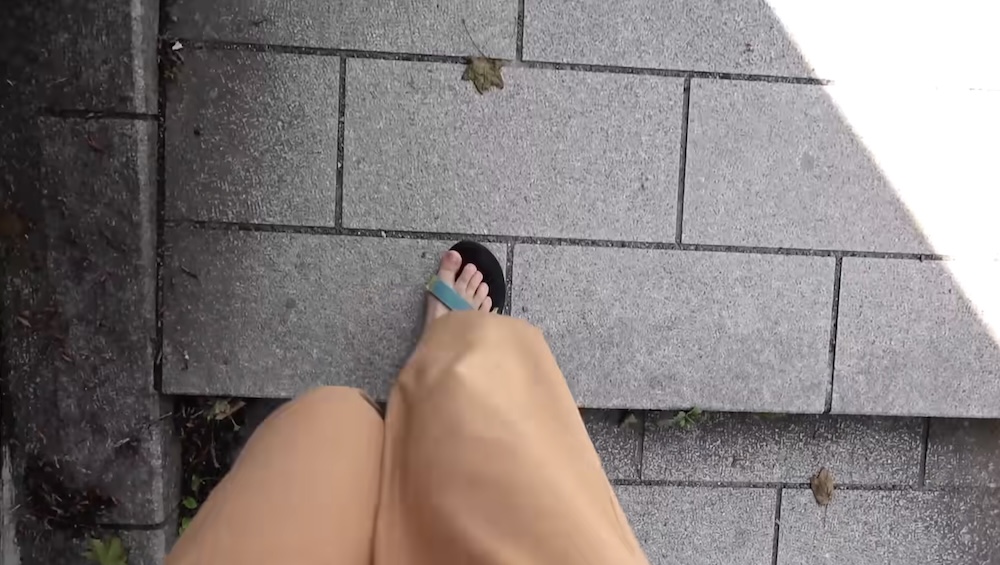
We pushed on and completed the entire ascent. I wouldn’t describe Hachimanzaka as an especially difficult climb for somebody comfortable walking uphill, but there’s enough of an incline that you’ll notice it, especially if you’ve already been sightseeing for several hours.
My advice is to take your time, wear comfortable shoes and consider the weather. A short uphill walk on a cool day is a rather different proposition from tackling the same slope when you’re already hot and tired.
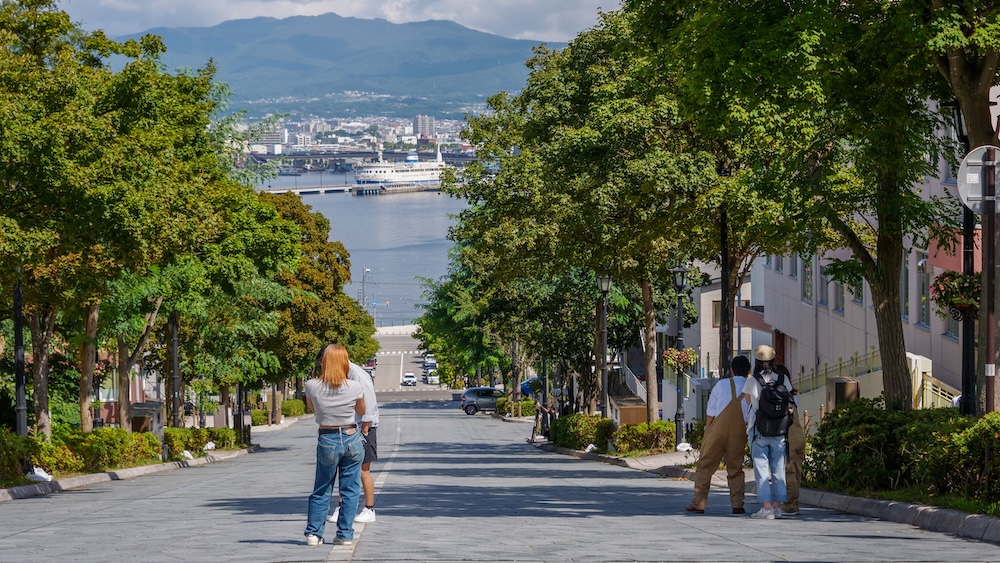
The Harbour View That Made Hachimanzaka Worthwhile
From the upper section of Hachimanzaka, you’re rewarded with one of Hakodate’s most distinctive views. The street runs downhill toward the harbour, with trees and buildings framing the scene and the waterfront visible in the distance. You can also spot the historic Mashu-maru railway ferry down by the water.
I loved the whole composition. The sloping street, architecture, greenery and harbour all came together beautifully, and it’s easy to understand why this has become one of Hakodate’s best-known photography locations. But what really stuck with me was how the view helped the city make sense.
Up until that point, we’d mostly been exploring Hakodate at street level. We’d wandered along the waterfront, visited the Kanemori Red Brick Warehouses and explored different parts of the city without getting much of a sense of how everything connected. Standing above Hachimanzaka was the first time I could really appreciate that relationship between the harbour and the surrounding streets.
We would later enjoy much more expansive views from Mt. Hakodate and a completely different perspective from Goryokaku Tower. Those are fantastic attractions in their own right, but Hachimanzaka had the advantage of being our first elevated viewpoint. And after sweating our way uphill, the view felt particularly rewarding!
How to Visit Hachimanzaka Without Exhausting Yourself
Hachimanzaka is located in western Hakodate, in the historic Motomachi area. It’s easy to include while exploring this part of the city, especially if you’re already visiting the waterfront or nearby churches.
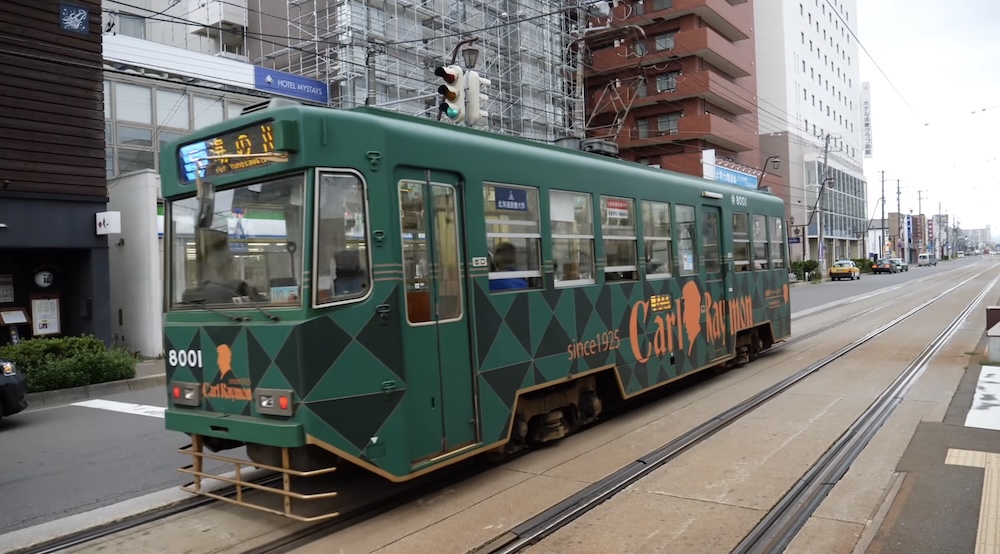
If you’re using Hakodate’s tram network, Suehirocho on Line 5 is approximately five minutes’ walk from Hachimanzaka. Jujigai is another convenient option, served by Lines 2 and 5, with a walk of approximately six minutes to the slope. Just remember that those estimates get you to the attraction, not necessarily all the way up to the upper viewpoint.
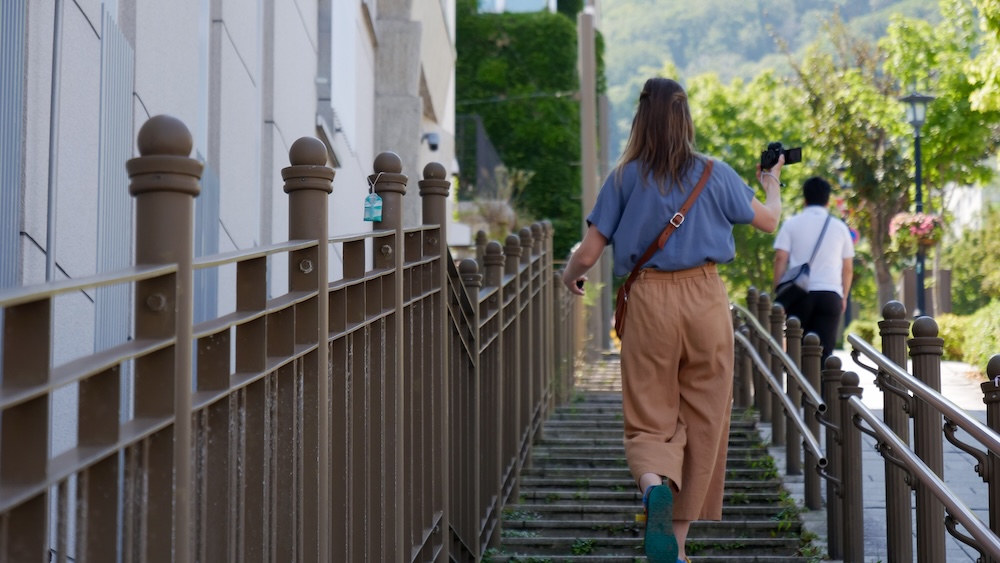
Here’s something worth knowing: you don’t actually have to climb Hachimanzaka from the bottom to enjoy the famous harbour view. The main viewing area is near the upper end of the street, around Nishi Koko Mae. If you’re already wandering around upper Motomachi, you can approach from that direction rather than descending to the waterfront and climbing all the way back up.
That doesn’t mean you’ll avoid every hill. Motomachi is full of slopes, and I wouldn’t describe an alternative approach as a guaranteed flat or wheelchair-accessible route. But if you’re tired, travelling in hot weather or simply don’t enjoy steep climbs, it makes sense to consider where you’re approaching from.
I’d allow roughly 10–20 minutes to experience Hachimanzaka itself, depending on whether you’re climbing and how long you spend admiring the view. That doesn’t include the journey there or additional sightseeing in Motomachi, but you certainly don’t need to turn this one street into a major expedition. There’s also no admission fee, since Hachimanzaka is a public street rather than a ticketed attraction.
Taking Photos at Hachimanzaka: One Important Warning
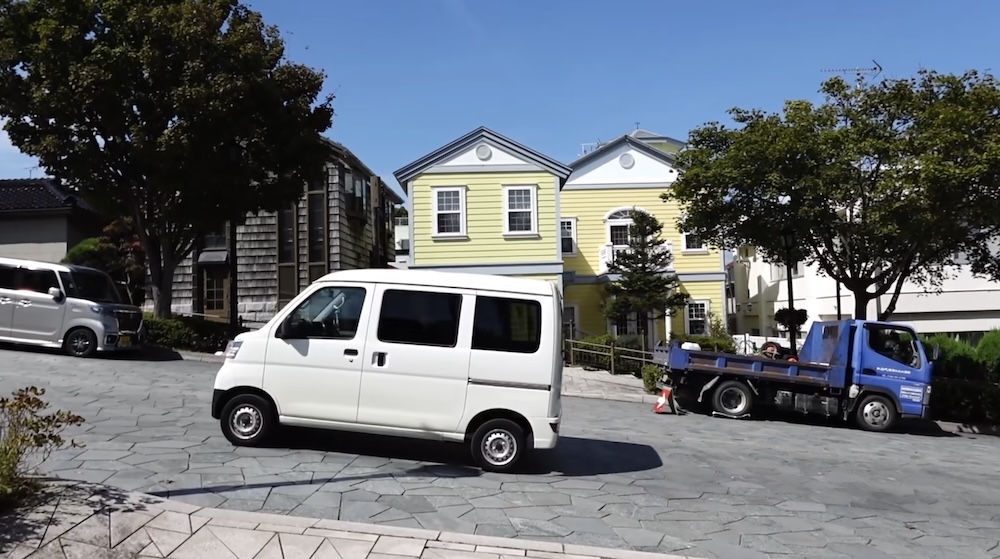
If you’ve seen photographs of Hachimanzaka, you’ll probably recognize that lovely straight-down-the-street composition with the harbour in the background. It’s tempting to try capturing the exact same shot, but remember that Hachimanzaka is an active road, not a pedestrian-only photography location.
Even during our visit, we mentioned watching out for traffic when taking pictures. Hakodate has since issued specific photography and sightseeing guidance for Hachimanzaka, explicitly telling visitors not to step into the roadway for photographs.
Stick to pedestrian areas and respect the nearby school grounds and private property. People actually live and work around here, and they shouldn’t have to deal with visitors blocking roads or creating a disturbance just to get a perfectly symmetrical Instagram shot. The view is beautiful enough without risking an unpleasant encounter with a moving vehicle.
Is Hachimanzaka Worth the Climb? My Verdict
Yes, absolutely. I really enjoyed Hachimanzaka, and I’m glad Audrey and I made the effort to climb the entire slope. The harbour view genuinely impressed me, particularly because it was our first opportunity to appreciate Hakodate from a higher vantage point.
That said, I wouldn’t necessarily make a special trip across Hakodate just to see this one street. Hachimanzaka works best when combined with the other attractions in Motomachi.
During our time in western Hakodate, we explored the historic churches, Old Public Hall of Hakodate Ward, Motomachi Park and the waterfront. We also rode the Mt. Hakodate Ropeway. There’s plenty to keep you busy in this part of the city without having to build an entire outing around one viewpoint.
We explored independently, which worked well for us. If you’d rather have a guide explain the area’s port history and architecture, you can check this guided Motomachi and waterfront walking tour. It’s a three-hour outing covering Hachimanzaka, the red-brick warehouses, historic churches and the Old Public Hall. Just be aware that it still involves uphill walking and stairs, so it isn’t a way to avoid the physical effort.
If you’re comfortable with steep walking, I think climbing Hachimanzaka from the bottom adds something to the experience. You get to appreciate the street as you ascend, and there’s genuine satisfaction in reaching the top. But if your main interest is the harbour view, there’s no need to prove anything by tackling the entire hill. Approaching from upper Motomachi may make more sense for your itinerary.
For us, it was a fairly quick stop that punched above its weight. We didn’t linger for ages, but we enjoyed the view and carried on exploring. That’s exactly how I’d recommend experiencing Hachimanzaka: enjoy the climb if you’re up for it, appreciate that terrific harbour perspective, and make the most of the surrounding historic neighbourhood.
Frequently Asked Questions
Is Hachimanzaka Slope worth climbing?
Yes, I thought the harbour view was worth the uphill effort, especially because it was our first elevated viewpoint in Hakodate. I would combine it with other Motomachi sights rather than make a separate trip just for the slope.
How steep is Hachimanzaka Slope?
Hachimanzaka is a noticeably steep street, roughly 270 metres long. An unhurried climb is estimated at seven or eight minutes, but hot weather and tired legs made the ascent feel more demanding during our visit.
Do you have to climb all the way up Hachimanzaka for the view?
No. The main harbour-facing viewpoint is near the top around Nishi Koko Mae, so you can approach from upper Motomachi. Keep in mind that the surrounding neighbourhood has other hills and is not guaranteed to be step-free.
Which tram stop is best for Hachimanzaka?
Suehirocho on Line 5 is about five minutes on foot from the slope. Jujigai, served by Lines 2 and 5, is another option at roughly six minutes. Those estimates do not include climbing to the upper viewpoint.
How much time should I allow for Hachimanzaka?
I would allow around 10–20 minutes for the slope itself, depending on your walking pace and photo stops. That excludes tram travel and time exploring the rest of Motomachi.
Can you take photos in the road at Hachimanzaka?
No. Hachimanzaka remains open to vehicles, and Hakodate tells visitors not to enter the roadway for photographs. Stay in pedestrian areas and respect the nearby school grounds and private property.
This guide is also available in Spanish. [Leé la versión en castellano: Guía y reseña de la cuesta Hachimanzaka: ¿vale la pena subir?]
This article contains affiliate links. If you book through one of these links, I may earn a commission at no extra cost to you.