
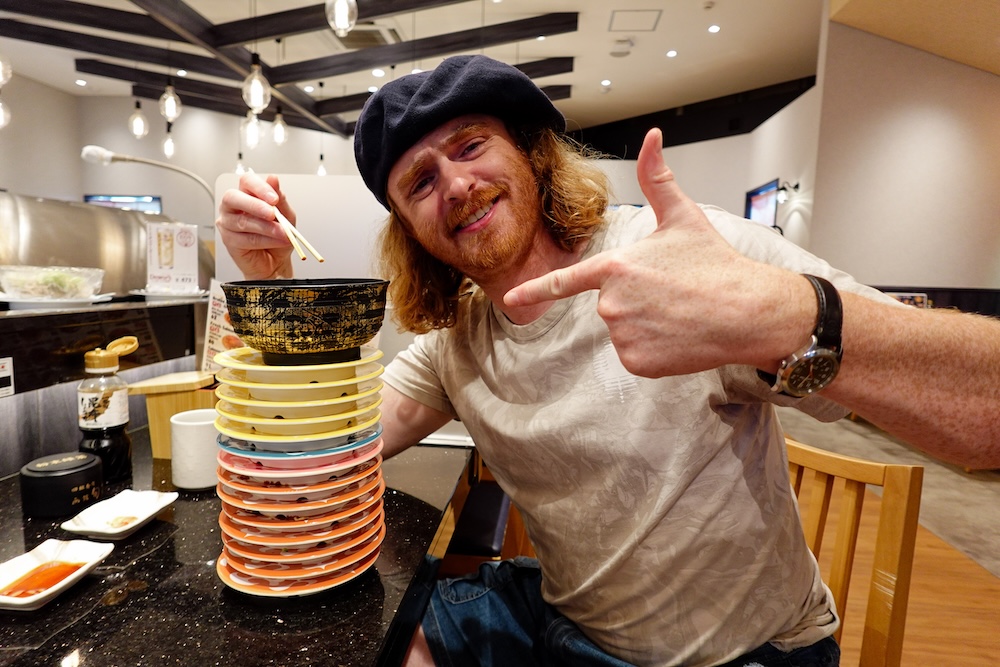
The problem with visiting Hakodate for only three days is that you have a limited number of meals, and Audrey and I deliberately spent two of ours at the same sushi restaurant. That probably tells you more about how much we liked the place than any enthusiastic restaurant ranking ever could.
We certainly didn’t lack other options. Hakodate is a port city in southern Hokkaido where you can start your morning surrounded by enormous king crabs and seafood stalls, enjoy a steaming bowl of salt ramen for lunch, and finish the day eating fried chicken stuffed into a hamburger bun at a restaurant decorated with angels and clowns. We managed all of those experiences and still left with plenty of restaurants we wished we’d tried.
Food ended up being one of my favourite parts of exploring Hakodate. I loved the atmosphere of the Morning Market, our accidental ramen order worked out surprisingly well, and Lucky Pierrot turned out to be much better than its peculiar appearance suggested. Then there was Shunka Sushi, which we liked enough to visit again despite having precious few meals to spare.
In this Hakodate food guide, I’m sharing where we actually ate, what we ordered, and which restaurants I’d recommend, along with a handful of other worthwhile places we didn’t manage to try. I’ll also explain how to choose restaurants based on where you’re sightseeing, because Hakodate is more spread out than it initially appears, and crossing town for a meal that turns out to be unavailable is nobody’s idea of a good time.
Best places to eat in Hakodate at a glance
Our meals were mainly concentrated around Hakodate Station and Goryokaku. We explored both areas on foot and used trams to get around the city, which made it easier to combine sightseeing with eating rather than treating every restaurant as a separate excursion.
Here’s how I’d distinguish the main options. The first five are places Audrey and I personally tried; the others offer different food experiences worth considering.
| Restaurant or food stop | What to eat | Area | Why choose it? |
|---|---|---|---|
| Hakodate Morning Market | Kaisendon and seafood | Hakodate Station | Seafood breakfast and market atmosphere; we ate here |
| Yondaime Ramen | Shio ramen and gyoza | Matsukazecho | Casual local ramen; we ate here |
| Kaiten Sushi Hakodate Shunka | Nigiri, rolls and hot dishes | Goryokaku | Conveyor-belt sushi we enjoyed twice |
| Lucky Pierrot | Chinese Chicken Burger and tonkatsu burger | Goryokaku | Quirky local fast food; we ate here |
| Milkissimo | Hokkaido gelato | Goryokaku Tower | Regional-flavoured dessert; we ate here |
| Uni Murakami | Sea urchin and seafood | Station / Morning Market | Specialist seafood; researched option |
| Gotoken | Japanese Western-style curry | Suehirocho | Historic sit-down dining; researched option |
| Hasegawa Store | Pork-skewer yakitori bento | Multiple locations | Local takeaway meal; researched option |
| Daimon Yokocho | Izakaya and small-restaurant dishes | Hakodate Station area | Evening dining; researched area |
Hakodate Morning Market: our seafood breakfast
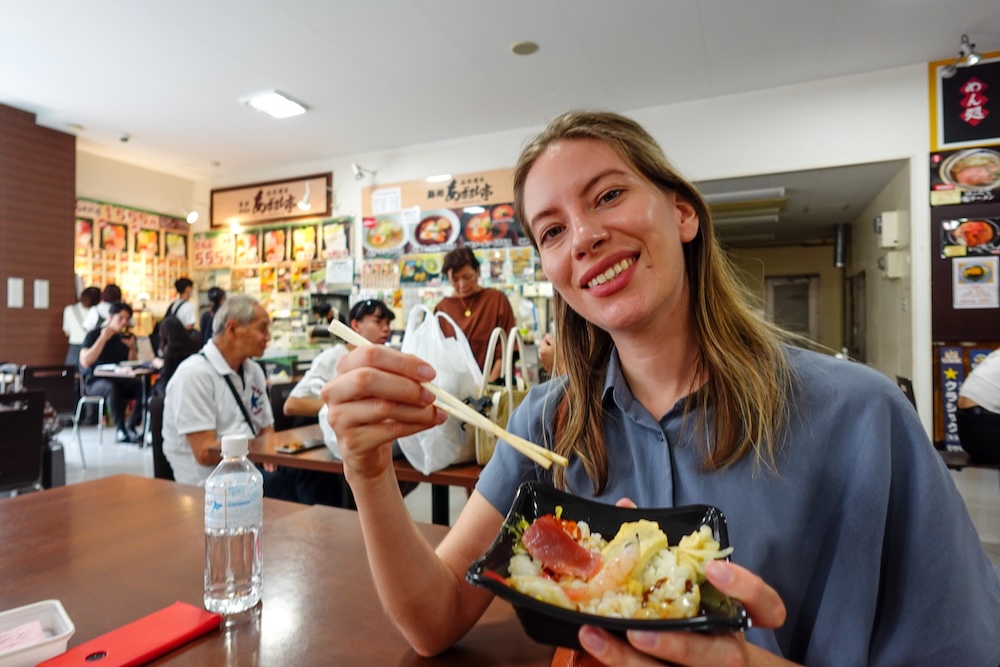
If you enjoy seafood, I’d make time for breakfast at Hakodate Morning Market, located right beside Hakodate Station. It was one of our most memorable food experiences in the city, although our ordering skills could have used some improvement.
I’ve always enjoyed wandering through fish markets. There’s something about seeing the day’s seafood laid out for sale, watching fish being prepared and smelling that unmistakable mixture of saltwater and fish that makes me feel connected to a coastal destination. I realize the smell might put some people off, but I’m the opposite. Give me a proper seafood market and I’ll happily wander around inspecting everything.
The king crabs were especially impressive. Some of those creatures were absolute monsters, and there were equally enormous fish alongside stalls displaying all kinds of seafood. We also discovered that the market was considerably bigger than we’d expected. After exploring one section, we wandered farther and found another dining area with plenty of restaurants. With roughly 250 businesses throughout the market, there’s quite a bit more here than one row of identical seafood stalls.
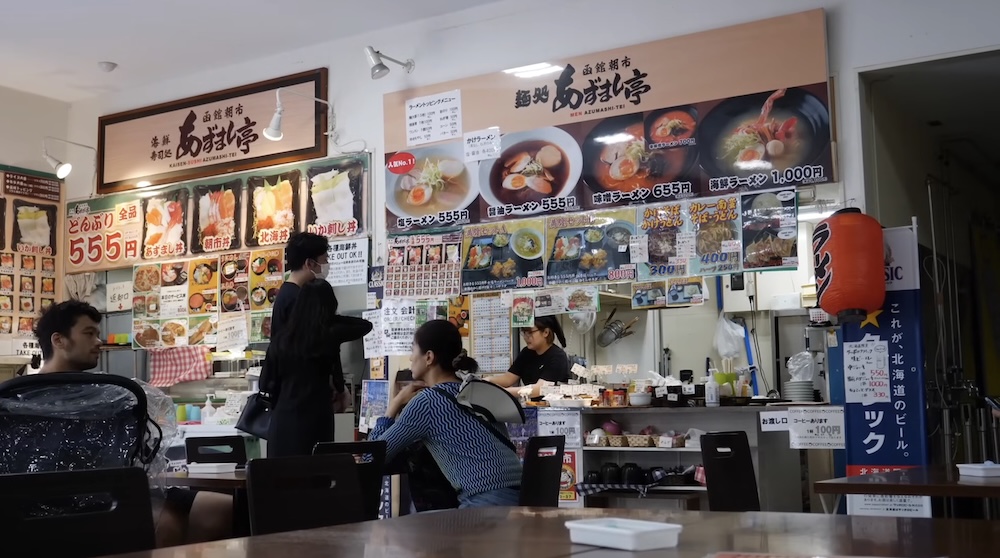
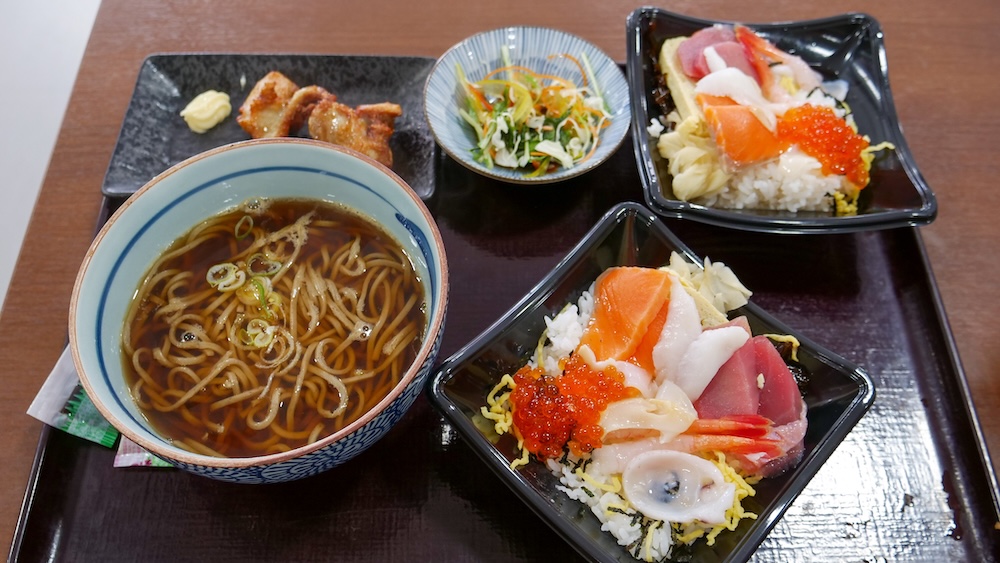
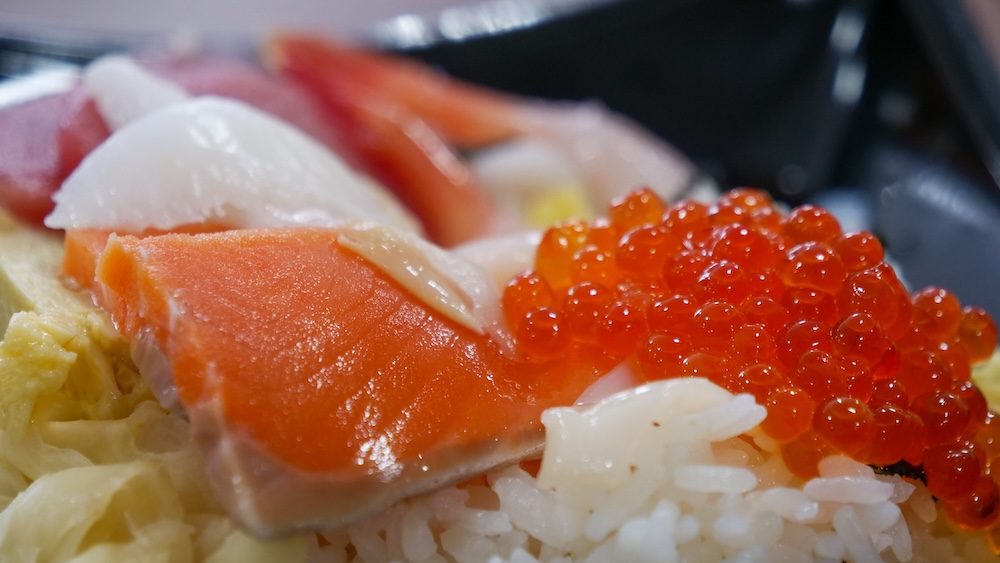
Eventually, we settled on somewhere serving seafood bowls and set meals. Our main attraction was kaisendon, a bowl of rice topped with fresh raw seafood. We had salmon, salmon roe, egg and other toppings, while our breakfast set included hot noodles and additional accompaniments.
Unfortunately, we hadn’t quite understood everything included in the set, so we ordered an additional seafood bowl without realizing something very similar was already coming. I suppose there are worse mistakes to make at a fish market, and we certainly weren’t complaining once the food arrived.
The salmon was wonderfully tender, and I particularly enjoyed the salty bursts of flavour from the salmon roe. The hot noodles were also surprisingly satisfying alongside the cold seafood. I kept alternating between the two, which isn’t necessarily a combination I’d have come up with myself, but it worked beautifully.
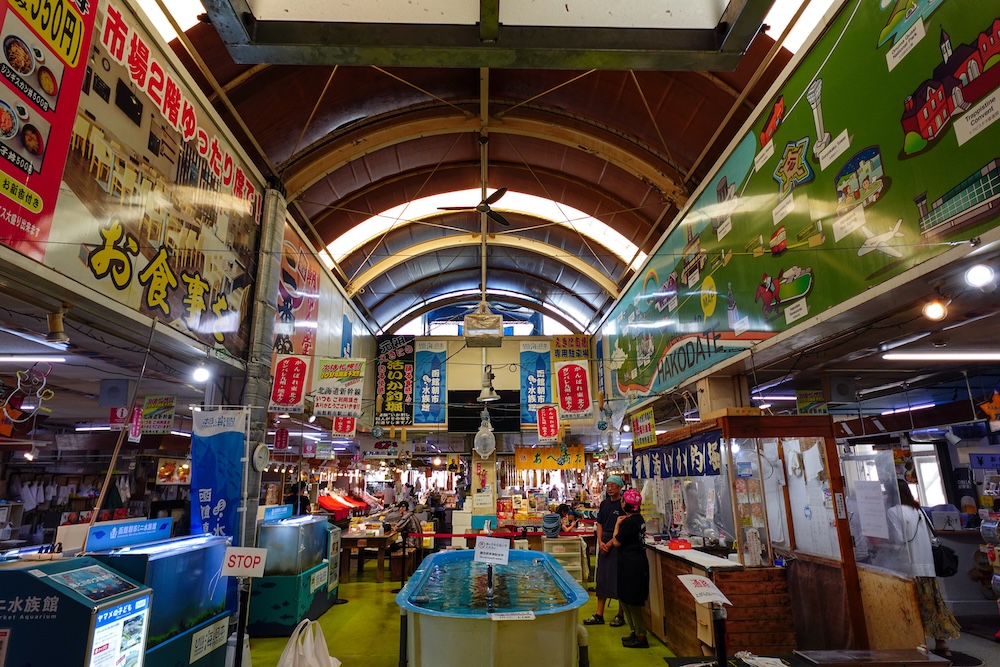
While exploring the market, I also sampled a small piece of fresh squid. That brought back memories of eating dried squid at baseball games when I lived in South Korea, where chewing the stuff could sometimes feel like a second sporting event. The squid in Hakodate was much softer and more tender.
For me, that’s the attraction of the Morning Market. You get a seafood breakfast, but you also get to see the displays, discover unfamiliar ingredients and enjoy the atmosphere of a working market.
What should you order? I’d start by comparing the kaisendon options, especially if you enjoy salmon, tuna, shrimp or salmon roe. Look carefully at the toppings and what comes with any set meal before adding extra dishes. Audrey and I learned that particular lesson the filling way.
The market generally operates from approximately 5 a.m. until 2 p.m., but individual businesses have their own schedules, and seafood availability varies. Don’t assume every restaurant opens at five or serves until the market’s general closing time.
We enjoyed exploring independently, but travellers who want help identifying seafood and navigating the different stalls could consider a guided Hakodate Morning Market tour with seafood tasting. The listed experience lasts approximately 90 minutes, includes an English-speaking guide and covers tasting expenses up to a specified allowance, with additional food costing extra. We didn’t take this tour ourselves, and I’d only choose it if the explanations and guided tasting were worth more to you than simply exploring on your own.
I don’t have a reliable name for the individual restaurant where we ate, so I wouldn’t pretend to recommend that particular establishment over the market’s other options. But the overall seafood breakfast experience was fantastic, and if you enjoy raw fish, this is where I’d start eating in Hakodate.
Yondaime Ramen: Hakodate’s famous shio ramen
Hakodate is particularly associated with shio ramen, a salt-seasoned noodle soup that often has a comparatively clear broth. It’s different from the rich miso ramen many travellers associate with Sapporo, and Audrey and I were eager to try the local version.
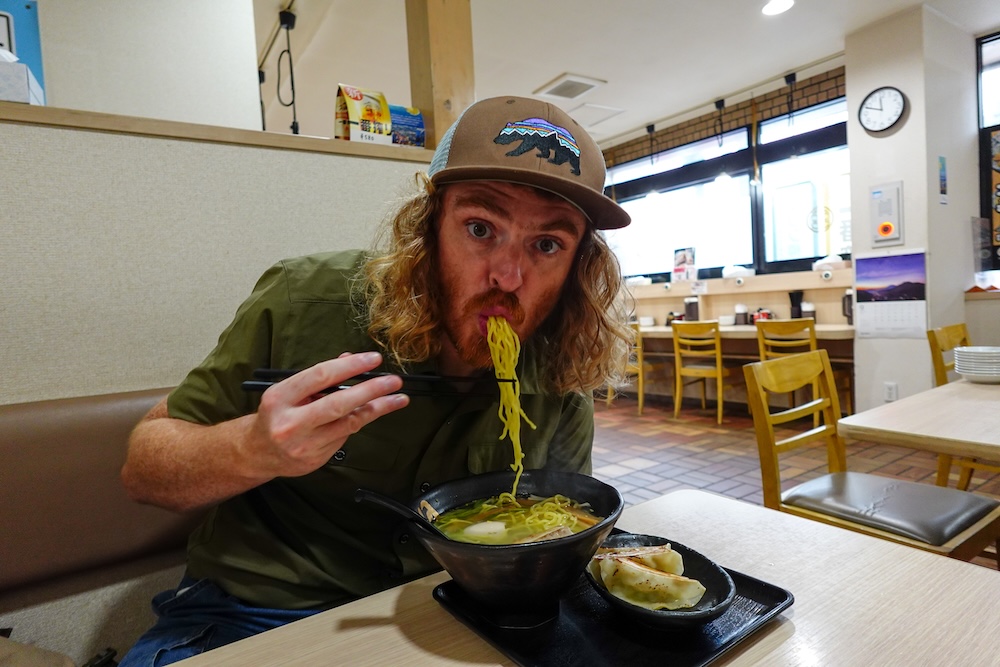
We hadn’t selected a restaurant in advance. While exploring the Matsukazecho area, we came across Hakodate Menya Yondaime, saw the tempting pictures of ramen outside and decided that would do nicely for lunch.
Our first challenge appeared immediately inside: a ticket vending machine. If you’ve eaten at ramen restaurants in Japan, you’ll probably recognize the system. You insert your money, select your food and receive a ticket for your order. This machine even had an English option during our visit, which should have made things straightforward.
Somehow, we still managed to order the wrong ramen.
We’d intended to try one shio ramen and another variety with butter and corn. Between examining the different choices, working out the sets and figuring out when to insert the money, we ended up with two versions of shio ramen instead.
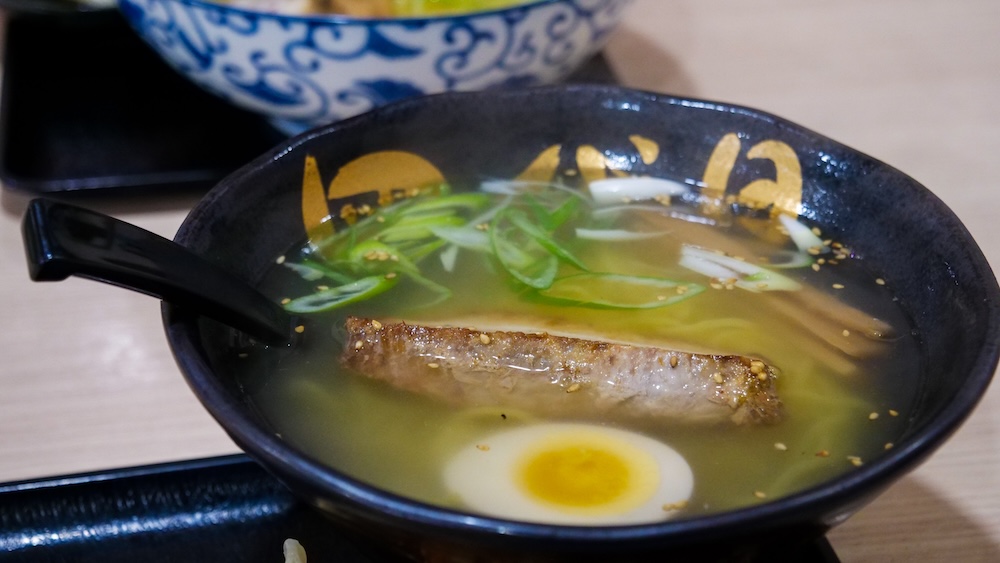
Mine was the Yondaime salt ramen with broiled pork, while Audrey received a plainer version featuring a clear chicken broth. We also ordered gyoza, because apparently a substantial bowl of noodles wasn’t enough of a lunch.
Fortunately, the mistake worked out well. I loved the noodles and enjoyed the pork, while the broth had a definite salty flavour without becoming overpowering. Audrey enjoyed her lighter bowl too, and the gyoza rounded out the meal nicely. We finished feeling considerably happier with our accidental choices than we’d been while wrestling with the machine.
One thing I appreciated was that the comparatively clear broth still had plenty of flavour. After eating richer ramen styles elsewhere in Japan, it was nice to try something different without sacrificing a satisfying meal.
Yondaime is at 6-10 Matsukazecho, making it a convenient option when you’re exploring the Hakodate Station and Daimon area. Menus and ordering arrangements may have changed since our visit, but I’d still recommend checking your ticket-machine selection carefully before confirming. We enjoyed what we received, although I’d like to think we could successfully order the butter-and-corn ramen next time.
Shunka Sushi: the restaurant we visited twice
Of all the restaurants we tried in Hakodate, Kaiten Sushi Hakodate Shunka has the strongest claim on my personal recommendation list. We went twice during a three-day visit, and the second meal confirmed how much we’d enjoyed the first.
Our initial visit happened on our first night in Hakodate, when Audrey and I were severely jet-lagged and operating in what can only be described as zombie mode. We were hungry, exhausted and not particularly interested in making an occasion out of dinner, but the sushi was so satisfying that we made a point of returning later.
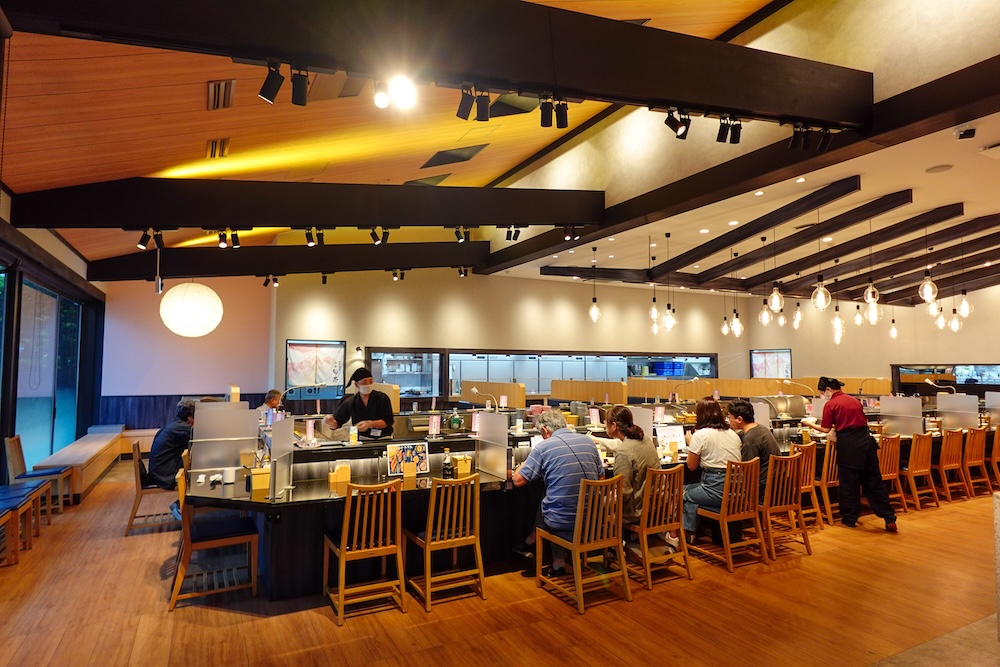
Shunka is a conveyor-belt sushi restaurant at 29-18 Goryokakucho, directly across from Goryokaku Tower. Pay attention to that distinction because there’s another Shunka dining establishment inside the tower. The conveyor-belt restaurant across the street is the one we visited.
On our return, we’d been sightseeing and were supposed to be heading back for a rest, but hunger won that particular argument. We settled in and started ordering plenty of salmon and tuna, two of our absolute favourite sushi choices.
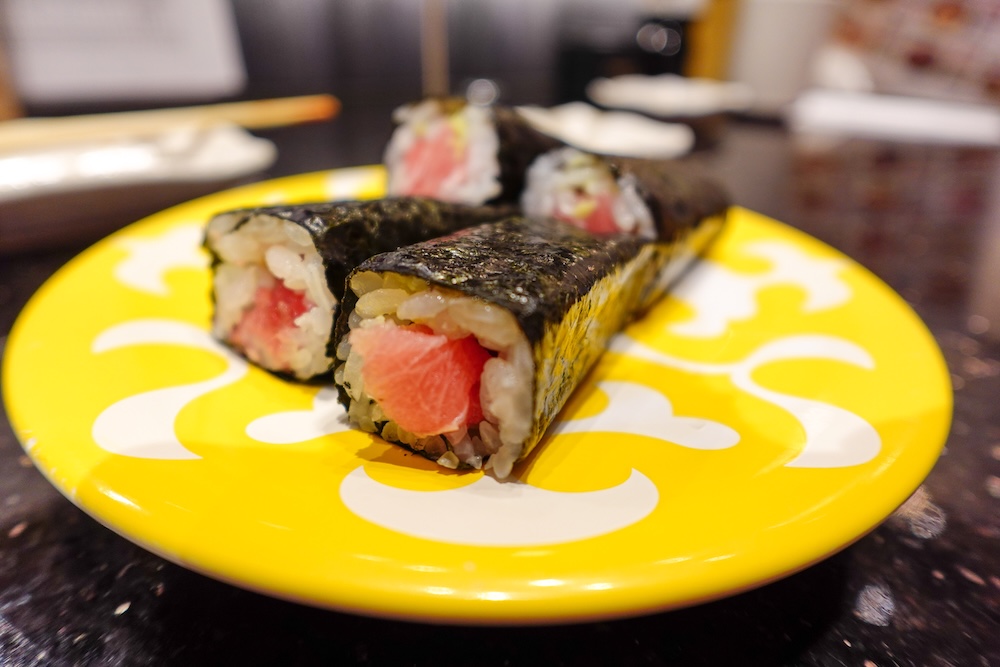
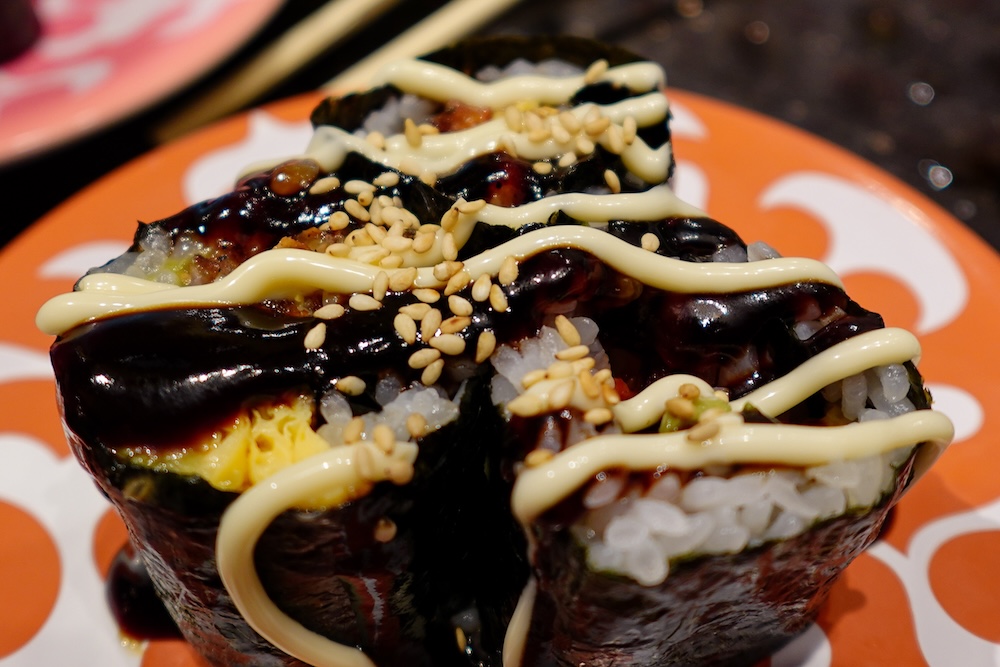
I know that isn’t especially adventurous when you’re in Japan surrounded by all kinds of fascinating seafood, but sometimes I just want the food I love. We also tried different rolls, along with hot dishes including udon with shrimp tempura, which made for a wonderfully satisfying meal after spending much of the day on our feet.
The staff were helpful with the ordering process. They brought us an English picture menu and explained how to fill out a numbered paper slip, including quantities and wasabi preferences. That was particularly useful because we arrived around 4:30 p.m., when the restaurant was quiet and relatively few varieties of sushi were circulating on the conveyor.
Rather than waiting for something appealing to eventually come around, we ordered exactly what we wanted. It worked beautifully, although I wouldn’t assume the conveyor is always quiet at that hour. That was simply how things were during our visit.
Our second meal cost approximately ¥3,500 for both of us at the time, which we considered excellent value for the amount we’d eaten. That’s our historical spending rather than an estimate of what the same meal costs today.
Shunka currently lists opening hours of 11 a.m. to 9 p.m., with the last order at 8:30 p.m. Seasonal seafood and temporary operating changes can affect what’s available, so it’s worth checking the official Shunka Sushi website before making a special trip.
I wouldn’t claim Shunka is objectively the best sushi restaurant in Hakodate because we haven’t tried every competitor. What I can say is that we enjoyed it enough to return during a short visit, ordered exactly the food we wanted and came away happy both times. If you’re exploring Goryokaku and want a proper sushi meal, it’s one place I’d put very high on the list.
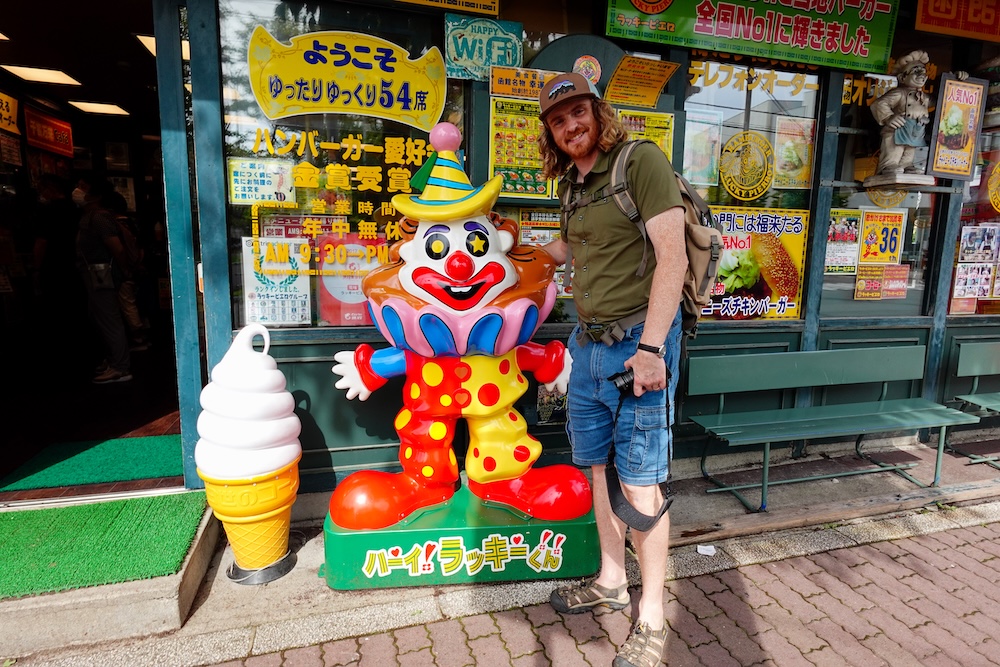
Lucky Pierrot: Hakodate’s wonderfully strange burger experience
Of all the restaurant concepts I expected to encounter in Hakodate, a local hamburger chain decorated with clowns and angels wasn’t particularly high on the list.
We’d seen Lucky Pierrot’s unmistakable clown imagery around the city, and I wasn’t entirely sure what to make of it. Was this a legitimate place to eat, or some sort of bizarre themed attraction that happened to serve burgers? Curiosity eventually got the better of us.
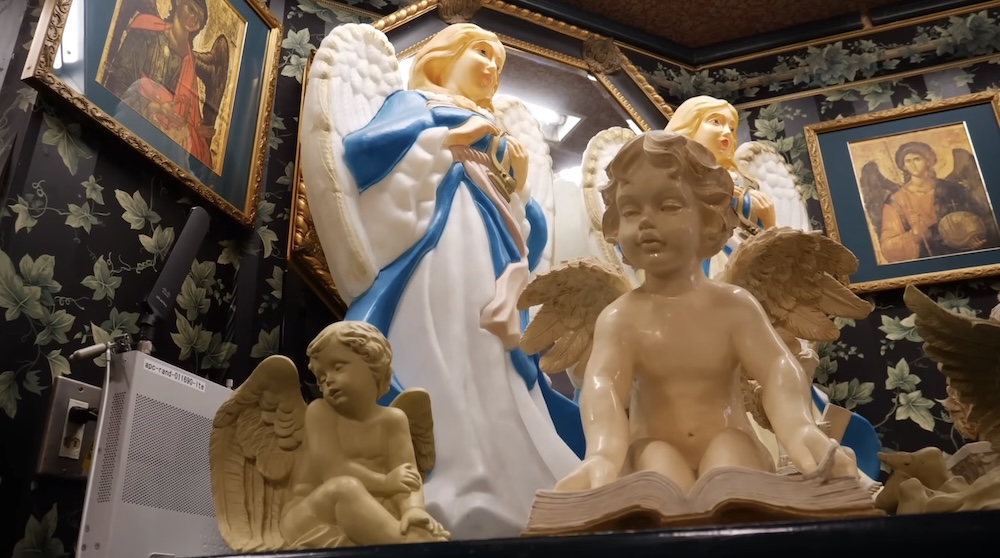
We visited Lucky Pierrot Goryokaku Park Front, at 30-14 Goryokakucho, near Goryokaku Tower. As soon as we stepped inside, I realized we’d chosen a particularly peculiar location because the interior was absolutely full of angels. Sculptures, decorative details and religious-looking ornamentation were everywhere, with very little obvious connection to hamburgers.
I was thoroughly confused, but also quite entertained.
The menu offered everything from burgers to curry and spaghetti, but we concentrated on two burgers. We ordered at the counter, paid in advance and waited for our number to be called while taking in the unusual surroundings. The place was busy, which suggested plenty of people were more interested in the food than my ongoing attempts to understand the decor.
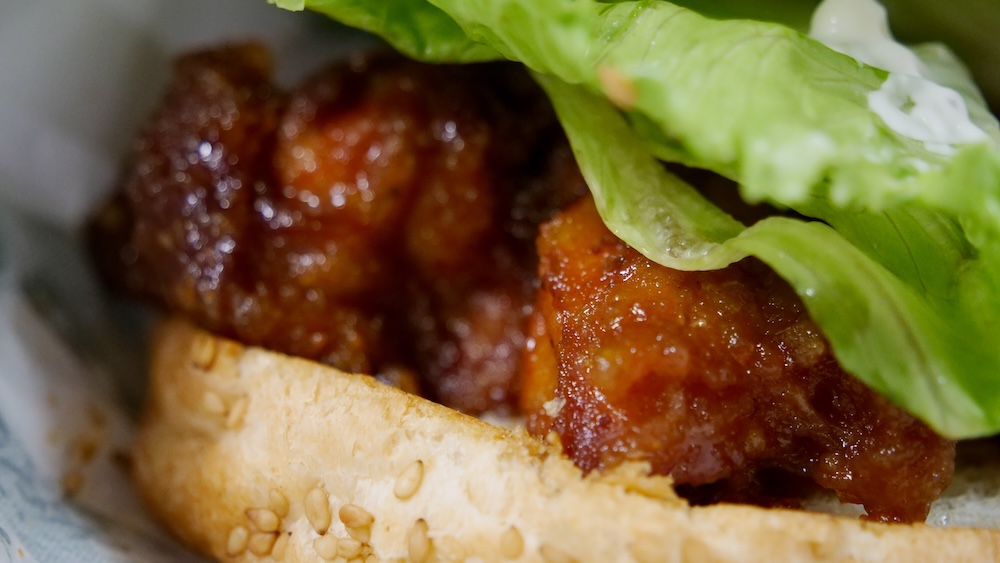
Our first choice was the Chinese Chicken Burger, filled with pieces of fried chicken coated in a sweet, savoury glaze, along with lettuce and mayonnaise. The combination worked surprisingly well, with the sauce giving the chicken plenty of flavour.
We also ordered a tonkatsu burger, featuring breaded pork cutlet with sauce and other toppings. I enjoyed the combination of crispy breading, pork and a soft bun, and it was different enough from the chicken burger to make ordering both worthwhile.
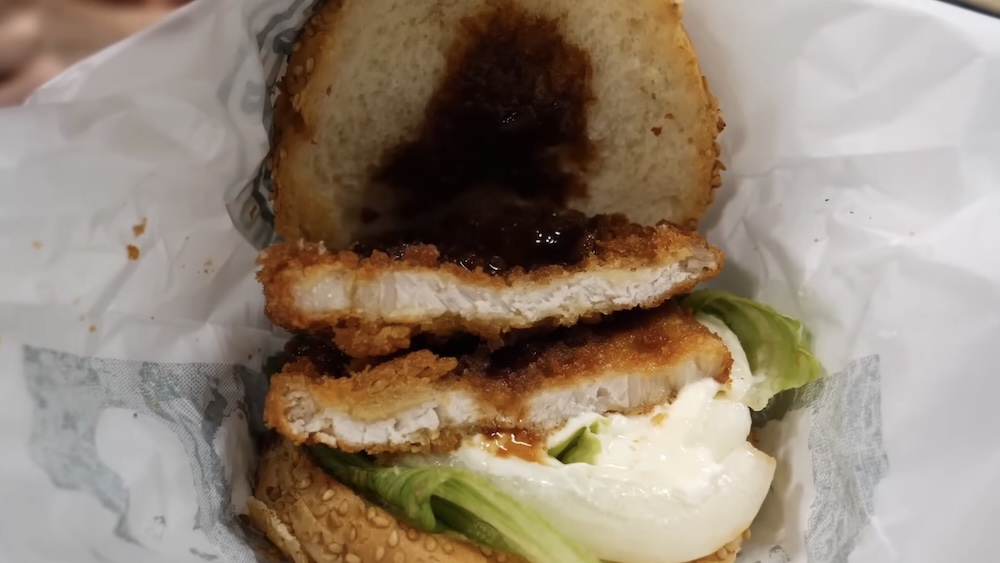
On the side, we had fries covered with cheese and gravy, served in a mug. My Canadian brain immediately went to poutine, although I doubt Lucky Pierrot was attempting to recreate the precise experience of eating at a Quebec casse-croûte. We also tried sesame balls with bean-paste filling, because apparently the burgers and fries hadn’t been sufficient.
What surprised me most was how much we enjoyed the food after arriving with modest expectations. These weren’t elaborate gourmet burgers, and the restaurant wasn’t pretending to be fine dining. It was casual fast food that happened to be genuinely tasty, filling and considerably better than I’d anticipated.
Audrey enjoyed her meal too, and we both came away pleasantly surprised. Our order, including the burgers and additional items, cost ¥1,738 during our visit, which we thought was very reasonable for the amount of food we’d eaten.
Lucky Pierrot has been operating in Hakodate since 1987, and the Goryokaku Park Front branch is specifically known for its angel-themed interior. Other branches have different decorations, so don’t assume they’ll all look like the one we visited.
The branch currently advertises hours of 9:30 a.m. to 10 p.m., with food orders ending earlier. Check the official Goryokaku Park Front branch page for current details. It was cash-only when we visited, but I wouldn’t assume that policy still applies everywhere.
If you’ve already eaten your fill of seafood and ramen, Lucky Pierrot offers a distinctly local change of pace. I’d recommend trying the Chinese Chicken Burger, particularly if you enjoy fried chicken with a sweeter glaze, and the tonkatsu burger is another satisfying option. As for the angels, I still can’t explain them, but I certainly don’t regret eating beneath them.
Milkissimo: Hokkaido gelato at Goryokaku Tower
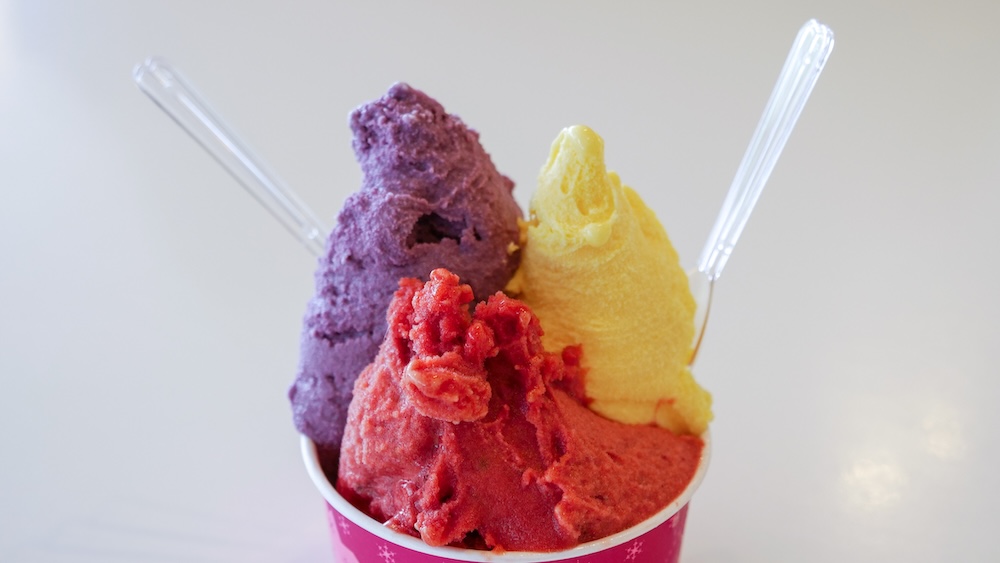
While visiting Goryokaku Tower, we stopped at Milkissimo, a gelato shop on the second floor that uses milk from the Hakodate area and other regional ingredients. Hokkaido is famous for its dairy products, and we weren’t about to leave that part of the food scene unexplored.
We chose three flavours that caught our attention: winter berry, pumpkin and purple sweet potato. The purple sweet potato was surprisingly sweet, with a flavour reminiscent of roasted sweet potatoes, while pumpkin was creamy and subtler than I’d expected.
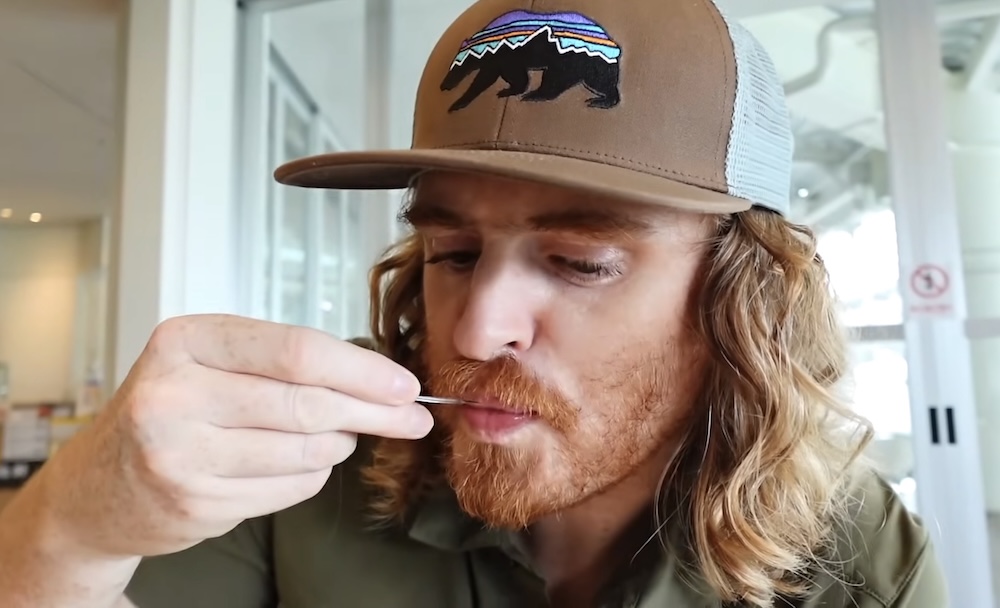
The berry was my favourite because I love that tart, fruity flavour, and Audrey agreed it deserved first place. We disagreed about the order of pumpkin and purple sweet potato, which gave us something to debate while the gelato gradually melted.
I wouldn’t travel across Hakodate solely for a serving of gelato, but Milkissimo makes a lovely addition to a Goryokaku visit. Flavours can change, so don’t assume you’ll find our exact selection. With Shunka and Lucky Pierrot also nearby, this ended up being a surprisingly convenient neighbourhood for some of our favourite Hakodate meals.
Other Hakodate restaurants worth considering
Five food experiences weren’t enough to cover everything Hakodate has to offer. We never tried a dedicated sea-urchin restaurant, missed the city’s famous pork-skewer bento and didn’t eat at any of its historic Western-style establishments.
These are additional places I’d consider based on what they serve and where they’re located. We haven’t personally eaten at them, so they’re alternatives rather than firsthand restaurant reviews.
Uni Murakami: a specialist seafood meal
If you’re particularly interested in uni, or sea urchin, Uni Murakami offers a more specialized seafood experience than choosing a mixed kaisendon at the Morning Market.
The business has two Hakodate restaurants, and the distinction matters. The original restaurant at 22-1 Otemachi, near the market, currently serves from 8:30 a.m. until 3 p.m., with the last order at 2:30 p.m. It’s a daytime option rather than somewhere to plan dinner.
For an evening meal, look at the separate Hakodate Station branch at 7-1 Wakamatsucho. It offers lunch and evening service, with dinner currently listed from 5:30 p.m. until 9:30 p.m. Tuesday is its regular closing day, subject to holiday exceptions.
This is also a different spending category from a casual ramen lunch. Some specialist sea-urchin bowls at the original restaurant have been advertised at ¥6,820, although that figure applies to particular dishes rather than everything on the menu.
I’d consider Uni Murakami if sea urchin is a major food priority. Just choose the correct branch and check its current menu and reservation arrangements through the original restaurant or Hakodate Station branch before going.
Gotoken: historic Western-style curry
Hakodate’s international port history also influenced its food culture, and Gotoken offers something quite different from seafood, sushi and ramen.
The restaurant business dates to 1879, and its Restaurant Sekka-tei at 4-5 Suehirocho serves Western-influenced Japanese dishes, including British-style beef curry and Meiji-style pork curry.
One useful distinction is that Gotoken offers different dining formats. Its casual lounge dining doesn’t require an ordinary seat reservation, while formal course meals generally need to be arranged several days ahead. You therefore don’t need to book an elaborate dining experience simply because you’d like to try one of its curries.
Some à-la-carte curry options have been listed from around ¥1,870, although menus and prices change. We didn’t eat here, but I’d consider it for a sit-down meal when exploring Motomachi and the waterfront. The Gotoken restaurant website explains the current dining arrangements.
Hasegawa Store: Hakodate’s yakitori bento
Here’s a local specialty that can confuse you before you’ve taken a bite. Although yakitori usually makes me think of chicken skewers, around Hakodate the term can also refer to pork. At Hasegawa Store, the famous yakitori bento features grilled pork skewers served over rice.
The chain introduced the dish in 1978. Because Hasegawa Store is a local convenience-store business rather than a conventional sit-down restaurant, this is a useful option for a cooked meal you can take away without committing to a lengthy restaurant stop.
There are several Hakodate branches, including the Station Front shop at 14-10 Wakamatsucho. Be aware that the similarly named Hakodate Bay and Bay Area shops are different locations with different hours.
We didn’t get to try the bento ourselves, but I’d be interested in picking one up on another visit. Check the Hasegawa Store directory to find the most convenient branch.
Daimon Yokocho: small restaurants for an evening out
If you enjoy small Japanese eateries and izakaya-style dining, Daimon Yokocho offers a different experience from choosing one conventional restaurant.
Located at 7-5 Matsukazecho, about seven minutes on foot from Hakodate Station, it brings together 26 small eating establishments serving different foods and drinks.
Each business operates independently, so menus, opening hours, closing days and payment arrangements vary. I’d carry some cash rather than assuming every establishment accepts the same cards or electronic payments.
We didn’t spend an evening eating here, so I don’t have a favourite stall to recommend. But it’s worth investigating if you’re staying near the station and want a more informal evening exploring small eateries. The Daimon Yokocho website has information about individual businesses.
Two more options: Ajisai ramen and Pastry Snaffle’s
Two other establishments are worth remembering because of their convenient locations. Menchubo Ajisai, at 29-22 Goryokakucho, offers another established choice for Hakodate-style shio ramen near Goryokaku Tower if Yondaime’s station-area location doesn’t fit your plans.
Around the Kanemori Red Brick Warehouses, Pastry Snaffle’s has a shop at 13-9 Suehirocho. Its Cheese Omelette confection offers a sweet alternative to the gelato we enjoyed at Milkissimo. We didn’t try either establishment, but both provide useful choices when you’re already exploring their respective neighbourhoods.
Where to eat around Hakodate Station, Goryokaku and the waterfront
After spending several days walking and riding trams around Hakodate, I realized how much easier meals become when you plan around the neighbourhood you’re exploring. The city is enjoyable to navigate, but its main restaurant and sightseeing areas aren’t all within a few minutes of each other.
Hakodate Station and the Morning Market are particularly convenient for seafood breakfast and casual meals. You have the market beside the station, Yondaime in the broader Matsukazecho area, Hasegawa Store nearby and Uni Murakami’s two branches for more specialized seafood. Daimon Yokocho adds an evening option. Just remember that the Morning Market and Uni Murakami’s original restaurant are primarily daytime choices, while the separate Uni Murakami station branch serves dinner.
Goryokaku was probably our most convenient food neighbourhood. Shunka Sushi is across from the tower, Lucky Pierrot Goryokaku Park Front is nearby, Milkissimo is inside the tower itself, and Ajisai provides another ramen possibility. I’d choose Shunka or Lucky Pierrot for a substantial meal, depending on whether I wanted sushi or burgers, and consider Milkissimo for dessert. Trying to squeeze all of them into one afternoon seems ambitious even by my standards.
Motomachi and the Bay Area offer another set of possibilities around the historic streets and waterfront. Gotoken is a sit-down option for Western-style curry, Hasegawa Store has branches around the bay, and Pastry Snaffle’s is convenient when visiting the red-brick warehouses. These aren’t restaurants we personally tested, but they can save you from travelling back across town solely because our favourite places happened to be elsewhere.
My approach would be to choose a few restaurants that genuinely interest you, then fit the remaining meals around the day’s sightseeing. I’d happily travel farther for somewhere I particularly wanted to eat, but an ordinary lunch shouldn’t require rearranging an entire Hakodate itinerary.
Where I’d eat in Hakodate on another visit
If I had another three days in Hakodate, I’d make room for a seafood breakfast at the Morning Market and another bowl of shio ramen, hopefully managing to order the combination I actually wanted this time. I’d also happily return to Shunka Sushi, which earned its place among our favourites by giving us two genuinely enjoyable meals.
Lucky Pierrot deserves another visit too. The burgers exceeded my expectations, and there’s something rather entertaining about eating fast food in a restaurant full of decorative angels. Of the places we missed, Uni Murakami would be interesting for a dedicated seafood meal, while Gotoken’s curry and Hasegawa Store’s yakitori bento would offer different sides of Hakodate’s food culture.
But I wouldn’t turn the trip into a challenge where every famous dish had to be consumed before departure. Pick the foods you genuinely want, pay attention to restaurant locations and hours, and leave yourself enough flexibility to return somewhere you particularly enjoy.
We could have forced ourselves to try another sushi restaurant after our first dinner at Shunka. Instead, we went back because we liked it and had another excellent meal. With only a few days in Hakodate, I can’t think of a much better restaurant-selection strategy than that.
Frequently Asked Questions
What food should I try in Hakodate?
I’d make room for seafood kaisendon, Hakodate-style shio ramen, sushi and a Chinese Chicken Burger from Lucky Pierrot. Audrey and I enjoyed all four, and we also sampled Hokkaido gelato at Milkissimo. If you have additional meals available, sea urchin, Western-style curry and Hasegawa Store’s pork-skewer yakitori bento are other local options worth considering.
Where is the best area to eat in Hakodate?
Hakodate Station and the Morning Market are convenient for seafood breakfast, ramen and casual meals, while Goryokaku has several of the restaurants we enjoyed most, including Shunka Sushi and Lucky Pierrot. Motomachi and the Bay Area offer additional options such as Gotoken and Pastry Snaffle’s. I’d choose based on where you’re already sightseeing rather than crossing town for every meal.
Is Hakodate Morning Market worth visiting for breakfast?
Yes, particularly if you enjoy fresh seafood and the atmosphere of a fish market. We had a substantial kaisendon breakfast with salmon, salmon roe, noodles and other accompaniments, and I loved wandering among the seafood stalls. The market generally operates from around 5 a.m. until 2 p.m., but individual restaurants have different hours.
Where can I eat sushi near Goryokaku Tower?
Kaiten Sushi Hakodate Shunka is directly across from Goryokaku Tower at 29-18 Goryokakucho. Audrey and I ate there twice because we enjoyed our first meal so much. We ordered plenty of salmon and tuna, along with rolls and hot dishes. It’s a conveyor-belt sushi restaurant where we could also order specific items directly during our visit.
Is Lucky Pierrot worth trying in Hakodate?
I’d recommend giving it a chance, especially if you want something different from seafood and ramen. We tried the Chinese Chicken Burger and tonkatsu burger at the Goryokaku Park Front branch, and both were tastier than I’d expected. The angel-themed interior was thoroughly bizarre, but it made the meal even more memorable.
Can I find good food in Hakodate without eating raw seafood?
Absolutely. We enjoyed shio ramen and gyoza at Yondaime, burgers at Lucky Pierrot and gelato at Milkissimo. Other options worth investigating include Gotoken’s Western-style curry and Hasegawa Store’s grilled-pork yakitori bento. You don’t need to eat sashimi at every meal to enjoy Hakodate’s food scene.
How many meals should I plan around Hakodate restaurants?
With only two or three days, I’d prioritize a few experiences rather than attempting every famous dish. We made time for seafood breakfast, ramen, sushi, burgers and gelato, including a second visit to Shunka because we liked it so much. Matching meals to your sightseeing neighbourhoods makes the schedule considerably easier.
This guide is also available in Spanish. [Leé la versión en castellano: Guía gastronómica de Hakodate: mejores restaurantes y qué y dónde comer]
This article contains affiliate links. If you book through one of these links, I may earn a commission at no extra cost to you.