
With three hours in Noboribetsu Onsen, you can see a good chunk of the place properly, but you can’t see all of it. Pick Hell Valley, a wander through the town and a sit-down bowl of ramen, or pick most of the geothermal walk out to Oyunuma and the natural footbath. Try to cram in both and you end up sprinting past the very things that make this town worth getting off the train for.
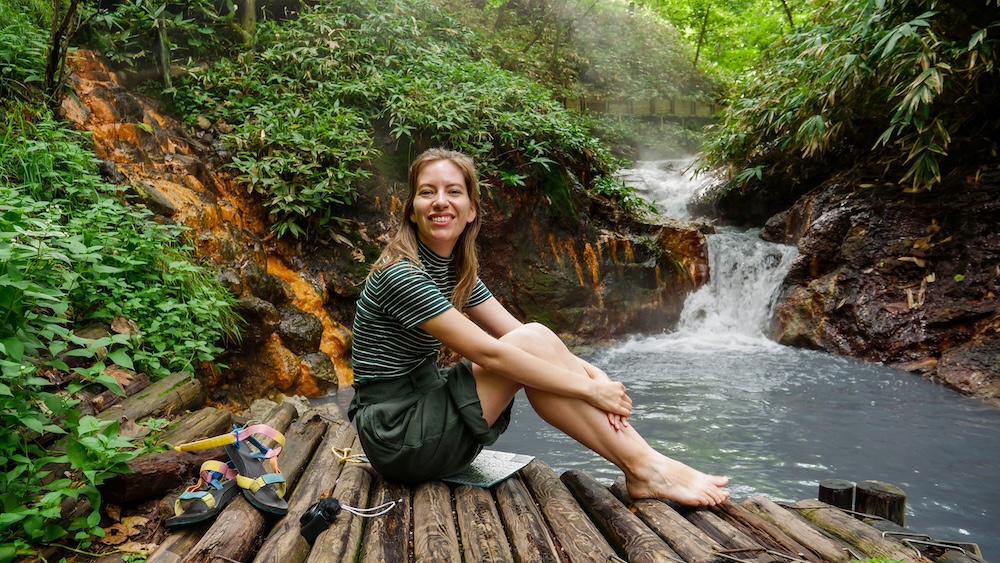
I learned that from our own full day there. Audrey and I were jet-lagged through both of our nights in Noboribetsu, crashing early and waking up with hours to kill before anything opened. On our sightseeing day we headed out very early and were full throttle from the first step. Even at that pace, the footbath, Oyunuma, Hell Valley, Yuzawa Shrine and Enmado swallowed the whole morning, and we didn’t sit down to eat until just after 11.
We also had a genuinely short window of our own: the morning we left, between checking out and catching the bus for an afternoon train. We spent it completely differently, for a reason I’ll get to. First, though, you need to know where your three hours actually begin.
Your Three Hours Start at the Bus Terminal, Not the Station
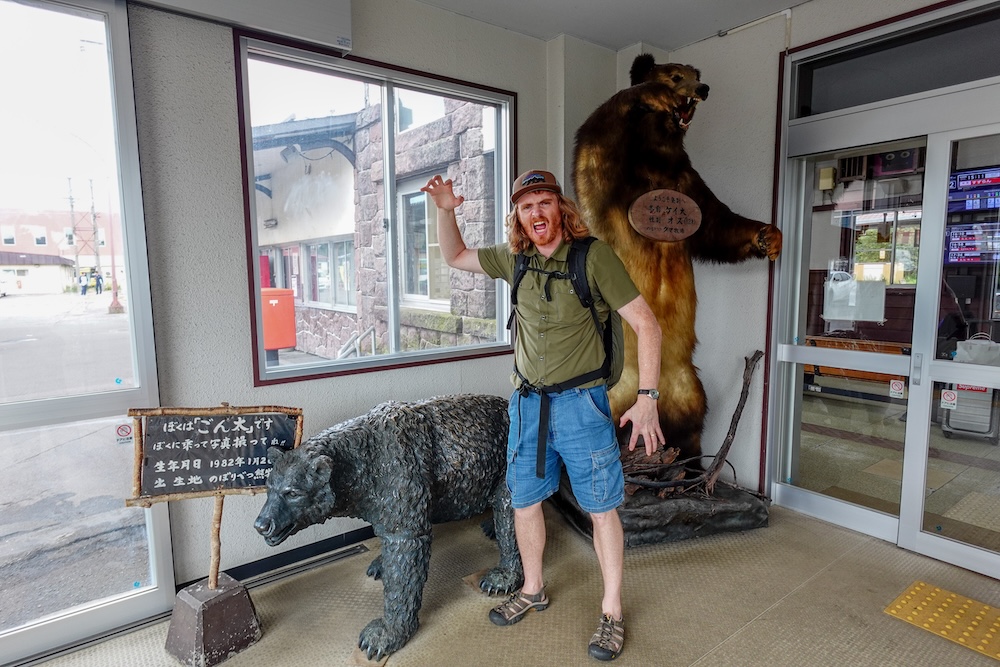
JR Noboribetsu Station isn’t in the hot-spring district, so every visit by rail starts and ends with a local Donan Bus up and down the hill. On the current weekday timetable, those buses run roughly every 20 to 40 minutes through the day. The fare is ¥450 per adult and the ride takes up to about 27 minutes depending on your stop. Suica, Kitaca and other transport IC cards don’t work, and Visa contactless is accepted only on certain services, so carry cash. When we arrived, the next bus was about half an hour away. Allow for a wait like that at both ends and the transfers eat roughly an extra hour, so three hours in town realistically means four or more from the platform. The current Donan Bus timetable is worth checking before you commit to specific departures.
Then there are the bags. On our departure morning the hotel kept ours behind the desk, which made the whole thing effortless. Someone passing through between Hakodate and Sapporo doesn’t get that luxury. The public luggage storage is at the town bus terminal and has recently charged ¥500 to ¥700 per item. It accepts bags from 9:00 until 16:30, and you need to collect them by 17:00. Where that storage sits ends up deciding which of the routes below work for you, so settle the bag question before you settle anything else.
A taxi from the station costs a few thousand yen and can buy back some transfer time, especially if several of you split the fare. Just don’t count on finding one waiting. Noboribetsu City has acknowledged shortages of both taxis and buses on this stretch during the busy winter months, and the local taxi companies now take bookings through the GO app.
If your three hours are really the middle of a day trip from Sapporo, and the thought of juggling a reserved train, two local buses and a bag drop is already giving you a headache, there’s another way to do it. One guided day trip from Sapporo follows much the same geothermal walk I recommend below, including the forest stretch out to the footbath, then finishes with a soak at Dai-ichi Takimotokan, with the transport arranged for you. Audrey and I haven’t taken it, so before you check the guided Hell Valley and footbath trip from Sapporo, look at how long it actually gives you at each stop and what’s currently included.
The end of the day has fixed edges as well. The natural footbath is open from 8:00 to 17:00, and the last bus down from the footbath stop leaves at 17:05. From the town terminal, the last bus to the station currently departs at 20:35.
What Fits in Three Hours, and What Doesn’t
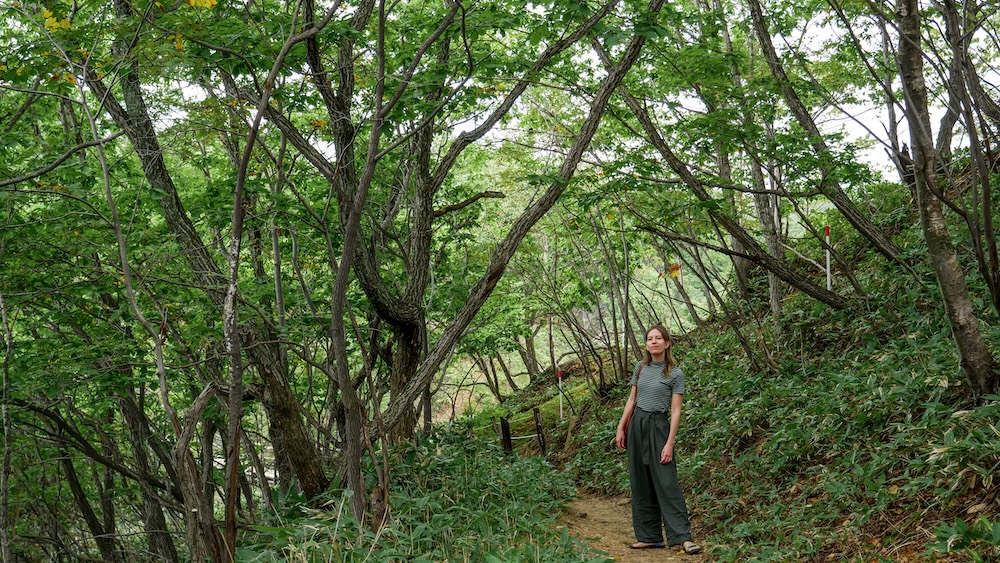
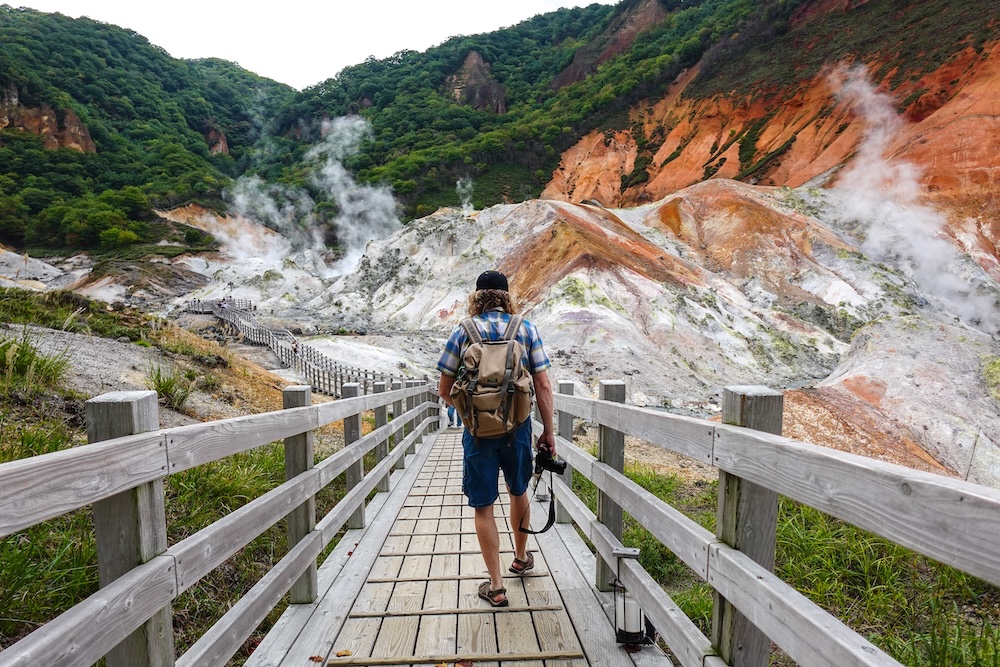
The geothermal walk is what decides everything. A guided walk covering the whole loop starts and finishes in town. It takes in Hell Valley, Tessen Pond, the Hell Valley overlook, Oyunuma, Oku-no-yu and the natural footbath, and it runs about two and a half hours over roughly three kilometres with around 50 metres of up and down. That leaves about half an hour of a three-hour window for anything else. Audrey found the hikes easy, just varied enough to keep things interesting, but the operator rates the full loop as intermediate, and that feels fair once you count the steps around the footbath.
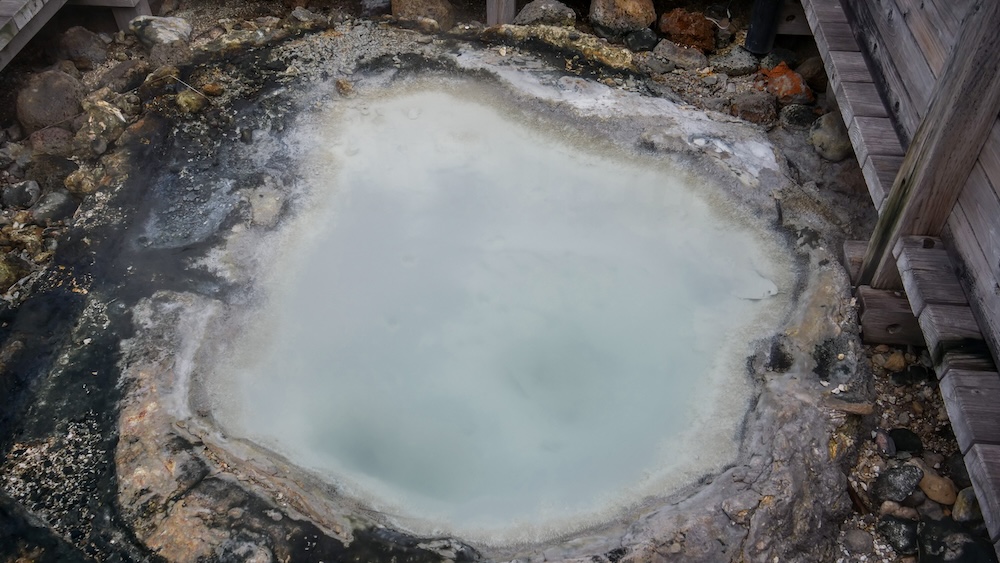
The walking itself isn’t what eats your time; the stops are. The Hell Valley promenade is only about 568 metres, roughly ten minutes each way if you simply walk it, but seeing Jigokudani properly takes about half an hour, and that’s the last place I’d rush. Hell Valley to Oyunuma is about another 30 minutes on foot. Then comes the footbath, the single biggest threat to any short schedule. We sat there for about half an hour, and I remember asking whether that was all we were doing that day, perfectly happy if the answer was yes. Put a hot-spring river in front of someone on a tight timetable and something has to give.
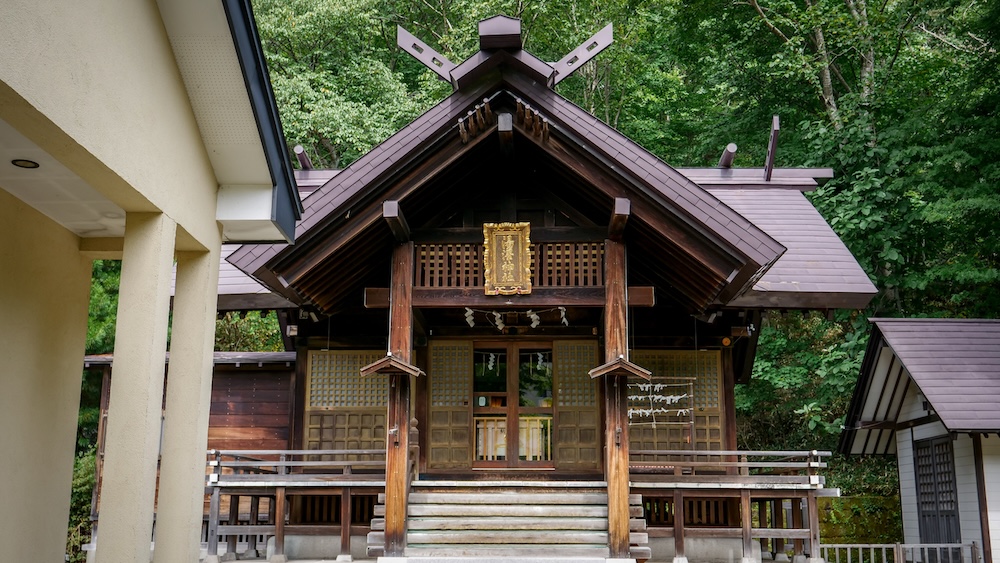
The town attractions are the opposite: short, close together and free to look at. From the bus terminal it’s about ten minutes on foot to the edge of Hell Valley. Yuzawa Shrine is a quick but steep climb up a stone staircase. Enmado, home of the giant mechanical King Enma, is open from 9:00 to 21:00, and his performance runs several times a day at fixed times posted outside the hall. The Sengen Park geyser erupts roughly every three hours. On one visit it was bubbling away and on another it was doing nothing but steaming, so in a short window it’s something to walk past rather than wait for.
Some things simply don’t fit. Noboribetsu Bear Park needs a seven-minute ropeway ride each way plus 60 to 90 minutes in the park itself, which is most of your window gone. A proper day-use bath deserves at least an hour to justify the entry fee. Date Jidaimura and Marine Park Nixe aren’t even in the onsen town. Save all of these for a longer visit.
How We Spent Our Own Short Window
On our last morning, Audrey and I did something that looks almost lazy next to all that. We wandered around town without much of a plan, then made our way to the ramen counter and sat down the moment it opened. After that we collected our bags from the hotel and caught the bus down to the station for an afternoon train to Sapporo.
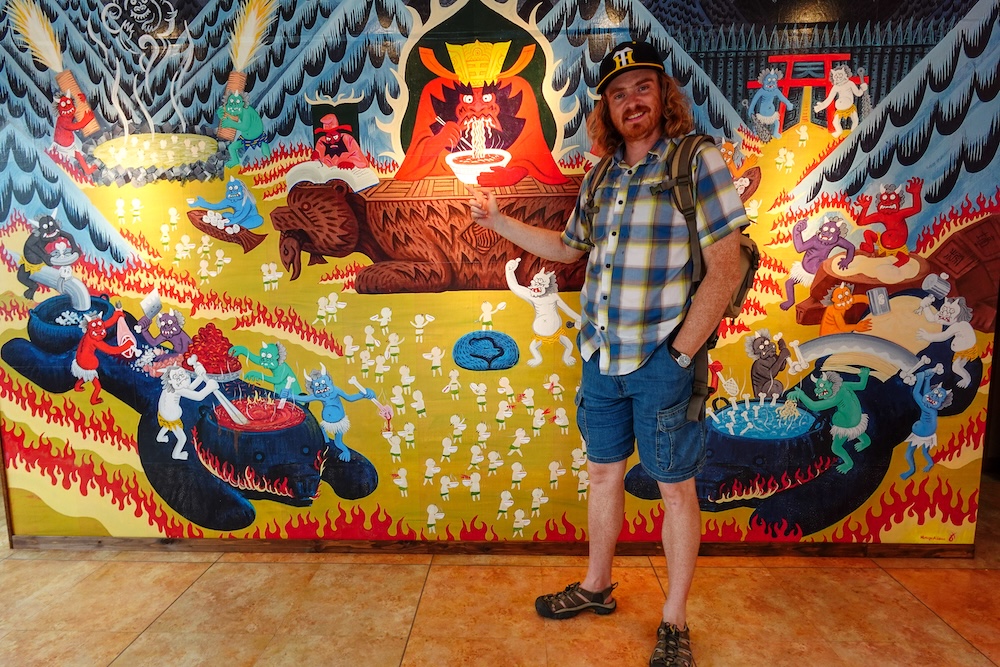
The ramen was the entire point. The day before, Audrey had ordered the Enma Ramen, and after one taste I declared it the best bowl I’d ever had. We were plotting how to sneak in a second visit before we’d even left the counter. Turning up at opening wasn’t just greed, though. Many of the ramen and soba counters in Noboribetsu Onsen only serve lunch, opening around 11:00 or 11:30 and closing by early to mid-afternoon, often at 14:00 or 15:00. On a short visit, arriving right at opening is the surest way not to miss your window.
That town-only morning worked for one reason: we’d already done the geothermal walk the day before. With the footbath, Oyunuma and Hell Valley behind us, a slow wander and a farewell bowl of our favourite ramen was the perfect way to leave. If you’re staying overnight with a spare morning before check-out, or you walked the loop on an earlier trip, I’d happily tell you to do exactly what we did. If it’s your first time and three hours is all you have, I’d make a different call.
Our base for all of this was Park Hotel Miyabitei, a big resort-style onsen hotel within walking distance of the trails and restaurants. Its location made both the early-morning walk and that unhurried last morning easy, and the staff holding our bags after check-out meant we never dragged a suitcase past a demon statue. If a night in town followed by a lazy final morning sounds better than three hurried hours, see current rooms and meal plans at Park Hotel Miyabitei, checking what your particular plan includes rather than assuming it matches ours.
Three Ways to Spend Three Hours
There’s no single right plan here. The three realistic shapes for a three-hour visit depend mostly on two things: whether you’re carrying bags, and how much you care about sitting down for lunch.
Hell Valley, the Town and Lunch
This is the easiest and most forgiving option. It starts and ends at the town bus terminal, so you can drop your bags, set off and collect them on the way back. Walk the ten minutes up to Jigokudani and give it a proper half hour, walking the promenade rather than turning around at the first viewpoint. Come back into town past Yuzawa Shrine and Enmado, sit down for lunch, and spend whatever’s left on Sengen Park, the demon statues or an ice cream. Nothing about it feels rushed. The cost is that Oyunuma and the footbath disappear completely, and for me they’re a large part of what makes Noboribetsu special.
The Full Geothermal Loop, There and Back
This is the whole walk, starting and finishing in town, so it also works with bags left at the terminal. Expect about two and a half hours, three kilometres and a modest climb, with Hell Valley, Oyunuma and the footbath all included. Lunch is what you give up. If your window starts early enough, eat right when the counters open and then set off. Otherwise, grab something quick and accept that a proper meal won’t fit. Audrey and I walked this same loop from town, just in the opposite direction, starting at the footbath.
Bus to the Footbath, Then Walk Back
This is our direction, made easier. Certain buses from JR Noboribetsu Station carry on uphill past the town terminal to a stop called Ashiyu iriguchi, the footbath entrance, about a three-minute walk from the water. On the current weekday timetable, for example, the 10:25 from the station arrives there at 10:52. We walked out from our hotel instead, but the logic is the same. Soak first, then walk back through Oyunuma and Hell Valley into town, finishing close to lunch and the more frequent buses down to the station. There’s no backtracking, but it only really works if you’re travelling light, because the bag storage is down at the terminal. You’ll also be climbing the steps after your soak rather than descending them.
If you’re bag-free and heading straight back to the station, there’s a mirror version: walk out from town to the footbath and catch a bus down from Ashiyu iriguchi. Only some buses stop there, and the last one leaves at 17:05, so check the timetable before relying on it.
| Compare | Hell Valley, the town and lunch | Full loop, there and back | Bus to the footbath, walk back |
|---|---|---|---|
| Starts and ends | Town bus terminal | Town | Footbath stop → town |
| What you see | Hell Valley, Yuzawa Shrine, Enmado, town sights | Hell Valley, Oyunuma, the footbath | Footbath, Oyunuma, Hell Valley |
| What you give up | Oyunuma and the footbath | A sit-down lunch | A sit-down lunch, unless timing works |
| Bags | Easy | Easy | Awkward |
| Best for | Repeat visitors, winter, anyone who wants a relaxed lunch | First-time visitors with luggage | First-time visitors travelling light |
The One I’d Pick
My rule in Noboribetsu is to see the big natural attractions first and give the town whatever time is left. Applied to three hours, that means spending the window on the geothermal walk.
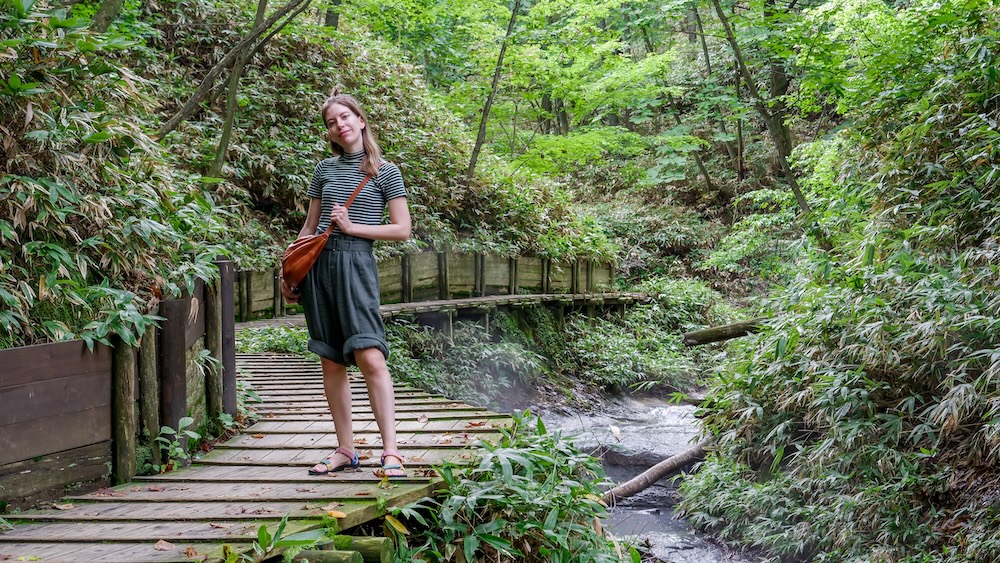
With bags, leave them at the terminal and walk the full loop there and back. Travelling light, take the bus up to the footbath and walk back into town. Either way, treat lunch as a quick bite unless the ramen counters happen to be opening just as your visit begins. I’d rather skip a proper meal than sprint through Hell Valley or leave without putting my feet in that river.
The exceptions are real. The trail out to the footbath usually closes during the snowy months, so winter visitors should go straight for the Hell Valley and town option. Whenever you walk the forest sections, do it in full daylight, since Noboribetsu City confirmed brown bears crossing the road into town around dusk twice during the summer of 2026. And if you’ve already done the walk, want a proper lunch or just prefer a slower few hours, borrow our final morning: wander the town, get to the ramen counter right as it opens, and catch your bus without breaking a sweat.
If none of these options feels like enough, take that as a sign. Noboribetsu probably deserves a full day, or a night up the hill, rather than three hours squeezed between trains. If you decide to stay, compare hotels in the Noboribetsu Onsen district rather than down by the station, so the trails are a short walk from your door.
Frequently Asked Questions
Is three hours enough for Noboribetsu Onsen?
It’s enough to see a good chunk properly, but not all of it. You can choose Hell Valley, the town and a sit-down lunch, or most of the geothermal walk out to Oyunuma and the natural footbath, but trying to cram in both means rushing the best parts.
How long does the full geothermal loop take?
A guided walk covering the whole loop from town, including Hell Valley, Oyunuma and the natural footbath, runs about two and a half hours over roughly three kilometres with around 50 metres of up and down. That leaves only about half an hour of a three-hour window for anything else.
How much extra time should I allow for the bus from JR Noboribetsu Station?
Roughly an extra hour. Buses run about every 20 to 40 minutes on the current weekday timetable, the ride takes up to about 27 minutes and costs ¥450, and we waited about half an hour when we arrived, so three hours in town realistically means four or more from the platform.
Where can I leave my bags in Noboribetsu Onsen?
Public luggage storage is at the town bus terminal and has recently charged ¥500 to ¥700 per item, accepting bags from 9:00 until 16:30, with collection by 17:00. Because it sits at the terminal, routes that start and end in town work best with luggage.
Can you take a bus directly to the natural footbath?
Certain buses from JR Noboribetsu Station continue past the town terminal to the Ashiyu iriguchi stop, about a three-minute walk from the footbath. On the current weekday timetable, the 10:25 from the station arrives there at 10:52, so check the timetable for your travel date.
What would you do with three hours on a first visit?
I’d spend the window on the geothermal walk: the full loop there and back if you have bags, or the bus to the footbath and a walk back into town if you’re travelling light. Treat lunch as a quick bite unless the ramen counters are just opening.
What should you see with three hours in winter?
Go for Hell Valley and the town. The trail out to the footbath usually closes during the snowy months, so the walk-based options don’t work then.
This guide is also available in Spanish. [Leé la versión en castellano: 3 horas en Noboribetsu Onsen: ¿qué se puede ver?]
This article contains affiliate links. If you book through one of these links, I may earn a commission at no extra cost to you.