
Not difficult, as long as you’re in reasonable shape. That’s my honest verdict after walking the whole loop from the natural footbath up through Oyunuma and into Hell Valley. Audrey summed it up as very easy hikes that were still just varied enough to keep things interesting. Being in decent shape definitely helps, though, and the trails have a few catches that have nothing to do with how far you walk.
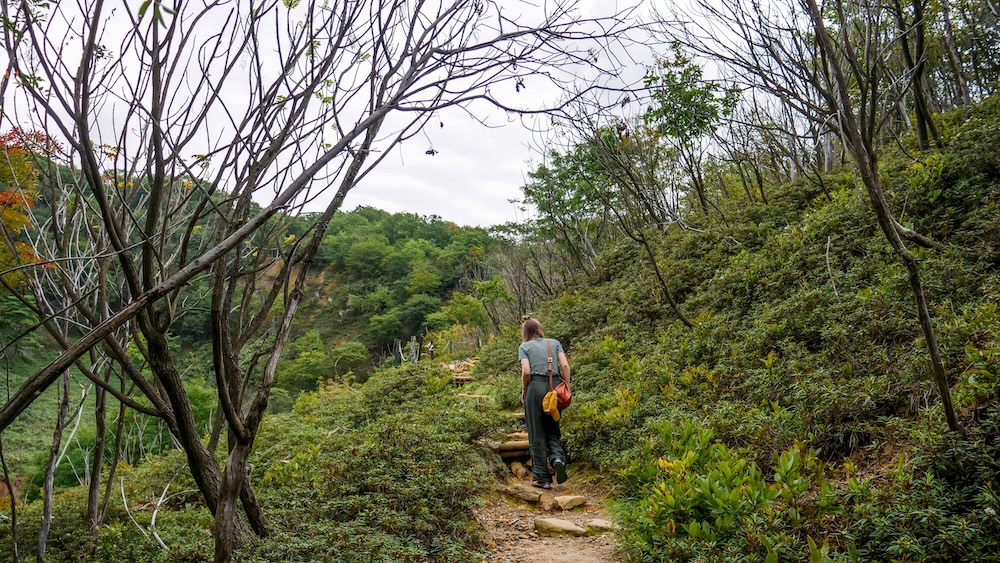
We also managed to do it the hard way. We walked the loop uphill, in the wrong footwear, on a warm and humid day. So if you’re wondering where the effort actually is, what to wear and which direction to go, we’ve already made the mistakes for you.
Where the Effort Actually Is
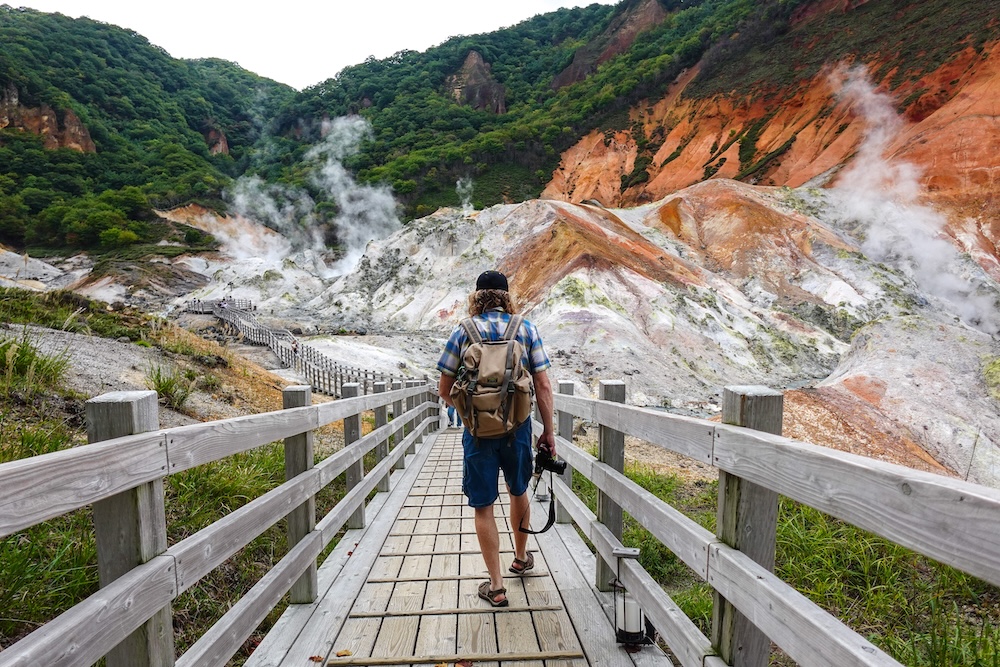
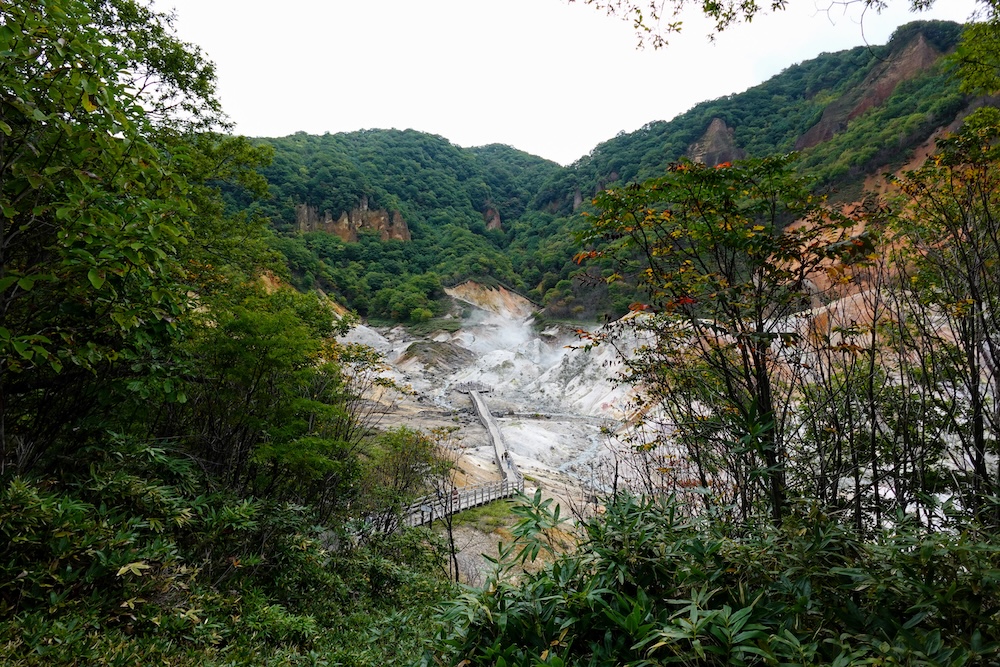
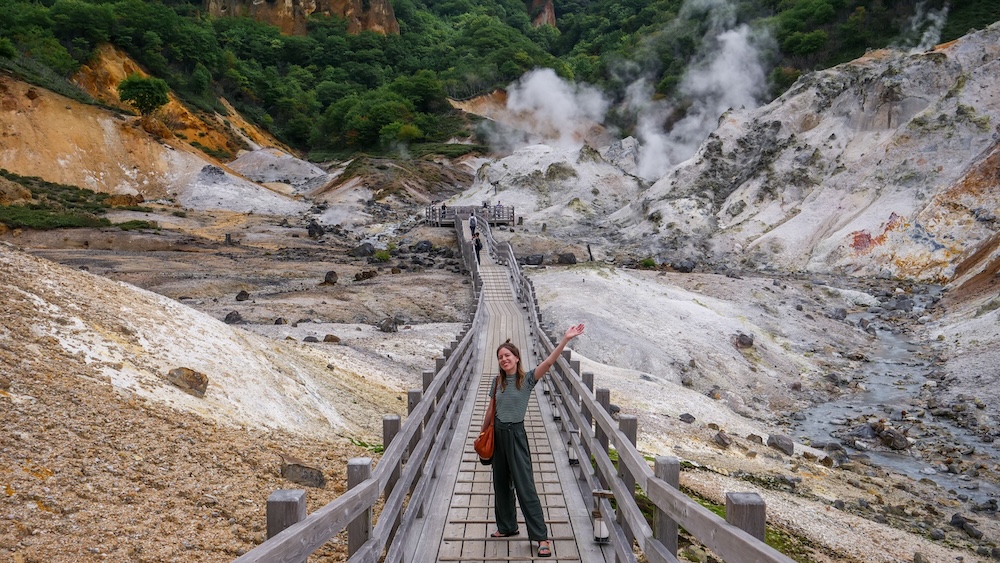
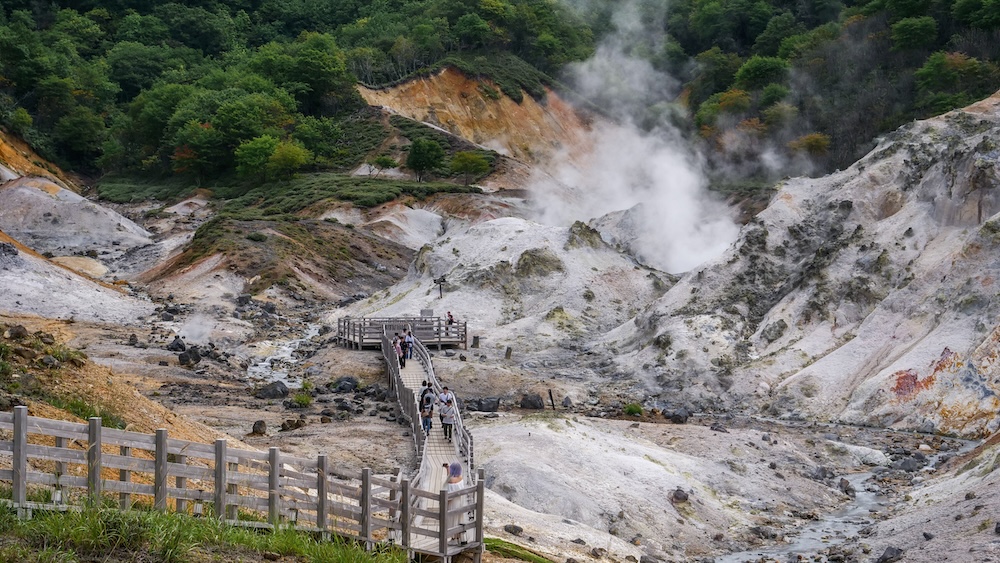
Hell Valley itself is the easy part. A ramp with a maximum gradient of 8 per cent runs from the Park Service Center up to the main observation deck, so you can take in the whole crater without setting foot on a trail. From there, the main boardwalk runs about 568 metres into the valley. That’s roughly a ten-minute walk if you don’t stop, mostly on wooden boards, though some stretches are gravelly or muddy and can get slippery when wet. Side branches, like the stairs down to the small Yakushi Nyorai hall, add a few steps if you take them.
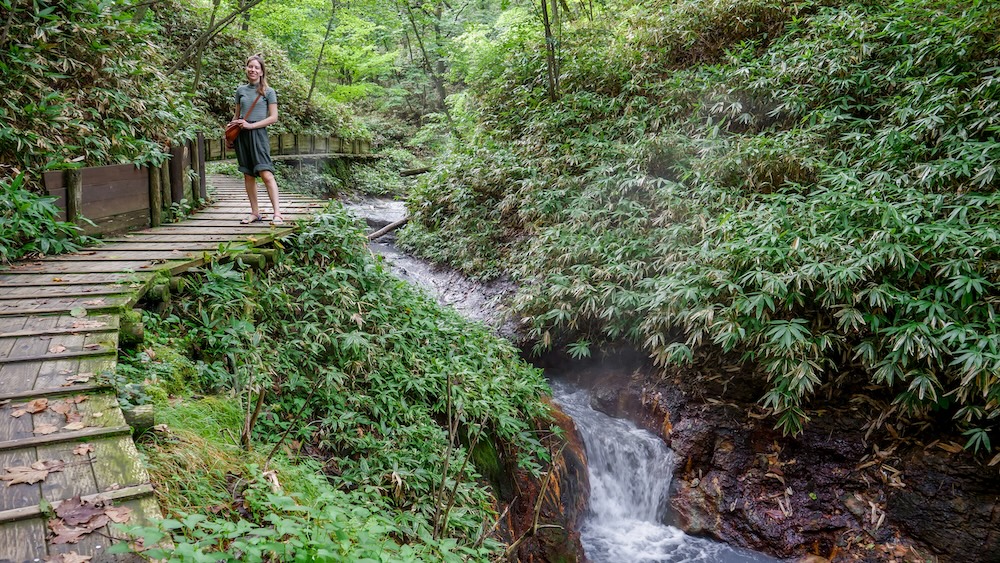
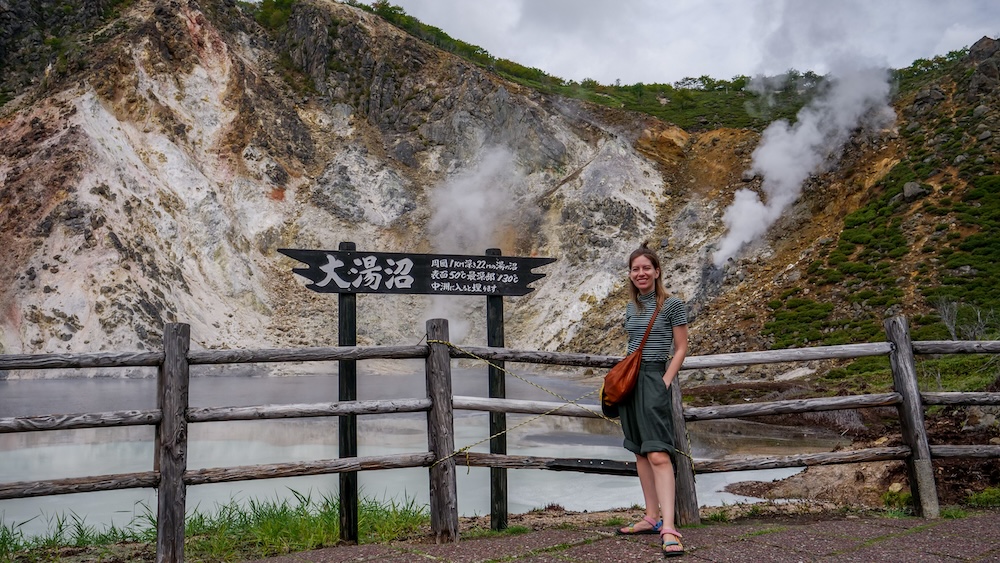
The effort begins once you leave the valley floor. From Tessen Pond, the promenade toward Oyunuma gets gradually steeper as it climbs through the forest, and it takes about 20 minutes to reach Oku-no-yu and the crater lake. There are restrooms near Oyunuma, which makes it a natural spot to catch your breath halfway round.
The steepest footing on the whole loop is the stretch between Oyunuma and the natural footbath. The trail follows the steaming Oyunuma river, and its stairs have a high rise, which is harder on the knees than the short distance suggests. From the footbath, the standard route loops back to the Park Service Center along another forest path.
A guided walk covering the full loop comes in at about three kilometres with roughly 50 metres of elevation change, and it’s rated intermediate. Those numbers are modest. The rating reflects the footing and the stairs rather than the length. Somewhere along the forest trail that morning, the running joke was that the path was about to get seriously difficult, before conceding that we’d just keep walking. That’s about the size of it for anyone with reasonable fitness.
| Section | Footing | Effort | Who it suits |
|---|---|---|---|
| Observation deck | Ramp, max 8% gradient | Easiest | Almost everyone, including those with limited mobility |
| Hell Valley boardwalk (about 568 m) | Mostly wooden, some gravel and mud, steps on side branches | Easy | Most visitors, with care on wet sections |
| Oyunuma promenade (about 20 minutes) | Forest path, gradually steeper | Moderate | Reasonably fit walkers |
| Oyunuma river trail to the footbath | Stairs with a high rise | Steepest footing on the loop | Steady walkers, easier going downhill |
| Return to the Park Service Center | Forest path | Moderate | Anyone completing the full loop |
Don’t Do What We Did With Footwear
I was in my Keens and Audrey was in flip-flops. We made the most of it and got round the whole loop, but I wouldn’t recommend it to anyone. Our footwear was great once we reached the footbath and not ideal anywhere else.
You’ll be much better off in hiking shoes, boots or a decent pair of runners. The forest trails are uneven in places, and those high stairs by the river are exactly where you want proper grip and support under you. If you’re planning to stop at the footbath, throw a pair of sandals or flip-flops in your bag and change into them when you get there. That way you get easy on-and-off footwear for soaking without hiking the rest of the trail in shoes that were never built for it.
Which Direction Is Easier
The standard way to walk the loop starts at Hell Valley and finishes at the footbath, which means you go down those high river stairs rather than up them. For most people, and especially anyone who doesn’t love steps, that’s the easier direction.
We went the other way round. We started at the footbath and climbed up through Oyunuma into Hell Valley, which in hindsight made less sense for our legs. The payoff was having the footbath almost entirely to ourselves early in the morning, and I’ll happily call that a win. If you’re fit and keen to beat everyone to the footbath, the uphill direction is perfectly manageable. If the stairs worry you at all, start at Hell Valley and let gravity do some of the work on the way down.
If you’d rather have someone else set the pace and sort out the logistics from Sapporo, one guided day trip follows that easier direction, walking Hell Valley first and then taking the forest trail down to the natural footbath before a soak at Dai-ichi Takimotokan. We haven’t done it ourselves, so check the pace and inclusions of the guided Hell Valley and footbath walk before booking, especially if steps are a concern.
Heat, Season and Who Should Stick to the Easy Parts
The heat caught us a little off guard. The forecast on our late-September visit was only 22 to 24°C, yet between the hot springs, the steaming vents and the ground itself, the valley felt warm and noticeably humid. That makes every climb feel harder than it looks on paper. On a warm day, the earlier you start the better, but do it in full daylight. Noboribetsu City confirmed brown bears crossing the road into the onsen town around dusk twice during the summer of 2026, and it advises against being out near sighting areas in the early morning and after dark.
Sleeping in the onsen town is the simplest way to get that early, cooler start without worrying about bus times. We stayed at Park Hotel Miyabitei, a big resort-style hotel within walking distance of the trails, and were out the door and walking soon after breakfast. If that suits you, see current rooms at Park Hotel Miyabitei, or compare other hotels close to the Hell Valley trails if you’d prefer a different style or budget.
The season changes things too. Once snow arrives, every trail except the main Jigokudani boardwalk closes, so winter visitors are limited to the deck and the boardwalk. Whatever time of year you visit, it’s worth picking up a map at the Park Service Center and asking about current trail conditions before you set off.
As for who the trails suit, they favour people in reasonable shape. For young children, anyone with limited mobility or families pushing strollers, the full loop isn’t ideal. The ramp gets you to the observation deck without any trouble. Beyond that, expect a boardwalk with occasional steps and forest trails with proper stairs.
My rule is straightforward. If you’re reasonably fit and wearing proper shoes, do the full loop, heading downhill from Hell Valley if you want it easier on your knees. If the stairs give you pause, walk the boardwalk out to Tessen Pond and turn back there. And if walking is difficult at all, head for the observation deck. You won’t be missing out, because I think it has the most impressive view in Hell Valley anyway.
Frequently Asked Questions
Are the Hell Valley walking trails difficult?
Not if you’re in reasonable shape. The Hell Valley boardwalk is easy, and the effort comes from the gradually steeper forest climb toward Oyunuma and the high-rise stairs near the natural footbath. A guided walk covering the full loop is about three kilometres with roughly 50 metres of elevation change and is rated intermediate.
What shoes should you wear for the Hell Valley trails?
Hiking shoes, boots or a decent pair of runners. I wore Keens and Audrey wore flip-flops, and while we got round the whole loop, I wouldn’t recommend it. Pack sandals or flip-flops separately if you plan to use the footbath.
Which direction is easier to walk the loop?
Starting at Hell Valley and finishing at the footbath is easier, because you go down the high river stairs rather than up them. We walked it uphill from the footbath, which was harder on the legs but got us the footbath almost to ourselves early in the morning.
Is Hell Valley suitable for strollers or limited mobility?
A ramp with a maximum gradient of 8 per cent runs from the Park Service Center to the main observation deck. Beyond that, expect a boardwalk with occasional steps and forest trails with proper stairs, so the full loop isn’t ideal for strollers, young children or anyone with limited mobility.
Does the heat make the trails harder?
It does. On our late-September visit the forecast was only 22 to 24°C, but the valley felt warm and humid. On warm days, start early in full daylight, since Noboribetsu City has advised against being out near bear sighting areas in the early morning and after dark.
Are the Hell Valley trails open in winter?
Once snow arrives, every trail except the main Jigokudani boardwalk closes, so winter visitors are limited to the observation deck and the boardwalk. It’s worth asking about current trail conditions at the Park Service Center before setting off.
This guide is also available in Spanish. [Leé la versión en castellano: ¿Qué tan difíciles son los senderos de Hell Valley?]
This article contains affiliate links. If you book through one of these links, I may earn a commission at no extra cost to you.