
I went to Sapporo expecting to spend most of my time filming, eating and figuring out how to get from one attraction to the next. Audrey and I were making a city guide, and still photography was something we squeezed in between video clips, subway journeys and the occasional urgent search for shade. We weren’t waiting around for perfect sunrise light; we had a city to explore.
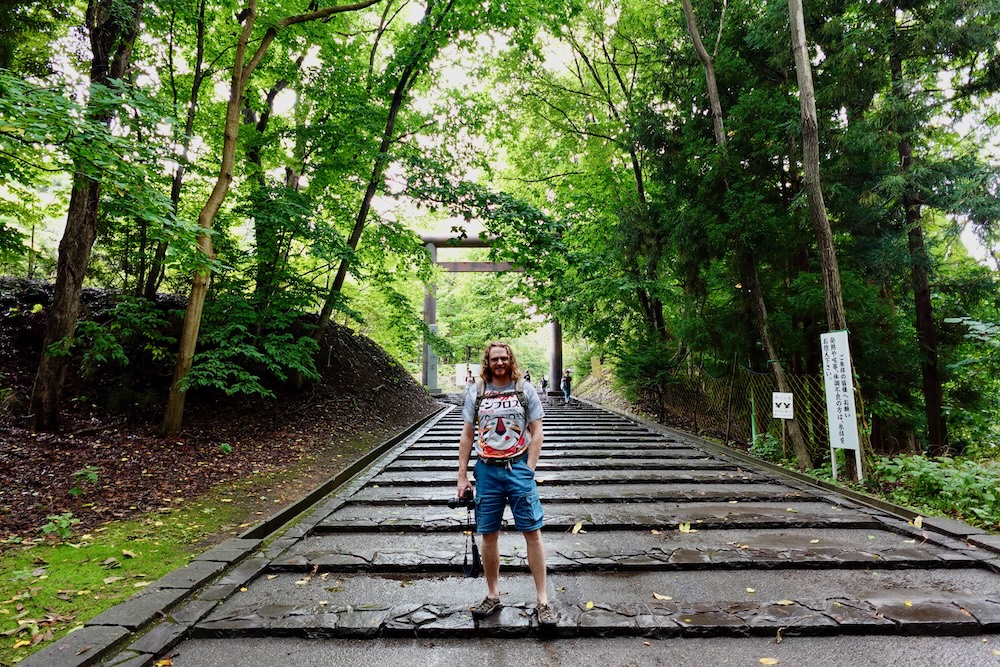
And yet some of my favourite pictures from the trip weren’t of the obvious Sapporo landmarks. They came from the green spaces: enormous trees, smaller details in the forest and the sort of patchy light that makes me want to keep walking just to see what’s around the next bend. We also found ourselves photographing giant Moai statues, a Buddha emerging from a hill, sculptures in the woods and a food festival we hadn’t even known was happening.
These are the Sapporo photo spots I remember most fondly, what made them interesting and which ones I’d prioritize with limited time. This is the Sapporo we actually explored, not an exhaustive list.
Our approach to photographing Sapporo
Our main camera was a Panasonic Lumix GH5 Mark II, a mirrorless camera with a standard focal-range lens, and we also carried a point-and-shoot. Most of the time, I was thinking about our next video scene rather than working through a photography checklist.
That approach comes with compromises. We didn’t build our days around sunrise or sunset, and I wouldn’t claim to know the perfect hour for a particular Sapporo photograph after visiting it once. Sometimes the light was harsh, sometimes it had been raining, and on our first day the September heat was enough to make stopping for ice cream feel like a survival strategy. Occasionally, you get lucky.
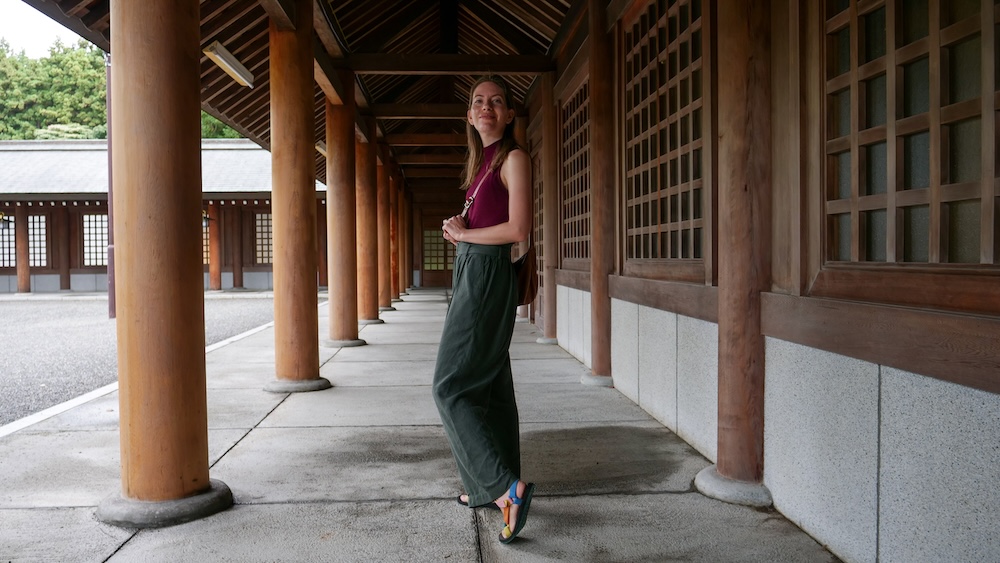
Travelling as a couple helped. Audrey and I could put each other into a frame to give a landscape scale, and I enjoyed natural moments as much as empty scenes. The quieter, wooded stops were where I most wanted to pull the camera out again.
Maruyama Park, Hokkaido Jingu and the forest: where I most enjoyed taking pictures
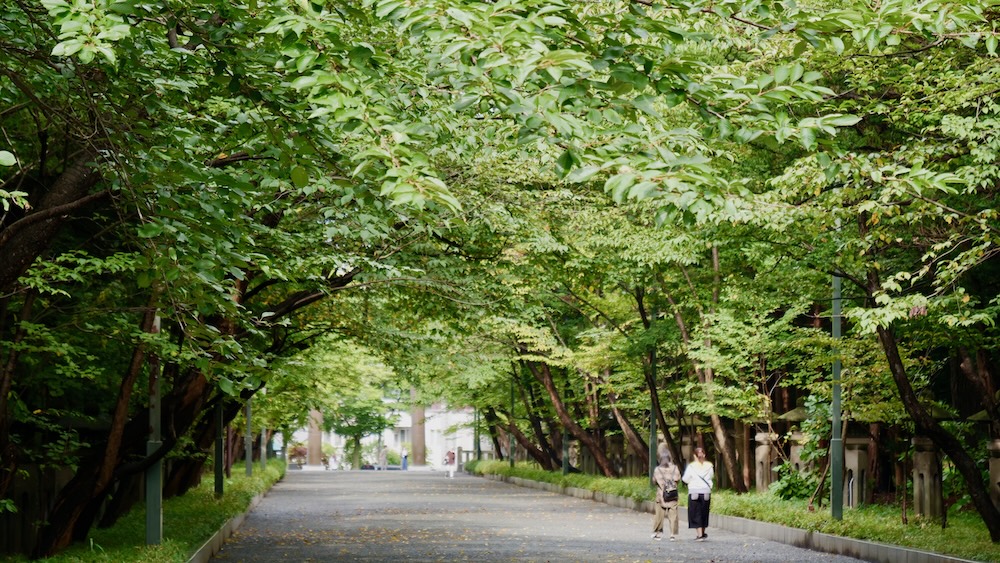
Maruyama was the green escape I hadn’t realized I needed. After days of urban sightseeing, the park felt like another side of Sapporo. Rain had left the greenery especially rich, and there were few people around. The huge trees around Hokkaido Jingu made an immediate impression on both of us.
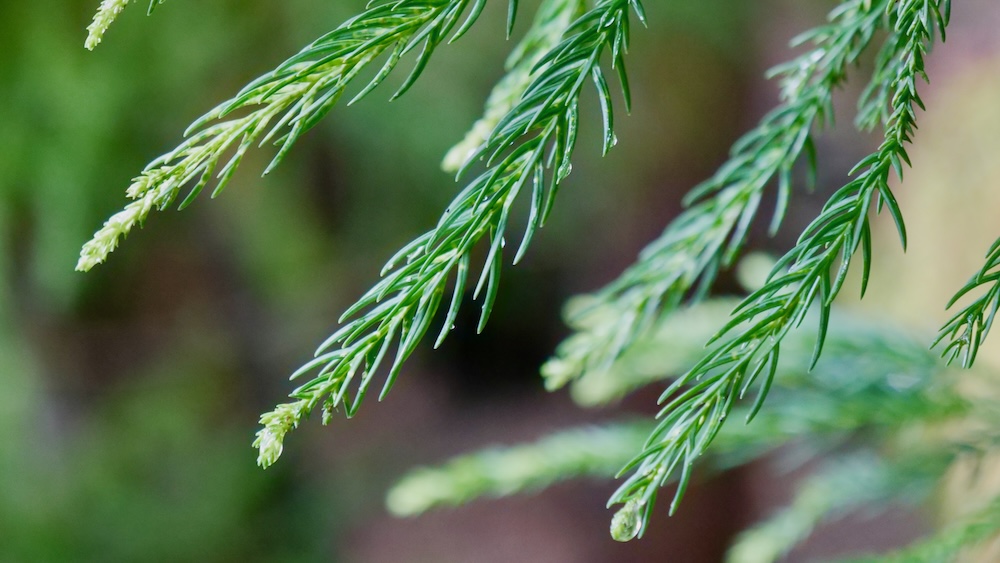
For photography, I love having shade and light to play with. A big tree can be photographed as part of a forest scene, but the smaller details can be just as interesting: bark, branches, leaves or an unexpected bit of sunlight in an otherwise dark patch. Including Audrey or me in a wide shot gave the trees scale and let us try couple compositions.
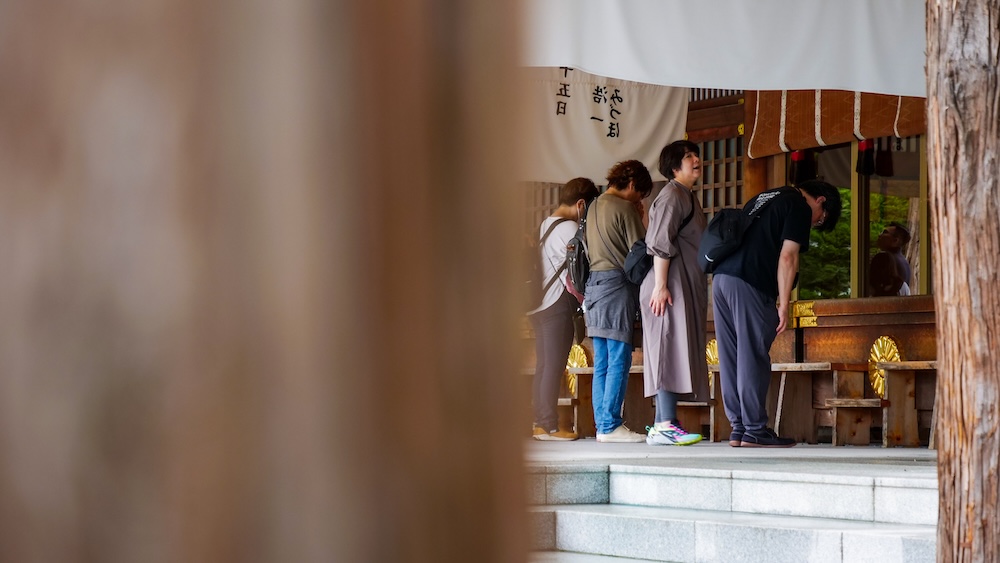
The shrine offers a different visual setting, with architecture and pathways framed by trees. It’s an attractive place for travel photography, although I wouldn’t treat people visiting a religious site as props for a candid shot. Respect worshippers, ceremonies and requests not to photograph particular areas. Hokkaido Jingu also has specific rules concerning commercial and monetized shoots, so anyone planning that kind of work should check the shrine’s photography guidance beforehand.
Our walk continued toward the primeval forest, where I was genuinely surprised by the size and variety of the trees. We encountered bear-warning signage, too. We didn’t see a bear, but our interpretation of a sign on that particular day is no substitute for checking current conditions. The forest is a protected natural monument, and visitors must stick to designated trails rather than heading off into the undergrowth because a patch of light looks tempting.
I’d choose Maruyama ahead of another city-centre monument if your favourite subjects are trees, woodland scenes and details that reward slowing down. I wouldn’t promise perfect light or an empty path on every visit. What I can say is that this was the kind of environment where I felt most inspired to photograph Sapporo.
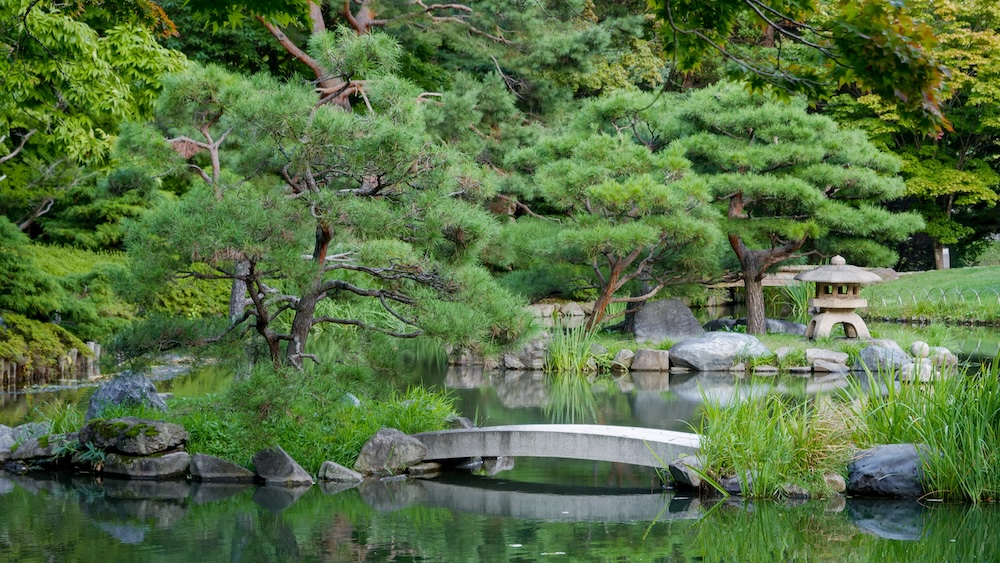
Nakajima Park’s Japanese Garden: an unexpected favourite close to our hotel
We were staying near Nakajima Park, and our hotel overlooked it, but we took our time exploring. We eventually wandered through during a sunny spell. We visited the historic Hoheikan building, which I found a little bare inside, then spent time around the Japanese Garden. That was the part I particularly enjoyed.
The wider park has a pond and walking paths, while the Japanese Garden offers a more contained scene with vegetation, water and carefully arranged features. I liked looking for smaller compositions rather than trying to cram the entire setting into a single photograph. Travelling together also gave us the option of including each other in the scene.
We were already based nearby, so the garden became a photographic bonus rather than a dedicated excursion.
There is one practical catch: the Japanese Garden has its own gates and seasonal opening arrangements, separate from the surrounding park. Normal daytime admission is free, with hours generally from 9 a.m. to 5 p.m., but it closes in winter and special events can operate differently. Don’t arrive with a grand plan for a late-evening golden-hour session only to discover that the garden has shut. Check the Nakajima Park visitor information before you go.
For anyone who likes having greenery within easy reach, staying around Nakajima Park has a genuine appeal. Being nearby meant we could explore without making a special journey across town. If that sounds like your kind of Sapporo base, you can compare hotels in the Nakajima Park area; just check each property’s actual distance from the park and subway before booking.
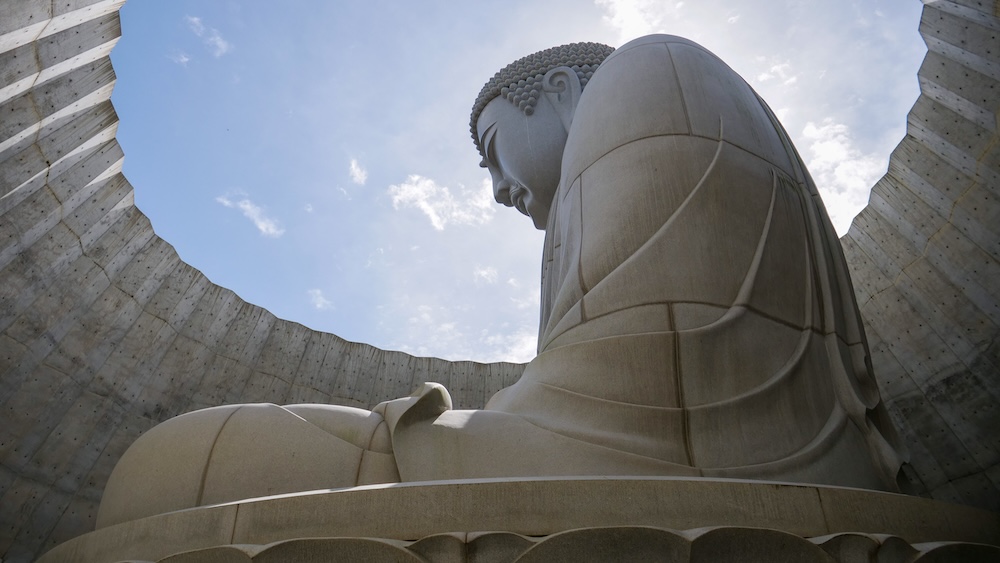
Moai statues and Hill of the Buddha: playing with scale and perspective
Audrey was responsible for one of our strangest Sapporo outings. She hadn’t fully explained where we were going, so after a subway ride and a longer bus journey into the southern outskirts, I found myself looking at giant stone faces lined up in a cemetery. I made some remark about unexpectedly returning to Easter Island. Not exactly what I’d pictured for a day exploring a Japanese city.
Makomanai Takino Cemetery turned out to be one of the most interesting places to work with a camera. The Moai statues and Hill of the Buddha are huge subjects, and what they look like changes dramatically with your distance, framing and focal length. That made experimenting with compositions part of the fun.
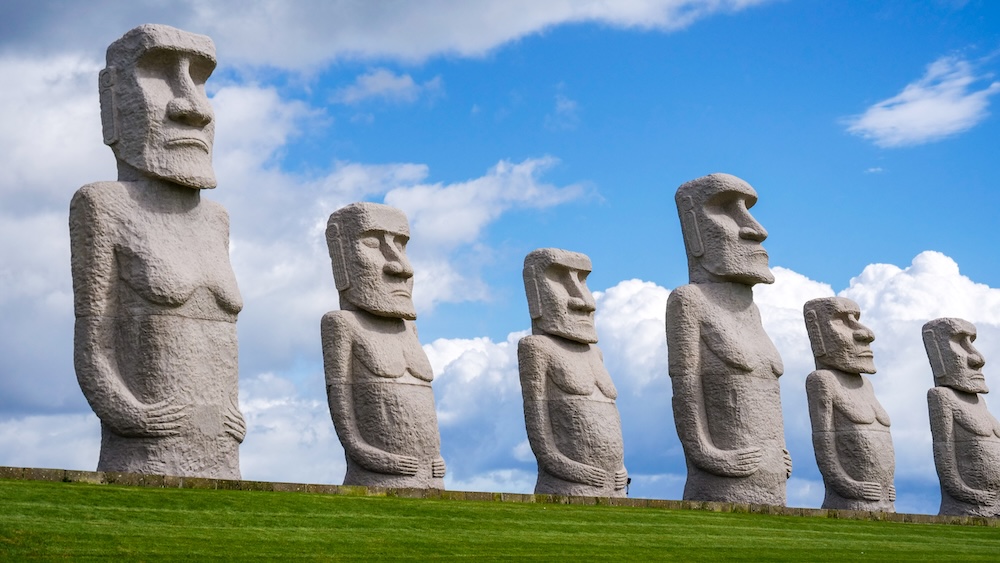
The Moai: repetition, distance and giant faces
The line of Moai statues offers two very different starting points. From farther away, the repeated figures become the subject and you can include more of the surrounding landscape. Move closer and a single face or a smaller grouping takes over the frame, while the other figures provide context or recede into the background. I enjoyed how changing my position altered the relationship between them.
A tightly framed face looks imposing, while a wider picture shows how the statues occupy the landscape. I liked having both options.
The cemetery is, of course, a cemetery. Treat it with the same respect you’d give any active memorial space, rather than climbing about or ignoring boundaries to get a cleaner background.
Hill of the Buddha: the approach changes the photograph
The Buddha is almost the opposite photographic problem. Tadao Ando’s design deliberately conceals much of the 13.5-metre seated statue within a landscaped hill, so at first you see its head above the rise. Continue toward it, pass the water feature and enter a tunnel of roughly 40 metres, and the full figure finally comes into view. We experienced these changes as we approached, and I found the shift in scale particularly compelling.
A distant picture emphasizes the unusual way the statue appears to emerge from the landscape; a closer composition is dominated by the Buddha and the surrounding architecture. I liked being able to think about the same subject in such different ways. That gave me more to work with than a single fixed viewpoint.
This is one photo stop where the practical details really matter. The Buddha’s admission area currently costs ¥1,000 per adult, and visiting hours are generally 9 a.m.–4 p.m. from April to October and 10 a.m.–3 p.m. from November to March. Those hours are shorter than the cemetery’s overall access, so don’t assume arriving late will get you inside the tunnel. Visitors must also stay out of restricted lavender and water areas, and commercial photography requires permission. Check the Hill of the Buddha’s current rules and hours before setting out.
We also saw the cemetery’s Stonehenge replica, but weren’t allowed to cross the grass to approach it. I used my zoom from the permitted viewing position instead. Changing the composition beats crossing a boundary for a photo.
Allow time for the journey. The cemetery currently directs visitors to bus 108 from Makomanai Station, following the subway trip from central Sapporo; check the current schedule instead of relying on an old route number. I’d prioritize it for monumental photography, not wedge it between downtown attractions.
If coordinating the southern trip sounds like a nuisance, a current private Sapporo tour visiting the Moai and Hill of the Buddha includes hotel pickup and transport, with other stops and some itinerary flexibility. We did this excursion independently, and the tour isn’t a dedicated photography workshop. I’d confirm how long you’ll have at the monuments before booking, particularly if you want time to experiment with different compositions.
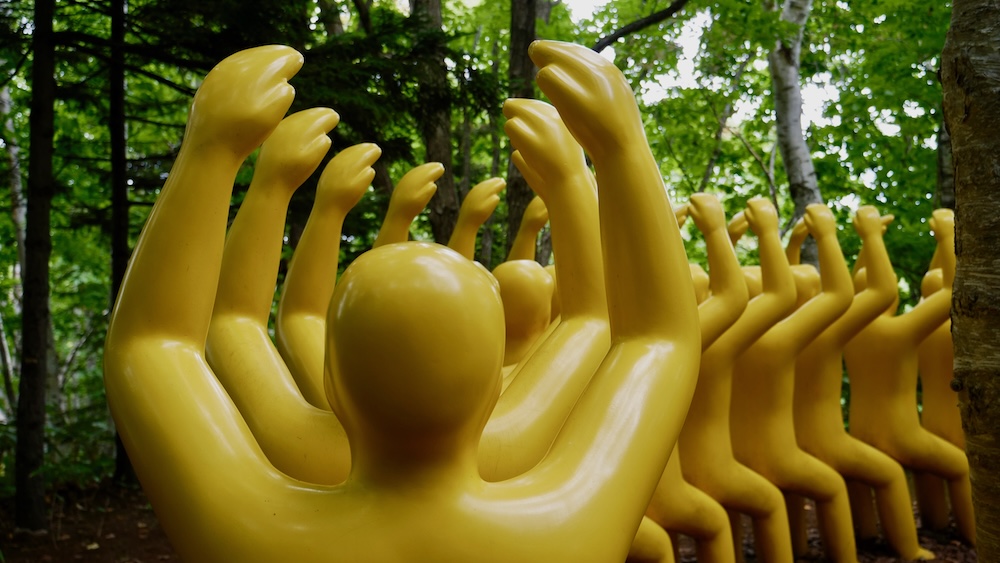
Sapporo Art Park: where sculpture and forest photography meet
On the same broader outing south of the centre, we also visited Sapporo Art Park and concentrated on its Open-Air Museum. There were wooded paths, stepping stones, streams, moss and ferns, with sculptures appearing as we walked. We concentrated on the outdoor sculptures; the forest walk itself was enjoyable.
What makes this setting different photographically is that the art doesn’t sit against a blank gallery wall. The trees, ground cover and contours are part of the visual experience. You can frame a sculpture closely to study its shape or step back and give it room within the woodland. It was an ideal combination of my favourite subjects.
The Open-Air Museum holds 74 works by 64 artists across approximately 7.5 hectares. That’s enough ground to make the visit feel like a proper walk, including slopes and steps, rather than a quick sequence of statues beside a car park. Expect to walk to find the compositions that interest you.
Adult admission is currently ¥800, payable in cash, and the regular outdoor season runs from late April to early November, subject to individual closures. The sculpture museum is distinct from other parts of Sapporo Art Park, and organized commercial shoots may require an advance application. Check the Open-Air Museum’s visitor information for the current arrangements.
I wouldn’t treat it as interchangeable with the Moai or the Buddha just because all three feature big pieces of art. At Art Park, much of the photographic interest came from the relationship between a sculpture and the forest around it.
Sapporo TV Tower and the centre: panoramic views versus street-level pictures
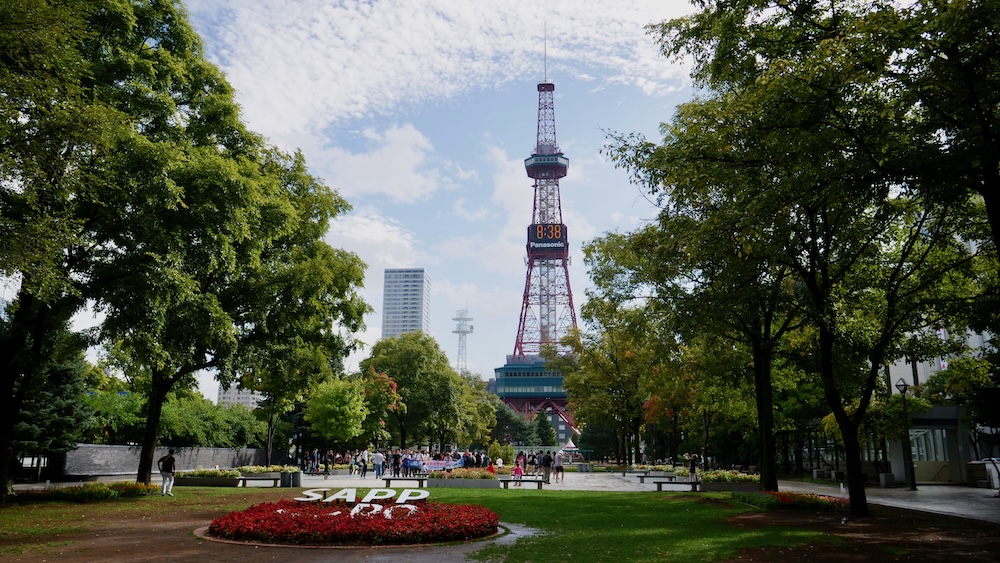
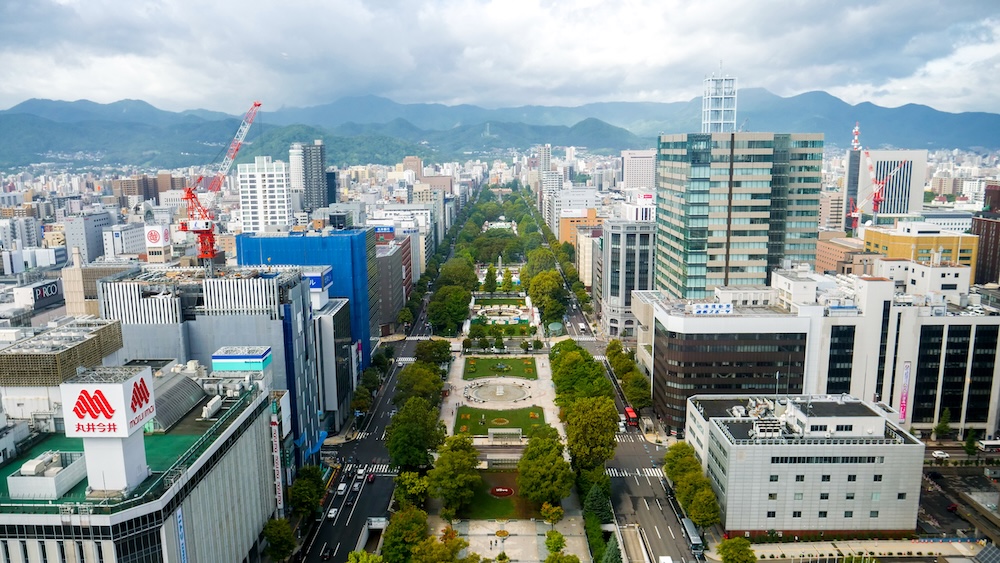
We did photograph Sapporo’s conventional landmarks, and the TV Tower gave us our strongest elevated city view. I’d been looking forward to seeing the mountains beyond the buildings, and once we reached the observation deck, looking west along Odori Park was my favourite direction. The long green corridor, the street grid and the surrounding city all become part of the same broad picture.
Getting up there was slightly less relaxing. The exposed elevator made my hands clammy and left me sweaty, and I was very aware of how high we’d climbed. Fortunately, the view from roughly 90 metres above ground made it worthwhile. Heights bother me more than some travellers, so your reaction may differ.
Think about the two different photographs available here. From Odori Park, you’re photographing the TV Tower itself, with the structure as your subject. From its observation deck, you’re paying to photograph the city from above. Current adult admission is ¥1,200, and while the deck normally operates into the evening, tripods aren’t permitted. We didn’t try night photography there. The TV Tower’s official FAQ covers the photography restrictions.
The nearby Clock Tower supplies another photographic contrast: a historic Western-style building surrounded by the modern city. We visited it after the TV Tower. You can photograph the exterior from public surroundings without buying an interior ticket, which is currently ¥350 for adults. Its management also has procedures for commercial photography and image publication, so planned professional or monetized use deserves a separate check. For this guide, the Clock Tower’s appeal is its architecture and setting; I’m not going to claim it was where we found our most inventive compositions.
Autumn Fest: the pictures we didn’t plan
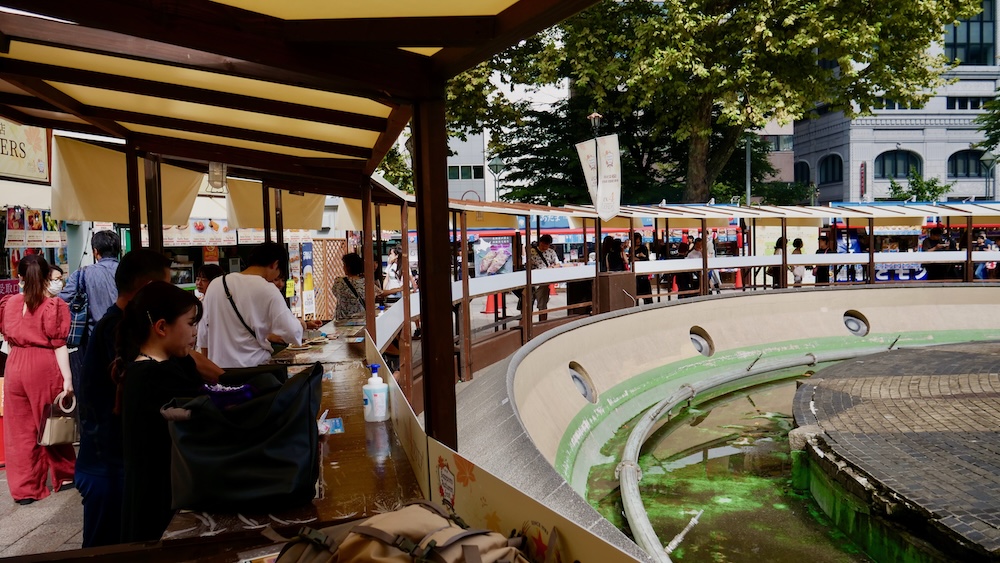
One of the nicest surprises happened while we were exploring Odori Park. We stumbled upon Sapporo Autumn Fest and suddenly had a whole collection of food stalls, colourful dishes and people preparing meals in front of us. We hadn’t planned our day around a festival. We were hungry, there was an enormous amount to choose from, and our lunch plans were quickly rewritten.
I enjoy photographing that sort of incidental travel detail because it adds a different flavour to the collection. The monumental sights aren’t going anywhere while you compose your frame; a food stall or a little moment between people is much more fleeting. Food preparation and the overall scene provide plenty of subjects without intruding on strangers.
Autumn Fest is seasonal, usually taking place in September and into early October, with dates and vendors changing by year. We happened to catch it. If you don’t, Odori Park is still there for city photography, but you won’t find the same temporary scenes we enjoyed.
Where I’d spend my photography time in Sapporo
If photography was my main priority on a return trip, I’d try to leave some flexibility for light and weather instead of moving relentlessly from one scheduled attraction to another. I’d choose places based on the photographs I actually wanted, rather than zigzag across town collecting landmarks.
| If you’re after… | I’d consider… | What to keep in mind |
|---|---|---|
| Trees, shade and forest details | Maruyama Park and accessible forest paths | Stay on designated trails; respect shrine rules |
| Garden scenes and couple photographs | Nakajima Park’s Japanese Garden | Free during normal opening, but seasonal and gated |
| Giant monuments and changes of perspective | Moai statues and Hill of the Buddha | Southern trip; Buddha admission and restricted areas |
| Art in natural surroundings | Sapporo Art Park Open-Air Museum | Paid, seasonal and spread across wooded terrain |
| A broad city panorama | Sapporo TV Tower | Paid observation deck; no tripods |
| Street-level architecture | Clock Tower and Odori Park | Easy central access; separate commercial-use rules |
| Food and spontaneous scenes | Autumn Fest when running | Seasonal, crowded and impossible to reproduce exactly |
For sightseeing photographers, I’d build on wherever you’re already exploring and make time for one place that particularly interests you. I’d personally give Maruyama plenty of time, especially if conditions were good for walking in the forest. I’d happily return to the Buddha and Moai with more photographic freedom in our schedule, too, but I’d plan the southern excursion as a proper outing rather than pretending it can be squeezed into a spare half-hour.
And that’s probably the biggest lesson I took from our Sapporo photographs. I could have spent the whole trip chasing supposedly perfect viewpoints and still missed the quiet garden beside our hotel, the details in the woods or the food festival that appeared out of nowhere. Next time I’d watch the light more carefully, sure. I just wouldn’t let the camera take over the trip.
Frequently Asked Questions
Where are the best photo spots in Sapporo for nature photography?
Maruyama Park and the nearby forest were my favourites for tall trees, shaded paths and smaller natural details. Nakajima Park’s Japanese Garden was another rewarding stop, especially for garden scenes and reflections.
Can you photograph the Moai statues and Hill of the Buddha in one outing?
Yes. Both are at Makomanai Takino Cemetery in southern Sapporo. We explored them on the same excursion, but allow time for the journey from central Sapporo, and respect the cemetery’s restricted areas.
Is Hill of the Buddha free to visit?
Access to the Buddha’s admission area currently costs ¥1,000 per adult. Its visiting hours are shorter than the cemetery’s general access hours, so check the current schedule before travelling there.
Is the Japanese Garden in Nakajima Park open year-round?
No. The Japanese Garden has seasonal access and closes in winter. Ordinary daytime entry is free, with hours generally from 9 a.m. to 5 p.m., separate from the wider park.
Can I use a tripod at the Sapporo TV Tower observation deck?
No. Tripods are not permitted on the observation deck. We enjoyed photographing the westward view along Odori Park, but we didn’t test nighttime photography there.
Do I need a car to reach the Moai statues?
Not necessarily. We travelled by subway and bus. The cemetery currently directs visitors to bus 108 from Makomanai Station; check the latest timetable, or consider a private tour if you prefer arranged transport.
Which Sapporo photo locations require an admission fee?
The TV Tower observation deck, Hill of the Buddha’s admission area and Sapporo Art Park Open-Air Museum charge admission. Maruyama Park and ordinary daytime access to Nakajima’s Japanese Garden are free, subject to their respective rules and opening arrangements.
This guide is also available in Spanish. [Leé la versión en castellano: Los mejores lugares para sacar fotos en Sapporo: dónde tomamos nuestras fotos favoritas]
This article contains affiliate links. If you book through one of these links, I may earn a commission at no extra cost to you.