
Sapporo is one of the easier cities in Japan to find your way around. The streets run in a grid, the subway is simple, and nothing about the place feels rushed. That ease is exactly what lulls first-timers into small planning errors. You tend to discover them only when you’re standing at the wrong bus stop, turning up at a market after the best of it has gone, or reaching a shrine gate that closed an hour earlier.
When I asked myself what we got wrong on our four nights in Sapporo, my honest first answer was, “Jeez, maybe nothing.” We’d given the city plenty of time, and that extra slack covered for a lot. But we did slip up a few times, mostly in small ways. Since then I’ve dug into the traps that tend to catch other first-timers, especially the seasonal ones, the logistical ones, and a couple that come down to expectations that no longer match reality. What follows mixes the two. I’ll be clear about which mistakes were ours and which are simply worth knowing before you book.
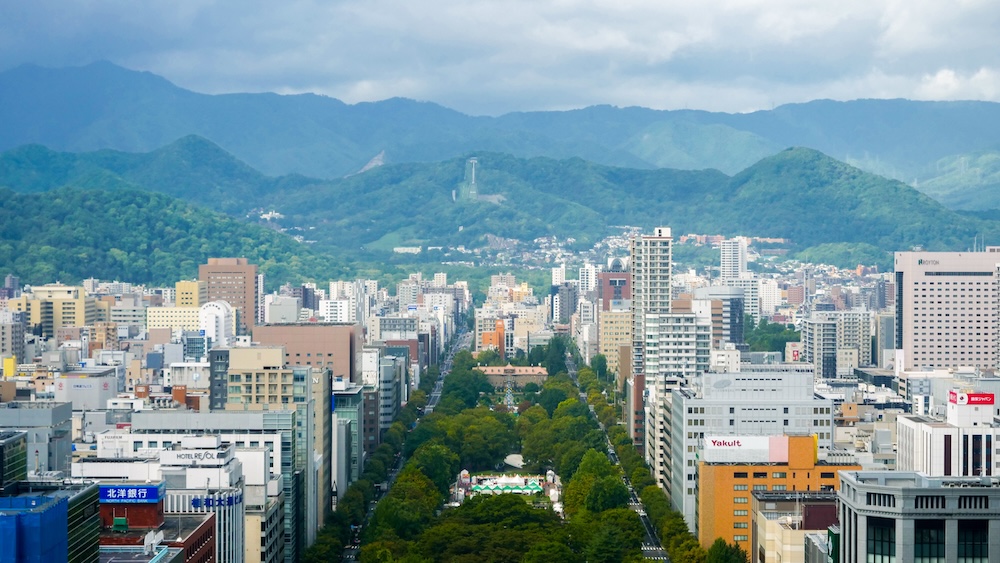
The Biggest Mistake: Treating Sapporo Like a Compact City
If I had to pick one mistake above all the others, it’s trying to do too much too soon. Downtown Sapporo looks tidy and walkable on the map, so it’s natural to assume the whole city works the same way. It doesn’t. The best things to see are scattered across separate areas, each with real transit time attached, and cramming too many of them into too few days means you’ll see more of the inside of trains and buses than of the places you came for. How many days to give the city is a subject in itself, and I’ve covered it separately.
The second mistake is underestimating the weather. Late September in Sapporo felt like summer in many other parts of the world. The long-term average high that month is only about 23°C, but our first days were closer to 30°C and properly humid. What kept the trip enjoyable wasn’t toughing it out; it was pacing. We sure took some siestas, and we never tried to stuff a day until it burst. That’s the main reason there’s so little I’d change about how we did it.
The practical upshot is that one or two extra nights are worth more than any amount of clever scheduling. If you’re still deciding on the length of your stay, it’s worth comparing hotels across Sapporo for a longer stay before you lock in the rest of your Hokkaido route.
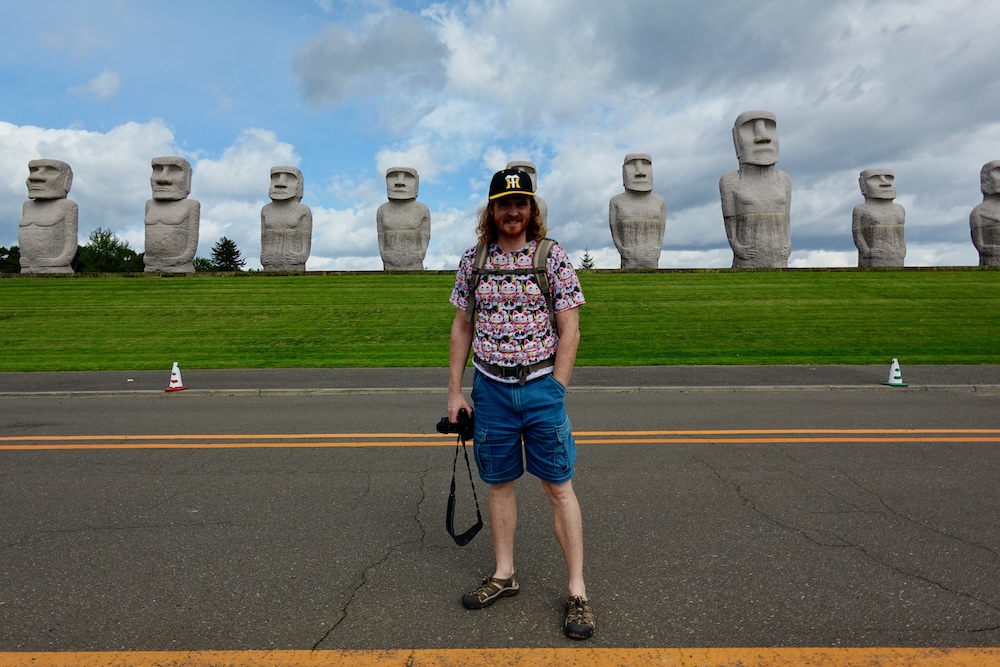
Outskirts Mistakes That Can Cost You a Day
Getting Off the Bus Too Early
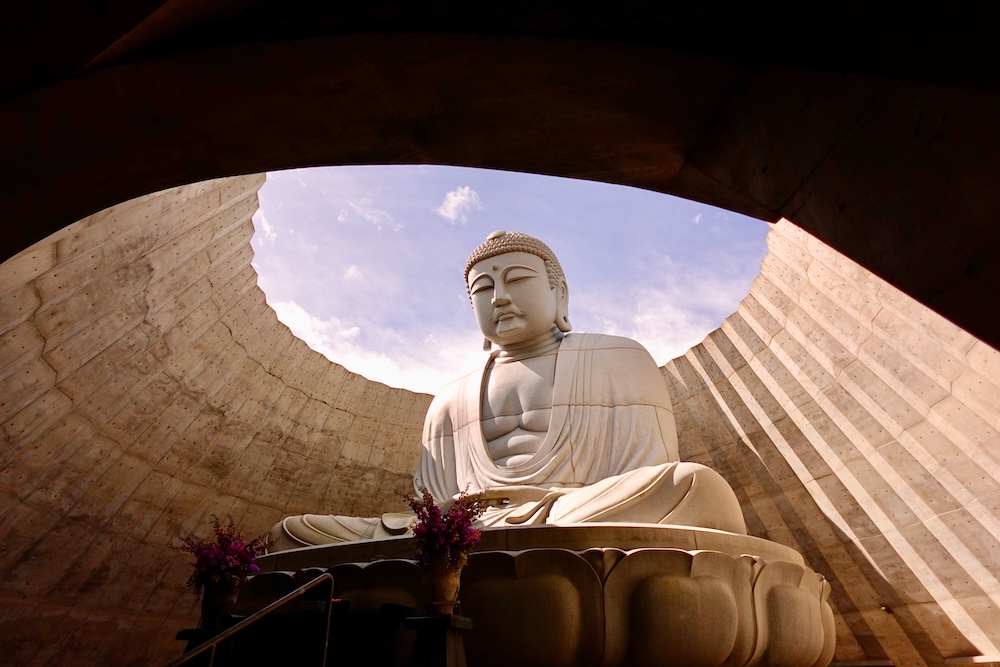
This one was ours. The outskirts day began with the metro to the very end of the line at Makomanai, followed by a long rural bus ride out to Makomanai Takino Cemetery, home of the Moai statues and the Hill of the Buddha. When the bus pulled up near the cemetery’s main area by the Moai and the Stonehenge replica, we got off. Had we stayed on, it would have dropped us right at the Hill of the Buddha entrance. That cost us nothing dramatic, just extra walking on a day that was already long enough.
The fix is easy once you know the route. The bus that serves the Buddha directly is the 108 from Makomanai Station, a ride of about 20 minutes. It stops first in front of the cemetery’s main area and then continues to its final stop, Atama Daibutsu-mae, which is the Hill of the Buddha itself. Stay on until the end. A different route, the 106, stops only at Takino Toge, opposite the cemetery’s main gate beside the Moai, and doesn’t go inside.
Even from the entrance there’s a 135 m approach path and a 40 m tunnel before you reach the Buddha. Bring either a credit card or ¥1,000 notes for the ¥1,000 admission, because the payment machine takes no other cash.
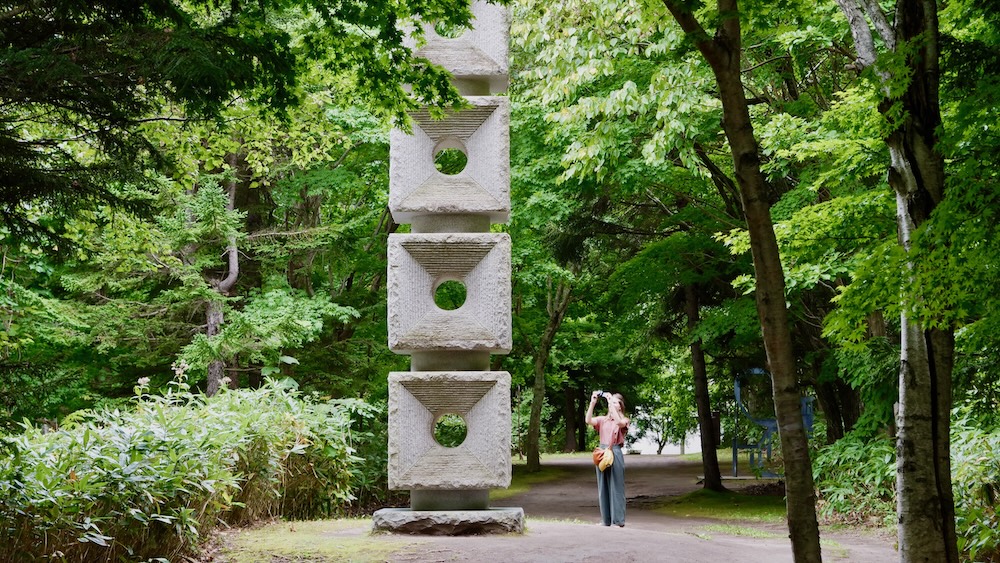
Pairing the Outskirts With Another Big Area
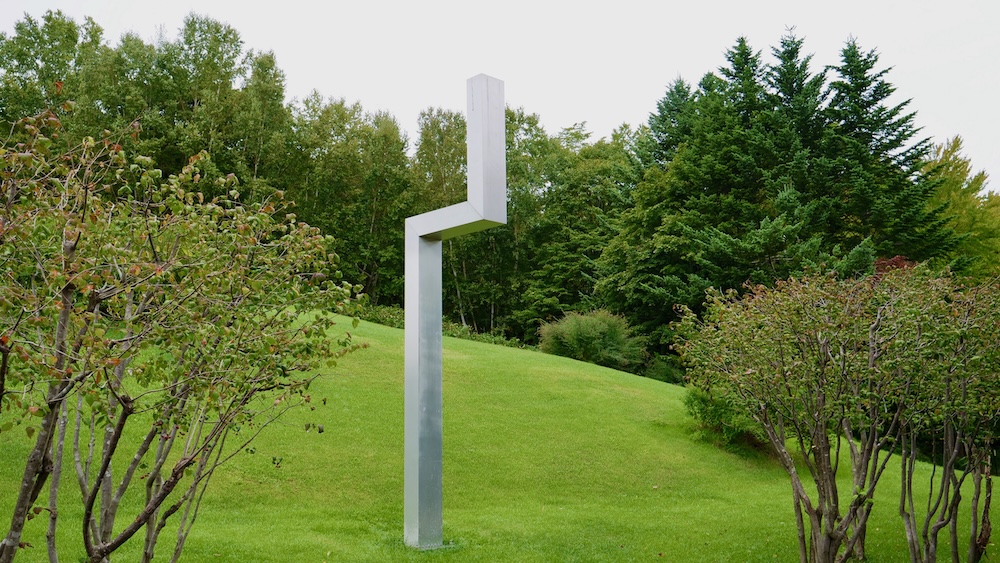
Our second lesson that day was about buffer. Getting out there wasn’t a straightforward A-to-B trip, our timing wasn’t perfect, and by the time we moved on from the cemetery to Sapporo Art Park, we’d already accepted that we couldn’t do the Art Park justice. We stuck to the sculpture garden, 74 works spread through a hilly 7.5-hectare forest, and gave up on the galleries and studios entirely. If you think you can do all of this plus another major area of the city in the same day, expect to finish exhausted and frazzled by the logistics.
At least the two outskirts sights fit together neatly. The same 108 bus stops at the Art Park entrance, Geijutsu no Mori Iriguchi, on its way to the cemetery, so pair those two, accept that you won’t see everything at either, and keep the rest of the day free.
Counting on a Taxi to Get You Back
This is where a tiring day can turn into an awkward one. The 108 runs roughly hourly, mostly through the morning and early afternoon, and its last trip back leaves early. Miss it and a taxi is no sure thing. The cemetery itself warns that it has no taxi stand and doesn’t arrange taxis, that taxis sometimes won’t come at all because of a shortage of drivers in Sapporo, and that taxi companies can be hard to reach in high season or bad weather.
Buses can also fill up. You can’t board once one reaches capacity, and around Obon in August and the spring and autumn equinox weeks, when families come to visit graves, special services replace the regular grave-visit bus. It’s a working cemetery, so it’s naturally busier then. Check the current timetable on the cemetery’s official tourist page before you go, and build your day around the return bus.
We did the whole thing on public transport, and I’d do it that way again. But if juggling an hourly bus with no taxi backup sounds like more stress than you want on holiday, there are guided ways to get there, though I haven’t tried any of them myself. One current option keeps to the local trains and buses but hands the navigating to a guide, combining the Hill of the Buddha with the TV Tower and a sake bar. You can see how the guided Buddha Hill tour works. If you’d rather set your own pace, a private day with a licensed guide can be built around the outskirts. Most coach tours that include the Buddha give it a short stop of roughly 40 to 50 minutes on the way somewhere else, which removes the bus worries but also most of the lingering. If that trade-off suits you, compare the current Hill of the Buddha tours.
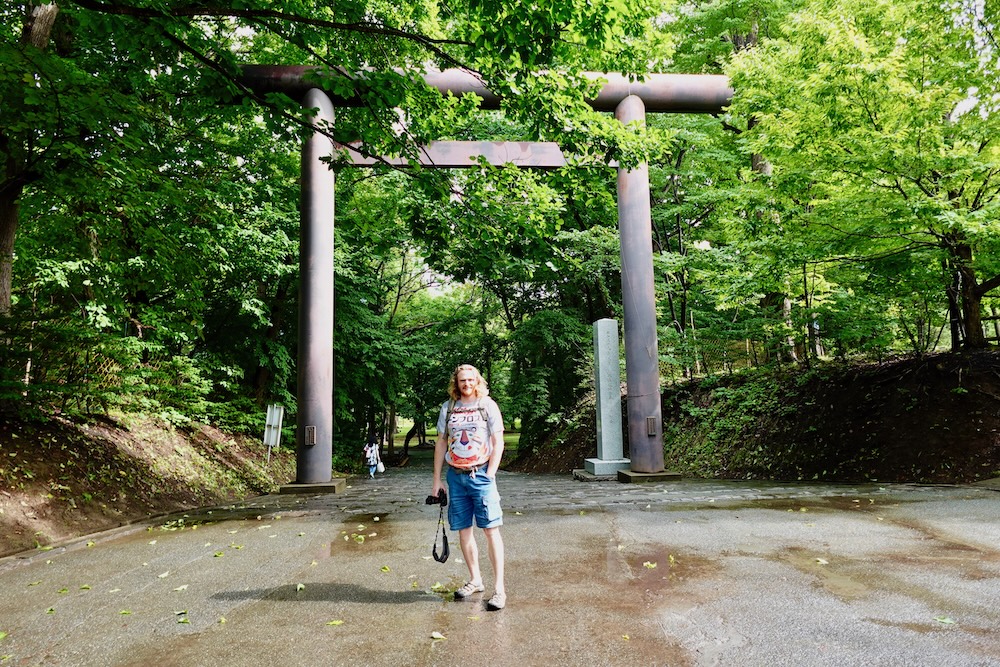
Season and Calendar Mistakes
Planning a Winter Outskirts Day Like a Summer One
Almost everything you’ll read about the outskirts describes the warmer months. In winter, Sapporo Art Park’s sculpture garden closes from early November until late April. The Hill of the Buddha shortens its hours to roughly 10 a.m. to 3 p.m., and its water garden is drained over the same snowy months. Add a sunset around 4 p.m. for most of December, and a winter outskirts day has a hard stop by mid-afternoon whatever you had in mind.
Expecting Autumn Colour in September
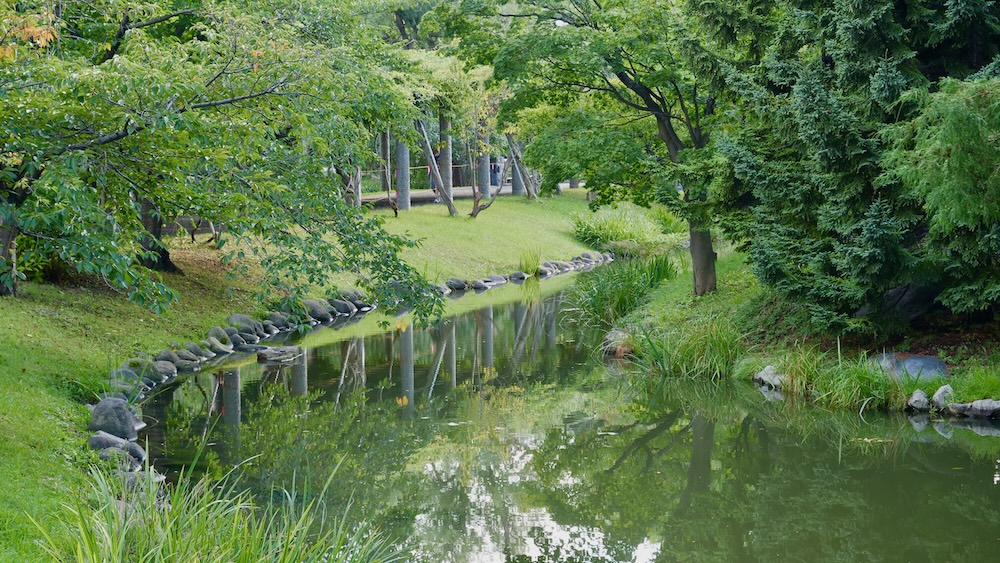
We made a gentle version of this mistake ourselves. Walking Maruyama Park in late September, we were simply too early for the changing leaves. Sapporo’s autumn colour typically peaks from mid-October to early November, when Odori Park, Nakajima Park and Hokkaido University’s ginkgo avenue turn red and gold. September has plenty going for it, but if foliage is the main reason for your trip, aim for the second half of October and check that year’s forecast first.
Not Checking Closures Before a Big Outing
Several of Sapporo’s highlights depend on things you can’t control. The Mt. Moiwa Ropeway suspends service in bad weather and closes every year for a maintenance inspection, usually from late March to late April. Check its current status before building an evening around the night view. Once you know it’s running, the last ascent is normally 9:30 p.m., so there’s no need to rush.
Forest-edge parks can close at short notice too. In November 2025, the city shut Maruyama Park entirely for about two weeks after brown bears were sighted near Maruyama Zoo and Hokkaido Jingu. When we walked the park’s forest trail in September, we passed a warning sign with a bear picture and a date. We couldn’t read the Japanese, but our best guess was that the last sighting had been back in April, and since we were at the bottom of the mountain we decided we didn’t have much to worry about. That’s fine reasoning on a quiet day. It’s less fine when a park has actually been closed, so if a forest walk is part of your plan, look at the city’s bear sightings page first. It’s in Japanese, so a browser translation helps.
Hokkaido Jingu’s own gates close earlier than many visitors expect: roughly 5 p.m. from April to October, and 4 p.m. from November to February. Combine that with winter’s early sunsets and the shrine is the wrong thing to leave for the end of the day. Do the green spaces first and save the central sights, which stay open later, for the afternoon.
Booking a Tight Winter Connection
Hokkaido winters can bring transport to a standstill in a way first-timers rarely expect. On 25 January 2026, heavy snow cancelled dozens of flights and left around 7,000 people sleeping at New Chitose Airport, while JR Hokkaido cancelled more than 500 train services that same day, including trains through the airport station. That was an extreme event, but it shows why a winter plan that pairs a long train journey with an international flight on the same day is a gamble. Leave yourself a buffer day before any departure you can’t afford to miss.
The simplest way to build that buffer is to spend your last night close to the airport trains, so a weather delay costs you a morning rather than a flight. If that’s your plan, look for a final-night hotel near Sapporo Station, where the airport line starts.
The same caution applies to the Sapporo Snow Festival, which runs from 4 to 11 February in 2027. Central hotels are in heavy demand that week, so book as soon as your dates are fixed instead of waiting for prices to soften. You can check festival-week availability around Odori Park, where the main sculptures are.
Food and Sightseeing Mistakes
Heading to the Wrong Market, or Arriving Too Late
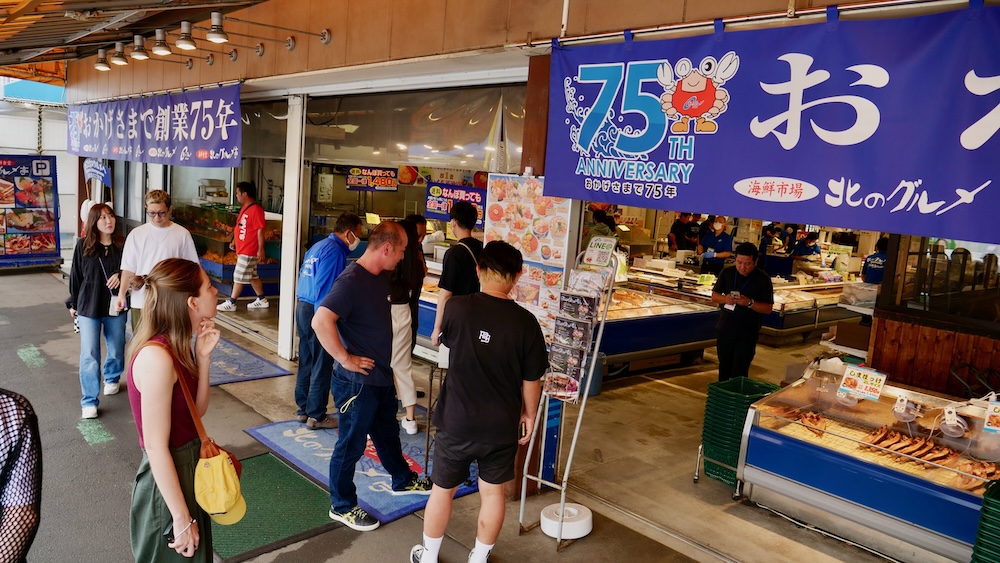
The naming causes confusion. The Central Wholesale Market itself isn’t open to the public. The place where visitors shop and eat is the outer market, also called the curb market, right beside it. We picked a restaurant there at random for a late seafood breakfast and had a great meal, but in hindsight our timing owed more to luck than planning.
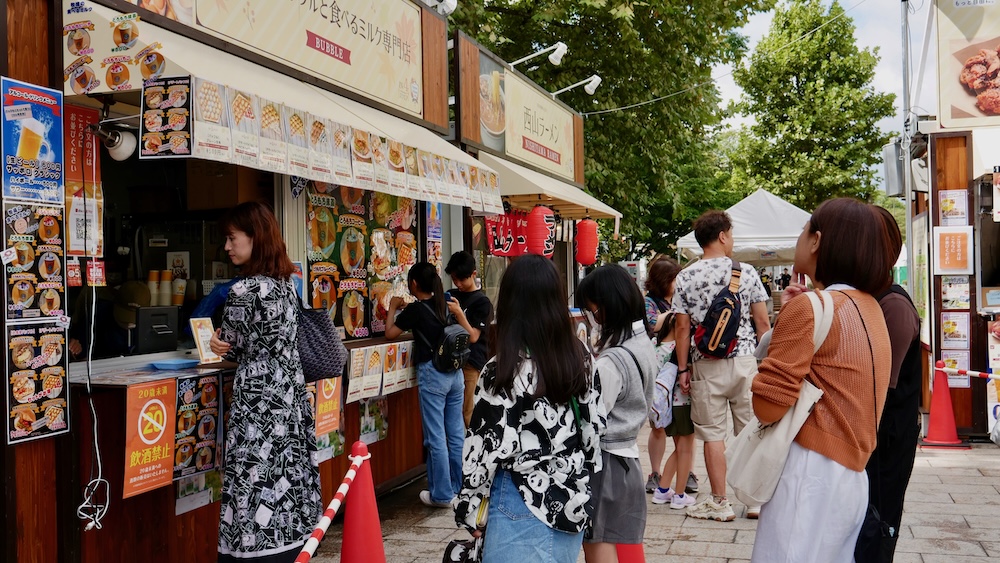
The curb market has around 60 shops and opens at 6 a.m., with restaurants starting at 7 a.m. The busiest stretch runs from about 8 to 11 a.m., stock gradually thins after that, and the twenty or so restaurants fill up with locals at lunchtime. So go early. Getting there takes about 10 minutes on the Tozai Line from Odori to Nijuyon-ken Station, then a 7-minute walk. Don’t mix it up with Nijo Market, a smaller, separate market right in downtown Sapporo. Both are fine, as long as you know which one you’re heading for.
Hitting Ramen Alley at Peak Time, or the Wrong Alley
We reached Ramen Alley early and walked straight in, then watched it get noticeably busier as normal lunchtime approached. Many of the restaurants seat only six to ten people, so eating a little early or a little late makes a real difference.
Two smaller things are worth knowing. The famous alley is Ganso Sapporo Ramen Yokocho in Susukino, with 17 shops, but a separate, smaller lane called Shin Ramen Yokocho, with five, sits a block away. Each shop also keeps its own hours and days off, so the bowl you’ve read about isn’t guaranteed to be open whenever you turn up. Then there’s the ticket machine, where you choose and pay before you sit down. Between the photos and the buttons we got a little confused, which is how we ended up with extra butter we hadn’t planned on. Read the buttons before you press them.
Expecting the Beer Museum to Be Free, or a Brewery
The Sapporo Beer Museum has started charging admission since our visit. At the time of writing, the self-guided route costs ¥1,000 for adults, with an English audio guide. The guided Premium Tour costs ¥2,000, needs an advance booking, is conducted entirely in Japanese, and doesn’t run on Mondays. Turn up on a Monday hoping for the guided version and you’ll be disappointed.
It’s also worth knowing what you’re visiting. This is a museum of Sapporo’s beer history, not a working brewery, so there’s no production line to tour. The company’s Hokkaido Brewery is a separate site in Eniwa. Tasting Hall seats are limited to 30 minutes, which is plenty for a flight of three. We came by metro and walked the last few blocks. It’s about 10 minutes on foot from Higashi-Kuyakusho-mae Station, or about 8 minutes from JR Naebo. Prices and tour bookings are on the official museum page.
Building a Morning Around the Clock Tower
The Sapporo Clock Tower is one of the city’s best-known landmarks, which is exactly why it surprises people. In Japan it’s widely referred to as one of the country’s “three most disappointing sights,” mostly because it’s much smaller than visitors expect and now sits hemmed in by trees and office buildings. That doesn’t make it a waste of time. It’s Japan’s oldest clock tower, and there’s a small museum inside. We simply walked over from the TV Tower, a couple of blocks away, and that’s the right scale for it: a stop on the way to Odori Park, not the main event of your morning.
If the history is what draws you, it can help to see the tower as part of a bigger story about how the city was built. One current small-group morning walk takes in the TV Tower, the Clock Tower and the old red-brick government office over about two hours and roughly 3.2 km. You can check dates for the guided central Sapporo walk.
Susukino Night Mistakes
Susukino, the entertainment district, is a fun place to spend an evening, with one well-known trap: following someone who approaches you in the street. Since April 2022, Sapporo has had an ordinance banning touting and soliciting in designated public places across the central district, and the city publishes the names of offenders. The Susukino Tourist Association itself acknowledges that some tourists have been charged unreasonable fees. Pick your own bars and restaurants, and don’t follow anyone, however friendly. If you do end up arguing over a bill, Japan’s Consumer Hotline for Tourists (03-5449-0906) deals with problems at shops, restaurants and bars in English and several other languages, but only during limited weekday hours.
If you’d like to explore the district’s izakaya scene without guessing which doors to walk through, a guided evening solves the problem. One current small-group bar-hopping tour visits three bars or izakaya around Susukino and Tanukikoji, with the guide choosing places to suit the group. We didn’t take it ourselves, but if that sounds appealing you can see the guided Susukino bar-hopping evening.
Also keep an eye on the clock. The subway runs from about 6 a.m. to around midnight, and the streetcar stops earlier. After that you’re paying for a taxi, which at the time of writing starts at ¥670, plus a late-night surcharge between 10 p.m. and 5 a.m.
Getting-Around and Base Mistakes
Choosing a Hotel for One Attraction Instead of a Subway Line
With transport this good, your main concern should be staying near a subway station, not being as close as possible to one particular sight. We stayed by Nakajima Park, rode almost everywhere, and never felt it was a compromise. A hotel a short walk from a station gets you to everything. One parked beside a single attraction but far from a station makes every other day harder.
In practice, that leaves four sensible bases on or next to the subway. If you’d like the calmer, greener setup we had, browse hotels around Nakajima Park. Odori puts you where all three subway lines meet, so you can compare places to stay around Odori if you want the most direct connections. Susukino suits travellers who want restaurants and nightlife on the doorstep, and it’s worth looking at hotels in Susukino if that’s you. Sapporo Station is the logical choice if you’ll be catching airport trains or doing day trips by rail. We only stayed by Nakajima Park, so the others I’m judging by their position rather than a night under their roofs.
Buying a Transit Card That Won’t Travel With You
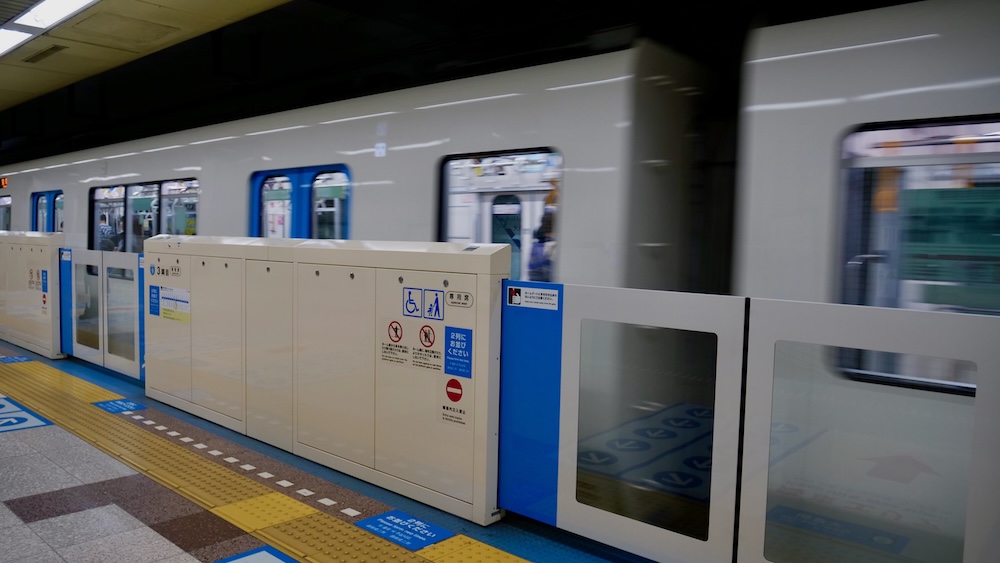
Sapporo has its own IC card, SAPICA, and it’s easy to buy one without realising its limits. SAPICA works on the city’s subway, buses and streetcar, but not in the areas covered by other IC cards. Kitaca, issued by JR Hokkaido, works in Sapporo, on JR Hokkaido and in supported areas across Japan, and Sapporo also accepts cards like Suica. Kitaca is what we used, and it served us well. If you’re travelling beyond the city, or already have a Suica or similar card from elsewhere in Japan, SAPICA isn’t the card you need. Both SAPICA and Kitaca cost ¥2,000, including a ¥500 deposit.
If you’ll be riding the subway a lot in one day, pick the right pass. At the time of writing, the one-day subway card costs ¥830, while the Donichika Ticket costs ¥520 and covers Saturdays, Sundays, national holidays and 29 December to 3 January.
Counting Day Trips as Sapporo Days
Otaru and Jozankei are popular additions, and it’s easy to slot them into your city days without adjusting anything else. Count them as extra days instead. If you’re taking the Kappa Liner bus to Jozankei, book ahead, because it only runs on reservations.
Because Jozankei and the Hill of the Buddha both sit on the southern side of the city, some guided days combine them, which saves you from juggling two sets of buses. If that appeals, you can look at a full-day tour pairing the Buddha with Jozankei. For anything farther afield, browse the current day trips from Sapporo and then add a night to match.
Before You Book: A Quick Mistake Check
| Mistake | When it bites | The fix |
|---|---|---|
| Pairing the outskirts with another big area | Any outskirts day | Do the Hill of the Buddha and the Art Park together, nothing else |
| Getting off the bus before the Buddha | Riding the 108 | Stay on to the last stop, Atama Daibutsu-mae |
| Relying on a taxi back from the cemetery | Late afternoon, high season, bad weather | Plan around the bus timetable |
| Expecting the Art Park sculpture garden in winter | Early November to late April | Visit between late April and early November |
| Saving Hokkaido Jingu for the end of the day | Especially November to February | Arrive well before 4 p.m. |
| Banking on the Mt. Moiwa Ropeway | Late March to late April, windy days | Check that it’s running before you go |
| Arriving at the curb market late | After about 11 a.m. | Go for an early breakfast |
| Turning up for the Beer Museum’s guided tour | Mondays | Book ahead for another day |
| A long train ride and a flight on the same winter day | Winter storms | Leave a buffer day |
| Following a tout in Susukino | Evenings | Choose your own bar |
What We’d Tell a First-Timer
If I could sit down with someone planning their first trip to Sapporo, I’d keep the advice short. Give the city more time than you think it needs. Treat the outskirts as a day of their own, with buffer built in, and stay on the bus all the way to the Buddha. Check the season against what’s actually open, especially in winter and around late April. Eat early at both the market and Ramen Alley. And base yourself near a subway station, not next to one attraction.
Most of our trip went smoothly because we gave ourselves time, and I’ll happily admit we kind of lucked out there. The point of this list is that you don’t need luck. Make those choices deliberately, and Sapporo turns out to be every bit as easygoing as it looks on the map.
Frequently Asked Questions
What is the biggest planning mistake in Sapporo?
Trying to do too much too soon. Downtown looks compact, but the best things to see are scattered across separate areas with real transit time, so give the city more days than the map suggests and pace yourself.
Which bus goes to the Hill of the Buddha?
Route 108 from Makomanai Station takes about 20 minutes and stops first in front of the cemetery’s main area, then at its final stop, Atama Daibutsu-mae, right at the Hill of the Buddha. We got off a stop too early, so stay on until the end.
Can I get a taxi back from Makomanai Takino Cemetery?
Don’t count on it. The cemetery has no taxi stand, taxis sometimes won’t come because of a driver shortage, and the 108 bus runs roughly hourly with an early last trip, so plan your return around the timetable.
Is Sapporo Art Park open in winter?
Its sculpture garden closes from early November until late April. In winter the Hill of the Buddha also keeps shorter hours, roughly 10 a.m. to 3 p.m., and the sun sets around 4 p.m. in December.
When is the best time to see autumn leaves in Sapporo?
Autumn colour typically peaks from mid-October to early November in places like Odori Park, Nakajima Park and Hokkaido University’s ginkgo avenue. When we visited in late September, the parks were still green.
Is the Sapporo Beer Museum free?
Not anymore. At the time of writing, the self-guided route costs ¥1,000 for adults, while the guided Premium Tour costs ¥2,000, needs a reservation, is in Japanese only and doesn’t run on Mondays.
Which transit card should I buy in Sapporo?
If you’re travelling beyond the city, skip SAPICA, which only works in Sapporo’s own network. Kitaca and cards like Suica work in Sapporo and elsewhere in Japan, and Kitaca served us well.
This guide is also available in Spanish. [Leé la versión en castellano: Errores de planificación en Sapporo que conviene evitar en un primer viaje]
This article contains affiliate links. If you book through one of these links, I may earn a commission at no extra cost to you.