
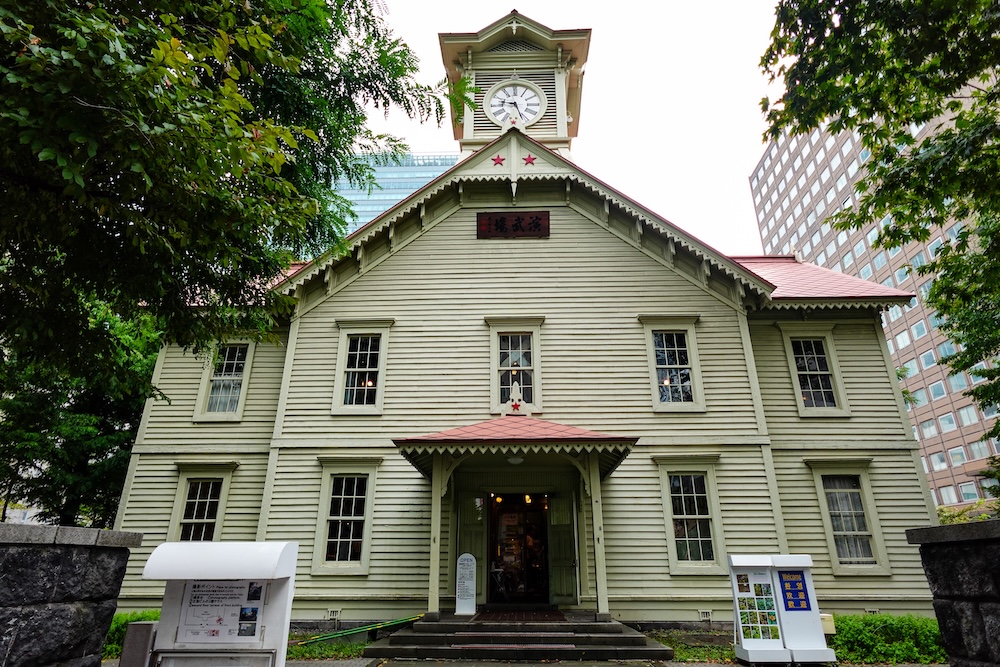
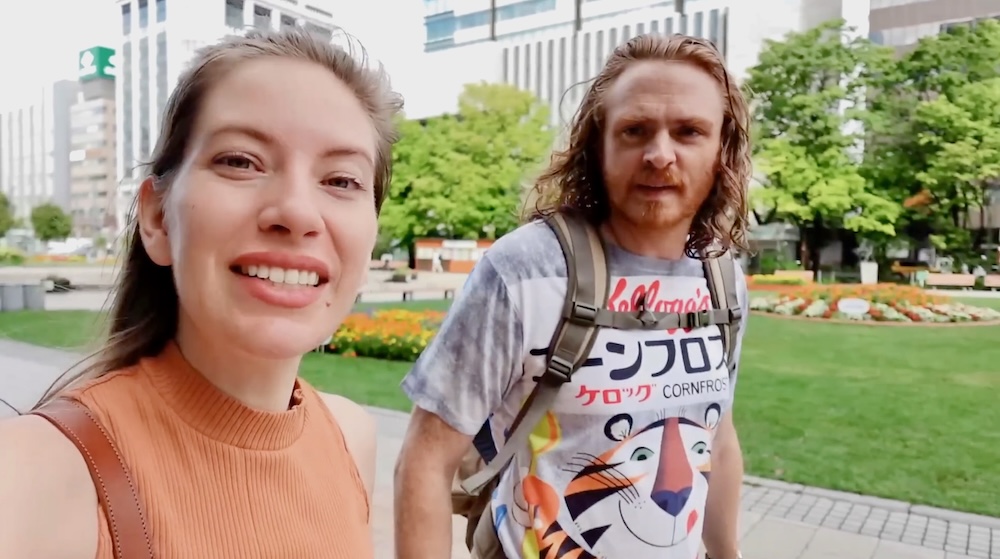
Audrey and I did most of our Sapporo sightseeing the old-fashioned way: on foot, using the subway, and occasionally trying to work out whether we were standing at the right bus stop. We visited Sapporo TV Tower, the Clock Tower, Odori Park, Tanukikoji, Hokkaido Jingu and a fair bit beyond the city centre without hiring anybody to show us around. On the way to Makomanai Takino Cemetery, we even got off the bus one stop early. Not exactly a masterclass in Japanese public transport, but we got there.

And yet, if we returned to Sapporo, I’d seriously consider booking a guided city tour. We’ve taken enough tours in other countries to appreciate what a good guide can bring to the table: enthusiasm, local stories, a bit of company and places you might walk past without a second glance. We enjoyed our independent days enormously. I’m also fairly sure we missed some of the city’s finer details.
That’s the choice I want to get at here. Should you spend money on a two-hour guided walk through downtown Sapporo, pay considerably more for a private guide, or simply put that money towards your own sightseeing? We didn’t take any of the specific Sapporo tours discussed here, so I’ll distinguish what Audrey and I experienced ourselves from what the tours currently advertise. I don’t think a booking is automatically the right answer.
Is Sapporo Easy Enough to Explore Without a Tour?
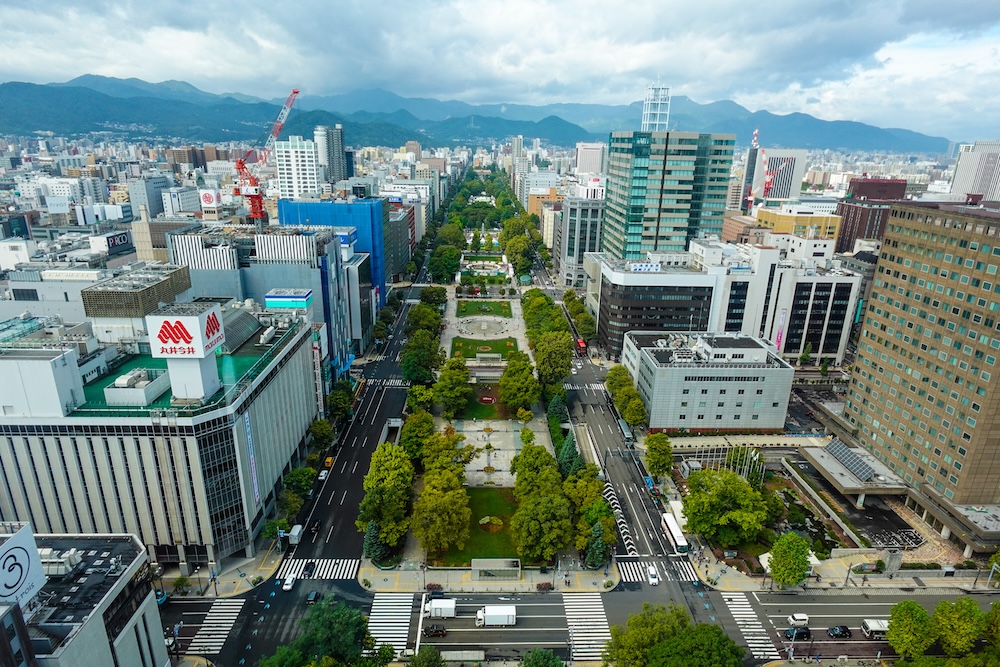
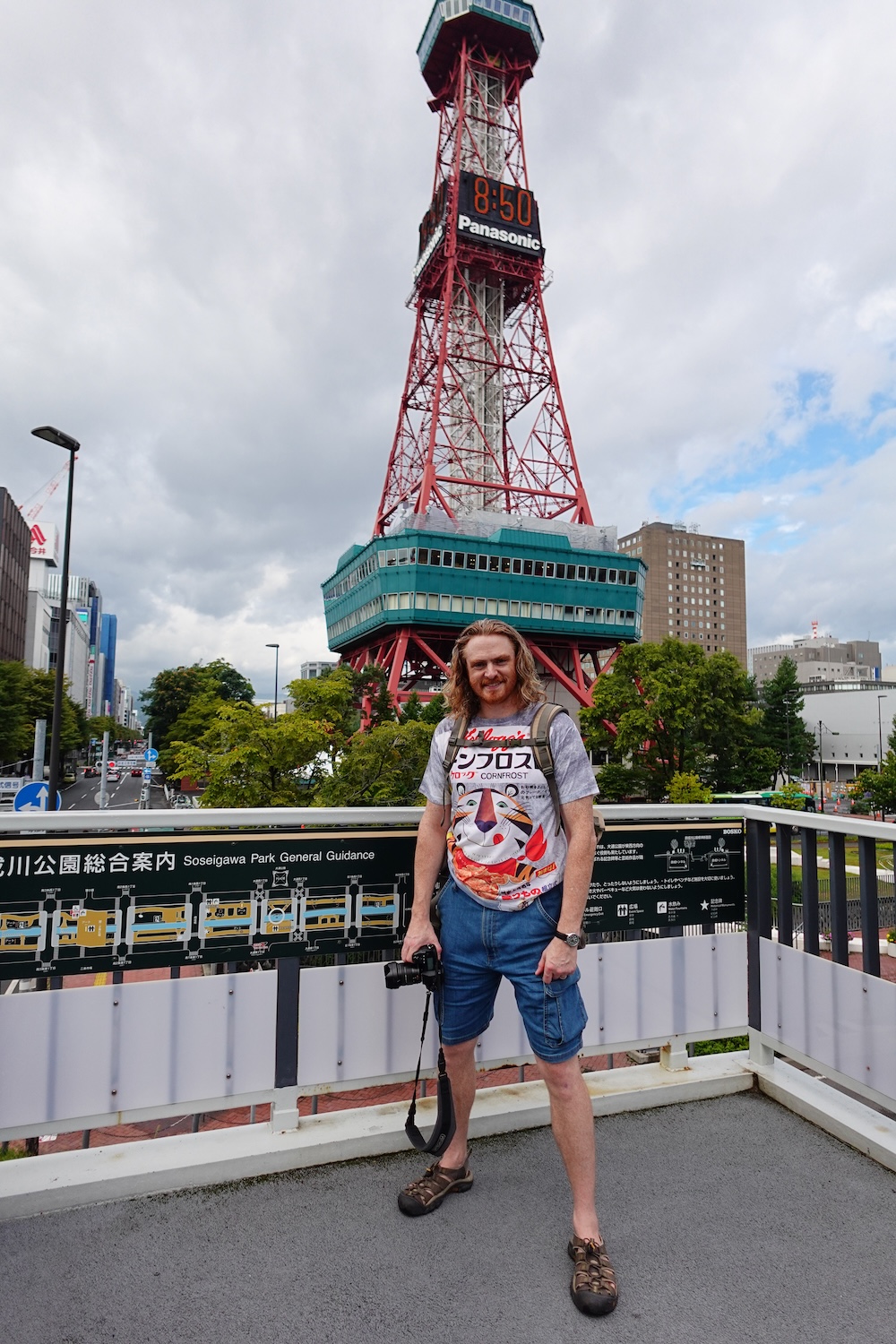
For the classic downtown sights, yes. Sapporo TV Tower sits at the eastern end of Odori Park, and the Clock Tower is only a short walk away. Tanukikoji Shopping Street and Nijo Market also fit naturally into a central sightseeing day. You don’t need someone holding up a flag to locate these places, and the subway makes it fairly straightforward to branch out when you’ve had your fill of downtown.
I liked that about Sapporo. It’s a big Japanese city, but I found it surprisingly pleasant to navigate, with wide streets, plenty of greenery and a transport system we soon got comfortable using. Audrey remarked on how spacious and tree-lined the avenues felt compared with Tokyo. Getting around was part of the fun for us, even when it required some fiddling with machines or checking which way we were headed.
Of course, there is a difference between reaching the Clock Tower and understanding why it matters. A walking tour might trace much of the same route you’d take alone, but a knowledgeable guide can connect the buildings, neighbourhoods and history in a way a map won’t. That makes more sense to me as a reason to pay for a tour than the promise of being escorted from one easily found attraction to another.
If you enjoy independent travel and have time to read up on the city, I’d be comfortable recommending DIY sightseeing. If you only have a day, want somebody to answer questions as you go, or regard transit planning as an unwelcome holiday chore, a guide becomes more appealing. The important thing is choosing the kind of help you actually need.
If you’re weighing those choices, compare current Sapporo walking tours and departure times. Check which tickets and stops are included before choosing by duration alone.
What We Gained—and Missed—Exploring Sapporo Independently
Our visit to the TV Tower sums up the advantages of doing things ourselves rather nicely. I was less enthusiastic about the exposed elevator than about the promised view; my hands were sweaty on the ride up. Once we reached the observation deck, though, the outlook across Sapporo towards the mountains was excellent. Afterwards, we walked over to the Clock Tower without having to coordinate with anybody or race a departure time.
The freedom became even more useful when September decided to behave like midsummer. Temperatures were around 30°C, and Audrey was having a rough time with the heat and humidity after a morning of walking. We stopped for water and soft-serve ice cream, which she described as bringing her back to life. Later, Tanukikoji’s covered shopping arcade was a welcome diversion from the outdoor conditions. We could slow down or change direction whenever we needed to.
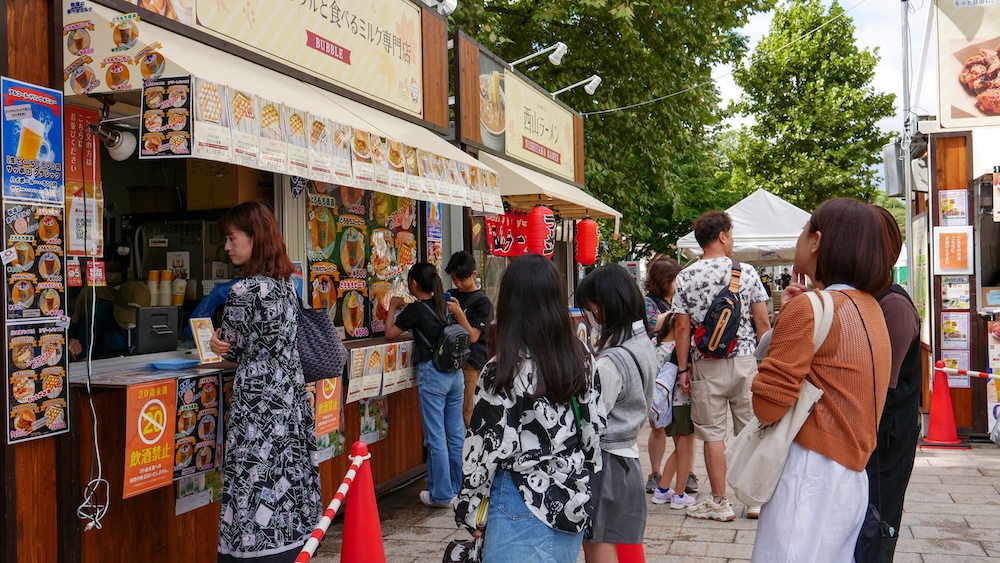
We also wandered into Sapporo Autumn Fest almost by accident and ended up eating festival food. That wasn’t a carefully timed sightseeing achievement. We happened to be there, spotted something interesting and changed our plans. I wouldn’t trade those sorts of discoveries for a longer list of attractions ticked off by five o’clock.
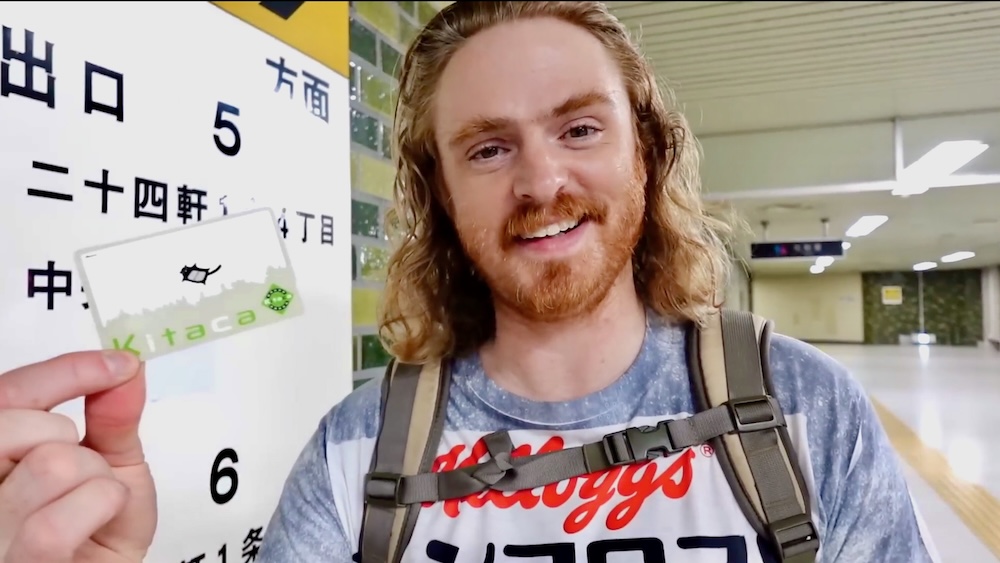
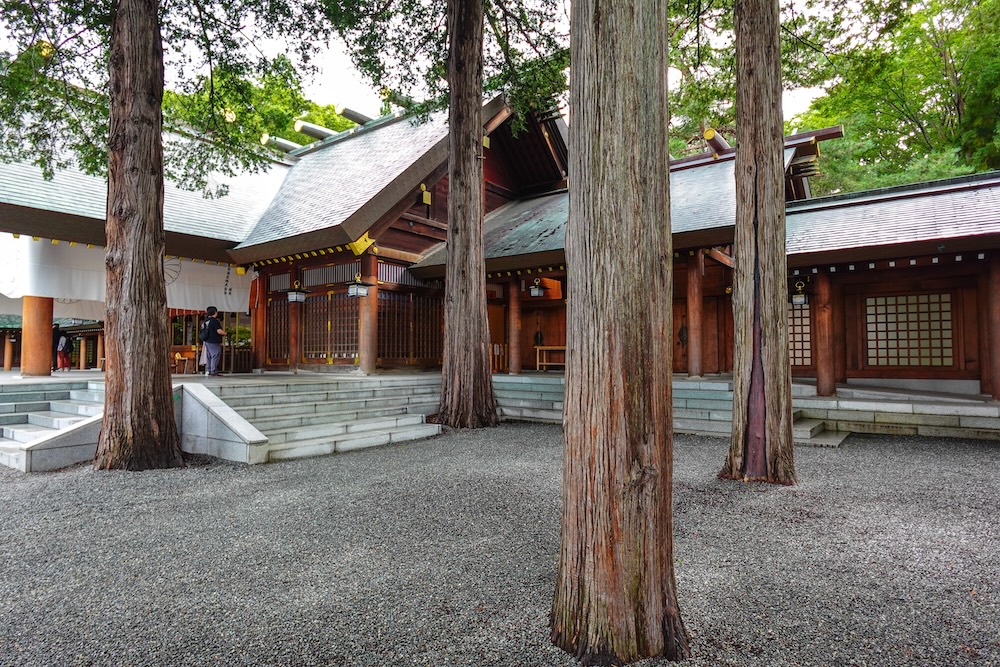
There was a less glamorous side, naturally. We used a Kitaca card and figured out how to top it up at a machine. We took trains and buses, visited Maruyama’s woodland and Hokkaido Jingu, and eventually made the longer journey south towards the Moai statues and Hill of the Buddha. On that last trip, we got off the bus a stop too soon. We managed, but it’s a reminder that navigating an unfamiliar system takes a little attention, even when you like doing it.
What did we miss? More than any particular monument, I’d say context. We saw the streets and buildings, but we weren’t accompanied by someone who could explain the connections, point out a small detail or take us somewhere we’d never have picked ourselves. I’ve enjoyed those discoveries on guided tours elsewhere, especially when the guide is enthusiastic and the group gets along. I’d like to experience that side of Sapporo too. Audrey enjoys both styles of sightseeing, so there isn’t some great disagreement in our household about how to travel.
None of that makes our independent visit a lesser one. It simply means that a repeat trip with a guide could be a different experience rather than a correction of the first.

Guided Walking Tours in Sapporo: What Are You Paying For?
Sapporo’s shorter city walks generally concentrate on central landmarks, with routes that last about two hours. They’re attractive if you want someone to help make sense of the city early in your stay without surrendering the whole day to a schedule. The differences between products, though, are worth reading closely. Two tours can both promise the Clock Tower and TV Tower while charging for different things.
A landmark walk that includes the TV Tower observatory
The Sapporo Highlights: Golden Route Morning Guided Walking Tour, run by Ezosika Travel, is a fairly compact introduction. It lasts approximately two hours, covers around 3.2 kilometres on foot and caps the group at eight. Starting at Sapporo TV Tower, it takes in central landmarks including the Clock Tower and former Hokkaido Government Office, with English or Japanese guiding available.
What makes this one interesting financially is the included admission to the TV Tower observatory. If you already intend to go upstairs, that’s a real part of the package rather than a vague promise to show you a landmark. Clock Tower entry is extra, as are food and drinks. The listed price started around US$42 per person when checked, with the usual variation by date and booking selection.
I’d look at the walking distance before choosing it. Three-point-two kilometres over two hours isn’t an athletic expedition, but neither is it a leisurely afternoon spent sitting down. You’re outside for much of the route, walking with the group, and the listing identifies wheelchair users among participants for whom the tour is unsuitable. A guide removes some planning; the guide doesn’t carry your legs for you.
Another central walk, with different departure routes
The H.I.S. Sapporo Walking Tour is another roughly two- to two-and-a-half-hour small-group option, also capped at eight. It meets near the Myomu sculpture inside Sapporo Station and visits central sights such as the former Hokkaido Government Office, Clock Tower, Odori Park and TV Tower. Admission to the TV Tower observatory is included.
One detail could easily catch somebody out: Tanukikoji and Nijo Market feature on the afternoon itinerary, not necessarily the morning one. If the market is why you’re booking, check the departure rather than trusting a combined list of highlights. Prices were starting around US$57–58 when checked. The operator also notes that snowy conditions can lead to route adjustments, including the use of underground walkways. That sounds sensible in a Sapporo winter, but you may not get precisely the street-level experience pictured in a summer listing.
A history-focused walk with fewer included extras
The Sapporo History and Gourmet Walking Tour takes a slightly different approach over about two hours, linking historical downtown stops with places such as Nijo Market and the Chitosetsuru Sake Museum. The attraction for me would be the conversation about the city and its food-and-drink culture, rather than another trip up the observation tower. It was listed from approximately US$30–38.
But be careful with the inclusions. A market stop isn’t necessarily lunch, and a sake-related stop isn’t automatically a complimentary tasting. Personal purchases and entry fees are separate on this listing. You could find the cheaper tour costs more than expected once you start buying things, or you might be perfectly happy to listen and look around without spending extra.
With all three, I’d pay more attention to what the guide will actually cover than to which itinerary crams in the most recognizable place names. We’ve stood outside plenty of landmark buildings ourselves. The interesting bit is hearing something about them that makes you stop and reconsider what you’re looking at. There’s also the social side: a small group and a lively guide can make an ordinary walk a lot more enjoyable. Just don’t mistake the possibility of a great guide for a guaranteed personal experience; we haven’t tested these operators.
Private Guides in Sapporo: Personal Attention Isn’t the Same as a Private Car
Here’s where tour descriptions can get slippery. You see private tour and picture somebody collecting you from the hotel in a vehicle, driving between attractions and dropping you off afterwards. Sometimes that service exists, but several of the Sapporo private tours I examined are primarily private guided walks. You may still use the subway or a taxi, and pay for those journeys yourself.
City Unscripted’s Sapporo Highlights & Hidden Gems Private Tour with a Local offers a personalized outing of roughly two to six hours. Before the visit, you answer questions about your interests so the experience can be shaped around you. A local host might take you through familiar landmarks, a market or an area you wouldn’t otherwise have considered. Pickup from a central hotel can be arranged on foot—a detail worth noticing if you’d assumed a car would be waiting at the curb.
Food, attraction admissions and transport fares are extra. What you’re buying is individual attention, conversation and a route that has room for your interests. I’d see the appeal if you wanted to ask lots of questions or investigate a particular neighbourhood, rather than follow the same route as eight strangers. But the host is a local match, not automatically a government-licensed guide with specialist historical credentials; check what matters to you before booking.
The Sapporo Customized Private Tour in 1 Day with Licensed Guide, operated by Japan Guide Agency, is aimed at a somewhat different traveller. It offers four- and six-hour options with a licensed guide, and the itinerary is arranged around your interests. There still isn’t an included private vehicle: travel is on foot, by subway or by taxi, with fares, admissions and meals charged separately.
I particularly appreciate the operator’s realistic estimate of how much you’ll cover. It suggests roughly two or three attractions in four hours, or three or four in six hours, depending on distances. That is a much more useful figure than a giant menu of possible stops. Sapporo doesn’t shrink because you’ve booked six hours of someone’s time. The listing showed prices from around US$236 per person when checked, but private-tour pricing can change substantially with the number of people and selected option. Guide assignment also needs to be confirmed.
The reason I’d consider private guiding isn’t simply to see more. It would be to spend longer on the things that interest me, ask questions without worrying about interrupting the group, and perhaps get a more specialized introduction. If you’re travelling with family members who want different things from the day, that attention could be valuable too. I’d still ask what route is achievable, what the guide’s expertise covers, and how any promised pickup works. If the real priority is a dedicated driver for far-flung sights, that’s a separate purchase decision. In that case, compare Sapporo private-car tours, checking that the itinerary stays within the city if city sightseeing is your goal.

Walking Tour, Private Guide or DIY: The Real Value Comparison
Before looking at the table, here’s the price trap. A standard adult Sapporo TV Tower observatory ticket is listed at ¥1,200, with Clock Tower entry at ¥350. Enter both independently at those ordinary rates and the admissions alone total ¥1,550. A walking tour that already includes the TV Tower ticket deserves credit for it. If you only want to photograph the tower from Odori Park, that inclusion might be worth nothing to you personally.
Local transport is another consideration. Ordinary adult subway fares were listed at roughly ¥210–380 depending on distance, with a ¥830 adult one-day subway pass and a ¥520 Donichika pass on eligible weekends and holidays. The passes are for the municipal subway, not every local bus or JR train. There are also qualifying contactless bank-card payment arrangements on the subway, subject to their own rules. I’d check Sapporo’s current subway fares and passes before calculating a DIY budget rather than relying on an old fare screenshot.
| What matters | Independent sightseeing | Small-group walking tour | Private guide |
|---|---|---|---|
| Best for | Travellers happy planning their own day | First-time visitors wanting orientation and commentary | Travellers with particular interests who value personal attention |
| Guide | None | Shared guide on a mostly fixed route | Dedicated host or guide; qualifications vary |
| Time and pace | Entirely yours | Typically around two hours for the tours above; group pace | Selected duration and more room to adapt |
| Transport | You handle fares and connections | Mostly walking; confirm any other travel | Subway/taxis may still be necessary and extra |
| Entry fees | Pay for exactly what you enter | Some include TV Tower observatory; other admission may be extra | Generally extra in the products compared |
| Main advantage | Freedom, spontaneous detours and cost control | Local explanation without arranging the whole route | Personalization and a chance to ask detailed questions |
| Main drawback | Research and navigation are your responsibility | Fixed schedule and walking requirements | Higher cost; a car is not automatically included |
Price is only one part of the equation. If you love puzzling out public transport, like stopping every time you spot an interesting bakery and don’t want your afternoon planned down to the minute, DIY is hard to beat. If that sort of travel planning fills you with dread, a group walk may be money well spent before you’ve even heard the first historical story. And if your interests are particular enough that you’d spend ages researching a custom route, a private guide may justify the premium.
One thing I wouldn’t do is crown whichever tour claims the most stops. Passing the Clock Tower is not the same as going inside; standing outside the TV Tower is not the same as seeing the city from the observation deck. Similarly, an hour spent understanding one neighbourhood could be more satisfying than hurrying through four. Check the meeting point, walking distance, tickets, language, cancellation terms and whether you must pay for the guide’s transport as well as your own. For anyone with mobility concerns, ask about the actual route rather than assuming a private tour automatically makes it easy.
If You Have Just One Day in Sapporo, Which Would I Choose?
This is where I can see the strongest case for a tour. With only one day, you don’t have the luxury of gradually getting your bearings, discovering you’ve headed the wrong way or returning tomorrow to see what you missed. A guide could take some of that mental load off your shoulders. It might also be your best chance to ask questions about the city instead of spending your limited hours reading things on your phone.
Still, if your list is mainly the Clock Tower, TV Tower, Odori Park and the streets nearby, I’d have no hesitation exploring on foot. Their proximity is a genuine advantage. You can decide on the spot whether an observatory ticket is worth buying, have lunch when you’re hungry and use the subway only when you’re ready to venture farther out. Our own central sightseeing showed how enjoyable that can be.
If you want an introduction and freedom, I’d consider booking a two-hour guided walk early, then using what you’ve learned to explore the rest of the day independently. That’s particularly appealing for somebody visiting Sapporo for the first time. The two formats don’t have to compete for every hour of your trip.
For a private guide, I’d want a clear reason to pay the extra money: an unusually specific interest, lots of questions, a group that needs its own pace, or a day I really don’t want to organize myself. Even then, the licensed-guide itinerary estimates of two or three stops in four hours are a healthy reminder to be selective. A private tour isn’t a magic shortcut between distant attractions. If you want to combine downtown sights with places far to the south, consider whether a vehicle-based excursion fits the geography better.
And don’t forget the weather. We needed a break because of the heat; a winter walking tour may adapt its route to snow and ice. Someone who struggles with several kilometres on foot might be better off designing shorter independent outings than buying a fixed-pace walking tour. Private guidance can sometimes help, but only if the actual route and arrangements suit them.
What I’d Do Next Time
I’d keep our independent sightseeing, including the small detours and bits of trial and error. Getting around Sapporo gave us a feel for the city, and the flexibility meant we could follow our own appetites, energy levels and curiosity. Audrey and I both enjoy that style of travel. I don’t need every day to run like a military exercise.
What I’d add is a guided walk, probably a short one. I’d like to hear a local explain parts of Sapporo we’d already seen and take us towards details we missed. I wouldn’t automatically spend private-guide money unless I had a particular interest or a group whose needs made that worthwhile. That conclusion comes from what we enjoyed in Sapporo and our experiences with guides elsewhere, not from having tested any of these Sapporo operators.
So if you’re comfortable finding your own way around, don’t feel obliged to book a tour. Sapporo is a rewarding city to explore independently. If you’re curious about its stories and want a head start, a small-group walk looks like a sensible addition. And if you want someone to build the day around you, look carefully at a private guide—especially what isn’t included. I’d rather pay for something that genuinely improves the day than spend extra just so someone else can tell me where the Clock Tower is.
Frequently Asked Questions
Do you need a guided tour to explore central Sapporo?
No. Audrey and I explored Sapporo independently and found its central landmarks straightforward to connect on foot. Sapporo TV Tower, the Clock Tower and Odori Park are close together, with Tanukikoji Shopping Street and Nijo Market also within a practical sightseeing circuit. A guide becomes more valuable when you want historical explanations, local recommendations or less responsibility for planning.
What is the difference between a guided walking tour and a private guide in Sapporo?
A small-group walking tour generally follows a scheduled route with other travellers, while a private guide can offer more individual attention and a route tailored to your interests. Neither format necessarily includes transportation. Some private Sapporo tours are conducted on foot or using public transport, with fares and attraction admissions charged separately.
Do Sapporo walking tours include admission to the TV Tower and Clock Tower?
It depends on the tour. The Golden Route Morning Guided Walking Tour and H.I.S. Sapporo Walking Tour include admission to the Sapporo TV Tower observatory, but Clock Tower admission is separate. Other walking tours may focus on external landmarks and cultural explanations without including attraction tickets. Check the exact inclusions before booking.
Is a guided Sapporo tour worth booking if you only have one day?
I can see a strong case for a guided introduction when time is limited, particularly if you want local explanations without organizing the entire morning yourself. A two-hour walking tour can also leave plenty of time for independent sightseeing afterwards. But if your priorities are mainly central landmarks, you can still have a rewarding day exploring them on foot without a guide.
Does a private Sapporo sightseeing tour include a car and driver?
Not necessarily. Some private tours provide a local host or licensed guide who accompanies you on foot, by subway or in a taxi. Vehicle hire, public transport fares, attraction tickets and meals may be additional expenses. Confirm whether the booking includes an actual private vehicle rather than assuming that the word private refers to transportation.
Would you choose a guided tour or explore Sapporo independently next time?
I’d happily explore independently again because Audrey and I enjoyed setting our own pace, using local transport and making spontaneous discoveries. But I’d also consider adding a short guided walking tour on our next visit. I’d be interested in the local history, stories and smaller details that we probably missed while exploring on our own. We haven’t personally taken the specific Sapporo tours compared in this article.
This article is also available in Spanish. [Leé la versión en castellano: Mejores tours por Sapporo comparados: ¿caminata guiada, guía privado o por tu cuenta?]
This article contains affiliate links. If you book through one of these links, I may earn a commission at no extra cost to you.