
When Audrey and I explored central Sapporo, we often took the subway from our hotel near Nakajima Park to Odori Station, then carried on by foot. We walked through Odori Park, browsed Tanukikoji Shopping Street and eventually found ourselves in Susukino, where the streets narrowed and restaurants seemed to be competing for our attention. It was a comfortable walk, which makes the hotel choice more interesting than ticking “sightseeing” or “nightlife” on a booking website.
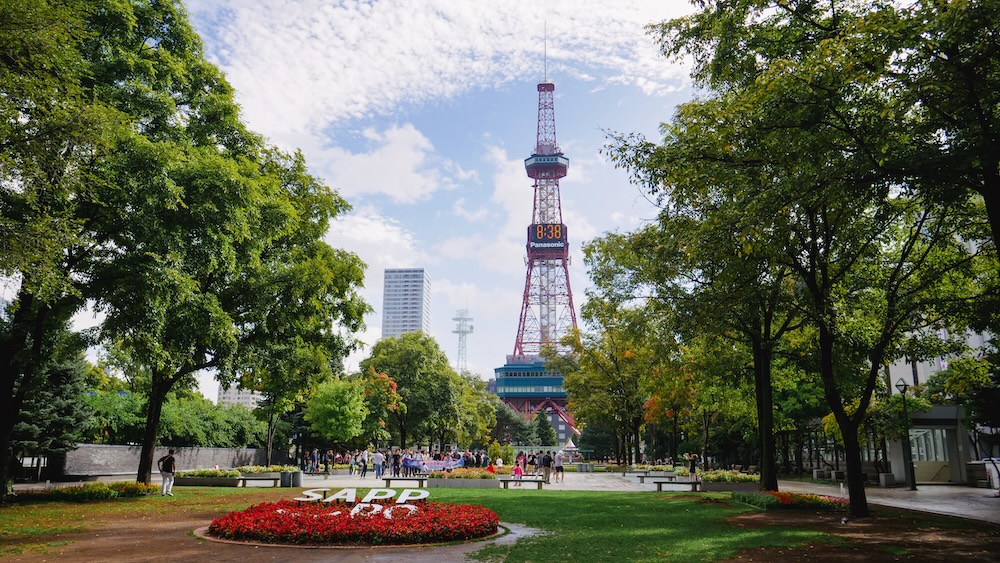
For a first visit combining sightseeing and food, I’d start near Odori Station. All three subway lines meet there, and having that kind of flexibility matters to me more than shaving a minute off the walk to a ramen shop. I’d look next at Susukino Station if I expected to spend a lot of evenings eating out or enjoying the nightlife. Tanukikoji can be an excellent compromise, provided the hotel entrance works for your plans.
We didn’t stay overnight in either Odori or Susukino; our actual base was beside Nakajima Park. The hotels below are places I’d consider, not places we’ve personally stayed. Here’s how I’d avoid paying extra for the wrong kind of convenience.

Odori Park or Susukino: Which Is Better for Your Sapporo Hotel?
Odori has the stronger argument for a conventional first-time sightseeing trip. The TV Tower, Clock Tower and central stretches of Odori Park are close together, and Odori Station is the interchange for the Namboku, Tozai and Toho subway lines. Susukino, one stop south on the Namboku Line, is more focused on restaurants and entertainment. You can absolutely eat in Susukino without sleeping there; we did, and the journey back towards our hotel was never the defining event of the day.
That doesn’t make Susukino an inferior base. If your plans revolve around restaurants, izakayas, karaoke or late nights, the chance to walk back to your room may outweigh an extra subway connection in the morning. The subway doesn’t operate all night, and final departures depend on the line, station and direction. That matters if you expect to stay out late.

| Where you’d sleep | Strongest reason to choose it | What to check |
|---|---|---|
| Odori Station area | Three subway lines and central sights | Which park block and station exit your hotel actually serves |
| Tanukikoji corridor | Shopping, restaurants and a walkable middle position | Which arcade block, covered passage and station entrance are nearest |
| Susukino area | Dining, entertainment and easier returns after late evenings | Whether Susukino or Hosui-Susukino is the more useful station |

Our walk between these places felt easy, but “near Tanukikoji” can describe properties at different ends of a roughly 900-metre shopping arcade. What matters is the journey from the hotel door to the places you’ll actually visit. If Odori sounds like your base, compare hotels around Odori for your dates before deciding which block suits you.

Staying Near Odori Park: Best for Sightseeing and Subway Connections
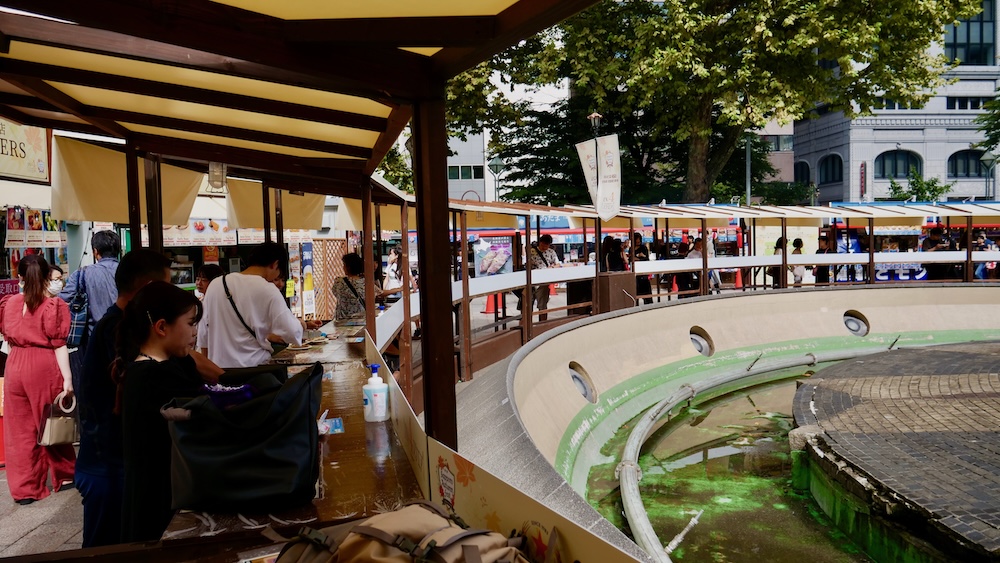
We spent far more of our visit around Odori than in Susukino. Audrey and I went up Sapporo TV Tower, visited the Clock Tower and wandered through the park, where we stumbled upon Autumn Fest. We hadn’t built the day around a food festival, but once those stalls appeared, marching dutifully towards the next attraction became a fairly low priority. A central location lets you change plans without trekking across the city.
Our visit also delivered a reminder that even a northern Japanese city can catch you out with the weather. It was September, the temperature reached around 30°C, and Audrey was struggling with the heat. We stopped for ice cream and water before eventually heading for the air-conditioned stores around Tanukikoji. A room nearby would appeal to anyone needing a midday rest or refuge from the weather.

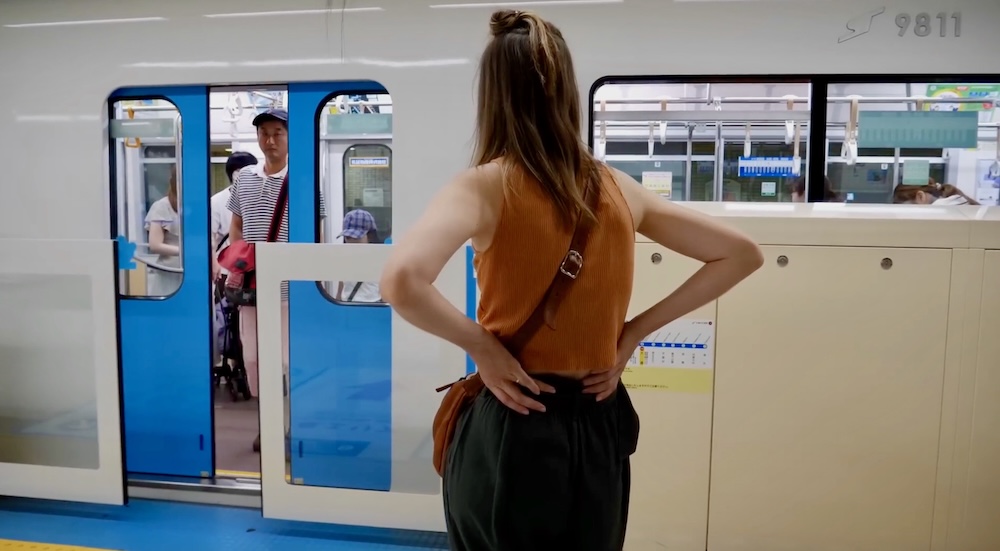
The real prize, though, is Odori Station. The Namboku Line connects towards JR Sapporo Station and Susukino, while the Tozai and Toho lines open up other parts of the city without first forcing you through another interchange. We made good use of Sapporo’s subway, and if I were choosing between comparable hotel rooms, that three-line station would swing the decision. Audrey even liked the name: Odori sounded so much like Audrey that the station seemed almost personally labelled for her.
Don’t mistake proximity to Odori Park for proximity to Odori Station, however. The park stretches approximately 1.5 kilometres east to west. A hotel near the TV Tower at its eastern end and one farther west can both advertise park access while putting you in quite different positions for the subway and nearby sights. Check the closest entrance and where your main outings begin before paying a premium for a vague “Odori location.”
Staying Near Tanukikoji: The Middle Ground Between Sightseeing and Dining
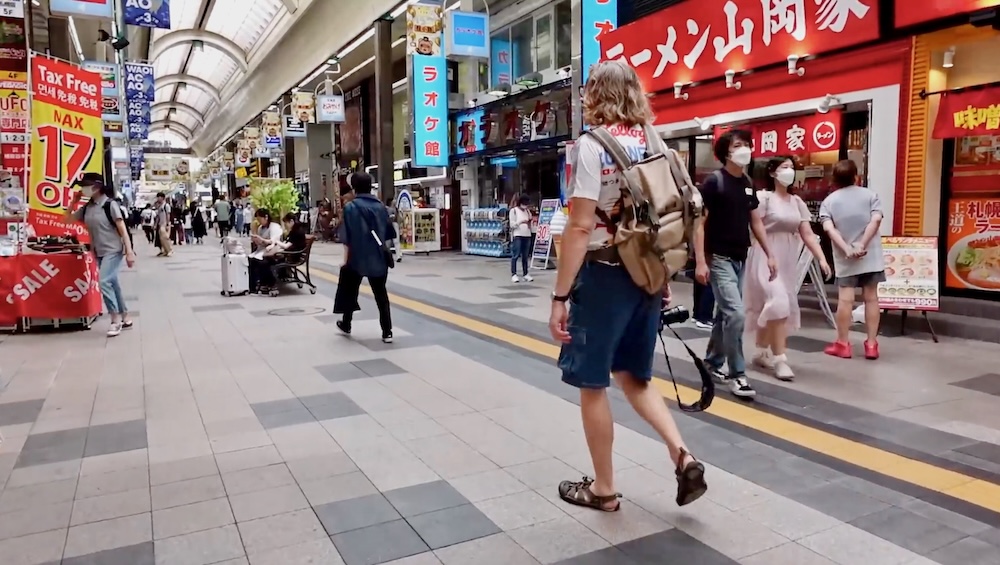
Tanukikoji is a long covered shopping arcade, stretching roughly 900 metres across seven blocks. Neither of us is much of a shopper, especially me, but I enjoy wandering through Japanese stores just to see the peculiar gadgets, snacks and products somebody thought the world needed. We also appreciated having somewhere indoors when the September heat became uncomfortable. Even without a shopping list, it was an entertaining place to walk, and it sits conveniently between the main Odori sightseeing area and Susukino’s restaurants.
The covered routes here are easy to muddle up when planning from a map. Tanukikoji is the street-level arcade running east–west. Pole Town is an underground shopping passage running south from Odori towards Susukino, while Chi-Ka-Ho connects the Sapporo Station area with Odori farther north. Useful as they are, they don’t form one seamless indoor route. Some properties have direct connections; others still involve a street crossing or a less convenient station exit.
This is why I’d seriously consider an intermediate hotel rather than insisting on one of the neighbourhoods at either end. THE KNOT SAPPORO, for example, connects directly to Pole Town. Another property a few blocks along the arcade might be equally good for browsing yet less convenient for your chosen subway line. I’d judge the route, room and price together.
Staying in Susukino: Best When Food and Nightlife Matter Most
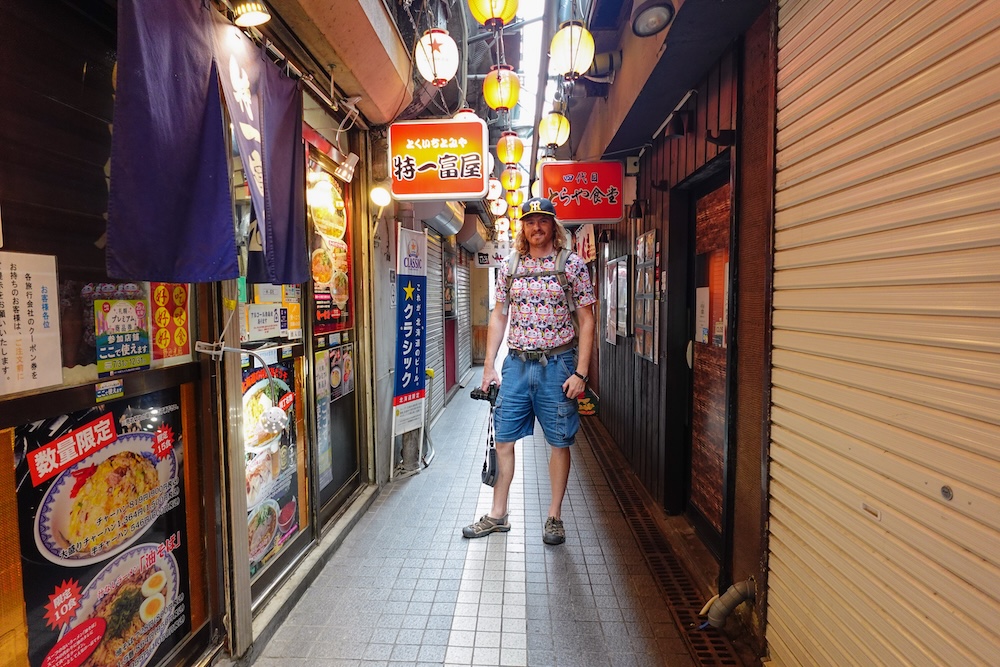
The strongest memory I brought home from Susukino was a bowl of ramen. Audrey and I went to the narrow Ramen Alley when the restaurants were just opening and picked a tiny place because the photographs outside looked irresistible. Then we tackled the ordering machine and somehow managed to add more butter, eggs and toppings than we’d intended. The resulting miso ramen with corn and butter was so good that the accidental extras didn’t seem like such a terrible mistake. I’d happily repeat that particular bit of poor menu management.
Walking into Susukino, I noticed a different atmosphere from the open spaces around Odori. Smaller alleys had shops and restaurant entrances packed along both sides, and the whole area looked more geared towards evenings out. We didn’t return at night or go bar-hopping, though, so my experience is of its streets and ramen, not its clubs or late-night crowds. The district does have an extensive restaurant and entertainment scene, which gives it an obvious appeal for travellers who want dinner, drinks and karaoke close to their beds.
There’s a distinction worth making between visiting Susukino for one or two meals and basing an entire trip around its evenings. I’d be perfectly happy staying near Odori and walking down for ramen. If I were going out several nights running, however, I’d put more value on being able to stroll back to the hotel rather than checking the last subway. Nor would I assume a Susukino hotel is noisy: the particular street and room can matter more than the district’s reputation.
One specific transport detail could catch you out: Susukino Station is on the Namboku Line, while Hosui-Susukino is on the Toho Line. Some hotels advertised as being in Susukino are much closer to Hosui-Susukino. Depending on your sightseeing plans that might be ideal, but if you expect to ride directly towards JR Sapporo Station on the Namboku Line, check the route before booking. For late-night plans, the current Sapporo subway timetables are more useful than any universal last-train estimate. You can also compare accommodation in Susukino by its actual station approach.
Best Hotels Near Odori Park, Tanukikoji and Susukino
These eight hotels offer different advantages: subway access, room layouts, views, laundry or bathing facilities. None is a personal overnight recommendation. I’d compare the exact room category and complete price for my dates before committing, because the cheapest listing and the room photographed on a hotel’s homepage aren’t necessarily the same thing.
Hotels for Odori sightseeing and subway access
The Royal Park Canvas Sapporo Odori Park
If I wanted to wake up close to Sapporo TV Tower, I’d investigate The Royal Park Canvas. It sits near the eastern end of Odori Park, roughly one minute from Odori Station’s Exit 23, so it’s a particularly appealing position for the sights we enjoyed around that part of the centre. Certain rooms are sold with Park View or Tower View designations; a Park View category is around 23 m², while the Standard Double is about 19.9 m² and shouldn’t be assumed to offer that outlook. If the view is the reason you’re spending more, compare park-view rooms at The Royal Park Canvas and book a category that actually specifies it.
The hotel has another quirk worth knowing before arrival: the guestrooms don’t have televisions and instead feature record players and wooden speakers. Whether that appeals or annoys you, it’s better to know before check-in.
Hotel Resol Trinity Sapporo
Hotel Resol Trinity faces Odori Park around Nishi 5-chome, with Odori Station’s Exit 2 approximately a minute away. Its upper-floor communal bath looks towards the park, which is an appealing way to unwind after a day on your feet, and it can store luggage before check-in and after checkout. I’d consider it when station access and a soak matter more than kitchen facilities.
Park views from the bedroom are a separate matter. The specified Parkside Double is around 19.4 m², with Parkside Twin options ranging roughly from 22.7 to 26.4 m²; the single rooms do not face the park. A photograph of the communal bath’s view doesn’t turn every bedroom into a park-view room, so compare Hotel Resol Trinity’s Parkside room categories carefully.
Tokyu Stay Sapporo Odori
Tokyu Stay appeals to the less glamorous side of long-term travel: washing clothes and eating something simple without going out every time. Its rooms have washer-dryers and microwaves, with kitchenettes in selected categories. The distinction is easy to miss because a 17 m² Comfort Double and a similarly sized Residential Double sound fairly similar, yet only the latter includes a kitchenette. Bigger choices include Residential Twin rooms around 23 m², Premier Twins around 26 m² and a Stay Premier of approximately 49 m².
If I were travelling for a couple of weeks through Japan, I’d check Tokyu Stay Sapporo Odori’s room layouts rather than defaulting to the hotel with the nicest lobby. Just compare the space as well as the appliances. A washer-dryer is wonderful, but it won’t make two enormous suitcases disappear from a compact bedroom.
Hotels in the Tanukikoji and Odori–Susukino overlap
karaksa hotel Sapporo
karaksa hotel Sapporo is near Tanukikoji, around five minutes from Susukino Station and six minutes from Odori. The reason I’d examine it closely is its accommodation for families and groups. Selected connecting-room arrangements can sleep up to six people and have two bathrooms, while other rooms offer bunks or different bed configurations. That’s the sort of detail you appreciate when the alternative is having six people queue for one shower before breakfast.
Don’t treat “sleeps six” as a promise about every room. Check karaksa hotel Sapporo’s connecting-room options to confirm the beds, bathrooms and floor space you’ll actually have. Its central position and communal baths add to the appeal.
THE KNOT SAPPORO
THE KNOT’s big advantage is its direct connection to Pole Town. The hotel’s walking estimates are about five minutes from Odori Station, three minutes from Susukino and seven minutes from Hosui-Susukino, putting it in a useful position for visitors who intend to spend time in both districts. I’d find that particularly attractive when the weather is miserable, although direct underground access shouldn’t be mistaken for guaranteed round-the-clock use of every passage.
There’s a trade-off in the rooms: entry-level queen categories are around 16–18 m², so luggage and personal space deserve consideration. The hotel offers baggage storage before arrival and on checkout day but not beyond that date. For a short central visit I might happily accept a compact room here; for a longer stay, I’d check THE KNOT’s room categories and rates against more spacious alternatives before making the call.
La’gent Stay Sapporo Odori
La’gent Stay sits near the central overlap, with published walking estimates of roughly five minutes from Odori Station’s Exit 10, three minutes from Tanukikoji, six minutes from Susukino and nine minutes from Sapporo TV Tower. Its standout feature is natural hot-spring communal bathing, rather than merely a standard public bath. The facilities are on the third and fifth floors, with men’s and women’s access alternating according to the hotel’s published morning and evening schedule.
I’d consider it if I wanted the flexibility of walking to both neighbourhoods but also valued a soak at the end of the day. There’s coin laundry and a range of room sizes too. If the hot spring is your deciding factor, review rooms at La’gent Stay Sapporo Odori and confirm the bath schedule for your dates instead of assuming you can use whichever bath you fancy whenever you return.
Hotels for Susukino restaurants and late evenings
SAPPORO STREAM HOTEL
SAPPORO STREAM occupies upper floors of COCONO SUSUKINO, with a direct connection to Susukino Station via Exit 5. If your holiday involves several late dinners and plenty of time in the surrounding entertainment district, that’s a strong location. The hotel has Superior, Deluxe and Premium room categories, with different sizes and inclusions; the lobby is on the seventh floor, so direct station access doesn’t mean the room is one quick step from the subway.
Be especially careful about the hotel’s premium lounge, hot-spring and sauna facilities. These are associated with qualifying Premium bookings, not a benefit to assume comes with every standard room. There’s also a separate step-free approach: lift users are directed to the Exit 4 elevator, up to street level and then into COCONO SUSUKINO. I’d inspect that route if accessibility or large luggage were part of the decision, and check SAPPORO STREAM HOTEL’s room inclusions before paying for an upgrade.
Sotetsu Fresa Inn Sapporo-Susukino
Sotetsu Fresa Inn is a more straightforward option for someone interested in transport and dining convenience rather than resort-style facilities. It’s about one minute from Hosui-Susukino Station’s Exit 4 on the Toho Line, versus four minutes from Susukino Station’s Exit 3 on the Namboku Line. Those aren’t equivalent connections, so the best one depends on your itinerary. Its compact double rooms are under 15 m², with larger twin categories available, making room size a particularly important comparison.
One practical detail that could save some awkwardness at reception is the cashless accommodation-payment policy: use a supported card or QR-payment method rather than expecting to pay the hotel bill in cash. I’d compare Sotetsu Fresa Inn Sapporo-Susukino rooms for a short, mostly-out-of-the-room stay, but would weigh the savings against a bigger room elsewhere rather than assuming a smaller business hotel is automatically better value.

What to Check Before Booking in Central Sapporo
Once you’ve settled on an area, I’d compare the actual walk from the hotel entrance to the station and the places you’ll visit most. Central Sapporo has useful covered routes, but a direct Pole Town connection is different from a five-minute outdoor walk to the arcade, and an accessible station entrance may require a different approach from the shortest stairway. That matters with a suitcase, a stroller or a wet, windy evening. It also explains why I wouldn’t pay a premium for “five minutes from Odori” until I knew which exit that meant.
The room is the next potential trap. A park-view photograph doesn’t establish that the cheapest room faces Odori; a hotel advertising kitchen facilities may restrict them to selected categories, while spa access can depend on the booking tier or a rotating schedule. Families should compare beds and bathrooms rather than just maximum occupancy. I would also check luggage-storage rules, breakfast inclusions, cancellation terms and payment methods, because there is no pleasure in discovering one of those conditions while standing at reception.
Sapporo’s accommodation tax applies alongside Hokkaido’s prefectural tax. The combined charge is ¥300 per person per night when the taxable accommodation price is below ¥20,000, ¥400 from ¥20,000 to under ¥50,000, and ¥1,000 at ¥50,000 or more. Check whether the total shown at booking already includes it. The Snow Festival uses major venues in both Odori and Susukino, while Autumn Fest occupies selected areas of Odori Park, so dates and the precise hotel block can also affect how convenient a stay feels. Compare the actual event layout and booking terms rather than assuming any address near the park is equally useful.
Where Would I Stay Near Odori or Susukino?
I’d still book near Odori Station first for the sort of three-night visit we enjoyed. We liked being able to wander through the park, visit central sights, browse Tanukikoji and head into Susukino for a meal, and I value the freedom of having three subway lines at my disposal. But I wouldn’t pay a silly premium for a station-adjacent room if a better hotel a short walk away gave me more space, laundry or a layout that suited the trip.
If dinners and late nights were the main event, I’d shift the search towards Susukino Station. If the itinerary were a bit of everything, I’d look closely at Tanukikoji and the hotels connected to the pedestrian passages. We enjoyed walking between these places, and that’s the useful thing about this part of Sapporo: you can choose a neighbourhood you enjoy waking up in without surrendering the others. I’d choose by the hotel entrance and actual room, not the neighbourhood label.

Frequently Asked Questions
Is Odori Park or Susukino better for a first-time stay in Sapporo?
I’d choose near Odori Station for a first visit focused on sightseeing and food. The station connects all three subway lines, and several central attractions are nearby. Susukino becomes more appealing if restaurants, entertainment and regular late evenings are your priorities.
Can you walk between Odori Park, Tanukikoji and Susukino?
Yes. Audrey and I walked between all three areas and found the distance comfortable, with plenty to see along the way. The exact walk depends on your hotel and destination, particularly because Tanukikoji Shopping Street stretches approximately 900 metres across seven blocks.
Is Tanukikoji a good place to stay between Odori and Susukino?
It can be an excellent middle ground if you want convenient access to sightseeing, shopping and restaurants. I’d pay attention to the exact arcade block and subway entrance. THE KNOT SAPPORO, for example, connects directly to the Pole Town underground shopping passage.
Is Susukino too noisy for a hotel stay?
I wouldn’t assume every Susukino hotel is noisy. The district has a lively restaurant and entertainment scene, but the particular street, building and room position matter. We explored Susukino early in the day rather than experiencing its nightlife, so I can’t offer a firsthand verdict on sleeping there.
Which Sapporo hotel is worth considering for families or a longer stay?
karaksa hotel Sapporo has selected connecting-room arrangements accommodating up to six people with two bathrooms, making it worth investigating for families. For longer stays, I’d also consider Tokyu Stay Sapporo Odori because of its in-room washer-dryers and microwaves. Kitchenettes are available only in specified room categories.
What should I check before booking a hotel near Odori or Susukino?
Start with the actual hotel entrance and its closest useful subway station. Then compare room size, bedding, included facilities, cancellation conditions and total price. Park views, kitchenettes and premium spa access can depend on the room category. Also check whether Sapporo’s accommodation tax is included in your booking total.
This guide is also available in Spanish. [Leé la versión en castellano: Dónde alojarse en Sapporo cerca de Odori Park y Susukino: mejores hoteles para pasear, ir de compras, comer y salir de noche]
This article contains affiliate links. If you book through one of these links, I may earn a commission at no extra cost to you.