
Ask anyone what to eat in Sapporo and you’ll get the same five answers: miso ramen, crab, soup curry, jingisukan and Sapporo Beer. Almost nobody tells you why those five, and the “why” turns out to be the useful part. Each of these foods exists because of something particular to Hokkaido, whether its winters, its seas, its farms, its frontier history, or a local cook deciding to reinvent something. Once you know the story behind each one, you know which ones you’d regret skipping.

I can speak to the regret personally. Audrey and I ate our way through three of the five: a butter-loaded bowl of miso ramen, a four-crab breakfast at the city’s crab market, and a beer tasting at the Sapporo Beer Museum. We never got around to soup curry or jingisukan, and those two were our biggest foodie regret of the trip. Here’s why each of the five belongs to Sapporo, what the three we tried were like, and what I’d eat first next time.

Why Sapporo Eats the Way It Does: Cold Seas, Big Farms and a Frontier City
Our overall impression of eating in Sapporo was that it felt affordable and diverse, with a real focus on quality ingredients and authentic experiences. A lot of that comes down to geography. Hokkaido covers about 22 percent of Japan’s land area, surrounded by three seas (the Pacific, the Sea of Japan and the Sea of Okhotsk), with a cool, dry climate and a long snowy season. That means a great deal of farmland and a great deal of cold water. Hokkaido produces about 58 percent of Japan’s raw milk and roughly half of its sweet corn, which explains the pat of butter and heap of corn that ended up on my ramen, and why corn kept turning up in places I didn’t expect.
The other ingredient is history. Hokkaido’s local cuisine largely grew up alongside the island’s rapid modernization after the Meiji Restoration, and Sapporo’s early shape came from the Kaitakushi, the Meiji government’s Hokkaido Development Commission. You can still spot its red North Star on buildings around the city, a story I dig into in why Sapporo has so many red stars. Put farms, fishing grounds and a frontier government’s appetite for new ideas together, and the famous food list starts to make a lot of sense.

Miso Ramen: A Bowl Built for Hokkaido Winters
Sapporo’s signature ramen exists because the weather demanded it. Ramen first arrived in Sapporo as a light soy broth with thin noodles, and in a Hokkaido winter that kind of soup went cold fast. In the mid-1950s, a shop called Aji no Sanpei created a richer, vegetable-heavy miso ramen that held its heat. The thin noodles then went soggy in the hotter soup, so in 1955 a local noodle maker, Nishiyama Seimen, developed the springy, curly, egg-yellow noodles that now define the style. Rich broth, stir-fried vegetables on top and noodles engineered for cold weather: that’s what makes it Sapporo’s.
Our bowl came from Misogin in Ramen Alley, and it was the best ramen Audrey and I had in Sapporo up to that point. It also came with far more butter than anyone needs, because I got carried away at the ticket machine and ordered double. Butter and corn aren’t part of the definition of the dish, though. They’re a topping visitors love, and even Hokkaido’s official tourism body jokes that skipping them is how you pass as a ramen connoisseur. The full story of that bowl, and what to order, is in our Sapporo miso ramen guide. If you’d like to see how miso stacks up against the city’s other styles without committing to three full bowls, one current option is a Sapporo ramen tasting tour with three mini bowls, which leans toward seafood, chicken and pork-bone broths rather than miso.
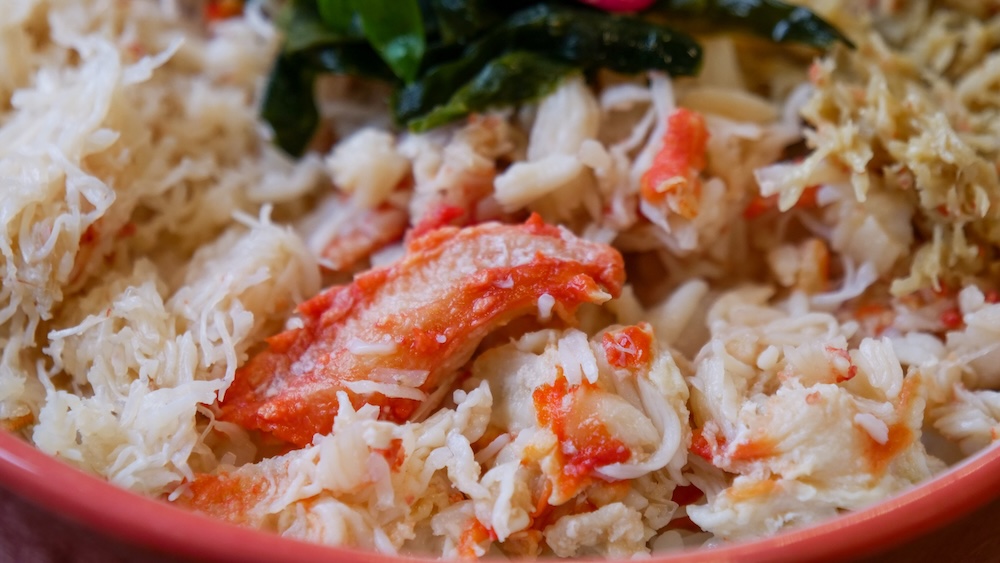
Crab: The Taste of Hokkaido’s Cold Seas
Crab is Hokkaido’s most famous seafood, and the cold northern waters around the island are the reason. Four crabs come up again and again. King crab is the giant. Snow crab has long, slender legs. Hair crab, named for the soft spines covering its shell, is the one Hokkaido locals know best. Hanasaki crab takes its name from Hanasaki on the Nemuro Peninsula, out on the island’s far eastern edge.
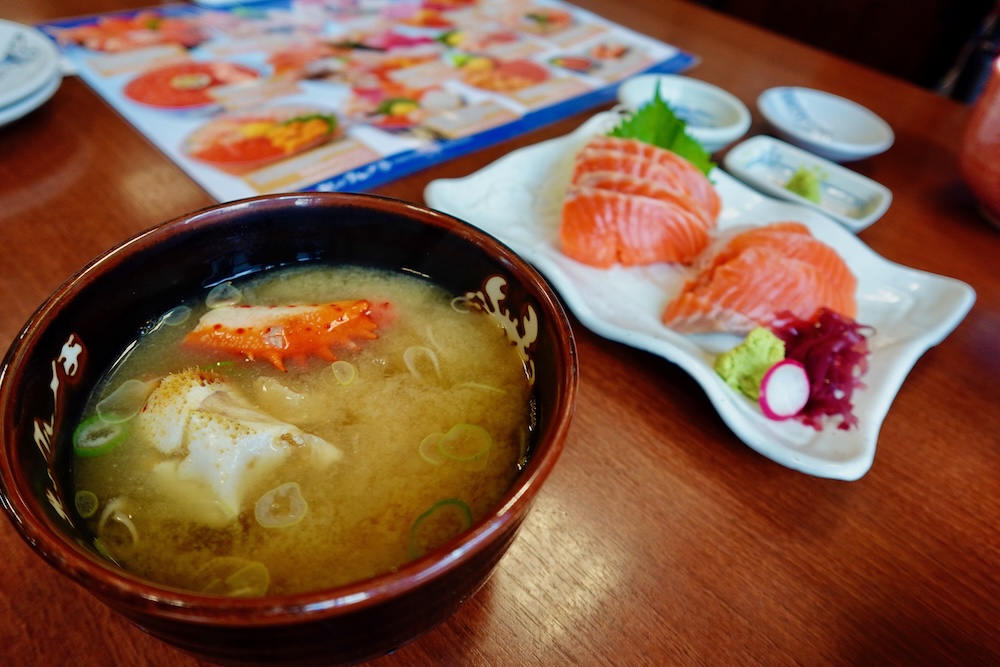
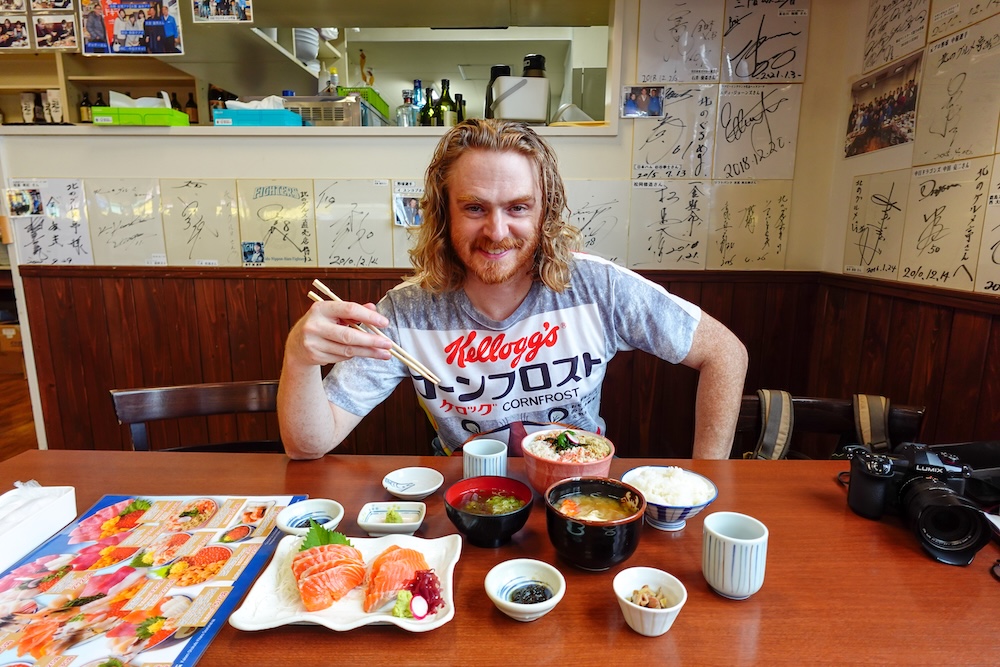
We got all four in a single bowl at the Sapporo Curb Market, the so-called crab market beside the city’s central wholesale market. Audrey ordered a four-crab donburi of flaked crab over rice, I got a sashimi set with a crab miso soup, and breakfast for two came to ¥3,060 when we visited, which we thought was very reasonable. One honest caveat: much of the king crab sold in Japan is caught off Russia or Alaska, and Hokkaido’s own catch varies from year to year, so ask if origin matters to you. Our Sapporo Curb Market guide covers the full breakfast, prices and timing.
Sapporo Beer: Japan’s Oldest Beer Brand Started Here
Beer came to Sapporo because of ice. In 1876, the Kaitakushi opened a brewery as part of its campaign to develop Hokkaido, with a brewmaster, Nakagawa Seibei, who had trained in Berlin. The original plan was to build in Tokyo, but German-style lager has to ferment and mature at low temperatures, and Hokkaido had the ice to make that reliable. Sapporo Beer went on sale in 1877 under the Kaitakushi’s North Star, the same red star still on the labels.
You’ll often read that Hokkaido is the birthplace of Japanese beer. It isn’t. A brewer named William Copeland was making beer in Yokohama several years earlier. Sapporo’s real claim is narrower but still impressive: it’s the oldest Japanese beer brand still on sale.
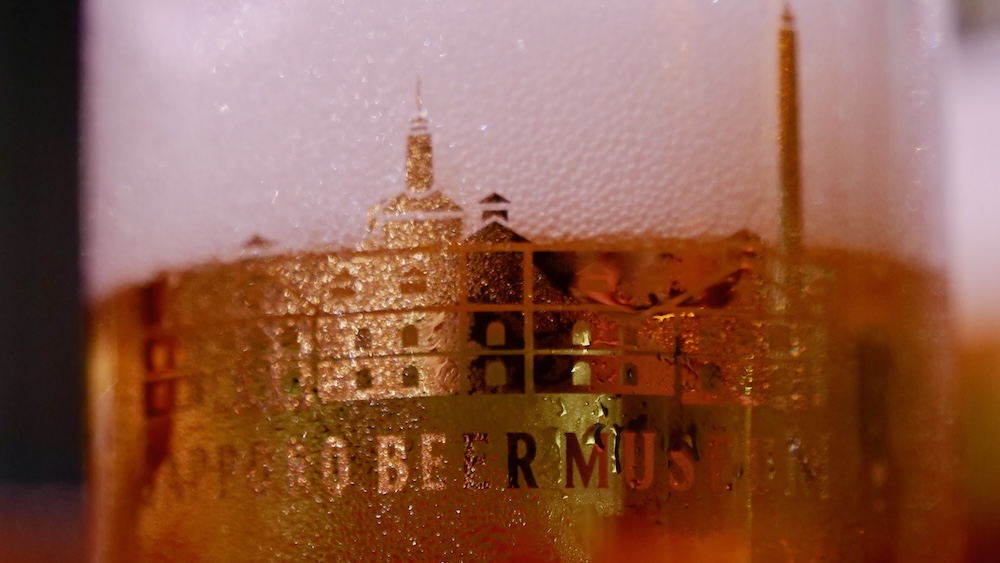
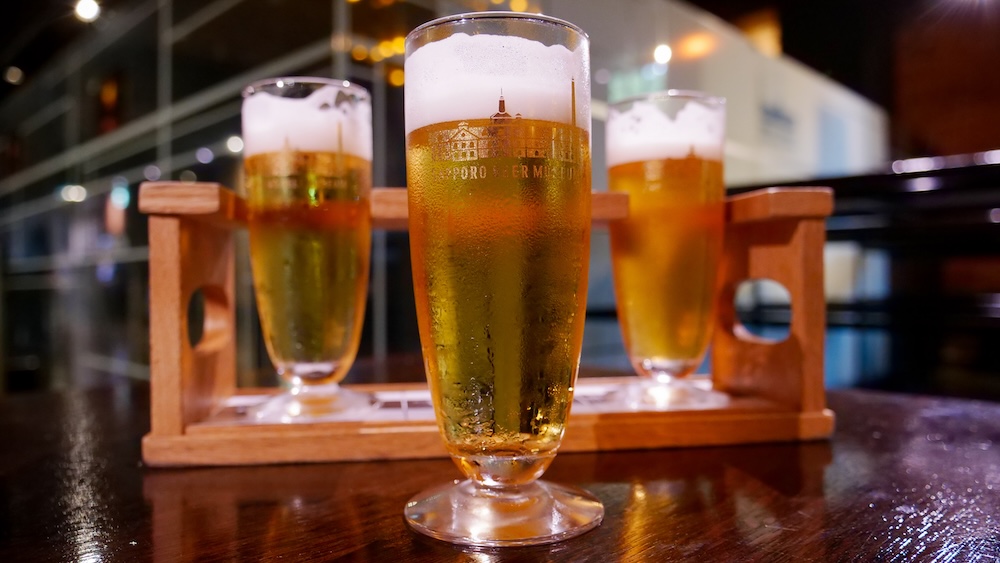
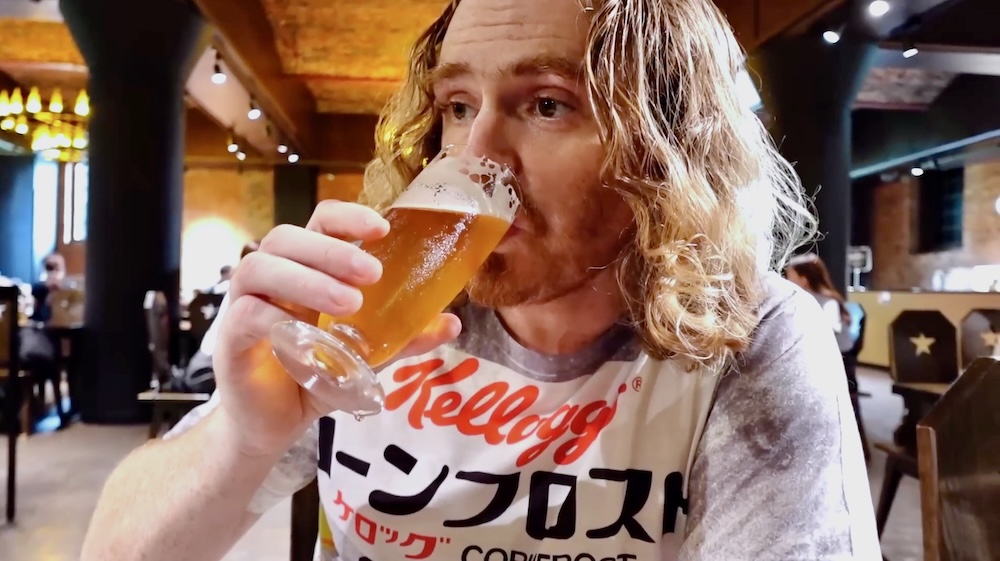
Audrey and I did our tasting at the Sapporo Beer Museum on a hot, humid afternoon, which made an air-conditioned room with cold beer feel close to perfect. The three-beer set included Black Label, the brand’s best-seller; Sapporo Classic, which is sold only in Hokkaido; and Kaitakushi Beer, named for the commission that built the original brewery. I went with Black Label without much deliberation. Audrey liked the Classic and the Kaitakushi but found all three quite similar, and her verdict was simply that they were refreshing. The one thing neither of us liked was the corn tea Audrey ordered on the side, which smelled exactly like the water you boil corn in. Hokkaido really does put corn in everything. Tickets, tasting formats and directions are all in our Sapporo Beer Museum guide and review, and if one brewery’s lineup isn’t enough, you can compare current Sapporo beer and brewery tours.
Soup Curry: Sapporo’s Own Take on Curry
This is the first of our two misses. Soup curry is a genuine Sapporo invention, and a fairly recent one. It began in 1971, when a Sapporo café called Ajanta added a “medicinal curry” to its menu. In the 1990s, a specialty shop called Magic Spice marketed its version as “soup curry,” and the name stuck. Today there are more than 200 specialty soup curry shops in Sapporo alone.
What sets it apart from the thick Japanese curry most people know is the texture and the scale. The curry is thin and soup-like and loaded with large ingredients, and many shops let you choose your spice level, so it doesn’t have to be fiery. The rice comes separately, and the usual way to eat it is to put a spoonful of rice into the soup and eat them together. Every shop has its own broth, thickness and toppings, which is apparently how people end up in what Hokkaido’s tourism body calls the “soup curry swamp.” Next time, I’d happily wade in.
Jingisukan: Hokkaido’s Lamb Barbecue
Our other miss is the dish Hokkaido people make when they get together. Jingisukan, the Japanese name for Genghis Khan, is mutton or lamb grilled with seasonal vegetables on a dedicated jingisukan pan and eaten with a sweet dipping sauce. People often grill rice balls alongside and finish with udon in the pan juices. It’s what you cook when family or friends gather, and it’s eaten especially often in summer.
Its roots go back to sheep raised in Hokkaido for wool; jingisukan grew out of finding a good way to eat them. It’s now so tied to the island that in a national survey by Japan’s agriculture ministry, Hokkaido’s jingisukan ranked first in recognition among all of Japan’s regional dishes. Hokkaido even marks April 29 as Jingisukan Day, a pun on how the characters for lamb meat can be read, with festivals and campaigns each year. The twist is that almost all of the lamb is now imported, mostly from Australia, which makes jingisukan a dish that’s thoroughly local even when its main ingredient isn’t.
We came close without realizing it. The Sapporo Beer Garden, right next to the Beer Museum, serves jingisukan with draft beer, and we didn’t eat there. With hindsight, following a beer tasting with a lamb barbecue next door seems like the most obvious decision in Sapporo, and we missed it. If you’re worried about the same thing happening to you, a guided evening is one way to make sure it doesn’t: some current Sapporo food tours include a jingisukan stop alongside ramen and seafood. We ate independently, so treat that as an option rather than a recommendation.
What We’d Eat First Next Time
| Food | Why it’s Sapporo’s | Did we eat it? | Read more |
|---|---|---|---|
| Miso ramen | A rich, hot bowl and curly noodles built for Hokkaido winters | Yes, at Ramen Alley | Sapporo miso ramen guide |
| Crab | Hokkaido’s cold northern seas | Yes, a four-crab bowl at the Curb Market | Sapporo Curb Market guide |
| Sapporo Beer | A frontier government brewery that chose Sapporo for its ice | Yes, a three-beer tasting | Sapporo Beer Museum guide |
| Soup curry | A Sapporo invention, from a café menu to a citywide obsession | No, one of our two big regrets | — |
| Jingisukan | Sheep raised for wool, grilled when friends and family gather | No, our other big regret | — |
If it’s your first trip to Sapporo, have a bowl of miso ramen and a crab breakfast. They’re the classics for good reason, and both fit easily into a day. Have a cold Sapporo Beer somewhere too, ideally at the museum if you like a little history with your glass. But don’t leave without soup curry and jingisukan. That’s exactly the mistake we made, and if we did the trip again, those two would go on the plan before anything else.
Where you stay makes that list easier to work through. Susukino puts you within walking distance of Ramen Alley and a dense spread of soup curry and jingisukan restaurants, with the subway on hand for the crab market and the Beer Museum. It’s also Sapporo’s nightlife district, so expect neon and late-night foot traffic. If that trade-off suits you, you can compare hotels in Susukino.
Frequently Asked Questions
What are the five foods Sapporo is famous for?
Sapporo is best known for five signature foods and drinks: miso ramen, crab, soup curry, jingisukan (grilled lamb or mutton barbecue), and Sapporo Beer. Each one connects directly to Hokkaido’s cold winters, surrounding northern seas, farm produce, frontier modernization, or local culinary reinvention.
Why are butter and sweet corn added to Sapporo miso ramen?
Hokkaido produces roughly 58 percent of Japan’s raw milk and about half of its sweet corn, making dairy and corn staple island ingredients. While a rich miso broth, stir-fried vegetables, and curly egg-yellow noodles define the classic 1950s winter bowl, butter and corn are popular visitor toppings rather than required ingredients.
Are Hokkaido crab and jingisukan lamb always locally sourced?
Not always. While Hokkaido’s cold seas are famous for king, snow, hair, and hanasaki crab, much of the king crab sold in Japan comes from Russia or Alaska, and local catches vary by year. Similarly, jingisukan grew out of Hokkaido’s wool-sheep farming history, but almost all the lamb used today is imported, mostly from Australia.
Is Hokkaido the birthplace of Japanese beer?
No, William Copeland was brewing beer in Yokohama several years before Sapporo’s brewery opened. Sapporo’s accurate historical claim is that Sapporo Beer, founded by the Kaitakushi development commission in 1876 and first sold in 1877, is the oldest Japanese beer brand still on sale.
How much does a crab breakfast cost at the Sapporo Curb Market?
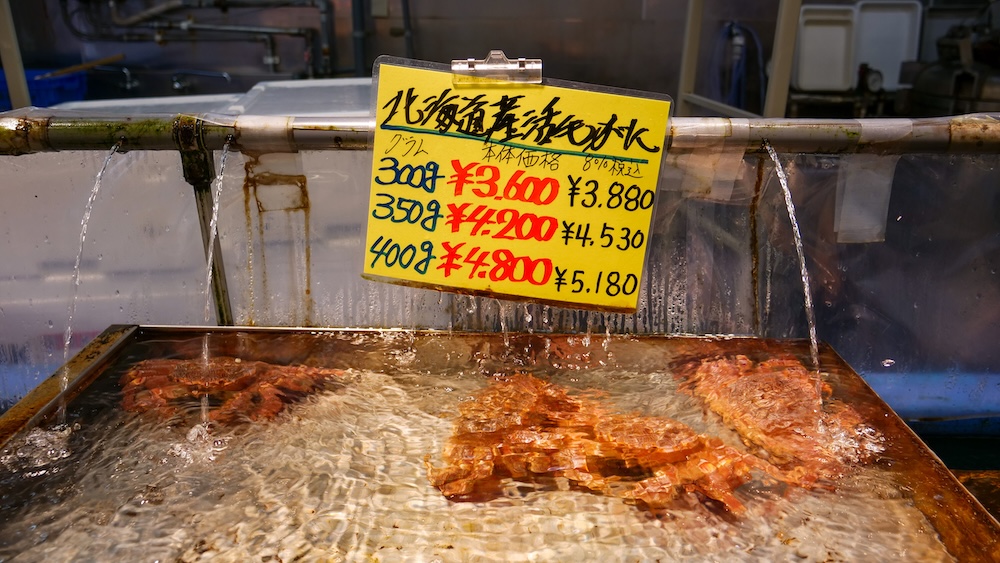
What you spend depends on whether you order a prepared bowl or a whole live crab. When Audrey and I visited Kita no Gurume-tei at the Sapporo Curb Market, our breakfast for two—a four-crab donburi and a salmon sashimi set with crab miso soup—came to ¥3,060, whereas a whole live 300- to 400-gram Hokkaido crab on the market price boards started at ¥3,880 tax included.
Which Sapporo foods should first-time visitors prioritize?
Start with a bowl of miso ramen and a crab breakfast at the market, which fit easily into a single day, and add a cold Sapporo Beer at the museum if you enjoy history. Make sure you also leave time for soup curry and jingisukan—skipping those two was the biggest foodie regret Audrey and I had on our trip, and we would put them at the top of our list next time.
This article is also available in Spanish. [Leé la versión en castellano: ¿Por qué comida es famosa Sapporo y por qué? La historia de Hokkaido detrás del ramen de miso, el cangrejo, el soup curry, el jingisukan y la cerveza Sapporo]
This article contains affiliate links. If you book through one of these links, I may earn a commission at no extra cost to you.