
Audrey and I ate our way around Sapporo on our own. We had a butter-loaded bowl of miso ramen in Ramen Alley, a four-crab breakfast at the city’s crab market, a three-beer tasting at the Sapporo Beer Museum, and a table of sweets under the trees at Hokkaido Jingu. We didn’t take a single food tour, and by day we didn’t need one.
We have, though, taken plenty of food tours elsewhere in the world, enough to know how good they can be. They’re often the best value of a trip. Instead of stuffing your beak at one place, you get to try a whole run of places you’d never have found on your own. You meet people, you chat, and you come away knowing a neighbourhood and its history far better than you would have by yourself. So the useful question about Sapporo isn’t whether food tours are worth it. It’s which parts of the city you can easily do alone, and which parts a guide makes far better.
Here’s what we ate on our own and how it went, what each kind of Sapporo food tour actually includes, and where I think a tour earns its fee. If you’d rather browse everything first, you can see all current Sapporo food tours.

How We Ate Sapporo on Our Own
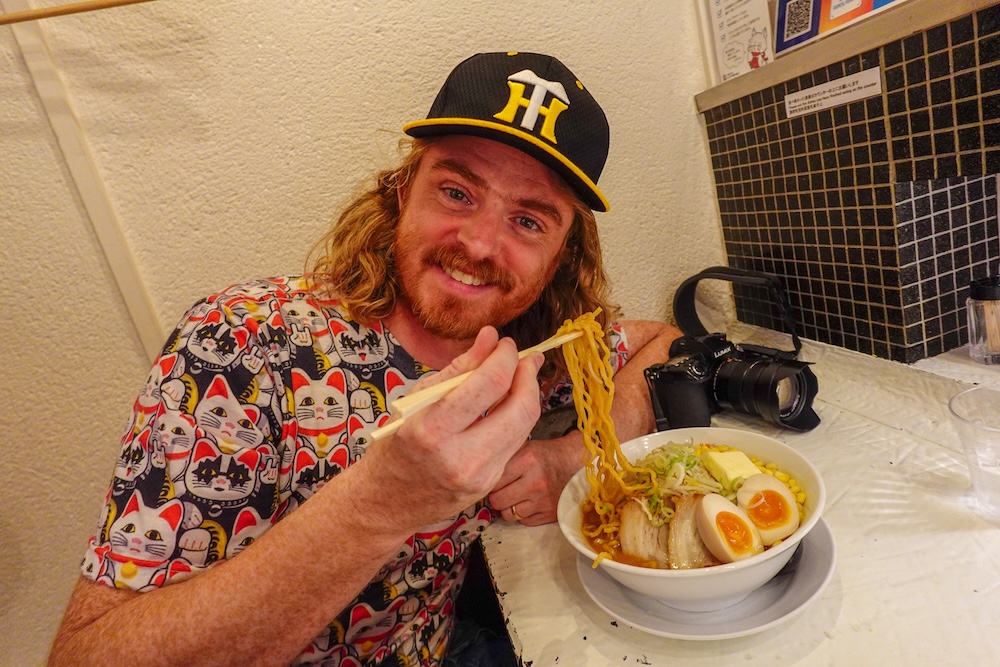
Our ramen came from Misogin, a small counter shop in Ganso Sapporo Ramen Yokocho, the city’s famous Ramen Alley. Ordering happens at a ticket machine, and between the pictures of corn and butter and the rows of add-on buttons, I ended up with double butter and Audrey with double eggs. The bill came to about ¥2,800 for two when we visited. It was still the best ramen we had in Sapporo up to that point, and the people who came in after us were locals. Ramen Alley was easy to do alone. The only real hazard was a machine that makes overordering far too easy. The full story is in our Sapporo miso ramen guide.
Breakfast at the Curb Market, the city’s so-called crab market, was even smoother. Audrey had researched the restaurant ahead of time, so we went straight to Kita no Gurume-tei, where an English menu made ordering painless. Audrey had a four-crab bowl, I had a sashimi set with crab miso soup, and the bill came to ¥3,060 at 9:30 in the morning. Our Sapporo Curb Market guide has the details.
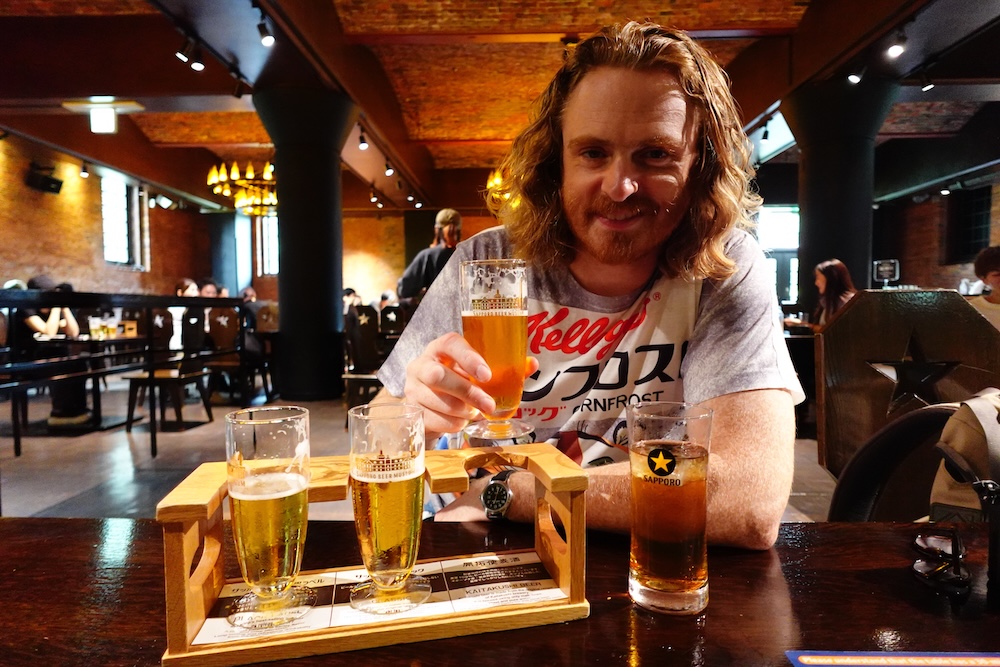
At the Sapporo Beer Museum, we bought a three-beer set from yet another ticket machine and cooled off on a hot, humid afternoon. I picked Black Label as my favourite, and Audrey found all three refreshing. At Jingu Chaya, the teahouse at Hokkaido Jingu, we ordered six sweets and two iced green teas. Half the sweets had names that gave nothing away, and we only worked out what we’d eaten by reading the packaging afterwards.
By day, then, Sapporo was easy. The friction was real but small: machines that tempt you into extras, names that don’t explain themselves, and a breakfast that went smoothly partly because Audrey had done her homework.
What a Good Food Tour Gives You (and What We Missed)
What we didn’t do says just as much. We never went out in Susukino at night, Sapporo’s nightlife district, which is packed with izakayas, standing bars and tiny counter spots stacked inside buildings. We also never ate soup curry or jingisukan, the lamb barbecue Hokkaido people grill when they get together, and those two were our biggest foodie regret of the trip. Both gaps are exactly where a food tour does its best work.
A bowl of ramen or a market breakfast is a single meal you can find, order and enjoy on your own. A night out in Susukino is a different problem. Many of the best spots are small, tucked upstairs or behind doors you’d walk straight past, and they run on unwritten rules about cover charges, ordering and splitting the bill. On your own, you’d likely pick one place and stay put. On a tour, you get three or four places in an evening, a guide who orders the dishes you’d never know to ask for, and a table of people to share it with. That’s the “many places instead of one” advantage at its most useful.
Izakaya and Bar-Hopping Night Tours
If you only book one food tour in Sapporo, I’d make it a night tour. It’s also the category where the formats differ most, so the details matter more than the names suggest.
The most complete introduction is a guided Sapporo food tour with more than ten dishes and drinks, run by Monchan Travel. It lasts about four hours with groups capped at ten, and the route runs from a casual street-side stall to two izakayas, finishing with a seasonal shime, the closing dish locals eat at the end of a night out. One of the izakayas includes an all-you-can-drink plan. What catches my attention is the teaching. The guide covers how to navigate menus, otooshi cover charges, ordering etiquette and splitting the bill, plus a short introduction to sake. In other words, it’s the crash course we never took. You meet inside the Odori Bisse building near Odori Station, it’s worth bringing cash, and it starts at around US$101 per person.
If the tiny bars are what you’re after, there’s a private local dinner and hidden counter pub crawl in Susukino. It opens with a local izakaya course of at least five dishes and 90 minutes of all-you-can-drink, then heads to two small counter or standing bars with a drink included at each. These are the places you’d never realize were upstairs, which is the whole point of having someone open the door. Being private, it costs more: roughly US$150 to US$170 per person.
Two shorter bar-hopping formats come in cheaper. Local Guide’s Picks food and bar-hopping tour visits three bars around Susukino and Tanukikoji in about three hours, in a small group, with the stops tailored to your preferences, from around US$114. A two-hour “choose your district” bar-hopping tour lets you pick Susukino, Tanukikoji or the Sapporo Station area and includes a ¥1,500 credit per person at each izakaya, where the menu may include jingisukan and zangi, Hokkaido-style fried chicken. It’s listed from around US$75.
Before you book any of these, check what the price actually covers. Some night tours include a full course and drinks; others include almost nothing. One three-hour Hokkaido bar-hopping tour has you order and pay for your own food and drinks at each of its three venues, so the price mostly pays for the guide. That’s fine if you know it going in, but it changes the value completely. Beer fans also have a craft beer evening with ten beers to taste across three stops, starting near the TV Tower, from around US$85. Japan’s legal drinking age is 20, and most night tours assume you’ll be drinking.
A night tour is also a good reason to stay close to the action. Most of these tours start in or near Susukino, so a hotel there means a short walk home after the last stop rather than a late train. Just know that it’s Sapporo’s nightlife district, with neon and late-night foot traffic to match. If that suits you, you can compare hotels in Susukino.
Private and Custom Tours: The Fix for What We Missed
If you’re short on time and don’t want to repeat our mistake, a private custom tour is the most direct fix. City Unscripted runs a three-hour private “eat like a local” food tour in Sapporo that matches you with a host based on a questionnaire about your interests. It includes six to eight tastings and a drink, and the route can include soup curry, Ganso Ramen Alley and a jingisukan barbecue where you grill your own lamb. In one evening, that could cover both of our regrets plus our favourite bowl. It’s the priciest option here, from around US$187 per person, and since every route is custom, be specific about what you want covered when you fill in the questionnaire. A similar four-hour private food walk follows a sample route from Nijo Market through Tanukikoji and Susukino and finishes with a Hokkaido dairy dessert.
Ramen Tours
Ramen is the category where going solo works best, and our Misogin bowl is the proof. There’s one thing we couldn’t do on our own, though, and that’s compare. A Sapporo ramen tasting tour with three mini bowls, run by Hokkaido Luxury Trip, visits three shops in about two and a quarter hours and serves a mini bowl at each, chosen from six to ten options. The sample lineup is deliberately varied: a seafood-based bowl, a game-fowl or dipping-noodle bowl, and a pork-bone bowl, with a full-size upgrade available for an extra ¥700. Between bowls, the guide explains how soups, noodles and toppings differ and how locals order.
Two practical notes before you book. There’s about three kilometres of walking between Susukino and Tanukikoji, and every broth on the route contains chicken, pork and fish, so it doesn’t suit vegetarians or travellers with certain allergies. It also isn’t suitable for children under 12. It starts at around US$76.
If you’d rather focus on Ramen Alley itself, there’s a two-hour private Ramen Alley food tour with a guide, from around US$93. Having eaten there on our own, I’d say the alley doesn’t need a guide to enjoy. The tasting tour is the one that adds something we couldn’t have done ourselves. For a hands-on alternative, there’s also a ramen-making class in Sapporo where you knead and cut your own noodles.
Nijo Market Tours
Our market breakfast happened at the Curb Market, not Nijo, and it was easy without a guide. Nijo is the more central option. It sits downtown near Bus Center-mae Station, with roots going back to the early Meiji period, and it’s where most of Sapporo’s guided market tours go.
The best value is the Nijo Market seafood lunch and history tour. It’s a small-group walk of about two and a half hours that starts at the Sapporo Clock Tower at 10 a.m. and takes in City Hall, the TV Tower, a stretch of the Sosei River and Hokkaido Jingu Tongu, a small neighbourhood shrine, before lunch at Nijo Market around 12:30. You choose between sushi and a donburi, though the guide may not join you for the meal itself. From around US$61, it’s the cheapest guided food experience in this comparison, and the history makes it more than lunch.
If tasting matters more to you than history, a Sapporo seafood brunch tour of similar length mixes tastings at Nijo with a sushi brunch and a walk to Tanukikoji, in a small group. It isn’t recommended for travellers with limited mobility. For something shorter and private, there’s a 90-minute Nijo Market tour with a seafood meal, from around US$114.
Tour or DIY: How to Decide
Prices below are starting prices per person at last check, and they move, so treat them as a guide to the brackets rather than a quote.
| Option | Best for | When | Length | What’s included | From | What we did instead |
|---|---|---|---|---|---|---|
| Guided food tour, 10+ dishes | First-timers who want the night scene explained | Evening | About 4 hours | 10+ dishes at 4 venues, all-you-can-drink at one izakaya | About US$101 | Nothing; we never went out at night |
| Hidden counter pub crawl (private) | Couples after tiny counter bars | Evening | About 3.5 hours | 5+ dish izakaya course, 90-min all-you-can-drink, a drink at each of 2 bars | About US$150–170 | Same gap |
| Choose-your-district bar hop | A shorter, cheaper night out | Evening | About 2 hours | ¥1,500 credit per person at each izakaya | About US$75 | Same gap |
| Private custom food tour | Soup curry, jingisukan and ramen in one go | Flexible | About 3 hours | 6–8 tastings and a drink | About US$187 | Missed soup curry and jingisukan entirely |
| Ramen tasting tour | Comparing ramen styles beyond miso | Afternoon or evening | About 2.25 hours | 3 mini bowls | About US$76 | One miso bowl at Misogin, solo |
| Nijo Market lunch and history | History with a seafood lunch | Morning | About 2.5 hours | Guided walk, TV Tower entry, lunch | About US$61 | Breakfast at the Curb Market, solo |
| Eating independently | Daytime classics and tighter budgets | Any time | Your call | Whatever you order | The cost of your meals | Ramen, crab, beer and sweets |
What We’d Do Next Time
If we went back to Sapporo, I’d keep everything we did on our own. The ramen, the crab breakfast, the beer and the sweets were easy, delicious and worth doing at our own pace. What I’d add is one guided night in Susukino. For a first-timer, the ten-dish night food tour looks like the most complete introduction, and the hidden counter pub crawl is the one I’d pick if tiny bars are the draw. That’s the side of Sapporo we never saw, and it’s where everything we love about food tours applies: many places instead of one, doors we’d never have opened ourselves, company around the table, and someone to explain the rules. And if you’re determined not to miss soup curry and jingisukan the way we did, a private custom food tour can take care of both in a single evening.
This article contains affiliate links. If you book through one of these links, I may earn a commission at no extra cost to you.