
Audrey and I have spent time in all four of these cities, just not on the same trip. Our first trip to Japan started in Osaka in late May, moved to Tokyo for almost a month in June, and finished in Kyoto in mid to late July, which was impossibly hot and humid. Sapporo came on a later trip, in September, after Tokyo, Hakodate and Noboribetsu. So when someone asks whether Sapporo is really less touristy than Japan’s big three, we can answer from experience rather than repeating what everyone says. The short answer is yes, by a wide margin on our visits. The longer answer is more useful, because “touristy” meant something different in each city, and our timing wasn’t perfectly fair to the other three.

Crowded Isn’t the Same as Touristy
Here’s how the four cities ranked for us, from least touristy to most. Sapporo came first, comfortably, because it felt more local than anywhere else. Osaka was second. Tokyo was third, though not for the reason you’d guess. Kyoto finished last, and it wasn’t close.
The difference between Tokyo and Kyoto is the real answer to the question. Tokyo is insanely busy, but mostly because it’s enormous. You have tourists, but you have crowds everywhere, and most of those crowds are people getting on with their lives, with the tourist crush concentrated in particular pockets. Kyoto is much smaller and touristy almost everywhere you go. Tokyo’s problem is people in general. Kyoto’s problem is tourists in particular.
On our visit, Sapporo had neither problem, apart from a couple of places I’ll come to.
What Made Sapporo Feel Local
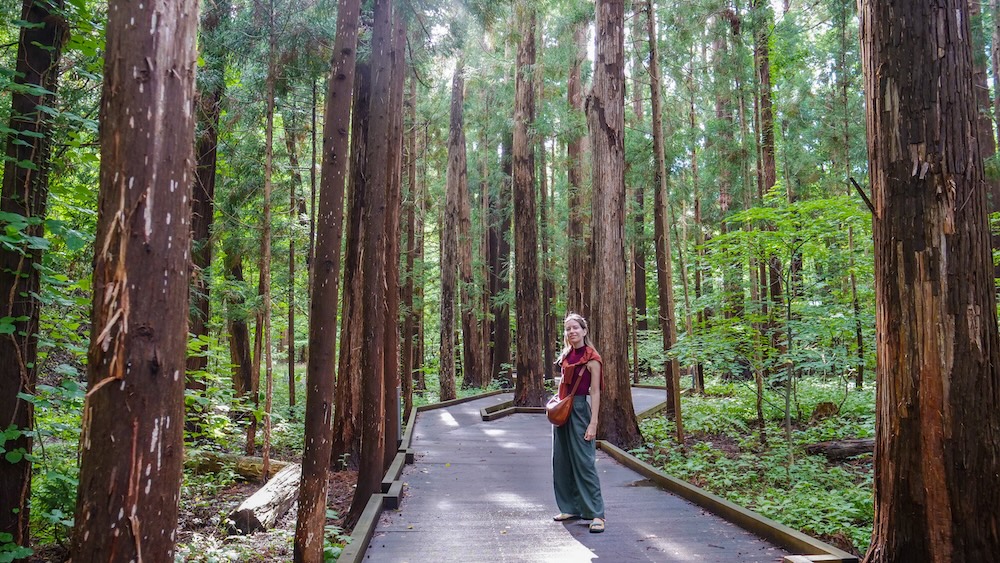
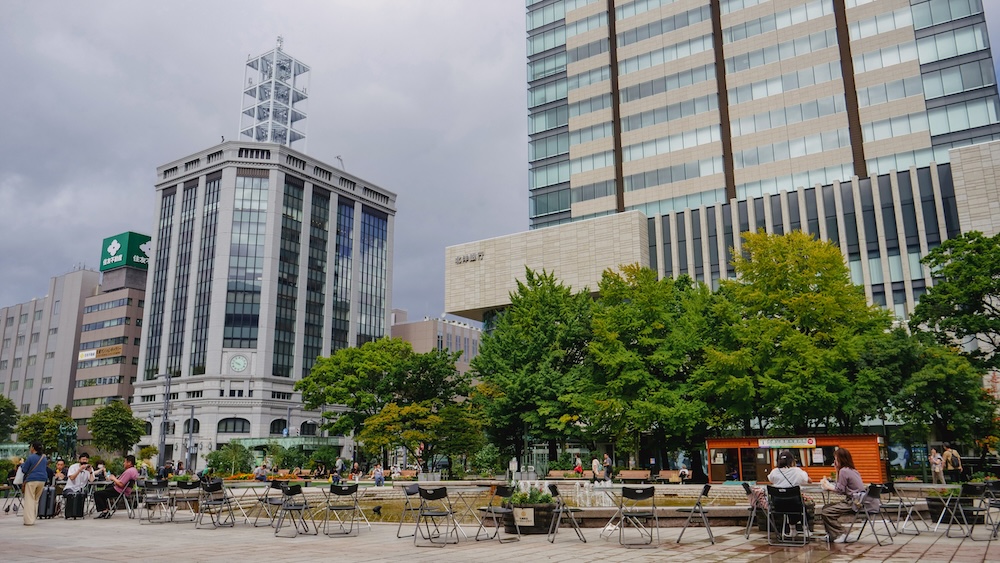
What stood out was who we were sharing the city with. At parks, in restaurants and even at some of the attractions, it was mostly locals. We saw other tourists, but nothing like the numbers we’d seen elsewhere in Japan. The green spaces especially felt like they belonged to the people who live there, used for walks and for getting out of the heat rather than as stops on a checklist.
Two small moments sum it up. One afternoon, just after some rain, we walked into Maruyama Park and there was hardly anyone there, quiet and peaceful in a city of two million. On another day we ate lunch in a tiny ramen shop in Ramen Alley that seats maybe ten people, and right around midday it was about half full. That’s one of the most famous food streets in Sapporo, at lunchtime, with empty stools.
Eating where the locals eat was a big part of why the city felt the way it did, and you don’t need a guide to do it. If you’d rather have someone point you to those places on your first night, though, a private, personalized eat-like-a-local tour of Sapporo pairs you with a host based on what you like to eat. We didn’t take one ourselves.
Audrey reached the same conclusion through a different door. Her biggest impression was space. She felt there was more room up north than in Tokyo, with tree-lined avenues and parks everywhere, and that Sapporo felt less like a full-on big city than the other three.
The numbers explain a lot of this. Sapporo counted about 16 million visitors in the 2025 fiscal year, a record, and about two-thirds of them came from elsewhere in Hokkaido. Only around 2.5 million were foreign overnight guests. So the people in Sapporo’s parks and ramen counters are, more often than not, Hokkaido locals visiting their own capital, which is exactly how it felt to us.
Where Sapporo Still Felt Touristy
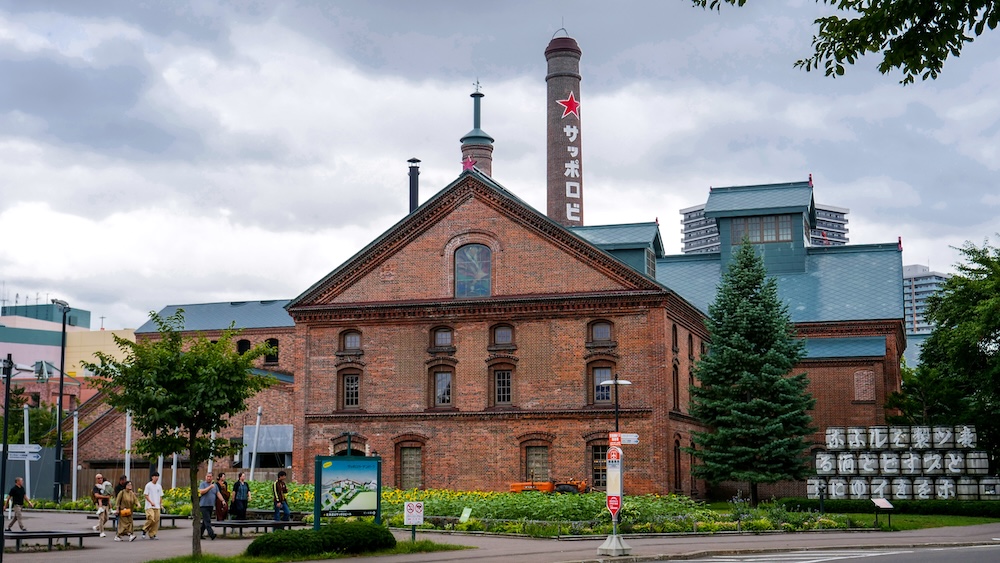
Sapporo isn’t tourist-free, and I’d be doing you no favours by pretending it is. Two places felt properly touristy: the Sapporo TV Tower and the Sapporo Beer Museum. Both are paid, ticketed landmarks at the top of every first-timer’s list, and that’s where the visitors gathered. The Clock Tower was busy when we stopped by, too.
The pattern is worth knowing. In Sapporo, tourists cluster where the ticket booths are. Walk away from those few landmarks into the parks, side streets and neighbourhood restaurants, and the city goes back to feeling like somewhere people live. That side of Sapporo is easy to find on your own, but if you’d like a local to fill in the stories as you go, Sapporo’s neighbourhood walking tours include a private walk built around history, food and everyday local life.

How Tokyo, Kyoto and Osaka Compared
Kyoto in mid-July was impossibly hot and humid, and somehow the crowds were the bigger shock. It felt touristy everywhere, not just at the famous temples, and the number of other visitors was genuinely shocking compared with anywhere else we’d been in Japan. The scale explains it. Kyoto city counted about 62.8 million visitors in 2025, including a record 12.7 million from overseas, in a city of roughly 1.4 million people. That’s around 44 visitors per resident. Sapporo’s 16 million or so, in a city of about two million, works out to around eight. The two cities count visitors differently, so take that as an order of magnitude, but the picture is clear: Kyoto absorbs roughly five times as many visitors per resident as Sapporo. Kyoto itself treats this as a problem to be managed. It added tourist express buses in 2024 to take pressure off the routes residents rely on, and from March 2026 it raised its accommodation tax to ¥400 a night for a typical mid-range room, with the most expensive stays paying as much as ¥10,000.

Tokyo was intense in a different way. We spent almost a month there, and what I remember is the sheer size of it. Crowds were everywhere because people were everywhere, while the tourist-heavy feeling was concentrated in specific areas. For scale, Tokyo recorded about 111 million guest nights in 2024, against about 42 million for the whole of Hokkaido, an island many times its size. It’s not a like-for-like comparison, but it shows why Tokyo feels the way it does.
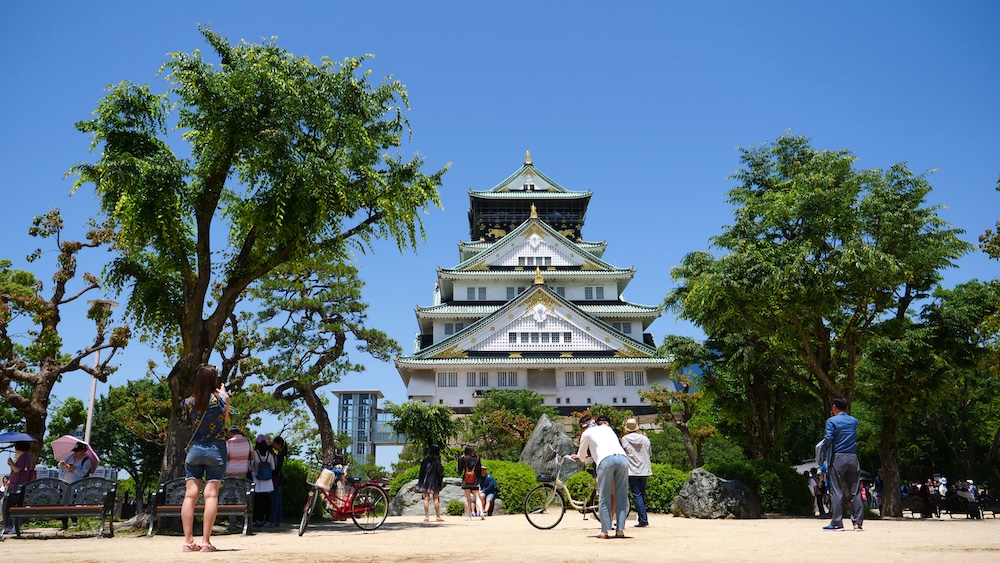
Osaka landed in the middle, our second least touristy city. We started that trip there in late May, when it was comfortable but warm, and it never felt overrun the way Kyoto did. That’s interesting given that Osaka prefecture actually records more foreign guest nights than Kyoto prefecture. Osaka can absorb that many visitors and still feel less touristy, which suggests the real issue isn’t only how many people come but how concentrated they are.

How Much to Trust a Comparison Across Years
There’s a catch in our comparison, and I’d rather point it out myself. We saw Osaka, Tokyo and Kyoto in 2018 and Sapporo in 2023, in different seasons, and those weren’t equivalent years for tourism in Japan.
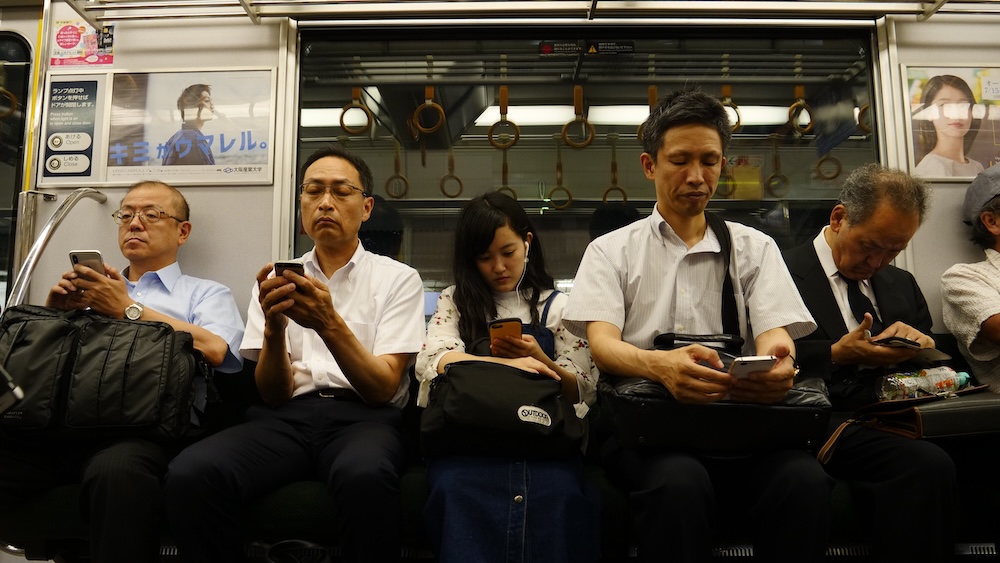
The year of our first trip, Japan welcomed about 31.2 million foreign visitors. The year we went to Sapporo, the country was still recovering from the pandemic and welcomed about 25.1 million. Arrivals have since surged to about 36.9 million in 2024 and a record 42.7 million in 2025. Sapporo has been slower to catch up. Even in the April to September half of its 2025 fiscal year, foreign overnight guests were still about 26 percent below the same months in 2019, while Kyoto was breaking records.
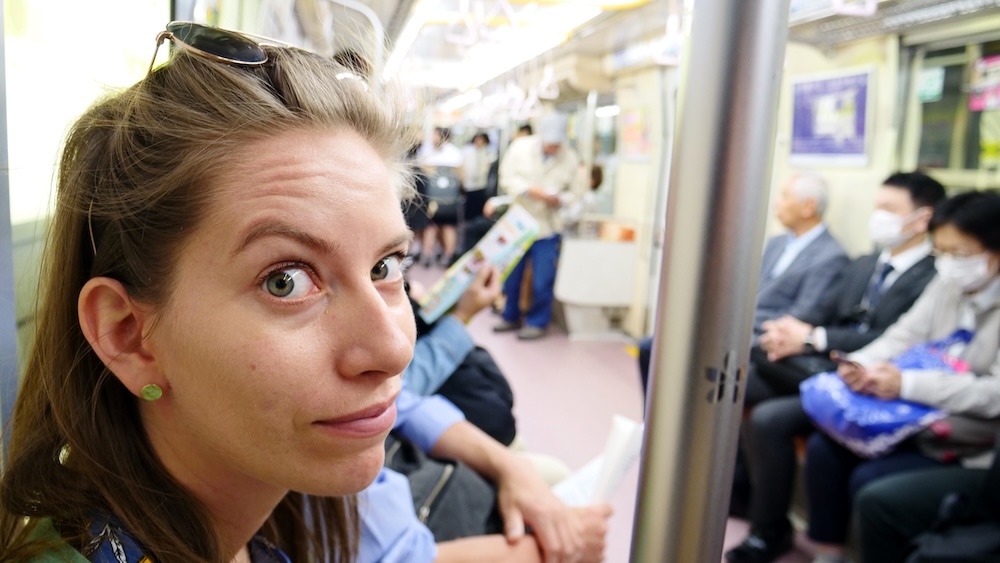
So our timing probably flattered Sapporo. We saw the big three in a near-record year and Sapporo in a quieter one. Still, the gap in visitors per resident is wide enough that I don’t think fairer timing would close it.
Season matters as well. Sapporo is a summer city for visitors. In 2019 it counted about 1.83 million visitors in July and 1.89 million in August, against 1.60 million in September, and its winter totals typically run at about half the summer peak. In July or August, expect a busier Sapporo than the one we found.

What Being Less Touristy Cost Us
A quieter city comes with trade-offs. The biggest for us was distance. Sapporo is really spread out, so some places, especially on the outskirts, took real effort to reach. It may also lack some of the epic attractions other Japanese cities have. Nothing in Sapporo carries the weight of Kyoto’s great temples, and a lot of what’s worth seeing is spread across the city rather than clustered together.
What we didn’t give up was ease. English was available on transportation and on most menus, so getting around and ordering never became a problem. And Sapporo felt cheaper to us, better value per dollar than Tokyo, Kyoto or Osaka. That’s an impression rather than a measured comparison, since our trips were years apart, but it’s how the bills felt.
Who Should Pick Sapporo for a Quieter Japan
Here’s how the four cities felt on our visits:
| City | When we visited | How touristy it felt | Where the crowds were | Our take |
|---|---|---|---|---|
| Sapporo | Late September | Least touristy; felt local | At paid landmarks like the TV Tower and Beer Museum | The easiest of the four to enjoy without crowds |
| Osaka | Late May | Second least | Busy but not overrun | A big city that never felt swamped |
| Tokyo | June, for almost a month | Touristy in pockets | Everywhere, because it’s huge | Massive more than touristy |
| Kyoto | Mid to late July | Most touristy, everywhere | Everywhere | Plan around the crowds |
If crowds wear you down, adding Sapporo to a Japan trip is the simplest fix I know. You’ll find parks used by the people who live there, restaurants where you can usually just walk in, and a city that doesn’t revolve around visitors. Just don’t expect it to replace Kyoto. If temples and Japan’s biggest sights are the point of your trip, Kyoto’s crowds come with the territory, and the best you can do is choose your season carefully. If what you want is a big Japanese city that still feels like it belongs to the people who live there, Sapporo is the one we’d pick.
Where you stay helps too. Our hotel overlooked Nakajima Park, so one of the city’s big green spaces was right outside the door, away from the landmark crowds. If that kind of base appeals, you can compare hotels in the Nakajima Park area before you decide.
Frequently Asked Questions
Is Sapporo less touristy than Tokyo, Kyoto and Osaka?
Yes, on our visits. Sapporo felt the most local of the four, with Osaka second, Tokyo third and Kyoto last. Our timing probably flattered Sapporo, because we saw the other three on an earlier trip and Sapporo on a later one, in a different season. The gap in visitors per resident is wide enough, though, that I don’t think fairer timing would close it.
What’s the difference between crowded and touristy?
Tokyo was crowded everywhere because it’s enormous, but the tourist crush was concentrated in particular pockets. Kyoto is much smaller and felt touristy almost everywhere we went. Tokyo’s problem is people in general, and Kyoto’s problem is tourists in particular.
Where does Sapporo still feel touristy?
At its paid, ticketed landmarks. The Sapporo TV Tower and the Sapporo Beer Museum felt properly touristy to us, and the Clock Tower was busy when we stopped by. Away from those, in the parks, side streets and neighbourhood restaurants, the city went back to feeling like somewhere people live.
Who actually visits Sapporo?
Mostly people from elsewhere in Hokkaido. Sapporo counted about 16 million visitors in the 2025 fiscal year, a record, and about two-thirds of them came from within Hokkaido. Only around 2.5 million were foreign overnight guests, which fits how local the city felt to us.
How many more visitors does Kyoto get than Sapporo?
Kyoto absorbs roughly five times as many visitors per resident. Kyoto city counted about 62.8 million visitors in 2025 in a city of roughly 1.4 million people, around 44 per resident, while Sapporo’s roughly 16 million visitors in a city of about two million works out to around eight. The two cities count visitors differently, so treat that as an order of magnitude.
Is Sapporo busier in summer?
Summer is its peak. In 2019 it counted about 1.83 million visitors in July and 1.89 million in August, against 1.60 million in September, and its winter totals typically run at about half the summer peak. In July or August, expect a busier Sapporo than the one we found.
What do you give up by choosing Sapporo for a quieter Japan?
Distance and headline sights. Sapporo is really spread out, so some places, especially on the outskirts, took real effort to reach, and nothing there carries the weight of Kyoto’s great temples. English was available on transportation and most menus, and Sapporo felt cheaper to us, though that’s an impression and not a measured comparison.
This article is also available in Spanish. [Leé la versión en castellano: ¿Es Sapporo menos turística que Tokio, Kioto y Osaka?]
This article contains affiliate links. If you book through one of these links, I may earn a commission at no extra cost to you.