
There was a point in Sapporo when I realized I was having a better time than the city’s list of headline attractions might suggest. We’d seen the TV Tower and Clock Tower, eaten our way through a seafood market, explored a historic brewery and spent an afternoon among sculptures and enormous trees. Yet what impressed me most was how comfortable the city felt in between all those stops.
Audrey noticed the wide streets and greenery. I was taken with how easy it was to escape the bustle without really leaving the city. One minute we were riding the subway or walking past shops; later we were in a quiet park, or following a wooded path beneath trees that made the buildings downtown seem a long way away. Sapporo has the scale and conveniences of a major Japanese city, but it rarely gave me that full-on, slightly exhausting feeling I associate with Tokyo. By the end of our visit, I was wondering whether it might be the most livable big Japanese city I’d visited.
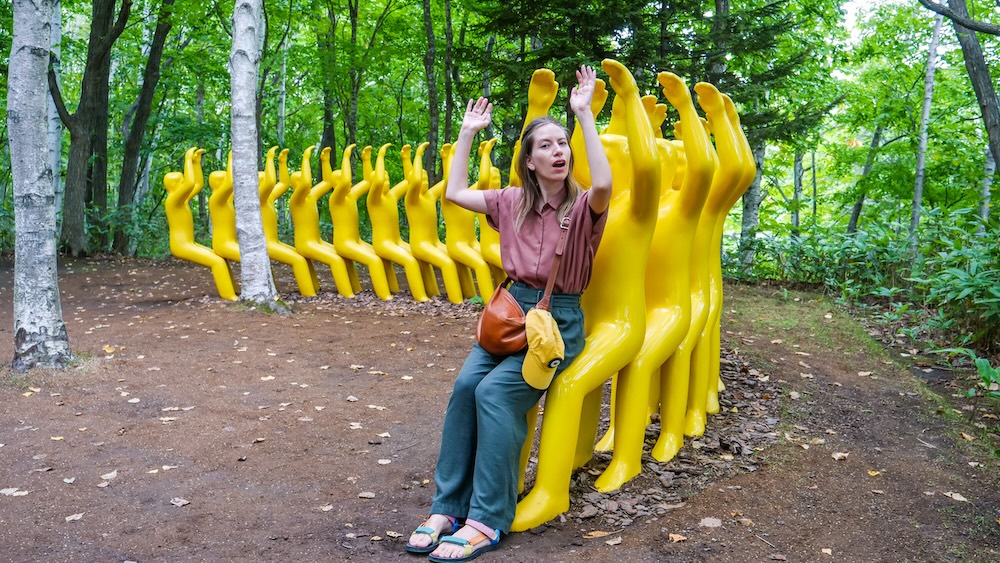
That doesn’t mean every attraction blew me away. I’d happily skip some of the shopping next time, and even a few historic buildings appealed to me more from the outside than in. There were other places, though, that I would go out of my way to revisit: Maruyama Park and Hokkaido Jingu, the Sapporo Beer Museum, and especially Sapporo Art Park, where the sculptures share the stage with the forest around them. Audrey also had an unusual surprise lined up for me at a cemetery on the southern outskirts. You don’t expect to encounter a row of Moai statues on a Japanese city break, but there they were.
Audrey and I stayed four nights at HOTEL MYSTAYS Sapporo Nakajima Park, leaving us three full sightseeing days. We needed those days. Central Sapporo is easy enough to piece together on foot, but the city spreads out, and some of our favourite outings required subway connections, buses and plenty of walking. At the cemetery we even got off a bus one stop too soon. It wasn’t the efficient travel masterclass I’d like to pretend it was, although the accidental detour led to a few decent photographs.
This guide covers what we actually did, what I would prioritize now and where I’d spend my time differently. I’ll also explain the food, neighbourhoods, transport and booking decisions that can make or break a Sapporo visit. Two full days can be worthwhile if you make choices; three were much better for the kind of trip we wanted. The trick isn’t to collect every attraction in northern Japan. It’s to make room for the parts of Sapporo you’ll enjoy most.
Sapporo at a Glance: How the City Fits Together
Before getting into individual sights, I’d spend a moment looking at Sapporo on a map. The city isn’t difficult to navigate, but a sightseeing list can make places look like next-door neighbours when they sit in completely different districts. That’s particularly important if you’re staying only two or three days.
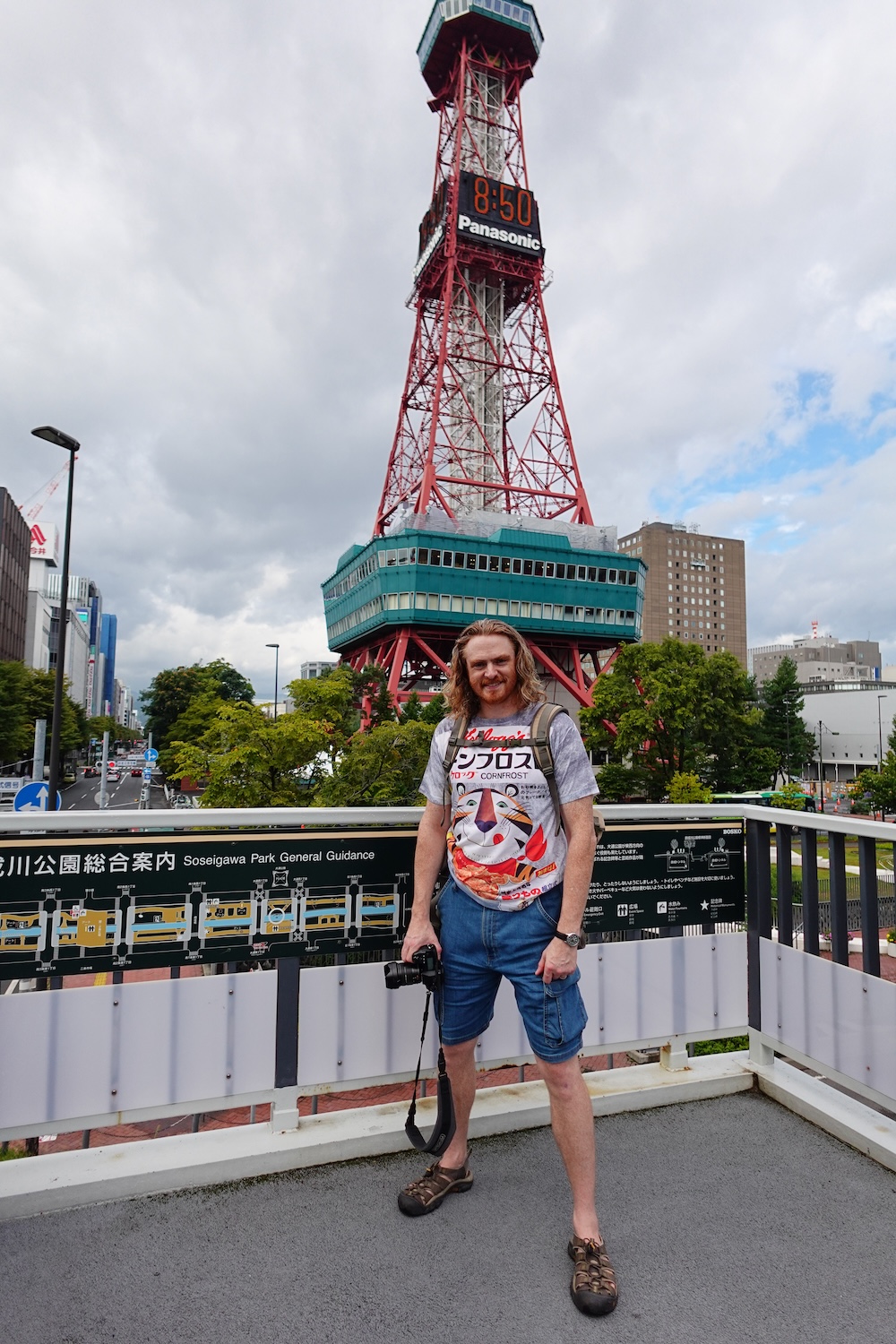
The simplest place to start is Odori Park, a long green corridor through the centre of town. Sapporo TV Tower stands at its eastern end, and the Clock Tower is a short walk away. Those landmarks can be combined without a transport plan worthy of an expedition. Nearby Tanukikoji offers a covered shopping arcade, while Susukino, farther south, is the obvious area for nightlife, restaurants and the narrow passage of Ganso Ramen Yokocho—Ramen Alley.
Sapporo Station, north of Odori, is the city’s principal railway hub and a practical base for people arriving from New Chitose Airport or making journeys elsewhere in Hokkaido. For a short visit, somewhere around the station, Odori or Susukino can be convenient. But I’d pay attention to the actual distance between your hotel and the nearest subway station, not just the neighbourhood name on the booking page. If you’re already choosing a base, compare Sapporo accommodation for your dates before getting attached to a neighbourhood on the wrong side of your sightseeing plans.
We stayed beside Nakajima Park, a quieter district south of Susukino, and enjoyed having a proper park close to our hotel. On the western side of the city, Maruyama Park and Hokkaido Jingu form another sightseeing area with a very different personality: shrine grounds, forest paths and the sort of greenery you might not expect within reach of a large city.
Two other places need their own journeys. The Sapporo Beer Museum is outside the compact central landmark circuit, and Sapporo Curb Market, next to the wholesale market, is not the same place as downtown Nijo Market. We went to the former for a seafood breakfast and were delighted we’d made the trip.
Then there’s the south. Makomanai Takino Cemetery, home to the Hill of the Buddha and Moai statues, and Sapporo Art Park are substantial destinations beyond downtown. Both are within Sapporo’s broader sightseeing reach, but this is not a matter of strolling ten minutes from the Clock Tower. We made a sizeable outing of them and still had to keep an eye on the time.
| If you’re most interested in… | I’d concentrate on… | The trade-off |
|---|---|---|
| Classic city sights | TV Tower, Clock Tower and Odori Park | Straightforward central sightseeing, though less time in quieter areas |
| Greenery and culture | Maruyama Park, Hokkaido Jingu and nearby forest | More walking and a separate subway journey |
| Historic architecture and beer | Sapporo Beer Museum | A dedicated trip and separate museum/tasting costs |
| Seafood and market atmosphere | Sapporo Curb Market | Worth going early; not next to Odori |
| Unusual monuments | Makomanai Takino Cemetery and Hill of the Buddha | Bus connections and seasonal access to consider |
| Art mixed with nature | Sapporo Art Park’s Sculpture Garden | A large outdoor site, with winter closures |
We managed all our city sightseeing independently. The subway did most of the work, and walking filled in the gaps. That said, having a good public-transport network isn’t the same as every attraction being quick to reach. Sapporo rewards a little geographical common sense.
Best Things to Do in Central Sapporo
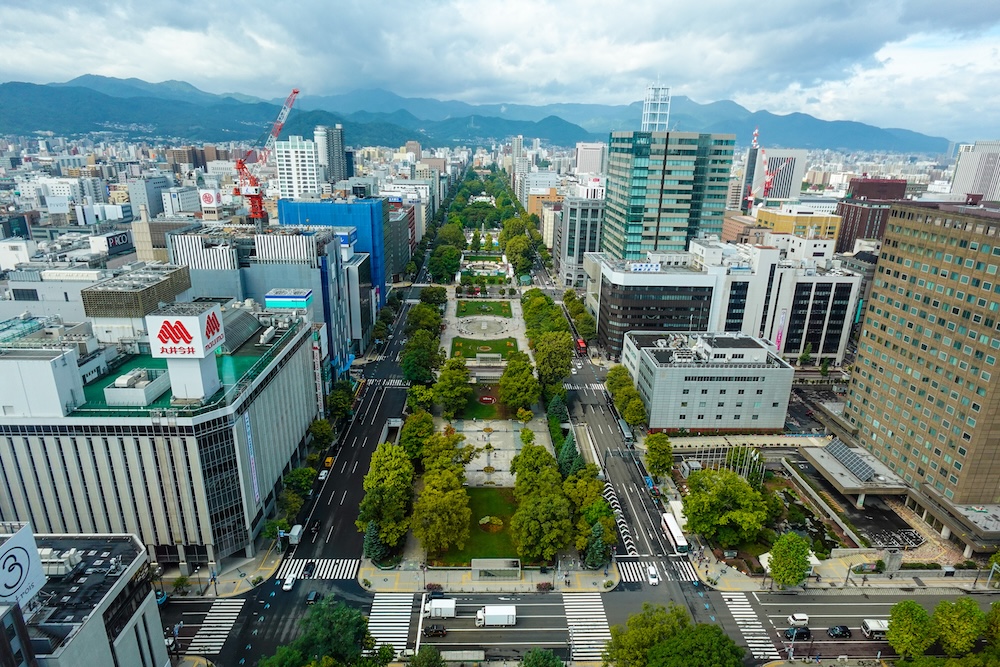
1. Go Up Sapporo TV Tower for the City and Mountain Views
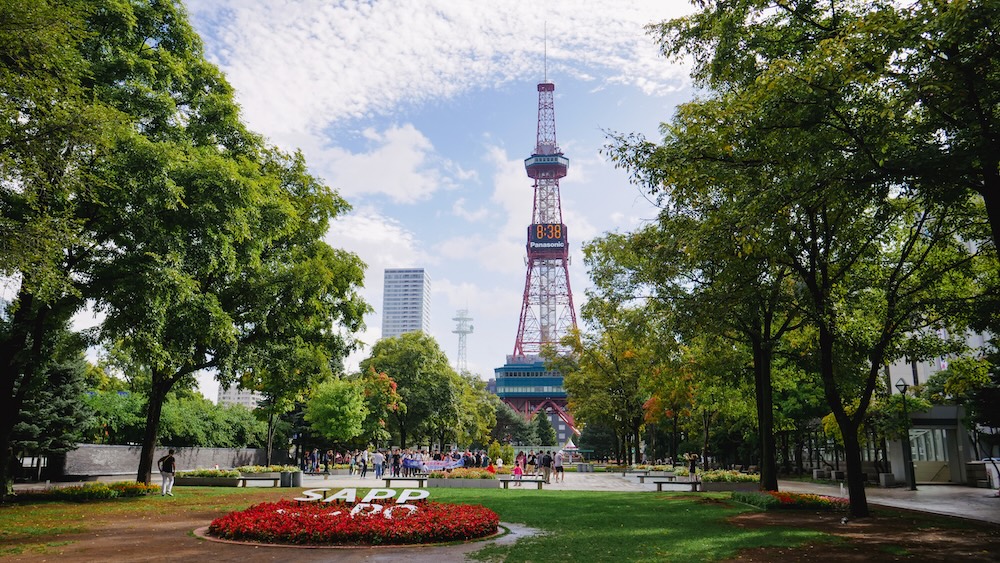
I liked Sapporo TV Tower before we even got on the lift. The red-and-green metal structure has a retro quality that makes it stand out against its more modern neighbours. Built in the 1950s, it’s not the only place to get an elevated view of Sapporo, but its position at the end of Odori Park gives you a particularly good sense of the city’s layout.
The lift ride was less enjoyable than I’d anticipated. I became very aware of the height and that exposed feeling of travelling upward, and by the time we reached the observation level my hands were clammy. Not exactly the image of a fearless globetrotter. But once I stopped concentrating on how far we’d come off the ground, I was glad we’d paid to go up.
Odori Park stretched away beneath us like a green strip laid across the city grid. The built-up districts carried on farther than I’d realized at street level, and then, to the west, came the mountains. I kept looking that way. Seeing the green city corridor against the backdrop of mountains helped explain why Sapporo felt both urban and unusually close to the outdoors.
The tower is a good introduction at the beginning of a trip, especially if you’re still trying to get your bearings. I wouldn’t call the observation deck an all-afternoon activity, but the views were worth it for us. If you’re comparing viewpoints, Mount Moiwa is another established option farther from the centre, although we didn’t visit it and I can’t offer a firsthand verdict between the two.
Regular adult admission to TV Tower is currently ¥1,200, with ordinary observation-deck hours of 9:00 a.m. to 10:00 p.m. and last admission shortly before closing. We bought a combined ticket for the TV Tower and Clock Tower and thought it was excellent value. There’s still a ¥1,300 adult combination ticket, compared with ¥1,550 for separate admissions, but the advertised current ticket is valid only through March 31, 2027. If you’re travelling later, check the official TV Tower ticket information rather than assuming that deal will still be offered.
If you want to see Sapporo from above in both daylight and darkness, there’s also a Day/Night Ticket allowing two observation-deck visits within three days. We only went up during the day, but seeing the city illuminated would be high on my list for a return trip. I’d compare that option with the Clock Tower combination ticket rather than automatically buying the first one offered.
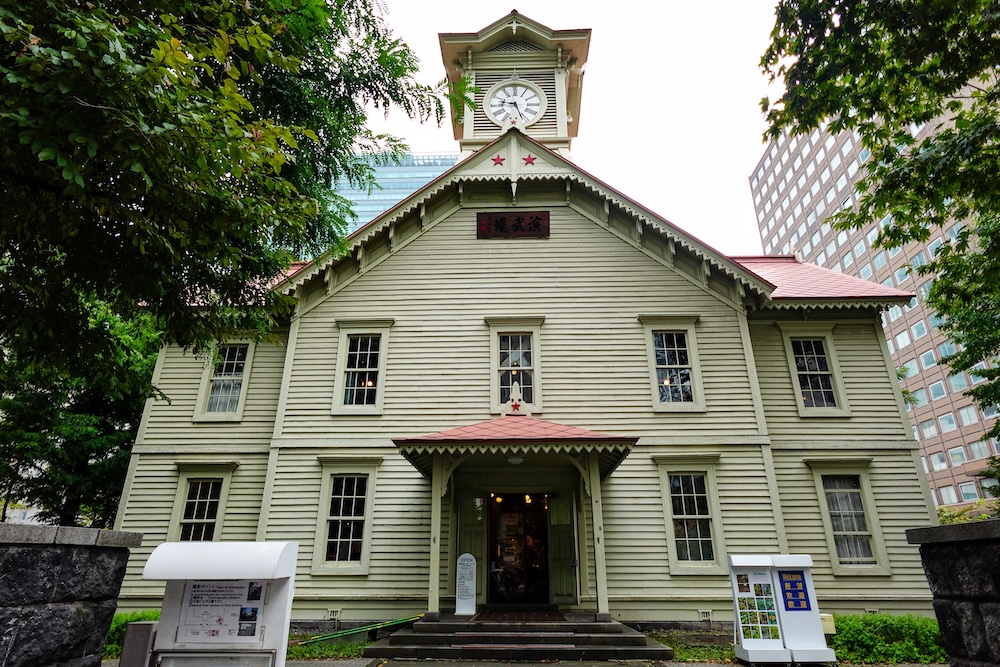
2. See the Sapporo Clock Tower
The Clock Tower is only a short walk from the TV Tower, yet the two landmarks couldn’t look more different. Where the observation tower is all steel framework and height, the Clock Tower is a relatively modest nineteenth-century wooden building surrounded by much larger city structures. You can almost imagine it being picked up from another era and dropped into contemporary Sapporo.
The building was originally associated with Sapporo Agricultural College, a predecessor of Hokkaido University, and reflects the Western architectural influences of that period. It’s an interesting piece of local history, although I’d set expectations accordingly. We were happy to see it as part of our central walk, but I wouldn’t necessarily rearrange a packed day just to make a special trip across the city for this one building.
We went inside as well, exploring the historical displays on both floors and the old drill hall upstairs. We were finished in roughly half an hour, which felt about right for a compact historical museum. I enjoyed learning more about Sapporo’s early development, although I wouldn’t call it an attraction that needs several hours. Standard adult admission is ¥350, with regular opening hours from 8:45 a.m. to 5:10 p.m. and entry ending shortly before closing. Check the Clock Tower visitor information for exceptions. For us, the interior was a worthwhile addition to the combined TV Tower and Clock Tower outing.
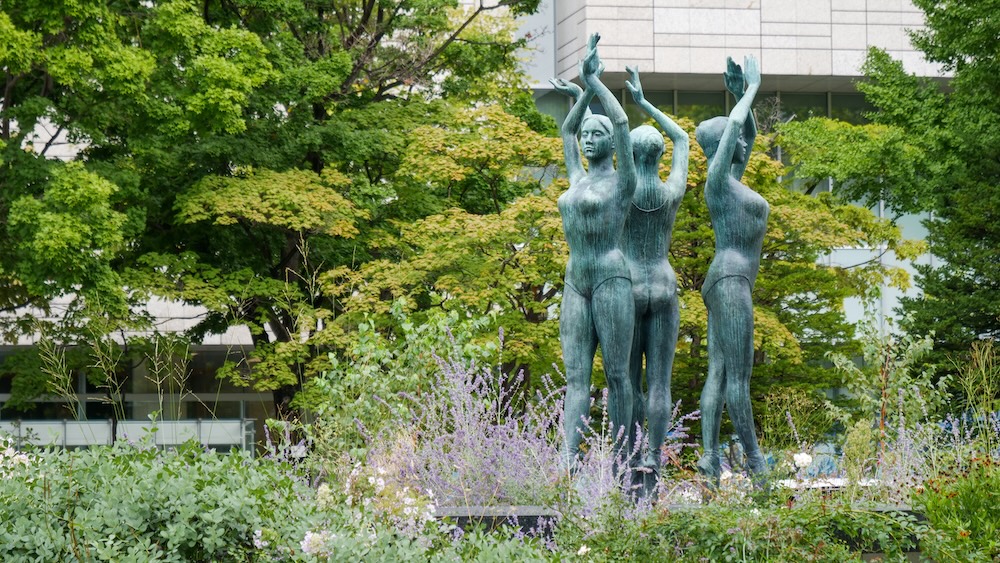
3. Spend Some Time in Odori Park
We’d already looked down on Odori Park from the tower, so wandering through it at ground level seemed like the obvious next move. The park runs through the middle of the city, giving you somewhere to sit, stretch your legs or enjoy a bit of greenery between streets and buildings. It’s also the setting for some of Sapporo’s major seasonal events.
For us, it became a place to admit defeat to the weather. September had sounded like a sensible time to visit Hokkaido, but we encountered a spell around 30°C that was downright uncomfortable after hours of walking. Audrey was struggling, my enthusiasm for another long stretch of pavement wasn’t increasing either, and a soft-serve ice cream suddenly felt like excellent trip planning. We sat down, cooled off and let our legs recover.
That little break is one reason I resist the urge to stack a city itinerary from breakfast until dark. Attractions can look close together on a map, but heat, humidity and plain old fatigue have a way of rewriting the schedule. A park isn’t wasted sightseeing time just because you’re sitting on a bench instead of rushing toward another ticket counter.
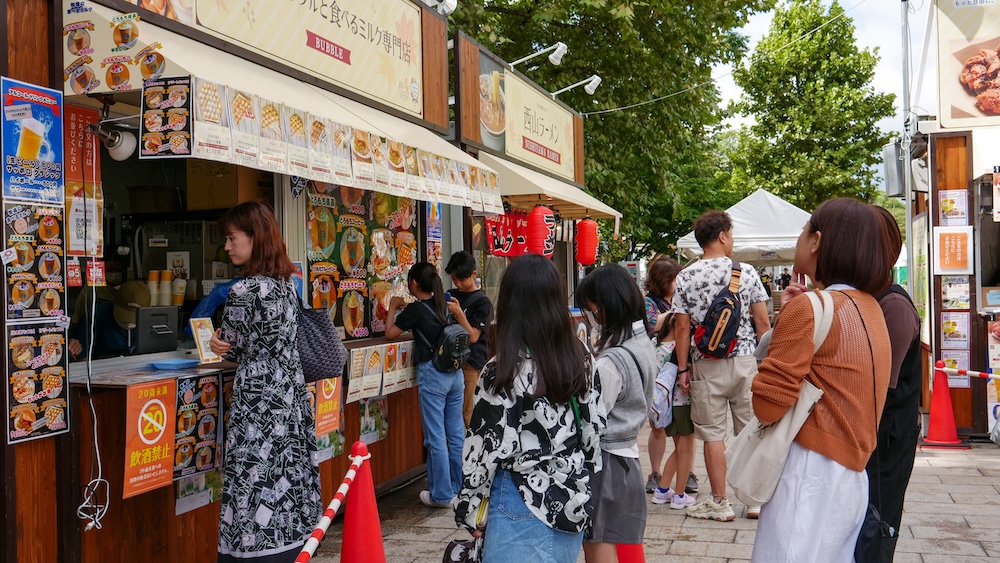
Audrey and I also stumbled across Sapporo Autumn Fest here. We hadn’t planned our day around it; we simply found ourselves looking at rows of food stalls and decided our original meal plans were no longer particularly compelling. That unexpected stop became one of the food highlights of the trip. The festival doesn’t run year-round, so check its dates if you’re hoping to eat there rather than relying on our good luck.
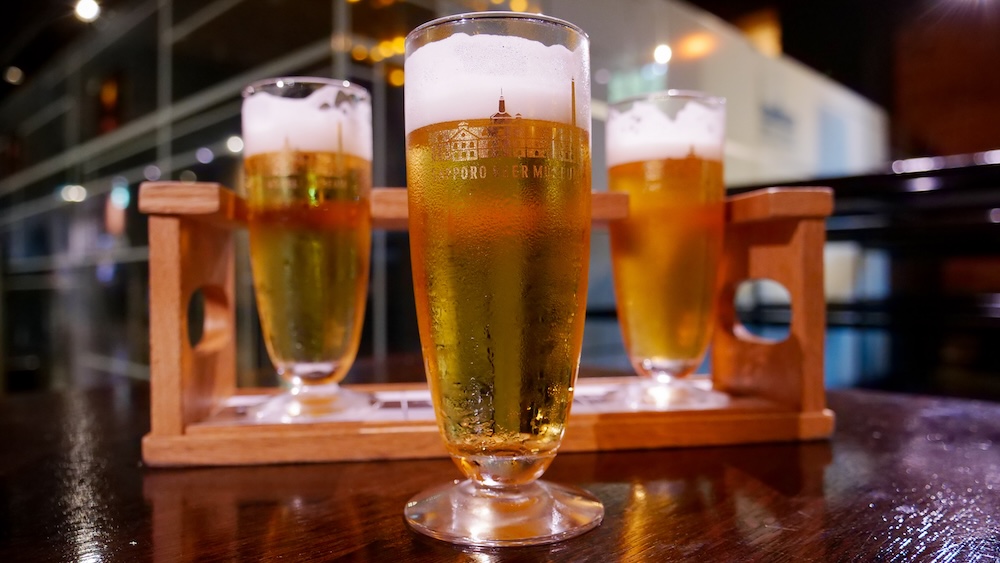
4. Explore the Sapporo Beer Museum
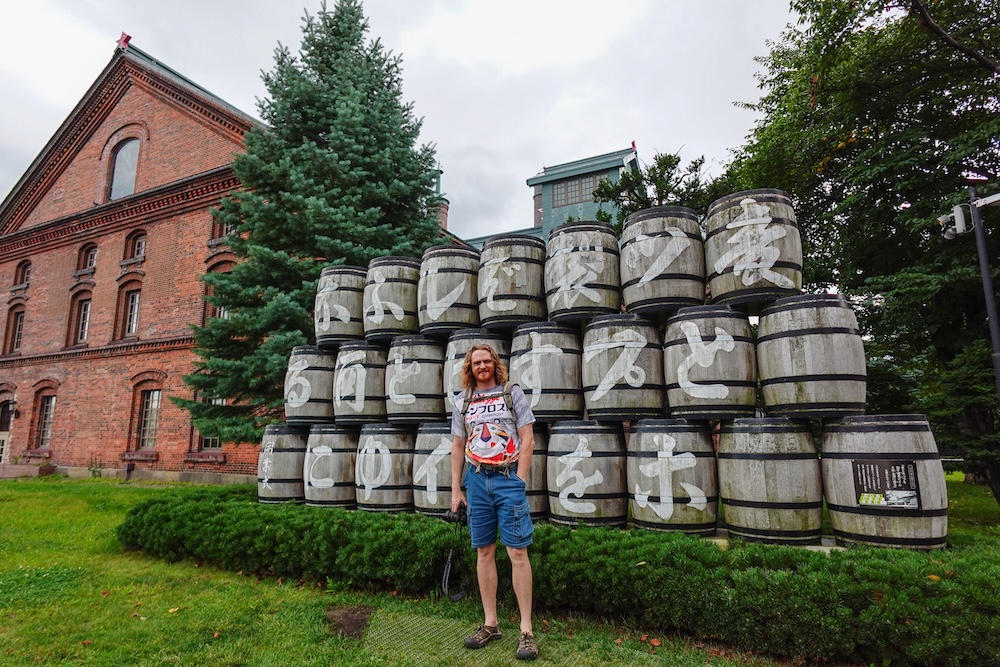
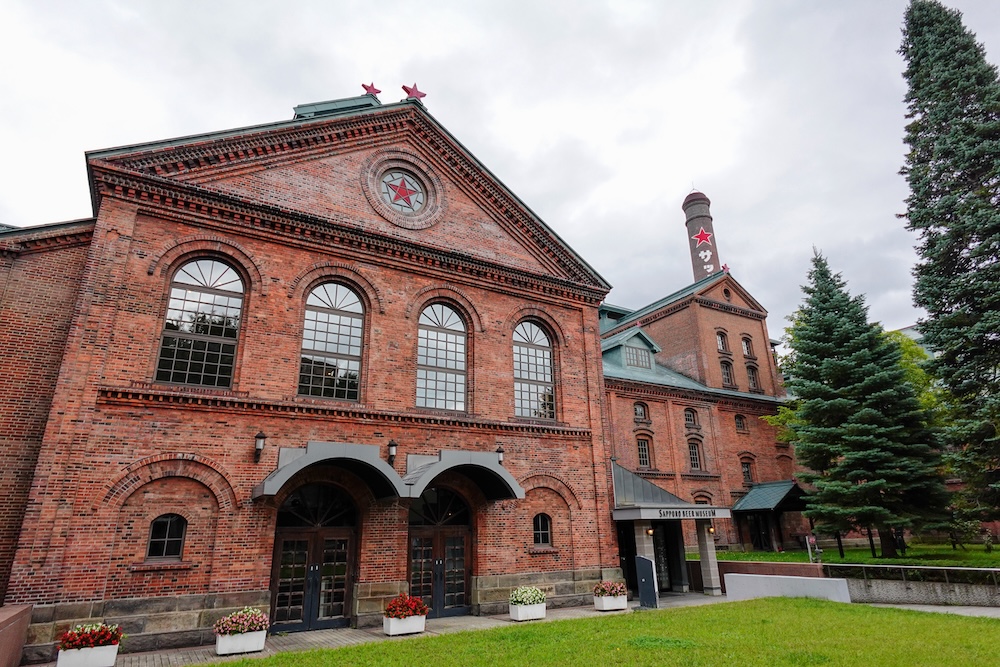
Even if beer isn’t your great passion in life, the Sapporo Beer Museum is worth considering for the building alone. The red-brick exterior has the sort of industrial character I like, and it feels different from the central landmarks. We took the subway and walked to reach it, already feeling that we’d made a small expedition away from the main sightseeing streets.
Inside, we explored exhibits about Sapporo beer and brewing history, including some terrific old labels and branding. I enjoyed tracing how the company presented itself over the years. A museum focused on beer could easily be a rather thin excuse to sell drinks, but there was enough history and distinctive architecture here to make the visit worthwhile before we reached the tasting area.
One distinction worth knowing: this is a museum, not a working brewery. You’re exploring the history of Sapporo beer rather than touring an active production line with brewing tanks and bottling equipment. I’d come for the old building, historical displays and tasting room, not a behind-the-scenes factory tour.
Naturally, I wasn’t going to walk past the opportunity to try the beer. We ordered a three-beer flight and compared notes. Black Label was my favourite. Audrey, who has always been more enthusiastic about wine than beer, wasn’t nearly as definite in distinguishing the varieties. She also ordered corn tea, which turned out to be less of a discovery than she’d hoped. Her description was that it smelled like water you’d boiled corn in. After trying some, I couldn’t really argue.
The museum is also a good example of why old travel advice needs checking. The general museum visit is no longer free. A revised visitor model introduced in July 2026 charges ¥1,000 for adult self-guided admission, with a multilingual smartphone audio experience. There’s also a ¥2,000 guided tour that takes roughly 55 minutes including tasting. The conducted tour is in Japanese, with additional English and Korean audio-support options, and advance booking is sensible for anyone set on that particular format.
The self-guided ticket doesn’t include an unrestricted beer tasting. The current three-beer set costs ¥1,200 separately, and the tasting area has its own service times. Ordinary self-guided museum hours are 11:00 a.m. to 6:00 p.m., with entry closing at 5:30 p.m. I’d check the museum’s own admission and tasting information before travelling here, particularly if you want both exhibits and drinks. We enjoyed doing our own thing, but the options available now aren’t identical to what we encountered on our visit.
The difference matters if you’re coming for the beer itself. The self-guided visit lets you buy the three-beer tasting flight of Black Label, Hokkaido Classic and Kaitakushi. The guided tour instead includes two different beers: Black Label and a revival of the brewery’s original recipe. I’d compare the drinks included, the tour language and the total price before choosing between them.
For me, the combination of the historic building, museum and beer sampling justified the extra journey. It would be one of my first recommendations for a newcomer to Sapporo, with or without the corn tea. If the historical side particularly appeals, there’s also a guided Historical Village and Beer Museum outing that combines two separate heritage attractions. It’s a considerably longer day than visiting the beer museum independently, so I’d check the route and current admissions before choosing it.
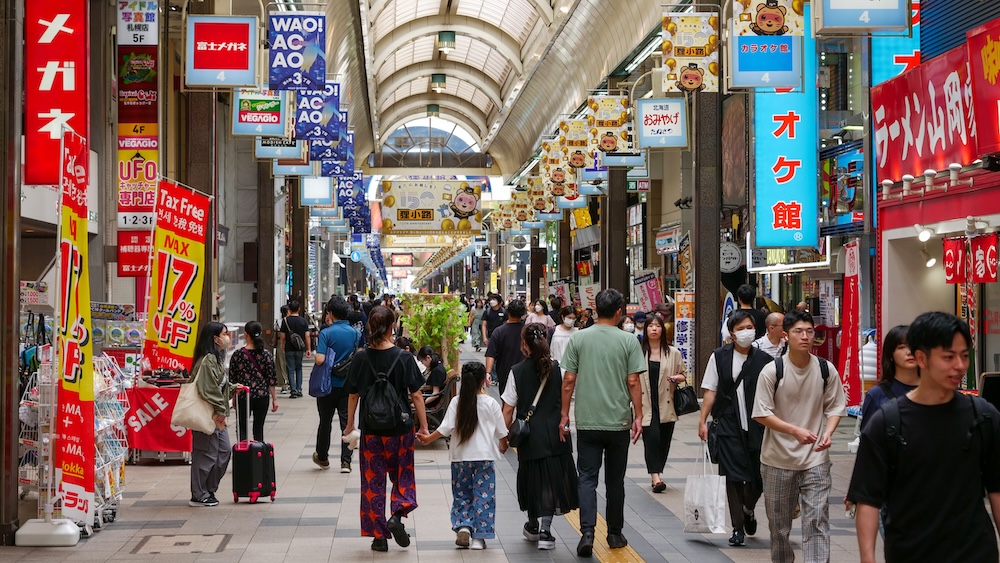
5. Tanukikoji Shopping Arcade: Good for Shoppers, Less Essential for Us
Tanukikoji is a long covered shopping arcade running through downtown, with an enormous assortment of shops, snacks, souvenirs and everyday goods. There are plenty of reasons people enjoy it, especially when the weather is doing its best to spoil an outdoor afternoon. But there’s a useful distinction: the arcade itself is sheltered by a roof, not enclosed like one enormous air-conditioned mall. We went partly to escape the September heat, and the real relief came when we stepped inside individual shops.
We browsed different floors, looked through merchandise and marvelled at the seemingly limitless selection. Japan does quirky consumer goods extremely well, and I can see someone who enjoys shopping happily losing several hours here. But this is where our interests diverge from the usual must-do list.
Audrey and I have visited plenty of Japanese department stores over the years. We’re not especially keen shoppers, and the novelty of unusual snacks, character souvenirs and gadgets doesn’t hit us as strongly as it once did. Looking back, Tanukikoji is probably the one major central stop I’d skip to give myself more time elsewhere. We had a decent visit and the shelter was welcome; it just wasn’t why we fell for Sapporo.
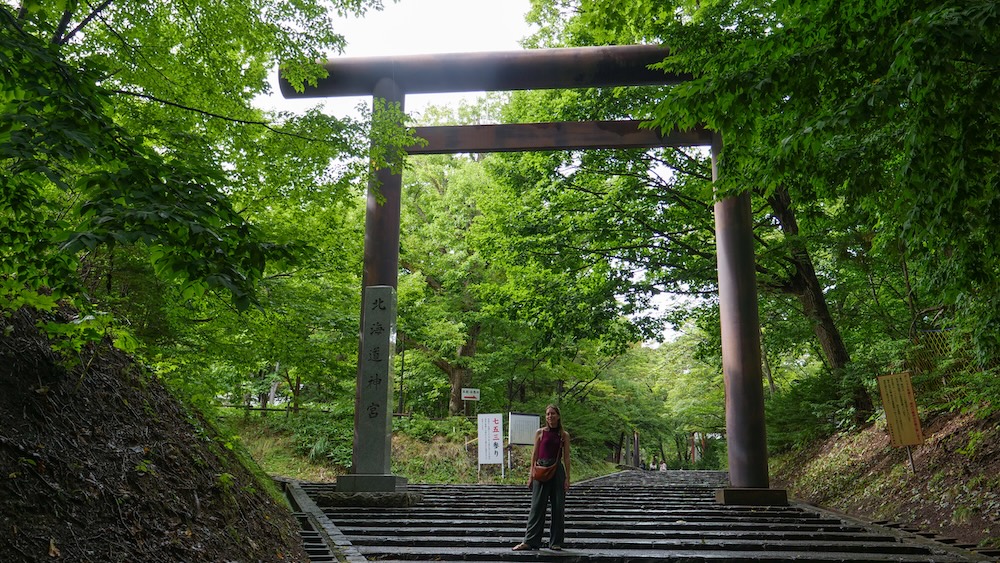
Parks, Forests and Shrines: Why I Loved the Green Side of Sapporo
There’s a reason Maruyama came up immediately when I thought about what I’d recommend to a friend with only two days in Sapporo. In one outing you get a park, a major shrine, enormous trees, the chance to wander into forest and somewhere to stop for tea and sweets. It’s a more varied experience than it sounds on paper, and it captures the side of the city I found so appealing.
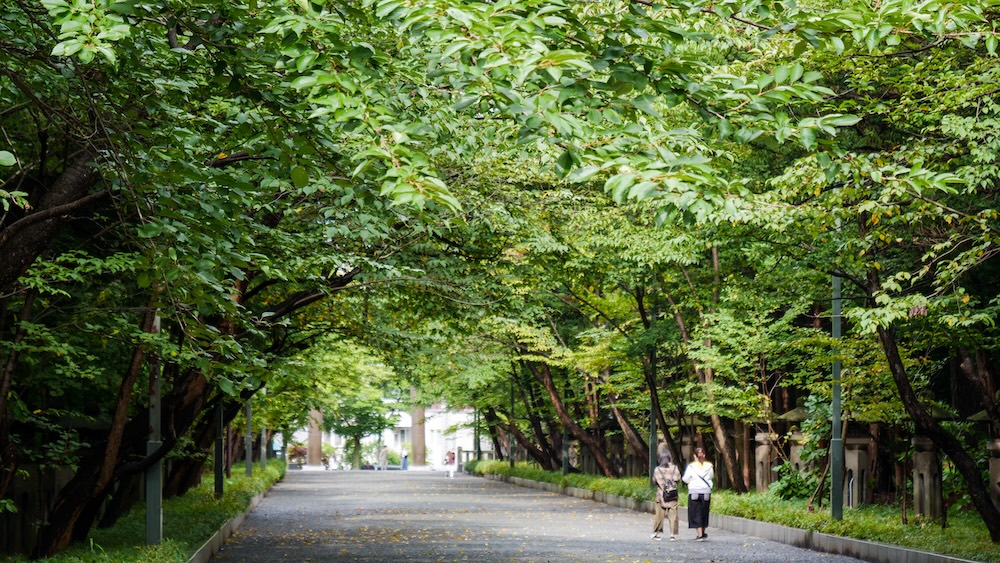
6. Wander Through Maruyama Park
We went west to Maruyama because we’d had our fill of city streets for a while and wanted proper greenery. It had rained recently, so everything looked particularly lush. There were hardly any people around where we walked, which seemed remarkable considering how easy the area was to reach from Sapporo’s centre.
The park is a favourite for cherry blossoms in spring, but it wasn’t blossom season when we visited. We had deep green leaves, damp paths and a quieter atmosphere instead. Frankly, that suited me just fine. After walking around central Sapporo in heat that felt more like midsummer than September, having trees overhead and space to wander was a considerable improvement.
Another reason I’d recommend this outing is that general access to Maruyama Park and Hokkaido Jingu’s shrine grounds is free. You’re paying for the journey out here rather than admission to the park or shrine. Just remember that the wooded trails have different demands from ordinary paved park paths, especially when weather or wildlife warnings affect access.
Maruyama is a place where I’d resist racing from one named sight to another. We explored the park, wandered toward Hokkaido Jingu and kept following our curiosity into the surrounding woodland. The whole combination worked because we weren’t checking our watches every ten minutes.
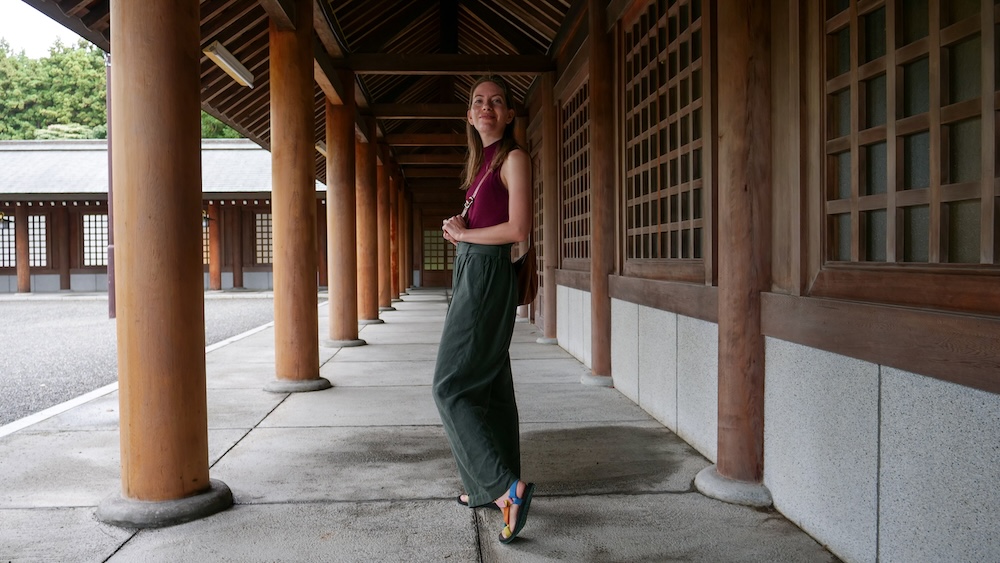
7. Visit Hokkaido Jingu
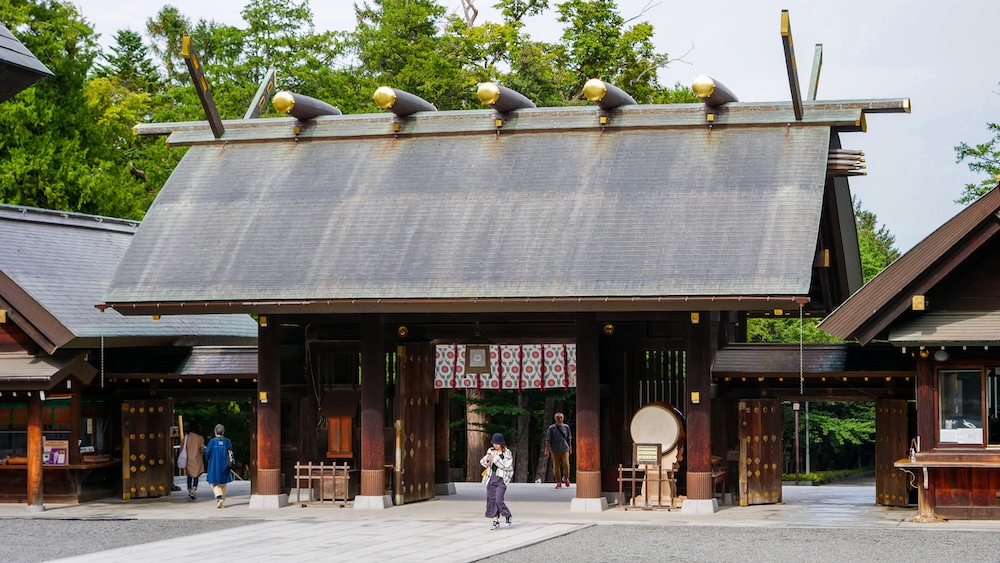
Hokkaido Jingu is a Shinto shrine in the Maruyama area, surrounded by some genuinely impressive trees. We’d already been enjoying Sapporo’s parks, but the scale of the trunks and the way the shrine buildings sat among them made me stop and look around. Audrey also appreciated the green surroundings; we’d both been struck by the amount of space the city seemed to have compared with some of the other large Japanese places we’d visited.
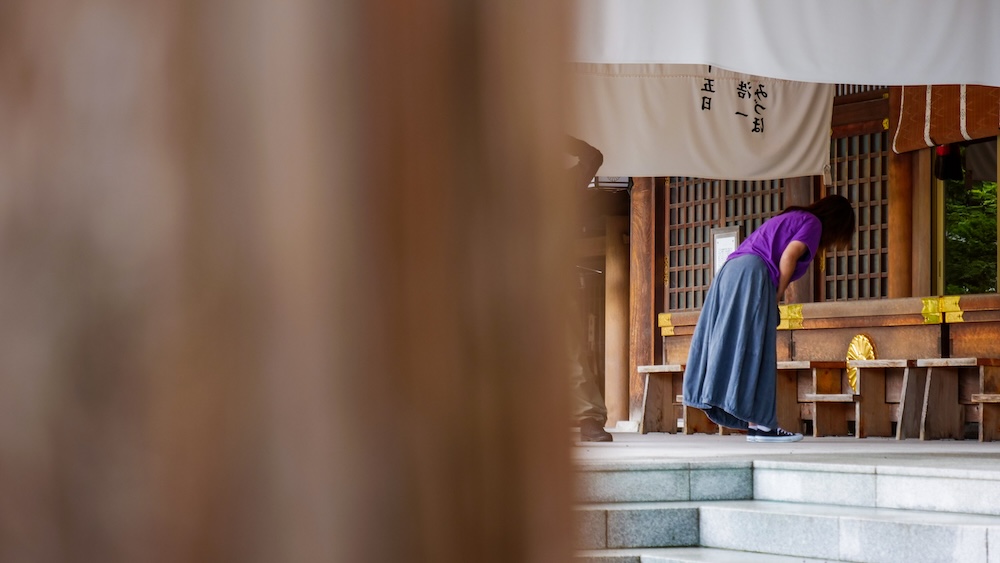
It’s an active religious site, so I’d approach it as more than attractive architecture. We walked around the grounds and enjoyed the setting, without treating every corner as somewhere we needed to stand and take a photograph. A shrine visit doesn’t need to become an elaborate exercise to feel worthwhile. Sometimes it’s enough to look, listen and spend a little time somewhere different from the shopping streets you left behind.
We also found somewhere near the shrine to sit down with iced tea and Japanese sweets. That break became a little food highlight in its own right; I’ll come back to what we ate later. For the moment, the important point is that Maruyama offers a lovely combination of outdoor walking, culture and a chance to stop for something good rather than a single attraction that you’re finished with in ten minutes.
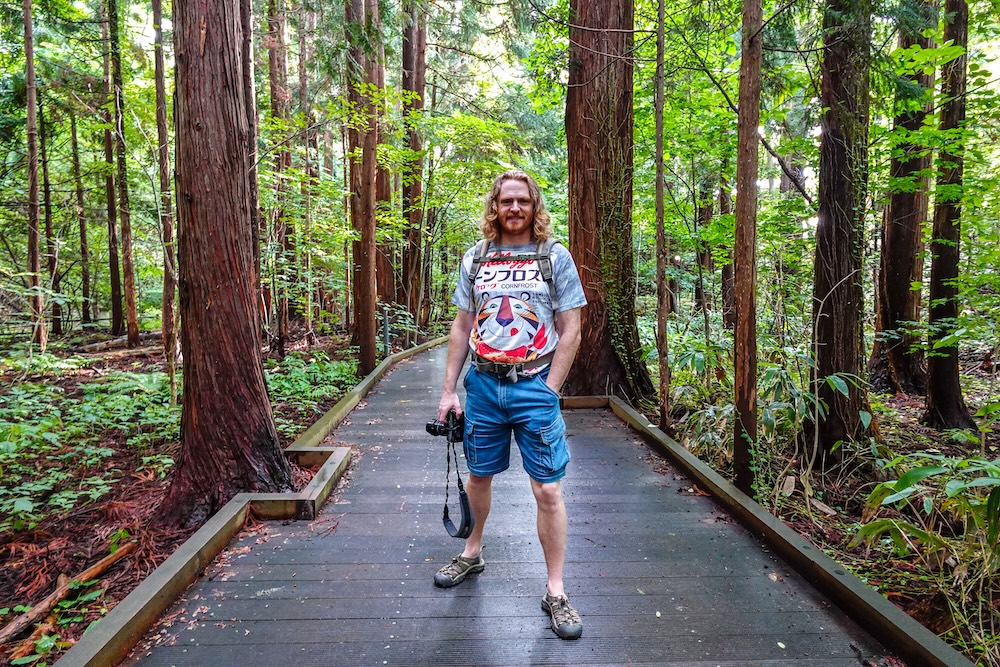
8. Walk Into Maruyama’s Primeval Forest
The forest was what I’d been particularly curious about. It’s one thing to find a well-kept urban park; it’s another to be able to follow a path into substantially wilder-looking woodland while still being within reach of a major city. As we continued away from the more formal areas, the trees seemed to get bigger and the atmosphere quieter.
Audrey and I weren’t setting out to conquer Mount Maruyama’s summit. We walked into the forest environment, looked around and enjoyed the extraordinary sense of being surrounded by nature. For me, that was enough to make the outing memorable. Some trees were so substantial that they reminded me how easy it is to spend time in a city without appreciating what is growing just beyond the built-up streets.
We also encountered bear-warning signs. Having spent a lot of time outdoors in Canada, I know those signs deserve more respect than a casual glance. I remember trying to make sense of the Japanese wording and what it might mean for our walk, but guessing about an old warning isn’t a wildlife strategy I’d recommend. Conditions and sightings change. If you’re heading beyond the ordinary park paths, check Sapporo City’s current bear notices, observe any closures and be realistic about the terrain and season.
If you’re not interested in a forest walk, you don’t have to force it. The park and shrine already offer plenty. But for someone who loves trees, I would make the effort to explore the wooded side of Maruyama within the conditions that are safe and accessible on the day.
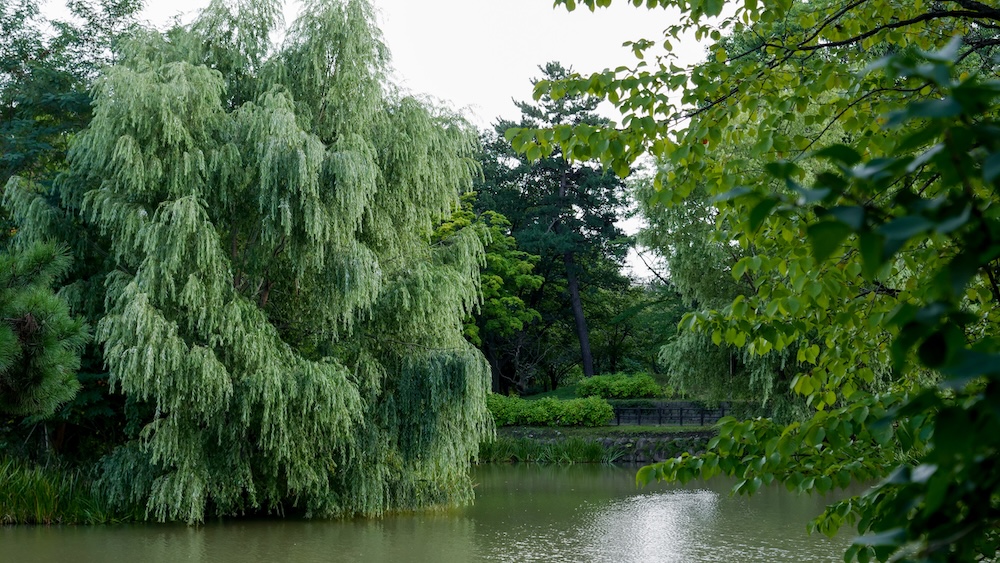
9. Enjoy Nakajima Park, Especially If You’re Staying Nearby
Nakajima Park has a different feel. Maruyama gave us the impression of getting out into a substantial green landscape; Nakajima was a pleasant local park woven into a neighbourhood where people actually live. We became familiar with it because we stayed at HOTEL MYSTAYS Sapporo Nakajima Park during our four nights in the city.
I liked that neighbourhood more than I expected. We were near the subway and could get to the busier parts of Sapporo when we wanted, but we also had quiet streets and a park to return to. When the weather turned sunnier, we took a proper walk around the pond and garden areas, and I was struck by how unhurried the place felt. It didn’t seem as though the entire neighbourhood existed for tourists.
I’m not going to claim Nakajima Park is a substitute for Sapporo’s headline attractions. It isn’t. But if you enjoy exploring the ordinary, livable side of a destination, a walk here can be one of the small pleasures that stays with you after the trip. We liked it enough that I’d happily stay in the area again, even though I might pick somewhere different next time simply to experience another neighbourhood.
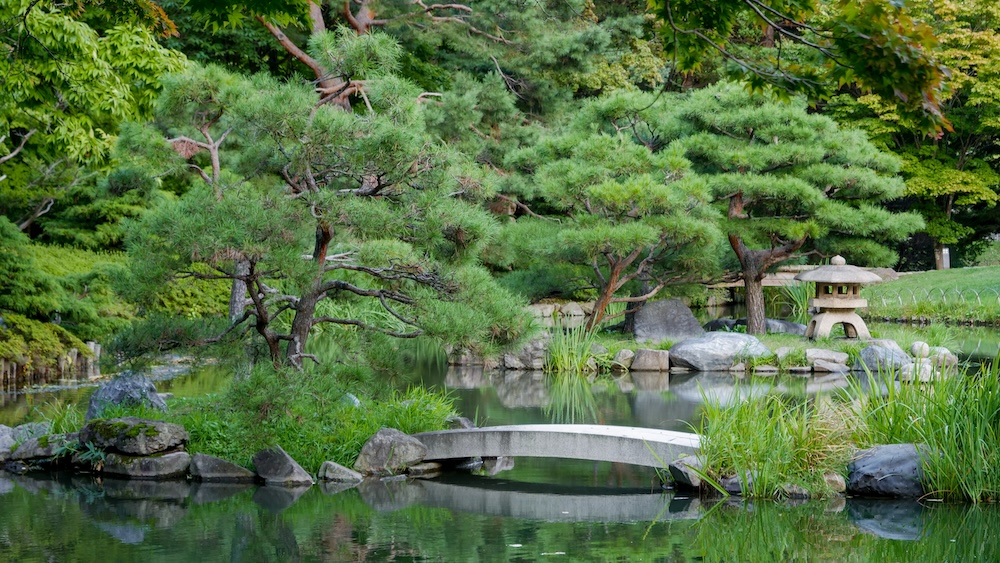
10. See Hoheikan and Nakajima Park’s Japanese Garden
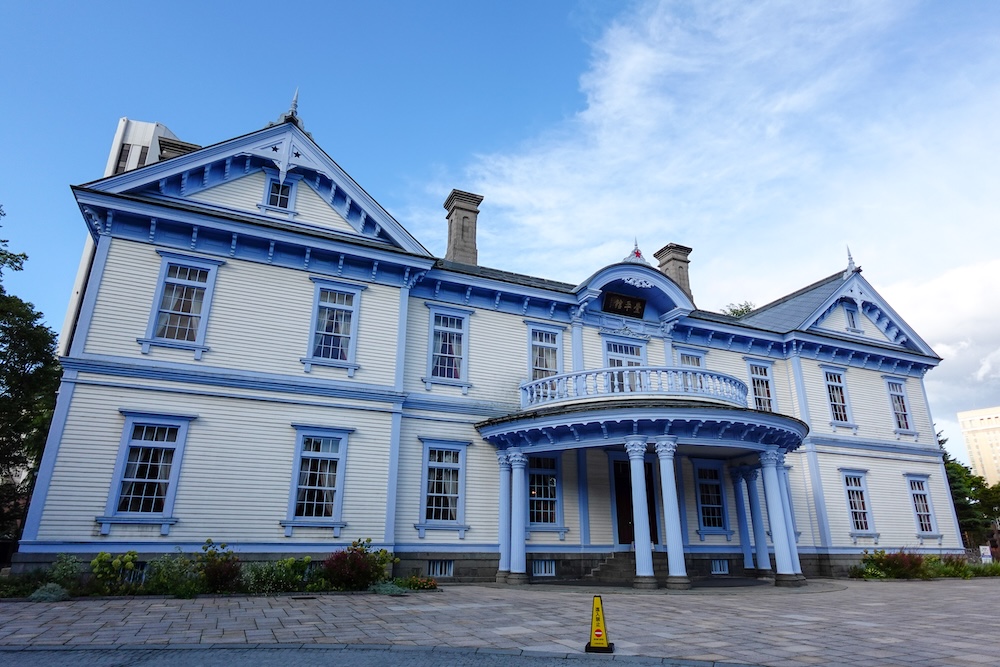
Within Nakajima Park, Hoheikan is a nineteenth-century Western-style building that looks especially striking from outside. We went in partly because of the architecture and its place in Sapporo’s history. I’ll admit the interior didn’t hold my attention for very long. Some of the rooms felt rather bare, and we moved through more quickly than I might have anticipated.
I wouldn’t call the visit a waste of time, particularly for somebody who enjoys historic buildings. It’s just not something I’d place alongside the Beer Museum or Maruyama as a personal highlight. We were much happier continuing through the park and the Japanese Garden, where the landscaped surroundings offered another peaceful place to wander.
There’s a useful admission distinction here. While Hoheikan charges to enter its interior, Nakajima Park’s Japanese Garden normally has free daytime admission during its open season, roughly late April to early November. The garden closes over winter even though the surrounding public park remains accessible. I’d check seasonal opening dates before planning a visit specifically for the garden.
Hoheikan’s ordinary adult admission is ¥350, with regular hours of 9:00 a.m. to 5:00 p.m. and entry ending before the building closes. Check its current visitor information and the garden’s seasonal opening arrangements if you’re planning a visit. For me, these are worthwhile additions when you’re already in Nakajima Park, not reasons to build an entire sightseeing day around the building.
Beyond Downtown: Hill of the Buddha, Moai Statues and Sapporo Art Park
If there’s one part of our Sapporo trip I’d encourage people to plan properly, it’s the journey south toward Makomanai Takino Cemetery and Sapporo Art Park. These places delivered some of our most unusual sightseeing, but they were not quick additions to an otherwise central day. We took the subway to Makomanai, continued by bus and watched the surroundings become increasingly wooded and less built up. I remember wondering quite how much farther we were going.
Audrey had kept the destination partly secret, which made everything more entertaining. Then we got off the bus one stop earlier than we should have. Not my finest moment of Japanese transport navigation, although we ended up with some photographs we might otherwise have missed. The combination of distance, public-transport connections and walking made this our most ambitious outing in Sapporo. By the time we’d explored the monuments and later walked around Art Park, it felt more like a small day trip than an ordinary morning of city sightseeing. I was glad we hadn’t tried to cram it into an already crowded schedule.
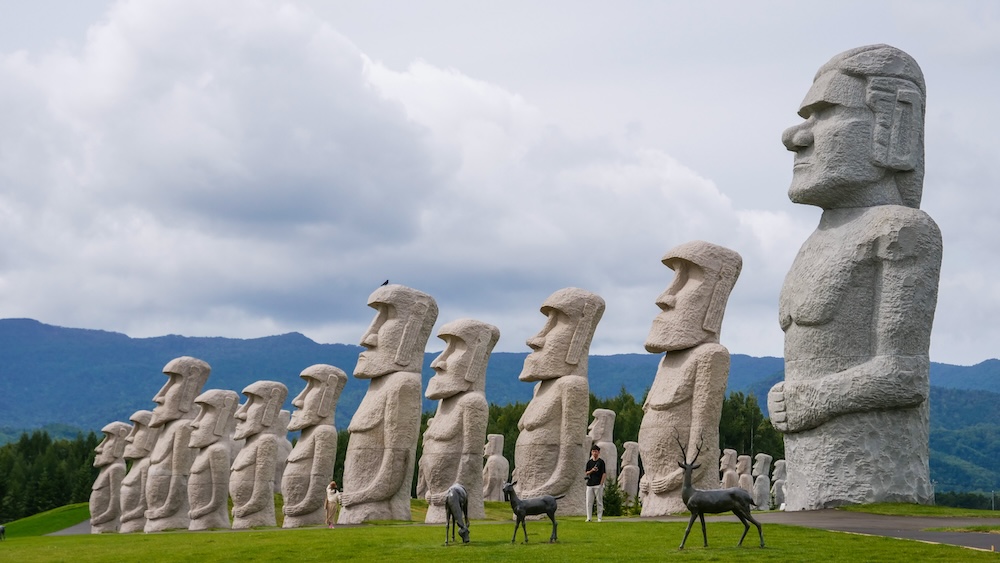
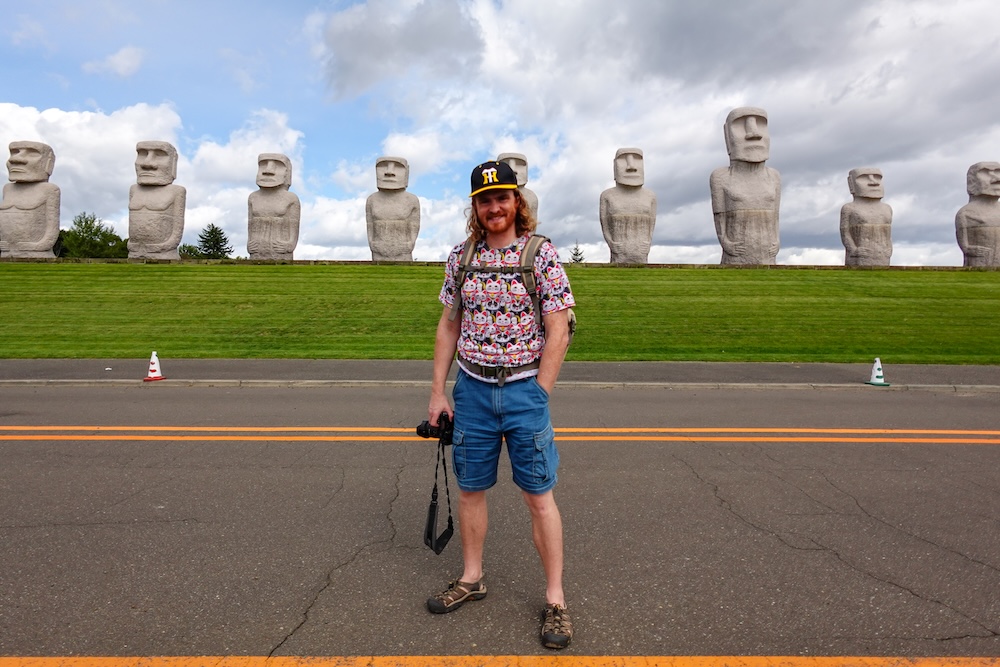
11. Meet the Moai Statues at Makomanai Takino Cemetery
I wasn’t expecting to come face to face with Moai statues on the outskirts of a Japanese city. We’d travelled a fair distance from the centre when I suddenly noticed the unmistakable stone figures standing ahead of us. Audrey had been keeping quiet about exactly where we were going, and now I understood why. It was a surprise even by the standards of a trip that had already delivered some unusual attractions.
We’ve visited Easter Island, so seeing figures inspired by the Moai brought back a few memories. There was something slightly surreal about encountering their familiar faces in a Hokkaido cemetery, surrounded by a landscape that couldn’t have been more different from Rapa Nui. I joked that I hadn’t realized we were going back to Easter Island that day.
The statues stand within Makomanai Takino Cemetery, an extensive landscaped cemetery containing several large monuments and architectural features. It’s important to remember that this isn’t simply a novelty sculpture park. People come here to remember loved ones, and visitors should respect the grounds, paths and any restrictions on access or photography.
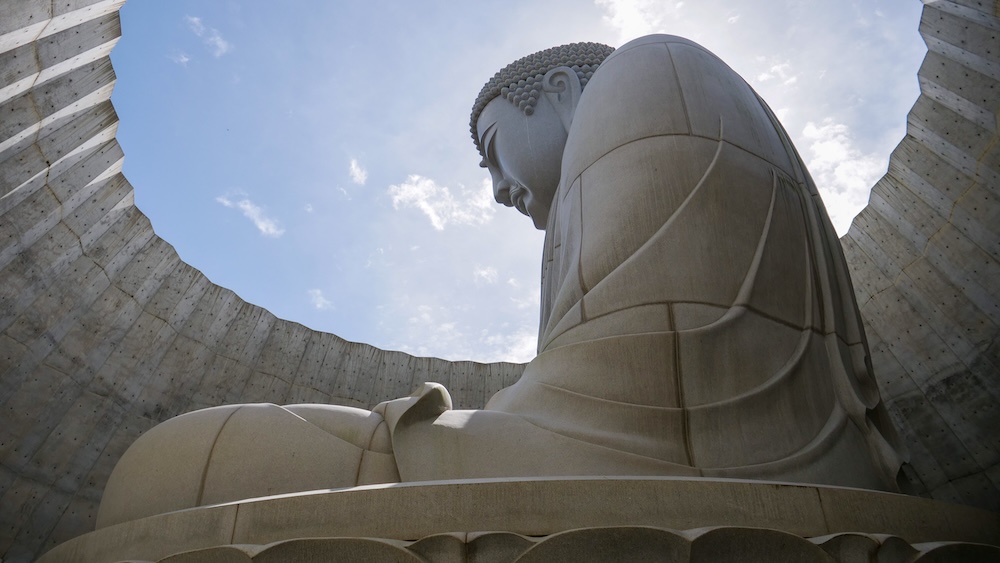
12. Discover Hill of the Buddha
Hill of the Buddha is one of those places where the approach is as important as the object you’re coming to see. The enormous seated Buddha is set within an artificial hill planted with lavender, and as you approach, only its head appears above the mound. From a distance you know something enormous is there, but you don’t immediately see the entire statue.
The entrance takes you past a water garden and into a long tunnel. We followed that route into a spare, contemplative space until the Buddha finally came into full view. I liked how deliberate the whole sequence felt. Rather than placing the statue on a pedestal with a big open plaza in front, the design controls what you see and when you see it, making the reveal part of the experience.
The statue is approximately 13.5 metres tall, and the tunnel leading toward it is about 40 metres long. Those figures provide a little context, but photographs of a large statue don’t entirely capture what it’s like to arrive through that enclosed approach and suddenly be standing in front of it. For someone interested in unusual architecture or monumental religious art, this is a strong reason to visit the cemetery.
Hill of the Buddha currently charges ¥1,000 per visitor, with free admission for children under 12. Opening hours are generally 9:00 a.m. to 4:00 p.m. from April through October, and 10:00 a.m. to 3:00 p.m. from November through March. The water garden is normally unfilled during the colder period, and memorial services or maintenance may temporarily alter access. Because the conditions matter, I’d check the cemetery’s current Hill of the Buddha information before travelling all the way out here.
There’s a further distinction for anyone hoping to see the lavender in flower. We visited during our September trip, so I wouldn’t promise that the hill will look the same in every season. If that purple-covered appearance is central to your plans, the season makes a real difference. Even without the lavender at its peak, I found the architecture and the approach memorable.
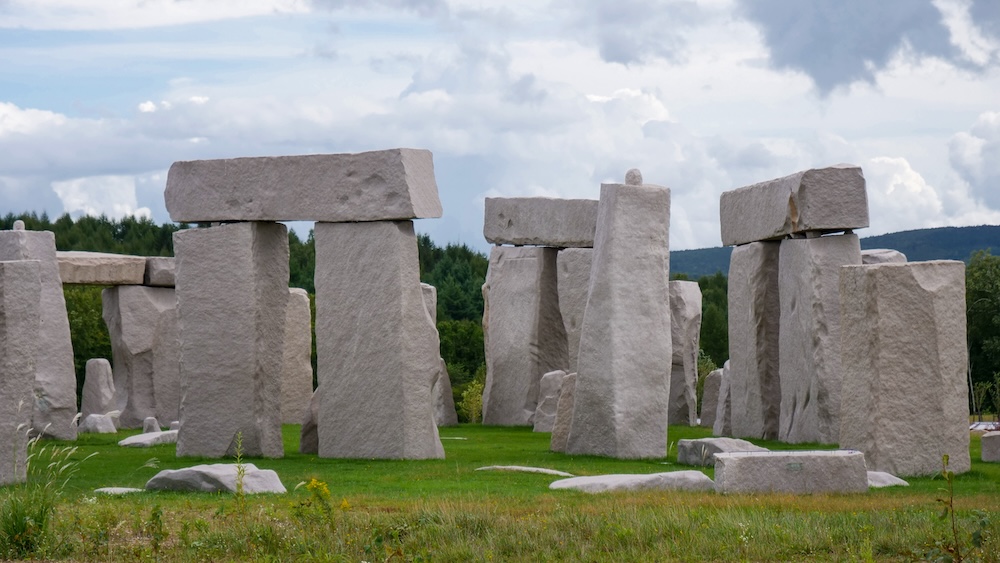
13. Look for the Stonehenge Replica
As if the Moai and giant Buddha weren’t enough, the cemetery also has a replica of Stonehenge. It’s another unexpected landmark to encounter in this part of Hokkaido, and we stopped to take a look while exploring the grounds.
We couldn’t walk across the grass to get as close to it as we would have liked. Audrey pointed out that my zoom lens would have to do the work, so we took our photographs from farther away. That restriction wasn’t a disaster, but it was a reminder that the grounds aren’t an open invitation to wander wherever you please.
I’d treat the Stonehenge replica as an additional curiosity during the cemetery visit rather than a separate major outing. The attraction of coming here is the unusual combination of monuments and designed spaces, particularly when you consider how far you’ve travelled to reach them. Respect the current boundaries, enjoy the views you can get and leave yourself enough time for Hill of the Buddha.
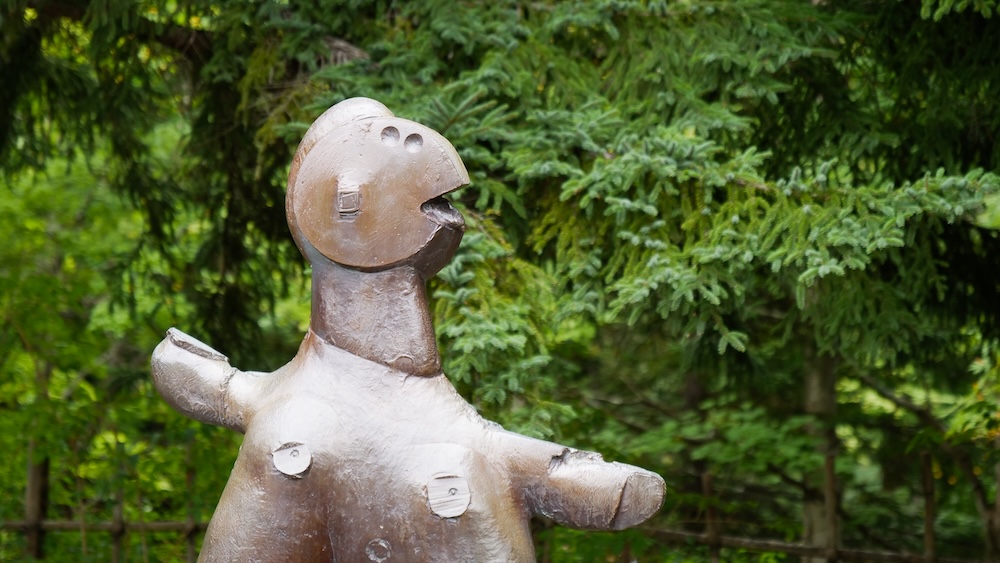
14. Explore Sapporo Art Park’s Outdoor Sculpture Garden
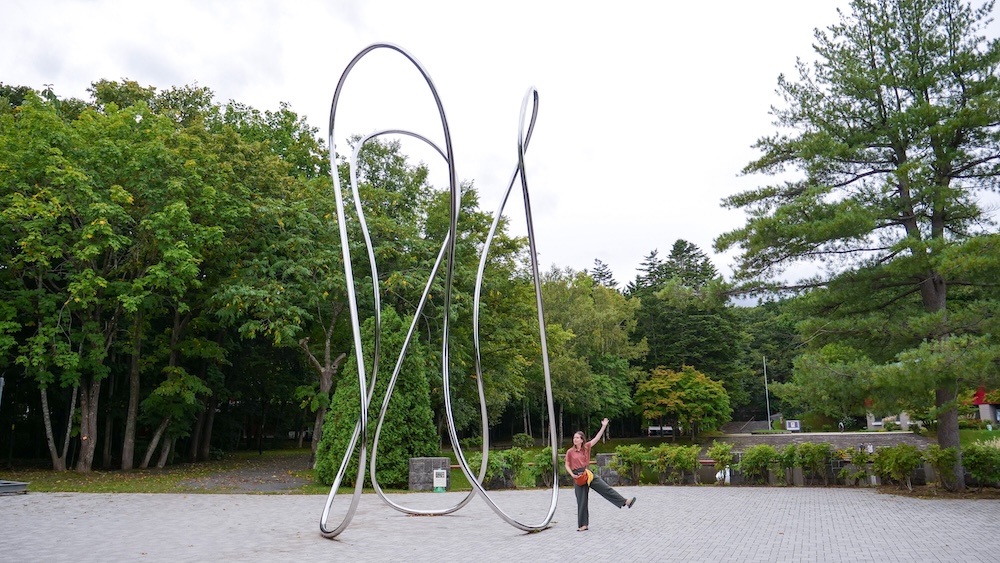
Our other major southern attraction was Sapporo Art Park, and this is the one I’d personally choose if I could revisit only one of the two. That might sound surprising after all the excitement of finding Moai statues and the Buddha, but Art Park appealed to something I really love: being outdoors in a beautiful natural setting while coming across interesting things I hadn’t expected to see.
There’s quite a lot to the wider Art Park complex, including galleries and other facilities. We knew we wouldn’t see everything, so we concentrated on the outdoor Sculpture Garden, following paths into the wooded landscape. Some parts involved climbing steps and taking winding paths uphill. Elsewhere, we found streams, stepping stones, moss and sculptures positioned among the trees. It wasn’t simply a sequence of artworks lined up for inspection.
I liked that the sculptures interrupted the woodland walk rather than replacing it. You’d be concentrating on the trees or the sound of moving water, and then something unusual would appear beside the path and give you a reason to stop. Audrey enjoyed the lush setting as much as I did, particularly the cooler air and peaceful atmosphere. After the heat we’d experienced in central Sapporo, being in the forest felt wonderful.
The Sculpture Garden covers approximately 7.5 hectares and contains 74 works by 64 artists. That should tell you something about how much walking can be involved. It’s not the sort of attraction I’d allot twenty minutes before catching a bus back to the centre. The value is in wandering, finding the works and appreciating how the landscape changes around them.
Standard adult entry to the outdoor Sculpture Garden is currently ¥800, and the operator specifies cash payment for that admission. More importantly, the garden is seasonal: its ordinary outdoor opening is interrupted in winter, with a published closure from November 4, 2026, to April 28, 2027, apart from separately arranged winter programmes. Other facilities at Art Park follow different schedules, so a closure of the Sculpture Garden or a renovation affecting the Art Hall doesn’t automatically mean the entire complex is shut. Check the official Sapporo Art Park information before making the journey.
Getting to Art Park independently also takes planning. From central Sapporo, the usual approach is to take the Namboku subway line to Makomanai and continue by local bus. Buses serve different stops around the complex, including Geijutsu no Mori Iriguchi and Geijutsu no Mori Center; choosing the one nearest the Sculpture Garden can spare you an avoidable walk. Its current access guidance puts the subway journey from Sapporo Station to Makomanai at about seventeen minutes and the onward bus at roughly fifteen minutes, before waiting and walking time. That is not a complete door-to-door estimate, especially when you’re combining Art Park with other attractions.
Which Would I Choose: Hill of the Buddha or Sapporo Art Park?
I would have a hard time choosing between the two if I were looking only at how unusual they are. The experiences are completely different. The cemetery offers an unusual collection of monumental architecture, with the Moai, the Buddha and Stonehenge replica creating a visit unlike most other stops in Sapporo. If you’ve visited Easter Island, or seen other giant Buddhas around the world, there’s also a sense of recognition and nostalgia that can make it particularly appealing.
If you have time for only one, though, I’d choose Sapporo Art Park. The combination of art and nature felt more rewarding to me, and I liked that we could keep walking and discovering things rather than concentrating mainly on a handful of monumental sights. That doesn’t make the cemetery a poor choice. Audrey’s surprise trip was a highlight, and I’m very happy we went. My preference simply reflects the sort of experience I most enjoy.
Can you see both? We did, but it required a substantial commitment, and I’d be careful with opening times, bus frequencies and the season. The current cemetery information identifies bus 108 from Makomanai Station for Hill of the Buddha, while Art Park has its own bus-stop arrangements. Sharing the same subway gateway does not mean there is always a simple direct connection between them. If you want to combine the two, check both journeys and build in some breathing room. Arriving too late to enter the sculpture garden after spending most of the day at the cemetery would be a frustrating way to discover that Sapporo is a large city. If you’d prefer someone else to handle part of the travel, a shared Hill of the Buddha and Sapporo highlights day trip currently combines the cemetery stop with the seafood market and other sights. It’s a broad overview with fixed stop times, however, and doesn’t include a full walk around the Art Park Sculpture Garden.
Other Worthwhile Sapporo Attractions We Didn’t Personally Visit
Three full sightseeing days still left plenty of Sapporo unexplored. These four are worth knowing about if you have extra time or interests that differ from ours. I’m including them because they offer something distinct, not because I think every visitor needs to squeeze them into the same trip.
Mount Moiwa
Mount Moiwa is one of Sapporo’s best-known elevated viewpoints, with a ropeway and connecting summit transport providing access to panoramic views. It offers a very different setting from the central TV Tower, but we didn’t go up ourselves, so I can’t tell you which I personally preferred. If evening city views are a major priority, it’s worth comparing the two before committing your time and budget. Ropeway access is weather-dependent and subject to maintenance; a closure is already scheduled for March 29 to April 28, 2027. Check the Mount Moiwa operator if your trip overlaps that period.
Moerenuma Park
For visitors who like architecture, landscape design and large outdoor spaces, Moerenuma Park is an appealing researched option. The park’s design is associated with Isamu Noguchi, and its broad grounds contain major landscape features and the Glass Pyramid. That gives it a very different character from the intimate woodland sculpture experience at Sapporo Art Park. Seasonal facilities and opening arrangements vary, so it’s worth checking the official Moerenuma Park site before deciding what you can see on your chosen day.
Shiroi Koibito Park
Shiroi Koibito Park is a confectionery-themed attraction built around one of Hokkaido’s familiar sweets. It combines factory-related exhibits and themed spaces with optional activities, and it may suit families or anyone especially interested in Japanese confectionery. Current paid-area adult admission starts at ¥1,200, with some experiences costing extra. Factory viewing resumed in July 2026, so don’t rely on an older description of what was accessible during renovations. It wouldn’t automatically jump ahead of our favourite outdoor and museum experiences simply because it’s a famous name. Check the official attractions and admission options if it appeals to you.
Historical Village of Hokkaido
The Historical Village of Hokkaido offers another type of cultural outing, with reconstructed and preserved buildings illustrating different stages of the island’s development. This could be a particularly interesting alternative for people who enjoyed the history at the Clock Tower or Beer Museum and want to spend more time exploring Hokkaido’s built heritage. It’s outside the compact central sightseeing area and deserves a meaningful time allowance rather than a rushed stop. I haven’t explored it myself, but the official visitor information will help you judge whether it’s worth giving a substantial portion of your day.
What to Eat in Sapporo: Ramen, Seafood, Beer and a Very Good Surprise
I could have spent another week in Sapporo purely to explore the food. We ate remarkably well during our three full days, although not necessarily according to any grand culinary plan. There was an enormous seafood breakfast, a ramen order that got completely out of hand, a beer tasting and a food festival we stumbled across while trying to cool down in Odori Park. It was a good reminder that some of the most memorable parts of a trip happen between the places you originally intended to visit.

Eat Butter-Corn-Miso Ramen in Ramen Alley
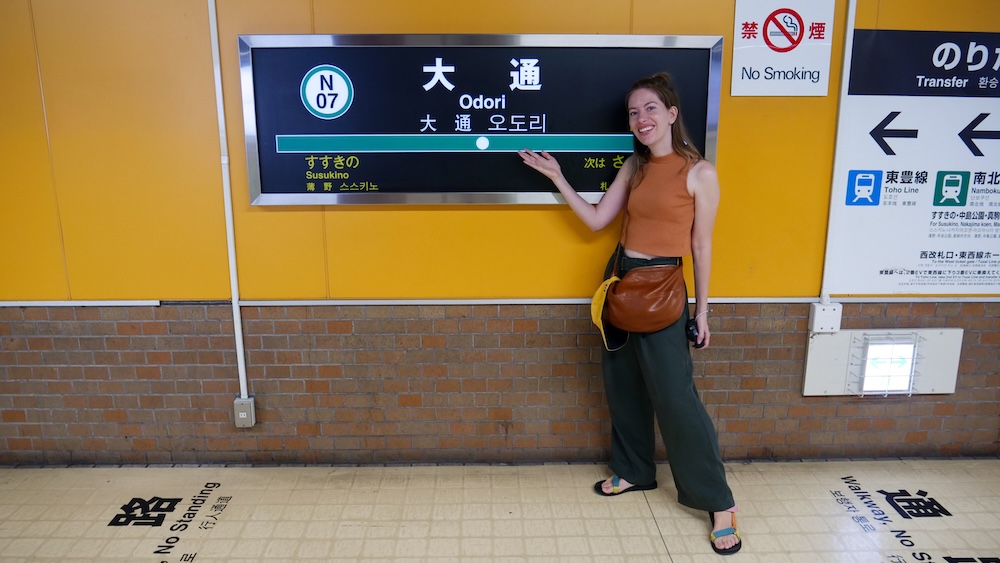
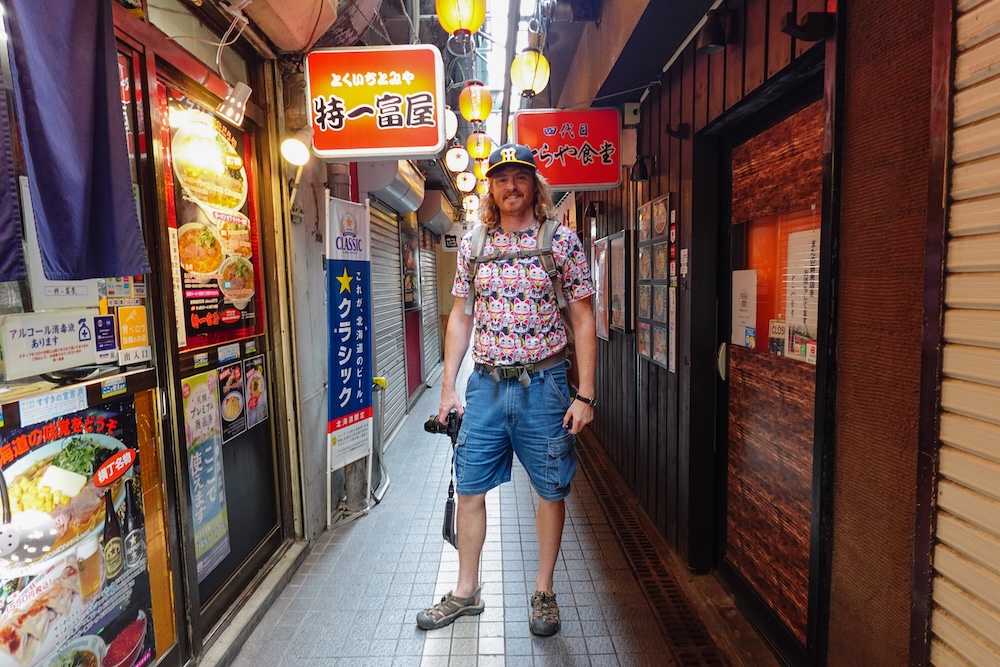
We’d been trying to get a proper butter-corn ramen earlier in our Hokkaido journey, but a restaurant-ordering mishap in Hakodate had left us with something different. Sapporo was our chance to put that right. We went to Ganso Ramen Yokocho, the narrow collection of ramen shops in Susukino that most visitors know as Ramen Alley.
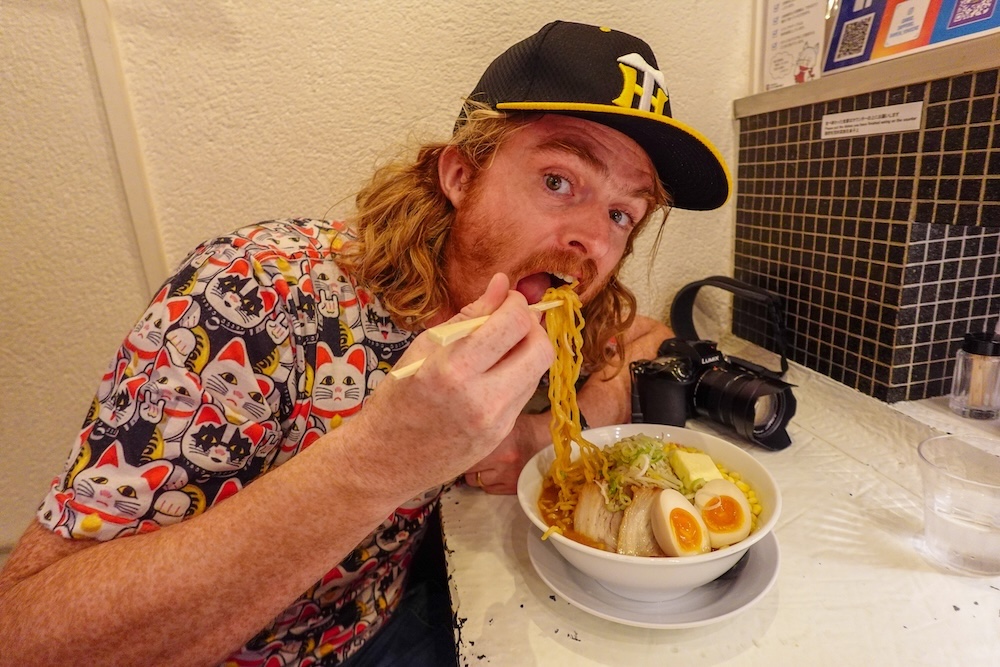
We chose a tiny restaurant with a bright yellow sign and photographs of the bowls. Misogin (みそ吟) was the shop’s name. I remember very clearly is the ticket machine. It looked straightforward until I started selecting extra butter, corn and eggs with rather more enthusiasm than judgement. Somewhere along the way I lost any sensible grasp of what I’d already added.
The bowl that arrived was magnificent, if slightly ridiculous. There were noodles in a rich miso broth, pork, corn, butter and an impressive number of egg halves. There were four egg halves in front of me. I was looking at enough butter to make a dairy farmer smile, but by that stage there was only one reasonable course of action: eat the lot.
I loved it. The broth was rich, a little spicy and almost nutty in flavour. We wondered whether sesame might have contributed, but I can’t tell you the precise recipe. The pork was tender, the noodles satisfying and the whole thing far more filling than the simple bowl of ramen I’d originally imagined. Audrey enjoyed her meal too. I called it the best ramen I’d eaten so far in Sapporo, and I stand by that verdict for the lunch we actually had.
Sapporo-style miso ramen is one of the city’s signature foods. Butter and corn are familiar additions, particularly in Hokkaido, but don’t assume they’re standard in every restaurant or that every bowl tastes the same. Ramen Alley is fun for the concentration of little shops and the atmosphere, though I’d happily try good ramen anywhere in the city. Just take a closer look at the ticket machine before ordering your third extra topping.
Make Time for Seafood at Sapporo Curb Market
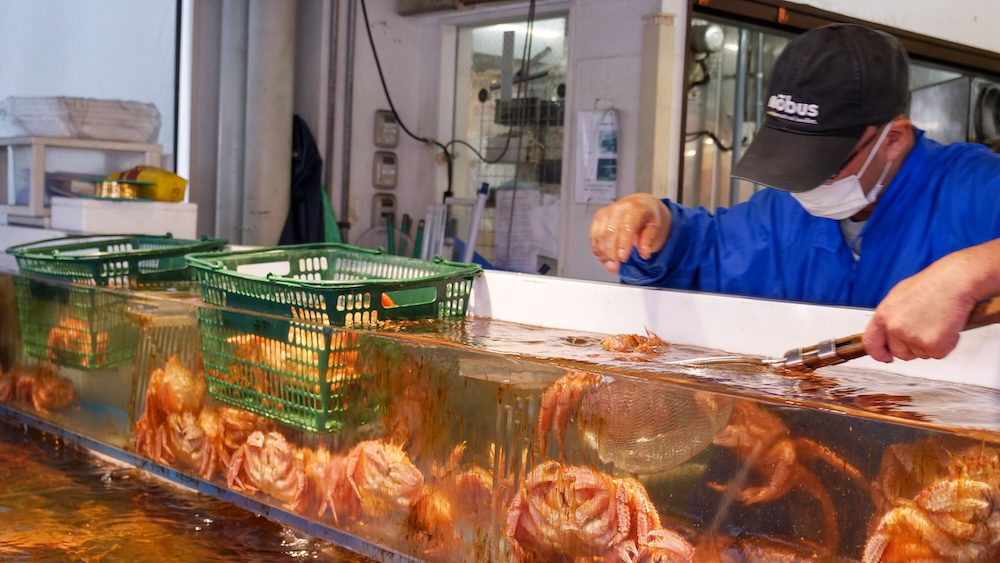
Of everything we ate in Sapporo, the seafood breakfast at Sapporo Curb Market is the one I’d most enthusiastically repeat. It wasn’t in the centre of town, and we had to make a deliberate journey, but I was glad we hadn’t settled for an ordinary breakfast closer to the hotel.
The Curb Market is the public-facing shopping and dining area beside Sapporo Central Wholesale Market, and it should not be confused with Nijo Market downtown. You can reach it by taking the Tozai subway line to Nijuyonken Station and walking for roughly seven minutes. The seafood businesses and restaurants each have their own hours, so I’d go with breakfast or an early meal in mind and check the place you’re interested in before turning up.
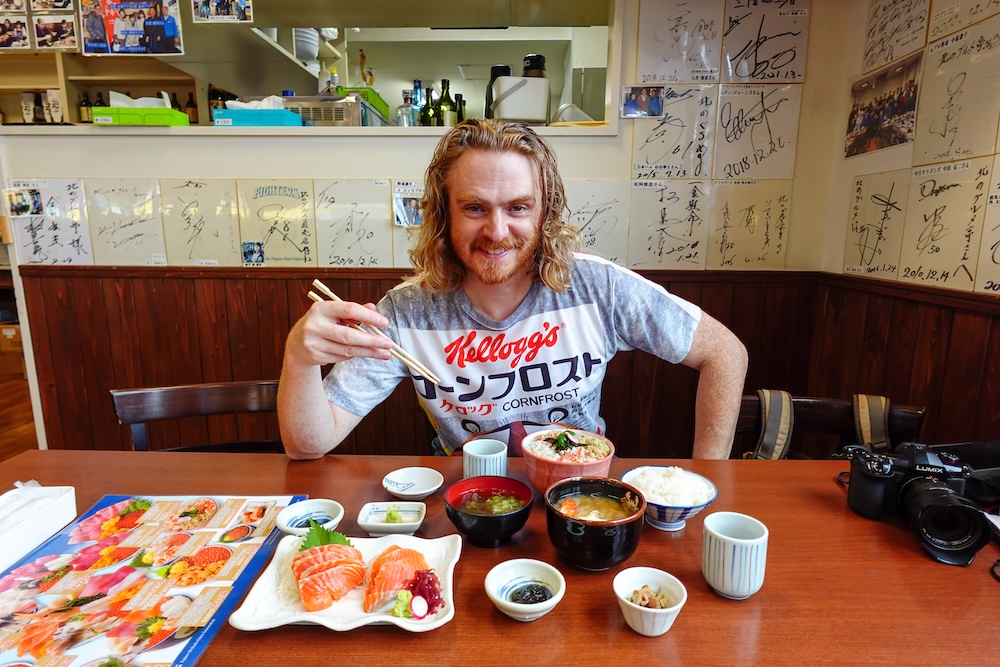
Audrey had actually researched our breakfast spot beforehand and chose Kaisen Shokudo Kita no Gurume-tei. We ate at around 9:30 a.m., and having an English menu made ordering straightforward. We still enjoyed looking around the seafood displays and watching people move between the shops. I like this kind of market almost as much for the atmosphere as for the food. It reminded me of other seafood-market experiences in Japan, including Hakodate, and of time we’d spent in Busan, South Korea. Something about being surrounded by unfamiliar fish and shellfish always makes me hungry, even when I’ve only recently eaten.
Audrey went for a four-crab donburi, a rice bowl described as containing king, snow, hair and blue king crab. There were four portions to compare, and she worked her way through them, talking about texture and flavour. She was perfectly clear that she couldn’t tell which species was which by looking at the pieces. By the end she had a favourite—the third portion she tried—but we can’t honestly translate that into an endorsement of one named species.
I chose crab miso soup, salmon sashimi and rice. The soup was warming and satisfying, and I liked being able to enjoy the flavour of crab without necessarily ordering a whole expensive crab platter. Getting the meat out required a little more effort than eating a straightforward fillet of fish, but that’s part of the fun. The sashimi was excellent too, and between the two of us we’d managed a substantial breakfast.
Afterward I remember thinking how different this had been from grabbing something convenient near the hotel. We enjoyed looking around the market and seeing how the area operated, and the food more than justified the trip. If you’re a seafood enthusiast, I’d put this near the top of your list. If you dislike fish and shellfish, there’s no need to force yourself out here just because it’s a famous market; Sapporo has plenty of other ways to start the day.
Eat at Sapporo Autumn Fest if Your Dates Work
Our festival lunch wasn’t planned. We happened to be walking through Odori Park, discovered Sapporo Autumn Fest, and suddenly our intention to eat somewhere else lost all appeal. Food stalls were spread around the park, with enough variety that we could each wander off in search of something different and meet again to compare what we’d found.
We sampled tempura, including pumpkin and cheese, and a chewy potato-based item that took us a while to figure out. I particularly liked the pumpkin. Later I came back with Indian food—butter chicken and cheese naan—after watching some of the cooking and deciding that it looked far too good to walk past. We finished with sweets, including a strawberry-and-red-bean mochi treat. The meal had become a series of snacks, then a proper lunch, then dessert, without anyone officially deciding that was the plan.
That’s exactly why I like leaving a little room in a travel day for something unexpected. But Autumn Fest is an event, not a permanent outdoor food court. Its dates, stalls and dishes change from year to year, so don’t expect our particular menu to be waiting for you. If the festival is running during your visit, I’d absolutely go and have a look.
Tea and Sweets Near Hokkaido Jingu
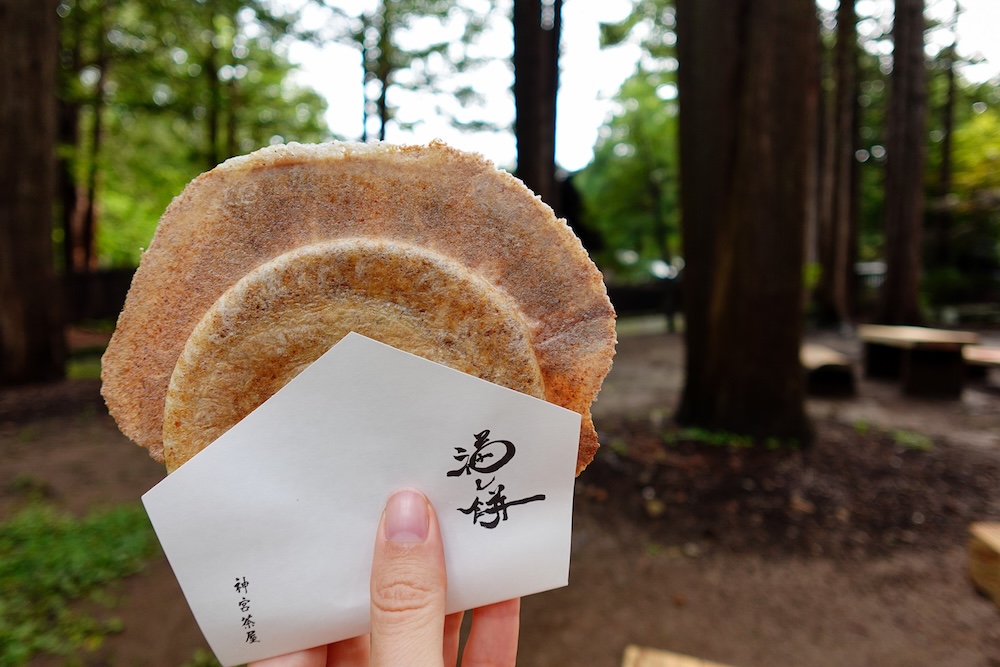
The other food memory that deserves a mention is much quieter. During our Maruyama outing we discovered a tea-room setting near Hokkaido Jingu, sat down with iced green tea and tried several Japanese sweets. Some were chewy, some filled, and more than once we were trying to remember what an ingredient or sweet was called almost immediately after ordering it.
I was struck by how restrained the sweetness seemed compared with some desserts we eat elsewhere. There was enough sugar to make them enjoyable, but the textures and flavours had room to come through. I wouldn’t pretend to remember the precise name of every sweet or to know exactly what was in each filling. What I remember is how well that break fitted the afternoon: shrine grounds, big trees, a forest walk and something delicious to finish.
One sweet we’ve since been able to identify from our photographs is Fukure Mochi from Jingu Chaya, a toasted, pressed Japanese sweet with a chewy centre and sweet bean paste. It’s a nice example of how much pleasure we found in the little food stops around Sapporo, even when we weren’t keeping track of every name on the menu.
Other Sapporo Specialties I’d Keep on the List
Three local favourites we didn’t manage to try on this visit are soup curry, jingisukan and the city’s shime parfait tradition. Soup curry is a fragrant, relatively thin curry broth served with rice on the side, usually with substantial vegetables and a choice of protein. Jingisukan is Hokkaido’s grilled lamb or mutton dish, often cooked with vegetables. And a shime parfait is the sort of elaborate dessert people go out for after dinner or drinks.
Those are genuine Sapporo food possibilities, but I can’t tell you which restaurant I preferred because we didn’t eat them here. If one particularly appeals, build it into a meal rather than treating the whole city as an eating checklist. Between ramen, crab, market wandering, beer and an accidental festival lunch, we were hardly short of culinary experiences as it was. If unfamiliar menus or izakaya etiquette are part of the adventure you’d rather share with a guide, one current four-hour Sapporo food and izakaya tour includes tastings across several establishments. That is a different sort of evening from our independent ramen and market visits; check the latest included dishes and drinks rather than expecting the same meals we had.
Where to Stay in Sapporo: The Neighbourhood Matters
When somebody asks me where to stay in Sapporo, the first thing I’d suggest isn’t a particular hotel. It’s a subway map. Sapporo is large enough that a property can be in a perfectly pleasant neighbourhood and still leave you doing unnecessary walking and transfers every day. Being close to the station you’ll actually use is far more valuable than the vague promise of a central location.
We spent four nights at HOTEL MYSTAYS Sapporo Nakajima Park. Our room overlooked the park area, and we loved the calmer feel of the neighbourhood. It didn’t seem particularly touristy; we could wander around the pond and gardens, then get on with the rest of our sightseeing without feeling isolated from the city.
The hotel is around three minutes on foot from Horohirabashi Station on the Namboku subway line. That short connection mattered. We were travelling to different areas almost every day, and I wouldn’t have enjoyed walking a long distance to a station before even starting each trip. I’d happily stay in the Nakajima Park area again. On a return visit, though, Audrey and I would probably try another neighbourhood just to experience a different side of Sapporo. That’s how we tend to travel, not a complaint about the hotel or its surroundings. If that quieter base sounds appealing, check rooms and dates at HOTEL MYSTAYS Sapporo Nakajima Park. The important thing is choosing the actual property where we stayed, not another MYSTAYS hotel with a similar name.
Here’s how I’d narrow down the accommodation search:
| Area | Why I’d consider it | What to think about | Accommodation options |
|---|---|---|---|
| Sapporo Station | Main railway hub, convenient for train arrivals and regional trips | You may spend less time around the neighbourhood’s quieter green spaces | Hotels near Sapporo Station |
| Odori | Easy access to the central landmarks and park | Major events can make the area busier | Compare Odori hotels |
| Susukino | Restaurants, Ramen Alley and a lively evening scene | Less suitable if quiet evenings are your priority | Susukino accommodation |
| Nakajima Park | Greenery, a calmer atmosphere and Namboku-line access | Expect a subway journey to some northern and western attractions | Nakajima Park hotels |
| Maruyama | Residential atmosphere with the park and shrine nearby | A different starting point for many city attractions, with fewer obvious hotel choices | A smaller selection; inspect station distances individually |
For a first visit of two or three days, I’d compare Sapporo Station, Odori and Susukino first, then look seriously at Nakajima Park if you value a quieter base. The exact property still matters more than the district label. Check walking distances, room configuration, cancellation conditions and whether breakfast makes sense for a trip where you might want to eat at a market instead.
For a specific starting point in those other districts, JR Tower Hotel Nikko Sapporo is worth comparing for a station-oriented stay, La’gent Stay Sapporo Odori for central sightseeing, and SAPPORO STREAM HOTEL for a Susukino base. These are researched hotel options, not places Audrey and I stayed. I’d compare their actual room categories and final prices rather than assume one will suit every budget.
One current cost detail is easy to miss. Sapporo and Hokkaido introduced accommodation taxes in April 2026. The combined tax per guest per night is ¥300 for taxable room rates under ¥20,000, ¥400 for rates from ¥20,000 to under ¥50,000, and ¥1,000 for rates of ¥50,000 or more. That’s per person, not per room, so check the booking total rather than comparing only the headline room price. And if you’re looking at the hotel where we stayed, make sure the listing says HOTEL MYSTAYS Sapporo Nakajima Park, not one of the similarly named MYSTAYS properties nearby. I can speak warmly about our actual stay and the neighbourhood, but I haven’t personally tested those other hotels.
How Many Days Do You Need in Sapporo?
Three full sightseeing days worked well for us. We had four nights, with the first largely taken up by getting there, and that left enough time to see the central sights, spend an afternoon among the parks and shrine, enjoy several good meals and make a bigger excursion to the cemetery and Art Park. Without that extra day, some of our favourite experiences would have been difficult to fit in comfortably.
Still, I wouldn’t tell somebody to avoid Sapporo unless they have three days. Two full days can be excellent, particularly if you’re more interested in the central districts, the Beer Museum and Maruyama than in covering every possible outlying attraction. One day gives you a taste of the city, but you’ll be making more ruthless choices.
| Time in Sapporo | How I’d approach it |
|---|---|
| One day | Central landmarks, Odori and an unrushed meal; perhaps substitute a museum for one of the landmarks |
| Two days | Add Maruyama, a market or Beer Museum outing, choosing according to your interests rather than attempting all of them |
| Three days | Make room for the longer southern trip, while still enjoying central Sapporo and food without constant clock-watching |
| Four days or more | Add researched attractions, return to favourite areas, absorb bad weather or consider a day trip farther into Hokkaido |
The southern outing is what changes the calculation. The cemetery and Sapporo Art Park don’t sit beside the familiar downtown attractions, and each deserves time once you arrive. I’d rather visit fewer places properly than spend a third of the day commuting and the rest looking at my watch.
Getting Around Sapporo Without a Car
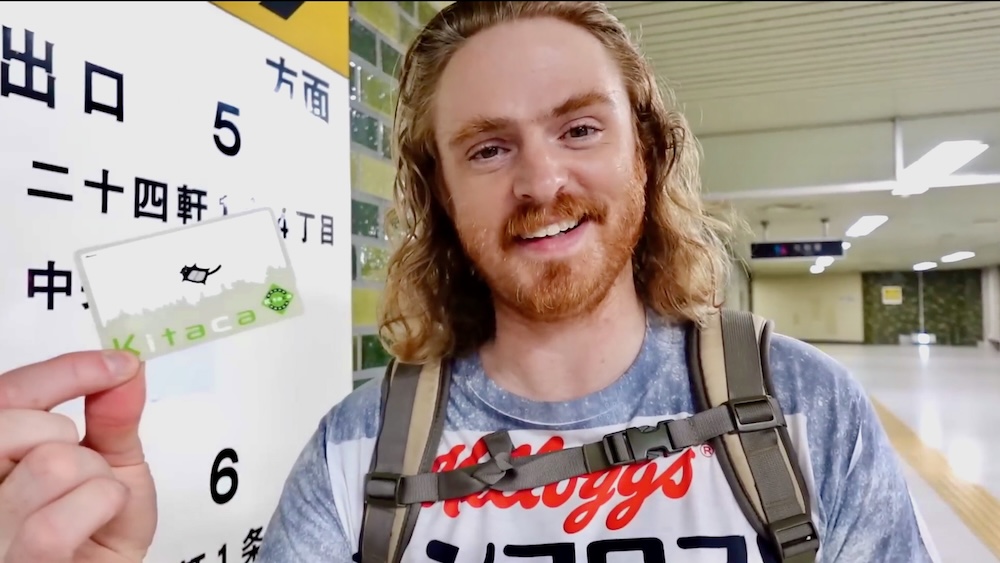
We used Sapporo’s public transport extensively and never felt that we needed a rental car for the city visit we planned. The subway did most of the heavy lifting. We bought and reloaded a Kitaca card, worked out the lines we needed and found it straightforward to move between our accommodation and the major sightseeing districts.
Sapporo’s subway has three lines, and choosing a hotel near one of its stations can save quite a bit of unnecessary walking. For ordinary visits around the centre, walking between individual attractions is also part of the pleasure. Odori Park, TV Tower and Clock Tower are close enough that you don’t need to take a train between every stop.
Sapporo also has an extensive underground pedestrian network that’s particularly useful when it’s raining, snowing or simply too hot to enjoy another long walk outside. Chi-Ka-Ho connects Sapporo Station with Odori, while connected passages such as Pole Town continue toward Susukino and Aurora Town runs toward the TV Tower. Even if you prefer walking above ground, it’s worth knowing these sheltered routes exist when the weather turns against you.
One useful detail for planning transfers is that all three subway lines meet at Odori Station. Subway Sapporo Station serves the Namboku and Toho lines, but not Tozai. And while we used Kitaca cards, you generally don’t need to buy a new one if you already have a compatible Japanese IC card such as Suica, PASMO or ICOCA. Those also work on Sapporo’s subway and streetcars.
The city’s streetcar, or tram, is another enjoyable option. We took a tram while heading off in search of sushi, although I no longer remember the route or how that particular restaurant hunt ended. I enjoyed the ride and wished we’d used the streetcar more, especially after having such a good time travelling by tram in Hakodate. Sapporo’s subway was simply so convenient for our daily plans that it tended to win out.
Buses are important when you leave the central network. Our cemetery trip is the clearest example. We got off one stop early, took an unintended extra walk and discovered that travelling independently can produce both good photographs and a less efficient afternoon. The current bus connection for Hill of the Buddha uses Makomanai Station as a gateway, while Sapporo Art Park has separate services and stops. Check the actual timetable and destination before boarding, particularly if the attraction closes earlier than you expect.
Current adult subway fares vary by distance. The municipal one-day ticket is listed at ¥830, while the Donichika ticket for eligible weekends and holidays is listed at ¥520. Neither is automatically a bargain: work out how many rides you’re likely to take before buying a pass. IC-card acceptance can also differ between transport operators and particular bus services, so don’t assume that a card which worked perfectly on the subway will cover every outlying journey. The Sapporo City Transportation Bureau provides fare and ticket information, and I’d check the relevant bus operator for a more distant excursion.
As for renting a car, I wouldn’t do it solely for central sightseeing. Public transport and walking are more than capable of handling that. A vehicle becomes more interesting if you’re planning several scattered attractions or a broader Hokkaido road trip, but then you need to consider parking, weather, driving requirements and whether you’ll actually save enough time to justify the expense. For that kind of wider itinerary, compare Sapporo car rentals after you’ve decided which days you’ll actually need the vehicle; I wouldn’t pay for it to sit outside the hotel while we explored downtown by subway.
How to Get to Sapporo
For travellers flying into Hokkaido, New Chitose Airport is the main gateway. It isn’t in central Sapporo, so you still have a transfer to make after landing. JR Hokkaido operates Airport trains to Sapporo Station, with the fastest advertised Special Rapid service taking approximately 33 minutes. Other Rapid and Semi-Rapid services take longer, generally around 37 or 43 minutes for the same station-to-station journey.
Those figures don’t include collecting your luggage, reaching the railway platform or getting from Sapporo Station to your hotel. If you’re staying near Nakajima Park, for example, you’ll have another local journey and walk after arriving in the city. I’d allow a comfortable margin if you have a tight connection or an early departure, and consult the current JR Hokkaido airport train information rather than treating the fastest journey time as a guarantee. If you’re still arranging the flight into Hokkaido, you can compare flights into New Chitose Airport; just remember that the airport connection and your final hotel transfer need their own time allowance.
Sapporo is also connected by rail to other Hokkaido destinations. If you’re travelling between several cities, think about the overall order of your route before booking accommodation. A city that works wonderfully as a base for one excursion may not be the most efficient place to return to every night when your next destination is farther away.
Should You Explore Sapporo Independently or Book a Guided Tour?
We did our sightseeing independently, and I’d happily approach most of central Sapporo that way again. The TV Tower, Clock Tower, Odori Park, Susukino and major parks don’t require a guide simply to locate them. Public transport is a perfectly reasonable way to move around, and being able to stop for an unexpected meal or linger somewhere you enjoy was part of what made our trip satisfying.
A guided city tour can still make sense if you have very little time, prefer help navigating or want someone to explain the history and culture as you go. Just check exactly what you’re booking. Some private guided experiences use public transport or taxis rather than an included private vehicle, so the word private doesn’t necessarily mean somebody will drive you between every attraction. For example, this customizable private Sapporo walking tour with a licensed guide offers different tour lengths, but it’s not a private-car service: transport and attraction admissions are separate considerations.
I can also see the appeal of a food tour, particularly for travellers who want help ordering unfamiliar dishes, visiting several establishments or discovering a side of the city’s restaurant culture they might not approach alone. We managed to eat very well without one, but that’s not the same as saying the guided experience wouldn’t add value for someone with different preferences.
The southern attractions are where organized transport may solve the biggest problem. A shared tour can remove the task of coordinating bus connections, although it also fixes your schedule and may allow only a short time at individual stops. A private vehicle can offer more flexibility, but the actual itinerary and inclusions need close attention. I wouldn’t book a tour labelled Sapporo highlights and assume it includes a proper walk through Sapporo Art Park’s sculpture forest. Check the attractions and time allotted before deciding whether the convenience is worth the cost. One private Sapporo hidden-gems tour with a guide and car lists the cemetery monuments among its themes and allows route adjustments. Art Park is only a possible alternative, not a guaranteed stop, so I’d confirm it directly before paying if sculpture walking is your main reason to go.
Day Trips From Sapporo: When to Explore Beyond the City
Sapporo is a convenient base for exploring other parts of Hokkaido, but I wouldn’t sacrifice a meaningful city visit simply to collect as many distant places as possible. Some destinations work well for a day out. Others deserve a night or two in their own right.
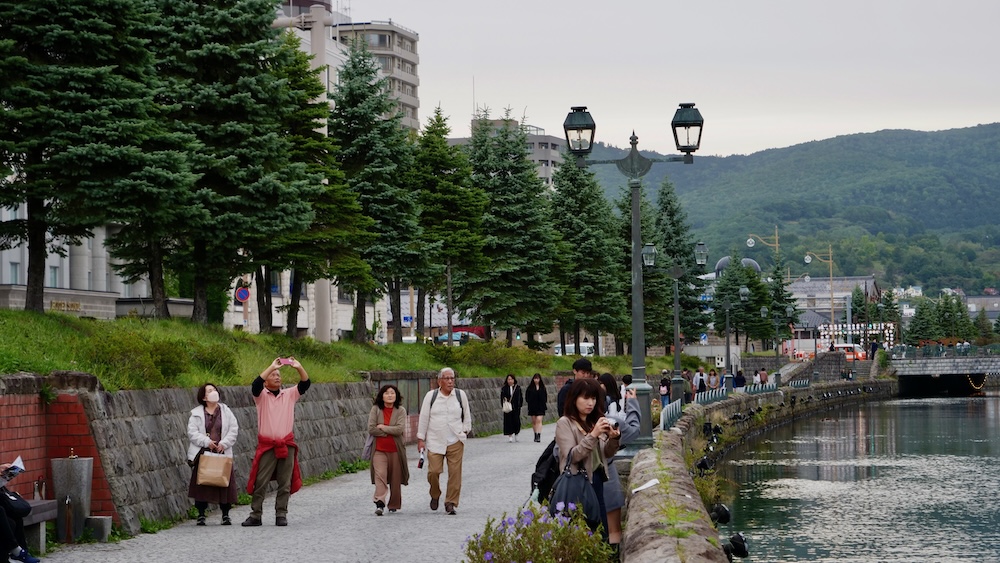
Otaru is the obvious nearby option, with a manageable railway connection and its historic canal, waterfront streets and food scene. We spent time exploring Otaru as a destination in its own right, and I’d choose between a day trip and a longer stay according to how much of it you want to experience. It isn’t necessary to pay for an organized tour simply to reach the town by train.
Jozankei offers a very different experience, with hot springs and mountain scenery outside central Sapporo. It may appeal if you’re looking for a break from urban sightseeing, but transport and the time you intend to spend bathing should guide the decision.
Noboribetsu and Lake Toya are also promoted as regional excursions from Sapporo. We spent two nights in Noboribetsu Onsen during our wider Hokkaido trip, and that gave us time for geothermal walks, baths and hotel meals that a compressed sightseeing tour couldn’t reproduce. I’d choose a multi-stop excursion for a taste of the region, not assume it’s the equivalent of staying in the hot-spring town. A current Noboribetsu and Lake Toya day tour from Sapporo is an option if you want an organized regional overview, though it allocates only a limited stop at Hell Valley. That isn’t the same experience as spending the night in an onsen hotel.
Farther afield, Furano and Biei are especially dependent on season and the exact places you want to visit. A guided excursion or rental car can be useful when the itinerary involves several dispersed stops. But be realistic about the travelling involved, particularly if you’re already short of time in Sapporo itself. If you want to cover places that aren’t easy to string together by public transport, a private Biei, Furano or Asahikawa excursion offers a vehicle-based option with a route tailored to the chosen area. Check which stops fit the season rather than expecting every famous flower field or viewpoint on the same day.
Best Time to Visit Sapporo and What to Book Ahead
We visited in September, and our trip was a reminder that the calendar doesn’t always predict how a day will feel. Parts of our stay were unusually hot, with temperatures around 30°C, while other periods were cooler or wet. We were grateful for parks, covered shopping areas and ice cream breaks. I wouldn’t take our particular hot spell as evidence that every September visit will be the same.
Spring brings a different character to the parks, including cherry blossoms, while summer opens up longer outdoor sightseeing days and the green landscapes we enjoyed. Warm weather can still make an ambitious walking schedule tiring. Autumn is appealing for food events and seasonal colour, with Sapporo Autumn Fest a particularly enjoyable possibility when your dates align with it.
Winter is an entirely different proposition. The famous Sapporo Snow Festival is next scheduled for February 4–11, 2027, with event areas at Odori, Susukino and Tsudome. We didn’t experience Sapporo in winter, so I wouldn’t pretend to compare it directly with our September visit. Snow and cold affect what is comfortable to do, while festival periods make hotel location and availability especially important.
Seasonal access isn’t just a matter of bringing different clothing. The regular outdoor Sculpture Garden at Sapporo Art Park closes over winter, although parts of the wider complex can operate differently. Hill of the Buddha has shorter cold-season hours, and its water garden is normally unfilled. Ropeways and other outdoor attractions may also have maintenance or weather interruptions. If a particular sight is the reason for your trip, check its actual operating dates before committing to flights or a hotel.
What would I reserve early? Accommodation when visiting for a major event; any attraction with a required or limited-capacity tour; and an organized excursion if its departure day or pickup arrangement is central to your itinerary. For ordinary downtown walking and many of the park experiences, I’d rather leave some freedom than schedule every hour. Our unplanned Autumn Fest lunch was one of the joys of visiting Sapporo, and we would have missed it if we’d treated our itinerary like an appointment calendar.
Is Sapporo Worth Visiting? My Final Advice
I left Sapporo thinking less about one spectacular monument and more about how much I’d enjoyed being there. We could have a seafood breakfast, take the subway across town, walk beneath enormous trees and end up eating a bowl of ramen with altogether too much butter. On another day, Audrey could surprise me with a cemetery full of Moai statues, and we’d still have time to find art in the woods. That’s a pretty good range of experiences for one city.
It probably won’t be my first recommendation to someone whose only goal in Japan is to see the most famous temples and postcard landmarks. But for food, history, parks, a slower big-city rhythm and some wonderfully odd excursions, Sapporo has plenty going for it. I’d come back gladly, probably to a different neighbourhood, and would make more time for the tram and the foods we missed.
If you’re planning your first visit, pick accommodation near a useful subway station, reserve a substantial block of time if you’re heading south and don’t feel obliged to do every famous attraction. We needed three sightseeing days for the trip we wanted; you can have a rewarding visit in two if you choose carefully. Sapporo won me over not because everything on our list was extraordinary, but because the city itself was such a pleasure to explore.
This article contains affiliate links. If you book through one of these links, I may earn a commission at no extra cost to you.