
Audrey hadn’t told me where we were going. We’d taken the subway south to Makomanai, transferred to a bus and watched the built-up parts of Sapporo give way to forest and mountains. Then I got off and found myself staring at a row of Moai statues. I remember joking that I hadn’t realized we were going back to Easter Island. Apparently, an enormous Japanese cemetery full of unexpected monuments was the surprise she’d been saving for me.
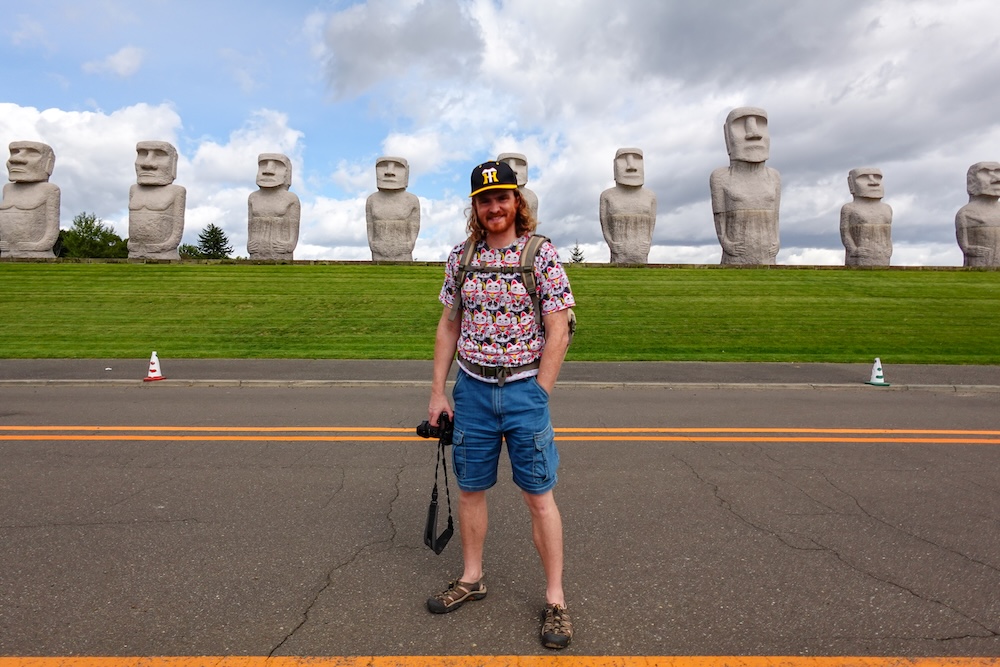
That became one of our most interesting days in Sapporo, partly because it required more effort than our earlier sightseeing. We saw a Buddha concealed beneath a lavender-covered hill, a replica of Stonehenge and, eventually, sculptures scattered through a beautiful wooded park. The cemetery was fascinatingly quirky, but I found Sapporo Art Park more interesting and sophisticated.
It’s also why, given three full days, I wouldn’t automatically spend the third in Otaru. I’d love to make room for Otaru separately, preferably overnight, but Sapporo itself kept rewarding us when we went beyond the centre. This itinerary starts with its familiar city sights and food, moves into its shrines and forests, and saves the southern adventure for the third day. Audrey and I visited these places during a longer stay, rather than following this exact three-day schedule; this is how I’d put them together now.
How I’d Organize Three Full Days in Sapporo
The word full matters here. If you’re arriving at lunchtime and leaving early two mornings later, you don’t have three sightseeing days, whatever your hotel reservation says. The third day in particular deserves an early start and some patience with public transport. Trying to squeeze the cemetery and Art Park into a spare afternoon would defeat much of the reason to go.
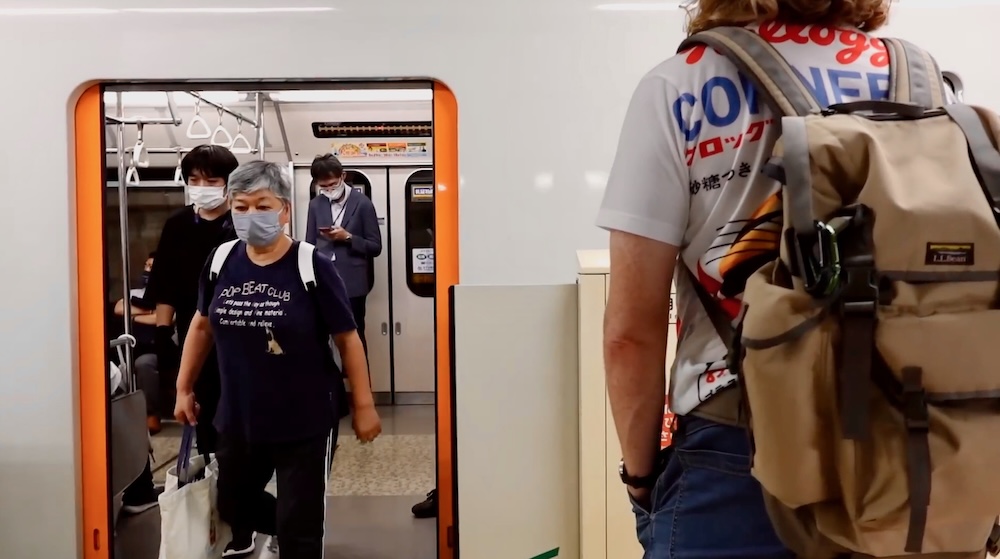
I’d stay somewhere with easy subway access, ideally around Odori or Susukino. We had a hotel overlooking Nakajima Park, which was lovely for impromptu walks and worked well for getting around. Sapporo’s three subway lines meet at Odori, so most of the first two days are easy enough without a car. Day 3 means the Namboku line to Makomanai and onward buses. We travelled independently, but the connections deserve attention.
For this itinerary, I’d start by comparing hotels around Odori if convenient subway connections and central sightseeing are your priorities. If you prefer to finish the evening surrounded by restaurants and nightlife, you can also look at accommodation in Susukino. I wouldn’t choose a hotel near the southern attractions simply to shorten one day’s journey; you’d be making the other two days unnecessarily awkward.
On Day 1 I’d cover the Clock Tower, TV Tower and Odori Park before heading to the Beer Museum, then finish with ramen in Susukino. Day 2 would start with seafood at the Curb Market and move on to Hokkaido Jingu and Maruyama’s forest, with Nakajima Park as a sensible addition if the clock cooperates. The third day belongs to Makomanai Takino Cemetery and Sapporo Art Park. That’s the most distinctive day, and also the one with the most moving parts.
If you’d rather have somebody organize part of the central sightseeing, there’s a customizable private Sapporo tour with a licensed local guide. The current four- and six-hour walking options can include places such as the Clock Tower, TV Tower, Beer Museum and Maruyama Park, depending on your choices. Transport and admission costs are extra, and the tour would replace several independent stops rather than somehow create additional sightseeing hours. We didn’t take this tour, but it’s worth considering if navigating the city is less appealing than exploring it with a guide.
One seasonal warning before getting carried away: this version of Day 3 is best when Art Park’s outdoor sculpture garden is normally open, from April 29 to November 3. In winter, the attraction mix and transport planning change enough that I wouldn’t pretend you can follow the same day unchanged.
Day 1: Downtown Sapporo, Beer History and Ramen
Start With the Clock Tower, TV Tower and Odori Park
Sapporo’s Clock Tower looks almost comically modest among the modern buildings around it. You could take your photograph outside, shrug and be on your way, but Audrey and I went in and enjoyed seeing the clock mechanism and the old building itself. It gives the place more substance than its somewhat awkward position in the modern city might suggest.
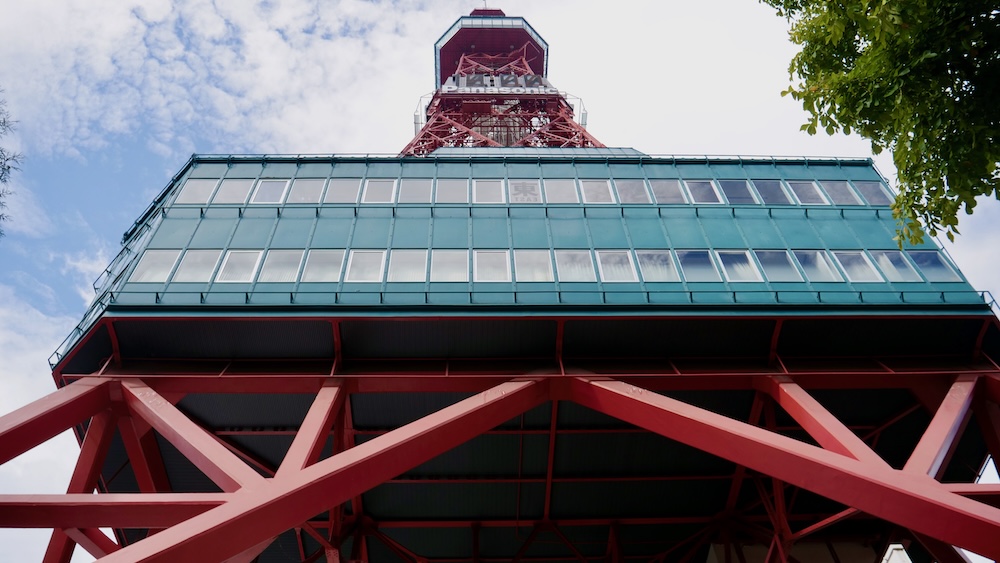
The Clock Tower normally opens at 8:45 AM, and that’s roughly when I’d start. Adult admission currently costs ¥350, with last entry at 5 PM. Sapporo TV Tower is another five to seven minutes away on foot, so the two make a natural pair. From the observation deck, roughly 90 metres above the ground, I loved the view along Odori Park toward the mountains. Getting up there was less enjoyable. I’m not particularly keen on heights, and I remember coming out of the elevator with sweaty hands, but I’d still go up again.
The TV Tower usually opens from 9 AM to 10 PM and costs ¥1,200 for an adult. There’s currently a combined adult ticket for the Clock Tower and TV Tower at ¥1,300 through March 31, 2027, instead of ¥1,550 separately. That’s an easy saving if you’re entering both. Have a look at the current TV Tower prices and closures before relying on the offer.
Afterward, spend a little time in Odori Park. It’s about 1.5 kilometres long, though this isn’t an instruction to march all the way along it like you’re training for something. We visited during an unusually hot September spell, and Audrey was having a rough time with the heat after a morning outside. A soft-serve ice cream and cold drinks improved matters considerably. We happened upon Sapporo Autumn Fest, with food stalls and another reason to linger. Lovely timing, but hardly a year-round fixture.
Leave a Proper Window for the Beer Museum
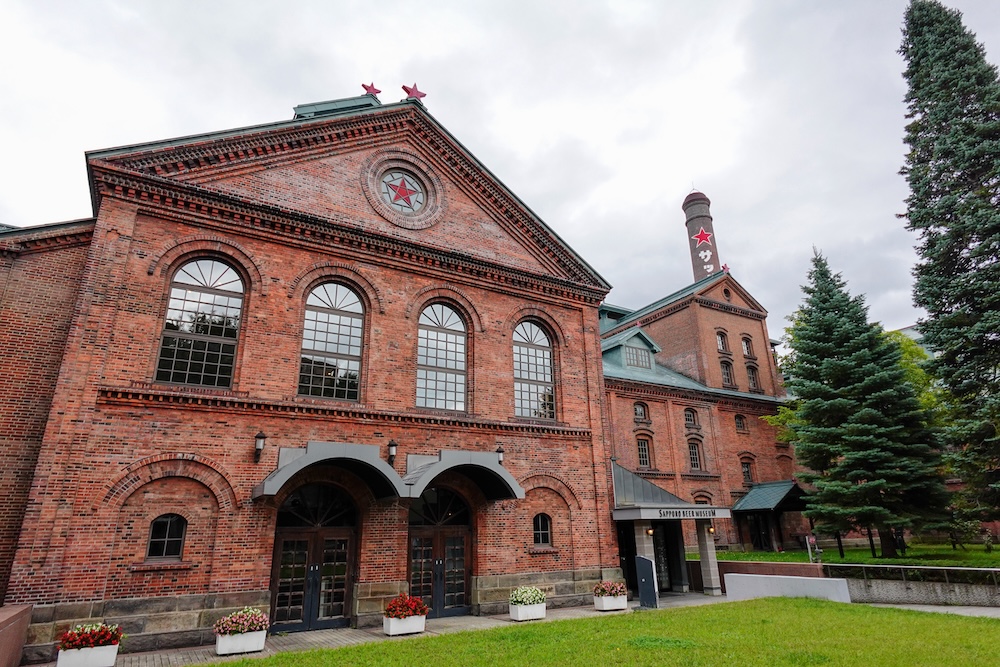
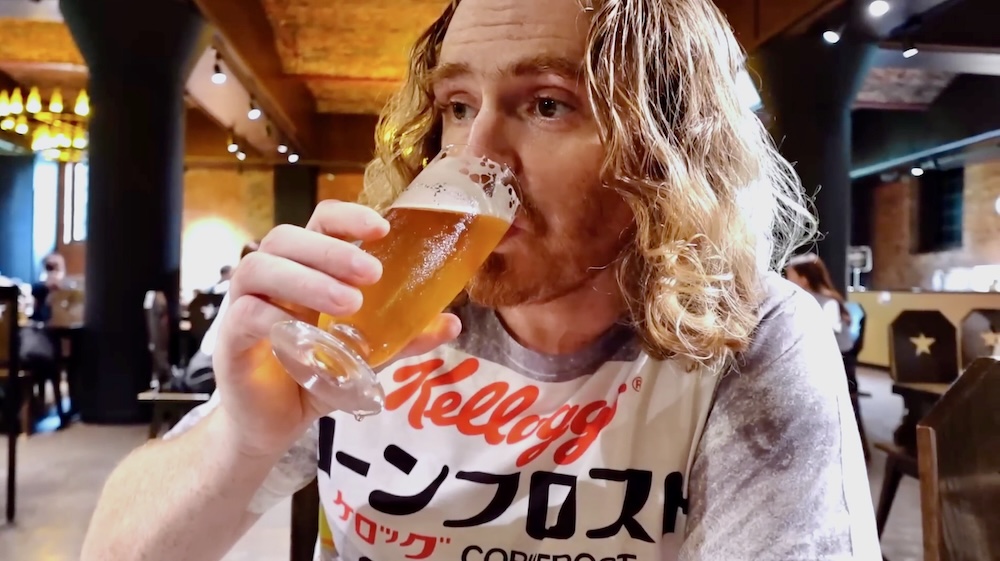
The Sapporo Beer Museum is northeast of the centre, so I’d head there after the downtown sights instead of adding more attractions on the way. We took public transport and walked to the historic brick building, then explored the displays before reaching the tasting room. I particularly enjoyed the old labels and the way Sapporo’s brewing history connects to Hokkaido’s development, going back to the Kaitakushi enterprise in 1876. There’s more to the place than sampling a few beers, although I was certainly willing to perform that part of the assignment.
We tried three varieties and Black Label came out on top for me. Audrey was happy to taste them but made no secret of being more of a wine person. Then there was the corn tea, which didn’t exactly become a new household favourite. That’s travel for you: every now and then the most memorable experiment is the one you don’t want to repeat.
These days the museum offers several types of visit. It normally opens 11 AM–6 PM, with last admission at 5:30 PM. Self-guided admission with multilingual smartphone audio is listed at ¥1,000 for adults; a guided visit costs ¥2,000, lasts around 55 minutes including tasting and is conducted in Japanese. English and Korean audio devices are available for an additional charge. The tasting hall has its own arrangements, including a current three-beer set at ¥1,200 and a 30-minute seating limit, so don’t assume buying museum entry covers whatever tasting you have in mind. Check the Beer Museum visitor options before setting out.
For this itinerary I’d give the whole museum stop roughly 90 minutes to two hours, depending on what you book, whether you taste and how long you wait. That leaves room to enjoy the experience without allowing one museum to quietly annex the rest of your sightseeing day.
There is also a separate four-hour private Beer Museum experience with an English-speaking guide. It combines the brewing history with a guided tasting, but it’s a third-party activity, not the museum’s own shorter Japanese-language tour. We didn’t take it. I’d consider it if a deeper English-language explanation mattered more to you than covering additional sights, although four hours would require substantially rearranging the afternoon.
A Big Bowl of Ramen in Susukino
By evening I’d be ready for Susukino and Ganso Sapporo Ramen Yokocho, better known as Ramen Alley. We ate miso ramen with corn and butter in one of its small restaurants. Mine was excellent, although I got a bit carried away with the ticket-machine extras, particularly the additional butter. A bowl that already contained butter apparently needed more, at least according to my appetite that evening.
Individual restaurants keep different hours and queues are possible, so allow around 45–75 minutes to eat, plus waiting time. I can’t recommend every shop in the alley, but that particular bowl was my favourite ramen in Sapporo up to then. If you’ve still got some energy after dinner, Tanukikoji’s covered shopping arcade is nearby. Audrey and I explored it partly because we needed air conditioning. After a full day, though, I wouldn’t feel remotely guilty about heading back to the hotel.
If choosing restaurants and ordering unfamiliar dishes is part of the fun for you, I’d stick with independent eating. But there’s also a private three-hour Sapporo food tour with a local host, offering a personalized route with six to eight tastings and a drink. Ramen Alley and Nijo Market are among the possible stops, depending on your preferences. We didn’t take this tour, and Nijo Market shouldn’t be confused with our separate Curb Market breakfast on Day 2. Three hours of guided eating would replace your ordinary dinner plans, which might be a worthwhile trade if food is the main event.
Day 2: Seafood, Hokkaido Jingu and the Green Side of Sapporo
A Seafood Breakfast Worth Leaving Downtown For
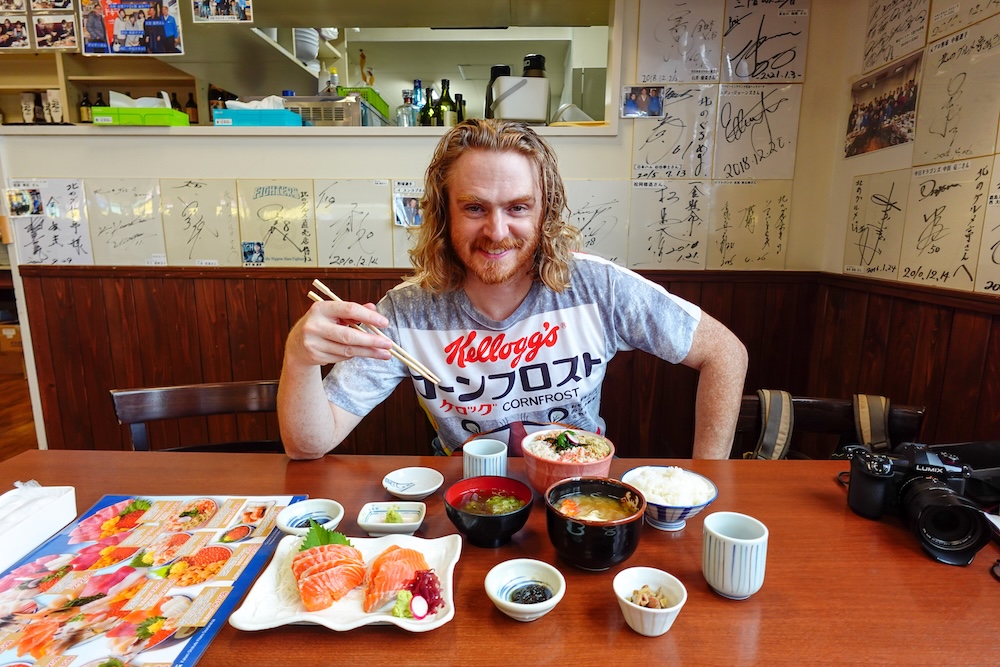
I know a big crab breakfast won’t appeal to everyone. It worked wonderfully for us. At the Curb Market beside Sapporo Central Wholesale Market, Audrey ordered a rice bowl with four kinds of crab and compared their flavours and textures, while our table also filled up with sashimi, crab soup and other seafood. We hadn’t gone there for a quick look around the stalls. We’d gone to eat, and we certainly achieved that objective.
Make sure you’ve got the right market. This is the public-facing Curb Market near Nijuyonken Station, not Nijo Market downtown. Take the Tozai subway line from Odori—roughly ten minutes—and walk about seven minutes from Nijuyonken. General market activity starts around 6 AM, and some restaurants serve breakfast from roughly 7 AM, although opening times vary. I’d allow an hour to an hour and a half rather than attempt a four-crab feast on a tight schedule.
The neat part is what happens next. From Nijuyonken, Maruyama-koen is only two stops away via Nishi-nijuhatchome. You can head straight for the park without travelling back into central Sapporo. It’s a small geographical advantage, but it saves unnecessary backtracking and makes the second day feel much more natural. If you don’t like seafood, eat near your hotel and go directly to Maruyama. There’s no point forcing a meal I enjoyed on somebody who wouldn’t.
Hokkaido Jingu and Those Enormous Trees
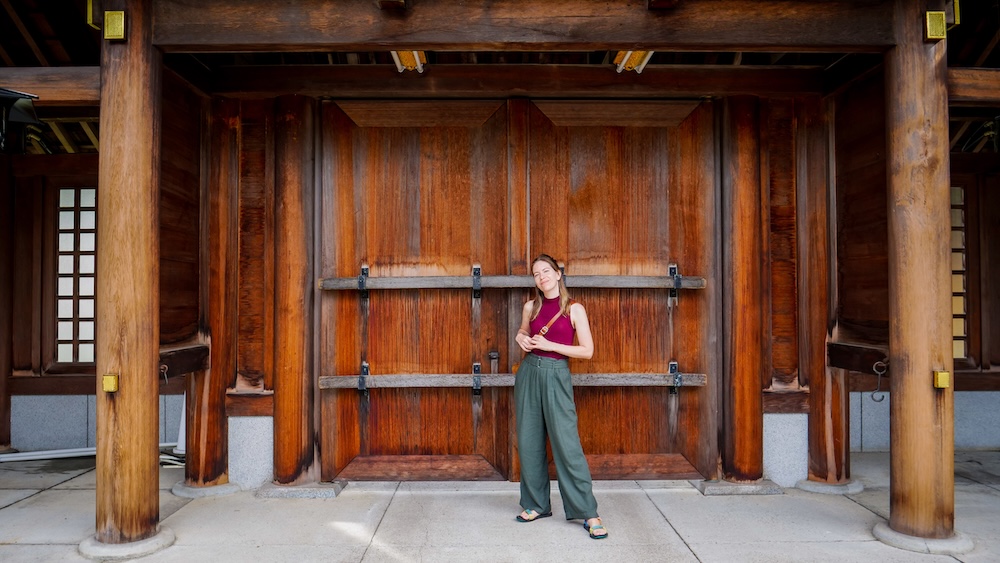
From Maruyama-koen Station, it’s about five minutes on foot to the park and nearer fifteen to Hokkaido Jingu, depending on the route. The shrine grounds and their wooded surroundings were among the places that most changed my impression of Sapporo. We’d had rain, and everything seemed exceptionally green. There were enormous tree trunks, quiet stretches of path and the odd sensation of being surrounded by proper forest while still in a major Japanese city.
Hokkaido Jingu is an active place of worship. Ordinary access to the grounds is free, but the closing hours shift through the year. During much of the warmer season the grounds normally close at 5 PM; in November and December it’s generally 4 PM, with separate New Year arrangements. I’d visit the shrine early enough to enjoy it rather than turning up just before the gates close.
We also wandered into the primeval-forest area around Maruyama. I couldn’t give you our precise route or distance, and I wouldn’t confuse it with a confirmed walk to the mountain summit. That’s a more substantial undertaking, with extra time and physical effort. For this three-day itinerary, I’d stick to the shrine, park and a manageable extension into the trees. We encountered bear-warning signs, so check the current city wildlife and access notices before taking to natural trails. A pleasant forest stroll is still a walk through an environment that deserves respect.
We found time for a less strenuous activity too: buying Japanese sweets near Hokkaido Jingu and sampling them on a bench with iced green tea. Some were chewy, others nutty; one reminded me a little of a Canadian butter tart. I don’t remember the shop well enough to send you to a specific counter, but I definitely remember enjoying the pause. Trying unfamiliar sweets while sitting among the trees was more satisfying than rushing off in pursuit of another attraction.
Nakajima Park: Make It a Choice, Not a Race
Nakajima Park is worth seeing, especially if you’re staying nearby. Our hotel overlooked it, so we spent time around its pond and paths without needing to turn every visit into an expedition. It feels like an everyday neighbourhood park with some interesting history tucked away. We toured Hoheikan, the striking white-and-blue former government hotel, and also explored the Japanese Garden. I thought Hoheikan looked better outside than it did inside; the garden made more of an impression on me.
The complication is timing. Hoheikan currently costs ¥350 for adults and generally opens 9 AM–5 PM, with last entry at 4:30 PM and some scheduled closures. The Japanese Garden is normally free and open 9 AM–5 PM during its operating season, but closes from roughly early November until late April. If you’ve enjoyed a long forest walk or a leisurely seafood breakfast, it may be too late for either interior. That’s fine. Walk around the pond if there’s time, or give Nakajima a separate short visit from your accommodation. I wouldn’t cut a lovely afternoon at Maruyama short just to stare at the back of a locked door.
Day 3: The Moai, Hill of the Buddha and Sapporo Art Park
The Journey Changes the Mood
Our first sightseeing days had been fairly straightforward. We could walk between attractions, hop on the subway and stop for food whenever we felt hungry. Heading south was different. Audrey hadn’t told me what was coming, and by the time we’d taken the Namboku line to Makomanai and continued on a bus, the city felt a long way behind us. There were forests and mountains outside, and then those enormous faces appeared in a row.
I liked that the outing demanded more from us. It involved unfamiliar public transport and a destination that wasn’t immediately obvious when we started. Missed buses aren’t fun, but the extra effort made this feel like an adventure rather than another afternoon checking off central attractions. It also made me grateful Audrey had planned the surprise.
Makomanai Takino Cemetery and Hill of the Buddha
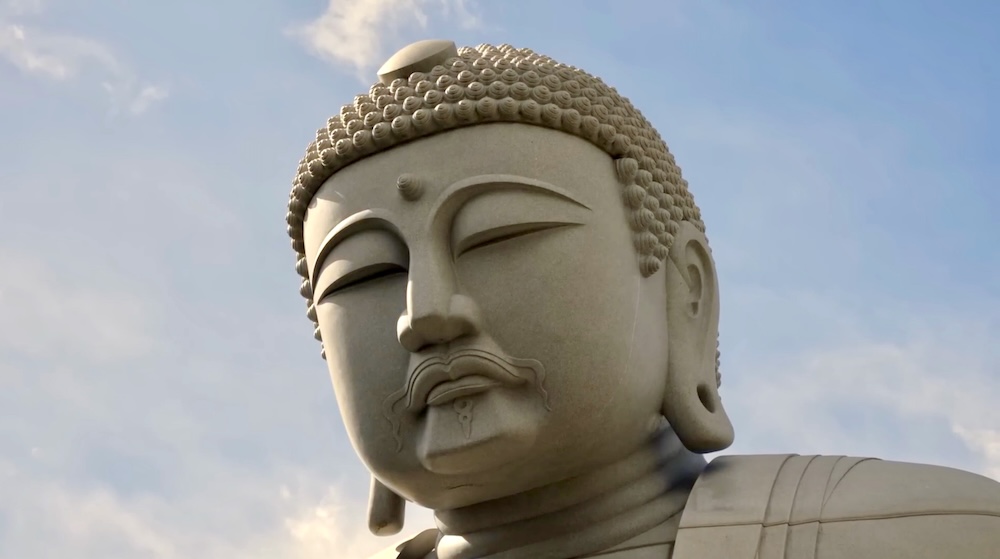
Makomanai Takino Cemetery is a functioning cemetery, established in 1981, with a collection of monuments that seems almost improbably varied. The Moai are the first obvious surprise. They’re huge, distinctive and completely unexpected in the Sapporo outskirts. The place felt slightly random to me, but somehow all the pieces worked together. You can enjoy the unusual architecture while remembering that this is a memorial landscape, with people visiting graves and rules about where tourists may go.
Hill of the Buddha is the attraction I’d spend the most time experiencing there. Tadao Ando designed the setting so the 13.5-metre seated Buddha is largely concealed beneath a hill. From outside, you first see the head rising above the mound. Then you approach past a water garden, enter a tunnel approximately 40 metres long and finally see the complete statue beneath the circular opening above it. We followed that sequence, and the reveal is what made the visit interesting for me. It was curious and slightly quirky, not some life-changing spiritual moment, but I admired how the architecture made you approach the statue rather than simply walk up to it.
Adult admission increased to ¥1,000 in April 2026; children under 12 are free. The normal visiting window is 9 AM–4 PM from April to October and 10 AM–3 PM from November to March, with occasional restrictions connected to maintenance and memorial services. The lavender-covered hill looks particularly colourful around July; the water garden is normally drained from early November through late April. Check the cemetery’s current visiting arrangements before committing to the journey.
There’s also a replica of Stonehenge. During our visit we couldn’t go across the grass to approach it, so our camera zoom had to do the work. It’s easy to look at all these monuments and treat the cemetery like a collection of outlandish photo opportunities, but the Stonehenge structure also has a memorial and interment purpose, and its interior isn’t open to casual visitors. Respect the signs and restricted areas, and don’t inconvenience mourners for a photograph.
Why I’d Give Art Park the Better Part of the Afternoon
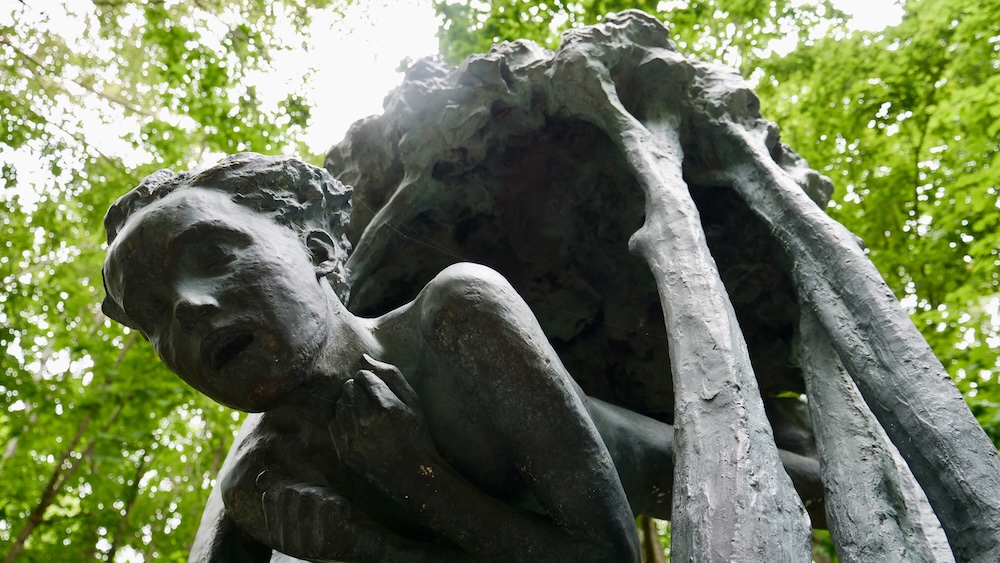
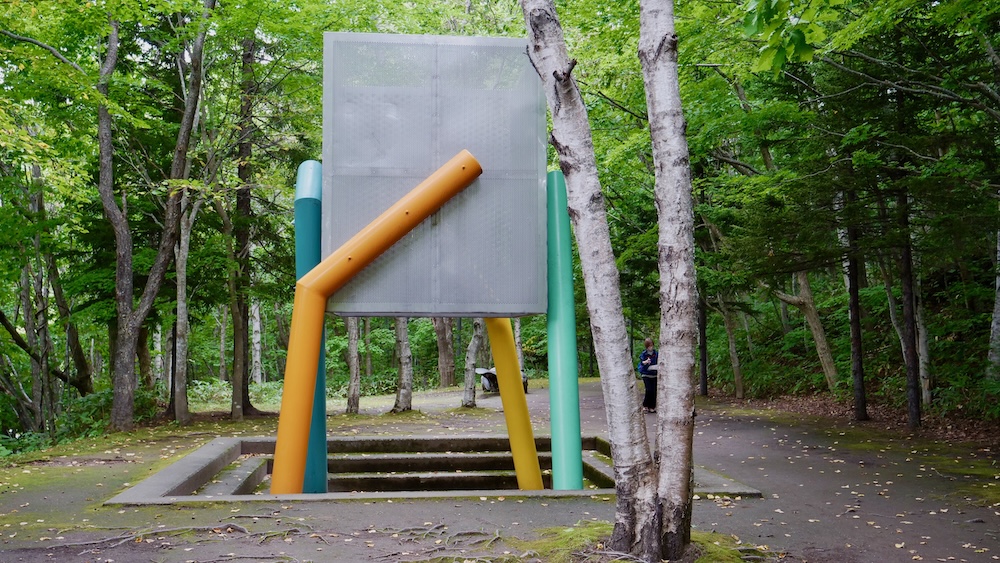
If the cemetery is the wonderfully odd portion of this day, Sapporo Art Park is the more accomplished experience. I actually found it more interesting. We concentrated on the outdoor sculpture garden, winding through the forest, climbing zigzagging steps and coming across artworks among moss, rocks, trees and little streams. The surroundings weren’t merely decorative. Being in that green, sometimes cool and shaded landscape changed the way I looked at the sculptures; there was pleasure in seeing what the next turn of the path might reveal.
The broader Art Park covers about 40 hectares, while the outdoor sculpture garden contains 74 works by 64 artists. I certainly wouldn’t claim we inspected every one. We followed the paths and enjoyed the interaction between the sculptures and their setting, which for me was enough to make this one of the more memorable attractions of our stay. It’s less immediately bizarre than seeing Moai at a cemetery, but I found the combination of art and forest more rewarding over time.
The outdoor sculpture garden currently costs ¥800 for adults and takes cash only. Normal opening is 9:45 AM–5 PM, extending to 5:30 PM from June through August, with last admission thirty minutes before closing. Its usual season runs April 29–November 3. There’s no need to pay to enter the broader park grounds, but the sculptures themselves are a separate paid visit. Check the Art Park visitor information for your dates.
Allow roughly 90 minutes to two and a half hours for the sculpture garden if your pace and connections permit. The terrain is hilly, and the larger site has toilets and places to rest, but I wouldn’t assume every path is accessible to everyone. The park’s internal free shuttle is currently suspended, another reason to be realistic about walking. For somebody with little interest in outdoor art, this might be too much effort; for me it was the highlight of the southern outing, and I’d rather have fewer stops than rush it.
The Bus Connections That Can Make or Break Day 3
You can do this without a car, as we did, but you need to pay attention to the details. Take the Namboku subway line to Makomanai Station and find the appropriate public bus for Makomanai Takino Cemetery. Current visitor information distinguishes buses 106 and 108: route 108 serves the main cemetery area, while 106 serves Takino Toge near the cemetery entrance. Not every Art Park-bound bus continues to the cemetery; cemetery service is much less frequent.
Here’s the easy mistake to make: the bus stop you’ll need for continuing from Hill of the Buddha to Art Park may be different from the one where you got off. The southern sightseeing route directs onward travellers toward Takino Toge. Check the stop location as well as the timetable; knowing a bus number isn’t much help if you’re standing at the wrong stop. The cemetery’s own grave-visiting shuttle is restricted to eligible grave visitors, so it isn’t a tourist shortcut.
The bus ride between the cemetery area and Art Park is described as roughly ten minutes, but that doesn’t tell you how long you’ll be waiting. Art Park itself is about fifteen minutes by bus from Makomanai, and the stop called Geijutsu no Mori Center is the useful one for the sculpture garden. Geijutsu no Mori Iriguchi is different and can involve another walk. The Art Park access page and timetable and cemetery bus instructions are worth checking together for your precise travel date, including the last practical return service.
I would aim to finish the cemetery visit by early afternoon so that Art Park gets a proper slot before last admission. That’s a planning preference, not a guaranteed bus connection. If the schedules don’t line up, a taxi for an awkward leg may be worth considering; we didn’t take one, and I wouldn’t promise a particular fare or availability. I wouldn’t arrive at Art Park with 25 minutes to spare and call that a satisfying visit.
If you want to avoid the bus connections altogether, there’s a private Sapporo car tour visiting the Moai statues and Hill of the Buddha. Its standard advertised route includes other attractions, with Sapporo Art Park described as a possible customizable alternative—not a guaranteed stop. I’d only choose it for this three-day plan if the operator confirmed Art Park and enough sculpture-garden time before booking. Otherwise, you’d be purchasing a different sightseeing day. We didn’t use a private tour ourselves.
Another possibility, if you’re comfortable driving in Japan and already have the necessary licence or permit, is to compare rental cars available in Sapporo. Having your own vehicle could remove the dependence on infrequent buses, but you’d take on the driving, parking arrangements and rental costs instead. I wouldn’t rent a car for all three days purely for this itinerary; we managed the city independently without one, and I liked it that way.
When I’d Change the Three-Day Plan
If you’re travelling in winter, the normal outdoor sculpture garden is closed from November 4 through April 28. Hill of the Buddha can still be visited under shorter hours and different seasonal conditions, but the filled water garden and summer lavender appearance won’t be there. Art Park has other winter activities at certain times, though those are not a straight replacement for walking its regular sculpture garden. We haven’t done this southern combination in winter, so I’d use the core city sights and choose another verified seasonal activity rather than pretend the same third day works in snow.
If Otaru is your priority, it’s a legitimate way to spend a day. The train from Sapporo generally takes around 30–45 minutes, and you’ll be exploring a separate historic town with its canal and commercial streets. That’s a different proposition from buses to cemetery architecture and a hilly sculpture garden. I would personally keep our southern excursion and visit Otaru on another day if time allowed, ideally staying overnight. But someone who loves historic townscapes more than outdoor art might reasonably choose the other way around.
If you’re short on time or energy, be selective. The southern route demands more planning and walking than the first two days. Bad weather, late starts or a missed connection can change what fits. You could choose only the cemetery or only Art Park rather than insisting on both. And if your visit amounts to two full days plus a few spare hours, don’t try to cram this entire outing into the scraps. A good shorter itinerary beats an ambitious plan you can’t actually enjoy.

Would I Spend Three Full Days in Sapporo Again?
Absolutely, provided I had the time and was visiting when the outdoor sculpture experience was available. I loved the central food and sights, and Audrey and I appreciated how much greenery we could reach without leaving the city. But it was the southern day—with the bus journey, the surprise Moai and Art Park’s wooded paths—that gave the visit something especially memorable. It made Sapporo feel bigger and more varied than the downtown highlights alone suggested.
I wouldn’t give up Otaru; I’d make room for it separately. Three days in Sapporo lets you see the familiar city and then make the effort to go somewhere unexpected. Just check those southern bus connections before you set out. The adventure is much more enjoyable when you actually make it to the sculptures.
Frequently Asked Questions
Are three full days in Sapporo worth it?
I think so. I’d spend the first day on downtown landmarks, beer history and ramen, the second on seafood, Hokkaido Jingu and green spaces, and the third exploring the southern cemetery and Sapporo Art Park. These are three complete sightseeing days, not an arrival afternoon and an early departure.
Can you follow this Sapporo itinerary without a car?
Yes. Audrey and I used public transport, including the subway to Makomanai and a bus toward Makomanai Takino Cemetery. The third day takes the most planning because cemetery services are less frequent than buses to Art Park. Check both the outbound and onward timetables for your date.
How do you get from Hill of the Buddha to Sapporo Art Park?
The onward connection uses the Takino Toge bus stop near the cemetery entrance, which may be different from your arrival stop. The bus ride is roughly ten minutes once you’re aboard, but waiting may take longer. Confirm the stop and departure time before visiting the cemetery.
Is Sapporo Art Park open in winter?
The normal outdoor sculpture garden operates from April 29 through November 3 and closes for winter. Other Art Park activities may be offered at different times, but they aren’t the same experience as exploring the outdoor sculptures. I wouldn’t promise the identical third day in winter.
How much does Hill of the Buddha cost?
Adult admission is currently ¥1,000, following an increase in April 2026, while children under 12 enter free. Visiting hours are shorter in winter, and maintenance or memorial services can affect access. Check the cemetery’s current arrangements before travelling south.
Should I spend my third day in Sapporo or visit Otaru?
I’d keep the southern Sapporo outing because I enjoyed the unusual cemetery monuments and especially the outdoor sculpture garden. Otaru is a legitimate alternative for someone more interested in a separate historic canal town. Personally, I’d visit Otaru separately, ideally overnight, if the wider trip allowed.
Where should I stay for this three-day Sapporo itinerary?
I’d choose a central base with convenient subway access, especially around Odori or Susukino. We stayed overlooking Nakajima Park and enjoyed that location. There’s little reason to move hotels for the southern excursion when the first two days are centred on Sapporo’s urban sights and green spaces.
This guide is also available in Spanish. [Leé la versión en castellano: Itinerario de 3 días en Sapporo: lugares destacados, comida y sitios insólitos]
This article contains affiliate links. If you book through one of these links, I may earn a commission at no extra cost to you.