
If you’re standing beneath Goryokaku Tower in Hakodate, wondering whether the conveyor-belt sushi restaurant across the street deserves a meal, I can offer better evidence than a star rating: Audrey and I ate at Shunka twice on the same short stay. First meals are easy to love, particularly when you’re hungry and your body clock hasn’t caught up with the country, so the return visit is what makes me trust my opinion.
My verdict is that Shunka is return-worthy in a specific and limited sense. It’s a good-value, low-fuss sushi meal that held up the second time, but not a destination meal I’d build a trip around. Below I cover which Shunka this is, when to go, how ordering works, what we ate and what it cost, and where I land on going back.
Why We Went Back to Shunka Sushi
Our first meal at Shunka was on our very first night in Hakodate, and we were in full zombie mode. We were hungry and jet-lagged enough that we didn’t have the coherence to film or photograph anything, so we simply ate, liked it a lot, and agreed that we would have to come back and do it properly once our brains were working. I count that as a great first impression rather than a verdict, because opinions formed in that state deserve a second look.
Assorted conveyor belt sushi
– Udon noodles with shrimp tempura
We went back for the plainest reason there is: we’d enjoyed it, and it was close enough to where we were staying that we could walk there. That second meal, which we filmed and photographed, is the one I can describe in detail, so most of what follows comes from it.
That walkability is worth planning around if you can. I won’t single out a property for you, but a base within a short walk of the tower is what turns a second visit to a place like Shunka into an easy decision, and you can compare current hotels near Goryokaku to see how close each one sits.
Finding Shunka Near Goryokaku Tower
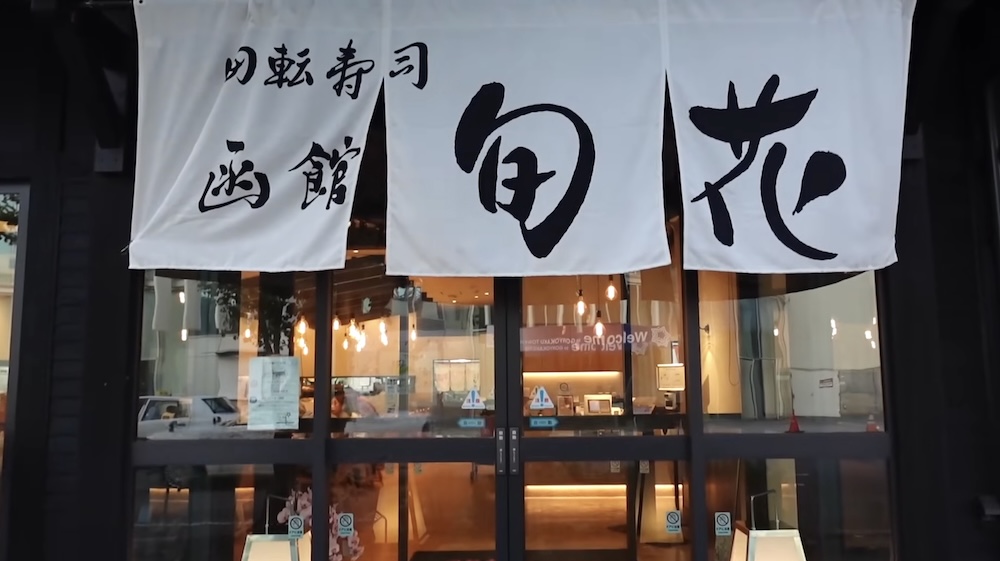
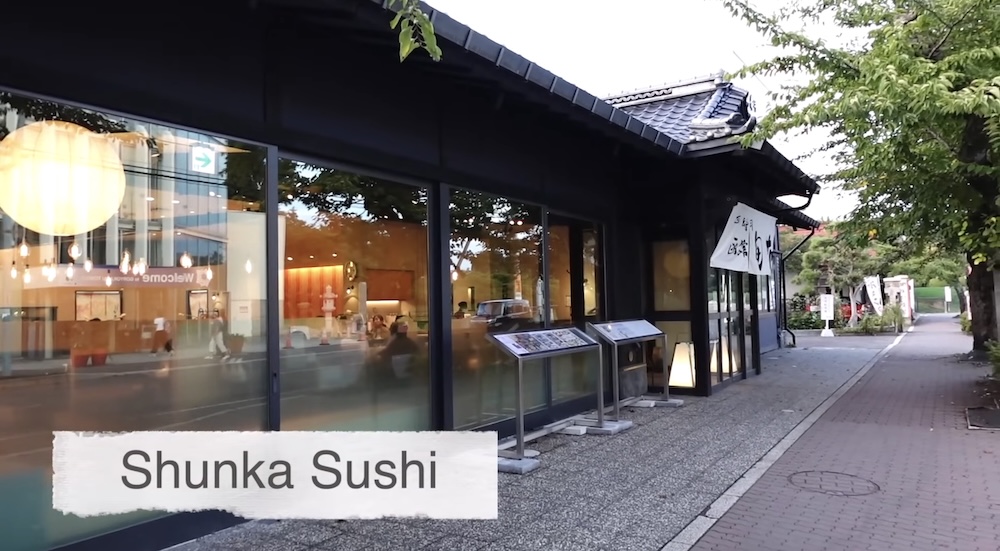
The restaurant is Kaiten-zushi Hakodate Shunka (回転寿司 函館旬花), at 29-18 Goryokaku-cho, in its own building roughly 25 metres from the tower and styled to echo the historic magistrate’s office. A small local restaurant group runs it, and the same group operates a kaiseki restaurant on the tower’s second floor. That sister restaurant is the one to avoid mixing up with this place, because it has its own address, menu and hours, so if a map pin or listing puts “Shunka” inside the tower, you’re looking at the sister. As far as I know, this is the group’s only conveyor-belt restaurant.
The nearest tram stop is Goryokaku-koen-mae, and the walk from there to the restaurant is about 650 metres, which listings put at roughly 11 to 13 minutes. We reached it on foot from where we were staying, so I haven’t timed the tram approach myself.
Shunka fits most naturally around a Goryokaku visit, since the tower and the park sit right beside it. Audrey and I explored the park and the tower on our own, so I can’t speak to guided tours from experience, but a current option is a guided walk through the fort that includes the magistrate’s office and the tower’s observation deck, with a choice of starting at Goryokaku or at Hakodate Station. If you’d like the fort’s history explained before lunch, you can check current availability for the Goryokaku star fort and tower guided tour.
When to Go: A Quiet Afternoon Versus Meal-Time Crowds
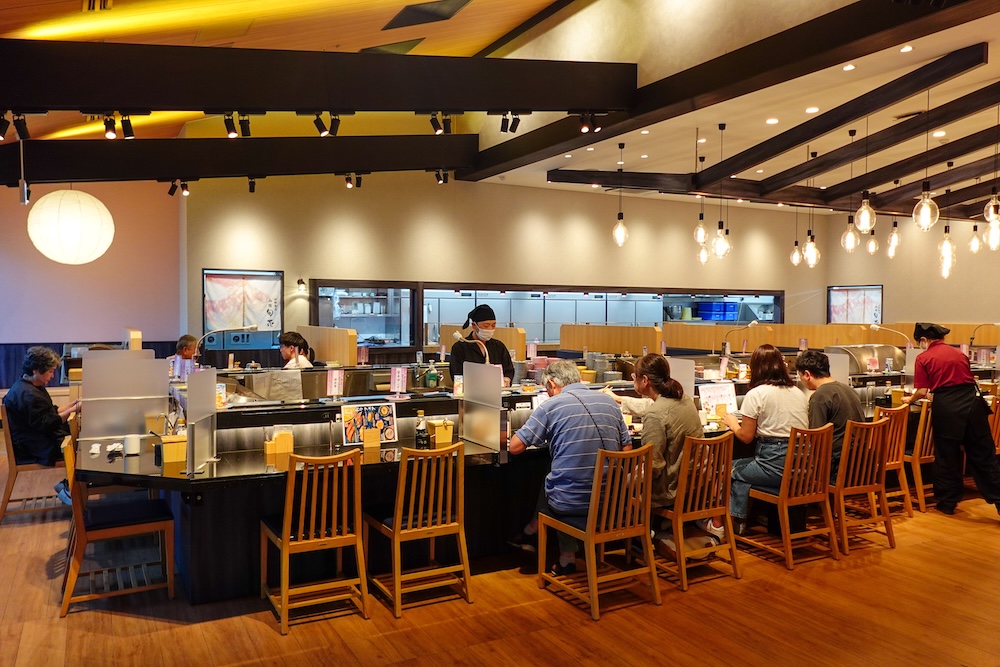
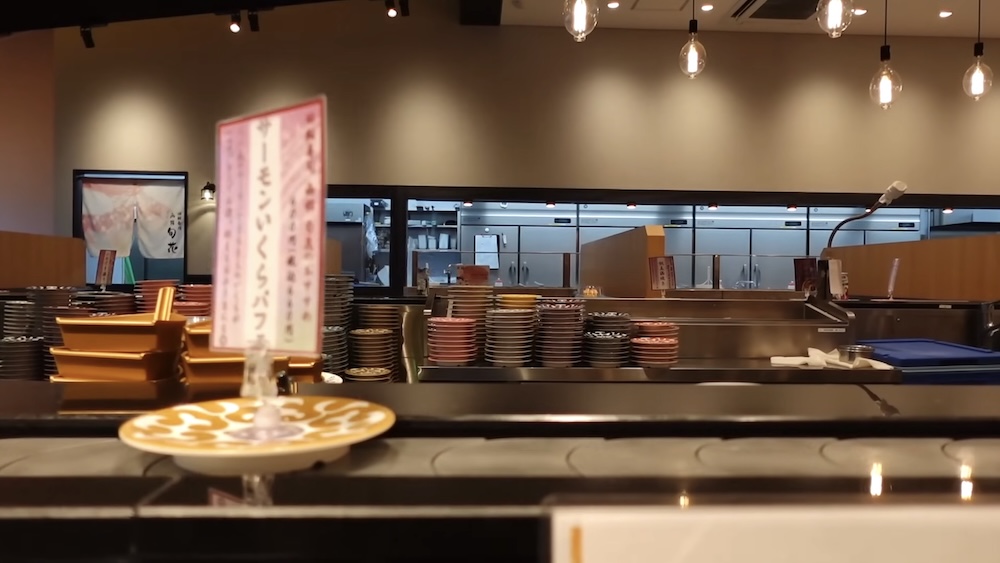
On our second visit we arrived at about 4:30 in the afternoon, after a full day of sightseeing in which we’d been due back at the hotel for a rest and had decided we were more hungry than tired. The restaurant was nearly empty, which I counted as a plus, but it also meant there was very little going around on the belt, so we ordered what we wanted instead of grabbing plates as they passed. That worked out fine. Alongside the belt, you can have the sushi chefs make what you want, so I’d treat ordering as a normal way to eat here rather than a fallback.
Shunka serves straight through from 11:00 to 21:00, with last orders at 20:30, so there’s no mid-afternoon closure to plan around, and it’s open daily. It doesn’t take reservations, which makes your arrival time matter more than anything else, so if a table is important to you, check with the restaurant before you build your day around it. My own evidence is that single quiet 4:30 meal, and we commented at the time that it was an odd hour to be there, since the place would be a lot busier at six or seven in the evening. I can’t tell you how long the wait gets at peak times and I won’t guess. If you want the calm we had, aim for the gap between lunch and dinner, and if you turn up at mealtime, bring some patience.
How Ordering Works at Shunka
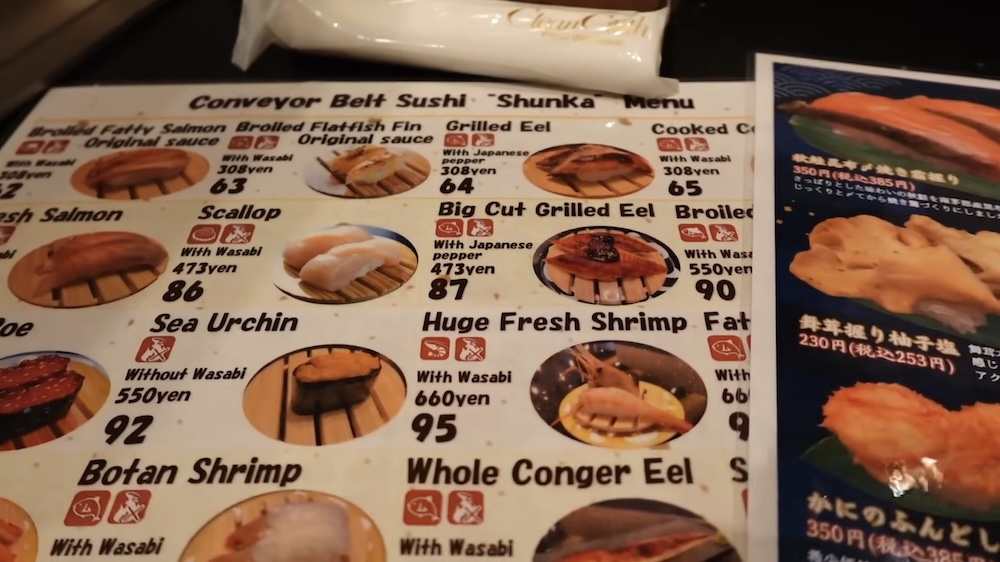
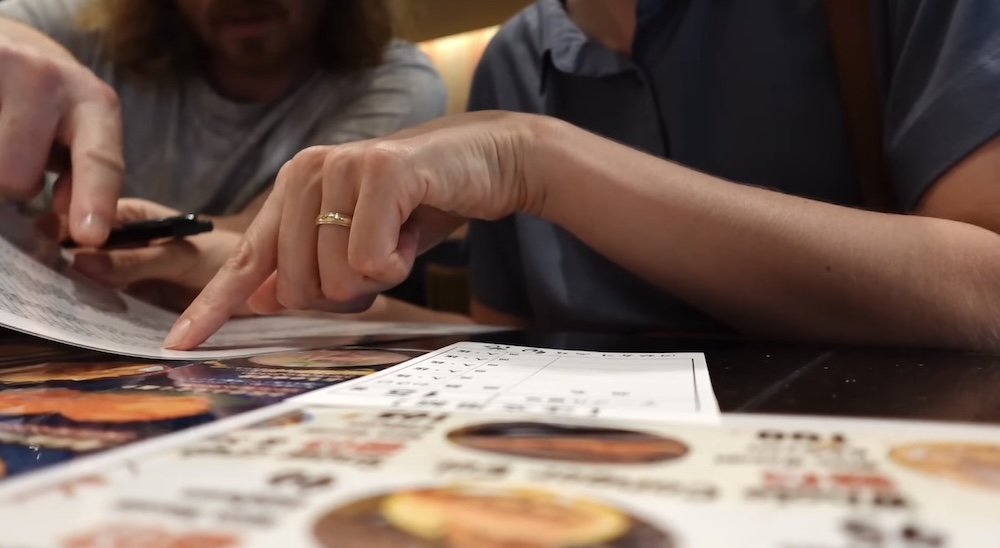
Ordering is simple once someone walks you through it, and on our visit the staff did exactly that. They found us an English picture menu and explained how the process works. Every item is numbered, and on the paper order slip you write the number of what you want, how many plates, and whether you’d like wasabi or not. We found it pretty straightforward. Systems like this change, so take that as what we did rather than a promise about today.
The regular menu runs to about 70 items, with another five to ten daily specials that depend on what the market has, so a printed English picture menu can’t be expected to keep pace with the day’s offerings, and it’s worth asking the staff what’s on. The restaurant’s website is the place to check the current menu and recommendations. Cards, IC cards and QR payments are listed as accepted, but confirm before you rely on a particular method.
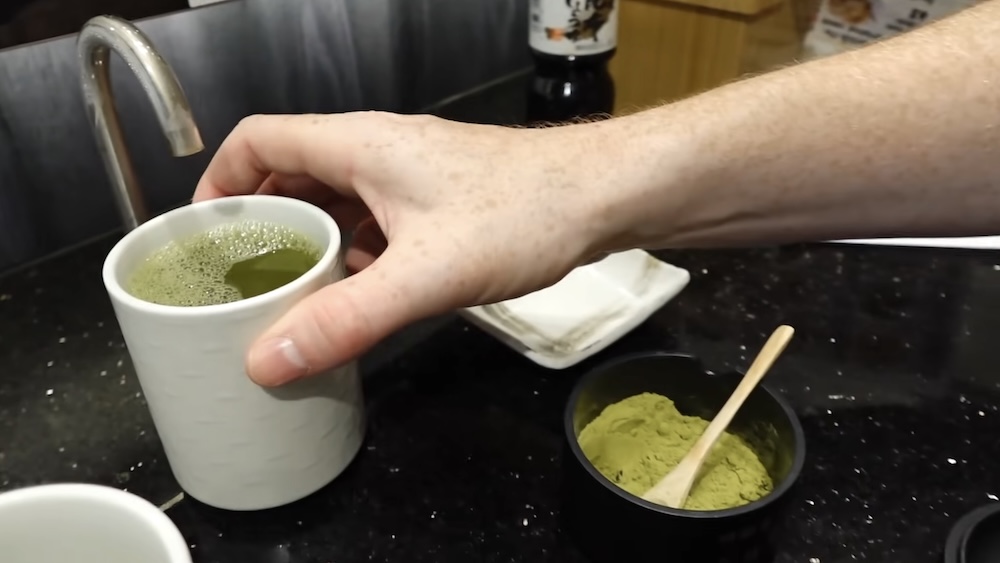
Tea is self-serve, and I liked it more than I expected to. We scooped matcha powder into our cups, filled them from the hot water at the table, and refilled as often as we wanted, since it’s complimentary.
What We Ordered at Shunka
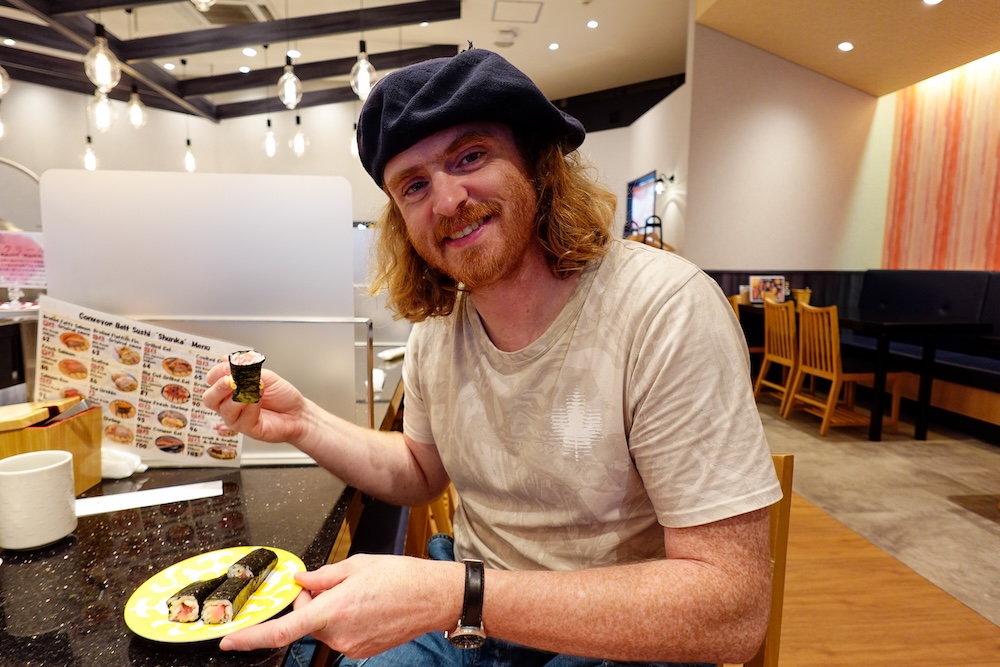
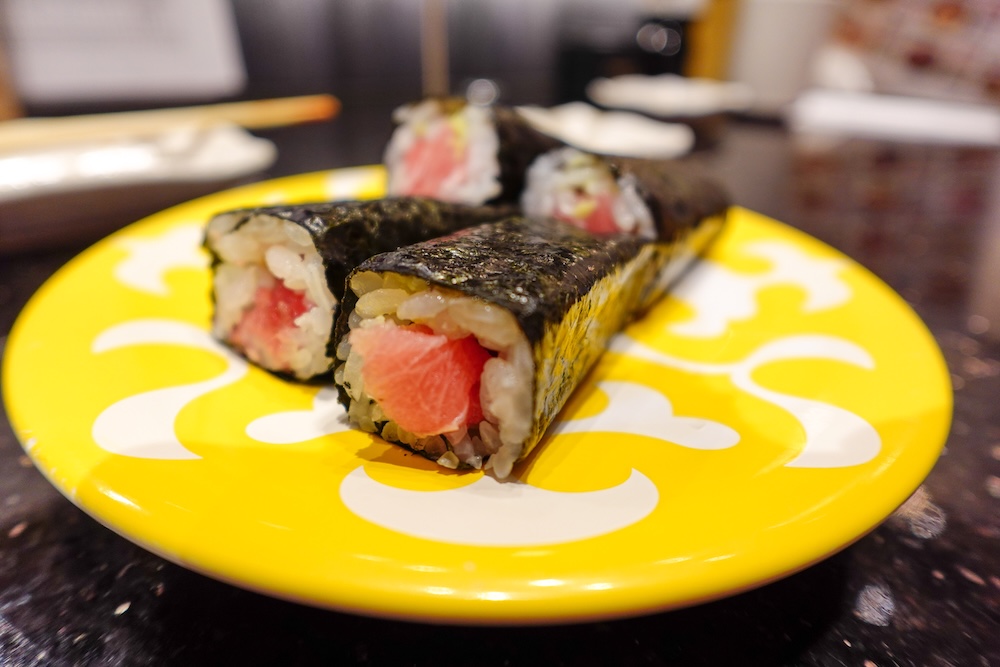
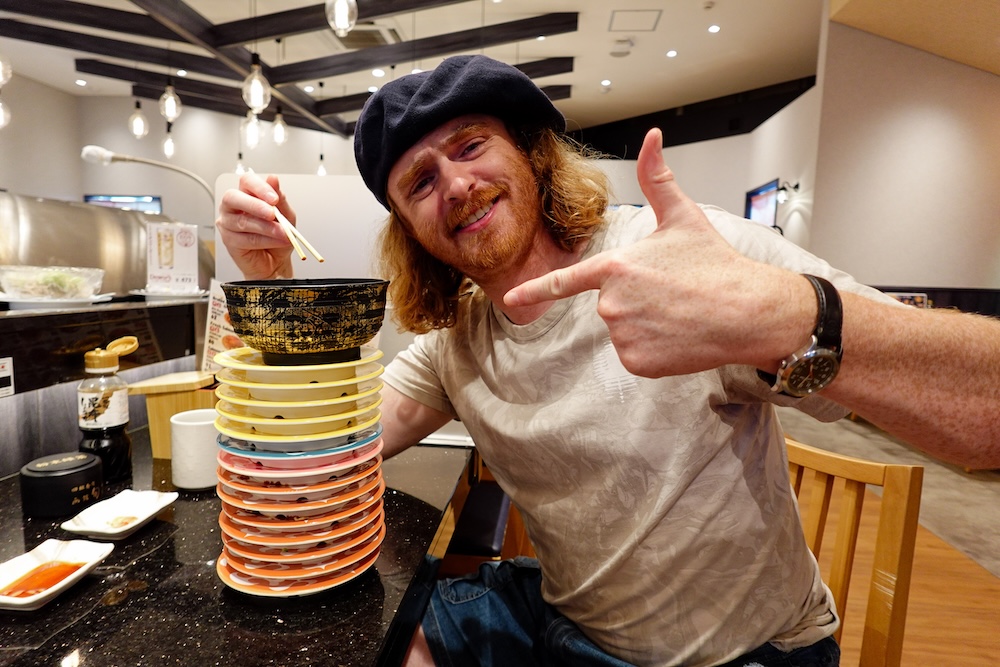
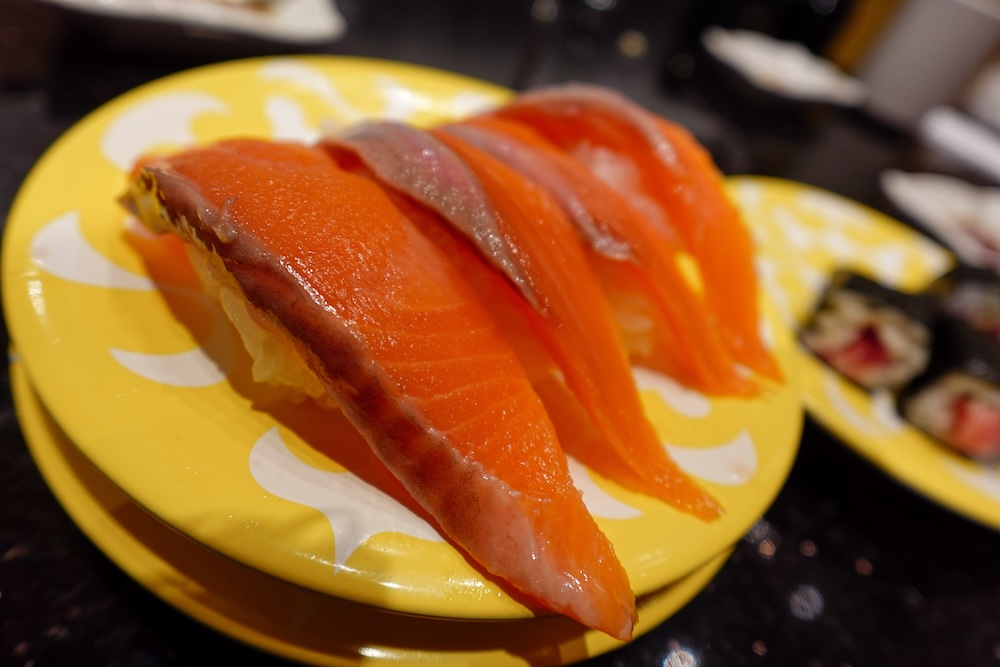
Conveyor-belt sushi is one of our favourite parts of eating in Japan, and the main reason is the selection: you can order your favourite rolls, add hot dishes, and get just about anything you want. At Shunka we ordered a lot of salmon and a lot of tuna, including medium-fatty tuna, because they’re our two favourites. That isn’t the most adventurous way to eat, but it’s what we crave. We’d come in with an appetite after a day on our feet and fully intended to hit the sushi hard.
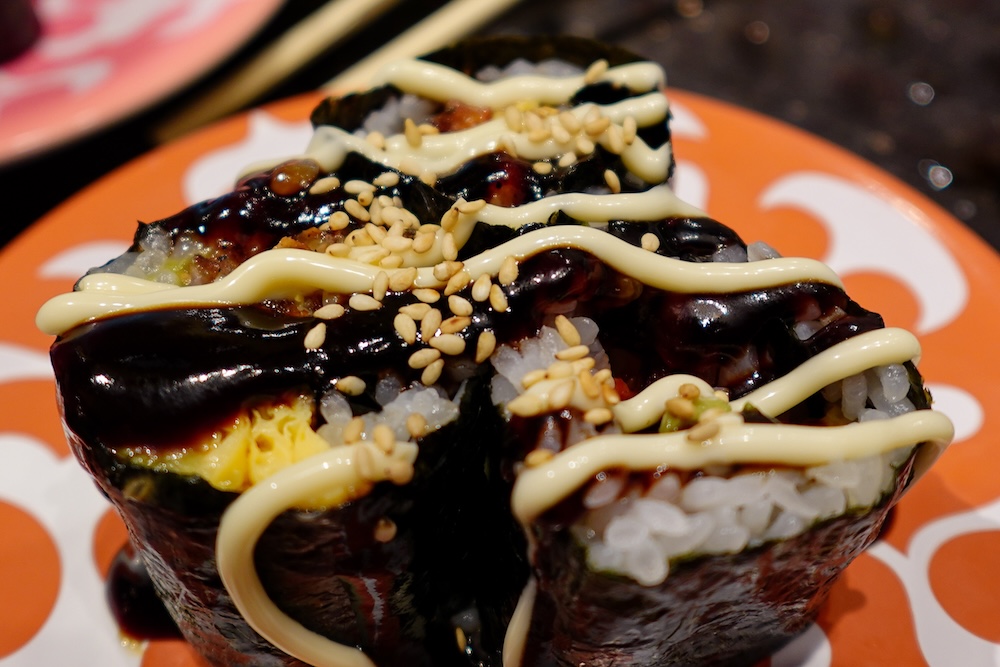
Around the edges, a bowl of udon with shrimp tempura arrived partway through the meal. The fried sweet bean curd is one of the cheapest things on the menu, a rice-filled piece sweet enough to pass for a dessert, and it had at least one fan at our table. A shrimp tempura roll with a sweet sauce inside was very good, and a California-roll variation with avocado, omelette and something else was an eclectic mix, tasty and nothing like the North American version.
If you want something specifically Hakodate, squid is the obvious choice: it’s on the regular menu year-round, and live squid sashimi appears at market price when supply and weather allow. If you have dietary restrictions, ask the staff rather than assuming anything from the menu.
What ¥3,500 Bought Us
The meal came to ¥3,500 for the two of us, which works out to roughly ¥1,750 each. That covered a lot of plates and the udon, and we walked out so full and so satisfied that it felt like a very good price for the quality, which we said at the time. That was the price on our visit, and prices move. The restaurant lists a typical spend of ¥2,000 to ¥2,999 per person today, so if you order the way we did, plan on spending more than we did. Plate prices change, so check the menu on the restaurant’s website before you go.
Is Shunka Sushi Worth Returning To?
Yes, and here’s what I mean by that. By return-worthy I mean that we liked Shunka enough to eat there twice on a short stay, and that by the end of the second meal we were already talking about finding a way to go back one more time. That’s a genuine endorsement, but a modest one.
The quality was excellent and above average for sure, just not the best sushi of my life. I should also own up that we’d only just arrived in Japan and weren’t remotely sick of sushi yet, which isn’t the most sceptical frame of mind for a reviewer, so weigh my enthusiasm accordingly.
The drawbacks are practical rather than culinary. With no reservations, timing is your problem. The belt thins out when the room is quiet, so you’ll be ordering rather than grabbing, and a printed English menu may not cover the day’s specials. And the price I paid has had time to age.
I’d send you to Shunka if you want a well-priced sushi meal beside Goryokaku Tower, especially at the end of a sightseeing day when your appetite has outrun your patience. If you want a high-end sushi counter, this isn’t that, and I’d be doing you a disservice to oversell it. If I found myself near the tower at four in the afternoon, hungry and without a plan, I’d walk straight in, order from the chefs whatever the belt wasn’t offering, and ask what was special that day.
Frequently Asked Questions
Which Shunka is this, and where is it?
This is Kaiten-zushi Hakodate Shunka (回転寿司 函館旬花), at 29-18 Goryokaku-cho, in its own building roughly 25 metres from Goryokaku Tower and styled to echo the historic magistrate’s office. A kaiseki restaurant run by the same group sits on the tower’s second floor, and that is a different restaurant with its own address, menu and hours.
Does Shunka take reservations?
It doesn’t, which makes your arrival time matter more than anything else. If a table is important to you, check with the restaurant before you build your day around it.
What is the best time to go to Shunka?
If you want the calm we had, aim for the gap between lunch and dinner. We arrived at about 4:30 in the afternoon and found the restaurant nearly empty, with very little on the belt, so we ordered from the chefs. Shunka serves straight through from 11:00 to 21:00, with last orders at 20:30, and I can’t tell you how long the wait gets at peak times.
How does ordering work at Shunka?
On our visit the staff found us an English picture menu and explained the process. Every item is numbered, and on the paper order slip you write the number of what you want, how many plates, and whether you’d like wasabi or not. Alongside the belt, you can also have the sushi chefs make what you want. Systems like this change, so take that as what we did rather than a promise about today.
How much did our meal at Shunka cost?
Our meal came to ¥3,500 for the two of us, which works out to roughly ¥1,750 each, and it covered a lot of plates and the udon. That was the price on our visit, and the restaurant lists a typical spend of ¥2,000 to ¥2,999 per person today, so if you order the way we did, plan on spending more than we did.
Is the tea at Shunka self-serve?
Tea was self-serve when we went. We scooped matcha powder into our cups, filled them from the hot water at the table, and refilled as often as we wanted, since it’s complimentary.
What did we order at Shunka?
Mostly salmon and tuna, including medium-fatty tuna, because they’re our two favourites. Around them we had udon with shrimp tempura, fried sweet bean curd, a shrimp tempura roll and a California-roll variation with avocado and omelette.
Is Shunka worth returning to?
Yes, in a limited sense. We liked it enough to eat there twice on a short stay, and the quality was excellent and above average for sure, just not the best sushi of my life. The drawbacks are practical: no reservations, a thin belt when the room is quiet, and an English menu that may not cover the day’s specials.
This article is also available in Spanish. [Leé la versión en castellano: Reseña de Shunka Sushi: sushi en cinta transportadora en Hakodate al que vale la pena volver]
This article contains affiliate links. If you book through one of these links, I may earn a commission at no extra cost to you.