
El Chaltén is the kind of place that makes you reconsider every “I’m not really a hiker” sentence you’ve ever said. One minute you’re sipping a coffee in a tiny frontier town, and the next minute you’re bargaining with your own lungs on a gravel slope, whispering sweet nothings to your knees like they’re a beloved pet that might bolt.
We showed up in Patagonia in full-on foodie mode. Lots of empanadas. Asados galore. Lots of sitting. Very little training. And then El Chaltén politely pointed at Mount Fitz Roy and said, “Cool. Now go earn it chubby cheeks.”
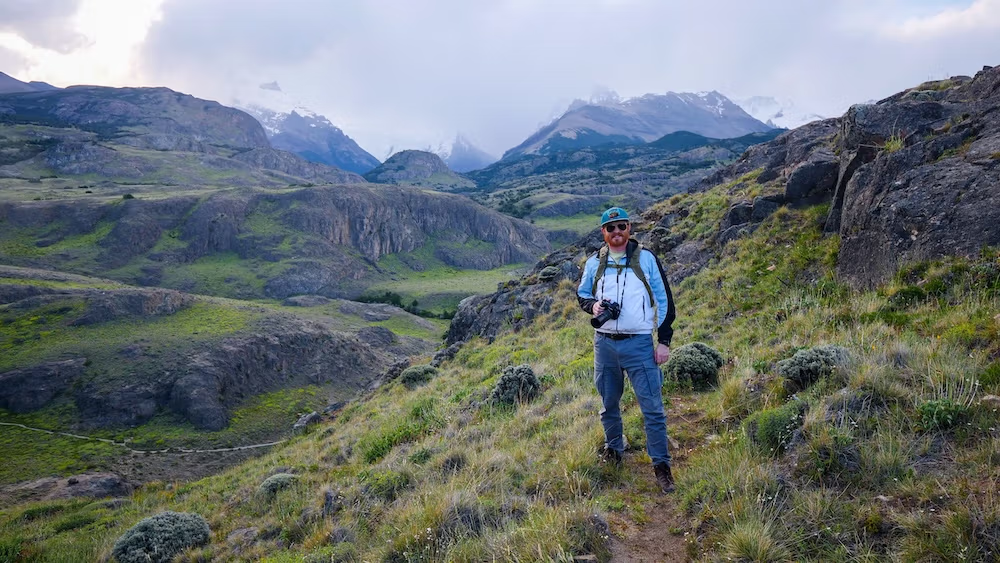
That’s the magic here: El Chaltén makes epic wilderness feel accessible. You can do a short sunset hike that smacks you with panoramic views in under an hour, or you can go all-in on a legendary full-day trek that ends with you staring at a turquoise lagoon beneath granite spires while the Patagonian wind tries to steal your soul.
This isn’t just a destination. It’s a basecamp with personality. It’s a town where breakfast is early because everyone has places to be, trails to conquer, and blisters to collect. It’s a place where you can go from “just one little hike” to “we did 20 km and now we walk like rigor mortis” in a single day.
If you’re on the fence, let us help you tumble off it—preferably in the direction of El Chaltén.
El Chaltén at a glance
| Snapshot | What it means in real life |
|---|---|
| Best for | Hikers, day-trippers, photographers, mountain nerds, and anyone who wants “big nature” without needing a helicopter |
| Famous for | Fitz Roy, Cerro Torre, turquoise lagoons, hanging glaciers, and trails that start basically in town |
| Vibe | Colourful frontier village, outdoor-café energy, and a whole lot of people wearing the same jacket in different colours |
| Difficulty range | “Short and steep” to “why am I like this?” |
| Our favourite surprise | How quickly you can reach an outrageous viewpoint after dinner |
| Our least favourite surprise | The wind’s commitment to chaos and the occasional “no internet” situation |
How long should you stay? (A brutally honest decision table)
| If you have… | Do this | You’ll leave feeling… |
|---|---|---|
| 1 day | Mirador de los Cóndores + a river walk + a good meal | Like you got a taste of Patagonia and now you want the whole menu |
| 2–3 days | Laguna Torre + Laguna Capri (or Piedras Blancas) + one “big day” | Proud, tired, and weirdly emotional about rocks and water |
| 4–6 days | Add weather buffer + Lago del Desierto or a rest day | Like you actually lived here (and your legs will be noticeably stronger) |
| 7+ days | Mix day hikes + an overnight camping plan + slow mornings | Like a seasoned trekker…or a very stubborn foodie pretending to be one |
Our honest recommendation: at least 4 nights if you can. Patagonian weather runs on its own schedule, and El Chaltén rewards flexibility. When the forecast is good, you go. When it’s not, you eat, rest, and pretend that’s the plan.
🧾 Quick Booking: Your El Chaltén Travel Essentials 🥾✨
🎒 Your Travel Toolkit (Book These 4 Things)
| ✅ What to book | 💡 Why it’s worth it | 🔗 Quick link |
|---|---|---|
| 🥾 Tours & experiences | Easy way to lock in a glacier day, a Lago del Desierto adventure, or a guided option when weather turns moody | Browse El Chaltén tours on Viator |
| 🏨 Hotels & stays | El Chaltén sells out fast in peak season — booking early = better locations + fewer “only the priciest rooms left” moments | Find El Chaltén hotels on Booking.com |
| 🚗 Car rentals (optional) | Best for freedom days: Ruta 40 viewpoints, flexible timing, photo stops, and a smoother Lago del Desierto run | Compare car rentals in El Calafate (gateway to El Chaltén) on DiscoverCars |
| 🚌 Bus tickets | The classic El Calafate ↔ El Chaltén route is simple — but popular departure times fill up | Book El Calafate → El Chaltén buses on Busbud |
👉 One-click backup (reverse direction): Book El Chaltén → El Calafate buses on Busbud
Best time to visit (season cheat sheet)
| Season | Best for | What you need to know | Our take |
|---|---|---|---|
| Nov–Mar (summer) | Long daylight, easiest conditions, peak trail access | Crowds, wind, and prices can be higher; book ahead | The classic choice—especially if you want sunrise-to-sunset hiking windows |
| Apr (shoulder) | Fewer people, crisp light, autumn colours | Weather turns faster; some services start winding down | Stunning if you catch a stable stretch |
| May–Sep (winter) | Quiet town, snow vibes, hardcore trekking culture | Short days, icy trails, some routes not recommended without gear/experience | Only if you know what you’re doing (or you’re joining guided options) |
| Oct (spring) | Returning services, fewer crowds than summer | Unpredictable weather; snow can linger | A gamble with big upside |
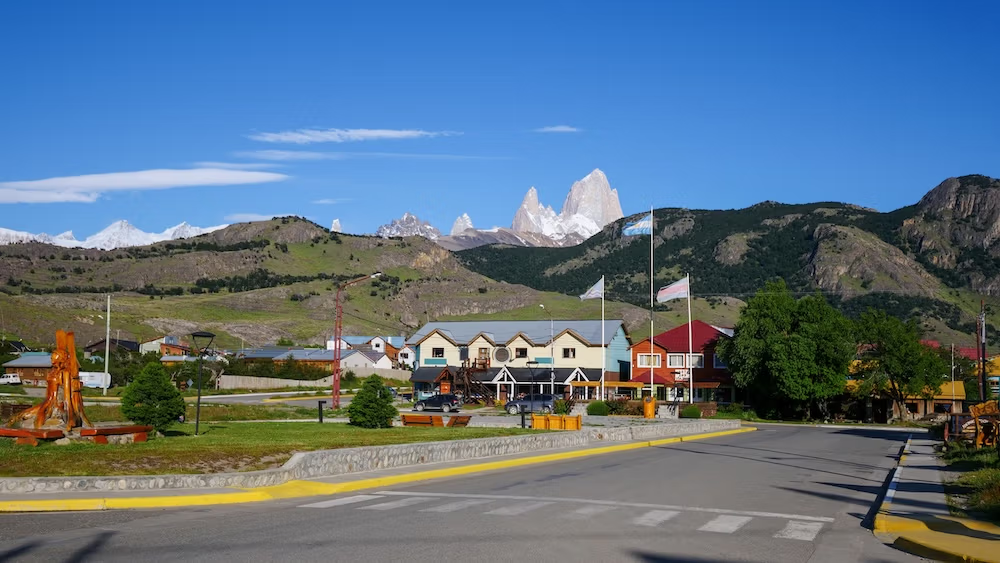
We visited in summer and the daylight felt unfair in the best way. It was still bright near 10 p.m., which meant you could have dinner, digest for five minutes, and then go chase a viewpoint like it was totally normal.
Reason 1: Fitz Roy looks like it was rendered by a graphics department
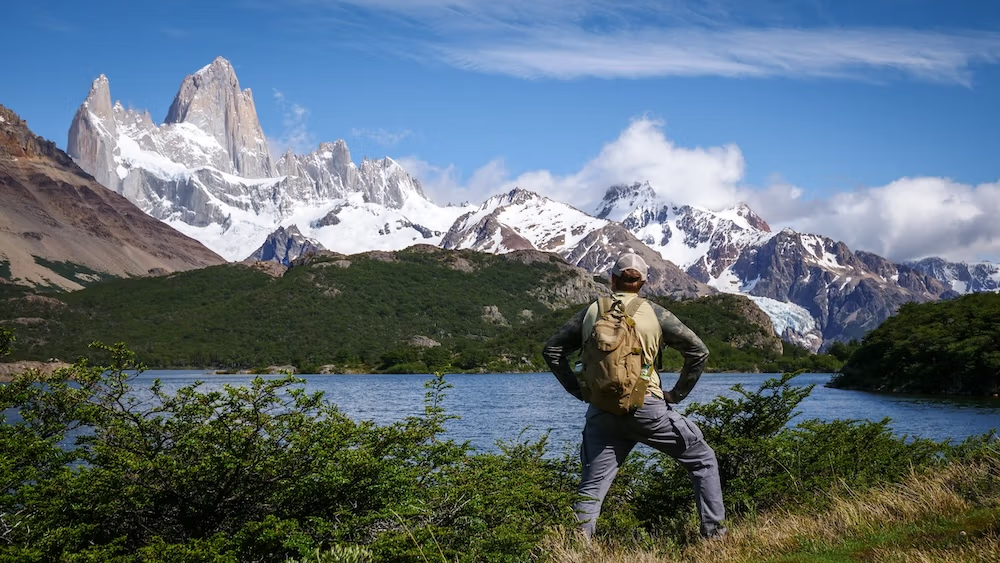
Mount Fitz Roy is so dramatic it feels suspicious. When we first got a proper view, our brains did that thing where they don’t immediately believe what our eyes are reporting.
It’s jagged, sharp, and absurdly photogenic—like a mountain that knows it’s famous. From town, you can see it on clear days, which means you spend a lot of time casually pointing at the skyline like: “Yeah, that? That’s Fitz Roy. No big deal.” Meanwhile your inner monologue is screaming.
We felt this most on the trail to Laguna de los Tres. The views build slowly, teasing you through forests and open stretches until the peaks finally dominate the horizon. At one point we literally said it looked like CGI. There are few travel moments where you feel like you’ve walked into a postcard, and El Chaltén delivers that repeatedly.
And the thing is…Fitz Roy doesn’t just look good. It looks different every hour. In the early light it can feel soft and almost friendly, and then a few minutes later the clouds roll in and it’s suddenly giving villain energy. It’s basically an emotional support mountain and a psychological threat at the same time.
If you’re visiting in summer, the daylight is unfair in the best way, which means you get more “Fitz Roy opportunities” than your camera battery deserves. You can go early, go late, go again, and still have time for dinner and a victory pastry. Fitz Roy is the kind of mountain that rewards persistence—especially if you’re chasing that one clean weather window where everything snaps into focus and you feel like you’ve hacked reality.
| Fitz Roy view | Effort level | Why it’s worth it | Best for |
|---|---|---|---|
| Town viewpoints | Low | Instant “is this real?” moments on clear days | First-timers, photographers, lazy geniuses |
| Laguna Capri | Medium | Classic Fitz Roy framing without going full “final boss” | Casual hikers, families, anyone managing expectations |
| Laguna de los Tres | High | The crown-jewel perspective that makes you forget your own complaints | Fit hikers, determined foodies, suffering connoisseurs |
Practical tip: if Fitz Roy is visible from town in the morning, treat that like a weather blessing. Get moving early. Eat breakfast like a champion. Pack layers. And go.
Reason 2: You can start legendary hikes basically from your doorstep
El Chaltén is the rare place where “we’ll just walk to the trailhead” is not a lie you tell yourself before a long taxi ride.
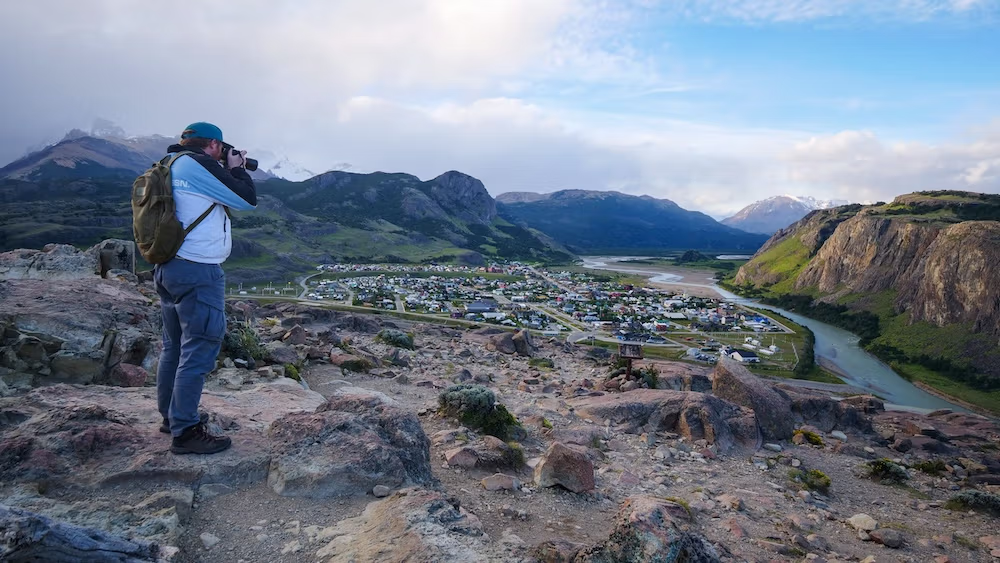
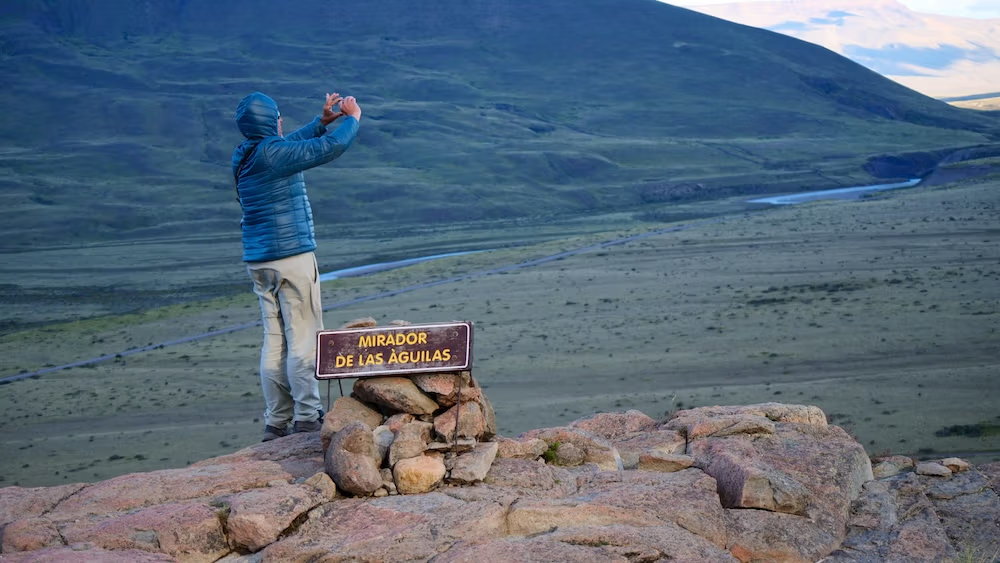
On our first evening, we did the Mirador de los Cóndores hike. It’s short, steep, and perfect for that “we just arrived but we need to see something epic immediately” itch. From the centre of town it took us around 45 minutes to reach the top, and the payoff was huge: views over the colourful town, the valley, and the mountains stacking into the distance like layers of cake.
This is El Chaltén’s superpower. Even if you’re tired, even if it’s late, even if you’re still adjusting to “Patagonia time” where it’s bright at 9:45 p.m., you can sneak in a viewpoint hike and feel like you accomplished something ridiculous.
The convenience changes the whole vibe of your trip. You don’t need a car. You don’t need a guide for the classic day hikes. You don’t need to strategize like you’re planning a moon landing. You just…leave your accommodation, walk a few minutes, and suddenly you’re on a trail with views that would be a national treasure in most countries.
It also means you can stack your days in a way that feels almost illegal. Big hike in the morning, nap in the afternoon, casual stroll in the evening, repeat. El Chaltén is basically “choose your own adventure” except every option ends with a glacier, a jagged peak, or your legs filing a formal complaint.
| When you have… | Do this | What you’ll get |
|---|---|---|
| 60 minutes | Mirador de los Cóndores | Panorama + instant Patagonian smugness |
| 2–3 hours | Riverside walk + town viewpoints | Easy nature fix with minimal knee negotiations |
| Half day | Laguna Capri (or similar) | Fitz Roy framed like a postcard |
| Full day | Laguna de los Tres or Laguna Torre | Legendary scenery + earned meals |
Practical tip: if you only have one day, pair this hike with a longer riverside walk and a good meal. You’ll get a mountain hit without overcommitting.
Reason 3: The trails are so well-marked they make you feel competent
We are not the “we trained for this” crowd. We are the “we wore our hiking shoes and hoped for the best” crowd.
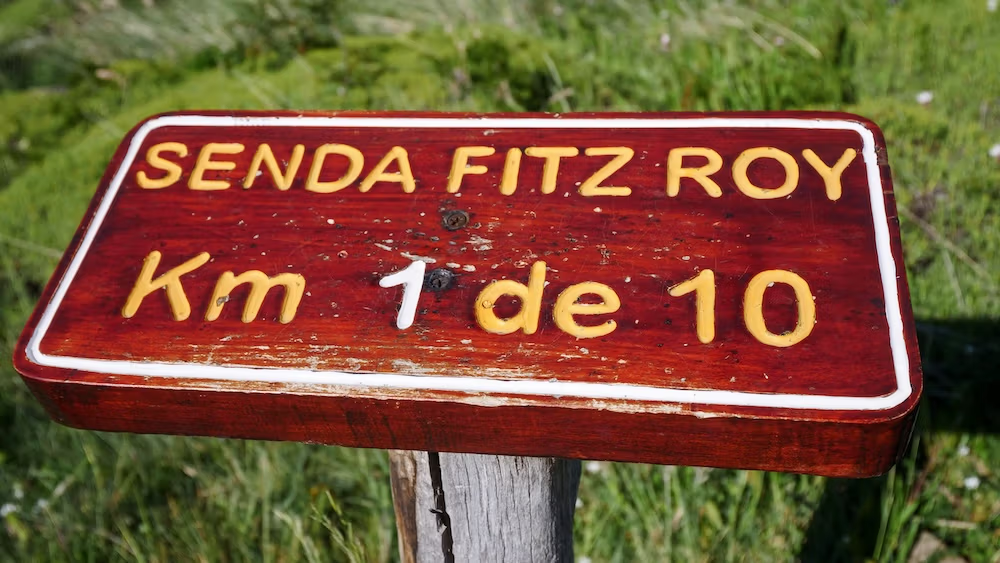
One thing we loved: kilometre markers. You get these little progress updates along key trails, which sounds minor until you’re halfway through a long hike and your brain starts negotiating terms.
Markers do two useful things:
- They keep morale from collapsing because you know you’re making progress.
- They help you make smart decisions—add a side trail if you’re ahead, skip it if you’re struggling.
It also makes El Chaltén feel beginner-friendly without being beginner-only. You can bite off a big day and still manage it sensibly. Or at least you can manage your expectations while you’re slowly turning into a sweaty tomato.
And honestly, the markers become a weird little friendship. You start treating them like tiny milestone therapists: “Okay. Another kilometre. That’s not nothing. I am progressing. I am thriving. I am definitely not thinking about quitting and opening a bakery in town.”
They also help you spot the danger zones in advance. The “hard bits” aren’t mysterious—they’re usually known and consistently placed. Knowing that the brutal section is coming lets you eat, hydrate, and mentally prepare instead of discovering it with the emotional fragility of a damp paper towel.
Practical tip: take a photo of trail signage at the start. It’s helpful later when you’re tired and every fork in the path looks identical.
Reason 4: Laguna de los Tres is a “suffer a little, win a lot” masterpiece
Let’s talk about the Fitz Roy classic: the trek to Laguna de los Tres.
This was our big day. We started with early breakfast, promptly forgot our trail map on the nightstand (world-class professional behaviour), and then wandered north along Avenida San Martín until we found the right signage. Not the most efficient start. Very on-brand.
The early stretch feels manageable. You pass viewpoints, forests, and incredible scenes that already feel like the “main attraction.” We saw condors—three of them—circling above like they were supervising our life choices. We reached Laguna Capri and used the facilities there (not camping ourselves, but deeply respectful of the people who were).
And then we made the decision. Keep going or turn around?
We kept going, because Fitz Roy was calling our name and this was our chance.
The trail stays fairly gentle for a long time. You start thinking: “Maybe we’re actually hikers.” And then you reach the infamous final kilometre—often described as the hardest part—and suddenly you understand why trekking poles exist.
For us, Kilometre 9 was the bottleneck. Rocky. Gravely. Steep. You’re tired by then, and it’s exactly the part where you need to be the most alert. We were exhausted, but encouragement from hikers coming down kept us moving: “Keep going! It’s amazing!”
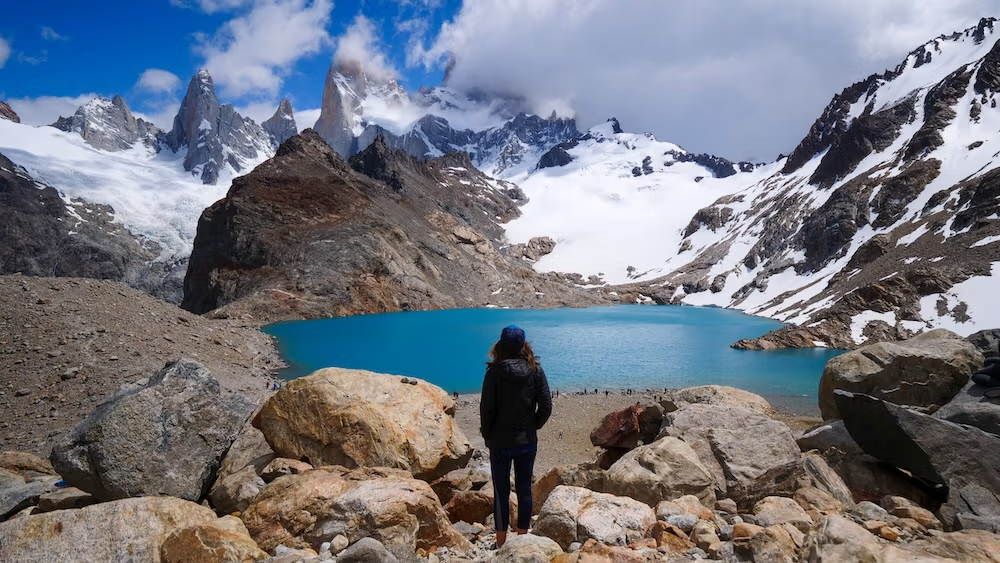
They were not lying. Reaching Laguna de los Tres was worth every grumbly step. Windy beyond belief. Jaw-dropping views. The kind of place where you stop talking and just stare.
The final climb is where your personality gets tested. It’s not just “hard”—it’s that special kind of hard where your brain starts offering you bizarre solutions. At one point we were basically living on one granola bar and a piece of candy, feeling ravenous, and still refusing to turn around because the hype from other hikers was too convincing to ignore.
And when you finally reach the lagoon, the reward is immediate. The water is this unreal turquoise, Fitz Roy is towering above you like it’s trying to win an Oscar, and the wind is blowing with the confidence of a motivational speaker who’s never hiked a day in their life. You’ll feel wrecked and euphoric at the same time. It’s confusing. It’s beautiful. It’s Patagonia.
| Section | What it feels like | What to do | Common mistake |
|---|---|---|---|
| Early trail | “We’re crushing this.” | Set a steady pace, don’t race | Going too fast because you feel invincible |
| Laguna Capri area | “This is already incredible.” | Snack, refill water, decide honestly | Skipping fuel because you’re distracted by views |
| Middle stretch | “Okay this is long.” | Protect energy, keep moving | Taking breaks that are too long and get cold |
| Final kilometre | “Who designed this and why do they hate me?” | Small steps, trekking poles if you have them | Charging uphill without watching footing |
| Lagoon viewpoint | Speechless, windblown joy | Eat immediately, layer up, soak it in | Forgetting the descent still exists |
Practical tip: if you’re not a regular hiker, treat the first portion as intermediate and the last kilometre as “challenge mode.” Start early, pack more snacks than you think you need, and consider trekking poles.
Reason 5: Laguna Torre is epic…without the same level of cruelty
The day after Laguna de los Tres, we walked like we’d aged 40 years overnight. We didn’t leave the room much. We slept like champions and complained like amateurs.
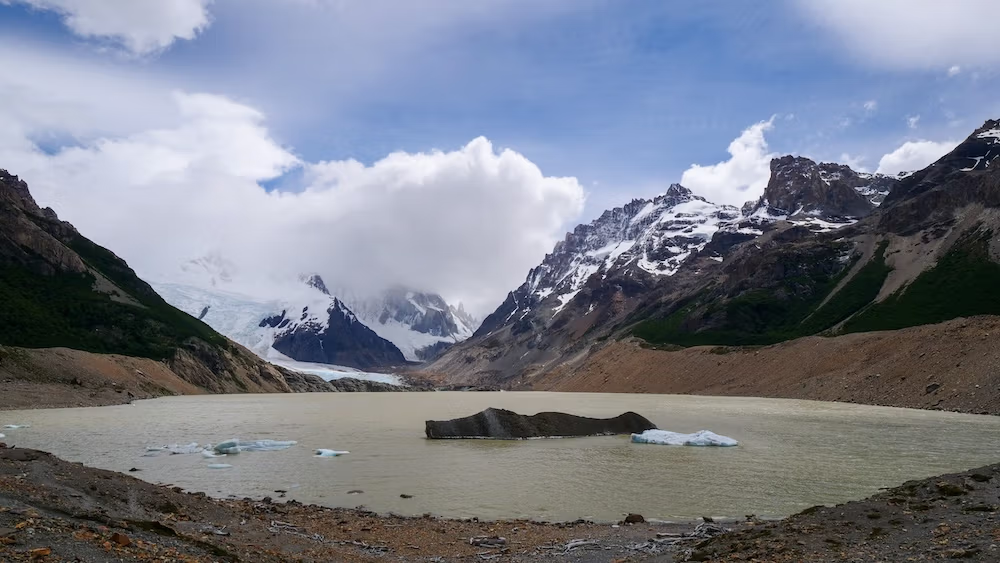
But once we regained the ability to bend our legs, we tackled Laguna Torre—a trail that gives you a full Patagonia experience with slightly less suffering.
It’s a well-known trek that leads to views of Cerro Torre and a lagoon, with forests, rivers, and that classic “hanging glacier on the horizon” motivation that keeps you moving. The first part has more of the elevation gain, and then the route flattens out, which makes it easier to cover distance without feeling like you’re dragging a fridge behind you.
Along the way you’ll pass little highlights and trail junctions that make the hike feel like a story with chapters, not just a single long grind.
This is the hike you do when you want something truly iconic, but you’re not emotionally prepared for the Laguna de los Tres “final boss” section again. You still get that Patagonian drama: glacial views, wide valleys, and that feeling of walking toward a mountain that looks like it belongs on a flag.
| Laguna Torre highlights | Rough point on trail | Why it’s fun |
|---|---|---|
| Margarita Waterfall | Early on | Instant payoff when you’re still fresh |
| Torre Lookout | Not far in | First “okay wow” moment |
| Campground (De Agostini) | Midway-ish | Classic trekking energy, good milestone |
| Laguna Torre | End goal | Big views, glacial vibes, maximum satisfaction |
| If you’re deciding between… | Choose this when… | Expect to feel… |
|---|---|---|
| Laguna de los Tres | You want the most iconic Fitz Roy payoff and you’re ready to suffer a bit | Triumphant + mildly betrayed by your calves |
| Laguna Torre | You want epic scenery with a more consistently moderate vibe | Proud + pleasantly exhausted instead of demolished |
Practical tip: if you’re choosing only one “big hike” and you’re worried about your fitness level, Laguna Torre is a very strong contender. You still get big views, and you’ll likely recover faster.
Reason 6: Patagonian weather keeps things interesting (and slightly unhinged)
El Chaltén would be less dramatic without the weather. Patagonia doesn’t do subtle. It does “sunny, windy, cold, warm, hail, sunny again” in the time it takes you to open a granola bar.
On our travel day into town, the temperatures dropped quickly and the wind reminded us it had a personal brand to maintain. We joked about missing the sunny comfort of northern Argentina, but that’s part of the deal down here. You’re in a landscape that feels alive and a little bit moody.
The good news: you don’t have to fear the weather, you just have to respect it. Dress in layers. Carry a shell. Bring gloves even if it feels silly at breakfast. Pack sun protection because the UV can still be intense when it’s cold and windy. And always leave town prepared like you might get all four seasons in one hike.
Also: the weather is what makes the “good days” feel like winning the lottery. When you wake up and it’s clear, you’ll see hikers moving through town with the urgency of people who just heard there’s free cake somewhere. Because those are your moments. That’s when you go for Fitz Roy. That’s when you stop negotiating and start hiking.
| Layer | What it does | Patagonia reality check |
|---|---|---|
| Base layer | Comfort + sweat management | You’ll heat up fast on climbs |
| Mid layer | Warmth without bulk | Wind makes “mild” feel rude |
| Shell | Wind + rain protection | The wind here is not your friend |
| Hands/head | Temperature control | Gloves can be the difference between joy and misery |
| Sun protection | UV defence | Cold days can still roast you |
Practical tip: plan your hardest hikes for your best forecast window. If the next day looks calm and clear, that’s your “Fitz Roy day.” Don’t waste it on laundry (unless you’re truly heroic).
Reason 7: The town has a frontier vibe that makes everything feel like an adventure
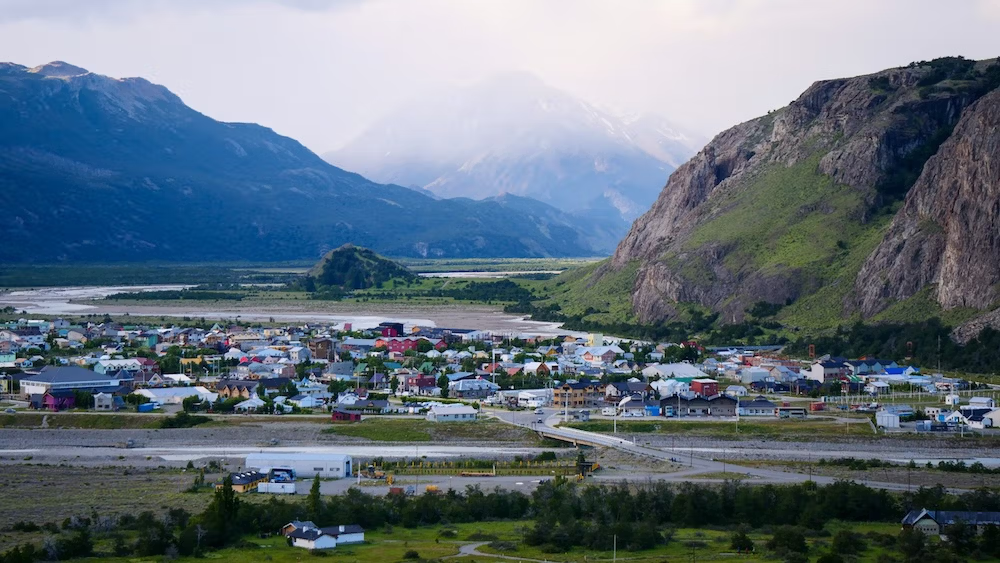
El Chaltén is small, colourful, and surrounded by mountains like it’s been placed there as a joke: “Here’s a village. Now look at that skyline.”
We loved how compact it felt. We could walk from the bus terminal to our accommodation quickly. The streets have that frontier energy—outdoor gear shops, cafés full of hikers, and people comparing blisters like they’re sharing a hobby.
And yes, internet can be limited. Wi-Fi can go down. Mobile data can be spotty. Payments can take longer than you expect. But rather than feeling annoyed, we leaned into it. El Chaltén isn’t asking you to stream. It’s asking you to go outside.
It has this “basecamp community” feel where everyone’s schedule is basically the same: early breakfast, pack snacks, hit the trail, return dusty and windblown, then sit in a café looking at photos like you just came back from war. It’s oddly wholesome. Also slightly feral.
- Morning: quiet town + determined hikers + coffee lineups
- Afternoon: sunburnt people limping to bakeries
- Evening: gear drying everywhere + hikers eating like they’ve been fasting for a year
Practical tip: keep a little cash buffer and a patient attitude, and don’t leave essential bookings to the last second if you’re relying on Wi-Fi to behave.
Reason 8: Food tastes better when you’ve earned it
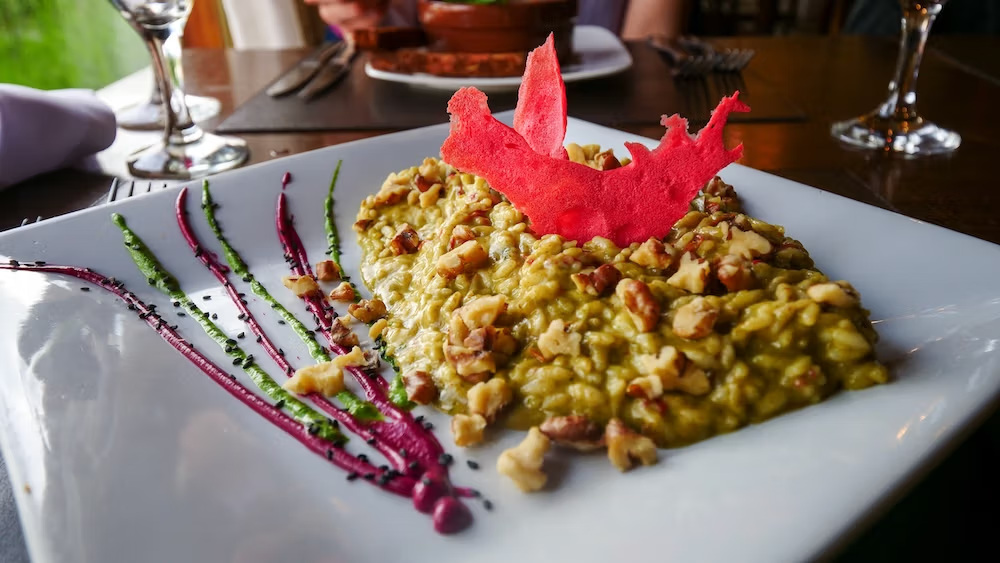
After our big hike day, we discovered a restaurant near the bus terminal called Senderos, tucked inside a boutique-style guesthouse with only a handful of tables. It felt like a secret.
We went full reward mode. I ordered blue cheese risotto with nuts and sun-dried tomatoes. Audrey had lentejas—hearty and exactly what you want after you’ve been pretending to be an athlete. We opened a bottle of Syrah (a break from Malbec) and then did what all responsible hikers do: we ordered two desserts.
There’s something about El Chaltén that turns meals into celebrations. You trek, you suffer, you sweat, you feel heroic, and then you sit down to eat and think: “Yes. This is why humans invented chairs.”
Also, food planning here is part of the strategy. A lot of accommodations offer lunchboxes (you order the night before, grab it in the morning, and suddenly you’re the type of person who has their life together). It’s not the cheapest thing in Argentina, but it’s wildly convenient when you’re out all day and your accommodation doesn’t have a kitchen setup that screams “meal prep.”
Even the simpler food hits. Pizza in town tasted fantastic, even if the grocery selection made us laugh. A dollar per apple? Patagonia, you are bold.
| Post-hike mood | What you think you’ll do | What you actually do |
|---|---|---|
| Feeling heroic | Cook a healthy dinner | Order something glorious and eat it with purpose |
| Feeling destroyed | Go for a light snack | Accidentally eat an entire meal like it’s a sport |
| Feeling cold/windy | Warm drink and bed | Warm drink, dessert, then bed with no regrets |
Practical tip: if you’re travelling on a budget, mix grocery meals with one “proper restaurant night” after your big hikes. Your morale will skyrocket.
Reason 9: It’s a gateway to the bigger Los Glaciares story
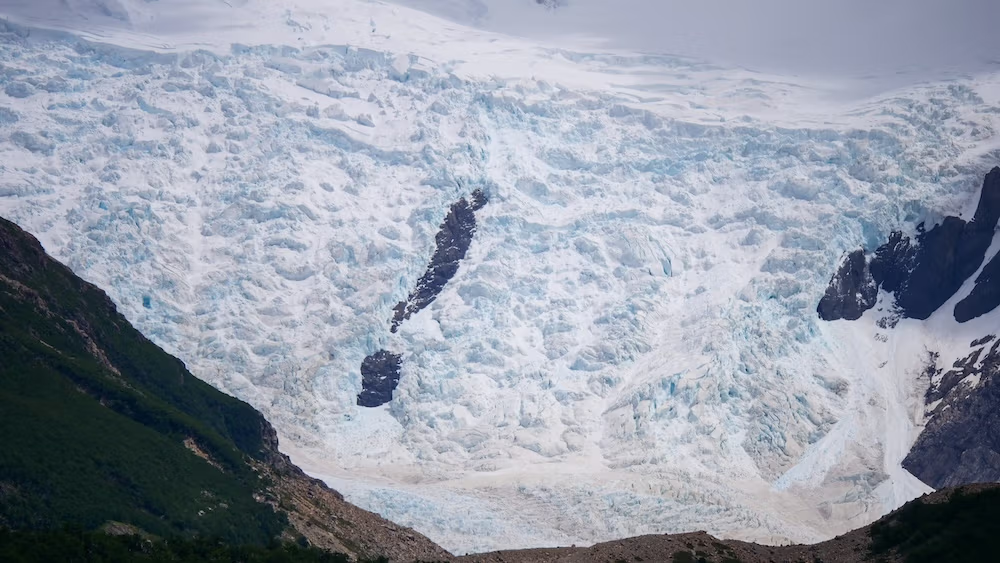
El Chaltén is not just “a town with a few hikes.” It’s a front door into one of the most famous protected landscapes in Argentina: Los Glaciares National Park, a UNESCO World Heritage Site.
That matters because it frames what you’re seeing. These aren’t just pretty mountains. You’re standing at the edge of a massive glacial system and an ecosystem that includes forests, rivers, and wildlife that only exist in this part of the world.
It also means there’s more beyond the headline hikes. If you stay longer, you can look at options like Lago del Desierto (for more remote vibes), additional viewpoints, and longer treks that go deeper into the park.
And that’s the sneaky magic: even if you arrive with a “we’ll just do Fitz Roy and Torre” mindset, El Chaltén keeps offering you more. A side trail here. A mirador there. A lake that wasn’t on your radar. Suddenly you’re building a whole week around weather windows and saying sentences like, “We should probably add a buffer day.” Who are you? A responsible planner now?
| If you have an extra day… | Do this | Why it works |
|---|---|---|
| After a big hike | Easy viewpoints + cafés | Recovery without feeling like you “wasted” a day |
| Bad forecast day | Rest, eat, reset, gear prep | Lets you pounce on the next clear window |
| Weather is stable | Explore beyond the classics | Less crowded, more “we found our own Patagonia” energy |
Practical tip: if you’re staying 6–7 nights, build in at least one “buffer day” to explore beyond Fitz Roy and Torre, or simply to wait out weather. El Chaltén rewards patience.
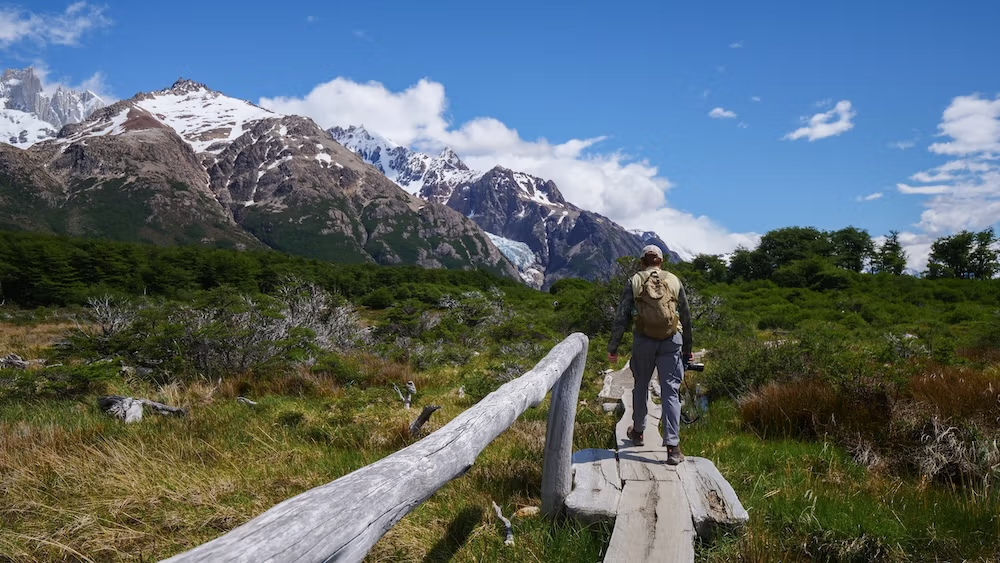
Reason 10: El Chaltén changes you (even if you arrive as a couch potato)
We arrived as foodies. We left as…faux trekkers with stronger legs and a new respect for hills.
That’s one of the best reasons to visit El Chaltén: it gives you an experience that feels bigger than you. You do something hard. You surprise yourself. You stand in front of a mountain that looks unreal and think, “I walked here.”
It’s not about being the fittest person on the trail. It’s about showing up, taking the first step, and then taking the next one…even when you’re tired and you’re fantasizing about being carried out on a sedan chair like royalty.
When we finished Laguna de los Tres and started the long trek back, we were spent. Feet aching. Throbbing. We took breaks out of soreness and joked about emergency airlifts. And then, the next day, we woke up stiff and sore yet weirdly proud.
That soreness is part of the story. Not in a “pain is good” way—more in a “wow, we really did that” way. It’s the physical receipt you didn’t ask for but secretly appreciate. You’ll remember the wind, the turquoise water, the switchbacks, the strangers cheering you on, and the moment the mountains finally reveal themselves like a curtain drop.
| Before El Chaltén | After El Chaltén | Side effects |
|---|---|---|
| “We’ll just do a few easy hikes.” | “We can do one more trail, right?” | Overconfidence (temporary) |
| Normal walking | Staircase negotiation | Funny limp (very real) |
| Casual appetite | Reward-meal ferocity | Dessert becomes non-negotiable |
| “I’m not a hiker.” | “I mean…we did 20 km.” | Identity crisis (in a good way) |
El Chaltén doesn’t just give you photos. It gives you stories you’ll keep telling, because you can’t quite believe you did it.
Sample mini-itineraries
3-day “hit the highlights” plan
| Day | Morning | Afternoon | Evening |
|---|---|---|---|
| 1 | Arrive, settle in, bakery or coffee | Mirador de los Cóndores (sunset) | Early dinner, pack for tomorrow |
| 2 | Laguna de los Tres (early start) | Slow walk back, nap like it’s your job | Reward meal |
| 3 | Laguna Torre (or Capri if you want easier) | Souvenirs and snacks | Bus out / travel onward |
5-day “weather-proof and happier knees” plan
| Day | Plan | Notes |
|---|---|---|
| 1 | Arrive + Mirador de los Cóndores | Easy win, big views |
| 2 | Laguna Torre | Strong medium day |
| 3 | Rest day or short hike (river walk, viewpoints) | Save legs for Fitz Roy |
| 4 | Laguna de los Tres (use your best forecast) | Bring poles if you have them |
| 5 | Extra viewpoint or Lago del Desierto (if conditions allow) | Leave space for weather |
Costs at a glance (ballpark, because Argentina is allergic to stable prices)
| Expense | Typical range | Notes |
|---|---|---|
| Park entry | Daily or multi-day passes | Check official current prices right before you go |
| Bus El Calafate ↔ El Chaltén | Varies by season and company | Book early in peak months |
| Lunchbox | Mid-range | Convenient, especially for early starts |
| Restaurant meal | Mid to higher | Quality is often great; portion sizes help |
| Groceries | Can be surprisingly high | Limited variety; stock up in bigger towns if you can |
| Gear rental | Variable | Available in town for big-hike days |
✨ Ready to lock in your El Chaltén plan?
- 🥾 Browse El Chaltén tours on Viator
- 🏨 Find El Chaltén hotels on Booking.com
- 🚗 Compare El Calafate car rentals on DiscoverCars
- 🚌 Book El Calafate → El Chaltén buses on Busbud
FAQ: El Chaltén travel questions real humans actually ask
Is El Chaltén worth visiting if I’m not a hardcore hiker?
Yes. El Chaltén has hikes for almost every level, including short viewpoints you can do in under an hour. You can build your trip around scenic walks, cafés, and one or two medium hikes and still have an incredible experience.
How many days do we really need in El Chaltén?
Three days can cover the classics if the weather cooperates, but five is the sweet spot. That gives you room for a rest day, a forecast shuffle, and at least two big hikes without turning your legs into sad noodles.
Do we need trekking poles?
Not mandatory, but they’re extremely helpful on steep, loose sections—especially the final climb to Laguna de los Tres and the descent back down. If you have them, bring them. If you don’t, consider renting.
Is the Laguna de los Tres hike “hard” or just “long”?
Both. The distance is significant, but the final steep section is what shocks people. If you’re reasonably fit and start early with snacks and layers, you can do it. If you’re not used to hiking, expect it to feel like a serious challenge.
Is Laguna Torre easier than Laguna de los Tres?
For most people, yes. Laguna Torre is still a long day, but it tends to feel more moderate overall, with big rewards and a less brutal “final boss” climb. It’s a great option if you want epic scenery without maximal suffering.
Do we need to book campsites in advance?
If you plan to camp in popular areas, yes—reservations and limited capacity are now part of the reality in peak season. Don’t assume you can just stroll in and claim a spot.
What’s the food situation like in El Chaltén?
There are good restaurants and cafés, but groceries can be limited and expensive. Many accommodations offer lunchboxes for hikers, which is convenient. Plan your food like you’d plan your layers: with intention.
Is there reliable Wi-Fi and cell service?
It can be spotty. Some cafés have good Wi-Fi, and there may be public Wi-Fi in central areas, but don’t rely on constant connectivity. Download maps offline and keep your key confirmations saved.
What’s the best “first hike” when you arrive?
Mirador de los Cóndores is a perfect first-day hike: short, steep, and ridiculously rewarding. It’s also a great sunset option, especially in summer when daylight lasts forever.
Can we visit El Chaltén year-round?
You can, but conditions vary wildly. Summer is the easiest and most popular. Shoulder seasons can be beautiful but unpredictable. Winter is quieter and can be magical, but trails may require experience, equipment, or guided plans.
Project 23 Argentina: This guide is also available in Spanish. [Lea la versión en castellano: 10 Razones Por Las Que Tenés Que Visitar El Chaltén (¡La Capital del Trekking en Argentina!)]
Further Reading, Sources & Resources
El Chaltén is one of those places where details can change quickly—especially prices, ticketing rules, and camping logistics. These resources are worth checking close to your travel dates.
Official park fees and ticket rules
https://www.argentina.gob.ar/interior/ambiente/parquesnacionales/losglaciares/tarifas
https://www.argentina.gob.ar/parquesnacionales/tarifas
https://ventaweb.apn.gob.ar/
Camping reservations (Zona Norte)
https://amigospnlosglaciares.org/campamentos
Practical explainers (tickets + trail access)
Bus schedules and transport planning
https://elchalten.com/v4/en/busses-to-el-chalten.php
https://elchalten.com/v4/es/transporte-buses-en-el-chalten.php
Background and context
https://whc.unesco.org/en/list/145/
https://www.argentina.gob.ar/interior/ambiente/parquesnacionales/losglaciares
https://elchalten.com/v4/en/los-glaciares-national-park.php
Notes on accuracy
We’ve kept some details flexible on purpose, because Argentina is famous for changing prices and policies at a pace that makes spreadsheets cry. Always verify current fees, bus schedules, and campsite rules just before your trip—especially if you’re travelling in peak season.