
Macau is one of those places that becomes less interesting the moment you reduce it to a nickname.
Call it the “Las Vegas of Asia” and you get the casinos, chandeliers, indoor canals and hotel corridors long enough to qualify as light cardiovascular exercise. You miss the Portuguese pavement. The incense curling out of old temples. Pork chop buns with surprise bones. Egg tarts still warm from the oven. Quiet neighbourhoods where the casino skyline feels like something happening to somebody else.
Audrey and I visited Macau more than once, including an overnight trip and a later day trip from Hong Kong. I had also travelled there alone years earlier. These were not one perfectly choreographed journey involving twenty attractions, ideal weather and a heroic amount of stamina. One visit was hot and humid. Another came with Christmas decorations, suffocating afternoon crowds and rain that appeared despite a forecast promising there was absolutely no chance of rain. The weather forecast lied with tremendous confidence.
Together, those visits gave us a much fuller picture of Macao than a quick shuffle across a casino floor ever could.
This guide combines those firsthand experiences with current planning information for places we did not personally visit. The personal stories remain personal. The researched recommendations remain researched. I am not going to claim that an attraction “left me spellbound” when I was several kilometres away eating jerky.
Macau at a Glance: What Should You Actually Prioritize?
| Your Priority | Start Here | How Much Time | The Catch |
|---|---|---|---|
| Historic Macau | Senado Square, Ruins of St. Paul’s, Mount Fortress and the Macao Museum | Half to one full day | The central route becomes extremely crowded later in the day |
| Macanese food | Taipa Village, Rua do Cunha and the streets between Senado Square and St. Paul’s | At least one long meal period | Continuous snacking may assassinate your respectable dinner plans |
| Casino spectacle | Venetian, Parisian and the wider Cotai resort district | Two to four hours, longer with a show | Distances inside the complexes are much more tiring than they look |
| A quieter Macau | Taipa Houses, Coloane Village, Hac Sa and Cheoc Van | Half to one full day | Less efficient for a frantic first-time day trip |
| A Hong Kong day trip | Historic centre first, Taipa for food and Cotai after dark | A very long day | Immigration and transport quietly eat your sightseeing hours |
| An overnight stay | Peninsula for heritage or Cotai for resorts | One or two nights | Accommodation is often the expense that punches hardest |
My blunt recommendation: Macau works as a day trip, and we proved that by cramming an unreasonable amount into one. One night is better. Two days gives the city enough breathing room to stop behaving like a checklist.
Quick Macau Booking Links
These are the booking decisions that genuinely affect a Macau trip. I have kept the links restrained because nobody needs an affiliate link attached to every custard tart.
| What You Need | Best For | Booking Link |
|---|---|---|
| All Macau accommodation | Comparing the peninsula, Taipa, Cotai and Coloane together | Compare Macau hotels on Booking.com |
| Taipa hotels | Food, atmosphere and a useful middle ground between old Macau and Cotai | Browse Taipa hotels on Booking.com |
| Cotai resorts | Shows, pools, shopping and the full casino-resort bubble | Compare Cotai resorts on Booking.com |
| Coloane stays | Beaches, greenery and quieter mornings | See Coloane accommodation on Booking.com |
| Macau tours and tickets | Walking tours, day trips, shows, gondolas and tower activities | Browse Macau tours on GetYourGuide |
| Guided day trip from Hong Kong | Travellers who would rather outsource the ferry, lunch and sightseeing logistics | Check the guided Macau day trip from Hong Kong |
20 Best Things to Do in Macau
The attractions below are grouped geographically rather than ranked using fake scientific precision. A Chinese temple and an indoor gondola ride are not competing for the same trophy. Macau makes more sense when you group nearby places and let each part of the day show you a different city.
Historic Macau Peninsula
1) Begin at Senado Square
Feeling well rested after going to bed several hours earlier than normal, we felt a jolt of adrenaline about exploring the historic areas of Macau away from the hotel district where we were staying.
Fortunately, our hotel offered a “free” transfer service from Cotai to the Macau Peninsula. Free deserves quotation marks. Casino shuttles are not charitable public transportation operated by kindly billionaires. They are designed to move potential customers toward enormous buildings filled with gambling tables. Still, a free seat is a free seat, and we were not too proud to occupy it.
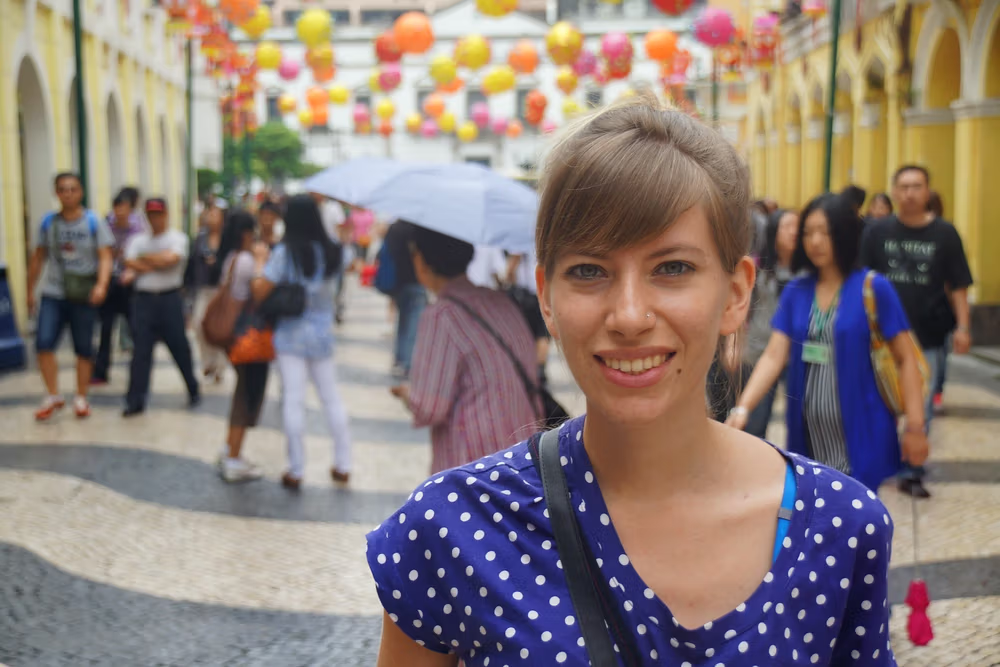
We went from an area dominated by luxury casinos to a historic quarter filled with Portuguese-inspired architecture, cobbled walkways and a considerable quantity of humanity.
As soon as we stepped off the transfer bus, Audrey marvelled, “I feel as though I’m back visiting more relatives in Brazil or wandering around in Portugal.”

Senado Square—Largo do Senado in Portuguese and 議事亭前地 in Chinese—was the first place we explored. Pastel buildings, red lanterns and the distinctive black-and-white Portuguese pavement made it feel like an ongoing conversation between East and West rather than a preserved European stage set.
For centuries, the square functioned as Macau’s civic centre. Today it is one of the public spaces within the UNESCO-listed Historic Centre of Macao, a collection of 22 principal buildings and spaces preserving the physical evidence of the long encounter between China and Portugal.
As a street photographer, this was catnip. I could people-watch, photograph candid moments and chase visual collisions between Portuguese façades and Chinese signs. One detail we noticed immediately was the bilingual signage in Chinese and Portuguese. Macau has been a Special Administrative Region of China since 1999, but its Portuguese inheritance is not locked inside a museum. It remains visible in street names, paving, churches, civic buildings and food.
When to go: early. Especially if photography matters. On our later day trip, we reached the historic core in the afternoon and encountered crowds so dense that movement occasionally stopped altogether. That was not a gentle stroll. It was a human traffic jam with egg tarts.
Travellers who want context rather than simply following the crowd uphill can also compare this guided Macau walking tour from the ruins to Cotai.
2) Walk the Historic Centre Instead of Treating It as a Hallway
Senado Square is the gateway, not the entire historic centre. Continue through the pedestrian lanes toward St. Dominic’s Church, Lou Kau Mansion, the Holy House of Mercy, small temples and old commercial streets.
The value comes from the transitions. A yellow Catholic church, a Chinese shop sign, a tiled civic building, incense smoke, hanging laundry and a luxury jewellery store can all appear within several minutes. Macau does not separate its contradictions neatly for visitors. Good.
This is also where many first-time visitors make a planning mistake. They search for the shortest route to the Ruins of St. Paul’s and accidentally turn the neighbourhood into a corridor. Allow yourself to take side streets, particularly in the morning when deliveries, breakfasts and ordinary local life have not yet been completely flattened beneath sightseeing traffic.
The central UNESCO route is compact, but stone paving, slopes and crowds make it slower than the map suggests. Comfortable shoes matter. So does accepting that polished stone and tropical rain are natural enemies of dignity.
3) Turn the Walk into a Macanese Street-Food Crawl
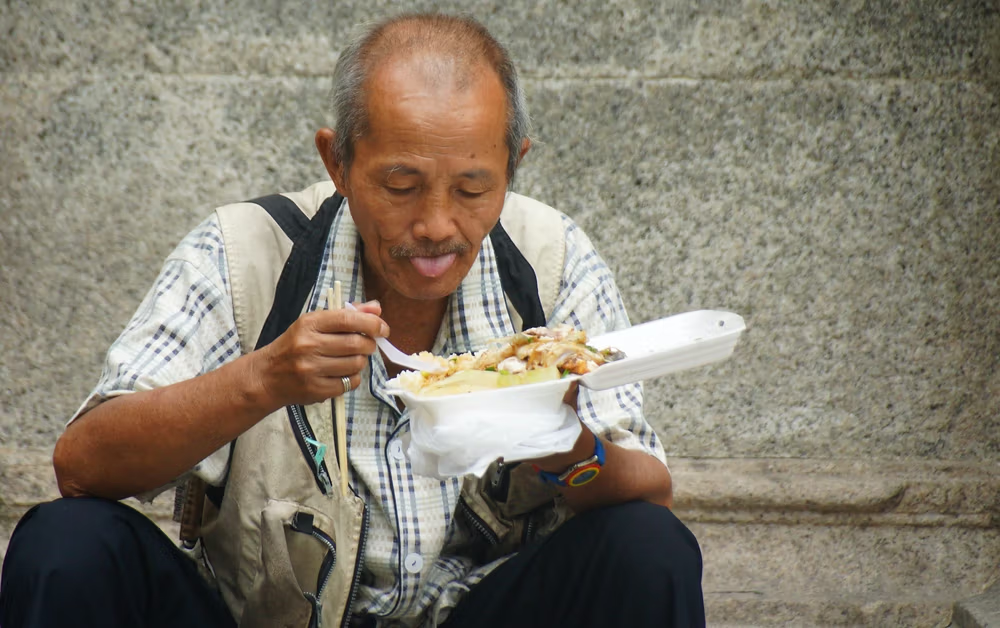
As we walked beyond the main square and branched into narrower lanes, we were inundated by the smells of Macanese snacks being sold from bakeries, shops and street-facing counters. Some of the foods we sampled across our visits included egg tarts, almond cookies, pork chop buns, sweet pork jerky, milk tea, bubble tea and several frozen desserts.
Macanese cuisine grew from centuries of movement between southern China, Portugal and Portuguese trading routes through Africa and Asia. That history is why the food can combine Chinese cooking methods with Portuguese ingredients, spices associated with former maritime networks and local adaptations that belong specifically to Macau.
Do not reduce the entire cuisine to one egg tart. The tart deserves its fame. Absolutely. But a proper food crawl should include at least one savoury item, one bakery snack and one thing you cannot confidently identify without pointing and smiling.
4) Climb to the Ruins of St. Paul’s
After taking the time to gormandize on Macanese treats, we continued our ascent toward the imposing Ruins of St. Paul’s—Ruínas de São Paulo in Portuguese and 大三巴牌坊 in Chinese.
Before climbing the stairs, we treated ourselves to a refreshing pearl milk tea. The heat and humidity of Macau in late August were on par with the weather we had been experiencing across Southeast Asia for several months.
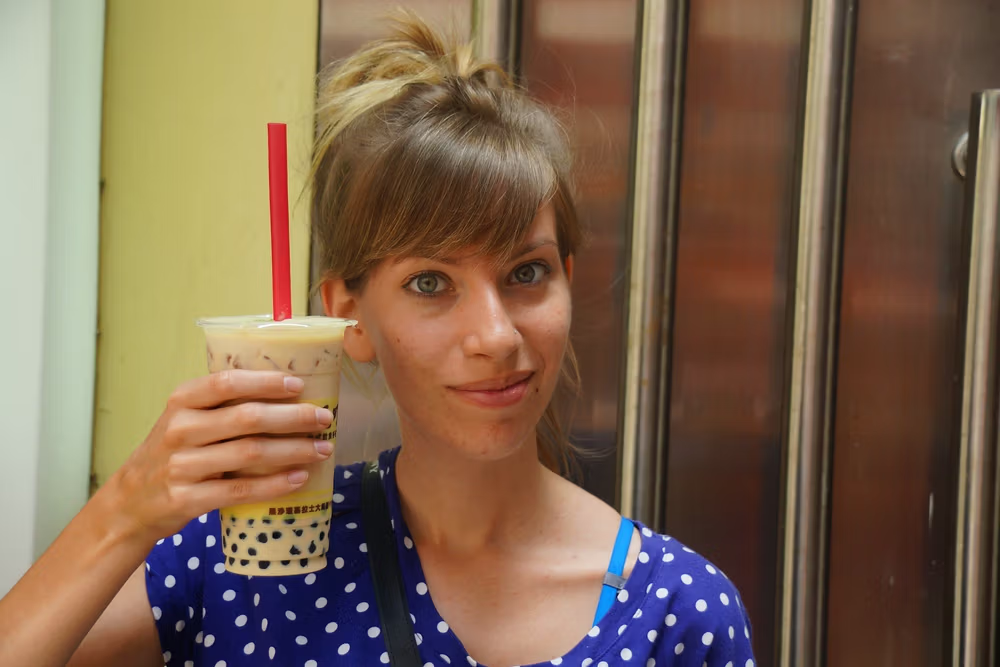
This was distinctly different from the time I first visited in February 2008, when I could walk for kilometres without breaking into the sort of sweat that makes a person question every fabric choice made that morning.
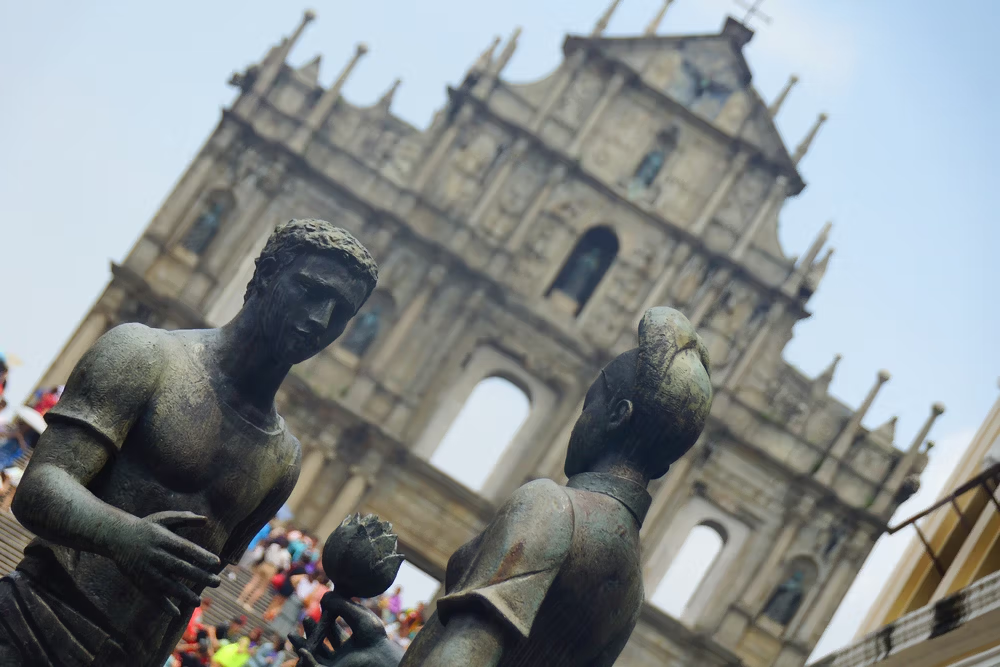
The surviving façade belonged to the Church of Mater Dei, built between 1602 and 1640 beside St. Paul’s College. A fire in 1835 destroyed most of the complex, leaving the carved stone front, broad staircase and archaeological remains that now form Macau’s most recognizable landmark.
Look closely rather than taking one photograph and fleeing. The façade blends Christian imagery, European architectural language, Chinese characters and Asian decorative motifs. Behind it, the Museum of Sacred Art and Crypt adds context to a place that otherwise risks becoming one extremely elaborate background for group selfies.
Crowd strategy: morning is the obvious answer. Late afternoon can be beautiful, but on our day trip the approach was so congested that we were barely moving. Heat, stairs and thousands of bodies form a miserable little cocktail.
5) Continue to Mount Fortress
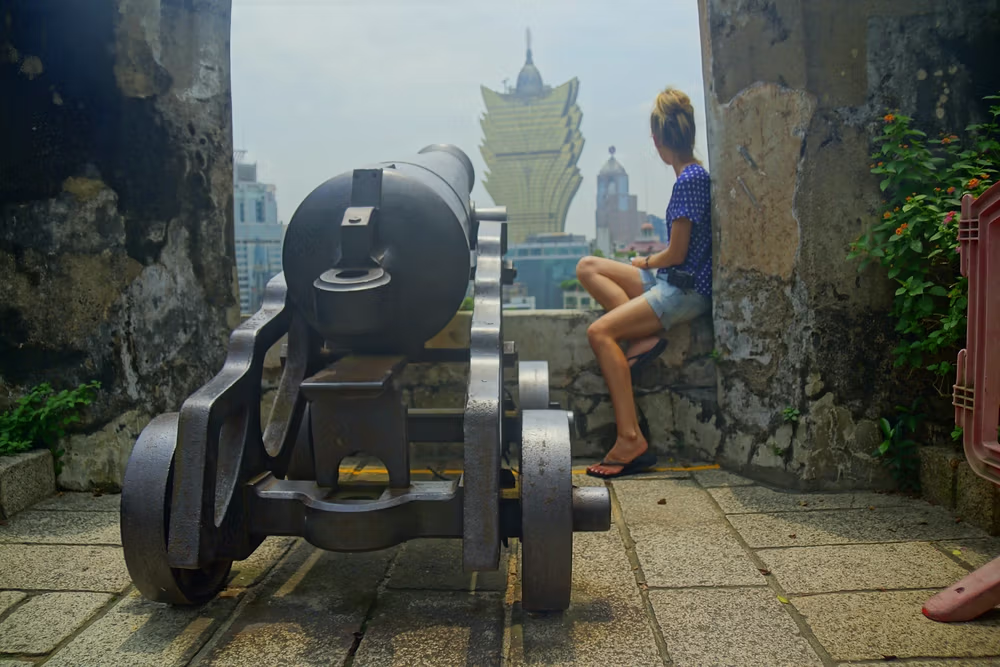
Finally, we legged it up to Mount Fortress—Fortaleza do Monte in Portuguese and 大炮台 in Chinese—for broad views over the peninsula.
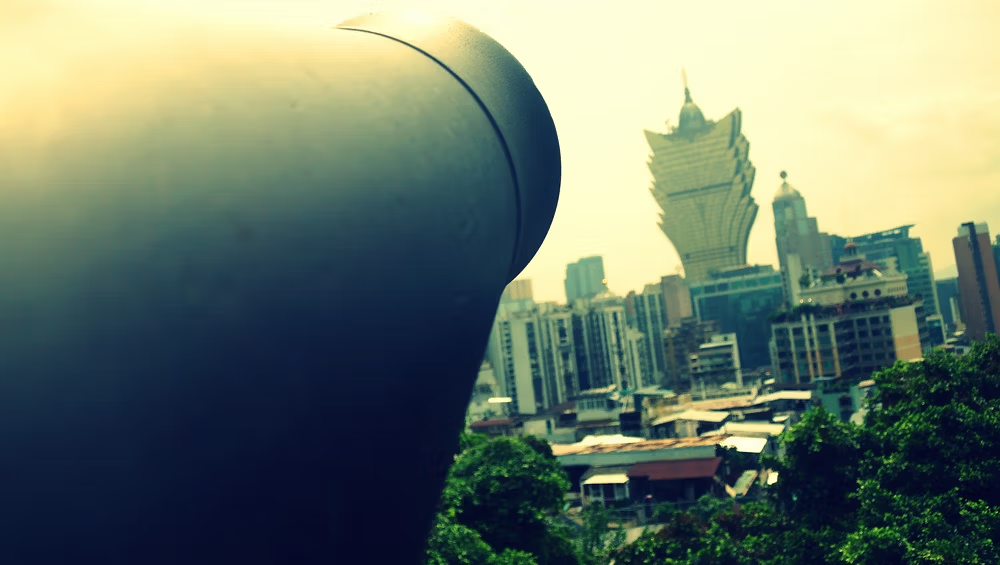
Constructed in the early seventeenth century as part of the Jesuit complex, the fortress became Macau’s principal military defence. Cannons remain around the walls, and several appear to point directly toward monumental casino towers, including the Grand Lisboa.
History and gambling capital glaring at one another across the skyline. Very Macau.
Overall, our late-morning and early-afternoon excursion offered a fascinating glimpse into Macau’s past, with hints of modernity and ridiculous wealth flashing in every direction from the top of the fortress.
The most direct pedestrian route involves climbing, but the Mount Fortress Corridor uses escalators and lifts to remove part of the punishment. It does not magically make the entire heritage district step-free, but it can save useful energy for travellers who find slopes difficult—or anyone whose thighs have begun filing formal complaints.
6) Visit the Macao Museum Beneath the Fortress
The Macao Museum occupies the fortress and explains the city’s development through trade, religion, domestic life, festivals, crafts and the long interaction between Chinese and Portuguese communities. It is the obvious indoor partner to the outdoor heritage walk.
On our later day trip, we arrived to find an exhibition area closed. That is the sort of normal disappointment that rarely appears in immaculate itineraries. Museums renovate. Galleries close. Weather turns. Your stomach suddenly becomes more interested in almond cookies than military history.
Check the current schedule before making the museum the immovable centrepiece of a short visit. It normally closes on Mondays.
Even when museum timing fails, the fortress terrace remains worthwhile. In our case, we had also been caught by rain after a forecast that had cheerfully assigned the day a zero-percent chance of precipitation. Macau had apparently not reviewed the forecast.
7) See A-Ma Temple and the Barra District
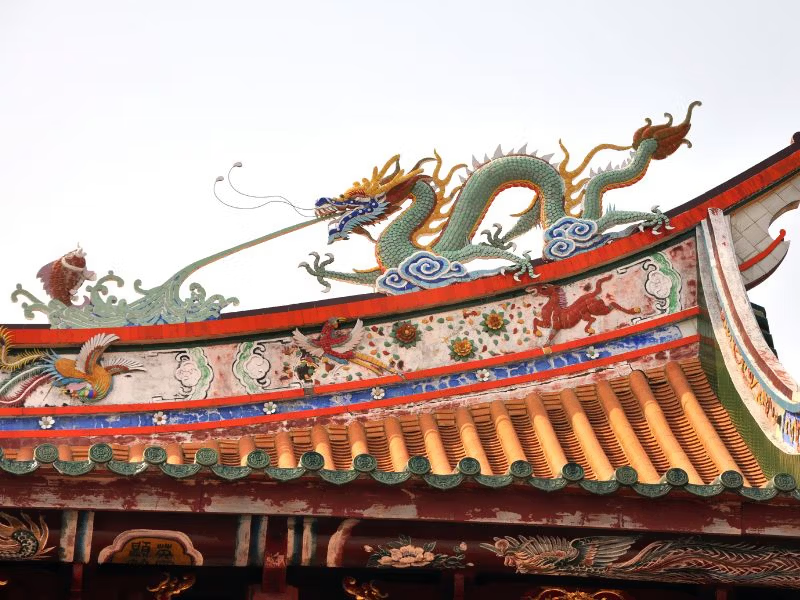
A-Ma Temple predates the city that grew around it. Its pavilions honour different deities and traditions, bringing together elements associated with Confucianism, Taoism, Buddhism and Chinese folk belief. The complex climbs against the rock above Barra Square, with incense, inscriptions, stone steps and layered roofs creating a setting completely different from the Catholic monuments farther north.
This is researched planning guidance rather than a claim that Audrey and I included the temple in the day trip shown in our video. We did not. It remains one of the strongest additions for travellers who want Macau’s Chinese religious history to receive equal weight beside the Portuguese churches.
Pair it with the Maritime Museum, Barra waterfront and the beginning of a heritage walk through the southern peninsula. The temple generally opens earlier than many museums, making it useful at the start of a full day.
Travellers who prefer having the history explained instead of silently reading plaques can check this private Macau heritage tour beginning at A-Ma Temple.
8) Walk from Mandarin’s House to Lilau Square and St. Lawrence’s Church
Mandarin’s House is one of the best places to examine Macau’s cultural mixture at domestic scale rather than through a monumental church or casino. Built before 1869, the traditional courtyard compound was the home of reformist thinker Zheng Guanying. Chinese spatial planning and timber work sit beside arched ornamentation, mother-of-pearl panels and Western-influenced decorative details.
It was Zheng Guanying’s residence, not his birthplace, despite that mistake floating around in more than a few travel summaries. It was also a place associated with his writing. Admission is free, and the house normally closes on Wednesdays.
From there, continue through Lilau Square toward St. Lawrence’s Church. This southern heritage route is less compressed than the Senado-to-St. Paul’s conveyor belt and rewards travellers willing to spend time with Macau’s old residential fabric instead of sprinting between famous photo backgrounds.
9) Hike or Ride Up to Guia Fortress
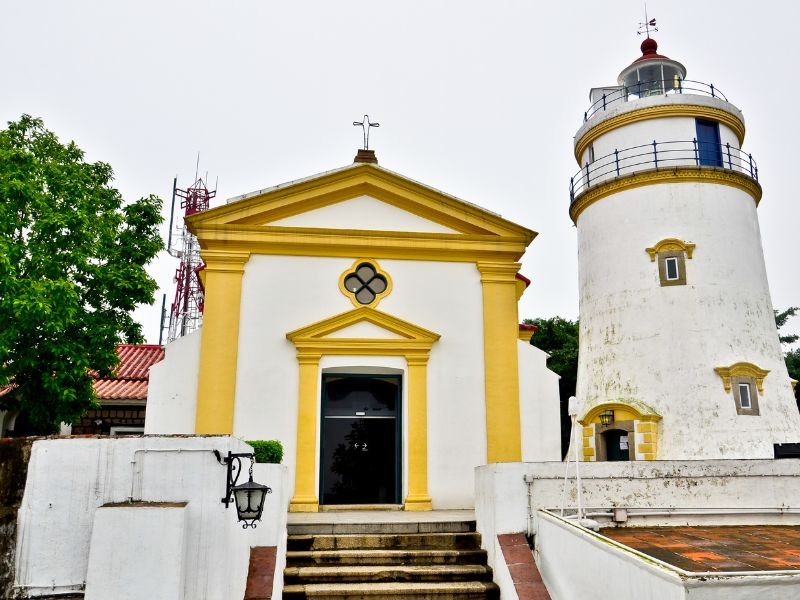
Guia Fortress occupies the peninsula’s highest hill and combines military, religious and maritime history in one compact complex. The fortress was built between 1622 and 1638. Guia Chapel contains frescoes mixing Western and Chinese themes, while the lighthouse dates to 1865 and is described by the tourism office as the first modern lighthouse on the Chinese coast.
The lighthouse itself is not open to the public, so do not arrive mentally prepared for a triumphant climb to the top. The reward is the hilltop setting, walking paths and city views. Photography is prohibited inside the chapel, another useful detail for those of us whose natural response to an interesting interior is to start fumbling with camera settings.
Guia works best for travellers with two days, repeat visitors or anyone who prefers a quieter viewpoint to the crush around St. Paul’s. Check current access details before depending on the small cable car or any particular route.
10) Slow Down in Camões Garden
Camões Garden is one of the peninsula’s oldest public green spaces and contains a grotto with a bust of Portuguese poet Luís de Camões. Tradition connects him with Macau and claims he worked on parts of Os Lusíadas here, although the precise details belong more to literary legend than courtroom-grade fact.
The stronger reason to visit is simpler. It is a real city park where residents exercise, socialize, walk birds and claim benches beneath mature trees. After churches, stairs and crowds, a place asking absolutely nothing of you can feel luxurious.
11) Walk the Kun Iam Waterfront
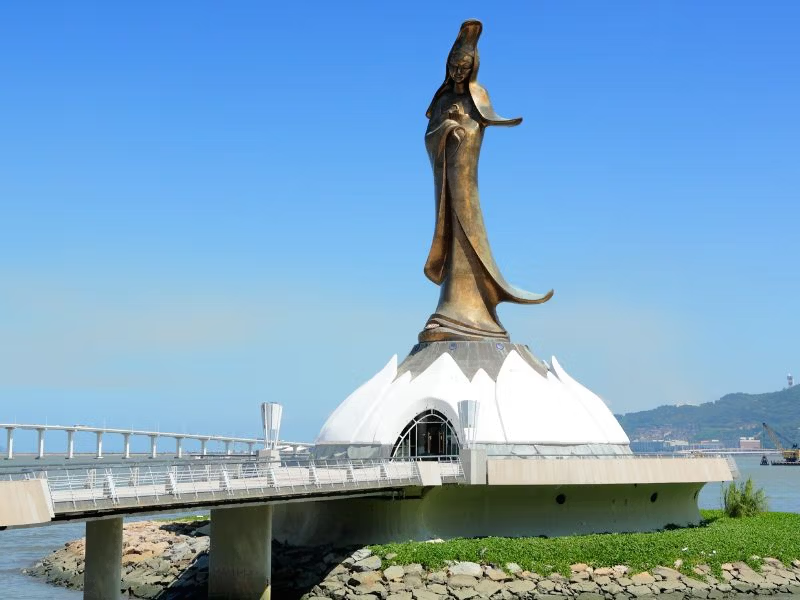
The contemporary Kun Iam statue stands on the NAPE waterfront above an ecumenical centre devoted to the Buddhist figure associated with mercy and compassion. The modern bronze monument belongs to a very different Macau from the cramped historic lanes, but the open water, breezes and promenade provide a useful pause between attractions.
Treat it as part of a waterfront walk rather than a place requiring half your day. Combine it with the Macao Cultural Centre, Macao Museum of Art or Science Center depending on your interests and tolerance for museums by that stage of the trip.
12) Choose a Specialist Museum Instead of Collecting Them All
Macau’s museum scene is broader than the standard churches-and-casinos itinerary suggests.
- Macao Grand Prix Museum: a modern four-floor museum devoted to the street race held since 1954, with historic cars, motorcycles, circuit interpretation and interactive exhibits. It normally closes on Tuesdays.
- Maritime Museum: the natural companion to A-Ma Temple, covering fishing communities, navigation, trading routes and Macau’s relationship with the sea.
- Macao Science Center: the strongest family-oriented indoor option, with interactive exhibitions and a planetarium inside the distinctive waterfront building.
Select according to interest. Do not try to defeat every museum in one day. A museum does not improve because you enter it already resentful that it has delayed your next museum.
Taipa and Cotai: Food Streets Beside Mega-Resorts
13) Visit the Taipa Houses

On our day trip, the Taipa Houses gave us the quietest part of the itinerary. The pastel-green Portuguese residences were built in 1921 and later converted into museum and exhibition spaces exploring Macanese life, cultural exchange and the development of the Cotai area.
What I remember most strongly is the change in pace. After marching through enormous casino complexes, the waterfront path and low buildings felt genuinely peaceful.
Apparently Samuel of the giant buffet and Samuel of the quiet museum garden are the same person. The second version was happier here.
The houses normally offer free admission and close on Mondays. Even when you do not enter every exhibition, the grounds work beautifully as a bridge between Taipa Village and Cotai.
For travellers who want to stay close to the food streets without sleeping inside the full resort machine, compare current Taipa hotel availability on Booking.com.
14) Eat Your Way Through Taipa Village and Rua do Cunha
Taipa Village was the discovery of our later visit. I had been to Macau before but had not explored this part of it, and the combination of colourful lanes, temples, bakeries and snack counters immediately felt more manageable than the resort interiors nearby.
Rua do Cunha is the famous food street, but do not stop at its most congested section. Wander the surrounding lanes, where old shop houses and small temples create the atmosphere that the central strip occasionally loses beneath souvenir traffic and people photographing themselves eating the same tart.
This is where we tried several foods featured later in this guide, including a pork chop bun, egg tart, sweet jerky, almond cookies and drinks.
It is easy to construct lunch by accumulation. One snack becomes three. Three become six. Dinner becomes a theoretical concept.
15) Experience the Venetian and the Cotai Resort Spectacle
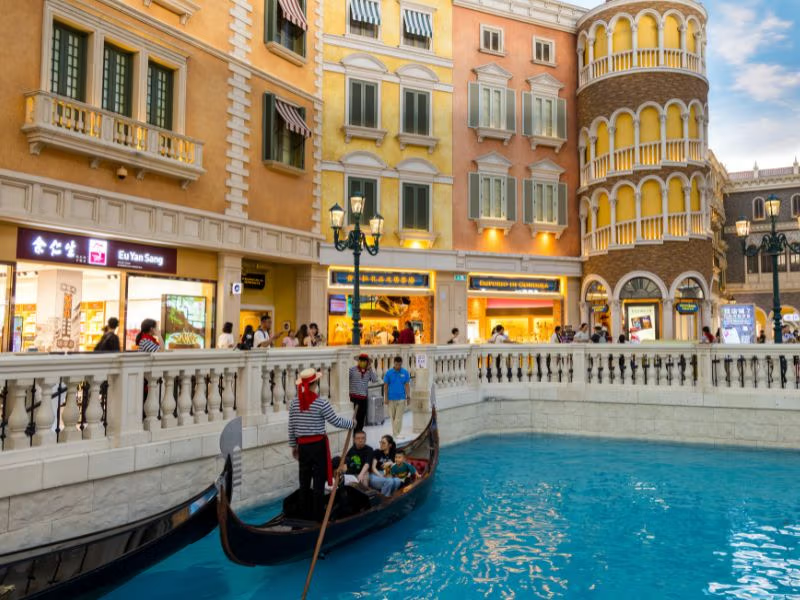
The Venetian Macao is not subtle. Subtlety would be a design failure.
Inside are canals, gondolas, painted skies, luxury shops, restaurants and a casino complex large enough to recalibrate your understanding of indoor distance. We began our Hong Kong day trip here after taking a complimentary shuttle from the ferry terminal.
The original plan was to continue toward the Parisian. We spent roughly fifteen or twenty minutes trying to navigate the interior and learned that “next door” in Cotai can involve escalators, shopping corridors, pedestrian bridges and a minor loss of identity.
The spectacle is worth seeing even if you do not gamble. Walk through one or two major properties, absorb the ridiculous scale, and leave before the artificial sky persuades you that time no longer exists.
Cotai is most impressive after dark, when the illuminated facades finally deliver the theatrical effect the whole district was built to produce.
Travellers who genuinely want the canal experience can check Venetian-style gondola ride availability on GetYourGuide. We watched the gondolas but did not ride one, so I will leave the serenading to the professionals.
16) See the Revived House of Dancing Water
House of Dancing Water returned in a refreshed production at City of Dreams after a long closure. The show combines a transformable pool, aerial performance, diving, acrobatics and stage technology inside a purpose-built theatre.
Audrey and I did not attend it. This is therefore not one of those travel-blog passages where I mysteriously become “mesmerized” by a show I never saw. It is a current ticketed option for travellers who want a major evening production and a reason to remain on Cotai after sightseeing.
The show fits an overnight itinerary much better than a compressed Hong Kong day trip. Combining an evening performance with immigration and the final convenient return connection can turn leisure into a hostage situation involving timetables.
Check current House of Dancing Water tickets on GetYourGuide.
17) Decide How Brave—or Unwell—You Feel at Macau Tower

Macau Tower rises 338 metres above the city and offers observation decks, restaurants and several high-altitude activities. On a clear day, the views extend across Macau and the Pearl River Delta.
We did not visit the tower. We also did not bungee jump from it because Audrey and I share a strong, loving and mutually supportive conviction that heights are best admired from below.
Travellers with a more experimental relationship to gravity can consider the bungee, Skywalk, Skyjump or Tower Climb. Everyone else can visit the observation deck and preserve a more conventional relationship with the floor.
Check visibility before paying primarily for the panorama. Humidity, haze and rain can transform an expensive skyline view into an advanced study of grey.
Check Macau Tower observation-deck tickets on GetYourGuide.
Coloane and Macau’s Slower South
18) Wander Coloane Village and Stop for an Egg Tart
Coloane Village offers the cleanest contrast with Cotai’s manufactured grandeur. Its lanes, small square, waterfront, temples, church and dried-seafood shops belong to Macau’s older fishing-village history rather than its casino economy.
Lord Stow’s Bakery began in Coloane and helped popularize the Macanese version of the Portuguese egg tart. We ate Lord Stow’s tarts at a Taipa branch rather than pretending we made a sacred pilgrimage to the original bakery. The original remains a natural stop for travellers who reach the village.
Allow time to walk the waterfront and side streets instead of treating Coloane as a pastry transaction. It works best when paired with a beach, park or long lunch.
Travellers who want this quieter version of Macau can compare Coloane hotels and beachside stays on Booking.com.
19) Get Some Sea Air at Hac Sa or Cheoc Van Beach
Hac Sa is Macau’s largest beach and is known for the dark mineral sand that gave it the name “Black Sand.” Shoreline protection and replenishment have changed the visual effect in parts of the beach, so visitors expecting an untouched kilometre of jet-black sand may feel somewhat oversold.
Cheoc Van is smaller and sits in a more enclosed bay. Neither should be confused with a remote tropical island escape. Both offer open space, coastal air and a reason to experience Macau’s greener side.
Check water-quality notices, weather and current facility status before planning a swimming day. For many visitors, the real value is not the beach alone. It is the transition from casino towers and traffic to wooded hills, village streets and the edge of the South China Sea.
20) Choose One Final Stop Instead of Forcing a Twentieth “Must-See”
The twentieth attraction should not exist merely because the headline promised twenty. Choose according to your route and interests:
- Macau Fisherman’s Wharf: a large themed waterfront complex close to the Outer Harbour Ferry Terminal. Admission is free, and its location makes it an easy final walk before a ferry. I would call it convenient rather than essential.
- Macao Giant Panda Pavilion: a family-oriented option in Seac Pai Van Park that combines naturally with Coloane rather than the historic peninsula.
- A local neighbourhood walk: St. Lazarus, Three Lamps, Red Market or streets beyond the main tourist corridor may provide more actual Macau than another manufactured attraction. This is the option I increasingly favour once the headline sights start feeling like a queue-management exercise.
What to Eat in Macau: Our Macanese Taste Test
Food was not a decorative extra on our Macau trips. It was one of the main reasons we kept moving.
A street-food crawl also solves a practical problem. Formal meals take time. Snacks allow you to continue sightseeing with one hand while creating minor stains on your clothing with the other.
Portuguese Egg Tarts
The Macanese egg tart has a flaky pastry shell, creamy custard centre and caramelized top. Audrey and I had eaten pastéis de nata in Lisbon and Belém, which made comparison unavoidable.
The Macau version we tried was beautifully flaky and rich, with a looser custard texture than some Hong Kong-style tarts. Eat one warm. Then decide whether serious culinary research requires a second.
Pork Chop Bun
Our pork chop bun was simple, juicy, greasy and delicious. It also contained a bone that I nearly attacked with my teeth before realizing the bun had concealed a small dental ambush.
Bite carefully. Emergency dentistry is an unnecessarily expensive form of cultural immersion.
Sweet Pork Jerky
Macau’s sweet jerky was softer than the dry, leathery version I expected. The glaze reminded us of maple or molasses on ham: savoury, sweet and dangerously easy to sample while walking. Shops commonly offer different meats and spice levels.
Almond Cookies
The almond cookies were tasty, powdery and almost chalky in texture. “Dry” is not necessarily criticism here. It is the entire operating model.
Keep tea nearby unless you enjoy the sensation of your mouth becoming an archaeological site.
Milk Tea and Taro Bubble Tea
We initially mistook one milk tea for bubble tea and discovered the difference only after searching for pearls that did not exist.
Later, we tried purple taro bubble tea. Its flavour reminded us of sweet cereal milk with a faint potato-like quality. That sounds worse than it tasted. Considerably worse, actually.
Chocolate Pudding in an Eggshell
Audrey ordered a small chocolate pudding served inside an eggshell. She enjoyed it.
I declined because I do not particularly like eggs, which was not an entirely rational objection to chocolate pudding but was apparently the hill I had chosen to die on that afternoon.
Coconut and Durian Ice Cream
The handmade coconut ice cream contained coconut shreds and tasted lighter and more sorbet-like than a heavy dairy dessert. It was ideal in the heat.
Durian ice cream divided us along a familiar household border. Audrey genuinely likes durian. I prefer it to remain in a separate postal code.
Beyond street snacks, look for minchi, African chicken, Portuguese-style seafood rice and other dishes associated with Macanese home cooking. Those require a proper sit-down meal, which is one of the best arguments for staying overnight rather than trying to experience an entire cuisine through bakery windows.
Our Macau Day Trip from Hong Kong: What Worked and What Went Sideways
We left Hong Kong at seven in the morning, carrying our passports and the fragile optimism of people who had eaten a hurried McDonald’s breakfast before boarding a ferry.
Audrey felt queasy while the vessel rocked at the terminal. I was less troubled, mostly because I slept through much of the crossing. This is not evidence of superior sea legs. It is evidence that I can fall asleep under suspicious circumstances.
After immigration, we used a complimentary resort shuttle to reach the Venetian. From there we explored Cotai, escaped toward the quieter Taipa Houses, conducted an extended street-food taste test in Taipa Village, continued to Senado Square and the Ruins of St. Paul’s, got caught in rain, found part of the museum closed and finished at Mount Fortress.
At the end of the day, we caught a Wynn shuttle back toward the ferry. We were the only passengers. We had not stayed at the hotel and had not gambled there, yet we received what amounted to a private transfer.
Macau’s resort transport system had briefly mistaken us for much more important people.
The Route We Would Recommend Now
Our route worked, but it delivered us to the historic centre during the most crowded part of the afternoon. Based on that experience, I would reverse the priorities for most first-time visitors.
| Time | Area | Plan | Why |
|---|---|---|---|
| Morning | Macau Peninsula | Senado Square, historic lanes, St. Paul’s and Mount Fortress | Cooler temperatures and lighter crowds |
| Lunch and early afternoon | Taipa | Taipa Houses, Rua do Cunha and a food crawl | A compact mix of culture and eating |
| Late afternoon | Optional extension | Macau Tower, A-Ma Temple or one museum | Choose one instead of ricocheting across the city |
| Evening | Cotai | Venetian, Parisian, dinner or a show | The resorts are far more theatrical after dark |
A day trip should not try to include Coloane as well unless you are prepared to sacrifice much of the peninsula or Cotai. Macau is small on a regional map and oddly resistant to being consumed in one heroic sweep.
Travellers who want the day trip without coordinating ferries, immigration, lunch and transport themselves can check this full-day Macau tour from Hong Kong with return ferry and lunch.
Is Macau Better as a Day Trip or an Overnight Stay?
| Trip Length | What Fits Comfortably | My Verdict |
|---|---|---|
| One long day | Historic centre, Taipa food and one Cotai resort area | A worthwhile introduction from Hong Kong |
| One night | Historic centre without return-ferry panic, Taipa and Cotai after dark | The best balance for many first-time visitors |
| Two nights | Peninsula, Taipa, Cotai plus Coloane or specialist museums | Enough time to understand the city’s contradictions |
| Three nights | Slower meals, several museums, beaches, shows and repeat neighbourhood walks | Best for food, photography or travellers allergic to rushing |
We previously stayed overnight and later returned as day trippers. The day trip was practical because Hong Kong gave us a broader range of accommodation. The overnight stay provided something a ferry timetable never can: freedom to see Macau early and late, when the busiest day-trip flows have not yet swallowed the central streets.
Compare current Macau hotel rates and availability on Booking.com.
Where to Stay in Macau
We found accommodation one of the least budget-friendly parts of Macau. Street food, buses and many heritage sights can be inexpensive. Hotels are where the trip can abruptly put on a tuxedo and begin ordering champagne.
Choose the location according to the experience you actually want rather than whichever resort has the most aggressive photograph of its lobby.
| Area | Best For | Main Strength | Main Trade-Off | Booking Link |
|---|---|---|---|---|
| Macau Peninsula | First-time visitors, photographers and heritage | Walkable access to the historic centre and local restaurants | Older rooms vary widely; traffic can be intense | Browse central Macau hotels |
| Taipa | Food-focused travellers and a balanced base | Character, restaurants and easy access to Cotai | Smaller accommodation selection than Cotai | Compare Taipa hotels |
| Cotai | Resort stays, families, shows and nightlife | Large rooms, pools, entertainment and indoor convenience | Expensive and insulated from ordinary street life | Compare Cotai resorts |
| Coloane | Repeat visitors and quieter trips | Greenery, village atmosphere and slower mornings | Less convenient for a short sightseeing-heavy trip | Browse Coloane stays |
For a first overnight visit focused on culture, I would choose the peninsula or Taipa. For a deliberate resort experience, choose Cotai and accept the bubble instead of booking inside a mega-resort and then complaining that it feels like a mega-resort.
How to Get from Hong Kong to Macau
Hong Kong and Macau maintain separate immigration controls. Carry your passport or valid travel document even when visiting for the day, and check whether your nationality requires a visa or advance permission. Entry rules for Hong Kong, Macau and mainland China are separate.
If Macau is part of a longer Hong Kong food trip, pair this guide with my self-guided Sham Shui Po walking tour and our guide to eating dim sum in Hong Kong, China and Malaysia. Both continue the same street-level approach rather than treating the region as a collection of glass observation decks.
| Option | Best For | Arrival Point | What to Check |
|---|---|---|---|
| TurboJET ferry | Central Hong Kong to the peninsula or Taipa | Outer Harbour or Taipa Ferry Terminal, depending on the service | Live timetable, terminal and sea conditions |
| Cotai Water Jet | Travellers heading toward Taipa and Cotai | Taipa Ferry Terminal | Departure schedule and the final return |
| HZMB shuttle bus | Travellers starting closer to the bridge port or airport | Hong Kong-Zhuhai-Macao Bridge Macao Port | Your onward bus or taxi after immigration |
| Cross-boundary coach | Fixed urban pickup and drop-off points | Varies by operator | Reservation, luggage rules and exact stop |
The main ferry and bridge options make Macau straightforward to reach. Ferries generally make the crossing in about an hour, but terminal time, immigration and onward transport stretch the real journey.
The bridge bus may be more convenient from Hong Kong International Airport or western parts of Hong Kong. The ferry feels more natural from Central or Sheung Wan.
Sea conditions matter. Our outward ferry was manageable. The return was choppier. Travellers prone to motion sickness should prepare before departure rather than waiting until the vessel begins giving practical demonstrations of wave physics.
Getting Around Macau
Macau is walkable in clusters rather than as one continuous attraction. The historic centre rewards walking. Moving between the peninsula, Taipa, Cotai and Coloane requires transport unless you have secretly trained for an urban endurance event.
| Journey | Best Option | Why |
|---|---|---|
| Senado Square to St. Paul’s and Mount Fortress | Walk | The streets and food stops are part of the experience |
| Peninsula to Taipa | Bus, taxi or LRT connection where practical | Bridges and distance make walking unrealistic |
| Taipa Village to Cotai | Walk, bus or short taxi | Close geographically, but resort entrances complicate the route |
| Cotai resort hopping | Walkways and property shuttles | Convenient, but allow much more time than expected |
| Coloane Village and beaches | Bus or taxi | Direct public transport exists, but the trip takes time |
| Late night with luggage | Taxi | Door-to-door simplicity after your enthusiasm has expired |
Public Buses
According to the Macao Government Tourism Office, the flat cash fare is MOP6, and no change is given. A Macau Pass simplifies repeated journeys and normally provides discounted fares.
Stops display route information in Chinese and Portuguese. Navigation apps are extremely useful for identifying the correct side of a one-way street before watching your bus disappear in the opposite direction.
Light Rapid Transit
The LRT is most useful around Taipa, Cotai, the airport, ferry terminal and connected extensions. It does not replace walking in the historic centre, but it can reduce your dependence on taxis during a resort-heavy itinerary.
Casino and Hotel Shuttles
Complimentary resort shuttles were one of our favourite Macau travel hacks. We used them from ferry terminals and between useful parts of the city.
Exact routes change. A shuttle we remembered from an earlier visit no longer operated during our later day trip. Never construct a time-sensitive itinerary around a seven-year-old blog post assuring you that a particular free bus definitely exists. Free transportation is wonderful. Free transportation that vanished three years ago is less helpful.
Taxis
Taxis solve awkward transfers, especially with luggage or after dark. Keep the destination written in Chinese or Portuguese on your phone because an English hotel name may not be the clearest instruction. Queues can build at ferry terminals, border points and major resorts during peak periods.
How Expensive Is Macau?
Macau is not uniformly expensive. It is financially split.
- Often inexpensive or free: Senado Square, St. Paul’s, Mount Fortress, temples, gardens, many heritage buildings, street snacks and buses.
- Potentially expensive: accommodation, resort restaurants, major shows, Macau Tower activities, repeated taxi rides and any gambling budget allowed to develop independent ambitions.
The official currency is the Macanese pataca (MOP), which is linked to the Hong Kong dollar. Hong Kong dollars are commonly accepted, although change may be returned in patacas and smaller merchants may prefer cash.
Cards and mobile payments are widespread, but keeping some MOP or HKD is useful for buses, bakeries and small purchases.
We found the shortage of genuinely cheap accommodation frustrating. That was one reason the later Hong Kong day trip made financial sense. Food was easier to control. Street snacks allowed us to eat repeatedly without entering the economic ecosystem of a five-star resort dining room.
Best Time to Visit Macau
October and November generally provide the most comfortable balance of milder temperatures and drier weather. Winter can be pleasant for walking, while spring becomes increasingly humid. May through September is the main rainy period, and typhoon season extends from May into November, with July through September usually the most affected stretch.
Our visits demonstrated the difference directly. February allowed me to walk comfortably for long distances. Late August produced serious heat and humidity. A later December day still delivered surprise rain.
No month signs a legally binding contract with the forecast.
- For heritage walking: prioritize October through early spring.
- For summer travel: begin outdoor sightseeing early, carry water and build indoor alternatives into the afternoon.
- During typhoon season: monitor official alerts because ferries, bridge traffic, flights and attractions may change operations.
- For photography: early morning offers cleaner compositions in the historic centre; evening brings stronger Cotai lighting.
Crowds, Stairs and Accessibility
Macau’s modern resort district and transport terminals generally provide lifts, wide corridors and accessible facilities. The old peninsula is more complicated. Stone paving, slopes, stairs and dense crowds create real barriers.
- The staircase at St. Paul’s is central to the classic approach, although surrounding routes may reduce some climbing.
- The Mount Fortress Corridor provides escalators and lifts that can make reaching the museum and fortress easier.
- Taipa Houses and Cotai are generally easier to navigate than the steepest heritage lanes.
- Taxis may be worth the cost when heat, mobility limitations or luggage turn a nominally short distance into a terrible decision.
Travellers with specific accessibility requirements should consult current barrier-free guides linked from official attraction pages and confirm hotel-room details directly. “Accessible” can describe an entrance while saying very little about the hill, broken pavement or twenty-minute detour required to reach it.
What We Loved About Macau
- The food: Macau was an excellent grazing destination, and Taipa added far more variety to our later visit.
- The Portuguese-Chinese architecture: the historic centre felt visually unlike anywhere else we had visited in the region.
- The contradictions: a fortress cannon can point toward a casino tower; a quiet temple can sit within reach of a resort complex pretending to be Europe.
- The practical access from Hong Kong: it is possible to experience a genuinely distinct city and immigration region without moving hotels.
- The complimentary shuttles: when the routes line up with your plans, they save a surprising amount of money and effort.
What We Did Not Love
- Accommodation prices: budget and lower mid-range travellers may find far fewer appealing options than expected.
- Afternoon crowds: Senado Square and St. Paul’s can become so busy that sightseeing turns into controlled shuffling.
- Resort distances: the casino complexes are enormous, and “just walking through” can consume a meaningful chunk of the day.
- Choppy ferries: not every crossing is rough, but the return journey reminded us that the Pearl River Estuary is not a decorative pond.
Frequently Asked Questions About Visiting Macau
Is Macau worth a day trip from Hong Kong?
Yes. A long day is enough for the historic centre, a Taipa food stop and a taste of Cotai. Start early, carry your passport, choose your arrival terminal carefully and resist the urge to include every district. One night is better if you want a show, quieter heritage streets or dinner that does not involve checking the return-ferry time every six minutes.
How many days do you need in Macau?
One day provides a strong introduction. One night removes much of the return-transport pressure. Two full days allow the peninsula, Taipa, Cotai and either Coloane or specialist museums to fit without turning the trip into competitive sightseeing.
Can you enjoy Macau without gambling?
Absolutely. Our strongest memories involve food, architecture, photography, Taipa and the historic centre rather than gambling. You may walk through casino resorts to see the scale or use a shuttle, but gaming is entirely optional.
Should you stay on the peninsula or Cotai?
Choose the peninsula for heritage streets, local restaurants and early access to the UNESCO core. Choose Cotai for resorts, pools, shopping, shows and large rooms. Taipa is the most appealing compromise for travellers who care deeply about food and only moderately about gigantic marble lobbies.
Can you use Hong Kong dollars in Macau?
Hong Kong dollars are widely accepted, while the pataca is Macau’s official currency. Change may be returned in patacas. Carry small cash for buses and snack shops, and use cards or mobile payments where accepted.
Do you need a visa for Macau?
It depends on your passport. Many nationalities receive visa-free access for short stays, while others require a visa or entry permit. Check current Macao immigration rules for your nationality rather than assuming that permission to enter Hong Kong or mainland China automatically covers Macau.
Is Macau expensive?
Accommodation and resort entertainment can be expensive, but public buses, heritage attractions and local snacks make a lower-cost visit possible. A Hong Kong day trip avoids Macau hotel prices. An overnight stay buys you time and a less frantic experience.
Is Macau suitable for families?
Yes, provided the itinerary is not built entirely around casino floors. Families can combine the Science Center, Grand Prix Museum, Giant Panda Pavilion, resort pools, Taipa Houses, parks and beaches. Summer heat and long indoor resort distances require realistic pacing. Tiny legs do not care that you have optimized the itinerary in a spreadsheet.
Final Thoughts: Macau Is Better When You Let It Contradict Itself
Macau’s appeal is not that it offers one neat, flawless identity. It is that several incompatible versions of the place occupy a remarkably small territory.
You can begin beneath a painted casino sky, eat a pork chop bun containing a dangerous bone, photograph Portuguese pavement, climb past a ruined Jesuit church, look across old cannons toward the Grand Lisboa and finish beside a quiet Taipa waterfront.
The next day could involve a Chinese temple, a motorsport museum, a beach and a theatrical swimming pool large enough to make ordinary stages look financially embarrassed.
The mistake is treating Macau only as a casino annex to Hong Kong—or, in the opposite direction, pretending the resorts are an embarrassing interruption that can be edited out. The casinos are part of Macau. So are the churches, temples, fishing-village history, bakeries, apartment blocks and badly timed rain.
Balance the loudest parts with the quieter ones. Eat more than one famous snack. Reach the historic centre before the afternoon human tide. Leave enough time for Macau to become something more interesting than the nickname you brought with you.
Samuel — Senado Square + the Portuguese-colony layer is so underrated, glad you led with it. For first-timers wanting to combine Macau with mainland China: as of 2024, China’s 240-hour transit visa-free policy lets you ferry over from Macau into Guangdong (Guangzhou/Shenzhen) and travel onward for 10 days without a regular visa, which totally changes the planning vs. a few years ago. Ruins of St. Paul + a Guangzhou old-town day trip ends up being a great first-glimpse-of-China combo. Thanks for this guide!
We visited Macau at Christmas, thinking that it wouldn’t be crowded since the Chinese don’t celebrate the holiday. We couldn’t have been more wrong! It was probably the most crowded place I’ve ever seen, and I lived in Shanghai for two years! There were so many people that it was actually wasn’t enjoyable to walk around. I’d love to go back and experience the old architecture at a different time of year.
That’s too bad Heather!
I probably would have assumed the same thing as you. Macau is a really small city, so a surplus of tourists would be really hard to accommodate.
Would love to visit Macau! great photos and video guys!
Thanks for sharing Macau with us! Glad I got to read this – sounds like an interesting place!
Thanks Renuka! It is a very interesting place 🙂
Love the cobblestones, the lanterns, the vistas and the pearl tea… careful with those, they are soooo filling, so split if you’re also eating a meal.
Great first impressions too.
Btw, stay hydrated – I live in high heat/humidity and you can dehydrate quickly in that weather without realizing it until you’re sick.
Thanks Maria!
We’ve had issues with staying hydrated at times. I think we need to carry more water with us as we roam around.
Those pearl teas are awfully filling! I was wondering why my pants felt a little tight afterwards 😉
Sam, this is completely selfish advice… Drink more water! I want, no that’s not true, I NEED more updates from you and Audrey. Yes I’m Addicted to the dynamic duo. Admission is the first step
Awesome pics! I LOVED Macau!!!!
Thanks Andi! It’s a great place to spend a few days 🙂