
The Edmonton I remembered from my university years and the Edmonton Audrey saw for the first time were not quite the same city.
I had been away for well over a decade. Coming back, there were new LRT lines, the ICE District around Rogers Place, a funicular dropping people into the river valley and whole parts of downtown that felt different from what I remembered. At the same time, some things snapped right back into place. Whyte Avenue still felt like Whyte Avenue. The river valley still felt like the place I wanted to disappear into for a walk. And I still knew from experience that Edmonton gets shortchanged if you judge it only by downtown.
Audrey didn’t have any of that baggage. She was seeing the city fresh.
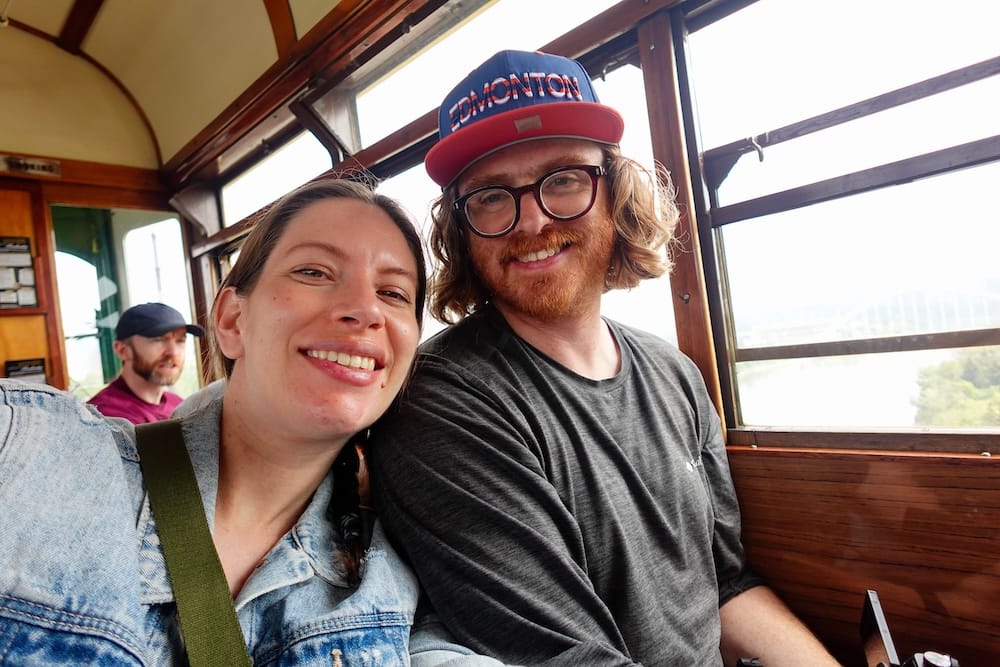
That made her reaction particularly interesting to me. After we crossed over to Whyte Avenue and spent time around Old Strathcona, she told me it had changed her perception of Edmonton.
That, more than any list of attractions, is what I think first-time visitors need to understand before arriving.
Edmonton is a city you have to move around a bit to appreciate. Downtown is useful. The river valley matters. Whyte Avenue shows you a different personality. West Edmonton Mall is practically its own expedition. Public transit can do more of the heavy lifting than you might expect, but distances still matter.
Get that mental map sorted out before your trip and Edmonton becomes much easier to enjoy.
Edmonton is not a city I would plan attraction by attraction
The fastest way to make an Edmonton itinerary annoying is to open a giant list of things to do, pick your favourites and assume they fit neatly together.
That’s how you end up zigzagging across the city all day.
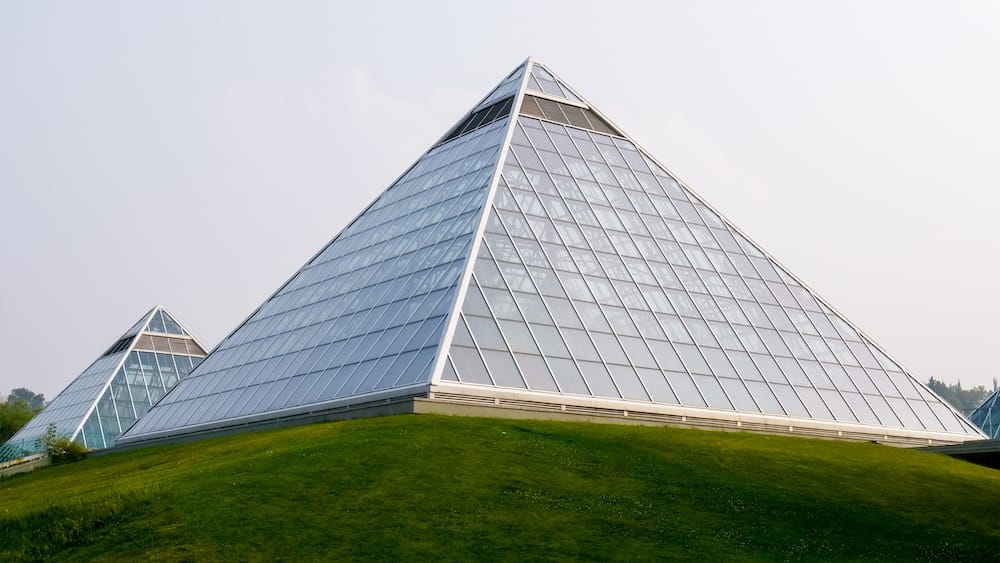
On our trip, Audrey and I visited the Royal Alberta Museum downtown, the Muttart Conservatory near the river valley, the Alberta Aviation Museum farther north, West Edmonton Mall out west, Old Strathcona and Whyte Avenue south of the river, the Legislature, the ICE District and plenty in between.
We weren’t climbing mountains between attractions, obviously, but Edmonton isn’t a place where everything conveniently stacks into one walkable sightseeing core.
I find it more useful to think of the city in pieces.
Downtown and the ICE District make sense together. Whyte Avenue and Old Strathcona form another part of the experience. The Muttart Conservatory works naturally with the river valley. West Edmonton Mall deserves to be considered separately because simply getting there and then dealing with the scale of the place takes time.
That also means your accommodation choice can either simplify the trip or quietly create more commuting. I wouldn’t choose a hotel based on price alone and work out the geography afterwards. Decide which side of Edmonton matters most to you first, then compare Edmonton hotels and current rates on Booking.com with that plan in mind.
Once you start thinking that way, the city stops feeling inconveniently spread out and starts feeling much more manageable.
The important question becomes less, “How many attractions can I fit in today?” and more, “Which part of Edmonton am I actually exploring?”
That’s a much better place to start.
Downtown gives you a good base, but not the whole story
I don’t subscribe to the idea that you should avoid downtown Edmonton.
We had plenty of reasons to be there.
The Royal Alberta Museum was one of the better museum experiences of our Alberta trip. We wandered around the ICE District, visited the Oilers store and checked out Rogers Place. Downtown also connects easily to public transit and sits right above the river valley, which gives the centre much more green space than you might assume from looking at the towers.
Audrey and I also stayed downtown at Fairmont Hotel Macdonald on this trip. For what we were doing, the location made sense: we could enjoy the hotel, walk toward central sights and drop down into the river valley without treating every outing as a transport project. If that combination appeals to you, you can check current Fairmont Hotel Macdonald availability on Booking.com.
But when Audrey and I sat down at the end of our trip to talk about Edmonton, the advice that came out of my mouth immediately was: get out of downtown.
I didn’t mean flee downtown.
I meant don’t let it define the entire city for you.
That was something I understood instinctively from living here. Some of the Edmonton I remember most strongly happened elsewhere: eating around Whyte Avenue, spending time in neighbourhoods south of the river, walking and jogging the river-valley trails.
Audrey reached the same conclusion without my nostalgia.
Whyte Avenue was the turning point for her.
If you’re visiting Edmonton for the first time and spending most of your time downtown because that’s where your hotel happens to be, make a deliberate effort to cross the river or head farther out.
Edmonton gets more interesting when you stop expecting the centre to do all the work.
Whyte Avenue was the part of Edmonton Audrey was missing
Whyte Avenue throws me straight back into student mode.
When I lived in Edmonton, this was where I went for restaurants, nightlife, independent shops and general wandering around. I used to work at the Safeway nearby, and one of my favourite restaurants was across the street, so coming back was part sightseeing and part nostalgia trip.
For Audrey, it was something else entirely.
She had already seen downtown Edmonton. Then we reached Whyte Avenue and Old Strathcona, and she told me it changed her perception of the city.
I completely understood why.
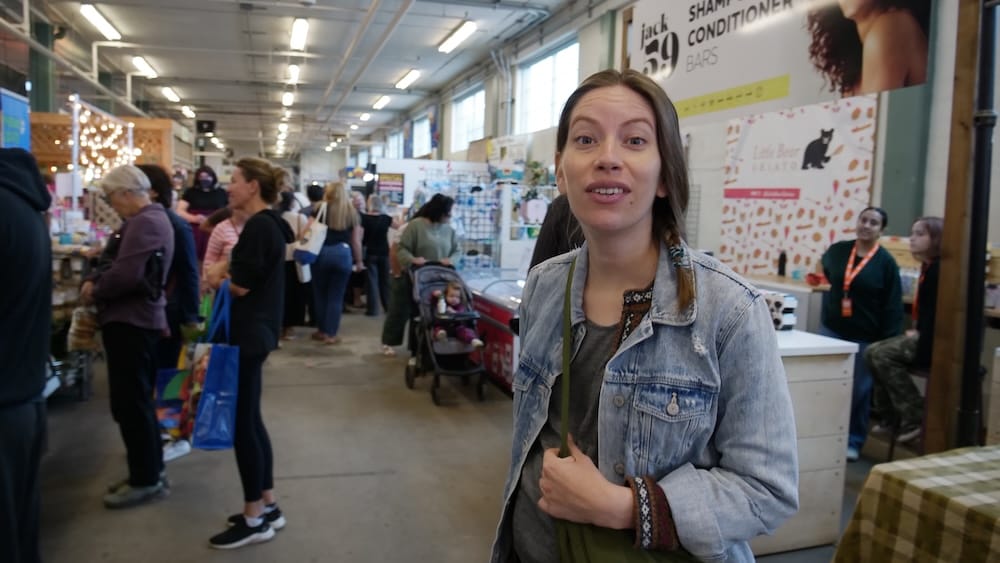
The atmosphere feels different. You’ve got restaurants, little shops, arts and culture, nightlife, the Old Strathcona Farmers’ Market and, depending on when you visit, major festival activity spilling out into the neighbourhood.
We happened to arrive while Edmonton Fringe was underway.
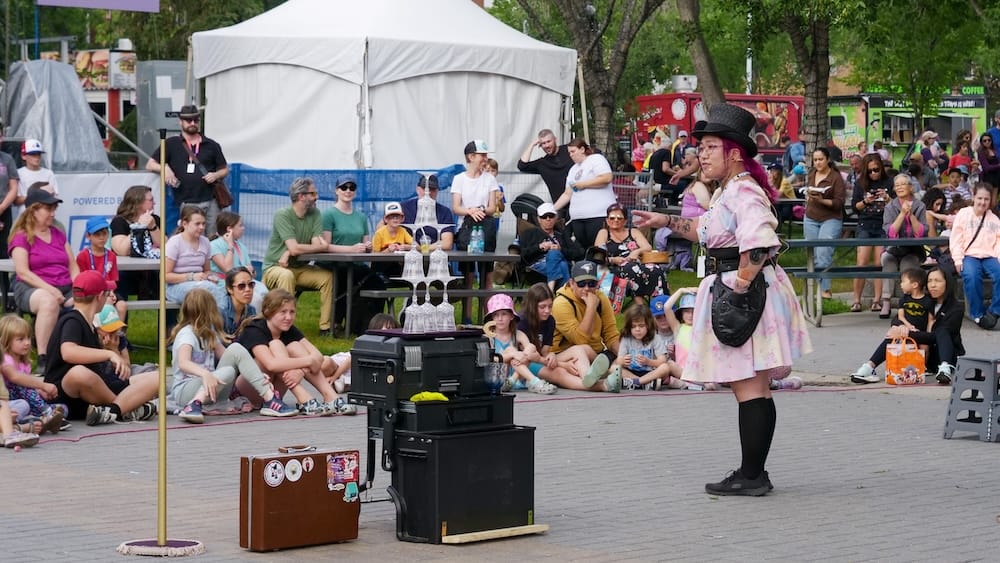
That made an already lively part of the city much more chaotic in the best possible way. There were posters everywhere and performances happening around us. We initially went over thinking about the market and food, then Fringe started hijacking our attention.
Our transport there was also one of my favourite bits of the trip.
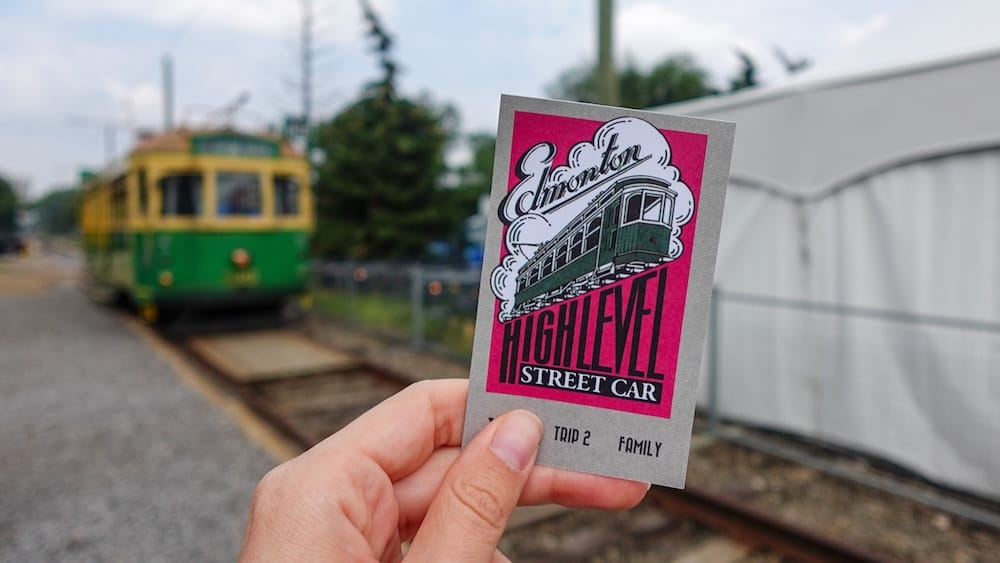
We rode the High Level Bridge Streetcar.
I’d seen that streetcar when I lived in Edmonton. I had never actually gone on it.
Apparently I needed to leave the city for more than a decade before I could come back and discover something that had been sitting under my nose the entire time.
It’s a seasonal attraction rather than everyday transportation, so for normal trip planning the direct bus connection from central Edmonton to Whyte Avenue is more useful. But if the streetcar is operating while you’re there, it is a wonderfully quirky way to cross the river.
Either way, make the crossing.
If Edmonton hasn’t quite clicked for you downtown, this might be where it does.
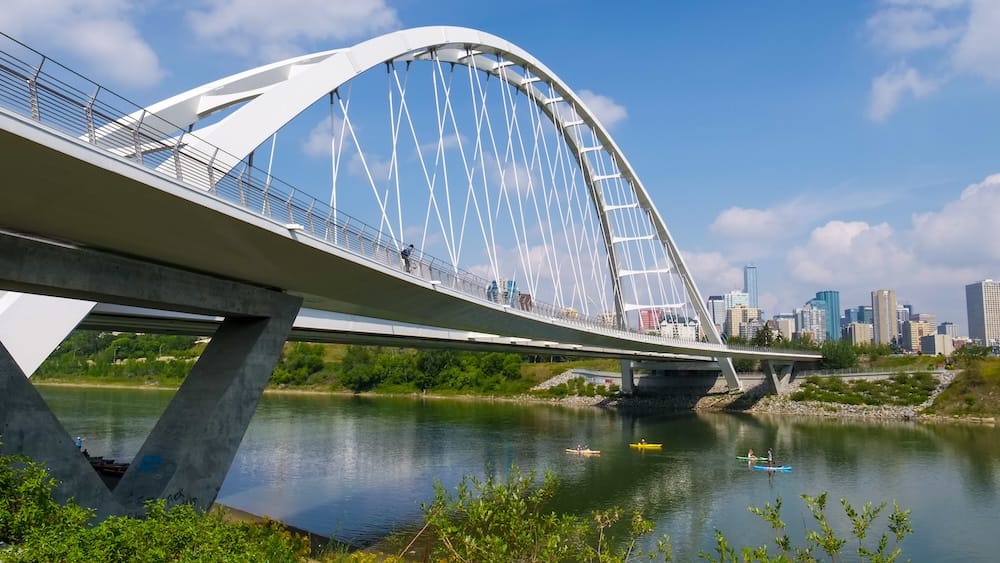
Don’t squeeze the river valley in as an afterthought
The North Saskatchewan River valley is the part of Edmonton I had the strongest emotional connection with before we returned.
When I lived here, I used to jog, walk and inline skate along the trails. It was my tranquil escape.
That sounds almost suspiciously peaceful for someone who spends a lot of his travel life thinking about where lunch is coming from, but it really was.
Coming back, I was happy to find that the river valley still gave me that same sense of having somewhere green to disappear into without leaving the city.
For a first-time visitor, the biggest thing I’d clarify is how closely the river valley is tied to central Edmonton.
You don’t have to plan some big expedition into nature.
From downtown, you can descend toward the river surprisingly easily. The 100 Street Funicular now helps with that, and I loved using it partly because it was one of those obvious reminders that this was no longer exactly the Edmonton I had left behind.
“They didn’t have this when I lived here,” became a recurring theme of the trip.
The funicular is also useful if you don’t want to burn your legs simply getting up and down the riverbank. It accommodates wheelchairs, walkers, strollers and bicycles, although I wouldn’t take that to mean every connected trail will have the same level of accessibility.
Weather can also interfere with operations during temperature extremes, which is a very Edmonton reality.
The Muttart Conservatory fits nicely into this side of the city as well. It now has its own Valley Line LRT stop, so you can combine an indoor attraction with some time around the river rather than treating the conservatory as an isolated journey.
If you would rather have someone connect several of these areas for you, there is also a current guided option that follows exactly the kind of geography I’m talking about: a three-hour ride through the city, Old Strathcona and the river valley. I didn’t take this tour myself, but first-time visitors who prefer an organized introduction can check the Edmonton city bike and river valley tour on GetYourGuide.
That’s more or less how I would approach the river valley on a first trip.
Don’t ask, “Do I have time for a park?”
Ask whether you want to see the part of Edmonton that made me happiest when I actually lived here.
For me, that answer is easy.
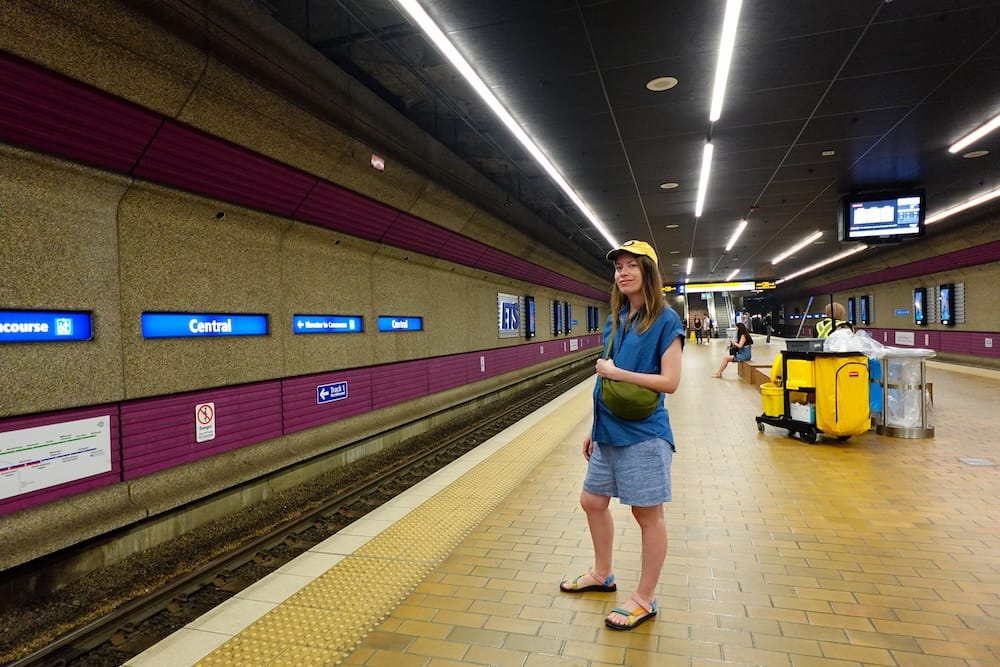
Edmonton transit is useful, but it doesn’t erase the map
I was pleasantly surprised by Edmonton’s public transport when we returned.
The network had expanded a lot since my university days, and we used it repeatedly.
We took the LRT to the Muttart Conservatory. On our busiest sightseeing day, we deliberately bought a transit pass because we knew we’d be hopping around. We also used a bus to reach the Alberta Aviation Museum.
So if you’re looking at Edmonton and assuming you absolutely must rent a car the second you land, I wouldn’t make that decision automatically.
But I also wouldn’t swing to the other extreme.
Edmonton is not magically compact because an LRT exists.
Transit works differently depending on what you’re doing.
Muttart is straightforward because it has a Valley Line stop. Whyte Avenue has a direct bus connection from central Edmonton. West Edmonton Mall also has direct bus service, but that’s a considerably bigger movement across the city.
And one current detail is particularly worth knowing: the LRT still does not reach West Edmonton Mall.
The Valley Line West project is being built, and a future station at the mall is part of it, but that isn’t the system you’re travelling on today.
Airport transport has a similar wrinkle. Edmonton’s public airport bus connects Edmonton International Airport with Century Park Transit Centre rather than running straight downtown, so arriving by bus still means making another connection if you’re staying centrally.
None of that is especially complicated once you know it.
The trouble begins when you assume every Edmonton journey works the same way.
My approach would be simple: work out which parts of the city matter to you first, then decide whether transit is convenient for that version of your trip.
If your plans are heavily concentrated downtown, around Whyte Avenue and along the LRT, a rental car may add more expense than usefulness. If you’re building a trip around West Edmonton Mall plus attractions scattered farther across the city or beyond the central transit corridors, having your own wheels becomes a more reasonable option. In that case, you can compare Edmonton car rentals on Booking.com rather than assuming either car or transit is automatically the right answer.
That’s far more useful than trying to answer “Do I need a car in Edmonton?” as though every traveller is planning the same holiday.
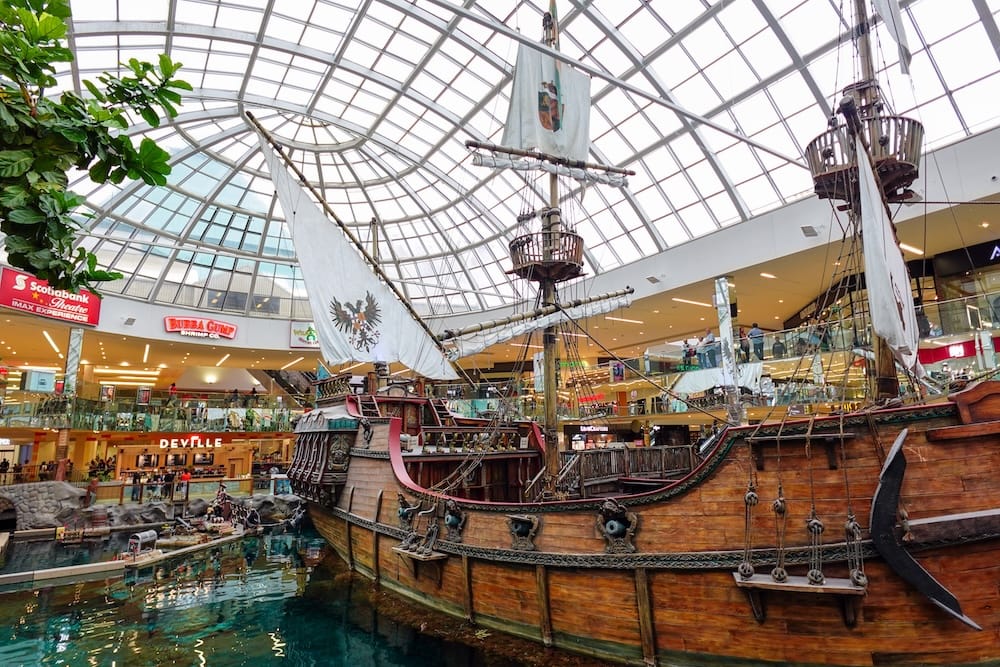
West Edmonton Mall is not something you casually pop into
Audrey had one word for West Edmonton Mall:
“Overwhelming.”
I laughed, but she wasn’t wrong.
West Edmonton Mall covers roughly 5.3 million square feet. When you’re inside, it quickly stops feeling like a normal mall trip.
We went there partly to eat, which will shock absolutely nobody who has followed our travels for any length of time, but then you’re walking past an indoor skating rink, amusement rides, a giant indoor lake and all the rest of it.
It just keeps going.
We only experienced part of the place, and that was enough for me to see why it deserves some respect in an itinerary.
The mistake would be treating it like one more Edmonton attraction.
Royal Alberta Museum in the morning, West Edmonton Mall for an hour, Whyte Avenue for lunch, river valley afterwards. Why not?
Because at some point you’ve designed a public-transport endurance test instead of a holiday.
The mall sits well west of downtown. Direct buses make it accessible, but you’re still committing to the trip out there, and then you have a 5.3-million-square-foot building waiting for you when you arrive.
If WEM is a major reason you’re coming to Edmonton, fantastic. Give it a proper chunk of time and enjoy it.
If you’re much more interested in museums, food, neighbourhoods and walking by the river, you do not have to make a pilgrimage across the city simply because West Edmonton Mall is Edmonton’s most famous attraction.
Fame and fit are two different things.
Summer Edmonton and winter Edmonton require different expectations
We visited Edmonton in summer.
That matters.
Our version of the city involved long days, flowers, outdoor walking, Fringe in Old Strathcona and the High Level Bridge Streetcar running.
You can’t simply lift that trip and drop it into January.
Edmonton has a huge seasonal swing. Long-term climate averages put January well below freezing while July is comfortably warm, and around the June solstice you can have roughly seventeen hours of daylight.
That changes how you build a day.
In summer, you can finish dinner and still have a ridiculous amount of evening left for walking by the river. Seasonal attractions are operating. Festivals become part of the landscape.
Winter pushes more of the trip indoors and makes weather a much more active part of your planning.
Some infrastructure is weather-dependent too. The 100 Street Funicular can shut down during extreme heat or cold.
Then there is wildfire smoke.
I wouldn’t frame smoke as something every summer visitor should expect, because that isn’t how it works. But if smoke is affecting Alberta while you’re there, check the current Air Quality Health Index rather than depending on somebody’s old description of conditions.
This is why I wouldn’t plan Edmonton from a generic “best time to visit” sentence.
Look at the actual season you’re visiting.
Check what is operating.
Think about daylight.
Build the trip that makes sense for those dates.
Edmonton gives you enough indoor and outdoor options that you can make very different trips work, but pretending August and January are interchangeable is asking for trouble.
Don’t pre-book your entire life, but know what actually requires planning
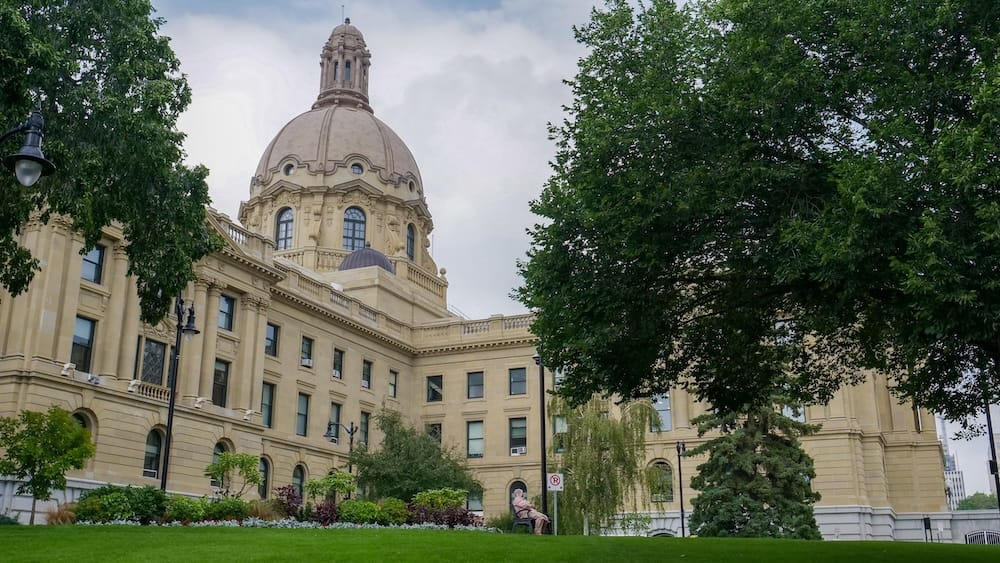
Audrey and I nearly learned this lesson the irritating way at the Alberta Legislature.
We wanted to take a guided tour and only got in because two spaces had opened after a cancellation.
People arrived after us hoping to join and couldn’t.
The current system removes most of the ambiguity: registration is required for Legislature Building tours.
So if you really want to see the interior, book the tour.
Fringe is a different kind of planning problem.
When we were in Old Strathcona during the festival, there was so much happening that we basically wandered around and let ourselves get distracted.
That was fun.
Audrey also correctly pointed out that if you actually wanted to make the most of the festival, you’d need an action plan.
She’s right.
The 2026 Fringe programme alone runs into hundreds of productions across dozens of venues. If you’re travelling specifically for Fringe, staring at the programme for the first time after arriving is probably not the moment to begin making every decision.
Then you have the High Level Bridge Streetcar, where the current system goes the other way. Tickets are first come, first served and aren’t something you can reserve ahead.
This is why I dislike generic advice telling travellers to “book everything in advance.”
You don’t need to turn an Edmonton holiday into military operations.
Just work out which experiences fall into three rough buckets:
- something that actually requires a reservation;
- an event where choosing in advance saves you from decision overload;
- something flexible that you can leave for the day.
Handle the first two before you arrive.
Keep the third category loose enough that the trip still feels like a trip.
If you prefer to put one chunk of sightseeing into somebody else’s hands, Edmonton does have current guided walking, cycling and other city activities. I wouldn’t automatically book a tour just because you’re new to the city, but it can make sense if you want orientation without spending your first morning figuring out every connection yourself. You can compare current Edmonton tours and activities on GetYourGuide and see whether any fit the version of the city you actually want to explore.
How I would divide Edmonton on a first visit
If I were helping someone plan Edmonton for the first time, this is the mental map I’d give them:
| Area | Why you’d go | Getting there | The thing to remember |
|---|---|---|---|
| Downtown / ICE District | Museums, Rogers Place, central sights and easy connections | Main transit hub | Useful base, incomplete picture of Edmonton |
| Old Strathcona / Whyte Avenue | Food, independent shops, nightlife, arts and festivals | Direct bus from central Edmonton; seasonal streetcar option | This is where Audrey’s perception of the city changed |
| River valley / Muttart | Walking, green space, city views and the Muttart Conservatory | Valley Line to Muttart; river access directly below downtown | Weather and outdoor conditions matter |
| West Edmonton Mall | Shopping and huge indoor entertainment complex | Direct bus from downtown; no operating LRT connection yet | Treat it as a real time commitment |
I wouldn’t try to do all four simply because they’re there.
That’s the bigger lesson.
If you’re coming for an Oilers game, downtown may naturally dominate the trip. If food and neighbourhood atmosphere matter more, give Whyte Avenue some room. If you like walking, I wouldn’t sacrifice the river valley so you can tick off another indoor attraction. If West Edmonton Mall is the thing you’ve dreamed about seeing since childhood, build around it instead of pretending it’s a side stop.
Where you sleep should follow the same logic. There isn’t one universally correct base for every first Edmonton trip, so once you know which areas will dominate your plans, compare Edmonton accommodation for your dates on Booking.com with location doing at least as much of the decision-making as the room itself.
When I returned to Edmonton, I had the strange experience of being both familiar with the city and slightly clueless about the city at the same time.
Some of the things I enjoyed most were experiences I’d ignored when I actually lived here. The High Level Bridge Streetcar is the perfect example. I could have ridden it years ago. Apparently I needed to move away, travel all over the world and come back as a tourist before thinking, “Hey, maybe I should finally get on that thing.”
Audrey gave me the opposite perspective.
She wasn’t comparing old and new Edmonton. She was deciding what she thought of the city in real time.
And Whyte Avenue changed her mind.
That’s why, if you’re visiting Edmonton for the first time, I wouldn’t obsess about producing the perfect attraction checklist before you arrive.
Understand the map.
Give downtown its due, then leave it.
Cross the river. Walk somewhere green. Decide whether West Edmonton Mall genuinely belongs in your trip. Check the handful of things that actually need reservations, and leave yourself enough flexibility to stumble across something you hadn’t planned.
Edmonton gets better when you give its different parts a chance to make their case.
Frequently Asked Questions
Is downtown Edmonton enough for a first visit?
Downtown is useful for museums, the ICE District, central transit and river-valley access, but I would not let it define the whole trip. Whyte Avenue, Old Strathcona and the river valley show very different sides of Edmonton.
Do you need a car to visit Edmonton?
Not necessarily. We used the LRT and buses repeatedly, and several central sights are straightforward by transit. A car becomes more useful when your plans spread farther across the city, especially if you are combining multiple outlying areas.
Does the LRT go to West Edmonton Mall?
No. West Edmonton Mall still requires a bus or road journey from central Edmonton. The future Valley Line West includes a mall station, but that is not part of the operating LRT system described in this article.
What should you plan ahead in Edmonton?
The Alberta Legislature Building tour currently requires registration, while a major event such as Edmonton Fringe benefits from choosing performances ahead of time. The High Level Bridge Streetcar works differently because tickets are first come, first served.
How much does the season change an Edmonton trip?
Quite a bit. Our trip was in summer, with long daylight hours, Fringe and the seasonal High Level Bridge Streetcar. Winter brings much colder conditions and changes the balance between outdoor walking and indoor sightseeing.
What is the easiest way to organize a first Edmonton trip?
I would think in four broad areas: Downtown and the ICE District, Old Strathcona and Whyte Avenue, the river valley and Muttart area, and West Edmonton Mall. Choose the areas that fit your interests instead of trying to collect every attraction.
This guide is also available in Spanish. [Leé la versión en castellano: Edmonton para una primera visita: qué saber antes de ir]
This article contains affiliate links. If you book through one of these links, I may earn a commission at no extra cost to you.