
Ask anyone what makes Edmonton different and you’ll get the same three facts, in the same order, every time: the mall, the cold, maybe the Oilers if they’re being generous. I’ve heard some version of that list for most of my adult life, first as a University of Alberta student who called this city home for years, and then again recently, heading back in with Audrey to show her the place that shaped an entire chunk of my twenties.
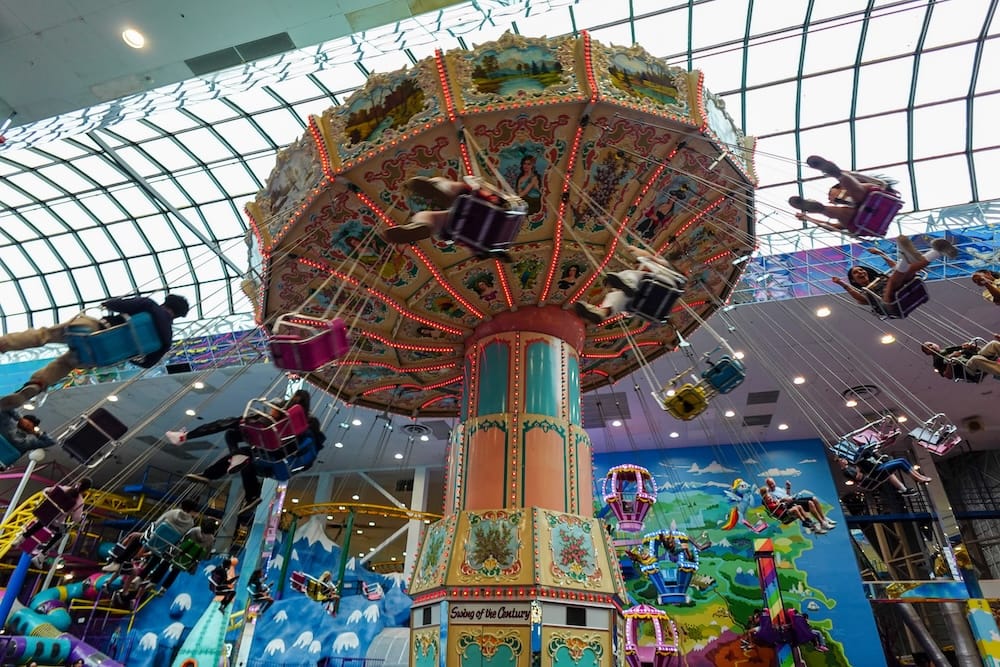
Here’s the problem with that list: the headline fact on it isn’t even true anymore. West Edmonton Mall was the largest shopping mall on the planet from 1981 until 2004, when a wave of Asian megamalls quietly passed it by. It’s still the largest mall in North America, and it holds a genuine fistful of Guinness World Records — the world’s largest indoor amusement park at Galaxyland, the world’s largest indoor lake, the world’s largest indoor wave pool, the world’s largest parking lot. Fair enough. But leading with “world’s largest mall” as the answer to what makes Edmonton different is like introducing yourself with a job title you haven’t held in twenty years. And it was never the interesting part to begin with.
A Former Resident and a First-Time Visitor, Same Verdict
I hadn’t been back to Edmonton in years when Audrey and I folded a stop here into a longer Alberta trip. I’d lived here through university, held a student season-ticket pack for Oilers games, walked these streets constantly, and then left the way people leave a city they grew up adjacent to — not dramatically, just gradually, until years had gone by without me noticing.
Audrey had never been. So we ended up experiencing the same city from opposite directions during the same few days: me rediscovering streets I used to walk to class, her seeing all of it fresh. What caught me off guard is that we landed on almost the exact same conclusion, independently, before we’d even compared notes out loud. Coming back after being gone that long meant more to me than I expected — reconnecting with the city, doing a bunch of things I never bothered with when I lived here, taking a few nostalgic walks that nobody filmed. But the lesson we both arrived at, from completely different starting points, wasn’t about nostalgia. It was about geography.
Get Out of Downtown: Whyte Avenue Is Where Edmonton Happens
If you get stuck downtown in Edmonton and never make it out, you don’t see the city — not really. That’s not a knock on downtown, there’s plenty there, it’s just not where Edmonton keeps its personality.
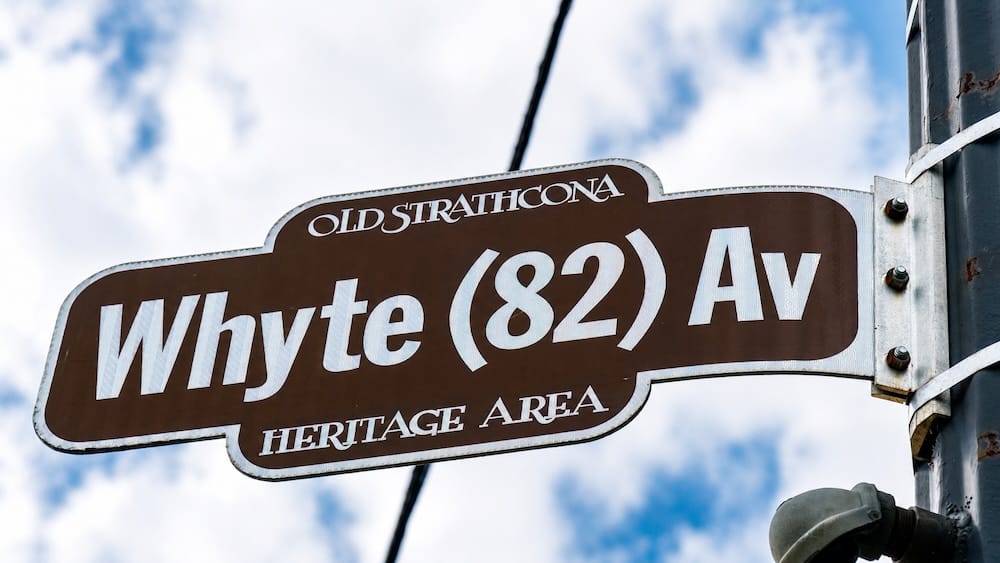
Whyte Avenue is. Walking down it again for the first time in years, I told Audrey it reminded me so much of my university days that it felt like time travel: good food, nightlife, quirky shops, arts and crafts, one festival stacked on top of another. I’ve started calling it the cultural lifeblood of Edmonton, the vein running through the city, and I don’t think that’s an exaggeration. Officially, Edmonton bills itself as Canada’s Festival City and hosts something like sixty festivals a year — but Whyte Avenue and the surrounding Old Strathcona neighbourhood is where that claim stops being a tourism slogan and starts being obviously, visibly true. We happened to be there during the Fringe, and the whole district turned into one continuous outdoor performance, block after block.
Audrey put it better than I did, honestly. Walking those blocks changed her whole perception of the city — she’d gone in expecting downtown-and-a-mall, and instead got a neighbourhood dense enough with independent restaurants, live music, and street life that it could anchor an entire trip on its own. If you’re picking where to base yourself, it’s worth comparing hotels near Whyte Avenue rather than defaulting to downtown out of habit. Get out of downtown. That’s the lesson, and it’s the one thing every “what makes Edmonton different” list I’ve ever come across manages to skip completely.
The River Valley Is the Record Edmonton Still Holds
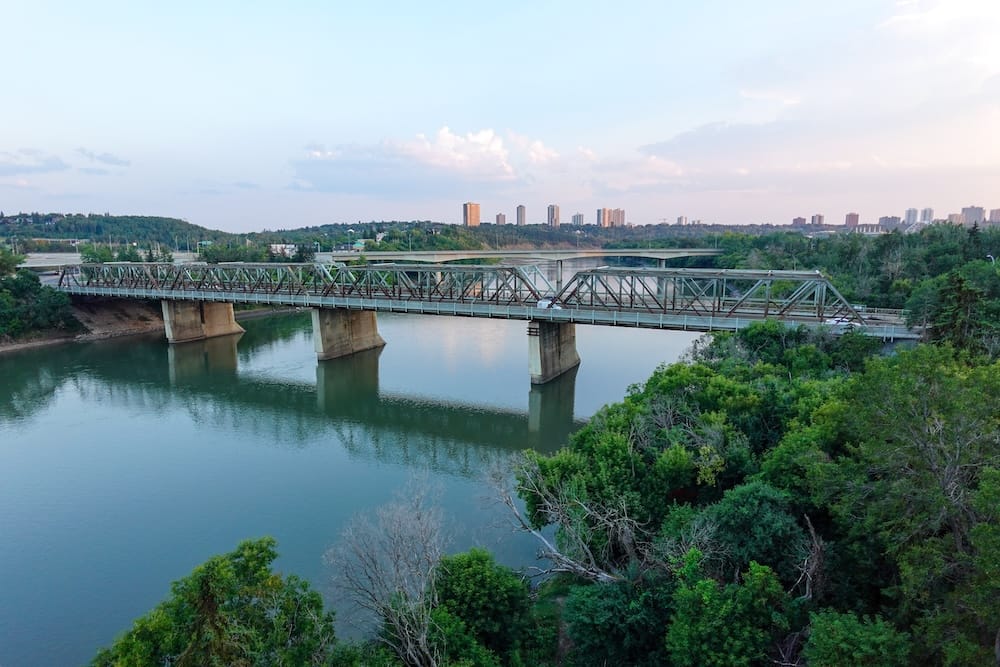
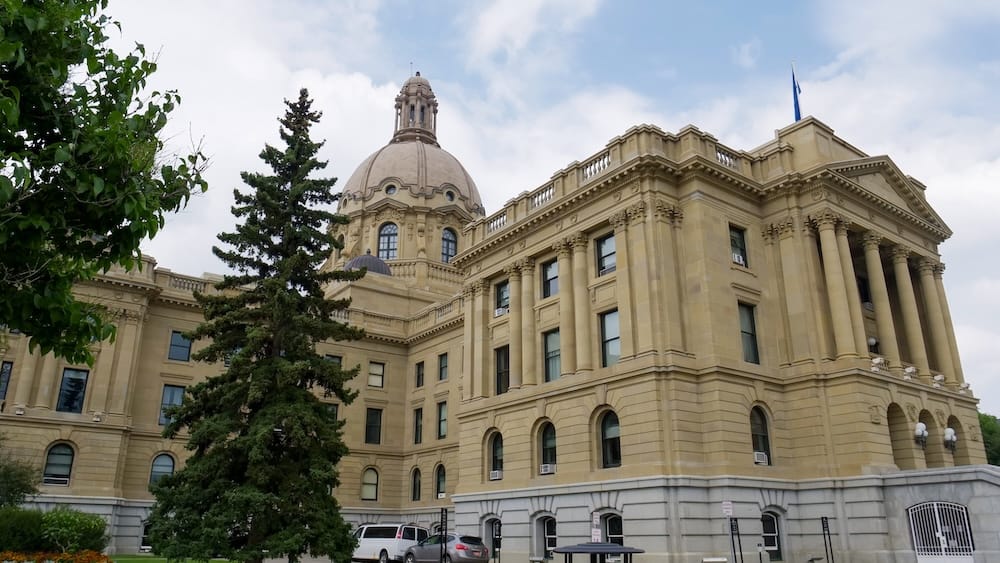
Nobody puts the river valley on the highlight reel the way they put the mall on it, which is backwards, because the river valley is the record still standing. The North Saskatchewan River Valley running through the city is the largest contiguous stretch of urban parkland in North America — not just in Canada, the whole continent. We’re talking somewhere around 160 kilometres of trails and more than twenty major parks, roughly twenty-two times the size of Central Park in New York. We only scratched the surface of it on this trip — a ride down into the valley on the funicular, a walk along the river with the skyline on one side and the Alberta Legislature grounds on the other — but even that small taste made it obvious this is a bigger deal than most visitors ever register. If you have more time than we did, you can book a guided bike tour through the river valley and cover a lot more of those 160 kilometres than a single afternoon on foot allows.
A Hockey Town With a Prairie Capital’s Personality
Edmonton is the capital of Alberta, a fact most visitors forget within about an hour of landing, and it goes by a handful of local names — eTown, the Big E, and, most persistently, the City of the Oilers.
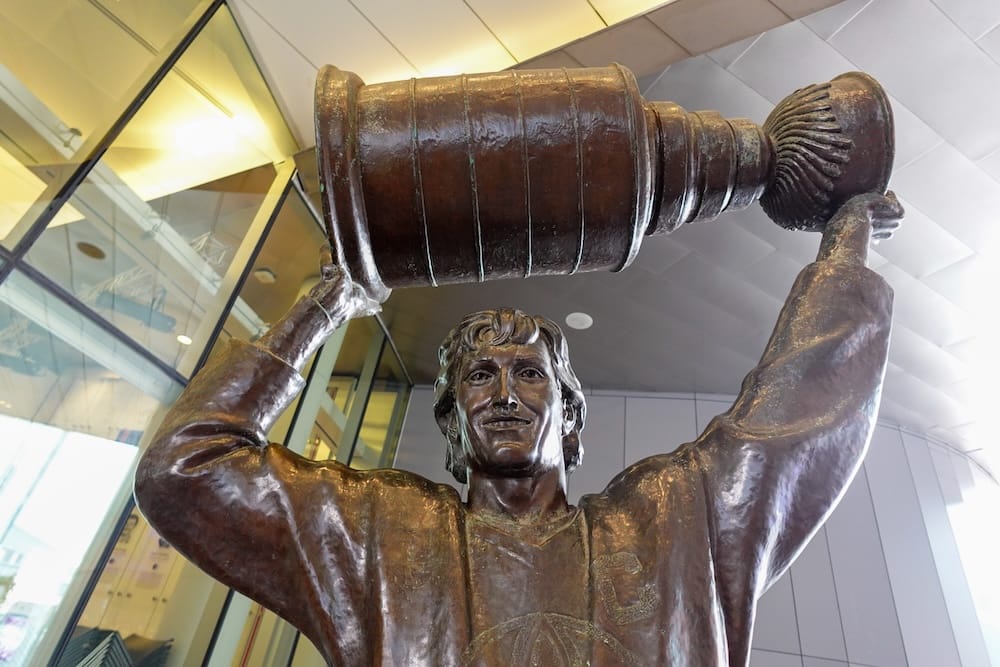
That last one isn’t marketing. When I lived here, I used to get a student ticket pack, eight to ten Oilers games a year, back at the old arena before Rogers Place existed downtown. Audrey found this out somewhere near the new arena and couldn’t resist the dig: “How Canadian of you.” She’s not wrong. I gave the habit up when I left the city, and standing outside Rogers Place, I realized I miss it more than I expected to. Edmonton’s hockey culture runs on generational-scale talent — Connor McDavid has spent a decade collecting scoring titles and MVP awards while the Oilers have made deep playoff runs without yet finishing the job — and the city’s relationship with the team has the particular intensity of a fan base that keeps showing up through heartbreak instead of despite it. If a game lines up with your visit, it’s worth planning ahead — check Rogers Place ticket availability before you land, since good matchups disappear fast.
That intensity sits alongside Edmonton’s older identity as an oil and energy capital, and both of those things are true at once without cancelling each other out — which makes it a different kind of city than Calgary, ninety minutes down the highway, with its mountain views and its finance-town polish, or Toronto and Vancouver, where the conversation always circles back to what a one-bedroom costs. Edmonton skews grittier and more affordable than any of them, and it wears that without much self-consciousness. It’s also, unofficially, the place where I first tried Thai food, Japanese food, and Indian food, as a much younger man who had no idea yet how much international food an unglamorous Prairie capital could deliver. That same surprise showed up again on this trip — we ate very well, better than either of us expected. I won’t oversell that part, though; ask around any similarly sized Canadian city and you’ll hear a version of the same pitch. Here it happens to be true. It’s just not exclusive to us.
What Doesn’t Make Edmonton Different (And Why That’s Fine)
A few pieces of Edmonton’s reputation don’t hold up quite the way locals assume, and they’re worth clearing up.
The mall claim, covered above — outdated, not fake. There’s also a nickname worth knowing precisely because nobody’s settled it: Edmonton used to officially call itself the City of Champions, a slogan born out of the 1980s Oilers dynasty and then reattached, after 1987, to the community’s response to a devastating tornado. City council quietly pulled it off the welcome signs in 2015. It hasn’t stayed buried — groups have pushed to bring it back more than once since, most recently just a couple of years ago, and the argument keeps resurfacing because it was never really about hockey. It’s about whether Edmonton is allowed to brag about itself a little. I find that more interesting than any settled nickname could be: a city still arguing with itself about its own identity tells you more than one that picked a slogan and moved on.
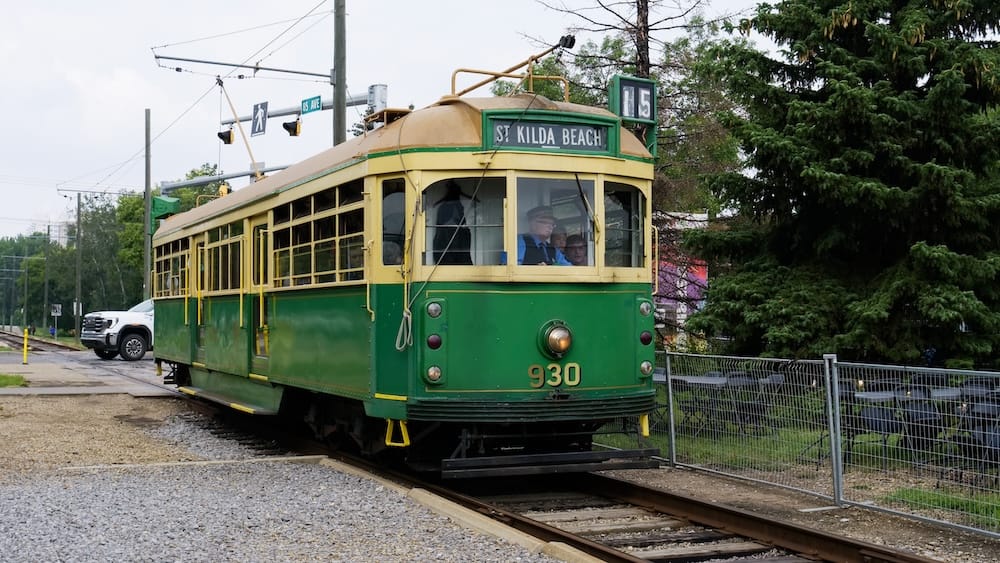
Even the small logistics shift fast enough to catch you out. The streetcar that runs across the High Level Bridge is still, genuinely, the highest streetcar river crossing in the world, and it’s worth doing — one of the cars crossing today was built in Melbourne, Australia, in 1947, one of several vintage streetcars in the fleet refurbished from different corners of the world. It used to be a cash-only ride when we took it; card and mobile payments work now, and the fare’s gone up since. None of that changes the ride itself. It’s a reminder that Edmonton, like anywhere else, keeps moving underneath its own trivia.
So What Does Make Edmonton Different?
Not the mall. Not really the cold, either, though winter here earns its reputation honestly. What makes Edmonton different is that its identity sits one layer beneath the one it’s famous for: a neighbourhood-driven city where Whyte Avenue, not downtown, carries the culture; where the biggest record still standing isn’t retail square footage but a river valley running quietly under the skyline; and where the hockey obsession, the oil-town roots, and the festival-city branding all sit on top of each other without contradiction.
I came back to Edmonton as someone who used to live here and left knowing it better than I did the first time around. Audrey came in with no history at all and reached the same conclusion from the opposite direction. If you’re trying to work out what actually separates Edmonton from the rest of the map, skip the mall tour. Find a neighbourhood, walk the river valley, and let the city keep arguing with itself about what it wants to be called. That argument tells you more than any slogan would.
Frequently Asked Questions
Is West Edmonton Mall still the world’s largest mall?
No. It held that title from 1981 until 2004, when several Asian megamalls surpassed it. It remains the largest mall in North America, and it still holds genuine records for things like the largest indoor amusement park, indoor lake, indoor wave pool, and parking lot.
What are Edmonton’s nicknames?
Locally, Edmonton goes by eTown, the Big E, and the City of the Oilers. It also used to carry an official “City of Champions” slogan, tied to the 1980s Oilers dynasty and the city’s 1987 tornado response, though that was removed from welcome signage in 2015 and has been the subject of repeated campaigns to bring it back since.
Why does the article recommend staying near Whyte Avenue instead of downtown?
Because that’s where Edmonton’s actual personality shows up — independent restaurants, nightlife, arts and crafts, and festival culture concentrated in the Old Strathcona district. Downtown has its place, but basing a trip there alone means missing most of what makes the city distinct.
Is the North Saskatchewan River Valley really the largest urban park in North America?
Yes. It’s the largest contiguous stretch of urban parkland on the continent, with roughly 160 kilometres of trails and more than twenty major parks — about twenty-two times the size of Central Park in New York.
Can you still only pay cash for the High Level Bridge Streetcar?
Not anymore. Card and mobile payments are accepted now, and the fare has gone up since I rode it years ago. The ride itself is still the highest streetcar river crossing in the world.
How does Edmonton compare to Calgary?
Edmonton skews grittier, artsier, and more affordable, while Calgary leans toward mountain views and a more polished, finance-town feel. Both are true to their own character rather than competing on the same terms.
Is Edmonton’s food scene actually distinctive?
It surprised both of us on this trip, and it surprised me the first time I tried international food here as a younger man. That said, I wouldn’t call it exclusive to Edmonton — plenty of similarly sized Canadian cities can make the same claim.
This article is also available in Spanish. [Leé la versión en castellano: ¿Qué hace a Edmonton diferente de otras ciudades canadienses?]
This article contains affiliate links. If you book through one of these links, I may earn a commission at no extra cost to you.