
I’ve only been to Calgary once, and it was summer — hot afternoons, one lively Saturday evening at Prince’s Island Park, nothing to compare it against. So I can’t hand you a single confident month the way I could for plenty of other places I’ve actually seen across seasons. What I can hand you is something more useful: Calgary’s weather doesn’t behave the way most Canadian cities’ weather does, and once you understand why, the real question stops being “when is Calgary good” and becomes “what am I actually going for.”
What Calgary’s Weather Actually Does Across the Year
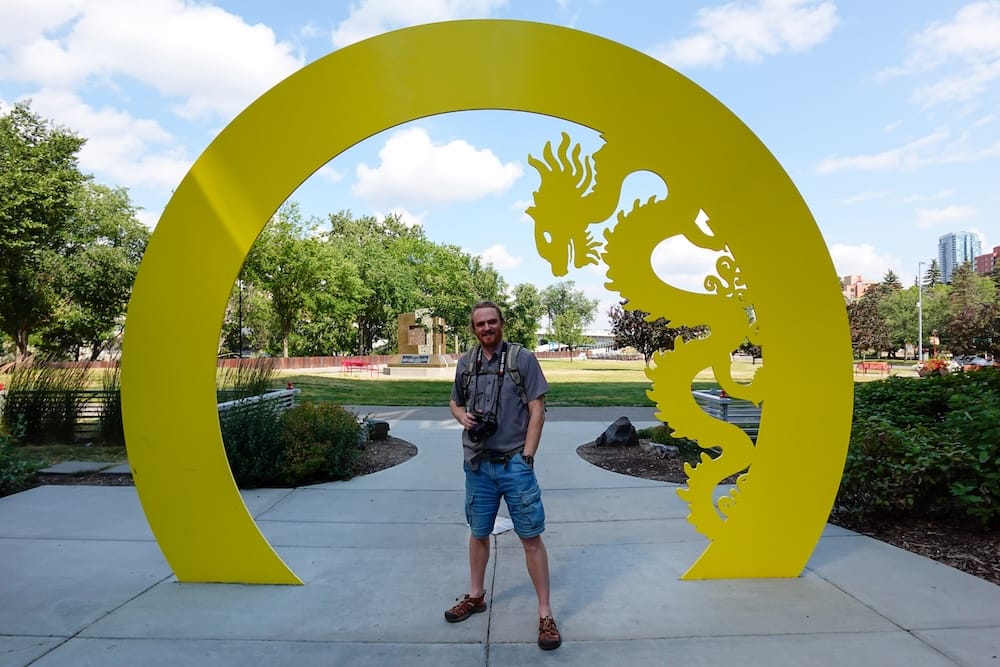
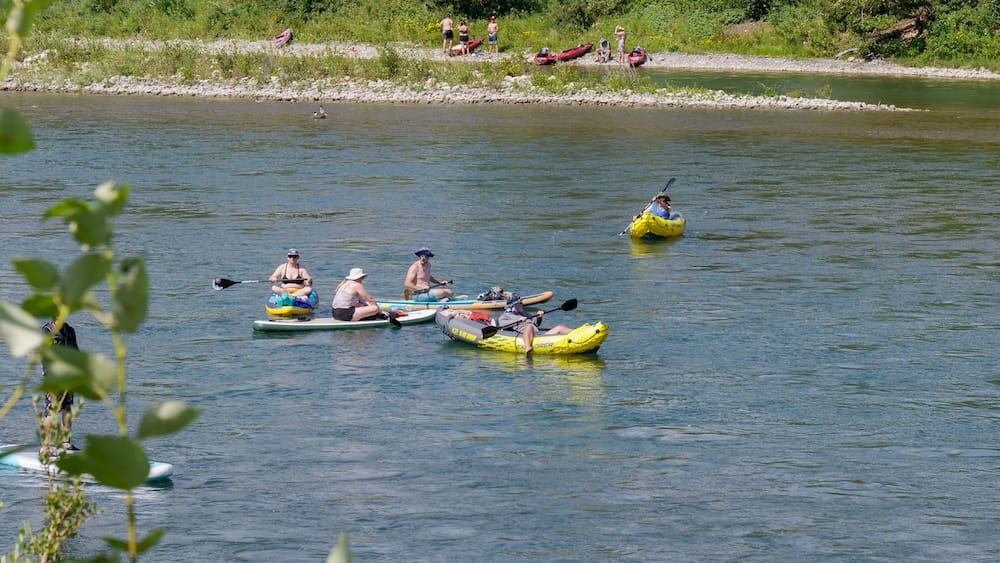
Summer runs roughly May through September, with July as the warmest month, averaging highs around 24°C. The frost-free stretch — the window where you’re unlikely to get caught out by an unexpected cold snap — runs about 117 days on average, from late May to mid-September. That’s the season Audrey and I visited in, and it played out exactly like you’d expect: we ducked into the CORE Shopping Centre for the air conditioning on one genuinely hot afternoon, which is how we stumbled into Devonian Gardens in the first place, and a Saturday evening at Prince’s Island Park was warm enough for live music, cyclists, and an outdoor wedding all happening at once. June is the wettest month of the year, so if you want the driest stretch of summer specifically, July and August edge it out.
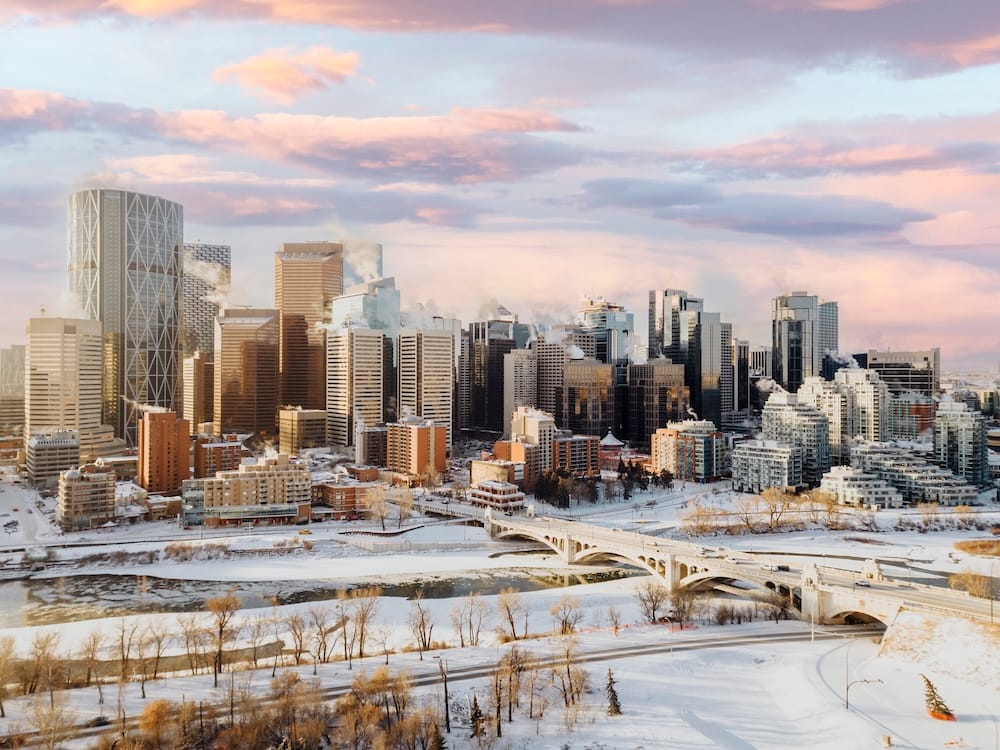
Winter is where Calgary stops matching most people’s mental picture of a Canadian winter. The baseline is genuinely cold — January averages sit around -2°C in the day and -12°C overnight — but that baseline gets interrupted constantly by chinook winds, and this is worth understanding before you write off a Calgary winter on instinct alone. A chinook is a warm, dry wind that rolls down the eastern slopes of the Rockies, and when one moves through, temperatures can jump 20 to 30 degrees in a matter of hours. Environment Canada’s own figures put Calgary at around 25 chinook days per meteorological winter — that works out to about one every three or four days across December, January, and February. You can go from a -20°C morning to a +10°C afternoon, watch snow start melting in real time, and then have it all freeze back over by the next morning. If you’re the kind of traveler who avoids winter purely because you’re picturing a uniform deep freeze for months on end, Calgary is one of the few Canadian cities where that picture just doesn’t hold.
The Festivals Built Around What the Weather Actually Does
The city’s biggest event by a wide margin is the Calgary Stampede, running July 3–12, 2026 — ten days billed as “the Greatest Outdoor Show on Earth,” and the scale backs up the slogan: it pulled in roughly 1.47 million people in 2025. If you want to experience it, that fixed window is your target, and you should plan around the city being at its busiest and priciest of the year while it’s on.
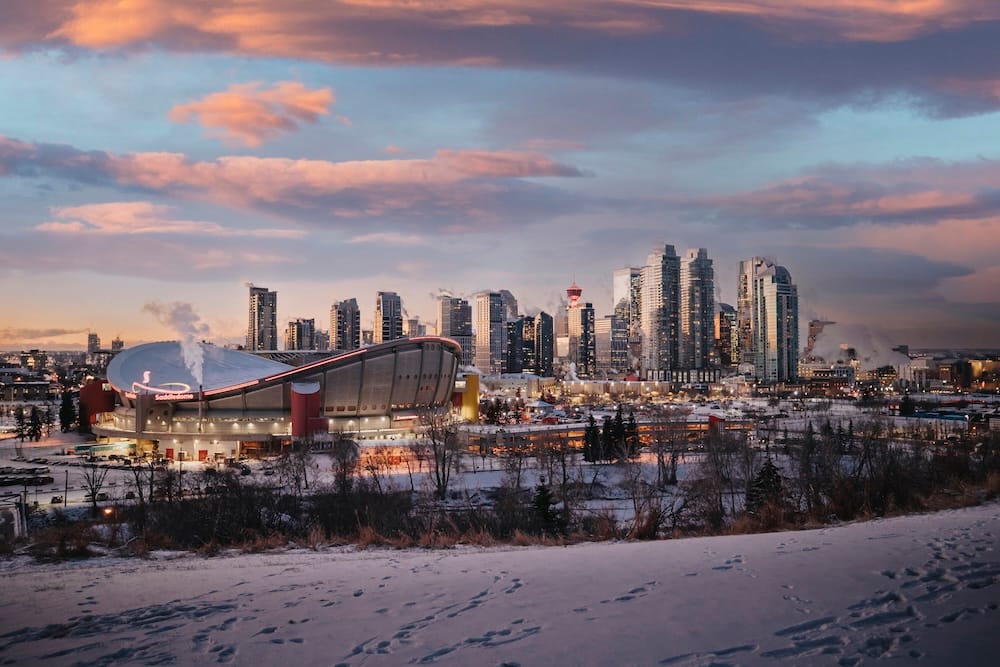
What I find more telling is what Calgary does with its chinooks instead of just enduring them. Chinook Blast, the city’s winter festival, runs January 30 to February 16, 2026, centered on the newly renovated Eau Claire Plaza downtown — light installations, live music, an arts festival called the High Performance Rodeo folded into the programming, all of it free. It’s timed directly into the mid-winter chinook window, which means it’s essentially Calgary turning its most unpredictable weather feature into the reason to show up rather than the thing you tolerate to get to summer. That’s a distinctly Calgary move — I can’t think of many places that build a festival around the specific unreliability of their own weather.
If Stampede week sounds like more crowd than you want but you’d still like a summer festival, the Calgary Folk Music Festival runs July 23–26, 2026 — a real alternative in the same general season, on a smaller scale. And the calendar doesn’t go quiet once summer ends; fall brings events like the Signatures Festival of Crafts at the end of October, so “off-season” in Calgary means smaller and quieter, not empty.

Matching Your Trip Type to the Right Season
Put the weather and the festival calendar side by side and the planning question answers itself, once you know what you’re actually optimizing for.
Want warm, predictable weather and don’t mind sharing the city? Summer — June through August — is the straightforward call, with July as the driest stretch. Is the Stampede itself the whole point? There’s no flexibility there: July 3–12, 2026, and since the rodeo and evening shows both need separate advance tickets, it’s worth checking current Calgary Stampede ticket availability well before you land. Want a summer festival without the Stampede crowd? Late July’s Folk Music Festival gets you a different scale of event in a quieter window. Prioritizing fewer tourists and lower rates over ideal weather? April and October are the shoulder months worth targeting — the city empties out and you can compare current Calgary hotel rates to see how much they ease off summer highs, in exchange for weather that asks a bit more patience of you. And if what you actually want is to understand what makes Calgary’s winter different from everywhere else — or you just want to see a chinook do its thing in person — timing a visit around Chinook Blast in late January or early February gets you the city’s winter at its most deliberately shown off, rather than just its coldest.
| Trip type | When to go | What you’re getting |
|---|---|---|
| Warm, predictable weather | June–August | Longest daylight, driest stretch in July, but peak crowds |
| The Stampede specifically | July 3–12, 2026 | The city’s biggest event, book well in advance |
| A summer festival without Stampede crowds | July 23–26, 2026 | Calgary Folk Music Festival, smaller and quieter |
| Fewer tourists, lower rates | April or October | Off-peak conditions, more variable weather |
| Winter, done Calgary’s way | Late Jan–mid Feb | Chinook Blast, timed to the city’s chinook window |
There’s no single correct answer to when you should visit Calgary, and that’s not a dodge — it’s the actual shape of the place. If I ran my own framework against myself, I’d land in the winter/chinook row for the next trip: I want to see one of those swings happen in person, and I’m curious whether the city’s indoor +15 network stops feeling like a novelty and starts feeling like the reason the whole place keeps functioning once the temperature drops. Different season, genuinely different Calgary — which, once you’ve read this far, is exactly the point.
Frequently Asked Questions
What is the best time to visit Calgary?
There isn’t one single best time — it depends on what you’re after. Summer (June through August) gives you the warmest, most predictable weather but also the biggest crowds. Winter, especially late January into February, shows off Calgary’s distinctive chinook pattern. Shoulder months like April and October trade some weather reliability for fewer tourists and lower rates.
What is a chinook, and why does it matter for a Calgary trip?
A chinook is a warm, dry wind that rolls down off the Rockies and can push winter temperatures up 20 to 30 degrees in a matter of hours. Calgary sees roughly 25 chinook days each meteorological winter — about one every three or four days — which means a Calgary winter is far less uniformly cold than most people assume.
When is the Calgary Stampede in 2026?
The Calgary Stampede runs July 3 to 12, 2026. It’s the city’s biggest event by a wide margin, so expect Calgary to be at its busiest and most expensive during that window.
Is the Stampede the only major festival in Calgary?
No. Chinook Blast, Calgary’s free winter festival, runs January 30 to February 16, 2026 at Eau Claire Plaza. The Calgary Folk Music Festival runs July 23 to 26, 2026, and fall brings smaller events like the Signatures Festival of Crafts at the end of October.
Is there a summer festival option besides the Stampede?
Yes. The Calgary Folk Music Festival, running July 23 to 26, 2026, is a smaller, quieter alternative in the same general season for anyone who’d rather skip Stampede-week crowds.
What is Chinook Blast?
Chinook Blast is Calgary’s winter festival, held at Eau Claire Plaza with light installations, live music, and an arts festival called the High Performance Rodeo folded into the programming. It’s free and timed directly to the city’s mid-winter chinook window.
When are Calgary’s shoulder seasons, and why visit then?
April and October are Calgary’s shoulder months. The city empties out and hotel rates tend to ease off summer highs, though the weather is more variable and asks a bit more patience than peak summer.
Is a Calgary winter really as cold as people assume?
Not consistently. January averages around -2°C in the day and -12°C overnight, but chinook winds interrupt that baseline often enough that a Calgary winter includes real warm spells, not just sustained deep freeze.
This guide is also available in Spanish. [Leé la versión en castellano: Mejor época para visitar Calgary: clima, festivales y tipos de viaje]
This article contains affiliate links. If you book through one of these links, I may earn a commission at no extra cost to you.