
Calgary looks like a city where you should probably rent a car.
That was certainly my assumption before Audrey and I properly explored it. Pull Calgary up on a map and everything spreads outward: neighbourhood after neighbourhood, wide roads, big distances, the airport well north of Downtown, the Rockies sitting tantalizingly to the west. Driving feels baked into the geography.
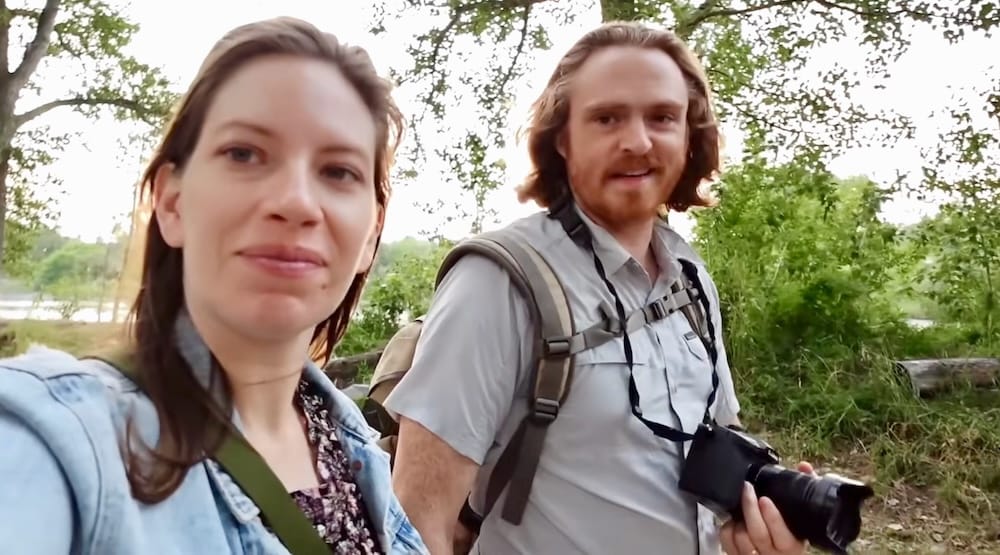
Then we arrived and proceeded to do almost all of our sightseeing on foot.
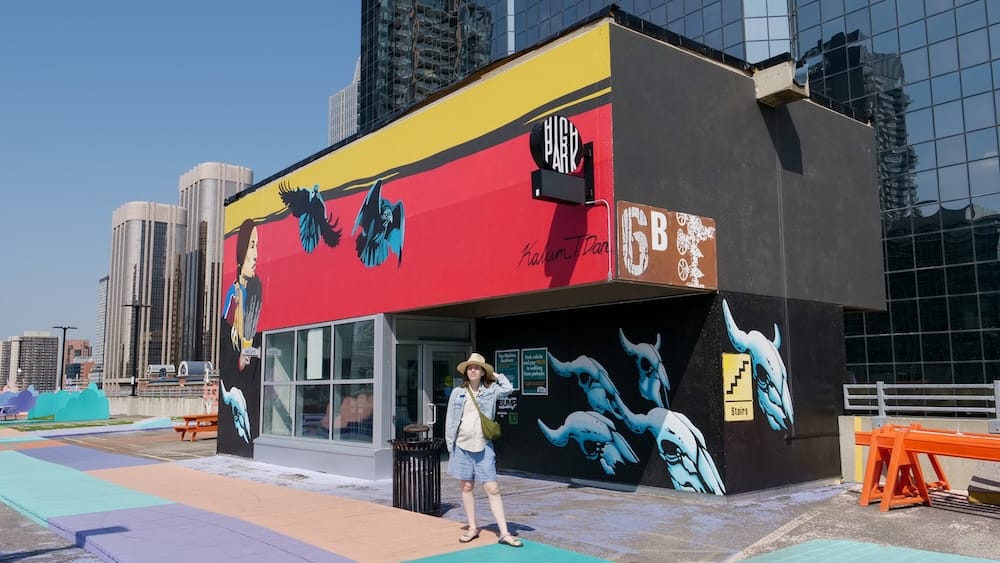
We walked around Chinatown and Downtown. We wandered through the +15. We continued into East Village, visited Calgary Central Library, walked along the Bow River, spent time in Prince’s Island Park and kept stitching attractions together without really thinking about transportation.
Eventually we decided to visit Heritage Park.
That was when our attitude became slightly ridiculous.
Suddenly we were looking at an LRT ride followed by a bus and thinking, Hmm. That’s pretty far. Is there anything else we could do closer?
We had become spoiled by Calgary.
After days of walking almost everywhere we wanted to go, taking public transportation to one attraction suddenly sounded like an expedition across the Canadian wilderness.
We went anyway.
The journey was easy. Heritage Park was absolutely worth the effort. And by the end of our Calgary trip, Audrey had arrived at a verdict that surprised both of us.
She said Calgary “kind of feels like a small city that you can cover on foot.”
More importantly, she pointed out that we’d managed to do all that walking “and not be exhausted.”
That’s more or less where I land on Calgary without a car.
For many first-time visits, yes, it’s completely practical. I would not automatically rent a car.
But that answer depends far more on what you plan to do and where you stay than on whether Calgary is technically a car-oriented city.
The Calgary we explored as visitors was much smaller than the Calgary I saw on the map.
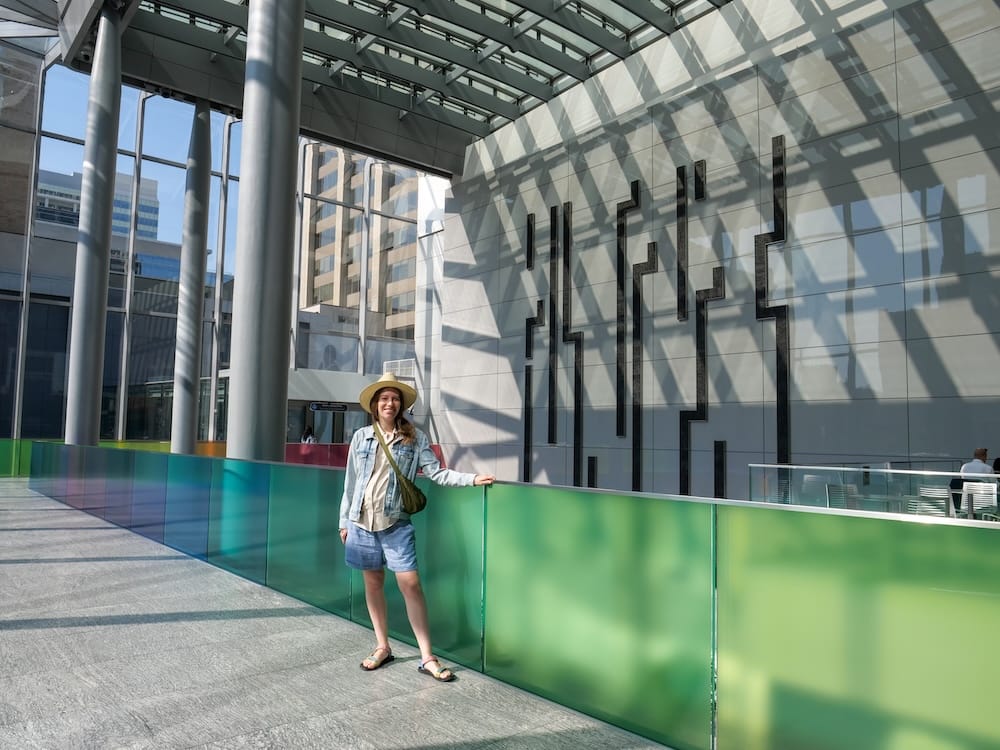
The Calgary a visitor sees is smaller than Calgary itself
I think this is the first thing that gets lost when people talk about needing a car in Calgary.
Calgary is huge.
That doesn’t mean your Calgary trip is huge.
A first-time visitor might spend most of a short stay moving between Downtown, Chinatown, East Village, the Bow River, Prince’s Island Park and nearby inner-city neighbourhoods. Those places occupy a much tighter area than Calgary’s overall footprint suggests.
That was our trip.
We weren’t setting out each morning trying to prove Calgary could be conquered on foot. Walking was simply what kept making sense.
Finish in Chinatown? Keep walking.
Go through Downtown? Keep walking.
Want to see the +15 or Devonian Gardens? You’re already there.
Central Library? East Village isn’t some distant excursion.
Riverfront? Same story.
It became one long chain rather than a series of isolated attractions requiring a vehicle between each stop.
That’s a very different experience from looking at Calgary as a resident might, where commuting between far-flung neighbourhoods can obviously create an entirely different transport equation.
For a visitor, the more useful question is:
How many of the places I actually care about fall inside the central walking-and-transit bubble?
If most of them do, you may find yourself using a car very little even if you rent one.
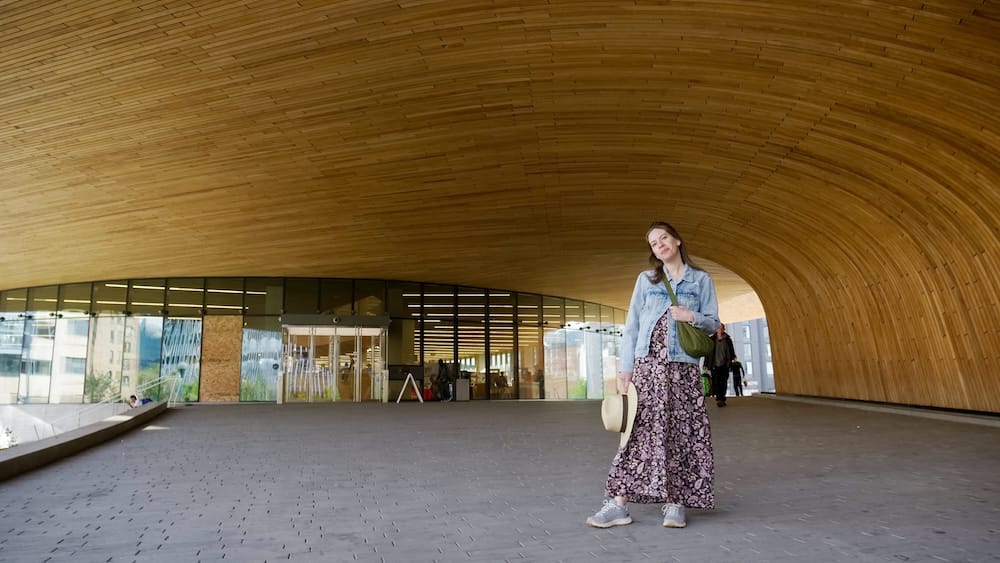
We walked far more than I expected
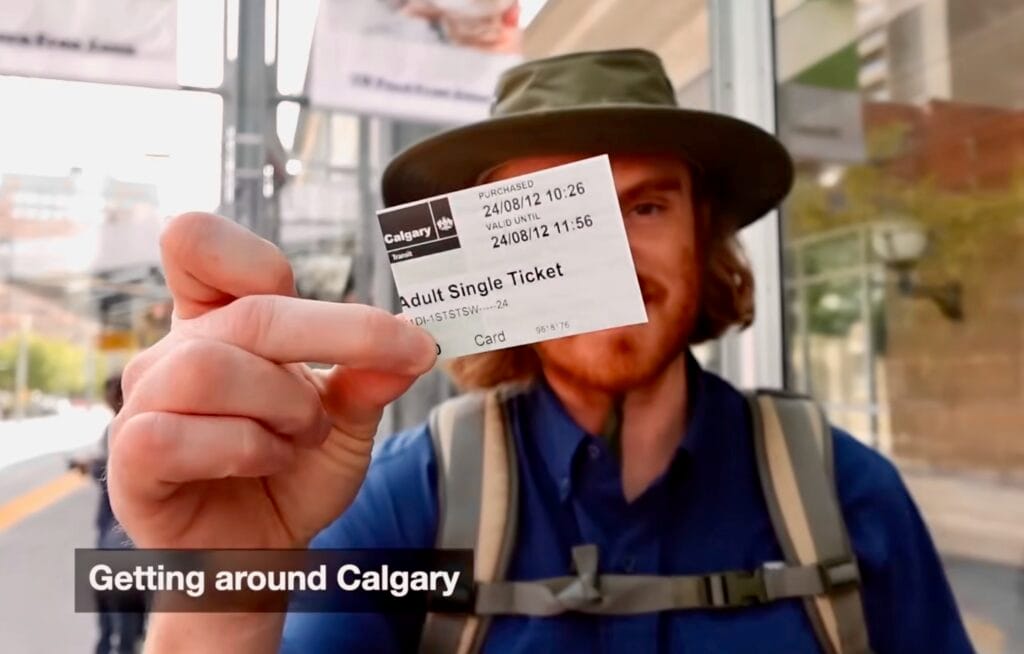
Before our Heritage Park day, I remember looking at my Calgary Transit ticket and realizing we’d essentially explored Calgary on foot up to that point.
That wasn’t what I’d expected.
I like walking in cities, so I’m perfectly capable of inflicting unnecessary mileage on myself. There is a point where “this city is walkable” turns into “I refuse to admit that taking a train would have been smarter.”
Calgary didn’t feel like that around the centre.
We walked a lot, but the walking kept accomplishing something. There was usually another attraction, park, neighbourhood or food stop reasonably connected to where we’d already ended up.
Audrey noticed the same thing independently.
Her description of Calgary as feeling like a small city you could cover on foot wasn’t a statement about Calgary’s actual size. Obviously it isn’t a small city.
It was about how the visitor experience felt.
And her “not be exhausted” comment is the part I’d emphasize.
Plenty of cities allow you to walk from A to B if you’re willing to destroy your feet in the process. That’s not useful travel advice.
Calgary gave us a much nicer balance.
We got the advantages I like about walking—seeing street art, noticing buildings, finding random little corners, changing plans easily—without spending every evening wondering why my legs hated me.
If you’d rather let somebody else handle the route while you get oriented, there is a current 3-hour Calgary City Highlights walking tour that covers Downtown stops including Calgary Central Library, Devonian Gardens and sections of the +15. The listed route is about 7.5 kilometres (4.5 miles) at a steady walking pace, so this is very much an option for people who actually want to walk rather than a way to avoid using their legs. We didn’t take this tour ourselves, but it lines up closely with the central Calgary that proved so easy for us to explore without a car.
Still, our experience has an obvious limitation: Audrey and I are comfortable walking substantial distances.
If you’re not, then “we walked almost everywhere” isn’t a recommendation. It’s just what we did.
A city can work well without a car without being equally easy for every traveller to navigate on foot.
Those are separate questions.
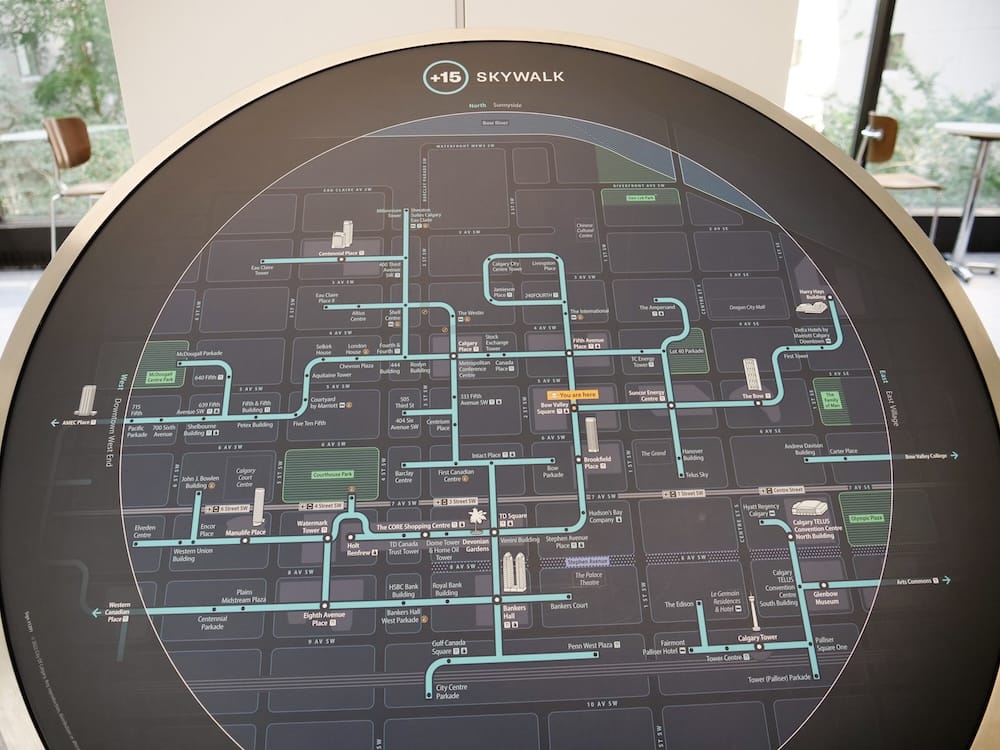
The +15 is part of the car-free equation
Calgary also has something most North American cities don’t: the +15.
We spent much of one morning wandering through it.
The concept sounds almost futuristic when you first hear about it. A network of elevated indoor pedestrian bridges connects buildings through Downtown, allowing you to move between sections of the city above street level.
In practice, we were walking through office towers and commercial spaces, passing food courts, shops, public art and various connections while avoiding the streets below.
We visited in summer, and the unexpected benefit was air conditioning.
It was hot outside.
Inside the +15, it was comfortable.
Audrey basically summed that up as: escape the heat.
I’d heard the +15 discussed mainly as something useful during Calgary winters. I’m sure that’s when many visitors become most grateful for it, but summer proved to me that it isn’t exclusively cold-weather infrastructure.
What I would not do is imagine it as some continuously open indoor highway through Downtown.
The standard public hours are currently 6 a.m. to 9 p.m. on weekdays and 9 a.m. to 7 p.m. on weekends and statutory holidays. Individual bridges can have shorter hours, and temporary closures happen.
So if it’s -25°C and you’ve carefully designed an evening route that only works if every +15 connection stays open, I’d check the live City of Calgary map first.
We used the +15 casually.
I think that’s probably the healthiest way for a visitor to think about it.
Use it where it helps. Drop back to street level where it doesn’t. Don’t turn walking through Calgary into a puzzle where you’re determined never to touch a sidewalk.
Downtown also has a small free CTrain bonus
Another useful feature for a car-free visitor is Calgary’s Free Fare Zone.
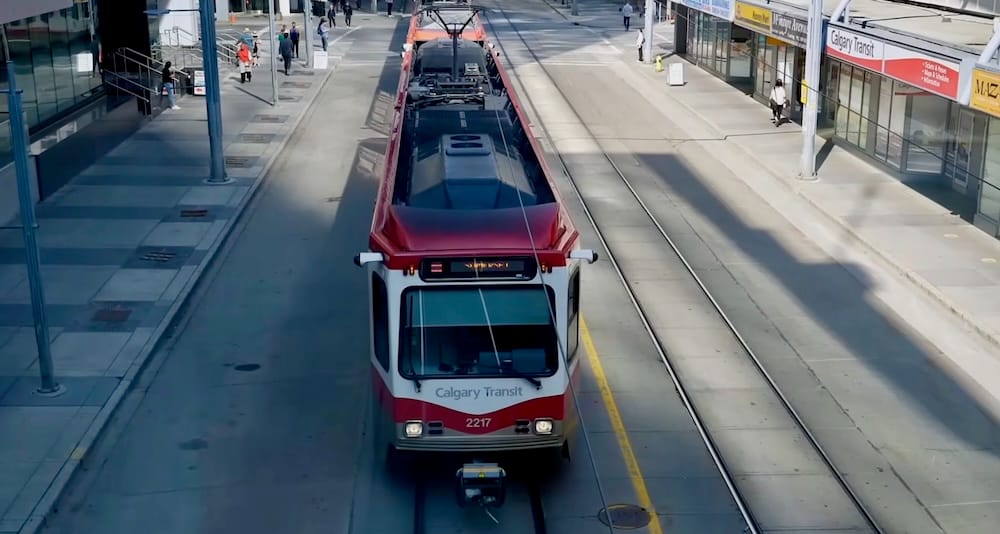
Within the Downtown 7 Avenue corridor, CTrain trips that begin and end between Downtown West/Kerby and City Hall/Bow Valley College are currently free.
That’s a very specific zone.
It doesn’t mean you can ride all over Calgary for free. Once you travel beyond that central segment, normal fares apply.
But it’s handy.
If you’ve been walking all morning and want to skip a section of Downtown, or your next stop happens to line up nicely with the CTrain, you don’t necessarily need to buy a ticket just for that short central hop.
Calgary has been reviewing the future of the Free Fare Zone, with a broader fare decision expected in 2027, so this is one of those details I’d verify again if you’re reading this substantially later.
For now, though, it adds another small layer of flexibility to a Downtown stay.
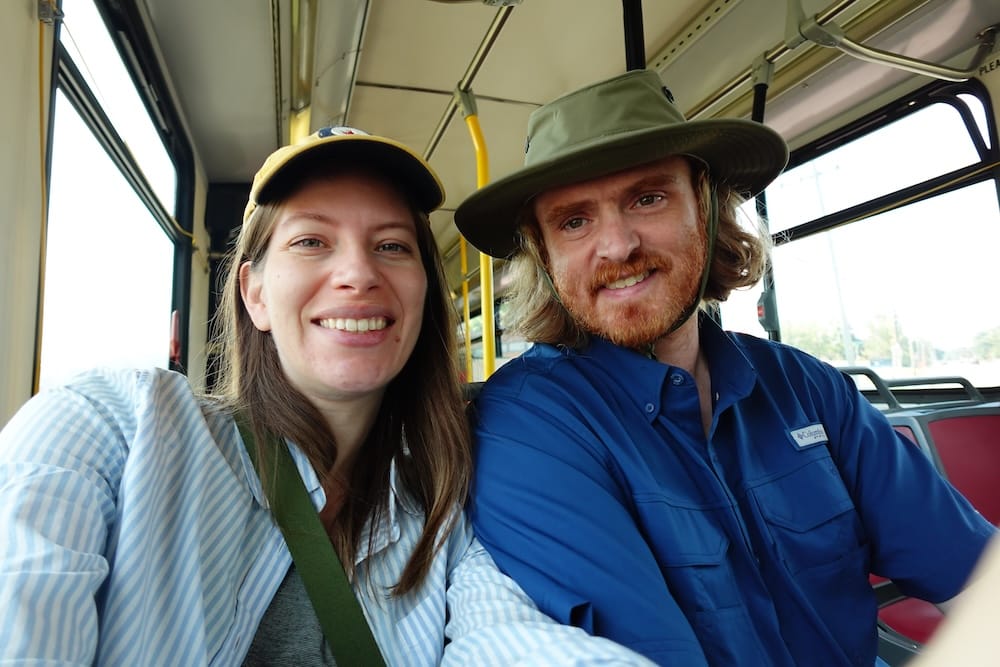
Then Heritage Park finally forced us to use transit
Heritage Park is where this whole question became more interesting for us.
Until then, Calgary without a car had been almost embarrassingly simple.
Walk.
Keep walking.
Walk somewhere else.
Then we looked at Heritage Park.
It was outside the central area we’d been roaming around. We’d need to take the LRT and then connect to a bus.
And our first reaction was not especially adventurous.
We started asking whether there was something else nearby we could do instead.
This is what several days of easy walking did to us. A perfectly normal public transit journey had started sounding unreasonable.
We went anyway, and afterward I was glad we hadn’t talked ourselves out of it.
The LRT portion didn’t feel particularly long, and after that we had a short bus ride. The whole thing had been much larger in our heads than it was on the ground.
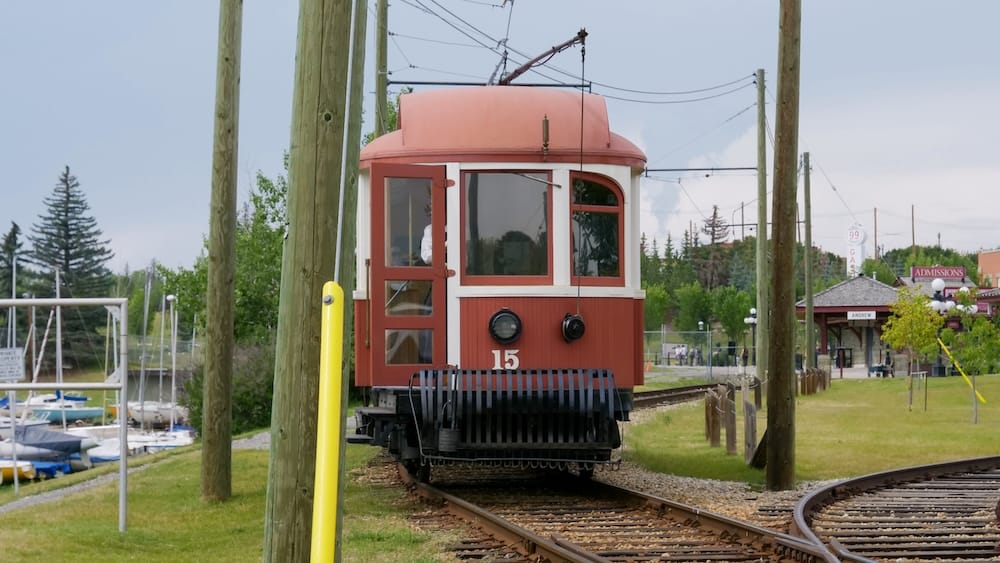
Current transit still makes Heritage Park a useful example of how Calgary without a car can stretch beyond Downtown.
During the 2026 operating season, Route 402 runs from Heritage CTrain Station to Heritage Park about every 20 minutes. Route 20, MAX Teal and MAX Yellow also serve the area.
The stops are at the bottom of the Heritage Park parking lot, leaving roughly a five-minute walk to the entrance.
Route 402 is seasonal, operating from May through October, so this isn’t something I’d memorize and blindly rely on six months from now. Check Calgary Transit’s current trip planner.
But as a planning example, it’s important.
You can reach a major attraction outside central Calgary without renting a car, and the final connection isn’t some epic series of rural buses.
Our mistake wasn’t using transit.
Our mistake was assuming that using transit was going to be far more annoying than it actually was.
If you want to visit Heritage Park but the LRT-plus-bus connection is exactly the part you’d rather not organize yourself, there is also a current Heritage Park Historical Village bus tour from central Calgary. It meets at Calgary Tower, includes transportation to Heritage Park, park admission, time to explore independently and the return trip Downtown. We travelled there on public transit rather than taking this tour, so I can’t review the tour itself. Also note that the current listing says it is not suitable for children under five, wheelchair users or people with mobility impairments, which makes it a useful alternative for some travellers rather than a universal solution.
Calgary Transit fares are simple enough for occasional sightseeing
Our own fare is now outdated.
When we visited, I paid $3.70.
In 2026, the adult single fare is $4.00.
A single fare is currently valid for 90 minutes across Calgary Transit buses and CTrains, which matters because a journey like Heritage Park can involve a rail-to-bus transfer without automatically requiring another fare.
The current adult day pass is $12.65.
There is also an $18 weekend group day pass under Calgary Transit’s current group conditions, which could be useful for some families or small groups.
For most visitors, though, I wouldn’t obsess over trying to optimize every dollar of transit.
If you’re staying centrally and walking as much as we did, you may not use transit often enough for it to dominate your budget anyway.
That was our experience.
Transit was there when we needed it.
It wasn’t the centre of the trip.
Tickets can currently be purchased through CTrain vending machines and Calgary Transit’s My Fare system, among other options, and transfers between buses and trains are built into the 90-minute fare window when you’re using a valid ticket or transfer.
That’s about as much transport mechanics as I think most visitors need before arriving.
Some attractions are much easier without a car than others
This is where I’d stop thinking in terms of “Calgary has good transit” or “Calgary has bad transit.”
Both descriptions are too crude.
Look at the actual journey.
Calgary Zoo is a great example, even though Audrey and I didn’t visit it during this particular trip.
The Blue Line goes directly to Zoo Station, and from there the zoo’s North Gate is less than a five-minute walk.
That’s excellent transit access.
A first-time visitor doesn’t need to know anything sophisticated about Calgary’s bus system to understand that journey.
Train.
Get off.
Walk a few minutes.
Heritage Park takes a little more work, but still has a sensible CTrain-plus-bus connection.
Then you have places where the equation gets worse.
Spruce Meadows, for example, currently isn’t directly served by regular public transit. Special-event transportation can vary, but that is already a different planning problem from visiting the zoo.
You could still use a taxi or rideshare.
You could rent a car.
You could decide that one attraction doesn’t fit this particular trip.
That’s the point.
Car-free travel stops being practical when you’re spending too much of the trip trying to make car-free travel practical.
I wouldn’t sit on three buses for two hours just so I could congratulate myself for not renting a car.
“Possible by transit” is not the same as “worth doing by transit”
This distinction matters a lot in a spread-out city.
Suppose an attraction is technically reachable using a train and two buses.
Great.
Now ask:
- How long does that take?
- How frequent is the final bus?
- What happens if you just miss the connection?
- How far do you have to walk at the end?
- Are you doing one trip like that today or three?
That’s where a transit itinerary can slowly become nonsense.
One longer journey to Heritage Park worked for us because Heritage Park was a major part of the day. We weren’t travelling all that way to spend 25 minutes there before racing across Calgary to another distant attraction.
The transport investment matched the experience.
If I tried to connect several geographically scattered places in one sightseeing day, I’d become much more interested in having a car—or I’d reorganize the itinerary.
That second option is underrated.
Sometimes you don’t need better transportation.
You need a less stupid day.
Group things geographically.
Don’t bounce from one end of Calgary to another because a list of “top attractions” told you to visit them in some arbitrary order.
Your hotel location matters enormously if you’re skipping the car
I can’t give you a firsthand Calgary hotel verdict from this trip because we didn’t document a hotel experience in a way that I’d want to turn into a recommendation.
But I can say this:
Where you stay changes the entire car-free equation.
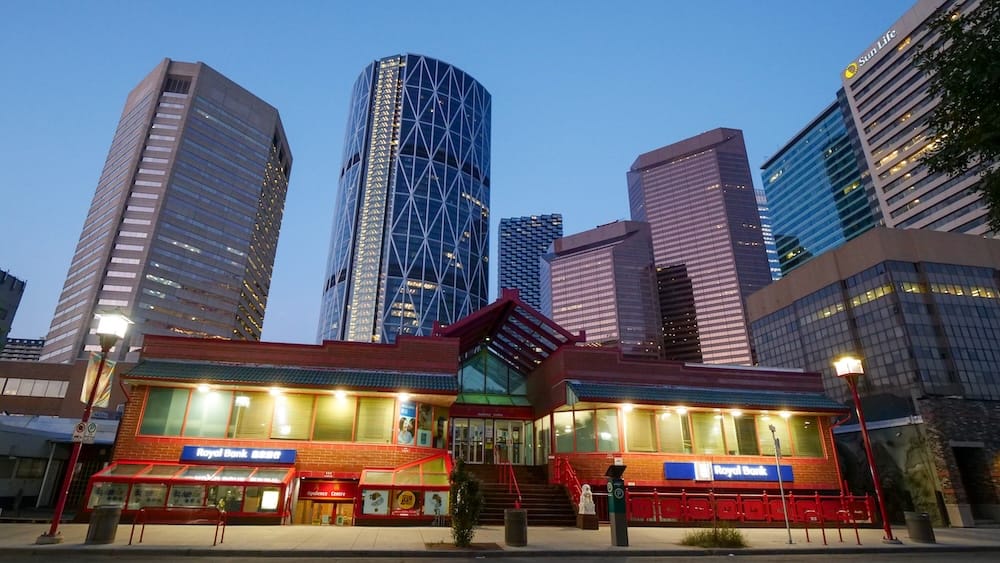
If your hotel is Downtown or in a well-connected inner-city area, a huge chunk of the sightseeing problem disappears.
You wake up and walk.
Maybe you use the CTrain.
Maybe you wander through the +15.
Maybe you take one bus later.
Compare that with saving money on a hotel much farther from the centre and beginning every morning with a 40-minute journey before the sightseeing day has even started.
Both travellers technically skipped the rental car.
Only one of them made the decision easy.
This is especially important because people often make travel decisions in isolation.
“Look how much cheaper this hotel is!”
Sure.
Now add the transportation.
Add the time.
Add the annoyance of travelling back after dinner.
Add the fact that you’re less likely to return to the hotel during the day because it’s inconvenient.
The cheapest room isn’t necessarily the cheapest trip.
If I were planning Calgary without a car again, location would be one of the first things I’d pay attention to. Since I don’t have a Calgary hotel from this trip that I can personally recommend, I’d rather give you choice than pretend one property is the answer: you can compare current hotels in Downtown Calgary and then check the exact location against the attractions and CTrain stations you actually plan to use.
You do not need to rent a car just because you’re flying into YYC
Airport arrival is another place where people can end up renting by default.
Calgary International Airport doesn’t have a CTrain station directly at the terminal.
There is, however, public transit into the city.
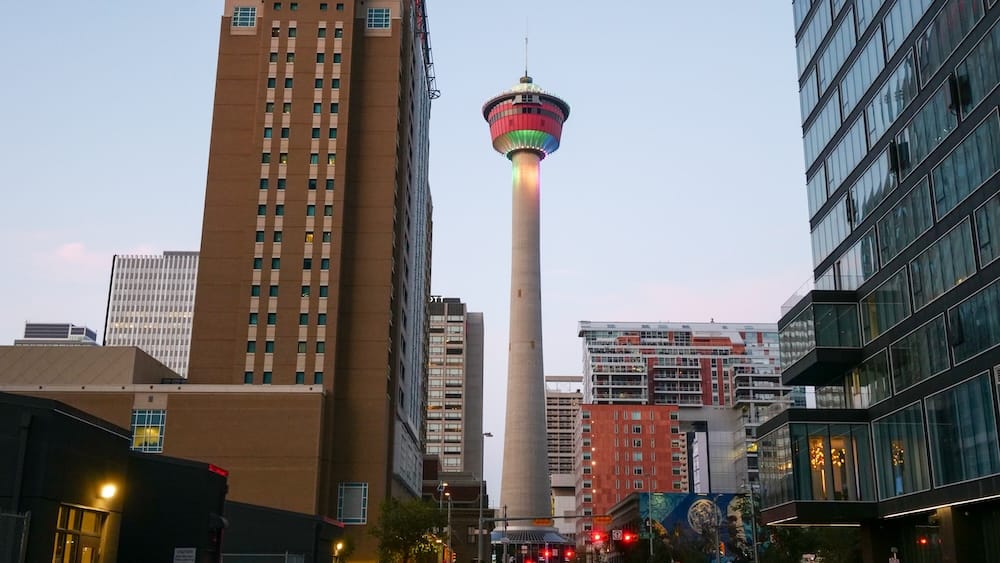
As of August 2026, Route 300 operates between YYC and Downtown, while Route 100 connects the airport with Saddletowne CTrain Station on the Blue Line.
One detail is changing almost immediately: Calgary Transit has announced that Route 300 will become Route 500 – Airport Express on August 31, 2026.
So if you arrive after that date and wonder why the Route 300 you read about seems to have vanished, that is probably why.
I haven’t personally tested the Calgary airport-to-Downtown bus, so I’m not going to pretend I can tell you how pleasant it feels after a long flight with two suitcases.
That’s a different question from whether the connection exists.
It does.
And you don’t have to commit to an all-or-nothing transport philosophy.
You could take a taxi or rideshare from the airport, stay Downtown, spend the next three days walking and using transit, and never rent a car.
That may be much more convenient than either extreme.
One thing I would check directly before travelling is the current airport fare. The current official information wasn’t explicit enough about whether a special airport fare applies for me to want to put a number here and pretend certainty.

Winter would make me plan the same trip differently
Our Calgary visit was in summer.
That’s important because Calgary in winter changes the physical experience of getting around even if the transit map remains the same.
We used the +15 when it was hot and appreciated the air conditioning.
In winter, the obvious appeal reverses: spend less time outside.
But the +15 doesn’t eliminate weather.
You still have to get from your hotel to the network.
You still have to leave it for attractions that aren’t connected.
Individual bridges have opening hours and occasional closures.
And Calgary Transit can use snow detours when road conditions make normal bus routing difficult.
So would I immediately rent a car for Calgary in winter?
No.
In fact, driving in winter introduces its own complications.
What I would do is become pickier about geography.
I’d value a hotel close to a CTrain station more.
I’d prefer direct rail journeys over complicated bus transfers.
I’d think harder about the outdoor walk at the other end.
And I’d avoid creating an itinerary where the entire day depends on perfectly timed connections across widely separated parts of Calgary.
The underlying rule doesn’t really change.
Your itinerary decides whether being car-free feels easy.
Winter just makes bad geography more obvious.
Our walking verdict does not apply equally to travellers with limited mobility
This is another area where I don’t want our experience to accidentally become bad advice.
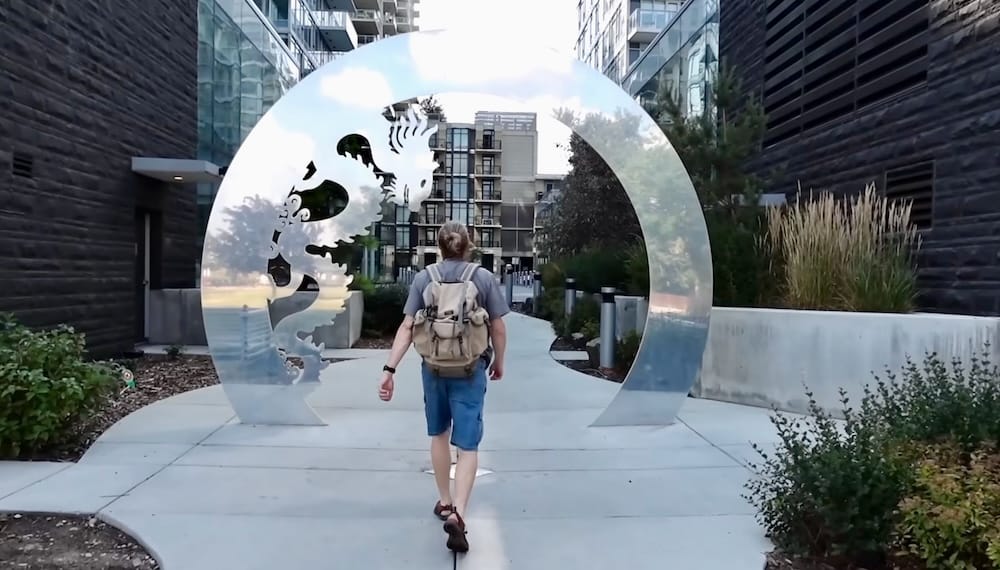
Audrey and I were able to walk all over central Calgary and finish the day without feeling wrecked.
That doesn’t mean everybody should.
Calgary Transit’s current accessibility information says its bus and CTrain fleet is accessible. Low-floor buses operate across the system, and CTrain stations have elevator, ramp or ground-level access.
But not every bus stop is accessible.
That caveat matters.
An accessible vehicle does not automatically create an accessible journey from hotel door to attraction entrance.
The same applies to the +15. Building access, elevators, closed connections and the route between the walkway and wherever you actually need to go can all matter.
Visitors who use accessible transit in their home city may also qualify for temporary Calgary Transit Access service for up to 30 days, subject to the system’s eligibility process.
If mobility is a major factor in your trip, I’d ignore broad claims that Calgary is “walkable” and test the exact journeys you need.
My legs aren’t your transportation plan.
When I would actually rent a car in Calgary
There are definitely Calgary trips where I’d rent one.
If I booked accommodation far outside the central core and planned to travel back and forth every day, I’d start doing the math.
If I had several must-see attractions scattered around the city and transit was turning each move into a connection-heavy journey, I’d consider it.
If I were carrying lots of luggage, travelling with someone who couldn’t comfortably handle substantial walking, or working around rigid appointment times, the convenience could easily justify the cost.
And then there’s the obvious scenario: Calgary isn’t really the whole trip.
Maybe you’re using the city as the beginning of a self-directed Alberta itinerary.
At that point, having a vehicle can open up a completely different style of travel.
Even then, I wouldn’t assume “Banff = rental car.”
There are commercial bus and shuttle services between Calgary, Canmore and Banff, so travellers who don’t want to drive still have options.
But there’s a big difference between taking a shuttle to Banff and designing a flexible road trip where you want to stop wherever you like.
Once your plans require that kind of freedom, the car starts earning its keep.
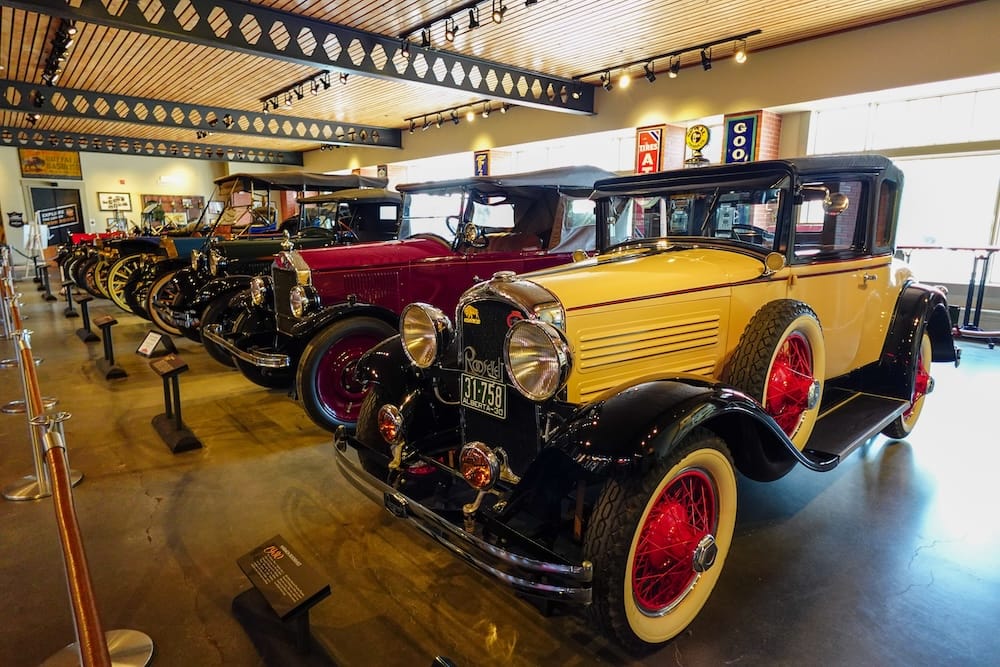
We didn’t rent a car for our Calgary sightseeing, so I wouldn’t pretend to recommend a particular rental company from personal experience. If your itinerary reaches the point where driving genuinely solves the problem, you can compare current car rentals in Calgary rather than renting simply because the city looked large on a map.
That’s separate from the question this article is actually answering.
Do you need a car to enjoy Calgary itself?
For many first-time visitors, I don’t think you do.
My rule for deciding whether Calgary without a car will work for you
I’d look at your itinerary before looking at rental prices.
Car-free Calgary makes a lot of sense if you’re staying centrally, most of what you want to see clusters around Downtown and the inner city, you’re happy walking, and the few farther attractions you care about have direct rail or sensible bus connections.
I’d lean toward renting if you’ve built an itinerary with several scattered destinations, you’re staying somewhere that makes every sightseeing day begin with a long transit trip, or the time lost to transfers starts outweighing the money you’re saving.
And I wouldn’t make the decision based on one awkward destination.
Our Heritage Park day taught me that.
We nearly skipped it because the route looked annoying.
Then we took the LRT, took the bus, arrived, had a fantastic day and wondered why we’d made such a fuss.
Sometimes Calgary really is easier than it looks.
The biggest mistake would be seeing a sprawling city on a map and deciding the answer before you’ve mapped the trip you’re actually going to take.
Calgary is enormous.
Our Calgary wasn’t.
Frequently Asked Questions
Do you need a car to visit Calgary?
Not necessarily. For our first proper Calgary visit, Audrey and I did almost all of our central sightseeing on foot and used transit selectively. I would not automatically rent a car for a centrally based trip.
Is Downtown Calgary easy to explore without a car?
For us, yes. We walked between Downtown, Chinatown, East Village, the riverfront and several major attractions without feeling like every move required transit. Audrey said Calgary felt like a small city you could cover on foot.
Is the CTrain free in Downtown Calgary?
Trips that begin and end inside Calgary’s current Free Fare Zone on the 7 Avenue corridor between Downtown West/Kerby and City Hall/Bow Valley College are free. Travel beyond that central segment requires a normal fare.
Can you reach Heritage Park without a car?
Yes. We reached Heritage Park by LRT and bus and found the journey much easier than we had expected. In the 2026 season, Route 402 runs from Heritage CTrain Station to Heritage Park about every 20 minutes from May through October, with other bus routes also serving the area.
How much does Calgary Transit cost in 2026?
The 2026 adult single fare is $4.00 and is valid for 90 minutes across buses and CTrains. The adult day pass is $12.65, while the weekend group day pass is $18 under Calgary Transit’s current group conditions.
Can you get from Calgary Airport to Downtown without renting a car?
Yes. Public transit connects YYC with the city. As of August 2026, Route 300 serves Downtown and Route 100 connects the airport with Saddletowne CTrain Station; Route 300 is scheduled to become Route 500 – Airport Express on August 31, 2026.
Is Calgary practical without a car in winter?
It can be, but I would plan more carefully than I did for our summer visit. The +15 can reduce outdoor walking, while hotel location, direct rail access, outdoor gaps and possible snow detours become more important.
When does renting a car in Calgary make more sense?
I would consider a rental when the itinerary includes several scattered attractions, peripheral accommodation, difficult transit connections, substantial luggage or a wider self-directed Alberta trip. The itinerary should decide the car question, not Calgary’s size alone.
This article is also available in Spanish. [Leé la versión en castellano: Calgary sin auto: ¿es realmente práctico?]
This article contains affiliate links. If you book through one of these links, I may earn a commission at no extra cost to you.