
If you give Calgary and Edmonton one week, the tempting thing is to divide the trip neatly down the middle. Three days in Calgary, three days in Edmonton, move between them somewhere in the middle and congratulate yourself on the symmetry.
That is basically where I land, but the symmetry is misleading. Audrey and I have spent proper time exploring both cities, and they eat up a travel day in completely different ways. Central Calgary was much easier for us to cover on foot than I expected. We wandered through Chinatown, downtown, the +15 network, the Central Library and the Bow River area without constantly plotting our next piece of transportation.
Edmonton is more spread out. Downtown matters, but so do Whyte Avenue and Old Strathcona, the river valley and West Edmonton Mall. When I lived in Edmonton as a university student, that wider geography was simply part of normal life. Coming back years later with Audrey and trying to experience the city as travellers made the distances much more obvious.
Then there are the two attractions with an appetite for time. Heritage Park in Calgary took most of a day and we still didn’t get through everything, while West Edmonton Mall can do something similar if you’re planning more than a reconnaissance mission through one of the world’s more ridiculous interpretations of a shopping centre.
So my version of a one-week Calgary and Edmonton city itinerary is three real Calgary days, a fourth day where the move to Edmonton is allowed to be an actual move, and three real Edmonton days. I wouldn’t add Banff, sneak Jasper into the middle or turn one of the cities into an airport night because a mountain appeared on the map and started looking seductive. This is a city trip, and one week is enough to do it properly.
How I would split one week between Calgary and Edmonton
Here’s the basic shape I would use:
| Day | Base | Main focus | Pace |
|---|---|---|---|
| Day 1 | Calgary | Chinatown, downtown, +15, Devonian Gardens and Calgary Tower | Moderate |
| Day 2 | Calgary | Central Library, The Confluence, Bow River and Prince’s Island Park | Moderate |
| Day 3 | Calgary | Heritage Park | Full |
| Day 4 | Calgary → Edmonton | Intercity transfer and an easy Edmonton arrival | Light |
| Day 5 | Edmonton | Royal Alberta Museum, Muttart Conservatory and central Edmonton | Full |
| Day 6 | Edmonton | West Edmonton Mall | Flexible to full |
| Day 7 | Edmonton | Old Strathcona, Whyte Avenue and the river valley | Moderate |
The important thing is to treat these as seven itinerary blocks, not seven sacred weekdays. That matters because Calgary and Edmonton both contain attractions with awkward calendars: the Royal Alberta Museum is normally closed Mondays, The Confluence operates on different days depending on the season, Heritage Park’s complete Historical Village is seasonal, the High Level Bridge Streetcar has a defined operating season, and Old Strathcona Farmers’ Market is currently a weekend affair.
Your actual Tuesday might therefore need to become my Day 5, while your Saturday could make far more sense as Day 7. Move the days around. The itinerary will survive.
Should you start in Calgary or Edmonton?
I’ve written this Calgary first because I like the rhythm of it. Calgary gives you two fairly compact urban days, Heritage Park becomes the big finale to that half of the trip, and then Day 4 works as a reset before Edmonton. I wouldn’t pay extra for a flight or destroy a convenient schedule just to preserve that order, though.
If arriving in Edmonton works better, reverse the trip. I’d care much more about your flight options, hotel prices and which days Heritage Park, the Royal Alberta Museum or the High Level Bridge Streetcar are operating than I would about defending Calgary as the official starting line. The route works either way.
Where I would stay for this Calgary and Edmonton itinerary
Because the first two Calgary days are so concentrated around downtown, Chinatown, East Village and the river, I would prioritize location over trying to shave a little money off the room by staying far outside the centre. I don’t have a Calgary hotel from this particular trip that I would single out as a personal recommendation, so I’d rather let you compare current Calgary hotels for your dates and look closely at central options that make Days 1 and 2 easy on foot.
Edmonton is a little different because I do have a hotel experience I can speak to directly. Audrey booked us into the Fairmont Hotel Macdonald for our babymoon, and I loved having downtown on one side and the river valley immediately below us on the other. It was a splurge rather than a budget recommendation, but if that historic-hotel experience appeals to you, you can check current Fairmont Hotel Macdonald availability. If you would rather compare locations and price levels more broadly, browse current Edmonton accommodation options instead.
I wouldn’t move hotels within either city for this itinerary. You’re already packing once in the middle of the week, which is enough suitcase administration for seven days.
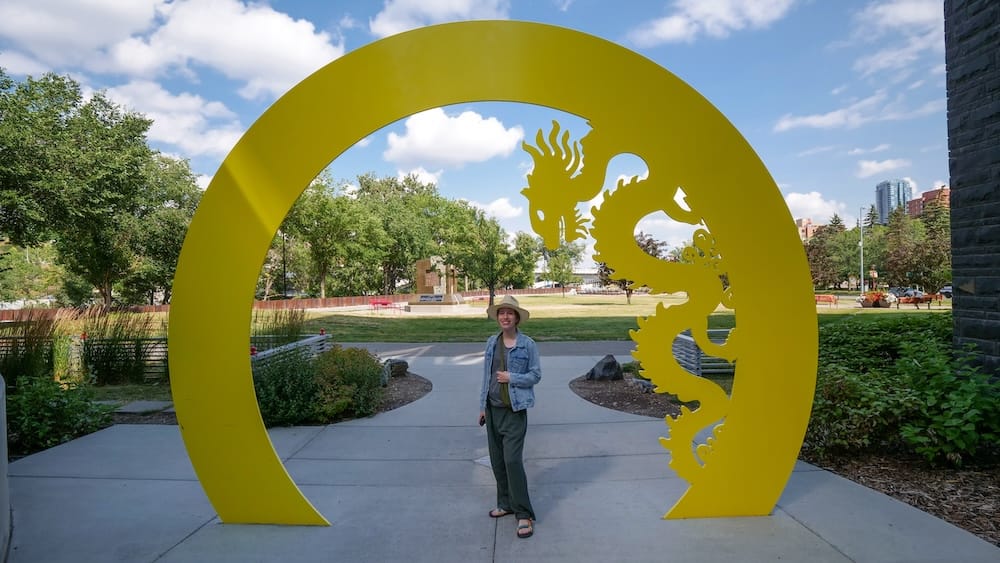
Day 1 — Calgary without making the first day harder than it needs to be
For years, Calgary was basically an airport in my head. Audrey and I had passed through plenty of times, but the city itself was usually where a bigger Alberta trip started rather than somewhere we lingered. When we finally came back and properly explored it, one of the first things that surprised me was how much of central Calgary we could cover on foot.
That makes it a forgiving place to begin a one-week trip. I would use the first day to move through Chinatown, downtown, the +15 network and Devonian Gardens, then save Calgary Tower for later if your legs and attention span are still cooperating. You get a lot of Calgary without having to understand the entire transit system before lunch.
If you’d rather get a broad orientation before navigating everything independently, there is also a current three-hour Calgary sightseeing bus tour that starts by Calgary Tower and covers a wider sweep of city landmarks. I didn’t take this tour, so I wouldn’t substitute somebody else’s guided experience for our own, but it is a practical alternative if you want an overview of the city before tackling the rest of the week yourself.
Start in Chinatown rather than racing straight for the skyline
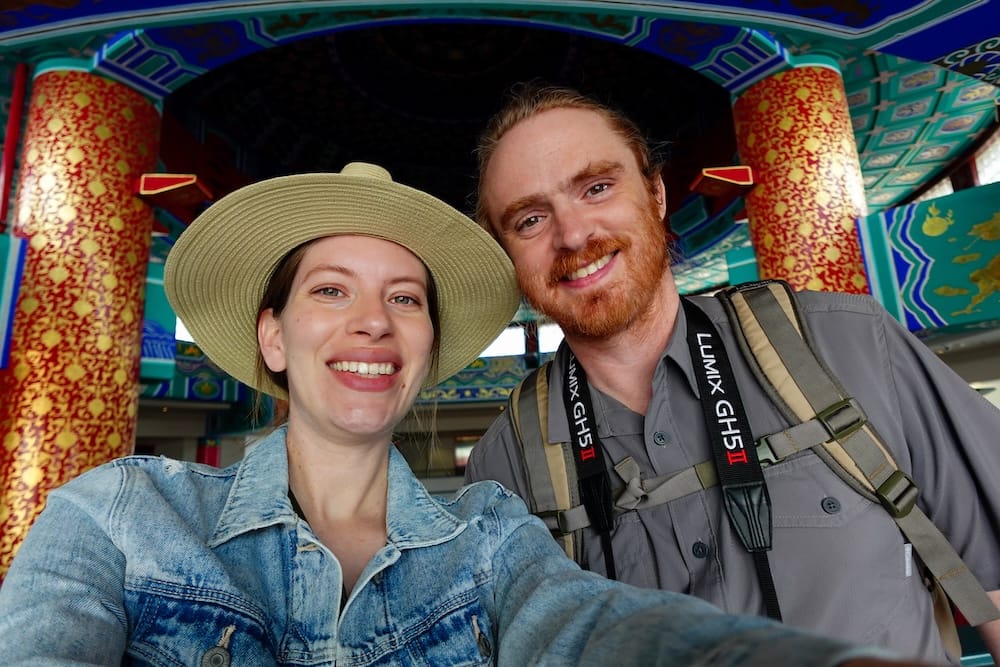
Calgary’s Chinatown gave us a much better introduction to the city than simply aiming at the tallest thing we could see. We visited the Chinese Cultural Centre, went downstairs to the Chinese Artifacts Museum, wandered around the neighbourhood and stopped at Sien Lok Park. It was one of the first parts of Calgary that started giving the city some texture for me.
This is also where I would consider eating. We had multiple dim sum meals in Calgary and learned the predictable lesson that there is a difference between wanting five dishes and having any sensible use for five dishes once they arrive. On one of our later meals we deliberately ordered less because our previous enthusiasm had come dangerously close to sabotaging the sightseeing that followed.
This is one of the less glamorous truths of itinerary planning: a serious lunch uses time, and it also uses stomach. Plan accordingly.
Use the +15 without turning it into a scavenger hunt
From Chinatown I would keep walking through downtown and spend some time inside Calgary’s +15 network. The system links downtown buildings through elevated indoor walkways, and we ended up moving through sections with food courts, artwork and all sorts of small connections between offices and commercial spaces.
We visited in summer, so the immediate advantage for us was air-conditioning rather than escaping a February deep freeze. I haven’t personally used the network during a Calgary winter, and I wouldn’t pretend otherwise just because winter is what the +15 is famous for among visitors. It was still useful—and interesting—during warm weather.
The trick is not to get weird about it. You do not need to complete the +15, and there is no boss battle waiting at the final walkway. Use it as part of the way you explore downtown and then resurface when something at street level interests you.
Devonian Gardens is exactly the right amount of strange
Devonian Gardens fits naturally into this part of the day because it sits inside CORE Shopping Centre. The first time you walk into it, the concept takes a second to process: a substantial tropical garden several floors up inside a downtown shopping centre.
There are plants everywhere, pools and fish, plenty of places to sit and a large glass ceiling pulling daylight into a space that doesn’t feel much like a mall once you’re properly inside it. I liked it partly because it was unusual and partly because it didn’t ask much from us. You can stay a while, sit down and keep going, which is useful on a first day when I wouldn’t want every hour tied to admission windows and timed tickets.
Calgary Tower can wait until later
I would leave Calgary Tower loose rather than wedging it into the itinerary at an exact time. Its current schedule generally extends well into the evening, and that gives you some room to see how the day develops. Tickets are now dynamically priced, so the fixed amount we paid during our visit is no longer useful planning information.
From the observation deck, the city made more sense to me. Downtown looks dense from street level, but from above you can see how quickly Calgary opens up. Green spaces interrupt the towers, neighbourhoods spread outward, and on a clear enough day the Rockies sit on the horizon.
That view reinforced something Audrey and I had already been noticing: Calgary felt far less intense than I expected for a city of its size. We did a lot, yet it rarely felt as though the city was squeezing us. If you’re exhausted by the end of Day 1, skip the Tower and move it somewhere else. The point of having a week is that you can occasionally behave like a human being.
Day 2 — Architecture, Calgary history and a long walk by the river
Day 1 is mostly about learning how central Calgary fits together, but for Day 2 I would let the city spread out a little. Start with the Central Library, move through East Village toward The Confluence, and then spend the later part of the day along the Bow River and Prince’s Island Park. It gives you architecture, history and green space without trapping you inside buildings from breakfast until dinner.
Calgary Central Library deserves the tourist treatment
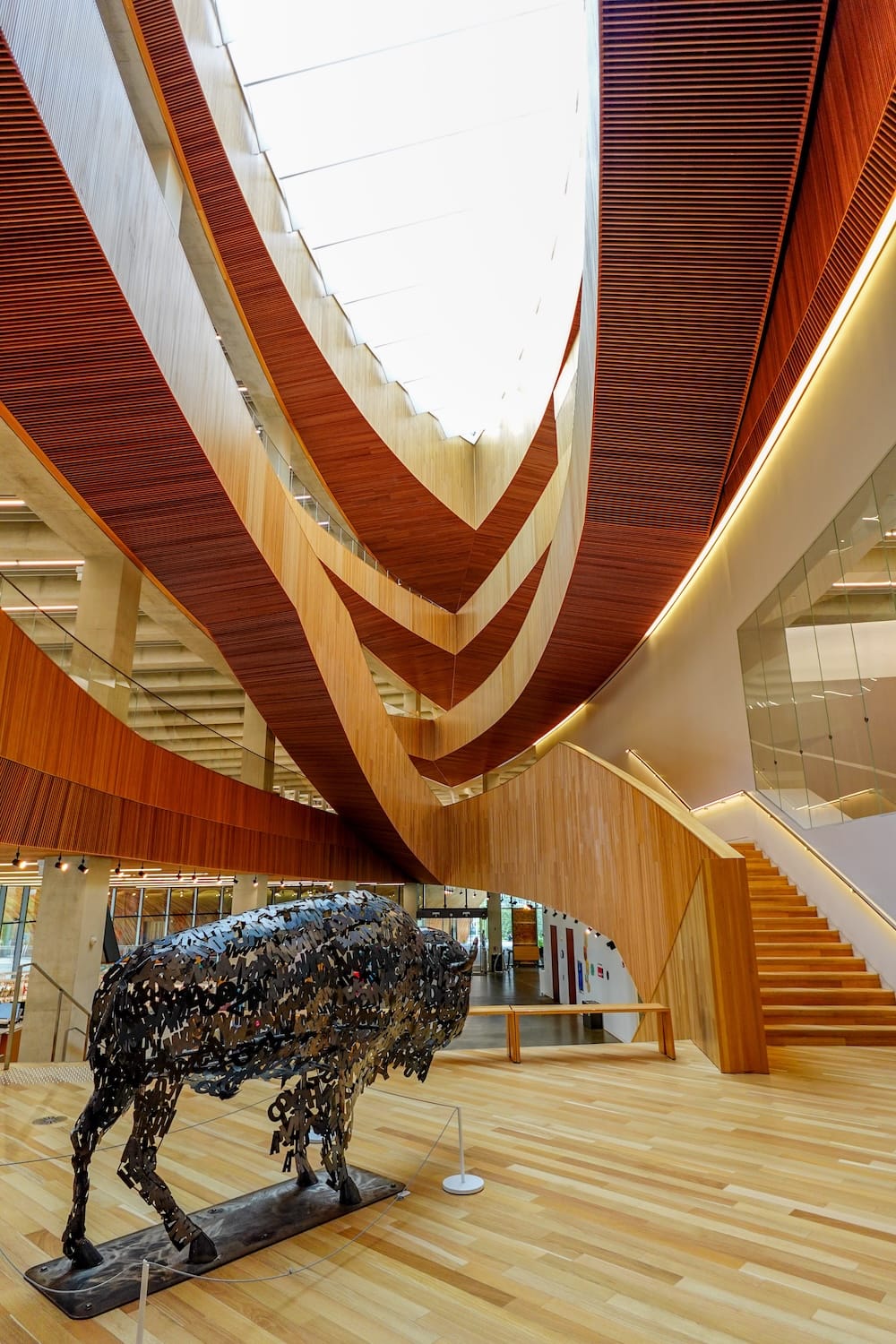
I don’t automatically seek out public libraries when I travel, but Calgary Central Library changed my mind rather quickly. Audrey and I walked in and ended up spending far more time than expected looking around the sweeping timber interior, staircases, open atrium and different levels of the building.
It is a functioning library rather than an attraction built solely for visitors, which I actually think improves the experience. You’re looking at a piece of Calgary civic life rather than entering another room whose entire purpose is to sell you Calgary.
One current scheduling quirk is worth knowing: Central Library opens at noon on Sundays, rather than in the morning as it does on its other regular operating days. If your architecture day lands on Sunday, don’t stand outside becoming increasingly hostile toward literacy. Swap the order.
Walk from East Village toward The Confluence
From the library, The Confluence fits naturally into the same broader part of Calgary. We visited the site when many people still primarily thought of it as Fort Calgary. The current name, The Confluence Historic Site & Parkland, better reflects a much longer story tied to the meeting of the Bow and Elbow Rivers and the people who lived, travelled and gathered in this area long before Calgary became the city surrounding it.
For this itinerary, I wouldn’t turn the stop into a complete Calgary history lesson. There are dedicated places for that, and what matters here is that the site changes the way you look at the modern city around it.
One practical issue does deserve attention: its current operating days vary seasonally. It is open more frequently during the warmer part of the year and on fewer days later in the season, which is exactly why I would arrange the days around your calendar rather than expect the calendar to obey my table.
Then stop optimizing and walk beside the Bow
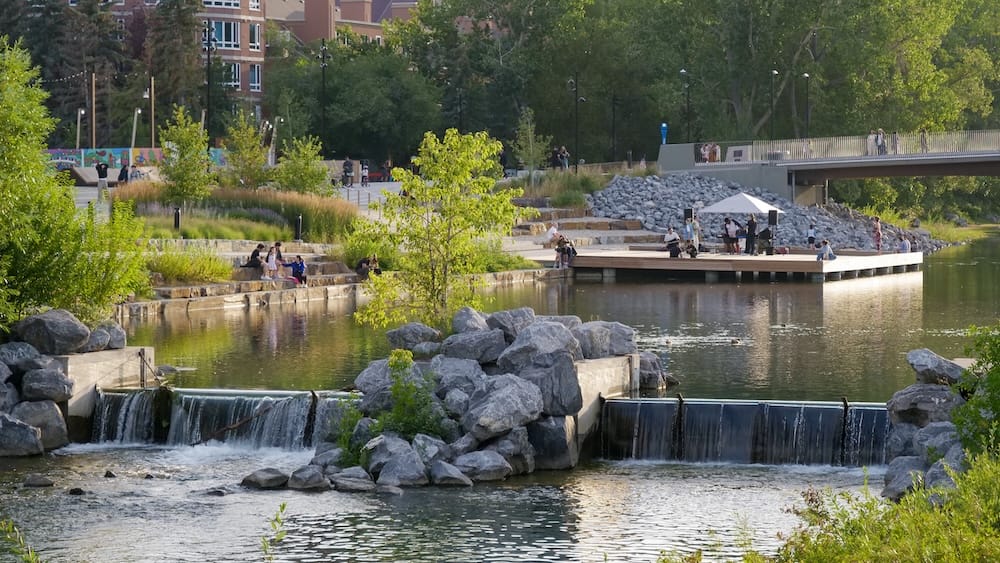
Somewhere around this point I would abandon the idea that every hour needs an attraction attached to it. The Bow River was one of the things I enjoyed most about Calgary, and we spent time walking beside the water, watching cyclists move along the pathways, seeing people out paddling and rafting, and eventually exploring Prince’s Island Park.
We didn’t raft ourselves, so I’m not going to convert somebody else’s afternoon on the river into one of my recommendations based on experience. Walking was enough for this trip.
Prince’s Island Park was particularly good at demonstrating the Calgary contradiction I kept noticing. We visited on a busy summer weekend with people walking, cycling, taking wedding photos, dancing, playing music and generally occupying the park in every possible way, and somehow it still felt calm.
That sense of space ended up being one of my strongest impressions of Calgary. I had expected the attractions to be the reason we’d enjoy the city; I didn’t expect simply moving around it to be such a large part of the appeal.
Keep dinner free
This is another day where I would resist attaching an evening attraction simply because there’s still daylight. Calgary was excellent to us on the food front, and we had dim sum, ginger beef, brunch, sushi and, naturally, a Caesar—the cocktail the city gave Canada.
There are plenty of dedicated food decisions you can make elsewhere in the cluster. For this itinerary, what matters is leaving yourself enough time and appetite to enjoy dinner. That sounds obvious until you travel like we sometimes do; then it becomes advanced strategy.
Day 3 — Heritage Park gets the day because Heritage Park takes the day
I would not give Heritage Park a morning. I would give it Day 3.
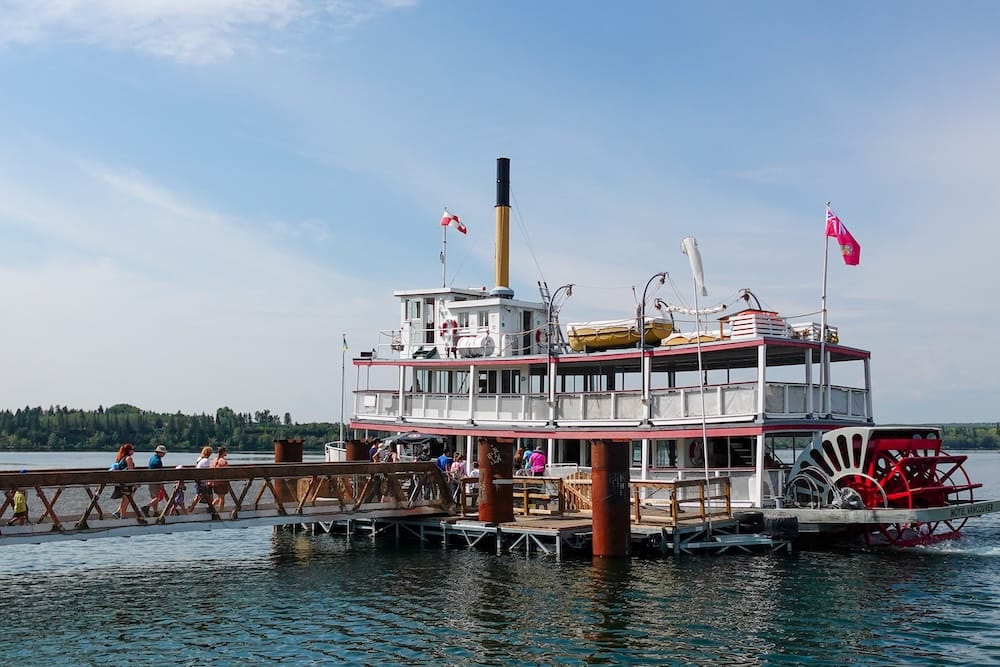
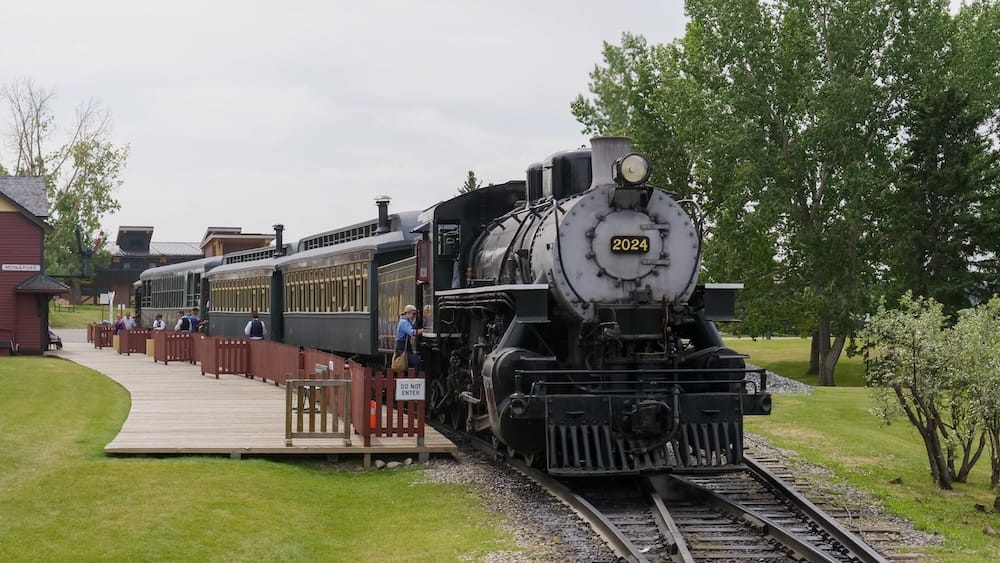
Before Audrey and I went, we weren’t entirely convinced that travelling out from central Calgary for one attraction would justify the effort. Then we started doing things: we rode the steam train and streetcar, went out on the paddlewheel boat, wandered through the historic streets and buildings, saw farm animals, stopped for food and eventually made our way through Gasoline Alley Museum.
We still didn’t reach the amusement area. At some point the question changed from Is there enough here to justify the trip? to How on earth did we run out of hours? That is why I would protect the entire day.
Sixty-five acres behaves like sixty-five acres
The Historical Village covers roughly 65 acres, which is the kind of number that means something only once you’ve been walking around it for several hours. Heritage Park isn’t a single building where you follow the exhibits until the gift shop mercifully spits you back into daylight.
It spreads, and each new section creates another decision. Do we go into that building? Take the train? Wait for the boat? See Gasoline Alley now or later? The transportation turned out to be one of our favourite parts, and apparently if you give two grown adults access to historic trains, streetcars and boats, we revert almost immediately to the mental age where every moving vehicle needs to be ridden.
I’m fine with that. It was fun, and because we’d been doubtful going in, Heritage Park ended up being one of the clearer surprises of our Calgary visit.
The complete Heritage Park experience is seasonal
This part matters if you’re using the itinerary literally. For 2026, the Historical Village season runs from May 16 through October 12, with 10 a.m.–5 p.m. operating days. It runs daily through August 30 before shifting to a more limited weekend schedule into autumn.
Gasoline Alley Museum and parts of Heritage Plaza operate beyond the main Historical Village season, but that isn’t the same thing as the full experience we had. If you’re travelling when the Historical Village is operating, I would keep this day exactly as written. If it isn’t, replace Day 3 with another Calgary city day rather than pretending Gasoline Alley by itself is equivalent simply because both experiences use the same address.
Individual rides can also be affected by maintenance and operations, so if the steam train or S.S. Moyie is central to your plans, check the Heritage Park operation updates shortly before you go.
We reached Heritage Park without renting a car
Audrey and I used Calgary public transit for our visit. It took more effort than walking out the hotel door and into downtown, obviously, but that was part of why the attraction had been such a question mark for us in the first place. Would travelling all the way out there be worth it? Yes.
The current transit connections are worth checking immediately before your visit because routes and seasonal services change, but a car is not mandatory simply because Heritage Park sits outside the central cluster.
Once you’ve made the journey, though, stay. Trying to attach Calgary Tower, another museum and an elaborate evening sightseeing programme to the end of Heritage Park is the sort of planning decision that looks brilliant on a laptop and slightly psychotic by 6 p.m. Have dinner instead.
Day 4 — Move to Edmonton and don’t lie to yourself about how long moving takes
Day 4 is the hinge, and it is also the least photogenic part of the itinerary. There is no attraction that needs conquering here. The job is to check out, move roughly 300 kilometres north, deal with your luggage, check into another hotel and still arrive in Edmonton with enough enthusiasm to appreciate being there.
I have not personally made this exact Calgary-to-Edmonton transfer as part of the trip described in this article, so this is the one part of the week where I’m building the recommendation around the current transport options rather than our own journey between the two cities. You can drive, take a coach or fly, but the useful comparison isn’t which mode looks fastest in isolation. It’s how much of Day 4 you actually get back when the whole journey is counted.
Driving is straightforward if you already need the car
Calgary and Edmonton are roughly 300 kilometres apart, with the direct highway journey taking around three hours in favourable conditions. Favourable conditions are doing quite a bit of work in that sentence, because traffic, construction, weather, fuel, food and the realities of travelling with a human bladder can all stretch the drive.
Still, if a rental car is already part of a bigger Alberta trip, driving makes sense. If you want to price that option against coach or air travel, you can compare current Calgary car rentals before deciding whether having a vehicle is worth the extra cost and parking for the rest of the week.
For this particular itinerary, I wouldn’t rent one purely because the province is enormous. The Calgary days can work with walking and transit, and Edmonton also gives you enough public transportation to build these three days without keeping a car solely for city sightseeing.
The coach is far more useful than glamorous
For a car-free trip, I would look closely at the intercity buses. Red Arrow currently puts its average Calgary-to-Edmonton travel time at about 3 hours 45 minutes, and the important part for this itinerary is that downtown boarding and arrival options exist. Rider Express also serves the corridor, with journey times varying by departure.
The specific timetable will change, but the structural advantage doesn’t. If you’re sleeping downtown in Calgary and planning to sleep downtown in Edmonton, a city-centre coach can remove the airport journeys sitting at both ends of a flight. It’s not sexy, but neither is hauling luggage through two airports for a flight that spends only about an hour in the air.
Flying isn’t really a one-hour journey
Direct Calgary–Edmonton flights do exist, and the scheduled airtime can be around an hour. If you’re already at YYC because the flight fits into a larger journey, that can be useful, but if you’re beginning at a Calgary hotel and ending at an Edmonton hotel, the equation also includes reaching Calgary airport, checking in, security, waiting, flying, landing at Edmonton International Airport and travelling back into the city.
The one-hour number is real. It just isn’t the whole trip.
If the airport logistics genuinely work better for your wider journey, you can compare current Calgary-to-Edmonton flights. I would compare the complete door-to-door day rather than let the flight time make the decision by itself.
Once you’re in Edmonton, stop
Check in, have dinner and walk if you feel like walking. Do not look at your phone at 6:30 p.m. and decide that you’ve “wasted” the afternoon because you haven’t visited anything with an admissions desk.
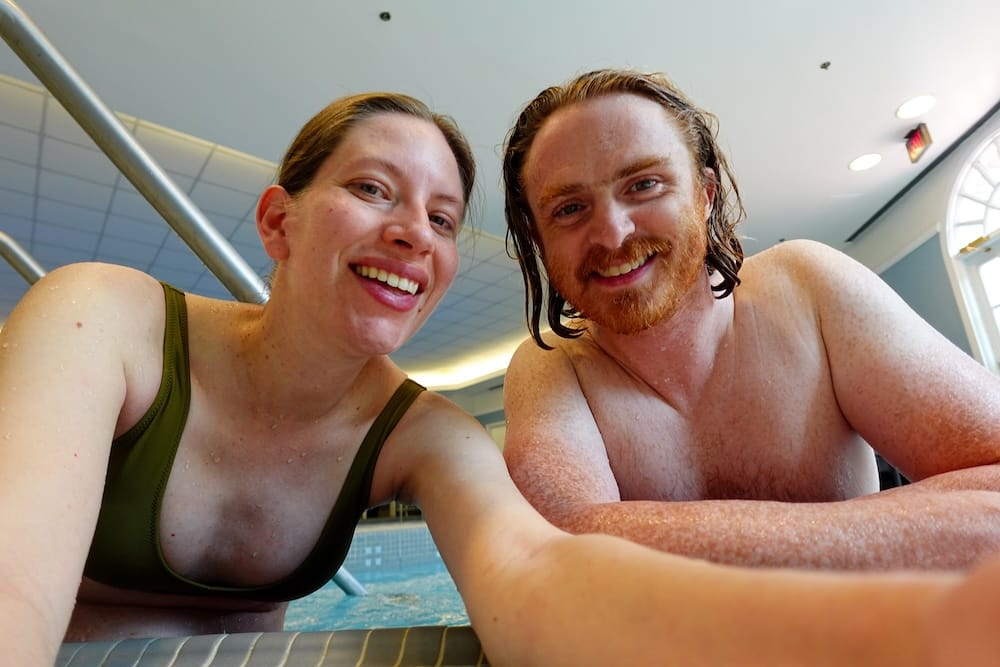
On our Edmonton return, Audrey had booked the Fairmont Hotel Macdonald as a babymoon break during a broader Alberta trip. The stay wasn’t attached to this exact transfer, but I remember how good it felt to deliberately slow down for a night before we started sightseeing properly. The hotel had a pool, we ate in the Gold lounge and we went for an evening walk overlooking the river valley.
Nothing needed to be conquered, and that slower rhythm improved the trip. I’d steal the same idea here. Tomorrow can be busy.
Day 5 — Edmonton museums without attempting cultural self-destruction
I always tell people to get beyond downtown Edmonton, and I mean it, but you should still see downtown. For your first full day, I’d build around the Royal Alberta Museum and Muttart Conservatory, then use whatever time and energy remain for central Edmonton and the ICE District.
That is already enough. Museums have a strange ability to fool itinerary planners because they look small on Google Maps, but unfortunately your brain does not measure exhibits in square kilometres. If you actually care about what you’re looking at, museum fatigue is real.
Let the Royal Alberta Museum control the calendar
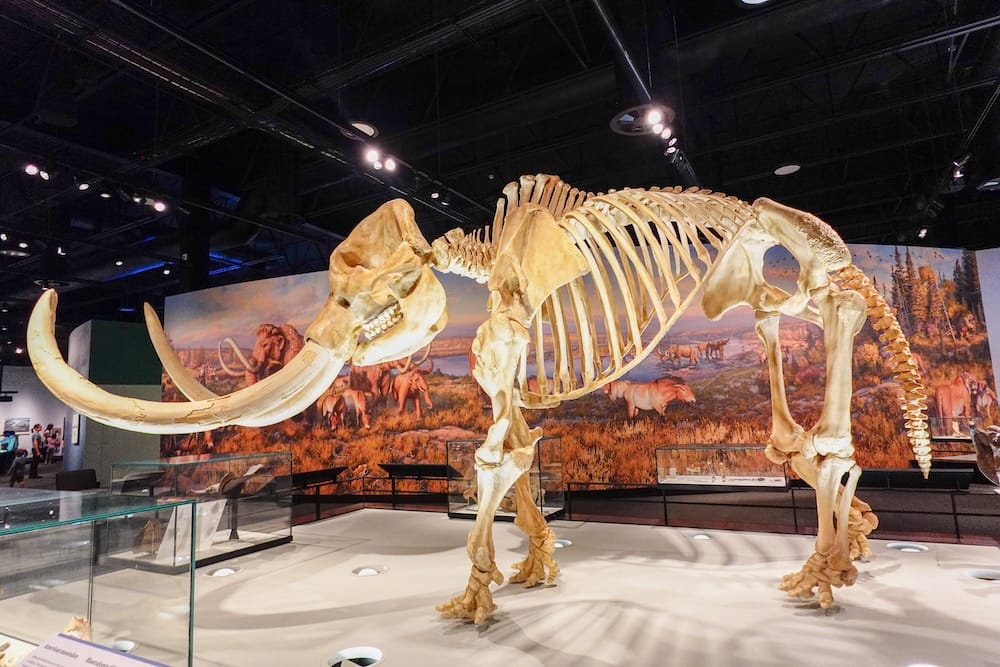
Audrey and I really enjoyed the Royal Alberta Museum. Its galleries gave us a broad look at Alberta through human history and natural history, including Indigenous communities, dinosaurs, Ice Age material and the wildlife found across the province. For a Calgary-and-Edmonton city trip that isn’t continuing into Banff or Jasper, I think that wider Alberta context becomes even more worthwhile.
What I would not do is blindly attach RAM to Day 5 regardless of the weekday. It is currently closed on regular Mondays, while Thursday has later opening hours than the museum’s other standard days. This is one of the main reasons the itinerary table at the top should bend around your dates.
If your Day 5 lands on Monday, move the museum day. Do not rage against the concept of calendars.
Muttart changes the mood completely
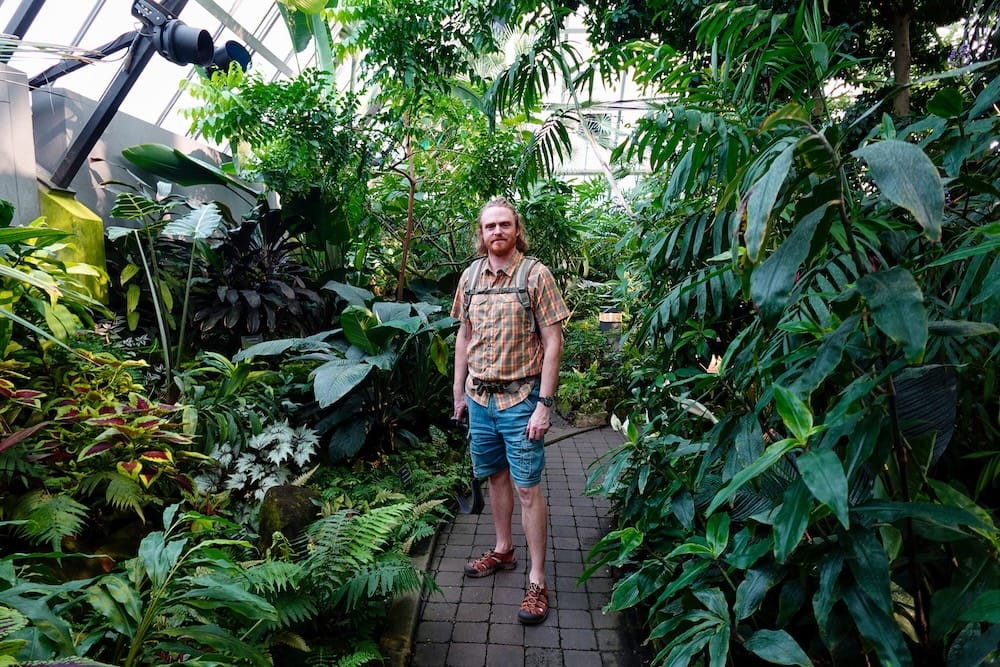
Muttart Conservatory is a much better companion to RAM than another conventional museum would be. The glass pyramids contain different botanical environments, and moving between them changes not only what you’re looking at but what the room actually feels like.
The tropical pyramid was lush, humid and hot enough that Audrey said it felt like being back in parts of South America. Then we entered the arid pyramid and I immediately perked up. I can handle dry heat; humidity drains me, and given a choice between being baked and being steamed, apparently my body has selected baked.
The arid section had cacti and thorny plants everywhere, while other pyramids shifted through temperate vegetation and a changing feature display. That contrast is what makes Muttart work nicely inside a longer itinerary because it doesn’t feel like you’ve simply walked out of one museum and into another set of display cases.
Muttart also helps with the scheduling problem. It currently operates on Mondays, when RAM normally doesn’t, and has later evening hours on Wednesday and Thursday. Let the more restrictive attraction dictate the order.
The ICE District doesn’t have to become a hockey game
We spent time around Rogers Place and the ICE District as part of our Edmonton sightseeing. That area hits me differently because I used to go to Oilers games when I was a university student. Back then the team played at the old arena, so walking through the modern downtown district felt like one of the more obvious examples of Edmonton changing while I was gone.
We didn’t attend a game on our return, so for this itinerary I wouldn’t build an imaginary Oilers night around an experience we didn’t have. Walk around, see Rogers Place, and if you have tickets for a game or concert, terrific—that becomes the evening and probably changes the entire day.
Otherwise, it works perfectly well as part of seeing modern downtown Edmonton. And if RAM and Muttart have already fried your brain? Go eat.
Day 6 — West Edmonton Mall depends on what you actually want from West Edmonton Mall
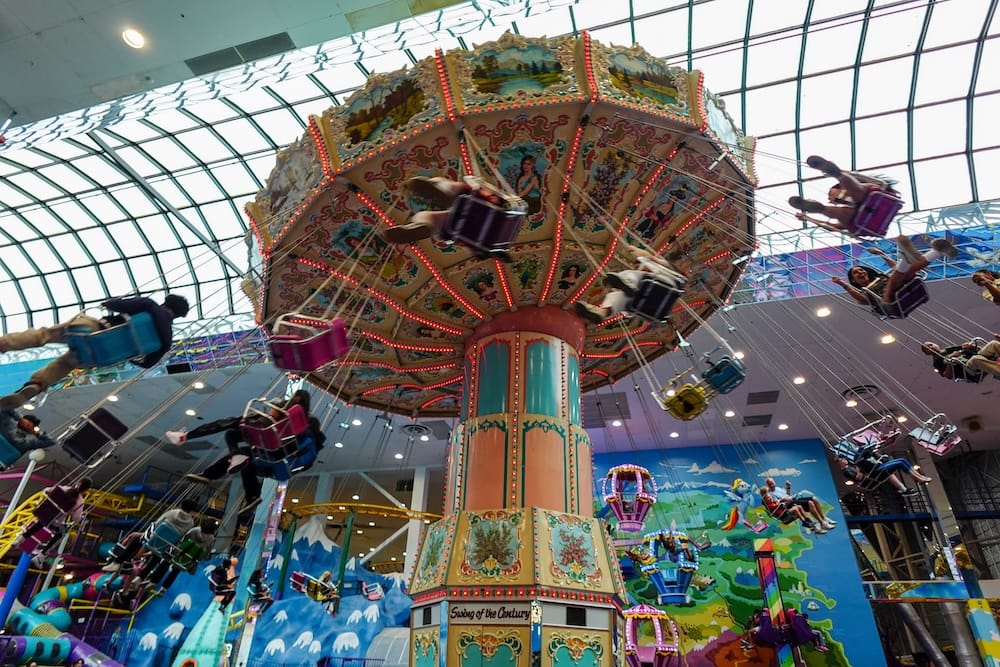
West Edmonton Mall is where itinerary confidence goes to die. You arrive thinking you understand what a mall is, and then you encounter a pirate ship, an ice rink, an amusement park, a waterpark, restaurants, hotels and—somewhere among all of that, allegedly—shops.
When we first arrived, Audrey described the place as overwhelming, and I cannot improve on that. The mistake is assuming that because WEM is enormous, everybody needs to spend the same amount of time there. You don’t.
If you mainly want to see the spectacle, give it several hours
If shopping isn’t a major part of your travel life and your goal is mostly to understand why West Edmonton Mall became famous, a flexible half-day can work. That’s closer to how we approached it.
We ate around Bourbon Street, wandered through different parts of the mall, saw the indoor lake area and pirate ship, looked at the ice rink and Galaxyland and generally spent our time reacting to the fact that every few minutes another improbable thing appeared inside the building.
You don’t have to complete WEM, and I am not convinced WEM can be completed.
Galaxyland or World Waterpark changes the equation
If Galaxyland or World Waterpark is one of your priorities, then Day 6 stops being a mall sightseeing day and becomes an attraction day. Those facilities run on their own schedules and have their own ticketing systems. Galaxyland currently encourages advance purchasing and checking ride-maintenance information, while World Waterpark uses date- and time-based ticketing.
If either one matters, check the current West Edmonton Mall hours and attraction schedule before you arrive. Once you’ve committed to one of the major attractions, I would stop trying to turn the rest of Edmonton into an evening bonus round.
West Edmonton Mall has an extraordinary ability to consume time without asking permission. There’s walking and eating, and there is always one more thing around the corner that makes you stop and say, “Why is that in here?” Let it happen.
You are allowed to leave early
The other side of this is equally important. If you spend three or four hours wandering around and think, Yep, I understand West Edmonton Mall now, leave. You don’t need to manufacture enthusiasm because the attraction is famous.
Use the remaining day for something quieter: spend longer in the river valley, add another museum you had to sacrifice on Day 5, or have a meal somewhere that requires leaving the mall. The correct amount of West Edmonton Mall is the amount that matches what you actually enjoy doing.
Day 7 — Whyte Avenue is where I want you to see another Edmonton
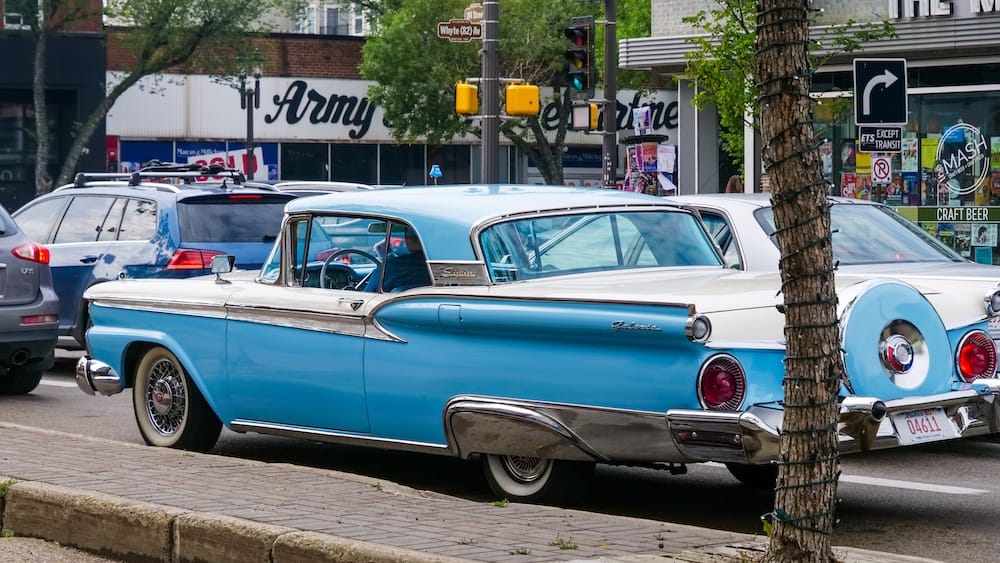
I would deliberately save Old Strathcona and Whyte Avenue for the last Edmonton day because this is the part of the itinerary where my former life in Edmonton matters most. When I was at university, Whyte Avenue was woven into ordinary life: I worked nearby, ate there, went out there, had favourite places and knew the area without thinking of any of it as sightseeing.
Returning years later with Audrey made me look at it differently. For me, the day was soaked in nostalgia; for Audrey, it had no nostalgia at all. She told me visiting Whyte Avenue changed her perception of Edmonton, and that is the reaction I think matters most for a first-time itinerary.
I’d always believed visitors needed to leave downtown to understand the city properly. Now I had somebody seeing Edmonton for the first time telling me essentially the same thing from the opposite direction.
The High Level Bridge Streetcar makes a brilliant seasonal entrance
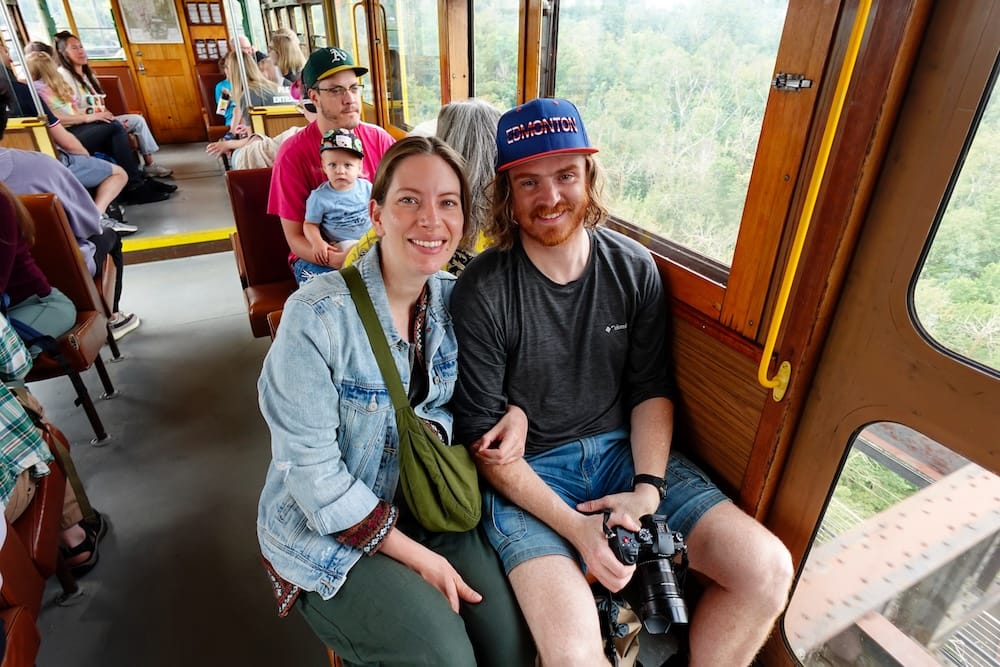
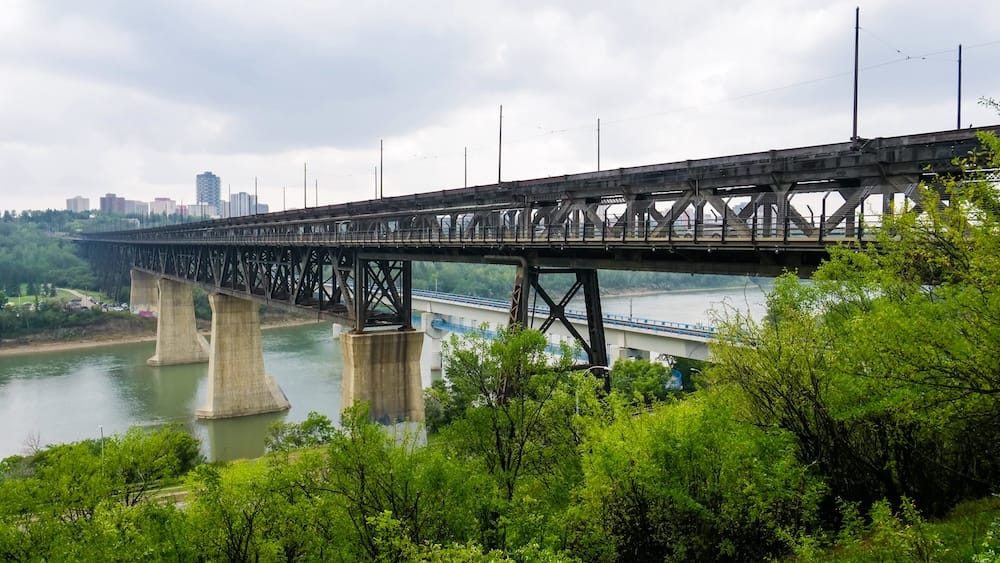
One of the most enjoyable things we did in Edmonton was ride the High Level Bridge Streetcar into Old Strathcona. I had seen it when I lived in Edmonton and somehow never bothered to ride it, so coming back as a tourist finally fixed that.
The streetcar crosses high above the North Saskatchewan River and turns transportation into part of the attraction. The particular car we rode had come from Melbourne and still carried remnants of its Australian life, which is the kind of gloriously random detail I enjoy far more than I probably should.
The current 2026 service is seasonal, running from roughly mid-May into October rather than operating throughout the year, and it’s first come rather than something you reserve ahead. One practical detail from our visit is now completely obsolete: when we rode, we described the streetcar as cash-only, but current service accepts cash as well as debit, credit and mobile payments.
Check the High Level Bridge Streetcar schedule close to your trip because operating days and departures matter. If it isn’t running, don’t abandon the day; go to Old Strathcona another way. Whyte Avenue is the destination. The streetcar is the very enjoyable delivery system.
Whyte Avenue needs wandering time
I wouldn’t come here with a rigid list. Walk the avenue, go into shops, stop for food and look at the older streetscape to see how different this part of Edmonton feels from the ICE District.
During our visit I took Audrey back through some of my old stomping grounds and eventually returned to DaDeO, a Cajun and Creole restaurant I used to visit regularly when I was a student. That meal had a lot more emotional weight for me than it did for Audrey because I wasn’t simply eating a po’boy; I was dropping myself back into a version of Edmonton I hadn’t seen in more than a decade.
But the interesting part for this itinerary is that Audrey didn’t need any of that history to like the neighbourhood. She encountered it as a visitor, it worked anyway, and that is why I would never build an Edmonton itinerary entirely around downtown attractions.
The farmers’ market can make a weekend day even better
Our visit lined up beautifully with Old Strathcona Farmers’ Market and the Edmonton Fringe Festival, creating a wonderfully messy day. We went from the streetcar to the market, got distracted by Fringe performances, wandered around Whyte Avenue and kept changing our immediate plan because something else was happening nearby.
I loved it, but I would not promise it. The farmers’ market currently operates Saturday from 8 a.m.–3 p.m. and Sunday from 11 a.m.–3 p.m. Fringe, naturally, is an annual festival rather than a permanent condition of the neighbourhood.
If your Edmonton portion includes a weekend, I would strongly consider assigning Old Strathcona to one of those days so the market becomes available. If you’re there midweek, Whyte Avenue still deserves the time.
End beside the North Saskatchewan River
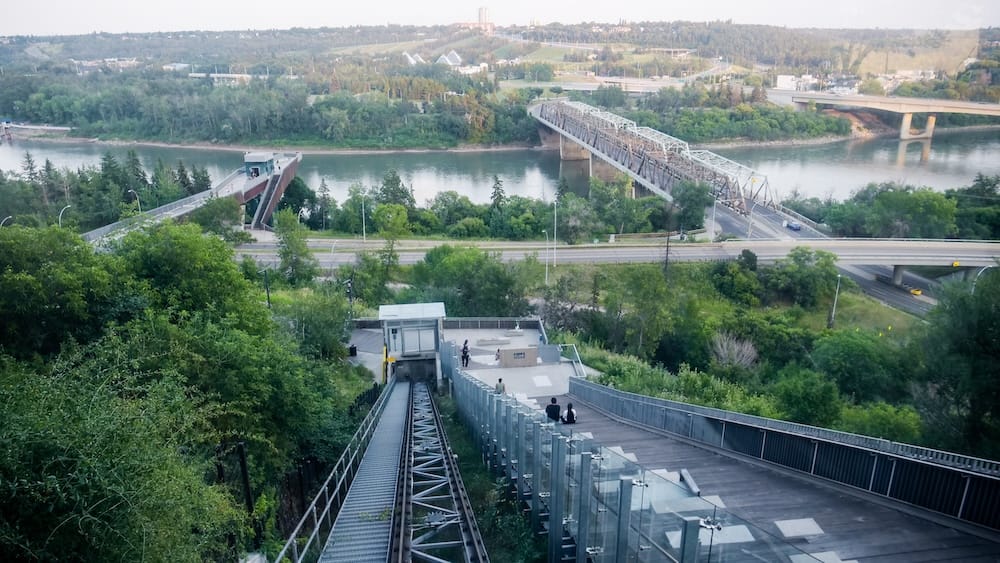
If you finish Old Strathcona with enough daylight and energy left, I’d spend the last part of the trip around Edmonton’s river valley. This was one of my favourite parts of living in the city, and I used to jog, walk and inline skate along these trails.
Returning years later and seeing how the riverfront had evolved was genuinely satisfying. Some things felt immediately familiar; other pieces of infrastructure, including the downtown funicular connection, didn’t exist when I lived there.
You can approach the valley from many places, which is why I wouldn’t turn the final hours into another compulsory route. Just get down there, walk and look back toward the skyline. Give Edmonton a chance to finish as something greener and quieter than the mall, arena and downtown towers.
If you’d rather cover more of Edmonton and the river valley with somebody else handling the route, a current three-hour Edmonton city and river-valley bike tour includes a bike and helmet and passes through several of the areas discussed in this itinerary. I didn’t take that tour myself, but it is a useful alternative for travellers who would rather see more ground by bike than finish the week entirely on foot.
For me, the river valley and Whyte Avenue are the parts that stop Edmonton from becoming a collection of attractions. They make it feel like Edmonton.
The itinerary changes with the season, but the structure still works
The firsthand trips behind this itinerary were heavily summer-based, and I don’t want to disguise that. Some of the exact experiences we had simply aren’t available year-round: Heritage Park’s complete Historical Village has a defined season, the High Level Bridge Streetcar does too, the farmers’ market depends on the day of the week, and outdoor riverfront time changes considerably when Alberta decides that your face should hurt.
The solution isn’t to pretend this is an identical January and July itinerary. It’s to preserve the shape of the week and swap the parts that don’t operate.
Outside Heritage Park’s main season
Give Calgary another substantial city day. Gasoline Alley Museum may still be available, but don’t treat it as a substitute for the entire Historical Village experience.
You can spread Days 1 and 2 more generously, add another indoor attraction or museum from the city, or simply leave more breathing room. What I would not do is automatically fill the vacancy with Banff, because that changes the commission completely.
Outside streetcar season
Keep Old Strathcona and lose the streetcar. Take regular transit or another practical connection to Whyte Avenue and spend the day in the neighbourhood. The streetcar adds character; it does not create the character.
If you barely care about West Edmonton Mall
Take your half-day and run. There is no requirement that every traveller enjoy an enormous mall to the same degree, so use the recovered hours elsewhere in Edmonton.
On the other hand, if you’re bringing children, love amusement parks or have always wanted to spend a Canadian afternoon hurtling down waterslides while it’s freezing outside, WEM can quite happily expand to fill Day 6. The itinerary should respond to you, not the other way around.
Can you do this whole week without a car?
Yes, and I think this is one of the more useful things about pairing these particular city experiences. Audrey and I walked most of central Calgary and used transit for places farther out, including Heritage Park.
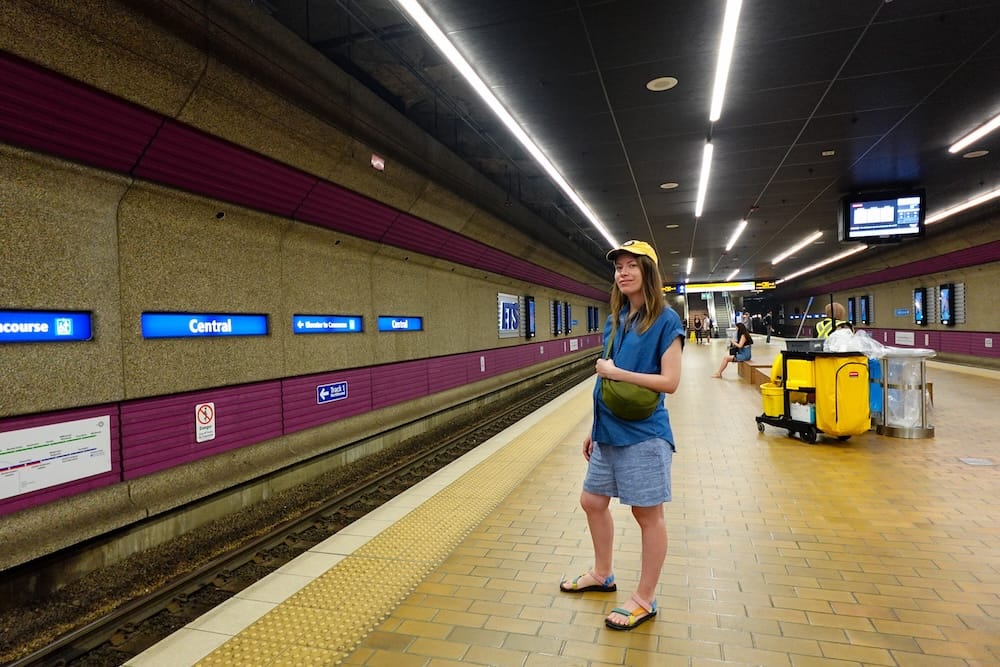
In Edmonton we used LRT, bus and the High Level Bridge Streetcar during our sightseeing. Current ETS payment is also easy for short-term visitors because contactless credit and debit can be used rather than forcing everyone to buy a dedicated transit card.
The cities themselves don’t require a rental car for this itinerary, and the Calgary–Edmonton move doesn’t either because scheduled coaches connect them. A car still makes sense if this week forms part of a larger Alberta road trip, especially if you’re heading into places where public transport becomes much less useful.
But if your entire goal is Calgary + Edmonton for seven days, I wouldn’t rent one automatically. That can save you parking, rental costs and the deeply fulfilling vacation experience of wondering whether a hotel garage is going to remove another $40 from your wallet while you sleep.
What I would leave out of a one-week Calgary and Edmonton city trip
This is where I think a lot of Alberta itineraries go off the rails. I would leave out:
- Banff
- Jasper
- Lake Louise
- Drumheller
That isn’t a criticism of any of them. It’s a compliment: they are substantial enough that adding one changes the trip.
A classic Alberta itinerary often uses Calgary as the gateway to Banff, continues through the Rockies toward Jasper and eventually reaches Edmonton. That’s an excellent road trip, but it’s also not the trip in this article.
If you take one of your Calgary days and drive to Banff, Calgary now has two days. If you take one of your Edmonton days and attempt Jasper, Edmonton essentially disappears behind a windshield. If you add Drumheller because it appears relatively manageable on the map, another city day gets consumed. There is always a cost.
After finally giving Calgary proper time instead of using it as our usual airport gateway, I don’t think I would voluntarily demote it again on a trip whose stated purpose was to visit Calgary and Edmonton.
The same applies to Edmonton. I lived there, Audrey came back with me as a visitor, and together we explored museums, neighbourhoods, the river valley, West Edmonton Mall and parts of the city I had never bothered experiencing properly when they were on my doorstep. It deserves more than a bed on the way to somewhere else.
Is one week enough for Calgary and Edmonton?
Yes. Not enough to complete either city, but enough to understand both of them.
Three Calgary days give you the compact downtown experience that surprised me, some neighbourhood and riverfront time, and enough room to let Heritage Park behave like the enormous attraction it actually is. Day 4 gets sacrificed to the reality that suitcases and 300 kilometres exist, then Edmonton gets three days that deliberately pull in different directions: museums and modern downtown, West Edmonton Mall, and finally Old Strathcona, Whyte Avenue and the river valley.
That last part matters to me.
I have much more history with Edmonton than Calgary. I went to university there, lived there, and had some of my earliest experiences with international food in Canada there. Coming back after more than a decade was emotional in ways that Audrey couldn’t possibly share.
Yet the thing that convinced me the itinerary works wasn’t my nostalgia. It was watching Calgary exceed the low expectations I’d lazily carried for years, then watching Audrey’s understanding of Edmonton expand the moment we got her away from downtown and onto Whyte Avenue.
Both cities were better once we gave them time, and that is the point of the week. If you want the Rockies as well, add days or start making cuts. But if what you actually want is an Alberta trip built around its two major cities, I wouldn’t apologize for spending the whole week on them.
Three proper days in Calgary, one humane transfer day and three proper days in Edmonton gives both cities enough room to become destinations rather than places you happened to pass through.
Frequently Asked Questions
Is one week enough for Calgary and Edmonton?
Yes. I would give Calgary three proper days, use Day 4 for the move to Edmonton, and then give Edmonton three proper days. That is not enough to complete either city, but it is enough to understand both without turning one into an airport stop.
Can you do this Calgary and Edmonton itinerary without a car?
Yes. Audrey and I walked most of central Calgary and used transit for places farther out, including Heritage Park. In Edmonton we used LRT, bus and the High Level Bridge Streetcar, and scheduled coaches can handle the intercity transfer.
Should you start the week in Calgary or Edmonton?
I wrote the itinerary Calgary first because I like the rhythm, but I would reverse it if flights, hotel prices or attraction operating days work better from Edmonton. The seven itinerary blocks matter more than defending a fixed starting city.
How much time should you allow for Heritage Park?
I would protect a full day when the complete Historical Village is operating. Audrey and I rode the steam train, streetcar and paddlewheel boat, explored historic buildings, saw farm animals, ate and visited Gasoline Alley Museum, and we still did not reach the amusement area.
How long should you spend at West Edmonton Mall?
It depends on what you want from it. A flexible half-day can work if you mainly want to see the spectacle, but Galaxyland or World Waterpark can turn the visit into a full attraction day. You are also allowed to leave once you feel you have had enough.
What should you do if a seasonal attraction is not operating?
Keep the shape of the week and swap the unavailable piece. Outside Heritage Park’s main season, give Calgary another substantial city day; outside High Level Bridge Streetcar season, keep Old Strathcona and reach Whyte Avenue another way.
This guide is also available in Spanish. [Leé la versión en castellano: Itinerario de 7 días por Calgary y Edmonton: una semana en las dos ciudades más grandes de Alberta]
This article contains affiliate links. If you book through one of these links, I may earn a commission at no extra cost to you.