
If you’ve never been to Edmonton before and you’re trying to decide between staying downtown or around Whyte Avenue, here’s the short version:
I would put most first-time visitors downtown.
It’s easier. There are more hotels, you’re plugged directly into Edmonton’s LRT network, Rogers Place is right there, and a scattered sightseeing itinerary becomes less annoying.
But if you asked me which area has more personality—or which one made Audrey understand Edmonton in a completely different way—I’d say Whyte Avenue.
That’s what makes this comparison interesting.
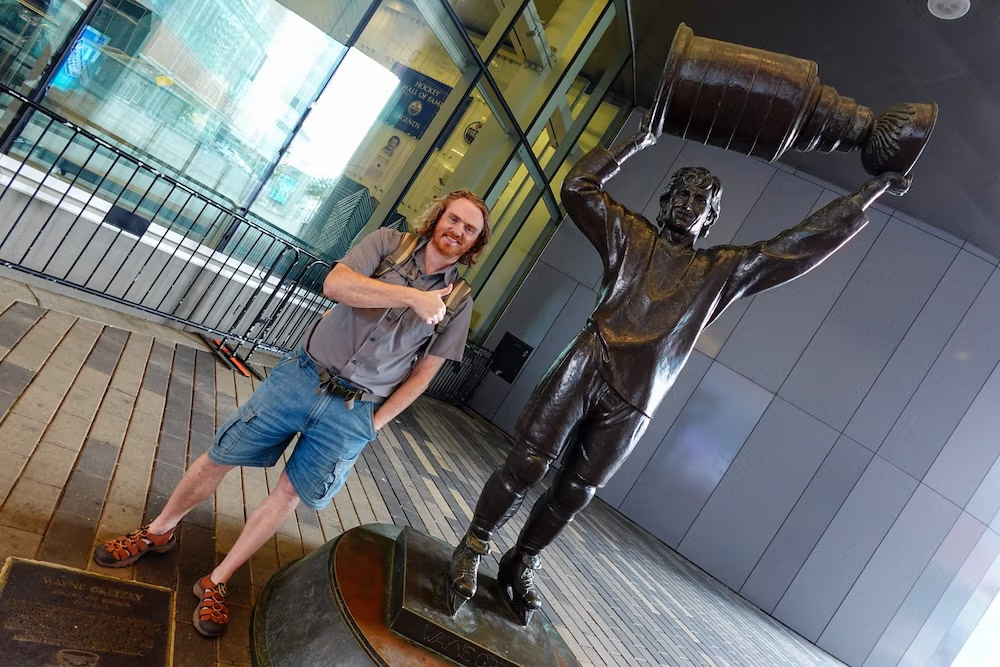
I lived in Edmonton during my university years, so Whyte Avenue isn’t just another neighbourhood to me. It was where I went for food, nightlife, oddball shops and the kind of wandering around you do when you’re young and not particularly concerned about how productive your evening is going to be.
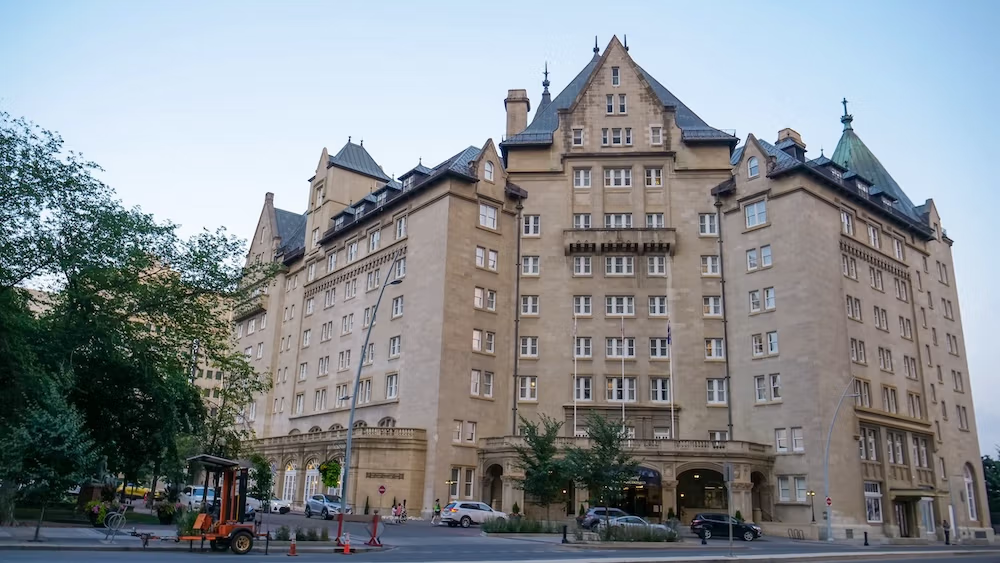
Years later, Audrey and I returned to Edmonton as visitors and stayed downtown at the Fairmont Hotel Macdonald. We explored the modern city centre, used public transit, spent time around Rogers Place and the ICE District, walked in the river valley and then crossed back over to Old Strathcona and Whyte Avenue.
I should make one thing clear from the start: we stayed downtown, but we did not stay in a hotel on Whyte Avenue. I know the neighbourhood well and we spent plenty of time there on this trip, but I’m not going to pretend I’ve slept in both areas and conducted some scientific pillow comparison.
What I can compare is how the two places actually function once you’re in Edmonton.
And they function very differently.
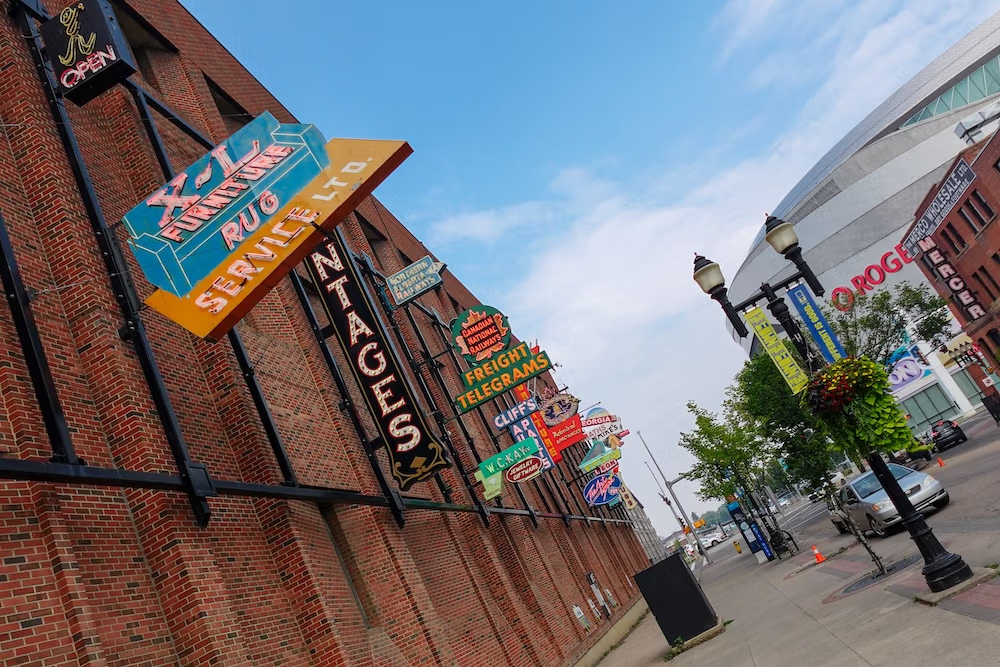
Downtown is the easier choice for most first trips
Downtown Edmonton makes a lot of sense when you don’t yet know exactly what kind of trip you’re going to have.
That’s its biggest advantage.
There are far more hotels to choose from, ranging from the luxury end down through more conventional city properties. You’re also directly on the LRT system, which matters in Edmonton because the attractions are not neatly packed into one walkable tourist district.
If you’ve already settled on the central city, you can compare current Downtown Edmonton hotels and rates on Booking.com rather than committing to one property before you’ve looked at the different parts of the core.
That’s something first-time visitors can underestimate.
Edmonton is spread out.
West Edmonton Mall is way out west. Whyte Avenue is south of the river. The Muttart Conservatory sits southeast of downtown. The river valley slices through the city. Rogers Place is central. Museums and other attractions are scattered around different parts of Edmonton.
You can spend a lot of time looking at a map and thinking, “Oh, that doesn’t look very far.”
Then you start moving around.
Downtown doesn’t solve Edmonton’s geography, but it gives you the best chance of dealing with it without turning every outing into a small transportation project.
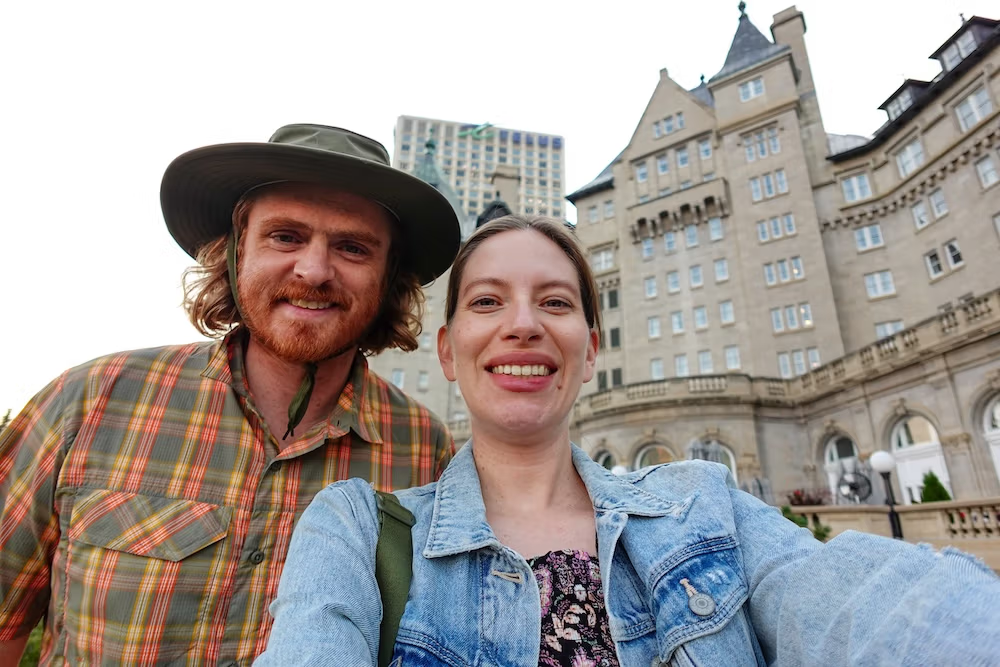
When Audrey and I stayed at the Fairmont Hotel Macdonald, that worked nicely for us. We could walk out toward central Edmonton, reach transit easily and also head down into the North Saskatchewan River Valley.
The Fairmont is an unusually good example because it sits right on the edge of the valley. We could walk behind the hotel, use the funicular and suddenly be down near the river.
I loved that.
When I used to live in Edmonton, the funicular wasn’t there, so returning years later and discovering this little mechanical device designed to save my legs felt like the city had personally upgraded while I was gone.
I approve of any urban improvement whose main purpose appears to be reducing uphill suffering.
Still, that particular river-valley setup belongs to the Fairmont. I wouldn’t assume every downtown hotel gives you the same experience.
That’s important throughout this comparison: the neighbourhood gets you into the right zone, but the exact hotel still matters.
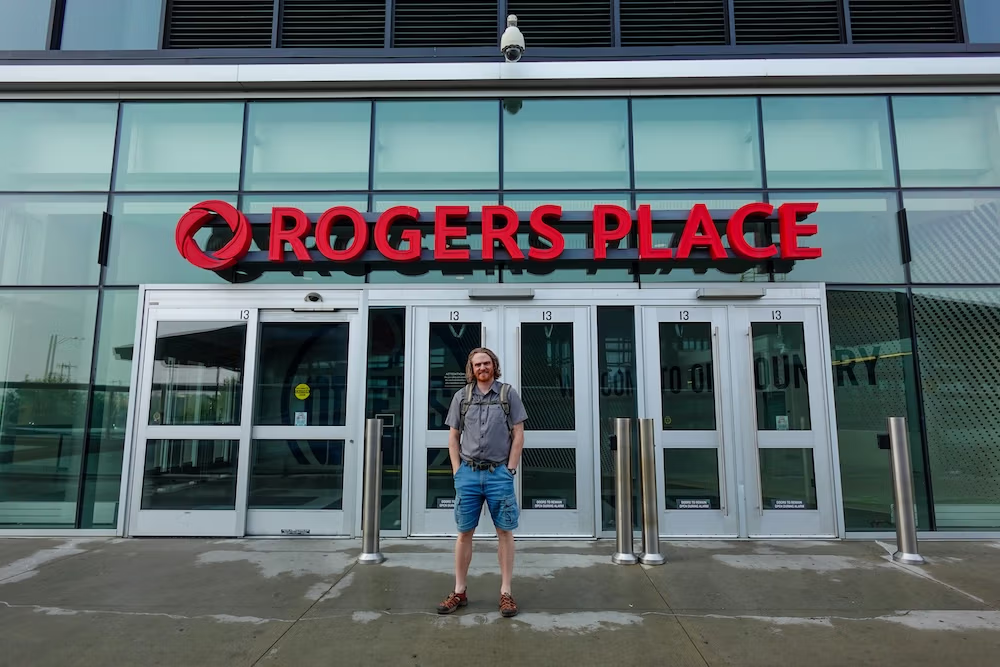
Downtown is especially good if Rogers Place is part of your trip
If you’re coming to Edmonton for an Oilers game or a concert at Rogers Place, I wouldn’t overthink this.
Stay downtown.
The ICE District is built around Rogers Place, and there are hotels, restaurants, bars and entertainment concentrated around the arena. Some accommodation is extremely close, with the JW Marriott Edmonton ICE District even connected directly to Rogers Place.
We didn’t stay there, so that’s not a personal hotel recommendation.
But the location advantage is obvious.
When I lived in Edmonton, I used to buy student ticket packs and go to Oilers games throughout the season. Those games were at the old arena. Coming back and seeing the new downtown setup was one of those reminders that I’d been gone a long time.
The hockey geography of the city had changed.
We walked around Rogers Place, went into the Oilers shop and soaked up the modern version of something I already had a long history with.
If hockey—or a concert—is the anchor of your trip, downtown isn’t merely convenient. It removes a completely unnecessary layer of friction.
You finish the event and walk back to your hotel.
That’s hard to beat.
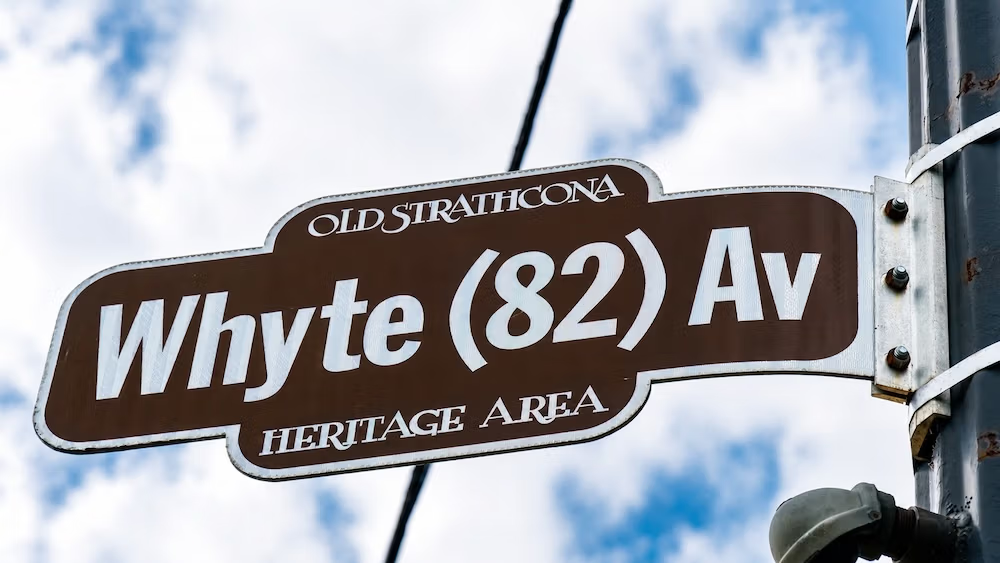
Whyte Avenue is the part of Edmonton I don’t want visitors to miss
Here’s where downtown loses me a little.
You can stay there very comfortably. You can see some important attractions. You can eat well. You can enjoy the river valley.
But if you spend your entire trip downtown, I don’t think you’ve really seen the full personality of Edmonton.
That was one of my strongest feelings when I returned.
Whyte Avenue instantly brought back my university years. Food, nightlife, music, strange shops, festivals, people wandering around with no urgent destination—that was the Edmonton I remembered.
And on this trip, it still had that energy.
Whyte Avenue runs through Old Strathcona, the broader historic district south of downtown. It’s still one of Edmonton’s densest areas for restaurants, independent businesses, theatres and entertainment.
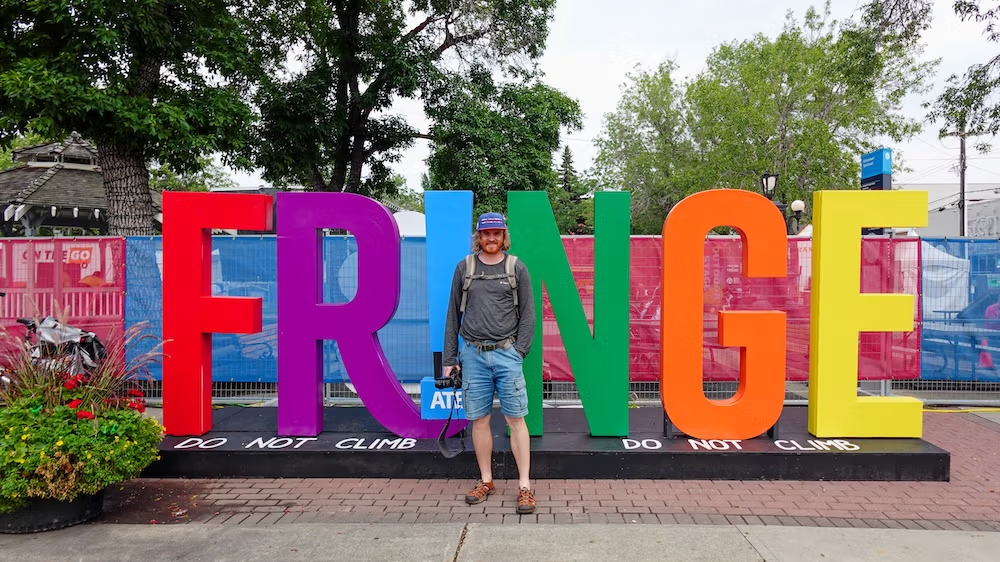
We happened to arrive during Edmonton Fringe, with the Old Strathcona Farmers’ Market happening too, so we basically walked into the neighbourhood on maximum volume.
That obviously isn’t normal every day.
But the festival didn’t create the neighbourhood. It exaggerated what was already there.
We wandered Whyte, looked through shops and eventually headed for DaDeO, a Cajun and Creole restaurant I used to visit all the time when I was a student.
I worked across the street at Safeway back then and would end up at DaDeO a couple of times a month.
Returning there was pure nostalgia.
I wasn’t standing on Whyte trying to decide whether the urban form met my accommodation criteria. I was remembering being twenty-something, working shifts, studying at university and spending more money on food than was probably sensible.
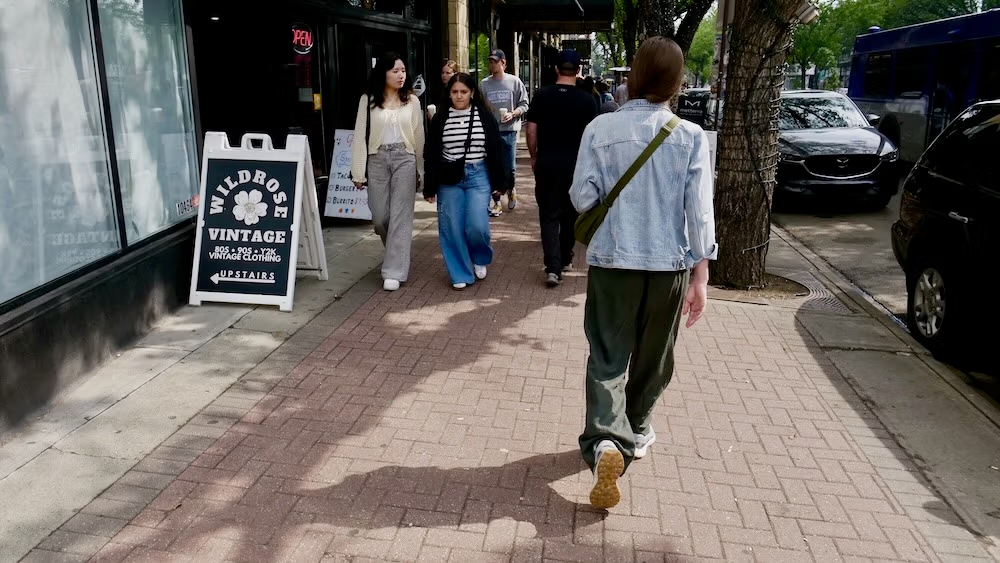
That personal history obviously makes me biased toward Whyte.
Audrey didn’t have that bias.
And her reaction is probably more useful.
After I took her there, she said Whyte Avenue changed her perception of Edmonton.
That’s a big statement when you’ve already spent time seeing the city.
Downtown showed her one Edmonton.
Whyte showed her another.
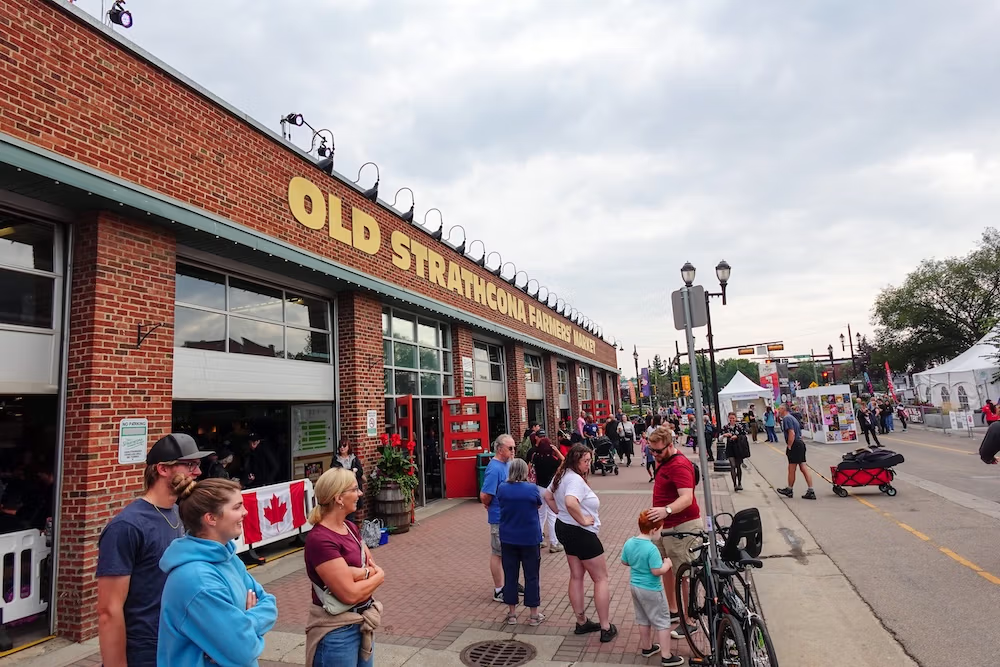
Staying on Whyte puts your evening outside the hotel door
This is the strongest argument for sleeping around Whyte Avenue rather than simply visiting it.
You don’t have to commute to the neighbourhood when you want to enjoy it.
If your ideal evening involves going for dinner, walking around afterwards, browsing some independent shops, catching a performance, finding a bar or just seeing where the night goes, Whyte makes that easy.
The neighbourhood itself becomes part of the trip.
That’s different from downtown’s strongest evening setup around the ICE District.
On an Oilers game night or when there’s a major concert, downtown can be buzzing. Restaurants and bars around Rogers Place fill up, people are wearing jerseys, and the whole area has a very obvious reason to be alive.
Whyte’s energy isn’t built around one venue in the same way.
It feels more like a main street.
That difference matters to me.
If I’m choosing a hotel for a food-heavy weekend where Audrey and I plan to eat well, walk around and make the evenings part of the sightseeing, I’d seriously consider Whyte.
If I’m coming for a museum-heavy first visit and the evenings are mostly “find dinner somewhere near the hotel before collapsing,” downtown wins.
Travel style matters more than the neighbourhood’s reputation.
If Whyte already sounds like your kind of trip, Booking.com has a broader comparison of accommodation near Whyte Avenue that includes options beyond the two hotels directly on the main strip.

The catch with Whyte: there aren’t many hotels
This is where the romance meets the booking screen.
Downtown has a much larger accommodation inventory.
Whyte doesn’t.
Two of the obvious hotels directly on the avenue are Metterra Hotel on Whyte and Varscona Hotel on Whyte. Both put you right in the heart of the area.
Again, we haven’t stayed at either property, so I’m not going to tell you which has the better beds, breakfast or shower pressure.
What I can say is that staying in either location changes the rhythm of the trip.
You give up downtown’s large hotel selection and direct LRT access.
In return, you’re already where you might otherwise be travelling to spend your evenings.
For some people, that’s a terrific trade.
For others, the smaller hotel pool alone may make the decision.
If you have points with a particular chain, want a luxury property, need a specific room category or simply like having ten viable options instead of two or three, downtown gives you much more flexibility.
Without a car, I would usually stay downtown
Edmonton’s transit situation is another reason downtown wins my default recommendation.
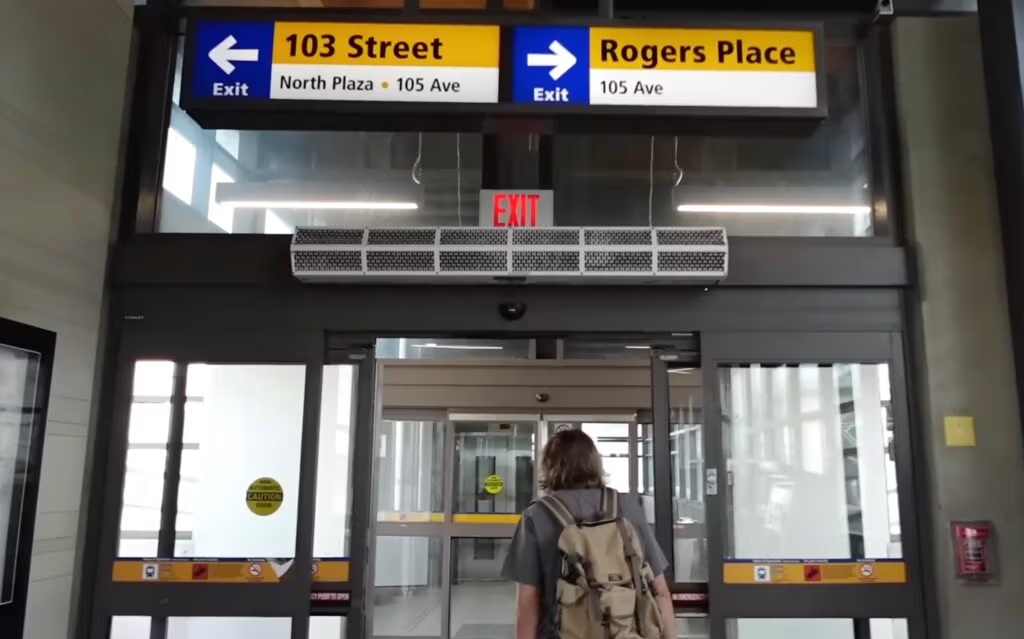
The LRT runs directly through the city centre, with multiple downtown stations and connections across the network.
Whyte Avenue itself doesn’t have LRT.
That does not mean Whyte is some transit wasteland where you’ll spend your vacation hitchhiking north across the river.
There are regular buses serving Old Strathcona, including late-night service within Edmonton’s network.
But rail is simpler.
When you’re sightseeing in an unfamiliar city, simple has value.
You don’t have to be a transportation nerd to appreciate walking into a station, getting on a train and knowing you’ve eliminated a few variables.
We used both buses and LRT while sightseeing in Edmonton, and on our biggest day of running around the city, transit saved our legs and made it possible to string together places that weren’t particularly close to one another.
If I were visiting Edmonton without a car and planning a broad itinerary, I’d choose downtown.
If I were visiting without a car but intentionally spending a big chunk of my trip around Whyte, Old Strathcona and the surrounding south-side area, staying there would still be perfectly workable.
That’s the distinction.
Whyte requires a little more planning.
It doesn’t require a car.
What about the High Level Bridge Streetcar?
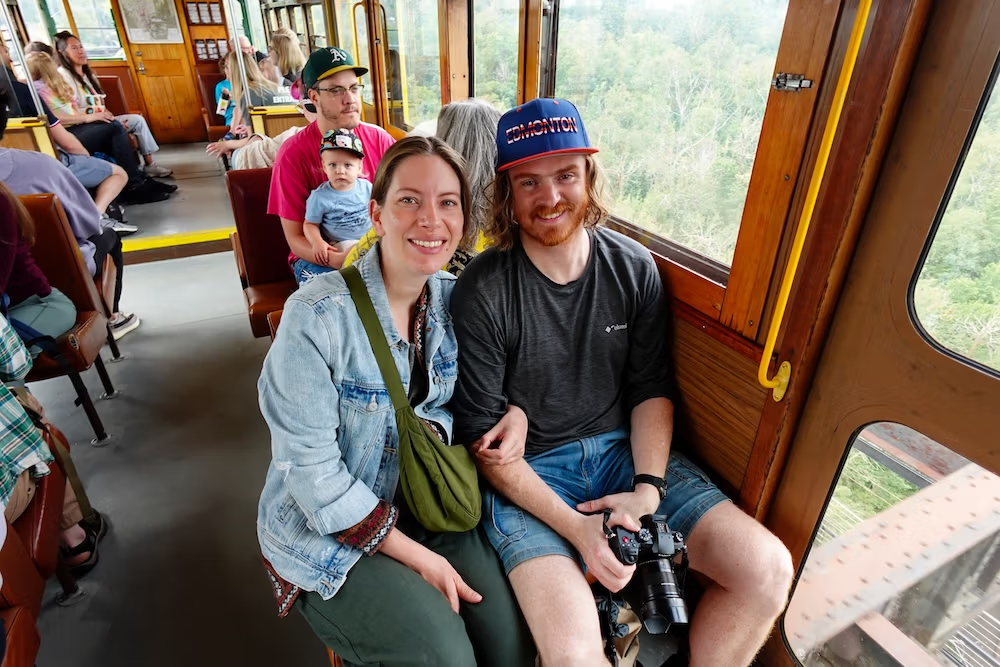
We actually travelled between central Edmonton and Old Strathcona on the High Level Bridge Streetcar, and I absolutely loved it.
I’d seen the streetcar when I lived in Edmonton but had never ridden it.
So naturally I had to move away, disappear for years, come back as a tourist and finally try one of the city’s quirkiest attractions.
Excellent efficiency on my part.
The ride crosses high above the North Saskatchewan River and drops you right into the Old Strathcona area.
It’s a fantastic way to connect the two parts of the city when it’s operating.
But don’t choose your hotel around it.
The streetcar is seasonal and runs historic vehicles with accessibility limitations. It’s an attraction first and transportation second.
Use regular Edmonton Transit when you actually have somewhere important to be.
Ride the streetcar when you want the journey to be part of the fun.
River valley access is closer than the downtown-versus-Whyte debate suggests
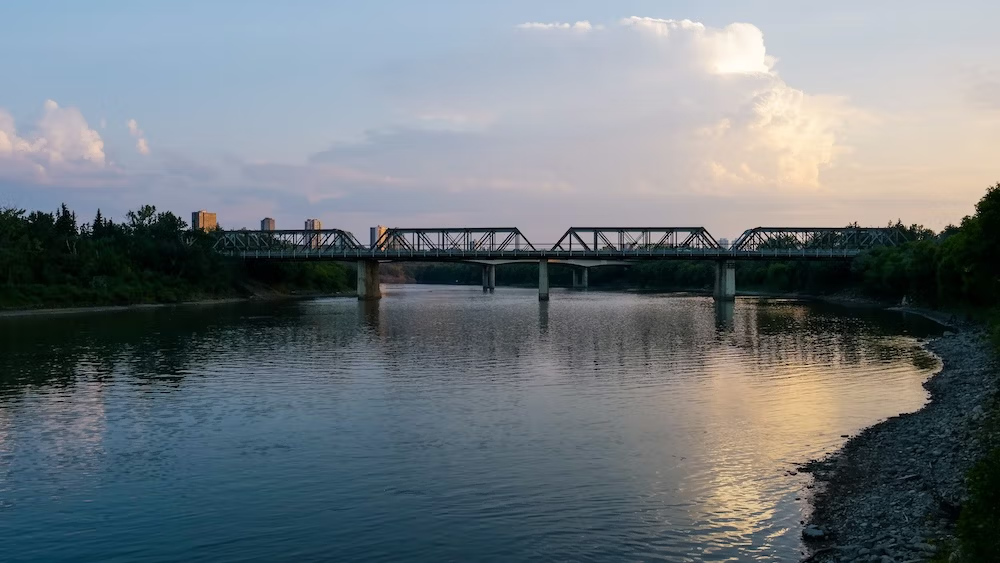
I also wouldn’t choose between these two areas based solely on the river valley.
Our downtown stay was excellent for it because of where the Fairmont sits.
We could head straight toward the valley, use the funicular and be down by the river without turning it into an expedition.
But Old Strathcona is also close to the river valley.
So this isn’t really a clean neighbourhood-level victory.
Look at the exact hotel.
If morning walks or river-valley access matter a lot to you, open a map and see where the property actually sits relative to the trails and access points you expect to use.
Edmonton’s river valley is enormous.
“Near the river valley” can mean something very different from “I can leave the hotel and be on a trail in ten minutes.”
So, should you stay downtown or on Whyte Avenue?
This is how I’d make the call.
| Your Edmonton trip | Where I’d stay | Why |
|---|---|---|
| First visit with a mixed sightseeing itinerary | Downtown | More hotel choice and easier LRT access |
| Oilers game or Rogers Place concert | Downtown | You can stay close to the arena and avoid post-event transportation |
| Visiting without a car and moving all over Edmonton | Downtown | The central LRT network makes the city easier to stitch together |
| Food, bars, theatre and neighbourhood atmosphere are major priorities | Whyte Avenue | You’re already inside one of Edmonton’s strongest evening districts |
| Edmonton Fringe or an Old Strathcona-focused visit | Whyte Avenue | Less back-and-forth when the neighbourhood itself is the destination |
| First-time weekend with no strong niche interest | Downtown | It is the simplest all-purpose base |
| Food-and-nightlife weekend | Whyte Avenue | More of the experience happens right outside your hotel |
| Travelling by car | Compare the individual hotels | Parking varies too much by property and event to crown one neighbourhood |
I wouldn’t make the decision based on which area is supposedly cheaper.
Hotel prices move around too much. Events matter. Weekends matter. Room type matters. The Fairmont and a completely different downtown property obviously aren’t representing the same price point, and neither are every pair of hotels on Whyte.
Decide which location fits the trip first.
Then compare the actual hotels available for your dates. For a broad first visit, I’d start with current Downtown Edmonton hotel availability. If the food-and-neighbourhood argument has won you over, compare places to stay around Whyte Avenue instead.
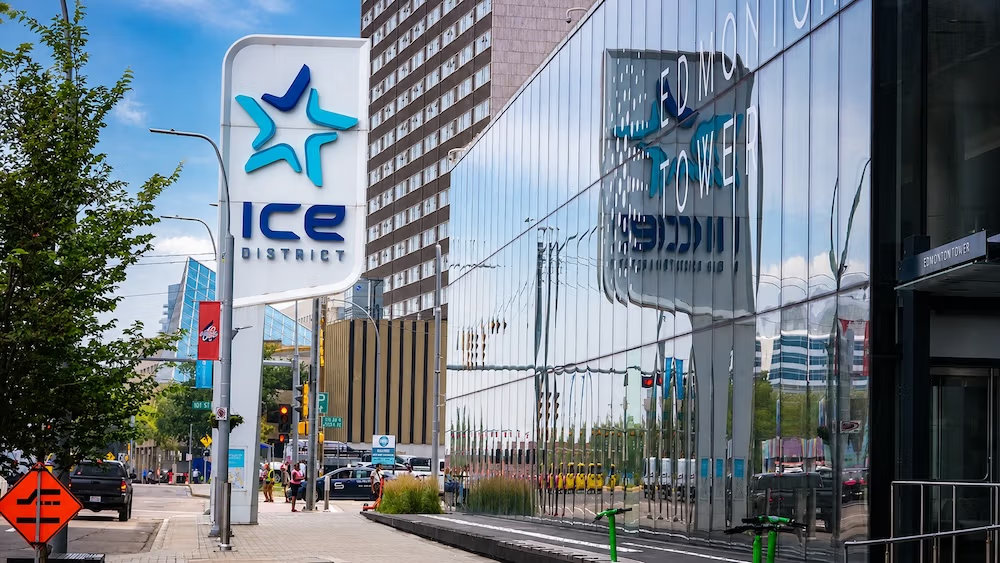
My pick for most visitors: Downtown Edmonton
If someone told me, “I’ve never been to Edmonton, I’m coming for two or three days, where should I stay?” I’d send them downtown.
It’s the easier base.
You have more accommodation choice. You have direct LRT access. Rogers Place is nearby. A mixed sightseeing itinerary involves fewer transportation gymnastics.
But I would immediately add another piece of advice:
Don’t stay downtown the whole time.
Get across the river.
Go to Whyte Avenue.
Walk around Old Strathcona. Eat somewhere. See what is happening. Give the neighbourhood enough time to change your impression of Edmonton rather than treating it as a one-hour detour between attractions.
That’s what happened with Audrey.
And for me, returning to Whyte was a reminder that some of what I liked most about Edmonton when I lived there had never been concentrated in the downtown core anyway.
So downtown wins the accommodation decision for most first-time visitors.
Whyte wins when you already know what you’re trading for.
A little less convenience.
A lot more neighbourhood outside your door.
Frequently Asked Questions
Should I stay in Downtown Edmonton or on Whyte Avenue for a first visit?
For most first-time trips, I would stay downtown. You get more hotel choice, direct LRT access and an easier base for a mixed sightseeing itinerary, while Whyte Avenue makes more sense when food, nightlife and neighbourhood atmosphere are major priorities.
Is Whyte Avenue a good place to stay in Edmonton without a car?
Yes. Whyte Avenue does not have LRT running along the avenue itself, but Old Strathcona is served by regular buses. I would still favour downtown for a car-free trip that involves moving all over Edmonton because the central LRT network makes those connections simpler.
Where should I stay for an Oilers game or a concert at Rogers Place?
Downtown is the obvious choice when Rogers Place is the anchor of the trip. Staying near the ICE District can remove the need for post-event transportation and lets you walk back to your hotel after the game or concert.
Are Whyte Avenue and Old Strathcona the same place?
Whyte Avenue runs through Old Strathcona, the broader historic district south of Downtown Edmonton. In this comparison, staying around Whyte means using that Old Strathcona neighbourhood as your base rather than staying in the downtown core.
Did you personally stay in both Downtown Edmonton and on Whyte Avenue?
No. Audrey and I stayed downtown at Fairmont Hotel Macdonald, but we did not stay in a hotel on Whyte Avenue. My Whyte perspective comes from living in Edmonton during my university years and spending substantial time in Old Strathcona again when we returned as visitors.
Which area is better for Edmonton’s river valley?
I would not choose purely on the neighbourhood label. Our Fairmont Hotel Macdonald stay gave us excellent river-valley access, but Old Strathcona is also close to the valley. If that matters to you, compare the exact hotel with the trails and access points you expect to use.
This article is also available in Spanish. [Leé la versión en castellano: Centro de Edmonton vs Whyte Avenue: ¿en qué zona conviene alojarse?]
This article contains affiliate links. If you book through one of these links, I may earn a commission at no extra cost to you.