
Lake Louise looks wonderfully uncomplicated when you’re planning a trip to Banff. There’s a turquoise lake, a giant mountain backdrop and a grand hotel sitting at one end. You go there, admire the view, take the photograph you’ve seen a thousand times online and carry on with your day.
The scenery really is that easy. The visit isn’t.
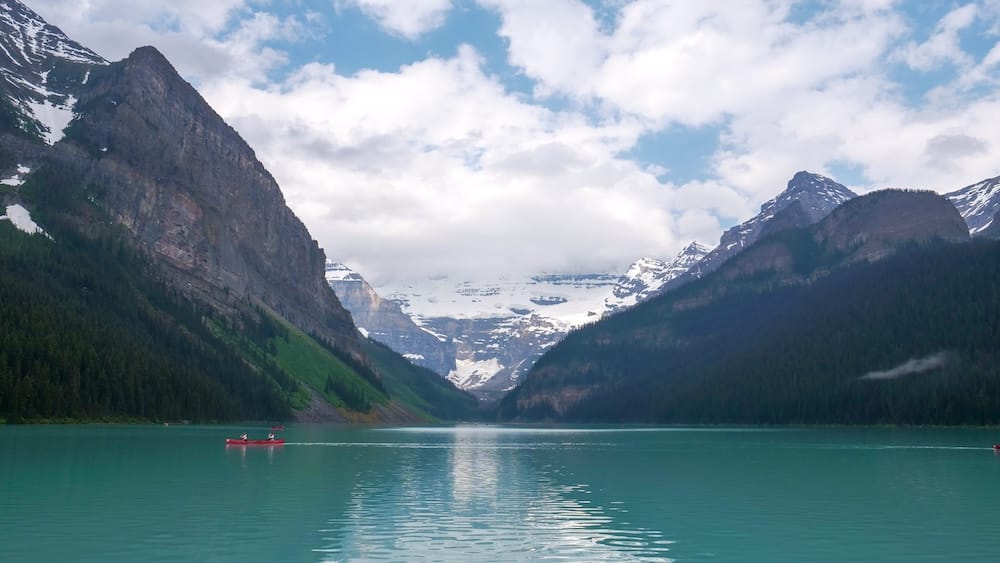
We’ve been to Lake Louise more than once, and the difference between those trips says a lot about how the place has changed—and how much more there is to do than stand at the shoreline. On an earlier Canadian Rockies road trip, Audrey and I drove ourselves up, joined the slow hunt for parking and eventually grabbed a space when somebody else pulled out. Years later, we returned with our daughter Aurelia and Audrey’s dad as part of a private tour. We arrived in the morning, found the shoreline already packed with people, then hiked to Fairview Lookout, a viewpoint we’d somehow completely missed the first time around.
That second visit changed the way I think about Lake Louise because it exposed the weakness in treating this as a single sightseeing stop. Once you’ve physically reached the lakeshore, the famous view requires almost no effort. You can take a few photos and leave, walk beside the water, climb to Fairview, rent one of those eye-catching red canoes, or use Lake Louise as the starting point for a substantial hiking day.
Those are very different visits, and they require very different amounts of time. Before deciding which version you want, though, you need to solve the least glamorous part of Lake Louise: how you’re actually going to get there.
Lake Louise Is Easy to Recognize and Surprisingly Complicated to Reach
The first distinction worth understanding is that Lake Louise village and Lake Louise lakeshore are not the same place. The village sits below the lake and has accommodation and services, while the famous mountain-and-water scene everybody is travelling for is farther uphill at the lakeshore.
That matters because modern Lake Louise planning revolves around access to the lake itself.
Our old experience of driving up and waiting until somebody surrendered a parking space belongs to an earlier period of visiting Lake Louise. Private vehicles can still reach the lakeshore, but Parks Canada now explicitly discourages visitors from depending on that option during the main shuttle season. The parking lot commonly fills by sunrise and can remain full through the daylight hours, and if the lot is full you can’t simply form a line and patiently wait for the next vehicle to leave.
There is also a meaningful financial penalty for trying your luck. During the 2026 paid-parking season, from May 15 through October 12, lakeshore parking costs $42 per vehicle per day.
None of this means Lake Louise has become impossible to visit. If anything, there are more structured ways to get there than before. The trick is choosing one that fits where you’re staying and how much flexibility you need rather than showing up in a rental car with crossed fingers and positive thoughts.
For some travellers, the Parks Canada shuttle is the obvious answer. If you’re based in Banff without a car, Roam Transit may be cleaner. A group tour removes most of the transport work but dictates more of your schedule, while a private tour buys flexibility at a much higher price. Driving still offers independence, but only if the parking part of the plan actually works.
That decision needs to happen before you’re debating whether Fairview Lookout deserves 45 minutes of your afternoon.
How to Visit Lake Louise in 2026
Parks Canada Shuttle
For visitors who already have a vehicle, the Parks Canada shuttle is probably the most straightforward alternative to gambling on lakeshore parking.
The regular Lake Louise shuttle departs from the Lake Louise Park and Ride at the Lake Louise Ski Resort on Whitehorn Road. In practical terms, that means you drive to the Park and Ride, leave your vehicle there, check in and take the shuttle up to the lakeshore.
The 2026 Lake Louise shuttle season runs from May 15 to October 12, and reservations matter because they guarantee your seat. You can check the current Lake Louise shuttle rules and reservation instructions with Parks Canada before building the rest of your day around them.
One detail worth knowing before assuming your preferred date is hopelessly sold out is the way Parks Canada releases inventory: 40% of the season’s seats were made available when reservations opened, while the remaining 60% are released on a rolling basis at 8 a.m. Mountain Time two days before departure.
That’s one of the few percentages in travel planning that actually changes what I would do. If you check weeks in advance and see nothing available, don’t automatically conclude that every seat for that date has vanished forever.
For 2026, an adult shuttle ticket to Lake Louise costs $12.75, before the reservation fee, with reduced fares for seniors and youth. Parking at the Park and Ride is included.
The other useful piece is the Lake Connector. Eligible Parks Canada shuttle users can travel between Lake Louise and Moraine Lake during the connector’s operating season, which makes the system much more useful if both lakes are part of the same day.
The main trade-off is structure. You need to reach the Park and Ride first, and after that you’re operating around a transportation system rather than walking back to your own vehicle whenever you feel finished. Personally, I’d take that inconvenience over devoting part of a high-value Banff morning to searching for a $42 parking space that may not exist.
Roam Transit From Banff
If you’re staying in Banff without a car, Roam Route 8X solves a different problem because it runs between Banff and the Lake Louise lakeshore itself.
Current summer schedules put many of those journeys at roughly 57 minutes each way, which is worth remembering when you’re estimating the total size of a Lake Louise outing. Even if you only spend an hour at the water, you’re already looking at close to two hours of transportation between Banff and the lake.
The 2026 adult one-way fare is $12.50, with reduced fares for seniors and youth and free travel for children under 12. Reservations are recommended, and you can check the current Route 8X schedule and reservation options directly with Roam. Roam retains some capacity for walk-up riders, but I wouldn’t confuse “walk-up seats exist” with “I’ll definitely be on the next bus.” When demand is high, an unreserved traveller can face a long wait.
If you’re trying to combine Lake Louise with Moraine Lake, Roam’s Super Pass provides another structured option. The important thing is not to assume that a normal Route 8X ticket automatically gives you access to Moraine Lake. The Super Pass and its connector arrangements have their own conditions, so check the current Super Pass details if that’s your plan.
For somebody staying in Banff and intentionally travelling without a car, the direct nature of Route 8X is a major advantage. You still have to respect departure times, but you completely remove Lake Louise parking from the equation, which is one less thing capable of wrecking the morning before you’ve even seen a mountain.
If your real goal is to see both Lake Louise and Moraine Lake without piecing together the public systems yourself, there are also commercial shuttle-style options from Banff. One current six-hour option gives scheduled time at both lakes, so travellers prioritizing straightforward transport can check the current Lake Louise and Moraine Lake shuttle availability from Banff. This is different from Roam or the Parks Canada shuttle: you’re buying a commercial sightseeing transfer with fixed lake time rather than public transit.
Group Tour or Private Tour
A guided tour trades independence for simplicity.
Current Lake Louise tours range from shorter Lake Louise and Moraine Lake combinations to full-day Rockies itineraries with several stops. The obvious drawback is that somebody else is deciding at least part of your schedule. If your itinerary gives you an hour at Lake Louise, you can’t suddenly decide the weather is perfect and disappear toward Lake Agnes for three hours without causing a small international incident in the tour vehicle.
The upside is that transportation stops being your problem. If you’d rather bundle the two famous lakes into a compact guided outing from Banff, you can see current availability for this Lake Louise and Moraine Lake guided experience. The current listing is a four-hour format, which makes it much more of a sightseeing solution than a hiking day.
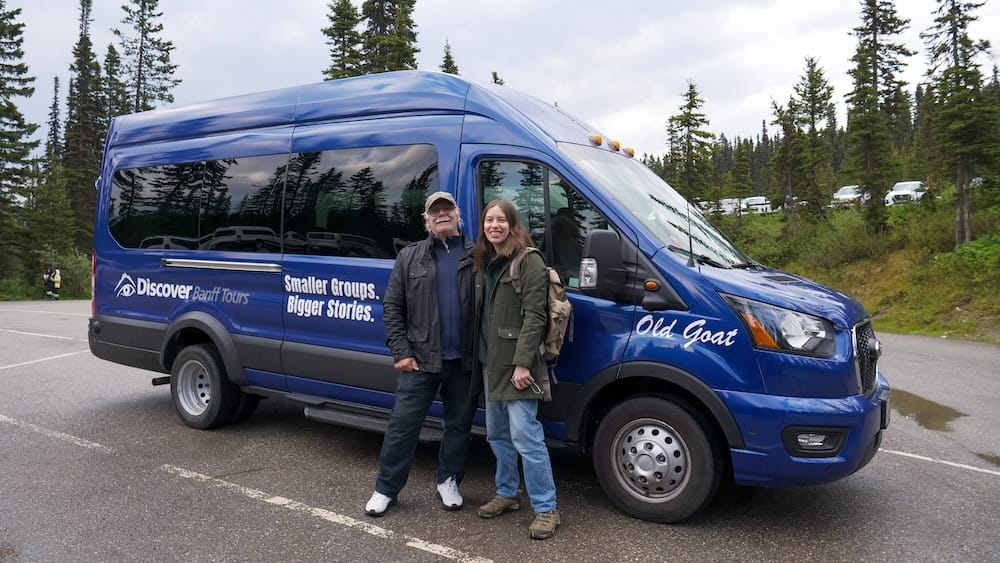
We’ve experienced the private version of that trade-off. On our recent trip, we were travelling with Aurelia, who was still a toddler, and Audrey’s dad. For that particular combination of people, controlling the pace turned out to be much more valuable than simply having somebody drive us around.
Audrey especially appreciated that we could stop when Aurelia needed food, a diaper change or a break, rather than trying to keep a small child perfectly synchronized with a fixed group timetable. Anyone who has travelled with a toddler knows that this is roughly equivalent to trying to negotiate with weather.
Lake Louise also showed us what local guidance can add beyond transportation. We’d already visited independently years earlier, yet we’d completely missed Fairview Lookout. On the return trip, our guide pointed us toward the trail.
That doesn’t mean you need a guide to find Fairview. You absolutely don’t. It means a private guide can add value through pacing, context and route choices rather than merely transferring you from Point A to Point B. For our multigenerational trip, that flexibility was the real luxury.
If that is the part of private touring that appeals to you, rather than simply wanting a seat on a bus, travellers can check current private Banff, Lake Louise and Moraine Lake tour availability. I haven’t taken that specific product; I’m linking it as a current private option that matches the flexibility decision described here.
Driving Yourself and Parking at Lake Louise
This is worth stating clearly because Lake Louise sometimes gets mixed up with Moraine Lake: you can still drive a private vehicle to Lake Louise.
The real issue is whether doing so makes sense during the busiest months.
Parks Canada warns that the lakeshore lot commonly fills by sunrise and remains full during the day. Once it reaches capacity, you can’t simply join a tidy queue and wait for a space to appear. You can drive all the way there, discover that parking isn’t available and end up having to rethink the plan.
Then you have the $42 daily parking fee during the 2026 paid-parking period.
Driving therefore has an odd relationship with flexibility. If you successfully park, it’s fantastic. Your vehicle is right there, you can leave when you want, and you aren’t planning the end of your hike around a bus departure. But every one of those advantages depends on clearing the first hurdle.
Our previous road-trip visit is a good example of why old Lake Louise advice can age badly. We arrived later in the afternoon, waited until another vehicle pulled out and moved into the newly available space. That happened. It is part of our experience. I just wouldn’t build a modern Lake Louise itinerary around the hope that history repeats itself.
Which Lake Louise Transport Option Makes the Most Sense?
I find this easier to answer by starting with the problem you most want to avoid.
| How you’re visiting | Best fit | Main advantage | Main trade-off |
|---|---|---|---|
| Parks Canada shuttle | You have a vehicle and can reach Park and Ride | Predictable access without lakeshore parking pressure | Requires Park and Ride plus shuttle timing |
| Roam Route 8X | You’re staying in Banff without a car | Direct Banff-to-lakeshore service | Your day is shaped by the bus schedule |
| Group tour | You want transport and sightseeing bundled | Minimal logistical work | Limited control over Lake Louise dwell time |
| Private tour | Families, multigenerational groups or travellers prioritizing flexibility | Pace and itinerary can adapt much more easily | Usually the most expensive option |
| Drive and park | You strongly value independence and accept uncertainty | Leave whenever you want if you get a space | Parking may be unavailable and costs $42/day in season |
If parking stress is the problem, use transit or a shuttle. If you’re staying in Banff and don’t want to reach a separate Park and Ride first, Roam has an obvious appeal. If your group contains a toddler, an older relative and several competing needs, a private tour starts making more sense. If the idea of surrendering control of your timetable makes your eye twitch, driving may still suit you—provided you’re comfortable with the possibility that the parking plan fails.
There isn’t one universally superior option because these aren’t five versions of the same thing. They solve different problems.
Where You Stay Changes the Access Equation
Your accommodation doesn’t change the lake, but it can change which transport option feels least annoying. Staying in Banff gives you the cleanest access to Roam Route 8X and puts you in the middle of the town’s much larger restaurant and hotel base. If that’s the way you’re structuring the trip, you can compare current hotels in Banff rather than choosing accommodation solely around Lake Louise.
Staying in the Lake Louise area reduces the distance between your bed and the day’s main objective, but it does not magically erase the modern access rules. Lake Louise village is still separate from the famous lakeshore, and your exact property location matters. Travellers prioritizing proximity can compare current Lake Louise accommodation and then check how each property fits the transport plan they intend to use.
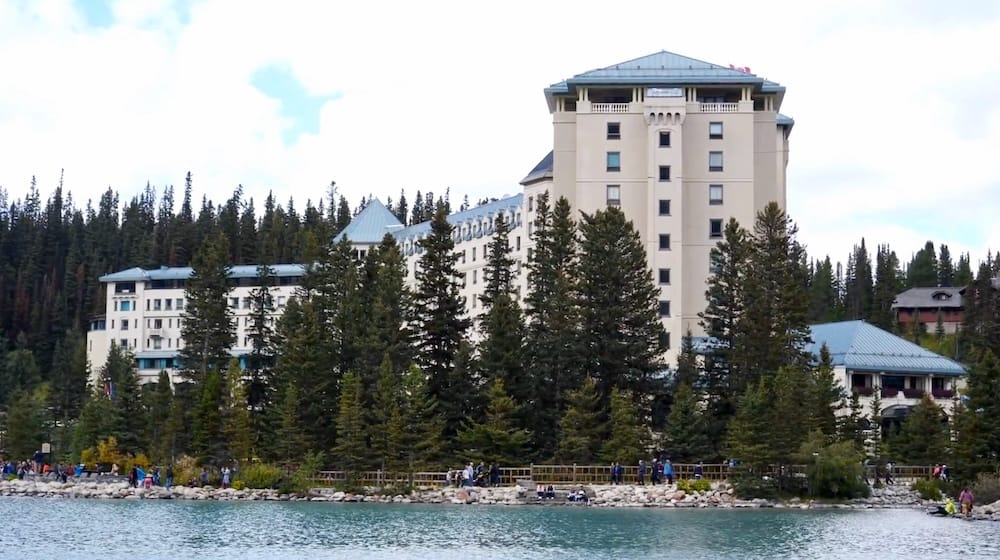
The extreme version of proximity is Fairmont Chateau Lake Louise itself, sitting directly on the lakeshore. We’ve visited the Chateau as sightseers but have never stayed there, so this is not a personal hotel recommendation. If waking up beside Lake Louise is specifically what you’re paying for, you can check current rates and availability at Fairmont Chateau Lake Louise.
What Happens Once You Arrive at Lake Louise?
After all that transport planning, the actual lake is refreshingly straightforward.
The main shuttle and transit systems bring visitors into the lakeshore area, where the lake, Fairmont Chateau Lake Louise, boathouse, public washrooms and several major trailheads are clustered reasonably close together. You’re not getting deposited in Lake Louise village and then embarking on an unplanned uphill pilgrimage to find the water.
More importantly, the famous view appears almost immediately.
This is one of Lake Louise’s great strengths. You don’t need to hike for two hours to unlock the image you’ve seen on tourism posters. Once you’re at the lakefront, the classic view is right there, which makes Lake Louise unusually rewarding for non-hikers, families and anybody whose knees have already filed formal complaints after several days in the Rockies.
The obvious consequence is that everybody else can access the same view just as easily.
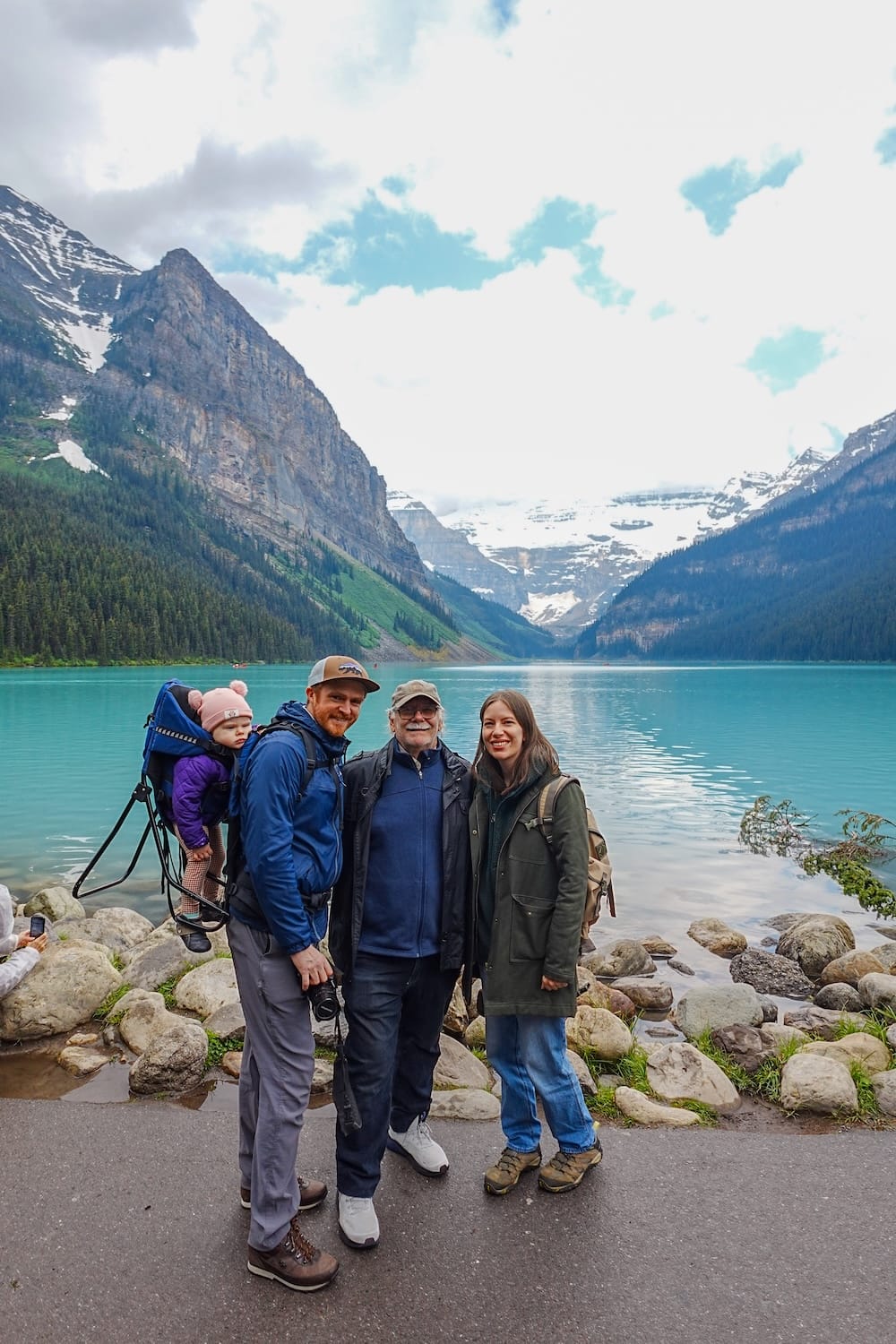
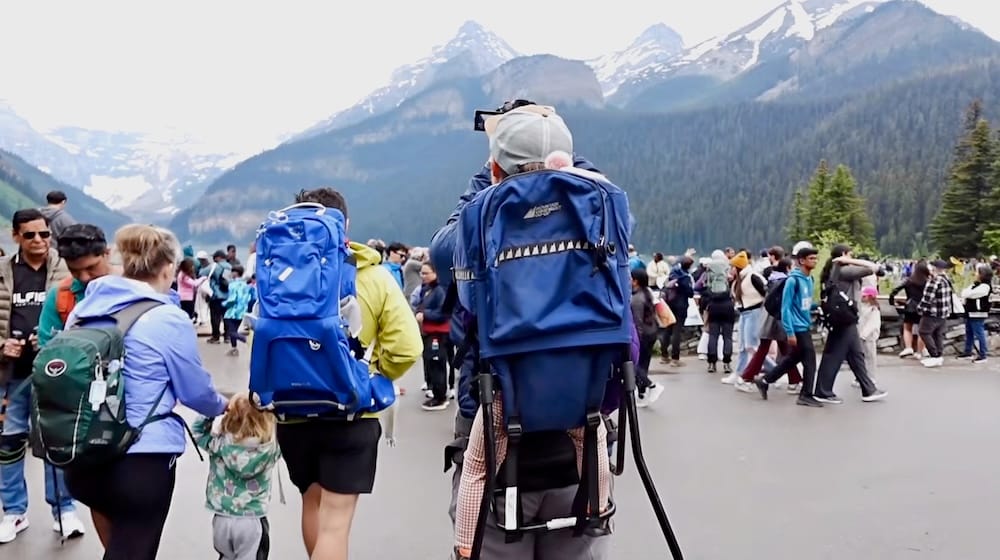
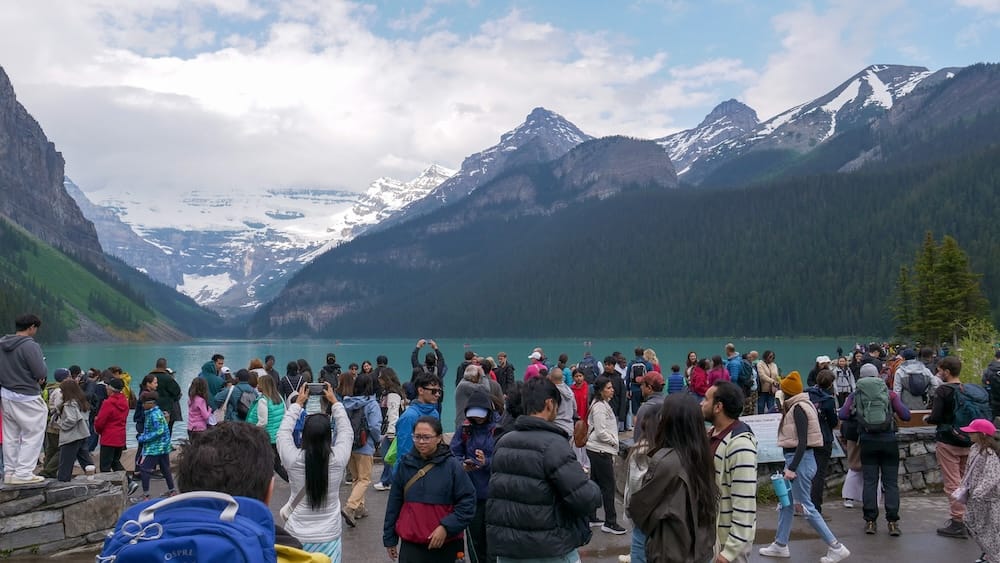
When we returned recently, we reached the shoreline in the morning and it was already extremely busy. I called it the “selfie capital of Canada,” which was partly a joke and partly an observation about what happens when an extraordinarily photogenic place is also simple to reach.
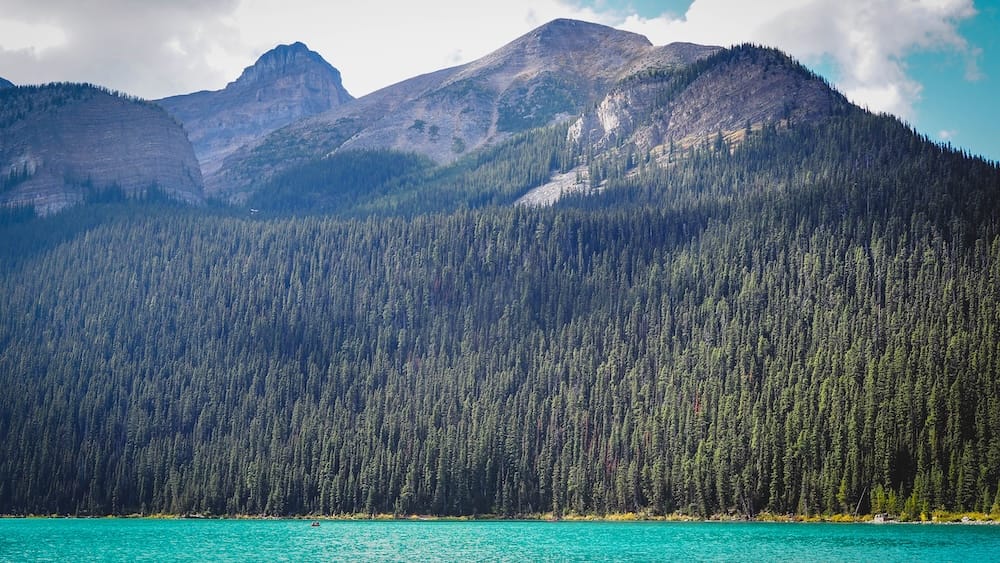
I understood the crowds, though. The sky was clearing as we arrived, the water started glowing, and mountains wrapped around the far end of the lake in a way that looks almost suspiciously well arranged.
Lake Louise is crowded for a reason. The part I would avoid is assuming the most crowded piece of shoreline represents the entire experience.
Lake Louise Viewpoints That Actually Change the Experience
I don’t think this article needs a list of fifteen “secret” Lake Louise viewpoints where half the entries are essentially the same composition with somebody standing six metres farther to the left.
The useful distinction is whether moving somewhere else actually changes what you’re seeing or how you’re experiencing the lake.
The Classic Lake Louise Shoreline View
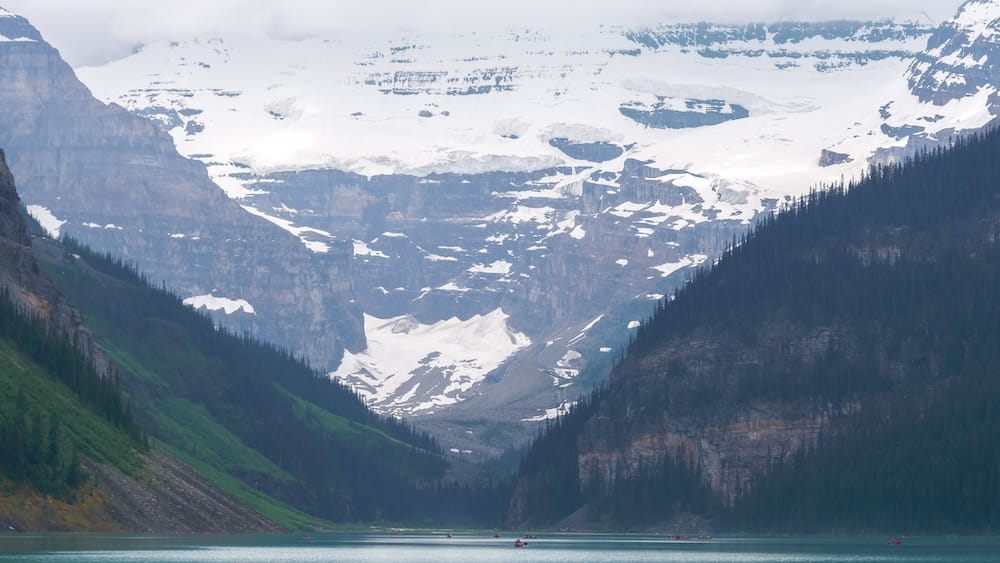
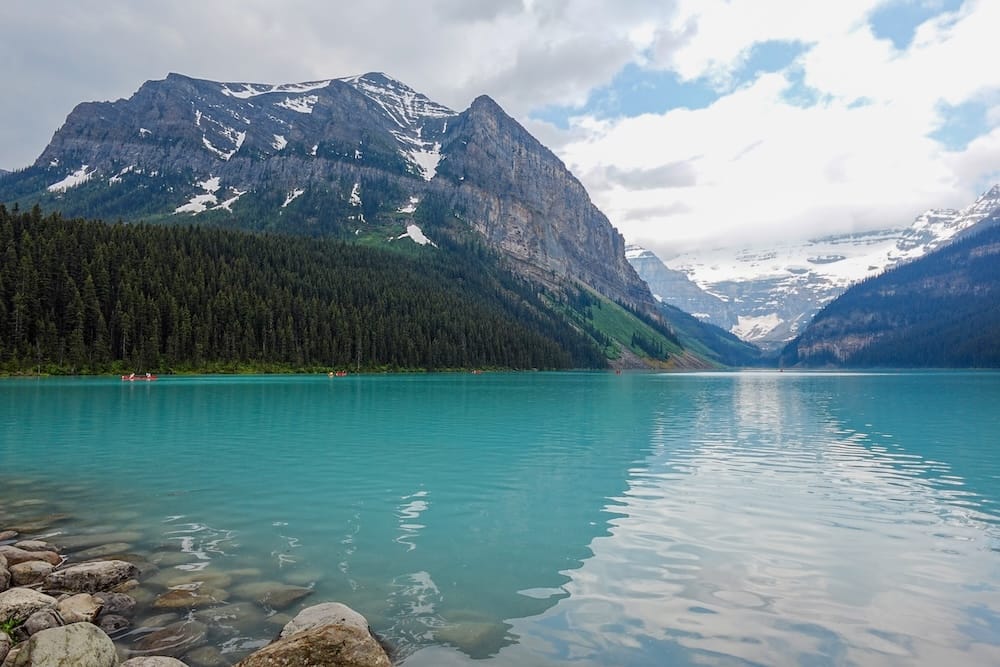
This is the photograph most visitors came for: Lake Louise running away from the hotel toward the surrounding mountains and Victoria Glacier at the far end.
It costs almost nothing in physical effort once you’ve reached the lakeshore, which is both the beauty of this viewpoint and the reason it attracts so many people.
On our older visit, Audrey and I arrived later in the day under mixed cloud and spent time waiting for the light to improve. Eventually the sun broke through, the water changed colour almost immediately and we started taking photographs.
Years later, we had another ridiculously well-timed weather change. We’d been worried about rain, yet the sky began clearing right as we reached Lake Louise and suddenly the lake came alive again.
Those experiences made me much less impatient with imperfect mountain weather. Lake Louise’s distinctive colour comes from fine glacial material suspended in the water, but the version your eyes see is also heavily affected by cloud, sunlight and seasonal conditions. A dull first impression doesn’t necessarily mean the view will look the same twenty minutes later.
If the weather is moving and you have time, I’d give it a chance.
The Lakeshore Trail: More Lake Without Much More Effort
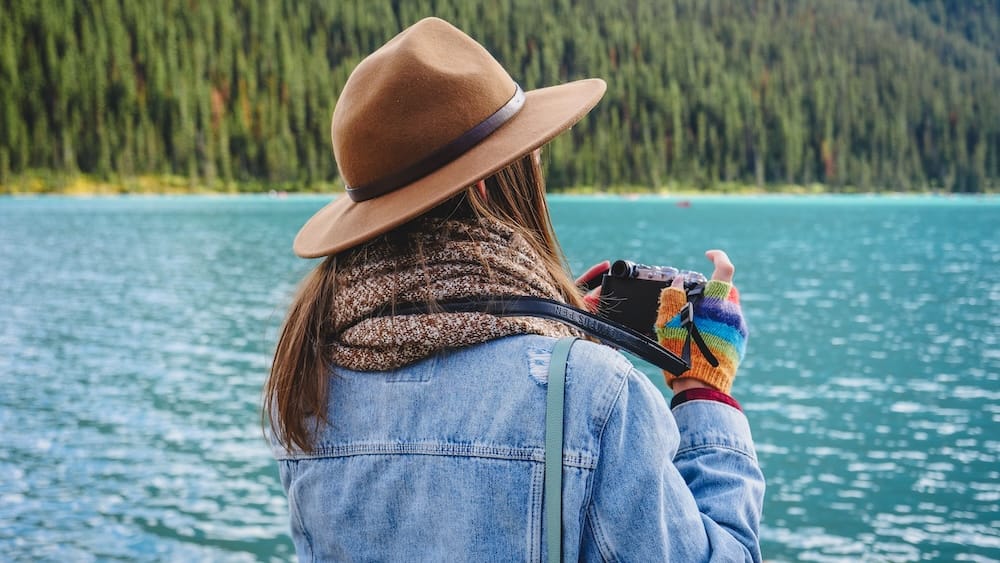
For visitors who want to move beyond the densest shoreline area but have no desire to climb, the Lake Louise Lakeshore Trail is the obvious next step.
The current route extends approximately 2.3 kilometres one way, with Parks Canada estimating roughly one hour return. It is considered an easy walk and is also included among the park’s all-abilities options.
The reward isn’t some sudden aerial panorama that makes the initial shoreline irrelevant. You’re still following the same lake. What changes is the experience of it: the angle gradually shifts, the Chateau recedes behind you, the far end of the lake draws closer and you stop feeling quite so much like you’re standing in the middle of one enormous photo queue.
For a non-hiker who wants more than the instant postcard, this is the most natural extension of the visit.
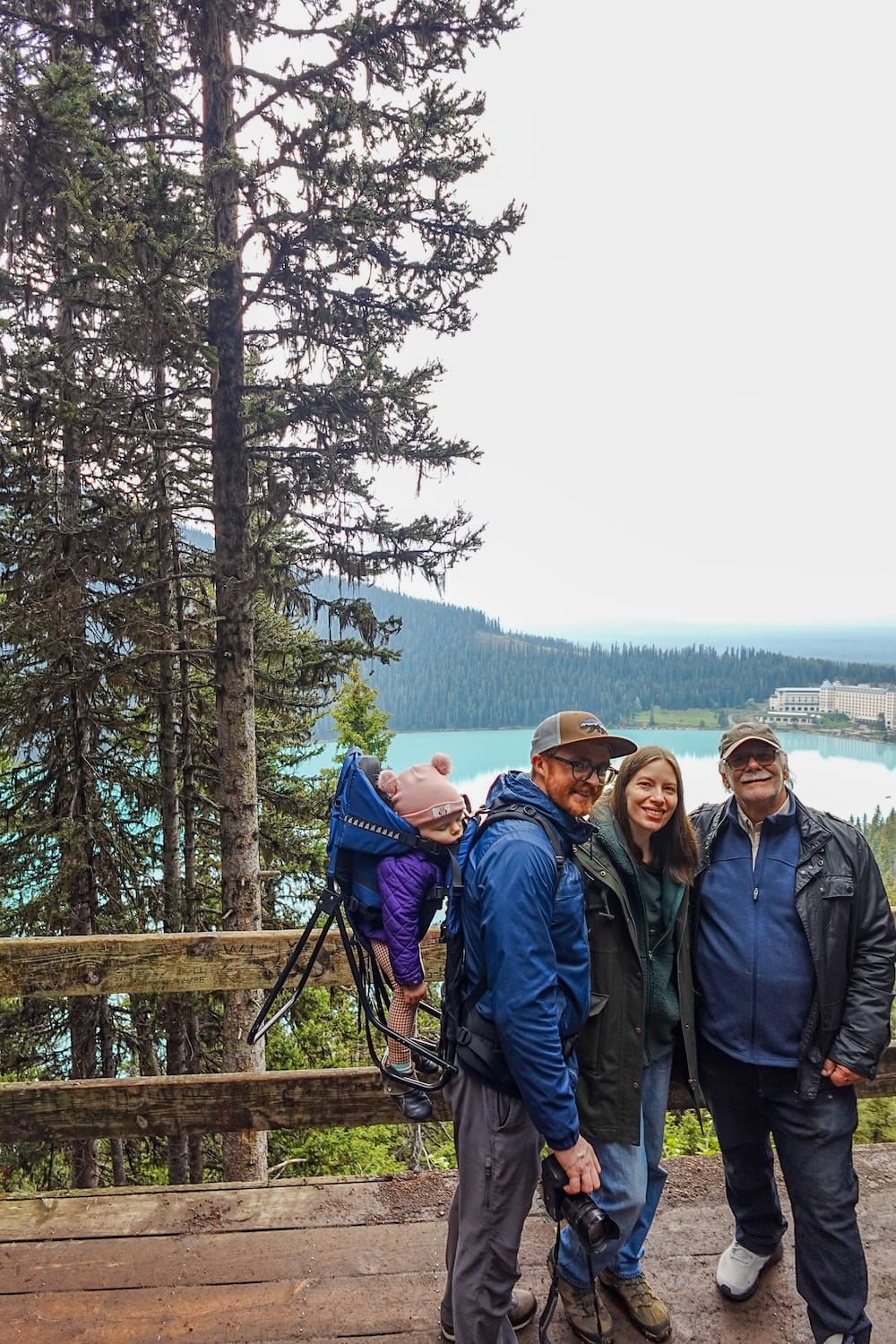
Fairview Lookout: Short Distance, Real Climb, Very Different View
Fairview Lookout occupies a useful middle ground.
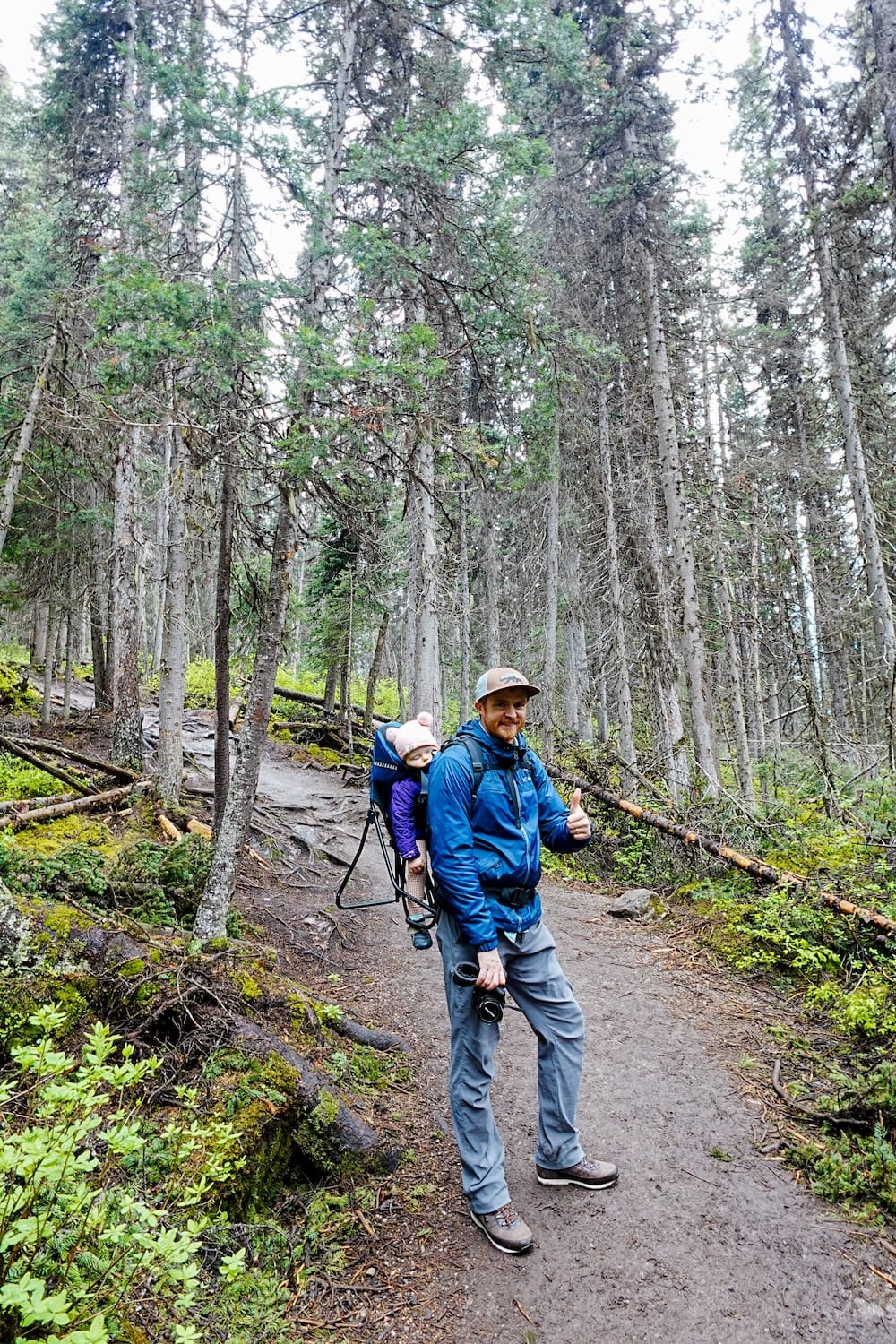
The trail is currently listed at about 1.2 kilometres each way with roughly 100 metres of elevation gain, and Parks Canada estimates approximately 45 minutes return. That isn’t a long hike, but the climbing is compressed into a short distance, so it feels more substantial than the kilometre count suggests. If you’re planning Fairview or one of the longer routes, it’s worth checking current Lake Louise trail information and conditions with Parks Canada before heading out.
I had additional evidence strapped to my back.
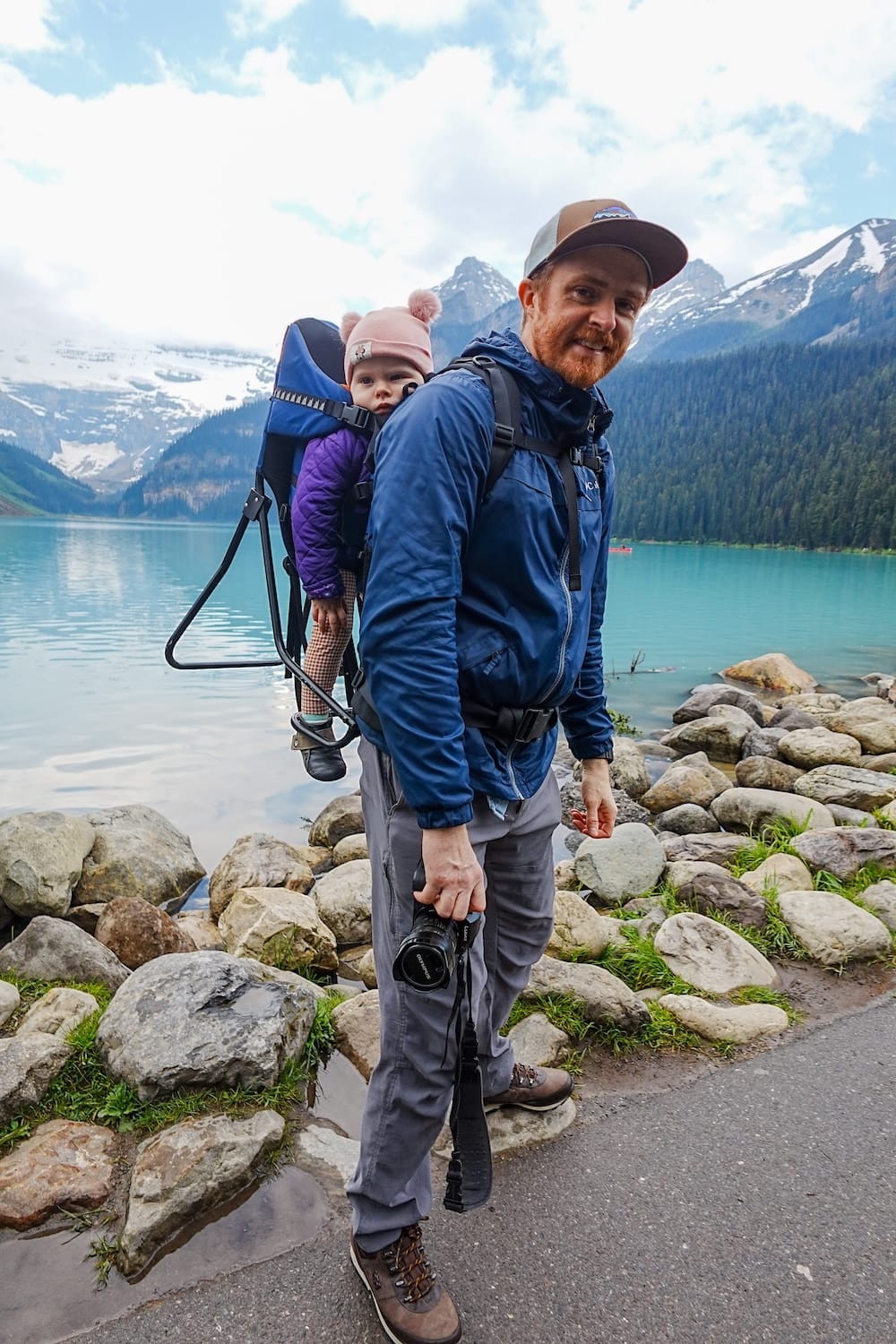
Aurelia weighed around 25 pounds at the time, and I described carrying her as hiking with a decent-sized dumbbell attached to me. She had not been in the child carrier for more than a year and initially seemed confused about what we’d signed her up for, but she quickly decided the arrangement was excellent and fell asleep.
We jokingly referred to it as her sedan-chair ride. I was the sedan chair.
By the time we reached the lookout, I was working hard enough that “We made it. We survived” came out naturally. Then I stepped onto the viewing area, looked across Lake Louise and immediately followed it with the more important verdict: this was worth it.
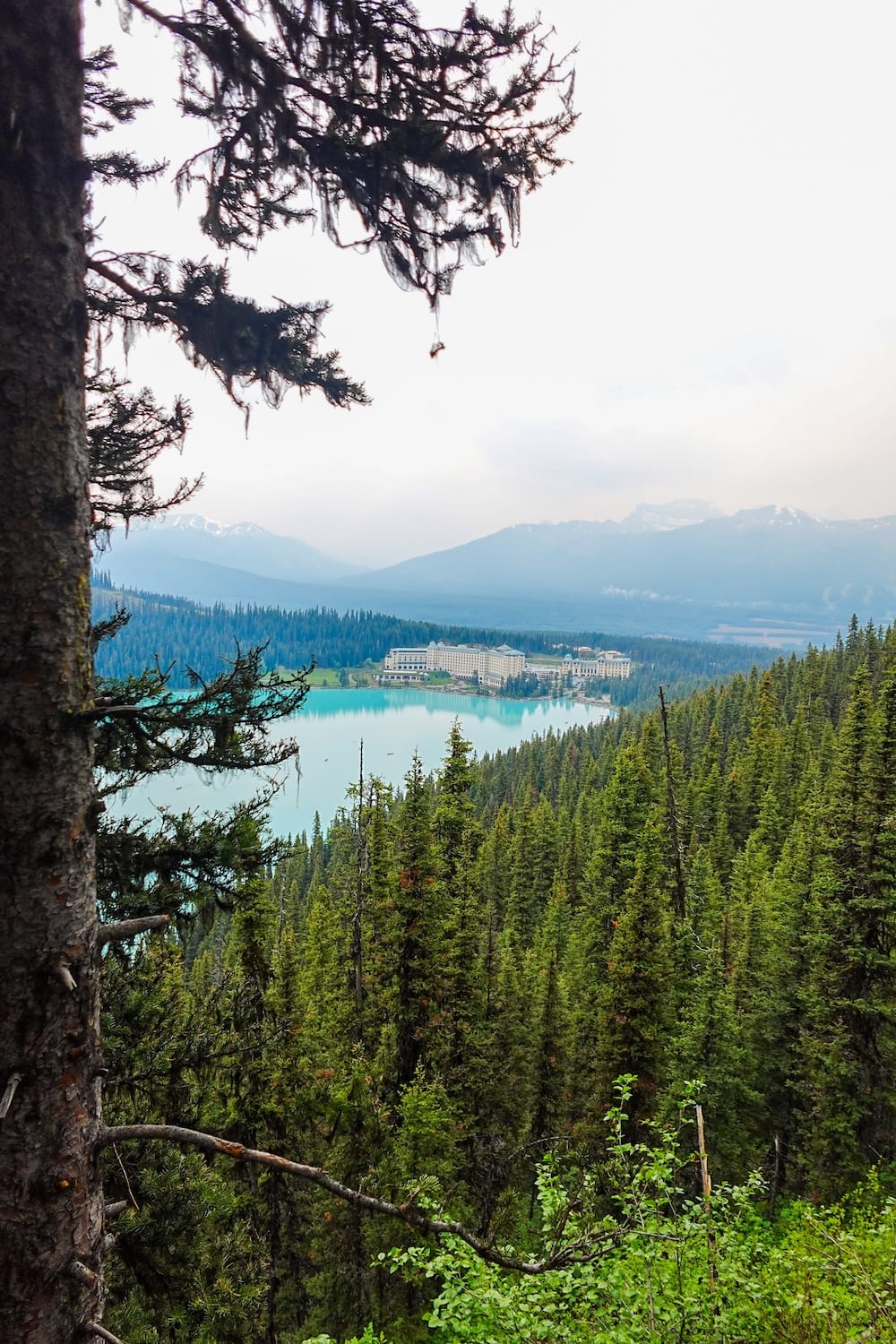
Fairview gives you something the shoreline can’t. Instead of looking straight into Lake Louise from water level, you’re above it and looking back across the lake toward Fairmont Chateau Lake Louise, with the surrounding mountains enclosing the whole scene.
During our visit, there were only a handful of other people up there. That felt almost absurd after the congestion we’d just left below, although I wouldn’t take our experience as any kind of guarantee that Fairview will be quiet when you arrive.
The more lasting point is that this was our second Lake Louise visit and we’d missed Fairview entirely the first time. We thought we’d already seen Lake Louise. We’d really seen one version of it.
Seeing Lake Louise From the Water
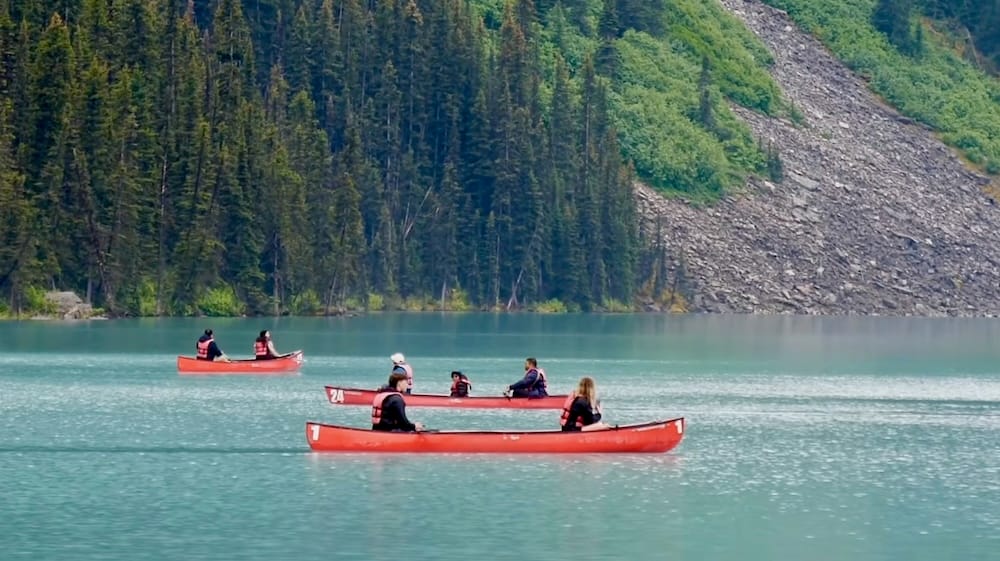
Canoeing changes the perspective again because you stop looking at the lake from around its perimeter and move onto the water itself. It also changes the budget rather decisively.
For destination visitors in 2026, canoe rentals at the Fairmont boathouse cost $160 plus GST for 30 minutes or $180 plus GST for one hour. Rentals are first come, first served rather than something ordinary visitors can simply reserve weeks in advance. Because prices, operating hours and conditions can change, you can check the current Lake Louise boathouse details before deciding whether to build canoeing into your day.
We’ve watched the canoes crossing Lake Louise, but we haven’t rented one here ourselves, so I’m not going to manufacture a personal verdict about whether $180 for an hour is worth paying.
I’d frame the decision more simply. The shoreline gives you the defining Lake Louise view for no additional cost. The Lakeshore Trail changes your position through walking. Fairview gives you a genuinely different elevated perspective in return for physical effort.
Canoeing gives you something none of those alternatives can: being out on Lake Louise itself. If paddling across that water is one of the experiences that brought you to the Canadian Rockies in the first place, that may justify the splurge. If you’re mainly looking for another beautiful angle, there are far cheaper ways to find one.
When Lake Louise Stops Being a Sightseeing Stop and Becomes a Hiking Day
Beyond Fairview, the commitment escalates quickly.
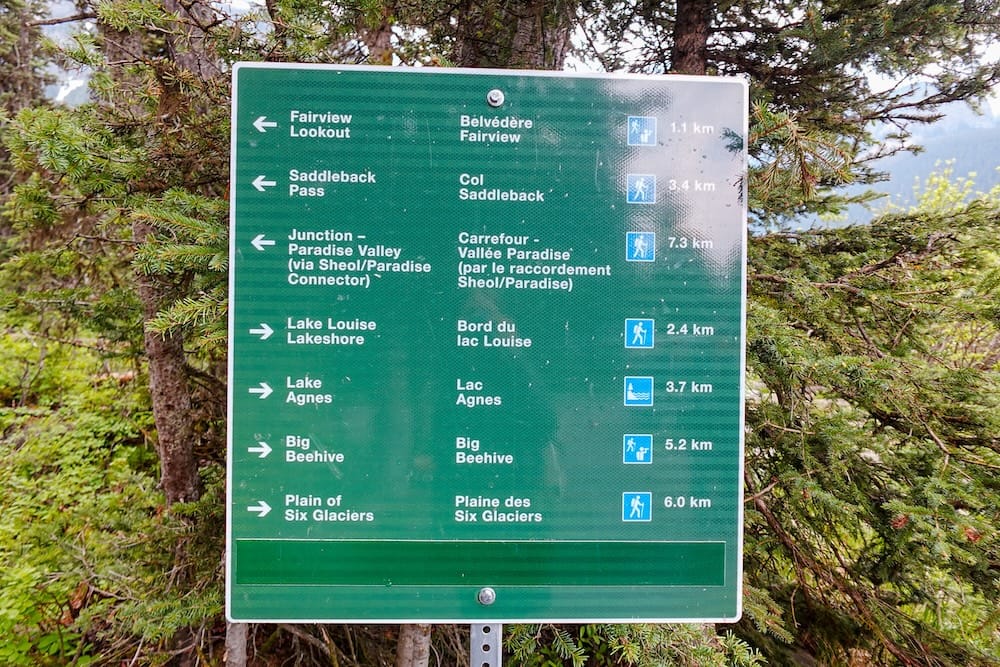
The Lake Agnes route is currently about 3.9 kilometres one way with 495 metres of elevation gain, with an estimated 2.5 to 3 hours return before you start adding long rests, photographs or extensions.
Continue toward Big Beehive and both the distance and climbing increase. Head toward the Plain of Six Glaciers and you’re looking at roughly 5.9 kilometres each way, 595 metres of elevation gain and about four hours return.
At that point, I wouldn’t describe Lake Louise as something you’re squeezing into an already overloaded Banff sightseeing day. Lake Louise has become the day.
It’s a small distinction on paper and a massive one when you’re actually building an itinerary. Fairview can sensibly be added to a normal lake visit. Lake Agnes and the bigger routes deserve to be treated as hikes in their own right, especially if your optimistic vacation spreadsheet also contains Moraine Lake, Banff town, a gondola ride and a dinner reservation.
The mountains do not care what the spreadsheet promised.
Why Fairview Changed Our Second Lake Louise Visit
Fairview deserves a little extra attention because it was the part of our recent visit that made returning to Lake Louise feel worthwhile rather than repetitive.
The shoreline was spectacular, but we’d seen it before. We already knew what the turquoise water looked like when the sun hit it, and the crowds certainly hadn’t become less enthusiastic in our absence. What changed the experience was gaining elevation.
The trail isn’t long, yet its roughly 100 metres of climbing are packed tightly enough that I noticed every pound of Aurelia sitting on my back. We took our time, she slept through most of the effort, and eventually the trees opened to a view that reorganized the whole landscape.
From Fairview, the Chateau stops being the giant building standing behind you and becomes part of the composition. The lake spreads below, the mountains frame it from above and the geography suddenly feels easier to understand.
That is why I wouldn’t judge this trail solely by distance. The better question is what you receive in exchange for the climb. For us, it was the most satisfying Lake Louise perspective of the day, and for a few minutes the scenery felt larger than the crowd.
I can’t promise the lookout will be quiet when you go, nor would I pretend everybody will enjoy a short steep climb just because we did. But if you’re reasonably mobile, don’t want to commit several hours to hiking and would like one substantial addition to the classic shoreline, Fairview is the option I would seriously consider.
The biggest surprise wasn’t that the view was good. It was realizing that we’d visited Lake Louise once before and never known this perspective was waiting above us.
How Much Time Do You Need at Lake Louise?
This becomes much easier to answer once you stop treating every Lake Louise visitor as though they’re doing the same trip.
Parks Canada’s visitor-use research estimated that people spent an average of roughly 2.5 hours at Upper Lake Louise, but observed stays stretched from around 30 minutes to more than 16 hours. That range is far more useful than the average itself because it shows just how different a Lake Louise visit can become.
Some people are taking the classic photograph and leaving. Others are disappearing onto mountain trails for most of the day.
For a normal first visit, I think two to three hours at the lakeshore area is a very useful starting point if you want the famous view plus one meaningful addition without committing to a major hike. That isn’t an official recommendation, and it isn’t a reconstruction of how long we personally spent there. It’s a practical range based on the actual walking and activity commitments around the lake.
| Your Lake Louise plan | Sensible time at the lake area |
|---|---|
| Shoreline view and photos | 30–60 minutes |
| Shoreline plus relaxed wandering | 1–2 hours |
| Shoreline plus Fairview Lookout | 1.5–2 hours |
| First visit with one meaningful addition | 2–3 hours |
| Shoreline plus canoeing | 2–3+ hours |
| Lake Agnes as your main hike | 3.5–4.5 hours |
| Major Lake Louise hiking day | 5–7+ hours |
These estimates are deliberately ranges rather than commandments. Your walking pace, weather, transportation, canoe queues, photographs, lunch and tolerance for sitting around staring at mountains will all change the final number.
The other critical point is that these are estimates for your time at the Lake Louise lakeshore area. They do not include travelling from Banff, reaching the Parks Canada Park and Ride, waiting for transport or getting back to your accommodation.
A Quick Shoreline Visit: 30–60 Minutes
If you genuinely just want to see Lake Louise, stand at the famous shoreline and take photographs, you don’t need half a day.
Once you’ve arrived, 30 to 60 minutes can be enough for the classic experience. I wouldn’t personally arrive, take three photographs and sprint straight back to the bus, particularly after seeing how much the lake can change as light moves across it, but there are trips where Lake Louise is sharing the day with Moraine Lake or several other places.
The main lake view itself is very easy to access.
Shoreline Plus One Meaningful Addition: About 2–3 Hours
This is the range I like most for a first-time visitor who wants Lake Louise to feel like an actual experience rather than a photographic transaction.
Two or three hours gives you room to enjoy the lakefront without immediately checking the clock, then add something substantial without losing most of the day. That could mean a walk along the Lakeshore Trail, Fairview Lookout or simply more time wandering and photographing different parts of the lake.
Fairview fits particularly well here because the official return estimate is only about 45 minutes. Even after allowing extra time to stop, catch your breath, take photographs and carry a sleeping toddler who has delegated the entire concept of hiking to you, it remains a manageable addition.
Canoeing: Usually 2–3 Hours or More Overall
The canoe rental itself may only last 30 minutes or an hour. The real visit takes longer.
Rentals are first come, first served, which means check-in and waiting can add uncertainty before you’re even on the water. Add normal shoreline time and I would think in terms of two to three hours or more for a Lake Louise visit that includes canoeing.
That’s another reason not to treat the activity as an impulsive five-minute add-on. At current prices and with uncertain waiting time, it deserves a deliberate place in the itinerary.
Lake Agnes or Longer Hikes: Half a Day to Most of the Day
Once Lake Agnes enters the plan, Lake Louise changes category. The hike itself takes roughly 2.5 to 3 hours return under the current official estimate, and that excludes whatever time you spend at the lakefront, stopping along the way or extending farther.
Plain of Six Glaciers is longer again, and the bigger combinations can push the walking portion alone toward five hours. At that point I would stop trying to calculate whether Lake Louise takes “two hours” or “three hours.” You’re using it as your hiking base and should plan the day accordingly.
The Time Nobody Includes in the Trail Estimate
This is where perfectly reasonable Lake Louise schedules begin falling apart.
A trail estimate measures the trail. A canoe rental period measures the canoe rental. Neither measures the day wrapped around it.
If you’re coming from Banff on Roam, many current Route 8X journeys take around 57 minutes each way. If you’re using the Parks Canada shuttle, you first need to get to the Park and Ride, check in and travel up to the lake. If you’re attempting to drive directly, your schedule has to survive the possibility that the parking lot is already full.
Then you have all the ordinary human things that itineraries love pretending don’t exist: washrooms, food, finding the correct return stop, waiting for a canoe, sitting down for ten minutes, reorganizing a toddler, photographing the lake or simply deciding to wait because you can see the clouds moving and think the sun might finally break through.
We’ve done that last one more than once, and sometimes it pays off beautifully. It also consumes time.
So when you read that Fairview takes approximately 45 minutes, remember that means the trail itself takes around 45 minutes. It does not mean your Lake Louise visit takes 45 minutes.
The most common planning error here is calculating the attraction and forgetting the day surrounding it.
When Is the Best Time to Visit Lake Louise?
There is no secret hour when Lake Louise magically empties and you inherit the shoreline.
Current visitor-use patterns show the busiest period around 1 to 3 p.m., so avoiding the middle of the afternoon can reduce your exposure to peak demand. What it cannot do is guarantee solitude.
We’ve seen that firsthand. On our recent visit, we arrived in the morning and the shoreline was already crowded. On our older trip, we reached Lake Louise later in the afternoon when some visitors were beginning to leave, and it was still busy.
Morning and later afternoon can still make sense for scheduling and light, but I wouldn’t build a trip around the fantasy that waking up painfully early earns private ownership of one of the most famous landscapes in Canada.
The transport schedule matters too. An apparently perfect time for photographs isn’t very useful if your return bus leaves while you’re halfway up a trail.
Weather Can Matter More Than the Hour
Light and visibility have affected both of our Lake Louise visits enough that I pay more attention to the sky than to arguments over whether 8:00 or 9:00 a.m. is the perfect arrival time.
On the older trip, Audrey and I waited for the sun to emerge from behind cloud because the water looked noticeably different as the light changed. During our later visit, we had almost comical timing: the weather had looked questionable and then cleared right as we arrived.
The difference in the lake was immediate.
That doesn’t mean every grey Lake Louise morning is going to transform into a tourism-poster afternoon. Mountain weather is perfectly capable of moving in the opposite direction. But if the clouds are shifting and your schedule has room, I wouldn’t necessarily leave after five minutes because the water looks subdued.
Sometimes the best photography strategy is simply patience.
How Much Walking Do You Need to Do at Lake Louise?
One of Lake Louise’s biggest strengths is that the defining scenery does not require a defining feat of athleticism.
You can reach the lakeshore and see the famous view without doing a serious hike. Parks Canada also includes the Lakeshore Trail among its all-abilities walking options, so visitors who want more than the immediate viewpoint can continue beside the water without taking on Fairview’s steeper climb.
From there, the effort rises quite logically. The shoreline requires very little walking once you’ve arrived. The Lakeshore Trail is the easy extension. Fairview is short but noticeably steep. Lake Agnes requires several hours and close to 500 metres of climbing, while the longer Lake Louise routes become full hiking commitments.
That progression is particularly useful for families and mixed-ability groups because everybody doesn’t need to choose the same stopping point.
Visiting Lake Louise With a Toddler
Our recent experience involved a child carrier rather than trying to take a stroller up Fairview.
Aurelia hadn’t been in the backpack for more than a year, so the first few minutes involved her looking around as though she’d been enrolled in a strange new transportation program without consultation. Then she relaxed, fell asleep and left the climbing to me.
I would never use that as evidence that every toddler should be taken up Fairview. The effort lands on whoever is carrying the child, weather changes quickly and every family’s comfort level is different.
The broader point is more useful anyway: you don’t need Fairview to have a good Lake Louise visit with a young child. The main shoreline and easier walking options already provide the defining scenery.
Fairview is optional. So is Lake Agnes. That sounds simple, but it is a useful distinction in a destination where the sheer number of beautiful things can make every activity feel mandatory.
Older Travellers and Non-Hikers
Lake Louise works on the same principle for older travellers or anybody who simply doesn’t want to hike.
The main attraction isn’t hiding several kilometres up a mountain. You get the famous view first, and everything after that is an elective upgrade.
That means mixed groups can experience Lake Louise together and then split if necessary. Some people can remain around the lakefront or walk the Lakeshore Trail while others head uphill.
Current transportation also includes accessible options, although anybody with specific mobility needs should check the latest service and route conditions rather than treating broad accessibility language as a guarantee that every trail, surface or transfer will work for them.
The relevant question isn’t whether a non-hiker can visit Lake Louise. Of course they can. The useful question is how far along the Lake Louise experience ladder they actually want to go.
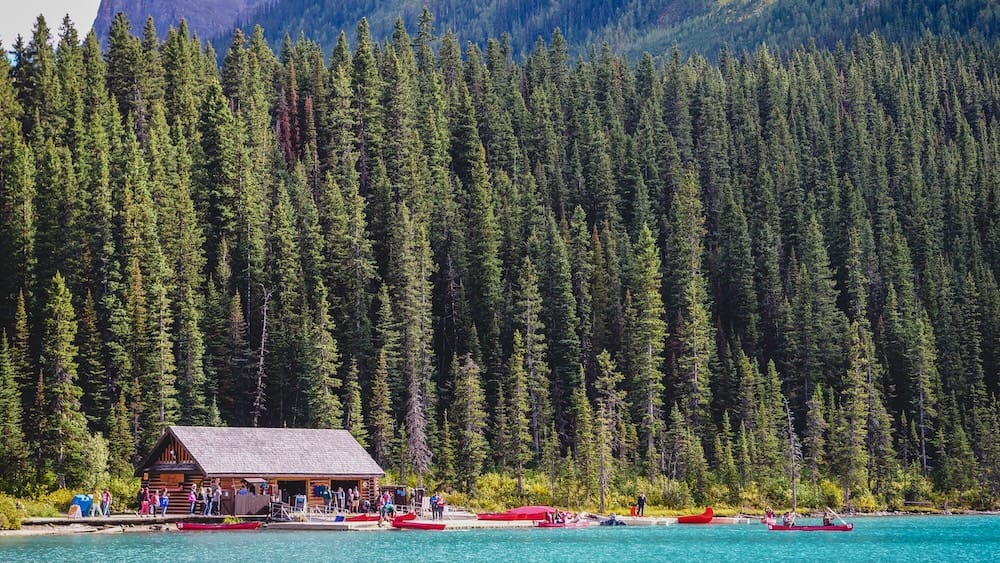
Canoeing at Lake Louise: Should You Spend the Money?
The canoe photographs are dangerously persuasive.
Bright red boats floating across turquoise water beneath a wall of mountains look like somebody engineered the experience specifically to empty the wallets of travel photographers.
For destination visitors in 2026, the Fairmont boathouse charges $160 plus GST for 30 minutes and $180 plus GST for one hour, with rentals offered on a first-come, first-served basis.
That’s enough money that I would make the decision deliberately instead of arriving at the dock, being overcome by turquoise-water emotion and reaching automatically for the credit card.
We didn’t canoe Lake Louise ourselves, so I don’t have a genuine personal “worth it” verdict to give you. What I can compare are the alternatives.
The shoreline gives you the defining view for no extra cost. Walking the Lakeshore Trail changes your position without adding a paid activity. Fairview gives you an elevated view in exchange for sweat.
Canoeing gives you something none of those can provide: being out on Lake Louise itself. If that is one of the experiences you’ve pictured while planning the Canadian Rockies, I can understand spending heavily on it. If your main goal is simply to get a different photograph, there are considerably cheaper ways to alter the angle.
Food, Toilets and the Boring Stuff That Becomes Important
A short Lake Louise visit requires very little logistical preparation once you’ve arrived. A long one does.
Public washrooms are available around the lakeshore arrival area. Lake Louise village has a broader collection of services including food and other basics, but remember that the village is separate from the famous waterfront.
Fairmont Chateau Lake Louise also has some dining options open to destination visitors, although being able to walk around the hotel area doesn’t mean every hotel facility or meal service is automatically available to non-guests.
We’ve visited the Chateau as sightseers but have never stayed there overnight, so I’m not going to turn it into a hotel review halfway through a Lake Louise guide. It is a huge visual part of the lakefront and can be useful for dining, but the hotel isn’t necessary to experience the lake.
For longer hikes, I’d be much more deliberate about bringing food and water than I would for a simple shoreline stop.
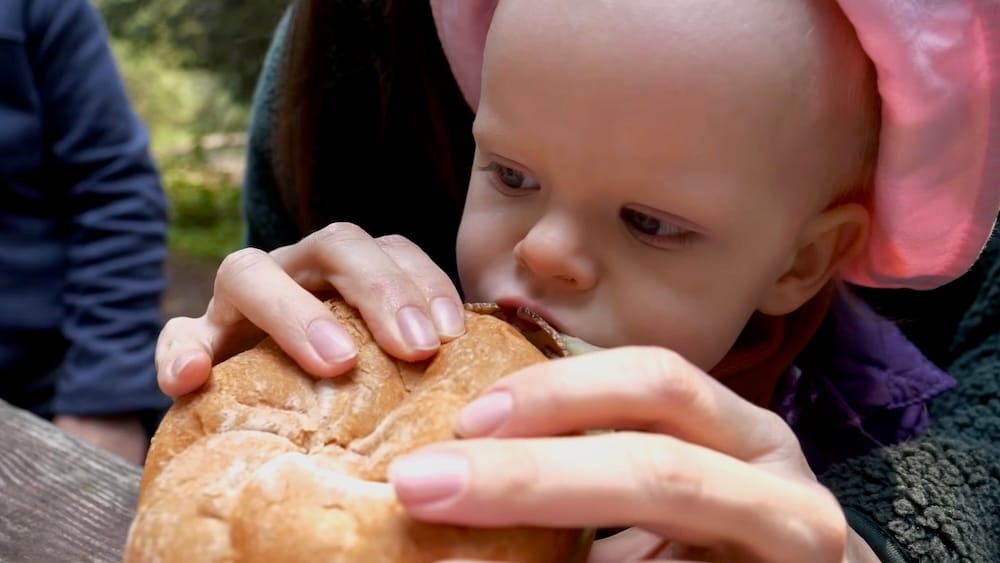
And if you’re travelling with a toddler, apparently pack something better than the children’s option. On our broader tour day, Aurelia had access to perfectly reasonable kid-friendly food and remained far more interested in the roast beef being eaten by the adults.
Toddlers have standards.
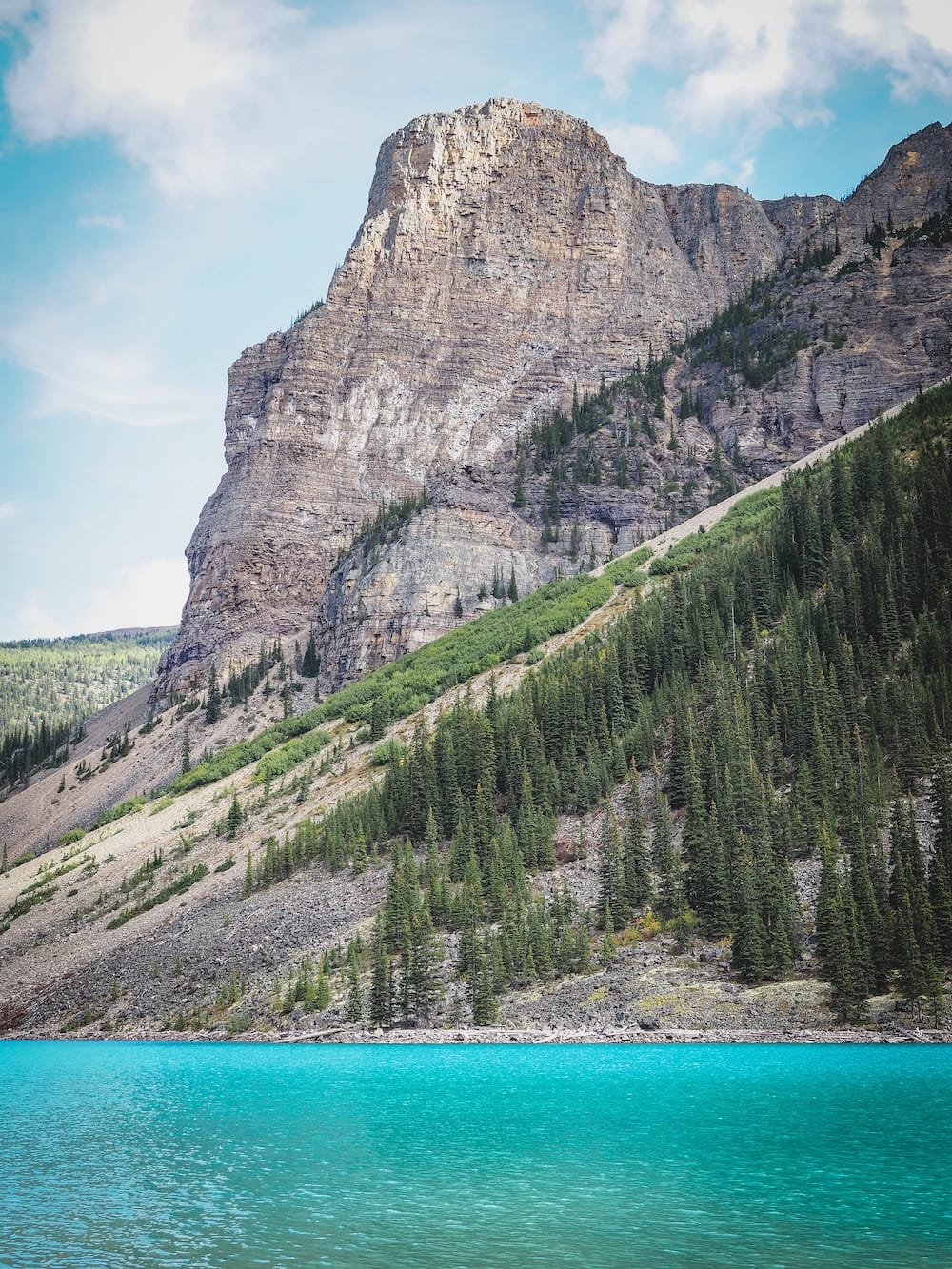
Should You Visit Lake Louise and Moraine Lake on the Same Day?
Yes, that combination can work very well, provided Lake Louise isn’t also your major hiking day.
The current transportation systems are designed in ways that make a two-lake visit practical. Eligible Parks Canada shuttle users can use the Lake Connector between Lake Louise and Moraine Lake during its operating season, while Roam’s Super Pass creates another way to structure both lakes from Banff. Guided tours also commonly pair them.
If you’d rather have transport and the two-lake sequence handled as one booking, the current Lake Louise and Moraine Lake guided experience from Banff is one compact option to compare against doing the logistics independently.
We’ve personally visited Lake Louise and Moraine Lake on the same private-tour day, so I know the combination does not automatically turn the itinerary into a death march.
The catch is what you mean by “visit Lake Louise.”
Lake Louise shoreline plus Fairview and then Moraine Lake is one kind of day. Lake Agnes, Big Beehive, a leisurely lakefront visit, Moraine Lake and three other Banff attractions because an itinerary generator assured you they fit is something else entirely.
At some point your vacation becomes a hostage situation.
If both lakes matter equally, I’d keep Lake Louise closer to the two-to-three-hour version and protect enough time for Moraine Lake to feel like a destination rather than the next scheduled photograph.
If Lake Agnes, Plain of Six Glaciers or another major hike is the priority, let Lake Louise own the day. Moraine Lake can wait for another part of the itinerary if you have the flexibility.
Is Lake Louise Worth the Crowds and the Planning?
Yes.
I wouldn’t say that because Lake Louise is cheap, empty or beautifully effortless to organize. None of those descriptions fit particularly well anymore.
Current access requires thought. Direct parking is expensive and uncertain during the main season. Canoeing is eye-wateringly pricey. The shoreline can be busy even when you’ve made the supposedly brilliant decision to arrive early.
And I would still go.
Our first visit gave us the classic version of Lake Louise: drive up, eventually find somewhere to park, photograph one of Canada’s most famous mountain lakes and continue the road trip.
Our return visit was better because we stopped treating the shoreline as the whole attraction. We went uphill to Fairview. I carried Aurelia while she slept through most of my labour, and from the viewpoint we looked down over a lake we’d already seen before from a completely different perspective. For a little while there were only a few other people around us, and Lake Louise felt expansive again rather than congested.
That one addition was enough to make a repeat visit feel new.
So if I were planning Lake Louise again, I wouldn’t automatically reduce it to a ten-minute photo stop, and I wouldn’t automatically sacrifice the entire day either. I’d solve the transportation first, give myself enough time at the shoreline that I wasn’t immediately checking the clock, and then choose one thing that meaningfully changes the experience.
Walk beside the lake. Climb Fairview. Paddle it. Or commit properly to one of the longer hikes.
For many first-time visitors, two to three hours at Lake Louise is a very good starting point.
The better rule, though, is the one our second visit taught me: the amount of time you need at Lake Louise depends on how far beyond the postcard you want to go.
Frequently Asked Questions
How do you get to Lake Louise in 2026?
The main options are the Parks Canada shuttle from the Lake Louise Park and Ride, Roam Route 8X from Banff, a guided group or private tour, or driving directly and trying to park at the lakeshore. The best choice depends on where you’re staying and how much schedule flexibility you want.
Can you still drive and park at Lake Louise?
Yes. Private vehicles can still reach Lake Louise, but Parks Canada discourages relying on lakeshore parking during the busy shuttle season because the lot commonly fills by sunrise and can remain full during the day. Parking costs $42 per vehicle per day during the 2026 paid-parking period.
How much time should I spend at Lake Louise?
For many first-time visitors, two to three hours at the lakeshore area is a useful starting point if you want the famous view plus one meaningful addition. A quick shoreline visit can take 30–60 minutes, while Lake Agnes or the longer hikes can turn Lake Louise into a half-day or full-day destination.
How difficult is Fairview Lookout at Lake Louise?
Fairview Lookout is about 1.2 kilometres each way with roughly 100 metres of elevation gain and an estimated 45-minute return time. I found it short but noticeably steep, especially while carrying Aurelia in a child carrier, but the elevated view was one of the most rewarding parts of our visit.
Do you need to hike to see the best-known Lake Louise view?
No. The classic Lake Louise shoreline view appears almost immediately once you reach the lakeshore. The Lakeshore Trail offers an easier extension beside the water, while Fairview, Lake Agnes and the longer trails add progressively more climbing and time.
Can you visit Lake Louise and Moraine Lake on the same day?
Yes, especially if Lake Louise remains a sightseeing-scale visit rather than your main hiking day. The Lake Connector, Roam options and guided tours can make the combination practical, but a major Lake Louise hike changes how realistic it is to give both lakes enough time.
This guide is also available in Spanish. [Leé la versión en castellano: Guía de Lake Louise: cómo visitarlo, miradores y cuánto tiempo necesitás]
This article contains affiliate links. If you book through one of these links, I may earn a commission at no extra cost to you.