
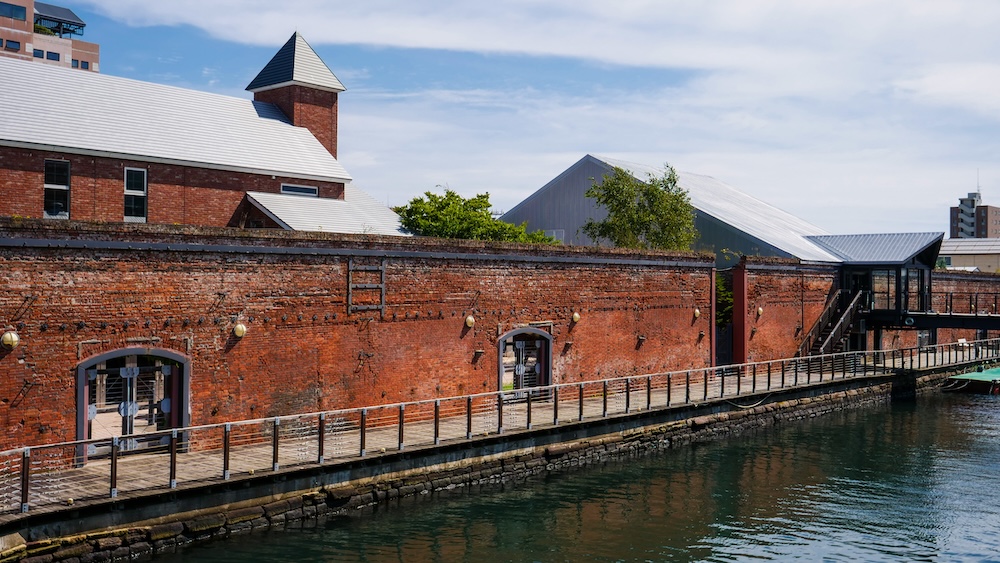
If I went back to Hakodate tomorrow, I’d seriously consider spending part of the trip around the Bay Area or Motomachi. Audrey and I didn’t stay on this side of the city, so I can’t give you firsthand hotel reviews, but it was my favourite part of Hakodate for walking. The harbour, red-brick warehouses, historic churches and streets climbing toward Mt. Hakodate come together in a way that makes western Hakodate feel like somewhere you could happily spend a day without much of a plan.
Choosing a hotel here is trickier than the neighbourhood labels suggest. Stay beside the water and you get easier harbour walks; stay farther uphill in Motomachi and you’re surrounded by historic architecture, although your legs may have a few things to say about it. I’d personally look for harbour views and historic character, but the two aren’t necessarily offered by the same hotel—or even the same room.
Why I’d Stay in Hakodate Bay or Motomachi
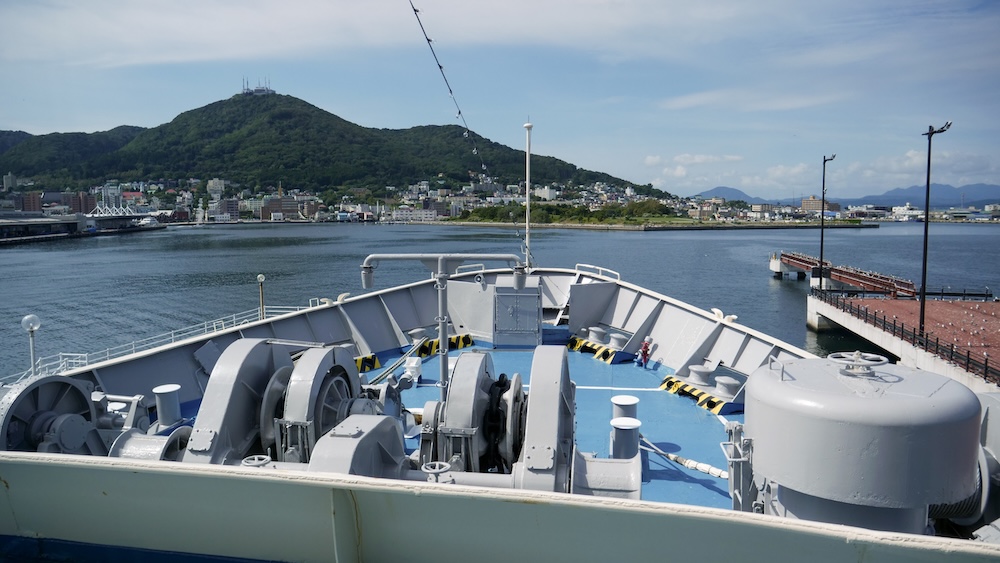
One of our favourite stretches in Hakodate began with nothing more complicated than wandering away from Morning Market toward the port. We came across the Mashu-maru museum ship almost by accident, decided to go aboard and eventually continued along the waterfront toward Kanemori Red Brick Warehouses. I love that kind of travel day, when an unplanned turn produces something more memorable than whatever schedule you were supposed to be following.
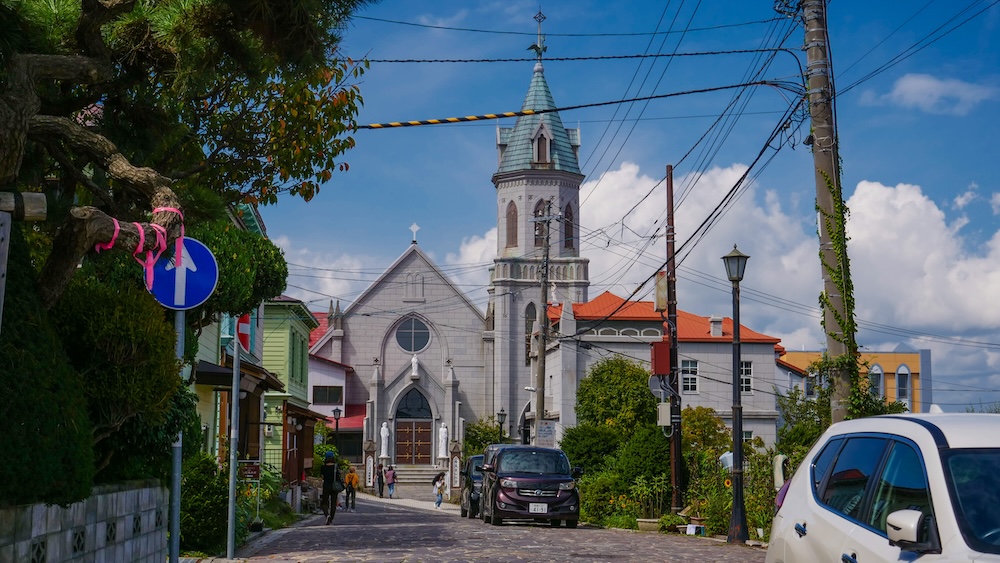
The Bay Area felt a little more geared toward visitors than some other parts of the city, yet oddly it also seemed less crowded. We had space to wander, look at the water and change direction without fighting our way through a busy street. Motomachi added another dimension, with churches, old public buildings and hillside streets giving this corner of Hakodate a very different appearance from the station area. For me, it’s the combination that makes the area special rather than any single warehouse or viewpoint.
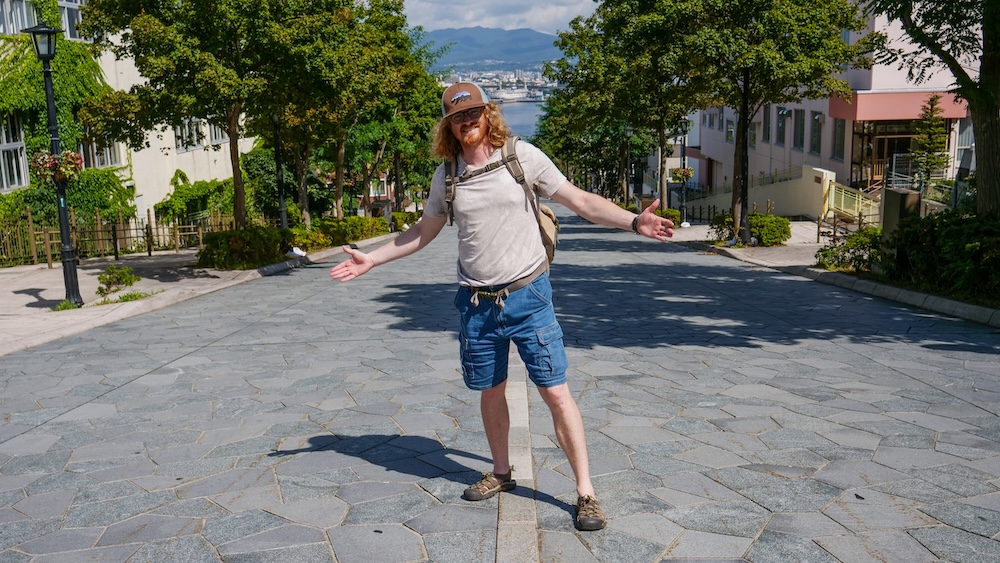
Of course, beautiful hillside scenery has a price. Hakodate has 19 named slopes descending from the foot of Mt. Hakodate toward the bay, and we tackled Hachimanzaka when the heat and humidity were giving us a proper workout. I enjoyed the climb and its harbour perspective, but I would have gladly fast-forwarded three or four weeks if it meant cooler weather. It’s also why I’d pay attention to hotel elevation rather than simply dropping a pin on a map and assuming everything nearby is an easy stroll.
Bay Area or Motomachi? The Location Changes the Stay
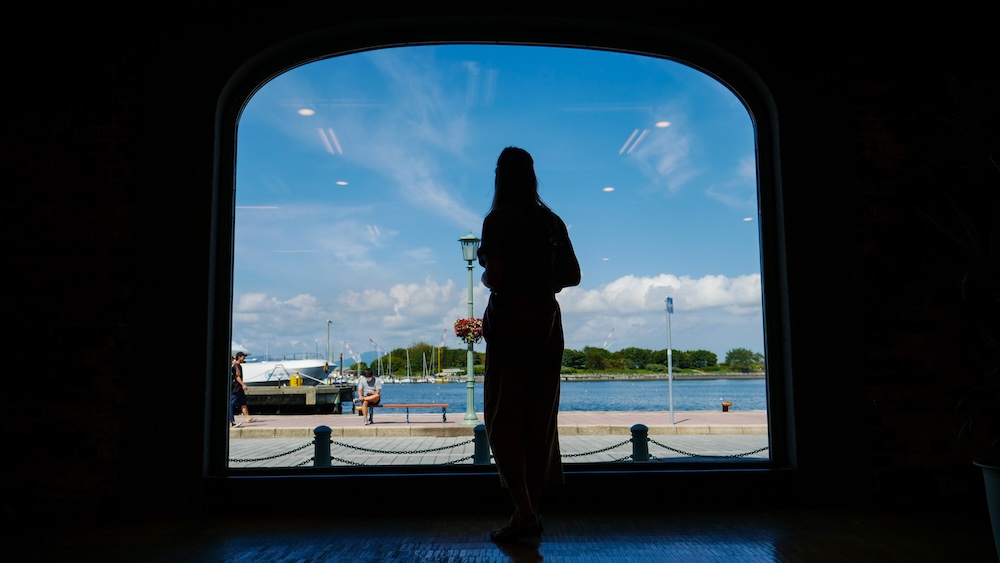
Near the Bay Area waterfront, I’d prioritize hotels around Kanemori and the relatively level harbour streets. You can walk by the water whenever the mood strikes, then head uphill to explore Motomachi without making the climb part of every return to your room. That would also be my first instinct if I were arriving with a heavy suitcase.
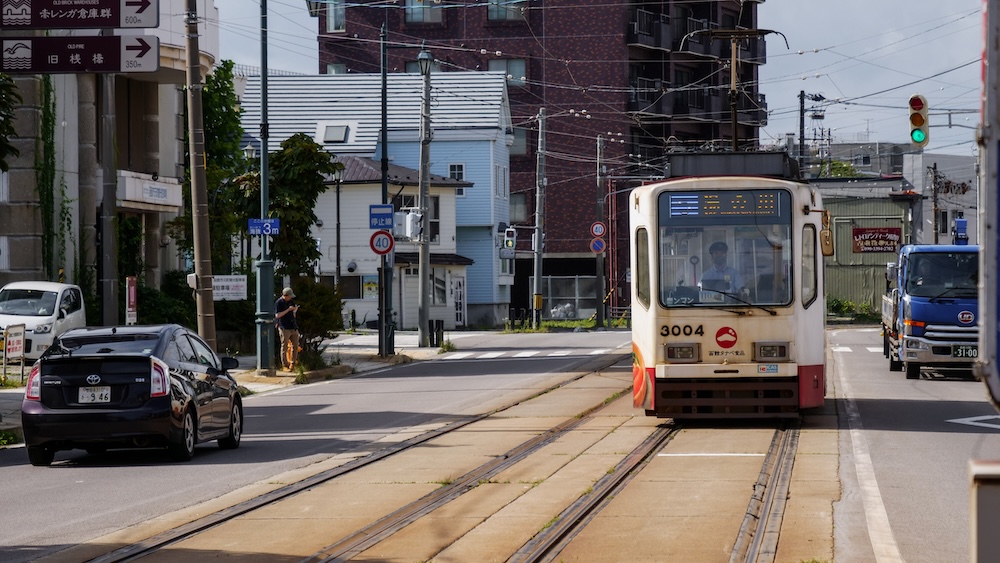
Lower Motomachi around Jujigai offers a particularly useful middle ground. Both historic tram routes pass through Jujigai before separating: Route 2 continues toward Horaicho and Yachigashira, while Route 5 serves Suehirocho, Omachi and the dock side. A hotel near that junction can put you between the waterfront and the historic streets without requiring a long uphill approach from the tram.
Farther up Motomachi, you trade some convenience for architectural character and elevated harbour views. I’d happily accept extra climbing for a particularly appealing historic property, but I would check its route from the tram stop before booking. Five minutes on a map can feel rather different when those five minutes point uphill, especially with luggage.
Best Hotels in Hakodate Bay and Motomachi
These are researched accommodation options, not hotels we personally tested. I’ve kept the selection focused on places with a meaningful reason to stay: direct waterfront access, an actual historic building, a useful lower-Motomachi location or significantly more space than a conventional city hotel. The comparison below is a quick booking hub; the individual descriptions explain why I would consider each property and which room details I’d scrutinize.
| Hotel | Main appeal | What to check | Rooms and availability |
|---|---|---|---|
| La Vista Hakodate Bay | Waterfront access and upper-floor onsen | Whether your room faces the harbour | See rooms |
| HakoBA Hakodate | Former bank building and flexible room formats | Historic private room vs shared facilities | See rooms |
| NIPPONIA HOTEL Hakodate Port Town | Restored red-brick warehouse | Historic-building quirks; no assumed harbour view | See rooms |
| Old Soma Residence Kazeno Heritage | Rare historic residence and three distinctive suites | Exact suite, layout and view | See rooms |
| Villa Concordia Resort & Spa | Large suites and kitchen facilities | Modern comfort rather than heritage architecture | See rooms |
| La Jolie Motomachi | Boutique base near Jujigai | Room size and category-specific extras | See rooms |
| Hotel Enoe Hakodate | Modern base near Route 2 | Practicality over architectural character | See rooms |
| La Vista Hakodate Bay Annex | Spacious rooms and private-bath options | Tsugaru Strait view vs Hakodate Bay view | See rooms |
La Vista Hakodate Bay: Waterfront Convenience and an Onsen
La Vista is the natural contender if you want to be near Kanemori Red Brick Warehouses without giving up the amenities of a larger hotel. The upper-floor natural hot-spring baths are a real distinction, especially after a day spent covering the waterfront and the hills on foot.
Rooms range from 15-square-metre singles to doubles and twins around 25 square metres, with deluxe twins around 34 square metres. Some guestrooms face the harbour, but the elevated panoramas from the shared bathing facilities don’t come attached to every bedroom. I’d compare La Vista’s available room categories before paying more for a view. This is where I’d look for a conventional waterfront hotel first, rather than a night inside a restored heritage building.
HakoBA Hakodate: Sleep in a Former Bank
HakoBA has the kind of backstory I’d actually care about while travelling. Part of the property occupies a former bank dating to 1932, later used by Fuji Bank, so the historic character is built into the place rather than added with a few vintage-looking lamps.
The range of accommodation is unusually broad: historic-building private rooms include a 20-square-metre Standard Double and 23-square-metre Moderate Twin, while other areas contain dormitory and bunk-style options. There’s even a much larger maisonette suite in the old building. If I wanted that former-bank experience, I’d look specifically at HakoBA’s historic private-room options rather than assuming the lowest displayed price gets me the same facilities.
Some budget accommodation has shared bathrooms, while private rooms are a different proposition. The rooftop terrace looks over Hakodate Bay, but that doesn’t turn every bedroom into a harbour-view room. I like the flexibility here: you can enjoy the architecture without necessarily choosing an upscale hotel.
NIPPONIA HOTEL Hakodate Port Town: A Restored Brick Warehouse
NIPPONIA takes the historic-stay idea in another direction. It occupies a restored red-brick trading warehouse with only nine guest rooms, and the old brickwork remains part of the interiors. The rooms are comparatively spacious, with categories around 35 to 40 square metres or more, so you’re not squeezing into a tiny room simply for the privilege of sleeping somewhere old.
What attracts me is the building itself, which also means accepting a few realities of historic accommodation. Steps, uneven floors and different insulation or soundproofing standards are worth considering, particularly if you prefer the predictable setup of a modern hotel. I wouldn’t book it for a harbour-view bedroom without confirming that view separately. Travellers drawn primarily to the restored warehouse can see which NIPPONIA rooms are available for their dates.
Old Soma Residence Kazeno Heritage: The Historic Splurge
This is the one that catches my eye most. The former Soma residence dates to 1908 and is a nationally designated Important Cultural Property, with accommodation opening in March 2026. It has just three suites, and the choice between them matters far more than the usual question of whether you want a double bed or two singles.
The 72-square-metre Port View Suite is the clear match for my own priorities because it includes a Hakodate Bay view, a private garden and a terrace. The 121-square-metre Heritage Suite occupies a converted two-level storehouse, with internal stairs and a different layout that puts historic architecture front and centre. The third suite is a more intimate 49 square metres. Those are three substantially different experiences within one property.
I would be torn between the first two. Do I want to sit and admire the harbour, or immerse myself in the old storehouse? It’s a rather enjoyable problem, provided the rates don’t bring me crashing back to earth. With only three suites, checking the specific Old Soma room offered for your dates matters more than falling in love with the property’s most attractive photograph.
Villa Concordia Resort & Spa: Space Over Nostalgia
After enough nights travelling around Japan, I can appreciate the appeal of spreading out rather than playing suitcase Tetris every morning. Villa Concordia has only ten suites, but they range from approximately 44 to 116 square metres, with living areas, balconies and kitchen facilities. For a longer stay, that space might be more valuable than a centuries-old architectural flourish.
Villa Concordia is modern accommodation in a historic district, not a restored heritage building. I’d consider it for comfort and independence, and compare its suite sizes and availability rather than assuming a balcony automatically means a harbour-facing outlook.
La Jolie Motomachi: A Practical Boutique Location
La Jolie appeals to the part of me that likes an atmospheric neighbourhood but doesn’t want getting around to become a daily expedition. The hotel estimates roughly three minutes on foot to Jujigai tram stop and about eight minutes to both Kanemori Red Brick Warehouses and the Mt. Hakodate Ropeway area. It’s a handy position between the harbour and the hillside sights.
The 21-square-metre standard twins are fairly conventional, while larger suites and family configurations reach into the mid-40s and 50s. Some premium categories feature an in-room sauna or heated-stone bathing setup. Those extras belong to particular rooms, so I’d compare La Jolie’s room layouts and inclusions if they were influencing my choice. I see this primarily as a comfortable boutique base in historic Hakodate rather than a historic property in its own right.
Hotel Enoe Hakodate: The Straightforward Option
There’s nothing wrong with choosing a hotel because it does the ordinary things well on paper. Hotel Enoe sits near Horaicho tram stop on Route 2 and offers modern rooms from compact 15-square-metre semi-doubles up to a 38-square-metre family configuration. It’s a different proposition from sleeping in a former bank or historic storehouse.
If I were keeping accommodation simple and spending most of the day exploring, Enoe would be worth considering alongside the boutique alternatives. You can check Hotel Enoe’s current room choices without paying for heritage architecture you might not particularly value.
One additional waterfront alternative: La Vista Hakodate Bay Annex offers larger rooms than the original property, including 59-square-metre special rooms with private outdoor natural hot-spring baths. Their views are toward the Tsugaru Strait rather than necessarily straight into Hakodate Bay—a distinction worth knowing if a particular outlook is the reason for the splurge. If private bathing and additional space are your priorities, compare La Vista Hakodate Bay Annex rooms as well.
The Two Things I’d Double-Check: Views and Historic Character
First, a harbour-view hotel is not necessarily a harbour-view room. The view might be from a rooftop terrace, restaurant or public bath while your own window faces somewhere else. Old Soma’s Port View Suite explicitly includes the Hakodate Bay outlook; at other properties, I’d look for a named room category or confirmed orientation rather than assuming the hero photograph applies to every booking.
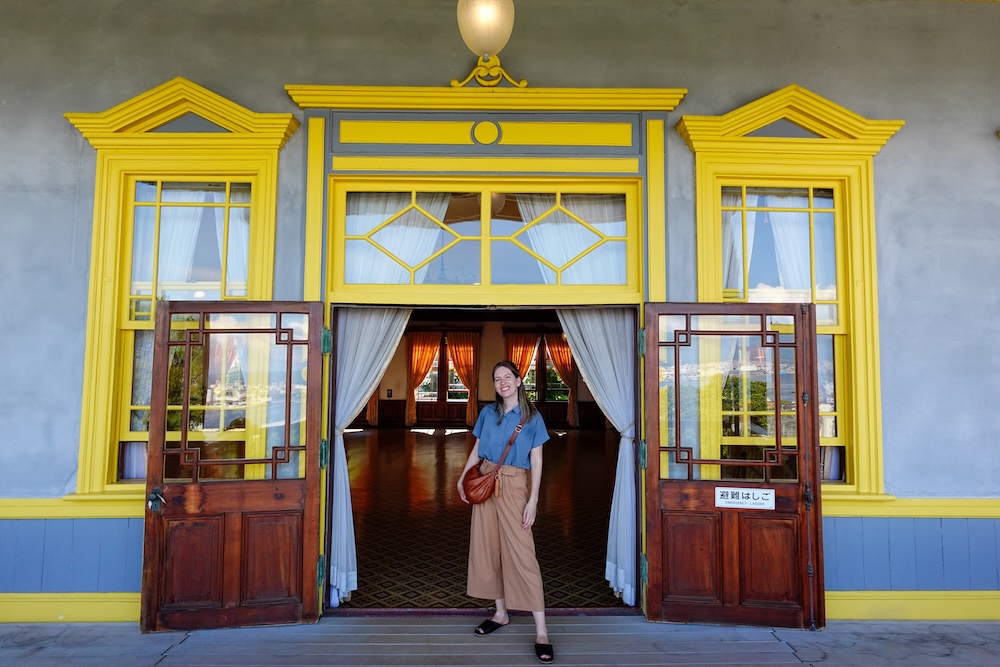
Second, staying in a historic neighbourhood isn’t the same as sleeping inside a historic building. HakoBA’s former bank, NIPPONIA’s trading warehouse and Old Soma’s historic property genuinely incorporate old architecture into the stay. Villa Concordia, La Jolie and the La Vista properties offer different benefits while placing you close to that same historic setting. Neither is automatically better, especially if the choice is between a charming old room with a few quirks and a much larger suite where everything is easier to live with.
Hills, Trams and Luggage: What the Map Doesn’t Tell You
Hakodate struck us as a very walkable city, but it is spread out, and Motomachi makes you earn some of those harbour views. We used the trams partly to save our legs for the hills; that made perfect sense once we were climbing them in the heat.
Jujigai is a useful reference point because both Routes 2 and 5 serve it. La Jolie estimates about seven minutes by tram from Hakodate Ekimae followed by a three-minute walk, while NIPPONIA estimates around five minutes on the tram and four minutes on foot. These are estimates rather than guarantees, but they show that staying near the historic waterfront needn’t mean an awkward transfer every time you travel through the station.
Farther uphill, I would give the approach to the hotel more thought. The same street can be a glorious walk with a camera and an entirely different proposition with a suitcase, a backpack and humidity sticking your shirt to your spine. Hakodate also introduced an accommodation tax in April 2026, with the amount depending on the nightly accommodation price per guest, so compare the final total rather than relying only on the first room rate displayed.
Would I Choose Bay and Motomachi Over Hakodate Station?
For a one-night stop, an early train or a visit organized around Morning Market breakfasts, I still see the logic in staying near Hakodate Station. But give me a few days to enjoy the city and I’d be strongly tempted by the western waterfront. This was where I most enjoyed wandering, and I’d accept a bit of extra tram travel in exchange for having those historic streets and harbour walks close to the hotel.
I’d ideally love to split a longer stay between the station area and Bay/Motomachi, although for two or three nights I suspect moving luggage would create more hassle than benefit. With one hotel to choose, I’d first decide between the flatter waterfront and the historic slopes, then look carefully at the actual room. A harbour-facing suite at Old Soma, HakoBA’s old-bank character, NIPPONIA’s brick warehouse or the onsen and waterfront access at La Vista all offer different versions of the same neighbourhood.
And that’s why I’d seriously consider staying here next time. We loved exploring the harbour, hills and architecture of western Hakodate on foot. Having more of that right outside the hotel door sounds like a pretty fine way to get to know the city.
Frequently Asked Questions
Is it better to stay in Hakodate Bay or Motomachi?
Hakodate Bay is the easier choice if you prioritize relatively level waterfront walking and quick access to Kanemori Red Brick Warehouses. Motomachi puts you deeper into Hakodate’s historic architecture and hillside streets, but it also involves more climbing. Lower Motomachi around Jujigai offers a useful compromise between the two.
Can you stay in a genuinely historic building in Hakodate?
Yes. HakoBA incorporates a former bank dating to 1932, NIPPONIA HOTEL Hakodate Port Town occupies a restored red-brick trading warehouse, and Old Soma Residence Kazeno Heritage offers accommodation within a nationally designated historic property dating to 1908.
Does booking a harbour-view hotel guarantee a harbour view from the room?
No. Some properties have waterfront views from shared spaces such as rooftop terraces, restaurants or public baths rather than from every guestroom. If the view matters to you, check the exact room category and orientation before booking.
Is Motomachi very hilly?
Motomachi is noticeably hilly, with 19 named slopes descending toward Hakodate Bay. We climbed Hachimanzaka during hot and humid weather, and the elevation was very noticeable. I would factor the uphill walk into a hotel decision, particularly when carrying luggage.
Is Hakodate Bay and Motomachi convenient for the tram?
Yes, particularly around Jujigai, where Hakodate’s two tram routes pass before separating. Route 2 continues toward Horaicho and Yachigashira, while Route 5 serves Suehirocho, Omachi and the dock side of the city.
Should I split my Hakodate stay between the station and Bay or Motomachi?
I would consider splitting a longer stay because the station area and western waterfront offer different experiences. For only two or three nights, though, I think changing hotels could create more luggage hassle than benefit, especially when Hakodate’s trams make it relatively easy to travel between the areas.
This guide is also available in Spanish. [Leé la versión en castellano: Dónde alojarse en la bahía de Hakodate y Motomachi: mejores hoteles y alojamientos históricos frente al agua]
This article contains affiliate links. If you book through one of these links, I may earn a commission at no extra cost to you.