
When I was planning our Hokkaido trip, I remember studying the map and thinking I’d discovered a wonderfully obscure little hot-spring town called Noboribetsu. We arrived and, rather quickly, I realized it wasn’t obscure at all. There were big hotels, plenty of visitors and an entire town built around the business of soaking in volcanically heated water. So much for my great discovery.
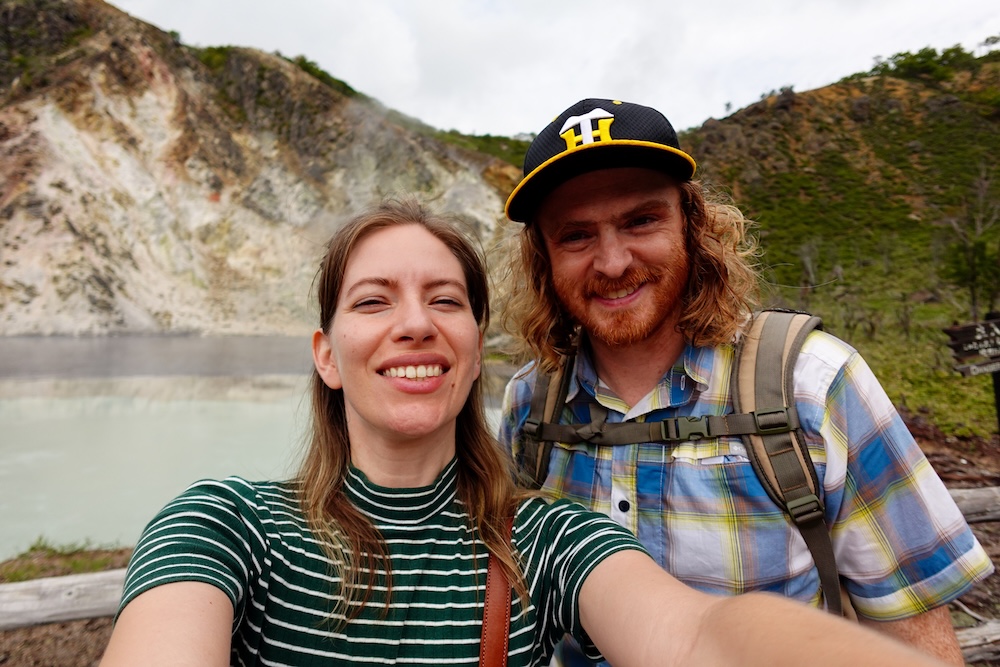
Audrey and I spent two nights in Noboribetsu Onsen, travelling there from Hakodate before continuing toward Sapporo. By the time we left, we’d wandered among steam vents, visited Hell Valley, soaked our feet in a hot river, eaten some outstanding ramen and made repeated trips to the baths at our hotel. I loved the place. If we’d had an extra night to spare, I wouldn’t have turned it down.
But two nights were ideal for us, and there’s a fairly practical reason why. Our arrival day mostly disappeared into travelling and settling in. Our second day was the main sightseeing day. On the third, we still found time for a little exploring and another ramen meal before heading onward. The real advantage wasn’t two days of nonstop attractions. It was waking up in Noboribetsu with a complete day ahead of us and absolutely no train to catch.
So, How Many Days Should You Allow for Noboribetsu?
One night is a good choice for many first-time visitors. Two nights are what I’d choose again, especially if you enjoy hot springs, forest walks and small towns where you can happily spend a few hours doing very little. A day trip can work, provided you know which sights matter most and aren’t expecting a leisurely resort stay squeezed between trains.
| Time in Noboribetsu | What it gives you | Best fit | Main sacrifice |
|---|---|---|---|
| Day trip | Hell Valley and other selected sights; possibly a longer walk or day-use bath | Visitors with limited time or a Sapporo base | Much of the day goes to transport, and the return trip sets your deadline |
| One night | Sightseeing across parts of two calendar days, an evening in town and hotel onsen time | Travellers who want the onsen-town experience without a longer stay | A late arrival or early departure can eat up your outdoor time |
| Two nights | A full day without arrival or departure chores, plus more chances to bathe and wander | Onsen enthusiasts, nature lovers and people who enjoy a slower stop | Another night’s accommodation, without necessarily twice as many sights |
For scale, a short official Noboribetsu walking course gives around 20 minutes to the Jigokudani, or Hell Valley, viewing area. You can absolutely see the steaming volcanic landscape without spending two nights here. Once you add the forest trails toward Oyunuma, a stop at the natural footbath and time in the hotel baths, though, you’re talking about a different sort of visit.
If you’re leaning toward an overnight stay, pay attention to the area when you shop for a room. I’d base myself in Noboribetsu Onsen, where you can walk to the geothermal sights and return to the baths without another transfer. You can compare hotels and ryokan in Noboribetsu Onsen, checking whether dinner and breakfast are included before deciding what an extra night would actually cost.
What Our Two Nights Actually Looked Like
Day One: Arriving From Hakodate and Settling In
We travelled by JR train from Hakodate and got off at Noboribetsu Station, then transferred to a local bus for the ride up to the onsen district. That second leg catches some people out. Noboribetsu Station and Noboribetsu Onsen are roughly eight kilometres apart; stepping off the train doesn’t put you at the entrance to Hell Valley.
We waited around half an hour for our bus on that trip. It wasn’t a disaster, and we found the transfer easy enough to navigate, but waiting, riding uphill and checking into a hotel all consume time. We spent most of that first day arriving and getting comfortable rather than racing off to explore every attraction.
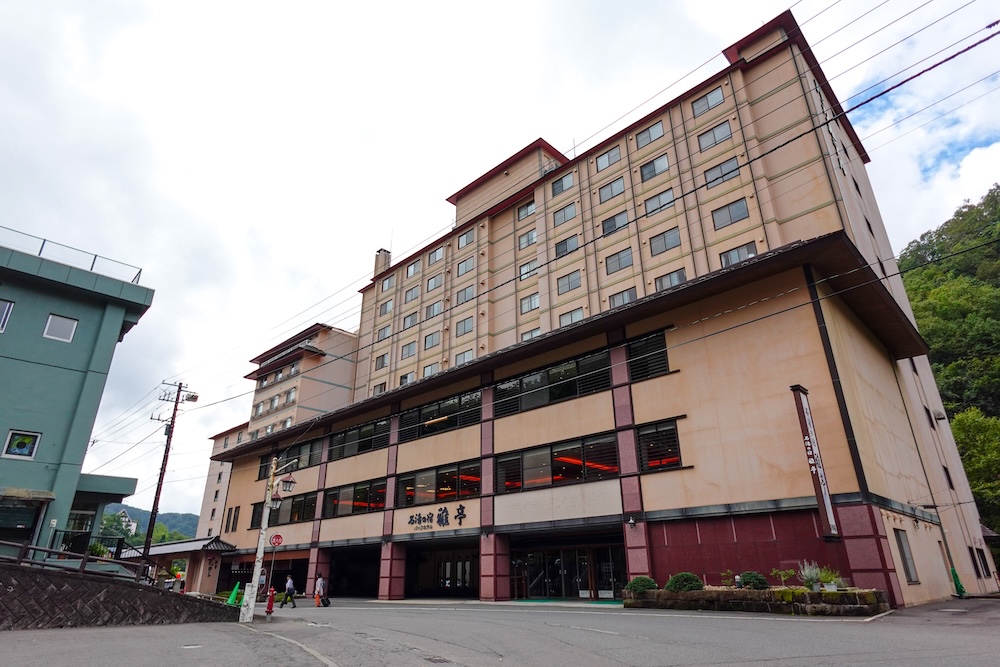
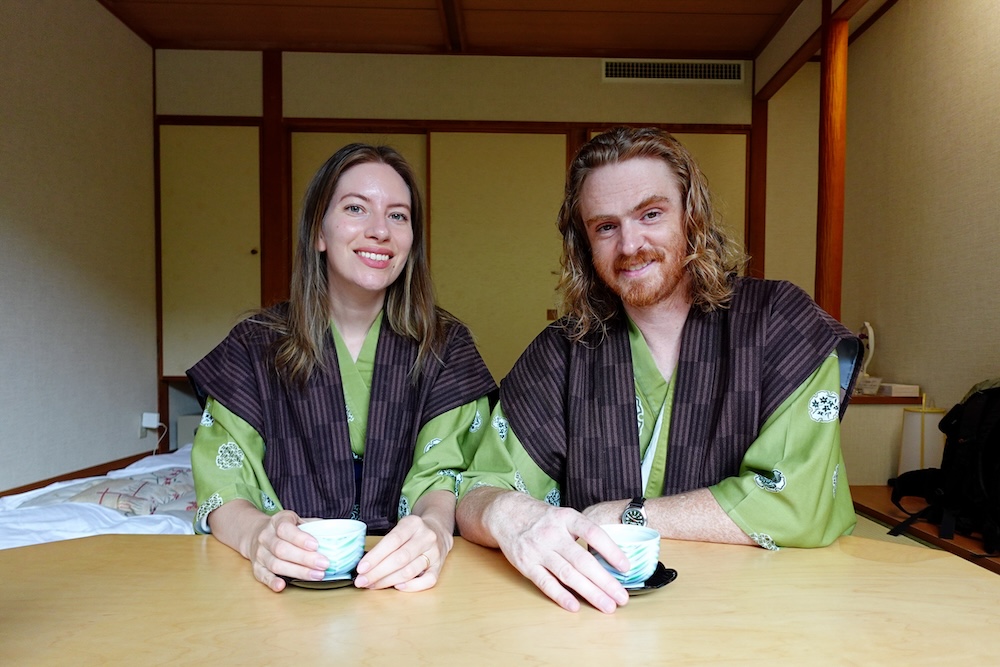
Our home for the stay was Meito no Yado Park Hotel Miyabitei, a sizeable onsen resort. We had a Japanese-style room with tatami mats and futon bedding, plus yukata and little jackets to wear around the building. I was quite happy to embrace the dress code and head for the baths. The place was more large resort hotel than small, intimate ryokan, which has its advantages and disadvantages, but we’ll get to those.
If that sort of base sounds appealing, check current rooms and meal plans at Park Hotel Miyabitei. We enjoyed our stay, but the different room arrangements and meal inclusions are worth looking at rather than assuming every booking matches the one we had.
The point is that arrival day felt like an arrival day. When you’re booking a single night, it’s tempting to count that as your first full day of Noboribetsu sightseeing. In practice, your train, bus connection and check-in might have other ideas.
Day Two: Finally Having a Whole Day to Explore
This is why I appreciated the second night so much. We could wake up, eat breakfast and head outside knowing the day belonged to us. Most of our sightseeing was done during that full middle day, although I wouldn’t pretend to remember which individual stop fell on which hour of our trip.
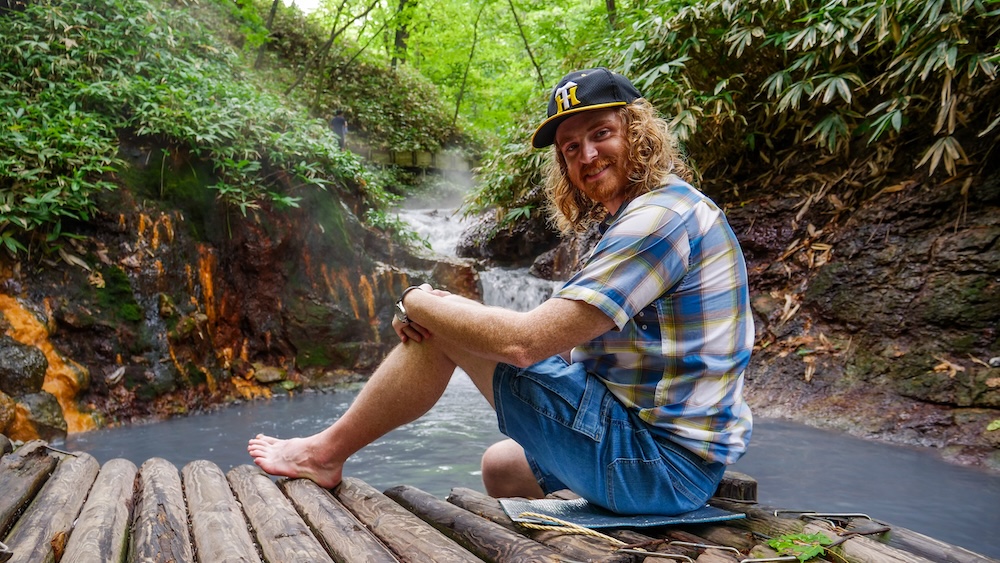
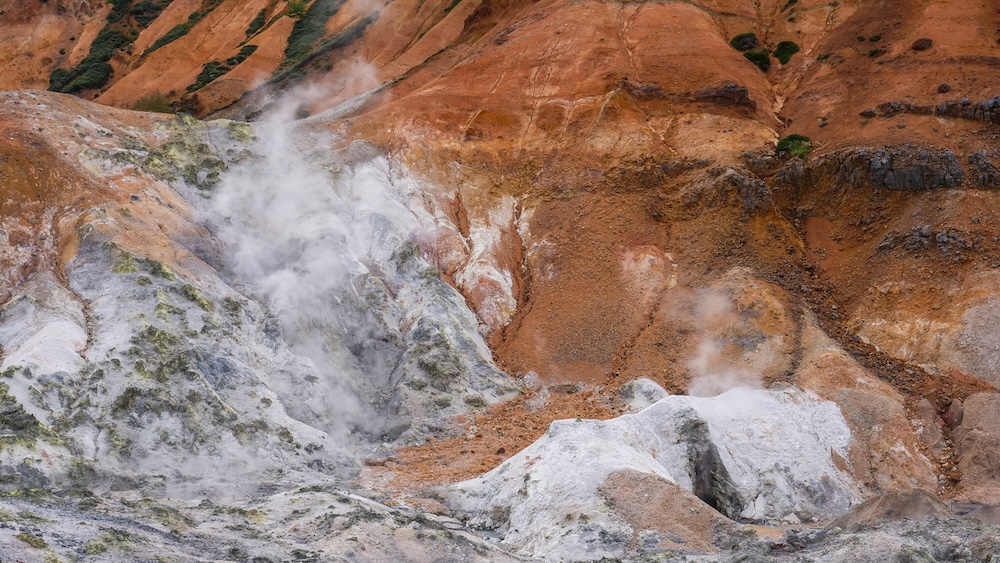
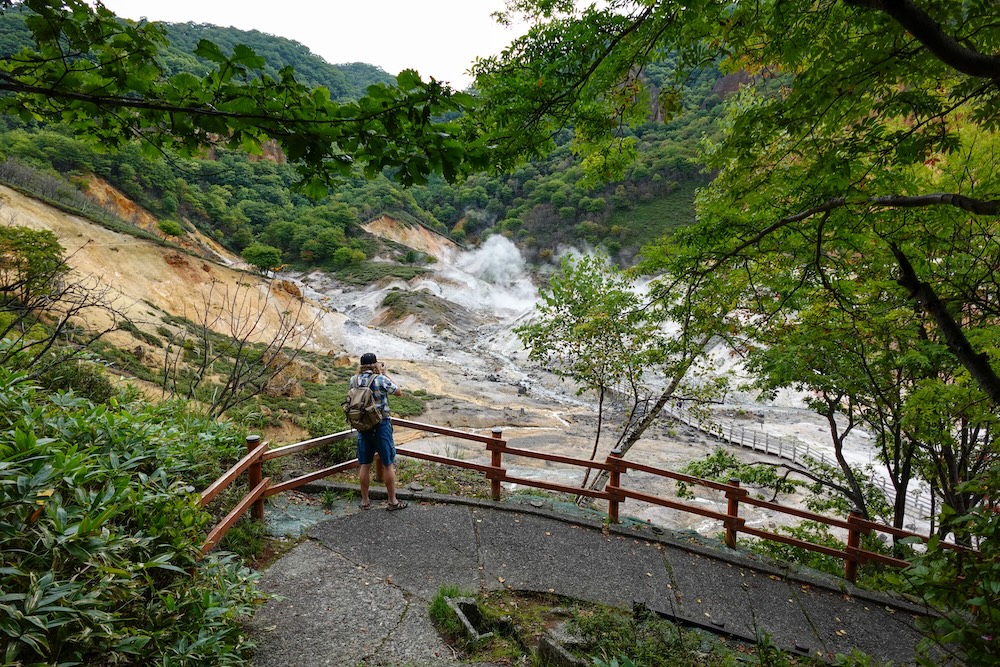
Hell Valley was extraordinary. The earth had these rusty orange tones, steam came pouring out of vents, and in places the water was bubbling away like someone had forgotten an enormous pot on the stove. You could feel the geothermal heat even when the weather itself wasn’t particularly hot. We followed trails through the landscape and found more bubbling pools and forest scenery beyond the main viewing area. We even spotted deer near one of the geothermal ponds.
The walking was a huge part of the appeal for me. Our routes felt quite manageable, but there was always something unexpected around the next bend: another plume of steam, a bizarrely coloured pool or a view worth stopping for. I remember thinking these were among my favourite daytime activities we’d done in Japan up to that point.
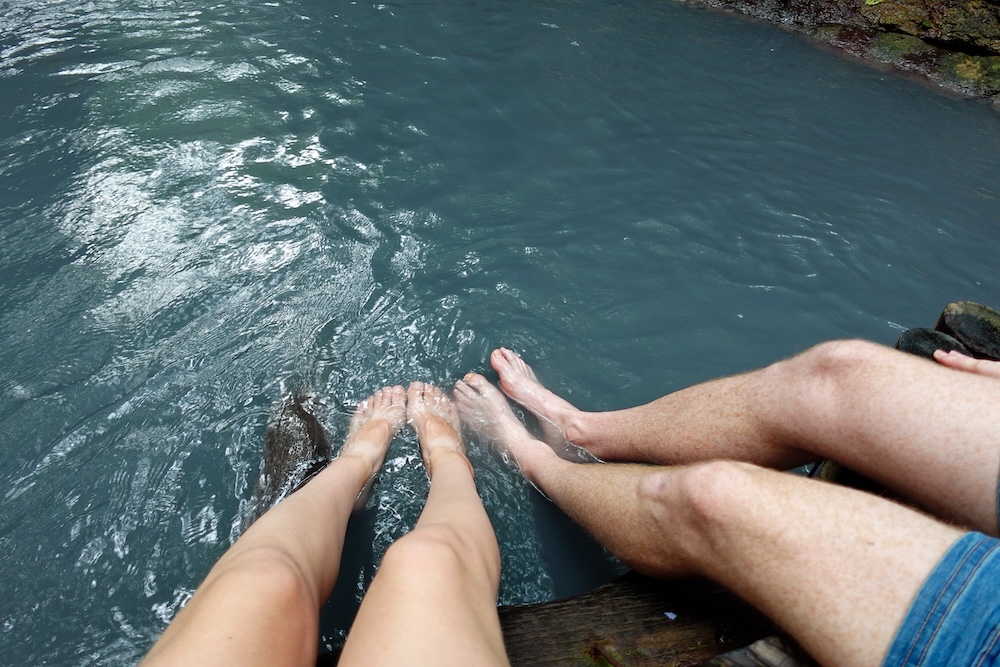
One experience that says a lot about the kind of pace we enjoyed was the Oyunuma River Natural Footbath. We went early after breakfast, found very few people there and spent about half an hour with our feet in a warm, milky-grey stream. There was fine black volcanic sand under our toes, steam rising through the trees and the sound of running water. I was having such a good time that leaving seemed like a questionable decision. Audrey also had a laugh earlier in the walk, wondering whether the rotten-egg smell was coming from the sulfur or from me. An entirely unfair accusation, obviously.
I’m not suggesting you need a full day just to sit in that river. But I’d hate to visit somewhere like this and have my main concern be how quickly I could put my socks back on.
Day Three: A Few More Stops Before Sapporo
We still squeezed in a bit of sightseeing and more ramen on our departure day. That second point deserves mentioning because we’d already had a memorable meal in Noboribetsu. Audrey ordered Enma Ramen, a fiery, nutty bowl of noodles that I ended up declaring the best ramen I’d ever tasted. I’d enjoyed my own meal, but her order thoroughly upstaged mine. We were already talking about finding time for more ramen before leaving.
Having that last partial day felt like a bonus. We hadn’t spent the previous day desperately deciding between a walk and lunch, or between the natural footbath and getting back to the hotel. It was a satisfying pace for us, although it’s important to recognize that two nights gave us one full sightseeing day plus parts of two others, rather than three unrestricted days.
Can You Visit Noboribetsu as a Day Trip?
Absolutely. If your main ambition is to see Hell Valley, wander a little around the onsen streets and perhaps eat lunch, I wouldn’t tell you to book a hotel just to make the trip legitimate. You can have an interesting visit in a few hours once you’re actually in the onsen district.
The trick is deciding how much of the surrounding area you want. The main Hell Valley viewing area is relatively quick to see. Walking onward toward Oyunuma is another undertaking: allow roughly 20–30 minutes on foot from Hell Valley to Oyunuma, with further walking to reach the natural footbath. That doesn’t include stopping to admire things, sitting in the water or retracing your steps. A guided experience covering the wider geothermal and forest area is offered at approximately three hours, which gives you a sense of the difference between a quick look and a substantial outing. That’s a tour duration, not a compulsory hiking time.
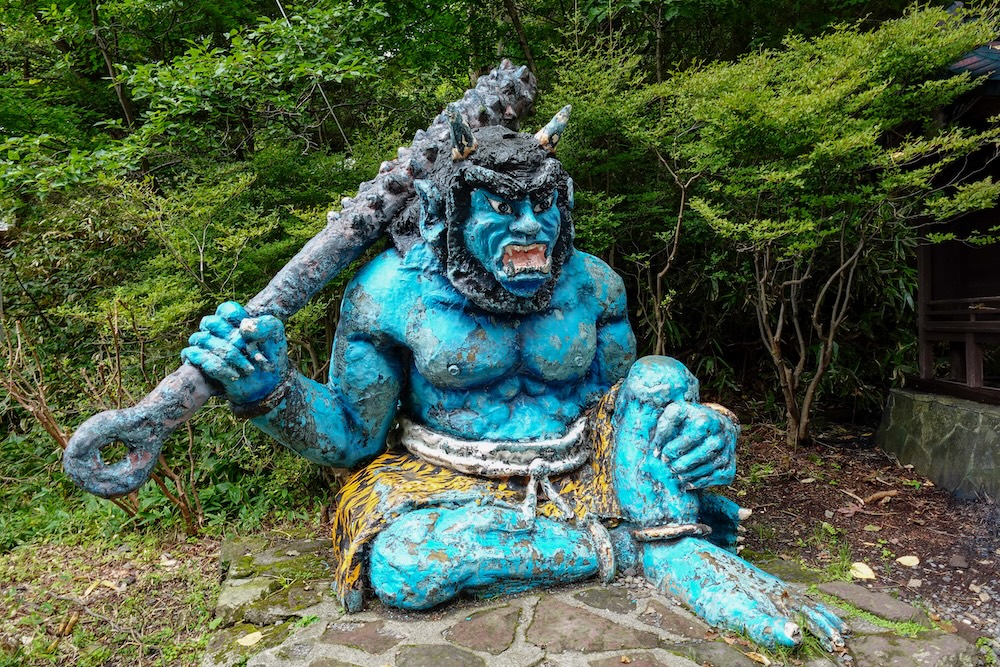
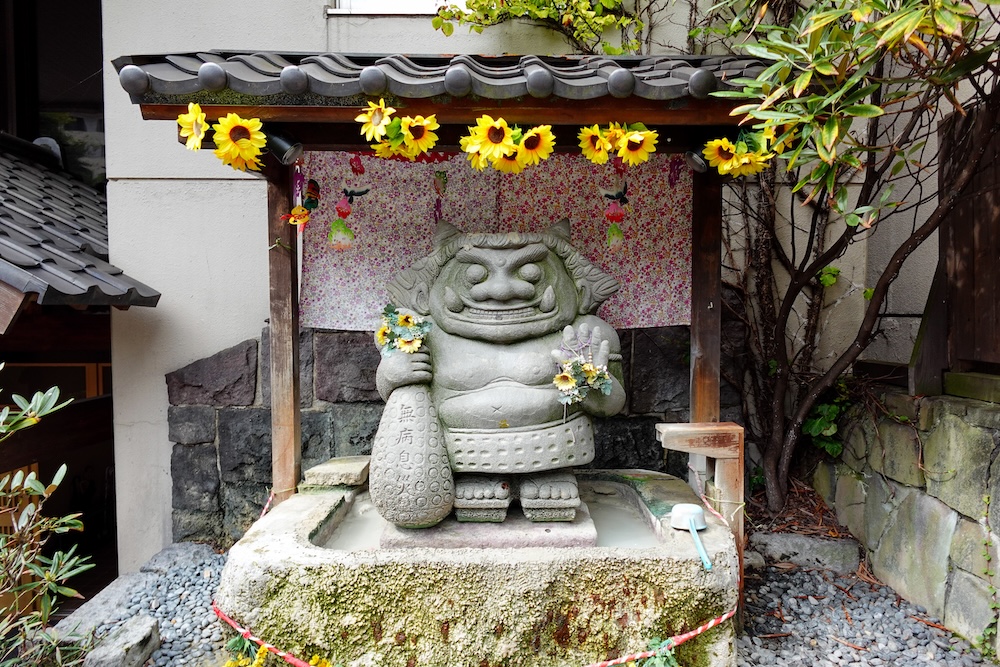
There’s also plenty of character in town if you enjoy slightly odd roadside sights. We found enormous demons wielding clubs, little shrines and the King Enma attraction, which fits nicely with Noboribetsu’s underworld theme. You can sample some of that without trying to walk every trail in the area.
You can even have a full onsen bath without staying overnight. Day-use facilities include Yumoto Sagiriyu and larger hotel bath complexes. When checked in October 2026, the listed adult prices were ¥550 for Sagiriyu and ¥2,500 for Dai-ichi Takimotokan, with different reception hours and conditions. If a bath is central to your day trip, check the current day-use onsen listings before building your plan around it.
The Day-Trip Problem Is the Return Journey
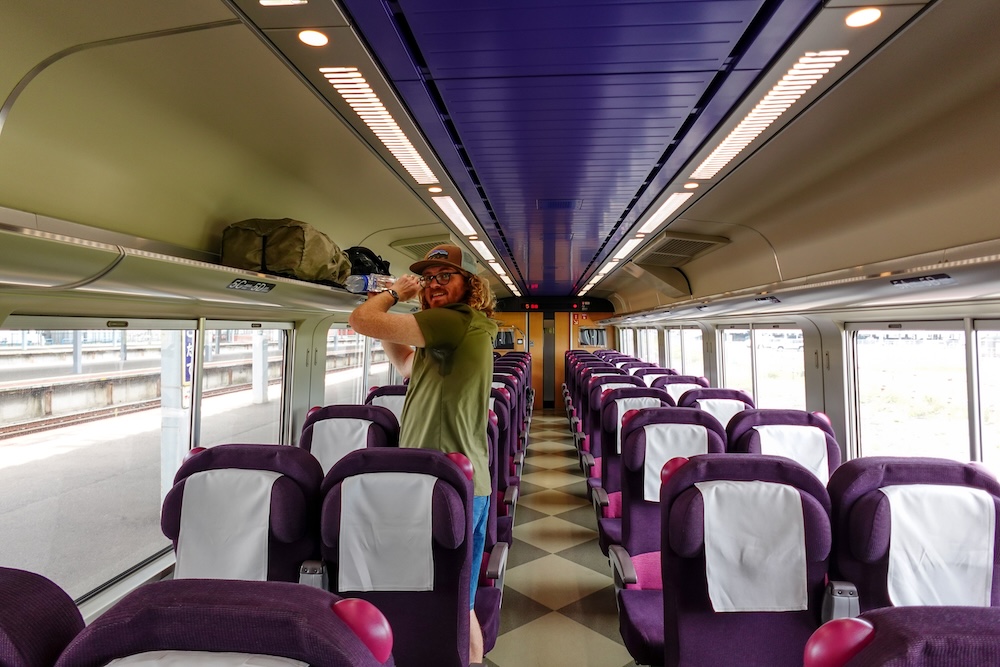
Sapporo is a practical starting point, but the journey adds up. The limited-express train to JR Noboribetsu takes approximately 75 minutes, followed by a local bus up to Noboribetsu Onsen. That bus can take roughly 15–27 minutes depending on the stop and service, and that’s before accounting for the wait between connections. Coming back means doing it all in reverse. The local bus fare was listed at ¥450 per adult in October 2026, and the operator does not accept standard transport IC cards such as Suica or Kitaca on these routes. Visa touch payment is offered on designated services only, so check your bus and payment options before setting out.
One particular trap is assuming the direct Sapporo-to-onsen express bus is ideal for a day trip. The published Onsen-go schedule checked in October 2026 showed a departure from Sapporo at 13:40, arriving in the onsen district around 15:20, while its return service left Noboribetsu Onsen around 09:30. Those timings are far more useful for travelling on different days. If you’re returning to Sapporo that evening, compare train and local-bus connections instead and check the Donan Bus timetable for your date.
If you’d rather avoid coordinating two buses and a train journey, there are also organised day tours from Sapporo. Just read the actual stop times. One Sapporo day tour covering Hell Valley and Lake Toya currently allocates about 35 minutes at Jigokudani within a ten-hour outing. That makes sense if you want a taste of several parts of southern Hokkaido; it wouldn’t give you anything close to the leisurely Noboribetsu visit we enjoyed.
A private Noboribetsu and Lake Toya day tour from Sapporo takes a different approach. Its sample itinerary gives about 90 minutes to Jigokudani and, when trails are accessible, offers a possible walk to the natural footbath. You’re paying for a private vehicle and guide, though, and the tour still includes Lake Toya. I’d check the schedule and what can actually be adjusted before assuming it replaces a night in the onsen town.
We didn’t do Noboribetsu as a day trip, so I can’t claim firsthand experience of racing back to Sapporo. Having walked those geothermal trails, however, I can see how easy it would be to underestimate the time if you keep adding one more stop. The footbath route can also be restricted in winter, which is worth checking before you build your day around it. Pick your priorities. Hell Valley and the town? Fine. The extended forest walk, a relaxing footbath, a hotel-style onsen and an unrushed meal? That’s a more ambitious day.
What I’d Do With Just One Night
If I were planning our visit again with only one night available, I’d still try to cover the main geothermal sights. I’d simply be less generous with the downtime in between. The places I’d protect are Hell Valley, the natural footbath and a proper session in the hotel onsen. The footbath and hotel baths would also be where I slowed down, so I wouldn’t feel I was sacrificing everything relaxing about the trip.
Timing makes or breaks that plan. Suppose you arrive around midday, leave your bags somewhere secure, enjoy the afternoon outdoors, check in and bathe, then have another morning or early afternoon before heading onward. That’s a very different experience from arriving late, sitting down to an included hotel dinner, sleeping, then checking out in time for an early train.
At Park Hotel Miyabitei, the currently published room times are 14:00 check-in and 10:00 checkout. Its baths have a much wider operating window, running from the afternoon into the following morning apart from a cleaning break. Those are useful features of a hotel stay, but room access and sightseeing time are separate things. If you’re arriving before check-in or leaving after checkout, ask whether your accommodation can hold your bags.
There’s also a luggage-storage service in Noboribetsu Onsen itself. When checked in October 2026, it listed ¥500–700 per item, with acceptance hours from 09:00 to 16:30 and closing at 17:00. That can rescue a few precious hours, as long as you return before it shuts. The local storage details are worth checking before your trip.
I would be careful about booking a one-night stay with a late arrival and an early checkout, then expecting to fit an extensive forest walk into the middle. Hotel dinners, bath times, transport connections and luggage logistics are all real commitments. One night can be enough, but it works best when you’ve deliberately protected some daytime on both sides of it.
When Is the Second Night Worth Paying For?
For us, the strongest argument wasn’t some additional sight that only appears after you’ve been in town for 24 hours. It was the freedom to enjoy the things we were already there for. I love the mix of onsen culture and nature. Audrey and I both enjoyed the walks, and having time to revisit the hotel baths was a pleasure in its own right.
We weren’t staying at a tiny ryokan with an elaborate private dinner served in our room. Park Hotel Miyabitei had a big dining hall and buffet meals, with plenty of seafood and a tremendous selection. The food was excellent, though the menu repeated during our stay and the rush when the buffet opened was fairly chaotic. We found it calmer after waiting a little. It was a resort experience, with lots of guests, rather than intimate service. That’s worth considering if you’re paying for an additional night mainly for the hotel experience.
If you’re hoping for something smaller, Kashoutei Hanaya is another Noboribetsu Onsen property to compare. Its current listing describes a more intimate ryokan and in-room dinners for certain room types, which is quite a different setup from our buffet resort. We didn’t stay there, so I can’t give it a personal verdict. You can compare Kashoutei Hanaya’s room and dinner arrangements; if you’re travelling in late 2026, also check the property’s notice about exterior maintenance before booking.
On the bathing side, the size of the property worked in our favour. The onsen facilities had plenty of variety, and Audrey managed to find particularly quiet periods on the women’s side, including one visit when she had it entirely to herself. I also remember being thoroughly worn out after the baths and ready for sleep. If you’re the sort of person who’d happily soak again in the morning and then go for another walk, a second night has obvious appeal.
A longer stay also leaves room for attractions we didn’t personally visit. Noboribetsu Bear Park is reached by ropeway, with the operator allowing roughly 60–90 minutes for the park itself, excluding the journey and any waits. Date Jidaimura is an Edo-period theme park away from the central onsen walking circuit. Marine Park Nixe is near JR Noboribetsu Station—around five minutes’ walk away—so that one might fit better on a travel day. If your list includes several of these, extra time becomes easier to justify, though I’d research the individual attractions before committing rather than treating them as automatic must-sees.
The geothermal routes we took felt manageable, although you still need to pay attention. Even in fairly mild weather, we could feel heat rising from the ground, and on one walk we encountered a stretch of road without a sidewalk where cars passed quickly. That is worth remembering if you’re planning to spend an entire day exploring rather than just visiting the main viewing area. Not every walk around Noboribetsu is a flat resort-town stroll.
If you’ve got very little interest in bathing and mainly want a quick look at Jigokudani, I’d save the extra hotel expense. The second night makes most sense when you’re looking forward to being in Noboribetsu, rather than simply finishing its attractions.
Would I Spend Three Nights in Noboribetsu?
Happily. A third night would have meant more time in the baths, another relaxed walk, probably another good meal, and absolutely no urgency to move along. That sounds lovely to me, though at that point I’d call it a treat rather than a sensible requirement for a first visit.
I wouldn’t tell someone with a packed Hokkaido itinerary to surrender a night in another destination because Noboribetsu somehow requires three. It doesn’t. Nor would I encourage someone who doesn’t particularly enjoy hot springs to stay two nights simply because we did.
My recommendation remains two nights if you love onsen towns and nature; one well-timed night if you want the main experience with less accommodation expense; and a day trip if Hell Valley is your priority. We were glad we’d given ourselves that complete day between arriving and leaving. If I were travelling from Hakodate toward Sapporo again, that’s the bit of the itinerary I’d be reluctant to give up.
Frequently Asked Questions
How many days do you need in Noboribetsu?
I recommend two nights if you enjoy onsen bathing and nature walks. One well-timed night is a good compromise, while a day trip works if Hell Valley is your main priority.
Is one night enough in Noboribetsu?
Yes, especially if you arrive with enough daylight to explore and leave time the following day. I would prioritize Hell Valley, the natural footbath and bathing at the hotel.
Can you visit Noboribetsu on a day trip from Sapporo?
You can, but allow for the train to JR Noboribetsu Station, the connecting bus to Noboribetsu Onsen and the return journey. A focused visit is more realistic than trying to see everything.
Why did you choose two nights in Noboribetsu?
Audrey and I spent most of our arrival day travelling and settling in. Two nights gave us an uninterrupted middle day for geothermal walking, hot springs and meals, with a little more sightseeing before departure.
Can you use an onsen in Noboribetsu without staying overnight?
Yes. Noboribetsu has day-use baths, including Yumoto Sagiriyu and hotel facilities that admit outside visitors during specified hours. Check the current access conditions before travelling.
Is a third night in Noboribetsu worth it?
I would happily stay a third night for more hot springs and relaxed walking, but I consider it a luxury rather than something a first-time visitor needs.
This guide is also available in Spanish. [Leé la versión en castellano: ¿Cuántos días dedicarle a Noboribetsu? De una excursión por el día a dos noches]
This article contains affiliate links. If you book through one of these links, I may earn a commission at no extra cost to you.