
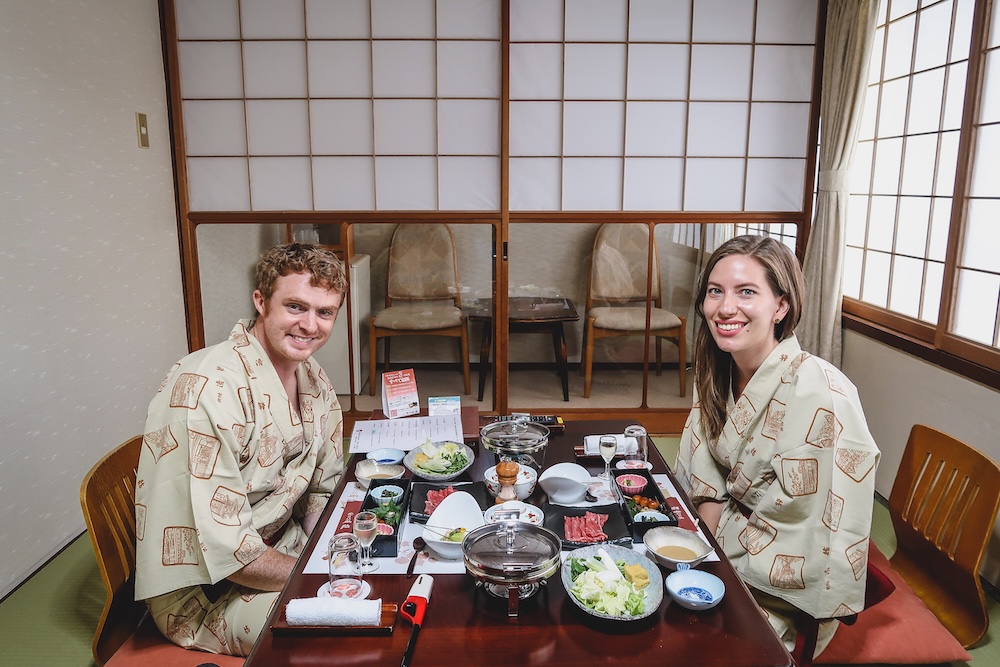
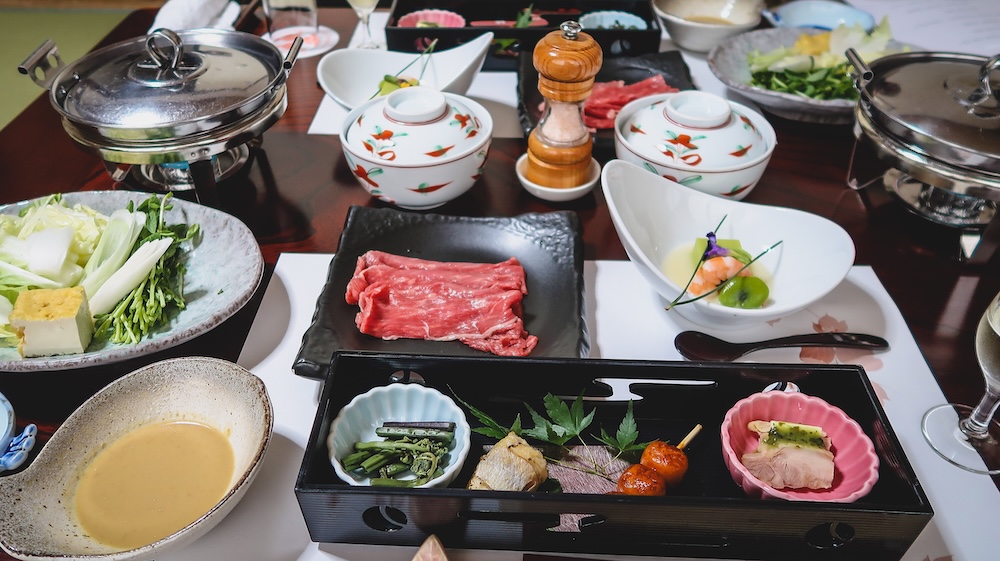
The dinner I remember most from staying at a Japanese ryokan didn’t involve a buffet, a queue or me returning for a frankly unnecessary fourth plate. It happened in our room at a small property in Takayama. A personal attendant brought out a multi-course kaiseki meal, and Audrey and I got to enjoy the whole experience without leaving our little Japanese-style room. It felt special in a way that a meal in a busy hotel dining hall rarely does.
Years later, we tried the other end of the spectrum in Noboribetsu Onsen, Hokkaido. Audrey booked us two nights at Park Hotel Miyabitei, a large hot-spring resort with communal baths and breakfast and dinner buffets. We loved the food. I loved the baths even more. But when a sizeable crowd descended on dinner at the same time, the contrast with that quiet Takayama evening was hard to miss.
Here’s the awkward part of choosing accommodation in Noboribetsu: you can have an excellent stay in either style, yet spend your money on completely different pleasures. And the word ryokan on a listing doesn’t necessarily tell you which experience you’re buying. Having tried both formats, I know which I’d choose on a return visit, but I wouldn’t presume that my preference should be yours.
Is a ryokan actually different from an onsen resort hotel?
The picture in my head used to be fairly simple. A small ryokan meant personal hospitality, tatami rooms and an elaborate Japanese dinner. A big onsen hotel meant lots of guests, buffet stations and a sprawling bathing complex. Our two stays did broadly fit those descriptions, but Noboribetsu’s accommodation options don’t sort themselves into such convenient little boxes.
Dai-ichi Takimotokan is a good example. With 385 rooms spread across four buildings, it is very much a large resort. You can book Japanese-style or western-style accommodation, enjoy its huge shared onsen, and choose between buffet dining, kaiseki in a restaurant and selected in-room dinner arrangements. You don’t have to stay in a tiny inn to get a traditional meal.
Kashoutei Hanaya, meanwhile, has just 21 rooms and puts much more emphasis on seasonal Japanese meals and a smaller-scale stay. Yet it also has room options with conventional beds. Bourou NOGUCHI takes another approach altogether, pairing contemporary suites with private spring-fed baths and multi-course dining in private dining spaces. These aren’t interchangeable experiences, however they’re labelled on a booking site.
So the useful questions are more specific. How many baths will you actually have access to? Where is dinner served? Will you sleep on a futon or a bed? How much of your time do you want to spend at the property, and how much exploring Noboribetsu? The answers determine whether you’re booking the holiday you imagined. If you’re already comparing the two styles, you can see the available ryokans and onsen resort hotels in Noboribetsu Onsen before narrowing your choices by baths and meals.
The baths: variety versus atmosphere
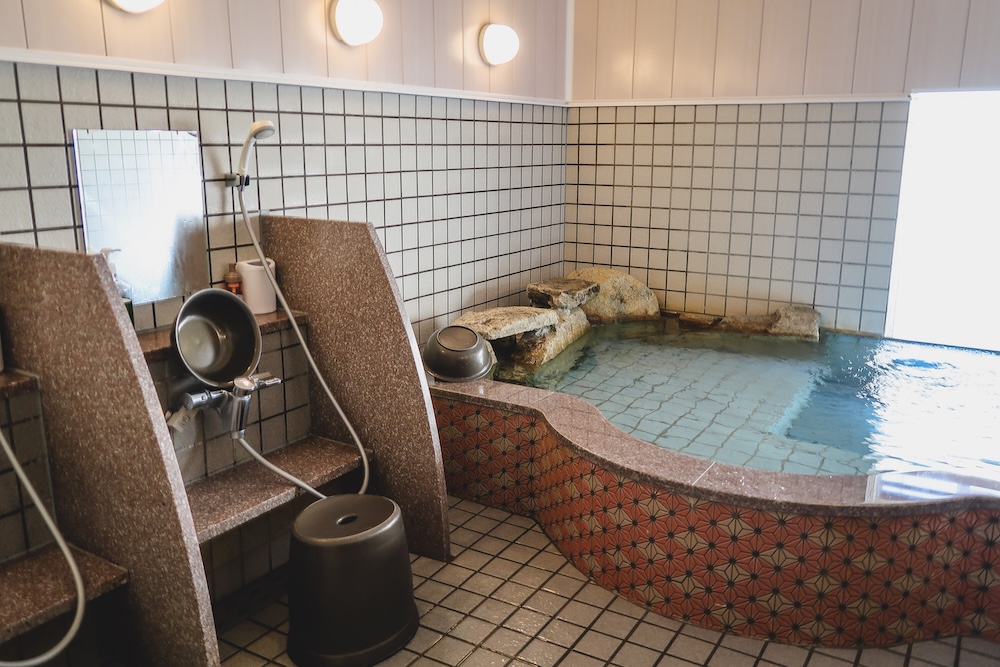
At Miyabitei, I was hopping around between pools like a bunny. I could have made quite a hobby of it. Different bathing options were a huge part of the appeal, and having them available whenever we returned from sightseeing was one of my favourite things about the hotel.
Audrey remembers roughly seven or eight pools on the women’s side, including an outdoor bath. She also managed to time a couple of visits brilliantly: once she had the facilities entirely to herself, and another time there was only one other woman. It would be ridiculous to promise you’ll get that kind of solitude in a large resort, but it’s a good reminder that a big hotel isn’t crowded in every corner at every hour.
If you share my enthusiasm for trying different pools, the larger Noboribetsu resorts have a genuine advantage. Dai-ichi Takimotokan advertises 35 baths across the separate men’s and women’s sections, with five kinds of spring water, in a bathing complex of roughly 4,950 square metres. Hotel Mahoroba lists 31 baths and four spring-water types. That’s serious variety, although those totals combine facilities that one individual guest cannot necessarily use. Thirty-five baths also doesn’t mean thirty-five kinds of water.
For a trip built around extensive communal bathing, I’d start by comparing the room buildings and meal packages at Dai-ichi Takimotokan with the Japanese-style rooms and resort packages at Hotel Mahoroba. Both are substantial properties, but their exact room arrangements, dining options and total booking costs may lead you in different directions.
The small ryokan we stayed at in Takayama had fewer bathing options, but the natural setting was more appealing to me. It felt like a place to settle into the surroundings rather than work through a menu of pools. That’s a different pleasure, and it may be the one you prefer. Just don’t assume every small property in Noboribetsu is tucked into a picturesque forest or has a beautiful outdoor bath. The setting and facilities are worth checking individually.
If you want a private hot-spring bath
This is where hotel descriptions can get slippery. A private onsen might mean a bath you reserve for a short period, a special room category with its own spring-fed tub, or accommodation where a private bath is included in every suite.
Compare the room and private-bathing options at Takinoya Bekkan Tamanoyu if you’d like a smaller traditional property with access to a reservable private bath. At Ryotei Hanayura, certain rooms have outdoor spring-fed baths, while other rooms do not, so it’s worth checking the specific Hanayura room categories with private outdoor baths before committing to an upgrade.
Bourou NOGUCHI includes private hot-spring bathing in all its suites, making it a different proposition again. Travellers willing to spend more for that kind of privacy can compare the suite categories and complete meal-inclusive packages at Bourou NOGUCHI. Even enormous Takimotokan has a premium room with a private outdoor bath, despite not offering a reservable family bath in its main communal facilities.
We didn’t stay in any of those private-bath room categories in Noboribetsu, so I can’t compare them from personal use. But if privacy is the deciding factor, I’d establish exactly which arrangement is guaranteed before worrying about whether the property calls itself a ryokan or hotel. A normal bathtub in the room isn’t automatically an onsen, either.
The meals: why I would trade a buffet for kaiseki
I need to defend Miyabitei’s food before I explain why I’d choose something else next time. The buffets were excellent. We had plenty of seafood, Japanese dishes and desserts, and it was wonderfully convenient knowing that breakfast and dinner were included. I ate very well, with absolutely no need for a sympathy card.
Our clever plan was to show up as soon as dinner opened and get ahead of the crowd. Unfortunately, a lot of other guests had reached the same brilliant conclusion. A queue formed at the popular seafood and meat stations, so we began with the less crowded sections and circled back. At breakfast, we noticed a similar rush when service began. It wasn’t a culinary disaster; it was a reminder that we were staying in a sizeable resort where many people were following the same schedule.
Some dishes also repeated over our two nights. There was enough choice to put together very different meals, and we were happy with what we ate, but the experience still revolved around a communal dining hall. Compare that with our Takayama ryokan, where a personal attendant served the kaiseki dinner in our own room. The individual courses, the pace and the attention made the meal feel like part of the accommodation itself. That’s what I keep coming back to when I think about another ryokan stay.
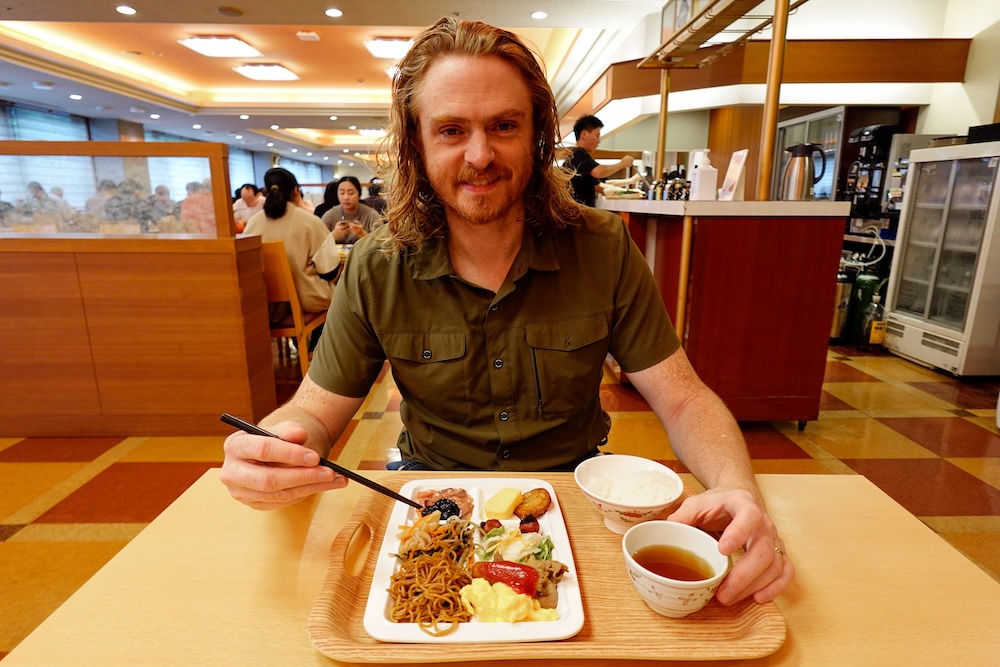
If a generous buffet and a big communal onsen sound more appealing, I can personally vouch for how much we enjoyed that combination at Miyabitei. You can check the Japanese-style rooms and breakfast-and-dinner packages at Park Hotel Miyabitei to compare the options with the kind of stay Audrey booked for us.
Noboribetsu has options for more intimate dining, but the small print matters. Kashoutei Hanaya offers in-room dinners with eligible packages, while certain Twin Room bookings specify dinner in the restaurant. Even the room descriptions and booking conditions aren’t perfectly consistent for all twin arrangements, so I’d confirm the exact location of dinner before paying. If that personalized meal is your main priority, compare the room types and dinner-inclusive packages at Kashoutei Hanaya, paying particular attention to where the meal will be served.
At Takimotokan, selected in-room dining is available in the Main Building, but it needs arranging in advance; restaurant kaiseki is a separate option. Bourou NOGUCHI serves its multi-course meals in private dining rooms, which is intimate without being the same as eating in your suite.
If you’re arriving from elsewhere in Hokkaido, don’t overlook the clock. Hanaya’s published conditions set a 7 p.m. arrival cutoff for receiving dinner, and turning up too late can mean forfeiting a meal you’ve already paid for. That’s a nasty way to discover the difference between a room reservation and a dinner-inclusive ryokan experience.
For me, the kaiseki meal in Takayama wins on memory and atmosphere. Someone who prefers choosing their own portions, trying lots of dishes and eating without a multi-course schedule may quite reasonably love the buffet more. I certainly enjoyed having that option at Miyabitei.
The rooms might be more alike than you expect
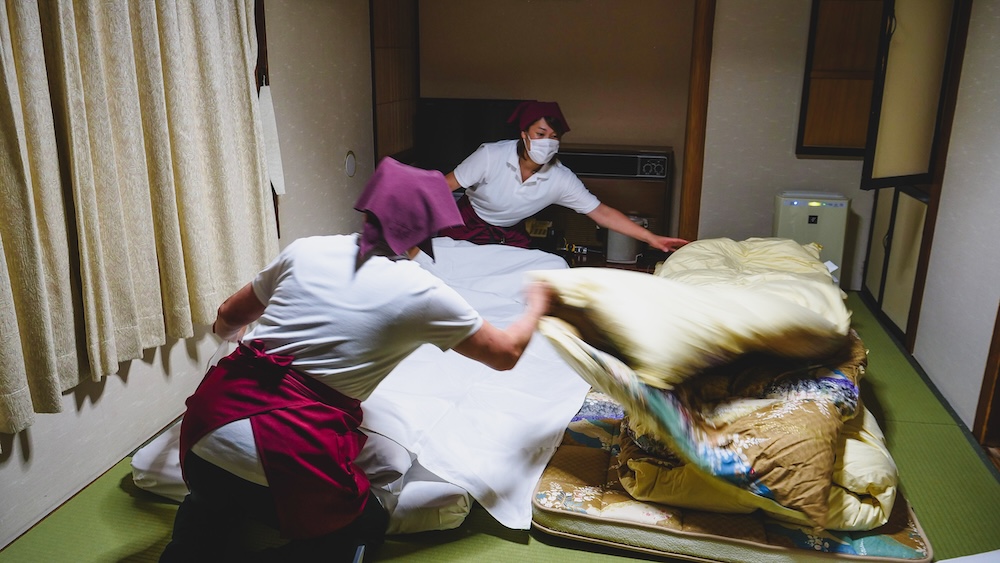
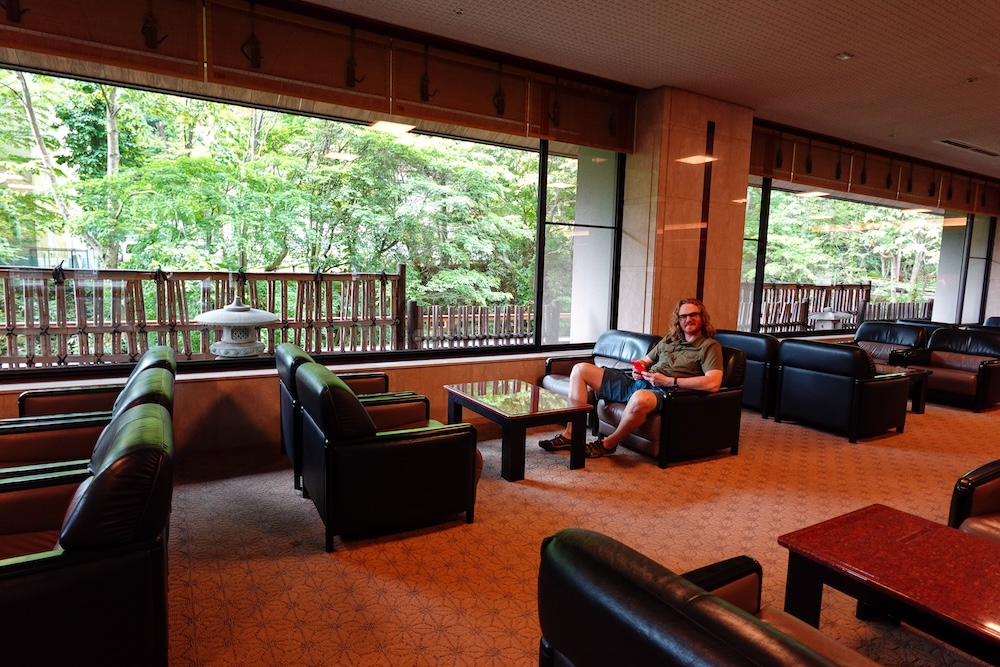
Oddly enough, the sleeping arrangements were among the least dramatic differences between our two stays. Both properties gave us Japanese-style rooms where we could enjoy the floor space during the day and have the futons prepared in the evening.
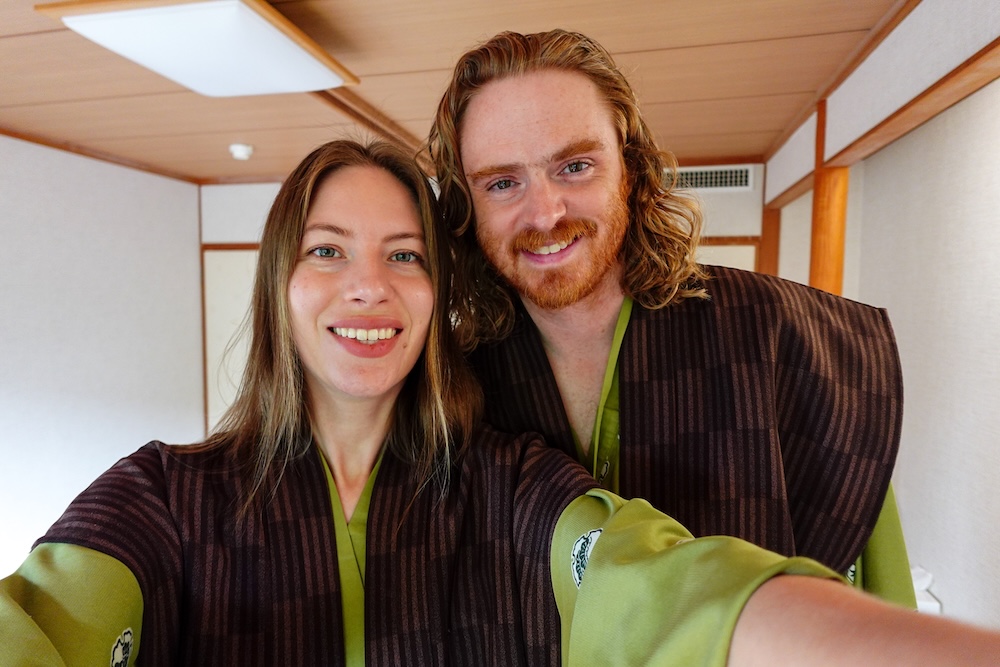
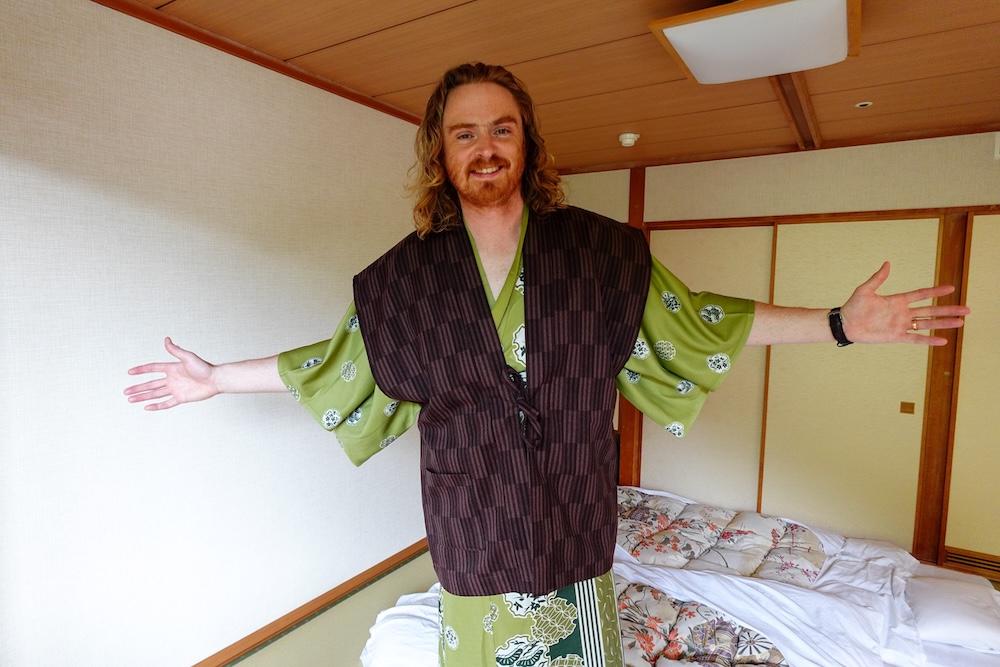
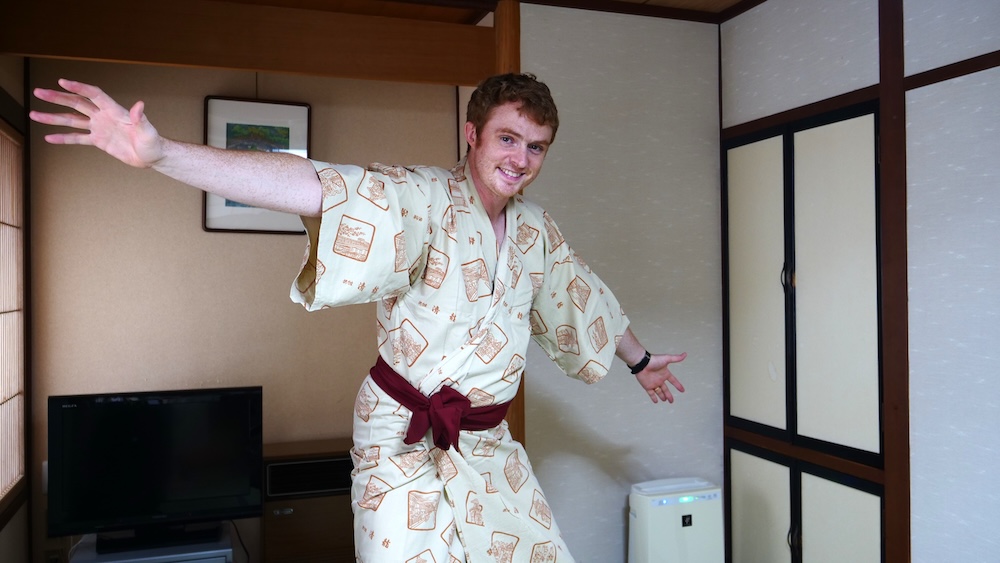
At Miyabitei, there was a low table where we’d sit and drink tea. The bedding was tucked away until staff came to set up the room for the night. During our first look around, there was a brief moment of confusion about where the beds had gone. Once the arrangement made sense, I loved having a room that changed purpose throughout the day. The futon was comfortable, and wandering around in the provided green yukata was part of the fun.
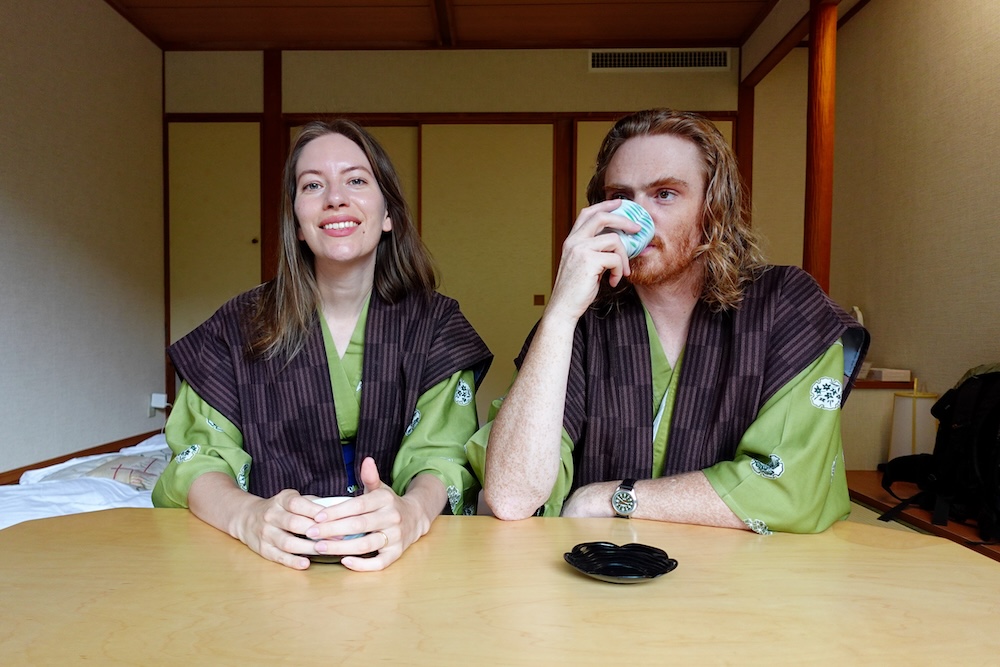
You can get that traditional setup at a big hotel, while a smaller ryokan may offer twin beds or a Japanese-western room. Takimotokan has several styles; Hanaya also has conventional-bed categories; and Bourou NOGUCHI’s suites are more contemporary. I’d look at the actual room photographs and description instead of treating tatami as the dividing line between hotel types.
There is one practical question that’s easy to forget when you’re admiring photographs: can everyone travelling comfortably get up from a mattress at floor level? If not, choose a room with a conventional bed and check how additional guests will sleep. And if a room photograph shows an attractive private tub, confirm whether it’s spring-fed and included in your particular category.
Does a smaller property make the whole stay feel different?
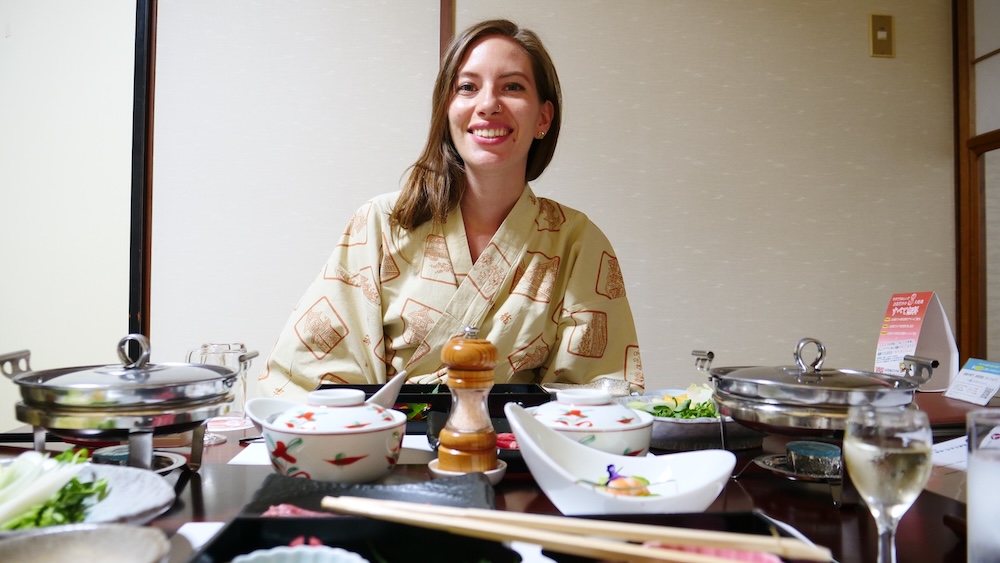
It certainly did for us. The Takayama ryokan had an intimacy that Miyabitei couldn’t reproduce in a busy communal dining room. I liked knowing that dinner was coming to us, and the bathing area had more of the natural atmosphere I enjoy. At the bigger hotel, there were more guests coming and going, but also more bathing choices and an easy, comfortable base for exploring the town.
Miyabitei’s staff were courteous and the property was clean. We could walk to restaurants, Hell Valley and other attractions around Noboribetsu Onsen, so the hotel didn’t have to supply every moment of entertainment. In hindsight, I wonder whether having a slightly less intimate place to return to encouraged us to spend more time out in nature. That wasn’t a conscious plan, but those walks and the outdoor natural footbath were some of our favourite parts of the visit.
There are physical differences worth considering too. At Takimotokan, the walk from your accommodation wing to the Grand Bath can be about 40 metres from the West Building or around 210 metres from the South Building. That matters if you’re picturing repeated trips back to the baths or have limited mobility. At Miyabitei, there are approximately 20 steps between the changing area and the main baths. Noboribetsu Manseikaku identifies 11 steps within its large bathing area. A hotel elevator isn’t proof that you can reach every pool without stairs.
And pay attention to the approach from outside. Noboribetsu Onsen is a separate mountain hot-spring district from JR Noboribetsu Station. It has hills and winding roads. We managed perfectly well without a car, but arriving with luggage and getting from the bus stop to a particular property are details worth checking, whatever its size.
Compare what the booking includes, not just the nightly rate
An inexpensive room-only booking and a package with breakfast, dinner and private spring-fed bathing aren’t competing on equal terms. This sounds obvious until you’re scrolling through accommodation listings and the cheapest headline price starts looking awfully persuasive.
I’d compare the same dates, number of guests and room requirements, then see what’s included. Are both meals covered? Is dinner a buffet, kaiseki in a restaurant or genuinely served in your room? Does private bathing require an upgrade or a separate reservation? Is the room near the communal baths? How flexible is cancellation? A more expensive stay might be worth it if the meal service is the whole reason you’re visiting, while a two-meal resort package could be better value for someone who plans to spend hours using the public baths.
To make that comparison fairly, check Noboribetsu Onsen accommodation prices for the same dates and number of guests, then select equivalent meal plans and room features. The cheapest nightly price tells you surprisingly little until you know whether dinner or the private bath you’ve been dreaming about is actually included.
The total can include additional taxes. Hokkaido introduced an accommodation tax in April 2026 of ¥100, ¥200 or ¥500 per person per night, depending on the taxable accommodation charge, which excludes the meal component. Noboribetsu normally applies a separate ¥300 bathing tax for a taxable overnight hot-spring stay, with exemptions including younger children. Check whether the amounts are already included in the displayed price or collected separately.
It’s also worth checking who can actually use the facilities you’re paying for. Bourou NOGUCHI, for example, has age restrictions for children, and a hotel with several bath areas may still have stairs, gender-separated facilities or different access arrangements. None of that makes the property a bad choice. It just means the perfect-looking booking can become a poor fit if you skip the details.
So which would I choose in Noboribetsu?
Here’s the distinction I’d use to narrow the options before booking anything. Think of them as tendencies to investigate, not promises attached to every property.
| What matters most to you | Where I’d start looking |
|---|---|
| Lots of communal pools and spring-water variety | Larger resorts such as Dai-ichi Takimotokan or Hotel Mahoroba |
| A multi-course dinner served in your room | Smaller ryokans with an eligible in-room dining package, or a specific larger-hotel package offering it |
| Private bathing without other guests | A verified suite with its own spring-fed bath, or a reservable private-bath arrangement |
| Tatami and futons, or a conventional bed | The individual room category at either style of property |
| Less walking or easier access | The exact building, bath layout, stairs and route from the bus stop |
| The best value | Complete room-and-meal packages for matching dates and occupancy |
For a first large onsen resort experience, Miyabitei was an excellent choice for us. Audrey did a great job finding a place that matched our priorities, we ate very well, and I thoroughly enjoyed the bathing variety. I wouldn’t rewrite that trip and put us somewhere smaller simply because I now know how much I like personal ryokan hospitality.
But if we returned to Noboribetsu for another two nights, I’d choose the smaller style this time, ideally somewhere with a beautiful natural setting and a kaiseki dinner served in our room. I might miss having so many pools to hop between. That’s a sacrifice I’d knowingly make for the kind of evening we enjoyed in Takayama.
You may feel exactly the opposite. If the thought of spending half your stay exploring a huge hot-spring complex sounds wonderful, book the resort and enjoy it. If you want dinner to be the event of the evening, make the meal arrangement your priority and build the booking around it. Either way, make sure the actual room and package deliver what you’re picturing. Noboribetsu has enough variety that you shouldn’t have to settle for the wrong version of a very good idea.
Frequently Asked Questions
Is a ryokan better than an onsen resort hotel in Noboribetsu?
Neither is automatically better. A smaller ryokan may suit you if personalized dining and an intimate atmosphere matter most, while a larger resort can offer more communal baths and buffet variety. I enjoyed both styles and would personally choose a smaller ryokan next time.
Can you stay in a traditional Japanese room at a large Noboribetsu hotel?
Yes. We slept on futons in a Japanese-style room at Park Hotel Miyabitei, and larger properties such as Dai-ichi Takimotokan also offer Japanese-style accommodation. Check the individual room category rather than relying on the hotel label.
Do Noboribetsu ryokans serve kaiseki dinner in your room?
Some offer in-room multi-course dining, but it is not guaranteed by booking a ryokan. At Kashoutei Hanaya, the dinner location can depend on your room and package. Confirm whether your reservation includes in-room service or a restaurant meal.
Which Noboribetsu hotels have the most communal onsen baths?
Dai-ichi Takimotokan advertises 35 baths across its separate men’s and women’s facilities, while Hotel Mahoroba lists 31. These are combined totals, so an individual guest cannot necessarily use every advertised bath.
Can I book a private onsen bath in Noboribetsu?
Yes, but the arrangement varies. Some properties offer a reservable private bath, others provide spring-fed baths only in selected rooms, and Bourou NOGUCHI includes a private hot-spring bath in every suite. Verify what your exact booking includes.
Should I compare room-only and meal-inclusive ryokan prices?
Compare the complete packages for the same dates and number of guests. A lower room-only rate may exclude the dinner or private bath you actually want. Also check whether accommodation and bathing taxes are included in the displayed total.
Which accommodation style would I choose on a return to Noboribetsu?
I would choose a smaller ryokan with an intimate atmosphere and a multi-course dinner served in the room, if I could find the right package. That does not change how much Audrey and I enjoyed our first larger resort stay at Park Hotel Miyabitei.
This article is also available in Spanish. [Leé la versión en castellano: Ryokan o resort termal en Noboribetsu: baños, habitaciones, comidas y cuál elegir]
This article contains affiliate links. If you book through one of these links, I may earn a commission at no extra cost to you.