
I’m a huge fan of train travel in Japan, and our journey from Hakodate to Noboribetsu gave me another reason to keep it that way. Audrey and I arrived at Hakodate Station before anyone else was on our platform, boarded the Limited Express Hokuto, got our luggage organized without any fuss and settled in for a beautiful ride through southern Hokkaido. The scenery kept changing, with some wonderful stretches right beside the water. I could look out the window and enjoy the journey without worrying about directions, traffic or where to park. My kind of travel day.
Then we arrived at JR Noboribetsu Station, which was smaller than I’d expected, and suddenly had a decision to make. Our hotel was still several kilometres uphill in Noboribetsu Onsen. We could take a taxi immediately or wait for the cheaper local bus, then deal with getting our luggage to the hotel. Somehow, despite having planned the train journey, we hadn’t really settled that last part.
Everything worked out perfectly well, but it’s exactly the sort of detail I’d recommend sorting out before leaving Hakodate. Here’s how the train, bus and driving options compare, including the fares, travel times and final transfer into the hot-spring town.
Hakodate to Noboribetsu Onsen: Train, Bus and Car Compared
The important distinction is between JR Noboribetsu Station and Noboribetsu Onsen. The railway station is roughly eight kilometres from the hot-spring district, so the train journey alone doesn’t get you to your accommodation. That final connection needs to be included when comparing transport options.
| Transport | Approximate travel time | Adult fare or cost | Main consideration |
|---|---|---|---|
| Limited Express Hokuto + local bus | Around 3 hours with a good connection | ¥8,240 one way at standard fares | One transfer at JR Noboribetsu Station |
| Intercity bus from Hakodate | No straightforward direct scheduled service verified | No comparable through-fare established | No practical direct coach identified |
| Rental car | Around 3 hr 10 min via expressway; 4 hr 20 min on ordinary roads | Rental, fuel, tolls and possible one-way fees | Direct hotel access and flexibility along the route |
These are planning figures rather than guaranteed door-to-door times. The train estimate assumes a reasonably timed local bus connection, while the driving estimate doesn’t include collecting a rental vehicle or stopping along the way. For most travellers heading directly from Hakodate to Noboribetsu Onsen, I’d start with the train. If you’re already exploring Hokkaido by car, the calculation changes.
Taking the Train From Hakodate to Noboribetsu
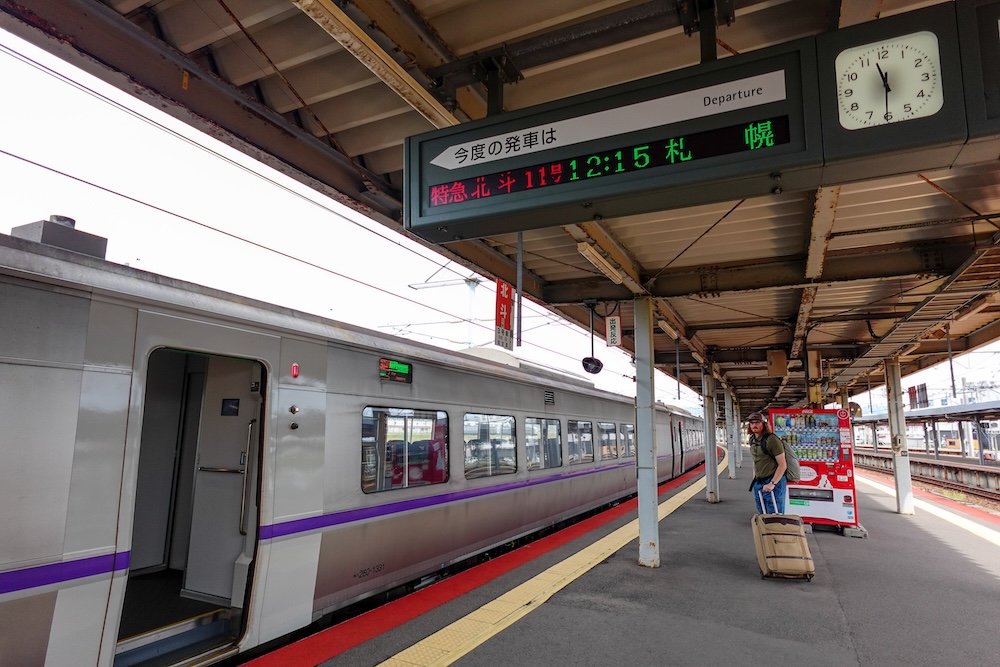
The Limited Express Hokuto runs between Hakodate and Sapporo, stopping at JR Noboribetsu along the way. It’s a direct journey of approximately two and a half hours, depending on the departure, with no need to change trains.
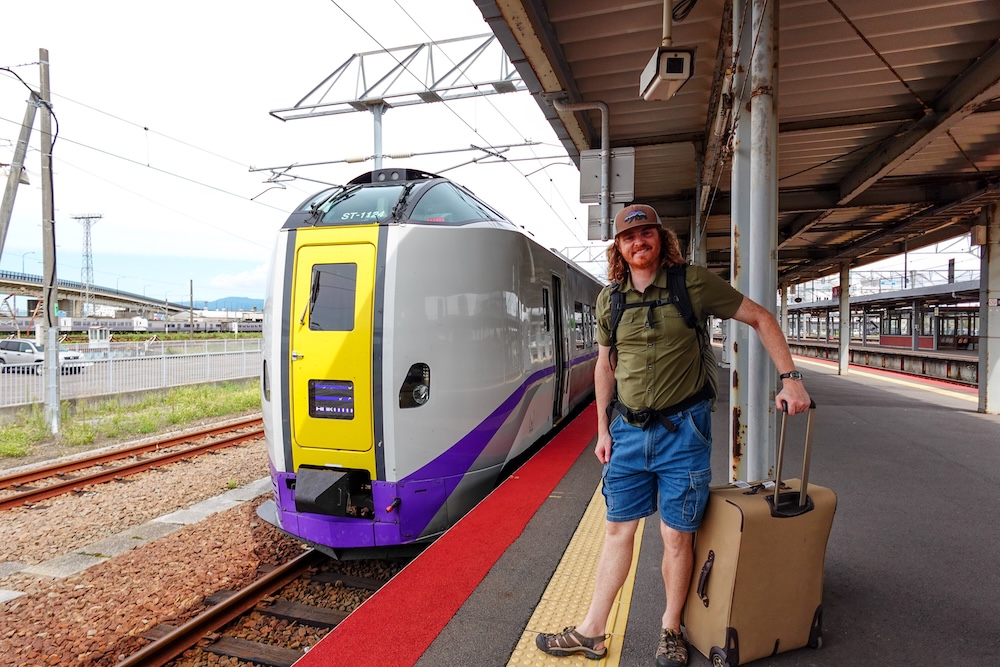
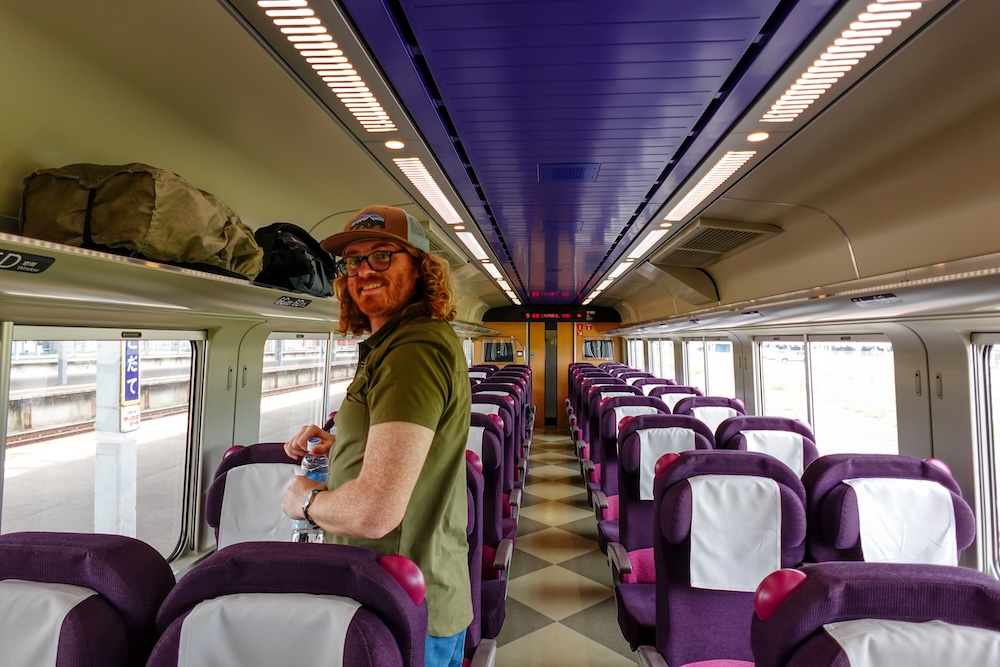
Our departure from Hakodate was about as painless as public transport gets. We were first onto the platform, and I even had time to pose beside the silver train with its yellow front and purple accents, my big tan suitcase parked beside me. Once aboard, we had the carriage largely to ourselves while getting organized. There were purple upholstered seats with white headrest covers, overhead racks for smaller bags and plenty of room to move before the other passengers arrived. We got everything settled without having to squeeze past people or compete for space.
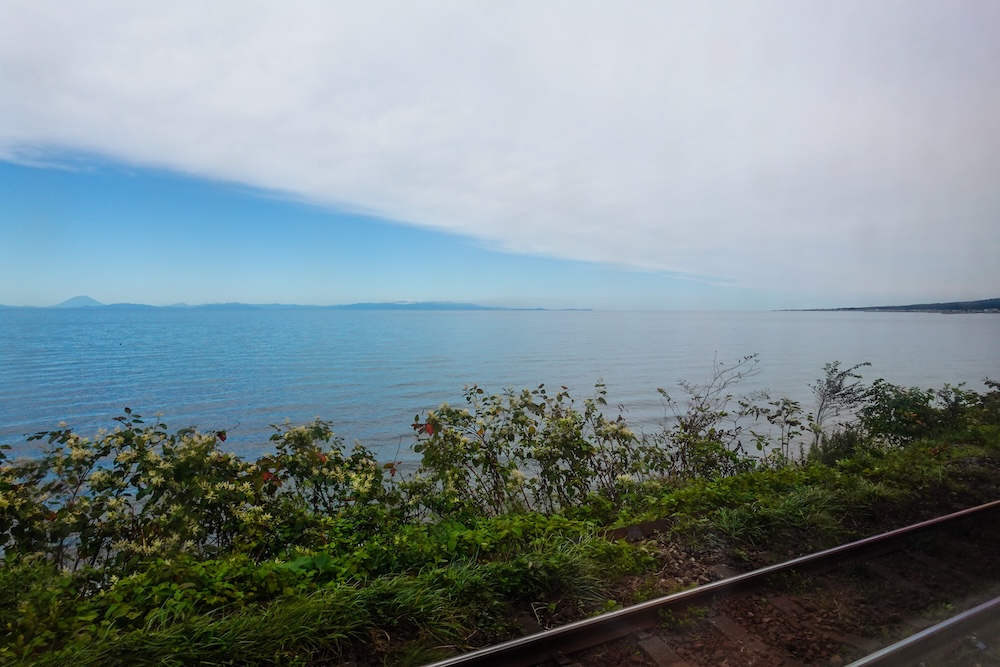
I wouldn’t count on having an empty carriage every time, of course, but arriving early certainly made our departure easy. The journey itself was lovely, and what I remember most is how the geography changed as we travelled through Hokkaido. At certain points, the railway runs quite close to the water, opening up views across the coastline toward distant mountains. The Hokuto route passes the Funka Bay area, and those waterside sections were among my favourite parts of the ride.
I really don’t understand the urge to rent a car for every journey in Japan when the trains can be this enjoyable. I’d rather let somebody else handle the travelling while I sit back and watch the scenery. Save the exploring for when you’re actually on the ground.
Train tickets, reserved seats and JR Hokkaido passes
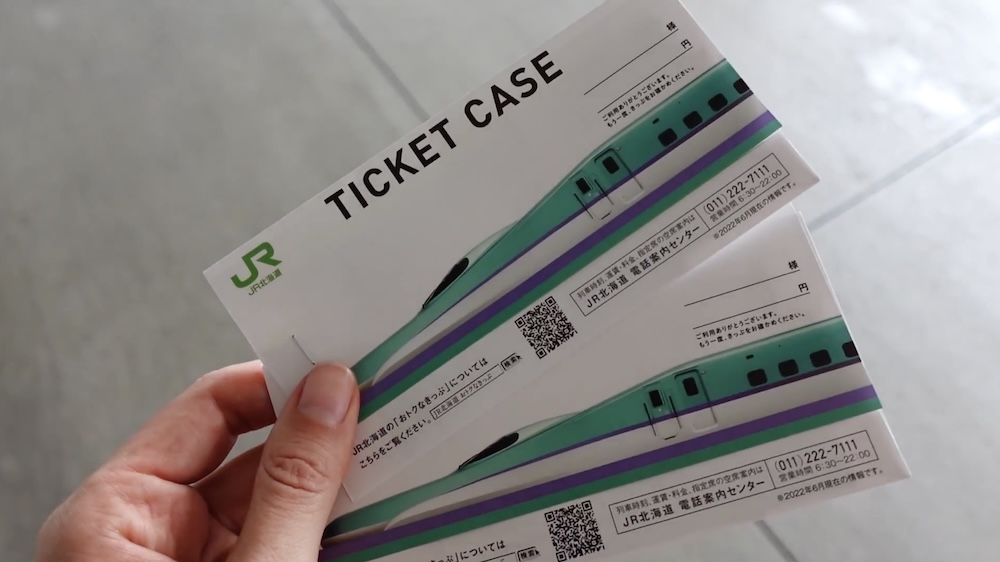
The published standard adult reserved-seat fare from Hakodate to JR Noboribetsu is ¥7,790 one way. Hokuto services use reserved seating, so you’ll need the appropriate fare and limited express ticket, along with a seat reservation. You can check current departures and ticket arrangements through JR Hokkaido. I’d also pick up something to eat or drink before boarding, as onboard sales aren’t available on these limited express services.
Audrey and I were travelling around the island with an existing JR Hokkaido Rail Pass, which made the train an obvious choice for us. We were already using the pass for other journeys, so this wasn’t a ticket we had to purchase separately. But I wouldn’t buy one automatically just for travelling from Hakodate to Noboribetsu. The five-day Hokkaido Rail Pass is listed at ¥22,000 through the eligible advance-purchase channel, compared with ¥7,790 for this one-way train ticket. You’d need additional covered journeys to make the expense worthwhile.
Also, don’t confuse the Hokkaido Rail Pass with the cheaper Sapporo–Noboribetsu Area Pass, which doesn’t cover travel from Hakodate. Before purchasing either product, check its route coverage, validity period and eligibility requirements through the JR Hokkaido rail-pass information.
As for luggage, there are overhead racks, although storage arrangements vary between trains. We handled our smaller bags easily because we boarded early, but I wouldn’t assume identical conditions if you’re travelling with a large suitcase on a busy departure. Check JR Hokkaido’s baggage rules rather than counting on a particular storage space being available.
JR Noboribetsu Station to Noboribetsu Onsen: The Final Transfer
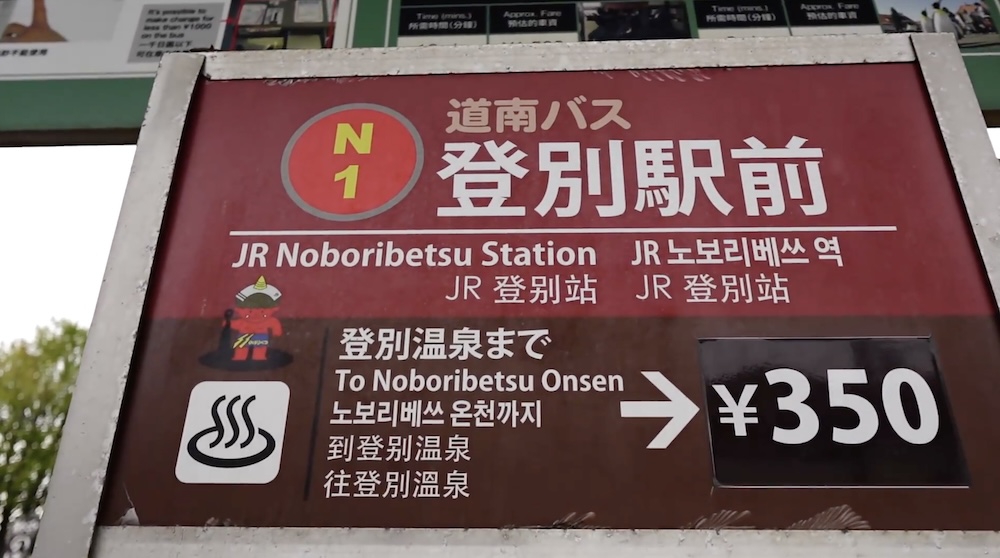
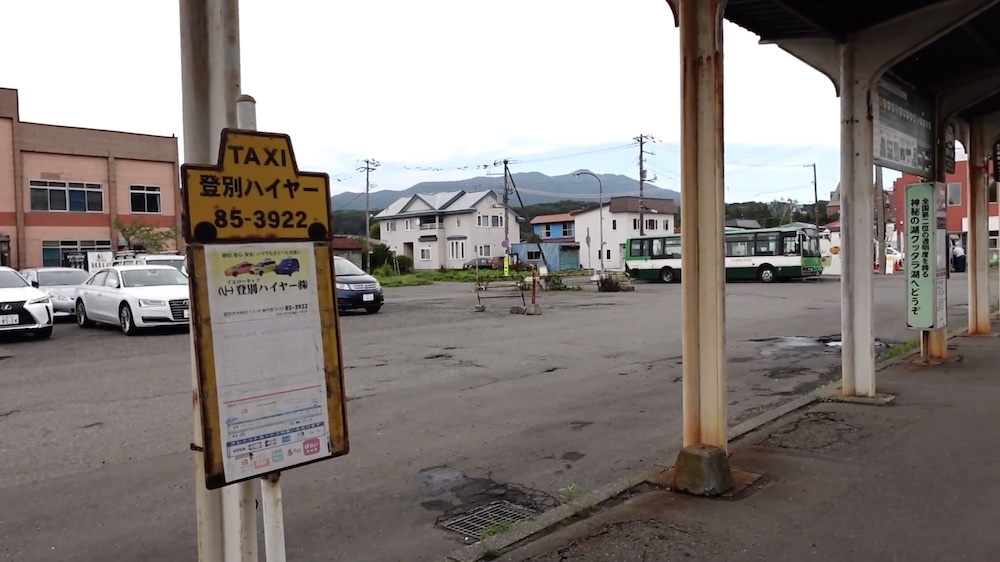
This is where our otherwise effortless travel day required a little more thought. We stepped off the train at JR Noboribetsu Station, which was smaller than I’d imagined, and found taxis waiting outside. The local Donan Bus timetable was also posted where we could see when the next service would arrive, so the options were clear enough. What we hadn’t decided was which inconvenience we preferred: paying more for a taxi or waiting for the bus and handling our luggage afterward.
We eventually chose the bus, which meant hanging around for approximately half an hour. We paid ¥350 per person at the time, although that was the fare during our trip rather than what you should budget today. The current published Donan Bus fare is ¥450 per adult one way to the main Noboribetsu Onsen stop, and the journey takes roughly 14–21 minutes, depending on the service.
Some buses continue beyond the main stop into the hotel district, including Park Hotel Mae. That’s worth paying attention to when you’re travelling with luggage, because the difference between getting off near your accommodation and walking uphill from the centre of town can be surprisingly noticeable.
Our destination was Park Hotel Miyabitei, where we’d booked two nights. After taking the local bus, we still had an uphill walk with our luggage. It wasn’t a major ordeal, but I would certainly have appreciated knowing our exact transport plan before getting off the train. We thoroughly enjoyed our stay, especially the onsen facilities and the convenience of being within walking distance of restaurants and the main attractions. If you’re considering the same property, you can check current rooms and rates at Park Hotel Miyabitei.
How much time should you allow for the connection?
That depends on the train and bus departures you choose. For example, one published timetable pairing has the Hokuto leaving Hakodate at 12:14 and arriving at JR Noboribetsu at 14:49. A Donan Bus departing at 15:05 then reaches the main Noboribetsu Onsen stop at 15:19, continuing to Park Hotel Mae at 15:22. That’s just over three hours from Hakodate Station to the main onsen stop, which is pretty efficient.
The catch is the 16-minute connection window. If the train runs late or you need additional time to get off with your luggage, you could miss that bus. The next listed departure in this example is at 15:30, so an additional wait isn’t necessarily disastrous, but it does change your arrival time. This is why I would compare the railway timetable with the Donan Bus timetable from JR Noboribetsu Station before choosing a train.
The published schedule also lists a final bus at 20:04, something to check carefully if you’re considering a late arrival. These schedules can change, and the last thing I’d want is to arrive at the station expecting a connection that has already finished for the evening.
One other detail: conventional transport IC cards such as Suica and Kitaca aren’t accepted on this local Donan Bus route. Certain services accept Visa contactless payment, but having suitable cash is the easiest fallback.
Would I take the bus or taxi?
For our particular trip, I was happy with the bus. We had two nights in Noboribetsu, and our arrival day wasn’t supposed to be a mad dash through Hell Valley or a race to squeeze in sightseeing. We could afford to wait, save some money and get ourselves settled at the hotel without worrying about losing precious sightseeing time.
Had we been arriving with less time, struggling with heavier luggage or staying somewhere particularly inconvenient from the bus stop, I might have looked more seriously at taking a taxi. There were taxis waiting when we arrived, but I wouldn’t assume one will always be available or quote a fixed fare without checking current charges.
Where you stay also affects how convenient the local bus will be. If you haven’t chosen accommodation yet, I’d pay attention to the location relative to the bus terminal or a hotel-area stop, rather than choosing solely on the room photographs. You can compare hotels and ryokan in Noboribetsu Onsen, then check their position against the bus route before booking.
My main lesson is to settle the bus-versus-taxi decision while you’re still planning the train journey. It’s a small detail, but there’s no advantage to leaving it until you’re standing outside the station with your suitcase, trying to work out whether saving a bit of money is worth another half-hour wait.
Can You Take a Bus From Hakodate to Noboribetsu Onsen?
This is where the comparison becomes less straightforward. There isn’t a practical direct scheduled bus from Hakodate to Noboribetsu Onsen established in the current operator timetables. The Hakodate–Sapporo highway coach doesn’t list Noboribetsu as one of its stops, and although Donan Bus operates the local service into the hot-spring district, that journey starts at JR Noboribetsu Station rather than Hakodate.
It may be possible to assemble a more complicated combination of regional buses, but I wouldn’t recommend planning around an unverified connection when the Hokuto already provides a straightforward direct rail journey. If you’re trying to avoid renting a car, take the train and make the final local bus connection. There’s little appeal in turning a relatively simple trip into an exercise in collecting bus transfers.
Driving From Hakodate to Noboribetsu Onsen
Driving gives you something the train doesn’t: the ability to travel directly to your accommodation without switching to a local bus or taxi. The estimated driving time from Hakodate to Noboribetsu Onsen is around 3 hours 10 minutes using the expressway, compared with roughly 4 hours 20 minutes on ordinary roads. Those estimates don’t include sightseeing stops, traffic delays or collecting a rental vehicle, so driving isn’t necessarily a time-saving exercise compared with a well-connected train journey.
Cost is where I’d pay particular attention. The standard ordinary-car expressway toll between Onuma-Koen and Noboribetsu Higashi interchanges is approximately ¥4,360, and that’s before fuel, the rental itself, parking and any additional charges. If you’re comparing a car against two train tickets, make sure you’re comparing the whole bill rather than just the price of the highway.
One-way rentals can be especially expensive. Toyota Rent a Car’s published regional tariff examples include surcharges of roughly ¥20,900–¥22,000 for certain Hakodate-origin return arrangements. These aren’t universal rates or confirmed quotes for a Noboribetsu drop-off, but they illustrate how quickly the cost can climb when you collect a vehicle in one place and return it somewhere else.
If driving is part of your wider Hokkaido plans, it’s worth comparing rental cars available in Hakodate using your actual pickup and return locations. Check the final rental conditions and one-way charges rather than assuming the headline daily rate is what you’ll pay. A car you’re already using for a longer itinerary is a different proposition from hiring one specifically for this transfer.
I can certainly see why driving would appeal if you want to explore several places along the way, carry a lot of luggage or stay somewhere that isn’t convenient by public transport. There’s also the freedom to stop whenever something catches your eye, which can be a genuine advantage on a longer road trip. But if you’re travelling directly between Hakodate and an onsen hotel, I’d be reluctant to rent a vehicle exclusively for that journey.
Winter adds another consideration, with icy roads and reduced visibility possible in Hokkaido. Those conditions bring driving responsibilities you simply don’t have when sitting aboard a train. We didn’t drive this route ourselves, so my preference isn’t based on a head-to-head test of both options. Given how much I enjoyed the railway journey, though, I’d still be looking at the Hokuto timetable first.
Which Would I Choose: Train, Bus or Car?
For an independent trip from Hakodate to Noboribetsu Onsen, I’d choose the Limited Express Hokuto and local Donan Bus again. At the published standard fares, you’re looking at ¥7,790 for the train plus ¥450 for the local bus, or ¥8,240 per adult one way. For two adults, that’s ¥16,480 before any additional hotel transfer. You get a scenic, comfortable journey with one connection to manage at JR Noboribetsu Station.
If you’re already travelling across Hokkaido with a rental car and plan to make several stops along the way, driving may fit your itinerary better. I just wouldn’t hire a car specifically for this journey without calculating the complete expense. As for travelling all the way from Hakodate by bus, I’d leave that option aside unless you can verify a genuinely practical service.
Looking back, there’s almost nothing I’d change about our journey. We arrived at Hakodate Station early, boarded without any trouble, enjoyed the changing scenery and reached Noboribetsu with plenty of time to settle into our two-night stay. The only thing I’d do differently is decide between the local bus and taxi before reaching JR Noboribetsu Station, rather than leaving that little logistical headache for the moment we stepped outside with our luggage.
Then I’d put the decision out of my mind, settle back into my seat on the Hokuto and enjoy watching Hokkaido roll past the window.
Frequently Asked Questions
How do I get from Hakodate to Noboribetsu Onsen by train?
Take the Limited Express Hokuto from Hakodate Station to JR Noboribetsu Station, then transfer to the local Donan Bus or a taxi for the final journey into Noboribetsu Onsen. The train takes approximately two and a half hours, and the local bus adds around 14–21 minutes to the main onsen stop, plus any waiting time.
How much does the train from Hakodate to Noboribetsu cost?
The published standard adult reserved-seat fare is ¥7,790 one way to JR Noboribetsu Station. Add ¥450 for the local bus to Noboribetsu Onsen, bringing the combined standard fare to ¥8,240 per adult. Check current fares before travelling because ticket prices and available discounts can change.
Is Noboribetsu Onsen within walking distance of JR Noboribetsu Station?
No. Noboribetsu Onsen is approximately eight kilometres from the railway station, uphill toward the hot-spring district. I’d recommend taking the local bus or a taxi, particularly if you’re carrying luggage. Some buses continue to hotel-area stops, which may reduce the walking required after arrival.
Is there a direct bus from Hakodate to Noboribetsu Onsen?
No straightforward direct scheduled bus was identified in the current operator timetables. The Hakodate–Sapporo highway coach doesn’t list Noboribetsu as a stop. For independent public-transport travel, I’d choose the direct Limited Express Hokuto to JR Noboribetsu and then the local Donan Bus.
Is it better to take the train or rent a car from Hakodate to Noboribetsu?
I’d personally choose the train again because I enjoyed the scenery and the relaxed journey. Driving takes approximately three hours and ten minutes using the expressway and provides direct hotel access, but rental charges, fuel, tolls and possible one-way return fees can add up. A car makes more sense when it’s part of a wider Hokkaido road trip.
Should I take a bus or taxi from JR Noboribetsu Station to my hotel?
We chose the local bus because we were staying for two nights and weren’t in a hurry. It’s the cheaper option, with a published adult fare of ¥450 to the main onsen stop. A taxi may be more convenient if you’re carrying heavy luggage, have a long walk to your hotel or face an inconvenient bus connection. Check taxi availability and current charges before relying on one.
This guide is also available in Spanish. [Leé la versión en castellano: De Hakodate a Noboribetsu Onsen: ¿tren, micro o auto? Tarifas, tiempos de viaje y transbordos]
This article contains affiliate links. If you book through one of these links, I may earn a commission at no extra cost to you.