
Audrey and I never decided to go to Sapporo Autumn Fest. We were wandering through Odori Park on a hot, sticky day in September 2023, already wilting and fresh off a soft-serve break, when the park in front of us turned into a long corridor of food stalls. We had a lunch plan. It didn’t survive the first few booths, and neither of us put up much of a fight.
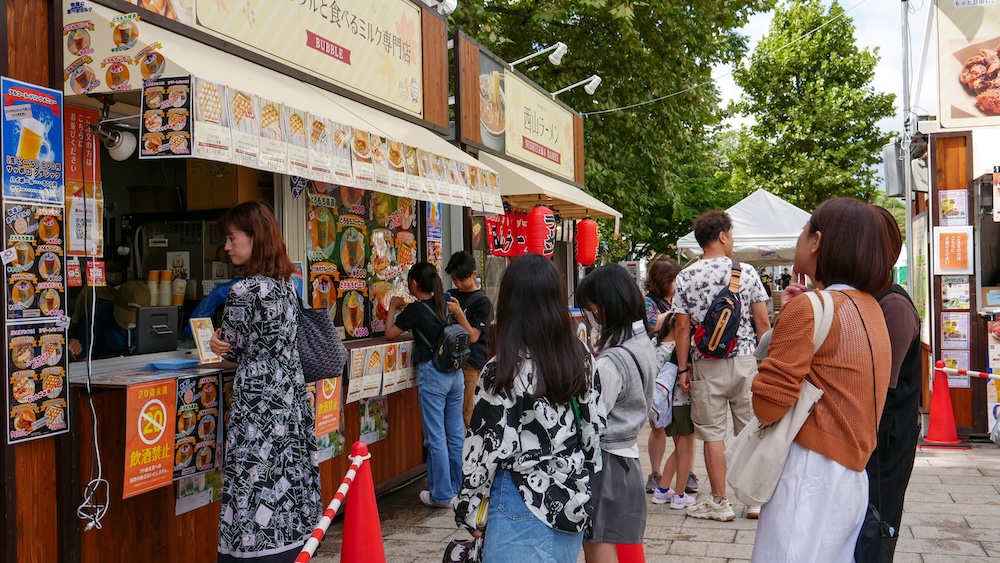
That accidental lunch is the reason I can answer the question that actually matters if you’re planning a Hokkaido trip. Everyone agrees the food is good. What’s less clear is whether the festival deserves to dictate your travel dates. I’ll walk you through what we ate, what the rest of the festival looks like beyond the corner we explored, the practical details that have changed since our visit, and my honest verdict on whether to build a trip around it. If you’re short on time: it’s a brilliant bonus if your dates happen to overlap, and not something I’d rearrange a trip to catch.
What Sapporo Autumn Fest Is, and When It Runs
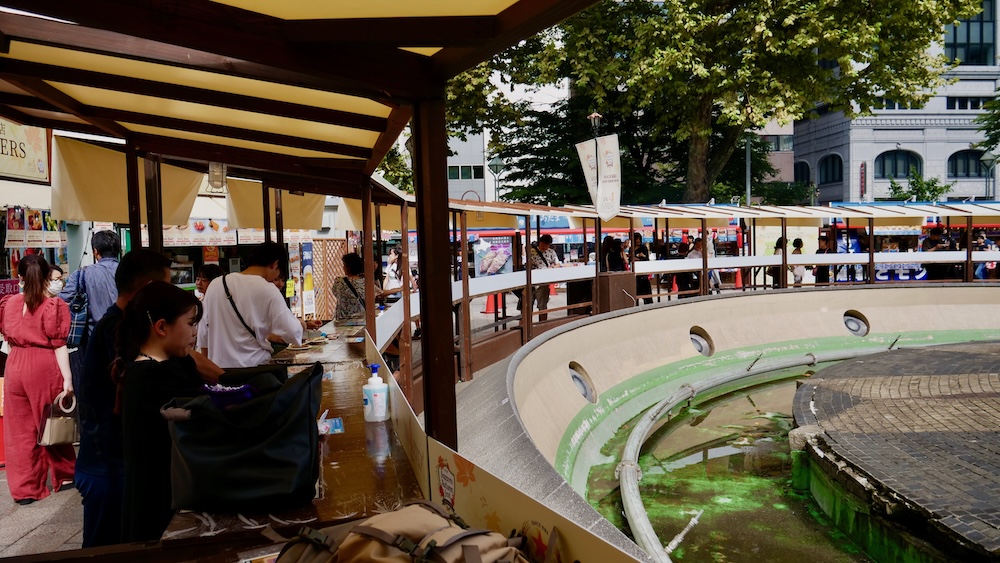
Autumn Fest is Sapporo’s harvest-season food festival, held in Odori Park every year since 2008. The idea is Hokkaido food in one place. Towns from all over the island bring their local specialties and drinks, and well-known Sapporo restaurants cook alongside them. It occupies seven blocks of the park, a strip roughly a kilometre long, with about 300 vendors over the course of each festival. More than two million people pass through every year. That number explains why one lunch barely scratches the surface, and why you’ll be sharing the experience with a lot of other hungry people.
Entry is free; you pay stall by stall for whatever you order. Through its run, the festival opens daily from 10:00 to 20:30, with last orders at 20:00, and Odori Station sits right underneath it. Nishi 11-chome Station serves the western end.
The dates are what trip people up, because they shift every year. Our visit fell during the 2023 edition, which ran from September 8 to 30. In 2024 it ran September 6 to 29, and in 2025 it ran September 12 to October 4. The 2026 edition ran from Friday, September 11 to Saturday, October 3. The pattern is a little over three weeks, starting in the first half of September and ending somewhere between late September and the first days of October.
I wouldn’t trust any secondhand date list, including one I’ve just given you, because aggregator sites happily recycle last year’s dates. Check the official Sapporo Autumn Fest site for the current year before you commit to anything.
What We Ate at Sapporo Autumn Fest
We mostly stayed in the street-food section rather than trying to cover the whole park, and the way we tackled it is how I’d suggest anyone does it. We took a slow lap first to see what was on offer, then committed to a few stalls. That sounds disciplined. In practice it means walking past several things you instantly want, telling yourself you’ll come back, and making peace with the fact that you probably won’t.
The food was the real surprise. The quality was high, and the variety was much wider than I’d expected from a festival built around Hokkaido produce. You can more or less eat your way around the world, which is exactly what we decided to do with our lunch.
Tempura: Pumpkin, Mozzarella and a Mochi We Couldn’t Name
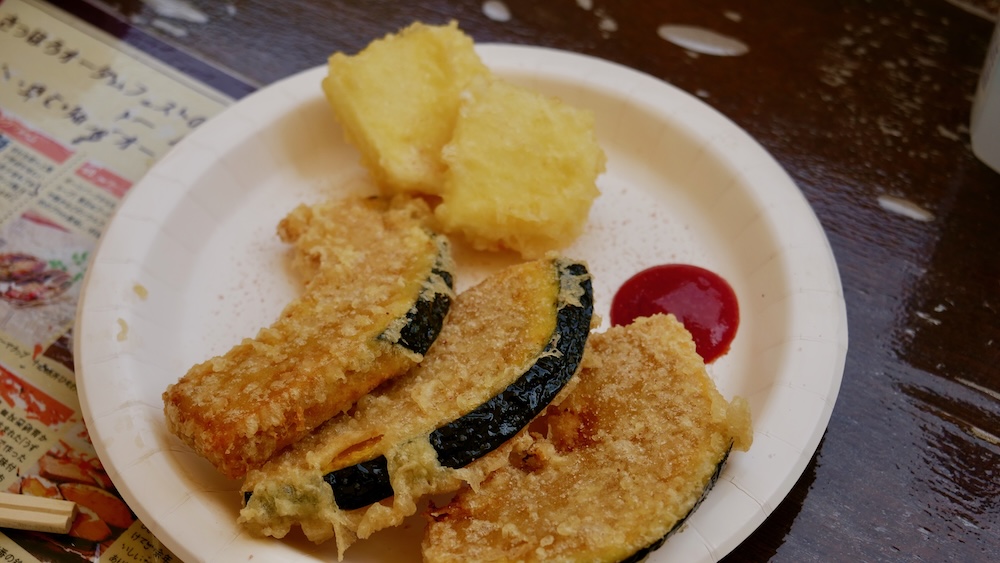
Our first stop was a tempura stall, where we ordered three things.
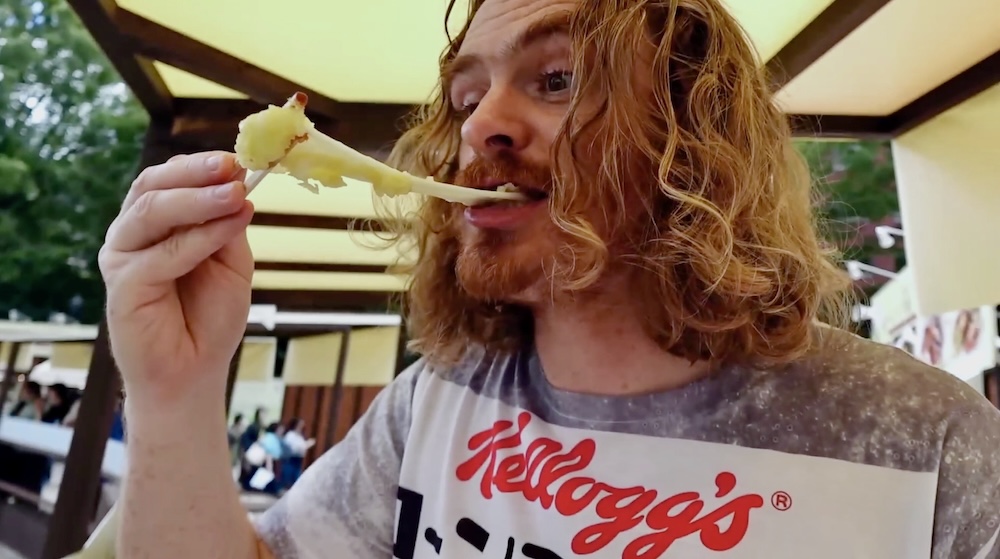
The mozzarella tempura delivered the cheese pull we were hoping for, long gooey strands that obviously had to be filmed. We acknowledged it was probably a gazillion calories, and then ate it anyway, because it was very good.
The pumpkin tempura came with ketchup, and the only explanation we could come up with was “because why not.” It was Audrey’s favourite of the three. She took a bite so big she had to apologize to everyone watching. Her reasoning was sound: pumpkin is already tasty on its own, and tempura makes it better.
The third item was a Hokkaido mochi whose name Audrey had read off the sign and forgotten almost immediately. She guessed it would be sweet. It turned out to be sweet and savoury at once, with a soft, smooth texture she really liked. It was almost certainly imo mochi, Hokkaido’s potato-based version of mochi, which is traditionally finished in a sweet-salty soy glaze. That would explain why it kept her guessing.
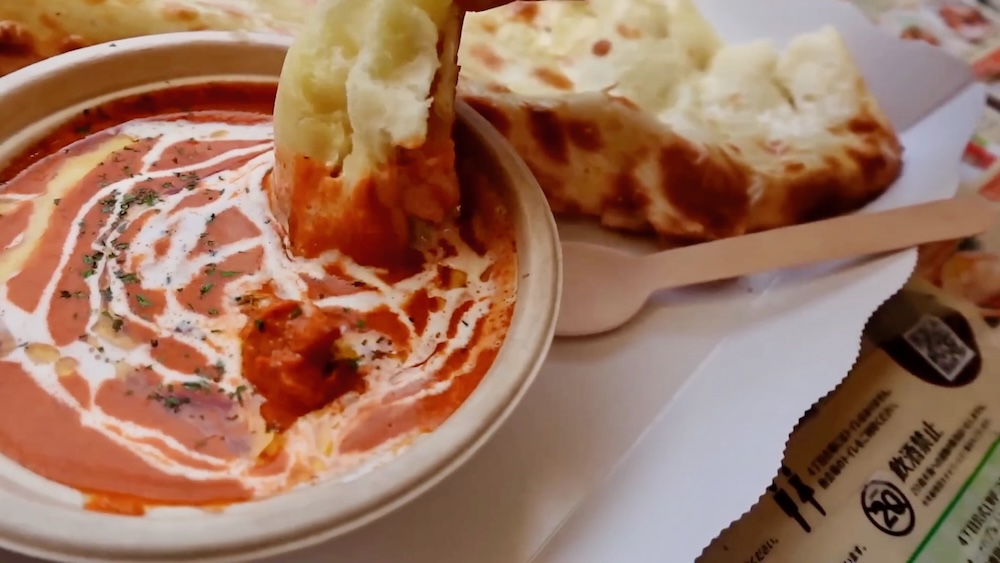
Cheese Naan and Butter Chicken at a Hokkaido Harvest Festival
Yes, at a festival celebrating Hokkaido’s harvest, I went and got Indian food. I’ll stand by it. We knew the rest of the trip would be almost entirely Japanese food, which we were thrilled about, and breaking that up for one meal was part of the fun rather than a betrayal of it.
I came back with cheese naan and butter chicken from a stall called Taj Mahal. The naan was made to order, and the whole process happened in plain view: the dough kneaded, the cheese folded into the middle, then the lot slapped into the tandoor. Paired with a rich butter chicken, it was everything I wanted. My one regret is how little patience I had with it. Audrey watched me tear into the naan while it was still steaming and announced that I was about to burn myself, which is a fair summary of how I approach most festival food.
Taj Mahal isn’t a one-off pop-up, either. It’s a Hokkaido family business that goes back to 1982, and it has kept turning up at Autumn Fest in recent years, including the 2026 edition. I wouldn’t promise it’ll be there in any particular year, but if you see it, you know what I’d order.
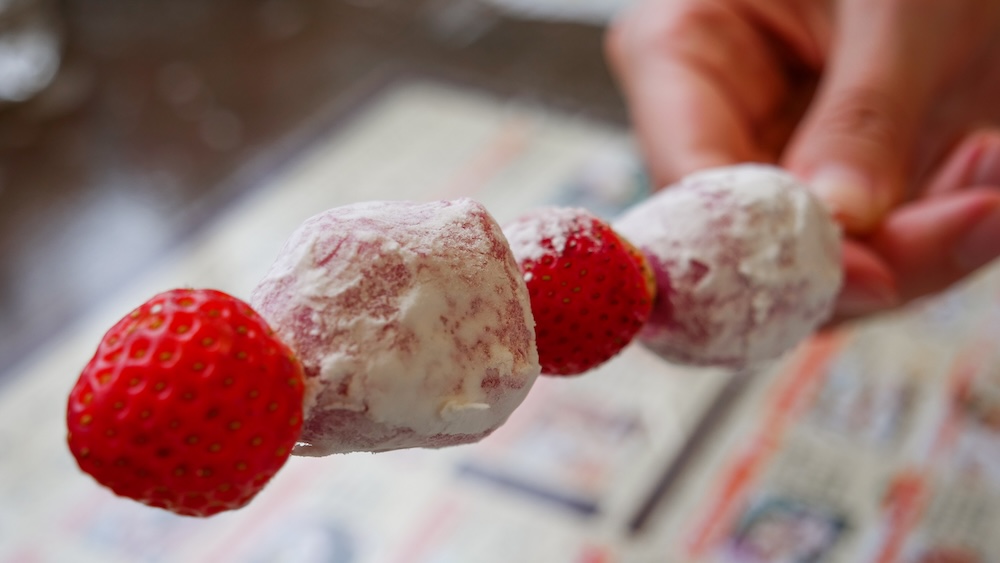
Strawberry and Red Bean Mochi
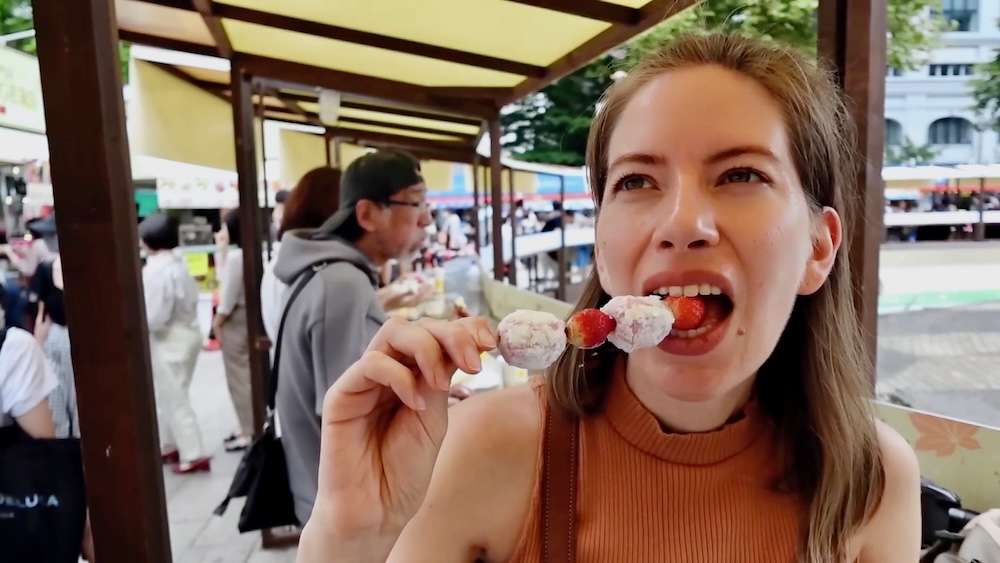
We closed out lunch with mochi stuffed with red bean paste and fresh strawberries. It was a nice change after a run of fried food and curry. We walked past plenty we never tried: strawberry and mochi skewers, corn, beer, and a local pudding that clearly had its fans. One lunch only stretches so far, which brings me to the large part of the festival we never reached.
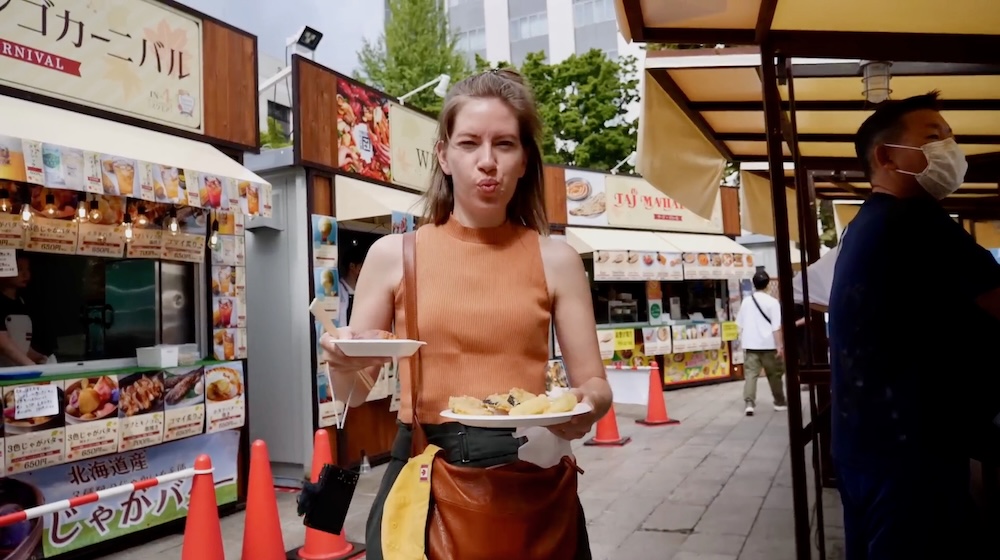
What Else You Can Eat If You Have More Time Than We Did
Our lunch covered a single section of a festival that runs the length of the park. Each block, or chōme, has its own theme, and the themes change from year to year. Here’s how the 2026 edition was laid out, which gives a useful sense of how to steer by appetite rather than wander aimlessly:
| Block | 2026 theme | Head here for |
|---|---|---|
| 4-chōme | Information hub with a mix of popular food stalls | Getting your bearings and a first snack |
| 5-chōme | Rotating Hokkaido ramen shops, spice curry, gyoza, pizza, sweets | Quick comfort food; ramen was ¥1,000 a bowl and curry sets ¥1,400–1,700 |
| 6-chōme | Sapporo restaurants cooking with local ingredients, plus a live stage | Lingering over food and music in the shadiest, most sheltered block |
| 7-chōme | Hokkaido wine, sake and craft beer with matching snacks | Drinkers curious about Hokkaido’s producers |
| 8-chōme | About 70 booths from towns and groups across Hokkaido | Regional specialties you won’t easily find in Sapporo |
| 10-chōme | Meat in every form, including game such as venison and brown bear | Carnivores and anyone happy to picnic on the lawn |
| 11-chōme | Dishes from well-known Sapporo chefs from about ¥1,000, plus around 40 Hokkaido breweries | A more special meal; cashless payment only |
Two details are worth knowing if you plan to graze properly.
First, several blocks rotate their vendors through the festival in phases. A visit in the second week can feel like a different event from the first, and coming back more than once isn’t as excessive as it sounds.
Second, 8-chōme had a smart idea in 2026: you buy a bowl of rice, then carry it from town booth to town booth, piling on toppings and building your own Hokkaido sampler. Food prices have risen sharply in recent years, and some vendors in that block responded with smaller portions designed to be mixed and matched. That works out nicely if you’d rather taste ten things than fill up on two.
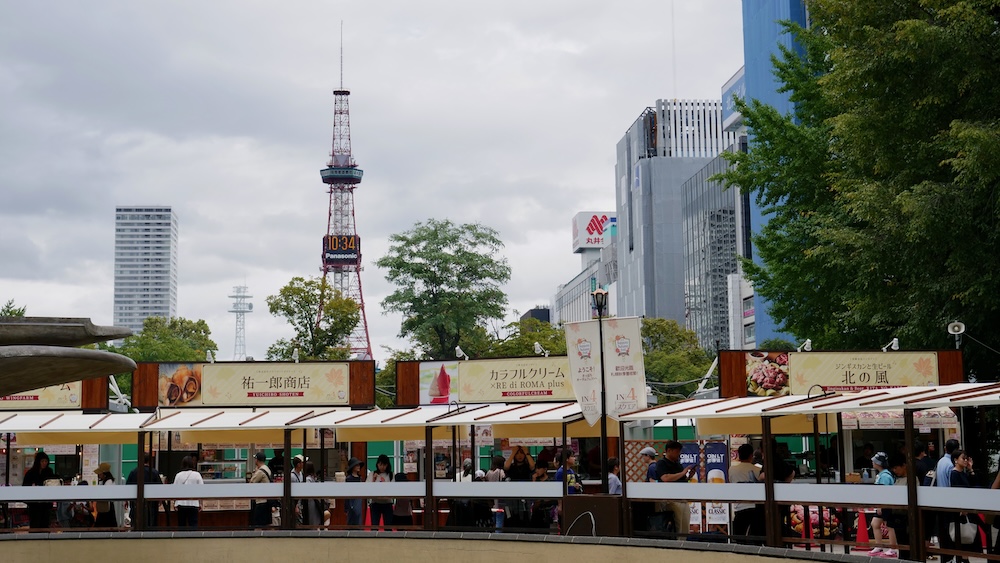
How to Do Autumn Fest Without Wasting Your Appetite
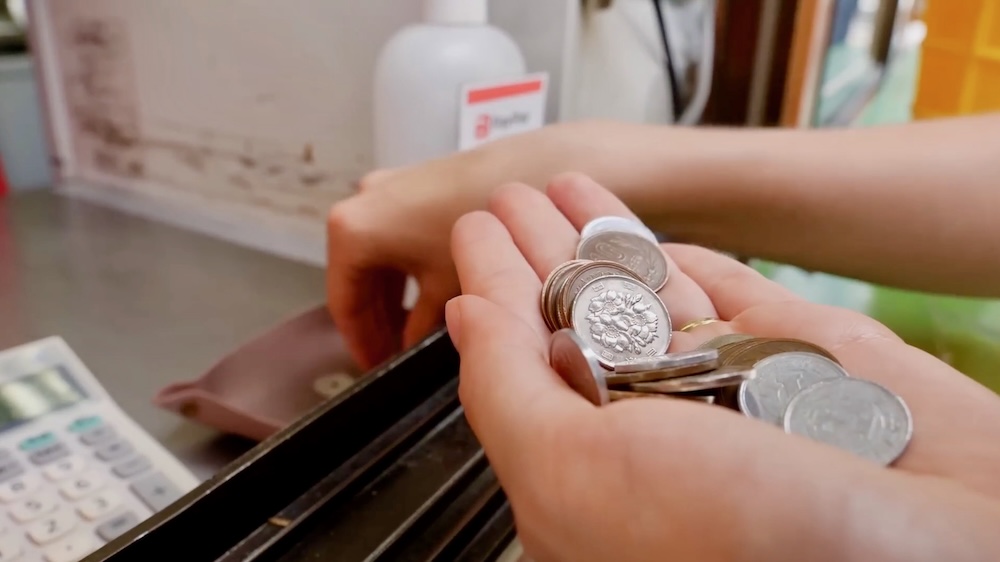
Bring more than one way to pay. This is the one practical change I’d underline, because it’s the biggest gap between our visit and how things work now. We paid cash in 2023 and that was fine. By 2026, cashless payment was accepted across every block, and 11-chōme didn’t accept cash at all. That was also where Taj Mahal set up in 2026, so a cash-only visitor chasing the naan I’ve been raving about would have been stuck. Carry yen, but have a card or a mobile or top-up payment option ready as well.
Choose your timing. The organisers are refreshingly blunt that weekend and holiday afternoons get very crowded, and that weekdays, or mornings on weekends and holidays, are noticeably calmer.
Consider walking it in reverse. Most people come up out of Odori Station into the eastern end. The organisers suggest starting at Nishi 11-chōme Station and working east toward 4-chōme instead, which lets you take each block at a gentler pace before the crowds thicken.
Know the house rules. Outside food and drink aren’t allowed in. Smoking is limited to designated spots, and the drinking age is 20. Toilets are the detail I’d have liked to know in advance: in 2026, the 4-, 6- and 10-chōme blocks had none of their own, so plan accordingly before you settle in with a beer.
Seating and dishes. You’re welcome to sit on the park lawns. Food comes on paper, wooden or reusable tableware, and you take your rubbish to collection booths where staff sort it. A couple of blocks also offered bookable seats in 2026 if you’d rather guarantee a place to sit.
Weather. Our day was hot and humid enough that we’d stopped for soft-serve beforehand. After lunch we retreated into the covered Tanukikoji arcade to escape the heat. If you get a day like that, 6-chōme’s trees and tents offer the best shade in the festival. Evenings can turn cooler, so a light layer makes sense if you’re coming back after dark.
Sleep close to the park if your dates line up. Because vendors rotate and the stalls keep serving into the evening, the easiest way to get more than one crack at the festival is to stay within walking distance of it. That way you can graze at lunch, go off and see something else, then wander back for an evening round without giving the subway a second thought. If that sounds like your kind of trip, you can compare hotels within walking distance of Odori Park for your dates.
Is Sapporo Autumn Fest Worth Planning Your Trip Around?
My answer is no, but with an asterisk the size of a cheese naan. If you’re in Sapporo while it’s on, make time for it. We wandered in with no plan whatsoever and had one of the best lunches of our stay, which is exactly why I don’t think anyone needs to chase it. The festival is free, open from morning into the evening every day for more than three weeks, and sits directly above the city’s main subway hub. It’s designed for people who simply show up.
That turns the decision into a simple question about your dates:
- Your dates overlap. Give it a weekday lunch or an evening, arrive hungry, do a lap before you buy anything, and bring more than cash.
- You’re missing it by a few days and your dates are flexible anyway. Moving them slightly costs very little, especially if food is a big reason you travel. It’s worth checking Sapporo hotel rates across a few different date ranges before you decide.
- Catching it would mean reshaping the trip. Let it go. Sapporo and the rest of Hokkaido will feed you extremely well without it, and if you’d like someone local to steer you toward the good stuff, you can browse current Sapporo food tours and experiences.
If your trip does land somewhere between early September and the first days of October, check that year’s official dates and leave plenty of room in your stomach. And if you end up at a stall selling cheese naan, take Audrey’s advice, which I clearly didn’t: let it cool for a minute before you dive in.
Frequently Asked Questions
When does Sapporo Autumn Fest take place?
The festival runs for a little over three weeks in Odori Park, starting in the first half of September and finishing between late September and early October. The dates shift every year, and the 2026 edition ran from September 11 to October 3, so check the official site for the current year.
Is there an entry fee for Sapporo Autumn Fest?
No. Entry is free and you pay stall by stall for whatever you order. During its run the festival opens daily from 10:00 to 20:30, with last orders at 20:00.
Should I bring cash or a card to Sapporo Autumn Fest?
Bring both. Audrey and I paid cash in 2023 without any trouble, but by 2026 cashless payment was accepted across every block and 11-chōme didn’t take cash at all.
What did you eat at Sapporo Autumn Fest?
Our first stop was a tempura stall for mozzarella, pumpkin and a sweet-savoury Hokkaido mochi, with the pumpkin becoming Audrey’s favourite. I then got cheese naan and butter chicken from the Taj Mahal stall, and we finished with red bean mochi and fresh strawberries.
When is Sapporo Autumn Fest least crowded?
Weekend and holiday afternoons get very crowded. Weekdays, or mornings on weekends and holidays, are noticeably calmer and make for easier grazing.
Is Sapporo Autumn Fest worth planning a trip around?
In my view, no, but it’s well worth making time for if you’re already in Sapporo while it’s on. If your dates overlap, give it a weekday lunch or an evening; if catching it would mean reshaping your trip, let it go.
This guide is also available in Spanish. [Leé la versión en castellano: Sapporo Autumn Fest: qué comimos y si vale la pena armar tu viaje alrededor del festival]
This article contains affiliate links. If you book through one of these links, I may earn a commission at no extra cost to you.