
Otaru was never supposed to be the point. Audrey and I were wrapping up our time in Hokkaido, and the reason we pulled into this northern port city was, to be perfectly honest, a ferry ticket off the island. We had about 24 hours before the boat, we arrived in the nick of time, and the plan amounted to: eat something, see what’s here, don’t miss the ferry. By the next afternoon that logistics stop had become one of the places we loved most on the trip, and I said in our video that you only need about a day to properly explore it.

I still stand by that line, but it needs a fence around it. When people ask whether one day is enough in Otaru, they’re really asking two questions at once. One is whether a day covers the part of Otaru that most visitors come for. The other is whether a day covers Otaru. Those have different answers, and most of the planning trouble I see comes from treating them as one. Below is what our full day actually held, why the centre of the city fits so neatly into it, what a day quietly leaves out, and the situations where I’d give Otaru more time.

The Short Answer: Yes for Central Otaru, No for the Whole City
For the compact centre, meaning the canal, the old warehouse district, Sakaimachi Street and the craft shops and cafés strung along it, one day is enough. Looking back, it was the perfect amount of time for what we did, but not more. Audrey felt the same way. We never had that nagging sense of having shortchanged the place, and we never ran out of things to do and started wandering aimlessly to fill the hours either.
What I meant by “everything” matters, though. I meant the centre. I did not mean Mt. Tengu, the aquarium out at Shukutsu, the hot springs at Asarigawa or the coastline beyond the port. Those are every bit as much Otaru, and none of them were part of our day. Had we been more ambitious and wanted to venture beyond the territory we actually covered, we would have needed more time. There’s no clever routing that gets around that.
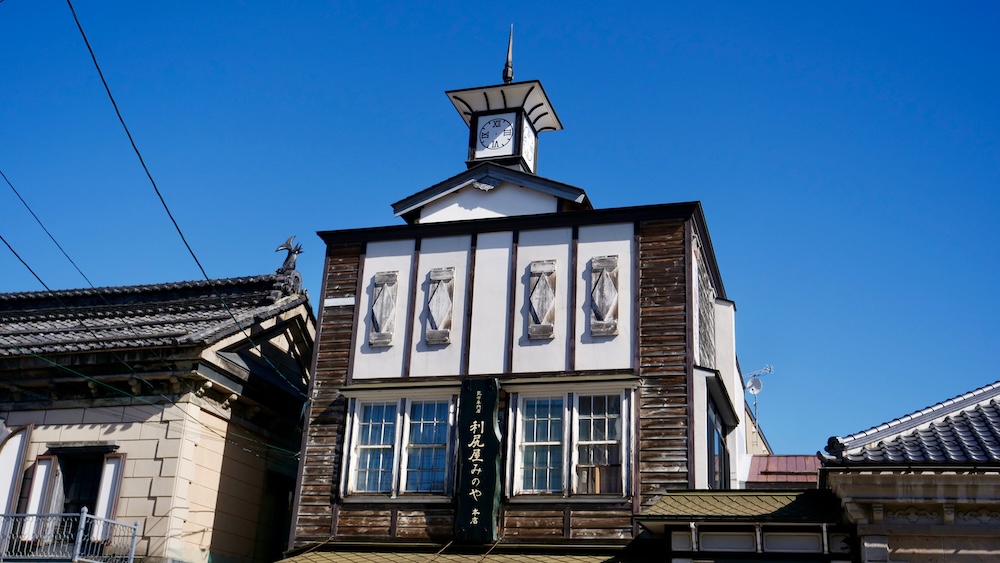
The centre is easiest to picture as a single line instead of a neighbourhood. Otaru Station sits at the top of town, and the canal is about a 10-minute walk downhill from it. From the canal you drift into Sakaimachi Street, which runs south past glass shops, sweets counters and old merchant buildings until it reaches the crossroads with the Steam Clock and the Music Box hall, with Minami-Otaru Station a few minutes beyond. You can walk the whole thing one way, station to station, without doubling back once. That shape is why a single day works so well here.
What Our Full Day in Central Otaru Actually Held
The fairest test of whether a day is enough is to look at what fitted into one, so here’s ours. I’m keeping each stop short, because several of them deserve their own stories and they’ll get them elsewhere.
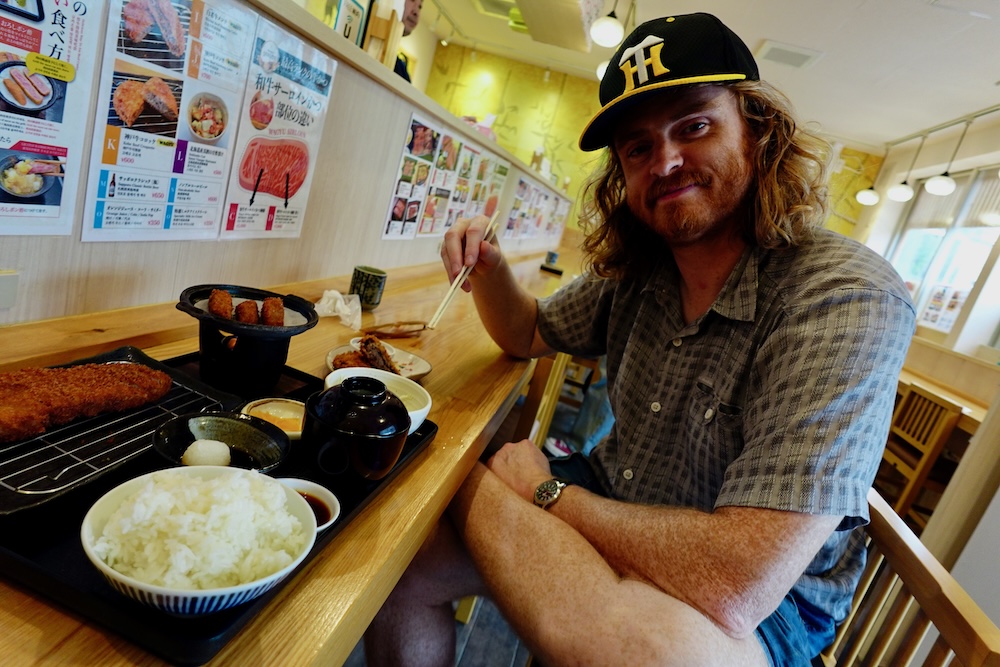
We started with a beef cutlet lunch, the kind where a small candle-heated plate sits at your table and you finish cooking the meat yourself. There were instructions in English, which was a mercy for two confused foreigners trying to decide how pink was too pink, and the cutlet came out crispy on the outside and very tender inside. From there we wandered into the warehouse district, all old stone and red brick with ivy climbing the walls, and into the glass shops that seem to occupy every other doorway. Otaru is known for glass, and the shops run from earrings and necklaces to ornate vases and cups. It’s pricey, but it’s beautiful handcrafted work, and we both walked out with a lot of respect for the craftsmanship. We also walked out slightly tense. One clumsy slip near those display cases and you’ve made a two- or three-thousand-dollar mistake, so spatial awareness to the max.
By dinner we’d landed at Otaru Beer, a brewery and beer hall inside a converted 1924 warehouse, with brewing kettles sitting in the middle of a timber-framed room that felt like a corner of Bavaria had been dropped into northern Japan. My dark beer was a mighty fine pint, and the pretzel arrived warm and properly salted. The currywurst was another matter: a modest portion, a sauce that would puzzle a German, and a meagre pile of fries. The atmosphere carried it anyway.
After dinner we walked along the canal, noticed a boat about to leave and bought tickets right on the spot. The cruise ran about 40 minutes, and it turned out to be more than a pretty loop past lamp posts. It also slips out through the old working harbour, past warehouses and former canning factories that explain why this canal was dug in the first place. Today the day cruises leave every half hour from mid-morning and the night cruises follow on a schedule that shifts with the sunset, with adult fares currently ¥1,800 by day and ¥2,000 at night. If you’re after a particular light, check the Otaru Canal Cruise timetable on the day.
We slept at a small guesthouse. The next morning we walked a few blocks to a convenience store, carried breakfast back and ate it in a communal tatami room with soft morning light and painted fans on the walls, which became my favourite spot in the whole place. If you want to copy that shape, an afternoon and evening followed by a morning, you can compare current places to stay in central Otaru. Anything within walking distance of the canal works, because that’s where both halves of the visit happen. Then it was back down to Sakaimachi. We reached the Steam Clock just in time to watch it puff and whistle, then followed the sound of tinkling music into the Music Box hall. Fair warning on that one: it’s an enormous and genuinely charming shop with tens of thousands of music boxes, a lot of them playing at once, but it is not a museum in the usual sense. I know because I walked every inch of the building looking for the official museum part. So many little lights in there kept tripping up my camera’s autofocus, and I gave up and focused manually.

Kitaichi Hall was the one place I really wanted to see in Otaru, and it delivered. It’s a café inside an old warehouse lit entirely by 167 oil lamps, dim and high-ceilinged, with a faint smell from the lamps that makes the whole room feel like it belongs to another century. It was one of the strongest moments of the entire visit, and we stayed much longer than we needed to, eating a dense chocolate cake slowly and sipping iced coffee slowly, because late September was still surprisingly hot and humid. Further along Sakaimachi we stumbled into a shop offering free sake tastings. I picked the limited edition and was stunned by how sweet it was. Audrey, who announced that she knows nothing about sake because she’s a wine girl, decided it tasted like syrup, then honey, then just a tiny bit like cough medicine.
That’s a lot of Otaru: lunch, a brewery dinner, a café, a boat, a shopping street, a night’s sleep and a tasting, and it never felt crammed. Every bit of it happened inside the centre.

Why the Centre Fits in One Day — and Where the Day Really Ends
Compactness is the obvious reason, and I put it bluntly at the time: everything is compact and focused on the centre. There’s a second reason, though, that explains why the day felt complete instead of merely short, and most guides skip right past it. A central Otaru day runs in two shifts.
The first shift is the indoor one. The shops, craft halls and cafés along Sakaimachi keep ordinary business hours, and several of the headline stops wind down in the late afternoon or early evening. Kitaichi Hall closes around 5:30 p.m. and the Music Box main hall at 6 p.m., so if you were planning one more browse after dinner, you’ve usually missed it.
The second shift happens outside and belongs to the canal. The 63 gas lamps along the canal path come on at sunset and stay lit until midnight, and the warehouses are illuminated until about 10:30 p.m. That evening walk is free, it’s the Otaru most people picture before they arrive, and once the lamps are glowing the whole place changes character. Otaru Beer and the restaurants near the water carry you comfortably through it.
What makes this worth knowing is how far the line between those two shifts moves with the seasons. In late June the sun doesn’t set until roughly 7:20 p.m., so you get a long daylight afternoon and the lamps arrive late. By mid-September, when we visited, sunset is closer to 5:45. In December it’s around 4 p.m., which means the lamps are already on while the shops are still open. It’s the same city and the same day, but a completely different shape.
Getting there costs very little of that day. From Sapporo, the train to Otaru is ¥800 one way and takes as little as about 32 minutes on the Rapid Airport service, or around 50 on a local train. It honestly feels more like a regional commute than a proper train ride, and departures are frequent through the late morning, so just give yourself the appropriate amount of time and you’ll be standing by the canal before your coffee has worn off. Otaru Station sits at the top of a hill and the canal at the bottom, which makes the walk down a pleasure and the walk back up after a long day less so. Finishing at Minami-Otaru Station, a few minutes from the Steam Clock, spares you the climb.
The two shifts also tell you what to protect if you’re short on time. With only half a day, I’d put everything into the canal, on foot and by boat, and spend more of the time outside than inside the shops. The indoor stops are lovely, but the canal is the reason you came.

A Day Trip From Sapporo Is Not Quite the Day We Had
There’s one wrinkle in my verdict. Our “one day” was really an afternoon, an evening, a night’s sleep and the following morning. A same-day trip from Sapporo squeezes all of that into a single stretch, and that changes what you get.
Arrive by late morning and a day trip still covers everything we did in the centre; the morning half of our visit, with Sakaimachi, the Steam Clock, the Music Box hall and Kitaichi Hall, simply becomes your afternoon. The evening is where it differs. The last train back to Sapporo currently leaves around 11 p.m., which leaves room for the lamps and a relaxed dinner, but you’ll have one eye on your watch. Winter can tighten that considerably. In January 2026, heavy snow saw last trains pulled forward to around 8:20 p.m. on two nights to make room for snow clearing, so check the day’s timetable before you settle in for a long meal.
We did Otaru entirely on our own and never felt the need for a guide in the centre, because it’s that easy to walk. Still, if juggling train times from Sapporo is the part you’d rather hand off, one currently listed option is a private day trip from Sapporo with hotel pickup and return train tickets. It walks the same canal-and-Sakaimachi corridor with a guide. If you’d prefer to see the range, from small-group bus tours to custom private days, you can browse current Otaru day trips and compare what each one actually spends its time on. Many of the bus tours pair Otaru with stops elsewhere, which leaves you less time in the centre than a train day would.
Whether a night in Otaru is worth it is its own decision, and it deserves a full answer of its own. For this question, a day trip covers central Otaru. Staying over buys you the canal after the day-trip crowds have gone, which was noticeably quieter for us, and a morning that doesn’t begin on a platform. If the last-train clock is what’s bothering you, the simplest fix is to check hotels near Otaru Station, which keeps you a short downhill walk from the canal and right by the train for your onward trip the next day.
What One Day Leaves Out
This is where the answer to “is one day enough?” flips to no. A day leaves out two quite different kinds of Otaru, and it helps to keep them apart.
The first kind sits right in the centre, and a day skips it because of time. In our video I said Otaru has tons of museums, which is true, and we walked straight past several without going inside. The second kind lies outside the walking corridor, and each piece of it needs a bus ride and a decent slice of the day.
The museums you walk past
Otaru Art Base occupies a cluster of historic buildings near the canal, including the Nitori Museum of Art, a stained glass museum and a restored former bank, about 10 minutes from the station. It’s open daily until 5 p.m. through the warmer months, but from November to April it closes at 4 p.m. and shuts on Wednesdays. The former Otaru branch of the Bank of Japan is now a free museum about the same distance from the station, also closed on Wednesdays. Otaru’s railway museum sits farther out at Temiya, about 30 minutes on foot or 10 by bus, and it closes on Tuesdays.
None of these are far away. The catch is that they keep the same afternoon hours as the shops and cafés, so you end up choosing between them. A day with a proper museum visit is a day with less time on Sakaimachi or in a lamp-lit café.
Mt. Tengu
Mt. Tengu is the viewpoint looming over the city, reached by a city bus from the station in about 20 minutes and then a short ropeway ride. Most visitors spend an hour to an hour and a half at the top. The ropeway runs into the evening, until 9 p.m. in summer and 8 p.m. in winter, so it competes directly with the canal for your night. A round trip currently costs ¥1,800 for adults in summer and ¥2,000 in winter, and it closes for maintenance between seasons; in 2026 the summer season ended on November 3 and winter operations don’t resume until November 28.
Shukutsu, the aquarium and the herring mansions
Shukutsu is the old herring-fishing district about five kilometres north of the centre, reached on city buses 10 or 11 in 20 to 25 minutes. It’s home to the Otaru Aquarium, a preserved herring mansion and the Former Aoyama Villa, a lavish house built on herring money. Together they make at least half a day. The aquarium closes at 4 or 5 p.m. depending on the season and shuts entirely from late November until mid-December, and the herring mansion is closed from late November until early April.
We didn’t make it out to Shukutsu ourselves, so I can’t tell you how the aquarium compares with others. If it’s the reason you’re giving Otaru a second day, you can see current Otaru Aquarium tickets and day trips. Check the dates against the seasonal closures before you lock anything in.
Asarigawa Onsen
Asarigawa is Otaru’s hot-spring district in the hills, about 30 minutes from the station by bus. It’s built around hotels and ryokan more than drop-in bathhouses, which makes it a reason to add a night instead of something to squeeze onto the end of a day. We never stayed up there, but if a soak is the point, you can compare onsen hotels and ryokan in Asarigawa and decide whether a mountain night beats a canal-side one.
The coast and the Blue Cave
Boat trips out along the cliffs to the Blue Cave are still popular, but since a large rockfall in July 2025, boats no longer go inside the cave. You see it from the entrance, and the coastal scenery does the heavy lifting. These cruises take around an hour and twenty minutes and generally operate from spring until early November.
Winter and the Snow Light Path
The Snow Light Path fills the canal, the old Temiya railway line and other corners of the city with candles and snow lanterns, and the 2027 edition runs from February 6 to 13. Hours for that year haven’t been announced yet. It overlaps with the Sapporo Snow Festival from February 6 to 11, so expect heavy demand for both rooms and trains. If you want to be in Otaru after dark without worrying about a snowbound last train, reserve an Otaru room early for festival week, because inventory is limited and Sapporo’s crowds spill over. If you’d rather stay in Sapporo and let someone else handle the driving in the snow, there’s a private Snow Light Path day trip from Sapporo built around the evening lights. It’s a pricey private option, so check that its dates line up with the 2027 festival before booking.
What an extra day (or night) buys
| Add-on | Where it sits | Getting there | Realistic time | Season and closures | Why it doesn’t fit a central day |
|---|---|---|---|---|---|
| Art Base and the Bank of Japan museum | Inside the central corridor | Walk, about 10 min from the station | 2–3 hours | Both closed Wednesdays; Art Base closes 4 p.m. November–April | Competes with the shops and cafés for the same afternoon |
| Railway museum at Temiya | Just outside the corridor | 10 min by bus or about 30 min on foot | A morning or afternoon with the transfer | Closed Tuesdays | Needs a detour during the same daytime hours |
| Mt. Tengu | Hillside above the city | Bus about 20 min, then the ropeway | 2–2.5 hours door to door | Closed between seasons in late autumn and spring | Competes with the canal for the evening |
| Shukutsu, aquarium and herring mansions | About 5 km north | Bus 10 or 11, 20–25 min | Half a day or more | Aquarium closed late Nov–mid Dec; herring mansion closed late Nov–early Apr | Too far and too long to squeeze in |
| Asarigawa Onsen | Hills inland | Bus about 30 min | A night, ideally | Year-round | Built for staying, not a quick soak |
| Coastal / Blue Cave cruise | Along the cliffs | Departs near the canal | About 1 hr 20 min plus check-in | Roughly spring to early November; no entry into the cave | Eats most of a morning or afternoon |
| Snow Light Path | Canal, Temiya line and around the city | Walk | An evening | February 6–13, 2027 | Happens after dark, when winter trains are least reliable |

When One Day Stops Being Enough
The cleanest rule is the one I’d give myself now: add time when you want to go beyond the centre. Nearly everything else follows from it.
If any one of the outer areas matters to you, whether that’s Mt. Tengu, Shukutsu and the aquarium, or the coast, give Otaru a second day. I wouldn’t bolt one of them onto a central day and hope to walk faster. Each costs roughly half a day once you count the bus, and that time has to come from somewhere, which in practice means losing the café, the canal walk or the cruise. If I’d had that extra day myself, that’s exactly where I’d have spent it, on some of those outer places we never reached. When you’re building that second day, it’s worth a look at current tours and tickets around Otaru. Some bundle the outer sights with transport, which takes the bus-timetable homework off your plate.
Add time if you want both the museums and the shopping street without having to choose between them. Add a night for Asarigawa Onsen, which is designed for staying put. Add a night in winter, especially around the Snow Light Path, when darkness falls at about 4 p.m., the main event happens after dark and snow can cut your last train short. And if what really draws you is the canal late at night and again early in the morning, with no timetable hanging over either, that’s a case for sleeping in Otaru in its own right.
What I wouldn’t do is add a day simply to walk the centre more slowly. The centre is small, and a full day covers it at an easy pace. If you wanted the most complete version of Otaru, every outer district plus the museums plus an onsen night, I’d guess at two or possibly three nights, but most travellers will be perfectly happy with one extra day.

How I’d Budget My Time in Otaru Now
If what you want from Otaru is the canal, the warehouses, Sakaimachi and that lamp-lit evening, one day is the right budget. Arrive by late morning, give the indoor stops your afternoon and let the canal have your evening. That’s essentially what Audrey and I did, and I wouldn’t change it. We maxed out the time we had, and nothing that mattered to that trip got left behind.
If what you want is Otaru as a whole, meaning the mountain, the herring coast, the hot springs or a winter festival night, then one day will leave most of it on the table. Give the city two days, or a day and a night, and spend the extra time outside the corridor. If you’re going that route, see what’s available in Otaru for your dates before the canal-side rooms go, and save the second morning for whichever outer district made you stay.

Frequently Asked Questions
Is one day enough in Otaru?
Yes for central Otaru, no for the whole city. For the canal, the old warehouse district, Sakaimachi Street and the cafés and craft shops along it, one day was the perfect amount of time for what Audrey and I did, but not more. It does not cover Mt. Tengu, the aquarium at Shukutsu, the hot springs at Asarigawa or the coastline beyond the port.
Can you do Otaru as a day trip from Sapporo?
A day trip covers the central Otaru we did. The train from Sapporo is ¥800 one way and takes as little as about 32 minutes on the Rapid Airport service, or around 50 on a local train, so arriving by late morning leaves you the afternoon and evening. The last train back currently leaves around 11 p.m., but heavy snow in winter can pull it much earlier, so check the day’s timetable before settling in for a long meal.
What fits into one full day in central Otaru?
Our day held a beef cutlet lunch, the warehouse district and its glass shops, dinner at Otaru Beer, a canal cruise of about 40 minutes, the Steam Clock, the Music Box hall, Kitaichi Hall and a free sake tasting on Sakaimachi. It never felt crammed, and every bit of it happened inside the centre.
What closes early in central Otaru?
Kitaichi Hall closes around 5:30 p.m. and the Music Box main hall at 6 p.m., so one more browse after dinner usually means missing both. The canal works on a different shift: the 63 gas lamps along the path come on at sunset and stay lit until midnight, and the warehouses are illuminated until about 10:30 p.m.
Which Otaru sights does one day leave out?
A central day skips the Otaru Art Base and the former Bank of Japan museum, the railway museum at Temiya, Mt. Tengu, Shukutsu with the aquarium and herring mansions, Asarigawa Onsen, the Blue Cave coastal cruise and the winter Snow Light Path. We never made it out to Shukutsu, so I can’t tell you how the aquarium compares with others.
When should you add more time in Otaru?
Add time whenever you want to go beyond the centre. Mt. Tengu, Shukutsu and the aquarium, or the coast each cost roughly half a day once you count the bus, and that time has to come out of the café, the canal walk or the cruise. I’d add a night for Asarigawa Onsen, and a night in winter around the Snow Light Path, when snow can cut your last train short.
Do you need a guide in central Otaru?
We did Otaru entirely on our own and never felt the need for a guide in the centre, because it is that easy to walk. A guided day trip mainly helps if juggling train times from Sapporo is the part you would rather hand off.
This guide is also available in Spanish. [Leé la versión en castellano: ¿Alcanza con un día en Otaru, Hokkaido? Qué cubre una jornada completa, qué deja afuera y cuándo sumar más tiempo]
This article contains affiliate links. If you book through one of these links, I may earn a commission at no extra cost to you.