
There is a very specific kind of defeat that washes over you when you travel 5,000 miles to the rugged edge of the earth, survive a spine-rattling overnight bus, and ultimately find yourself eating lunch at a literal YPF gas station.
You sit there under the fluorescent lights, peeling back the plastic on a stale alfajor, while the spectacular Patagonian wilderness waits outside. Why? Because you underestimated the Monday Siesta. You thought your meticulously color-coded spreadsheet and “travel hacker” mentality could outsmart the local business rhythms. You were wrong.
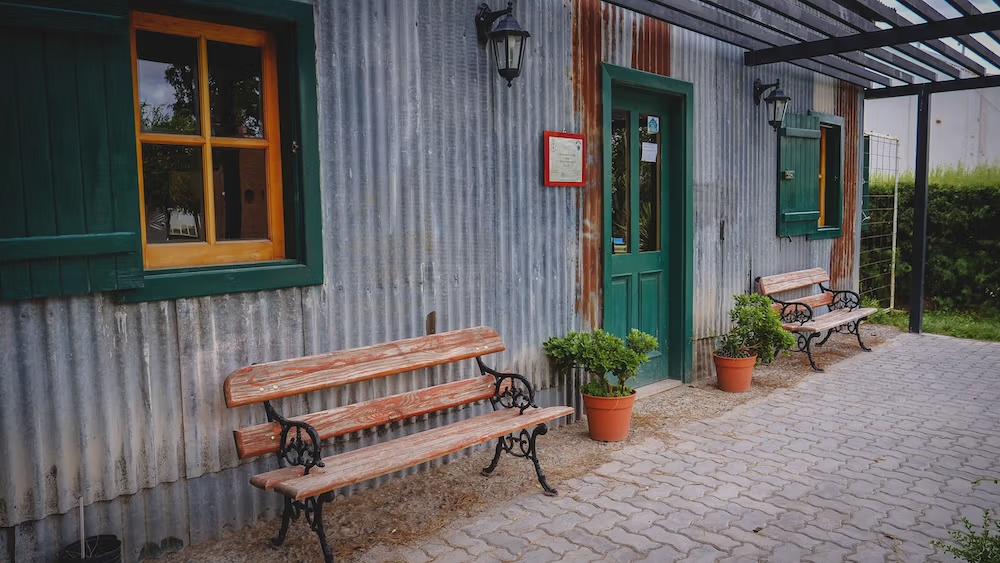
When Audrey and I rolled into El Chaltén this past January for a six-day hiking stint, we thought we had our logistics dialed in. We had just conquered the long transit down, and we arrived at the bus terminal at 1:45 PM. We were ready to drop off our laundry, grab a massive steak, and prep for the Laguna de los Tres trailhead. Instead, it was like a neutron bomb had gone off. The streets were desolate. I hauled three bags of dirty hiking socks to a lavandería just as the owner looked at the clock, made eye contact with me, and mercilessly pulled the wooden shutters down in my face.
Welcome to the Patagonian Siesta. It doesn’t just kill your afternoon; it violently re-arranges your entire logistical reality. If you are watching our YouTube channel, you see the sweeping drone shots of Mount Fitz Roy and the triumphant glacier treks. What you don’t always see on the flagship Samuel and Audrey network—but what we are going to dissect right here—are the microscopic friction points of simply trying to survive the town when everything shuts down.
The Patagonian Friction Matrix: Expectations vs. Ground Truth
| The Logistical Target | The “Brochure” Expectation | The Ground Truth & Cost | The Friction Point (Why You’ll Panic) | The “Nomadic Samuel” Fix |
| Same-Day Laundry (El Chaltén & Calafate) | Drop it off at lunch, pick it up fresh after your hike. | $12,000–$18,000 ARS (~$10–$15 USD) per load. | The 10:00 AM Cutoff: If you drop it off at 12:30 PM, it sits in a dark, locked room from 13:00 to 17:00. It won’t be dry by closing time. | Drop off at 09:00 AM sharp. Explicitly ask: “¿Estará listo para hoy a las ocho?” |
| Supermarket Runs (La Anónima, El Calafate) | Hit the store at 18:00 to grab provisions for tomorrow’s trek. | Open all day, but brutally understaffed in the late afternoon. | The Checkout Snake: Every tourist and local hits the store at 17:30 post-siesta. Lines stretch all the way to the yogurt aisle for 45+ minutes. | The Golden Hour: Shop between 14:00 and 15:30. The town is dead, and the aisles are eerily empty. |
| Post-Hike Dinner (Regional Steakhouses) | Crush a massive bife de chorizo at 19:30 because you are starving. | Premium steaks run ~$18,000 ARS (~$15 USD). Wait times at spots like Kuruma are 45–50 mins. | The 21:00 Hunger Wall: Kitchens literally do not fire up until 21:00. Show up at 19:30 and you’ll sit in a cold, empty room. | Hit the breweries (La Cervecería) at 17:00 for empanadas (~$1,500 ARS), then push your real dinner to 21:15. |
| Budget Groceries (Everywhere) | Grab cheap instant coffee and bread for the Airbnb. | The cheapest local brands are $2,000 ARS, but there is a hidden cost. | The “Sugar Premium”: Almost all budget instant coffee and bakery bread is heavily pre-mixed with sugar. | If you want black coffee or savory bread, you must hunt down and pay a premium for imported Nescafé. |
| Terminal Departures (El Chaltén) | Show your $50,000 ARS pre-paid online ticket and board the bus. | $2,000 ARS exact cash required at Window 7 before boarding. | The Terminal Tax Shakedown: They do not take cards. They do not take USD. They rarely have change. The town’s Wi-Fi drops constantly, so ATMs empty out. | Hide a stash of low-denomination pesos strictly for this tax, or watch your bus drive away. |
| The “Quick Walk” (Puerto Natales / Chaltén) | A pleasant 15-minute stroll through town to a café. | Taxis wait at the terminals and cost ~$5 USD. | The Elements: The Chaltén “Stairmaster” hill with a 20kg bag will destroy you. The Natales wind will bend your umbrella into a cage. | Stop trying to fight the wind and the gravel. Pay the $5 USD taxi fare. Save your knees for the glacier. |
| Pasta Night (Trelew & Eastern Hubs) | A cheap, comforting plate of Italian noodles. | Standard menu prices appear low until the bill arrives. | The Sauce Surcharge: Restaurants often charge one high fee for the naked pasta, and a completely separate, equally expensive fee for the sauce. | Read the fine print before ordering the Bolognese; your cheap meal just doubled in price. |
The Mid-Day Ghost Town Phenomenon
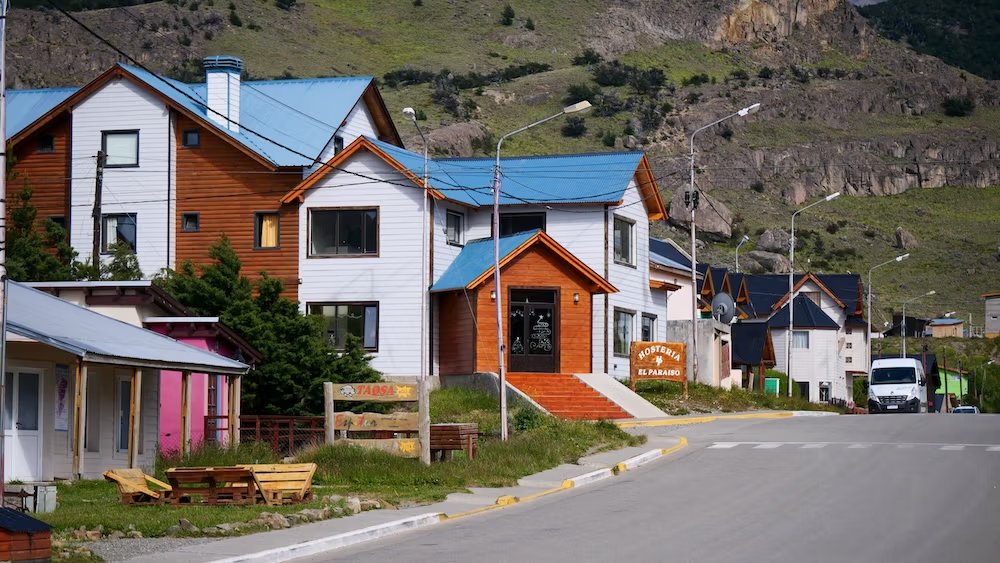
While “siesta” conjures up romantic images of a quick post-lunch snooze, in modern Patagonia, it is an immovable logistical wall. It varies wildly depending on the town’s size, its reliance on tourism, and whether you are standing in Argentina or Chile.
If you try to force your standard 9-to-5 North American or European schedule onto this region, you will end up wandering aimlessly in the brutal midday sun, clutching useless cash, while your stomach eats itself.
The 2026 Regional Shutdown Matrix
You cannot memorize one single timeline. You have to adapt to the specific municipality. Here is the exact ground truth for operating hours as of the 2026 travel season.
| Location & Context | The “Locked Out” Window | The Re-Opening Reality | Micro-Logistical Exceptions |
| El Chaltén (The Hiker Hub) | 13:30 – 17:00 | 17:00 – 21:00+ | Gear rental shops have adapted to late hikers; many stay open until 14:00. Bakeries strictly close at 13:30. |
| El Calafate (The Commercial Center) | 13:00 – 16:30 | 16:30 – 20:30 | The main drag (Av. del Libertador) has some souvenir shops ignoring the rule in Jan/Feb, but essential services do not. |
| Puerto Natales (The Chilean Wind Trap) | 13:00 – 15:00 | 15:00 – 20:00 | A shorter, sharper shutdown. Unimarc supermarkets are the rare exception and do not close. |
| Ushuaia / Madryn (The Coastal Outposts) | 12:30 – 15:30 | 16:00 – 21:00 | Banks shut at 13:00 and never reopen. Do not plan afternoon banking. Ecocentro (Madryn) doesn’t even open until 17:00. |
[Samuel’s Cash-in-Hand Warning]
Let’s talk about the El Chaltén Wi-Fi Blackout. The town’s internet grid goes down constantly. We spent an entire afternoon staring at a spinning credit card terminal just trying to pay for our hotel room. The siesta exacerbates this. If the Wi-Fi drops at 12:45 PM, the shop owner isn’t going to wait around to reboot the router; they are going to lock up until 17:00. If you don’t have physical pesos in your pocket, your transaction is dead. Furthermore, ATMs in Chaltén routinely run entirely out of cash by Saturday afternoon. Bring what you need from El Calafate.

The Reality Check: Why the Patagonian Siesta Exists (And Why You Can’t Travel-Hack It)
When you are shivering outside a locked bakery in El Chaltén at 14:00, clutching a handful of useless pesos while the wind tries to rip your jacket off, it is incredibly easy to feel frustrated. You might even wonder why a region famous for freezing wind chills and glaciers strictly observes a tradition originally designed to escape the sweltering midday heat of southern Spain.
It feels like a glitch in the matrix. But if you spend enough time living the Argentine life down here, you quickly realize the Patagonian siesta has aggressively evolved. It is no longer about thermoregulation; it is a fiercely protected economic boundary and a strict mechanism for human survival.
Before you get angry at the shuttered doors, let’s run the numbers and look at the cultural math.
The “Why It’s Closed” Socioeconomic Matrix
| The Tourist Assumption | The Local Reality (The “Quant” Breakdown) | The Hidden Logistical Toll |
| “They must be losing so much money by closing at peak hours.” | The Overhead Math: Running heating and electricity in Patagonia is astronomically expensive. For a family-run kiosko, the cost to keep the lights on from 13:00 to 17:00 far exceeds the trickle of revenue from the three tourists who didn’t pack a lunch. | It is cheaper for a business to completely power down for four hours than to pay staff to stand in an empty, heated room while 90% of the town is out hiking. |
| “They are just taking a four-hour nap because it’s tradition.” | The Social Marathon: Remember the “Hunger Timeline”? Dinners here peak at 21:30. Restaurant workers, guides, and shop owners are routinely working until midnight or 1:00 AM. | The 13:00 to 17:00 window is the essential bridge. It’s when kids finish their morning school shift and families eat their main meal together. Without it, the late-night culture physically collapses. |
| “I can just find the one place that stays open for digital nomads.” | The Supply Chain Reality: Even if a cafe wants to stay open, their suppliers do not. The delivery trucks for fresh bread, meat, and supplies operate strictly around the siesta schedule. | You can’t run a kitchen if the butcher is asleep. The entire logistical backbone of the town halts, forcing absolute compliance. |
As someone who is naturally more of a quant than an artist, it took me a long time to stop looking at the siesta as “lost hours” on a spreadsheet. When you first arrive, you desperately try to optimize your itinerary to outsmart the closures.
But you cannot bend the infrastructure of the global south to your will. The physical steel shutters slamming down on Avenida del Libertador aren’t meant to punish you; they are a boundary that separates the tourism machine from actual human life. The locals aren’t hiding from the heat—they are catching their breath before the brutal nighttime rush.
So, when the entire town shuts down, stop pacing the gravel sidewalks. Go buy a bottle of Malbec at 11:30 AM, retreat to your cabin by 13:00, listen to the wind rattle the windowpanes, and take a nap. You are going to need the energy for when the steakhouses finally fire up the wood grills at nine.
The “Same-Day” Laundry Mirage
Let’s revisit my humiliating shutter-in-the-face moment. In El Chaltén and El Calafate, almost every lavandería has a sign boasting “Same Day Service.” This is technically true, but only if you understand the siesta math.
The cutoff for same-day wash and fold is a hard 10:00 AM. If you roll off a morning bus and drop your clothes off at 12:30 PM, they are not getting washed. They will sit in a dark, locked room from 13:00 to 17:00. By the time the machines turn back on, your clothes will not be dry before the shop closes at 20:00. You will be stuck wearing crusty base layers for another 24 hours.
The 2026 Reality Check: Expect to pay between $12,000 and $18,000 ARS (roughly $10 to $15 USD) per load. Do not ask for rush service; just show up at 09:00 AM sharp and ask explicitly, “¿Estará listo para hoy a las ocho?” (Will it be ready today by 8?).

The Supermarket Crisis and the Sugar Premium
When the boutique shops and local grocers close their doors at 13:00, inexperienced travelers think they can just wait it out and hit the massive supermarkets at 17:30 when the town wakes up. This is a fatal logistical error.
The La Anónima Checkout Snake
In El Calafate, La Anónima is the primary grocery hub. Due to 2026 economic pressures and high operational costs, these major chains have drastically reduced their afternoon staffing. Yes, the doors are open, but there is a skeleton crew manning the registers.
If you walk down Avenida del Libertador at 15:00, it is a ghost town. It is a mile of closed steel shutters, zero shade, and relentless wind. But if you hit La Anónima at 17:30, alongside every single local who just woke up from siesta and every tourist returning from the Perito Moreno glacier, you will encounter the “Checkout Snake.” We once waited 45 minutes in a line that snaked all the way back to the yogurt aisle just to buy a loaf of bread and some ham.
The Fix: Shop at 14:00 to 15:30. While the rest of the town sleeps, the massive supermarkets are eerily empty. It is the golden hour for provisions.
The “Sugar-in-Everything” Quest
When you do finally get into the grocery store, prepare for a jarring culinary reality. In Argentine Patagonia, cheap calories are king. If you are looking to stock your Airbnb or hostel with basics, you will quickly discover the “Sugar Premium.”
Almost all of the affordable, local instant coffee is heavily pre-mixed with sugar. The standard bakery breads? Glazed or mixed with sugar. If you are a hiker craving black, unsweetened coffee to kickstart a 20-kilometer trek to Laguna Torre, you cannot buy the local $2,000 ARS jar. You have to hunt down the imported Nescafé or premium local roasts, which cost three times as much. Budget accordingly, or learn to love sweet coffee.
The Late Dinner Hunger Wall and Hidden Fees
The siesta doesn’t just pause the afternoon; it violently shoves the entire local schedule into the middle of the night. If you finish your hike at 18:00, your body is screaming for a massive, bloody steak and a wheel of provolone.
If you walk into a traditional parrilla (steakhouse) at 19:30, the host will likely laugh at you. The chairs are still upside down on the tables. The wood fires haven’t even been lit. “Kitchen opens at nine, chico.”
The Patagonian Hunger Timeline
You have to triage your post-hike hunger. You cannot wait for dinner. You must embrace the Happy Hour window.
| The Time | The Physical Reality | The Logistical Fix | 2026 Price Benchmark |
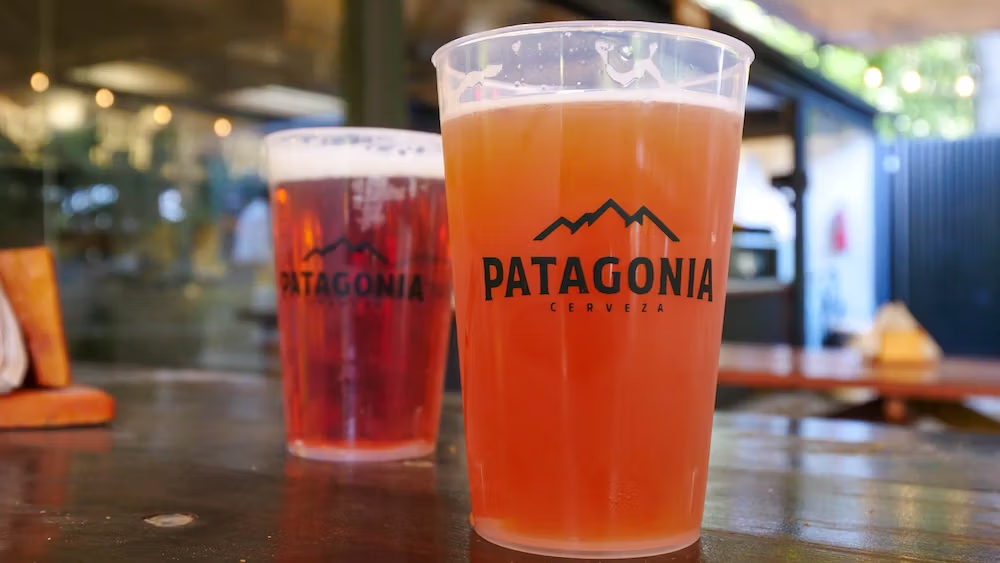
| 17:00 – 19:00 | Post-hike starvation. Main restaurants are closed or in “prep mode.” | The Brewery Window. Hit places like La Cervecería in Chaltén or Antares. Kitchens serve heavy appetizers (empanadas, fries) while you wait. | Pint of Craft IPA: ~$3,500 ARS. Empanada: ~$1,500 ARS. |
| 19:00 – 20:30 | The “Empty Room” phase. A few tourist traps open, zero atmosphere, cold dining rooms. | Shower and Rest. Do not force dinner here. Rehydrate, organize your gear, and take a nap. | N/A |
| 20:45 – 21:30 | The Sweet Spot. Kitchens are fully fired, locals start arriving, the room warms up. | The Steakhouse Assault. This is when you hit La Tapera or The Asadores. | Massive Ribeye (Bife de Chorizo): ~$18,000 ARS ($15 USD). |
| 21:30 – 23:00 | The Peak Rush. If you haven’t sat down, you are waiting an hour for a table. | The Patience Game. Expect long waits. At Kuruma, everything is made on the spot; expect a 45-50 minute wait for food after ordering. | N/A |
[The Foodie Reality Check: The Pasta Sauce Surcharge]
When you do finally sit down, especially as you travel further north or east in Patagonia (like Trelew or Puerto Madryn), beware of bizarre menu mechanics. We sat down for what we thought was a cheap Italian meal, only to realize that Argentine menus often employ a “Pasta Sauce Surcharge.” You pay one high fee for the naked pasta, and an entirely separate, equally expensive fee for the sauce. It literally doubles the price of the dish. Read the fine print before you order the Bolognese.
But when the timing aligns, the reward is primal. There is nothing quite like stumbling back from a brutal, wind-whipped trail, waiting out the siesta with a pint, and then aggressively devouring a thick, cheesy Patagonian pizza with your bare hands like a caveman. It is the ultimate hiker hunger payoff.
Transit Realities, The Elements, and The Terminal Tax
We need to talk about the physical toll of moving between these towns. When you are fighting the siesta, you are also fighting the infrastructure and the weather. Distances in Patagonia are deceptive. A “five-minute walk” on Google Maps does not account for the Patagonian wind.
The Umbrella Massacre and The Chaltén “Stairmaster”
If you want to make the Patagonian wind laugh, open a cheap umbrella. I learned this the hard way, clutching a twisted, useless cage of metal outside a bus terminal in the pouring rain. The wind here is a physical entity. It will push you backward. If you are caught out during the 14:00 siesta window in Puerto Natales, where the wind chill drops rapidly, you will find yourself huddled in the entryway of a closed bank just to survive the gusts because every coffee shop is locked.
In El Chaltén, the town is built on a massive incline leading up to the trailheads. If your hostel is in the “Upper Town” and you arrive at the bus terminal at the bottom of the hill, you are facing a 15-to-20 minute uphill slog. The pavement is mostly loose gravel, massive potholes, and broken tiles. Do not attempt this with a 20kg rolling suitcase, especially when the midday sun is beating down and the wind is howling.
The Fix: There are almost always local taxis idling at the terminal. It costs roughly $5 USD. It is the best money you will spend on your entire trip. Pay the man and save your knees for the glacier.
The 6:30 AM Zombie Mode and the Cargo Reality
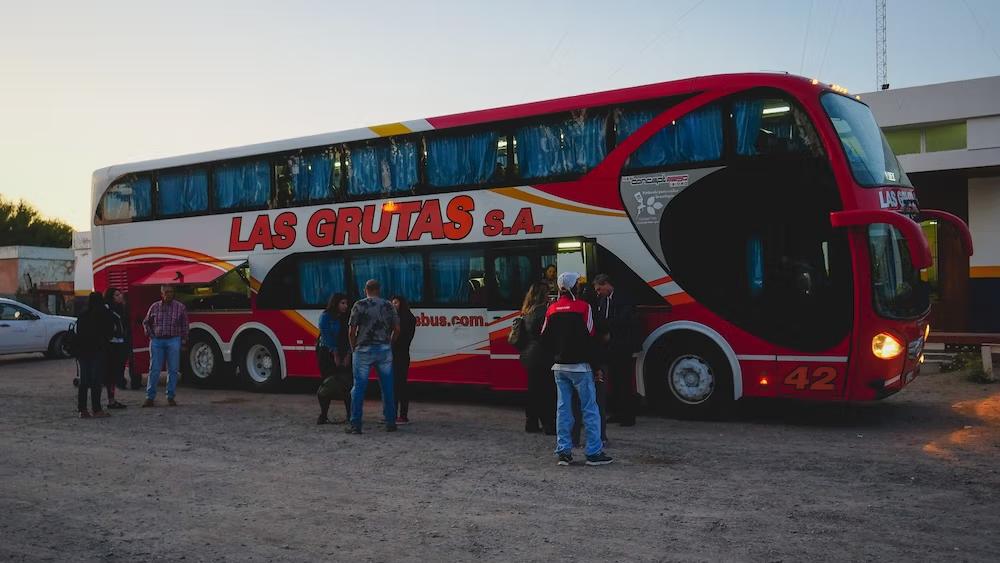
Transit schedules are unforgiving. You will inevitably face the 6:30 AM arrival. We once disembarked an overnight bus in Esquel at dawn. The terminal was freezing. The bathrooms had zero toilet paper (a chronic Patagonian terminal issue—always pack your own roll). We couldn’t check into our accommodation until 9:00 AM, and not a single cafe was open. We were stuck in absolute “Zombie Mode,” shivering on a curb because Audrey had optimistically packed for “Summer in Argentina,” forcing me to wear her oversized jacket just to stop my teeth from chattering.
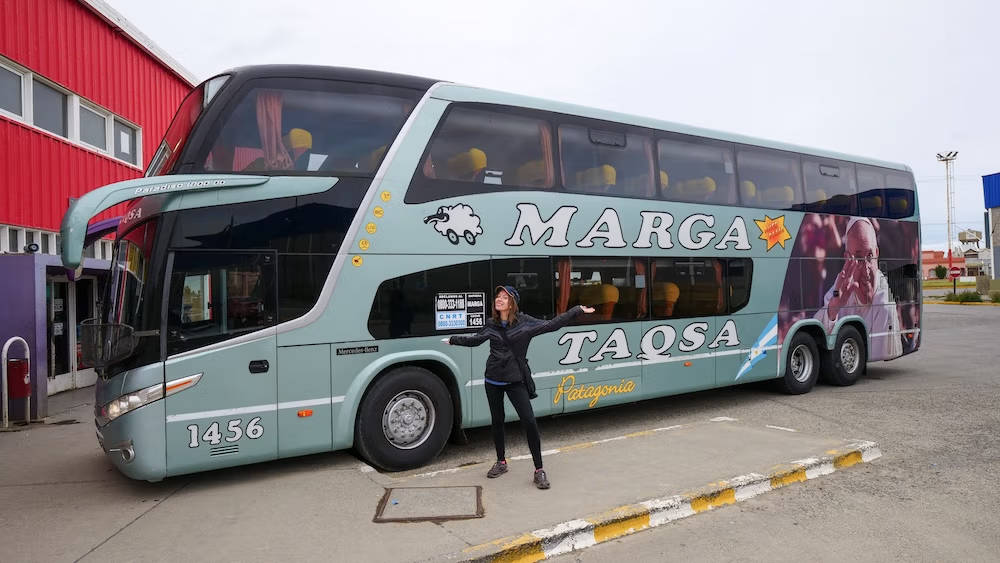
When you book these buses, you must understand how they operate. Pay attention to the encomiendas counter at the terminal. Passenger buses in Patagonia double as the region’s FedEx. Locals ship unaccompanied boxes, car parts, and massive parcels in the luggage holds of your tourist bus. This means boarding and disembarking takes forever. Factor this friction into your schedule.
The Terminal Tax Shakedown
This is the ultimate micro-logistical trap that generic AI guides completely miss.
Let’s say you are leaving El Chaltén. You paid $50,000 ARS (about $38 USD) online for your bus ticket to the El Calafate airport. You smugly arrive at the terminal ten minutes before departure. You go to board the bus, and the driver stops you.
You must pay the “Terminal Usage Tax.”
You are directed to Window 7. The fee is $2,000 ARS. The catch? The agent does not take credit cards. They do not take US Dollars. They do not have change for large bills. They require exact, physical Argentine pesos. If you spent your last pesos on an empanada thinking you were leaving the country, you are completely screwed. You will watch your bus drive away while you frantically try to find an ATM that isn’t empty. Keep a hidden stash of low-denomination pesos strictly for terminal taxes.
[Samuel’s Logistical Confession: The 4-Hour Misread]
Do not trust your memory when it comes to bus schedules. In El Calafate, Audrey and I were enjoying a leisurely “work from the hotel” morning. We asked for late checkout. We were sipping coffee, fully convinced our single daily bus out of town left at 4:00 PM. I casually glanced at the ticket at 11:46 AM. The bus left at 12:00 PM. The ensuing panic—throwing laptops into bags, sprinting down the hallways, screaming for a taxi—is a mistake you only make once. When there is only one bus a day, check the ticket three times.
How to Actually “Siesta-Proof” Your Itinerary
So, if the towns shut down, the supermarkets are chaotic, the laundry is locked hostage, and the wind is trying to kill you, what do you actually do between 13:00 and 17:00?
You have to engineer your itinerary to bypass the municipal limits. Here is how you hack the schedule.
The Siesta-Proof Survival Guide
| The Activity | The Geographic Location | Why It Bypasses the Siesta | The 2026 Logistics |
| The Glaciarium | El Calafate (6 km outside town) | It is a massive, climate-controlled indoor museum that thrives while the town sleeps. | Tickets are $22,000 ARS (~$16 USD). They run a free hourly shuttle bus from the town center right through the 13:00–16:00 window. |
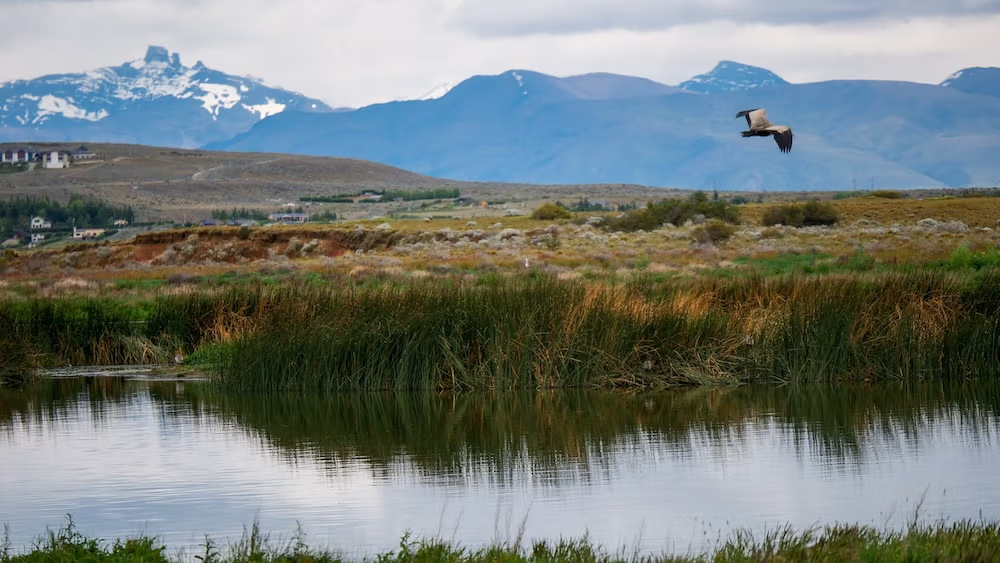
| Laguna Nimez Reserve | El Calafate (Edge of town) | Wildlife doesn’t take a nap. This bird sanctuary is wide open. | Entry is $12,000 ARS (~$9 USD). It is flat, highly walkable, and the flamingos are incredibly active mid-afternoon. |
| The “Post-13:00” Trailhead | El Chaltén (Los Cóndores or Mirador Las Águilas) | By starting a short, 2-hour hike right as the town shuts down, you utilize the dead time. | The trails are free. You hike from 13:30 to 16:00. You return to town exactly as the happy hour breweries are unlocking their doors. It is the perfect loop. |
The “What We Missed” Alternative Routes
In our upcoming destination guides, we will be diving deeper into the coastal realities of Puerto Madryn and Ushuaia, which operate on an entirely different rhythm. If you are heading east to the coast, the siesta rules apply to the wildlife tour operators as well.
If you plan to rent a kayak in Puerto Madryn, do not roll down to the beach at 14:30. The stands will be packed up. Furthermore, major cultural hubs like the Ecocentro don’t even open their doors until 17:00 on most days. If you try to string together a morning beach walk and an afternoon museum visit, you will hit a three-hour dead zone where you have no choice but to sit on the sand.

The Final Verdict: Embracing the Friction
Traveling through Patagonia is an exercise in surrender. You cannot bend the infrastructure to your will. The Wi-Fi will drop. The A-frame cabin you rented will have stairs so steep you’ll wipe out (trust me, taking a massive tumble down a tiny rustic loft staircase quickly shatters the “cozy aesthetic” of booking sites). The wind will destroy your gear, and the siesta will lock you out of your lunch.
But that friction is precisely what makes the destination so spectacular. The logistical hurdles act as a natural filter. By the time you are sitting in a warm, wood-paneled parrilla at 21:45, drinking a heavy Malbec and carving into a steak after a 20-kilometer hike, you realize that you didn’t just visit Patagonia—you survived it.
Pack your toilet paper, hoard your small-denomination pesos, double-check your bus tickets, and whatever you do, do not try to drop your laundry off at noon.
For more raw, un-sugarcoated realities of the road, make sure to check out our deep-dive video on this topic over on our YouTube channel, and stay tuned for the next installment of our 2026 Argentina series.
The “Siesta Proof” FAQ: Your Burning Patagonia Questions Answered
Is it possible to find any restaurants open during siesta in El Chaltén?
Basically, not many. Aside from a few bakeries that might linger until 13:30 or a brewery that opens early for the “after-hike” crowd around 15:00, the village effectively goes into hibernation. If you didn’t plan ahead, you’ll be doing what we did: staring at closed wooden shutters and contemplating a very sad lunch at the local gas station (our Dolovan experience). Pack a sandwich from the panadería before noon, or prepare to wait until 17:00 for the town to wake back up.
Do supermarkets like La Anónima also close for siesta?
Nope. The massive “Supermercados” in larger hubs like El Calafate and Puerto Natales generally stay open all day. However, don’t mistake “open” for “efficient.” They operate with a skeleton crew mid-afternoon, and if you show up during the 17:30 re-opening rush, you’ll be stuck in a checkout line that snakes past the frozen peas and into the next zip code. Shop at 14:00 while everyone else is napping for a ghost-town experience.
Can I pay the “Terminal Usage Tax” with a credit card?
Never. This is the ultimate “gotcha” for travelers leaving El Chaltén. You’ll have your $50,000 ARS ticket ready, but the bus driver won’t let you board until you show a receipt for the $2,000 ARS terminal tax paid at Window 7. They strictly require physical Argentine pesos—no cards, no USD, and they rarely have change for large bills. Keep a “shakedown stash” of small notes in your pocket.
Is the tap water safe to drink in Patagonian towns?
Absolutely. In places like El Chaltén and El Calafate, the tap water is some of the freshest you’ll ever taste, often coming directly from glacial runoff. We’ve been drinking it for years without an issue. Save your pesos (and the planet) by skipping the overpriced plastic bottles at the kiosk and refilling your own at the hostel.
Should I book my bus tickets in advance or at the station?
Depends. If you are traveling in the peak months of January or February, you are playing a dangerous game by winging it. Buses between El Calafate and El Chaltén fill up fast, and since there are only a few departures a day, a sell-out can strand you for 24 hours. We’ve seen travelers miss their flights because they thought they could just “show up” and buy a seat. Book online via Plataforma 10 or Chaltén Travel to sleep easier.
Is there reliable Wi-Fi in the hiking hostels?
Hardly. In El Chaltén especially, the internet is more of a suggestion than a utility. The entire town shares a fragile satellite link that crashes whenever a cloud looks at it funny. We spent an entire afternoon unable to even process a credit card payment at our hotel because the grid was down. If you have “remote work” to do, get it done in El Calafate before you head into the mountains.
Do I really need to carry my own toilet paper?
100%. Patagonian bus terminals and long-haul buses are notorious for running out of the essentials. Arriving in Esquel at 6:30 AM in “Zombie Mode” only to find a dry dispenser is a special kind of travel trauma. Keep a roll (or at least a pack of tissues) in your daypack at all times. It’s the unofficial currency of stress-free Patagonian travel.
Are the trails open during the siesta hours?
Always. The mountains don’t have shutters. While the town is “locked out” from 13:00 to 17:00, the trails are wide open. In fact, starting a shorter hike like Los Cóndores at 13:30 is the ultimate pro-move. You’ll be on the mountain while the shops are closed, and you’ll descend just as the craft breweries are unlocking their doors for happy hour.
Project 23 Argentina: This guide is also available in Spanish. [Lea la versión en castellano: El problema de la siesta en la Patagonia — Cuándo cierra todo y qué hacer]