
Ten days in Patagonia is enough time to have a brilliant trip. It is also enough time to make yourself miserable.
The trouble begins when you place El Calafate, El Chaltén, Bariloche, Puerto Madryn and Ushuaia beneath one big Patagonia label and assume they can be linked like neighbourhoods in the same city. They cannot. Airports, long buses, hotel changes, weather and tired legs quickly consume the time that looked so generous on paper.
Audrey and I travelled through Argentine Patagonia much more slowly. We spent full days on buses, arrived in towns too late to do anything meaningful and learned that even a relatively straightforward transfer could affect the next morning. We also stayed long enough in El Calafate and El Chaltén to understand why these two bases fit together so well.
If I had ten calendar days now, I would spend four nights in El Calafate and five nights in El Chaltén.
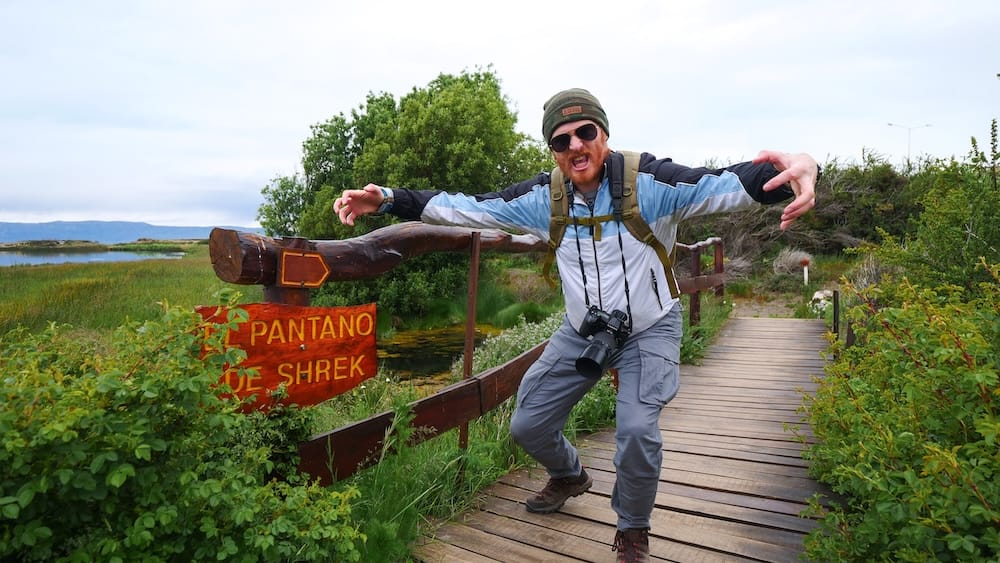
El Calafate would provide the glacier experiences: Perito Moreno’s walkways plus either a full-day navigation or an ice trek. El Chaltén would provide four full days of hiking flexibility, allowing the weather and my legs—not an overconfident spreadsheet—to determine the order.
The restraint is what makes the itinerary work. I would rather experience one coherent part of Patagonia properly than collect four famous place names while dragging my luggage between them.
Once your travel dates are fixed, check both accommodation bases together. You can compare current places to stay in El Calafate and then check El Chaltén accommodation for the same dates. Securing the nine nights as one sequence is more important than chasing one attractive hotel while leaving the other base unresolved.
Start by Counting the Ten Days Honestly
This itinerary assumes ten calendar days and nine nights.
Day 1 is the arrival day in El Calafate. Day 10 is the departure day. One of the eight days between them is used to move from El Calafate to El Chaltén.
That leaves seven days for major experiences, weather adjustments and recovery.
It is tempting to label Day 1 “El Calafate” and immediately assign it a glacier excursion. In reality, the airport is roughly 23 kilometres outside town. After landing, you still need to collect your luggage, meet the transfer, reach the accommodation, check in and eat.
Audrey and I have had many travel days that looked useful during planning and became useless in practice. On one journey to El Calafate, we mistakenly thought our bus departed at four in the afternoon. It actually left at noon.
Our relaxed morning became a scramble to finish work, pack and reach the terminal. A road delay followed, and by the time we arrived in El Calafate, the day was good for dinner, checking into our cottage and organizing excursions. That was about it.
Treat Day 1 the same way. Arrive, settle in and prepare for the trip instead of wagering an expensive booking on a perfect flight connection.
This route is best suited to the broader September-to-April visiting period. That does not guarantee summer conditions or clear trails. Snow can linger during the shoulder months, and Patagonia weather has little interest in respecting anyone’s itinerary.
Winter requires a different activity mix because of shorter daylight, snow, ice, reduced services and changing access conditions.
Why I Would Choose El Calafate and El Chaltén
El Calafate and El Chaltén perform different jobs within the same corner of Santa Cruz Province.
El Calafate is the operational base for the southern zone of Los Glaciares National Park. This is where you organize Perito Moreno visits, glacier cruises, ice trekking and estancia excursions.
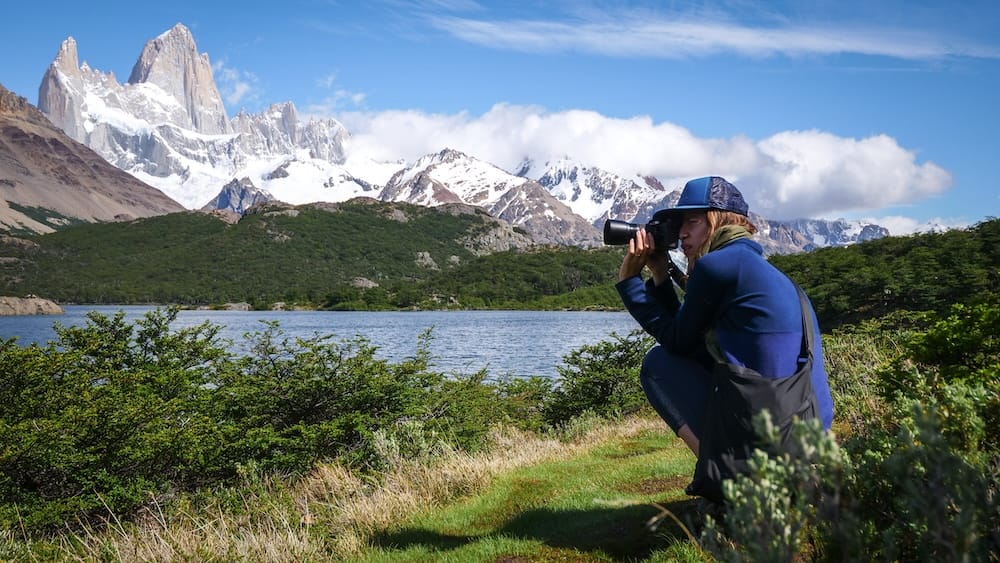
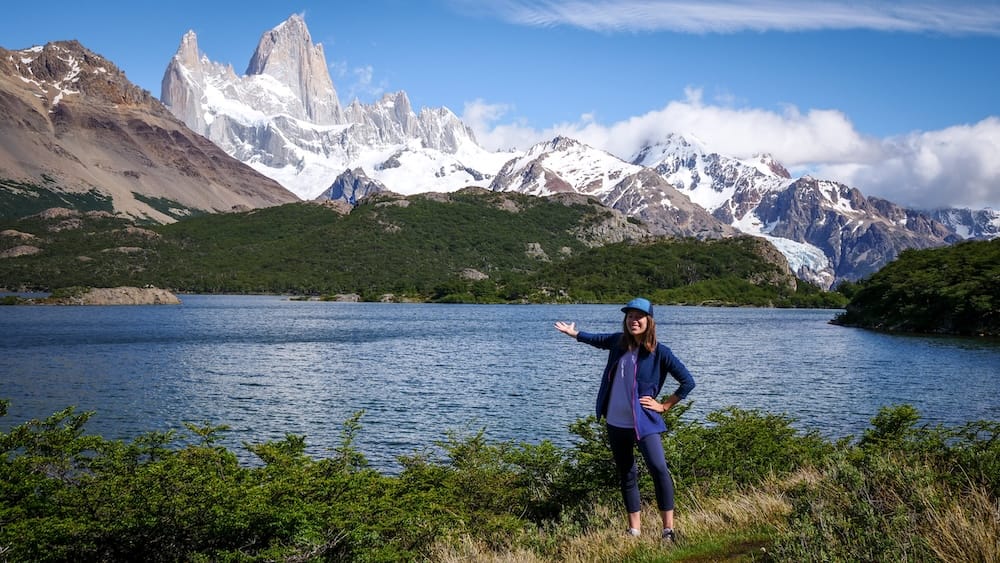
El Chaltén is the hiking base for the park’s northern zone. Once you arrive, the important decisions concern trail conditions, weather windows, recovery and how much food you remembered to pack.
The towns are separated by roughly 200 kilometres of paved road. Scheduled buses usually take around three hours, although stops and road conditions can extend the journey.
That is long enough to make Day 5 a genuine transfer day, but short enough to combine the towns without taking another flight.
Bariloche, Puerto Madryn and Ushuaia are not convenient additions to this itinerary. They belong to other Patagonia trips.
We loved the lakes and mountain scenery around Bariloche, the coastal wildlife around Península Valdés and the landscapes of Tierra del Fuego. Each region can easily fill several days.
Audrey and I reached Ushuaia after a long bus-and-ferry journey that left us groggy, stiff and in no condition to launch straight into sightseeing. The trip made sense within a much longer journey. I would never spend that much of a ten-day itinerary simply reaching another famous name on the map.
Domestic flights can make broader routes possible. They still introduce another checkout, airport transfer, luggage drop, flight and arrival process. That time has to come from somewhere.
Here, it would come from the glaciers, the hiking buffer or the recovery day. I would keep all three.
Where to Stay in El Calafate
For this itinerary, central El Calafate is the most useful default.
Staying near the centre gives you easier access to restaurants, supermarkets, tour offices and the bus terminal. It also reduces pickup confusion before early excursions.
Some activities collect directly from hotels with staffed receptions. Apartment guests may instead be assigned a nearby meeting point. A listing that says “pickup included” does not necessarily mean a vehicle will appear outside every rental apartment in town.
That matters when you are leaving early for Perito Moreno or returning late from a full-day navigation. Walking to dinner after a long excursion is far more appealing than arranging another transfer because your scenic hotel sits beyond the practical edge of town.
A current central option is Patagonia Queen Hotel Boutique on Booking.com. It represents the full-service category: a proper reception, breakfast and a location suited to travellers who expect to spend their days away from the hotel.
The exact property is less important than the combination of location, sleep and morning efficiency.
Do not choose a building from photographs alone
Audrey and I stayed for about a week in an A-frame cottage in El Calafate. It gave us space to work, basic cooking facilities and a degree of independence.
It also sounded as though it might disassemble itself every time the wind became serious.
The upper floor rattled so aggressively that we eventually moved our bedding downstairs. The cottage was charming in daylight, but charm became less persuasive when we were trying to sleep before another full day outside.
I am not warning against cabins or A-frames. I am warning against assuming that a picturesque structure is automatically comfortable in Patagonia wind.
Before booking one, I would look for evidence of solid construction, proper heating and recent confirmation that the bedrooms remain quiet during poor weather.
When a scenic hotel makes sense
El Calafate also has lakefront and peripheral properties where the setting is the main attraction. These can be worthwhile when the hotel replaces the convenience you lose by staying outside the centre.
Design Suites Calafate is a current example of this category and advertises transportation into town. For any similar property, I would confirm:
- Whether your chosen excursions pick up there.
- How often the town shuttle actually operates.
- Whether dinner is available after late returns.
- How much flexibility you lose when you want groceries or a casual meal.
- Whether the building is well protected from the wind.
A beautiful view can improve the stay. It should not create a transport problem every time you need food.
Apartments are useful for travellers who want a refrigerator, more space and the ability to prepare simple meals. Check the kitchen carefully. Some “kitchenettes” amount to little more than a kettle, a microwave and the optimistic suggestion that cooking might occur.
My preference would remain central El Calafate unless a scenic property offered enough meals, transport and comfort to make its location genuinely easy. Travellers who need a different budget or accommodation format can compare the wider El Calafate hotel and apartment inventory.
Which El Calafate Experiences Should You Book?
El Calafate has more activities than this itinerary can sensibly hold.
I would give the days a clear order of importance:
- Perito Moreno’s walkways.
- One premium glacier experience.
- An estancia visit only when it matters more to you than keeping a buffer day.
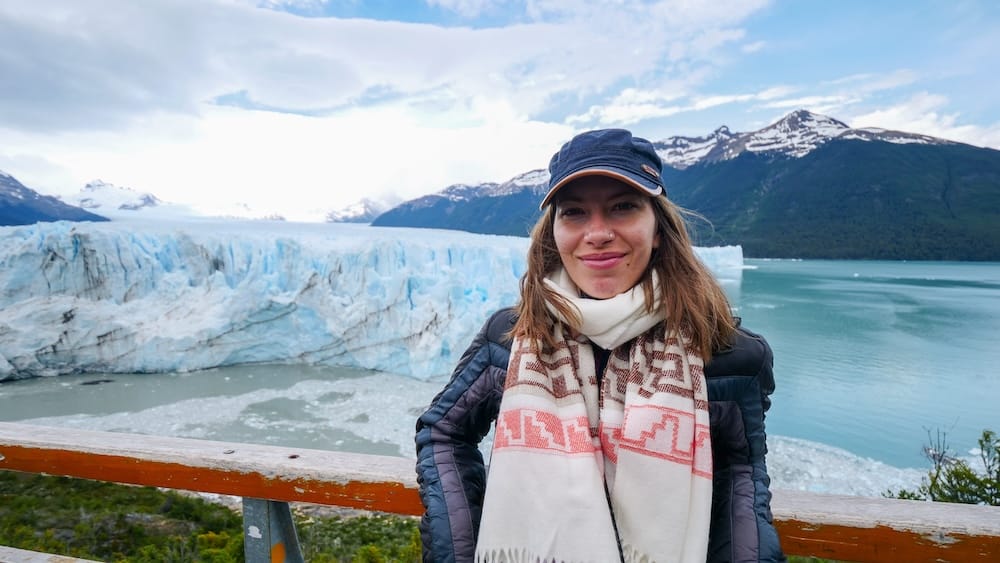
Perito Moreno’s walkways deserve a full day
The walkways are not the budget substitute for a glacier cruise or ice trek. They are one of Patagonia’s best experiences on their own.
Audrey and I spent hours moving through the different circuits, repeatedly stopping as the glacier changed shape and perspective. From some viewpoints, Perito Moreno filled almost the entire landscape. From others, we could watch the ice face closely and wait for the cracking sound that sometimes preceded a piece breaking away.
My verdict at the time was simple: 10 out of 10 for wow factor.
The walkways can be reached by rental car, scheduled transport, remise or organized excursion. Travellers who would rather have the transport and timing handled can check this Perito Moreno walkway tour with an optional boat ride on GetYourGuide.
That short ride is not the same as a full-day navigation. It adds a water-level view of Perito Moreno but does not take you through the wider lake system to several glacier sectors.
The walkway area has an accessible ramp circuit, an upper parking area for travellers with reduced mobility and wheelchair support, although not every circuit is equally accessible. Confirm the current arrangements directly before travelling.
There has also been an important planning change. Since June 1, 2026, Los Glaciares National Park has charged admission in both its southern and northern zones.
At the time of writing, general admission is ARS 50,000, with different categories and exemptions. A second admission to the same park within 72 hours receives a 50 percent discount under the current rules. Check the current Los Glaciares admission rules before paying because fees and ticket products can change.
Give the walkways most of the day. This is not something I would squeeze between an airport arrival and dinner.
Glacier cruise or ice trek?
The second glacier day should add something Perito Moreno’s walkways do not already provide.
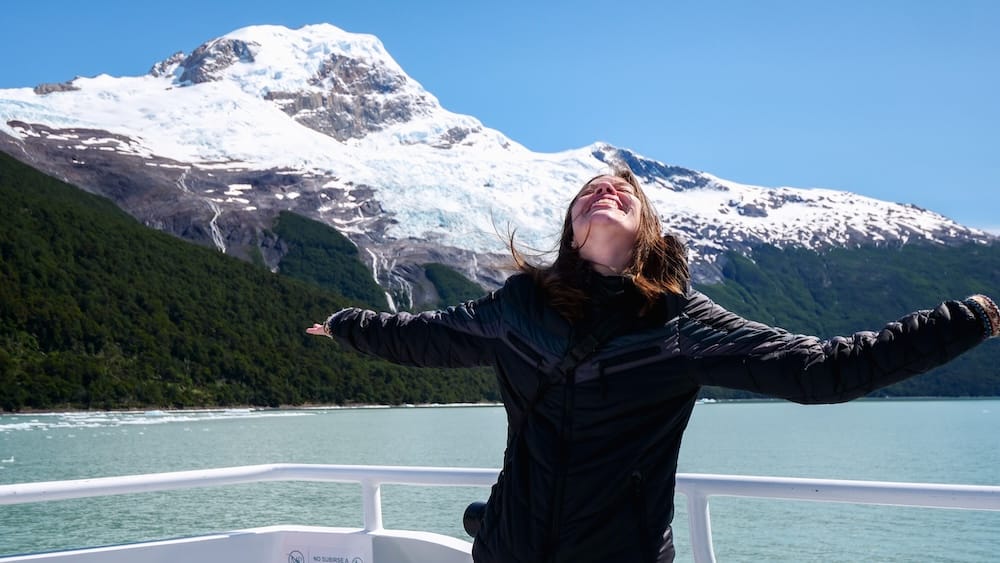
A full-day navigation emphasizes scale. The cruise Audrey and I took involved an early start, hours on the water and views of several glacier sectors. The experience felt completely different from standing opposite Perito Moreno.
At one point, I was genuinely speechless, which is not my normal operating condition.
Current full-day navigations can occupy ten to twelve hours once the transfers and any walkway extension are included. Transportation, meals, premium seating and extensions may be priced separately, and park admission is generally not included. One booking option that closely matches this style of day is the Gourmet Glacier Cruise with the Perito Moreno walkways on GetYourGuide.
This is the option I would personally choose again. It revealed a much larger glacial landscape while asking considerably less from my legs.
Ice trekking serves a different priority. I wanted to try it during our visit, but we could not secure a suitable departure. I therefore cannot tell you what it feels like to walk on the glacier from personal experience.
The current Minitrekking programme is roughly a ten-hour outing and includes limited time at the Perito Moreno walkways. That overlap is worth considering. A traveller choosing Minitrekking may not need another long walkway day unless having unhurried time there is a priority.
Eligibility also matters. Current operator rules limit Minitrekking to participants aged 8 through 65 and Big Ice to ages 18 through 50, alongside medical and physical restrictions. Those conditions can change and should be checked directly before booking.
Travellers for whom walking on the glacier is the defining experience can check current Minitrekking dates and participation details on GetYourGuide.
The decision comes down to this:
Choose a full-day cruise when you want several glacier views, a day on the lake and a less physically demanding experience.
Choose Minitrekking when walking on the glacier is one of the main reasons you are travelling to Patagonia and you meet every participation requirement.
I would not book both by default. Ten days require choices, and both experiences consume nearly an entire day.
Does an estancia earn Day 4?
A Patagonia estancia introduces another side of the region: ranch landscapes, sheep-farming traditions, horses, grilled meat and huge open spaces.
Audrey and I visited Nibepo Aike on an excursion that included pickup, a lengthy drive, time around the property and a generous meal. It gave us a welcome change from consecutive glacier days.
It was also a substantial outing.
The current country-day format involves about five hours at the estancia plus approximately two and a half hours of transfers. Meals, transportation and horseback riding depend on the selected package, and the main season currently runs from mid-September to mid-May.
I would book it when rural Patagonia is one of your central interests. A current commercial option is the Nibepo Aike ranch experience with horseback riding on GetYourGuide; check the selected package carefully because the inclusions can differ.
Otherwise, keep Day 4 available. It can absorb a weather-related change, provide some recovery or simply prevent the first half of the itinerary from becoming four consecutive days of alarms, pickups and packed schedules.
The estancia is the first major experience I would remove. I would not cut Perito Moreno, the premium glacier day or El Chaltén’s weather flexibility to preserve it.
Day 5: Moving to El Chaltén
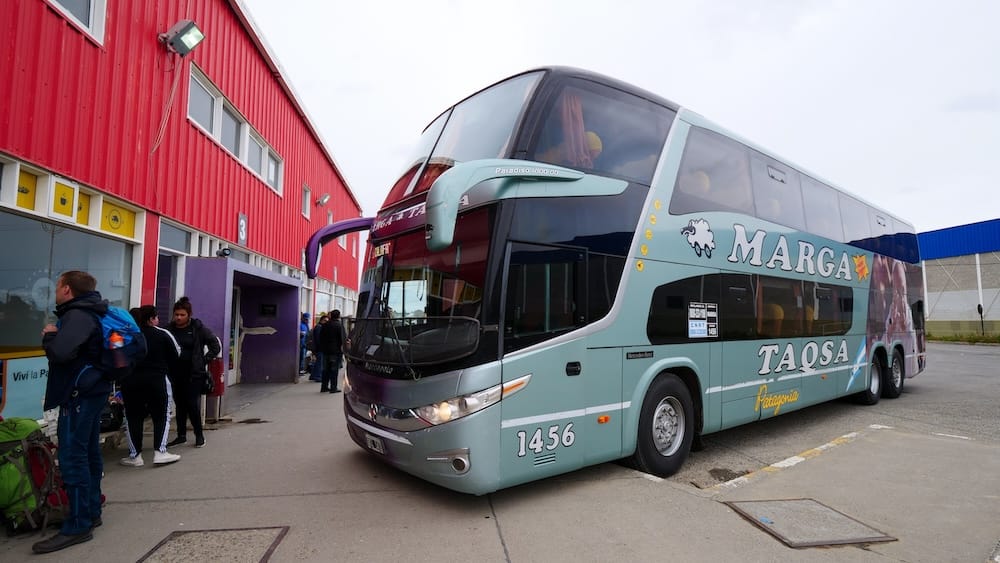
Scheduled buses connect El Calafate and El Chaltén throughout the year, with additional departures normally appearing during the main visitor season.
The drive generally takes around three hours. The full base change takes longer.
You still need to check out, reach the terminal, load the luggage, wait for departure, arrive in El Chaltén and get to the next accommodation. That makes Day 5 useful but incomplete.
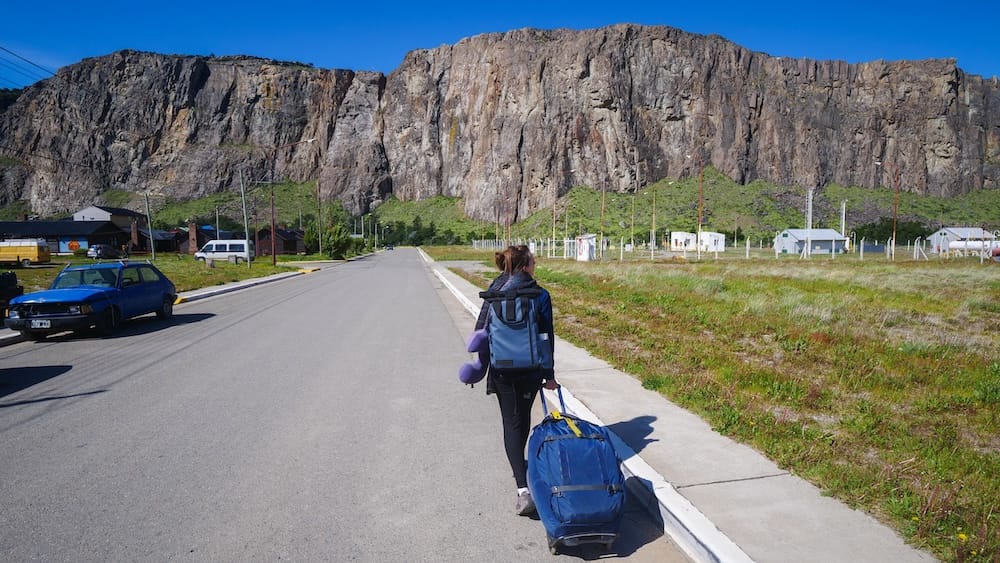
Audrey and I stayed close enough to El Chaltén’s bus terminal to walk there with our bags. It was a small luxury after several hours in transit, and it immediately made me appreciate the value of choosing accommodation around arrival logistics.
I would take a morning or midday bus. Arriving with daylight leaves time to check in, buy food and locate the beginning of the trails. A short viewpoint walk may fit, but I would not assign Day 5 one of the major hikes.
Some services connect El Calafate airport directly with El Chaltén. More importantly for this itinerary, certain return buses stop at the airport on the way from El Chaltén.
That can preserve the final night in El Chaltén and eliminate another hotel change. It only works when the bus reaches the airport with a conservative margin before the flight. Check the current El Calafate–El Chaltén bus timetable against the exact flight before relying on the connection.
A connection that looks clever on paper and leaves no room for a delayed bus is not clever. Return to El Calafate on Day 9 when the flight leaves too early.
Where to Stay in El Chaltén
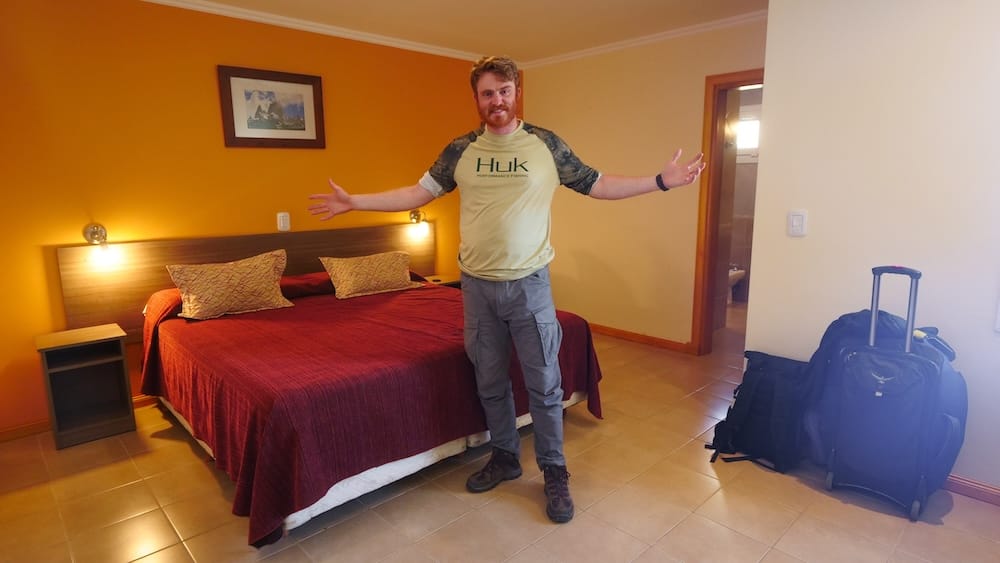
El Chaltén is small enough that choosing the wrong side of town will not destroy the trip. Location still affects luggage, breakfasts, groceries and the first kilometre of a long hiking day.
I would choose among three accommodation styles. You can also compare the full range of El Chaltén hotels and apartments on Booking.com before deciding whether trail access, terminal access or self-catering matters most.
Central and close to the bus terminal
This is the strongest all-purpose option.
A central stay makes arrival and departure easier with luggage while keeping bakeries, restaurants and groceries nearby. It also works when you do not yet know which major hike will receive the best weather day.
Our lodging was close to the terminal, and we could walk there after arriving. More importantly, breakfast started early enough for us to eat before setting out.
That sounds like a small detail until you are preparing for a 20-plus-kilometre hike before sunrise.
Chaltén Suites Hotel represents this balanced central category, keeping the terminal and both major trail directions within practical reach.
Nearer the Fitz Roy side of town
Travellers who consider Laguna de los Tres the unquestioned priority may prefer the northern side of El Chaltén.
Destino Sur Hotel & Spa de Montaña represents the fuller-service option in this area and advertises an early breakfast. The benefit is not that a hotel can make the Fitz Roy hike short. It cannot. The advantage is having breakfast handled and beginning from the correct side of town with fewer morning decisions.
El Chaltén remains compact, so I would not pay an enormous premium merely to remove part of the town approach. Service and sleep still matter more than shaving off a modest amount of walking.
A self-catering apartment
An apartment can be the most useful format when you want control over breakfasts, packed lunches and dinner after a tiring hike.
Senderos Aparts & Suites offers equipped units alongside breakfast, while Andino Aparts represents a more independent option near the Laguna Torre side.
Read the facilities carefully. Confirm whether the unit has a real stovetop, refrigerator, cookware and enough space to prepare food. Check stairs, luggage storage and whether breakfast is served early enough to be useful.
During our visit, grocery selection was limited and the internet was painfully weak. Conditions may have improved, but I would still arrive prepared. Buy trail food before the morning of a major hike and download anything essential rather than depending on a flawless connection.
My default would be central accommodation with an early breakfast. I would move closer to a particular trail only when that trail clearly controlled the stay.
Do Not Book El Chaltén’s Weather in Advance
El Calafate rewards advance reservations. El Chaltén rewards leaving the exact sequence open.
You can decide that Laguna de los Tres and Laguna Torre are your priorities. You should not insist months beforehand that they must happen on Days 6 and 7.
The forecast may disagree. Your legs may also have opinions.
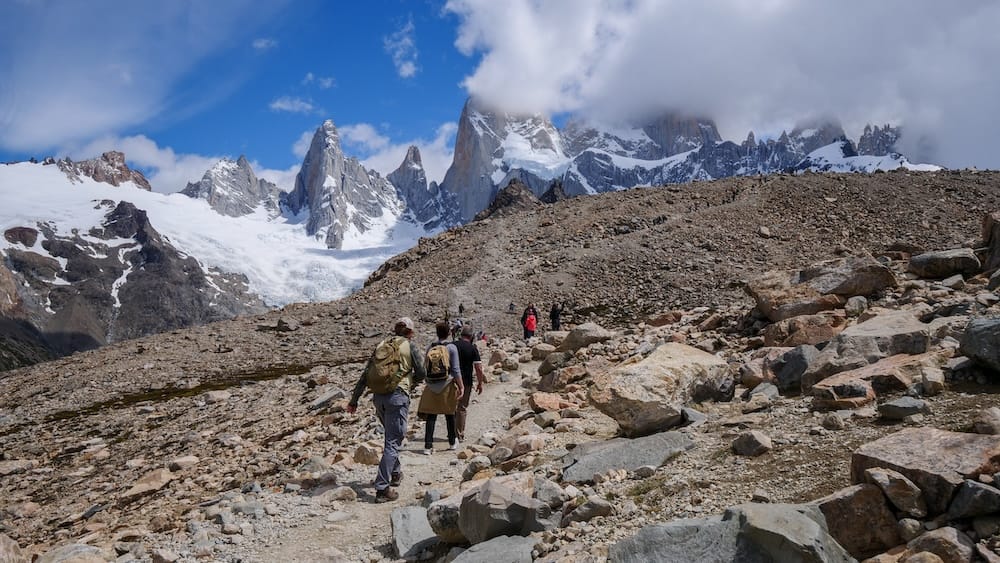
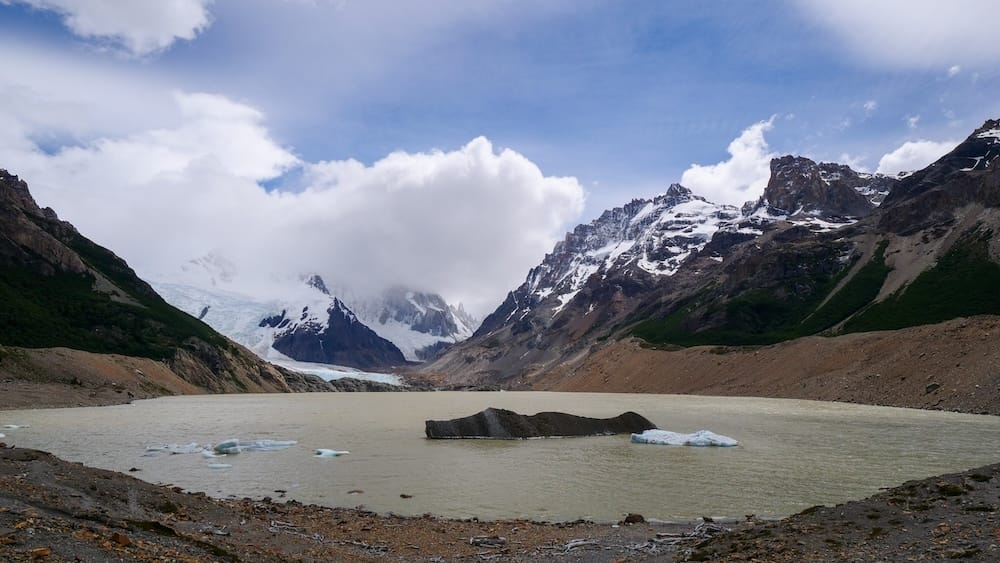
Laguna de los Tres is the main hiking day
The Laguna de los Tres route is approximately 25 kilometres and usually requires eight to nine hours. It is officially classified as medium-high difficulty, with the steep final section providing the hardest part.
Our day exceeded 20 kilometres and felt substantial from beginning to end.
We had left our trail map in the hotel, which added some unnecessary confusion while locating the route. I then ate most of my sandwich far too early, displaying the kind of food discipline for which I am not famous.
The final ascent was steep, rocky and exhausting. Reaching the lagoon was spectacular, but we still had to walk all the way back to town. The descent did not come with a sedan chair, despite how much I would have appreciated one.
By the time we returned, our feet and legs were finished.
That does not mean every traveller needs several days to recover. Strong hikers may feel good the next morning. Others will want coffee, laundry and the shortest available viewpoint.
Give Laguna de los Tres the best weather window, start early, carry enough food and avoid placing it immediately before a fixed early departure.
Laguna Torre is still a major hike
Laguna Torre is often presented as the gentler alternative. It has a less punishing profile, but the route still covers approximately 18 kilometres and can require six to eight hours.
Audrey and I did not attempt it immediately after Fitz Roy. Poor weather delayed us, and our legs were still recovering several days later.
During the hike, we had the option to continue farther. We chose not to. Finishing the day in decent shape mattered more than adding distance for the sake of saying we had done it.
That is how I would approach the second major hike in a short itinerary.
Laguna Torre belongs on the next suitable day, not automatically on the morning after Laguna de los Tres.
A flexible day still has a job
When the weather is poor or your legs need time, there are shorter outings around El Chaltén.
Chorrillo del Salto works as a lower-effort excursion. The Mirador de los Cóndores and Mirador de las Águilas viewpoints provide shorter walks close to town. You can also use the time to dry equipment, buy food, rest and wait for a better window.
This is not dead space in the itinerary.
The flexible day protects the hike that may have been one of your main reasons for travelling to Patagonia. Without it, one bad forecast can remove Fitz Roy entirely or force you onto the trail in conditions that make the day less enjoyable.
Park admission now applies in the northern zone as well as around Perito Moreno. Check the live ticket system when planning several El Chaltén days, including any current multi-entry products or discounts.
Do not let a ticket discount decide when you hike. Weather and safe trail conditions come first.
My 10-Day Patagonia Itinerary
This is the route I would book now:
| Day | Where to sleep | Main plan | What should be reserved |
|---|---|---|---|
| 1 | El Calafate | Arrive, transfer to town, check in and organize the trip | Accommodation and airport transfer |
| 2 | El Calafate | Perito Moreno walkways | Transport or guided excursion; park entry |
| 3 | El Calafate | Full-day glacier cruise or Minitrekking | Premium glacier experience |
| 4 | El Calafate | Buffer, recovery or Nibepo Aike | Estancia only when it is a priority |
| 5 | El Chaltén | Bus transfer, groceries and an easy arrival afternoon | Bus and accommodation |
| 6 | El Chaltén | Best-weather major hike | Park entry; exact trail remains flexible |
| 7 | El Chaltén | Recovery, shorter walk or second major hike | Leave open |
| 8 | El Chaltén | Laguna de los Tres, Laguna Torre or weather replacement | Leave open |
| 9 | El Chaltén | Final flexible hiking day | Return to El Calafate when the Day 10 connection is unsafe |
| 10 | Departure | Bus to El Calafate airport and flight | Coordinate bus and flight together |
The table is a framework, not a weather forecast.
If Day 6 offers the clearest conditions, use it for the hike that matters most. If the weather is poor, begin with something shorter. When Laguna de los Tres leaves you exhausted, recover instead of forcing Laguna Torre because the table says it is next.
Day 4 follows the same logic. Keep the estancia only when it deserves the time. Otherwise, let the day absorb a change or give you a pause before moving bases.
The first thing to cut is the optional activity competing with the buffer. The buffer itself is doing important work.
What I Would Book Before Leaving Home
This itinerary contains two different planning problems: capacity-dependent experiences and weather-dependent days.
Book the first group. Preserve flexibility in the second.
Book first
Flights into and out of El Calafate
The flight times determine whether the route works as written. An early departure on Day 10 may require moving back to El Calafate on Day 9.
Accommodation in both towns
Reserve four El Calafate nights and five El Chaltén nights unless the flight demands a final El Calafate stay. Check breakfast times, luggage storage, reception hours and cancellation terms.
The premium glacier experience
Prioritize this when Minitrekking or Big Ice is central to the trip. Both have participant restrictions and limited group sizes. A full-day cruise should also be reserved once the date is known.
The El Calafate–El Chaltén bus
Coordinate the outbound transfer and possible Day 10 airport connection with the hotels and flight.
Book once the main route is secure
Perito Moreno transportation
Choose among independent transport, a scheduled service or a guided excursion.
Nibepo Aike
Reserve it only after deciding that the estancia deserves most of Day 4.
Leave open
- The exact order of the major El Chaltén hikes.
- Shorter recovery walks.
- Restaurants.
- Whether a planned hiking day becomes a rest day.
This is one of the few trips where booking more can make the itinerary weaker. Lock in the infrastructure and scarce experiences. Leave the mountain days room to breathe.
What I Would Leave Out
This itinerary does not include Torres del Paine, Puerto Natales, Bariloche, Puerto Madryn or Ushuaia.
They are absent because ten days need boundaries, not because those places are less rewarding.
Bariloche deserves time for its lakes, mountain roads and nearby towns. Península Valdés deserves a route built around wildlife seasons. Ushuaia can fill several days before you even consider the journey required to reach it. Torres del Paine introduces a border crossing and another complete transport and accommodation system.
Adding one of them would mean giving up something already protecting this trip:
- A glacier day.
- A full El Chaltén hiking day.
- The weather buffer.
- Accommodation continuity.
- A sensible arrival or departure.
Travellers using private transfers and well-timed flights may prefer the breadth. I would still choose the two-base version.
Having travelled through these regions much more slowly, I would rather remember what the days felt like than remember mainly how often we checked out.
Who Should Adjust the Route?
The two-base geography remains useful even when the activity mix changes.
Glacier-first travellers
Use five nights in El Calafate and four in El Chaltén when glacier trekking, a full navigation and Perito Moreno all outrank hiking.
I would still protect at least three full El Chaltén days. Reducing the town to one hike followed immediately by departure removes the flexibility that makes it worthwhile.
Travellers who do not want long hikes
Keep El Chaltén but replace one or both major hikes with Chorrillo del Salto, the Cóndores and Águilas viewpoints, scenic excursions or slower town days.
These are different experiences rather than easier replicas of Laguna de los Tres. That is perfectly fine. The purpose of the route is not to force every traveller onto the same trail.
Travellers with reduced mobility
Perito Moreno is the strongest fit because of its accessible ramp circuit, upper parking access and available wheelchair support. Confirm the arrangements before travelling because the entire walkway system is not equally accessible.
A glacier cruise may provide a lower-physical-demand day, but vessel access and assistance differ by operator.
In El Chaltén, verify stairs, lifts, bathroom layout, restaurant access and whether transportation can stop at the accommodation. The two headline hikes are not accessible substitutes.
Families
Perito Moreno’s walkways and some cruises can work for a wide range of ages. Ice trekking has firm age limits.
Laguna de los Tres and Laguna Torre require a realistic assessment of each child’s endurance, hiking experience and willingness to stay outside for many hours. A family completing the route successfully does not make it suitable for every child.
Check the exact accommodation as well. Apartments may have stairs, limited sleeping configurations or no cribs despite appearing family-friendly in photographs.
Winter travellers
Winter changes the route considerably.
Park hours are shorter, trails may be covered with snow or ice and services can operate less frequently. Vehicles entering some park areas may require approved winter equipment under the current conditions.
The two bases can still work, but the default hiking sequence cannot simply be transferred from summer. Build the winter version from current trail and road information.
The Route I Would Choose
Ten days cannot show you all of Patagonia. They can show you one part of it very well.
El Calafate and El Chaltén belong together because each contributes something the other cannot. Four nights in El Calafate create space for Perito Moreno, one premium glacier experience and a valuable open day. Five nights in El Chaltén produce four full days in which weather, recovery and ambition can determine what happens.
I would stay centrally unless a scenic hotel solved its own transport and meal problems. I would book the flights, accommodation, bus and glacier experience before leaving home. I would wait until El Chaltén to decide which hiking day belongs where.
Most of all, I would remove another destination before removing the flexibility.
There is a version of a ten-day Patagonia trip that reaches more airports, crosses another border and collects more famous names. It may look impressive when reduced to a route line.
This one will feel better while you are actually living it.
Frequently Asked Questions
How should I divide 10 days between El Calafate and El Chaltén?
I would use four nights in El Calafate and five nights in El Chaltén. That gives the glacier experiences enough space while preserving four full days for weather-dependent hiking.
Which glacier experience should I book from El Calafate?
Protect a full day for the Perito Moreno walkways, then choose either a full-day glacier cruise or Minitrekking. The cruise emphasizes scale and several glacier views, while Minitrekking is for travellers whose main priority is walking on the ice.
Do I need a buffer day in El Calafate?
Yes. Day 4 can absorb a weather change, provide recovery or become an estancia excursion when rural Patagonia is a genuine priority. I would cut the optional estancia before removing the buffer.
How long should I allow for the transfer to El Chaltén?
The scheduled bus journey usually takes around three hours, but the complete move also includes checkout, terminal time, luggage, arrival and reaching the next accommodation. I would treat Day 5 as a transfer day rather than a major hiking day.
Should I hike Laguna de los Tres and Laguna Torre on consecutive days?
Not automatically. Laguna de los Tres is the harder day, and Audrey and I still needed recovery several days later. Keep the order flexible and use the best weather window for the hike that matters most.
Where should I stay in El Calafate and El Chaltén?
In El Calafate, central accommodation is the most useful default for restaurants, tour pickups and the bus terminal. In El Chaltén, I would prioritize a central location, an early breakfast and practical trail access.
Project 23 Argentina: This guide is also available in Spanish. [Leé la versión en castellano: 10 días en la Patagonia: dónde alojarse y qué experiencias reservar]
This article contains affiliate links. If you book through one of these links, I may earn a commission at no extra cost to you.