
Every horseback listing in Patagonia calls itself beginner-friendly. It’s on the flat lakeside ride outside Bariloche, and it’s on the ride that fords two rivers before lunch. The word is doing marketing’s job, not a rider’s, and on its own it tells you almost nothing.
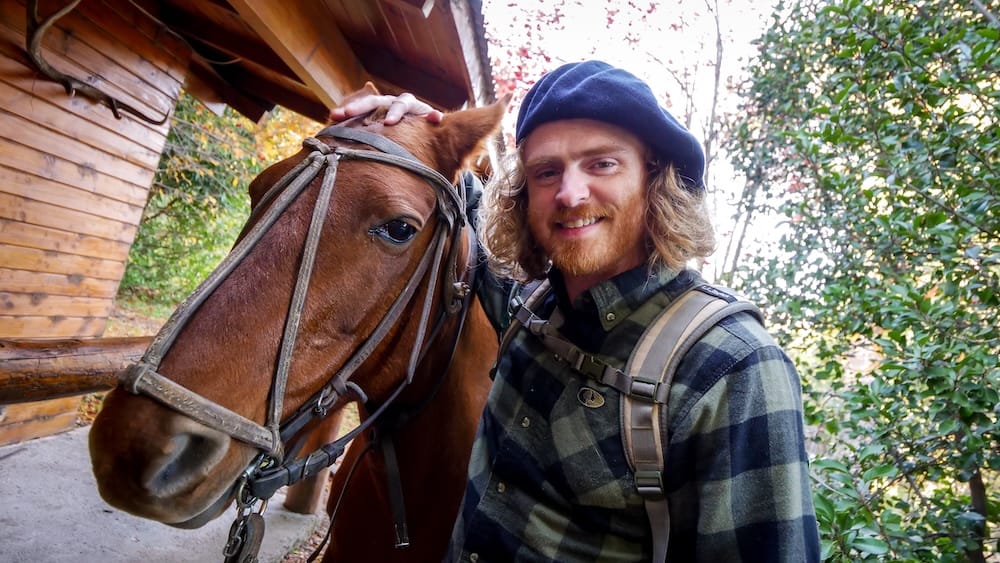
What actually separates an easy first ride from a demanding one is much narrower than a single adjective: how long you’re in the saddle, how technical the ground gets underfoot, how much pace the group is expected to hold, and how much help you get climbing on in the first place. I’ve ridden across four different corners of Argentine Patagonia now, and no two of those rides asked the same thing of me. One was flat enough that I could have done it half asleep. Another handed me a choice between an easy loop and a genuine mountain climb, on the same afternoon, at the same property. That’s the real distinction this guide is built around: not which region is “best” for beginners in the abstract, but which specific ride, in which specific place, actually matches the rider you are.
Bariloche: The Easy Ride Everyone Should Start With
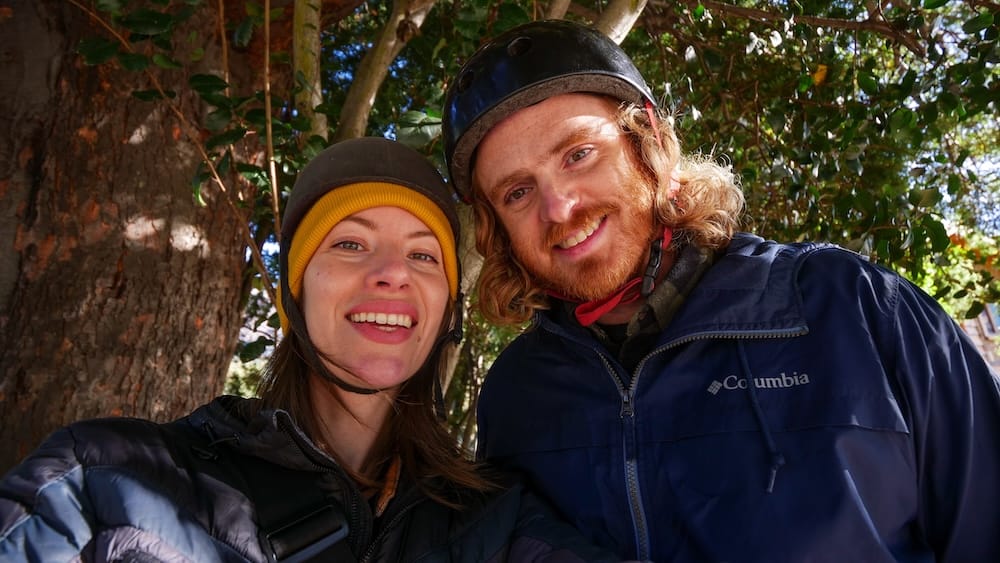
If you want to know whether you even like being on a horse, Bariloche is where to find out. Our ride started at a complex called Los Baqueanos, about half an hour outside town inside Nahuel Huapi National Park, and it is about as forgiving as horseback riding in Patagonia gets.
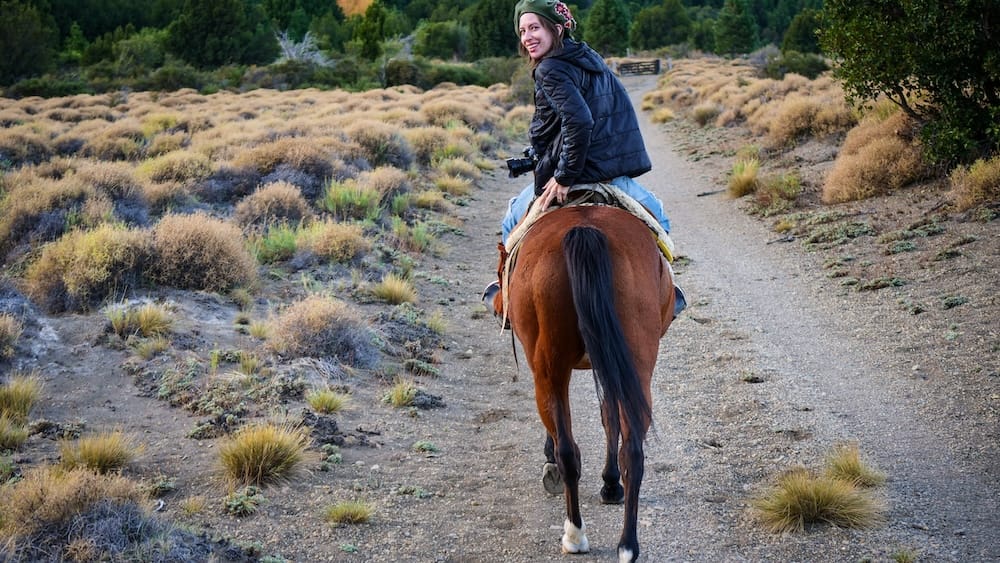
We’d been warned by our own history that this wasn’t guaranteed. Audrey and I had done horse treks before in Kyrgyzstan and in the Sierras Chicas outside Córdoba, and both involved horses slipping on undefined mountain paths with nobody offering us a helmet. This one made a point of the opposite. There was a waiver to sign, hot tea and coffee waiting when we arrived, and helmets that actually went on our heads before we got near a horse. My horse’s name was Temblor — Tremor, in English — which felt like a joke at first and then didn’t, because he turned out to be about the calmest animal I’ve ridden anywhere.
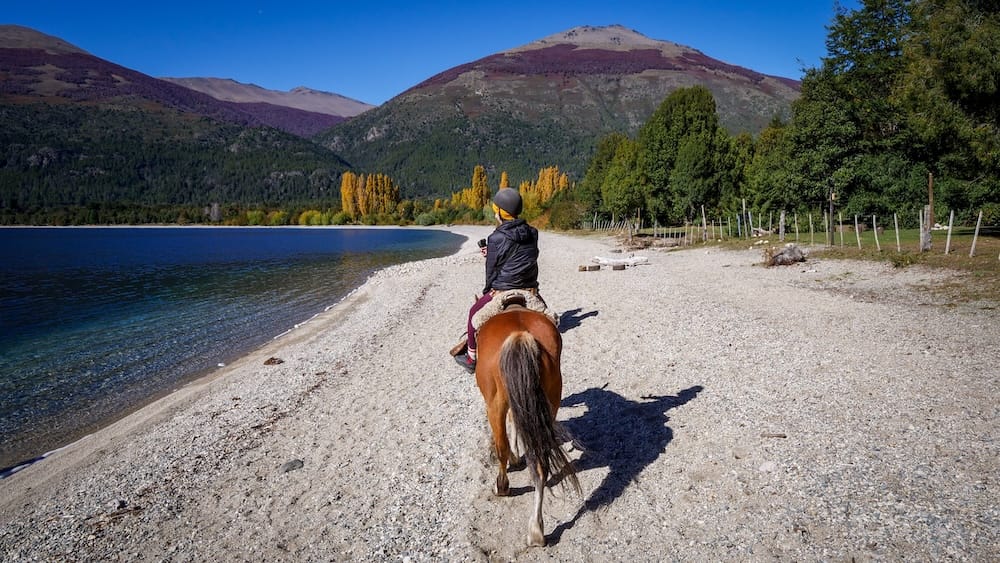
The route itself is close to flat: an old cypress and coihue forest, a stream crossing, a stretch of open pampas, a viewpoint over the whole valley, and a return along the shore of Lake Gutiérrez, where the horses stopped for a long, unbothered drink before we headed back for lunch. Two hours in the saddle, more or less, bookended by tea on one end and a barbecue lunch on the other. You can still book this exact ride today — same complex, same forest-to-lakeshore loop, about five hours door to door including the meal — and they’re specific about who they’ll put on a horse here: not a very young child, not a pregnant traveler, not a rider over roughly 260 pounds. Good to know before you book, not after.
I’d call this the region’s true first ride, and I mean that as a compliment rather than a hedge. One reviewer online complained the pace was too slow because most of the group had never sat a horse before — which tells you exactly who this ride is for, and who it isn’t. Bariloche also keeps a rougher option in reserve out on the Patagonian steppe: real undulating terrain, stream crossings, a longer day, an asado instead of a simple lunch. That one’s for when the lakeside loop starts to feel too gentle, and you can compare it against the lakeside ride here before deciding which one actually matches you.
Estancia Arroyo Verde: The Same Property, Two Different Rides
An hour and a half north of Bariloche, mostly along a paved road that turns to rough private track for the final stretch, sits a fly-fishing lodge that happens to also be one of the better arguments I know for why “beginner-friendly” has to be judged ride by ride, not property by property.
We arrived on the most Patagonian day imaginable — wind strong enough to turn the lake into something resembling an angry sea — and the estancia simply canceled that afternoon’s activities outright. No half-measures, no “we’ll try anyway.” That’s a real risk here, not a hypothetical one: a wind day can take your ride away entirely, and this stretch of Río Negro gets them.
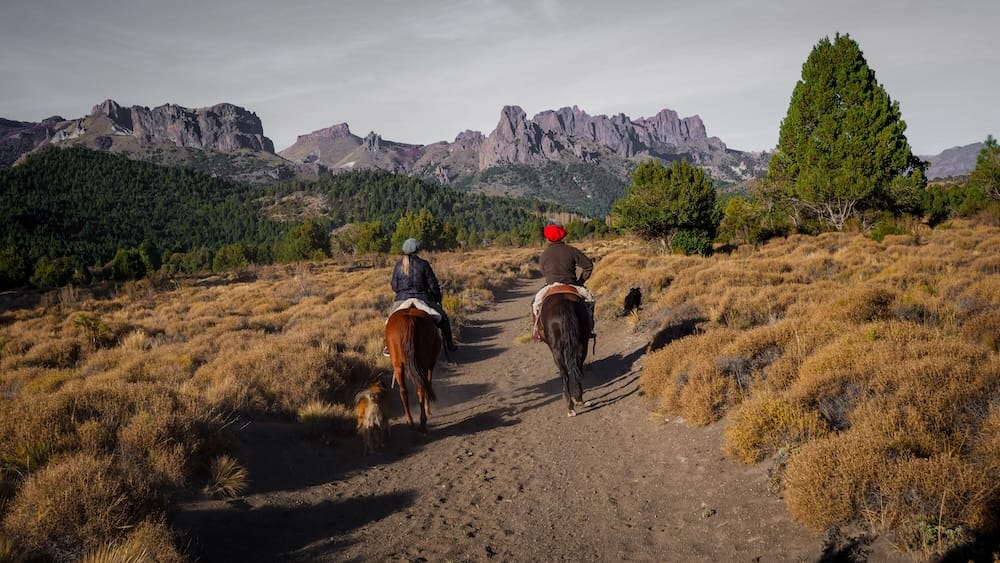
The next morning was still, and that’s when the choice showed up. The guides could take us up toward a rock face and cliff-top viewpoint on a demanding mountain route, or out through gentler steppe and forest on a much easier loop. We picked the easier one — steppe, forest, a stretch along the river, dogs from the estancia trotting alongside for most of it — and it turned into one of the more relaxed rides of the whole trip, unhurried enough that I spent part of it convinced I’d spotted a puma in the bushes before realizing it was one of the lodge’s own house cats, bouncing through the undergrowth like it had something to prove. The property still frames its rides almost exactly the way we experienced them: a short outing to the nearby lagoon for those who want the smallest possible taste, up to a three-and-a-half-hour climb toward Cerro Frutilla for those who want the real thing.
What I’ll flag plainly: this isn’t a place you find and book on an app for next Tuesday. It’s sold almost entirely through specialist fly-fishing outfitters rather than mainstream travel sites, which tells you what it actually is — a fishing lodge first, with riding offered as the good thing you do on your day off the river. Opinion on it isn’t unanimous the way it once was, either; at least one longtime Patagonia specialist has quietly stopped sending guests there, even as others keep booking it. All I can tell you is what we found on our own stay: warm, well-run, and worth the wind day we lost getting there. But go in expecting a considered booking process, not a one-click one.
Esquel: A Harder Climb Through Autumn Color
Esquel gave us the best single ride of the trip, and the clearest example of terrain actually escalating under you rather than staying politely flat the whole way through.
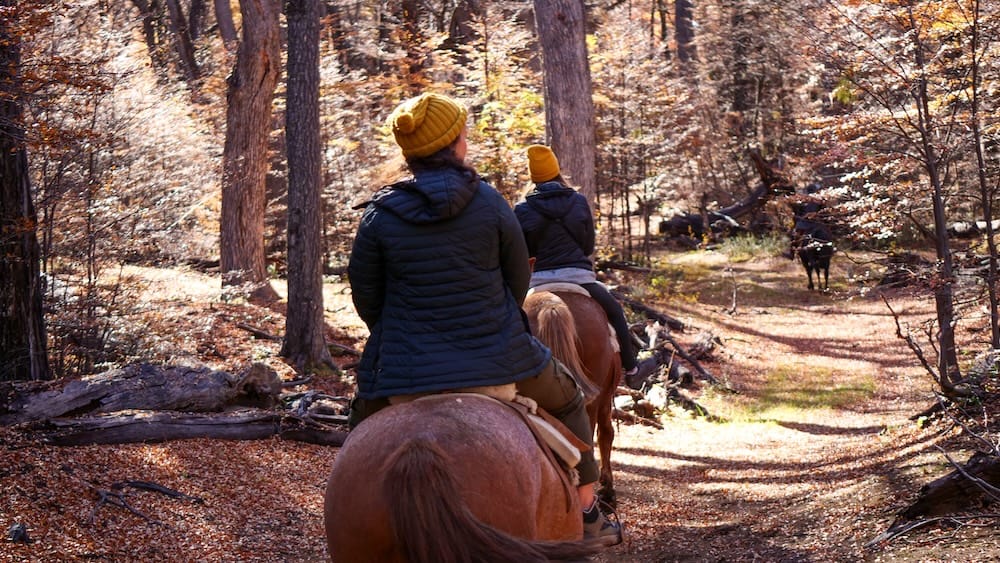
We arranged it through the guesthouse where we were staying, which keeps a private mountain property for exactly this kind of thing and pairs guests with a local guide on request. My horse was named Poncho — I’d bought an actual poncho of my own at Arroyo Verde a few days earlier, so the two of us matched, in a manner of speaking. The ride started on a defined path and got wilder the further we went — more rugged, less obviously a trail, eventually crossing stretches of volcanic sand before climbing to a lookout with the whole valley sprawling out below. The view is what you’d expect to remember. What actually stuck with me was a sound: the crunch of hooves through fallen autumn leaves, which is somehow nothing like hooves on any other surface.
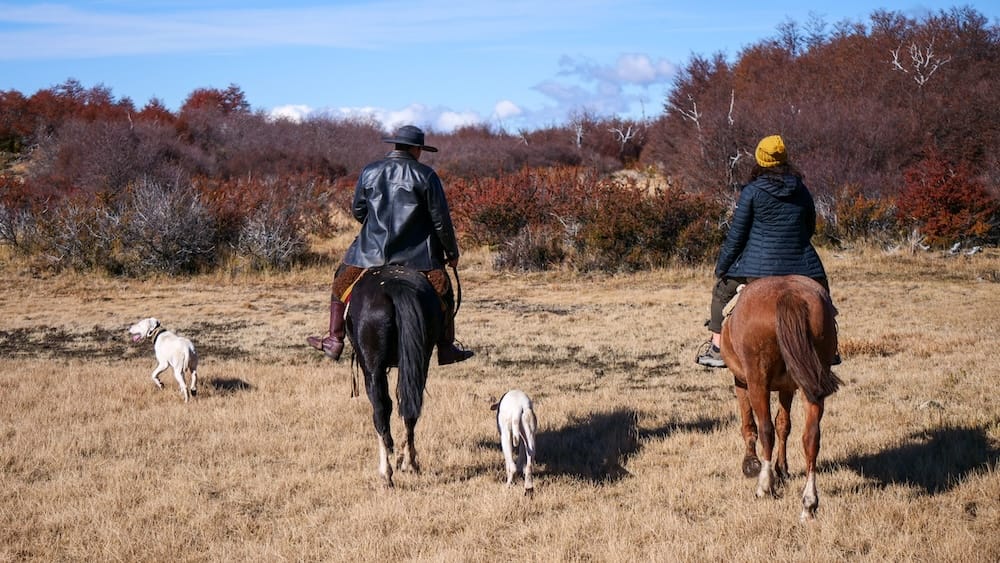
This one demands more than Bariloche’s lakeside loop. It’s longer, the ground is less forgiving, and the pace picks up once you’re past the early, easy stretch. It’s still a bookable day trip on its own, without needing to stay in the mountain glamping domes the property also runs — those close for the season, so don’t plan around them outside the warmer months. The guesthouse itself is still taking guests, sauna and jacuzzi included, and since it’s the base the whole ride is arranged from, it’s worth checking current room rates there if you want to build a stay around it. Esquel’s more established riding operation, a longstanding family outfit at the edge of town, runs the whole spectrum from a gentle hour-long loop up through full-day rides and, if you time it right, a rare full-moon night ride — no experience required for any of it, which makes it a sensible pairing if you want one easy outing and one harder one without leaving the area.
Trevelin, a short drive away, has its own long-standing riding tradition through what locals call the Enchanted Valley, with routes running from an easy stroll to something considerably faster for confident riders. We haven’t ridden there ourselves. If Esquel leaves you wanting one more, it’s a real option worth asking about locally — just not one I can vouch for firsthand.
El Bolsón and Lago Puelo: The Ride That Actually Tires You Out
If Bariloche’s lakeside loop is the gentlest ride on this list, the one we did out of El Bolsón, toward the Cajón del Azul, is the other end of it — and it’s the one I’d point a confident rider toward first.
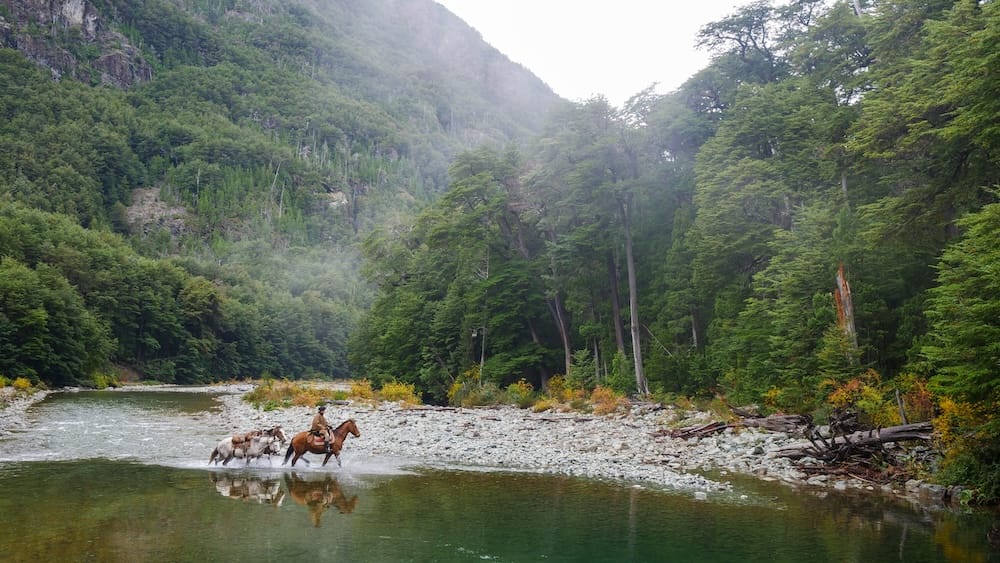
It had been sitting on our list for years, one of those excursions we kept meaning to get to on earlier visits and never quite did. We crossed two rivers on horseback getting there, up and down hills through forest the whole way, until the canyon opened up in front of us with a glacier just visible on the mountain above, half-swallowed by fog. After a hike and a swim break near one of the swimming holes below, our guide met us partway back with the horses rather than making us walk the whole return leg — which saved our legs more than I appreciated at the time. Audrey felt it more than I did. Her knees were audibly wobbling by the time we got off, and she needed a moment before admitting she was, in fact, ready to get back on for the ride into town. Consider that fair warning rather than a complaint: this ride asks more of your body than a flat lakeside loop does, and it’s worth knowing which of the two you actually want before you book either.
The route hasn’t gone anywhere. Local family-run operators still run guided horseback trips to the Cajón del Azul crossing the same Blanco and Azul rivers we did, and a well-reviewed outfit based right on Lago Puelo — a family operation with a genuine local reputation — runs similar full-day rides through forest and canyon that end with a swim in the lake, much like ours did. Neither turned up on the two booking platforms I’d normally point you toward here. This is a region where the best rides are booked directly or through a local agency rather than an app, and it’s a fair trade for a ride this good.
Which Ride Actually Matches You
Laid out side by side, the pattern holds up better than any single region’s marketing does on its own:
| Ride | Duration | Terrain | Pace | Best suited to |
|---|---|---|---|---|
| Bariloche — Lago Gutiérrez | ~2 hrs riding, ~5 hrs total | Flat forest, pampas, lakeshore | Slow, steady | True first-timers, families, anyone unsure they even like horses |
| Bariloche — Patagonian steppe | ~2 hrs riding, ~6 hrs total | Rolling terrain, stream fords | Moderate | Riders who’ve outgrown the lakeside loop but want a longer day, not a mountain |
| Arroyo Verde — easy loop | Up to a few hours | Steppe and forest | Gentle | Riders who want a lighter option on the same trip as the climb below |
| Arroyo Verde — mountain climb | Up to ~3.5 hrs | Cliff-top, mountain trail | Demanding | Confident riders who want a real climb without leaving the property |
| Esquel — Wamulis | Multi-hour | Progressively rugged, volcanic sand | Builds through the ride | Riders wanting scenery and a real step up from Bariloche |
| El Bolsón / Lago Puelo — Cajón del Azul | Full day | River crossings, forest, canyon | Sustained, tiring | Confident riders willing to feel it in their legs afterward |
The property matters less than you’d think. What actually separates one ride from the next is right there in the table — duration, terrain, pace — and the same estancia can sit at both ends of it depending on which route you pick that morning.
When to Ride, and What Could Cancel It
Every ride here runs during the warmer half of the year, roughly November through April, with some operators closing entirely once snow shuts the high routes; one Lago Puelo–area outfit only takes bookings from mid-September to mid-May. If your Patagonia trip is built around skiing, horseback riding largely isn’t part of that picture — plan for it in a spring, summer, or autumn window instead.
Wind is the other variable worth building into your itinerary rather than just noting. Ours got canceled outright at Arroyo Verde by a single bad-weather day, and that’s not a fluke — it’s a recurring feature of riding anywhere near open steppe or exposed lake shoreline in this part of the world. If a ride is the reason you’re building a stop into your route, give it a buffer day rather than scheduling it for your one and only afternoon somewhere, and it’s worth checking current availability before you travel rather than assuming a date will hold.
The Actual Decision
If this is your first time on a horse, or you’re bringing someone who’s never sat one, start in Bariloche on the lakeside loop, and don’t apologize for choosing the easy option. It exists for exactly this — and if you already ride confidently, it’s genuinely not built for you; the pace will feel glacial, and at least one reviewer online has already said so in writing. Send yourself to El Bolsón instead, or to whichever harder route the property in front of you actually offers, and let your legs tell you the next morning whether you chose correctly. Everything in between — Arroyo Verde’s two-tier system, Esquel’s building climb — earns its place on a longer trip, when you have room for both the easy afternoon and the one that actually costs you something.
Frequently Asked Questions
Which Patagonia horseback ride is best for a complete beginner?
The Lago Gutiérrez ride outside Bariloche is the easiest starting point. The terrain stays close to flat, the pace is slow, and helmets are standard — it’s built for someone who isn’t sure yet whether they even like being on a horse.
Is Estancia Arroyo Verde easy to book?
Not through a typical booking app. It’s sold almost entirely through specialist fly-fishing outfitters rather than mainstream travel platforms, so plan on a more considered booking process than a one-click reservation.
Which ride in this guide is the most physically demanding?
The full-day ride from El Bolsón toward the Cajón del Azul, crossing the Blanco and Azul rivers on horseback. It’s a sustained, tiring day in the saddle rather than a gentle outing.
When can you go horseback riding in Patagonia?
Roughly November through April. Some operators close entirely once snow shuts the higher routes, and at least one outfit near Lago Puelo only accepts bookings from mid-September to mid-May.
Can weather actually cancel a scheduled ride?
Yes. Wind is a real risk on open steppe and exposed lakeshore terrain — a ride at Estancia Arroyo Verde was canceled outright by a single bad-weather day, not just delayed.
Is the Esquel ride harder than the one in Bariloche?
It is. The Esquel route through Wamulis starts on a defined path but grows progressively more rugged, eventually crossing volcanic sand before a climb to a lookout, with the pace picking up as the terrain does.
Does one property ever offer both an easy and a difficult ride?
Estancia Arroyo Verde does. The same property runs a short, gentle steppe-and-forest loop alongside a demanding cliff-top mountain route, and which one you’re offered depends on the day and the choice you make.
Have the rides in Trevelin been personally tested?
No. Trevelin has its own long-standing riding tradition near Esquel, but it hasn’t been ridden firsthand — it’s mentioned as a real option worth asking about locally, not a personal recommendation.
Project 23 Argentina: This guide is also available in Spanish. [Leé la versión en castellano: Guía de cabalgatas en la Patagonia: las mejores regiones y paseos aptos para principiantes]
This article contains affiliate links. If you book through one of these links, I may earn a commission at no extra cost to you.