
Edmonton was a two-museum afternoon for us: the Royal Alberta Museum first, the Muttart Conservatory’s glass pyramids later the same day. We put the RAM first for a simple reason — it’s the closest thing the city has to a flagship museum, and if you’re only going to see one, it’s the one to build your day around.
The Royal Alberta Museum is the largest museum in western Canada, and downtown Edmonton’s arts-district building backs that up with more than five million objects across its natural and human history collections. That’s an abstract number until you’re standing in front of a moose diorama trying to figure out how much of the museum you’ve actually covered. If you’re deciding whether this earns real time on your Edmonton itinerary or just a quick pass-through, here’s what we actually saw, what we didn’t get to, and a more honest way to budget your own visit than we gave ourselves credit for needing.
What’s Actually Inside: The Galleries Worth Your Time
Human History Hall
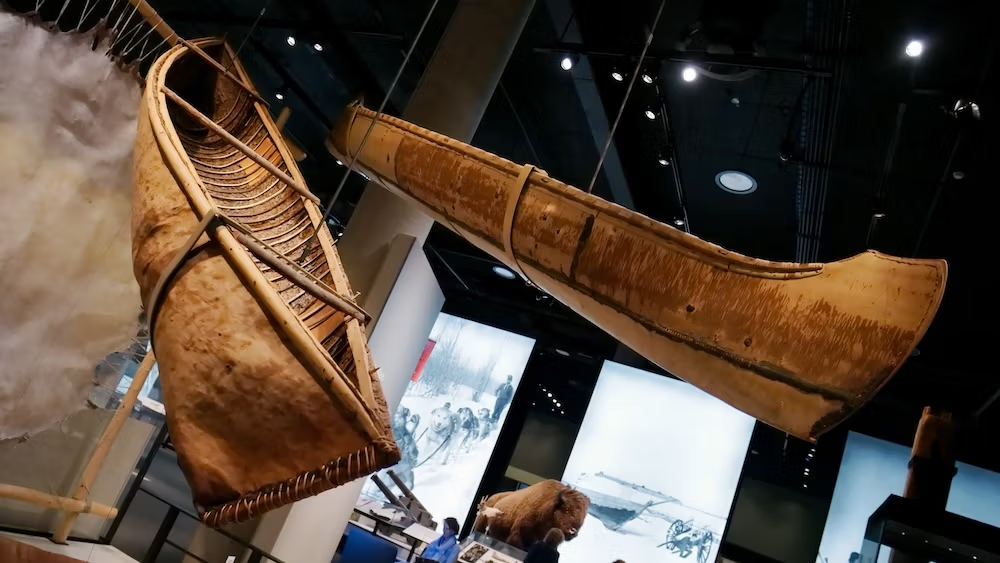
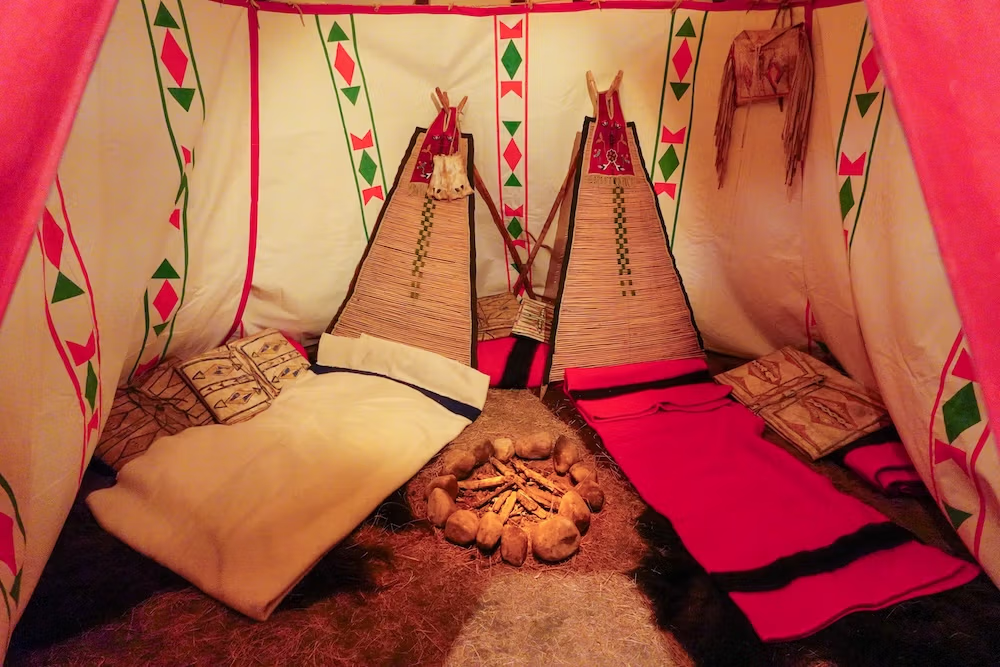
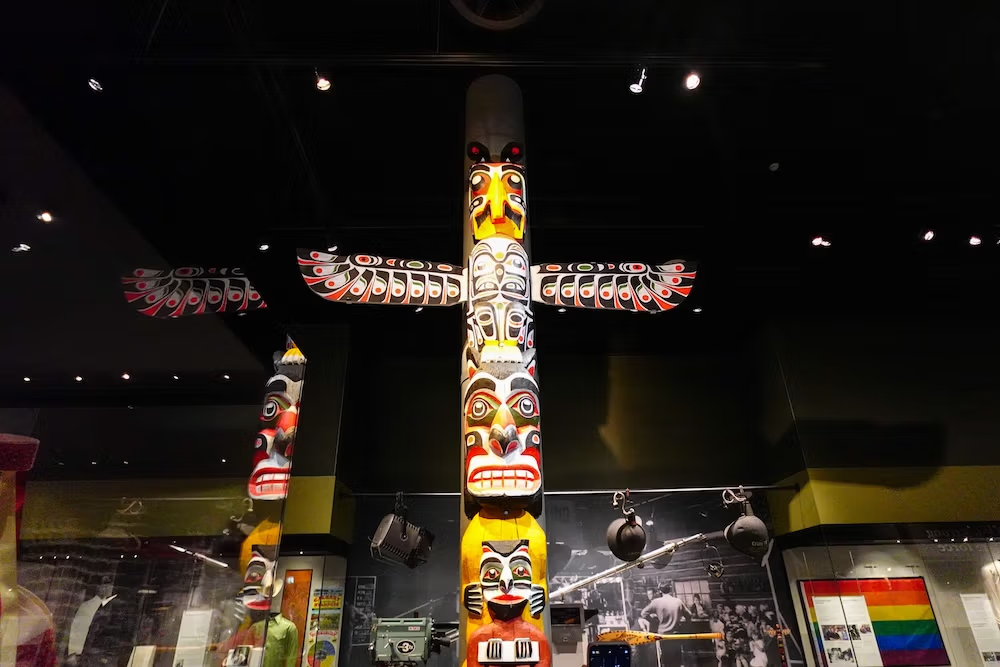
This was our first stop, and it’s the one that surprised us. The Human History Hall traces Alberta’s story through its Indigenous communities, and we moved through it slower than we expected to for what we’d assumed would be a warm-up gallery. It doesn’t play like a token nod to the subject before the “real” exhibits start. It’s built as one of the museum’s two central halls, not a side room, and it earned every bit of the time we gave it.
Natural History Hall
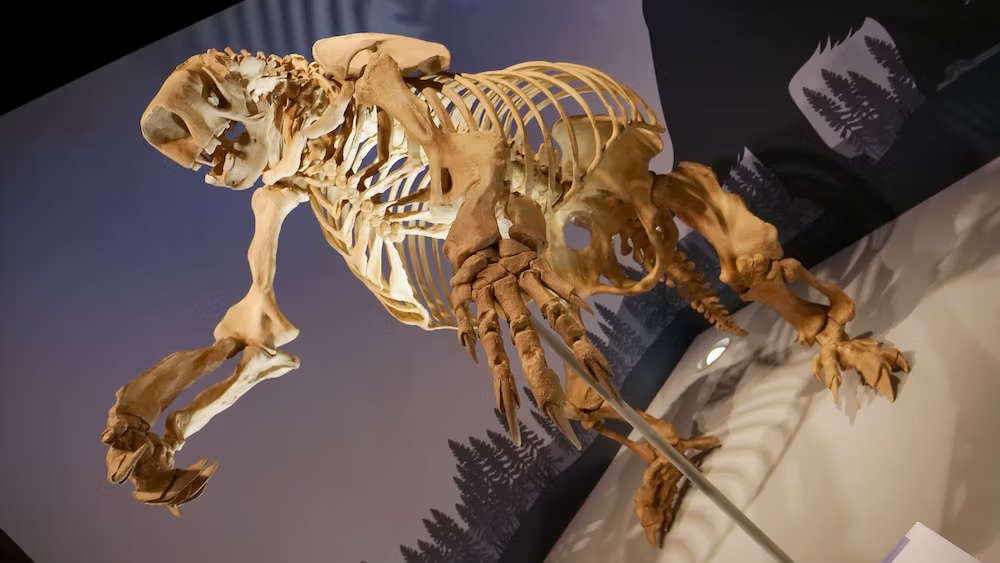
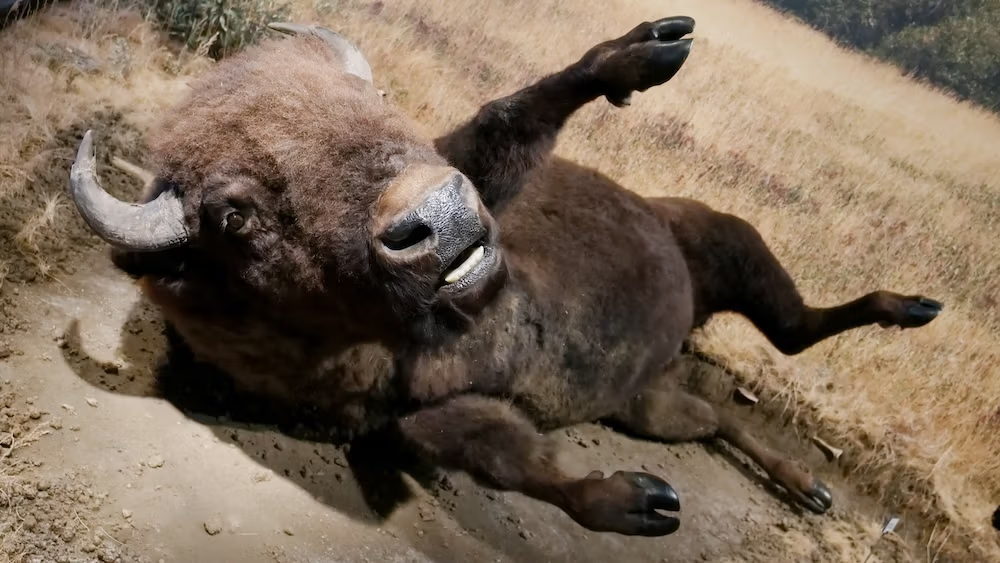
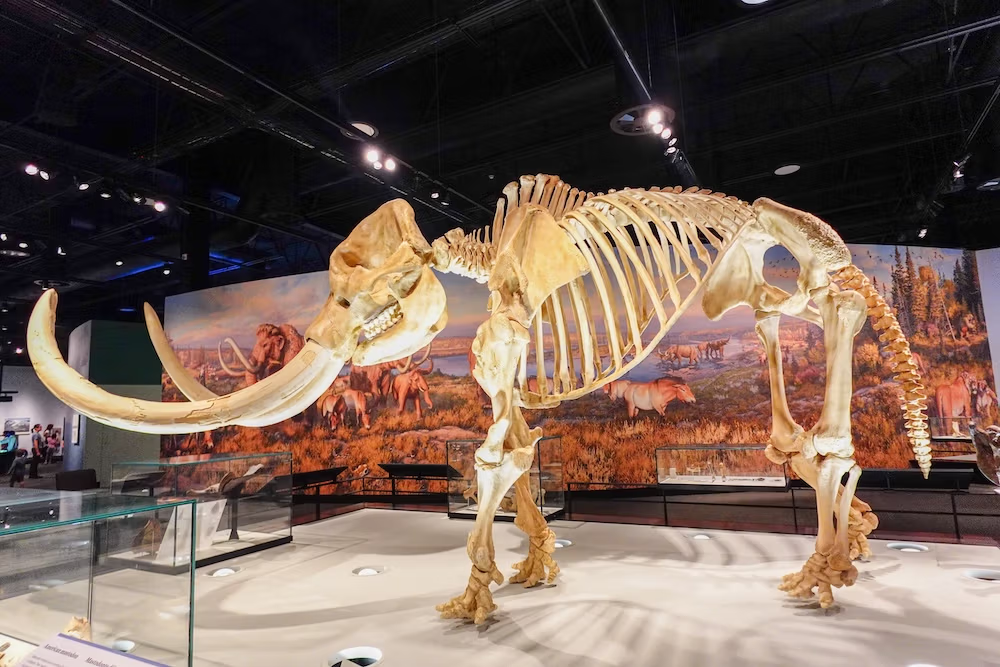
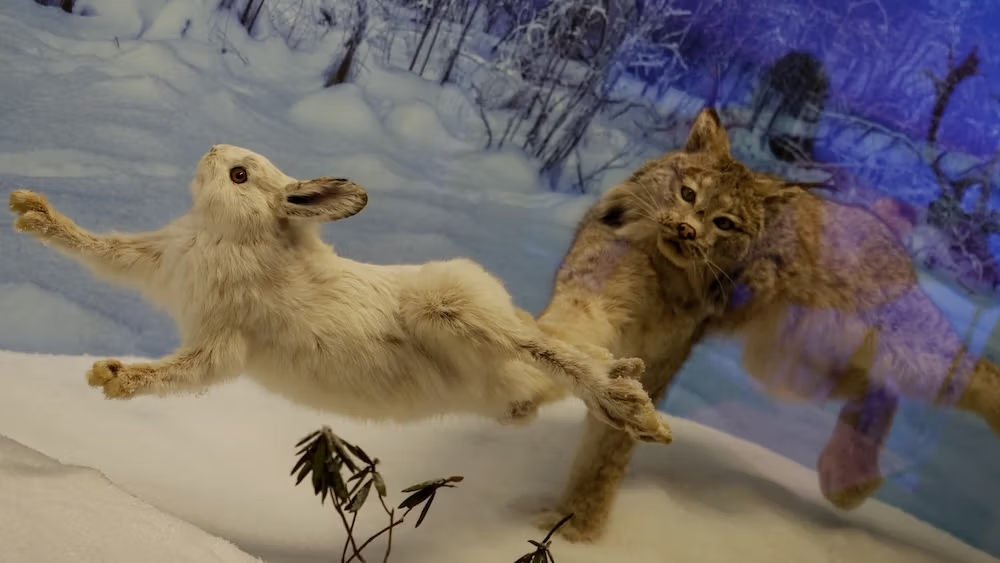
Upstairs, the Natural History Hall shifts completely, into dinosaurs, Ice Age fossils, and the wildlife you could actually run into in Alberta today. We stood in front of an Edmontosaurus for a while, and I stumbled over the pronunciation trying to say it out loud on camera. But the wildlife dioramas were what stuck with us — bison, moose, elk, deer, grizzly bears, mountain goats, laid out well enough that we got a real kick out of them. If you’re visiting Edmonton without a side trip out to Jasper or Banff, this hall does a genuinely good job of giving you a sense of what’s actually out there in the province, without the multi-hour drive. It isn’t the real thing. But it’s a legitimate stand-in for a city stop, and worth checking out on that basis alone.
Bug Gallery and Children’s Gallery
Two galleries we didn’t make it to are worth knowing about before you plan your own visit. The Bug Gallery is a live invertebrate exhibit — the kind of room where you get a closer look at spiders and other creatures most people are happier viewing through glass. The Children’s Gallery is a large, hands-on space built for younger visitors, with a dig pit and activities clearly designed for kids rather than adults working through a checklist. If you’re travelling with children, budget your time expecting this to be where they want to stay longest, rather than treating it as an afterthought.
The Exhibition We Saw Is Already Gone
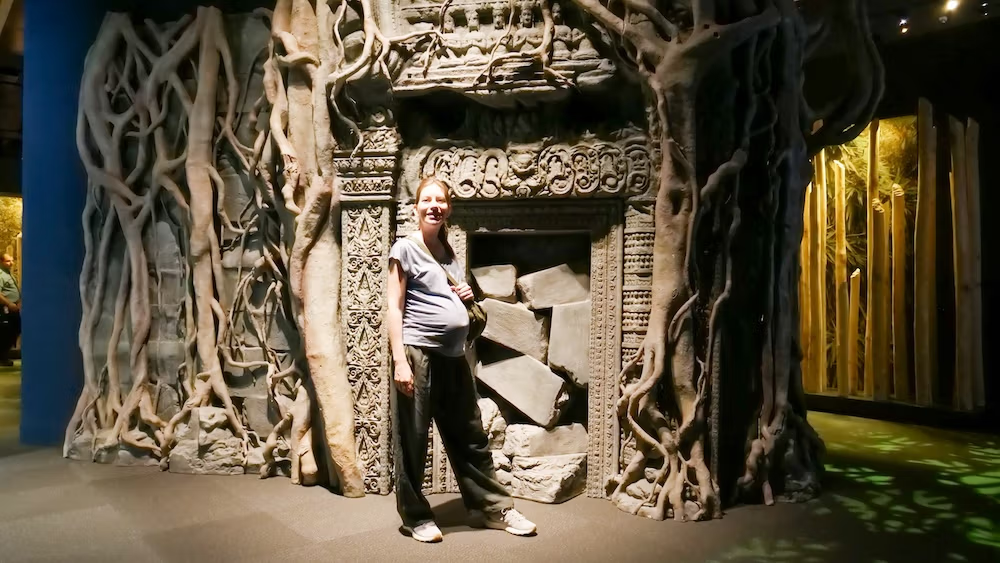
The museum runs a rotating feature exhibition alongside its two permanent halls, and what’s showing changes over time. When we visited, it happened to be a special exhibition on Angkor Wat, and it hit us differently than most museum displays do, because Audrey and I had actually stood in those temples ourselves on an earlier trip to Cambodia. Seeing the ruins reconstructed through artifacts and photographs in an Edmonton museum, of all places, was a strange and genuinely good kind of déjà vu.
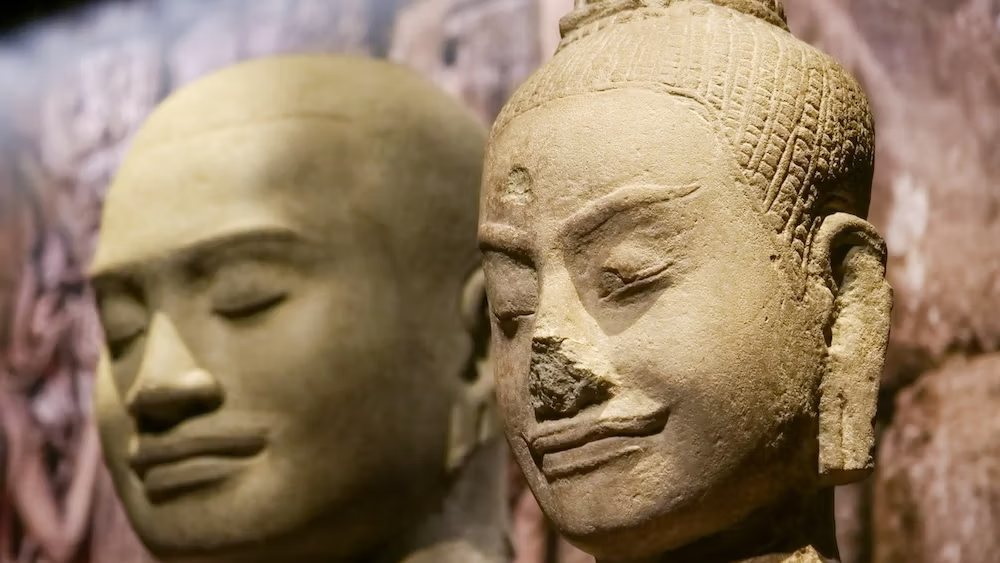
That exhibition has since moved on, as these things do, and whatever’s currently in its place almost certainly isn’t what we saw. The museum also runs smaller rotating displays inside its permanent halls covering more local and contemporary Alberta stories. None of this is something you can plan your trip around precisely, but it’s worth a quick check before you go — a strong temporary exhibition can genuinely change how much time you want to set aside.
How Long to Spend: A Realistic Time Budget
I won’t pretend we clocked ourselves room by room, so I can’t hand you an exact number pulled from our own stopwatch. What I can tell you honestly is that the Human History Hall and Natural History Hall alone kept us occupied — neither of us was checking the time waiting for the next thing, and we didn’t come close to fitting in the Bug Gallery or Children’s Gallery on top of it.
Based on that and on how the museum’s own galleries break down, here’s a more useful way to plan than “give it an hour”:
| Visit length | Best for | What to prioritize |
|---|---|---|
| 1–1.5 hours | Squeezing the museum between other plans | Pick one hall, not both. Human History for the Indigenous galleries; Natural History for dinosaurs and wildlife. |
| 2–3 hours | Most first-time visitors | Both permanent halls at a comfortable pace, plus whatever’s currently in the feature exhibition. |
| Half day to full day | Families with kids, or genuine history and natural-science enthusiasts | Everything above, plus real time in the Children’s Gallery and Bug Gallery, without rushing either hall. |
Two to three hours is a realistic range for a proper look at both main halls without feeling rushed. Build in more if you’ve got kids who’ll want real time in the interactive spaces, or if you’re the type who reads every placard. We’re closer to the second type than we’d like to admit.
Admission, Parking, and What’s Changed Since We Visited
Admission and Hours
The museum is open Tuesday, Wednesday, and Friday through Sunday, 10am to 4pm, with extended hours until 8pm on Thursdays. It’s closed Mondays, aside from holiday Mondays. Adult admission runs $25, seniors $16, and admission is free for youth 7 to 17 and children 6 and under; family admission for up to two adults and their kids runs $55. If you know you’ll be back more than once, an annual membership is worth a look — it pays for itself faster than you’d think. There’s also a federal Canada Strong Pass promotion currently running that gives free admission to visitors 17 and under and half off for ages 18 to 24, though that kind of thing tends to have an expiry date, so it’s worth checking current pricing directly before you go. If you’d rather fold the museum into a broader sightseeing plan, it’s also worth taking a look at current Royal Alberta Museum tours and tickets on GetYourGuide, where it sometimes turns up bundled with other Edmonton experiences.
Getting There
There’s no dedicated museum parking lot, which caught us slightly off guard walking in. The closest options are metered street parking and a handful of downtown parkades within a short walk, each priced on its own. If you’re taking the LRT, Churchill Station connects straight to the museum by pedway, which is by far the easiest route in if you’re staying downtown. Some nearby construction has been affecting the west entrance and part of that pedway route, so it’s worth glancing at the museum’s own getting-here page before you set out, especially if you need step-free access. That LRT connection is a good reason to base yourself downtown for this part of the trip if you haven’t booked somewhere yet — it turns the museum into a short walk instead of a parking negotiation. If you’re still deciding where to stay, it’s worth comparing current downtown Edmonton hotel options.
Food, Shop, and Accessibility
There’s a café inside serving until mid-afternoon most days, and a gift shop that opens a little later than the museum does. On the accessibility side, the museum offers free wheelchair and stroller loans at the admissions desk, elevators between floors, accessible washrooms, and free sensory kits for visitors who need them. Service dogs are welcome throughout.
Our Verdict: What’s Actually Worth Your Time
If you’re weighing the Royal Alberta Museum against a long list of other Edmonton stops, don’t file it under “quick add-on.” Give it two to three hours if you can manage it, especially if you’re not making it out to the mountains for wildlife on this trip — the Natural History Hall pulls more weight there than we expected going in. If you’ve genuinely only got an hour, pick one hall and go deep rather than splitting your time thin across both. We didn’t do that, and we still walked out feeling like we’d only scratched the surface of what’s actually inside.
Frequently Asked Questions
How long should I plan to spend at the Royal Alberta Museum?
Budget two to three hours if you want a proper look at both permanent halls without feeling rushed. If you’re short on time, pick one hall rather than splitting an hour between both, and set aside half a day or more if you’re travelling with kids who’ll want real time in the Children’s Gallery and Bug Gallery.
What are the must-see galleries inside the museum?
The Human History Hall and Natural History Hall are the two central galleries and where most visitors will spend the bulk of their time. The Human History Hall covers Alberta’s First Nations communities through artifacts like birchbark canoes and totem poles, while the Natural History Hall holds dinosaur fossils, Ice Age skeletons, and wildlife dioramas.
Is the Royal Alberta Museum open every day?
No. It’s open Tuesday, Wednesday, and Friday through Sunday from 10am to 4pm, with extended hours until 8pm on Thursdays, and it’s closed Mondays aside from holiday Mondays.
Is there parking at the museum?
There’s no dedicated museum parking lot. The closest options are metered street parking and a handful of downtown parkades within a short walk, and Churchill Station connects directly to the museum by pedway if you’re taking the LRT.
Is the museum good for wildlife lovers who aren’t visiting Jasper or Banff?
Yes. The Natural History Hall’s wildlife dioramas do a genuinely good job of showing off the animals you’d hope to see in Alberta, making it a solid stand-in if the mountain national parks aren’t part of your trip.
What happened to the Angkor Wat exhibit?
It was a temporary special exhibition on display when we visited, and it has since closed. The museum’s Feature Gallery rotates its exhibitions regularly, so whatever’s showing now will be different — it’s worth checking what’s currently on before you go.
Is the museum accessible for wheelchairs and strollers?
The museum offers free wheelchair and stroller loans at the admissions desk, elevators between floors, accessible washrooms, and free sensory kits for visitors who need them.
This guide is also available in Spanish. [Leé la versión en castellano: Guía del Royal Alberta Museum: qué ver y cuánto tiempo dedicarle]
This article contains affiliate links. If you book through one of these links, I may earn a commission at no extra cost to you.