
I love a good seafood breakfast, especially in Japan, where starting the day with raw fish over rice seems like a perfectly reasonable thing to do. But when Audrey and I sat down to eat at Hakodate Morning Market, we managed to order considerably more food than we’d planned. What we thought was a substantial breakfast set and a little something extra turned out to include two very similar seafood rice bowls.
Oops.
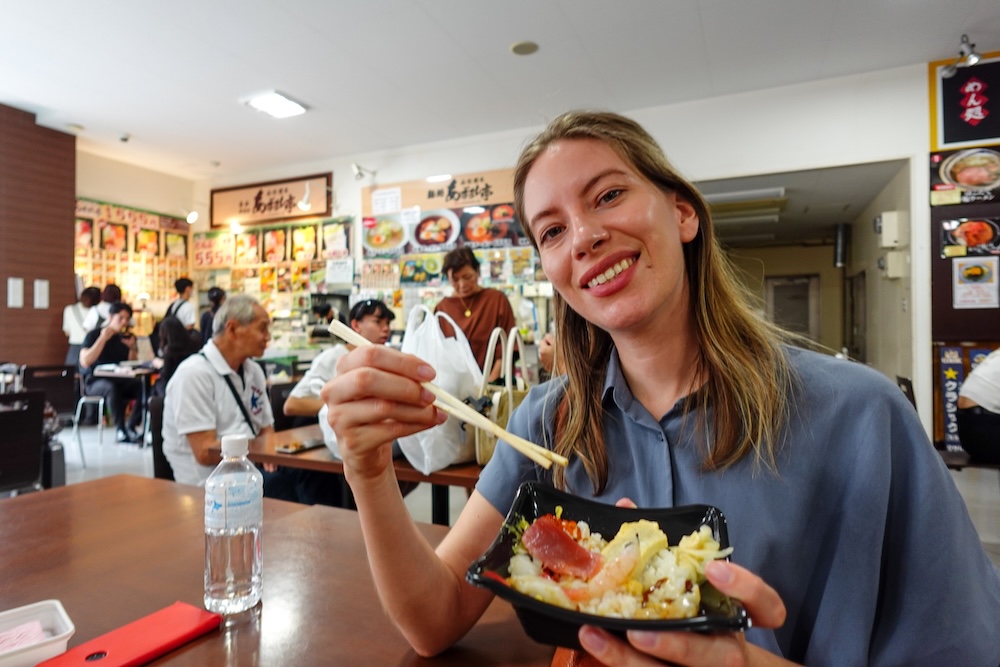
Fortunately, our ordering mistake worked out rather well. We were still battling jet lag, we’d been up early, and we had a monster sightseeing day ahead of us. A few extra helpings of salmon and seafood weren’t going to ruin our morning.
What I remember most, though, is how much I enjoyed the meal. Fresh, tender seafood, little bursts of salty salmon roe, hot noodles and enough variety to keep things interesting. It was exactly the sort of breakfast I’d happily repeat.
If you’re wondering what to eat at Hakodate Morning Market, there are quite a few choices beyond simply ordering the first seafood bowl you see. I’ll share what we actually ate, which other dishes are worth considering and how to choose between a standalone bowl and a larger set without accidentally ordering half the menu.
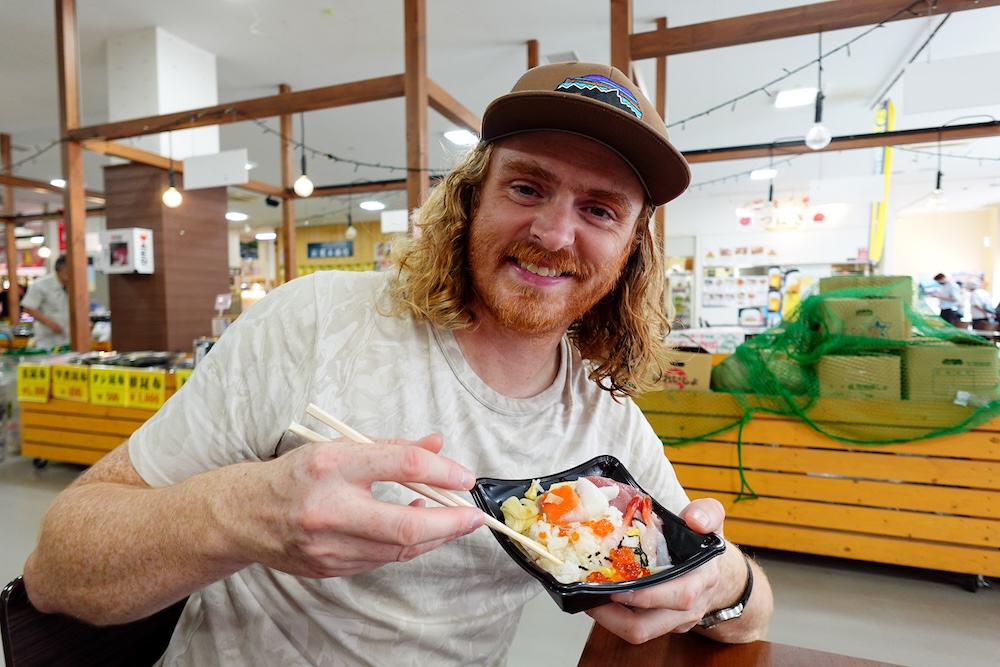
Our seafood breakfast at Hakodate Morning Market: what we actually ordered
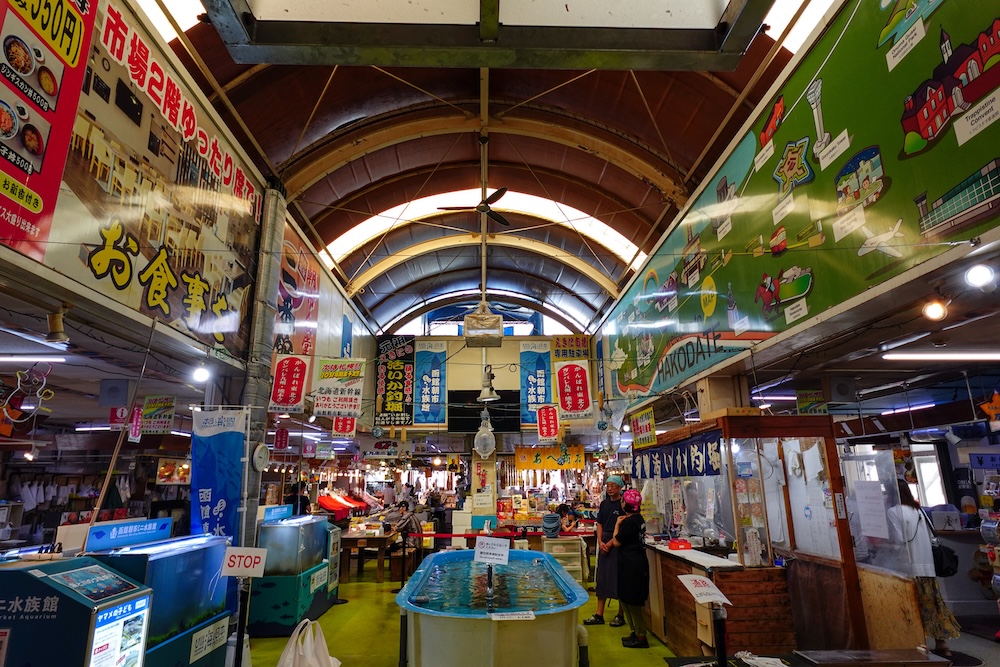
We weren’t following a carefully researched list of breakfast restaurants. We’d been wandering through the market, looking at enormous crabs and all sorts of fish, when we discovered that the place was much bigger than we’d initially realized. Another section opened up with more eating establishments, which was excellent news because we were getting hungry.
One restaurant seemed a little busier than the others, with people stopping to order food. We liked the look of it and decided to give it a try. I wish I could tell you the name, but I honestly can’t remember it.
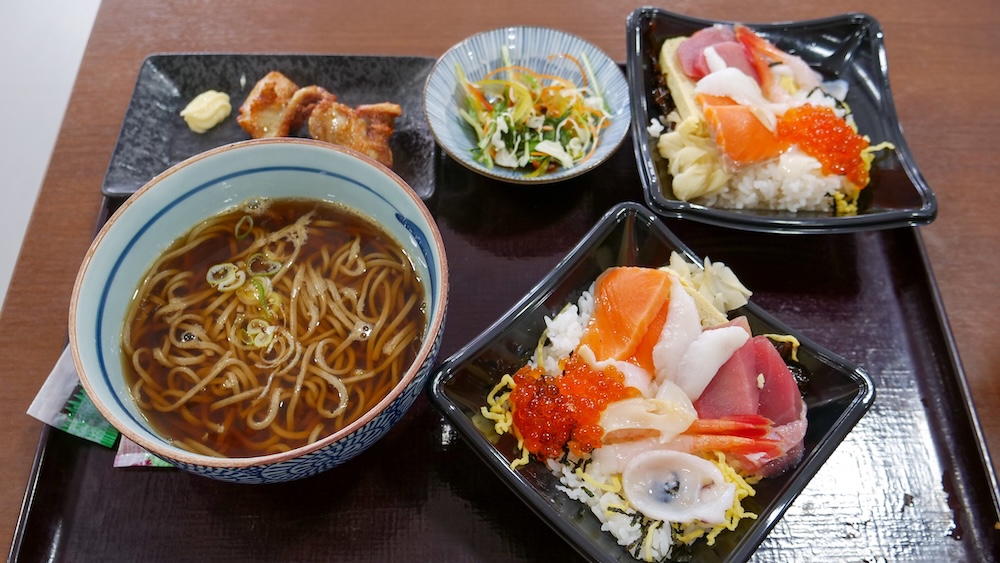
We selected a fairly substantial set that appeared to include fresh seafood, noodles and some other dishes. Then we ordered an additional seafood item, thinking it would be a smaller accompaniment.
When the food arrived, we realized we’d misunderstood something. There were two bowls of rice topped with raw fish. One was included in the original set, while the other was our extra order.
Apparently, we’d decided that one seafood rice bowl per person wasn’t nearly ambitious enough.
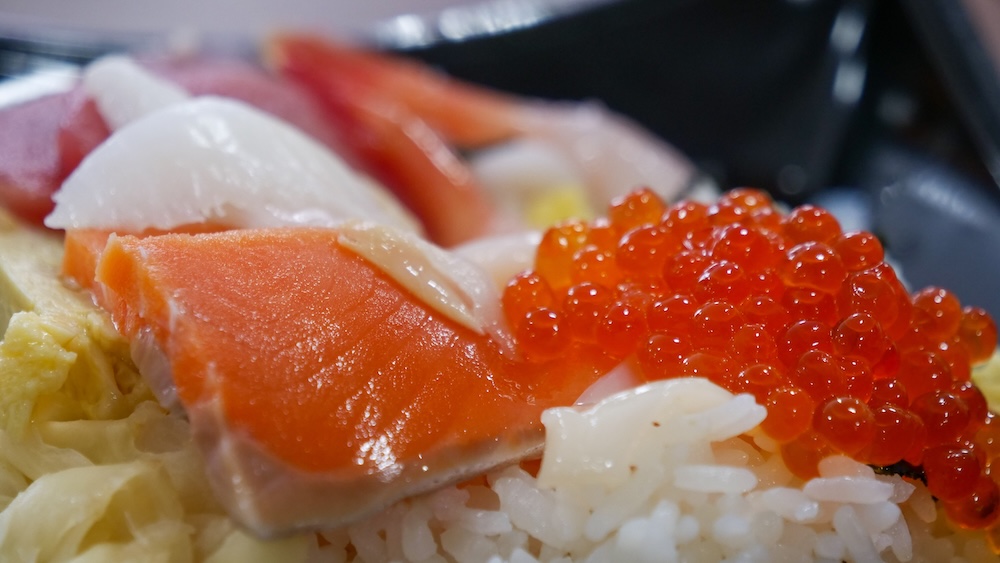
Salmon, salmon roe and two generous rice bowls
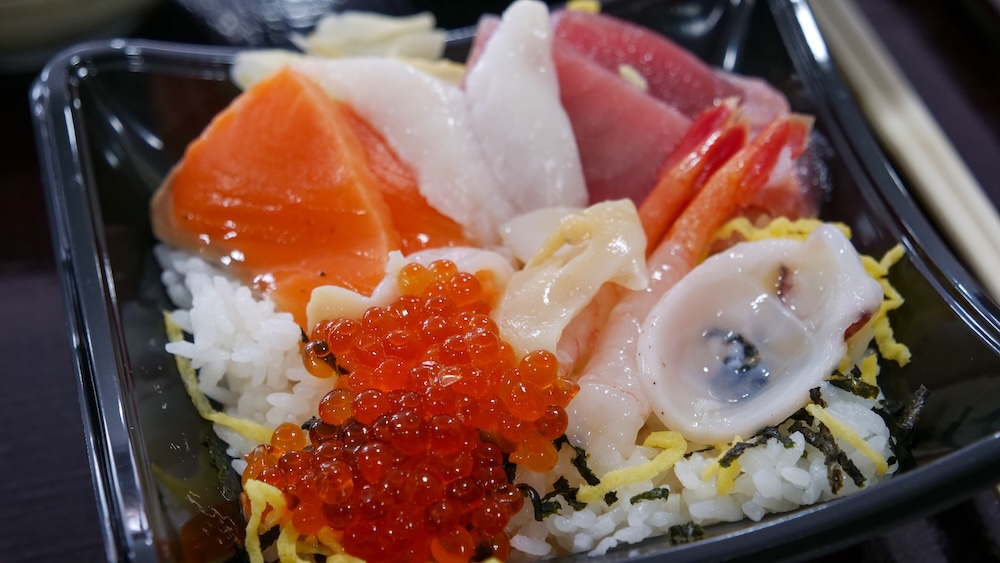
The bowls were beautifully presented, with salmon, bright orange salmon roe and some egg among the ingredients. There was plenty of seafood sitting over the rice, and it all looked wonderfully appetizing.
I started with what appeared to be salmon, followed by some of the roe. Both were delicious, but what really stood out was how tender the seafood tasted. The roe added these little pops of salty flavour, while the egg brought something different to the mixture. I also added a little wasabi because I like having that extra kick.
This is one of my favourite things about eating seafood in Japan. A dish can appear quite simple, but you get so much variety from the ingredients and their textures without needing a complicated sauce or elaborate presentation.
We were absolutely delighted with our bowls. And considering we’d accidentally doubled up on the seafood, that was fortunate!
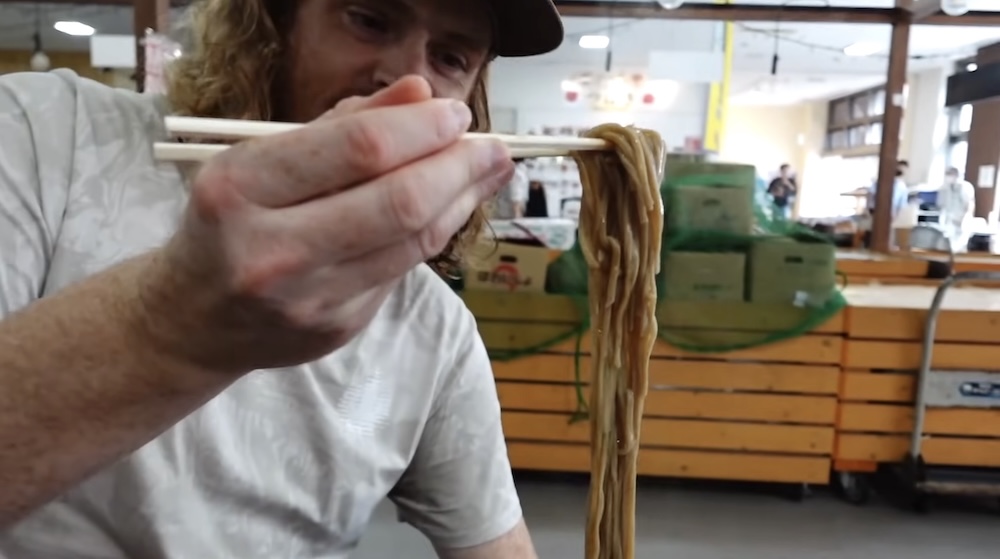
Hot noodles and the mystery fried accompaniment
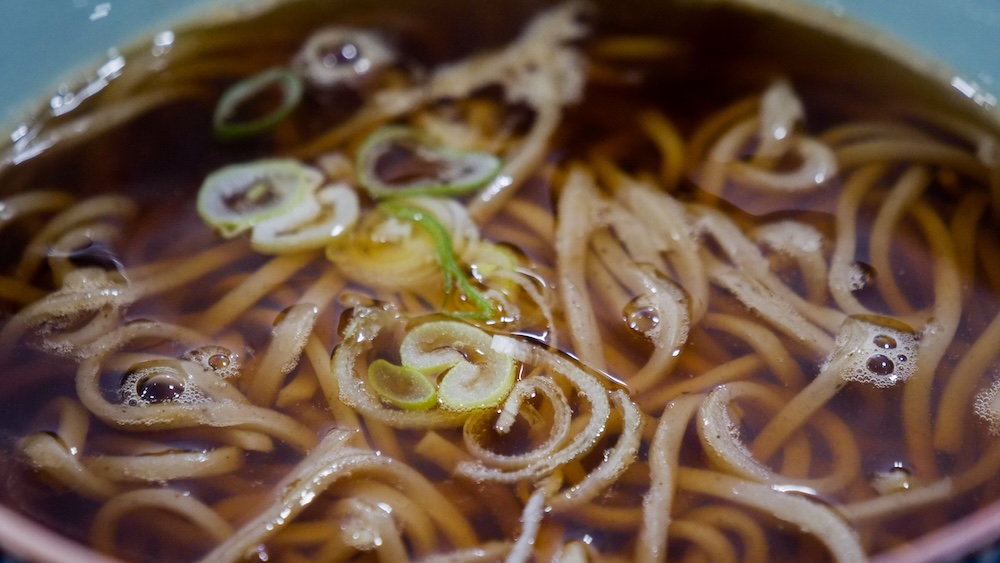
Alongside the seafood, we also had a generous helping of hot noodles. I thought they worked beautifully with the cold fish and rice, especially so early in the morning. Going back and forth between the two made the meal feel more substantial than simply eating a bowl of sashimi-topped rice.
There were also accompaniments, including a fried item we couldn’t immediately identify. At first, we wondered whether it might be scallop. Then we tasted it and thought it might actually be chicken. I’m still not entirely sure what we ate, which probably tells you something about our ordering skills that morning.
Regardless, I enjoyed the combination of dishes. There was plenty of protein, a good amount of rice and noodles, and more variety than I’d normally expect from breakfast.
The funny part is that despite the amount of food, we didn’t finish feeling uncomfortably stuffed. We were satisfied and ready to get moving, which was exactly what we needed given our rather ambitious sightseeing plans.
– Kaisendon, bowl of rice topped with fresh, raw seafood or sashimi
– Soba noodles
– Fried chicken
What to eat at Hakodate Morning Market: the seafood choices worth knowing
Kaisendon: the obvious starting point
If you’re visiting Hakodate Morning Market specifically to eat seafood, I’d start by looking at the kaisendon options.
Kaisendon is a bowl of rice topped with seafood, typically featuring raw ingredients. The actual toppings vary considerably, which is part of the appeal. You might find salmon and salmon roe, tuna, crab, scallops, sea urchin or a mixture of several ingredients.
It’s worth paying attention to what’s included rather than assuming all seafood bowls are more or less the same.
Some restaurants offer a preset combination, while others allow you to choose particular ingredients. Asaichi Oukei, for example, has advertised a customizable okonomi-don, where you can select your preferred seafood, alongside bowls with fixed combinations.
Personally, I enjoy trying several types of seafood together. Our breakfast had enough variety to make every few bites interesting, and that’s something I’d look for again.
However, if you’re particularly fond of one ingredient, a simpler bowl featuring that seafood could make more sense than paying extra for a mixture containing things you don’t especially enjoy.
Salmon and ikura
These are the two ingredients I can enthusiastically recommend from our own breakfast.
The salmon was tender and delicious, while the ikura—salmon roe—provided a completely different texture. If you enjoy those salty little bursts of flavour, a salmon-and-roe combination is worth looking for.
Salmon-focused bowls also give you a fairly straightforward option if you’re hesitant about ordering seafood you’ve never tried before. You can choose something familiar without abandoning the whole idea of a Japanese seafood breakfast.
That’s not to say you should avoid experimenting. I love trying new foods, but I also think there’s something to be said for ordering what you actually enjoy rather than feeling obliged to choose the most unusual item on the menu.
Crab, sea urchin and mixed seafood bowls
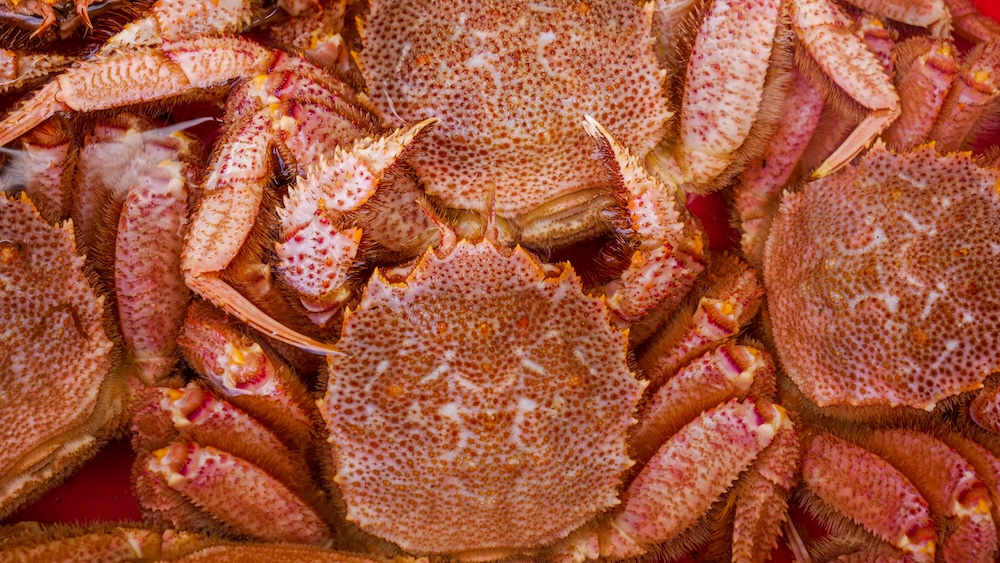
Crab is one of the great visual attractions of Hakodate Morning Market. We saw some absolutely enormous specimens while exploring the stalls, and I was fascinated by their size.
We didn’t order crab for breakfast, though, so I can’t tell you how it tasted at our restaurant. The same goes for uni, or sea urchin, which you’ll encounter on some of the more elaborate seafood menus.
For a more adventurous breakfast, look for mixed bowls that include these ingredients. Chamu, for instance, has listed a Hakodate bowl combining sea urchin, salmon roe and crab, along with a separate uni-and-roe combination.
These kinds of dishes can cost noticeably more than simpler bowls, and I wouldn’t automatically assume that a higher price means more food. You’re often choosing a different selection of seafood, and the ingredients themselves can affect the cost.
My preference would be to compare a few combinations before deciding. A bowl with three ingredients you love is a better use of your breakfast budget than one with five ingredients you’re only mildly interested in eating.
Fresh squid: a completely different texture
One of my favourite little food discoveries at the market happened before we even sat down for breakfast.
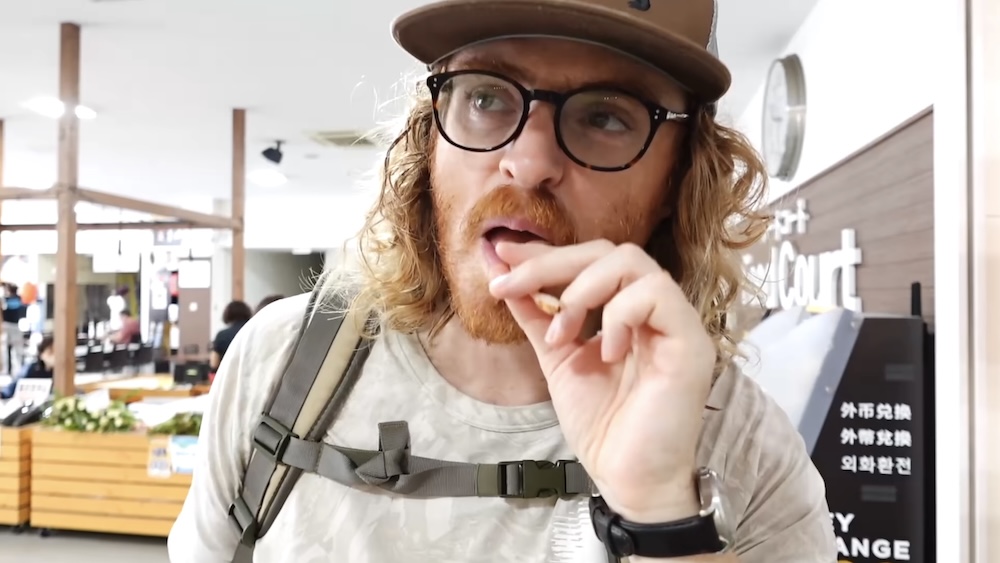
Someone offered me a piece of fresh squid while we were wandering around, and I happily accepted. I already knew squid quite well from my years living in South Korea, where I used to eat the dried version at baseball games.
But the fresh squid in Hakodate was a completely different experience. It was much more tender and nowhere near as chewy as the dried snack I remembered.
If you enjoy squid, keep an eye out for dishes such as ika somen, which features thinly sliced squid, or fresh squid sashimi. Some restaurants also advertise odori-don, sometimes called a dancing-squid rice bowl, though availability and pricing depend on the establishment and supply.
We didn’t order those particular dishes, nor did we participate in the market’s separate live-squid fishing activity. My experience was simply tasting a fresh sample, but it was enough to remind me how different the same seafood can be depending on its preparation.
What if you don’t like raw seafood?
I know a breakfast of raw fish and rice won’t appeal to everybody. If that sounds like an unpleasant way to start your morning, you don’t necessarily have to skip eating at the market.
There are restaurants offering cooked alternatives. Depending on the establishment, these include grilled fish sets, tempura rice bowls, ramen and other rice dishes.
Ikura-tei, for example, has advertised grilled black cod, ramen sets and pork rice bowls. Asaichi Oukei has listed a grilled hokke fish set. These are menu options to consider rather than personal recommendations based on meals we’ve tried.
The important thing is to choose a restaurant that actually serves what you want. Don’t assume every seafood-bowl specialist can prepare all the cooked alternatives available elsewhere in the market.
Seafood rice bowl or breakfast set: how to avoid our ordering mistake
If there’s one practical lesson I’d take from our breakfast, it’s to look carefully at what’s included in a set.
A standalone kaisendon is relatively straightforward: you’re ordering a bowl of rice topped with your chosen seafood. A set meal can be more complicated because it may include a rice bowl, noodles, soup or additional dishes.
That’s how we ended up with two similar seafood bowls. We’d ordered the larger set without fully appreciating that it already contained something like our separate order.
Here’s how I’d approach the different choices:
| Breakfast option | Best suited to | What to check |
|---|---|---|
| Standalone kaisendon | Someone who mainly wants seafood and rice | Toppings, size and included accompaniments |
| Customizable seafood bowl | Someone with specific seafood preferences | Ingredient choices and final price |
| Larger breakfast or noodle set | Someone wanting a substantial meal with variety | Whether seafood rice, noodles and sides are already included |
| Cooked breakfast | Someone who doesn’t enjoy raw fish | Actual menu options and restaurant opening hours |
You don’t need to turn ordering breakfast into a military operation, but I’d make sure you understand what comes with your chosen dish before adding extras.
This matters particularly when you’re hungry and everything on the menu looks appealing. It’s easy to order one thing, spot another attractive photograph and decide that a second dish would be a lovely addition.
We certainly did.
If you’re travelling as a couple, another possibility is to order different things and share. Our meal ended up giving us plenty of seafood and noodles, which was a combination I really enjoyed. Just be sure the portions work for your appetite rather than treating our accidental feast as the standard breakfast order.
If you’re keen to try unfamiliar seafood but would rather have someone explain the choices and help with ordering, there is a private 90-minute Hakodate Morning Market tour with seafood tasting options. It includes an English-speaking guide, offers early-morning and daytime options, and covers food tasting expenses up to a set amount; anything beyond that allowance costs extra. We explored independently and didn’t take this tour, and I think most confident travellers can do the same without paying for a guide. But if you want help identifying dishes and choosing what to sample, it’s a relevant option to compare against the much cheaper approach of simply buying your own breakfast.
How much does seafood breakfast cost at Hakodate Morning Market?
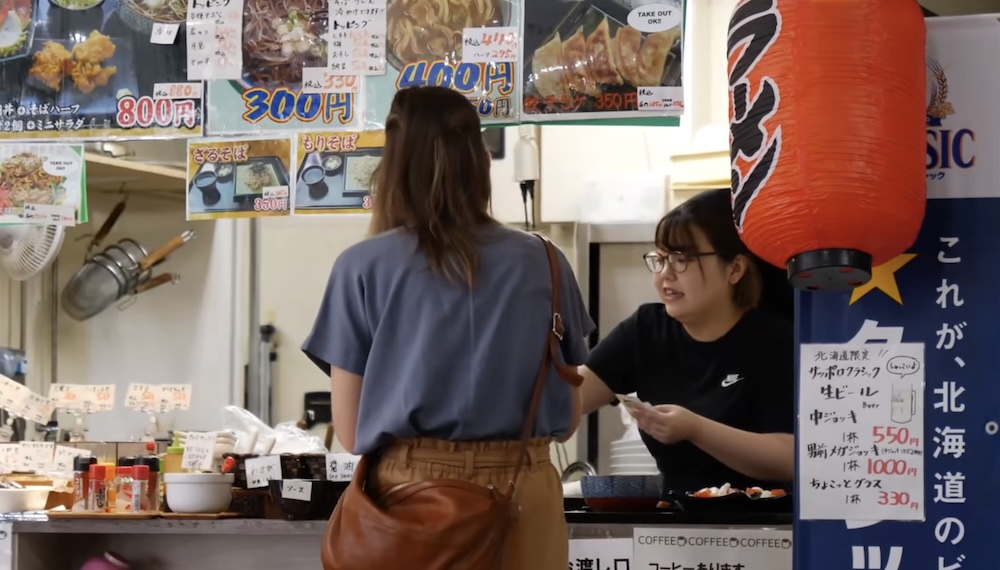
I remember thinking our meal was excellent value. Seafood can be expensive, and compared with some of the fish-market meals I’d experienced in South Korea, our breakfast in Hakodate felt relatively affordable.
That’s my impression from our visit, not a guarantee that every seafood restaurant in Hakodate will be cheaper than those in Korea. Prices vary substantially depending on what you order.
To give you a realistic idea of the differences, restaurant menus published in 2026 included:
- Asaichi Oukei: customizable seafood bowl starting at ¥1,550.
- Hamacho: salmon-focused rice bowl at ¥1,760.
- Chamu: sea urchin and salmon roe bowl at ¥3,000.
- Ikura-tei: ramen set at ¥1,780.
These are dated examples from different restaurants, not interchangeable meals or guaranteed current prices. Ingredients, quantities and accompaniments can vary considerably, and some seafood dishes are listed at market price rather than a fixed amount.
I wouldn’t get too caught up in chasing the cheapest seafood bowl, either. If the restaurant offers a particular combination you’re excited about, paying a bit more might make sense. On the other hand, there’s little reason to order an elaborate uni-and-crab bowl if you really just want salmon and roe.
For our part, the extra seafood bowl meant we ate more than expected, but I still remember being extremely pleased with what we received for the money.
The bigger lesson is to compare what’s actually on the plate, not just the number beside it on the menu.
When should you arrive for a seafood breakfast?
One advantage of Hakodate Morning Market is that it gets going very early, which suited us perfectly while we were still dealing with jet lag.
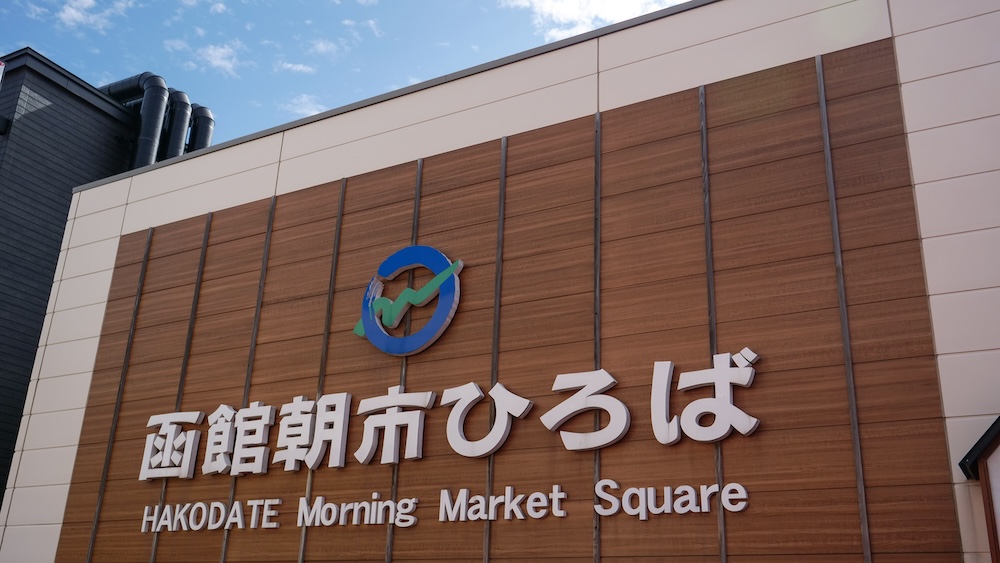
The general market schedule starts around 6 a.m. from January through April and around 5 a.m. from May through December, typically winding down shortly after 2 p.m.
However, the market opening and the restaurant opening are two different things.
That distinction matters if you’re arriving specifically to eat. Some restaurants start serving around 6 a.m., others around 7 a.m., and certain establishments open much later.
For example, restaurant listings in 2026 showed Asaichi Oukei opening at 6 a.m., Hamacho at 7 a.m. and Ramen Kirin at 11 a.m. Days off and seasonal variations also differ.
If you want a particular breakfast, check the restaurant’s current hours rather than assuming everything is operating when the first market stalls open.
There is also an interesting accommodation option if you’re planning your stay around breakfast at the market. Tokyu Stay Hakodate Asaichi Akarinoyu sits right beside the market and has an unusual breakfast arrangement: eligible guests can use breakfast tickets at participating market restaurants rather than being limited to a conventional hotel dining room. Its participating restaurants offer choices ranging from seafood bowls to grilled fish meals, although the available establishments, dishes and ticket conditions can change. We didn’t stay there, but for someone who wants to explore Hakodate’s seafood breakfast options on multiple mornings, it’s a particularly relevant hotel to consider. Check whether your chosen room rate includes breakfast tickets or whether they must be purchased separately.
I’d also bring some yen in cash. Payment arrangements vary between establishments, with some accepting cards and QR payments while others list cash only. It’s a minor precaution, but hardly something you want to sort out when you’re standing in front of a delicious-looking bowl of seafood.
And remember that Hakodate Jiyu Ichiba, sometimes called Hakodate Free Market, is a separate market in Shinkawa-cho. Don’t confuse its food offerings with those of the Morning Market beside Hakodate Station when researching where to eat.
Would I eat the same seafood breakfast again?
Absolutely. I’d repeat our breakfast in a heartbeat.
The seafood was delicious, the noodles were a great addition, and the meal was substantial enough to keep us going during our busiest day of sightseeing in Hakodate. We didn’t need a siesta afterward, which was quite an achievement considering how much food we’d ordered.
I’d probably pay a little closer attention to what was included in the set next time, although I can’t say I regret how things worked out. Sometimes a travel mistake results in a missed train or an expensive taxi ride. Ours resulted in an extra bowl of seafood, and I can think of considerably worse outcomes.
For anyone visiting Hakodate Morning Market, my advice is simple: start by deciding which seafood you actually want to eat. If you enjoy variety, look at the mixed kaisendon options. If you’re particularly keen on salmon, roe, crab or uni, see what combinations are available. And if you’re hungry enough for a bigger breakfast, a set meal can be a great choice—provided you know what’s included.
As for Audrey and me, we came to the market hungry, ate exceptionally well and headed off to explore Hakodate with full stomachs and plenty of enthusiasm.
That’s a pretty good start to a day in Japan.
Frequently Asked Questions
What should I eat at Hakodate Morning Market?
A kaisendon seafood rice bowl is a good starting point if you enjoy raw fish. You can choose mixed seafood toppings, focus on favourites such as salmon and ikura, or look for a cooked meal at a restaurant that offers one.
What is kaisendon?
Kaisendon is a bowl of rice topped with seafood, often served raw. Toppings vary by restaurant and may include salmon, salmon roe, tuna, crab, scallops or sea urchin.
Should I order a seafood rice bowl or a breakfast set?
A standalone bowl suits you if you mainly want seafood and rice. A larger set may include noodles and other dishes, sometimes including a seafood rice bowl already. Check what comes with the set before ordering extras.
How much does a seafood breakfast cost at Hakodate Morning Market?
Prices depend on the restaurant, ingredients and meal format. Menus published in 2026 listed examples from ¥1,550 for a customizable seafood bowl to ¥3,000 for a sea urchin and salmon roe bowl. Check current menus before visiting.
Can I eat cooked food instead of raw seafood?
Yes, some market restaurants offer cooked options such as grilled fish sets, tempura rice bowls, ramen or pork rice bowls. The selection varies by restaurant, so check its menu and opening hours.
Does every restaurant open when Hakodate Morning Market opens?
No. The general market starts around 6 a.m. from January through April and 5 a.m. from May through December, but restaurants have their own schedules. Some open later or have different days off.
Did you try the squid-fishing activity at Hakodate Morning Market?
No. I tasted a small sample of fresh squid while browsing the market, but Audrey and I did not participate in the live-squid fishing activity or order a dancing-squid rice bowl.
This guide is also available in Spanish. [Leé la versión en castellano: Qué comer en el Mercado Matutino de Hakodate | nuestra experiencia desayunando mariscos]
This article contains affiliate links. If you book through one of these links, I may earn a commission at no extra cost to you.