
Audrey and I stayed very close to Goryokaku on our visit to Hakodate. It wasn’t part of some grand hotel strategy: we needed somewhere to sleep and the tram ran nearby. But after a few days of riding around town, eating our way through nearby restaurants and wandering Goryokaku Park before the Tower opened, I realized we’d landed in a part of Hakodate that worked remarkably well as a base.
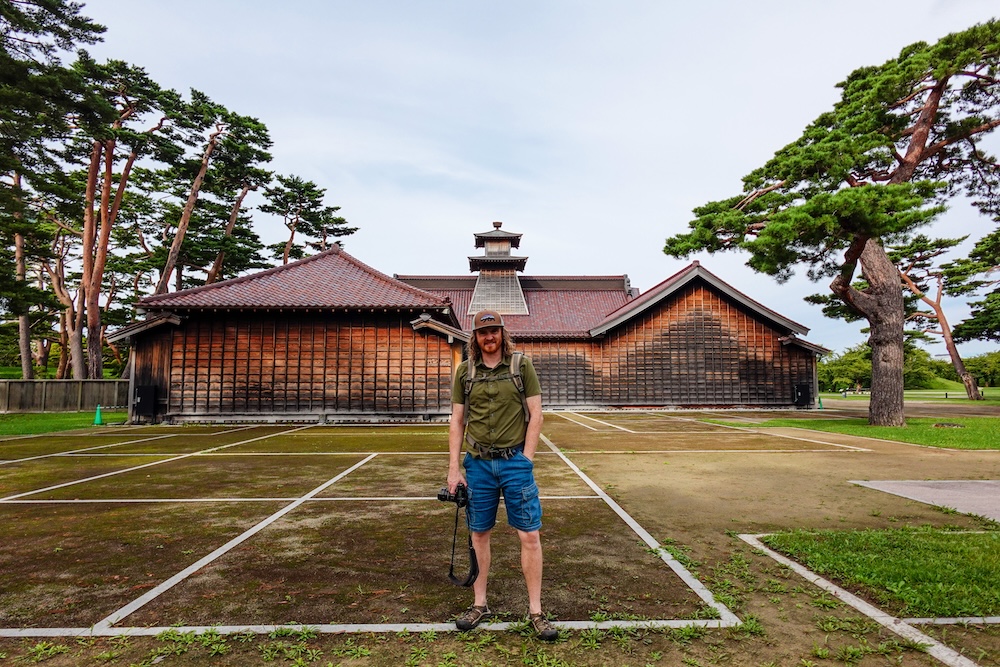
It wasn’t the Hakodate of harbourfront warehouses and picturesque Motomachi slopes. Goryokaku felt more like a neighbourhood where people carried on with their lives while we happened to be visiting. I’d stay nearby again, although I’d also enjoy trying the waterfront next time for a different experience.
If you’re choosing a hotel, the questions are how close it is to the tram, how close it is to the fort, and what the room actually offers. I can’t reliably identify the exact property we stayed at, so the five hotels below are researched choices rather than reviews of places I’ve slept.
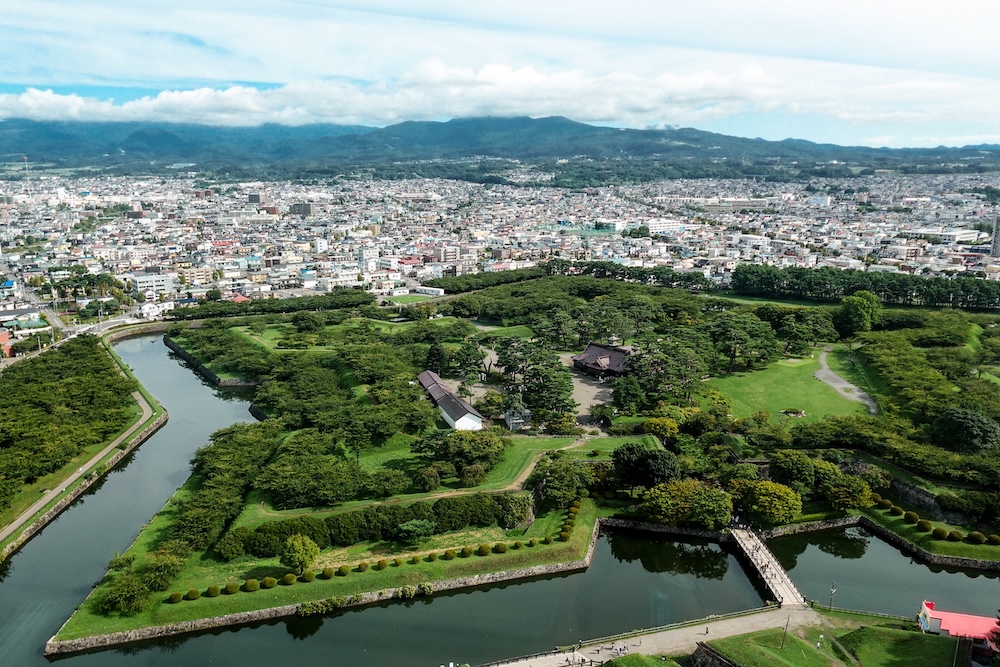
Goryokaku felt more local than the tourist waterfront
We arrived at Goryokaku Park on a bright morning before the Tower had opened. There was no reason to rush straight to the observation deck, so we walked instead, crossing bridges, following the moat and poking around the old fortifications. At one point we found a little route up some steps onto the fortified walls, with a higher view across the water. There were no guardrails in that spot, so a tumble into the moat was an unwelcome possibility.
What stayed with me wasn’t just the star-shaped fort. There were people jogging and walking, kids cycling past on their way to school, and locals using the park for recreation. We’d come to sightsee, but the park was obviously part of local life as well.
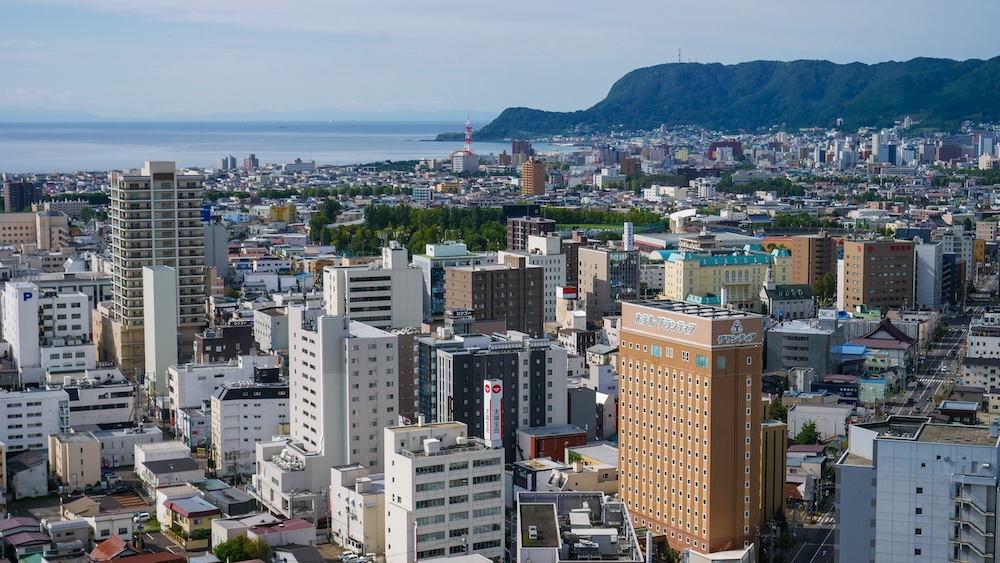
Eventually we went up Goryokaku Tower. I’d been looking forward to seeing the star shape from above, and the view delivered, but I hadn’t appreciated how much more of Hakodate we’d see. The harbour was visible in the distance, and the city stretched far beyond the compact little area we’d imagined before arriving. Between the park and Tower, it became one of our favourite experiences of the trip. If you want to go up yourself, you can check current Goryokaku Tower admission tickets; the park walk and paid observation deck are separate experiences.
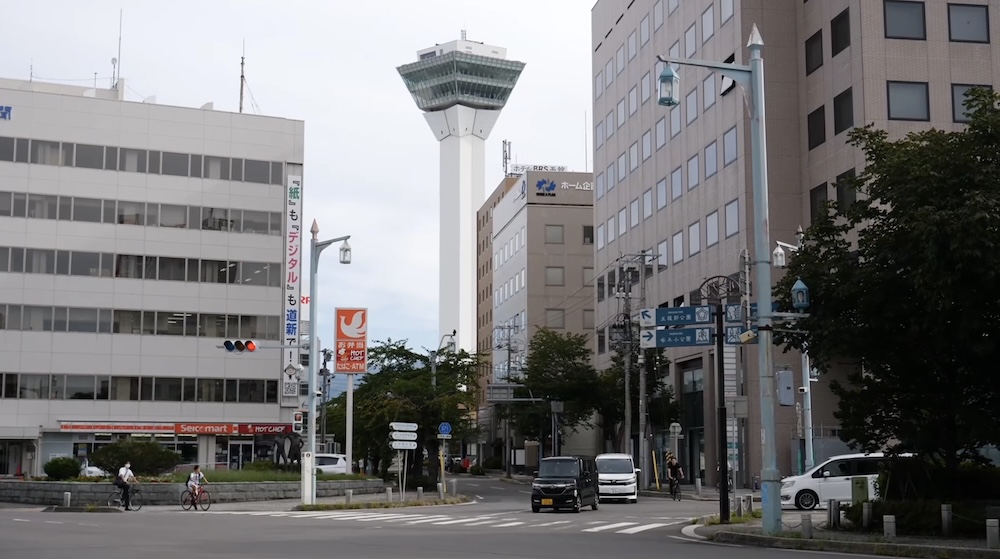
The streets around Goryokaku-Koen-Mae aren’t sleepy or particularly scenic; they’re a working commercial district with traffic, shops, restaurants and ordinary urban buildings. If you picture cobblestone lanes and centuries-old storefronts outside your window, you’ve got the wrong neighbourhood. What I liked was the balance of an active part of town, a major park within walking distance and transport that made the rest of Hakodate manageable.
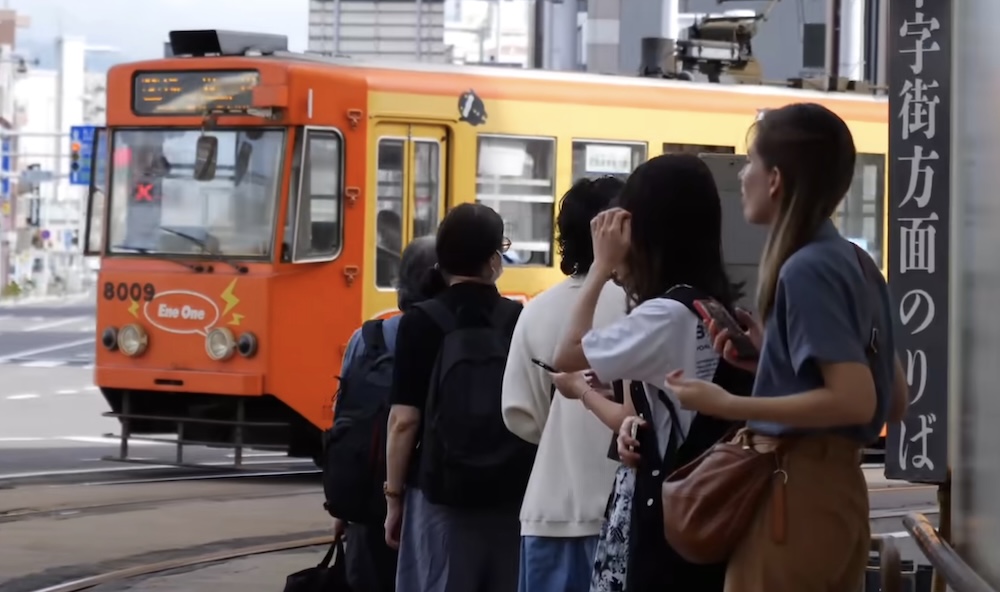
The tram makes Goryokaku work—but check where your hotel sits
Hakodate is enjoyable on foot, but we underestimated how spread out it is. Audrey and I walked plenty, especially around the harbour and up Motomachi’s slopes, yet we were grateful for the tram. Lines 2 and 5 passed near our accommodation, and hopping aboard spared us some long cross-city stretches. No sense wearing out our legs before reaching the hills we actually wanted to climb.
Goryokaku-Koen-Mae is the tram stop to remember. It’s on the shared corridor serving both lines, with connections toward Hakodate Station and onward to the western sightseeing areas. If you’re coming into Hakodate by train, don’t confuse it with JR Goryokaku Station. Despite that tempting name, the JR station is not the convenient arrival point for the star fort or the cluster of hotels discussed here. From Hakodate Station, you’re generally looking at a tram journey toward Goryokaku-Koen-Mae.
For a sense of the expense, the current adult tram fare is ¥270 between Hakodate-Ekimae and Goryokaku-Koen-Mae, or ¥290 between Goryokaku-Koen-Mae and Jujigai. A one-day tram pass costs ¥800, while the online 24-hour option is ¥1,130. Those fares can change. Compare passes against individual fares if you’ll be riding often. You can check the current tram fares and transport options before you travel. Compatible IC cards, including Suica, PASMO and Kitaca, also make paying for occasional trips easy.
Here’s the geographical wrinkle: Goryokaku-Koen-Mae isn’t at Goryokaku Park’s entrance. From the tram stop, the park and Tower are generally around a 10- to 15-minute walk, depending on where exactly you’re headed. Several hotels are only one to five minutes from the tram, so the stop and the attraction shouldn’t be treated as interchangeable points on a map.
If I were planning another trip where we’d ride the tram every day, I’d lean toward a hotel close to the stop. If I expected to spend lots of time around the fort, or wanted the shortest possible walk back after exploring, I’d look more carefully at properties farther toward the park. And if I were hauling a big suitcase, I’d pay attention to the distance from the tram before getting excited about a hotel that’s technically “near Goryokaku.”
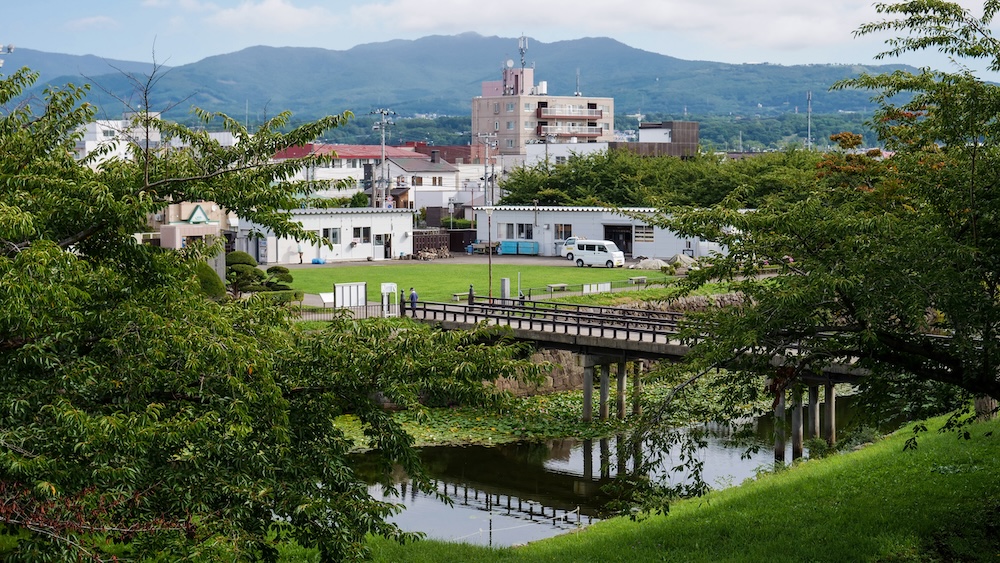
Five Goryokaku hotels worth comparing
These five hotels offer different practical advantages within the wider Goryokaku tram district. I’m comparing their locations, room choices and facilities rather than offering firsthand hotel reviews.
| Hotel | Walk to Goryokaku-Koen-Mae | Main reason to consider it | Watch for |
|---|---|---|---|
| HOTEL MYSTAYS Hakodate Goryokaku | About 1 minute | Nearly immediate tram access | Room type and first-come parking |
| Hotel Hokke Club Hakodate | About 1 minute | Communal bath and breakfast | Bath is artificial, not a natural onsen |
| Smile Hotel Premium Hakodate Goryokaku | About 3 minutes | Straightforward modern accommodation | Small standard doubles |
| Route Inn Grantia Hakodate Goryokaku | About 5 minutes | Natural hot-spring bath | Rate-plan inclusions and slightly longer tram walk |
| LC Goryokaku Hotel | About 3 minutes | Sauna and unusually varied rooms | Main-building and annex categories differ greatly |
These are approximate hotel-to-tram walking times, not guarantees of how long it will take to reach the fort. Check the route to your intended park entrance.
HOTEL MYSTAYS Hakodate Goryokaku: the tram-first choice
If I were trying to make sightseeing as easy as possible, HOTEL MYSTAYS would be one of the first places I’d compare. It’s at 26-17 Honcho, with Goryokaku-Koen-Mae about a minute away on foot. That makes a difference with luggage or after a full day across town.
It’s a modern city hotel with more than 200 rooms, laundry facilities, breakfast service and a FamilyMart on site. They’re unglamorous conveniences, but useful ones. There’s parking, although it’s first-come rather than a guaranteed space, so I’d look into that before arriving with a rental car.
The Tower is listed by the hotel at roughly 0.8 kilometres away, though I’d treat that as a general proximity figure rather than a promise about the exact walk to your preferred entrance. For me, MYSTAYS is the leading transport-convenience option, not a historic stay or a hot-spring hotel. If that is your priority, compare HOTEL MYSTAYS rooms for your dates.
Hotel Hokke Club Hakodate: a bath after a day on your feet
Hokke Club, at 27-1 Honcho, is also roughly a minute from the tram. That puts it in much the same practical position as MYSTAYS, but its appeal is different: it has a communal bath and puts some emphasis on its breakfast buffet, including local and Hokkaido dishes.
The bathing distinction matters. This is an artificial Komeiseki hot-spring-style bath, not a natural onsen. There’s nothing wrong with wanting a soak after exploring the city, but I’d rather know what I’m getting before I book. Standard singles and doubles are around 18 square metres, twins about 20, and a larger triple category stretches to approximately 40 square metres. Check the category carefully if you’re sharing or carrying bulky luggage.
The hotel’s own estimates put Goryokaku Tower about 10 minutes away and the broader park around 15 minutes on foot. I’d consider it when the tram stop matters as much as a communal bath, without paying for a property specifically because it claims to have natural spring water. You can check Hotel Hokke Club room options and rates to see which room and breakfast plan suits you.
Smile Hotel Premium Hakodate Goryokaku: simple, modern and compact
Smile Hotel Premium sits at 8-15 Honcho, approximately three minutes from the tram stop. It’s conventional accommodation for travellers spending most of their time out in the city.
Room size is the detail I’d check here. A standard double is about 15 square metres, a twin about 18, and a triple around 22.5. There’s also a 29.5-square-metre universal twin category, although that label alone doesn’t answer every accessibility question. If a particular access feature matters, confirm it directly rather than assuming the room or whole building will meet your needs.
The hotel has breakfast, laundry and parking. The separately priced buffet is currently listed at ¥2,000, but breakfast might already be part of a chosen rate, so compare the full package. Smile doesn’t have the distinctive bathing proposition of Route Inn or LC, and that’s fine. It belongs on the shortlist as a straightforward tram-accessible option rather than being dressed up as something more exotic. Before settling on a compact double, compare available rooms at Smile Hotel Premium.
Route Inn Grantia Hakodate Goryokaku: the natural hot-spring option
This is where I’d look if a proper hot spring at the hotel were high on my wish list. Route Inn Grantia, at 11-10 Honcho, has a natural hot-spring communal bath called Tabibito no Yu on the 14th floor. That’s a meaningful difference from Hokke Club’s artificial bath and LC’s sauna facilities, especially if you enjoy ending a long sightseeing day with a soak.
The walk to Goryokaku-Koen-Mae is approximately five minutes, a little farther than the closest properties but hardly an expedition. It’s also well positioned for the park; the hotel’s access information describes a short walk toward the Goryokaku grounds. I’d still check the route to the entrance I intended to use, because “five minutes to Goryokaku” can refer to a different endpoint than “five minutes to the Tower.”
There are several standard and comfort room categories, along with breakfast and parking facilities. Some official-site booking plans advertise breakfast as an inclusion; don’t assume every outside booking rate does. A shuttle has also been advertised with service conditions and interruptions, so I wouldn’t choose the hotel on that basis without confirming it for my dates. The natural bath is the real reason this one earns its place in the comparison. If it matters to you, check Route Inn Grantia rates and inclusions for your dates.
LC Goryokaku Hotel: check the room twice
LC Goryokaku, at 29-26 Honcho, is about three minutes from the tram. It could be one of the more interesting choices here, but I’d pay exceptionally close attention to the building and room category when booking.
The smaller annex offerings include a semi-double of just 9 square metres. In the main building, a standard double is around 18.72 square metres, while a deluxe double-twin is about 44.31 and a Japanese-Western room with a cypress bath reaches 52.77. Those are wildly different ways to spend a night under one hotel name. I’d be perfectly happy to save money on a small room for some trips, but I’d want to know that was the choice I’d made before opening the door with a suitcase in each hand.
LC also offers Finnish-style sauna facilities and a separately reservable private sauna. The shared sauna area doesn’t have a bathtub, so it shouldn’t be confused with either a public onsen or a large communal bath. For sauna enthusiasts, or anyone specifically looking at its larger room categories, LC has something distinctive to offer. For the smaller rooms, check the dimensions before booking. You can compare LC Goryokaku room categories before choosing between the main building and annex.
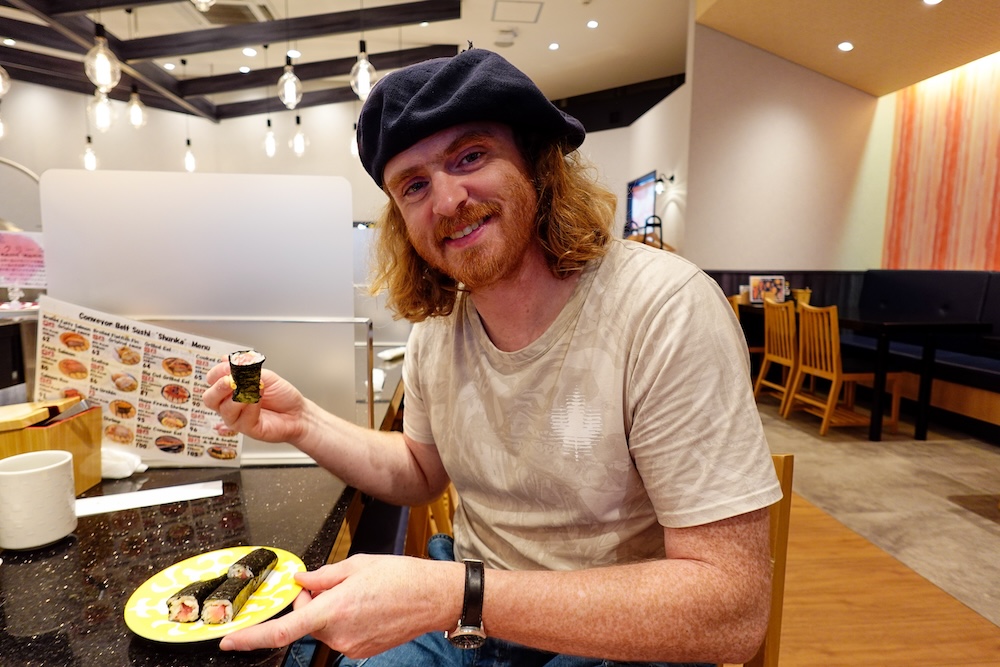
We did a lot of our eating around Goryokaku
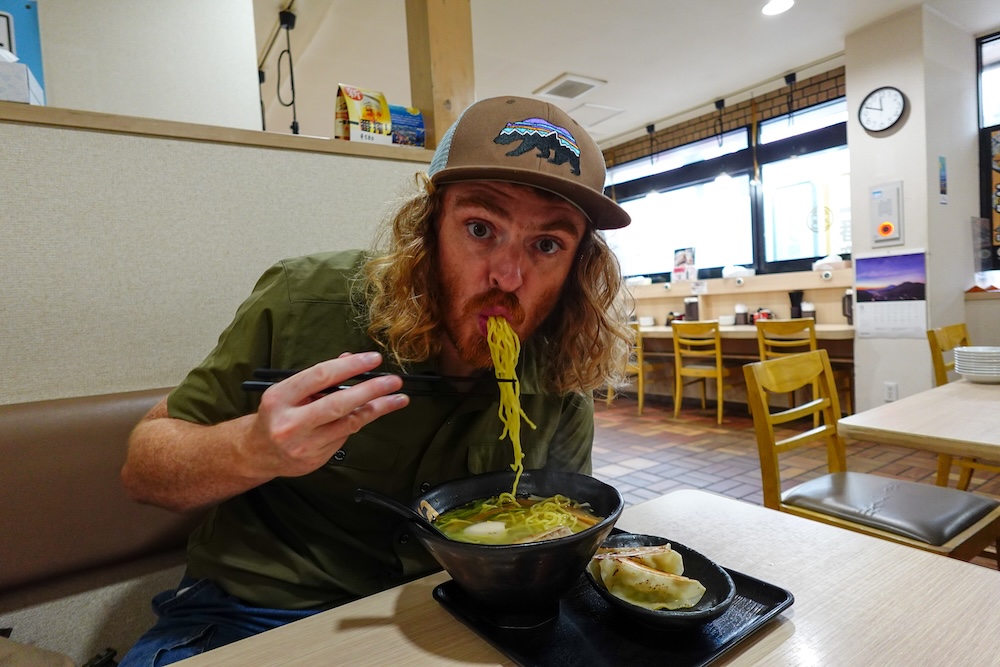
I remember neighbourhoods partly by what we ate, and Goryokaku did well. Looking back, it feels like a huge share of our Hakodate meals happened on this side of town, although not literally every meal did. Our shio ramen at Yondaime, for example, was down near Hakodate Station.
The restaurant that really stuck was Shunka Sushi, across from Goryokaku Tower. We first went on our arrival night, when jet lag had reduced us to something resembling functioning zombies. We were exhausted, but we liked it enough to return later in the trip. That’s about as convincing a restaurant endorsement as I can give: not merely saying we’d go back someday, but actually doing it on the same trip.
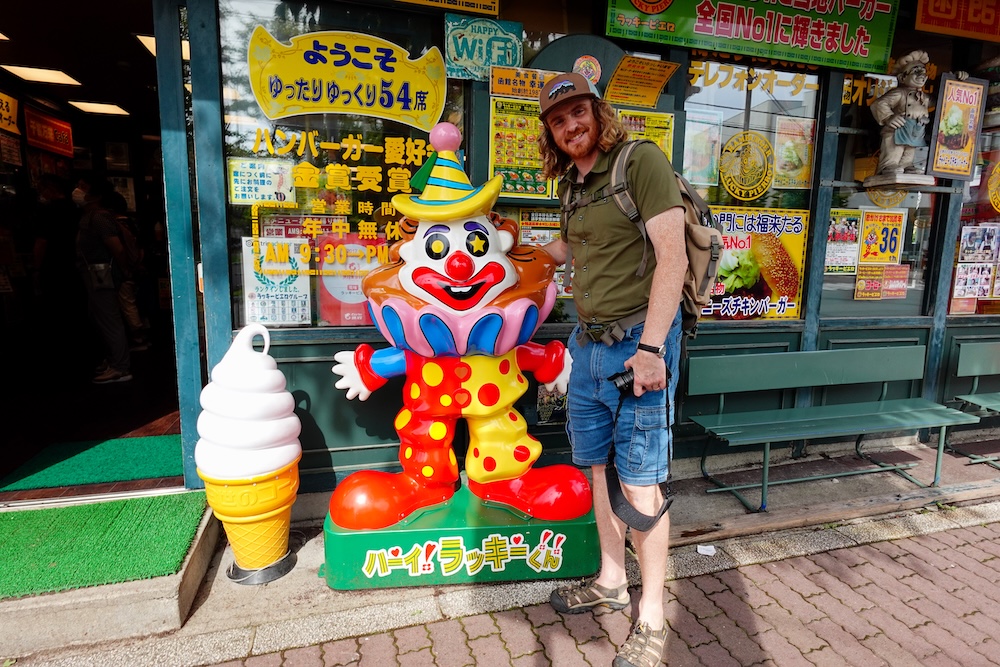
We also visited the Goryokaku-Koen-Mae branch of Lucky Pierrot. The outside was covered in clown branding and the interior had an angel theme that left me wondering what on earth the burgers were going to be like. I was expecting something a bit gimmicky; the food was better than I’d anticipated, and we both enjoyed our burgers. Back at the Tower, we tried Milkissimo gelato in flavours including berry, pumpkin and purple sweet potato. A perfectly respectable amount of sightseeing seemed to involve eating, which is how I like it.
Those places are closer to the Tower, not necessarily outside every Honcho hotel. Still, having enjoyable meals within the wider neighbourhood helped make Goryokaku feel like somewhere we were actually based, instead of a place we returned to only when it was time for bed.
What you gain in Goryokaku, and what you give up
For an overnight stop with an early train, I’d seriously consider Hakodate Station instead. Rail arrivals, onward departures and the Morning Market are easier from that part of town, and moving luggage onto another tram journey is an extra task I might not want for a one-night stay. The station area has a different job to do, and it does that job well.
If I were choosing primarily for historic atmosphere, the Bay Area and Motomachi would tempt me. We loved walking among the red-brick warehouses and exploring the sloping streets above the harbour. Staying there would bring that scenery into the beginning and end of each day, although the hills add their own complications when you’re carrying bags or trying to conserve energy.
Goryokaku trades that immediate harbour atmosphere for a commercial neighbourhood, useful tram connections, plenty of eating options and the park nearby. It’s a particularly reasonable proposition for a stay of several days, when you can settle into the area and make repeated tram trips without treating every journey like a logistical emergency. You still have to ride west for the waterfront.
Would I split a short Hakodate stay between neighbourhoods? Probably not. Moving hotels for a two- or three-night trip can eat up more energy than the location change saves. On a longer return visit, though, I could see the appeal of experiencing a different part of the city, especially now that we know Goryokaku works. If you’re still weighing up the districts, compare current Hakodate hotel options on the map before picking your base.
A few details I’d check before booking
The five hotels are close enough geographically that the biggest difference may be the room you book rather than the hotel’s name. LC is the obvious example, with accommodation ranging from 9 square metres to over 50; Smile’s standard double is considerably smaller than its triple or universal twin. I’d compare the actual room category, bed arrangement and what is included in the rate before deciding one hotel is better value.
I’d also distinguish facilities that can sound similar in booking filters. Natural hot spring at Route Inn; artificial communal bath at Hokke Club; sauna at LC. None is automatically better for everybody, but they’re not interchangeable. Check breakfast inclusions, parking restrictions and any special facilities that require advance reservations. If you’re travelling with accessibility requirements, confirm the specific room and access route instead of relying on a broad category label.
Finally, look at the total booking price. Hakodate and Hokkaido introduced accommodation taxes in April 2026, with amounts linked to the per-person nightly accommodation charge. Compare the final total, including any tax added at checkout, not the first advertised number.
Would I stay near Goryokaku again?
Absolutely, provided it suited the trip we were taking. I remember walking through the park while locals were out getting some exercise, riding the tram across Hakodate without much fuss and eating sushi good enough to bring us back for seconds. We spent several packed days sightseeing, yet Goryokaku still felt like somewhere we could settle in between outings.
I might choose Bay Area or Motomachi next time simply because I want to wake up in a different part of the city. That doesn’t diminish how well Goryokaku served us. If you want a practical Hakodate base with tram access, restaurants and the star fort within reach, it’s an option I’d take seriously—and I’d choose the hotel according to the walk and facilities that matter to you, rather than a generic “best hotel” badge.
Frequently Asked Questions
Is Goryokaku a good place to stay in Hakodate?
Yes. We found Goryokaku convenient for a multi-day stay because the tram made it easy to reach other parts of Hakodate, while the neighbourhood had restaurants, everyday city life and Goryokaku Park nearby.
How close is Goryokaku-Koen-Mae to Goryokaku Park?
Goryokaku-Koen-Mae is the useful tram stop for the area, but it is not at the park entrance. Expect roughly a 10- to 15-minute walk to Goryokaku Park or Tower, depending on your exact destination.
What is the difference between Goryokaku-Koen-Mae and JR Goryokaku Station?
Goryokaku-Koen-Mae is the tram stop that serves the hotel district and Goryokaku Park area. JR Goryokaku Station is a separate railway station and is not the convenient arrival point for the star fort.
Which Goryokaku hotel is closest to the tram?
HOTEL MYSTAYS Hakodate Goryokaku and Hotel Hokke Club Hakodate are both about a one-minute walk from Goryokaku-Koen-Mae, making them the strongest tram-first options in this comparison.
Which Goryokaku hotel has a natural hot spring?
Route Inn Grantia Hakodate Goryokaku has a natural hot-spring communal bath on the 14th floor. Hotel Hokke Club has an artificial communal bath, while LC Goryokaku Hotel focuses on sauna facilities.
Should I stay in Goryokaku or near Hakodate Station?
I would lean toward Hakodate Station for a one-night stop or an early train. For a longer stay, Goryokaku becomes more appealing if you value tram access, restaurants and having the star fort nearby.
This guide is also available in Spanish. [Leé la versión en castellano: Dónde alojarse en Goryokaku, Hakodate: mejores hoteles y alojamiento cerca del tranvía]
This article contains affiliate links. If you book through one of these links, I may earn a commission at no extra cost to you.