
JR Noboribetsu Station was quieter than I expected when Audrey and I arrived from Hakodate. We walked outside with our luggage, found the taxi stand and the local bus timetable, and made the decision right there: pay more to go straight to our hotel, or wait for the bus and save some yen? The station itself wasn’t confusing. We simply hadn’t decided how we wanted to leave it.
We had two nights booked at Park Hotel Miyabitei, so there was no great rush, and we genuinely enjoy taking local transportation when we travel. The bus won. About half an hour later we were on our way uphill, both comfortably seated with our bags in a designated luggage area. The less obvious cost of our cheaper transfer became apparent after we got off and had to wheel our suitcases uphill to the hotel. I’d still make the same choice for our trip, but not necessarily for every trip.
Bus vs Taxi From Noboribetsu Station: Fares and Travel Times
First, JR Noboribetsu Station and Noboribetsu Onsen aren’t the same place. The hot-spring resort district sits roughly eight kilometres uphill from the railway station, so getting off your train doesn’t mean you’re within an easy stroll of your ryokan.
| Local bus | Taxi | |
|---|---|---|
| Published fare | ¥450 per adult, one way | Approximately ¥2,800 to Dai-ichi Takimotokan |
| Time in vehicle | Around 14–21 minutes to the main onsen stop; up to 27 minutes to Ashiyu Entrance | Approximately 13 minutes to Dai-ichi Takimotokan |
| Waiting | Scheduled departures; some lengthy gaps | Depends on taxi availability |
| Drop-off | Designated stop; a hotel walk may follow | Requested hotel, where vehicle access allows |
These are not perfectly matched journeys to the same door. The taxi figure is a hotel-specific estimate, not a fixed rate for every accommodation, and the bus journey takes longer if your service continues beyond the main terminal.
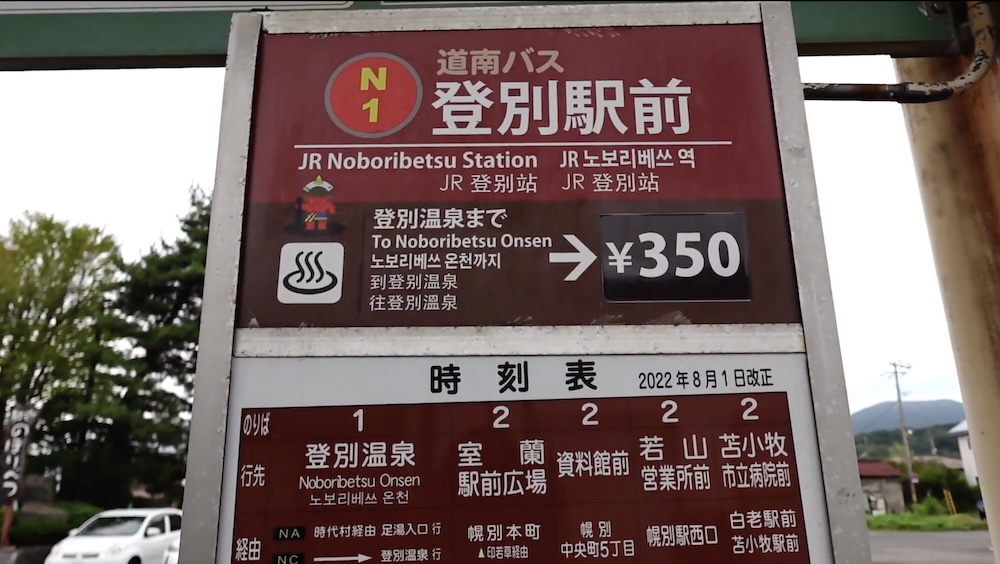
For two adults, the current bus fare totals ¥900 one way, versus approximately ¥2,800 for that illustrative taxi trip: a saving of around ¥1,900. Audrey and I paid ¥350 each when we visited, which is why old bus-stop photographs aren’t reliable for planning today’s fares. The bigger wildcard, though, is waiting. Our half-hour wait suited our relaxed visit; current departures are unevenly spaced, sometimes more than an hour apart. That’s much harder to shrug off when you’re making a short day trip.
Finding the Bus or Taxi Outside JR Noboribetsu Station
The onsen-bound Donan Bus uses the station-front stop called Noboribetsu Ekimae (N1). Check the destination and departure displayed there rather than assuming the next bus is yours. I’d look at the current Donan Bus timetable before arriving by train; otherwise, a quiet little station can turn into a longer stopover than you’d planned.
Payment differs by service. On the NA and NB variants, passengers board through the front and pay when entering, with Visa contactless available on designated services. On NC and ND, passengers board at the rear, collect a numbered ticket and pay when leaving, using the supported cash or QR payment methods. Suica and Kitaca aren’t accepted on this corridor. I’d carry small cash regardless; fareboxes don’t dispense change, although on-board change machines can exchange ¥1,000 notes and certain coins.
I believe we handed exact cash to the driver as we boarded, but I wouldn’t use that fuzzy recollection as today’s boarding instructions. I do remember the bus being comfortable, with seats for both of us and somewhere designated for our bags. That was our ride, not a guarantee that every bus has the same luggage setup.
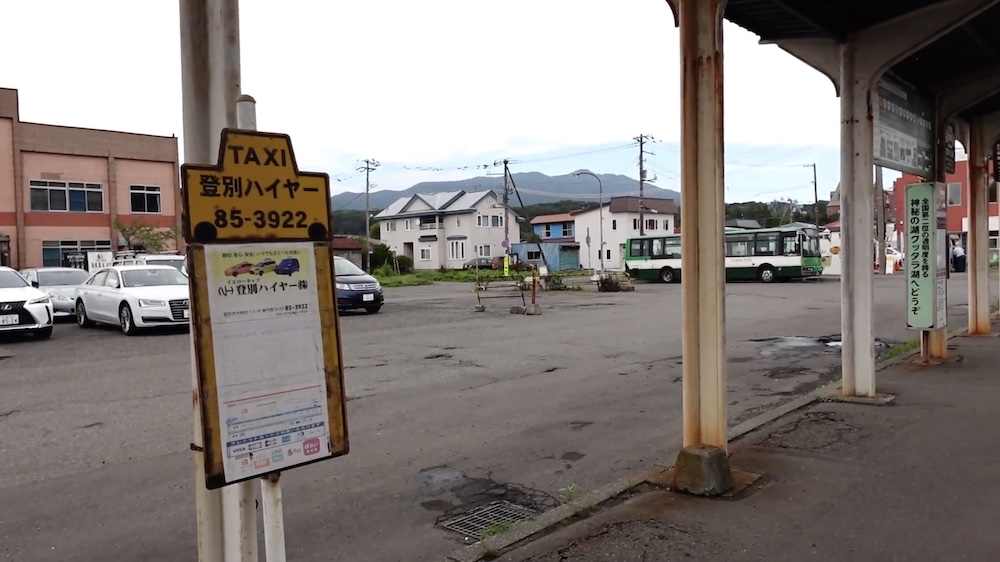
We also saw taxis waiting outside JR Noboribetsu Station, although we didn’t use one. The stand is easy to locate, but the presence of cars on our arrival doesn’t guarantee one will be ready whenever you turn up. If timing is critical, consider arranging your transfer in advance.
Where to Get Off in Noboribetsu Onsen
This is the part I’d double-check with a suitcase: some buses finish at the main Noboribetsu Onsen terminal, while others continue past additional hotel-area stops. The stop names to recognize are:
- N11 — Noboribetsu Onsen: Main onsen bus terminal.
- N12 — Central Noboribetsu Onsen: Central hotel area.
- N13 — Dai-ichi Takimoto: Near Dai-ichi Takimotokan.
- N14 — Park Hotel Mae: Closest to Park Hotel Miyabitei.
- N15 — Ashiyu Entrance: Farther toward the natural-footbath area.
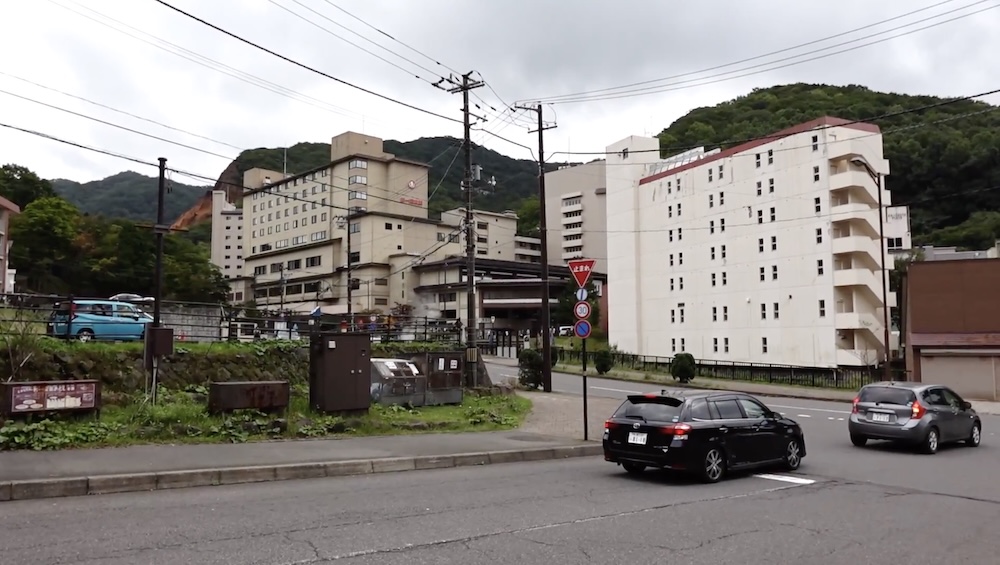
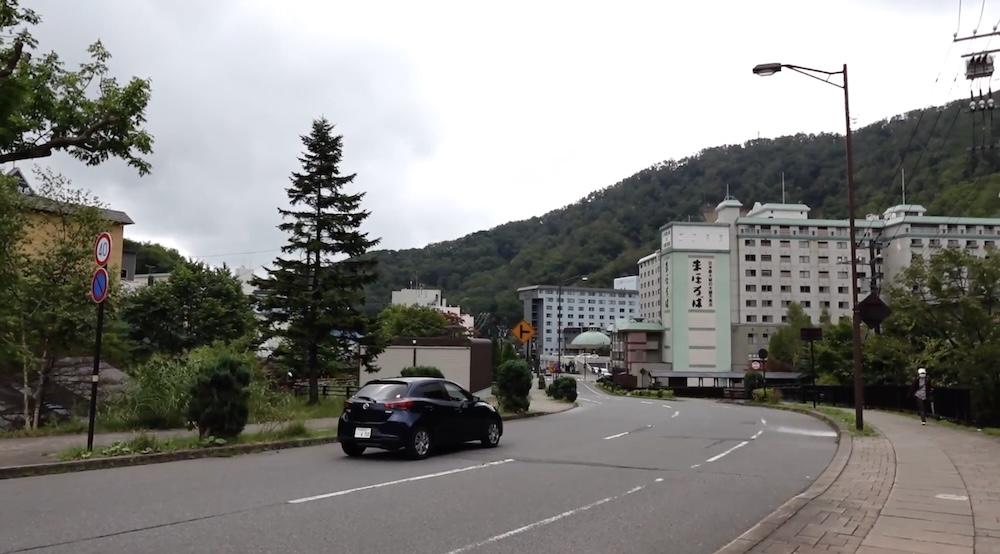
I remember getting off near the end of our bus journey and wheeling our luggage uphill to Park Hotel Miyabitei. I think we had a sidewalk for the hotel approach, but I couldn’t confidently tell you which stop we used. Today, the hotel’s own directions give approximately ten minutes on foot from N11. A continuing bus serving N14 Park Hotel Mae gets you much closer to its entrance, which would certainly have been preferable with luggage in tow.
The distinction applies to other hotels too. If you’re considering staying at Dai-ichi Takimotokan, it’s approximately seven minutes on foot from N11 but about two minutes from its namesake stop, N13. Check the stop nearest your accommodation and whether your particular departure serves it. Waiting longer for a bus that goes farther may save you a climb, but it can also eat into the time you were trying to save.
If you haven’t booked somewhere yet, I’d compare hotels in Noboribetsu Onsen with the bus stops in mind. A property that’s close to the attractions isn’t necessarily equally convenient when you’re arriving from the railway station with luggage.
When I’d Take the Bus—and When I’d Pay for a Taxi
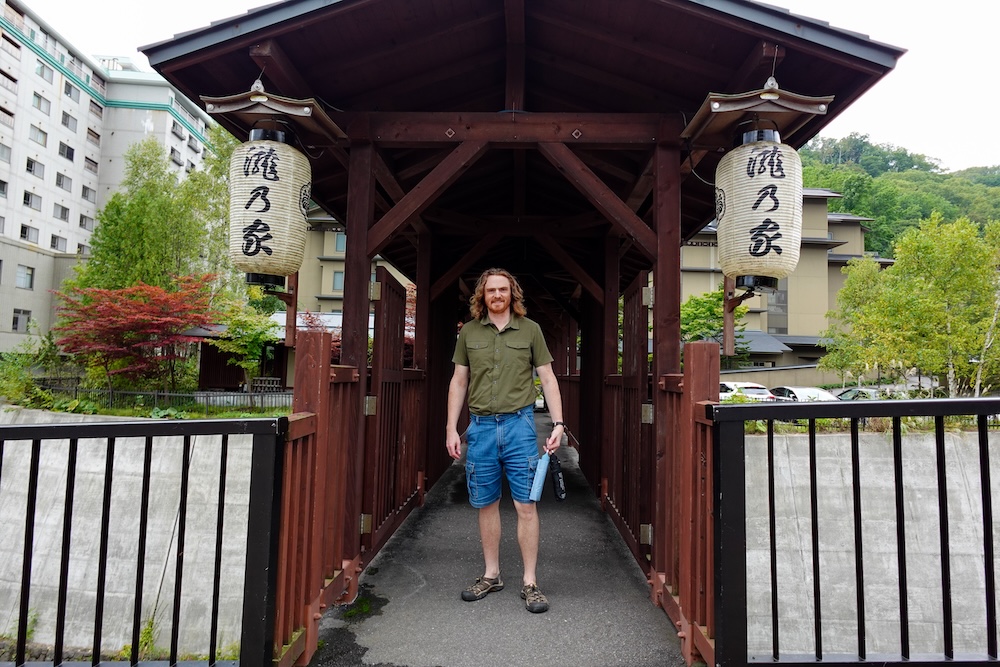
For our two-night stay, I have no regrets about taking the bus. It was cheap, the ride was pleasant and we got the local-transport experience we enjoy. The uphill luggage walk was a nuisance rather than a deal-breaker, and once we reached Park Hotel Miyabitei we could explore the onsen district on foot.
I’d think differently on a day trip, particularly if I’d just missed a departure and had only a few hours to explore. A direct taxi would also appeal more with heavy bags, a difficult hotel approach or mobility considerations, provided the vehicle and hotel access meet your needs. Sharing a taxi reduces the per-person expense, although it doesn’t automatically make the cab cheaper than the bus.
My choice would come down to when the next bus leaves, whether it serves the right stop, and how far I still have to wheel my luggage. If those three things work in my favour, I’ll happily pocket the savings. If they don’t, there’s not much glory in congratulating myself on a cheap ticket while dragging a suitcase uphill and watching the afternoon disappear.
Frequently Asked Questions
How much is the bus from Noboribetsu Station to Noboribetsu Onsen?
The adult one-way fare is ¥450. Audrey and I paid ¥350 each during our visit, but that was the older fare. Check the current Donan Bus timetable before travelling.
How long does the bus take to Noboribetsu Onsen?
Allow around 14–21 minutes to the main Noboribetsu Onsen stop, or up to 27 minutes for a service continuing to Ashiyu Entrance. Waiting for your bus can add considerably more time.
How much is a taxi from JR Noboribetsu Station?
An approximate taxi estimate is ¥2,800 to Dai-ichi Takimotokan, with a journey of about 13 minutes. Your actual fare depends on your destination and circumstances; Audrey and I took the bus instead.
Where should I get off the bus for Park Hotel Miyabitei?
Park Hotel Mae (N14) is the closest listed stop, but only some buses continue that far. From the main Noboribetsu Onsen terminal (N11), the hotel gives an approximately ten-minute walk.
Can I use Suica or Kitaca on the Noboribetsu Onsen bus?
No. Suica and Kitaca are not accepted on this corridor. Payment methods vary by bus service, so I would carry small-denomination cash and follow the boarding instructions.
Is the bus or taxi better for a day trip to Noboribetsu Onsen?
I would consider a taxi if I had only a few hours and faced a long bus wait. For our relaxed two-night stay, the cheaper bus suited us, even with the uphill walk to our hotel.
This article is also available in Spanish. [Leé la versión en castellano: De la estación de Noboribetsu a Noboribetsu Onsen: colectivo vs. taxi, tarifas, tiempos de viaje y dónde bajarse]
This article contains affiliate links. If you book through one of these links, I may earn a commission at no extra cost to you.