
Sapporo is a large Japanese city, and it doesn’t take long looking at a map to realize its attractions are spread across more than a couple of downtown blocks. But Audrey and I managed to explore it without renting a car, and getting around was one of the things I liked most about our visit. We used the subway to reach a part of the city, walked between the sights once we got there, and relied on buses when the rails ran out. We also took a streetcar once and enjoyed it.

We did get off one stop too early on our way to Makomanai Takino Cemetery. We were still nearby, thankfully, but a journey that looks simple on a map can require more attention once you leave the subway behind.
Central Sapporo is a pleasure to explore on foot, especially when you combine walking with the subway. The outskirts take more planning. Here’s where each mode works, where it doesn’t, and which payment details matter.
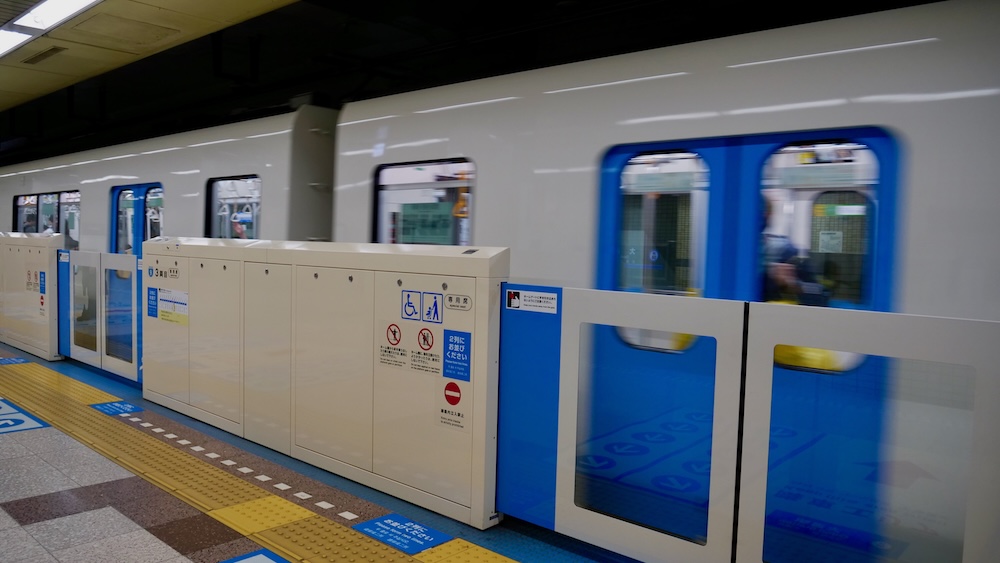
The Easiest Way to Get Around Sapporo Without a Car
Our approach was uncomplicated: take the subway to a neighbourhood, then stay above ground and explore. We could walk between nearby attractions without descending into a station for every little hop. It helped that Sapporo has a grid-like layout and a surprisingly generous amount of greenery for a city of its size.
That worked around Odori Park, Maruyama and Nakajima Park. The subway handled the longer jumps, while walking let us discover the streets between attractions. Buses filled the gaps farther south. We rode the streetcar once and enjoyed it.
If you’re figuring out your first few days, here’s how I’d think about the options:
| Transport | When I’d consider it | The catch |
|---|---|---|
| Walking | Central Sapporo, Odori, Tanukikoji and sights grouped near a station | Heat, snow, luggage and cumulative distance can make a supposedly short day feel long |
| Subway | Moving between districts, reaching Maruyama or taking the southern line to Makomanai | You’ll often have another walk or a bus connection at the other end |
| Bus | Attractions beyond the subway, particularly around southern Sapporo | The correct stop and return departure matter as much as the route number |
| Streetcar | Destinations along its central and southwestern loop | It covers a specific corridor, and riding the long way around the loop wastes time |
Walking sometimes beats the train; elsewhere the bus is the obvious choice. Sapporo felt big, green and spread out, but less frantic than other Japanese cities we’ve explored. Audrey noticed the trees and breathing room; I liked how practical it felt to move around without a vehicle.
Where you stay affects how often you’ll need transport. For a first visit built around subway sightseeing, Odori is an obvious area to investigate because all three lines meet there. You can compare hotels near Odori Station, then check the walking distance from each property to the entrance you’d actually use. A hotel labelled central isn’t automatically convenient for every route.

Walking Around Sapporo: Where It Works Best
Sapporo Station, Odori and Susukino
Start with the central north–south corridor. JR Sapporo Station is at the northern end, Odori lies farther south, and Susukino is farther south again. The walk from JR Sapporo Station to Susukino is roughly 1.5 kilometres, or about 20 minutes at an ordinary pace. Traffic lights and stops add time, but the distance doesn’t automatically demand a subway ride.
We spent plenty of time around Odori. After coming out near the Sapporo TV Tower, we walked a few blocks over to the Clock Tower. It was straightforward and let us notice the streets between landmarks. If you’re visiting both landmarks, it makes much more sense to connect them on foot than to think of them as separate transport journeys.
If you’d rather have a guide connect those central landmarks, a guided walking tour of central Sapporo covers the Clock Tower, Odori Park and TV Tower. Its listed options include TV Tower observatory admission; check the morning or afternoon itinerary because the stops differ. We explored independently, but that’s a useful alternative for a first orientation.
Odori Park itself is long—approximately 1.5 kilometres from one end to the other. That adds up alongside other walks and museums.
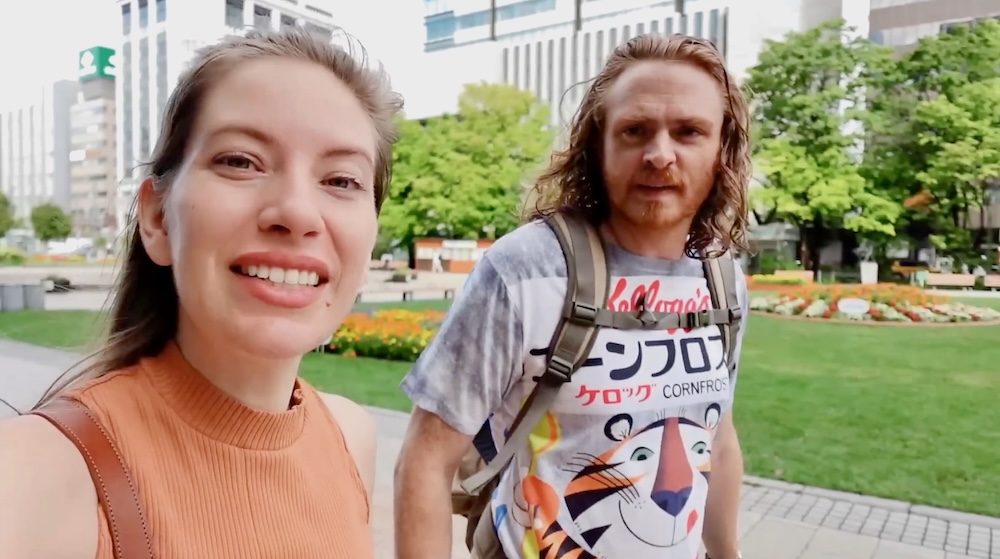
Tanukikoji Shopping Street was useful for a different reason. We ducked into the covered arcade because we were roasting in the September heat and wanted air conditioning. We found plenty to browse, but at that point the chance to get out of the sun was a major attraction in itself. The shopping street is covered; the cool air came from going inside the shops. There is a difference, especially if you’re expecting an entirely climate-controlled passage.
If your evenings revolve around restaurants and exploring Susukino on foot, you can also compare hotels near Susukino Station. It’s another useful subway base, but the neighbourhood has a different, livelier character from the park area around Nakajima.
The subway-then-walk approach beyond downtown
For places farther from the central cluster, I’d still begin by locating the nearest practical subway stop. We took the subway toward the Sapporo Beer Museum, then walked several blocks to the building. We also spent time walking around Maruyama Park, Hokkaido Jingu and the surrounding green spaces, while Nakajima Park was particularly easy to explore because our hotel overlooked it. If you like that green setting, browse hotels near Nakajima-Koen Station and check their exact walk to the Namboku Line.
Check the final walk from the station, not just the station name. An exposed walk feels quite different after a morning on your feet.
Audrey had a particularly rough time with the heat on one of our September days. It was around 30°C, humid, and we’d already done a lot of walking. We ended up stopping at Odori Park for ice cream, water and a chance to rest our legs. She described the ice cream as bringing her back to life, which gives you a fair idea of how the day was going. A place can be extremely walkable and still wear you out if the weather isn’t cooperating.

Walking underground when the weather turns
Sapporo also has a connected network of underground pedestrian passages through the centre. We didn’t explore those passages ourselves, but they’re worth understanding if you’d rather avoid rain, cold or icy pavement.
Chi-Ka-Ho is the roughly 520-metre underground walkway between subway Sapporo Station and Odori. From around Odori, connected spaces such as Pole Town continue toward Susukino, while Aurora Town stretches east in the direction of the TV Tower. Chi-Ka-Ho isn’t the name of the entire underground system.
If an underground route approaches your destination, it can save a fare and shelter you from the weather. Connected buildings and entrances may have different hours. Winter is a particularly good reason to look at the underground options: Sapporo’s sidewalks can become icy, although that wasn’t something we experienced on our September trip.
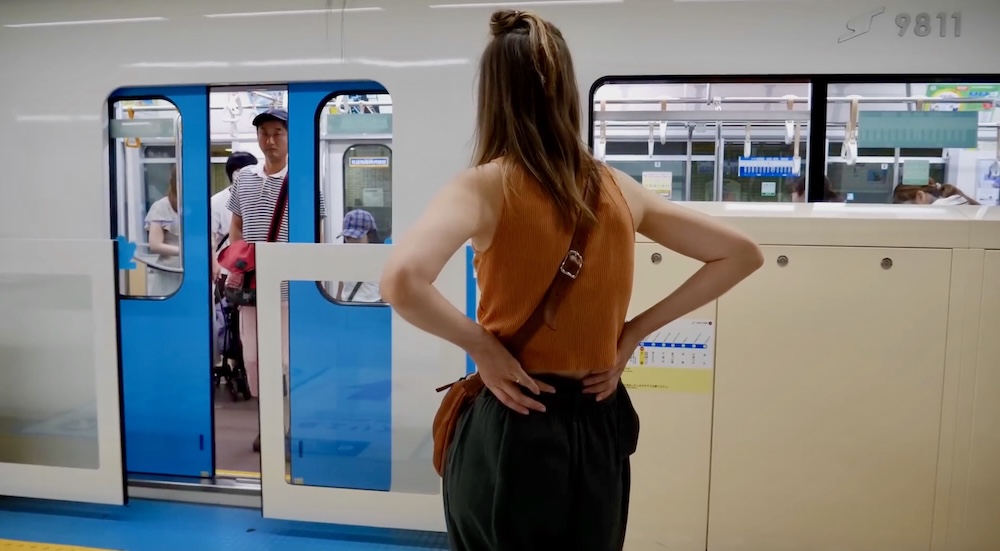
Getting Around Sapporo by Subway
The subway was our favourite way to cover longer distances within Sapporo. Its three lines reach several sightseeing districts without requiring you to memorize every stop.
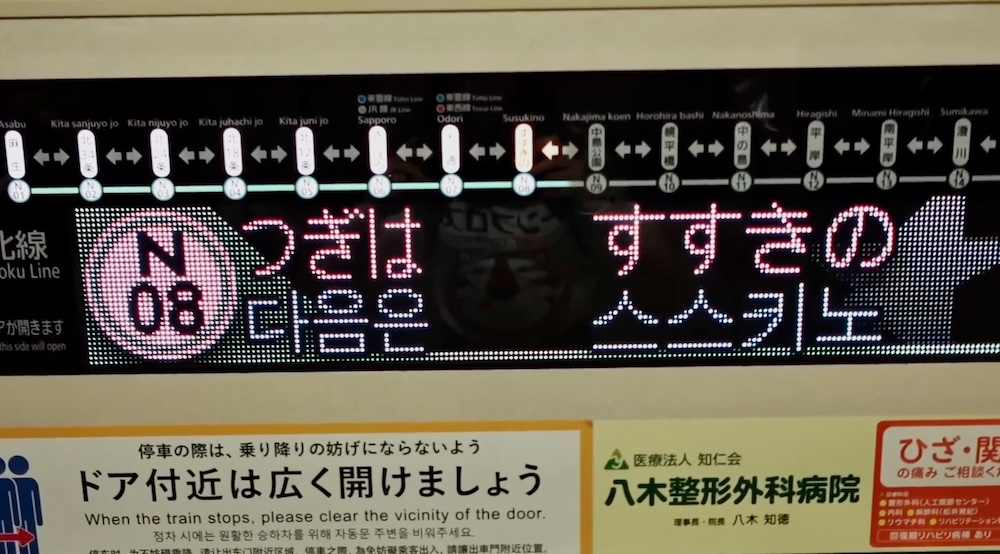
The Namboku Line (green) runs north–south through subway Sapporo Station, Odori, Susukino and Nakajima-Koen, continuing to Makomanai at the southern end. That’s the line we needed for our longer outing toward the cemetery. The Tozai Line (orange) runs east–west, including Maruyama-Koen, Odori and Shin-Sapporo. If you’re heading toward Maruyama Park or Hokkaido Jingu, it is the relevant line to investigate. The Toho Line (blue) passes through subway Sapporo Station, Odori and Hosui-Susukino before continuing toward the eastern and southeastern portions of the city.
All three lines meet at Odori. Subway Sapporo Station, meanwhile, serves Namboku and Toho but not Tozai. That matters when transferring. And JR Sapporo Station is the larger rail station above ground, which is relevant if you’re arriving from another part of Hokkaido rather than just moving within the city.
If you’re also catching JR trains during your stay, look at hotels near JR Sapporo Station. That may save an extra journey with luggage, although Odori has the advantage for switching between all three subway lines.
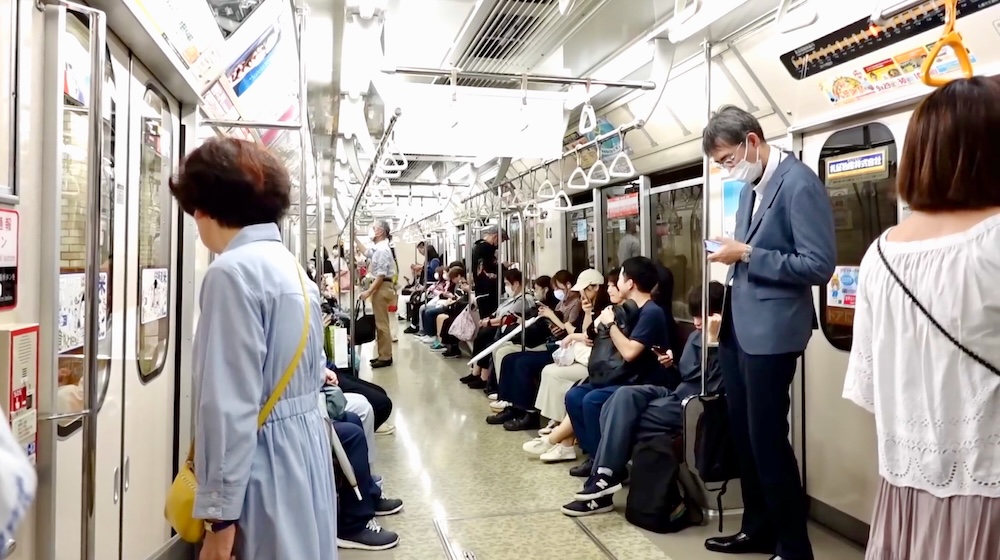
There’s one slightly unusual detail at subway Sapporo Station: a transfer between Namboku and Toho uses designated gates and a time-limited out-of-gate procedure. Follow the designated transfer signs rather than treating any exit as the end of your journey. The finer points of subway ticketing and transfers deserve their own guide; this is the one exception I’d want a first-timer to know in advance.
Ordinary adult subway fares currently run from ¥210 to ¥380, depending on the journey. That helped reinforce why we liked walking once we reached a neighbourhood. For a short hop, station access can cancel out the time saved riding. Across town, the subway earns its fare.
What the subway won’t do is deliver you straight to every major Sapporo attraction. Our journey to Makomanai illustrates the limit perfectly. The train ride from Sapporo Station to Makomanai is approximately 17–18 minutes, but for the Hill of the Buddha or Sapporo Art Park, you still have another transport leg afterward. If you’re building an itinerary, look up the whole journey, not just the train ride.

Using Sapporo’s Buses to Reach Attractions Beyond the Subway
We didn’t need buses for every outing, but they became important when we went exploring southern Sapporo. Our longest transport day involved the subway all the way to Makomanai, followed by a bus toward Makomanai Takino Cemetery, where we wanted to see the Hill of the Buddha and the Moai statues. The downtown grid gave way to forests and mountains.
We also got off the bus one stop early. Not exactly a masterclass in independent travel. We were nearby, but a wrong stop in a large complex can add an unwanted walk.
The cemetery: route 106 versus route 108
On our visit we travelled on bus 106. The cemetery’s present-day visitor information identifies both 106 and 108, and they serve different parts of the complex. Route 106 uses Takino Toge, near the western side with the Moai statues. Route 108 has stops serving the cemetery and the Hill of the Buddha more directly.
Sort that out before boarding, particularly if you’re heading for the Buddha rather than the Moai. I wouldn’t assume the bus that gets you to the cemetery boundary is necessarily the bus that gives you the easiest walk to what you want to see.
There’s also an important restriction: the cemetery’s separate graveside bus is for people visiting graves, not general sightseeing visitors. Don’t plan to use it as an internal tourist shuttle. Stick with the public route information and check which stop suits your visit.
Bus departures for this area are more limited than the subway service in central Sapporo, with exact timings varying by route and operating date. Plan the return before committing to the outward journey, especially if you intend to spend time at more than one attraction. Check the Hokkaido Chuo Bus departures from Makomanai and use Sapporo Ekibus Navi for route connections. Check the return before spending another hour taking photos.
If coordinating the cemetery bus sounds like more effort than you want, an alternative is a guided Sapporo bus tour that includes the Hill of the Buddha. Its listed full-day itinerary also visits Hokkaido Jingu, the Beer Museum and other sights; bus transport is included, but meals and paid admissions cost extra. It’s a much fuller day than a simple cemetery visit and doesn’t promise Sapporo Art Park. Check the exact stops and departures before booking.

Sapporo Art Park: two stops that aren’t interchangeable
Sapporo Art Park offers a similar lesson in miniature. Its visitor access directions point toward bus platform 2 at Makomanai Station for the relevant Chuo Bus services. But you’ll see two destination stops, depending on the part of the park you want to visit.
Geijutsu no Mori Iriguchi serves the Art Museum, Craft Hall, craft studios and other facilities closer to that entrance. Geijutsu no Mori Center is more convenient for the Sculpture Garden, Art Hall, restaurant and outdoor stage. The park estimates about eight minutes on foot between the two stops, and not every bus continues to the Center.
We visited the open-air sculpture area, so I can appreciate why you’d want to know which stop gets you closer. That last unexpected walk adds effort.
The park’s published estimate is roughly 17 minutes by subway from Sapporo Station to Makomanai, then 15 minutes on the bus. That’s 32 minutes aboard vehicles, not 32 minutes from your hotel to the first sculpture. Transferring, waiting and walking all add time.
For local buses generally, you may encounter Hokkaido Chuo Bus, JR Hokkaido Bus or Jotetsu. On typical local services, board at a middle or rear door, take a numbered ticket if paying cash where required, and pay as you leave. IC cards are generally tapped on and off. Routes and operators vary, so check the specific service.
Riding Sapporo’s Streetcars: Where They Fit Into a Visit
We took a streetcar once during our stay and enjoyed it. I can’t tell you which stop we boarded at or pretend we surveyed the entire system on that one ride. What I can say is that the streetcar brings something different to Sapporo’s transport mix, and it can be genuinely useful if its route matches your plans.
The system runs in a loop of approximately 8.9 kilometres with 24 stops, taking about 55 minutes to complete the circuit. It passes through parts of central and southwestern Sapporo, with stops including Nishi-Yon-Chome, Tanukikoji, Susukino, Nakajima-Koen-Dori and Ropeway-Iriguchi. That’s a much narrower footprint than the three subway lines, but it also reaches places the subway doesn’t serve directly.
The direction matters. The outer loop runs clockwise and the inner loop counterclockwise. Both directions will eventually take you around the loop, but you could spend a lot more time riding if you choose the wrong one for a short journey. I’d check the direction shown at the stop and choose whichever gets to your destination without the scenic tour of half the circuit—unless the circuit is exactly what you want.
Most passengers board through the rear and exit at the front, paying when they get off. The current ordinary fare is ¥230 for an adult and ¥120 for a child. Compatible transport IC cards work here, and eligible contactless bank cards can also be tapped at the designated reader when leaving. You don’t need to tap the bank card on boarding. Paying for children or multiple passengers using one bank card has additional conditions, so speak to the driver before tapping if that’s your situation.
For extensive streetcar travel there are pass options, including a regular one-day ticket. Qualifying contactless adult fares are also capped at ¥460 on eligible weekends and holidays, but that’s a streetcar-only limit, not a shared discount with the subway. On ordinary weekdays, that same automatic streetcar cap doesn’t apply.
I’d ride that corridor again but wouldn’t build an itinerary around it. The subway is better for widely separated districts; the streetcar earns its place when its route suits your destination.
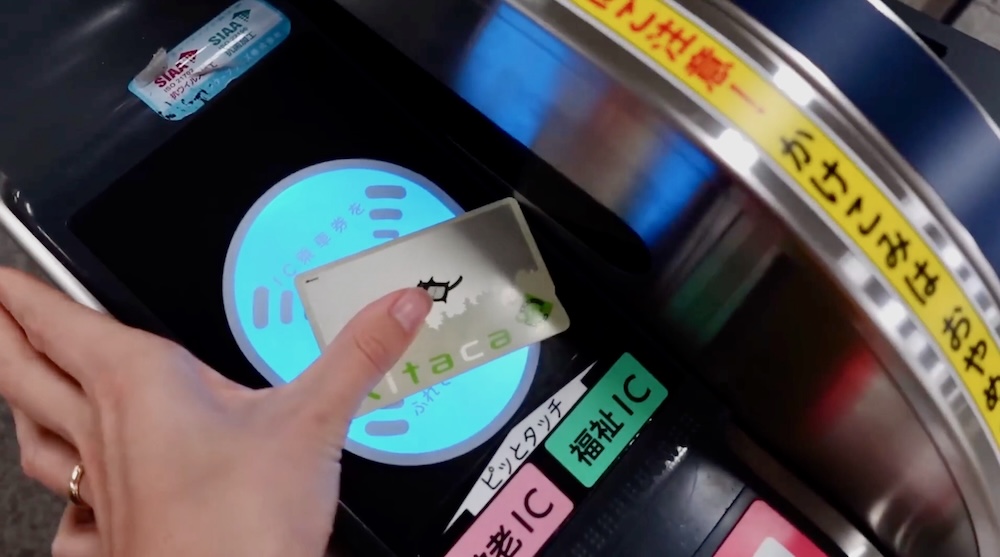
Paying for Public Transport in Sapporo: Cards, Tickets and Transfers
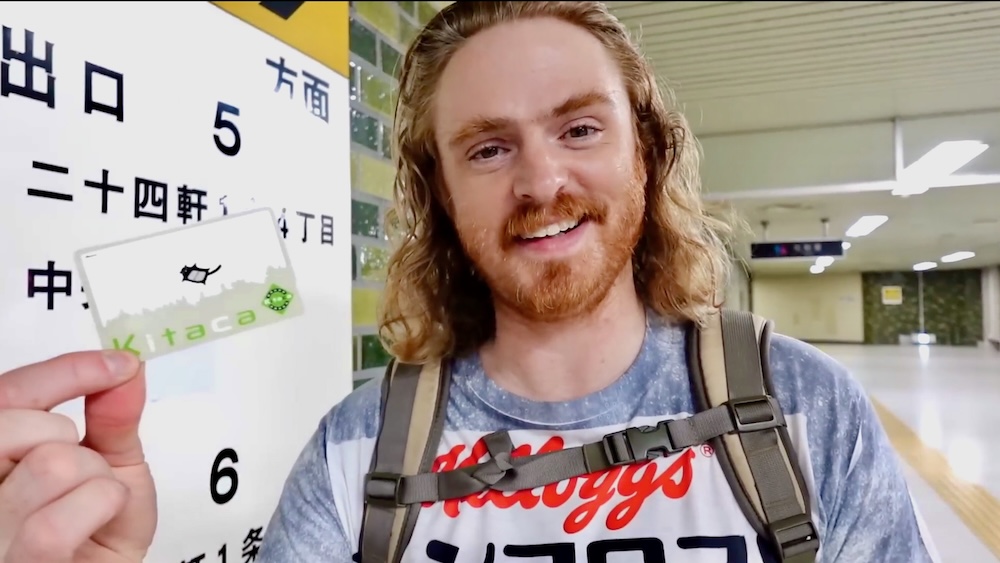
We used Kitaca on our Sapporo trip and found it convenient. We had used Suica on a previous visit to Japan, so we were already familiar with the idea of loading money onto a card and tapping through the gates. At one point we stopped to recharge our Kitaca, switched the machine into English and added another ¥1,000. That saved us dealing with individual cash tickets.
If you already own a compatible card such as Suica or ICOCA, you may not need to buy a new Kitaca. These interoperable IC cards can be used on Sapporo’s subway and streetcars and on participating local buses. SAPICA is the city’s other local card option, but it doesn’t offer the same nationwide JR interoperability. Card acceptance isn’t universal on every Hokkaido bus route, so double-check a specific service when heading beyond central Sapporo.
There’s also a newer choice we didn’t have during our trip: contactless credit or debit card payment on the subway. With an eligible bank card or supported device, you can tap in and out across all three subway lines. Qualifying adult payments are automatically capped at ¥830 on ordinary weekdays and ¥520 on eligible weekends and holidays, provided you use the same card or device for the journeys. The physical card and its phone-wallet version don’t share one cap, even if they’re linked to the same account. Child fares and certain transfer discounts aren’t available through this subway bank-card arrangement.
Streetcars have separate contactless rules and the weekend/holiday cap I mentioned earlier. They don’t combine with the subway cap to give you a universal Sapporo travel limit. There are also situations where an IC card matters for something more than convenience: eligible subway-to-bus and subway-to-streetcar transfers can qualify for reduced fares using an accepted transport IC card, while direct bank-card payments don’t receive the same transfer treatment. The exact discount depends on the service and transfer conditions; it isn’t a promise for every two rides.
For a visitor mostly taking the subway, tapping a bank card may be the simplest option. If your days combine JR journeys with buses and local transport, an existing interoperable IC card may give you more flexibility. I wouldn’t rush to buy a new card without checking what you already have. The detailed Kitaca purchase, recharge and comparison questions deserve their own guide, just as the subway’s pass and ticket rules do. Here, the main thing is to choose a payment method that works for the whole day, not only the first train.
Do You Need a Rental Car to Explore Sapporo?
For the kind of trip Audrey and I took, my answer is no. We covered major central sights, went walking in parks, reached different neighbourhoods by subway, took a streetcar and even made it to the unusual attractions down south using a subway-and-bus combination. The bus-stop mishap didn’t change my verdict. Sapporo is an extremely agreeable city to explore independently.
I like its grid-like layout, the greenery and the mountains in the background. It has the scale of a big Japanese city without always feeling as rushed as the ones farther south. Audrey especially appreciated how much space there seemed to be. When your day consists of a subway ride followed by a few hours wandering around an area, you see more of that character than you would hopping from one isolated attraction to the next.
But I wouldn’t sell public transport as a magic solution for every circumstance. If you’re trying to fit several remote places into one day, working around bus departures can be a nuisance. A taxi may save a connection; Sapporo Art Park estimates around 15 minutes by taxi from Makomanai Station, although cost, availability and traffic are separate questions. If you have substantial luggage, mobility needs or a family situation that makes long walks awkward, the balance may also shift. And winter walking deserves more caution than our hot September trip required. None of those circumstances automatically means renting a car is better, but they do deserve their own practical assessment.
For visitors who want a local guide to organize several sights without renting a car, there’s also a customizable private Sapporo walking tour. You choose from the listed attractions and the guide helps arrange the route, using walking, public transport or taxis as appropriate. A private vehicle is not included, and transport, admission and meals cost extra. That’s quite different from a coach sightseeing tour.
My recommendation would be to choose your sightseeing areas first. Keep the central attractions together, use the subway to change neighbourhoods, and look carefully at the bus stop and return timetable for anything farther out. You can see an awful lot of Sapporo that way without paying for a rental car or dealing with one in the city. A wider Hokkaido road trip is a different decision.
Sapporo didn’t win me over because it had the most complicated transport system or the greatest number of headline attractions. I liked how little fuss it took to get from a busy urban district into somewhere green and quiet, then continue to another part of the city. Use the subway when it helps, walk when it’s pleasant, and give those southern bus journeys a bit more breathing room. That’s the Sapporo transportation strategy I’d happily follow again.
Frequently Asked Questions
Can you get around Sapporo without renting a car?
Yes. Audrey and I explored central Sapporo, Maruyama, Nakajima Park and attractions farther south using the subway, buses, a streetcar and walking. For a similar city-focused trip, I wouldn’t rent a car, although remote stops require more planning.
Is Sapporo easy to explore on foot?
Central Sapporo is very walkable. JR Sapporo Station to Susukino is roughly 1.5 kilometres, or about 20 minutes on foot, with Odori between them. We liked taking the subway to a neighbourhood and then walking between nearby attractions.
Which Sapporo subway station connects all three lines?
Odori Station connects the Namboku, Tozai and Toho lines. Subway Sapporo Station serves Namboku and Toho, but not Tozai. The distinction matters when deciding where to transfer or book accommodation.
How do you reach the Hill of the Buddha by public transport?
Take the Namboku subway line to Makomanai, then check the current bus service toward Makomanai Takino Cemetery. Routes 106 and 108 serve different stops, so confirm which one suits the Hill of the Buddha and check your return departure before leaving.
Is the Sapporo streetcar useful for tourists?
It can be, especially for destinations along its central and southwestern loop. The circuit has 24 stops and takes about 55 minutes in full, so check whether the clockwise or counterclockwise direction offers the shorter journey. We rode it once and enjoyed it.
Can you use Kitaca or a contactless bank card on Sapporo transport?
Kitaca and other compatible IC cards work on the subway, streetcars and participating buses. Eligible bank cards also work on the subway and streetcars, but their daily caps are separate and don’t provide the same qualifying transfer discounts as transport IC cards.
This guide is also available in Spanish. [Leé la versión en castellano: Cómo moverse por Sapporo: guía para tu primera visita en subte, colectivo, tranvía y a pie]
This article contains affiliate links. If you book through one of these links, I may earn a commission at no extra cost to you.