
Sihanoukville is no longer the sleepy Cambodian backpacker beach town I first encountered in 2008. That place has been swallowed by a port city, casino boom, construction spree, stalled developments, new roads and ferry traffic—although you can still find flashes of the old coastline when the light, tide and location cooperate.
This article began as a photo essay about returning to Serendipity Beach and finding the sand covered in rubbish. Not a few bottles. Not one overflowing bin that happened to lose a wrestling match with the wind. Proper filth.
The photographs and footage document what Audrey and I saw during that visit. They are not meant to suggest that every beach in Sihanoukville looks exactly the same now. The city has changed repeatedly since then, sometimes so quickly that an old guidebook could become fiction before the ink had properly dried.
What follows is part return story, part cautionary tale and part practical guide to deciding whether Sihanoukville belongs in your Cambodia itinerary today.
Is Sihanoukville Worth Visiting Now?
Yes—but only if you understand what you are visiting.
Sihanoukville is no longer an easy recommendation for the traveller dreaming of cheap bamboo bungalows, lazy beach bars and a pristine strip of sand outside the guesthouse door. If that is the fantasy rattling around inside your head, I would adjust it before arrival. Aggressively.
The city makes much more sense for travellers who are:
- catching a ferry to Koh Rong or Koh Rong Sanloem;
- staying at a specific mainland resort with a managed stretch of beach;
- arriving through the port, airport, railway or Phnom Penh–Sihanoukville Expressway;
- exploring Cambodia’s wider southern coast;
- or genuinely curious about one of Southeast Asia’s strangest and most dramatic urban transformations.
If your holiday is short and the goal is clear water, soft sand and prolonged horizontal activity, move through Sihanoukville efficiently and spend most of your time on an island.
If you enjoy complicated places—cities where tourism, local life, industry, money, environmental pressure and unfinished ambition have all been thrown into the same concrete blender—Sihanoukville is certainly not boring.
That is not the same as calling it beautiful.
Travellers needing a transit night can compare current Sihanoukville hotels on Booking.com. Filter recent reviews for cleanliness, construction noise and access to your exact ferry terminal. A five-year-old review is archaeology here.
Returning to Serendipity Beach
As I set foot on Serendipity Beach, my mind cast back to my first backpacking trip in 2008, when I first marvelled at the beaches of Sihanoukville, Cambodia.
The town was once described by Lonely Planet as being surrounded by “white-sand beaches and as-yet undeveloped tropical islands.” Sihanoukville was promoted as Cambodia’s premier seaside resort and a quieter alternative to the already crowded Thai beach scene.
I remembered warm sand, tropical water and the intoxicating feeling of being young enough to consider almost any inconvenience part of the adventure.
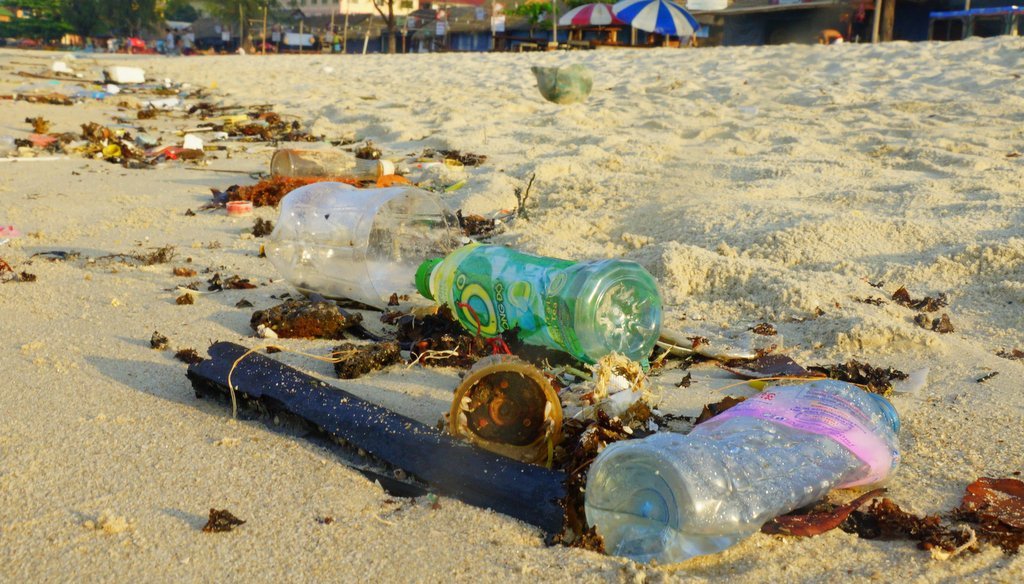
Then the warmth of the sand reached my toes and nostalgia was replaced by a very practical concern: where exactly could I put my next foot without stepping on something revolting?
In just several years, the small slice of paradise I remembered had turned into a complete and utter dump.
The Danger of Returning to a Place Preserved in Your Head
I’ve come to realize over the years that it can be dangerous to romanticize a place so thoroughly that you expect it to remain unchanged until you decide to return.
Destinations, rather rudely, do not pause while we are away.
I’ve seen other beach destinations change over time. Some have improved. Others have become busier, uglier or simply less interesting. Sometimes a scruffy place gets cleaned up and loses its soul. Sometimes it keeps the scruff and loses the charm anyway. There are no guarantees.
Unfortunately, I had never seen anything quite as bad as what Audrey and I found on Serendipity Beach.
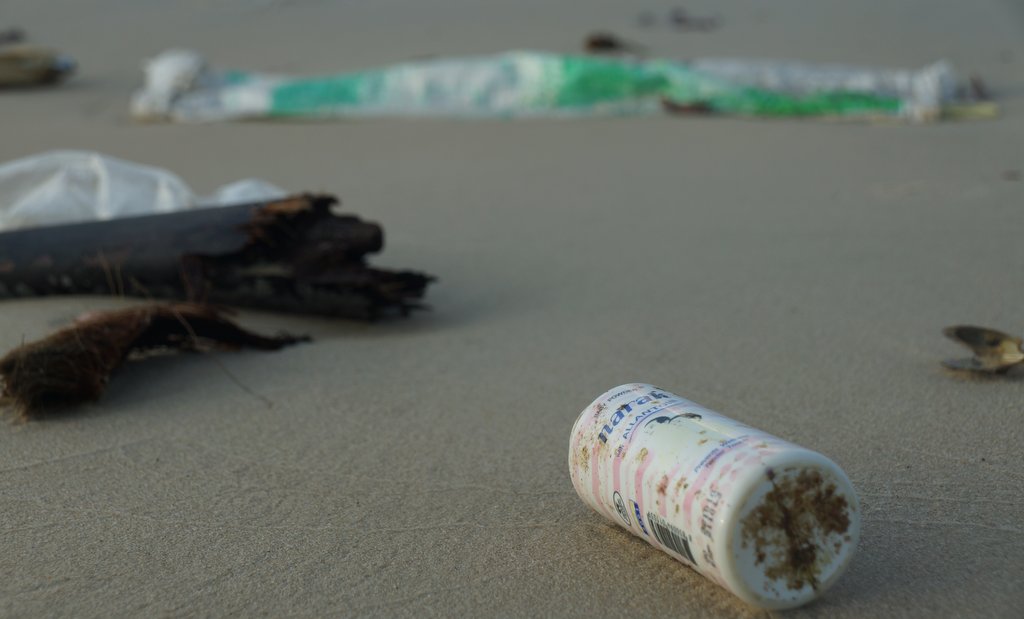
This wasn’t a handful of plastic bottles scattered along the sand. We documented discarded flip-flops, used condoms, a pregnancy test, a broken Absolut Vodka bottle, another bottle of hot sauce, fishing line, plastic and construction materials.
It was less “tropical escape” and more “municipal evidence locker with waves.”
More importantly, the rubbish was not confined to one photogenic disaster pile that we could frame dramatically for the camera. We walked along the beach and kept finding it. As I said while filming, it was “all over the beach.” Totally littered.
My heart sank a little after every footstep.
How did it get this bad?
The Cruellest Part Was That the Setting Was Still Beautiful
This was not an inherently ugly coastline.
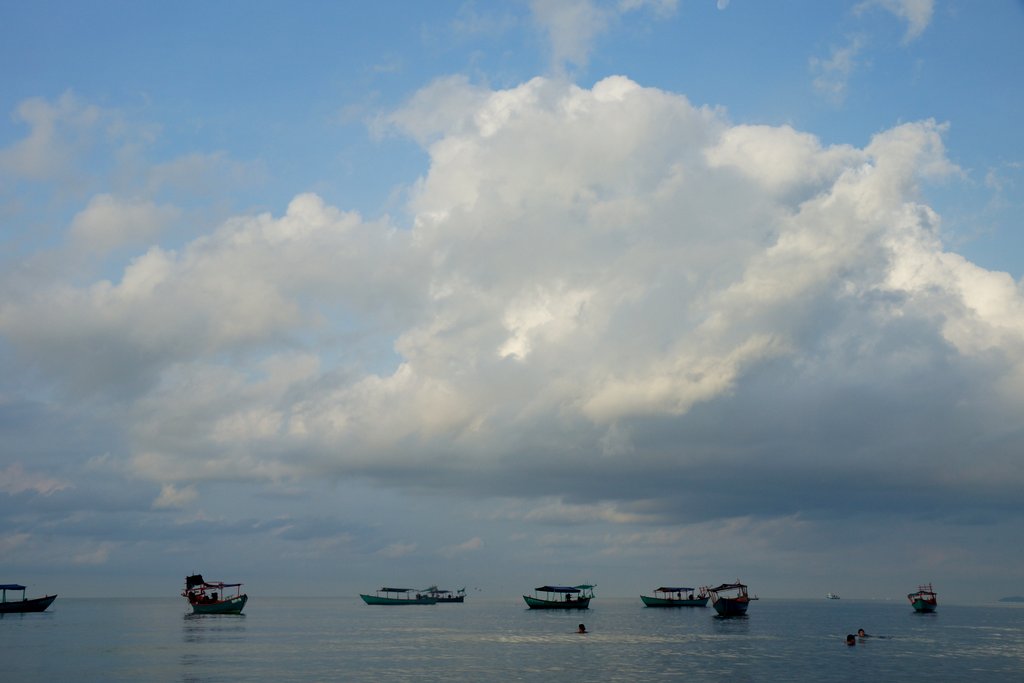
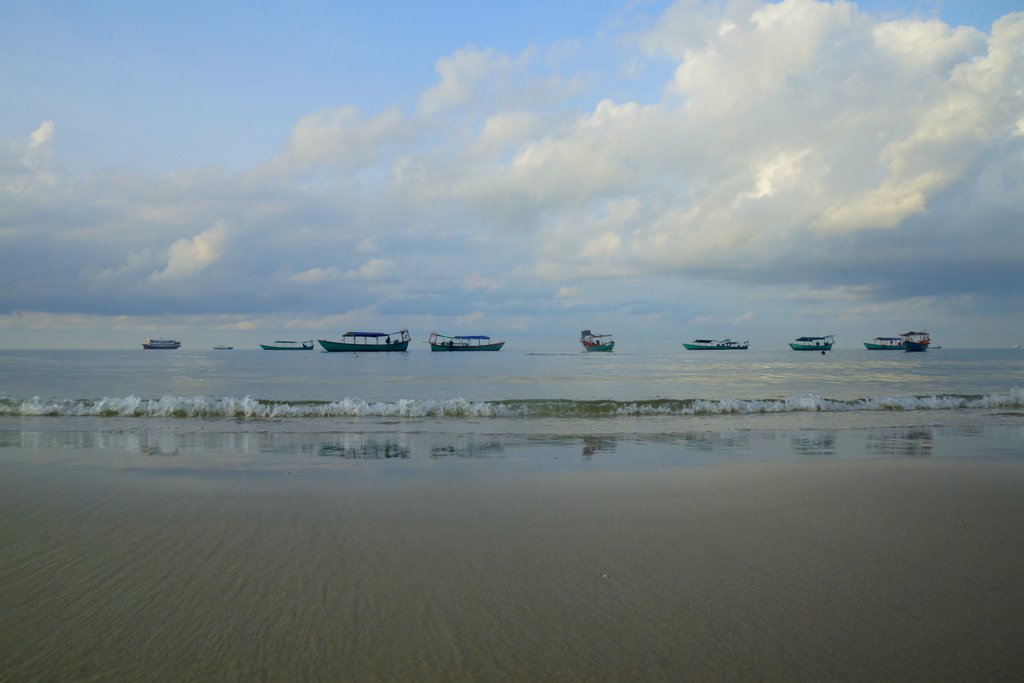
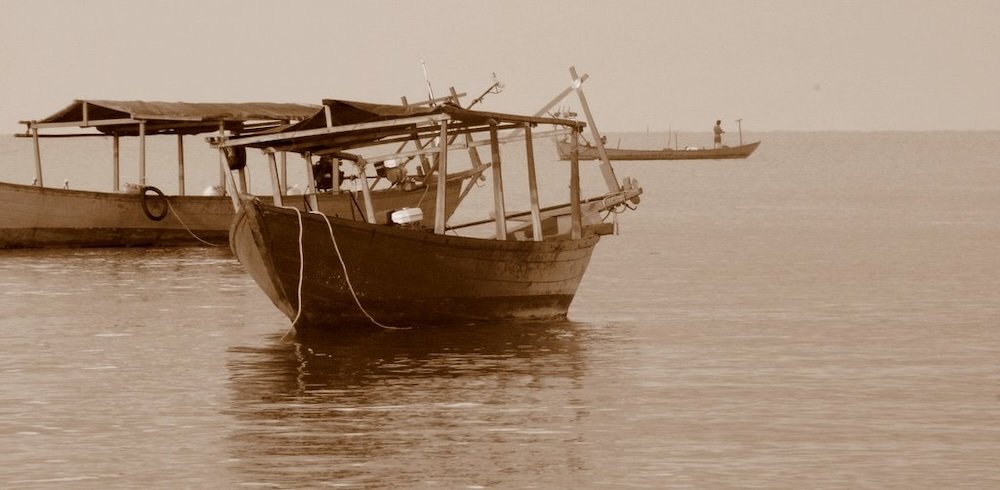
There was lush tropical vegetation behind the sand. Boats floated offshore. The water felt like the perfect temperature—the sort of warm tropical sea you can walk into without performing the miserable shoulder-shivering ritual familiar to Canadians.
And yet I did not want to swim.
There was so much rubbish and broken glass around that I was genuinely worried about entering the water and catching my leg on a bottle. Standing beside inviting warm water while being too nervous to go in was somehow more frustrating than arriving on a grey, cold and obviously hopeless beach.
The paradise part was still visible. It was the ruined part that had spread across it.
Who Was Responsible?
My immediate reaction was to blame everybody.
Shame on the young backpackers who came here and discarded their waste on the beach like teenagers whose parents would eventually arrive with a garbage bag. Equally, shame on the locals and business owners who had not taken sufficient measures to protect the area for future generations.
That was not a polite opinion manufactured years later for an article. I said much the same thing while standing there with the camera running. I was disappointed, disgusted and wondering aloud how the beach had been allowed to deteriorate so badly.
It was an angry judgment delivered during an angry walk. I was dodging broken glass while trying to celebrate an anniversary. Nuance was not exactly bouncing around inside my head doing cartwheels.
With hindsight, the explanation was much larger.
Careless travellers and businesses absolutely contribute to litter. I’m not interested in polishing that reality until everyone emerges blameless and smelling faintly of recycled lavender. People throw rubbish where they should not. Businesses cut corners. Travellers behave abroad in ways they would be embarrassed to defend at home.
But Sihanoukville’s waste crisis could never be explained by badly behaved backpackers alone.
A beach is where many failures eventually wash up: rubbish discarded on land, waste carried through drains and canals, material from fishing and boating, illegal dumping, weak collection systems and plastic delivered by tides and storms.
A World Bank assessment of Cambodia’s waste-management challenges linked the problem to rapid urbanization, tourism growth, inadequate collection, weak enforcement and insufficient treatment and disposal infrastructure. Research around Sihanoukville and nearby islands also found plastic accounted for a substantial majority of recorded coastal pollution.
The rubbish beneath our feet was real.
My original diagnosis was simply too small for the size of the disease.
Trying to Salvage Our Anniversary
Audrey and I were celebrating our first anniversary. Instead of enjoying activities on the beach, we found ourselves considering alternative measures.
This was not just a random week beside the sea. It marked one year since we had first met in Seoul after getting to know one another through our travel blogs—mine here at Nomadic Samuel and Audrey’s at That Backpacker.
On camera that evening, I admitted that the most rewarding part of building my travel blog had not been the readership or whatever modest online popularity I had managed to scrape together. It was meeting Audrey.
Only a few months earlier, we had both been teaching in South Korea. Now we were backpacking around Southeast Asia, writing, taking photographs and making videos as we went. It felt like a considerable life upgrade, even if our anniversary beach appeared to have been decorated by the contents of an overturned rubbish truck.
We had planned to stay for roughly a week, enjoy some downtime, swim, spend time around the beach and catch up on work. Nothing particularly extravagant. A beach, a laptop and the occasional cold drink had always been enough to keep us reasonably content.
After seeing the conditions, we decided we would not stay nearly as long as planned.
Our attempt to salvage the situation was to check into a nice hotel with a fancy room and a pool.
Instead of enjoying the splendours of natural beauty, we were resigned to creating our own artificial temporary oasis.
Romantic? Not especially. Effective? Hopefully.
I was left feeling a sense of shame as a backpacker.
For all those who travel to experience new cultures, sample unfamiliar foods and interact with local people positively, there are others who arrive in distant corners of the world without any meaningful sense of responsibility toward the place hosting them.
During that visit, Serendipity Beach felt like exhibit A.
From paradise to paradise ruined.
The Beach Was Ruined for Swimming—Not Necessarily for Sitting Beside It
Our first video was brutally critical because the conditions deserved it. The second told a slightly more complicated story.
Later, Audrey and I returned to Serendipity Beach for a casual anniversary dinner. At the time, we could sit beside the water with a one-dollar beer, watch the sunset and look out at the boats floating offshore.
I was still critical of the beach. I still did not consider it a pleasant or sensible place to swim. But sitting down, eating a decent meal and watching the sky change colour was another matter.
We had not found the pristine beach break we expected, so we adjusted. Better hotel. Better food. Cold beer. Sunset. Lower expectations.
Travel occasionally rewards careful planning. At other times, it laughs at the plan and waits to see whether you can salvage the evening.
That night, we did.
Perhaps Sihanoukville Changed—and So Did I
One of the most interesting responses to the original article came from a reader who wondered whether Sihanoukville had deteriorated or whether I had simply become less tolerant of rough backpacker destinations as I got older.
I admitted that it was probably a bit of both.
I was no longer in my early twenties, and my tolerance for certain forms of backpacker nonsense had started shrinking. Broken glass on a beach did not feel adventurous. Neither did navigating used condoms while trying to celebrate an anniversary.
Younger me might have grumbled, bought a cheap beer and called it “raw.” Older me wanted a tetanus shot and a swimming pool.
But the photographs and video also make one thing undeniable: this was not disappointment manufactured entirely by age, comfort or nostalgia. The beach really was covered in rubbish. The debris really was spread along the shoreline. We really did abandon our swimming plans and shorten the stay.
Two truths can sit beside each other without fighting.
A destination can decline, and a returning traveller can become less willing to excuse its problems.
How Sihanoukville Changed So Dramatically
The city’s transformation did not stop with the rubbish problem we witnessed. What happened afterward was larger, faster and considerably stranger than anything I could have imagined while stepping around pregnancy tests on Serendipity Beach.
A Port City That Grew Faster Than Its Services
Sihanoukville has always been more than a beach resort. It is home to Cambodia’s principal deep-water port and has long carried industrial, commercial and strategic importance.
That matters because romantic travel narratives have a habit of pretending local economies exist primarily to provide travellers with hammocks.
They do not.
As Sihanoukville expanded, waste generation, traffic, construction and pressure on drainage and sanitation increased. Collection and treatment systems did not always grow at the same pace.
Beach pollution often begins nowhere near the beach. Rubbish dumped beside a road enters a drain. A blocked canal overflows. Lightweight plastic moves through the city, into waterways and eventually into the Gulf of Thailand.
By the time the evidence reaches the sand, everyone can point at everyone else. The tide, unfortunately, does not attend municipal accountability meetings.
The Casino and Construction Boom
Foreign investment later accelerated the transformation.
Casinos, hotels, apartment towers and commercial developments rose rapidly, particularly during the online-gambling boom. Small guesthouses and beach businesses disappeared from parts of the city. Roads became clogged with construction traffic. High-rises appeared beside building sites, fenced compounds and concrete structures that looked as though the workers had gone for lunch and never returned.
When Cambodia banned online gambling and the pandemic disrupted travel and investment, part of the boom stalled. Numerous projects were left incomplete, and the city was forced to adjust yet again.
Sihanoukville did not simply travel from “paradise” to “garbage dump.” Its path was much messier:
- working port;
- backpacker beach town;
- construction frontier;
- casino city;
- stalled development zone;
- and now a city still trying to decide what it wants to become next.
That is a lot of identity crises for one stretch of coastline.
Roads, Wastewater Works and Beach Improvements
The city has not remained permanently trapped in its ugliest phase.
Infrastructure programs have included new roads and bridges, canal restoration, wastewater pumping and treatment facilities, landscaping and work along public beaches. Cleanup projects and sand replenishment have also taken place on sections of the waterfront.
A UNIDO-supported urban-development profile documents several of those road, drainage, wastewater and beachfront interventions.
That does not mean the environmental problems have vanished in a puff of government PowerPoint slides. It means travellers should avoid relying entirely on either old paradise photographs or old disaster photographs.
Sihanoukville has changed repeatedly. Conditions can differ between beaches, seasons, tides and individual properties.
Do your homework shortly before arriving. This is not a destination where ancient TripAdvisor wisdom should be carved into stone tablets.
Sihanoukville Beach Guide: Choosing the Right Part of the Coast
There is no single “Sihanoukville Beach.” The city and surrounding province contain several stretches of coastline with different levels of development, access, atmosphere and maintenance.
That distinction matters. Saying “the beach in Sihanoukville” is a bit like reviewing every restaurant in Bangkok because one pad Thai upset you.
| Beach or Area | Best Suited For | What to Understand Before Going |
|---|---|---|
| Serendipity Beach | Ferry access, short walks and seeing the former backpacker centre | This is an urban waterfront beside the tourist-port area, not an isolated tropical escape. Development and boat traffic are part of the setting. |
| Ochheuteal Beach | A long public waterfront, local visitors and casual beach stops | Conditions can vary along its length. Inspect the exact section instead of judging the whole beach from one entrance. |
| Otres Beach | Travellers seeking a longer stretch south of central Sihanoukville | Otres is no longer the untouched alternative described in old backpacker guides. Development, access and atmosphere vary by section. |
| Independence Beach | Resort stays, sunsets and a more managed beachfront setting | Some surrounding coastline is resort-oriented. Confirm public access and recent beach conditions before making a special trip. |
| Sokha Beach | Travellers choosing a specific beachfront resort | Much of the beach has historically been connected with resort access. Verify current arrangements directly with the property. |
| Victory and Hawaii Beach | Port views, local atmosphere and exploring beyond the tourist-pier area | The nearby port and urban environment are part of the experience. These beaches are not interchangeable with an island escape. |
| Ream Coast | A longer excursion away from central Sihanoukville | Ream sits beyond the compact city-beach circuit. Development and access continue to evolve, so verify current conditions locally. |
Serendipity and Ochheuteal
Serendipity Beach is the emotional and historical centre of this article, but it is also part of a busy urban waterfront connected with ferry departures and the former backpacker district.
Come here to understand the setting, catch a boat or take a walk. Do not automatically come expecting the lonely strip of sand depicted in an old Southeast Asia travel paperback held together with tape and misplaced optimism.
Ochheuteal extends farther along the coast, and conditions can vary from one section to another. Check recent photographs, walk before committing to a swimming spot and trust your own eyes.
Otres Beach
Otres was once the automatic answer whenever somebody complained about central Sihanoukville.
“Just go to Otres.”
That advice became a backpacker reflex. Otres later experienced its own development, and the atmosphere described in older reports is no longer something I would promise blindly.
There are still accommodation options around the area, including properties with pools and managed grounds. But choose the exact hotel based on recent evidence rather than booking the word “Otres” as though it were an insurance policy against disappointment.
Independence and Resort Beaches
A mainland beach stay can work when the property itself is the destination.
A well-maintained resort with direct access, a decent pool and enough facilities can create a comfortable holiday even when the surrounding city is not the tropical dream you had ordered.
I know this strategy because Audrey and I resorted to it ourselves. When nature hands you discarded pregnancy tests, sometimes you accept the chlorinated alternative.
Ream and the Coast Beyond the City
Ream offers a different angle on the province, with mangroves, coastal scenery and protected landscapes beyond central Sihanoukville.
Development pressure continues to reshape parts of the wider coast, so this is another place where current local information matters.
Travellers who want transport and a guide rather than negotiating the day independently can check current Ream National Park and nature tours on GetYourGuide.
Do Not Book a Mainland Beach Stay Based on the Word “Beachfront”
“Beachfront” is one of travel marketing’s more athletic words. It stretches magnificently.
In Sihanoukville, it may describe:
- a carefully maintained resort beach;
- an urban strip beside a busy road;
- a hotel facing the sea but separated from the sand;
- or a property near a beach that is technically accessible but practically inconvenient.
Before booking, examine recent guest photographs and look specifically for comments about:
- direct beach access rather than merely a sea view;
- active construction beside the hotel;
- water and sand cleanliness;
- road, casino or nightclub noise;
- the distance to your exact ferry terminal;
- and whether useful restaurants and shops are genuinely walkable.
Recent traveller photographs are far more useful than a property description written by somebody who has never tried to cross the road outside it.
Using Sihanoukville as the Gateway to Koh Rong and Koh Rong Sanloem
For many international visitors, Sihanoukville’s most important role is simple: it is the mainland gateway to the Koh Rong archipelago.
This is where expectations can improve dramatically. The city may feel like concrete, traffic and interrupted ambition. Then you board a ferry, cross the water and arrive somewhere that looks much closer to the beach holiday you had in mind.
Multiple ferry companies serve different island beaches and piers. The crucial detail is that “Koh Rong” is not one universal ferry stop.
Boats may serve Koh Touch, Long Set Beach, Sok San or individual resort piers. Koh Rong Sanloem also has multiple arrival points. Booking the wrong one can leave you facing an awkward transfer, an unexpected boat ride or a sweaty walk with luggage.
That is character-building in the same way stepping on a nail is character-building. Better avoided.
Koh Rong or Koh Rong Sanloem?
| Island | General Character | Best For | Watch For |
|---|---|---|---|
| Koh Rong | Larger, more varied and spread across multiple beach areas | Travellers wanting a choice between social areas, quieter resorts and activities | Your experience depends heavily on the exact beach and pier you choose. |
| Koh Rong Sanloem | Smaller-feeling and often quieter, although conditions vary by bay | Couples, slower stays and travellers prioritizing downtime | Do not assume every former accommodation area or ferry connection still operates unchanged. |
Choosing the island is only half the decision. Choosing the beach is the part that determines whether you end up beside nightlife, a remote resort or a bay where dinner options can be counted without removing your shoes.
To compare current accommodation, use the island pages rather than assuming every property is near the same ferry arrival:
- Browse Koh Rong hotels and beach resorts on Booking.com
- Browse Koh Rong Sanloem accommodation on Booking.com
Open the map. Read the ferry instructions. Confirm the pier with the property. Then confirm it again, because hauling a suitcase across tropical sand is a powerful but unnecessary form of self-discovery.
Before Buying a Ferry Ticket
- Ask your accommodation for the exact island, beach and pier name.
- Confirm which Sihanoukville terminal your operator uses.
- Check whether the ticket is one-way, return or tied to a specific sailing.
- Arrive early enough to find the operator and complete check-in.
- Keep electronics and documents in a waterproof pouch or dry bag.
- Reconfirm your return while on the island, especially during unsettled weather.
Published crossing times range from short direct journeys to longer trips with additional stops. Weather, sea conditions, the vessel and your exact pier all affect the duration.
The Sihanoukville Tourist Port ferry information provides a useful starting point, but schedules should always be confirmed with the operator before departure.
Travellers wanting a pre-bookable option can also compare current Koh Rong ferries, transfers and island activities on GetYourGuide.
Island Activities That Make Sense
Once you are on Koh Rong, boat trips combining snorkelling, fishing, sunset stops and bioluminescent-plankton viewing are widely offered.
I would not schedule one for the moment you step off the ferry. Give yourself time to locate the bungalow, discover you are at the wrong pier, sweat through your shirt and recover your sense of humour.
After that, travellers can check this Koh Rong snorkelling, sunset and bioluminescent-plankton boat tour, or compare it with other island activities before booking.
Leave Breathing Room Before Your Next Connection
Do not assume an island ferry will connect flawlessly with a flight, train or long-distance bus.
Rough water, loading delays and schedule changes can dismantle a tightly engineered itinerary with impressive efficiency.
Returning to Sihanoukville the night before an important onward journey is not glamorous. Neither is watching your flight depart while you are still holding a ferry ticket and arguing with the sea.
How Many Nights Do You Need in Sihanoukville?
My honest answer: probably fewer than the version of you carrying an old guidebook expects.
| Trip Purpose | Reasonable Stay | Planning Logic |
|---|---|---|
| Comfortable same-day ferry connection | No overnight | Only attempt this when you have a generous buffer and no critical onward connection. |
| Pre-ferry or post-ferry buffer | One night | The practical choice for protecting a bus, train or flight connection. |
| Exploring the city and several beaches | Two nights | Enough time to see more than the ferry port without sacrificing a large chunk of the trip. |
| Mainland resort stay | Two or more nights | Only when the chosen property and its facilities are the attraction. |
| Classic backpacker beach holiday | Consider an island instead | The atmosphere remembered from older guidebooks is no longer the city’s defining experience. |
One strategic night is sensible.
A week spent waiting for Sihanoukville to transform into its former self is not an itinerary. It is a hostage situation involving nostalgia.
Where to Stay in Sihanoukville
The right area depends almost entirely on why you are stopping.
For a Ferry Connection
Prioritize:
- recent reviews;
- reliable air-conditioning;
- luggage storage;
- staff accustomed to arranging port transport;
- and straightforward access to the correct ferry terminal.
A glamorous resort at the wrong end of the coast can be a dreadful transit hotel if reaching the pier requires an anxious predawn drive.
For one night, convenience beats character. Sleep, shower, charge everything and leave. Not every hotel needs to become a story.
For a Mainland Beach Stay
Choose the property first and Sihanoukville second.
Look for current evidence that the hotel maintains direct beach access and that recent guests actually swam there. A pool becomes considerably more important when the surrounding shoreline is inconsistent.
That sounds unromantic until you have stood on a polluted beach thinking fondly about chlorine.
For the Old Backpacker Atmosphere
Do not expect to recreate the Sihanoukville described in guidebooks from the early backpacking era.
It is gone.
Searching for a vanished version of a destination is an efficient way to spend a holiday resentfully comparing reality with a memory that was probably edited by your brain in the first place.
Choose an island, Kampot or another coastal base for what it offers now—not because you hope it can impersonate Sihanoukville circa 2008.
Check current Sihanoukville hotel availability and recent guest reviews before locking in the mainland portion of your trip.
Getting to Sihanoukville
From Phnom Penh by Road
The Phnom Penh–Sihanoukville Expressway has made the road journey faster and more predictable than it was during the old backpacker era.
The theoretical expressway driving time is only part of the story. Pickup rounds, city traffic, meal stops, terminal locations and hotel transfers all add time.
Do not build a ferry connection around the fastest journey somebody once claimed after leaving Phnom Penh before sunrise in a private car driven by a man with no apparent fear of mortality.
Buses, minivans and private vehicles serve the route. The right choice depends on whether you value price, space, speed or door-to-door convenience.
Families, small groups and travellers carrying enough luggage to suggest relocation rather than tourism may find a private transfer worthwhile. You can check this private Phnom Penh–Sihanoukville transfer on GetYourGuide.
By Train
Royal Railway operates Cambodia’s Southern Line through Takeo, Kep and Kampot toward Preah Sihanouk.
The train is slower than driving, but it may appeal to travellers who prefer rail scenery and dislike being folded into a minivan beside somebody’s collection of oversized cardboard boxes.
Check departure days, times and ticket availability through the official Royal Railway website. Schedules can change, and the train should not be treated like a metro service that appears every eight minutes because you stared sternly down the track.
By Air
Sihanouk International Airport lies outside central Sihanoukville. Its route network has changed significantly over time, so never assume a flight mentioned in an older article still operates.
Check directly with the airline and include transfer time between the airport, hotel and ferry terminal.
Airports have a remarkable ability to look “nearby” on a map while consuming half a day through check-in, baggage, traffic and general faffing.
From Kampot or Kep
Road and rail connect Sihanoukville with Kampot and Kep, making it possible to combine the islands with Cambodia’s quieter southern mainland rather than returning immediately to Phnom Penh.
This can make for a far more satisfying coastal itinerary:
- island beaches around Koh Rong;
- river life and countryside around Kampot;
- seafood and a slower coastal rhythm in Kep;
- and only as much Sihanoukville as your transport plan genuinely requires.
When to Visit Sihanoukville and the Islands
Cambodia’s coast has a tropical monsoon climate. The drier part of the year generally brings calmer seas and more dependable ferry conditions, while wetter months mean heavier rainfall, higher humidity and a greater chance of rough crossings.
“Dry season” does not mean the atmosphere signs a legal contract promising uninterrupted sunshine.
A beach can receive rubbish after a storm or unfavourable tide at any time. A wet-season morning can also be beautiful. Weather is less interested in travel-blog categories than travel bloggers would prefer.
For an island-focused trip:
- build flexibility into both ferry days;
- avoid placing an international flight immediately after your island return;
- check cancellation and change conditions before buying separate tickets;
- and contact your accommodation when the forecast or sea conditions look uncertain.
The best month is the one that gives you decent conditions without requiring you to gamble the entire trip on one tightly connected travel day.
Safety in Sihanoukville
Sihanoukville’s reputation for casinos, online scams and organized crime deserves neither breathless sensationalism nor a cheerful shrug.
Criminal operations and fraudulent employment schemes connected with the wider area are serious. That does not mean every tourist moving between a hotel and ferry terminal is entering a dystopian thriller.
It means you should behave like an adult in a city with genuine risks:
- ignore unsolicited employment, gambling and investment offers;
- use transport arranged through a reputable property or established booking service;
- agree on unmetered fares before entering the vehicle;
- avoid isolated walks after dark;
- keep passports, phones and cash secure;
- use ATMs inside banks, hotels or established businesses;
- and consult your government’s current Cambodia travel advisory before departure.
The Government of Canada’s Cambodia travel advisory is one useful reference for current security information.
Normal precautions are not paranoia. They are simply less expensive than replacing a passport while stranded between a casino and a ferry pier.
Beach Pollution: What Travellers Can Realistically Do
A reusable bottle and a fifteen-minute beach cleanup will not repair a broken municipal waste system.
I dislike the sugary version of responsible tourism where travellers are told they can solve structural environmental problems by refusing one straw and smiling earnestly beside a canvas tote bag.
Governments, developers, waste contractors and major businesses carry responsibilities that cannot be transferred onto individual visitors.
That is still not an excuse to behave like a pig.
- Use refill stations where they are available.
- Carry small items of rubbish until you find a proper collection point.
- Avoid leaving waste beside an overflowing bin where it will immediately blow toward the water.
- Support accommodation and restaurants whose environmental claims are backed by visible practices and recent reviews.
- Do not handle medical waste, broken glass, needles or dangerous material during an informal cleanup.
- Do not enter water that smells of sewage or contains visible discharge and sharp debris.
Individual responsibility matters.
It is simply one part of a much larger and considerably less Instagrammable system.
The Most Honest Way to Visit Sihanoukville
Arrive without expecting the place I found in 2008.
Also arrive without assuming that every metre of coastline still resembles the garbage-strewn Serendipity Beach documented in these photographs.
Both expectations are outdated.
Sihanoukville is a city where several incompatible realities occupy the same map:
- public beaches;
- managed resort strips;
- working port facilities;
- casinos and unfinished towers;
- new roads and infrastructure;
- local neighbourhoods;
- ferry terminals;
- and islands shimmering offshore like they have wisely chosen to maintain a little distance.
Some travellers will find the city fascinating. Others will collect their ferry ticket and leave with impressive efficiency.
Both reactions are reasonable.
What I would not recommend is arriving with an old guidebook fantasy and demanding that modern Sihanoukville perform it for you.
Final Thoughts: Paradise, Ruined and Reconsidered
Returning to Sihanoukville taught me something uncomfortable about travel.
We do not merely remember places. We preserve private editions of them.
The beach remains clean in our heads. The bungalow still costs almost nothing. The beer is cold. The road is dusty in a charming rather than respiratory way. We are still the age we were when we first arrived.
Then we return.
Sometimes development has improved the destination. Sometimes the rubbish is real, the concrete has multiplied and the atmosphere that once made the place special has vanished.
Sometimes we have changed enough that we no longer tolerate what we previously dismissed as part of the adventure.
On Serendipity Beach, Audrey and I found broken bottles, discarded footwear, fishing line, construction waste and intimate pieces of other people’s lives scattered across the sand. The water was warm. The vegetation was lush. Boats floated offshore. We still did not feel safe going for the swim we had travelled there to enjoy.
That experience was not an abstract lesson in responsible tourism. It changed our actual anniversary trip. We abandoned the swimming plans, shortened the stay and tried to rescue the occasion with a better hotel, good food, a cheap beer and sunset beside the water.
Sihanoukville has changed again since those photographs and videos were recorded. Roads have been rebuilt. Parts of the waterfront have received attention. Towers, casinos and ferry infrastructure have redrawn the city around the remains of the old beach town.
The footage remains a record of what we saw—not a claim that Sihanoukville is permanently trapped in that exact moment.
Visit with current information, carefully chosen expectations and enough time to make your onward connection.
Then decide for yourself whether Sihanoukville is a destination, a gateway or one of travel’s more complicated cautionary tales.
Thank you for this article. I have been so disheartened with excessive plastic everywhere – Greece, India and now Cambodia
It is hard to manage the water refills when on the move. I talk about plastic but they don’t care/haven’t been taught.
You have presented it in a more constructive way than my moaning that it’s become futile.
How to be responsible tourist…..
I have my doubts about it being western tourists responsible for the trash I think we all know who is responsible for most of it.
Erm, this post is like from 2013. The beaches area actually clean now.
Just want to point out that these beaches are not being destroyed by tourism per se, they are being destroyed by irresponsible tourists and some irresponsible locals. Tourism, and grass-roots development, is helping bring a lot of local people out of poverty, into jobs and education. While lack of local education is clearly a factor, why is it that so many predominantly western, educated tourists think it’s acceptable not to clean up after themselves?
Some local Khmer’s throw rubbish in piles. Other’s (sadly often homeless children) go through the rubbish and sell it on for a pittance. The vast majority of Khmer people are clean and tidy and care about their local habitat. Needless to say, garbage collection is an expense, and burning is often the only viable means of disposal.
And finally, Jayavarnman, Sihanoukville IS a paradise. One must look past the hustlers and whores – who indeed are often in the ’employment’ of both backpackers and the ‘Dad’s Army’. As with anywhere, don’t visit the beaches that are dead in the centre of town if you want pristine sand and water. There is a plethora of people living there long term that outnumber the sex tourists 5 to 1. Sihanoikville is not a glossy resort with ubiquitous sterile hotels dividing up parts of the beach. Thank Buddha. (The day it starts to resemble Benidorm is the day it will cease to be paradise). It’s what I like to call organised chaos – a small price to pay for the freedoms it offers those who visit.
Careful what you wish for. If you want to live in a police state where corporations thrive and independent business suffers, where you need a licence to play your guitar on the street, or pay a hefty mandatory tax for your rubbish to be taken away to an out-of-sight-out-of-mind landfill site, for prostitution to be outlawed and pushed underground increasing exploitation, or have to fill out a planning permission application fee to install a window or a door….stay in the West.
Thanks for the info… That’s tough to see. I skipped “Snooky” on my last trip to Cambodia but I was thinking about checking it out soon. Some people like it, some say it’s a dump. I may have to check it out for myself.
I travelled with my family to Sihanoukville in December 2011….family of 4, stayed at the Coolabah hotel…great spot and one of the owners, Verona is now heavily involved with the Cleanup Sihanoukville project….it is at a grass roots level still but it appears some of the locals are buying into the idea…..the beaches were really clean when we were there, especially Otres….I was in Kuta in Bali a few months ago and there are warnings about swimming at the beach due to sewage issues…hopefully Snookyville doesn’t go down that pathway of greedy development with no thoughts on where to pump the Poo…
Hey there!
We were equally as grossed out with the amount of rubbish that were carelessly disposed off on the beaches! We actually wrote an article on our blog about how backpackers/ travellers can travel responsibly. Do read our blogpost: http://travelawakenings.blogspot.com/2014/01/responsible-backpacking-giving-back.html?m=0
With half of my family living in Australia I make the trip from the UK every 2 years and this year thought I would stop off in Cambodia to see Siem Reap, Phnom Penh and and a week of relaxation in Sihanoukville , everything has been wonderful so far until I arrived here in Sihoukville , I wish I had seen this video and the above comments beforehand , it has so much potential however through poor planing/local government it’s a real dump and by advertising it as a backpackers paradise is not doing it any favors because they are not going to bring in the cash to improve the place ! And as for the “Dads Army ” here who camp out here for months spending their pensions on young locals girls – it’s a sight that I certainly don’t want to see !! Just 3 days left… Can’t wait to leave!
Ps .. To all backpackers – when you come into a restaurant please wear some kind of footwear please !!
This sucks! no matter were in the world you visit there is always going to be plastic found. Imagine 1 million years from now there going to be uncovering Tupperware like we unearth ancient pottery.
I moved to Sinville from Galveston Tx and I can assure you that if Galveston County did not clean the beaches on a daily basis it would look exactly the same. When I was in N. California away from any town the beaches look the same. Trash here mainly washes down the creeks into the sea or flows in from other counties, cruise ships etc. It does not come from backpackers – Otres , Sokha, and Independence are cleaner because staff picks it up. Hats off to Danny and the STA for trying to do a thankless dirty job that will be barely a bandaid until the powers that be get involved and throw resources (that at present they don’t have) at the problem. The ocean is the world’s garbage dump it is a world wide problem not just Cambodia’s. Education of locals would of course help but up until a few years ago they didn’t have the plastic and styro containers that they use and throw on the ground when through with their meal.(should have stuck to bannana leaves). Glad you could go hide out in your aircon hotel and not have to deal with reality.
Struck a nerve — this happens time and again all over the world. You should see Will Rogers State Beach, a couple miles from my house. Thankfully either Los Angeles County or the state of California as a whole banned cigarettes at the beach a few years ago and things are getting so much better as a result.
It’s a shame that the human race has resorted to shedding their consumerism and polluting mother nature with discarded flip flops, used condoms, pregnancy tests, broken beer bottles. It breaks my heart that we are so careless, littering our earth is such a thoughtless manner. Too often guide books and glossy magazine depict an idealistic image of a location. Sad to hear your paradise escape took a turn for the worse.
I had the same reaction when I got to Sihanoukville a couple of months ago. There seems to be a tipping point for places like this in SE Asia – they go from serene and magical to trashy and crowded in just one season. It’s a pity that the locals don’t think it’s worthwhile to invest in the future.
I know, its not the backpackers! The most of them are worried about the garbage and many take on Events for collecting the stuff.
Most of that stuffs comes out from the ocean. It´s a shame to made a blog without a good research. The photo in the link was taken by a westerner who like most of us has concerns about the rubbish and hygiene in this country as unlike you we live here.
hong kong is more developed, the residents, including xpats, are generally educated, but even so, not so far from the main beaches, whole beaches are completely blanketed in garbage, more severe than what i see in sihanoukville. that’s no excuse for cambodia, but merely identifies that the problem is regional. thailand has it’s bad days also, where i have found littered beaches on the outskirts of villages, swimming in the garbage, submersed plastic bags. unfortunately i caught a staff infection there maybe from the filthy water on a phuket. cleanup your act s.e.a.!
You’ll all be happy to know that the western business owners in Sihanoukville formed an association to take matters like this into there own hands. The Sihanoukville Tourist Association or STA has been operating for a month now and for the past week Occheuteal beach and the surrounding areas have been really clean and beautiful. That’s not to say the problems are over. The STA is also concentrating on educating the public and visitors alike on environmental, health and safety issues. The STA has employed 14 full time cleaning staff, had signs and posters made in various languages, raising awareness with other business owners, fund raising and is generally doing an awesome job at tackling this issue. Well done to all involved in making Sihanoukville Beautiful again..
I also observed the same things when I went to Sihanoukville last year. Serendipity and Occheuttal beach are the dirtiest being the most touristed place. I really hope that the local government along with the many establishments in Sihanoukville come up with a solution and strict implementation to protect this paradise which is also the main source of their livelihood.
What good is a beach paradise if it is already ruined? How can we all enjoy the beauty of the place if it is already polluted? We should all be aware and to be responsible enough in taking care of mother nature because we all benefit on this.
Well said Gabriel!
We were in Sihanoukville in 2008 as well and we remember it being clean, full of people trying to sell you stuff and lots of travellers, but still clean.
I’m not sure where you guys are now, but you could try out Occheuteal Beach, still in Sihanoukville, but a quieter beach. Or, check out our favourite island in the world…Koh Rong! Not Koh Rong Samlon, but the quiet, stunning island of Koh Rong.
Cheers & Happy Anniversary 🙂
Dariece, I’m sorry that it’s taken a turn for the worse. I think the outer islands and beaches are still okay now though.
I lived in sihanoukville and this article is very superficial and misinformed.
First of all, the situation in Sihanoukville and in Cambodia is a lot worse than described by the author but at the same the author hasnt even spent some time in the other beaches nearby which are a lot better and without the ubiquitous piles of rubbish, Sokha Beach, Independence Beach, Hawaii Beach, and Victory Beach are another world compared to Occheuteal.
Occheuteal is the dump of Sihanoukville, and now even Otres is full or garbage, noise, and western knobs.
And if we talk about trash please take a look at the area along the container port, there’s a 3km stretch with khmers living on stilt homes and throwing bags of rubbish right in the water, there’s so much shit you can’t even see the sand below, and then again you’ve the fishermen village which is an open air dump, must be seen to be believed !
The author is completely wrong pointing the finger at tourists.
It’s the local Khmers throwing rubbish anywhere, in the beach, along the roads, and they also burn piles of garbage by night.
In plus boats throw rubbish in the sea and the currents bring more trash from the port area.
And finally, Sihanoukville has never been a paradise, that’s a fairy tail spread by gullible backpackers, in the past the only reason to go there was for sex tourism and still nowadays the only tourists staying long term (months) are the so called “sexpats” who dont even care about the beach or swimming or sunbathing and tend to keep a low profile in downtown.
How convenient to just blame the locals! EVERYONE is to blame for this mess.
sorry to be the bearer of bad news but the expats running guesthouses and bars tried in vain to clean the beach in the last few years and all they’ve got was the local police asking for bribes and the khmers running bars throwing rubbish straight in the water as they simply see nothing wrong in piles of rubbish as you can notice all over cambodia.
the expat owners are frustrated by the situation, they even tried to open an association to solve the several problems afflicting Sihanoukville which include electric black outs on a daily basis and now even shortages of water and “tuktuk mafia” at the bus station and in Otres.
so now tourists skip Sihanoukville and go in the islands ? yeah, last i’ve heard is they’re going to build a private airport in Koh Rong and a new disco with food stores outside … there’s your “paradise island”, and where do you think they’re going to throw the waste and the garbage ? on top of this they recently announced a new ferry service to Koh Rong, i’ll let you imagine the consequences of all this.
As a few other people have mentioned, Otres Beach is definitely the place to stay at in Sihanoukville. Serendipity is kind of awful…
Happy anniversary!
Thanks Laurie, I think that’s spot on 🙂
Congrats on the anniversary! We are thinking of skipping Sihanoukville all together, read the same thing on Globetrotter Girls. Do you have a beach in Cambodia that you’d recommend?
Hannah, I honestly don’t like the beaches that much in Cambodia. I’d recommend Nha Trang in Vietnam or one of Thailand’s many beaches.
Ahhh, that’s too bad! 🙁
Congrats on celebrating your one year anniversary. Hope you enjoy your time together nonetheless.
Thank you Cheryl! 🙂
I found the exact same thing on Koh Phi Phi in Thailand. The place is a perfect tropical beach paradise ruined by tourism. The pristine beach was covered in rubbish, and all the tourists were just sun baking all amongst it. I didn’t get it.
I’d argue that you can travel for any reason you want to, as long as you’re not hurting anyone around you. In this case, I think it’s more of a problem of a lack of respect for a locale and nature in general than the desire to party. When I was in Okinawa, I saw A LOT of garbage (and started photographing a lot of it) but it was actually washed up from other countries. In general, I think that we (myself included) all need to be better about realizing that the cycle (as linear as it has become) does not end where we no longer see it. That one little piece of trash ends up somewhere- it doesn’t just disappear into thin air.
This post sparked a lot of opinions!
Ultimately in these situations it is up to the locals to dispose of their trash properly and if the tourists are littering to put a stop to that. I work in Denali National Park and we have a clean-up day once a year where we collect hundreds of pounds of garbage off the side of the road, and this is in the center of a wealthy and lightly populated state.
A place like Cambodia is poor and having trash on the beach probably isn’t the greatest concern, but they might not realize the impact on tourism and health.
Howdy! I realize this is somewhat off-topic however I had
to ask. Does operating a well-established website like yours take a large amount of
work? I am completely new to writing a blog but I do write
in my journal everyday. I’d like to start a blog so I will be able to share my own experience and thoughts online. Please let me know if you have any kind of suggestions or tips for new aspiring bloggers. Appreciate it! Beulah
That’s very heartbreaking. All these can be avoided if there was even a little sense of environmental respect from both travelers and local government. Now my regret about not making it to Sihanoukville during my recent trip to Cambodia just vanished. I know what you mean about the risk of romanticizing a place you once fallen in love with. I had the same experience with Halong Bay. I visited it in 2005 and fell in love with its beauty and rawness. I went back several months ago and was disappointed how commercialized and developed it had become.
I hope you enjoyed your anniversary celebration in your alternate oasis.
Once a year around the beginning of April the sea off Sihanoukville (the gulf of thailand) spits out all its trash, in every direction. Thailand, Malaysia and Cambodia . I don’t see westerners with baby powder or diesel oil filters (pictured) walking around on the beach much. The litter in your photos was not there at the end of March and was nearly all gone within a week. For the rest of year Sihanoukville and the surrounding coastline enjoy pristine white sandy beaches and crystal clear water. You need to do more research..
Even if that is the case, allowing the trash to just accumulate like that for several weeks isn’t responsible.
Your photos are so powerful and so sad. They deliver your message… together with a great written post. A voice to be heard.
Thanks Laura, I hope this post sets forward some positive change.
when i spent a month there last year, in our last week, garbage where swept ashore but on our first three weeks it was really clean.. not sure if it has to do with the tides etc that washes garbage to sihanoukville from other places…
Maybe that’s the case Flip!
Its heart breaking.. Locals should keep the beach clean and attractive.
Indeed, totally agree with you!
That sounds so disappointing! I hope your anniversary is not completely ruined. I was in Sihanoukville a few months ago and I was also unimpressed with the beach, the litter and the begging children being exploited by local adults. Rather than stay on the trashy beach, my friends and I took an island hopping boat ride nearby and I’d suggest the same for you to in order to enjoy some of Cambodia’s natural beauty.
I hope it gets cleaned up Karisa!
I live in Sihanoukville and what you have put up about the area regarding rubbish disposal is rubbish blaming the tourists and foreigners for it. I have put a link on for you to see which is what the locals dump and end up in the sea. I bet you never ventured up to the fishing village to see how they live with their rubbish. It would be better if you researched better before you make a judgment only on westerners. The photo in the link was taken by a westerner who like most of us has concerns about the rubbish and hygiene in this country as unlike you we live here. https://dl.dropbox.com/u/25086202/P4050008.JPG
My judgement was simply to say all parties are to blame. Who cares who made the mess. It’s up to those living and visiting to take responsibility in cleaning it up.
I noticed in your article Samuel, that you had planned some down time to relax and after seeing all the garbage you and your partner decided to check into a hotel and create your own “oasis”… I also noted in one of your responses that you said that all parties were to blame and locals and visitors alike should be helping to clean. …I pose this question. Did you help clean while you were there? Or did you infact, run back to your “nice” hotel and write a blog about how dirty the place was instead?…I’m curious to know. Happy Anniversary!
although of course the clean up is important, lots of this rubbish is washed in from the numerous
boat trips, who dont want to bring there rubbish back with them.
maybe if a boat comes back with no rubbish, hit them with a fine.
I first came to Sihanoukville in 2005, and quickly decided this is the place for me. I’ve lived her since August, 2006, and have seen a lot of change in the last six and a half years. I’ve read scores of article like this written by people who don’t live here and as usual, have a few issues with this one.
1) I’m not sure why Westerners think this is some kind of paradise. Today, most locals make about $80-$100 a month. There are all day power cuts from the inept electric company, and now we are in a drought so no water either. These two factors came together recently to start a fire that no one was able to put out, as the water company had turned off the water pipes, even those feeding the fire hydrants. I helplessly watched my place of employment and several other places needlessly burn to the ground, ruining the livelihood of many expats and locals alike.
In addition, this area was heavily mined during the Khmer Rogue period. That notorious group used the Independence Hotel as both a headquarters and a kind of pleasure palace for their officers, where they would take “dissenters”, mostly young women, whom would never be heard from again.
2) Regarding the trash problem. Certain other countries have used the seas off of Sihanoukville for years to dispose of their waste, including hazardous medical waste, much of which washes upon the shores here. There has been much building going on near Occheuteal beach over the last several years. Most, if not all, of the land around the are known as Serendipity is owned by one man’s company. He is has been leasing it out to local developers who build there and charge high rent for what they’ve built. The builders, local, hired by locals, typically discard the trash in the easiest and cheapest manner possible, that is by leaving it laying around the building site until the rain washes it away.
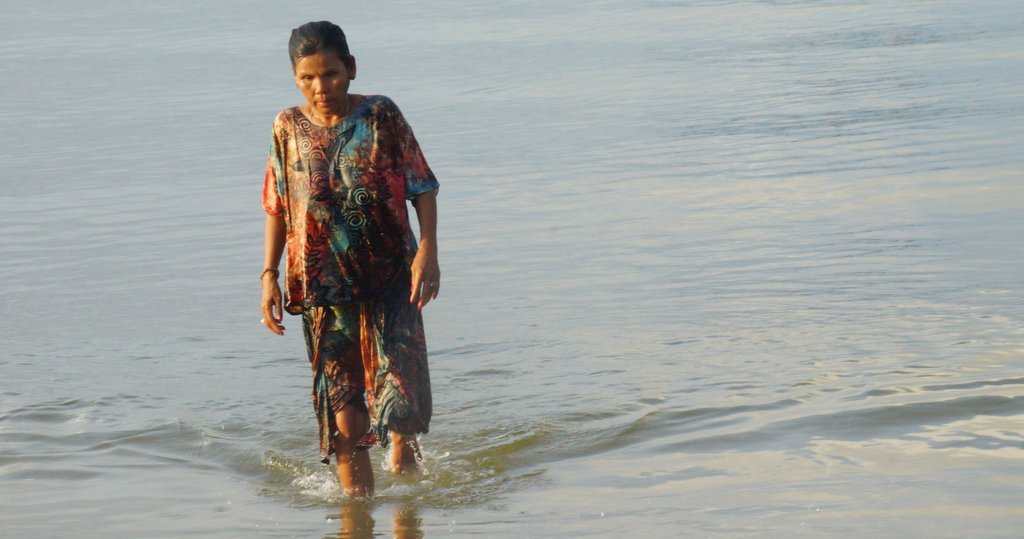
I had until recently rented a shop with my Khmer wife, down by the beach. We built living quarters behind the shop and lived there for about a year. The lady pictured in the last photo here was actually our neighbour. The line of shops leading down the road to the beach are the typical shacks. There is not much infrastructure, most of it being built as new shacks were thrown up. It took awhile for the garbage company to show up. Until then, all the locals would simply throw their rubbish out of there back door. After the garbage company showed up, ALL of them continued to do so rather than pay US $0.75 a month for collection. It harbored vermin of all sorts and was a very unhealthy environment. Most of the Khmers that had shacks their also had children. One of them died for reasons as yet undetermined, but I’m sure the unnecessary squalor had something to do with it.
This problem is not limited to Sihanoukville by any means. Last time I was visiting in the country side (where I was the only white face around for a million miles), I was appalled to find that the garbage company didn’t work in that town, and the locals simply threw all of their rubbish in a near by stream, where it would sit for the duration of the dry season until the first monsoons washed away and made it “magically” disappear.
If you walk down Serendipity beach road now, you will see some green bins mounted to the sidewalk. This was an initiative started last Autumn by a group of expat business owners. They bought all the bins, and had the garbage collection company, over much deliberation, agree to pick it up for free. They (the garbage company) have since “accidentally” run over several of these with their trucks.
So when I hear something like “Beach Paradise Ruined” I really have to question the speakers idea of Paradise, and would like to ask them, who has ruined it?
Just curious- how do you know backpackers are responsible for the trash? My experience has been that those “westerners” (those of us with enough $ to travel) consume a lot more than the rest of the world, but we’re pretty good about putting our trash in a rubbish bin. It’s possible that some of the garbage isn’t even local. I was on a beach in Honduras that had so much broken plastic I couldn’t see the ground. It was on the unpopulated side of the island and I realized that I was probably looking at garbage from all over the Caribbean.
Happy Anniversary to both of you!
It’s so sad to see things like this happening to our environment. I hope things will get better for them in the future. In the mean time, we all need to do our part and also help educate people in ways to better maintain our beautiful world for the future.
I found it a problem when I was there on 2009. Seems like it got worse.
I remember Cambodia having a trash problem from both locals and tourists. I remember Tonle Sap as being disgusting.
So far, Myanmar is escaping these probs. organization arrange for trash pick up from Inke Lake and business owners on Ngapali beach are cleaning the sand regularly, making the beach pristine. I hope it stays that way.
Serendipity Beach is definitely in a sad state. I’m kind of glad I hadn’t been before, so I wasn’t able to make any comparisons. Maybe once Cambodia starts to become more like Thailand in terms of tourism in a few years, they’ll start doing beach clean-ups like they do in Thailand. One potential benefit of it becoming more touristy… At least Otres Beach and the islands (Koh Rong, etc.) are still nice…? 🙁
I live and grew up surrounded by beaches. I think this happens everywhere that it’s allowed to happen. I have spent many hours over the years volunteering to clean up beaches, and many others do the same. The government where I live also has paid employees doing that. The local community needs to react to save places that they gain something from. Any place that is open to the masses will inevitably have trash left behind. But what a shame that people do not have more common decency and show some respect.
It’s a very common sight all over the beaches in SEA. Even in Korea at the mud festival at the end of the night, there was about a meter wide patch of plastic beer bottles and cups along the sea shore. I asked if someone would clean it up and the policeman said, “Ajjuma, in the morning!” By the time the morning came the tide washed all the disgusting into the sea. It’s pathetic how little thought people put into throwing garbage around.
The worst thing I saw was a ferry attendant empty the garbage bins right into the ocean in Malaysia. Our poor planet.
Attractions in Preah Sihanouk Province
http://www.tourismcambodia.org/provincial_guide/index.php?view=attraction&prv=8#comp
Thanks for bringing this sort of thing to the public’s attention. Idea, though: How about harnessing the tens of thousands of Twitter followers you’ve got to come down to the beach for a day or two and clean things up? You could probably partner with hostels in the area, tell your followers to tell their followers, set a date, give it its own Facebook page or whatever, and videotape the whole thing with before and after photos. There must be a few dozen people in Thailand this time of year that have read this post already and would love to help out, so why not throw a party?
Oh, what a shame! I went back in 2001 (!) and it was absolutely beautiful.
It truly is a shame! I’m glad you got to see it when it was beautiful though 🙂
I’m heading there in August and reading this makes my heart sink. I had wanted to visit for all the positive reasons described in so many blogs. It really is a shame that so many young backpackers go around ruining beautiful places and giving the ‘good’ backpackers a bad name. I hope you were able to salvage your trip 🙂
Bianca, I worry about that as well.
Such a shame.
Cambodia has much work to do on it’s waste management…..and backpacker always need to remember to leave a place like they found it.
You should drive down to Kep – that is still the paradise you are looking for!
Thanks Tash, I hope we’ll make it to Kep someday 🙂
I visited in 2011 and it was pretty grotty then. Now I worry for the pristine islands just of the coast and the impact that mass tourism will have there.
Bianca, I worry about that as well.
Hey Sam!
Congrats to you and Audrey on your anniversary and I hope you have much better experiences during the rest of your travels.
It is unfortunate that what was once a beautiful place has now turned into a garbage dump. I agree most people spreading trash like this are probably backpackers. And I hate to say it, but perhaps some of them are even popular travel bloggers (not you guys of course!) who love to write about how many full moon parties they’ve gone to, how to hook up in a hostel or get trashed on a budget, etc. I’ve seen a ton of travel bloggers like this. Not putting the entire blame on them, just saying.
But I think it’s important to share posts like this … hopefully people start to get the message soon and learn what it is to truly travel and respect other cultures.
Hey Rhonda!
I totally agree with what you’re saying. Personally, I think backpackers (and travelers in general) really need to think hard about the impact they’re having on a place while trying to maintain as little of an ecological footprint as possible.
That is heartbreaking to see!
It really is heartbreaking Andi 🙁
Happy Anniversary to you and Audrey!
So sad to see plastic pollution happening around the World. We should do something with plastic bags, plastic bottles, plastic anything….
Thank you! I sure hope it gets cleaned up soon.
All that in 5 years. Sad indeed.
Definitely sad Sophie. I hope they clean it up soon!
How sad 🙁 The local tourism of Sihanoukville must do some major clean-up drive in the area in order to salvage one of their natural assets. Now I appreciate the recent efforts being done here in the Philippines. I hope Cambodia will do the same too.
Hey Mica, I sure hope they follow your suggestions 🙂
we were there in 2011 and the beaches were clean (especially by Cambodian standards) so this is a shame.
one observation I would like to point out is we were also there during high season in January and perhaps the resto owners/locals and travellers alike maybe give a shit more and clean up the beach at that time.
hopefully for Sihanoukville’s case this can get remedied as this beach, especially Otres beach was voted one of the nicest beaches in the world in 2010.
we were there in 2011 and it was still quite beautiful at that time…I went there with horrible expectations however I was pleasantly surprised. it was also high season which you clearly are not there at this time so perhaps the local business owners and/or travellers take better care to keep the beaches clean then and then only (no excuse just an observation).
I am not sure if you got further down to Otres beach but it was away from all the business and kept clean by the beach hut and lodging owners in that end.
travel safe
we were there in 2011 and it was still quite beautiful at that time…I went there with horrible expectations however I was pleasantly surprised. it was also high season which you clearly are not there at this time so perhaps the local business owners and/or travellers take better care to keep the beaches clean then and then only (no excuse just an observation).
I am not sure if you got further down to Otres beach but it was away from all the business and kept clean by the beach hut and lodging owners in that end.
travel safe
Evan, I’m glad to hear you had a better experience. I think you’re absolutely correct – visiting the outskirt beaches is the way to go.
Try Otres in Sihanoukville instead – you’ll think you’ve traveled to a different world.
Thanks Maria! That’s a great suggestion 🙂
Had the same experience in 2009. Absolute dump of a place. And the crowd weren’t to my taste either. Party backpackers and old guys with young locals. Just a filthy place.
Hey Adam, that pretty much summarizes the scene in Sihanoukville 😉 Audrey and I were having the same discussion.
What a shame… 🙁
It really is Lisa 🙁
It could be that Sihanoukville has gotten worse, or it could be that you are getting older and starting to tolerate backpacker ghetto’s less 😉
Hahaha…I think it’s a bit of both to be honest James. I have been noticing on this backpacking trip (I’m now on the wrong side of 30) that I’m not putting up with things quite the way I used to when I was in my early 20’s 😉
That’s really sad. I’m heading to Sihanoukville later this summer. From all the descriptions I have read of it on other blogs, it has seemed like just a backpacker party town, as well as a notorious hotbed for sex tourism and sex trafficking. I am all for having a good time and relaxing, but I don’t understand the mindset of so many young backpackers who seem to just travel to party without any thought to the consequences of their actions on the communities they visit and then leave behind. It makes me sad and ashamed, too … it seems that we are disproportionately a generation of “takers.”
Ellen, unfortunately the rumors are true. I think your best bet would be to visit some of the nearby islands or less popular beaches.
I also visited Sihanoukville for the first time in 2008 and loved it, but noticed some of the negative parts of tourism creeping in. I’ve heard varying stories over the years about it getting worse and better…so I read your post with a sinking heart. What a shame.
It really is a shame Kellie! 🙁
Reminds me of the stag party crowd around Eastern Europe. There were hostels on the first floor with brothels on the second floor. I saw drunk Brits shouting at old ladies, too. It’s an intoxicated power trip, and it’s pretty sad.
Well said! It really is sad when you see a place with this much potential looking like a garbage wasteland.
This really is a shame! I see lots of signs in Bali and the Gili Islands for “help us keep clean” so I think governments and non-profits always realize they need to be proactive, but it would be less work if they could start these campaigns earlier!
Alissa, I completely agree with you. Although organizations can help it really is up to the locals and tourists to put in their best efforts as well.
It is a shame that it has come to this, and presumably it would just be a case of collecting the rubbish and putting it in landfill somewhere, to solve the problem. We are going to Cambodia for a month in Oct/Nov. Can you recommend another beach area in Cambodia? We will be visiting all the main haunts including Kampot, but with a month we could head any direction for a beach.
You can go to Otres Beach. Clean, beautiful and quiet!
Thanks Samuel. I am off to google it now 🙂
I live here and the last time I went to Otres beach it was covered in rubbish everywhere. Independence beach much better so far but, only a matter of time before the Khmers ruin it, already have smelly microlights landing noisily on the sea. Same said for the town, a filthy dusty place to stay…….forget it!
Cambodia (& Laos) were closed for so long, that, unfortunately, this seemed a bit inevitable. I would guess (and hope) that they can bounce back.
With Myanmar now opening, you have to wonder if this isn’t its fate, too.
Erik, I certainly hope this won’t happen to Myanmar soon – although it certainly could.