
Moraine Lake used to be the kind of place where Audrey and I could drive up, cross our fingers for a parking space and figure out the rest when we arrived. That did not make it stress-free. On one of our earlier visits, every vehicle ahead of us was being turned around because the parking lot was full, and we were already preparing ourselves to come back another day when a few spaces suddenly opened. We got lucky, and at the time that was basically the Moraine Lake strategy: drive up and hope the parking gods were feeling generous.
Years later, we returned to a completely different system. Ordinary visitors can no longer drive their own vehicles up Moraine Lake Road, which means the planning starts well before you see that ridiculous turquoise water. On our most recent trip, we arrived as part of a private family tour with Audrey, our daughter Aurelia and Audrey’s dad Daniel.
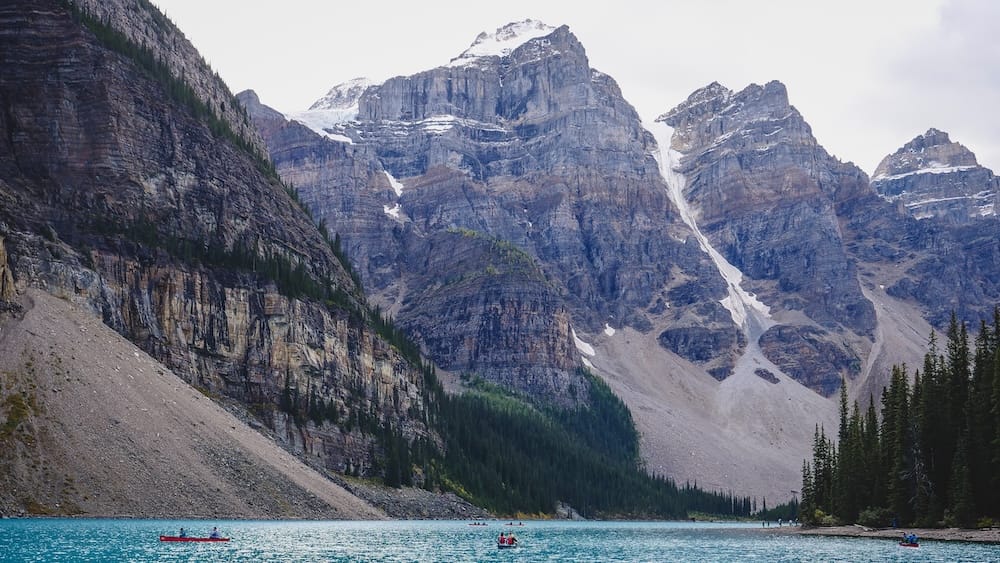
What hasn’t changed is my opinion of Moraine Lake itself. The first time we visited, I said it lived up to its reputation. After going back, I still think that. The logistics are more complicated now and the famous viewpoints can be rammed with people, but the scenery is good enough that I don’t begrudge the effort required to get there.
The mistake, in my opinion, is treating Moraine Lake as one fixed experience. You can see the lake, climb the Rockpile and leave fairly quickly. You can slow things down with a walk along the shoreline or a picnic. You can rent a canoe. Or you can use Moraine Lake as the starting point for a substantial hike that eats up most of the day.
Those are very different ways to visit the same lake, which is why this guide covers not only how to get there under the current access system, but what the Rockpile was actually like for me, what else you can do after the famous viewpoint and how much time you should realistically allow.
Moraine Lake at a glance: decide what kind of visit you want
Before worrying about shuttle schedules or canoe rentals, I’d decide what you actually want Moraine Lake to be within your Banff trip.
At the shortest end, it can be a classic sightseeing stop. You arrive, see the lake, walk up the Rockpile, take the photograph you’ve probably already seen a thousand times and move on. The Rockpile itself is only a 0.7-kilometre loop with about 35 metres of elevation gain, and the official estimate is around 30 minutes.
That is only one version of Moraine Lake, though. The Moraine Lake Lakeshore Trail extends 1.3 kilometres one way and is estimated at roughly 45 minutes round trip with very little elevation change. Consolation Lakes requires around two hours of hiking. Larch Valley moves the commitment into the 3.5-to-4-hour range, while Eiffel Lake and Sentinel Pass require even more.
Once you start looking at those longer routes, Moraine Lake stops being something you’re squeezing between Lake Louise and another attraction. It becomes the main event.
That’s why I wouldn’t begin with the question, “How many hours should I spend at Moraine Lake?” I’d first ask what you actually want to do there. If you’re mainly after the classic views and Rockpile, you don’t need half a day. If you want to paddle, walk farther along the lake, eat lunch and enjoy the place without watching the clock every five minutes, additional time becomes useful very quickly.
And if you’re hiking into Larch Valley, Eiffel Lake or Sentinel Pass, you’ve left the world of quick sightseeing behind altogether.
How to visit Moraine Lake under the current access system
This is the part of Moraine Lake that has changed most dramatically between our visits. Years ago, Audrey and I drove up ourselves. The parking situation was already chaotic enough that we nearly got turned around, but at least the problem was familiar: drive there, find somewhere to leave the car and start exploring.
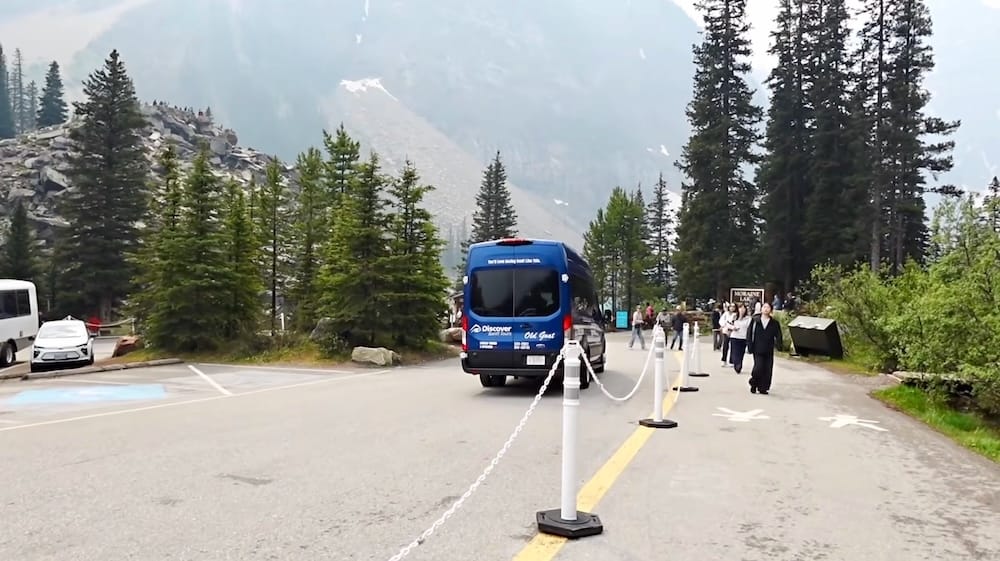
That system is history for ordinary visitors. Parks Canada currently prohibits personal visitor vehicles on Moraine Lake Road year-round, with limited exceptions that include licensed commercial operators, registered Moraine Lake Lodge guests and certain official vehicles.
For most visitors, the realistic options are now the Parks Canada shuttle, a public-transit combination from Banff or a licensed commercial tour.
Parks Canada’s Moraine Lake shuttle
For the regular 2026 season, Parks Canada’s Moraine Lake shuttle is scheduled to operate from June 1 through October 12, weather permitting. The daytime service departs from the Lake Louise Park and Ride, with departures roughly every 30 minutes between 6:30 a.m. and 5 p.m. and a listed final return from Moraine Lake at 7:30 p.m.
The current adult fare is CA$12.75, with a separate reservation fee of CA$3.50 online or CA$5.50 by telephone. Park admission is separate. That makes the public shuttle enormously cheaper than paying for private transportation if your main problem is simply getting authorized access to the lake.
The reservation system also has a useful wrinkle. For 2026, Parks Canada released 40 percent of seats when bookings opened and holds the remaining 60 percent until 8 a.m. Mountain Time two days before departure. I still wouldn’t deliberately leave a high-priority Moraine Lake visit until the last minute, but a date showing little or no availability months ahead does not necessarily mean every seat for that day is already gone.
Once you’re using the Parks Canada system, your booking includes the initial lake shuttle, return transportation, access to the Lake Connector and parking at the Park and Ride. You reserve an outbound check-in window rather than having to reserve every individual movement afterward.
There is still logistical overhead. Parks Canada advises allowing at least 30 minutes for shuttle waits, with waits potentially stretching to an hour during periods of high demand. That’s one of the most important details to remember when deciding how Moraine Lake fits into your day, because two hours at the lake is not the same thing as a two-hour Moraine Lake outing.
There is also an Alpine Start option
Parks Canada currently has an Alpine Start service with 4 a.m. and 5 a.m. departures during the 2026 Moraine Lake season. It’s designed for people who want to reach the lake before the normal daytime service, particularly if an early start matters for a substantial hike.
The parking and check-in arrangement differs from the regular Park-and-Ride service, so I wouldn’t treat Alpine Start as simply choosing an earlier time from the normal timetable. If that’s the option you want, check the current Parks Canada instructions while making the reservation.
If you’d rather have the early transportation handled for you, there are also commercial sunrise options. One current Booking.com experience offers pickup from Banff, Canmore, Harvie Heights or Lake Louise, with a Moraine-Lake-only version and another that continues to Lake Louise. We haven’t taken this particular tour, so I would treat it as an alternative to compare rather than a personal recommendation, but you can check the current Moraine Lake sunrise tour options on Booking.com if a pre-dawn guided departure suits you better than organizing Alpine Start yourself.
Visiting Moraine Lake from Banff without a car
If you’re staying in Banff without a vehicle, Roam Transit provides another way into the system. Its Reservable Super Pass combines a reserved Route 8X round trip from Banff with access to the Parks Canada Lake Connector, so you can start from Banff rather than first solving your own transportation to the Lake Louise Park and Ride.
The old direct Route 10 service is not operating in 2026, so don’t build a current itinerary around older advice that assumes it still does.
I’d also be cautious with a very late-day Moraine Lake plan. Current Roam and Parks Canada information don’t perfectly agree on the final time Super Pass passengers can board the Connector toward Moraine Lake, so this is one of those situations where checking the live timetable before you go is more useful than memorizing a cutoff from a travel article.
Tours are another option, but they aren’t required
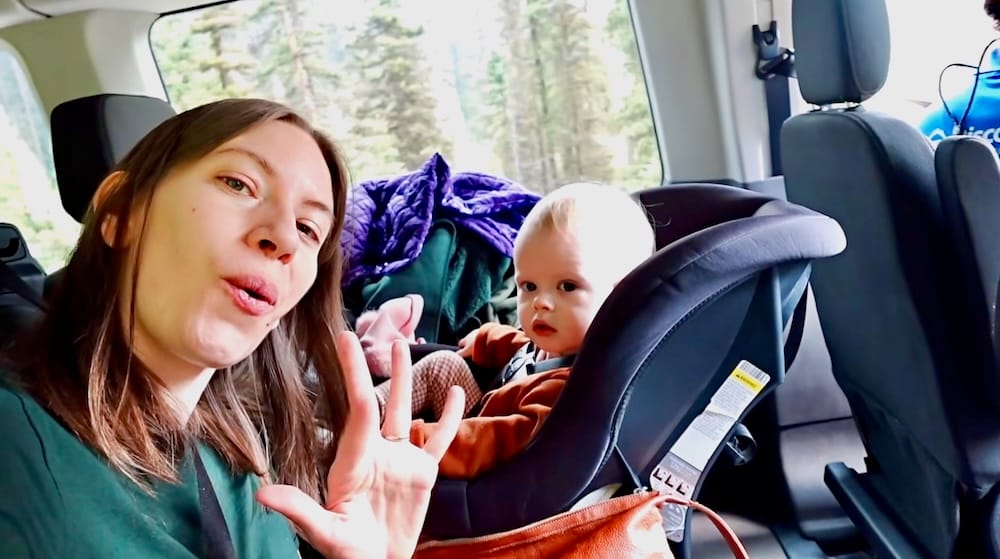
On our recent visit, we arrived in a private commercial vehicle, and I loved not having to think about the transportation side of the day. We were already with our guide, so Moraine Lake simply became the next stop rather than another reservation and connection to manage.
But I want to separate convenience from necessity: you do not need a guided tour simply to visit Moraine Lake. The Parks Canada shuttle already solves the basic access problem for considerably less money. A tour becomes more interesting when you’re getting something beyond transportation—hotel pickup, a guide, a broader Banff itinerary or more control over how your group uses the day.
For example, one current GetYourGuide small-group option picks up in Banff or Canmore and allocates up to two hours at Moraine Lake and another two hours at Lake Louise. We didn’t take this specific tour, but that two-hour Moraine stop lines up quite well with the amount of time I’d prefer for an ordinary first visit. If you want transport and lake time packaged together, you can see the current Moraine Lake and Lake Louise small-group tour details and compare its schedule with the public-shuttle option.
That’s a different decision from whether a tour is required to see the lake. It isn’t.
What to expect when you arrive at Moraine Lake
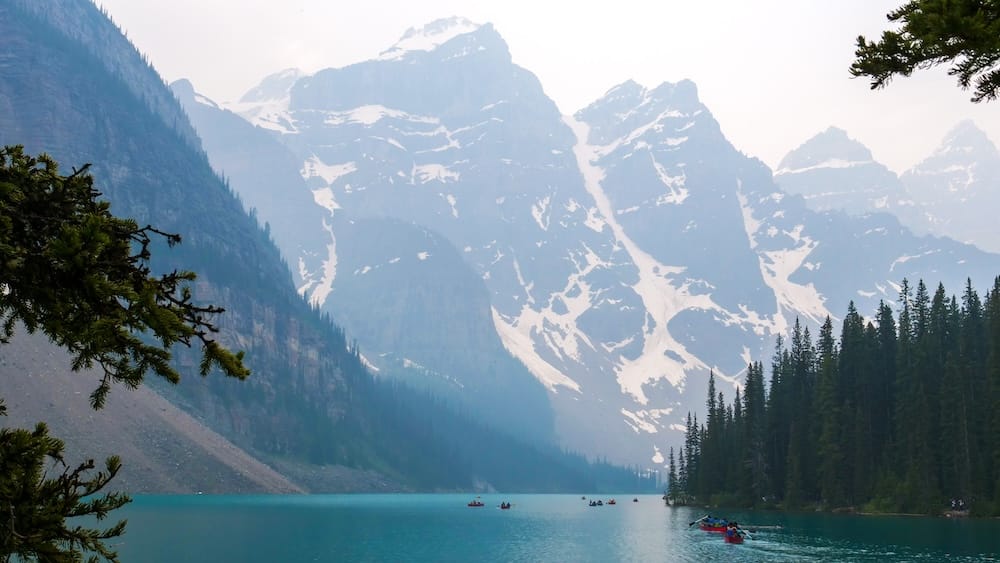
Moraine Lake is so famous that it’s easy to imagine a major visitor centre sitting beside it with all the infrastructure that normally gathers around a place receiving this much attention. It doesn’t really work that way.
Parks Canada treats Moraine Lake as a backcountry location. There is no cell service, Wi-Fi, running water or lighting provided at the lake, although pit toilets are available. Cell reception generally doesn’t return until you’re several kilometres back down Moraine Lake Road.
That makes a little preparation more important than it sounds. Have whatever tickets or reservation information you need available offline, carry your own water and don’t assume you’ll be able to stand beside the lake and solve every problem from your phone.
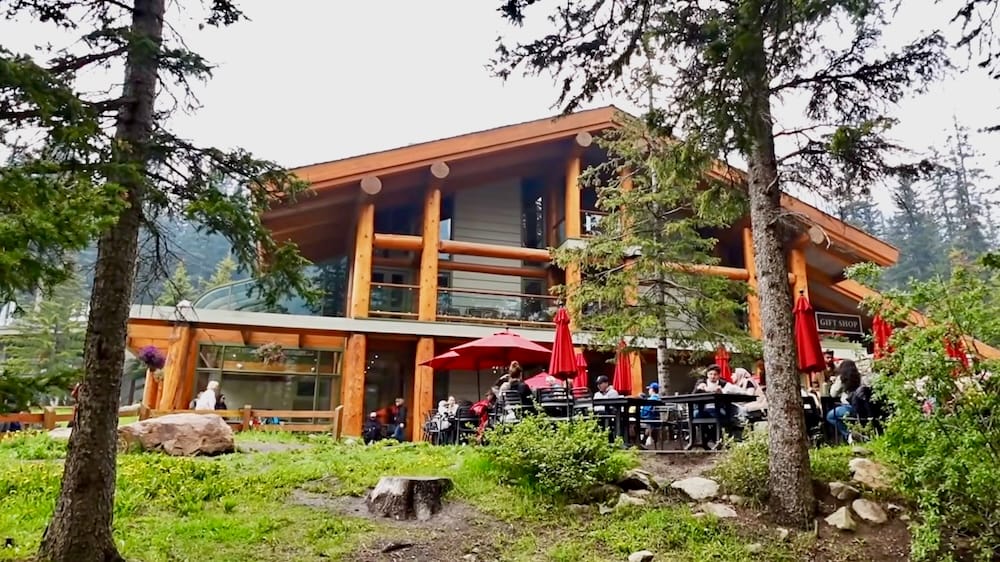
There are limited seasonal commercial services through Moraine Lake Lodge. The Lodge currently has a café serving drinks, baked goods and soup, along with a Trading Post, so you are not necessarily stranded without the possibility of buying anything. I would still arrive self-sufficient rather than build the visit around those services being available.
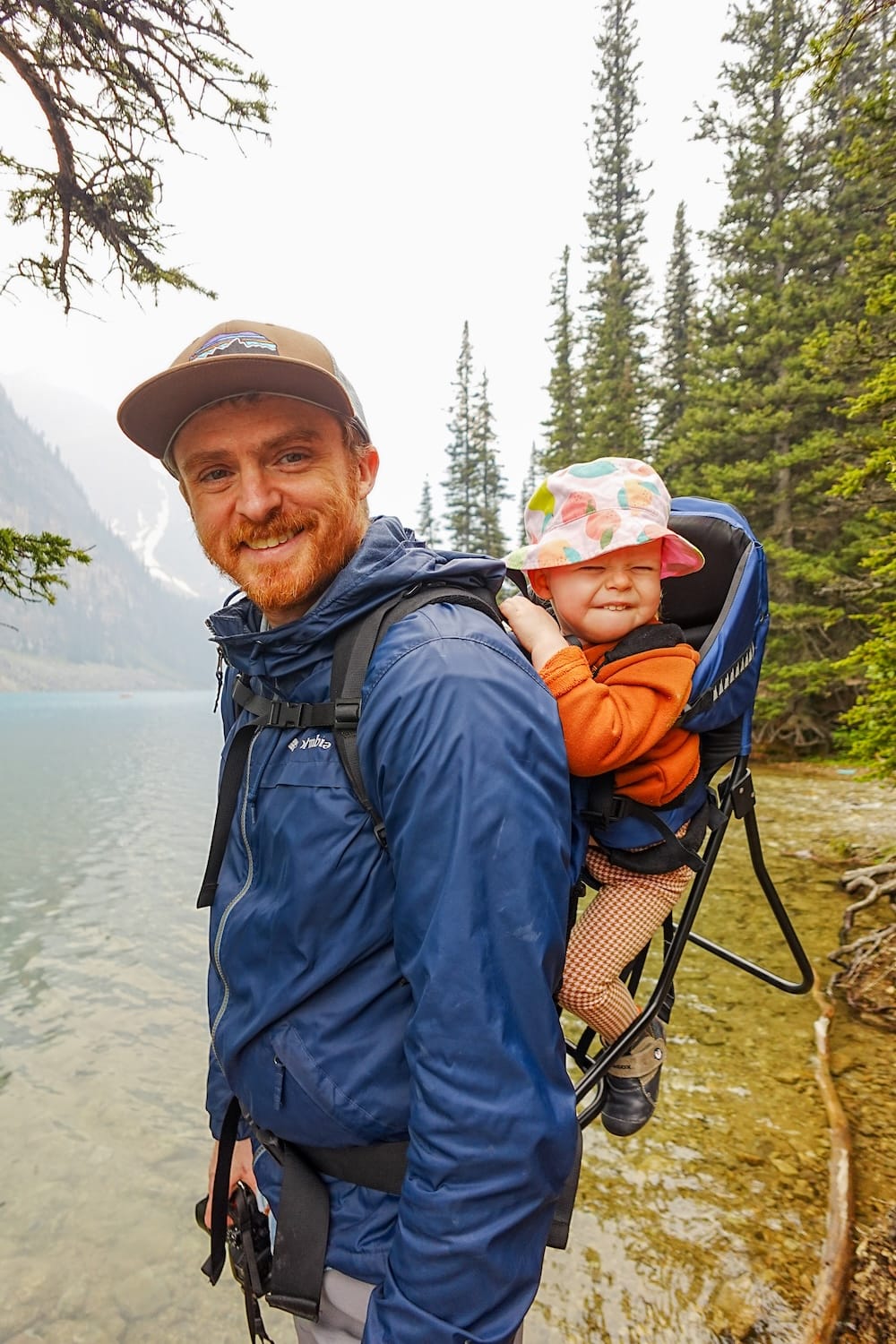
On our recent trip, we walked around as a family before eventually separating for a while and then regrouping for lunch. Aurelia also needed some time to move around after being carried, which is the kind of practical reality that doesn’t appear in the famous photographs but matters enormously when you’re travelling with a little kid. Not everybody wants to stand beside the same viewpoint while one person takes another 47 photographs of the mountains.
Rockpile: is the classic Moraine Lake viewpoint worth your time?
Yes.
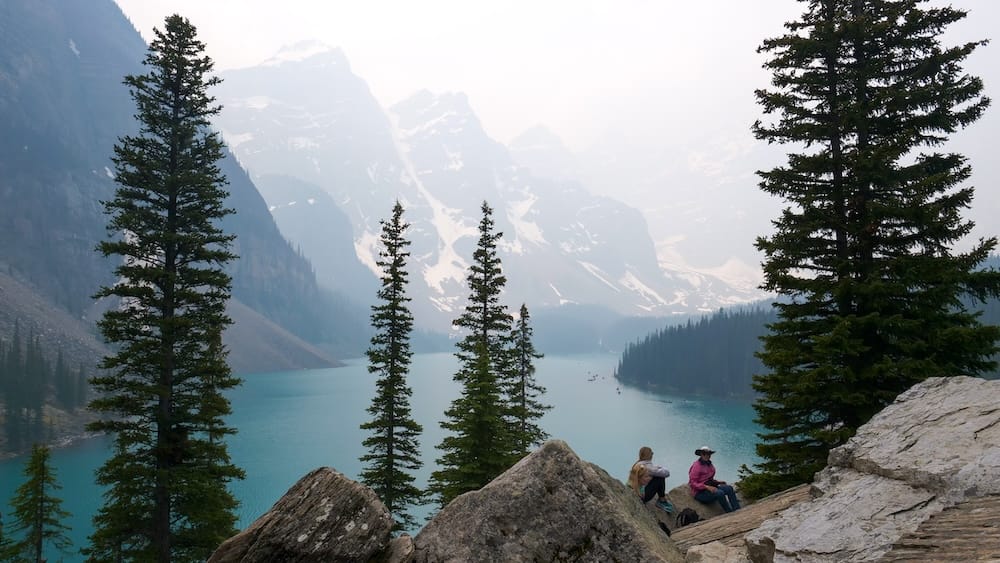
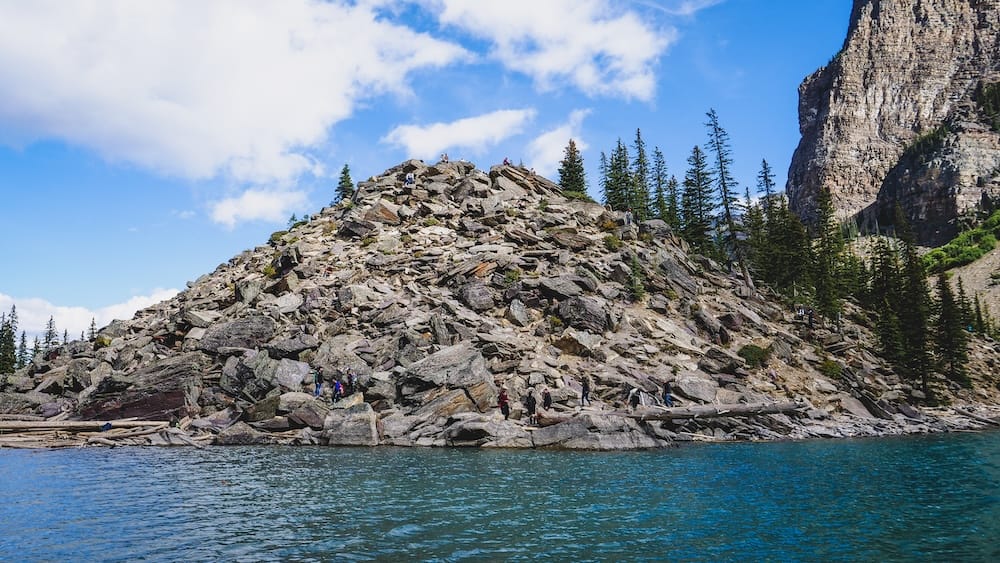
If I had limited time at Moraine Lake and could add only one thing beyond seeing the water around the arrival area, I’d do the Rockpile. The official route is almost comically small compared with the scenery waiting at the top: a 0.7-kilometre loop, about 35 metres of elevation gain and an estimated 30-minute round trip.
For me, it didn’t feel like much of a hike at all. When I came back down, I described it as more of a wander up a hill, while Audrey summed up the terrain as steps rather than a scramble. That’s how it felt to us, not a promise that everybody will consider the climb easy. A short trail is not automatically an accessible trail, and individual ability matters.
For me, though, the scenic payoff was wildly disproportionate to the physical effort.
What the Rockpile felt like for me
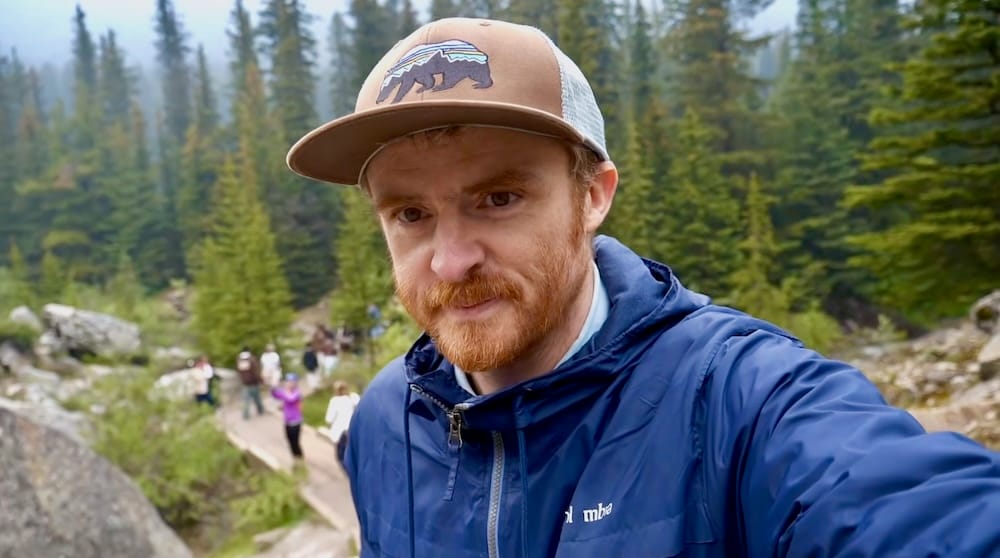
Our family started the visit together, but eventually I wanted to head up Rockpile. Audrey, Daniel and Aurelia didn’t particularly need to follow me simply because I wanted the viewpoint, so they stayed together while I went up alone. Aurelia got some time to walk around, they could use the stop differently and I went chasing the panorama.
The route initially follows the beginning of the Consolation Lakes Trail before turning toward the Rockpile. Parks Canada asks visitors to remain on the designated trail and viewpoints rather than climbing across the rocks because of the fragile vegetation around the moraine.
The actual climb passed quickly for me. A few steps, some uphill walking, and then the lake suddenly opens up beneath you. The views are absolutely phenomenal. From the Rockpile, you get the perspective that has made Moraine Lake so famous: that intense blue-green water stretching toward the mountains, with the forest framing the lake below.
I immediately understood why everybody wants the photograph. Unfortunately, everybody wants the photograph.
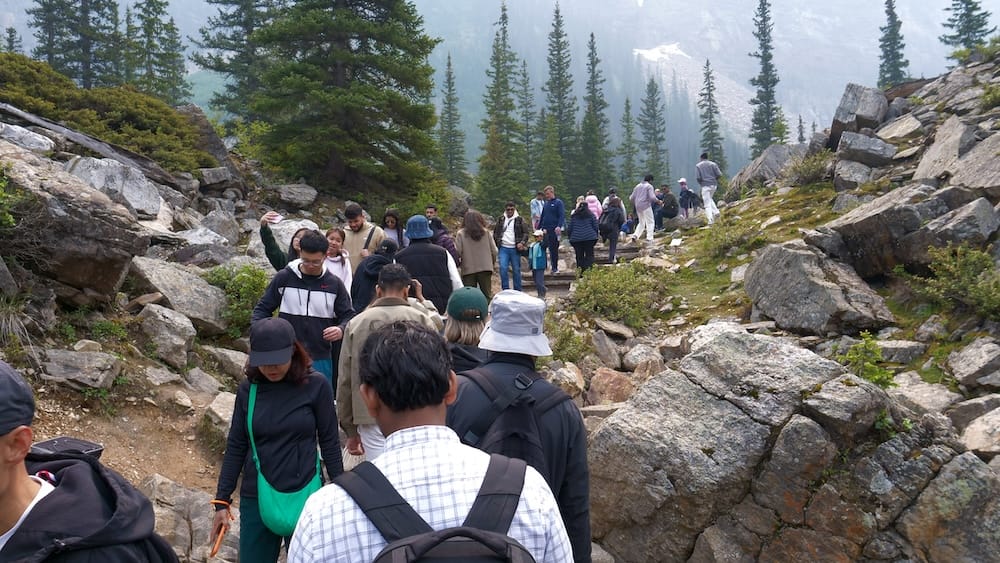
The downside of Rockpile isn’t the climb—it can be the crowd
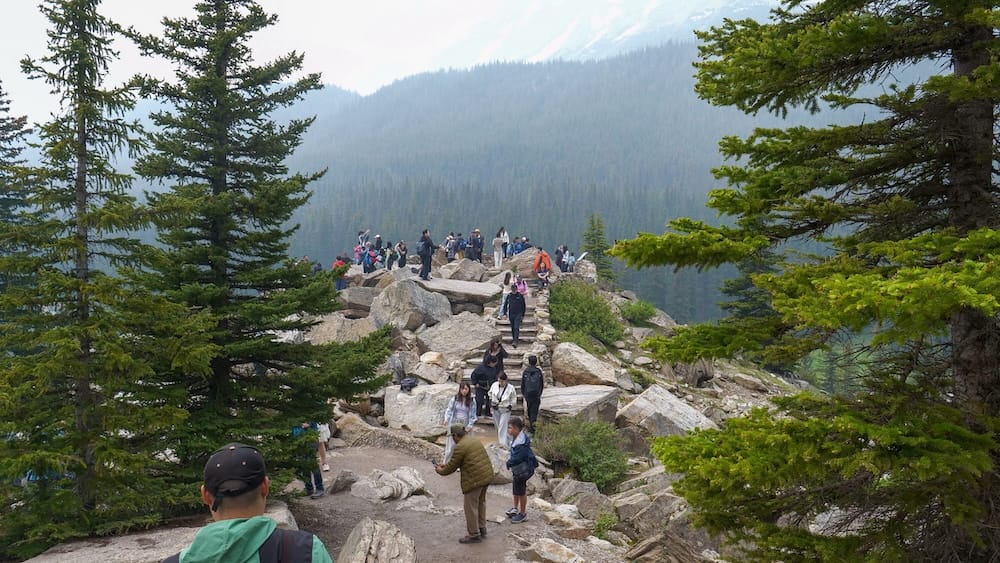
When I came back down, the first thing I said after praising the views was basically a warning not to expect the viewpoint to yourself. It was packed.
I jokingly started by saying it had been ten times busier than the earlier hike we’d done that day before upgrading the exaggeration to “100 times busier.” I was obviously not conducting a controlled population survey on top of the Rockpile. It just felt absurdly busier.
Even so, I would do it again. That’s important because there are famous viewpoints where the crowd eventually overwhelms whatever attracted you there in the first place. Rockpile didn’t cross that line for me. I would have loved fewer people around me, but I never wondered why I’d bothered climbing. The view was too good.
I’d simply go with realistic expectations. This is one of the signature viewpoints at one of the most photographed lakes in the Canadian Rockies. Quiet contemplation is possible elsewhere; the Rockpile may have other plans for you.
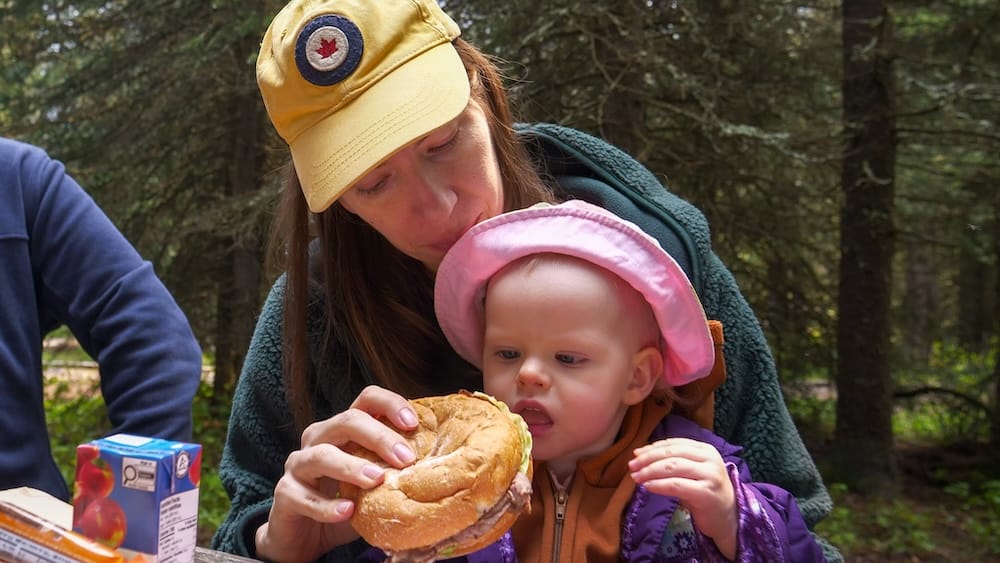
What surprised me was how quickly the atmosphere could change within the same Moraine Lake visit. After coming down, I found Audrey, Daniel and Aurelia again, and later we had a picnic that felt dramatically calmer than the viewpoint I’d just left.
That contrast is a big part of why I wouldn’t reduce Moraine Lake to Rockpile alone. I think the viewpoint deserves its reputation, but seeing it doesn’t mean you’ve exhausted the destination.
What else can you do after the Rockpile?
This is where the amount of time you give Moraine Lake starts to matter. If you finish the Rockpile and immediately begin calculating how quickly you can get back onto a shuttle, you’ve essentially treated the lake as a viewpoint. That may be exactly what your itinerary requires, especially if you’re trying to combine several major Banff sights in one day, but there are worthwhile ways to go deeper without committing to a huge mountain hike.
Walk farther along Moraine Lake
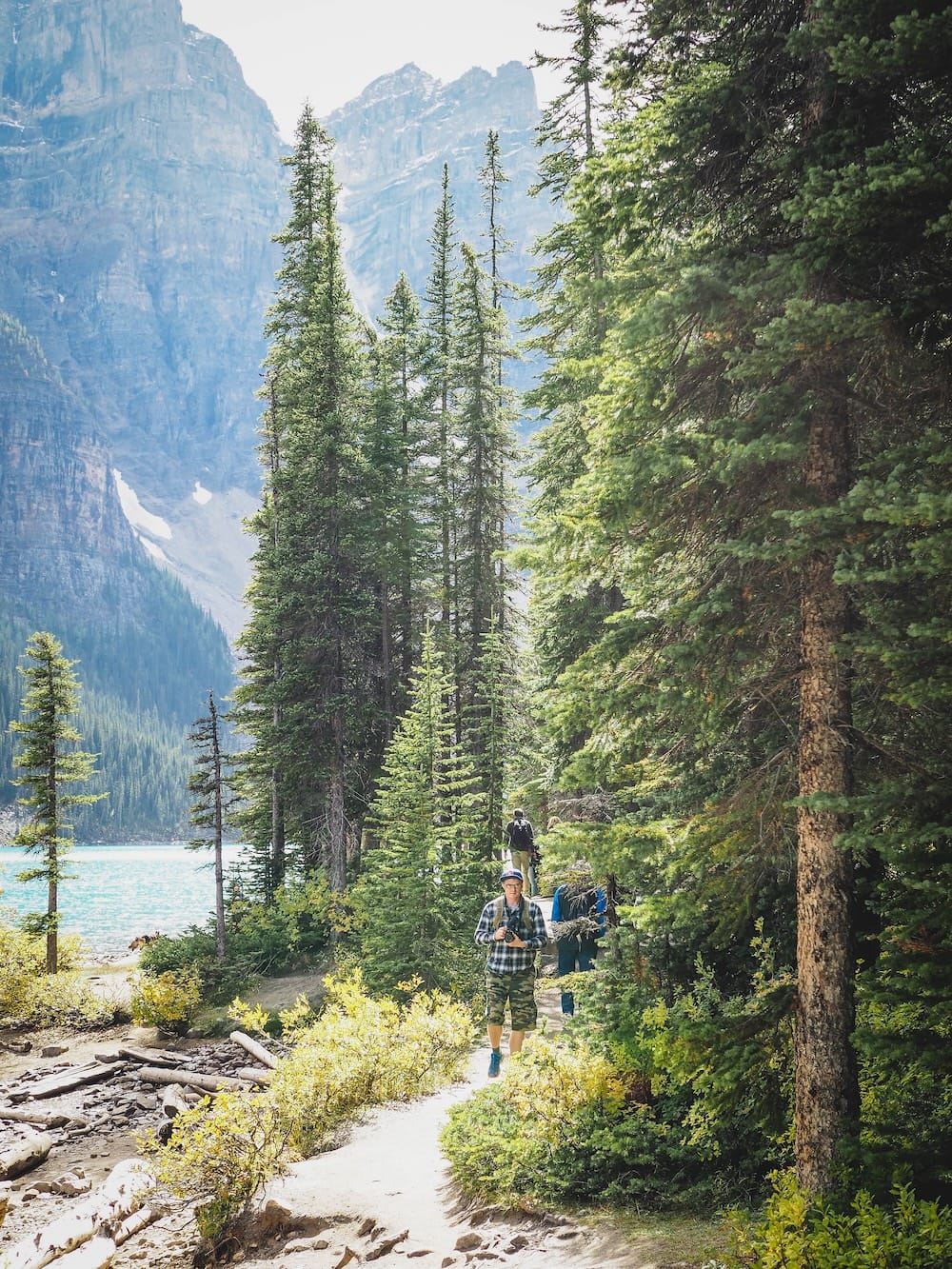
The Moraine Lake Lakeshore Trail is the most obvious way to extend a shorter visit. The route runs 1.3 kilometres one way from beyond Moraine Lake Lodge, has very little elevation change and is estimated at about 45 minutes round trip.
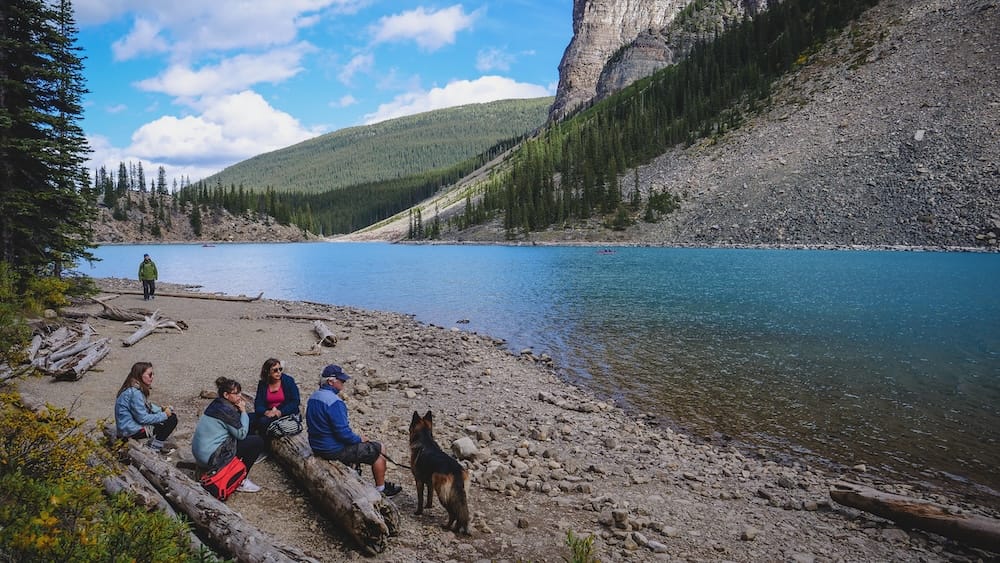
We spent time walking around Moraine Lake ourselves, although I can’t claim we deliberately completed the official Lakeshore Trail from end to end. What appeals to me about this kind of option is that it gives you a reason to leave the most concentrated arrival-and-viewpoint rhythm without turning the day into a serious hiking project.
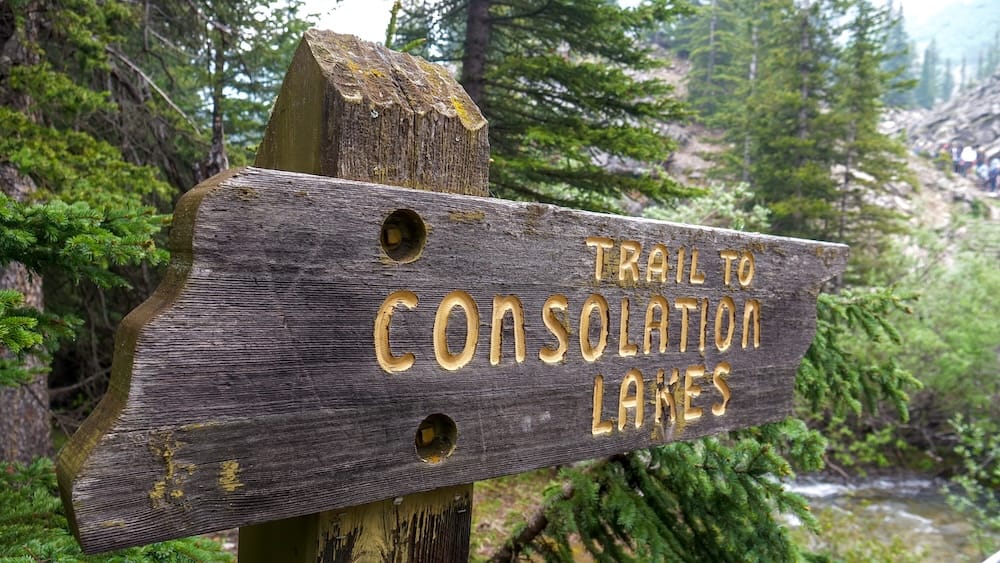
Consolation Lakes sits in another useful middle category. The route is 2.9 kilometres one way, with about 135 metres of elevation gain overall and an estimated two-hour round trip.
That is enough walking to meaningfully change your Moraine Lake visit, yet it’s a completely different time commitment from the major hikes beginning here. There is a lot of territory between snapping the Rockpile photo and disappearing into the mountains for five hours.
Canoeing at Moraine Lake
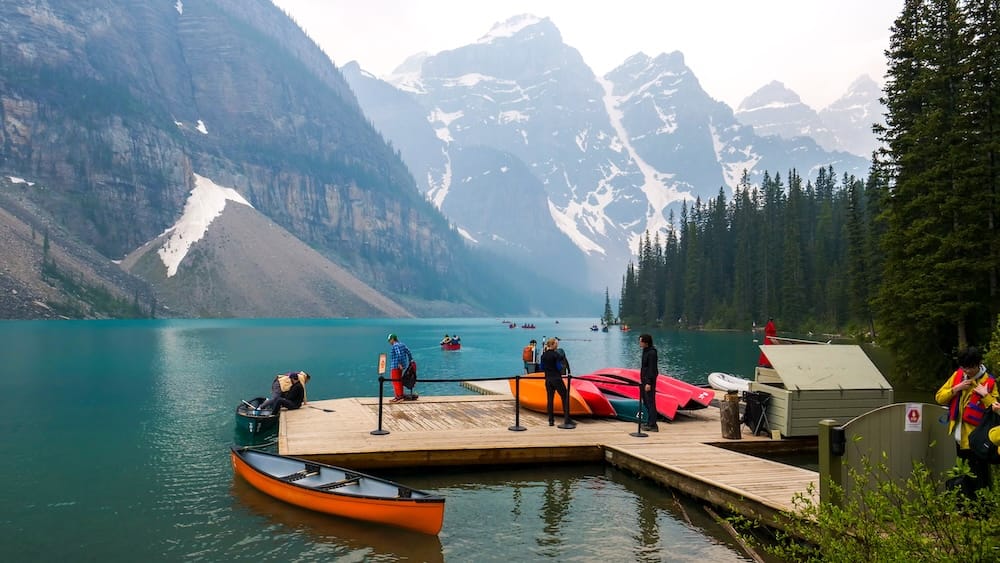
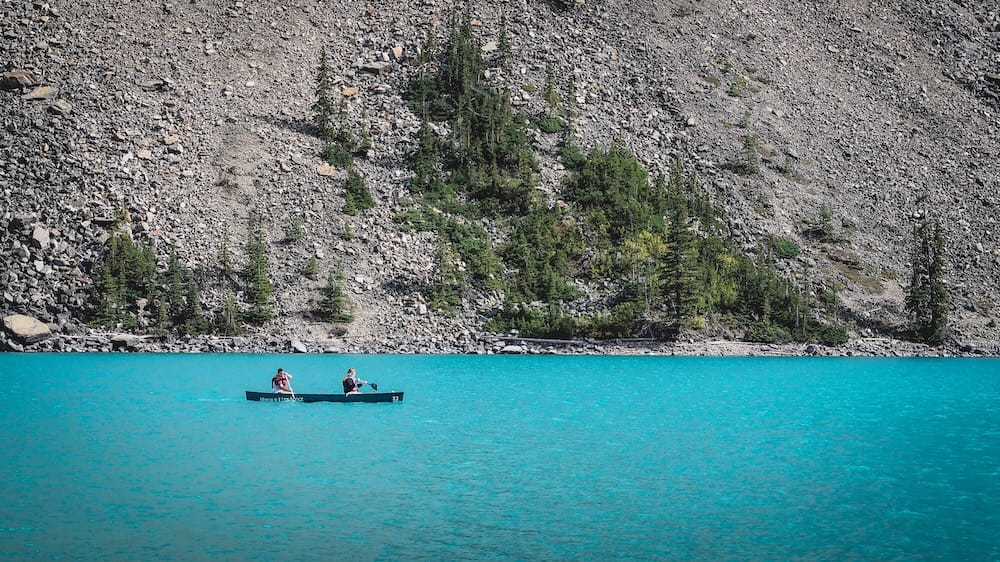
Canoeing may be the most obvious visual upgrade to the standard Moraine Lake visit. We saw and photographed plenty of people paddling beneath the mountain walls, but Audrey and I didn’t canoe here ourselves, so I can’t give you a personal verdict on whether the current price is worth paying.
For day visitors, Moraine Lake Lodge currently charges CA$160 plus tax per canoe for one hour. The canoes accommodate two to three people, with paddles, life jackets and basic instruction included. Rentals are first-come, first-served rather than reservable in advance, and the dock normally operates from around mid-June to mid-September.
Weather can shut it down. Wind, rain or snow are all capable of turning a canoe plan into no canoe plan.
There’s another current rule worth knowing because older Moraine Lake content can give a completely different impression. The lake is now part of a Parks Canada Water Preservation Zone, which means visitors cannot bring their own canoe, kayak, paddleboard or large inflatable onto the water. The on-site rental craft are the paddling exception.
That turns canoeing into a more deliberate decision than simply bringing your SUP along in case the mood strikes. It’s a paid one-hour activity with first-come availability and weather uncertainty, so I’d give it proper room rather than trying to wedge it into the final scraps of a tightly scheduled visit.
Longer hikes make Moraine Lake the main event
If hiking is your reason for going to Moraine Lake, the whole timing equation changes.
Larch Valley is 4.5 kilometres one way with about 570 metres of elevation gain and an estimated 3.5 to 4 hours round trip. Eiffel Lake is 5.7 kilometres one way and generally falls into the 4-to-5-hour range.
Sentinel Pass via Larch Valley pushes the elevation gain to roughly 750 metres and the estimated round trip to about 4.5 to 5.5 hours. Wenkchemna Pass is bigger again at 9.6 kilometres one way, with an official estimate of 7 to 8 hours.
We didn’t hike those routes, so I’m not going to manufacture a ranking of which one I’d choose. Their importance in this guide is simpler: they show why one universal answer to “How long do you need at Moraine Lake?” is basically useless.
If you’re doing Rockpile, Moraine Lake can still function as part of a broader sightseeing day. If you’re heading to Sentinel Pass, Moraine Lake is your day.
Those longer trails also deserve more attention to conditions than a short lake visit. Current trail status can change, and Parks Canada notes avalanche exposure on the moderate Moraine-area routes, with travel not recommended on them from mid-October through mid-June. If a major hike is your objective, check the live trail conditions shortly before you go rather than assuming an evergreen article can tell you what the mountain is doing today.
How much time do you actually need at Moraine Lake?
For a first visit, this is how I’d think about the numbers:
| What you want to do | Time at Moraine Lake I’d allow |
|---|---|
| Quick lake views + Rockpile | About 1 hour |
| Rockpile + more shoreline time | About 1.5–2 hours |
| Rockpile + canoeing | Roughly 2.5–3 hours |
| Lake time + Consolation Lakes | 3 hours or more |
| Larch Valley or Eiffel Lake | Roughly 4.5–5+ hours |
| Sentinel Pass | Roughly 5.5–6.5+ hours |
| Wenkchemna Pass | Treat it as a full hiking day |
These are planning ranges rather than stopwatch promises, and there is an important distinction behind all of them: the table covers time at Moraine Lake, not the total amount of your day consumed by getting there and back.
If you’re using the Parks Canada shuttle, you still have your journey to the departure point, check-in, the shuttle ride and waiting time on the return. Parks Canada advises allowing at least 30 minutes for shuttle waits, with longer waits possible when ridership is high.
That means somebody telling you “Moraine Lake only takes 90 minutes” can be technically reasonable about the time beside the lake while badly understating the size of the outing.
About one hour: enough for the classic Moraine Lake stop
If your priorities are the lake, photographs and Rockpile, around an hour is a reasonable quick-visit target. Rockpile itself has an official 30-minute estimate, leaving some additional time for the shoreline and photographs.
I’d consider that a compressed visit rather than my preferred version. If everything runs smoothly, you can absolutely get the primary scenic payoff, but there isn’t much slack for wandering, sitting down or changing your mind once you arrive. If Moraine Lake is one stop in a very busy day, that may be a perfectly acceptable compromise.
About 1.5 to 2 hours: what I’d prefer for a first visit
For an ordinary first-time sightseeing visit, I like this range considerably more. It gives you enough time to do Rockpile without checking your watch every five minutes, spend some additional time near the lake and leave room for photographs, a snack or the radical act of simply sitting there for a bit.
The official estimates for Rockpile and the full Lakeshore Trail total roughly 75 minutes before you’ve included pauses and transitions, which gives you an idea of why another half-hour or hour can change the character of the visit.
Our recent experience reinforced that for me. What I remember isn’t only climbing Rockpile. I remember coming back down, finding Audrey, Daniel and Aurelia again, and sitting together over lunch after leaving the crush of the viewpoint. That slower part didn’t generate the famous Moraine Lake photograph, but it made the visit better.
If you prefer a guided day rather than building the shuttle connections yourself, this is also where the current GetYourGuide tour with up to two hours at Moraine Lake makes practical sense: its lake allocation is much closer to my preferred first-visit range than a rushed photo stop. You can compare the current tour schedule and departure options if you’re deciding between public transport and a small-group day from Banff or Canmore.
Around 2.5 to 3 hours: more realistic if you want to canoe
A one-hour canoe rental doesn’t mean I’d add precisely 60 minutes to the shortest possible Moraine Lake itinerary. You still have to get to the dock, deal with first-come availability, receive your equipment and instructions, paddle, return the canoe and move on to whatever comes next. Weather can interfere as well.
If canoeing is something you’d be genuinely disappointed to miss, I’d build the visit around it rather than treating it as the first thing sacrificed when the schedule slips.
Three hours and beyond: Moraine Lake becomes a hiking destination
Consolation Lakes has an official two-hour round-trip estimate, so combining it with ordinary Moraine Lake sightseeing pushes the visit comfortably beyond the quick-stop category.
Larch Valley and Eiffel Lake require considerably more. Once you’ve added four or five hours of hiking, transport, food and some actual time beside Moraine Lake, you’re dealing with a serious half-day outing rather than another stop on a checklist. Sentinel Pass moves farther in that direction, while Wenkchemna Pass belongs in the full-hiking-day category.
This is why I wouldn’t obsess over finding a single correct Moraine Lake duration. The right number is downstream from the experience you choose.
What about staying overnight at Moraine Lake Lodge?
There is one obvious way to stop thinking about Moraine Lake entirely in terms of shuttle windows: stay at the lake.
We haven’t stayed overnight at Moraine Lake Lodge, so I can’t give you a room review or pretend to know what waking up there feels like. From a planning perspective, though, the current guest benefits are significant enough that the Lodge deserves a brief mention in a complete Moraine Lake guide.
Registered Moraine Lake Lodge guests are one of the exceptions to the current personal-vehicle restriction, which means overnight guests receive the access information needed to drive Moraine Lake Road and use the Lodge’s private parking. That changes the logistics considerably, particularly if your reason for being here is a longer hike rather than a quick sightseeing stop.
Canoeing is another meaningful inclusion. While day visitors currently pay CA$160 plus tax for a one-hour rental, overnight guests receive complimentary canoeing. It is still first-come, first-served rather than guaranteed, and the dock can close because of weather, but that’s a real benefit if paddling was already part of your plan. Breakfast is also currently included with overnight stays.
The major limitation for families like ours is that Moraine Lake Lodge currently requires guests to be 16 or older. We couldn’t have stayed there with Aurelia on this trip, so I would think of it primarily as an option for couples and adult travellers who want Moraine Lake itself—not simply Banff—to be the focus of the stay.
Booking.com has a live listing for the property, although bookable inventory there can be limited or unavailable. If an overnight stay appeals to you, you can check Moraine Lake Lodge availability on Booking.com. If Booking.com isn’t taking reservations for your dates, the Moraine Lake Lodge accommodation page is the practical place to verify its current direct-booking options and guest policies.
For somebody planning a major hike, wanting far more time around the lake or specifically hoping to canoe, staying overnight changes the equation much more than simply shaving a few minutes off the morning commute.
Moraine Lake crowds aren’t the same everywhere
Moraine Lake is famous, and there is no clever planning trick that makes thousands of other people suddenly forget about it. Our older visit had its own form of chaos because everybody was competing for a tiny amount of parking. The current transport system has changed that problem, but it hasn’t changed the fundamental fact that a great many people want to see the lake.
What I wouldn’t assume is that every part of the visit will feel exactly like the busiest part. Rockpile was the extreme for me. That’s where I felt the concentration most strongly because everybody is climbing toward essentially the same payoff and many people want essentially the same photograph. Later, I came back down, found my family and had a considerably calmer experience.
That distinction is more useful to me than simply saying Moraine Lake is crowded. If the famous Rockpile view is your priority, expect company. If you have more time, walking farther, lingering around another part of the lake or heading out on a trail can change the atmosphere considerably.
I also wouldn’t promise some secret hour when you’ll magically have Moraine Lake to yourself. Access patterns, weather, season and demand all affect how the place feels. I’d rather arrive expecting other people and enjoy whatever quieter moments happen naturally than build the whole trip around chasing a mythical empty lake.
Practical details that matter more than they sound
Moraine Lake is visually dramatic enough that talking about toilets and offline tickets feels slightly ridiculous. They’re still the details capable of messing up your visit.
Bring your own water because there is no running water provided at the lake. Pit toilets are available, but this isn’t Banff town with an alpine backdrop. With no dependable cell service or Wi-Fi, I’d also save whatever tickets, reservations and logistical details I need before heading up Moraine Lake Road.
If you’re travelling with children, Parks Canada shuttles can carry strollers and larger backpacks. That doesn’t mean every trail at Moraine Lake is suitable for a stroller, and it certainly doesn’t turn Rockpile into an accessibility route just because I personally found the climb straightforward.
The same distinction matters for visitors with mobility restrictions. Parks Canada currently provides an accessible shuttle to Moraine Lake, but there is no accessible personal-vehicle parking at the lake. The Alpine Start service does not have the same accessible-shuttle setup.
Getting someone to Moraine Lake and deciding which trails or viewpoints work for their mobility are separate questions.
Our own trip reinforced the broader family lesson without giving me any right to declare Moraine Lake universally toddler-friendly or suitable for every older traveller. We had three generations together, Aurelia was still little and sometimes the sensible thing was simply letting different people use the stop differently.
Daniel joining us doesn’t mean he had mobility limitations, and Aurelia doing well doesn’t guarantee another toddler will have the same day. It does mean I appreciate leaving some slack in a family itinerary instead of trying to choreograph every minute around the perfect photograph.
Weather is another reason for that breathing room. During our recent visit we were genuinely excited when the sun began poking through because the mountain weather had been shifting around us. Moraine Lake doesn’t cease to exist under cloud, but visibility, temperature, hiking comfort and canoe operations can all be affected.
If paddling is the centrepiece of your visit, wind or rain may wipe it off the board. If you’re heading onto a longer trail, current conditions matter much more than whatever somebody wrote about that trail months ago.
Moraine Lake rewards planning. It also rewards not planning the life out of it.
Is Moraine Lake worth all the logistics?
Yes, I think it is.
Audrey and I have now experienced Moraine Lake on both sides of a major change in the way people visit. We first came when the strategy involved driving up and hoping a parking space materialized. Years later, we returned under a system where transportation had to be arranged before we arrived. Neither version made the lake less impressive.
The first time, I thought Moraine Lake lived up to its reputation. On the second visit, I climbed into a Rockpile crowd that would normally test my patience and still came back down saying the views were absolutely phenomenal. That’s a fairly durable verdict.
If I were planning my own first visit now, I wouldn’t make it more complicated than necessary. I’d secure transportation first and then decide how deep I wanted the Moraine Lake experience to go.
With only about an hour at the lake, Rockpile would be my priority. With 1.5 to 2 hours, I’d rather do Rockpile and then slow down around the shoreline instead of immediately racing back toward the shuttle. If canoeing mattered, I’d leave closer to three hours so the first-come rental system and weather didn’t turn the whole experience into a stopwatch exercise.
And if I were coming specifically for Larch Valley, Eiffel Lake or Sentinel Pass, I’d stop pretending Moraine Lake was merely another attraction that day.
That’s ultimately the answer to how much time you need. Getting to Moraine Lake is more complicated than it was when Audrey and I first visited, but once you’re there the decision becomes much simpler: figure out whether you want the famous view, a relaxed lake visit or a real mountain outing, and give Moraine Lake enough time to actually become that experience.
Frequently Asked Questions
Can you drive your own car to Moraine Lake?
Ordinary visitors can no longer drive personal vehicles up Moraine Lake Road. For most people, the practical choices are the Parks Canada shuttle, a public-transit connection from Banff, or a licensed commercial tour.
How much time should you allow at Moraine Lake?
For a quick look at the lake plus Rockpile, about one hour can work. I prefer around 1.5 to 2 hours for a first visit, while canoeing pushes the visit closer to 2.5 to 3 hours and the longer hikes can take most or all of the day.
Is the Rockpile at Moraine Lake worth doing?
Yes. The Rockpile is a 0.7-kilometre loop with about 35 metres of elevation gain and an official estimate of roughly 30 minutes. I found the climb straightforward, and the elevated view over Moraine Lake was easily worth the effort despite the crowds.
Do you need a guided tour to visit Moraine Lake?
No. A guided tour is not required simply to reach Moraine Lake because the Parks Canada shuttle already solves the basic access problem. Tours make more sense when you want extras such as hotel pickup, a guide, a broader itinerary, or more control over your group’s pace.
Can you canoe on Moraine Lake?
Yes, but day visitors currently rent through Moraine Lake Lodge. The article lists the one-hour rental at CA$160 plus tax for a canoe carrying two to three people, with first-come availability and weather-dependent operations. Visitors cannot bring their own canoe, kayak, paddleboard, or large inflatable onto the lake.
Can you stay overnight at Moraine Lake?
Yes, at Moraine Lake Lodge, although we have not stayed there ourselves. Registered guests can receive access information to drive Moraine Lake Road and use the lodge’s private parking, and the article notes complimentary canoeing and breakfast. The lodge currently requires guests to be 16 or older.
What facilities are available at Moraine Lake?
Expect limited infrastructure. The article notes pit toilets but no running water, dependable cell service, Wi-Fi, or lighting at the lake. Moraine Lake Lodge has limited seasonal commercial services including a café and Trading Post, but I would still arrive with my own water and key travel details saved offline.
This guide is also available in Spanish. [Leé la versión en castellano: Guía de Moraine Lake: cómo visitar Rockpile y cuánto tiempo necesitás]
This article contains affiliate links. If you book through one of these links, I may earn a commission at no extra cost to you.