
Our first arrival in Argentine Patagonia was not especially cinematic. Audrey and I stepped off an overnight bus in Puerto Madryn after 18 or 19 hours on the road, two hours later than expected, badly in need of showers and operating in what I called zombie mode. It was a more useful introduction than any glossy photograph.
Over the weeks that followed, Patagonia kept correcting our assumptions. A summer wardrobe that worked farther north left us buying warmer clothes in Esquel. A cheap umbrella folded almost instantly in the wind. A Monday lunch plan in Dolavon collapsed because most of the restaurants we had marked were closed. A return bus from Los Alerces National Park became a serious issue for travellers who had bought only one-way tickets.
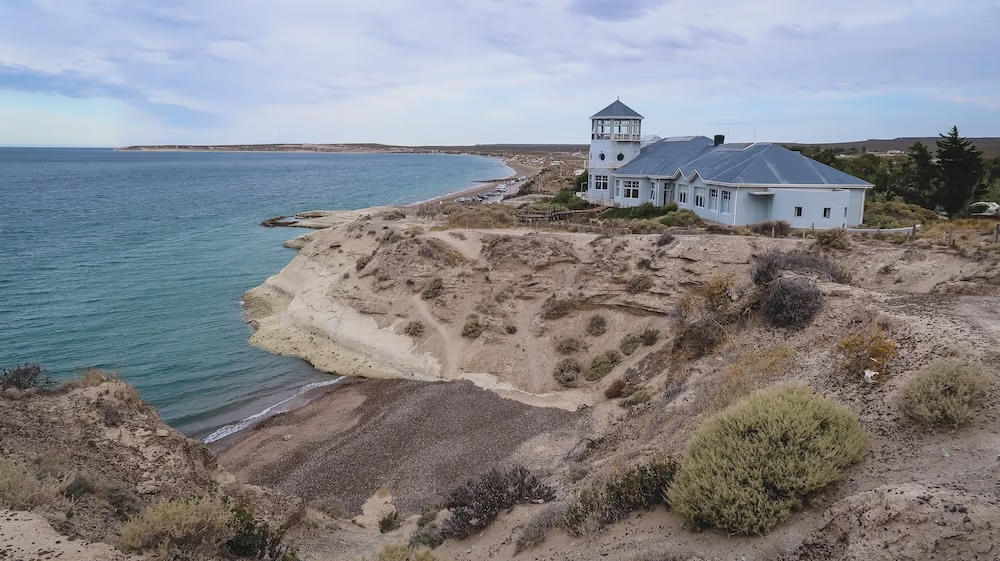
Those problems were not dramatic enough for a tourism campaign, but they are exactly what first-time travellers need to understand. Argentine Patagonia covers roughly 780,000 square kilometres across six provinces. The Atlantic coast around Puerto Madryn, the Welsh settlements of the Chubut River Valley, and the forests and lakes around Esquel, El Bolsón, and Bariloche belong to the same broad region without behaving like one compact destination.
The biggest beginner mistake is expecting Patagonia to cooperate with a tightly packed holiday itinerary. It usually will not. Distance, weather, limited transport, local opening hours, hunger, and plain old fatigue all have a vote.
This guide focuses on the practical mistakes we encountered in northern Argentine Patagonia, particularly across Chubut and Río Negro. It is not a complete manual for the whole region. It is the advice I wish we had absorbed before we started moving through it.
Patagonia Is Too Large for a Greatest-Hits Sprint
A map can make Puerto Madryn, Esquel, El Bolsón, Bariloche, El Calafate, and Ushuaia look like points on one tidy circuit. They are all Patagonian destinations, but joining too many of them can turn a trip into a relay between terminals, airports, and check-in desks.
Our first long jump into Patagonia was from Mar del Plata to Puerto Madryn. The scheduled journey was already intimidating: leave at 8:00 PM and arrive around 1:00 PM the following day. We eventually pulled into Puerto Madryn two hours late. After that came another overnight bus across Chubut from Trelew to Esquel, shifting from the dry Atlantic side of the province to the Andes.
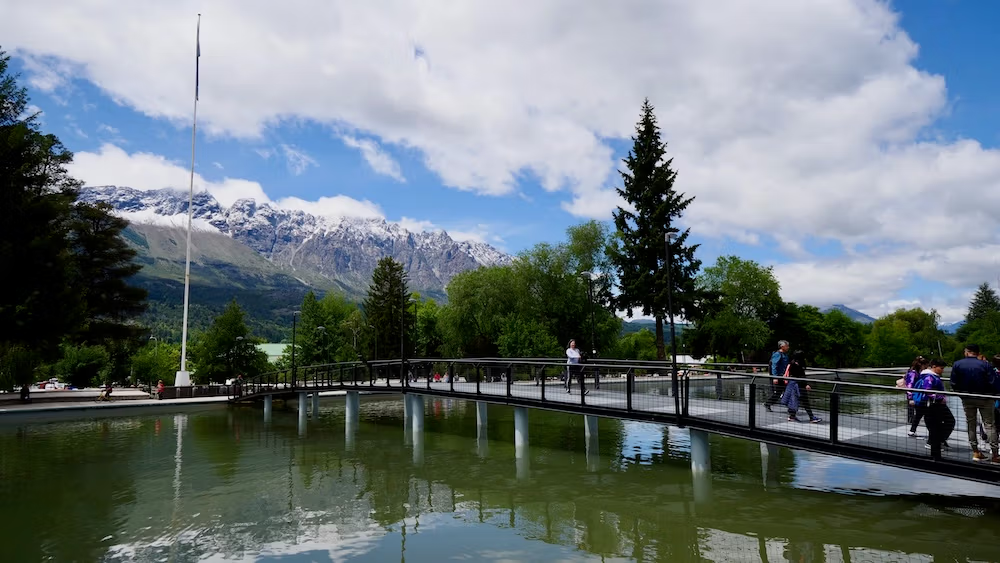
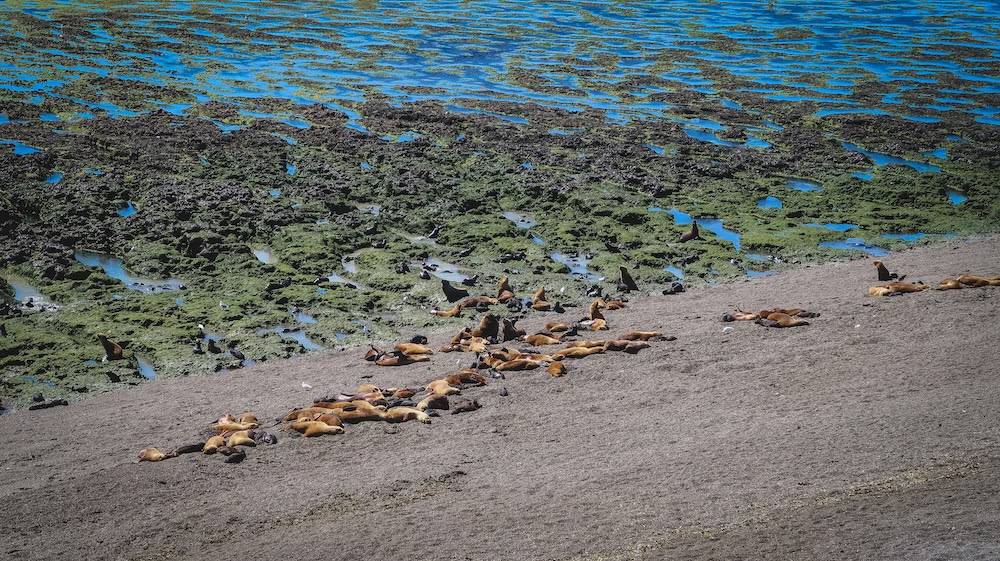
That single east-to-west crossing was enough to show us how misleading the word “Patagonia” can be. Around Puerto Madryn and Península Valdés, the landscape is exposed, dry, coastal, and built around marine wildlife. Trelew, Gaiman, and Dolavon sit in a river valley with Welsh-Argentine history, irrigation canals, tea houses, museums, and broad stretches of steppe. Esquel and the towns farther north feel more alpine, with forests, lakes, mountain trails, colder mornings, and a completely different daily rhythm.
| First-trip focus | Useful base area | Planning friction to check |
|---|---|---|
| Atlantic wildlife and coastal steppe | Puerto Madryn and Península Valdés | Long approach journeys, exposed sun, wind, and excursion timing |
| Welsh Patagonia and the Chubut River Valley | Trelew, Gaiman, and Dolavon | Reduced Sunday activity, weekday closures, and regional bus frequency |
| Forests, lakes, and northern Andean towns | Esquel, El Bolsón, Bariloche, and nearby lake towns | Cold mornings, changeable weather, park transport, and distance between trailheads |
For a first trip, I would choose one main corridor and perhaps two or three bases that connect naturally. Count every major overland move as a travel day rather than hiding it between two sightseeing days. An overnight bus may save the cost of a room, but it does not guarantee that you will arrive ready to hike. Sometimes it delivers you in desperate need of a shower, a sandwich, and several hours during which nobody asks you to make an important decision.
Once you know which corridor you are actually visiting, it becomes much easier to compare accommodation across Argentine Patagonia on Booking.com without booking a string of attractive properties that make no geographic sense together.
A Cheap Bus Seat Can Cost You a Day
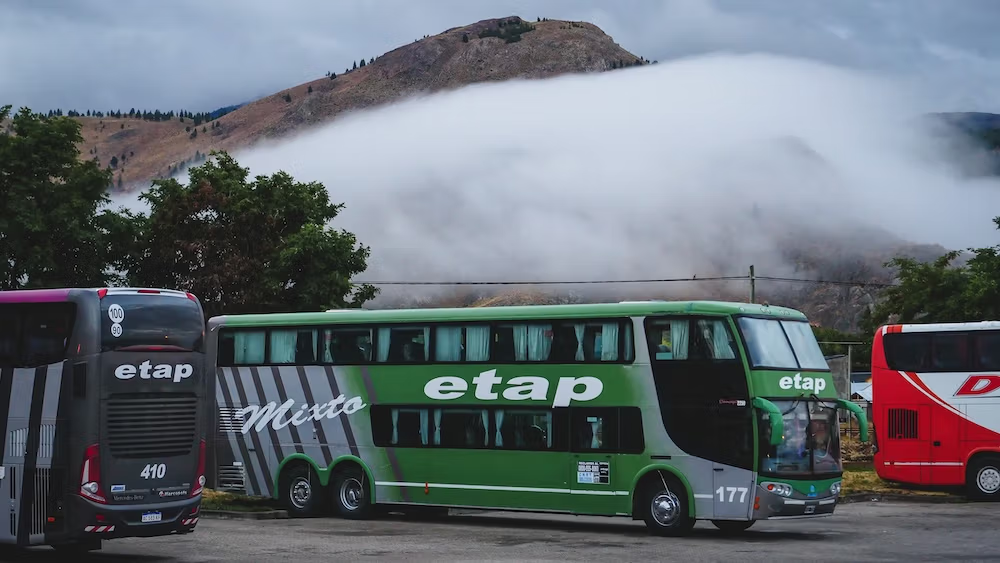
Argentina’s long-distance buses can be excellent. They connect places that would otherwise require awkward flight combinations, and the better seats can be far more comfortable than the word “bus” suggests. The mistake is assuming that every reclining seat category offers roughly the same overnight experience.
What Our 19-Hour Semi-Cama Journey Actually Felt Like
For the ride from Mar del Plata to Puerto Madryn, we travelled in semi-cama. At the terminal, I was already saying that I would happily have paid more for cama or one of the more deeply reclining premium options. The semi-cama seat was not terrible. I even slept. That was the strange part: I slept reasonably well and still arrived feeling disoriented simply because we had been on the bus for so long.
By the time we reached Puerto Madryn, the scheduled 16- or 17-hour trip had become an 18- or 19-hour trip. Audrey and I were excited to begin Patagonia, but we were exhausted, thirsty, and in immediate need of showers. We ate something light at the terminal, dropped our luggage, and slowly emerged from what I described as “zombie mode.”
That experience changed how I evaluate bus tickets. I no longer compare only the fare. I compare the fare plus the physical condition in which the seat is likely to deliver me.
In broad terms, semi-cama is the more modest reclining option, while cama, ejecutivo, suite, and super cama generally signal progressively more generous seating. The names are not perfectly standardized, however. Recline, row layout, leg support, meals, charging points, and curtains can vary by company and vehicle.
On a short daytime journey, I would not obsess over the difference. On an overnight ride measured in double-digit hours, I would inspect the actual seat map and service description before paying. Plataforma 10 is one practical place to compare current Argentine bus routes and services.
I also avoid attaching expensive, time-sensitive plans to the expected arrival time of an overnight bus. Our Puerto Madryn bus was two hours late. That did not make it a bad service; it made it a long-distance bus travelling across Argentina. Leave enough room to check in, eat, shower, and recover before promising yourself that you will immediately board a wildlife cruise with sparkling eyes and a fully functioning brain.
The Los Alerces Return-Ticket Lesson
A smaller transport mistake can be even more disruptive: buying only one side of a park journey.
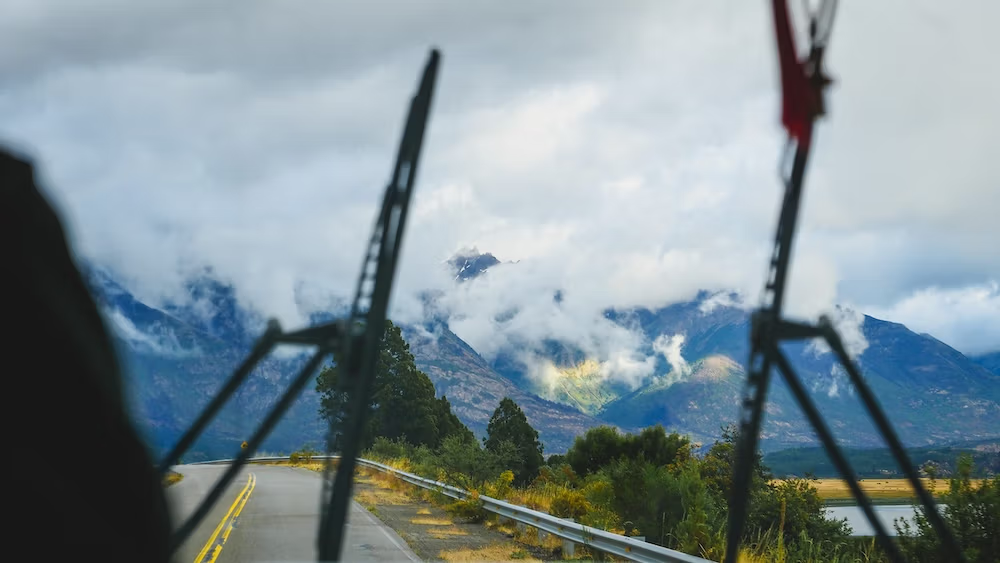
When we visited Los Alerces National Park from Esquel, we were travelling in low season. There was one daily public bus leaving early and returning in the evening, so we reached the terminal about an hour before departure. We could not reserve ahead at the time. Once the seats were gone, they were gone.
We bought round-trip tickets. Later, we saw why that mattered. A few travellers had purchased only the outbound journey and were unable to board the packed return bus. They were stranded in the park because they had not secured seats for the way back.
I would not turn that one experience into a universal law for every park bus in Patagonia. Operators, schedules, ticketing systems, and seasons change. The useful lesson is narrower and stronger: confirm the return arrangement before you leave town. Ask whether the ticket reserves a seat, whether the same operator handles both directions, where the return pickup occurs, and what happens if you miss it.
The park’s current access page still lists public transport from Esquel to Villa Futalaufquen and other points along Provincial Route 71, while warning that frequency is lower outside high season. Treat that as a reason to check the latest Los Alerces transport and access information before building the day around it.
Two more unglamorous bus tips earned their place in our packing routine: keep toilet paper and hand sanitizer in your daypack, and keep one warm layer accessible rather than buried beneath the bus. Our overnight journey from Trelew to Esquel became surprisingly cold, and long-distance bus bathrooms are not where I like to place blind faith in the continued availability of supplies.
Summer Can Be Hot, Cold, Wet, and Windy Before Dinner
“Summer in South America” is technically accurate and practically useless as a packing strategy.
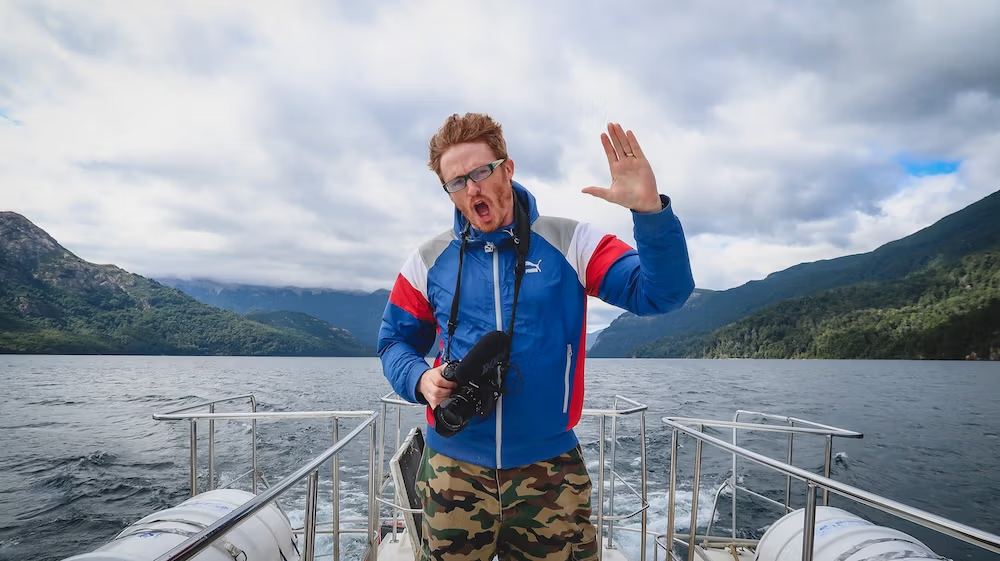
On the Atlantic side, we walked through exposed coastal landscapes in punishing heat with very little shade. Farther west, Esquel gave us chilly mornings, rain, and enough cold to make our Buenos Aires summer wardrobe look optimistic. We saw temperatures around 7°C in the morning and then much warmer conditions later in the day. The region did not need to choose one season. It simply offered several before bedtime.
We had packed for the heat we experienced farther north. Once we reached the mountains, I began buying the clothes we should have brought: flannel shirts, warmer layers, beanies, and eventually a broad wool gaucho hat. The practical purchases solved the cold. The hat was less essential, but I remain extremely pleased with it.
The Umbrella Lasted About Five Seconds
Our cheapest and clearest weather lesson came in Esquel. We left a café and started walking through the rain toward the bus terminal. Then the Patagonian wind caught our inexpensive umbrella and bent it completely out of shape.
Audrey asked what had happened. The answer was obvious: “The infamous Patagonian winds happened.” The umbrella had become a small metal sculpture with no remaining interest in keeping us dry.
I would bring a waterproof jacket with a hood rather than relying on an umbrella. For ordinary sightseeing and day hikes, a flexible layering system is more useful than one enormous winter coat:
- A comfortable base layer: something that dries reasonably quickly and does not leave you soaked after a climb.
- An insulating layer: fleece, wool, or a packable jacket for cold mornings, rest stops, and evenings.
- A wind- and rain-resistant outer layer: preferably with a hood that can be tightened when the weather becomes theatrical.
- Sun protection: sunscreen, a hat, and water still matter when the air feels cool, especially in exposed coastal and steppe landscapes.
Pack so that you can add and remove layers throughout the day. Patagonia punishes people who insist that the morning forecast has signed a legally binding contract with the afternoon.
Small-Town Opening Hours Can Eat Your Itinerary
Some of our most useful Patagonia lessons involved no mountains at all. They involved hunger.
What Happened When We Visited Dolavon on a Monday
Dolavon was our third Welsh town in Chubut. We arrived with a simple plan: walk around, see the water wheels and red-brick buildings, and find something good for lunch. At the tourist information centre, we learned that most restaurants were closed on Mondays and Tuesdays. It was Monday.
The woman at the office suggested a restaurant at a nearby camping area. We walked there hungry and hopeful. It was also closed. We could look into the kitchen and see precisely how little lunch was occurring.
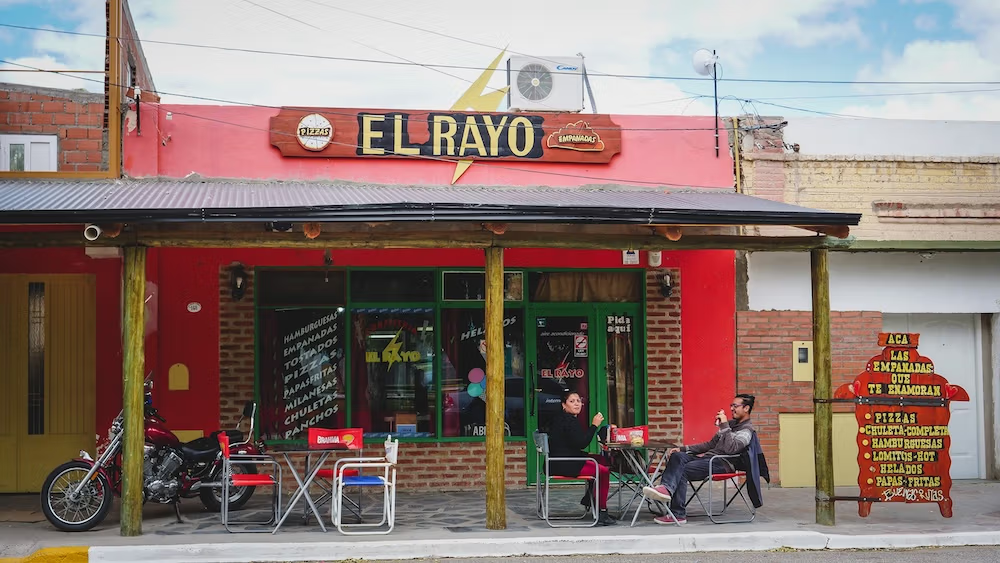
We kept walking and eventually found a simple local place serving empanadas, fries, pizzas, and other fast food. At that point, we were not in a position to conduct a philosophical debate about the ideal regional lunch. We had found an open kitchen. It was magnificent.
The lesson was not that Dolavon closes every Monday or that every business in rural Patagonia follows the same schedule forever. Our visit was years ago, individual businesses change, and tourist seasons matter. The lesson was to verify the specific day rather than merely saving three restaurants on a map and assuming at least one will surrender.
Sunday in Trelew Was Quiet, but Not Completely Empty
We had a similar surprise in Trelew on a Sunday. Walking through the centre, I called it a ghost town. Streets were quiet, many businesses were closed, and our list of easy options shrank quickly.
Still, “quiet” was more accurate than “nothing is open.” We found an Italian restaurant and had an excellent pasta lunch. That distinction matters. A sleepy Sunday or afternoon siesta can reduce your options without making food impossible to find. The danger is building the entire day around one unconfirmed museum, restaurant, bus, or tour.
Puerto Pirámides gave us another version of the same lesson. During the afternoon, shops and services could go quiet while the heat remained fully operational. This is where a small supply of water and snacks stops looking like excessive preparation and starts looking like lunch insurance.
Use the Tourist Office and Message Businesses Directly
Google Maps is useful in Patagonia, but I would not treat listed hours in a small town as sworn testimony. Seasonal businesses may change schedules, map pins may be outdated, and local transport information can circulate through channels that never reach an English-language website.
The municipal tourist office was repeatedly more useful for immediate logistics. Staff could explain which buses were running, which attraction was open, or how local transport was being arranged that week. In smaller places, a direct conversation can be more useful than a polished-looking map listing that nobody has updated.
- Confirm the day and opening hours directly when one business or attraction is central to your plan.
- Ask the local tourist office about reduced Sunday service, seasonal transport, and current trail access.
- Save phone numbers and screenshots before leaving reliable reception.
- Carry enough food and water to survive a closed kitchen without becoming the worst version of yourself.
Argentine Food Has Its Own Fine Print
Food was one of the great joys of our Patagonia journey. It was also responsible for several scheduling problems, because Audrey and I are better at eating than exercising and occasionally forget that an enormous lunch has consequences.
The Pasta and Sauce May Be Priced Separately
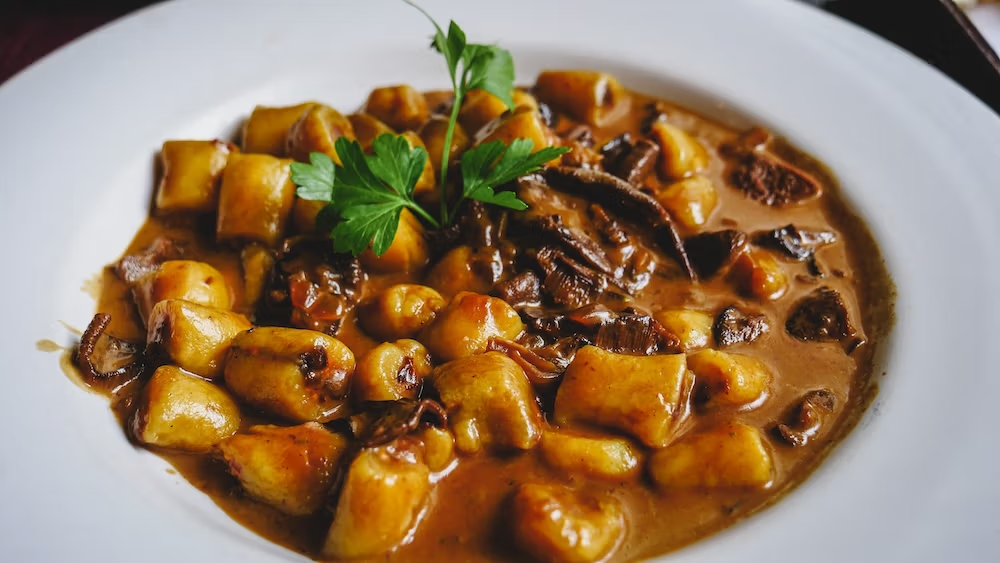
At an artisanal pasta restaurant in Trelew, we encountered a menu structure that can surprise first-time visitors. The pasta and the sauce were listed separately. You chose the noodle or stuffed pasta, then chose and paid for the sauce.
In our case, the sauce cost about as much as the pasta, so the final dish was roughly double the number we first noticed. I would not assume every pasta restaurant in Argentina works this way, but I now scan both sections of the menu before mentally calculating the bill.
Sharing a Main Can Be the Sensible Move
Patagonian portions repeatedly defeated us. In El Bolsón, we ordered one parrilla portion and still had meat left after both of us had been eating enthusiastically. After another giant meal, I described myself as feeling like a beached whale and estimated that I needed a three-hour nap.
My practical approach is to look at neighbouring tables before ordering. In traditional bodegones, parrillas, and family restaurants, one main plus a starter can be enough for two people. You can always order more. This is less elegant than pretending to possess perfect portion intuition, but it produces less waste and fewer afternoons sacrificed to digestive recovery.
Breakfast Often Leans Sweet
Many of the café and guesthouse breakfasts we encountered leaned heavily toward coffee with medialunas, facturas, or toast with butter, jam, or dulce de leche. Travellers expecting eggs, bacon, potatoes, and a breakfast menu that resembles a small construction project may find the usual neighbourhood offering surprisingly light and sweet.
That does not mean savoury breakfast is impossible. Larger hotels, brunch cafés, and tourist-oriented restaurants may offer eggs and other options. It means you should not assume the neighbourhood café will serve the breakfast you eat at home.
Read the Coffee Label
Self-catering introduced us to another Argentine supermarket detail: café torrado. Under Argentine food rules, torrado coffee is a distinct category involving sugar during roasting, and torrado instant coffee is labelled separately from ordinary roasted coffee. If you prefer coffee without that added sweetness, look for café tostado, tostado natural, or similarly clear wording on the package.
This is a packaging lesson rather than a judgment on what anybody should enjoy. Some people like torrado coffee. I simply prefer to know whether sugar has joined the beans before the first sleepy cup of the morning.
Allow Time for Dinner
Our restaurant meals in Patagonia regularly lasted two hours. Service was unhurried, dinner began later than many North American travellers expect, and the bill did not appear the moment we finished the last bite.
I came to enjoy that rhythm, especially when we had nowhere urgent to be. It becomes frustrating only when you schedule dinner like a 45-minute refuelling stop between two other commitments. When you are ready to leave, ask for la cuenta. Until then, relax. The table is not trying to evict you.
Choose a Base That Removes Friction
A useful Patagonia base is not automatically the prettiest town. It is the place that removes the most friction from the trip you are actually taking. These four options reflect the northern Argentine Patagonia route discussed here rather than the whole region.
| Base | Best suited to | Main planning consideration | Useful booking path |
|---|---|---|---|
| Puerto Madryn | Atlantic wildlife, coastal scenery, and Península Valdés excursions | Excursion timing and the long overland approach from central Argentina | Compare stays in Puerto Madryn or browse current Puerto Madryn tours |
| Esquel | Los Alerces National Park, Trevelin, and western Chubut | Confirm park transport, seasonal schedules, and return arrangements | Compare accommodation in Esquel |
| El Bolsón | A smaller Andean town with nearby trails, food, and a slower pace | Local shuttles and trail access may require direct confirmation | See available stays in El Bolsón |
| Bariloche | The broadest choice of services, lake excursions, tours, and onward connections | The surrounding area is spread out, so location matters when choosing accommodation | Compare hotels in Bariloche or compare current Bariloche activities |
I would rather spend longer in two well-chosen bases than spend the same trip checking into five places and becoming an expert on bus-station architecture. Patagonia rewards depth. A few extra nights give you room for weather changes, a closed attraction, a tired afternoon, and the possibility that somewhere deserves more time than your spreadsheet allowed.
The Beginner Rule I Would Actually Follow
After travelling through Argentine Patagonia, my planning rule is simple: reduce the number of promises your itinerary makes.
- Choose one main region or a sequence of nearby bases rather than collecting distant names.
- Treat a long bus journey as a real day with physical consequences.
- Inspect the actual seat and service before booking an overnight bus.
- Confirm the return journey before entering a park on limited public transport.
- Carry layers, water, sunscreen, and rain protection even when the forecast looks friendly.
- Verify small-town opening hours and keep an emergency snack within reach.
I would not try to eliminate every surprise from Patagonia. Some of our best days came from plans changing, wandering farther than expected, or finding something we had not been looking for. The point is to stop preventable logistics from consuming the time and energy you wanted to spend on the place itself.
Given another first trip, I would choose fewer bases, protect the return journey, pay closer attention to the actual bus seat, and pack a proper shell before packing an umbrella. That would leave more room for Patagonia to surprise me in better ways. I would still buy the gaucho hat.
Frequently Asked Questions
How many places should a first-time Patagonia itinerary include?
I would choose one main corridor and two or three bases that connect naturally. Every major overland move should count as a travel day, because an overnight bus can leave you needing recovery time rather than immediate sightseeing.
Are overnight buses a good way to travel through Argentine Patagonia?
Long-distance buses can connect places that would otherwise require awkward flight combinations, but the seat type and journey length matter. Our semi-cama trip to Puerto Madryn ran two hours late and left us exhausted despite getting some sleep.
Which bus seat should I choose for a very long overnight journey?
Inspect the actual seat map and service description rather than relying on the category name alone. Semi-cama is generally the more modest reclining option, while cama and premium categories usually offer more space, but layouts and amenities vary.
Should I arrange the return journey before visiting Los Alerces National Park?
Confirm the return arrangement before leaving Esquel. On our low-season visit, we bought round-trip tickets, while travellers holding only outbound tickets could not board the packed return bus. Schedules and ticketing systems change, so check the current access information.
What should I pack for Patagonia in summer?
Bring flexible layers: a comfortable base layer, insulation, a wind- and rain-resistant shell, plus sunscreen, a hat, and water. We encountered punishing coastal heat as well as rain and mornings around 7°C near Esquel.
Are restaurants and attractions always open in smaller Patagonian towns?
Opening hours can be reduced by the weekday, season, or local rhythm. Most of our planned restaurants were closed when we visited Dolavon on a Monday, and central Trelew was very quiet on a Sunday, so confirm anything essential directly.
Which northern Argentine Patagonia bases are covered in this guide?
Puerto Madryn suits Atlantic wildlife and Península Valdés, Esquel works for Los Alerces and western Chubut, El Bolsón offers a smaller Andean base, and Bariloche has the broadest range of services and activities.
Project 23 Argentina: This guide is also available in Spanish. [Leé la versión en castellano: Patagonia para principiantes: lo que la mayoría de los viajeros hace mal]
This article contains affiliate links. If you book through one of these links, I may earn a commission at no extra cost to you.