
We didn’t understand how big Patagonia actually was until we were standing in a bus terminal in Río Gallegos, sketching out a hand-drawn map to show viewers where we’d already been. Bariloche. El Bolsón. Esquel. Comodoro Rivadavia. And we were still hundreds of kilometers from where the glaciers were even supposed to start. We’d already spent months in the north of Argentine Patagonia by that point. We were nowhere near done.
Nobody warns you about this before your first trip: “Patagonia” isn’t one place, and planning it like it is one place is how people end up exhausted, disappointed, or both. We’ve been going back to Argentine Patagonia since 2019 — for months at a stretch at first, then as part of a small-group tour in 2023, then again with fresh footage as recently as this year. We keep returning to the north on purpose. We did the south once, hard, and it handed us some of the best single days of travel either of us has ever had. Those aren’t the same trip, and they don’t answer to the same kind of traveler. By the end of this you’ll know why “which region is better” is the wrong question, and what the right one actually is.
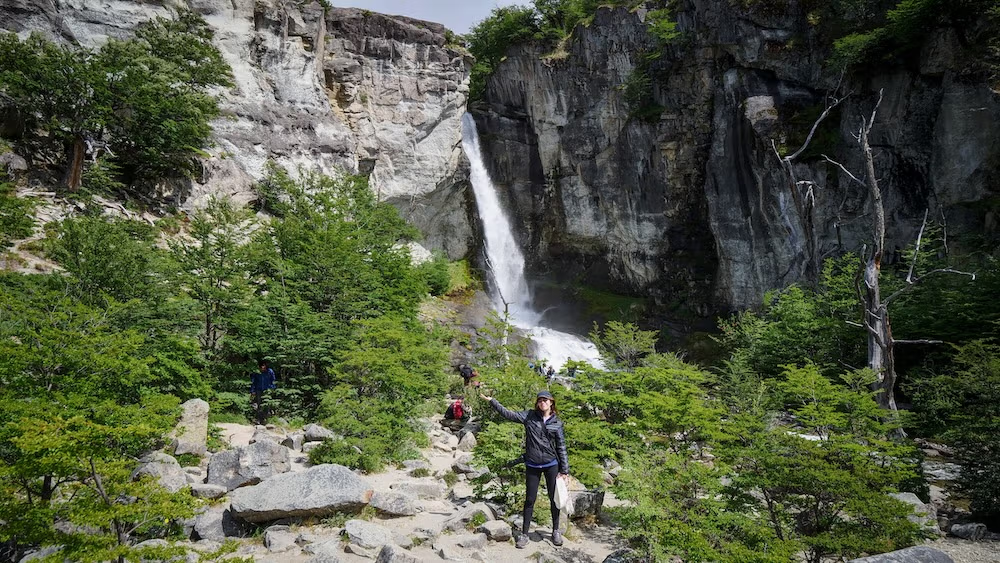
Two Very Different Patagonias — Getting Oriented
Even the big travel authorities can’t agree on what “Northern Patagonia” and “Southern Patagonia” mean, which is a genuinely unhelpful thing to discover mid-research. Go looking under those exact regional headings on a major guidebook site and you’ll often land on the Chilean side of the map — the Carretera Austral up north, Torres del Paine down south — while Argentina’s Lake District and glacier country get filed under a plain, undifferentiated “Patagonia,” as if they don’t belong to either camp. If that’s left you more confused than when you started, that’s not you being bad at research. That’s the terminology itself being a mess.
So here’s what we mean, specifically, because the whole rest of this comparison rests on it. Argentina only — we’re not weighing in on Chile here, because an Argentina-only trip has its own visa-free logistics, its own currency, its own planning shape, and mixing the two muddies a comparison that’s already complicated enough. Northern Patagonia means the Andean Lake District: Bariloche, El Bolsón, San Martín de los Andes, Villa La Angostura, Esquel and Trevelin. Southern Patagonia means the glacier and trekking country much further down: El Calafate, El Chaltén, and Ushuaia at the very bottom, in Tierra del Fuego. We’re also deliberately leaving out the Atlantic coast around Puerto Madryn and the old Welsh settlements — real Patagonia, genuinely worth its own trip, but it doesn’t sit cleanly in either camp and shoving it into this piece would only muddy the comparison further.
One more wrinkle worth flagging before you go any further: inside Southern Patagonia itself, Los Glaciares National Park gets split into a “northern part,” reached through El Chaltén, and a “southern part,” reached through El Calafate. That’s a real distinction — just not the one this article is about. Both halves of that park are still Southern Patagonia in the sense we mean here. Don’t let a sentence about the “north side of the park” get tangled up with the north of the country.
What Each Region Actually Feels Like
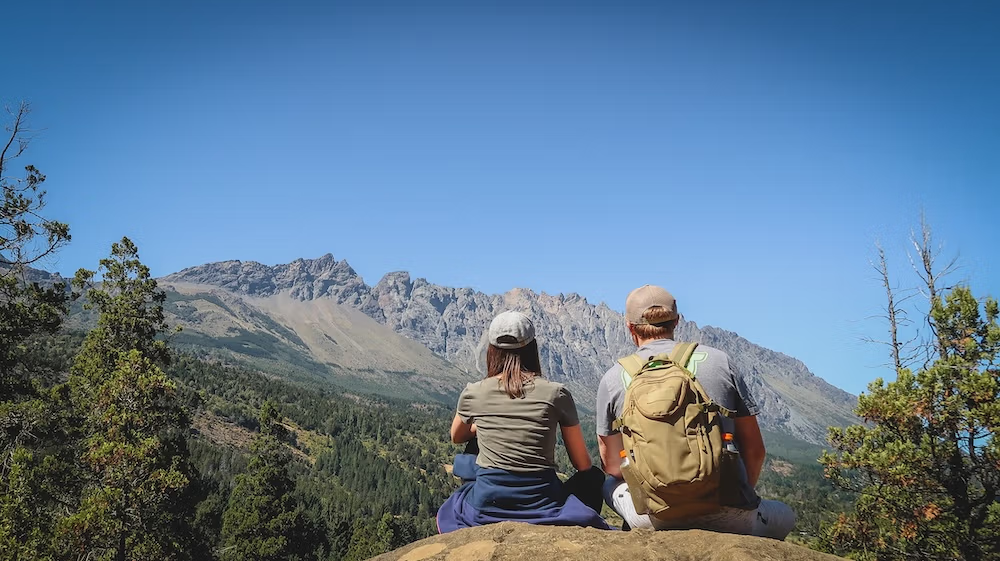
Northern Patagonia — Lake District Living
If you asked us straight out, we’d say the north is the one we like most. Not necessarily the most beautiful — we’re honestly not sure that question has an answer — but the one we keep choosing, on purpose, trip after trip.
El Bolsón is the clearest evidence of that. We’ve now been across three separate years, and every single time, without planning the consistency in advance, it’s come out our favorite town in Patagonia. It’s a laid-back, slightly hippie mountain town in Río Negro with a good market, better chocolate, and a horse-and-hike route up to Cajón del Azul that we somehow put off through two entire visits before finally doing it — and immediately wishing we hadn’t waited. Twenty minutes away, Lago Puelo is the kind of place where the town, the lake, and the national park all share one name, and none of it is confusing once you’re actually standing there.
Bariloche is the region’s biggest name, and it’s also where we learned one of the more useful lessons of the whole trip. Audrey and I had afternoon tea at the Llao Llao — the famous hotel on the hill between two lakes, built in a chalet style that makes you feel like you’ve stumbled into an unreasonably nice ski lodge — and it came to fifty-two US dollars for two people, buffet-style, more cakes and finger sandwiches than we could reasonably get through, two rounds of drinks included. It felt like a splurge and turned out to be one of the better-value splurges of the whole trip. On a later stay just outside town, we found the exact same guesthouse quoted us over a hundred dollars a night through the usual booking sites and sixty-six dollars direct through the property’s own website. We book direct now whenever we can.
The Seven Lakes Route, connecting San Martín de los Andes to Villa La Angostura, is a genuine highlight and also, in our honest assessment, a once-is-plenty kind of day — a full-day tour through two national parks past seven distinct lakes, each with its own character, beautiful the entire way and long enough that we wouldn’t necessarily sign up twice. If you’d rather not self-drive it, you can book the same route as a guided day trip out of Bariloche, which is closer to what most people actually do. Los Alerces National Park earned an unprompted comparison to Banff from us, which we don’t hand out lightly, and it’s home to alerce trees old enough that some were already standing centuries before Esquel existed as a town. You can only reach the oldest grove on a guided boat-and-hike excursion, which felt like a small loss of independence at the time and, in hindsight, was obviously the right call — nobody should be wandering off-trail near a two-thousand-year-old tree on their own schedule.
And El Bolsón is also where I discovered my one truly petty travel grievance: the only instant coffee I could reliably find came pre-mixed with sugar, and he refused to drink it, and ended up paying a premium for the unsweetened Nescafé instead, on principle, for the better part of a week. Small towns will do that to you.
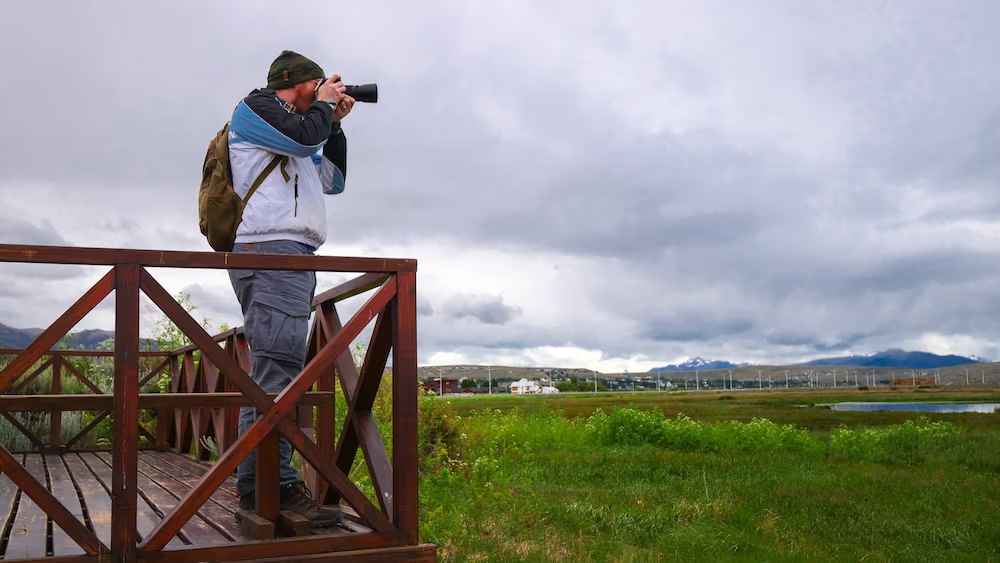
Southern Patagonia — Glacier and Trekking Country
If the north is where we go to unwind, the south is where we went to be tested, and it handed us two of the best single days of our entire travel history.
The first was a boat tour into Los Glaciares National Park to see the Perito Moreno Glacier up close — not the shorter viewing-platform visit most day-trippers do, but a full cruise through the ice field, past iceberg after iceberg, ending in front of the glacier itself. It’s the kind of trip you can book directly out of El Calafate, and we still call it one of the best things either of us has ever done in all our travels, years later. Perito Moreno is genuinely unusual: it’s one of a small handful of glaciers on Earth that has held roughly steady, or even advanced slightly, while most of the world’s ice has been retreating for decades. Worth knowing, though, that recent research has picked up early signs the ice front may be thinning faster than it used to — so “one of the few holding steady” is the honest version, not the “only advancing glacier on the planet” line you’ll sometimes see repeated. Either way, watching chunks the size of buildings crack off into the lake is not something a photo prepares you for.
The second was the trek to Laguna de los Tres beneath Mount Fitz Roy, out of El Chaltén — officially declared Argentina’s National Capital of Trekking by the government back in 2015, which is not marketing copy, it’s an actual designation. We’ll own this one honestly: we showed up out of shape, having spent the stretch of trip before it eating considerably more than we’d been exercising, and the hike made us pay for it in full. It’s a genuinely long day, over twenty kilometers round trip, and the final kilometer up to the lagoon is a steep, rocky, morale-testing slog that had us seriously fantasizing about a rescue helicopter. We still call it maybe the coolest hike we’ve ever done — and we also lost the entire next day to recovery, and we’d tell anyone attempting it to arrive in better shape than we did.
Ushuaia, at the very bottom, felt different again — less about one spectacular activity and more about the plain fact of having gotten there at all. It’s the world’s southernmost city, and by the time we reached it, it genuinely felt like the last stop of a massive trip, because it was.
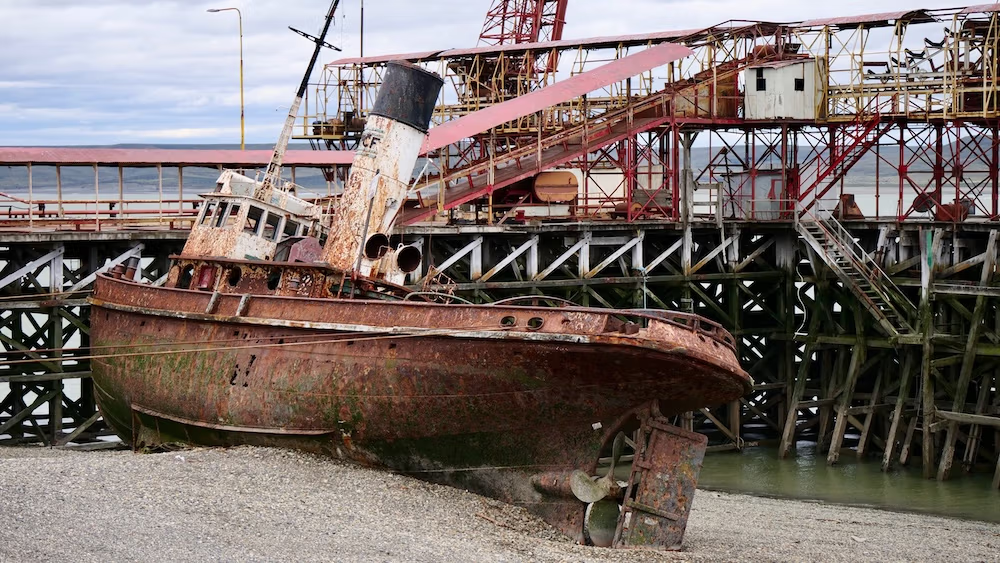
The Real Cost of Choosing Both
Here’s the part most planning advice skips: getting between these two regions is neither quick nor simple, and it should factor into your decision more than anything about scenery does.
Driving straight from Bariloche to El Calafate runs somewhere between seventeen and twenty hours depending on the route and how many stops you make, which lines up with everything we experienced on the ground. Flying cuts that to under two hours — but the direct route doesn’t fly constantly. Depending on season and carrier, frequency can be limited, and routing through Buenos Aires instead is often the more reliable choice, especially outside peak summer, even with the extra layover. It’s worth checking current flight schedules between El Calafate and Bariloche before you lock in dates, since frequency genuinely shifts by season.
The Calafate-to-Ushuaia leg is the one we’d actually correct ourselves on. On the ground, it felt like a long but manageable travel day. Looking back at it more carefully, we think we undersold just how long the full public-transport version really is: there’s no direct road connecting the two inside Argentina at all. Every overland route has to detour through Chile, cross the Strait of Magellan by ferry, and clear customs twice — once out of Argentina, once back in. Door to door, with transfers, that can run closer to a full day than the handful of hours it might sound like on paper. The flight, by contrast, is somewhere around ninety minutes to just under two hours and runs multiple times a day — genuinely the easier option if your schedule allows it, and worth comparing against the overland options before you commit to either.
If you’re planning to drive any of this yourself and want the freedom to dip into Chile along the way, know that rental companies won’t just hand you the keys. Crossing the border requires a permit arranged through the agency in advance, and it isn’t free — figure somewhere between sixty-five and two hundred and sixty US dollars depending on the company and how long you’ll be across the border. This is not a spontaneous-decision kind of border. You need to flag it days ahead, so it’s worth looking at car rental options in Argentina early and telling them your cross-border plans the moment you book, not after.
None of that should scare you off either region. It should make you honest with yourself about how much of a limited trip you’re willing to hand over to transit, because the distance between these two isn’t a technicality — it’s most of a country.
Weather, Wind, and When to Go
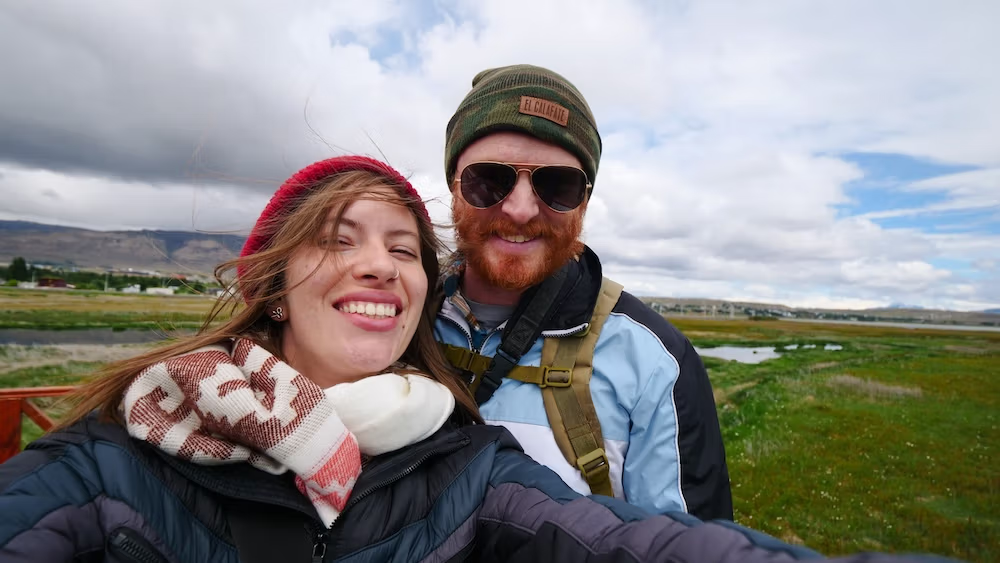
Patagonia’s reputation for brutal wind is earned, but it’s not a flat regional trait — it actually intensifies the further south you go, and there’s a real mechanism behind that. Bariloche sits almost exactly on the 41st parallel south, right at the edge of what sailors used to call the Roaring Forties, the belt of latitude between 40 and 50 degrees south known for strong, near-constant westerlies. El Calafate, around 50 degrees south, and Ushuaia, further still near 54 degrees, sit inside or past the next band down: the aptly named Furious Fifties, where the same winds blow harder.
We’ve felt both ends of that. Just outside Bariloche, at an estancia stay, an entire day of planned activities got cancelled outright because the wind had turned the lake into something that looked like open ocean — so don’t mistake the north for calm. But our sharpest single wind memory belongs to the south: our first night in an A-frame cabin in El Calafate, gusts loud and strong enough that we genuinely didn’t trust the upstairs bedroom, and ended up on the pull-out sofa downstairs, half-convinced we were about to learn what losing a roof sounds like.
Temperature is where the two regions actually pull apart. Bariloche in summer gets properly hot — high twenties are normal, and it’s climbed as high as the mid-thirties on record, hot enough that cooling off in a glacial lake makes complete sense. El Calafate almost never gets there. Even at the height of summer, daytime highs typically sit closer to eighteen or nineteen degrees, and you’ll want real layers no matter what the calendar says.
Seasonality, on the other hand, catches people out in both regions about equally, and that surprised us. We learned it first on the coast, in Las Grutas, arriving at the tail end of the season to find hotels and restaurants shuttered with almost no warning. We’ve since watched the same pattern play out in the mountains — on an off-season Sunday in Lago Puelo, roughly three out of four restaurants we walked past were simply closed, the whole town half-asleep — and it happens just as thoroughly down south, where El Chaltén all but shuts for the winter once the trekking crowds disappear. Wherever you land, don’t assume a shoulder-season visit means everything will still be running.
Food and Flavor — What’s Actually Regional
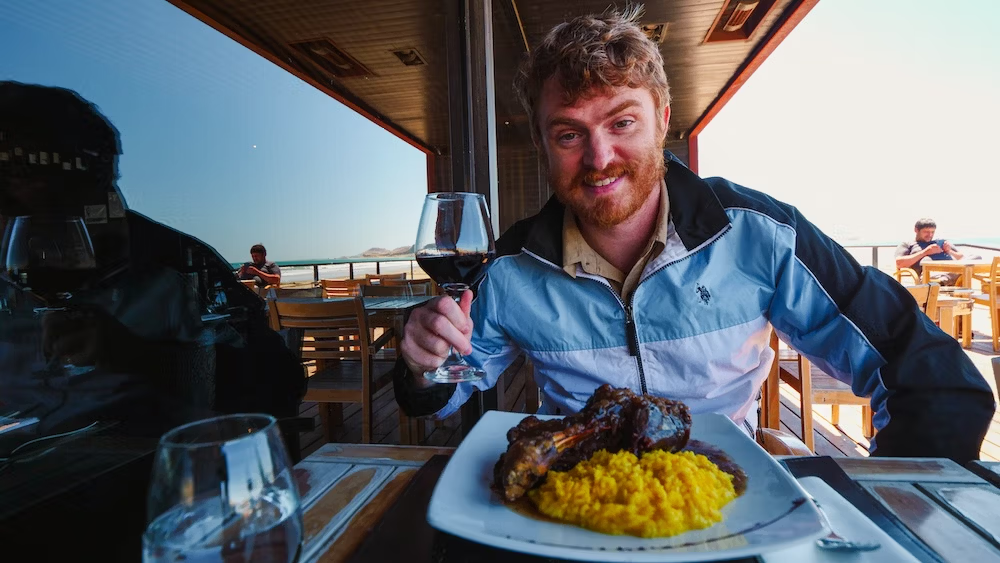
It’s easy to say “try the lamb” and “try the seafood” and call it a comparison, but only one of those is actually specific to a region, and it’s worth knowing which.
Lamb is everywhere down here, north and south alike. Sheep farming has been the backbone of the Patagonian economy for well over a century, and you’ll find good cordero on menus from Bariloche all the way down to Tierra del Fuego. That’s not a north-versus-south distinction — that’s just a Patagonia one.
King crab — centolla, as it’s called locally — is the real regional marker, and it belongs specifically to the south, tied to the cold, nutrient-rich waters of the Beagle Channel around Ushuaia. We had it there simply prepared, no sauce, nothing getting in the way of the sweetness of the meat, and it stands among the best seafood we’ve had anywhere. You won’t find it as a local specialty up in the Lake District, for the simple reason that nobody’s catching it anywhere near there.
What the north has instead is a genuinely different food identity: trout out of the lakes, wild boar showing up on menus around Villa La Angostura, and more good chocolate and craft beer than a region its size has any right to, both legacies of the German and Swiss settlers who shaped Bariloche a century ago. It’s a different kind of eating trip entirely — less one showstopping delicacy, more a whole culture of small producers doing quietly good work.
Physical Difficulty and What You’re Actually Signing Up For
Watching our own footage back, it would be easy to walk away thinking the south is the demanding region and the north is the easy one. That’s not a fair read, and it’s worth saying so plainly: it’s a sampling problem, not a regional one.
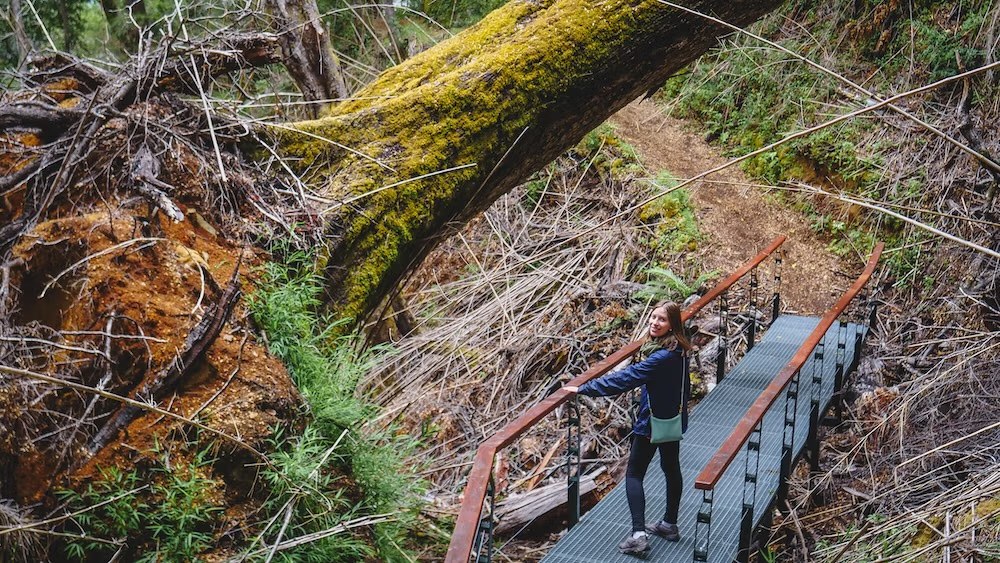
Our hardest single day of the whole trip did happen to be Fitz Roy, in the south. But the north has comparably brutal hiking — we just didn’t personally go looking for it on this trip. Refugio Frey, up via Cerro Catedral outside Bariloche, is a full-day trek in its own right, somewhere in the range of twenty-two to twenty-four kilometers round trip with real elevation gain, and it’s consistently rated strenuous by people who’ve actually done it. We haven’t hiked it ourselves, so we won’t pretend to tell you what the last kilometer feels like. But its existence matters here: the north isn’t short on hard days, we simply spent ours differently, mostly on gentler combinations — a boat-and-hike into Los Alerces, a horse trek up to Cajón del Azul — that happened to suit the trip we were on at the time.
So take difficulty off the list of things that should decide north versus south for you. Both regions have an easy version of themselves and a version that will genuinely humble you. Which one you get depends on which trail you pick, not which region you’re standing in.
So, Which Region Should You Choose?
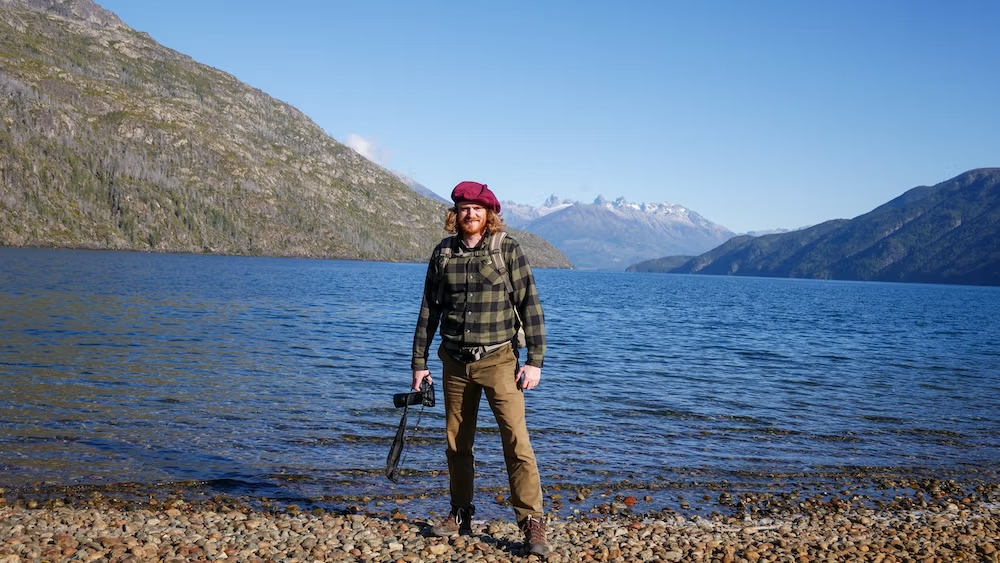
Here’s the honest answer, built from everything above rather than from which set of photos is prettier: it comes down to how much time you actually have, and what kind of trip you’re trying to build.
If you’ve got under ten or twelve days, don’t try to do both. The distance between them isn’t a technicality you can plan around — it’s most of a country, and connecting them properly costs either a flight that doesn’t always run on your schedule or the better part of a day spent crossing into Chile and back. Pick one region and give it the time it deserves instead of turning half your trip into transit.
If you’ve got two weeks or more and the flights line up, doing both stops being reckless and starts being genuinely worth it — which is exactly what we eventually did, just not on the same trip, and not in a hurry.
Beyond time, ask yourself honestly what you’re actually chasing. If what you want is somewhere to slow down — good food, a laid-back pace, a place you could believably come back to more than once — that’s the north, every time, and it’s why we keep going back. If what you want is a small number of enormous, singular moments — a glacier that behaves like nothing else on the planet, a mountain you’ll remember the exact ache of climbing — that’s the south, and it’s worth every hour it costs to get there.
Whichever way you land, book your base early if you’re travelling in high season — places fill up faster than the distances between them suggest. If the north wins you over, start by browsing places to stay in Bariloche. If you’re chasing the glacier, see what’s available in El Calafate instead.
Audrey and I are not going to pretend one of those beats the other, because it doesn’t. We just know which one we book flights back to without needing convincing, and which one we did once, hard, and will never stop being glad we did.
Frequently Asked Questions
What’s the difference between Northern and Southern Patagonia in Argentina?
Northern Patagonia refers to the Andean Lake District — Bariloche, El Bolsón, San Martín de los Andes, Villa La Angostura, Esquel, and Trevelin. Southern Patagonia refers to the glacier and trekking country much further south — El Calafate, El Chaltén, and Ushuaia in Tierra del Fuego. The terms get used inconsistently across travel sources, with some guides applying them to Chile instead, so it’s worth confirming which country and region a source actually means.
Can I visit both Northern and Southern Patagonia in one trip?
It’s possible, but the distance between them is significant enough that it shouldn’t be an afterthought. Driving directly between Bariloche and El Calafate takes somewhere between seventeen and twenty hours, and flying, while much faster, doesn’t run on a constant schedule. With under ten or twelve days, it’s generally better to focus on one region rather than split limited time across transit.
How do you get from El Calafate to Ushuaia?
There’s no direct road connecting the two within Argentina. Every overland route detours through Chile, crossing the Strait of Magellan by ferry and clearing customs twice. That trip can take close to a full day door to door with transfers. Flying is considerably faster, at roughly ninety minutes to under two hours, and runs multiple times daily.
Is Northern Patagonia or Southern Patagonia windier?
Both get real wind, but it intensifies the further south you go. Bariloche sits near the edge of the Roaring Forties, the latitude band between 40 and 50 degrees south known for strong prevailing winds. El Calafate and Ushuaia sit within the stronger Furious Fifties band further south, where the same winds blow harder.
Is the Perito Moreno Glacier really the only advancing glacier in the world?
No, and that claim gets repeated more than it should. Perito Moreno is one of a small number of glaciers that has held roughly steady or advanced while most of the world’s ice has retreated, but it isn’t the only one. Recent research has also picked up early signs its ice front may be thinning faster than it used to.
Which region has harder hiking, north or south?
Neither region has a monopoly on difficulty. The trek to Laguna de los Tres near El Chaltén is a genuinely demanding full day, but Northern Patagonia has comparably tough hikes too, including the Refugio Frey route near Bariloche. Difficulty depends more on which specific trail you choose than on which region you’re in.
What food is actually specific to Southern Patagonia versus Northern Patagonia?
Centolla, or king crab, is genuinely regional to the south, tied to the cold waters of the Beagle Channel around Ushuaia. Lamb is common across both regions and isn’t a useful way to tell them apart. The north has its own distinct food identity built around trout, chocolate, and craft beer, legacies of the German and Swiss settlers who shaped towns like Bariloche.
Project 23 Argentina: This article is also available in Spanish. [Leé la versión en castellano: Patagonia norte o sur: qué región deberías elegir]
This article contains affiliate links. If you book through one of these links, I may earn a commission at no extra cost to you.