
Choosing where to stay for wildlife in Patagonia sounds easy until you start measuring the distances between the hotel, the harbour and the animal you have travelled all this way to see.
Puerto Pirámides is inside Península Valdés, so it looks like the obvious base for everything. Puerto Madryn is a larger city outside the reserve, which can make it feel like the soft option. Trelew barely registers as a wildlife destination, yet it shortens the drive to Punta Tombo. In Ushuaia, the most useful hotel may simply be the one that stops an early harbour departure from becoming a taxi-based panic attack.
Audrey and I stayed in Puerto Madryn, moved to Puerto Pirámides for two nights, travelled across Península Valdés on wildlife excursions and then returned to the city. Sleeping inside the reserve gave us a beachfront room, sunrise walks and the feeling that the wildlife trip continued after the tour van disappeared.
It did not place us beside every colony.
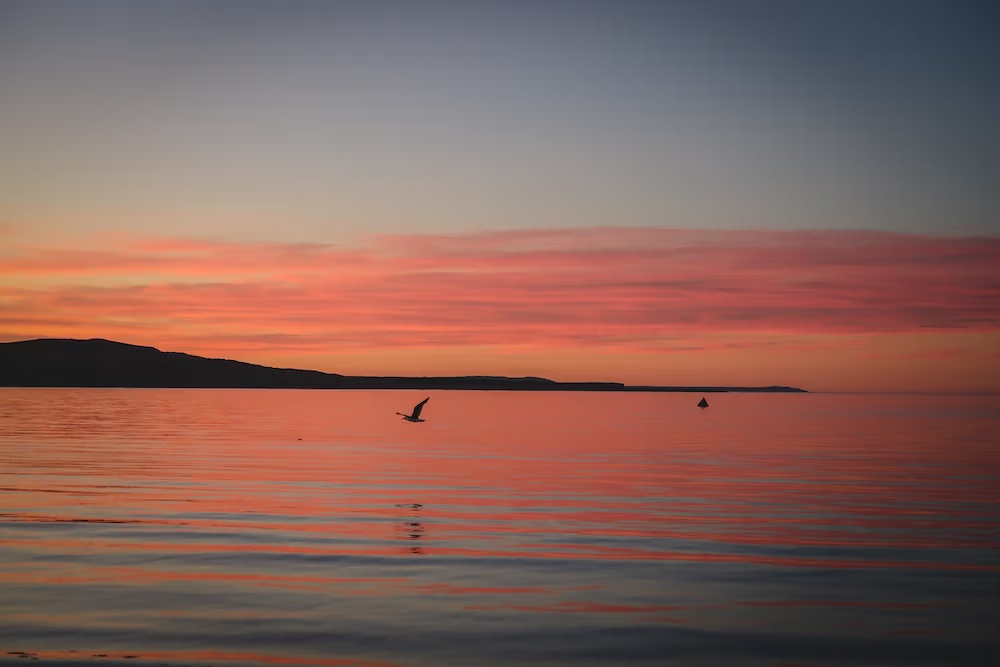
We still spent long hours crossing the peninsula. One supposedly manageable independent outing ended with us missing the return trail, walking beside the highway under a savage sun and developing an emotional attachment to the first patch of shade we found.
Puerto Madryn was less immersive, but it gave us restaurants, museums, tour pickup, more accommodation and somewhere useful to be when we were not looking at animals. When our original hotel was full after we returned from Puerto Pirámides, we could at least find an apartment elsewhere in the city.
That is the real decision.
The best wildlife base in Argentine Patagonia is not necessarily the point closest to an animal on the map. It is the place that matches the species, the season, the actual departure point and your tolerance for long roads, limited services and plans going sideways.
Start with the animal, not the hotel
Península Valdés is one of Patagonia’s strongest wildlife regions, but its species do not all turn up in the same numbers during the same months.
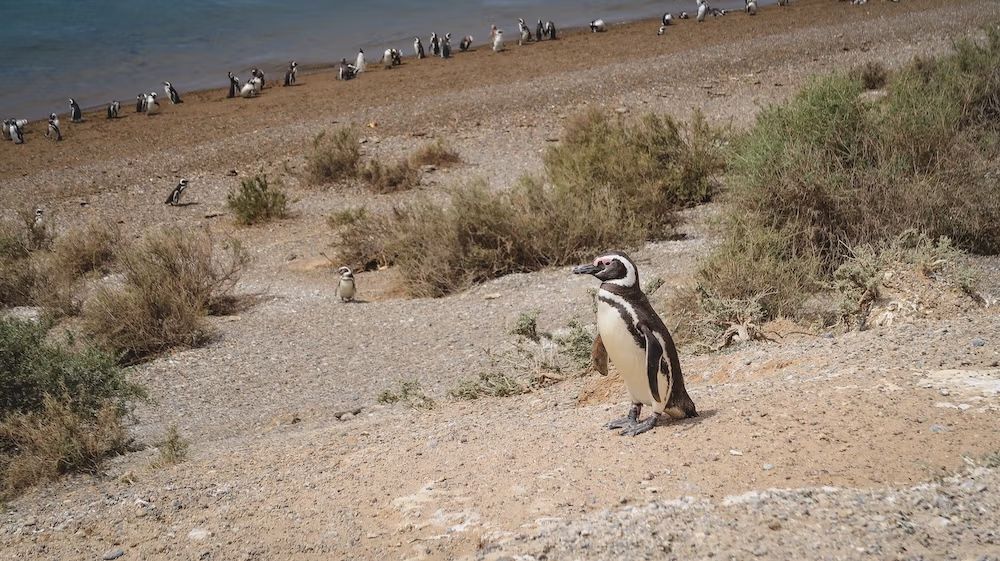
Southern right whales normally shape trips from June into December. Magellanic penguins are associated with the warmer part of the year, broadly from September into April. Sea lions can be seen year-round, while elephant seals have their own stronger periods.
Orcas are the awkward one.
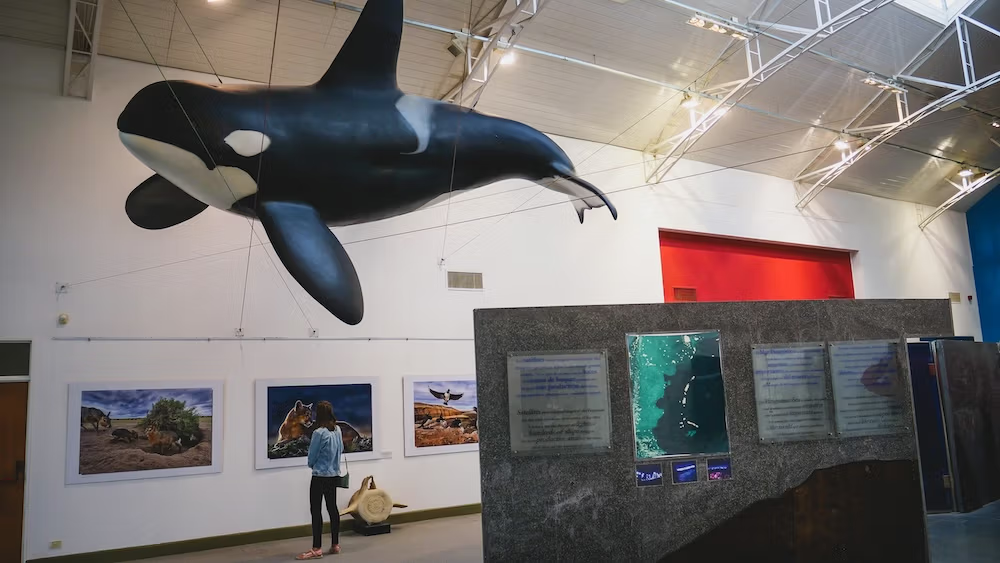
Their appearances are seasonal, rare and tied to particular beaches, tides and sea conditions. Broad windows around March and April, and again around October and November, are more honest than pretending there is a neat week when the orcas arrive, perform on command and pose for everyone’s longest lens.
Even during the right month, wildlife remains wildlife.
Our visit made the seasonal problem clear. We saw penguins in extraordinary numbers, yet at one elephant-seal area only a handful of animals remained on the beach. We were in the correct region but near the end of the better period for that species. Sleeping on Península Valdés could not overpower the calendar.
We did not go whale watching on that trip either. By the time we left Puerto Madryn, I was already talking about returning during whale season. Audrey agreed, though she was also intrigued by the idea of seeing the region in winter.
That would be a different trip.
Before booking accommodation, work through the decision in this order:
- Which animal is controlling the trip?
- Is it normally present during your dates?
- Where does the relevant boat, road or excursion actually begin?
- Does sleeping closer remove meaningful travel?
- Will the base still be useful if wind, tides or bad luck change the wildlife day?
Once those answers are clear, the hotel choice becomes much less mysterious.
Patagonia wildlife bases by species and season
This is not a ranking. Each base wins a different version of the trip.
| Wildlife priority | Broad season | Best base to consider | Why it works | Main compromise | Useful starting stay |
|---|---|---|---|---|---|
| Southern right whale boat trips | June to December | Puerto Pirámides | Whale boats leave from the settlement, inside Península Valdés | Smaller hotel and restaurant inventory; still far from several land-wildlife areas | 2–3 nights |
| Shore-based whales, sea lions and mixed Península Valdés excursions | Whale months for El Doradillo; sea lions year-round | Puerto Madryn | More accommodation, restaurants, agencies and backup activities, plus nearby wildlife access | Longer transfer to Puerto Pirámides and the interior peninsula | 3–4 nights |
| Mixed Península Valdés wildlife with maximum immersion | Depends on the target species | Puerto Pirámides or a remote estancia | A closer connection to the reserve and, at selected properties, wildlife access from the accommodation | Fewer services, greater transport dependence and continued long drives to some colonies | 2–3 nights in town; longer at a destination estancia |
| Magellanic penguins at Punta Tombo | September to April | Trelew for road efficiency; Puerto Madryn for the broader trip | Trelew shortens the drive; Puerto Madryn provides more useful non-penguin days | Trelew is a specialist logistical base rather than the strongest overall wildlife destination | 1–2 nights in Trelew |
| Penguins, sea lions and Beagle Channel birdlife | October to April for penguins | Central Ushuaia | Easier access to harbour departures and transfer-based wildlife excursions | Central accommodation may cost more; outer apartments add walking or taxis | 3–4 nights |
| Flamingos and independent birding during a glacier stay | Reserve access year-round, with changing bird presence | El Calafate | Laguna Nimez adds wildlife without creating another coastal base | It is not a primary marine-wildlife destination | No extra wildlife-only nights |
The crucial column is not the town name. It is the departure point.
Puerto Pirámides is inside Península Valdés, but some of the major land-wildlife areas remain roughly 75 to 79 kilometres away. Ushuaia is the gateway to Isla Martillo, but the penguin colony is far from the city and reached through different combinations of road transfers, boats and estancia access.
A Patagonia map can make these places look close. Patagonia has a sense of humour about maps.
If the answer is already obvious, you can compare current accommodation in Puerto Madryn, check places to stay in Puerto Pirámides, or compare hotels and apartments in Ushuaia. I would still read the trade-offs below before taking the cheapest room. The cheapest room in the wrong base is an expensive way to spend a wildlife trip.
Puerto Madryn or Puerto Pirámides for Península Valdés wildlife?
This is the comparison I can make most confidently because Audrey and I stayed in both.
We reached Puerto Madryn after roughly 18 or 19 hours on an overnight bus. We arrived disoriented, hungry and badly in need of showers, yet we still had to check in and organize several days of wildlife activities.
Puerto Madryn made that possible.
On our first major Península Valdés excursion, the van collected us outside the hotel at around eight in the morning. We did not have to navigate to an unfamiliar meeting point or drive ourselves across the steppe while operating on bus sleep and pastries.
That day took us to sea lions, elephant seals and the Magellanic penguin colony at Estancia San Lorenzo. The marine mammals were far enough below the cliffs that I was grateful for my long lens, though their calls carried clearly. They sounded like a flock of very strange sheep.
After the penguin colony, we were back in the van guzzling water. The heat had been relentless.
Instead of returning to Puerto Madryn with the rest of the group, we continued to Puerto Pirámides and checked into a hotel directly beside the beach. Experiencing the two bases in one sequence was ideal because it stripped away the simple idea that one was better.
They solved different problems.
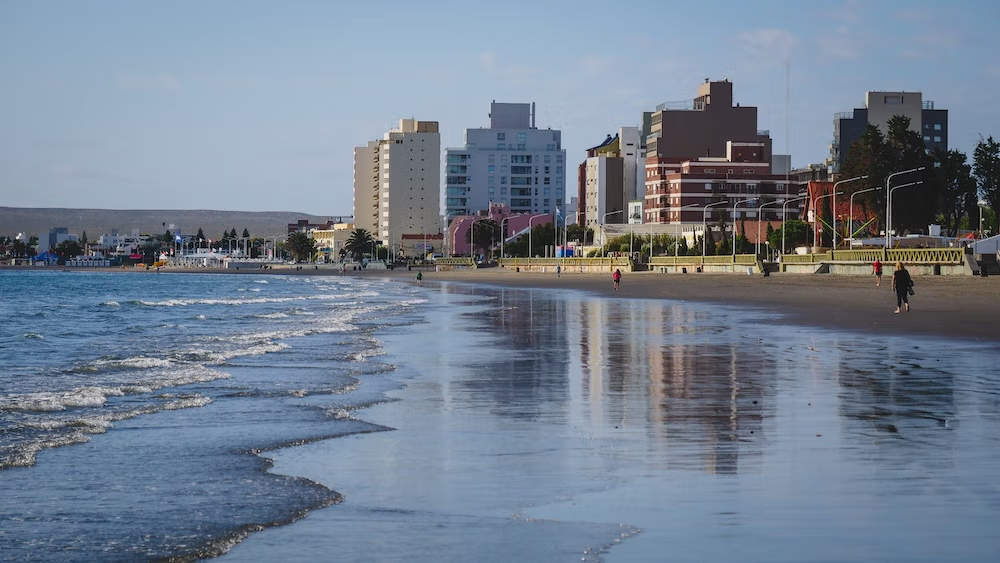
Puerto Madryn is the easier base to live in
Puerto Madryn is more forgiving.
It has a much deeper accommodation market, more restaurants, supermarkets, agencies and ordinary city services. That matters because a wildlife itinerary contains more than wildlife. You still need to arrive, eat, sleep, wash clothes and occasionally spend a day without sitting in a van for nine hours.
We enjoyed Puerto Madryn beyond the excursions. We visited museums, walked along the waterfront, worked from our accommodation and ate enough seafood to make the local marine ecosystem nervous.
Those quieter days did not weaken the wildlife trip. They gave it breathing room.
Puerto Madryn also has nearby wildlife access of its own. El Doradillo is known for shore-based Southern right whale watching during the main whale period, while Punta Loma has a permanent sea-lion colony. The city is not merely a bed placed inconveniently outside Península Valdés.
Travellers who want the city to handle more of the logistics can compare current wildlife tours departing from Puerto Madryn rather than building the entire peninsula day independently.
Its disadvantage is the road.
Puerto Pirámides is roughly 99 kilometres away, and a full peninsula excursion continues much farther. Even when someone else is driving, the day is long.
The reserve’s Double Day ticket system can make two qualifying visits less expensive. When the ticket is completed and retained correctly with identification, it permits one re-entry within the following seven consecutive days without paying the individual entrance fee again. Because entry procedures and prices can change, check the current Península Valdés Double Day rules before building the budget around them.
Puerto Madryn suits travellers who want a mixed wildlife programme without making every meal, weather change and rest day complicated.
It is also a better place to absorb a mistake.
When we returned from Puerto Pirámides, our previous hotel could accommodate us for only one night. It was then fully booked, forcing us to find somewhere else and move again.
We ended up in a cheaper studio apartment with faster internet and a proper desk. It worked out, but the switch involved another taxi, another check-in and another session of stuffing our lives back into bags.
That was on us. We had come back without booking ahead.
A larger city gives you more options. It does not create an infinite supply of rooms during a busy wildlife period.
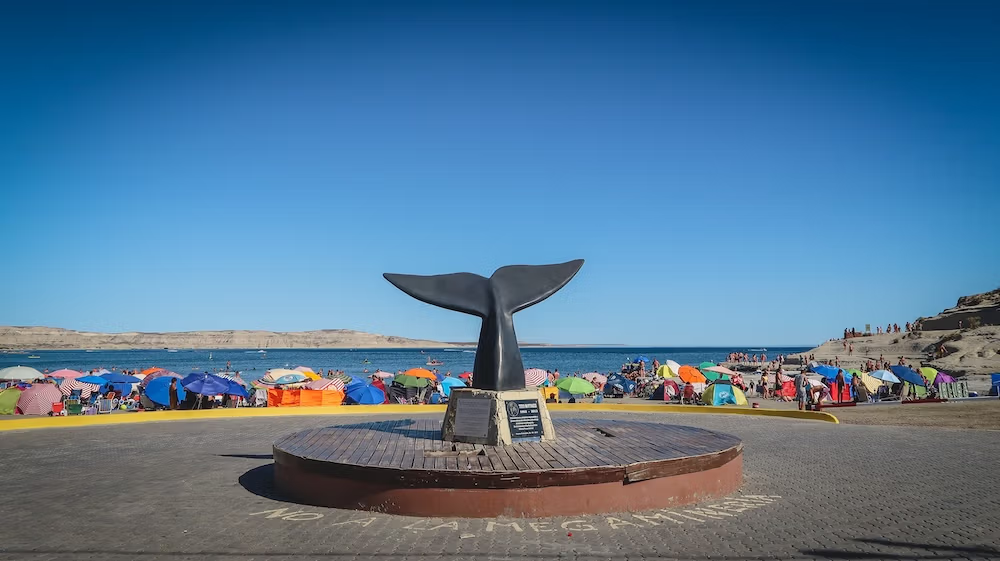
Puerto Pirámides puts the whale departure outside your door
Puerto Pirámides has a completely different rhythm.
It is the only permanent settlement inside Península Valdés, and boat-based Southern right whale excursions leave from there during the season. For a whale-focused trip, this is not marketing fluff about feeling closer to nature. It is a concrete logistical advantage.
You wake up in the settlement where the boats depart.
For a whale-led trip, check accommodation availability in Puerto Pirámides before fixing the rest of the itinerary, then review a current whale-watching departure from the town to see the meeting point and whether transport to Puerto Pirámides is included.
Our hotel sat directly beside the beach. We had a terrace facing sand and ocean, a small kitchen and breakfast supplies that allowed us to eat when we pleased. Staff recommended getting up for sunrise, so we set an alarm and climbed the nearby cliffs as the morning light spread across the coast.
The alarm nearly lost the argument.
Once we were outside, it was worth it. The higher we climbed, the more coastline appeared, including a quieter stretch of beach hidden from the main waterfront.
Trying to do that from Puerto Madryn would have involved leaving at an hour normally reserved for bakers and poor decisions.
Sleeping in Puerto Pirámides also changed the emotional shape of the trip. We remained on the peninsula after the day visitors left. We could walk along the beach, wander through town and wake up without immediately commuting back into the reserve.
The price was flexibility.
Puerto Pirámides had restaurants, cafés and shops, but it was still a small settlement. During the hottest part of the afternoon, several businesses were closed for siesta. We planned to rent kayaks later in the day, only to discover that the stands were closing or already packing up.
It was not a catastrophe. We simply lost the activity.
In Puerto Madryn, there would have been more ways to rescue the afternoon. In Puerto Pirámides, sometimes the afternoon wins.
Inside the reserve is not beside every colony
The largest misconception is geographical.
Puerto Pirámides lies inside Península Valdés, but Caleta Valdés is still roughly 75 kilometres away and Punta Norte around 79 kilometres away. Much of that travel is on gravel, and a wildlife day expands through viewpoints, slow driving and animal stops.
Sleeping in Puerto Pirámides shortens certain journeys and transforms whale departures. It does not eliminate the large peninsula driving loop.
We learned the same lesson on foot.
One morning, Audrey and I tried to walk from town toward a sea-lion and elephant-seal viewing area. The distance information varied, somewhere between five and seven kilometres, and by nine in the morning the heat already felt like midday.
We had hats, water and sunscreen. It still became miserable.
A kind stranger gave us a lift for part of the outward journey. On the way back, we missed the trail leading toward town and ended up beside the highway under the full sun.
At one point, the most beautiful sight in Patagonia was shade.
We eventually made it back and rewarded ourselves with an enormous lunch, but the mistake was useful. Sleeping closer to wildlife country does not remove heat, wind, route finding or the need for proper transport. It merely changes the collection of inconveniences waiting for you.
Two or three nights is enough to make Puerto Pirámides worthwhile
Two nights worked well for us.
We had time for the sunrise walk, a full day around town and another organized wildlife excursion before returning to Puerto Madryn. The stay felt like its own chapter rather than a complicated change of sheets.
For a whale-focused trip, two or three nights is a sensible starting point. It provides room for the boat excursion, local time and some protection against trying to cram everything into one departure.
Longer can be worthwhile, but the extra nights need a reason: repeated whale opportunities, a slower coastal break, another peninsula excursion or the simple desire to remain somewhere quiet.
The decision between the two bases is fairly blunt.
Choose Puerto Madryn for accommodation choice, restaurants, agencies, mixed wildlife and days that remain useful when the plan changes.
Choose Puerto Pirámides when direct whale departures, beach access and sleeping inside the peninsula matter more than urban flexibility.
Split the stay when both appeal and you do not mind packing again.
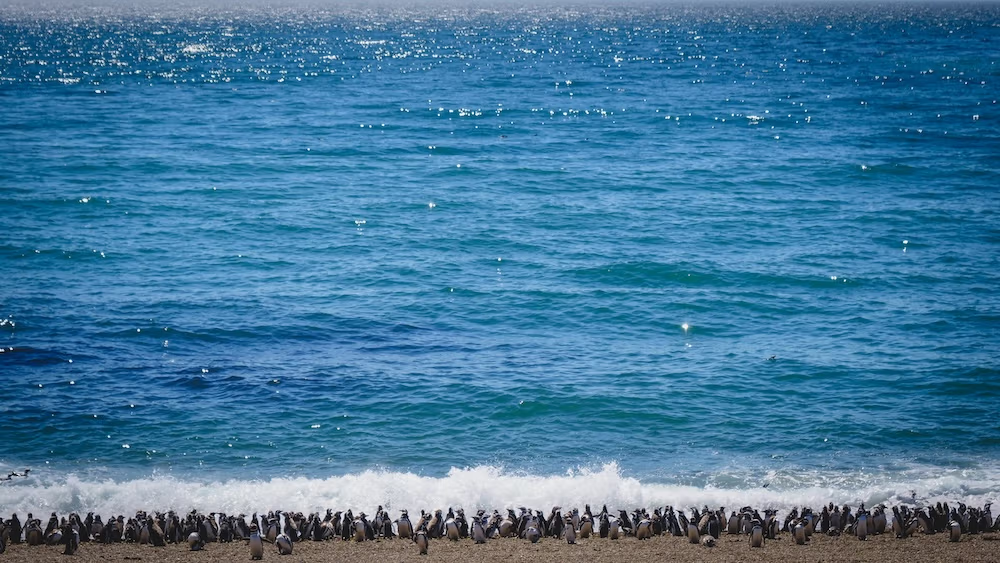
Where to stay for penguins in coastal Chubut
“Where should I stay for penguins?” sounds like a single question. It is at least three.
The Magellanic penguins at Estancia San Lorenzo belong to a Península Valdés itinerary. Punta Tombo lies far south of the peninsula and creates a separate road decision. Ushuaia’s penguin experiences operate through harbours, road transfers and boats.
Lumping them together produces an impressive list and a terrible itinerary.
Audrey and I visited San Lorenzo as part of our Península Valdés journey. Penguins moved between burrows, paths and the coast in astonishing numbers. Visitors followed marked routes, and the penguins had the right of way—which seemed fair, considering they lived there and we had arrived in a van.
The colony fitted naturally into a broader day with sea lions, elephant seals and the Patagonian steppe. That is San Lorenzo’s accommodation advantage. It belongs to a strong multi-species region.
Punta Tombo is more specialized.
Puerto Madryn works when penguins are one part of the trip
Punta Tombo is around 180 kilometres from Puerto Madryn. An excursion from the city is therefore a long, full-day undertaking rather than a casual penguin detour.
The road time is the cost of maintaining one strong all-purpose base.
From Puerto Madryn, the same stay can support Península Valdés, El Doradillo, Punta Loma, restaurants, museums and recovery days. For most first-time wildlife travellers, that broader value outweighs the additional Punta Tombo driving.
Travellers keeping Puerto Madryn as the main base can check a current full-day Punta Tombo excursion from Puerto Madryn and decide whether the road commitment fits the itinerary.
Use Puerto Madryn when Punta Tombo is one important piece of a larger coastal Chubut trip.
Just do not call it nearby.
Trelew is the specialist choice for Punta Tombo
Trelew sits approximately 110 to 115 kilometres from Punta Tombo, giving it the shorter serviced approach.
That difference becomes meaningful when the penguin colony is the main event, especially for travellers using Trelew’s airport or continuing through the Chubut Valley. One or two nights can position the excursion without forcing the longer return to Puerto Madryn.
If shaving time off that road day matters more than staying beside the sea, compare current accommodation in Trelew.
Trelew is not the stronger general wildlife base. It lacks Puerto Madryn’s coastal setting and range of nearby marine encounters.
Audrey and I stayed in Trelew, but we used it for the Welsh history and surrounding towns rather than Punta Tombo. I cannot pretend we personally tested the penguin logistics from both places.
The planning distinction is still useful.
Choose Trelew when Punta Tombo controls the itinerary.
Choose Puerto Madryn when penguins are part of a broader wildlife trip and you want a base that remains interesting after the colony visit.
A spectacular animal encounter does not automatically justify the weaker base. You still have to spend the evening somewhere.
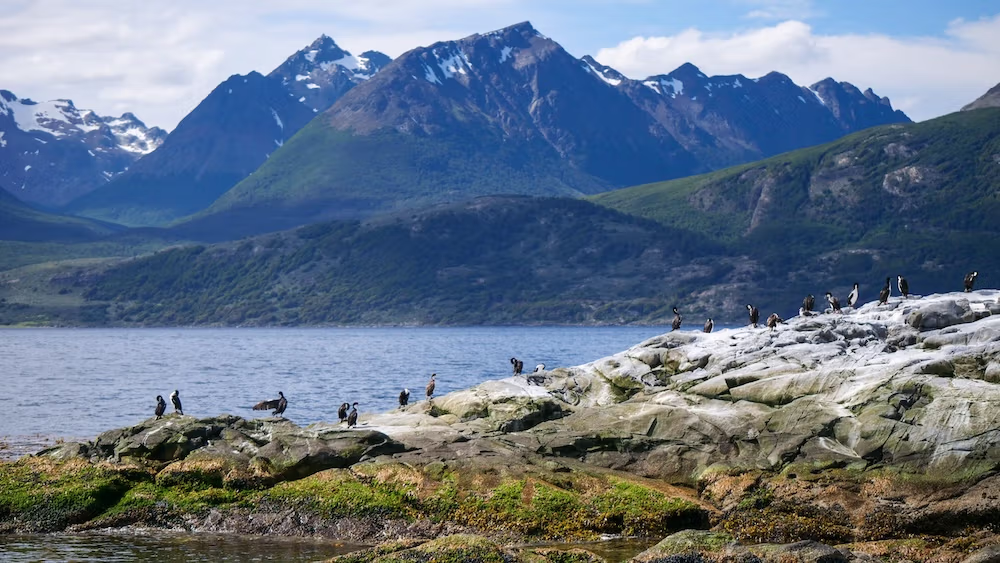
Where to stay in Ushuaia for Beagle Channel wildlife
Ushuaia creates a different accommodation problem.
The penguins and sea lions are not waiting outside the hotel. The city is a departure hub, which means the most useful location is often the one that makes the harbour or road transfer easier to reach.
Audrey and I spent 12 nights in an apartment outside the centre. It suited our slow working trip. We had a kitchen, refrigerator, a table and enough room to spread out.
The walk into central Ushuaia took roughly 30 to 40 minutes.
That was pleasant when we had time. It felt less charming before an excursion or after a long day. The apartment also had a shower with weak pressure, unpredictable temperature and a curtain determined to cling to whichever person entered.
It was home. Home was trying to boil us.
Central Ushuaia simplifies the wildlife day
Penguin excursions from Ushuaia do not all follow the same route.
Some leave from the commercial pier. Others combine a road journey with a boat departure closer to Puerto Almanza. Longer programmes may involve Estancia Harberton, additional land travel or controlled colony access.
A trip advertised as a navigation can occupy half a day or most of one once check-in, transfers and the return are included.
Central accommodation will not improve the wildlife sighting. It improves everything wrapped around it.
You can reach the harbour more easily, walk to tour offices and reduce the risk of turning an early departure into a frantic search for transport. If wind or operating conditions force a change, being near the centre also leaves more ways to use the day.
Before choosing the biggest apartment for the lowest rate, compare current Ushuaia hotels and apartments with the harbour location in mind. Then compare current Isla Martillo penguin tours, because the chosen product determines whether the useful location is the pier, a road-transfer pickup or somewhere else.
For a short Ushuaia stay built around Beagle Channel wildlife, I would favour practical harbour access over a larger apartment on the outskirts.
An outer apartment makes more sense when Ushuaia is a longer stay
The calculation changes when you are staying for a week or more.
A kitchen saves money. Extra space matters when you are working, travelling with family or waiting through poor weather. A residential location can also feel calmer than the busy centre.
The cost is repetition.
One 35-minute walk is enjoyable. Repeating it for an early excursion, dinner, errands and another harbour departure can turn a bargain apartment into a daily transport project.
Outer accommodation works when the wider stay includes road excursions, hiking and plenty of unstructured time. When penguins, sea lions and Beagle Channel navigation dominate the schedule, centrality earns its keep.
Boat viewing and colony landing are different products
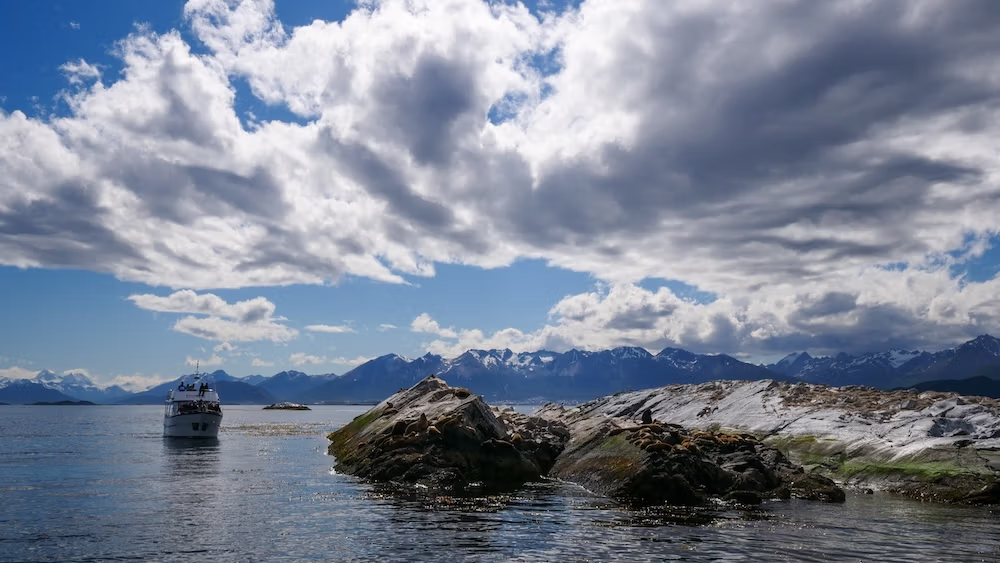
Our Beagle Channel outing lasted around four hours. We saw huge numbers of cormorants, sea lions sprawled across rocky islands and penguins near Isla Martillo.
We stayed on the boat.
That matters because Ushuaia wildlife products vary. Some observe the colony from the water. Others combine road and boat travel, while selected excursions include controlled land access or an estancia visit.
I cannot tell you that walking near the colony is better because we did not do it. Our boat-based experience still produced a memorable wildlife day without consuming the longest possible amount of time.
Travellers who prefer a boat-based wildlife day can compare current Beagle Channel cruises and wildlife tours rather than assuming every penguin excursion includes a landing.
Choose the format before choosing the hotel. A central room is especially valuable when the chosen excursion begins at the harbour. It matters less when the operator collects you for a road transfer elsewhere.
Three or four nights is a sensible starting point when one wildlife day is important. Our 12-night stay reflected our working pace, not the minimum needed to see a sea lion.
When a remote wildlife estancia earns the isolation
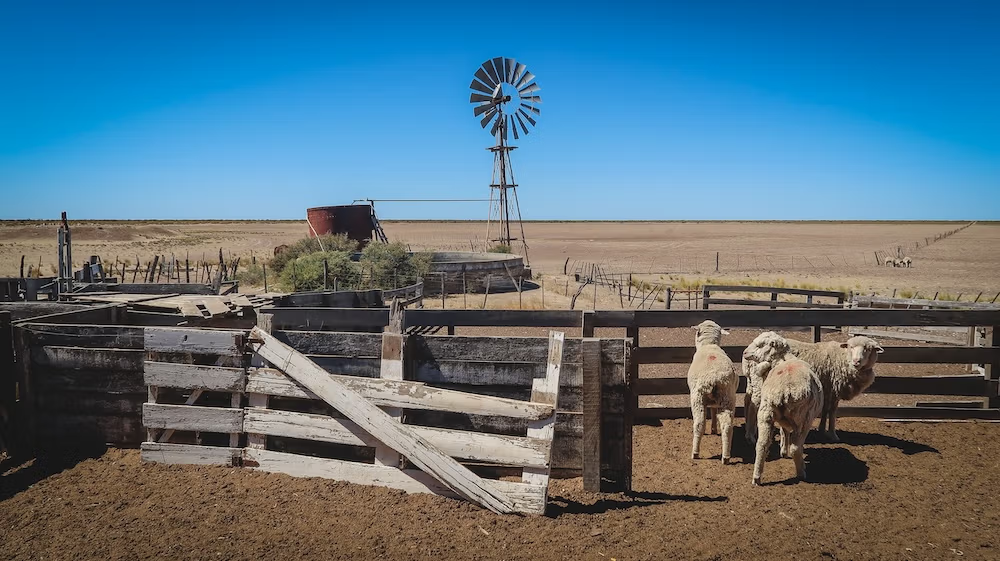
Remote wildlife properties are dangerously easy to romanticize.
Private coastline. Empty steppe. Animals close to the accommodation. No tour buses. A night sky apparently designed to make city dwellers resign from their jobs.
Some of that appeal is real. So are the transport problems.
Audrey and I visited estancias during wildlife excursions, but we did not stay overnight at a dedicated wildlife property. Our experience in Puerto Pirámides gave us a milder version of the trade-off: greater immersion accompanied by fewer ways to improvise.
At a remote estancia, both sides become more intense.
The property must change the wildlife experience
A remote estancia earns the extra travel when the property itself unlocks something a town hotel cannot.
That might be private coastline, resident colonies, guided walks beginning at the accommodation or wildlife access that does not depend on joining the same daily convoy from town.
Rincón Chico, on the southeastern side of Península Valdés, follows that model. Its appeal lies in its private coastal setting and property-based wildlife programme, not simply the fact that it is far from a supermarket.
Bahía Bustamante is even more self-contained. It operates as a multi-night destination rather than a hotel used to reach one outside attraction.
These stays can justify their isolation because the accommodation and the wildlife experience are bound together.
The argument becomes weaker when the traveller still needs to drive back to Puerto Pirámides for whale watching, arrange several outside excursions and spend most of the stay leaving the property.
Before committing to the most isolated version, compare accommodation across Península Valdés. A rural stay may provide more immersion without making the property the entire trip.
Remoteness removes choices as well as crowds
Remote stays require commitment.
Public transport may not exist. Transfers need to be arranged. Fuel can be far away. Meals may be included or served at fixed times. Internet, payment options and minimum-age rules can be more restrictive.
At Rincón Chico, outside activities such as whale watching remain separate from the property programme. Bahía Bustamante is distant enough that a short visit makes little sense; it is designed around a multi-night stay rather than a day trip.
Those limitations do not make the properties poor choices. They identify the traveller who will enjoy them.
Choose a remote estancia when the property’s coastline, resident wildlife and guided programme are the main reason for the journey.
Avoid it when you want restaurant choice, spontaneous activities, simple onward transport or a different excursion every morning.
The useful question is not whether waking up somewhere remote sounds incredible. Of course it does.
Ask what the property lets you experience that would be difficult or impossible from Puerto Madryn or Puerto Pirámides. When the answer is specific, the estancia may justify the cost. When the answer is mostly silence and scenery, you are paying for atmosphere.
That may still be worth it. It is simply a different purchase.
El Calafate adds birdlife without requiring another wildlife base
Not every animal needs to reorganize the itinerary.
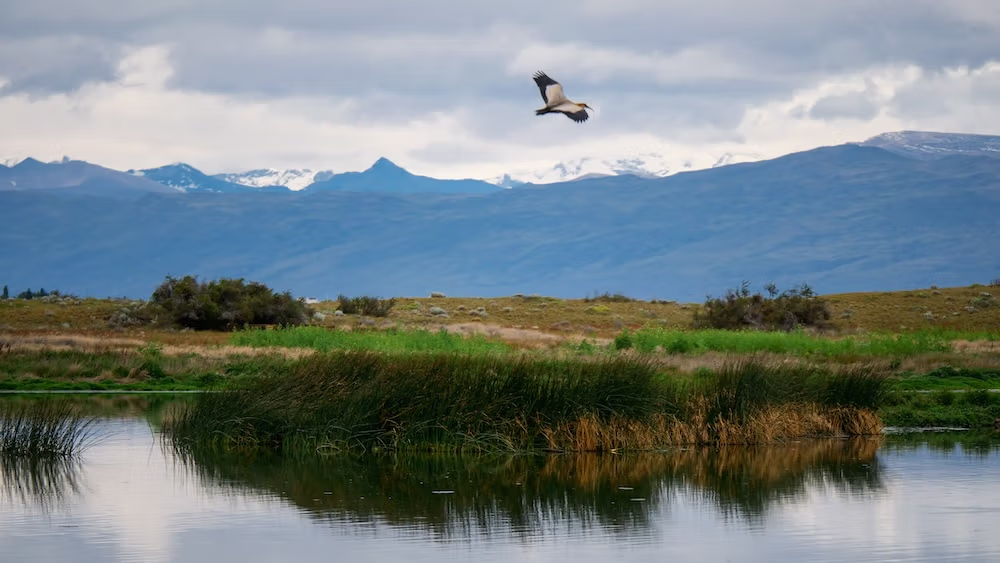
El Calafate is primarily chosen for glacier access, but Laguna Nimez allows travellers to add worthwhile birding without creating another coastal wildlife stay.
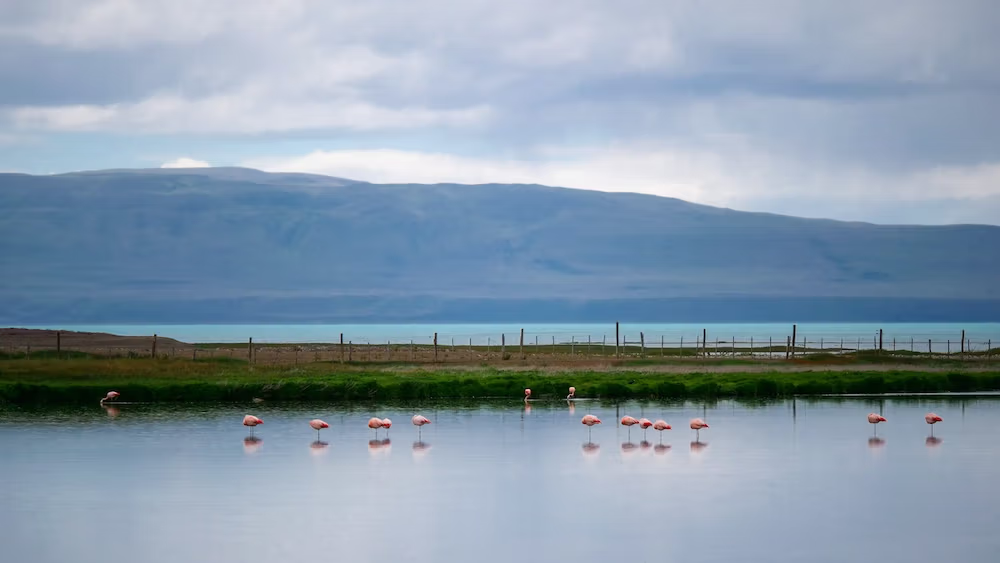
Audrey and I walked there independently from town. After several larger excursions, it suited us perfectly: easy to organize, physically lighter and flexible enough to fit around the weather.
The reserve protects wetland habitat where flamingos and many other birds may be present. The word “may” is important. A reserve can record a huge list of species over the years without assembling every one of them beside the path for your visit.
We dealt with wind and passing rain, which felt entirely appropriate for El Calafate. Viewing areas and paths made the outing structured without turning it into another large expedition.
Laguna Nimez strengthens a stay you are probably already making. It does not turn El Calafate into the answer for whales, penguins or elephant seals.
If El Calafate is already part of the glacier itinerary, compare current accommodation in El Calafate rather than adding a second wildlife base purely for casual birding.
Unless birding is a major interest, I would not add accommodation nights solely for the reserve. I would use it to make an existing El Calafate stay more varied.
That is an important distinction. Patagonia itineraries grow out of control when every animal sighting becomes another town and another check-in.
How many nights do you need in each wildlife base?
Wildlife encounters rarely fit into the tidy two-hour blocks suggested by an itinerary spreadsheet.
The road, harbour check-in, weather and return journey often take longer than the actual period spent watching the animals. Count complete days, not attraction names.
Puerto Madryn: three to four nights
Three or four nights gives a first-time visitor room for one full Península Valdés land excursion, a separate whale, El Doradillo or Punta Loma day, and enough breathing space for arrival fatigue or a slower city day.
Stay longer when Puerto Madryn is carrying several wildlife objectives. Reduce the time only when the excursions and onward transport are already organized tightly.
Puerto Pirámides: two to three nights
Two or three nights allows for a whale departure or local day plus one longer journey across the peninsula.
One hurried night can create more packing than immersion. Longer stays make sense for repeated whale opportunities, a deliberate coastal break or multiple activities leaving from the settlement.
Trelew: one or two nights
Trelew works as a short specialist base when Punta Tombo controls the plan or the airport makes the routing efficient.
Once the penguin day is complete, Puerto Madryn normally offers the stronger reason to remain on the coast.
Ushuaia: three to four nights when wildlife matters
A Beagle Channel or Isla Martillo excursion may consume half or most of a day. Three or four nights creates room for one major wildlife outing without crushing every other Ushuaia plan into the remaining hours.
Longer stays are easy to justify, but hiking and national-park days are separate reasons.
Remote estancia: usually at least three nights
A remote property needs enough time to justify the transfer and experience its included programme.
One night can become an expensive journey to a distant bedroom. Follow the property’s actual operating rhythm rather than trying to squeeze it between two buses.
El Calafate: no extra nights for casual birding
Fit Laguna Nimez into the El Calafate stay already required by the glacier itinerary.
Serious birders may choose differently. Most travellers do not need another hotel night solely for this reserve.
Choose the base that survives a bad wildlife day
Wildlife planning encourages tunnel vision.
You imagine the whale breaching, the penguin crossing the path or the orca appearing at exactly the right tide. Accommodation becomes the boring rectangle beneath the exciting part of the map.
Then the wind arrives.
Or the road takes longer than expected. The hotel is full. The kayak stand closes. You miss a trail and discover that a skinny roadside bush is now the most desirable real estate in Patagonia.
Those ordinary failures are why the base matters.
Puerto Pirámides gave us the stronger sense of being inside Península Valdés. I would choose it again for direct whale departures, a quieter coastal stay and the pleasure of waking beside the beach.
Puerto Madryn was easier. I would choose it for a first mixed-wildlife trip, particularly when accommodation choice, restaurants, agencies and useful backup days matter.
Trelew earns its place when Punta Tombo is the controlling objective.
Central Ushuaia earns the premium when repeated harbour departures would otherwise turn an outer apartment into a transport problem.
A remote estancia earns the isolation only when the property itself is the wildlife experience.
The order matters: choose the animal, confirm the season, find the real departure point and decide whether sleeping closer creates an actual advantage. Then ask whether the base still works when the wildlife plan does not.
Book the accommodation after answering those questions.
Patagonia will still find ways to complicate the trip. The goal is to choose a place where the day remains worthwhile when it does.
Frequently Asked Questions
What is the best base for wildlife in Península Valdés?
Puerto Madryn is the stronger all-purpose base for accommodation choice, restaurants, agencies and backup days, while Puerto Pirámides is better for direct whale departures and a more immersive stay inside the peninsula.
Should I stay in Puerto Madryn or Puerto Pirámides for whale watching?
Puerto Pirámides is the more convenient choice for boat-based Southern right whale excursions because the boats leave from the settlement. Puerto Madryn offers more services and can work better for a mixed wildlife itinerary.
How many nights should I spend in Puerto Pirámides?
Two or three nights is a sensible starting point for a whale departure or local day plus one longer trip across Península Valdés. A single rushed night can create more packing than immersion.
Is Trelew or Puerto Madryn better for visiting Punta Tombo?
Trelew shortens the drive to Punta Tombo and works well when the penguin colony controls the itinerary. Puerto Madryn is the better broader base when penguins are only one part of a larger coastal wildlife trip.
Where should I stay in Ushuaia for Beagle Channel wildlife tours?
Central Ushuaia is usually the practical choice when wildlife excursions leave from the harbour. An outer apartment can make sense for a longer stay when kitchen space and lower daily living costs outweigh repeated walks or taxi rides.
Is El Calafate a good wildlife base?
El Calafate works best as a glacier base with Laguna Nimez added for independent birding. I would not add extra nights solely for casual wildlife viewing unless birding is a major priority.
Project 23 Argentina: This guide is also available in Spanish. [Leé la versión en castellano: Dónde alojarse en la Patagonia para ver fauna: mejores bases por especie y temporada]
This article contains affiliate links. If you book through one of these links, I may earn a commission at no extra cost to you.