
Four days in Banff changes the trip in a more useful way than simply giving you another twenty-four hours to collect attractions. Audrey and I once spent four action-packed days here and still left feeling like we had barely scratched the surface. Since then, we have returned for very different trips: Lake Louise and Moraine Lake with three generations of the family, a private day stretching into Yoho National Park, an excursion along the Icefields Parkway to Columbia Icefield, and slower days walking beside the Bow River and exploring Banff itself. I have also disappeared into the Banff backcountry on horseback for nearly a week, which was another fairly convincing reminder that trying to “finish” this place is a losing game.
What four days does give you is enough time to stop treating Banff town as the place you happen to pass through between larger attractions. You can give Lake Louise and Moraine Lake the day they actually need, spend another day exploring more of Banff National Park without driving halfway across the Rockies, and still keep one complete day for a genuinely big excursion.
That last part is where I think the fourth day earns its keep. I would not use it to add five miscellaneous stops that lost the argument earlier in the trip. I would use it to make one deliberate choice: head north along the Icefields Parkway toward Columbia Icefield, or cross into British Columbia for a day in Yoho National Park. Either option changes the scale of the trip without forcing the first three days to become a warm-up act.
For this exact itinerary, I am assuming four usable sightseeing days, not an arrival afternoon, two full days and a morning before a flight. If that is what you really have, something needs to come out; calling it four days does not magically manufacture the missing hours.
There is also a seasonal limitation. This version works most naturally from roughly mid-June through early October, when the regular Moraine Lake transport system is operating and Yoho Valley Road is normally open to Takakkaw Falls, weather permitting. Outside that period, the basic four-day structure still works, but some of the individual pieces need to change.
For this particular itinerary, Banff town is also the simplest base: Day 1 starts there, the lake day can begin from Banff using current transport options, and the local Day 3 stays relatively close. We did not stay in a Banff town hotel on the trips behind this article, so I do not have a personal property recommendation to manufacture. If you are still choosing a base, you can compare current Banff accommodation options by location, dates and budget.
How I would divide four days in Banff
My default structure would be simple: Day 1 for Banff town, the Bow River, Bow Falls and one local activity; Day 2 for Lake Louise and Moraine Lake; Day 3 for Lake Minnewanka, Cascade Ponds and possibly the Banff Gondola; and Day 4 for either Columbia Icefield or Yoho National Park.
I would not get overly attached to the numbering. Your Lake Louise transport reservation may dictate when that day happens, the Gondola may have better availability on another afternoon, and mountain weather has never shown much interest in my carefully arranged travel plans. What I would protect is the separation between the four systems.
The town deserves enough time to feel like a destination. The lakes should not be forced to share their day with half the Icefields Parkway. Lake Minnewanka and the nearby Banff sights should not become filler between two huge driving days. And the fourth day should belong to one major excursion rather than becoming a geographical yard sale.
That balance is the real advantage of having four days.
Day 1: Give Banff town a real day
I would start much more gently than the usual urge to race straight toward the biggest mountains allows. Banff is extremely easy to underestimate because the surrounding national park contains places with names like Lake Louise and Moraine Lake, so the town can start to look like infrastructure: somewhere to eat breakfast, buy snacks, find your hotel and then escape as quickly as possible.
We have enjoyed Banff much more once we stopped treating it that way.
Start along the Bow River
One of my favourite ways to begin is around Central Park and the Bow River. You do not need to commit to a major hike. From Central Park, you can walk roughly 0.9 kilometres toward Fenland Trail in about 10 to 15 minutes, or head in the other direction toward Surprise Corner, with around 1.4 kilometres taking roughly 25 to 30 minutes.
That makes the river useful in a way I really like on a first morning because you can decide how much commitment you want as you go. Walk for twenty minutes and turn around, cross a bridge and continue through the trees, sit beside the water for a while, or suddenly decide that breakfast number two sounds like a strong idea.
On an earlier family trip, we started the day beside the Bow and ended up following a quieter forested section after a local pointed us in that direction. There was no grand attraction waiting at the end of every five minutes. We were simply walking beside a fast-moving river with mountains around us, which sounds suspiciously like the sort of thing most of us came to Banff for in the first place.
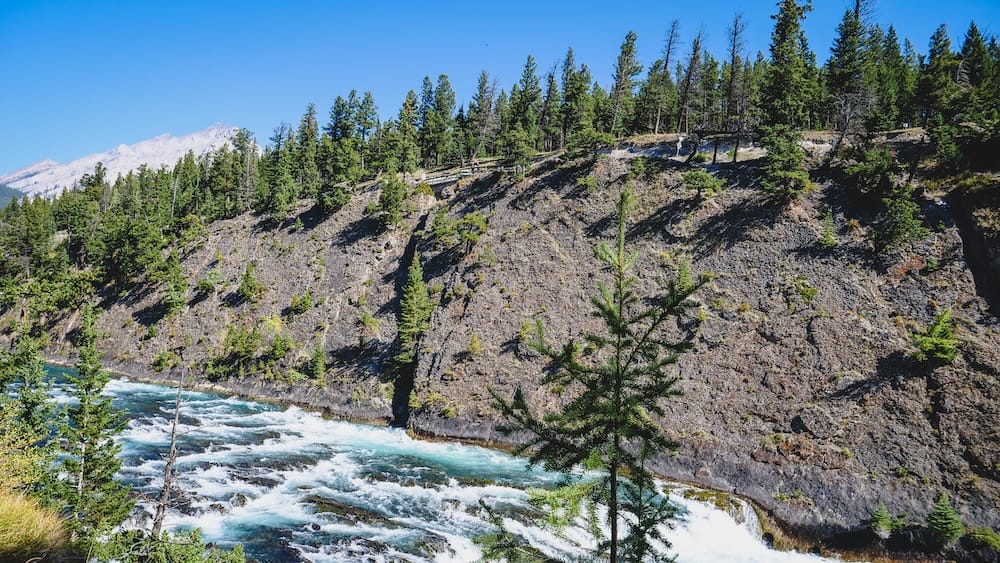
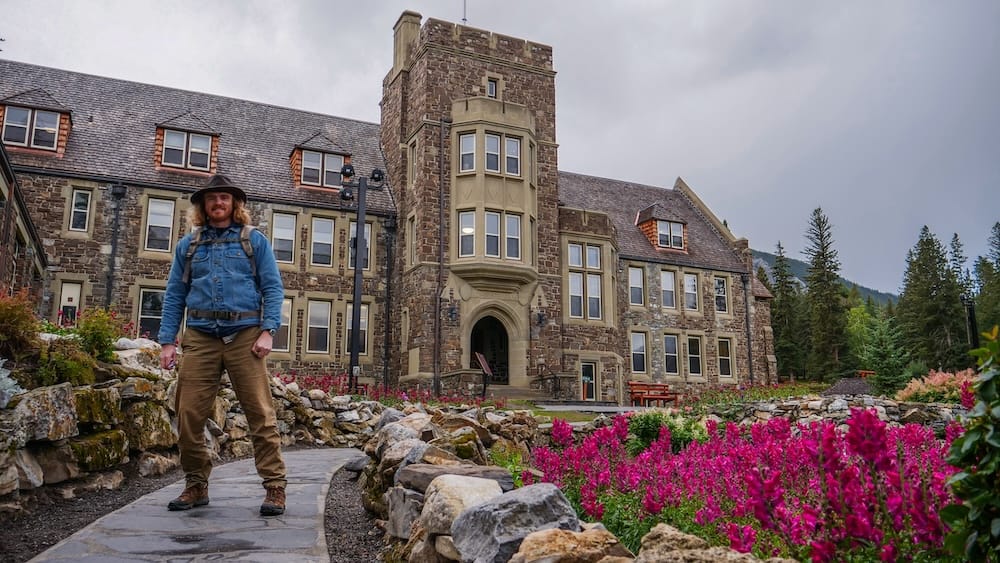
If everybody is still enjoying the walk, continue toward Bow Falls. From Bow River Bridge, the trail to the falls is about 1.2 kilometres and roughly 20 to 25 minutes. We have visited Bow Falls on multiple trips, and I like it precisely because it does not require turning the morning into an expedition. It can remain part of the walk rather than becoming another mission involving the car, parking and a separate block on the schedule.
Let the town fill some of the spaces
After the river, I would deliberately leave part of the day unresolved. Walk Banff Avenue, have lunch without inhaling it because another shuttle leaves in seventeen minutes, wander through the Cascades of Time Garden or Art in Nature, or pick a museum if the weather closes in and you want a break from staring at mountains—which sounds impossible until you have spent several consecutive days doing exactly that.
We have visited several of Banff’s museums and cultural attractions over the years, but I would not try to string them all together here. This is not a museum crawl disguised as an itinerary. Pick something that genuinely interests you and allow everything else to remain available for another visit.
That is one of the subtler upgrades you get with four days: you no longer have to look at every enjoyable thing and immediately calculate what it is replacing.
Parking can still complicate a summer day in Banff, particularly later in the morning, but once you are in the centre this is one of the easiest days to handle largely on foot. I would take advantage of that rather than repeatedly retrieving the car for short movements around town.
Optional: get onto the Bow River instead of only walking beside it
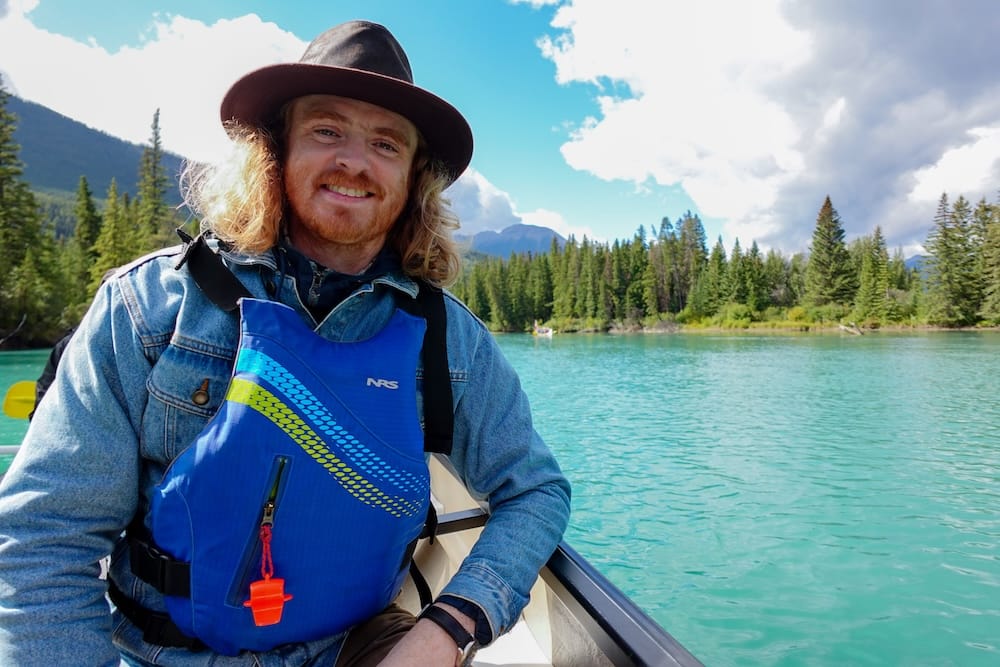
If you want one proper booked activity on Day 1, the Big Canoe is the one I would consider. Audrey and I did this on an earlier Banff trip, and it gave us a completely different relationship with the river. We paddled upstream together as a group and then spent more of the return floating downstream and taking in the scenery. There was some participation involved, but it was not a white-knuckle paddling expedition where everyone returned to shore questioning their upper-body strength and life choices.
Our original experience was a sponsored tour, so I would separate what we did then from whatever you book today. The current River Explorer uses a large shared canoe, lasts about an hour and a half, and does not require previous paddling experience. That is just about the right scale for this itinerary: substantial enough to feel like you did something distinctive, but not so large that the rest of Banff town disappears around it. If that sounds like your kind of Day 1 activity, you can check current Big Canoe River Explorer availability.
We also had one of those classic Banff weather moments while walking toward the canoe. It had been raining less than five minutes earlier, and then suddenly we had blue sky and sunshine. Audrey and I joked that we were getting a master class in mountain weather, which is another reason I would not schedule Day 1 down to fifteen-minute increments.
If canoeing does not appeal to you, do not replace it simply because an itinerary seems to require a paid activity. Walk farther, spend more time at Bow Falls, visit a museum, sit down for a proper meal or do absolutely nothing productive for an hour. Four days gives you a little room to stop optimizing Banff.
Day 2: Protect Lake Louise and Moraine Lake as one system
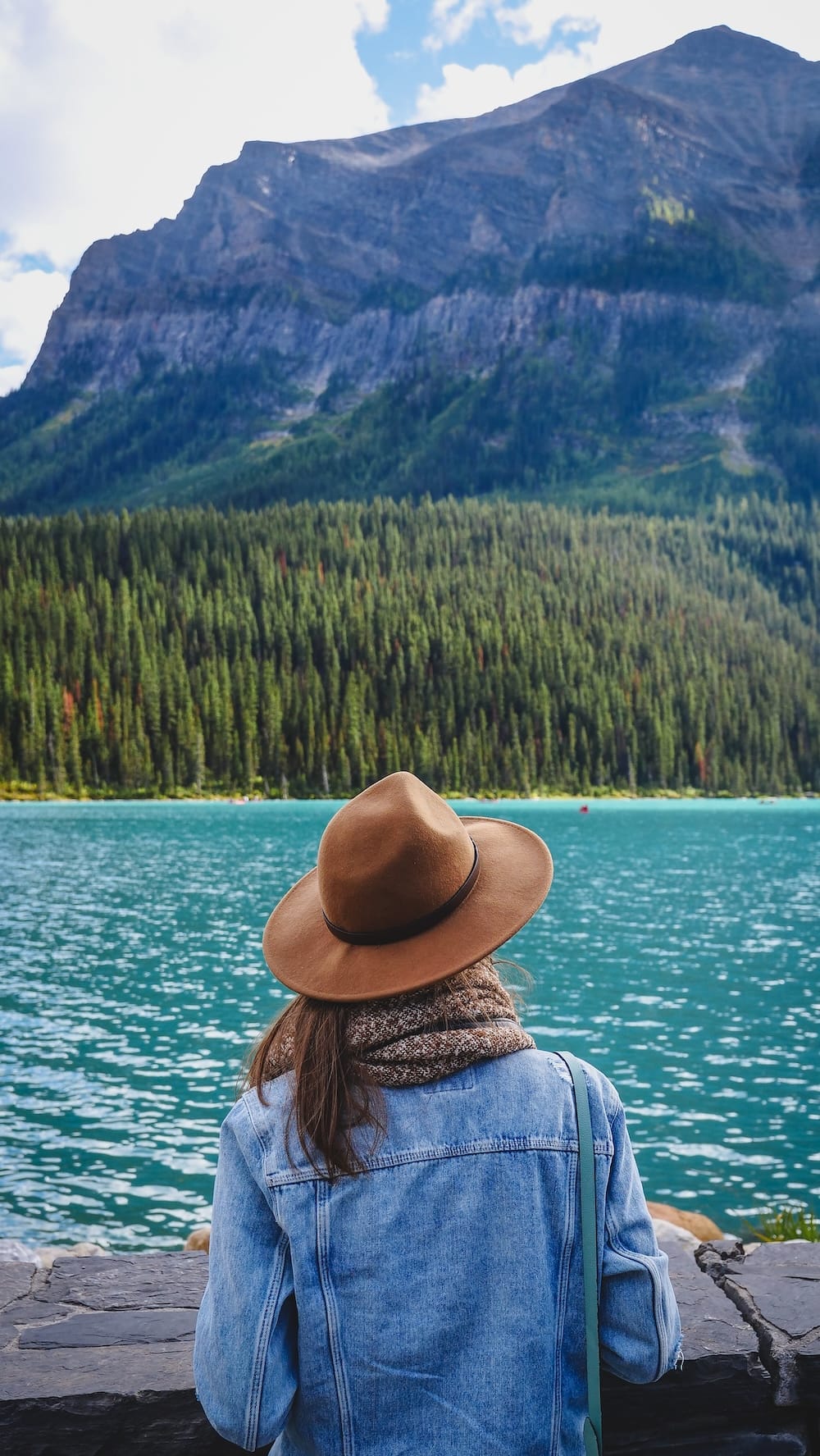
Day 2 is the one I would protect most carefully. Lake Louise and Moraine Lake are geographically close enough that it is tempting to think of them as two stops on a driving loop, but under the current access system that is not how the day really works. Moraine Lake Road is closed to ordinary personal vehicles, so you need eligible transportation, and the logistics between parking, shuttles, connectors and waiting can consume a meaningful part of the day.
That is not a reason to skip the lakes. It is a reason to stop pretending they need to share their day with three other major attractions.
Sort out the transport before designing the sightseeing
For the 2026 season, regular Parks Canada shuttle service to Moraine Lake runs from June 1 through October 12, weather permitting. Lake Louise service begins earlier, but for this combined day the Moraine operating window is the more important one.
Parks Canada releases 40 percent of its shuttle inventory in spring and the remaining 60 percent at 8:00 a.m. Mountain Time two days before departure. A reservation includes the initial Park & Ride shuttle, use of the Lake Connector between Lake Louise and Moraine Lake, and the return trip.
If you are staying in Banff, the seasonal Roam Super Pass is another useful system because it combines a reserved trip between Banff and Lake Louise with access to the Lake Connector for Moraine Lake. I would not leave either system until the morning of the trip and assume everything will sort itself out.
If the public reservation systems do not line up with your dates, there are also commercial options from Banff. One current shuttle allocates about 75 minutes at Lake Louise and 75 minutes at Moraine Lake. We have not used this exact shuttle, and I would consider that Lake Louise window tight if Fairview Lookout is important to you, but it can solve the access problem for somebody who mainly wants time around the two shorelines and Rockpile. You can check the current Lake Louise and Moraine Lake shuttle from Banff.
The invisible time matters too. Parks Canada currently recommends allowing at least 30 minutes of waiting for shuttles and notes that waits can reach about an hour during periods of high ridership. That is the part a clean little itinerary map tends to forget. Lake Louise and Moraine Lake sit relatively close together, but the real day can involve arriving at a pickup point, waiting, transferring, walking to the shoreline, finding food, using the bathroom, moving at different speeds and then waiting again.
Once you accept that this is a full lake day, the logistics become much less irritating because you are no longer mentally stealing those minutes from somewhere else.
Give Lake Louise enough time to improve
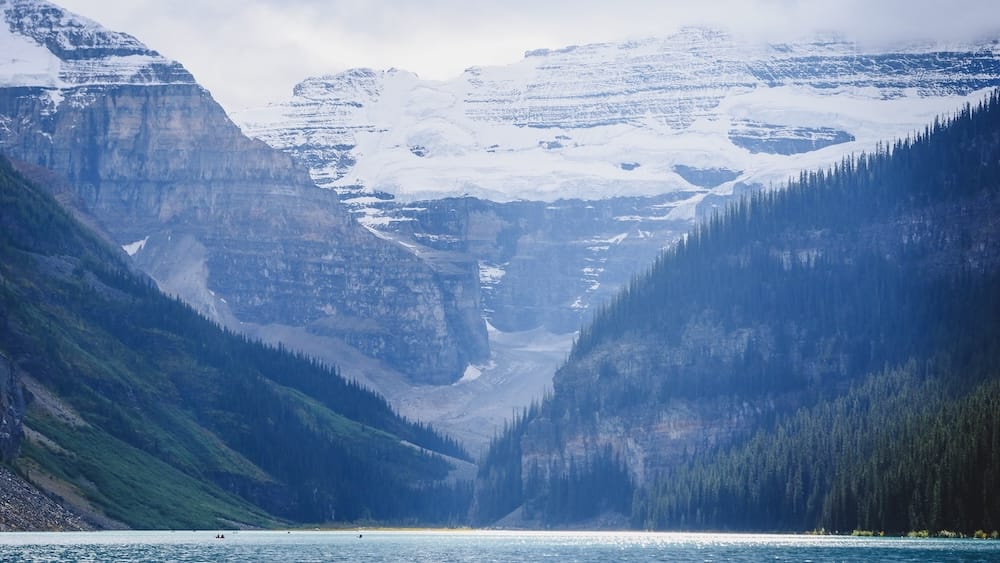
Our most recent Lake Louise visit started about as chaotically as I remembered. The shoreline was packed, and I jokingly called it the selfie capital of Canada. The lake itself was spectacular, but the first few metres around the main viewpoint felt like everybody had been assigned exactly the same place to stand.
The experience changed for me when we climbed to Fairview Lookout. The trail is about 1.2 kilometres each way and takes roughly 45 minutes return. It is not long, but I found it steep enough that I would not dismiss it as nothing, especially because I was carrying Aurelia on my back while she slept through much of the effort. It was an excellent division of labour for at least one member of the family.
From above, Lake Louise had scale again. We could look down over the water, the hotel and the surrounding mountains instead of standing inside the busiest concentration of people, and for me those extra 45 minutes changed the entire impression of the lake.
I would not call Fairview mandatory. If somebody in your group does not want the climb, your shuttle timing is tight or you simply prefer a slower lakeshore visit, skip it without guilt. But if you have the energy and the time, this is exactly the kind of extra depth I would prioritize once Lake Louise has a full day to work with.
Continue to Moraine Lake and do the Rockpile
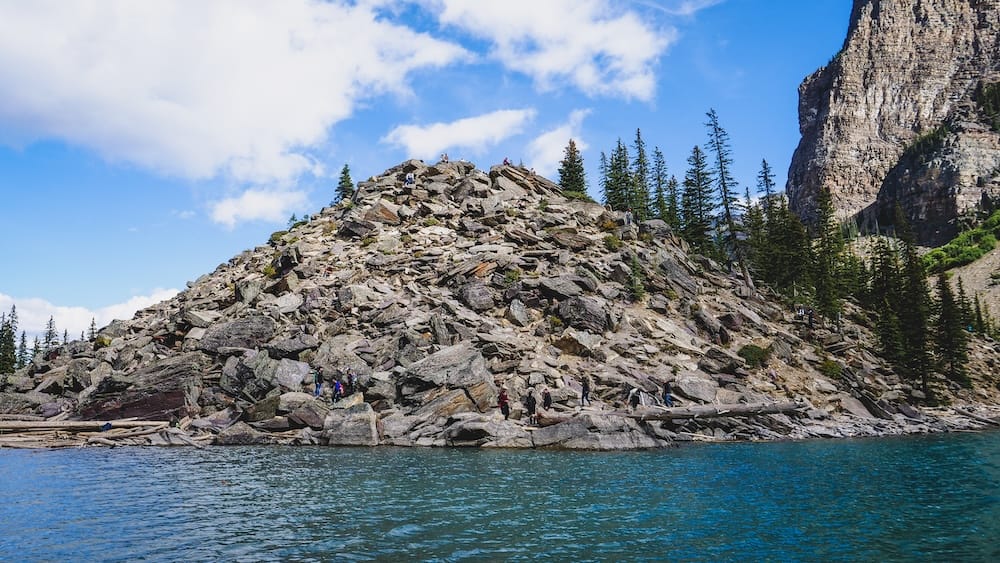
From Lake Louise, continue to Moraine Lake using the transport system you arranged. The Rockpile is the obvious short walk here: the loop is around 0.7 kilometres and takes roughly 30 minutes, so the physical commitment is small compared with the elevated view it gives you.
Our visit felt dramatically busier than Fairview Lookout. I joked at the time that it was ten times busier, then immediately reconsidered and upgraded that to one hundred. That was obviously not a scientific crowd survey, but it was a fairly accurate summary of the feeling.
Even with all those people moving around the rocks, I still thought the viewpoint was worth doing. That distinction matters because crowded and worthless are not synonyms. Sometimes a place feels less peaceful than you hoped and still delivers the experience you came for.
Afterward, I would spend some time closer to the water rather than immediately chasing the return shuttle. Moraine Lake has limited services, with no normal cell service or Wi-Fi and basic pit toilets rather than the infrastructure you might expect at such a famous place, so bring the food and water you need instead of assuming the lake will sort out lunch for you.
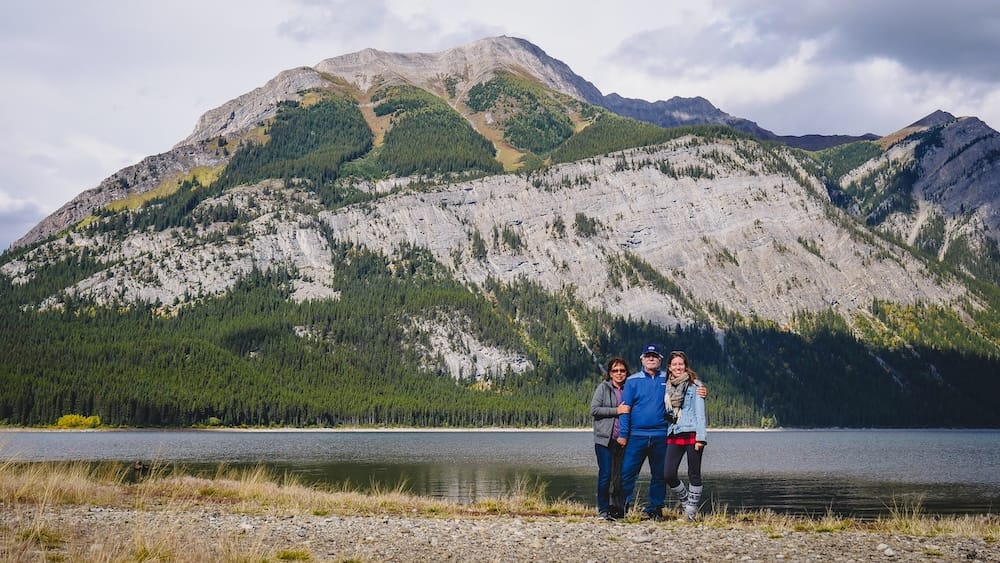
This is also where real family pacing starts dismantling neat schedules. On our recent visit we had Audrey’s dad with us as well as Aurelia, so walking speeds, breaks, food and toddler logistics were part of the day. That trip reinforced something I keep relearning in Banff: a place can look like a thirty-minute stop on paper and still occupy a much larger piece of the itinerary once actual human beings become involved.
When you finish Moraine Lake, I would go back to Banff and let the lake day end. You do not need to reward good planning by racing toward Peyto Lake before dinner or starting tomorrow’s itinerary because everybody seems suspiciously energetic while sitting on the shuttle.
You already have two completely different days behind you, and unlike a shorter Banff itinerary, you still have two complete days left.
Day 3: Stay inside Banff and add some local depth
This is where I would deliberately resist the temptation to leave the park again. You have already spent one day in Banff town and another around the two headline lakes, while Day 4 is going to be a substantial excursion. Day 3 works best when it sits between those scales: enough scenery and activity to feel worthwhile, but not another ten-hour day involving several hundred kilometres of road.
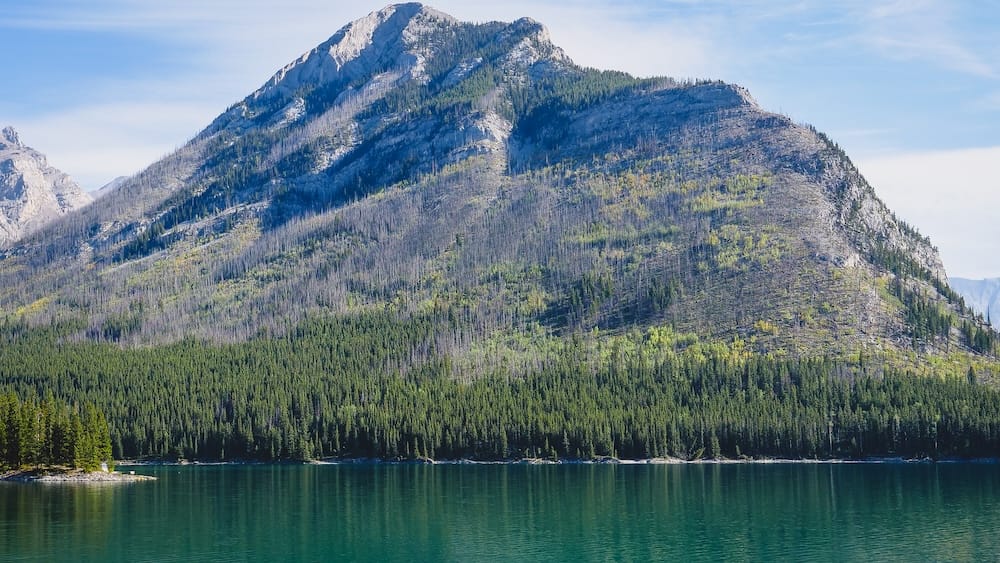
Lake Minnewanka and Cascade Ponds fit that role nicely.
Start with Lake Minnewanka
We visited Lake Minnewanka on an earlier family road trip, and it felt different from Lake Louise and Moraine Lake straight away. It is still a major mountain lake, but the experience is less tied to one famous shoreline composition, which makes it easier to decide how much time you actually want to spend there.
Walk along the water, sit for a while, take photographs or build the visit around a longer activity if one genuinely interests you. I would research any current cruise or rental separately before your trip rather than assuming whatever existed during one of our older visits is still operating in the same form.
During the 2026 warm season, Roam’s Route 6 links downtown Banff with Lake Minnewanka in roughly 25 minutes and also serves Cascade Ponds and the Two Jack area. That creates a useful local sightseeing corridor without requiring you to move your car from one pressured parking area to another all day.
Lake Minnewanka can get busy, and summer parking is limited enough that I would not think of it as the quiet alternative to the famous lakes. What it offers instead is flexibility. You can decide how deep you want the visit to become without committing the whole day before you arrive.
Use Cascade Ponds as a contrast, not another trophy stop
Our visit to Cascade Ponds was almost comically quiet. We had glassy water, mountains behind us and virtually nobody around, and I remember the peacefulness because it felt so different from some of Banff’s larger visitor systems.
I would not promise you that version today. Cascade Ponds can get busy, and current parking conditions can look nothing like the day we visited. What I still like is the role it can play: a picnic, a short walk, some time beside the water or a pause between more structured parts of the trip.
You are not travelling there because somebody told you there is a single compulsory viewpoint where you must stand and reproduce the same photograph as everyone else. If you arrive and the area is packed, I would not spend forty-five minutes circling because an itinerary told you the stop is essential.
The point is local depth, not obedience.
Add the Banff Gondola if you still want one bigger activity
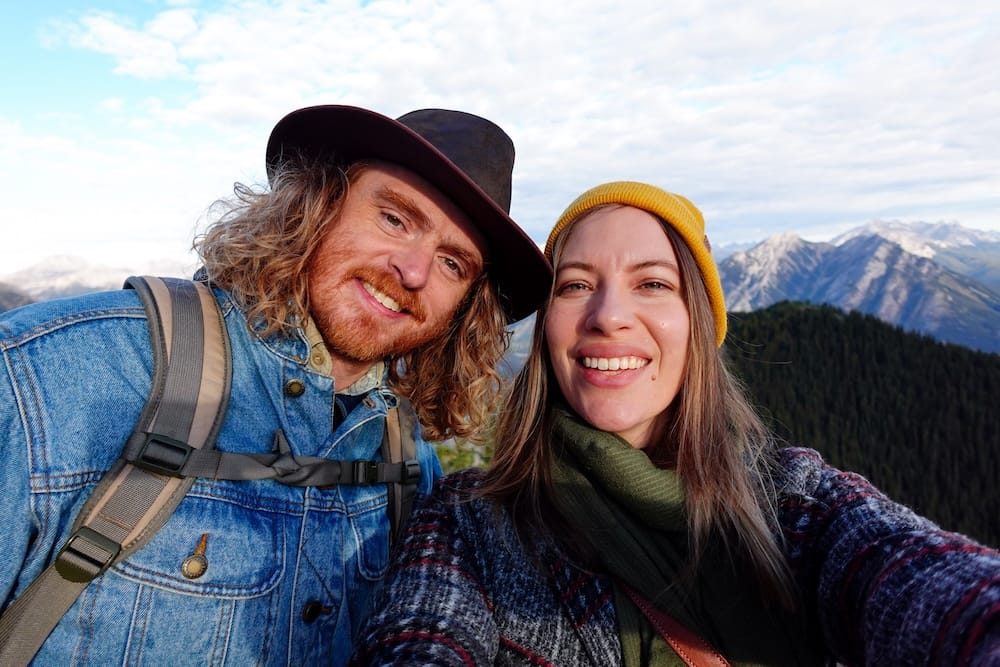
If the Gondola is high on your list and you did not use it elsewhere, this is where I would put it. Audrey and I enjoyed the ride and especially the way the perspective kept opening as we gained elevation. After spending much of the trip down beside rivers and lakes, Sulphur Mountain gives you a broad view over the valleys and surrounding ranges.
The gondola ride itself takes around eight minutes, while a basic visit including the summit area and boardwalk is closer to an hour and a half. That makes it a meaningful addition without automatically swallowing the day. If you decide it belongs in your Day 3, you can check current Banff Gondola tickets and availability.
Just remember that taking the Gondola and doing every possible thing at the summit are not the same commitment. The summit boardwalk includes 368 shallow stairs each way, so somebody who is perfectly comfortable riding the Gondola may have no interest in walking the whole thing.
I would also keep it optional because timed tickets remove some of Day 3’s flexibility. If Lake Minnewanka looks fantastic and everybody wants to linger, that is much easier when you do not have a reservation silently threatening you from later in the afternoon.
Day 3 should remain looser than the lake day and substantially easier logistically than whatever comes next. If Minnewanka and Cascade Ponds are enough, let them be enough.
Day 4: Choose one big excursion
This is the day that changes a four-day Banff trip most dramatically. You have already spent three days experiencing different parts of Banff itself, so now I would use the remaining day to expand the geographical scale of the trip.
For me, the two strongest choices are Columbia Icefield via the Icefields Parkway and Yoho National Park. We have done both, and I would not try to squeeze them together. They answer different travel priorities, and either one is large enough to deserve the day.
Option 1: Columbia Icefield and the Icefields Parkway
Choose Columbia Icefield if the idea of a long mountain road, increasingly huge scenery and a glacier-centred experience is one of the reasons you came to the Canadian Rockies.
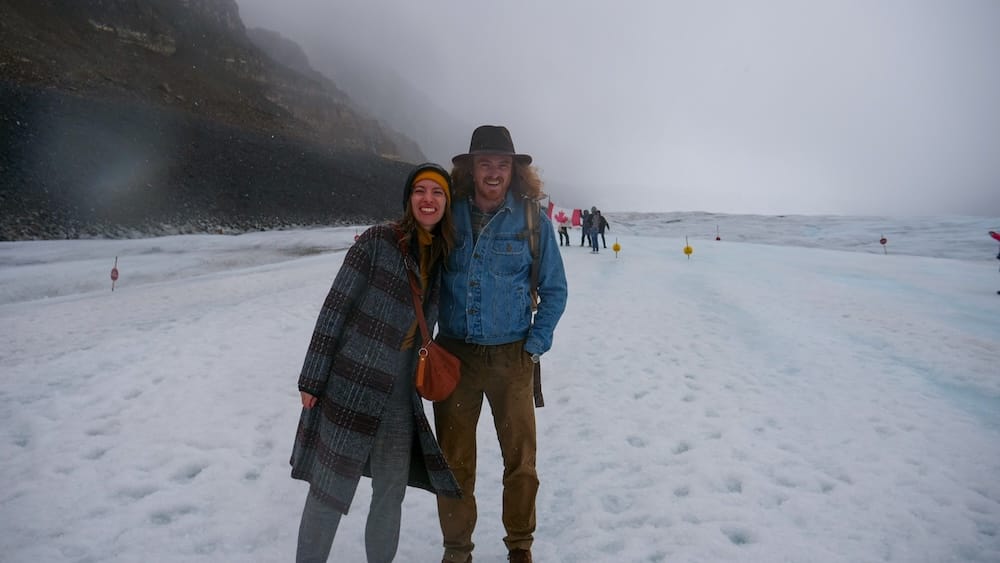
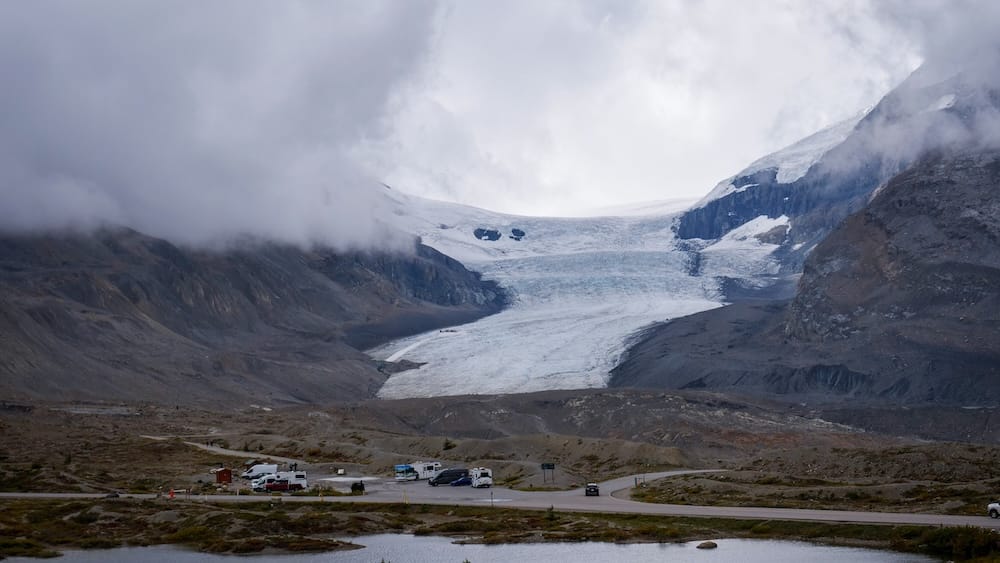
Our trip began in Banff and followed the Icefields Parkway north. The road itself became part of the experience long before we reached the glacier, with scenic stops and constantly shifting weather as the mountains seemed to keep getting larger. Eventually we reached the Columbia Icefield area and took an Ice Explorer onto Athabasca Glacier.
This is not a little detour. A current guided return trip from Banff operates at roughly an eleven-hour scale. If you self-drive, expect around two and a half hours each way between Banff and the Columbia Icefield area before adding scenic stops or a booked glacier experience, and the current glacier-and-Skywalk experience itself takes roughly another two and a half to three hours.
If you would rather hand over the driving, there is a current Banff-origin day trip that includes return transportation, the Ice Explorer, Glacier Skywalk and stops along the Icefields Parkway. We did the Columbia Icefield on an earlier sponsored trip, but I would not pretend this exact current booking is the same product we used. You can check the current Athabasca Glacier and Columbia Icefield day trip from Banff if avoiding a long self-drive is part of the appeal.
If this is your Day 4, it really is Day 4. I would not describe Columbia Icefield as something to add “if you have time” after another sightseeing day.
The weather deserves respect too. On our trip, Audrey ended up back in the vehicle with hands so cold she could barely move them while snow and ice pellets hit us in early September. A few hours later, conditions looked completely different, and she still thought the experience was amazing.
That combination sums up the Columbia Icefield rather well for me: extraordinary scenery coupled with an environment that does not care what month appears on your calendar. Cold rain, wind and even wet snow can occur around the Icefield during the warmer season, so bring proper layers rather than assuming Banff-town weather tells you what conditions will be like much farther north and higher up.
There is also an important geographic distinction. Athabasca Glacier and the main Columbia Icefield visitor area are in Jasper National Park. You are taking a day trip from Banff, not visiting an attraction located in Banff town or pretending the entire Icefields Parkway belongs to Banff National Park.
If you visit independently, stay behind glacier barriers unless you are participating in an authorized experience. Crevasses can be hidden, and this is not a normal hiking surface where wandering off on your own is a clever shortcut.
Columbia is the clearer choice if the glacier itself is central to your trip or the long Icefields Parkway drive feels like part of the reward. If roughly five hours of return driving already sounds exhausting, that is useful information too.
Option 2: Spend the day in Yoho National Park
Yoho gives you a very different kind of expansion day. Instead of one major glacier-centred experience at the far end of a long scenic corridor, you move among several distinct landscapes: waterfalls, lakes, rivers, rock formations and mountain valleys.
We visited Yoho on a private multigenerational day with Audrey’s dad and Aurelia. Our original route also included Lake Louise and Moraine Lake before we crossed into British Columbia, so it was ambitious; we were picked up around 9:00 in the morning and were still out exploring at about 7:00 that evening.
It worked for us largely because we controlled the pace. We could stop when somebody was hungry, take a break when Audrey’s dad needed one and deal with toddler logistics without worrying that forty strangers were staring at their watches while we changed Aurelia.
For this four-day itinerary, however, I would not recreate our exact route because you already visited Lake Louise and Moraine Lake on Day 2. There is no reason to repeat them simply because a tour product happens to bundle them together. Make Day 4 about Yoho itself.
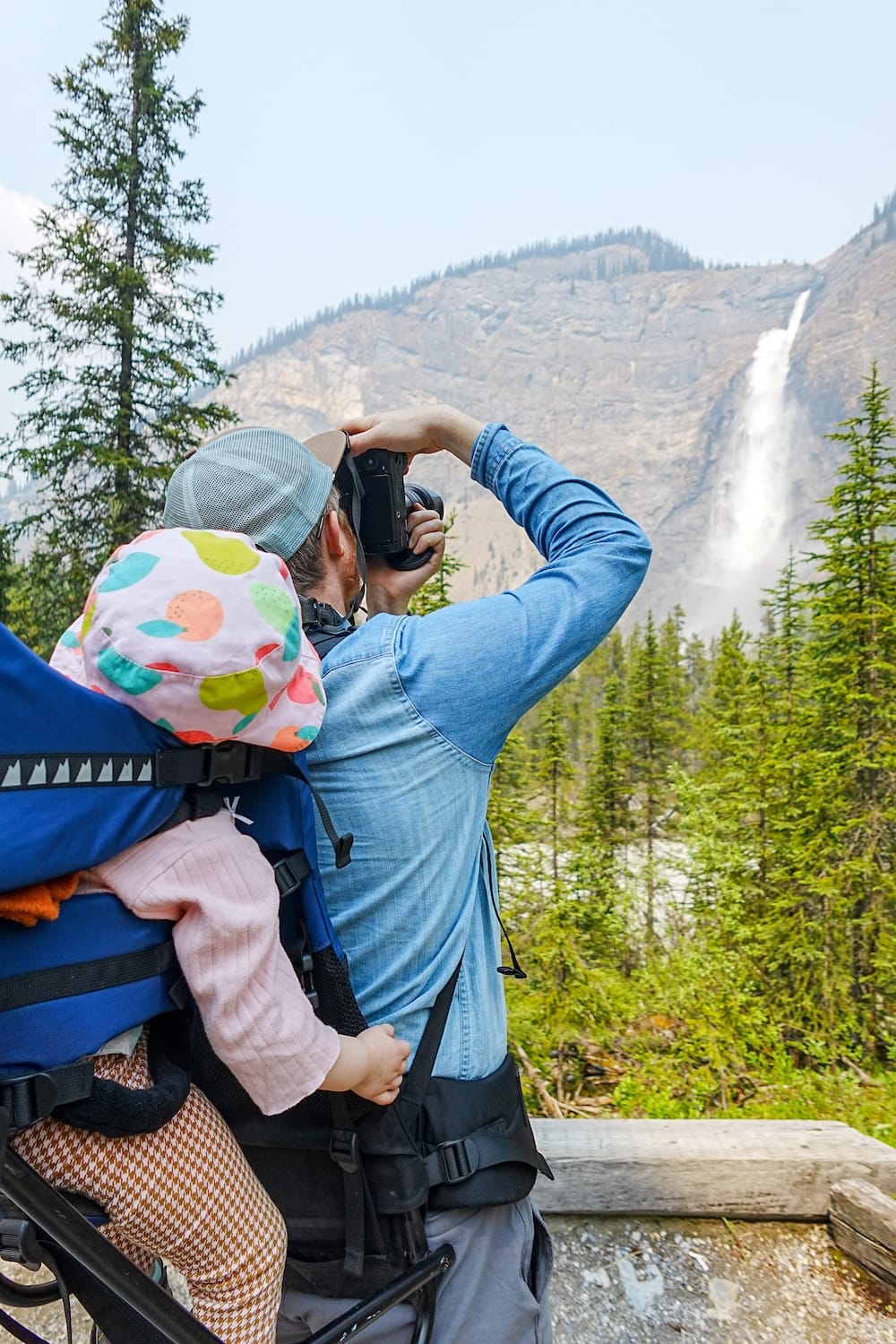
Takakkaw Falls would be one of my priorities when Yoho Valley Road is open. The walk from the parking area is only about 0.9 kilometres each way and roughly 30 minutes return, so the physical commitment is modest compared with the scale of the waterfall and valley. The catch is seasonal access: Yoho Valley Road normally operates from around mid-June through mid-October, weather permitting.
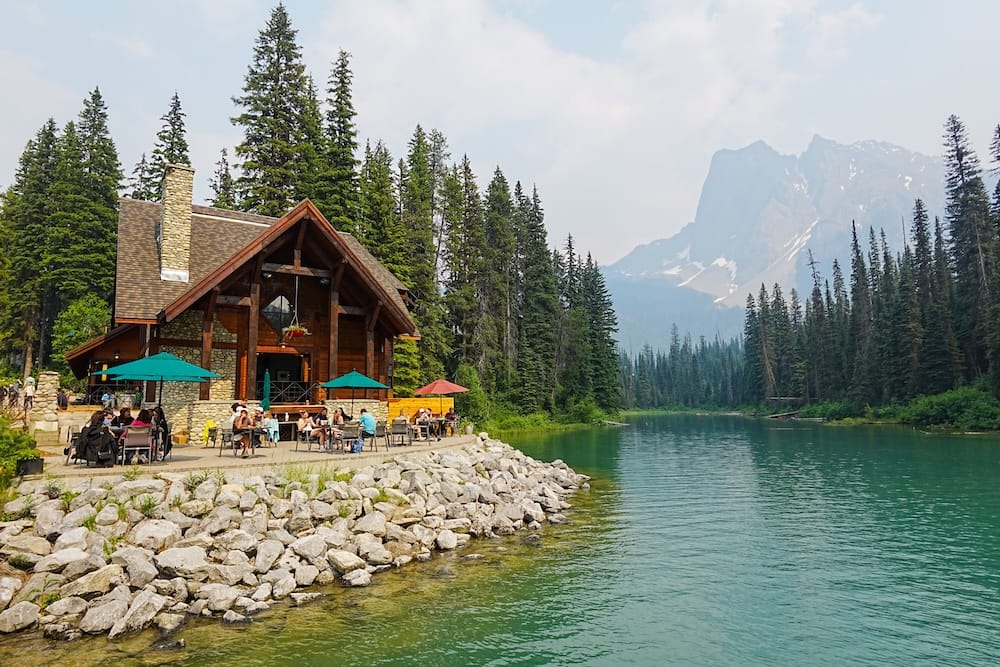
Emerald Lake was another highlight for us and one of the places we had not reached on our earlier Rockies trips. Seeing that vivid green water gave the day yet another visual identity after all the turquoise we’d already encountered around Banff. Natural Bridge is an easy geographic addition, but I would still avoid turning Yoho into a speed run where every named attraction becomes compulsory.
If you prefer not to self-drive, there is a current small-group option from the Banff area built around Emerald Lake, Natural Bridge and Takakkaw Falls rather than repeating the entire Lake Louise and Moraine Lake day. We did not take this exact tour; our own Yoho experience was private and followed a different route. You can see the current Emerald Lake and Takakkaw Falls small-group tour if a guided Yoho day fits you better.
Parking at Emerald Lake and Takakkaw Falls can fill quickly during busy periods, and the route becomes much less enjoyable if the whole day is spent calculating how rapidly you can exit one vehicle and re-enter it.
Yoho’s advantage is variety. Let that be the point.
Columbia Icefield or Yoho: which should you choose?
I would make this decision based on the kind of fourth day you want, not which destination looks more impressive in somebody else’s photograph.
| If you care most about… | Columbia Icefield | Yoho National Park |
|---|---|---|
| Overall day style | Long scenic corridor with a glacier-centred goal | Multi-stop day of lakes, waterfalls and mountain scenery |
| Driving commitment | Highest; roughly 2.5 hours each way if self-driving | Lower overall, though still a substantial excursion |
| Paid centerpiece | Strong if you want the Ice Explorer/glacier experience | Not necessary for an independent sightseeing day |
| Walking | Relatively low for the classic paid experience, but with outdoor glacier exposure | Several short walks spread across different stops |
| Weather exposure | Particularly strong around the Icefield | Variable mountain weather across several elevations |
| Main seasonal issue | Glacier products operate seasonally | Takakkaw Falls access depends on seasonal Yoho Valley Road |
| Best fit | Glacier experience and Icefields Parkway scenery are priorities | You prefer several different landscapes rather than one major centerpiece |
| Biggest trade-off | Very long day and lots of road time | More stop-to-stop movement and possible parking friction |
Neither is the universally correct fourth day. If you have been dreaming about standing on a glacier, I would choose Columbia Icefield and stop trying to talk yourself into a more efficient itinerary. That is clearly your priority. If you would rather spend the day moving between several different landscapes and like the idea of Emerald Lake and Takakkaw Falls more than several additional hours of highway, Yoho makes a lot of sense.
The mistake is not choosing the “wrong” one; it is trying to do both because four days suddenly made you feel invincible.
The order can change, but the balance should not
I have written this as Day 1 through Day 4 because numbers make itineraries easier to follow, but I would treat the order as movable. Lake Louise and Moraine Lake are usually the first day I would anchor because their transport system requires the most advance planning. If your reservation lands on Day 3, then make that Day 3. If you book Columbia Icefield on the second day because availability is better, move the excursion there.
The same applies to the Gondola. If the summit is buried in cloud at the time you hoped to go and your booking can be adjusted, there is little reason to behave as though the itinerary has been carved into a stone tablet.
What I would not do is use weather uncertainty as an excuse to create four supposedly interchangeable days with seventeen backup plans each. Reservations eventually remove some flexibility, and mountain forecasts can change quickly enough that you will drive yourself mad trying to optimize every cloud.
This is also where four days still differs from five. With five, you begin to gain genuine weather margin. With four, every major day still has a job. Move the jobs when necessary, but keep the balance.
What I would leave out with four days
The easiest way to ruin this itinerary is to notice how much I have not included.
Johnston Canyon is not in my default four days. Neither are Kananaskis, Kootenay National Park or a separate Canmore sightseeing day. I would not push farther into Jasper beyond what naturally belongs to the Columbia Icefield excursion, and I definitely would not attempt Columbia Icefield and Yoho.
My six-day Banff horse trek was one of the most memorable experiences I have had in the Canadian Rockies, and it is spectacularly useless inside a four-day first-visit itinerary unless you have somehow discovered a calendar with ten-day weeks.
All of these places and experiences can be worthwhile without belonging in this particular trip. That distinction matters because travel planning often gets trapped in the question of whether something is “worth it,” when the more useful question is whether it is worth one of these four days.
Those are very different standards.
Are four days enough for Banff?
For a first visit, I think four days can be excellent. You have enough time to experience Banff town instead of simply sleeping there, give Lake Louise and Moraine Lake the attention they deserve, spend another day seeing a different side of Banff National Park around Lake Minnewanka and Cascade Ponds, and then expand outward for one genuinely big excursion without dismantling everything that came before it.
That is a substantial trip, but it is not a complete one. Audrey and I already tested that idea accidentally: after four action-packed days, we were still talking about everything we had not done and how easily we could return for an entirely different visit.
I no longer see that as a failure of planning. It is actually the reason I would plan these four days with more restraint now. Give the town its day and the lakes theirs. Spend another day close enough to Banff that you are not constantly racing across the map, then choose Columbia Icefield or Yoho and let the final day become something much bigger.
Four days does not give you enough time to finish Banff. It gives you enough time to stop trying.
Frequently Asked Questions
Are four days enough for a first visit to Banff?
For a first visit, I think four days can be excellent. It gives you enough time for Banff town, Lake Louise and Moraine Lake, a local Banff National Park day, and one major excursion without pretending you have finished the destination.
How would I split four days in Banff?
I would give Day 1 to Banff town, the Bow River and Bow Falls; Day 2 to Lake Louise and Moraine Lake; Day 3 to Lake Minnewanka, Cascade Ponds and optionally the Banff Gondola; and Day 4 to either Columbia Icefield or Yoho National Park.
Can I drive my own car to Moraine Lake?
No. Moraine Lake Road is closed to ordinary personal vehicles, so you need eligible transport such as the Parks Canada shuttle, the seasonal Roam Super Pass from Banff, or another current commercial option.
How much time should I allow for Fairview Lookout at Lake Louise?
The trail is about 1.2 kilometres each way and takes roughly 45 minutes return. I found it steep enough to take seriously, especially while carrying Aurelia, but the elevated view changed my impression of Lake Louise.
Should I choose Columbia Icefield or Yoho National Park for Day 4?
Choose Columbia Icefield if the glacier experience and a long Icefields Parkway drive are priorities. Choose Yoho if you prefer a multi-stop day built around places such as Takakkaw Falls, Emerald Lake and Natural Bridge.
How much time does a Columbia Icefield day take from Banff?
A current guided return trip from Banff operates at roughly an eleven-hour scale. If you self-drive, expect around two and a half hours each way before adding scenic stops or a booked glacier experience.
What time of year works best for this four-day Banff itinerary?
This exact version works most naturally from roughly mid-June through early October, when the regular Moraine Lake transport system is operating and Yoho Valley Road is normally open to Takakkaw Falls, weather permitting.
This guide is also available in Spanish. [Leé la versión en castellano: Itinerario de 4 días en Banff: cómo equilibrar el pueblo, los lagos y una gran excursión]
This article contains affiliate links. If you book through one of these links, I may earn a commission at no extra cost to you.