
The biggest advantage of having five days in Banff is not that you can squeeze one more attraction onto the itinerary. It is that you finally have enough breathing room to stop treating every day like a fixed appointment with the mountains.
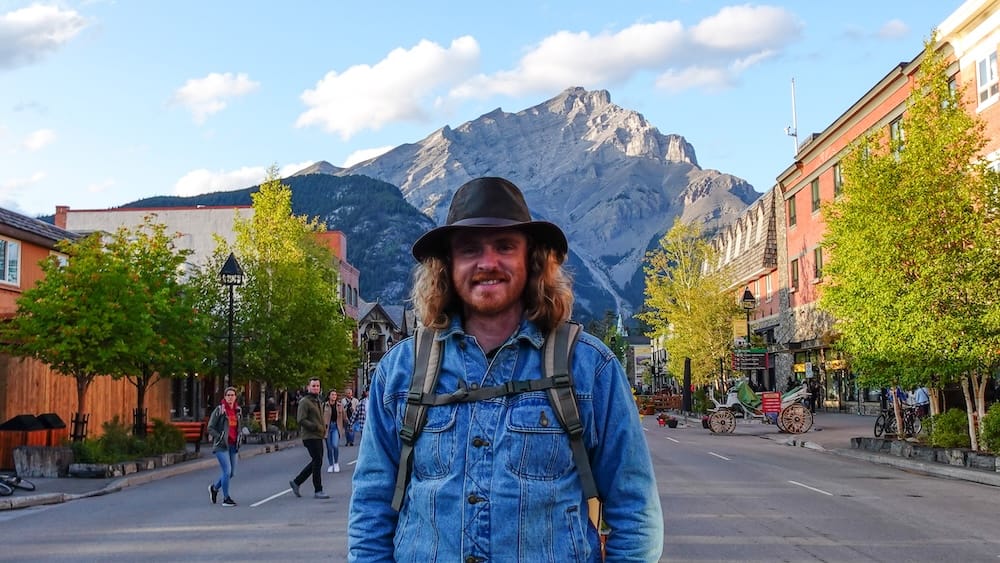
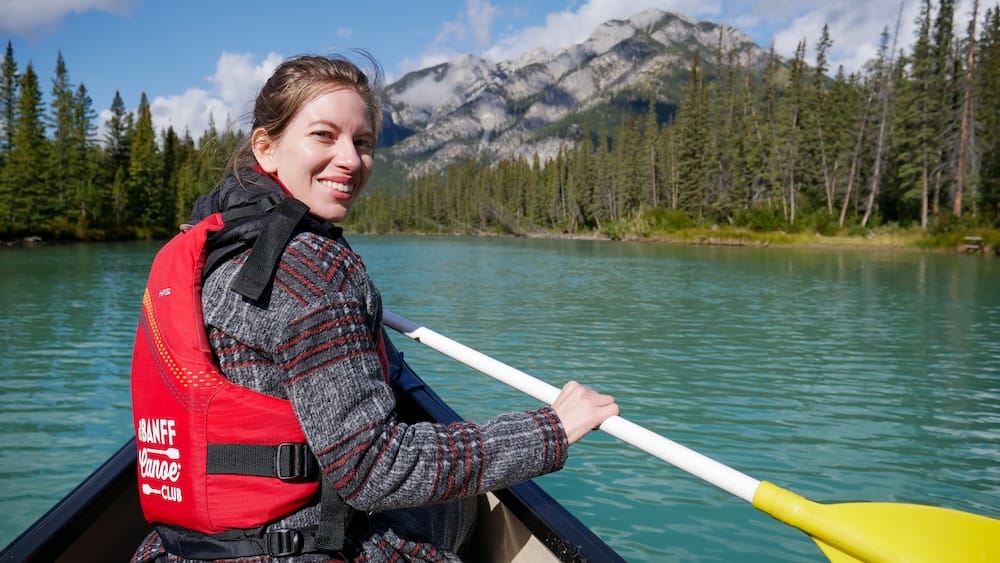
Audrey and I have had Banff weather flip on us in both directions. Before our canoe trip on the Bow River, it had been raining less than five minutes earlier and then suddenly we were walking under blue sky and sunshine, joking that we were getting a master class in mountain weather. On another trip, the clouds cleared almost as we arrived at Lake Louise. Then there was Columbia Icefield in early September, where we got fog, snow and ice pellets and Audrey climbed back into the vehicle saying she could barely move her frozen hands.
Those experiences are a big reason I like five days for a first Banff trip. Four days can already give you a very strong itinerary: time in Banff town, Lake Louise and Moraine Lake, another day exploring locally and one major excursion. The fifth day should not simply become an excuse to pile another distant destination onto the schedule. I would use it to make the other four days less brittle.
This particular itinerary works most naturally from roughly mid-June through early October, when the regular Moraine Lake transport system is operating and seasonal roads such as the one into Yoho Valley toward Takakkaw Falls are normally open, weather permitting. It also assumes five proper sightseeing days. An arrival evening and a departure morning do not magically fuse together into another full day because Booking.com says you stayed five nights.
For this exact plan, Banff town is the simplest base because Day 1 starts there and several transit and tour options depart from town. We have not personally stayed in a Banff town hotel on the trips behind this guide, so I would not pretend to have a favourite property; if you are choosing your base now, you can compare current Banff accommodation options by location, dates and budget.
Why five days changes the way I would plan Banff
After one particularly busy Banff trip, Audrey and I wrapped up four action-packed days feeling like we had barely scratched the surface. We weren’t disappointed with what we’d done; if anything, the opposite was true. There was simply enough left that we could easily imagine coming back and building another trip around completely different experiences.
That conclusion matters here, but I wouldn’t use Day 5 merely to attack the remaining list harder. Once you have five days, the more valuable change is that you can stop demanding perfect execution from every single morning.
I would build the trip around four strong sightseeing systems and keep one worthwhile day comparatively loose. That loose day still needs substance—I am not suggesting you pay Banff accommodation prices to sit around waiting for a cloud to move—but it should be capable of expanding, shrinking or changing position when the rest of the itinerary needs help.
The distinction I keep coming back to is weather sensitivity versus booking flexibility.
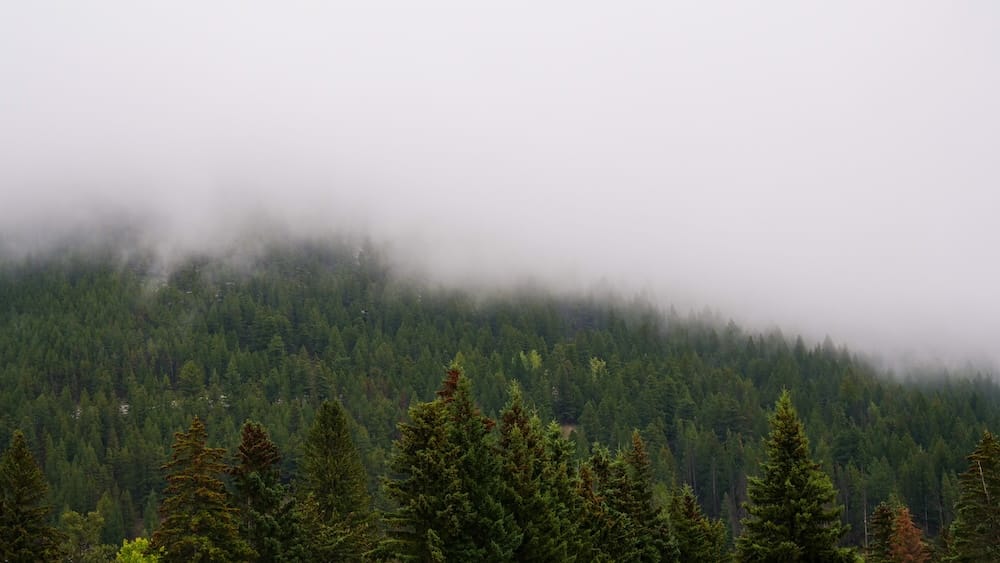
Lake Louise and Moraine Lake are highly visual experiences, yet their current access system means you cannot necessarily wake up, spot sunshine and casually move your visit three hours later. The Banff Gondola makes even more sense when the mountains are visible, but timed tickets create another commitment. Columbia Icefield can have radically different weather from Banff town, and by the time you’ve committed to a long excursion north, it is hardly the kind of outing you reshuffle over breakfast because the cloud icon looks mildly offensive.
Banff town, Johnston Canyon and some of the more local sightseeing can absorb imperfect weather much more gracefully. Five days works best when you understand those differences before you start locking the calendar down.
Think in five trip systems, not five sacred calendar days
My default structure would be:
- Day 1: Banff town, Bow River, Bow Falls and a flexible local activity
- Day 2: Lake Louise and Moraine Lake
- Day 3: Lake Minnewanka, Cascade Ponds and possibly the Banff Gondola
- Day 4: Columbia Icefield or Yoho National Park
- Day 5: Johnston Canyon and flexible local depth
I would absolutely use that as my starting point, but I would not become sentimental about the numbers. If your best Lake Louise transport option lands on Day 3, then Day 3 becomes the lake day. If Sulphur Mountain looks completely buried in cloud but tomorrow looks promising, the Gondola may move. If a wet, grey morning arrives when you had planned something highly dependent on distant views, Johnston Canyon or Banff town can slide into that space.
What I would protect are the systems themselves. Lake Louise and Moraine Lake belong together because their access is intertwined. Columbia Icefield deserves its own excursion day because the drive and glacier experience are simply too substantial to tuck around other major sightseeing. Banff town works as a flexible unit because you can spend half a day there or the better part of a full one, mixing outdoor walks, museums, meals and local activities without creating a logistical mess.
That is where the fifth day starts earning its keep.
Which Banff experiences deserve the best weather?
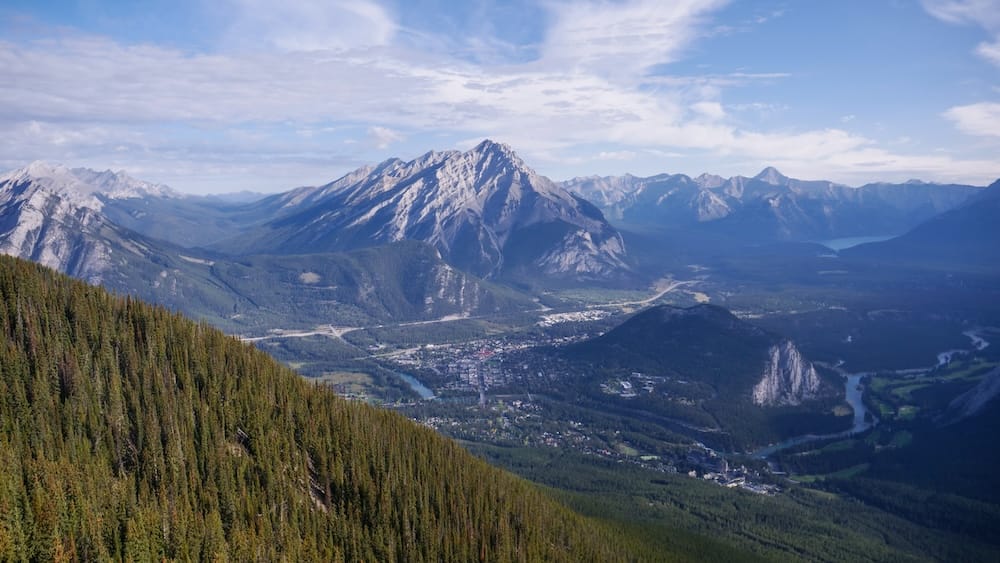
Banff does not need five days of blue sky to be worth visiting. In fact, if that is the standard, you may spend more time staring at weather apps than mountains. Still, some experiences benefit from clear conditions far more than others, and I would use that distinction when deciding whether to swap days.
Protect visibility for Lake Louise, Moraine Lake and the Gondola
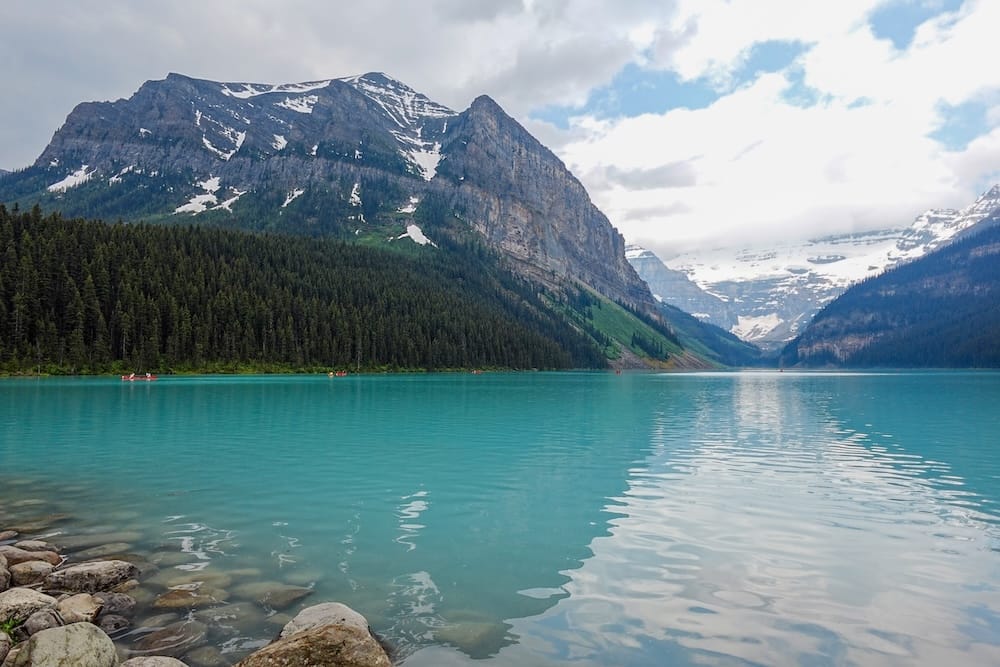
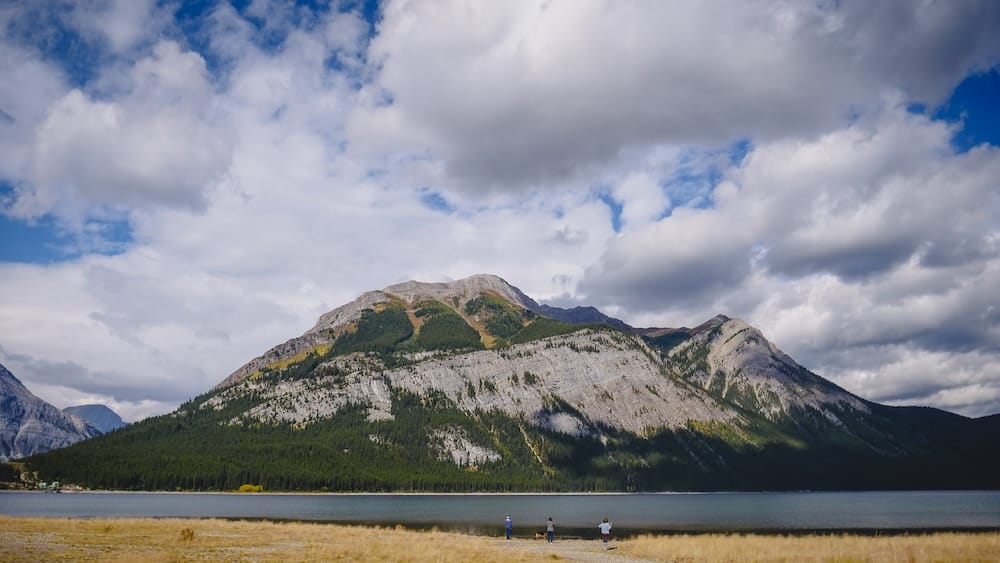
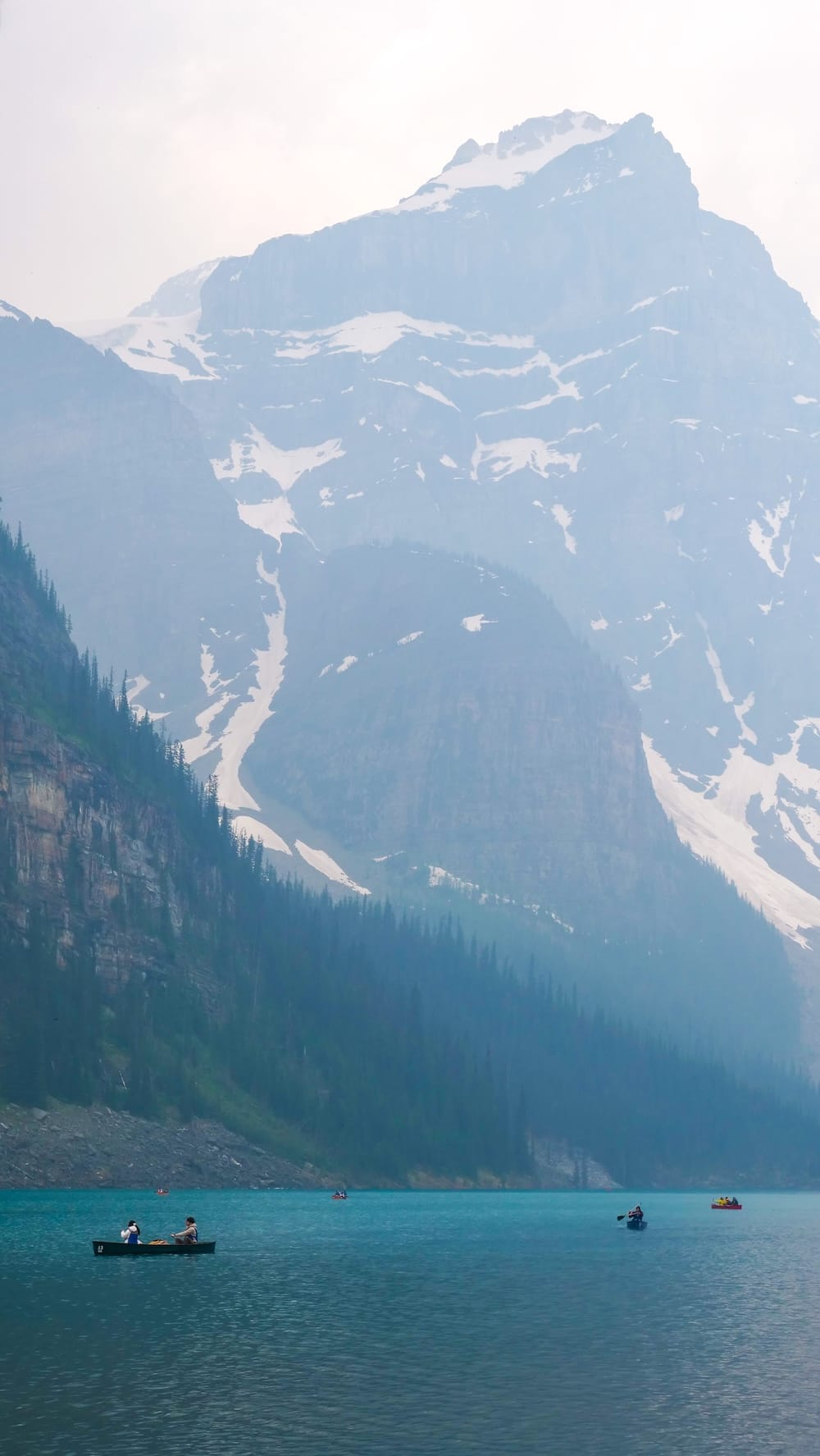
Lake Louise is still beautiful beneath cloud, but our most recent visit improved considerably when the sky cleared. Suddenly the lake, surrounding peaks and glacier all opened up together rather than appearing as isolated pieces through grey weather. We had arrived at exactly the right moment and knew we’d been lucky.
The Banff Gondola is another obvious visibility-dependent experience. Audrey and I had good enough weather to enjoy the wide mountain views from Sulphur Mountain, which was a huge part of why the outing worked for us. If I knew the summit was going to spend an entire day buried in dense cloud and I had a realistic chance to move my ticket, I would seriously consider doing it.
That does not mean I would chase perfect Instagram conditions for five days straight. There is a point where “waiting for better weather” becomes its own form of itinerary sabotage. I would move something when the difference is likely to be meaningful, not because a forecast has one extra cartoon cloud.
Columbia Icefield is a different kind of weather day
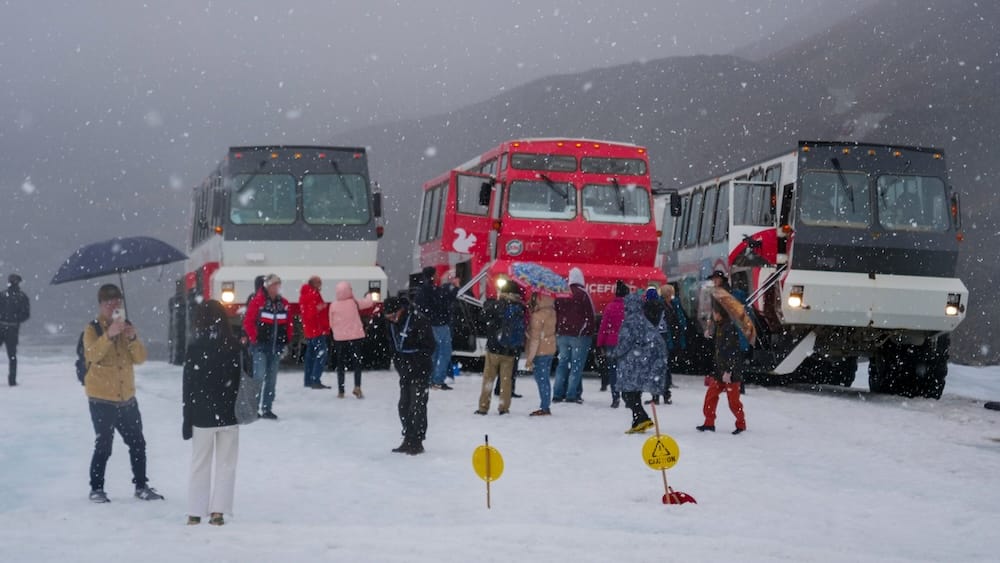
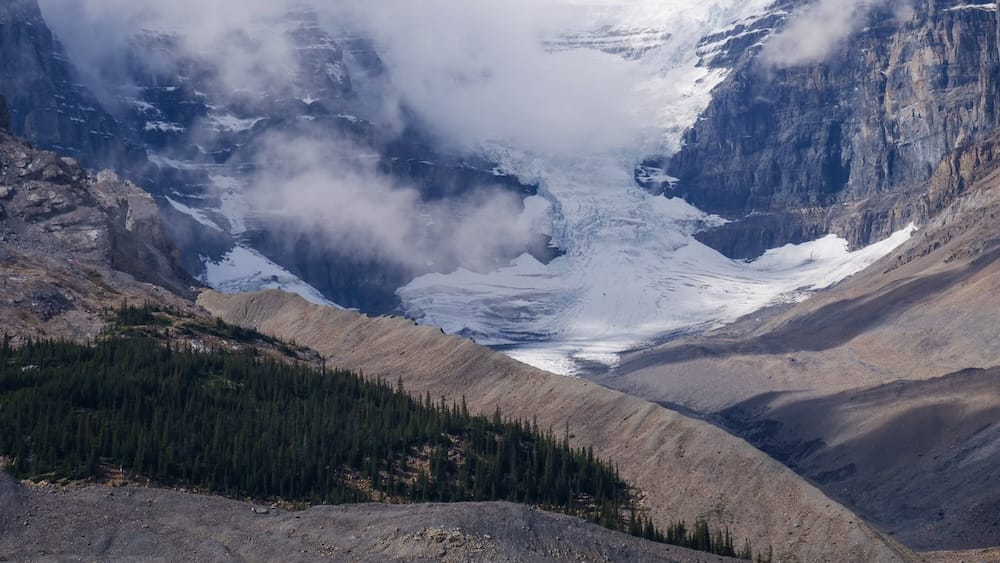
Columbia Icefield taught us not to treat rough weather as automatically bad travel. We visited in early September and got something closer to winter. Audrey came back into the vehicle saying she could barely move her hands, snow was falling, ice pellets were hitting us in the face and low cloud was rolling across the mountains. It was objectively uncomfortable.
She still thought it was amazing. The weather made the place feel harsher and more enormous rather than simply ruining it, which is why I would distinguish between weather that changes the experience and weather that creates an actual access, road or safety problem.
If roads are dangerous, an operator changes service, or park authorities issue an important warning, that is obviously different. But if your entire objection is that it might be cold, cloudy or snowing at Columbia Icefield, I would not automatically abandon the day. We had all of those conditions and still came away impressed.
I also would not use the weather in Banff town as my sole guide to what is happening several hours farther north. The Icefield operates on a different scale of geography and exposure, and our own day made that difference very clear.
Keep a few weather-tolerant options in reserve
Banff town is one of the easiest parts of the trip to move into a mixed-weather period. If conditions are reasonable, walk beside the Bow River or continue toward Bow Falls. If rain becomes more persistent, have a longer meal, visit a museum or spend some time around Banff Avenue. We have literally watched the weather change between activities here, so an ugly morning does not necessarily deserve a full day’s surrender.
Johnston Canyon can also work during cloudy conditions because the experience is focused more on the canyon, trail and waterfalls than enormous distant mountain views. Trail conditions still need to be safe, but you are not paying for a giant panorama that disappears into a cloud bank. That makes it extremely useful in a five-day plan.
My base five-day Banff itinerary
Day 1: Banff town, the Bow River and one flexible local activity
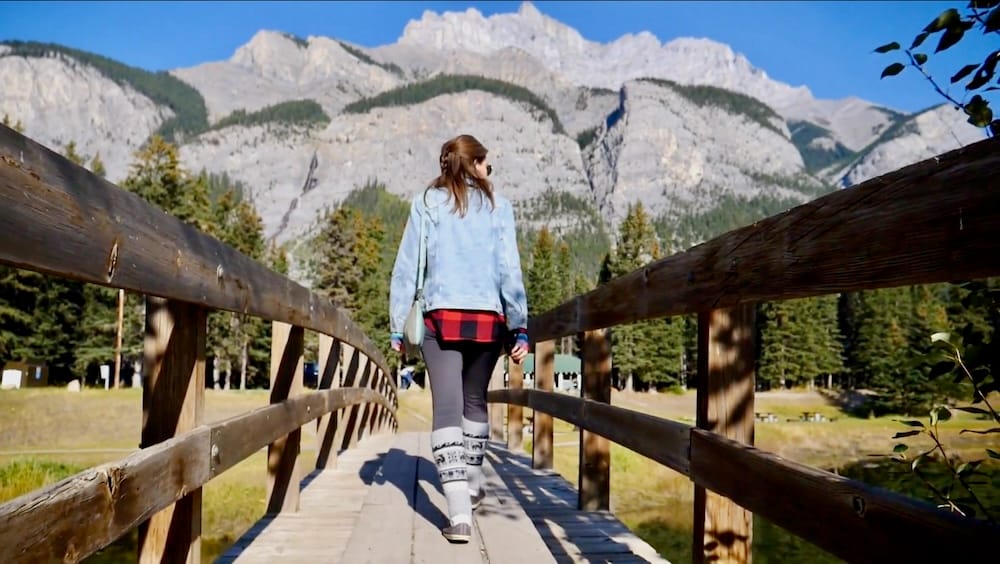
I would start closer to home base rather than immediately launching toward the biggest names on the map. Walk beside the Bow River, continue toward Bow Falls if you feel like extending the outing, spend some time around Banff Avenue and leave room for a garden, museum or local activity that genuinely interests you.
We have enjoyed Banff much more when we’ve stopped treating the town as a place to sleep between attractions. The Bow River alone can take up far more of a morning than expected because there is no pressing reason to hurry. You walk for a while, sit down, cross a bridge, continue into another trail, stop for lunch and suddenly the timetable you thought you needed feels fairly pointless.
If you want a booked activity, our Big Canoe trip fits the scale of this day nicely. Audrey and I paddled upstream with the group, then spent more of the return floating downstream and taking in the scenery. It felt like a real activity without consuming the entire day, which is exactly what I want at the beginning of a five-day itinerary.
Our original canoe experience was sponsored on an earlier Banff trip, so I would separate what we did then from whatever version you book today. The current Big Canoe River Explorer runs for about 1.5 hours and does not require previous paddling experience; if it suits the pace you want for Day 1, you can check current Big Canoe River Explorer availability.
More importantly, Day 1 is easy to move. If the forecast suddenly gives you an exceptional visibility window for something else, Banff town does not throw a tantrum because you’ve changed plans.
Day 2: Lake Louise and Moraine Lake
This is one of the first days I would organize because current access makes improvisation difficult. Moraine Lake Road is closed to ordinary personal vehicles, so you need an eligible transportation option, and the Parks Canada shuttle system releases inventory partly in advance and partly closer to departure.
If the public shuttle system does not work for your dates, there are commercial departures from Banff as well. One current option gives roughly 75 minutes at Lake Louise and 75 minutes at Moraine Lake on a six-hour round trip from Banff. We have not used this exact shuttle, and I would consider 75 minutes at Lake Louise fairly tight if Fairview Lookout is one of your priorities because the hike itself takes around 45 minutes return. If your main problem is simply securing transport to both lakes, you can check the current Lake Louise and Moraine Lake shuttle from Banff.
Once you have your transport, treat Lake Louise and Moraine Lake as a full sightseeing system rather than two quick stops. The shuttle process itself takes time. During busy periods, waits can reach 30 minutes or longer, and at high ridership they can stretch toward an hour. That is real itinerary time, especially once meals, bathrooms, transfers and normal human dawdling join the party.
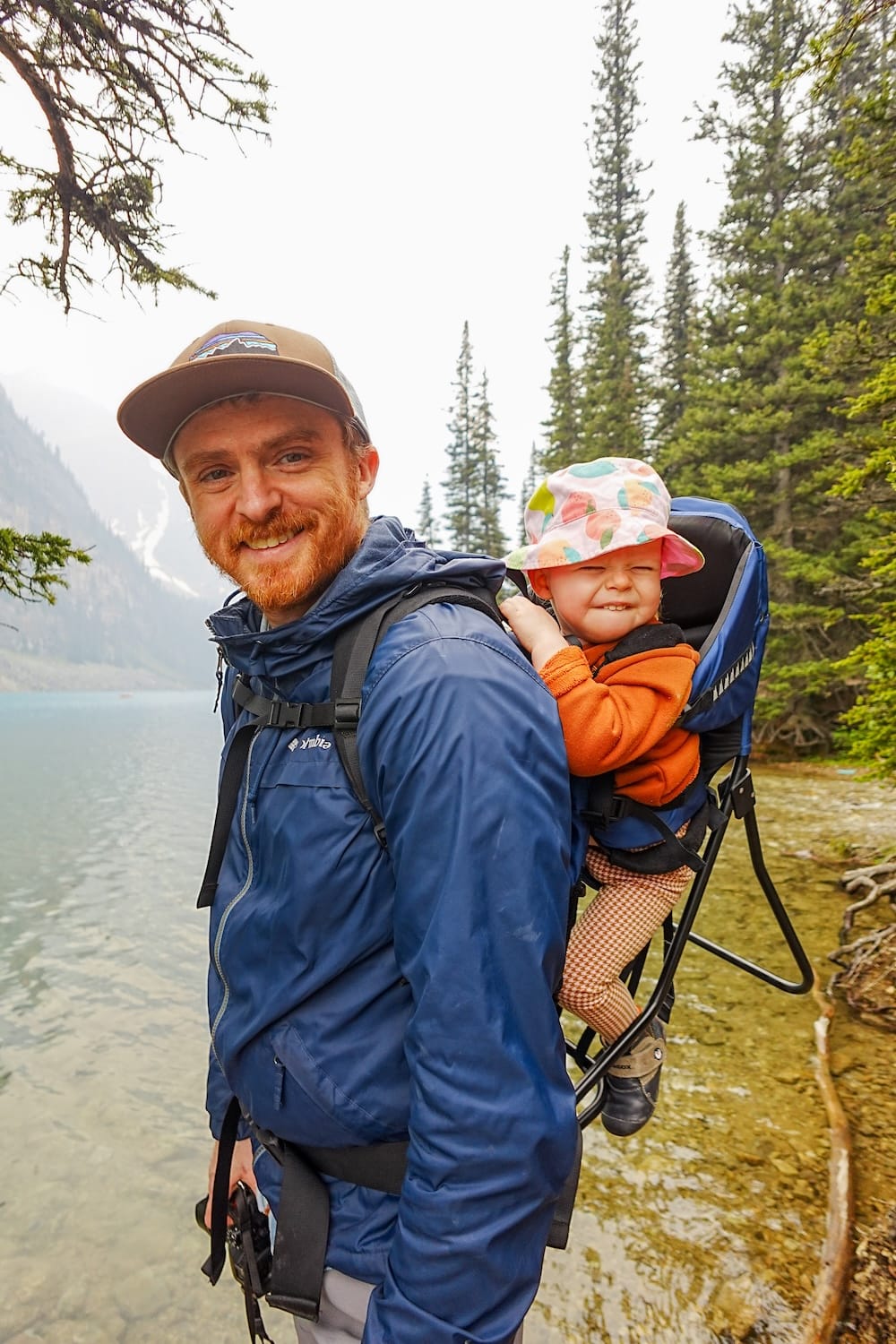
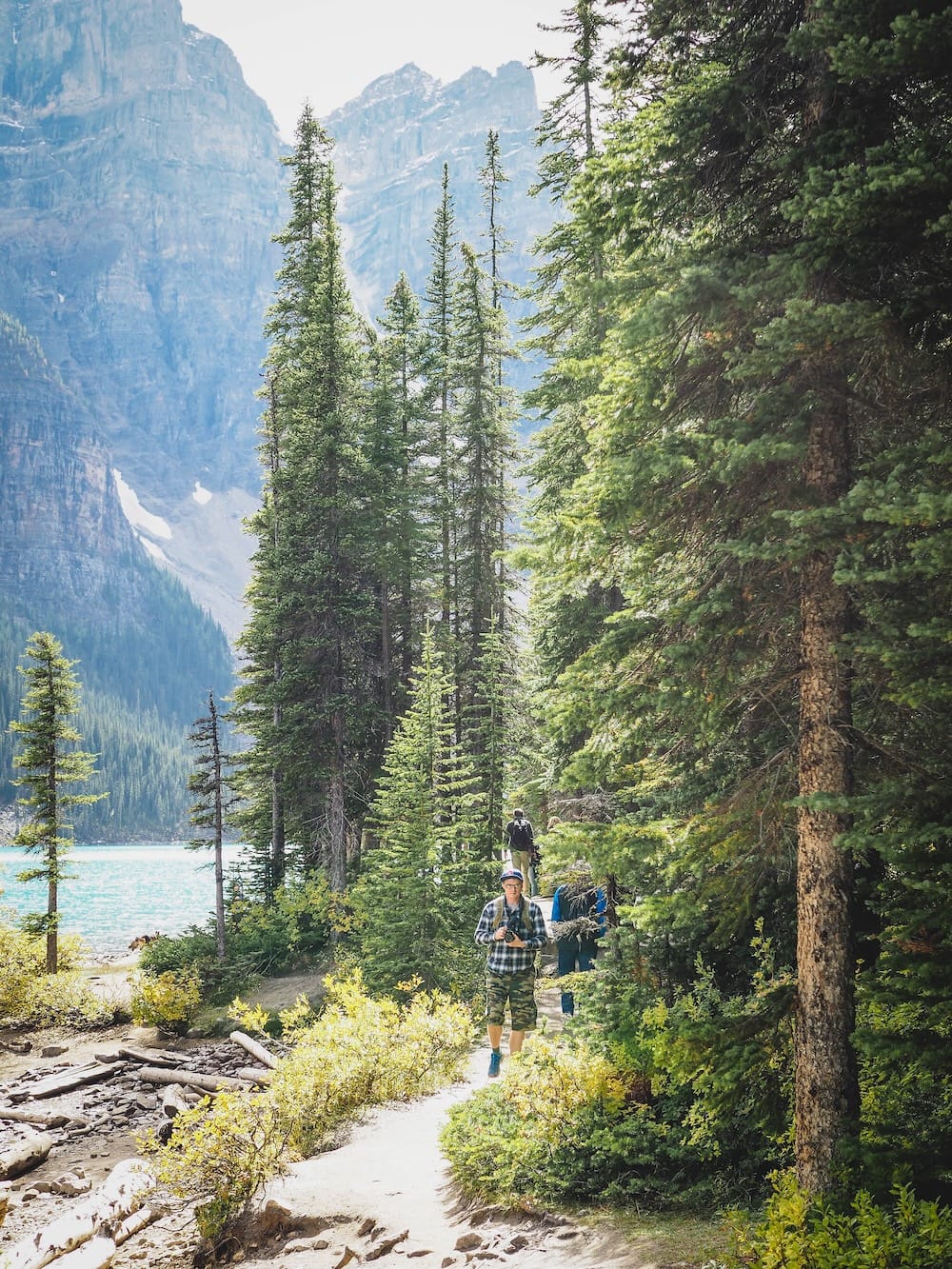
At Lake Louise, I would spend some time along the shore and then consider Fairview Lookout if your group is comfortable with the climb. The trail is only about 1.2 kilometres each way, but I found it steep enough to take seriously while carrying Aurelia. She slept through a respectable portion of my effort, which was an excellent arrangement for one of us. From the top, however, the lake finally regained a sense of scale after the crowding along the main shoreline.
At Moraine Lake, the Rockpile is much shorter but was dramatically busier during our visit. I joked at the time about how many more people seemed to be up there compared with Fairview, but I still thought the elevated view was worth doing.
This is also where the five-day flexibility idea runs into reality. Parks Canada shuttle reservations can currently be changed until one hour before the booked departure window, but changes involve a fee and depend on another suitable time actually being available. So yes, in theory you can move the lake day when the weather looks much better elsewhere. In practice, there needs to be somewhere available to move it.
Day 3: Lake Minnewanka, Cascade Ponds and possibly the Banff Gondola
After the logistics of the headline lake day, I would make Day 3 more local and adjustable.
We first visited Lake Minnewanka and Cascade Ponds on an earlier family trip, and I like them here because neither has to become a military operation. Lake Minnewanka gives you a huge mountain-lake setting without reproducing the entire Lake Louise/Moraine system, while Cascade Ponds can be as simple as a short stop, picnic or walk.
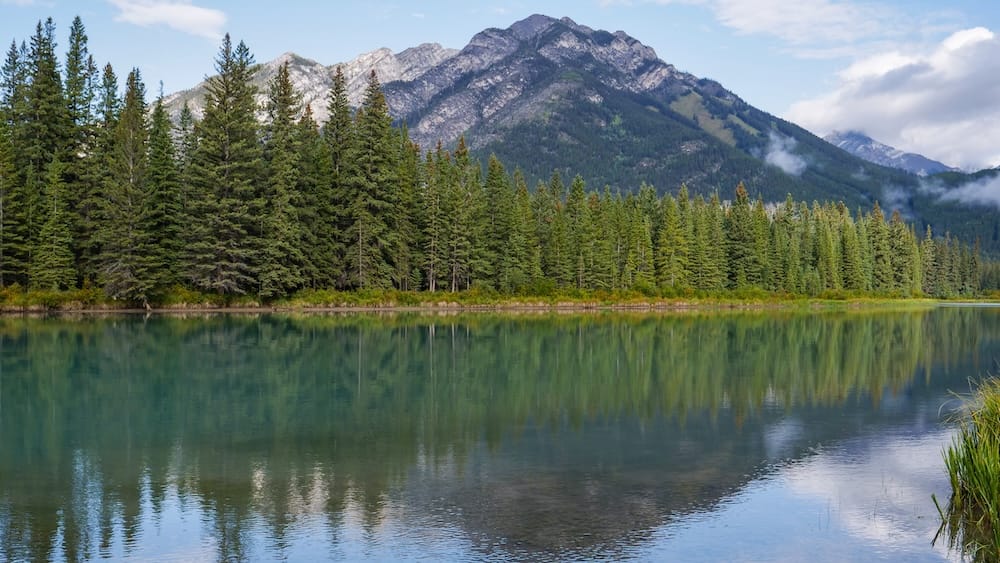
Our own Cascade Ponds visit was almost absurdly peaceful, with glassy water and hardly anyone around. I would not promise that version today. If you arrive and it is packed, there is no requirement to circle a parking lot for half an hour in defence of a picnic you invented three months earlier.
During the warmer part of the year, Roam Route 6 also connects Banff with Lake Minnewanka and Cascade Ponds, giving you a useful option if you would rather leave the car behind.
The Banff Gondola is the part of this day that needs more thought. The ride itself is short, but once you add the summit viewpoints and boardwalk you are giving it a meaningful block of the day. Audrey and I really enjoyed the wider mountain perspective from Sulphur Mountain after spending so much of our time at river and lake level.
It is also a perfect example of weather sensitivity colliding with booking rigidity. Current Gondola tickets are non-refundable, and straightforward online changes are easiest more than 48 hours before the visit. Inside that window, changes become less certain.
If securing a very specific time matters most to you, book accordingly. If visibility matters more, consider leaving yourself as much flexibility as your travel dates allow. If the Gondola remains one of your priorities, you can check current Banff Gondola tickets and availability before deciding how firmly to anchor it in the itinerary.
There is no clever hack where you get unlimited availability and complete spontaneity at the same time.
Day 4: choose Columbia Icefield or Yoho National Park
I still would not make both compulsory just because you have five days. One major excursion is enough. The extra day is more valuable as breathing room than as a second long-distance endurance test.
Columbia Icefield
Choose Columbia Icefield if the Icefields Parkway and a glacier experience rank near the top of your Canadian Rockies priorities.
The drive from Banff to Columbia Icefield is roughly two and a half hours before you start adding scenic stops. The classic glacier experience itself takes roughly another two and a half to three hours. Once you include the return drive, meals, bathrooms and whatever scenic pauses happen along the Icefields Parkway, you are dealing with a genuinely long day.
Audrey and I did a sponsored Columbia Icefield excursion on an earlier Banff trip, and even with the miserable cold around Athabasca Glacier it stood out as one of the most distinctive experiences of that visit. The combination of the drive, huge mountain scenery and finally reaching the ice made the commitment feel justified.
If you would rather not handle the long drive yourself, a current Banff-origin day trip runs on roughly an eleven-hour schedule and combines the Icefields Parkway journey with the Athabasca Glacier experience. Our sponsored trip was an earlier experience, so I am not claiming this is the exact product we took, but it solves the same basic problem of turning a very long driving day into a guided excursion. You can check the current Athabasca Glacier and Columbia Icefield day trip from Banff.
What Columbia Icefield did not feel like was a flexible little activity I would happily move three times. If this is your excursion day, check the specific road conditions and current attraction status rather than relying on the Banff forecast. Once it is booked, treat it as one of the firmer anchors of the trip.
Yoho National Park
Yoho creates a very different excursion. On our recent multigenerational trip, we moved between places including Takakkaw Falls, Emerald Lake and Natural Bridge, so the appeal was not one huge central activity but the variety throughout the day. I had been through the Canadian Rockies multiple times before that trip and still had new places opening up one after another.
For this five-day itinerary, I would not reproduce our exact private-tour route because ours also included Lake Louise and Moraine Lake. You already visited those on Day 2; there is no prize for doing them again because somebody managed to package them into the same tour.
If Takakkaw Falls is central to your Yoho plans, remember that Yoho Valley Road is seasonal and normally operates from around mid-June into mid-October, weather permitting. Emerald Lake has a wider access window.
If you prefer a guided Yoho day without repeating Lake Louise and Moraine Lake, a current small-group option focuses on Emerald Lake and Takakkaw Falls, with transport rather than requiring you to self-drive the route. We did not take this exact tour—our Yoho experience was private and followed a different itinerary—but it is a closer match to the role Yoho plays in this five-day plan. You can see the current Emerald Lake and Takakkaw Falls small-group tour.
My decision rule is straightforward: choose Columbia Icefield if the glacier and Icefields Parkway are the point of the day; choose Yoho if you would rather move between several lakes, waterfalls and mountain landscapes. I would save the other one for a longer trip.
Day 5: Johnston Canyon and whatever the rest of the trip needs
If the first four days go smoothly, Day 5 finally becomes additional depth.
Johnston Canyon is the researched addition I would use here. We have not personally visited it, so I would not pretend to give you a firsthand verdict, but logistically it suits this itinerary very well because you can scale the outing to your energy, weather and remaining time.
The Lower Falls are about 1.1 kilometres from the trailhead and roughly an hour return. Continuing to the Upper Falls brings the route to about 2.4 kilometres each way and approximately two hours return. That creates a useful decision point: do the shorter outing if everyone is tired or the weather is unsettled, or continue if the trip has gone well and you want more.
The trail includes paved sections and narrow bridges, and it can become extremely busy. Strollers are not recommended, parking can fill quickly and seasonal transit from Banff offers another way to get there.
The Bow Valley Parkway can add more scenic driving to the day, but this is where checking current rules matters. Personal vehicle access is restricted on the eastern portion during certain spring and fall periods, even though Johnston Canyon itself can still be reached by other approaches or transit. I would check the current Parks Canada restrictions for your dates rather than build the day around an assumed drive.
The important thing is that Johnston Canyon does not have to remain Day 5. That is merely where I would put it if everything else behaves.
How I would actually use the fifth day when the weather turns
Suppose you planned Lake Louise and Moraine Lake for Day 2, but the forecast suddenly shows a genuinely poor visibility day followed by much clearer conditions later in the trip. If your shuttle reservation can be changed and there is another suitable departure available, this is exactly when I would slide Johnston Canyon or Banff town into the poorer-weather slot and move the lakes.
If another reservation does not exist, I would probably stop trying to outsmart the mountains and keep the original lake day. Flexibility is useful; throwing away hard-to-replace access in pursuit of slightly prettier clouds is not.
The Gondola is another strong candidate for a swap when Sulphur Mountain is completely obscured, especially if you are still more than 48 hours from the reservation and changes are easier. Once you are inside that window, the practical options narrow.
Columbia Icefield is where I would be least trigger-happy. We had snow, fog and ice and still loved it, so ordinary ugly weather would not automatically convince me to sacrifice a booked full-day excursion. What would matter more are actual road conditions, operational changes and safety information.
Before changing anything significant, I would check conditions the evening before and then again in the morning. Local forecasts, Parks Canada trail and closure information, Alberta road conditions and DriveBC for Yoho are useful because they tell you something more specific than “mountains may contain weather.”
The goal is not to spend five days becoming an amateur meteorologist. It is to recognize the occasional moment when swapping two days genuinely improves the trip.
The fifth day also absorbs ordinary folks
Weather gets top billing in the title, but it is not the only reason extra time helps. Us mere mortals are extremely good at destroying beautifully optimized itineraries.
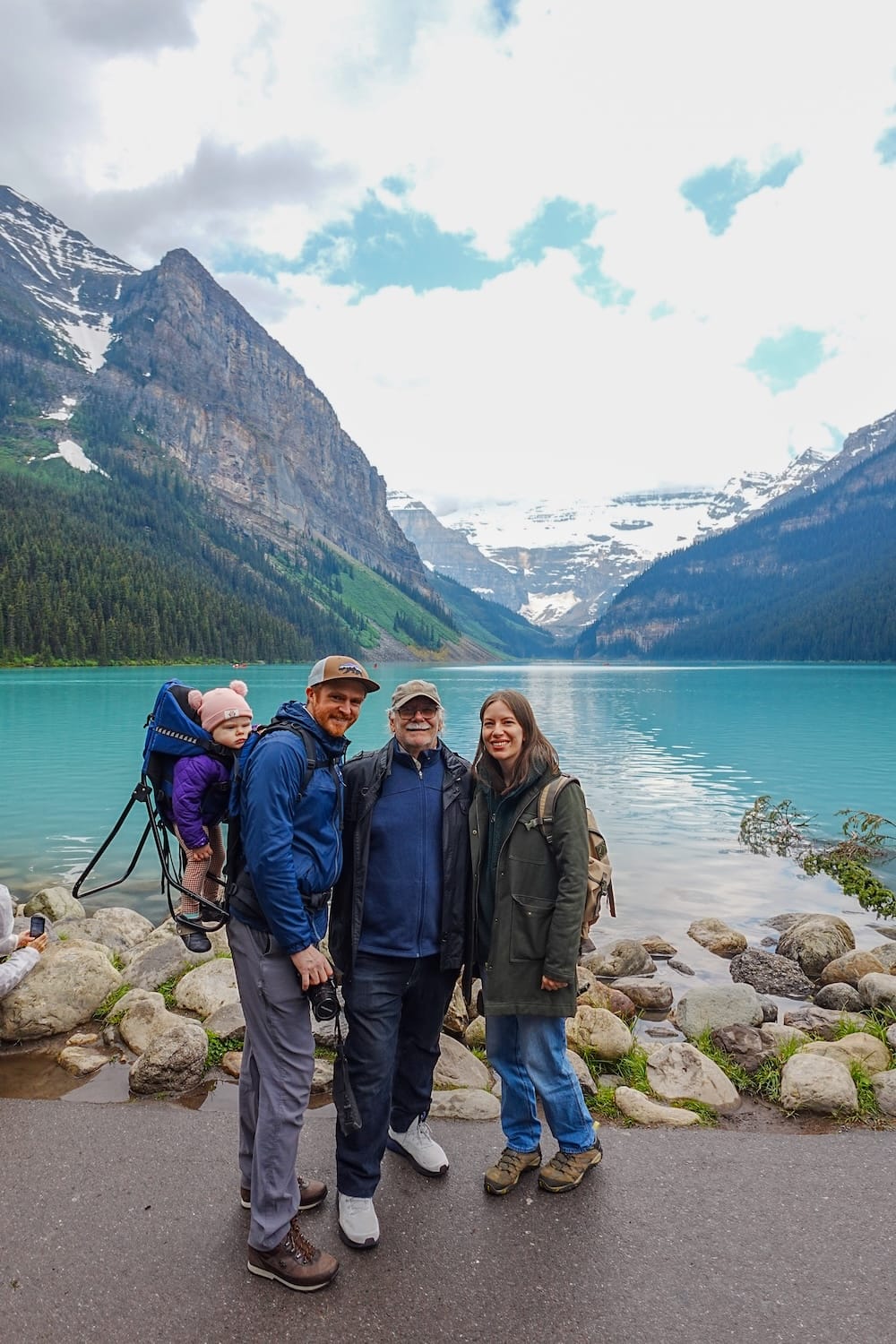
On our recent multigenerational trip, Audrey’s dad and Aurelia were travelling with us. That meant different walking speeds, snack stops, toddler care, breaks and moments when somebody simply needed more time. I carried Aurelia up Fairview Lookout while she slept through much of the climb. Audrey’s dad needed his own pace on steeper sections. Meals took time, getting in and out of the vehicle took time, and diaper changes remained stubbornly uninterested in our scheduling ambitions.
None of that was wasted time. It was the trip.
Even without a toddler or grandparent, five consecutive mountain days can be tiring. A walk takes longer than expected. You find somewhere you actually want to sit for lunch instead of inhaling a sandwich in twelve minutes. Lake Louise turns out to deserve another hour. Somebody’s legs are cooked after several days of hiking.
The fifth day means those small delays do not immediately become a problem that must be recovered elsewhere.
Which parts of the itinerary are actually flexible?
| Trip system | Benefit from clear visibility | Tolerance for ordinary poor weather | Booking rigidity | Time commitment | Value as a swap day |
|---|---|---|---|---|---|
| Banff town, Bow River and museums | Low to moderate | High | Low | Highly adjustable | Very high |
| Lake Louise + Moraine Lake | High | Moderate | High because of transport reservations | Full day | Possible, but not effortless |
| Lake Minnewanka + Cascade Ponds | Moderate | Moderate | Low unless you book an activity | Partial or full day | High |
| Banff Gondola | High | Lower when summit visibility disappears | Moderate to high | Partial day | Moderate |
| Johnston Canyon | Less dependent on distant views | Moderate when trails remain safely open | Low | Roughly 1–2+ hours plus transport | Very high |
| Columbia Icefield | Weather strongly changes the experience | Variable | High | Full day | Low once booked |
| Yoho National Park | Moderate to high | Variable | Lower if self-driving | Full day | Moderate |
I would use this table as a planning tool rather than a rigid ranking. What matters most is the combination of high weather sensitivity and high booking rigidity. Those are the pieces you need to think about before arriving, because that is where the cheerful advice to “just be flexible” becomes much harder in real life.
What I would still leave out with five days
Five days is long enough that the temptation to keep expanding becomes dangerous.
I would not make Columbia Icefield and Yoho separate compulsory excursion days. I would not add Kananaskis because the map makes it look nearby enough. I would not turn Canmore into another full sightseeing day unless it is genuinely one of your priorities, and I would not keep pushing north toward Jasper just because your rental car technically has enough fuel.
We have explored Kananaskis, Kootenay, Canmore and other parts of the Rockies and enjoyed them. Leaving those places out is not a judgment about whether they are worth visiting; it is a judgment about what this particular five-day trip should be trying to accomplish.
The same is true of my six-day horseback trek through Banff’s backcountry. It was one of the most memorable experiences I’ve had in the Canadian Rockies, but introducing something like that here would turn itinerary planning into calendar vandalism.
Five days should feel less frantic than four. If your fifth day somehow makes the entire trip more exhausting, I think we have misunderstood the assignment.
Five days versus four days or a full week
I find the difference between these trip lengths easier to understand once you stop counting attractions.
With four days, you can create a strong balance between Banff town, the headline lakes, another local day and one major excursion. There is not much spare capacity, though, so reservations and weather can exert a lot of control over the schedule.
With five days, the extra value is flexibility. You can keep a worthwhile day in reserve, absorb a slower pace and move something when a clearly better weather window appears without deleting another core part of the trip.
With a full week, the logic changes again. Now you have enough time to think seriously about additional regional depth rather than treating every excursion beyond Banff as something competing for one precious slot.
Five days sits in a very useful middle ground: enough time to stop sprinting, but not so much that you need to manufacture things to do.
Are five days enough for Banff?
For a first trip, I think five days is excellent. You can spend real time in Banff town, properly visit Lake Louise and Moraine Lake, devote another day to local Banff National Park scenery, choose one major excursion and still retain a fifth day that either adds something worthwhile or prevents the rest of the schedule from collapsing when conditions change.
It is not enough to finish Banff. Audrey and I already learned that after four very busy days, and repeated trips since then have only reinforced how easily you can build another completely different visit. But five days gives you something four days does not quite offer in the same way: margin.
I would still make the reservations that matter and decide my priorities before arriving, but I would stop trying to control every hour. The mountains are going to do whatever they feel like anyway, and after enough Banff trips I have become fairly comfortable admitting that they are better at that than I am.
Five days gives you enough room to work with them.
Frequently Asked Questions
Are five days enough for a first trip to Banff?
For a first trip, I think five days is excellent. It gives you time for Banff town, Lake Louise and Moraine Lake, another local Banff day, one major excursion and a fifth day that can add depth or absorb changing conditions.
How should I structure a five-day Banff itinerary?
My base plan is Banff town on Day 1, Lake Louise and Moraine Lake on Day 2, Lake Minnewanka and Cascade Ponds with an optional Gondola on Day 3, Columbia Icefield or Yoho on Day 4, and Johnston Canyon as the flexible fifth day.
Which parts of the itinerary should stay flexible for mountain weather?
Banff town and Johnston Canyon are the easiest pieces to move, while Lake Louise, Moraine Lake and the Gondola benefit more from good visibility. Columbia Icefield is a firmer full-day anchor once booked, and rough weather does not automatically make it a bad experience.
Can I drive my own car to Moraine Lake?
Ordinary personal vehicles cannot use Moraine Lake Road, so you need an eligible transportation option. That makes the Lake Louise and Moraine Lake day one of the parts of this itinerary that is harder to rearrange casually.
Should I choose Columbia Icefield or Yoho National Park for Day 4?
I would choose Columbia Icefield if the glacier and Icefields Parkway are the main draw. I would choose Yoho if you prefer a day moving between lakes, waterfalls and mountain landscapes. With five days, I would not make both compulsory.
What should I do on Day 5 if the weather cooperates?
I would use Day 5 for Johnston Canyon and additional local depth. The Lower Falls are about 1.1 kilometres from the trailhead and roughly an hour return, while continuing to the Upper Falls extends the outing to about 2.4 kilometres each way and around two hours return.
What time of year does this exact five-day itinerary work best?
This version works most naturally from roughly mid-June through early October, when regular Moraine Lake transport is operating and seasonal access toward Takakkaw Falls is normally available, weather permitting.
This guide is also available in Spanish. [Leé la versión en castellano: Itinerario de 5 días en Banff: un plan flexible con margen para el clima de montaña]
This article contains affiliate links. If you book through one of these links, I may earn a commission at no extra cost to you.