
You could take the train from Sapporo, stare at the steaming craters of Hell Valley, dip your feet in a naturally heated river and head back feeling you’d seen something extraordinary. Noboribetsu’s volcanic landscape was among my favourite sights in Japan, and none of it required a hotel reservation.
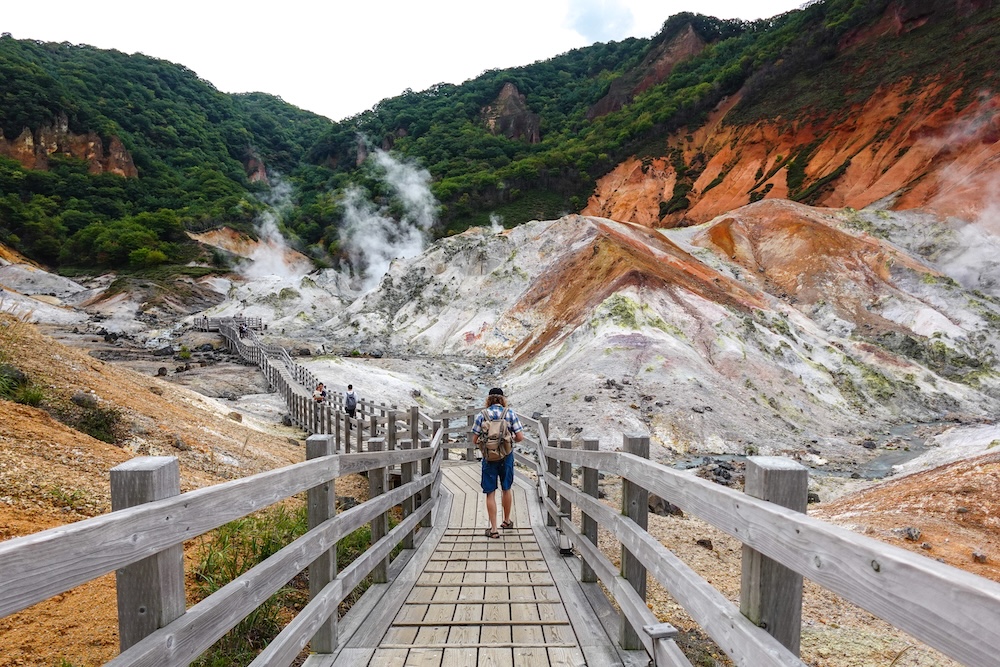
But Audrey and I spent two nights in Noboribetsu Onsen, and I’m convinced I would have come away with a very different opinion had we treated it as a day trip. We explored the geothermal trails, certainly, but we also settled into a Japanese-style room, wore yukata around our hotel, tackled enormous buffets and kept returning to the hot-spring baths. Noboribetsu became one of the highlights of our Hokkaido trip because of that combination.
For someone who loves onsen culture and unusual accommodation, I’d pay to stay. For someone who mainly wants the landscapes, I’d recommend the day trip. The trick is comparing usable time and actual extra cost, not just the hotel rate against the apparent convenience of visiting from Sapporo.
Day trip or overnight: what are you really choosing?
You can explore Jigokudani (Hell Valley), Oyunuma and the quirky hot-spring town on an excursion, or make the onsen resort part of the holiday, with meals and bathing woven into your stay rather than squeezed between bus connections.
| The difference | Day trip | Overnight stay |
|---|---|---|
| Time | A return journey eats into sightseeing hours | More freedom around arrival and departure |
| Main sights | Hell Valley and selected walks are achievable | More time to explore without a same-day deadline |
| Hot springs | Paid day-use baths are available | Hotel bathing may be available repeatedly during the stay |
| Meals and room | Buy meals separately; no room experience | Some bookings include meals, yukata and Japanese-style rooms |
| Cost | Return transport, food and optional bath admission | Transport and hotel, adjusted for meals and accommodation replaced elsewhere |
| Best fit | Sightseeing-focused travellers | People who want the onsen-town experience itself |
If the overnight experience already sounds like your kind of trip, I’d start by comparing accommodation with hot-spring baths in Noboribetsu Onsen. Staying in the actual onsen district makes far more sense for this kind of visit than booking somewhere near the railway station, which is several kilometres away. Pay attention to whether a rate includes meals and which bathing facilities guests can use; those details can make a considerable difference to what you’re getting for your money.
The day-trip clock starts well before Hell Valley
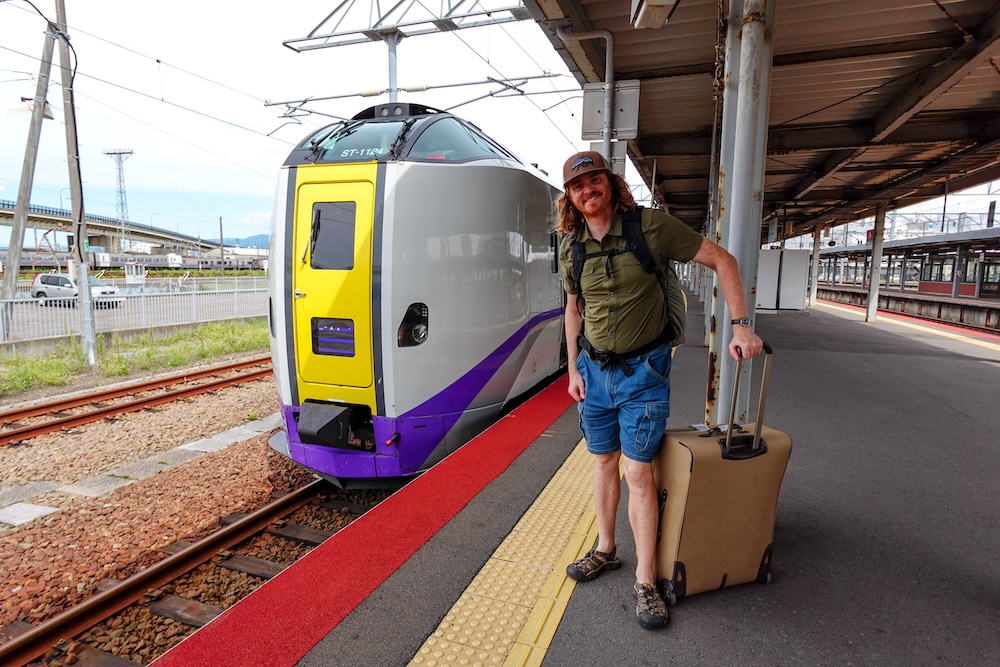
The limited express from Sapporo to JR Noboribetsu Station takes roughly 70–75 minutes, which sounds like a pretty painless outing. Here’s the detail that catches people: Noboribetsu Station isn’t Noboribetsu Onsen. The hot-spring district is about eight kilometres farther inland, reached by another bus journey of roughly 15–27 minutes depending on your service and stop. You also need to leave enough time to make the connection.
We dealt with that transfer ourselves, although we arrived from Hakodate rather than Sapporo. The bus information was posted outside the station, but we waited around half an hour before continuing uphill. With a hotel waiting for us, it was no great hardship; on a day trip, every connection eats into sightseeing time.
For an independent day trip from Sapporo, allow around two hours or more each way once you account for rail, bus and connections. That’s potentially four-plus hours travelling before you’ve taken a single photo of Hell Valley. An early departure helps, but choose your return connections before setting off.
There’s a direct express bus from Sapporo to Noboribetsu Onsen too, and it looks tempting until you check the schedule. The service listed in October 2026 leaves Sapporo at 13:40 and reaches the onsen district around 15:21; its return departure from Noboribetsu Onsen is 09:30. Those times make far more sense for an overnight visit than for going out and back in one day. Always check the current Noboribetsu access information before relying on a particular connection.
Staying overnight doesn’t magically give you two full days: Park Hotel Miyabitei currently lists 14:00 check-in and 10:00 checkout. But waking up in town rather than on a train makes it easier to walk, bathe and eat without a same-day return hanging over you.
What I’d prioritize on a Noboribetsu day trip
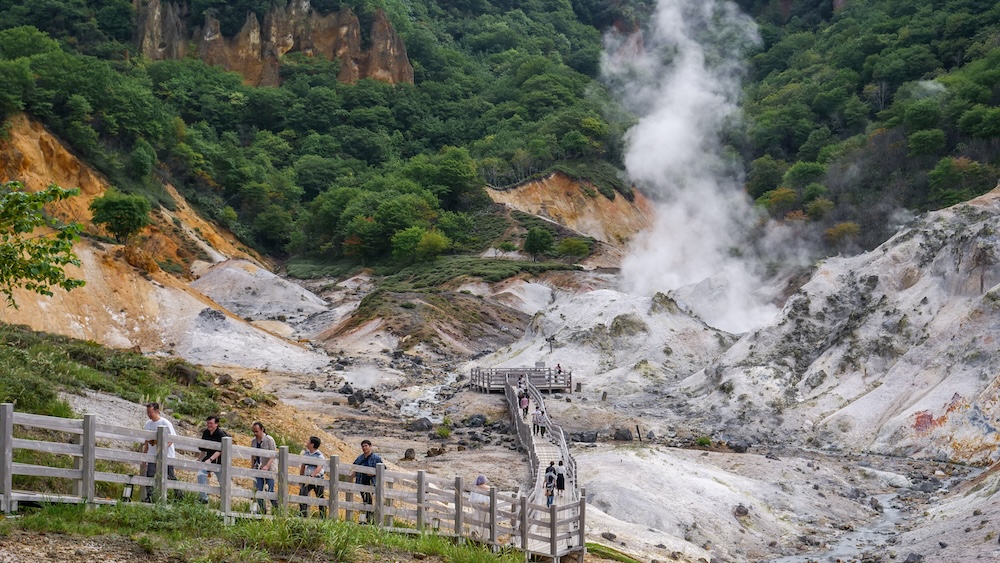
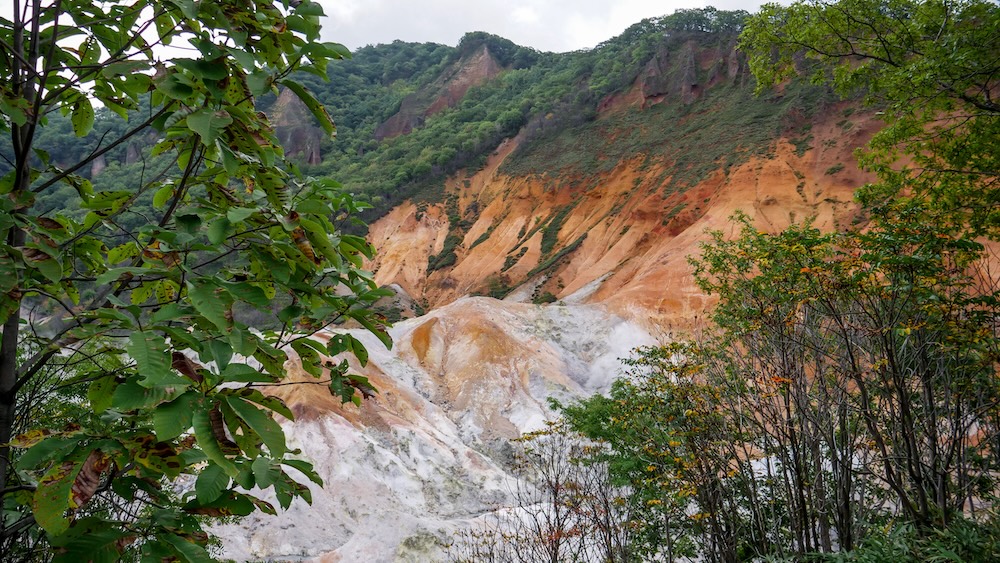
I’d head straight for Jigokudani Hell Valley rather than chase every demon statue and shrine. The landscape has orange, mineral-stained ground, vents blowing steam into the air and pools that bubble away like somebody left an enormous pot boiling. I could actually feel the heat from the earth as we walked, even though it wasn’t an especially hot day. The main viewing area is free and gives you a strong impression of the place without committing to a long hike.
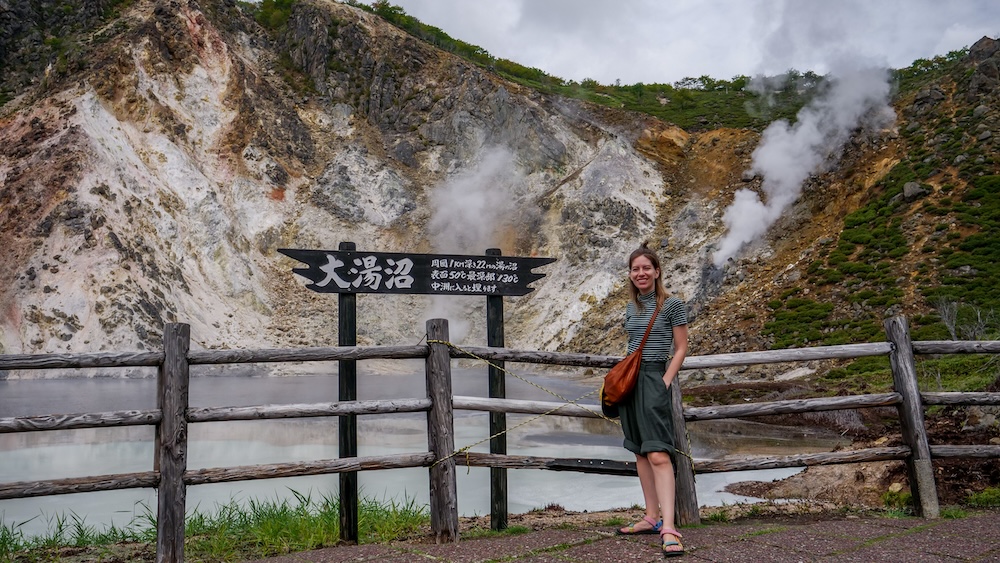
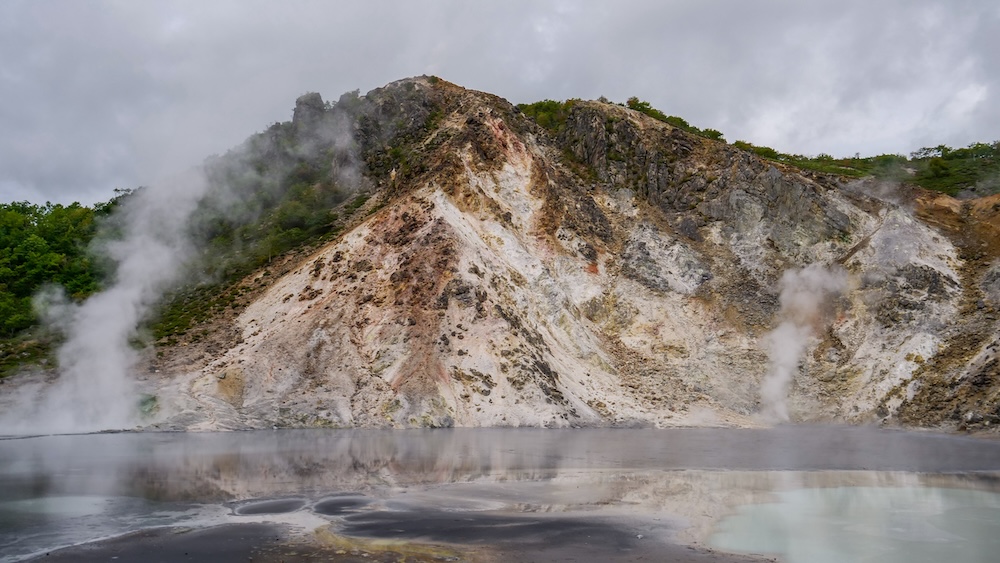
If the weather, trails and return schedule allowed, I’d continue towards Oyunuma and the Oyunuma River Natural Footbath. This was one of my favourite experiences anywhere in Japan. We visited early in the morning, sat beside the river for about half an hour and sank our feet into milky blue-grey water, with fine black volcanic sand under our toes. Steam drifted through the forest and, for once, I had absolutely no interest in getting up and going somewhere else. Audrey also spent part of the walk wondering whether the sulphur’s rotten-egg smell was coming from the landscape or from me. Charming.
The footbath is free, as is visiting the principal geothermal sights. But it isn’t right beside the main Hell Valley viewpoint: from Oyunuma, the approach takes approximately 15 minutes on foot, and getting to Oyunuma adds more walking. A guided forest route covering Jigokudani, Oyunuma and the footbath takes about three hours, a useful measure of how much more substantial the full circuit is than a quick stop at the lookout. That’s the duration of one organized walk, not a fixed requirement for everyone hiking independently.
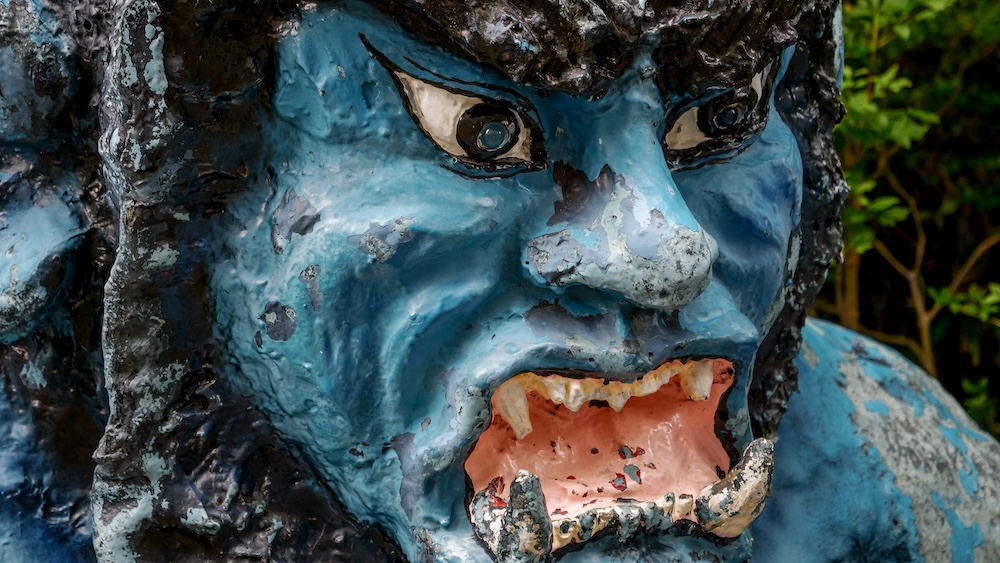
I’d also save a bit of time to wander the main streets of Noboribetsu Onsen. The place is dotted with brightly coloured oni demons, including some fairly menacing characters armed with spiked clubs, and its slightly eccentric personality is part of the fun. We found the centre manageable on foot, although one road we walked had no sidewalk and passing cars came by rather quickly. Stay alert rather than assuming every resort-town street is a pedestrian promenade.
The footbath trail can be restricted in winter or closed for maintenance, so check its status. With limited time, I’d enjoy Hell Valley properly rather than rush a longer walk.
Yes, you can use a real onsen without staying overnight
My hypothetical day trip probably would have skipped the hotel baths, but day visitors aren’t excluded from Noboribetsu’s hot springs. The riverside footbath and a full-body onsen are different experiences, and you can pay for the latter without booking a room.
As of October 2026, Yumoto Sagiriyu lists adult entry at ¥550, opening 09:00–21:00 with reception until 20:30. For a more extensive hotel bathing option, Dai-ichi Takimotokan lists day admission at ¥2,500 per adult, including a towel, with ticket reception from 09:00–18:00 and departure by 21:00; some baths may be unavailable during cleaning. We didn’t use either facility ourselves; our hotel baths were at Park Hotel Miyabitei. You can check the day-use onsen listings for other participating properties and changing conditions.
A paid bath is a good compromise, provided you allow for it alongside lunch, walking and both journeys.
Why paying to stay changed Noboribetsu for us
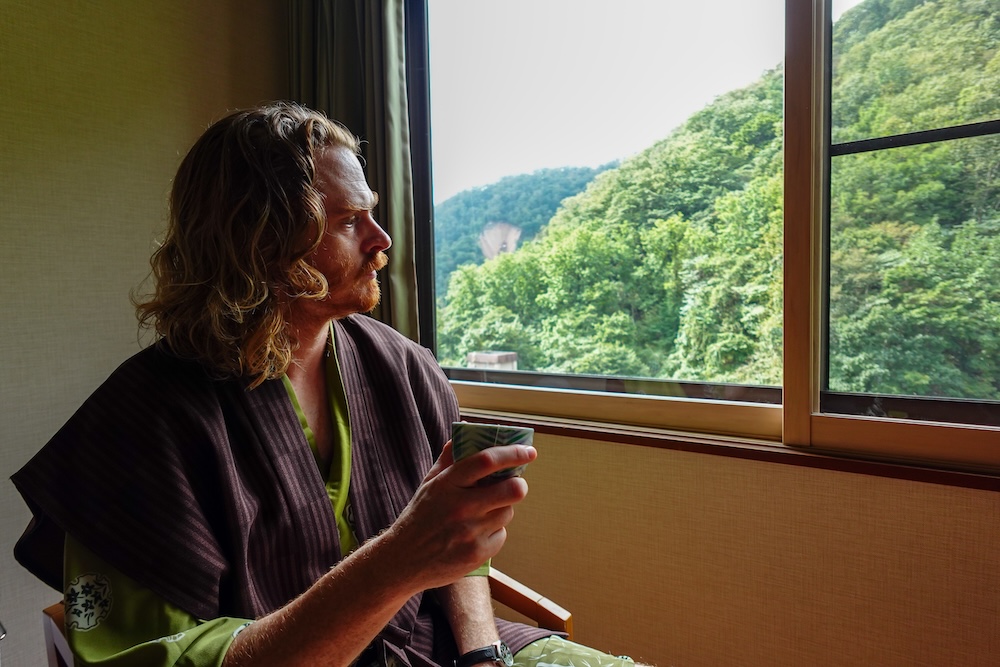
Our hotel, Park Hotel Miyabitei, was an enormous part of the appeal. We had a Japanese-style room with tatami flooring and futon bedding, plus green yukata, sashes and little outer garments. Audrey noticed practically everyone wandering around the lobby in their hotel robes, and it didn’t take much persuading for us to get changed too. Once we were dressed for the occasion, leaving the resort in a hurry was the last thing on my mind.
Then came the baths. We could enjoy them during our stay rather than squeezing a single paid session into a sightseeing timetable. Audrey particularly liked the variety in the women’s bathing area, including an outdoor pool, and figured out that off-peak visits could be wonderfully quiet. Once she had the whole section to herself; another time she encountered only one other woman. I had my share of hot-spring relaxation too, and after one session I was so exhausted that going to bed sounded like an excellent plan.
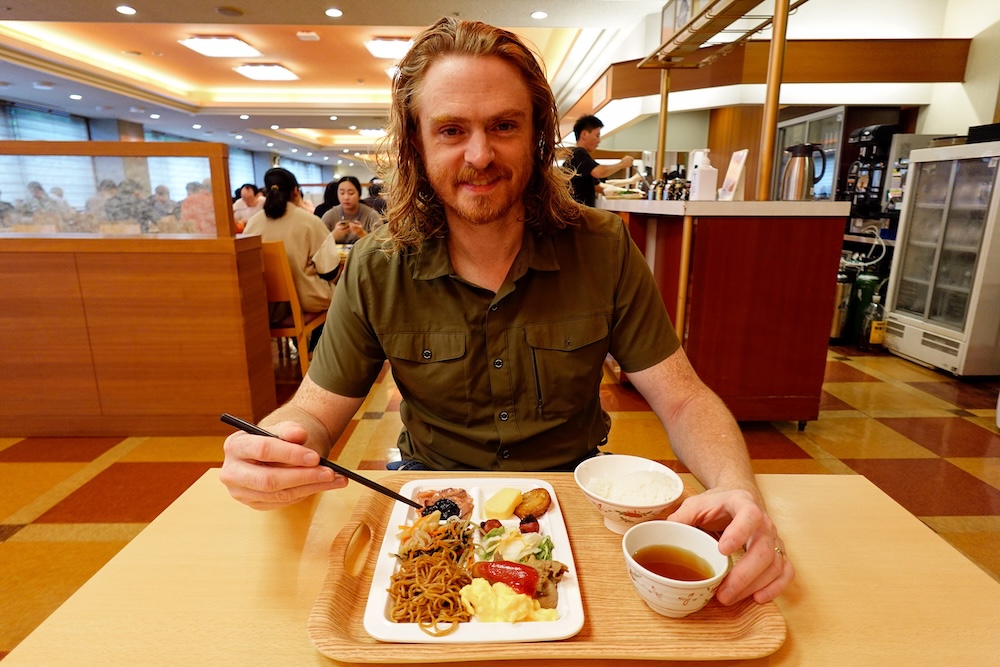
The buffet meals were another highlight. There was crab, sashimi, seafood, cooked dishes and enough choice for multiple visits to the serving counters. I put away three rounds of savoury food at one dinner before dessert became round four. It wasn’t a serene, candlelit ryokan meal served privately in our room; it was a large dining hall, and the first rush could be downright chaotic. We found it more comfortable to wait a while after opening before tackling the busiest counters. The menu repeated across our stay, but we enjoyed the variety and quality nonetheless.
If that combination of Japanese-style accommodation, extensive bathing facilities and buffet meals appeals to you, it’s worth checking current rooms and meal plans at Park Hotel Miyabitei. We really enjoyed staying there, but I would look closely at the room category and whether dinner and breakfast are included rather than assume every reservation offers exactly what we experienced. The property’s current booking conditions also require guests with dinner arrangements to arrive by the specified evening cutoff, so a late arrival could spoil part of the reason for choosing a meal-inclusive stay.
Miyabitei was a large onsen resort with substantial facilities and plenty of guests, unlike the more personal ryokan we’d tried in Takayama. I enjoyed both styles, but if intimate service is what you’re paying for, choose your property carefully.
For a different style of accommodation, Kashoutei Hanaya is another option in Noboribetsu Onsen, with hot-spring baths and Japanese meals. It offers a more traditional ryokan format than the large resort where we stayed. We haven’t stayed there ourselves, so I can’t compare its actual hospitality or bathing experience with Miyabitei, but you can compare Kashoutei Hanaya’s room and meal options if a smaller property sounds more appealing. Check the exact dining arrangements for your chosen plan rather than assuming that every reservation includes private dining.
What I loved was the entire routine: exploring volcanic landscapes, returning to a comfortable room, changing clothes, eating well and revisiting the baths. A day-use bathing ticket could reproduce part of that, but it wouldn’t give me that whole overnight experience. It’s why I’d pay to stay again, even knowing the resort had its crowded moments.
The cost comparison: where the extra money really goes
A day trip avoids a Noboribetsu hotel bill, but here’s what an independent return journey from Sapporo costs using ordinary fares checked in October 2026, before meals or bathing:
| Expense | One adult | Two adults |
|---|---|---|
| JR limited express, return | ¥9,780 | ¥19,560 |
| Noboribetsu Station–Onsen local bus, return | ¥900 | ¥1,800 |
| Total transport | ¥10,680 | ¥21,360 |
The ¥4,890 one-way fare is for a reserved seat (required on JR Hokkaido limited expresses), though passes can change the calculation. JR Hokkaido’s four-day Sapporo–Noboribetsu Area Pass, for instance, is currently listed at ¥10,000 when bought in advance, but it doesn’t cover the onsen bus, and its value depends on what other eligible journeys you’re taking. Donan Bus also doesn’t accept the usual Suica or Kitaca cards on these routes; Visa contactless works only on specified services, so check payment arrangements or carry an appropriate alternative.
For two adults making the standard return trip, add ¥1,100 to the ¥21,360 transport total for Sagiriyu, or ¥5,000 if both choose Dai-ichi Takimotokan instead. Those are alternatives, not two fees everybody must pay, and food is still extra.
Now consider accommodation. At Noboribetsu Onsen, meal-inclusive plans at Park Hotel Miyabitei have been advertised starting around ¥22,000 for two adults for one night, but that’s an indicative starting figure, not a verified available rate for your dates. The real price will depend on room, date, occupancy and meal plan, and not every booking includes dinner and breakfast. I wouldn’t build a budget around a headline price without checking the exact reservation details. I don’t have a reliable figure for what we paid during our visit either, so I’m not going to invent a personal cost comparison.
For a fairer comparison, look at available Noboribetsu Onsen hotel rates for your actual travel dates, then check what you’d pay for accommodation elsewhere that same night. A room with breakfast and dinner may cost more upfront but replace meals you’d otherwise buy separately. Conversely, a cheaper room without those inclusions may leave you spending more around town. You need the complete price, not just the number beside the room photograph.
There’s a more important calculation anyway. Are you adding a hotel night, or replacing one? If you’re based in Sapporo and keeping a non-refundable room while also booking Noboribetsu, you’ve genuinely bought an extra night of accommodation. If you can switch one night’s Sapporo reservation for a night in Noboribetsu, the additional lodging cost is the difference between the two bookings, adjusted for any meals included. You may also avoid the cost of travelling to Noboribetsu and all the way back to Sapporo on the same day.
Our trip followed a third pattern: we came from Hakodate, stayed in Noboribetsu and continued to Sapporo. We needed to travel between those destinations regardless, so judging our stop against the full price of a Sapporo return day trip wouldn’t be a fair comparison. For someone following a similar point-to-point Hokkaido route, staying in Noboribetsu may fit far more naturally than treating it as an excursion from a city base.
Would a guided day tour be better?
If the train-plus-bus combination sounds like a nuisance, a guided tour removes much of the transport juggling. It can also change what you actually see, and not always in the way the headline duration suggests.
One Sapporo day-tour itinerary allocates just 35 minutes at Jigokudani within a roughly ten-hour excursion. That’s a chance to admire Hell Valley, but it’s not the longer walk around Oyunuma and the natural footbath that I enjoyed so much.
A currently listed alternative is a guided Hokkaido day trip combining Noboribetsu Hell Valley and Lake Toya. This one covers several landscapes around southern Hokkaido, with additional stops and activities depending on the season. The appeal is seeing more of the region without managing the transport yourself, but the schedule isn’t designed exclusively around Noboribetsu. Check the current itinerary and the time allowed at Hell Valley rather than assuming you’ll have enough freedom for the complete geothermal walking circuit.
A private excursion offers another approach. One private day tour from Sapporo to Noboribetsu and Lake Toya proposes approximately 90 minutes at Jigokudani, with a possible additional 30-minute footbath walk when access permits. It also includes other regional stops, and I’d confirm the guide language, entrance-fee inclusions and itinerary flexibility before paying, since those details aren’t entirely consistent in the listing. A private vehicle is a different financial proposition from a seat on a group bus, especially for only one or two travellers.
We didn’t take either tour, so I can’t assess the service firsthand. I’d look at minutes in Noboribetsu, not merely hours away from Sapporo. A trip combining several regional attractions might be exactly what you want. If Hell Valley and the natural footbath are the priorities, an independent visit or a suitably arranged private excursion leaves more room to focus on them.
Who I’d tell to visit for the day—and who I’d tell to stay
For somebody who wants to photograph Hell Valley, walk through the volcanic scenery, see a few demons and move on to the next destination, I’d suggest the day trip. Plan around real bus and train connections, decide how far you want to walk, and add a day-use onsen only if there’s room in the schedule. You can experience an astonishing part of Noboribetsu without sleeping there.
But if Japanese-style rooms, yukata, long hot-spring baths and a proper resort stay sound like the very reason you’d come to Noboribetsu, I’d make room for an overnight booking. They weren’t decorative extras to me; they were what turned a place with excellent scenery into one of my favourite stops on our entire Japan trip.
That’s the decision I’d make again. I wouldn’t tell every visitor to spend the extra money, particularly when it could come at the expense of somewhere else they really want to see. I’d pay for the overnight experience because I know I’d enjoy it; I’d save that money for someone who only wants the sights. And if you’re already travelling from Hakodate towards Sapporo, I’d give serious thought to stopping here rather than making the journey twice from a city base.
Frequently Asked Questions
Is Noboribetsu better as a day trip or an overnight stay?
I’d choose an overnight stay because the hotel, onsen baths, Japanese-style room and buffet meals made Noboribetsu one of my favourite stops in Japan. But if you’re mainly interested in Hell Valley and the geothermal scenery, a day trip can be worthwhile without paying for accommodation.
Can you visit Noboribetsu on a day trip from Sapporo?
Yes. The limited express train takes approximately 70–75 minutes from Sapporo to JR Noboribetsu Station, followed by a local bus to the onsen district. Allow around two hours or more in each direction once connections are included, and plan your return journey before setting out.
How much does a Noboribetsu day trip from Sapporo cost?
Using standard fares checked in October 2026, return train and local bus transportation costs approximately ¥10,680 per adult or ¥21,360 for two adults. Meals and optional paid onsen bathing cost extra. Eligible rail passes may change the transportation total.
Can you use an onsen in Noboribetsu without staying overnight?
Yes. Day-use bathing is available at participating facilities. As of October 2026, Yumoto Sagiriyu lists adult admission at ¥550, while Dai-ichi Takimotokan lists a ¥2,500 adult day-use option. Check current admission hours and conditions before visiting.
Can you visit Hell Valley and the Oyunuma footbath in one day?
It’s possible with enough time and suitable trail conditions, but the full geothermal walking circuit requires substantially longer than a quick visit to Hell Valley’s main viewpoint. I’d prioritize Jigokudani, Oyunuma and the natural footbath rather than try to squeeze in every attraction.
Is staying overnight in Noboribetsu worth the extra money?
For me, absolutely. Audrey and I loved the bathing facilities, Japanese-style room, yukata and buffet meals at Park Hotel Miyabitei. The actual extra cost depends on whether you’re replacing a hotel night elsewhere or adding another reservation, along with your room’s meal inclusions.
This article is also available in Spanish. [Leé la versión en castellano: Noboribetsu por el día o con noche de hotel: comparación de tiempo, costos y experiencia]
This article contains affiliate links. If you book through one of these links, I may earn a commission at no extra cost to you.