
There was an ominous rumbling beneath Noboribetsu Onsen, and naturally we went to investigate. Here, noise from underground is practically part of the sightseeing itinerary. The culprit was Sengen Park’s geyser, accompanied by a collection of enormous, colourful demon clubs. Apparently a geyser on its own wasn’t quite enough for Noboribetsu.
Audrey and I had read about Sengen Park and decided to check it out while exploring the hot-spring town on foot. We saw the geyser twice, behaving quite differently each time. I enjoyed it, although the experience wasn’t quite what I’d imagined beforehand. My recommendation: stop by when you’re in town, but don’t let an unpredictable geyser steal time from Noboribetsu’s bigger attractions.
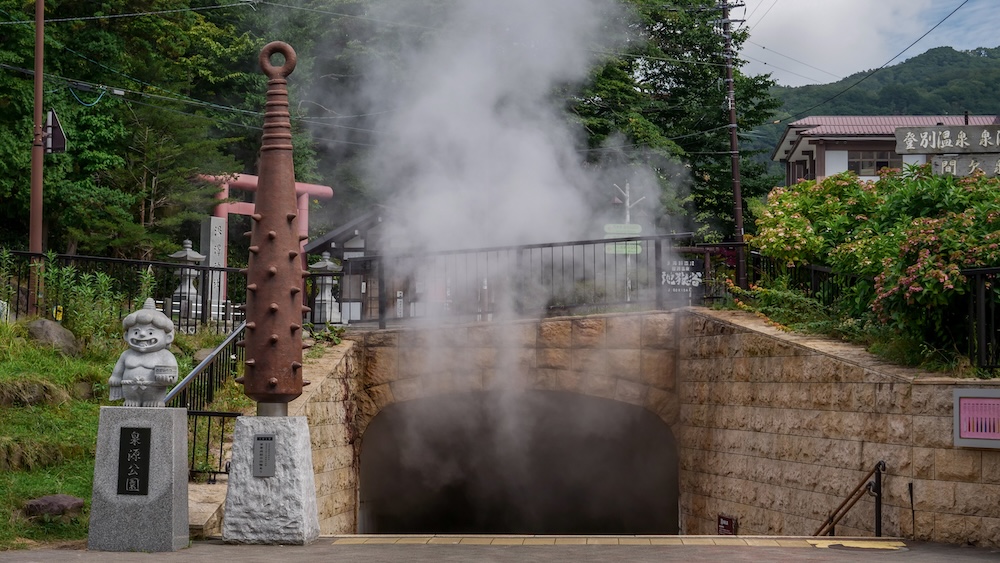
What Is Sengen Park in Noboribetsu Onsen?
Sengen Park, or Sengen Kōen (泉源公園), sits in the centre of Noboribetsu Onsen, near Dai-ichi Takimotokan. It’s a compact public space centred on an active geothermal feature, with striking demon-club monuments nearby. You’ll probably incorporate it into a walk through the resort district rather than set aside an afternoon. Noboribetsu’s bigger geothermal sights are elsewhere; Sengen Park brings that activity into town.
The present park was completed in 2008 to commemorate 150 years of Noboribetsu’s development as a hot-spring bathing town. It occupies the former site of Hotel Noboribetsu Paradise. The nine-club installation followed in 2013, connected with the 50th Noboribetsu Hell Festival. The geyser and clubs share the site but have different origins. After exploring the wider onsen area, finding geothermal activity concentrated in a small park near the hotels made Noboribetsu’s volcanic character feel unusually close to everyday life. All that activity underfoot feels strange during an ordinary town walk.
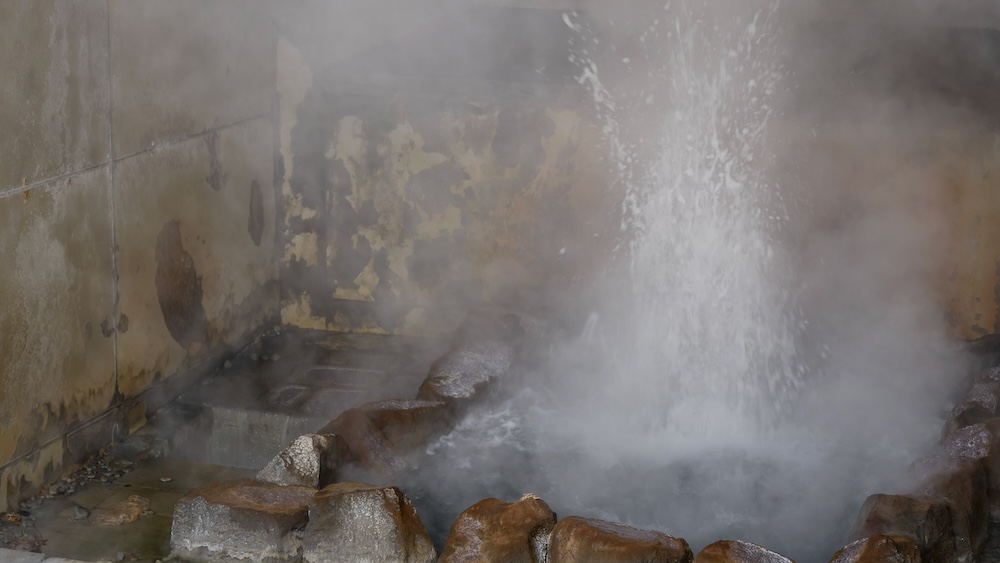
The Sengen Park Geyser: What We Actually Experienced
The sound was what really caught our attention. There was a low rumble, steam rising and that distinctive sulfur smell which seems to follow you around Noboribetsu. At one point the steam prompted an aromatherapy comparison, which is an optimistic way of describing something that smells rather like rotten eggs. It’s a memorable smell, I’ll give it that.
On our first visit, we could see water gurgling away. When we returned the following day, steam had become the most conspicuous part of the scene, even though the geyser was still making itself heard. The repeat visits showed us how variable it could be. I wouldn’t pretend we stood there timing a complete eruption from start to finish. We saw a good range of activity without expecting an identical performance.
Sengen Park’s geyser has historically been described as sending water roughly eight metres into the air, with spring water around 80°C. Those numbers put its potential into perspective, but we didn’t measure them, and you shouldn’t expect an eight-metre jet on arrival. It’s easy to build up a spectacular image in your head when you hear the word geyser. I certainly did.
My reaction was somewhere between impressed and slightly underwhelmed by the force of it. I liked hearing the rumbling and watching the water and steam; the attraction feels genuinely alive. It wasn’t as powerful as I’d pictured beforehand. Come expecting a violent blast on demand and you might wonder what the fuss is about; come curious about Noboribetsu’s geothermal activity and you’ll have plenty to appreciate.
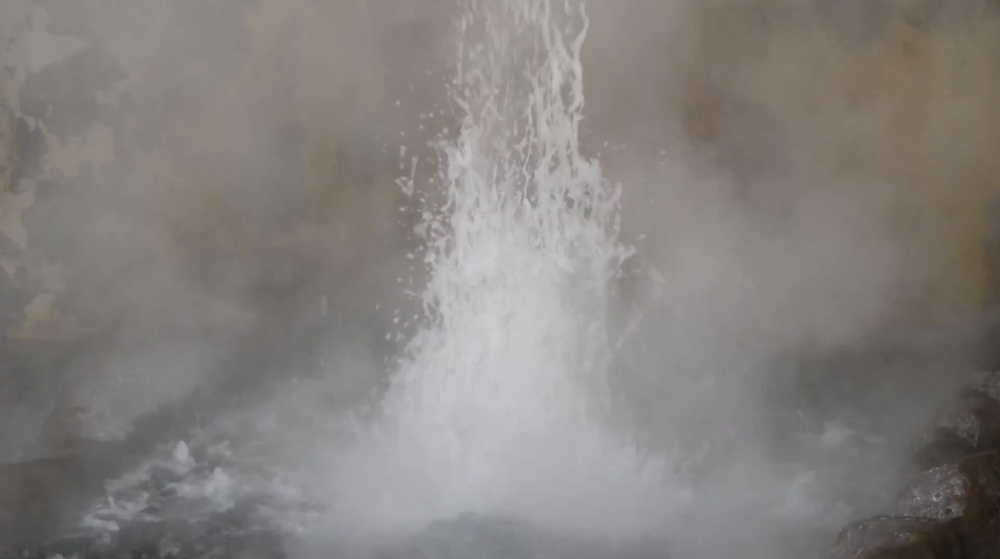
How Often Does the Geyser Erupt, and Is It Worth Waiting?
This is where I’d be careful with the usual sightseeing advice. For years, descriptions of Sengen Park have quoted an eruption approximately every three hours, with activity lasting around 50 minutes. On paper that sounds convenient: watch the eruption and then go for lunch.
Unfortunately, nature hasn’t signed up to that timetable, which is particularly awkward if you’ve planned your afternoon down to the minute. In August 2026, the Noboribetsu tourism association warned that the geyser’s eruption intervals had changed because of natural environmental conditions. There was no dependable replacement schedule. Neither figure should now dictate your itinerary.
That’s worth remembering before waiting for a big eruption. Audrey and I happened to be nearby on more than one occasion, which gave us a chance to see different activity without treating the geyser as an appointment. If it’s bubbling and rumbling when you get there, terrific. If you mostly find steam, you’ve still encountered a real geothermal feature, and the demon clubs are right there to explore.
I wouldn’t wait indefinitely. If your heart is set on the most active possible geyser display, check the latest Sengen Park visitor information and accept that no reliable next-eruption time has been established. I’d rather spend that uncertain waiting time enjoying Hell Valley or soaking my feet at the Oyunuma River Natural Footbath, two of the experiences that really made our Noboribetsu stay memorable.
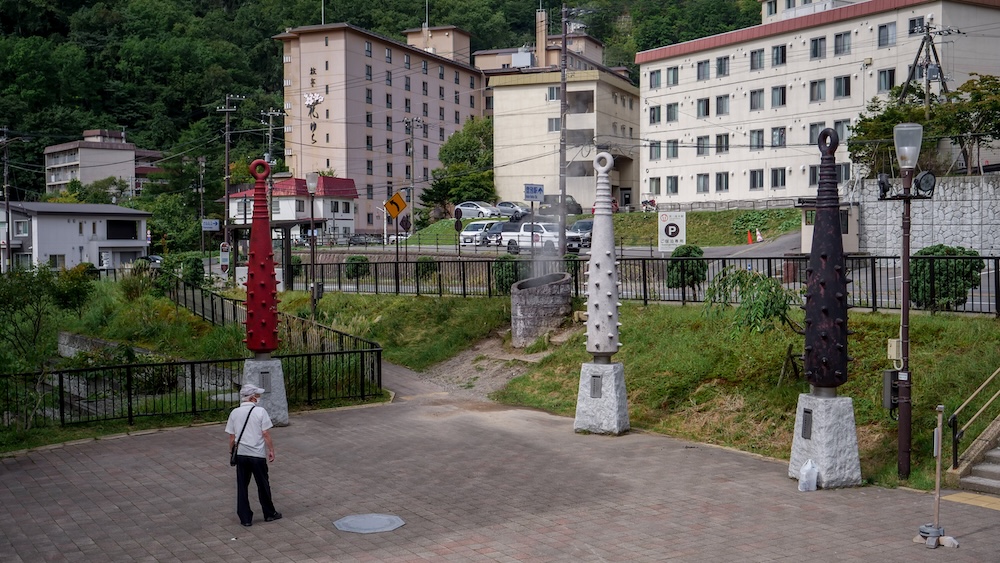
Noboribetsu’s Nine Demon Clubs: What Do They Represent?
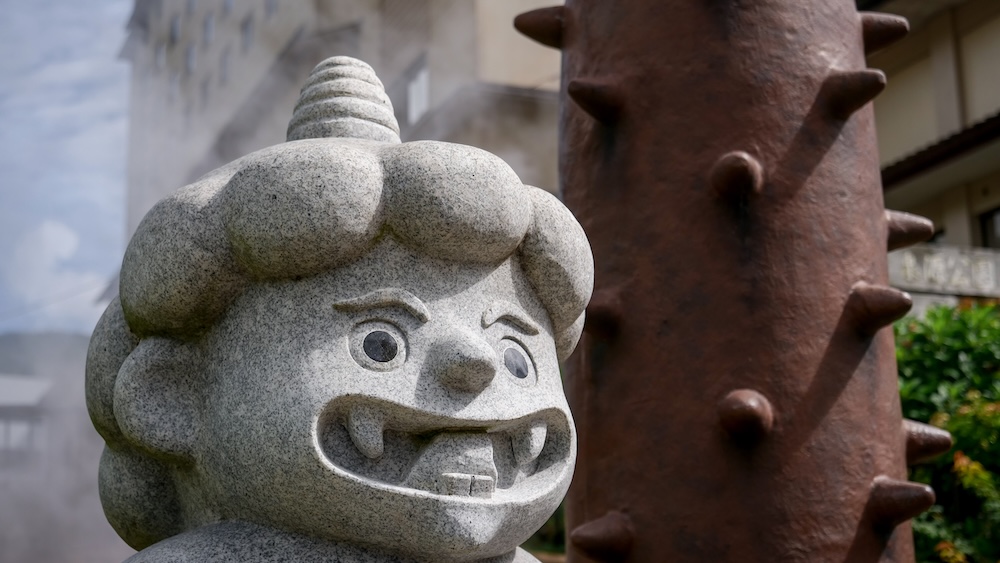
At Sengen Park, you can also admire a set of enormous coloured kanabō, the spiked clubs traditionally associated with Japanese oni. They’re part of Noboribetsu’s enthusiastic embrace of underworld imagery. After seeing demons scattered around town, a spiked club was starting to feel like the local welcome sign.
The collection is called the Nine Kanabo of the Onsen Demon God, or Yukijin no Kyū Kanabō (湯鬼神の九金棒). But here’s the catch: you’ll only see eight clubs standing aboveground. The ninth is a golden club that local legend places beneath the park. Don’t confuse it with the giant golden club displayed inside Dai-ichi Takimotokan; that’s a separate object.
The colours correspond to different kinds of good fortune, drawing on the Japanese Nine Star Ki system and the symbolism of Noboribetsu’s nine hot-spring water types. These aren’t nine separate demon statues. Each carries its own symbolic blessing:
- Black (黒): Business prosperity and success (商売繁盛).
- Brown (茶): Academic achievement and success in studies (学業成就).
- Blue (青): Good health and freedom from illness or misfortune (無病息災).
- Green (緑): Improved financial fortune (金運上昇).
- Purple (紫): Advancement, recognition and career success (立身出世).
- Yellow (黄): Favourable relationships and romantic connections (良縁成就).
- Red (赤): Prosperity of descendants and family continuity (子孫繁栄).
- White (白): Family harmony and happiness at home (家庭円満).
- Gold (金), the legendary hidden ninth: Fulfilment of great wishes or ambitions (大願成就).
These are symbolic blessings, not guaranteed results. Otherwise I’d camp beside the black and green clubs until my businesses started running themselves. Sadly, I doubt it works that way. They’re tradition, not a vending machine for good fortune.
For us, the clubs were another quirky Noboribetsu discovery. We didn’t work through each one making wishes or studying inscriptions, so I won’t dress this up as a deeply personal spiritual encounter. Knowing the meanings makes the display more interesting, especially with a real geyser rumbling nearby and a supposedly buried golden weapon granting your greatest wish.
How to Visit Sengen Park While Exploring Noboribetsu Onsen
First, make sure you’re heading to Noboribetsu Onsen, the hot-spring district up from JR Noboribetsu Station. Sengen Park is close to Dai-ichi Takimotokan and about a seven-minute walk from the Noboribetsu Onsen Bus Terminal on published visitor estimates. We explored the district on foot while staying a couple of nights at Park Hotel Miyabitei, fitting little stops like this around larger outings.
We enjoyed our stay at Park Hotel Miyabitei, especially having an onsen-town base instead of rushing in and out for the day. If you’re planning to stay locally too, you can check rooms and current rates at Park Hotel Miyabitei. You don’t need to stay there to visit the park.
If you’re based in Sapporo and prefer someone else to handle a longer sightseeing day, there’s also a guided Noboribetsu and Lake Toya day tour from Sapporo. Just read the stops carefully: its published itinerary includes Hell Valley but doesn’t promise Sengen Park. I’d choose an independent visit or an overnight stay if the geyser and nine clubs are specifically what you want to see.
The park itself is free to visit. If you’re arriving by car, there’s no dedicated Sengen Park parking lot. The tourism association directs drivers to the Jigokudani parking area, approximately five minutes away on foot; parking there can involve a fee. We didn’t drive ourselves, so the parking arrangement isn’t something we personally tested. The railway station is separate from the onsen district.
Because you’re dealing with a real hot-water and steam source, keep to the intended viewing area and respect barriers or notices. Don’t assume step-free or stroller-friendly access without checking first. We didn’t visit in winter, so I can’t speak from experience about snow or ice around the viewing area. Those conditions could make an otherwise simple stop less straightforward. Geothermal water doesn’t care how badly you want a close-up photo.

Is Sengen Park Worth Visiting? Our Verdict
Yes. I’d happily include Sengen Park in another walk around Noboribetsu Onsen. The geyser brings the town’s volcanic activity close, while the clubs are gloriously peculiar even before you learn why only eight are visible. Seeing the geyser in different states made our experience more rewarding, even if it didn’t quite deliver the powerful spectacle I’d expected.
If you’re visiting Noboribetsu for the first time, however, I’d put Hell Valley, the geothermal walks and the hot-spring experiences ahead of it. I wouldn’t sacrifice those experiences for an uncertain eruption schedule. Stop at Sengen Park when you’re already in the neighbourhood, enjoy whatever the geyser is doing, and take a look at the clubs. If the big performance doesn’t materialize, you haven’t lost much. And you can still leave with a very Noboribetsu sort of story: a rumbling hole in the ground and nine demon weapons, one of them supposedly buried right under your feet.
Frequently Asked Questions
Is Sengen Park free to visit?
Yes. Entry to Sengen Park is free. If you drive, there is no dedicated park parking lot, and the nearby Jigokudani parking area may charge a fee.
How often does the Sengen Park geyser erupt?
Older descriptions suggest about every three hours, but the eruption intervals changed in 2026. There is no dependable replacement schedule, so I would not plan my day around a specific eruption time.
Why are there only eight demon clubs at Sengen Park?
Eight coloured clubs are displayed aboveground. The legendary ninth is a gold club said to be buried beneath the park, representing the fulfilment of great wishes.
Where is Sengen Park in Noboribetsu?
Sengen Park is in Noboribetsu Onsen near Dai-ichi Takimotokan, about a seven-minute walk from the onsen bus terminal on published estimates. It is not beside JR Noboribetsu Station.
Is Sengen Park worth visiting?
I think so, especially if you are already walking around Noboribetsu Onsen. I would prioritize Hell Valley and the hot-spring experiences first rather than wait indefinitely for the geyser.
This guide is also available in Spanish. [Leé la versión en castellano: Parque Sengen: guía y reseña del géiser y los nueve garrotes demoníacos de Noboribetsu]
This article contains affiliate links. If you book through one of these links, I may earn a commission at no extra cost to you.