
Sapporo is one of those places that sounds appealing until you try to fit it onto a map of Japan. Tokyo, Kyoto and Osaka are one thing; Hokkaido’s capital sits a fair distance north. Is it worth adding another journey for a city whose best-known landmarks include a clock tower, a TV tower and a park? Or would those days be better spent somewhere already on your route?
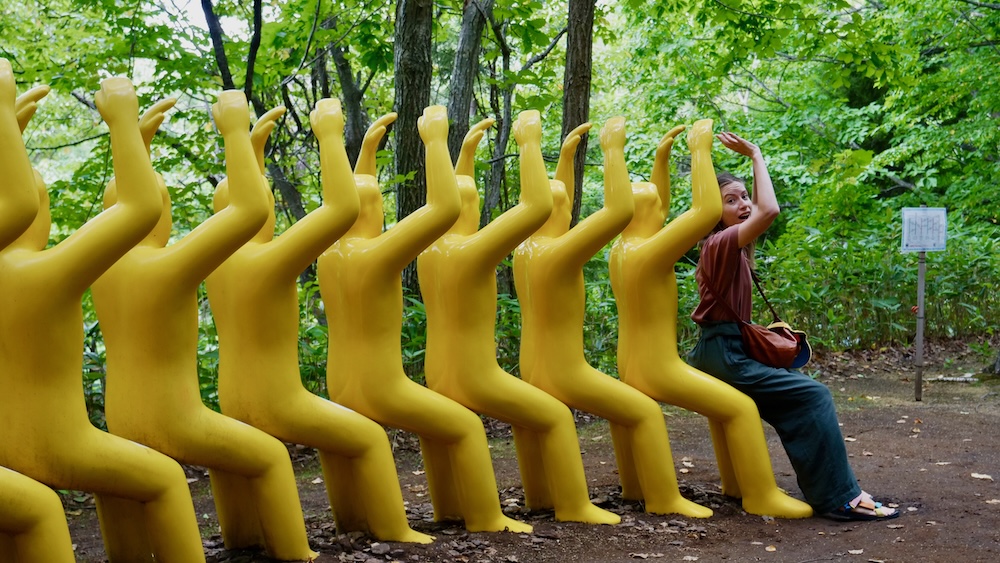
Audrey and I visited Sapporo after spending time in Tokyo, Osaka and Kyoto, and I came away liking it more than I’d expected. A lot more. By the end of our stay, I was even wondering whether it might be the most livable big Japanese city I’d experienced. That’s quite a reaction to a place where I couldn’t name one attraction that absolutely blew everything else out of the water.
What sold me wasn’t a single photograph-worthy moment. It was moving between big-city streets, quiet forest, Japanese sweets, terrific ramen and peculiar attractions I hadn’t associated with Sapporo. The city grew more interesting the longer we stayed, despite an unexpectedly sweaty September and substantial distances between attractions.
So here’s where I landed after that first trip, including the criticism I wouldn’t leave out and the circumstances in which I’d tell a friend to skip Sapporo for now.
Is Sapporo worth visiting? My verdict after our first trip
Yes, I think Sapporo is worth visiting. I’d happily encourage somebody to go, especially a traveller who likes big cities with a bit of character and isn’t interested only in ticking off Japan’s most famous landmarks. But I’d want to know what else they’re planning before telling them to buy a ticket. If you’re already travelling around Hokkaido, spending time in its capital makes a great deal of sense. If you’ve got a packed two-week trip on the main island and Sapporo means losing valuable time elsewhere, the calculation changes.
I knew Sapporo had good food and places to visit. I hadn’t expected to enjoy the overall experience quite so much. It felt spacious for a major Japanese city, there were trees everywhere, the subway made independent travel manageable, and we kept finding reasons to venture beyond the conventional downtown sights. I liked being in Sapporo, which is a slightly different thing from being impressed by its monuments.
Audrey liked it too, particularly the greenery and the sense of space. She still prefers rural Japan, though, which is worth remembering when weighing different travellers’ opinions.
The day Sapporo really won me over
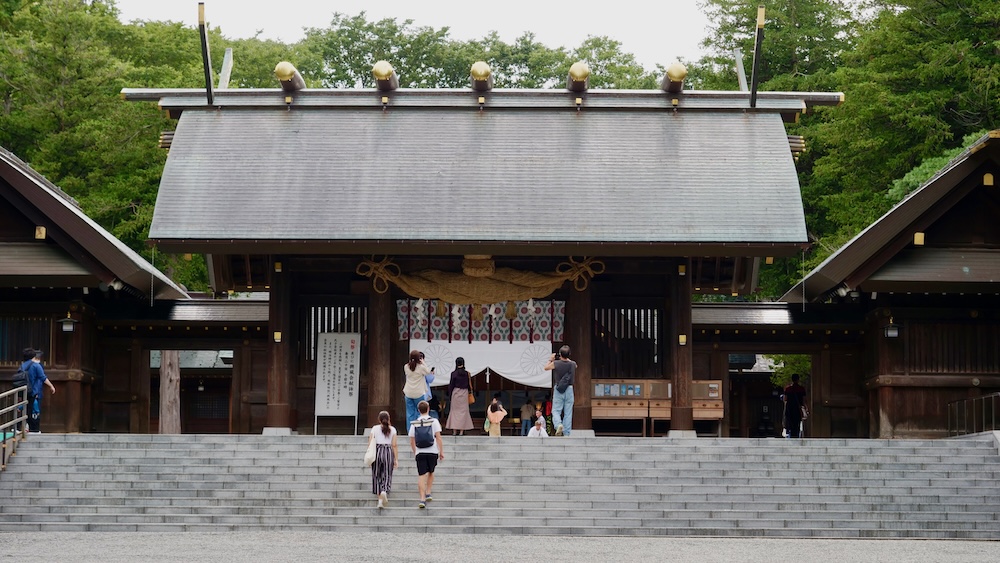
For me, the turning point was a day that probably wouldn’t make the cover of a glossy Japan brochure: visiting Hokkaido Jingu, walking in the forest around Maruyama and then tasting traditional Japanese sweets. Somewhere during that combination, I realized how much this city could offer.
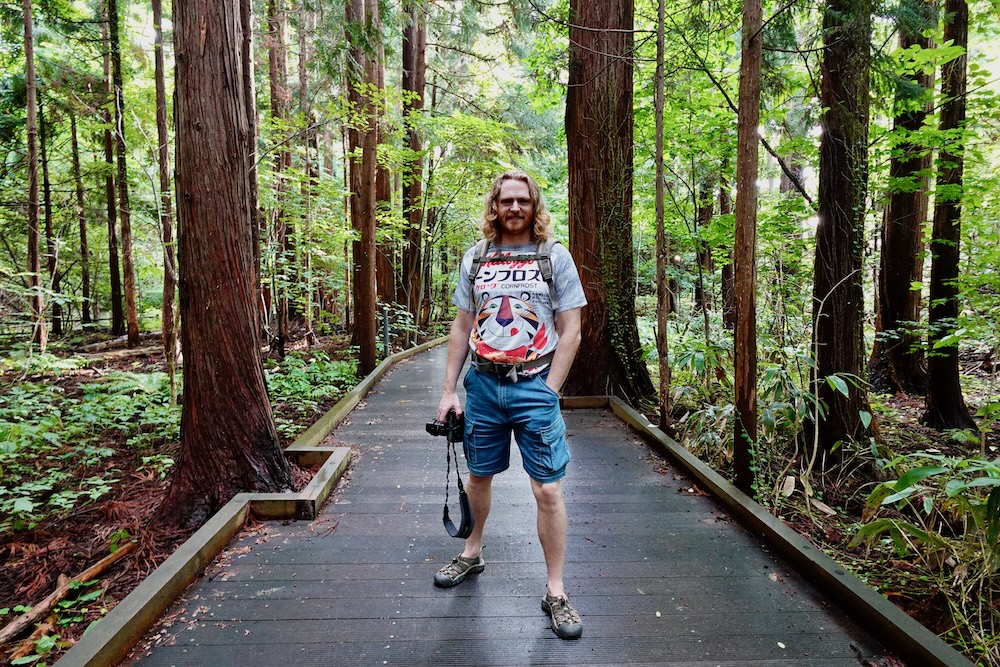
We’d already seen central Sapporo, with its traffic, commercial streets and familiar sights. Going west toward Maruyama was a completely different proposition. At Hokkaido Jingu, the cedar trees were enormous. The shrine grounds had a sense of calm that made me want to slow down rather than reach for the next item on a list. We’d had rain, and the surrounding greenery looked particularly lush. Then we headed into the woodland and found ourselves with remarkably few other people around.
I remember being surprised by the trees as much as anything. Their size, the variety, the fact that we could walk somewhere like this while still being within a major city—it all caught me off guard. We had also seen bear-warning signs near the forest trail, which was a reminder that this wasn’t merely a manicured city garden with a few trees added for decoration. I enjoyed the walk immensely, although those old signs aren’t a guide to present conditions; anyone going into the forest should follow local warnings and check Sapporo City’s current bear-safety information.
Maruyama Park covers around 70 hectares, with Hokkaido Jingu beside it, and the area is reachable from central Sapporo by subway and walking. The journey from the Sapporo Station area can take roughly half an hour, depending on where you start. That’s the sort of proximity I appreciate. You can have the conveniences of a sizeable city without feeling that a proper green escape requires hiring a car and disappearing into the countryside for the day.
We finished up with a stop for tea and Japanese sweets near the shrine. Audrey and I sampled several treats, some chewy, some crunchy, some with fillings we were doing our best to identify. There were a few names I managed to forget almost as quickly as we’d ordered them. What I do remember is how much we enjoyed the more restrained sweetness and the chance to sit among the trees with something cold to drink. Not every travel memory needs to be an epic culinary revelation.
That outing put the rest of Sapporo into perspective for me. Earlier, I could have described the city as pleasant, with some interesting places to see. After Maruyama, I saw more clearly how a visitor could spend time here without always feeling compelled to chase the next major attraction. A shrine, forest walk and sweets tasting had been enough to make a genuinely rewarding outing. Suddenly the city felt more complete than I’d given it credit for.
The big weakness: no single attraction that would make me book the trip
I don’t think Sapporo has one attraction that, on its own, would persuade me to travel all the way to Hokkaido. That’s the clearest limitation I noticed. We enjoyed plenty of places; I just didn’t find the equivalent of the one enormous draw that can dominate a visit to Kyoto or another of Japan’s headline destinations.
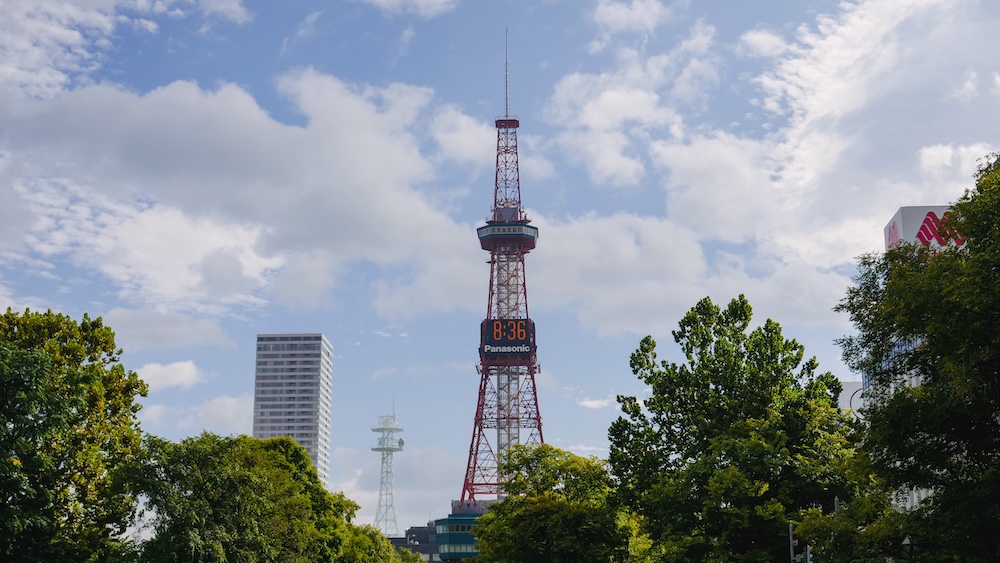
Take central Sapporo. I liked the retro appearance of the TV Tower, and the view from the top helped me understand just how spread out the city was. The mountains in the distance were especially striking. Getting up there in the lift was another matter: I remember arriving with sweaty, clammy hands, rather more conscious of the height than I wanted to be. The view was worth it, but would I plan a flight north specifically for that observation deck? No chance.
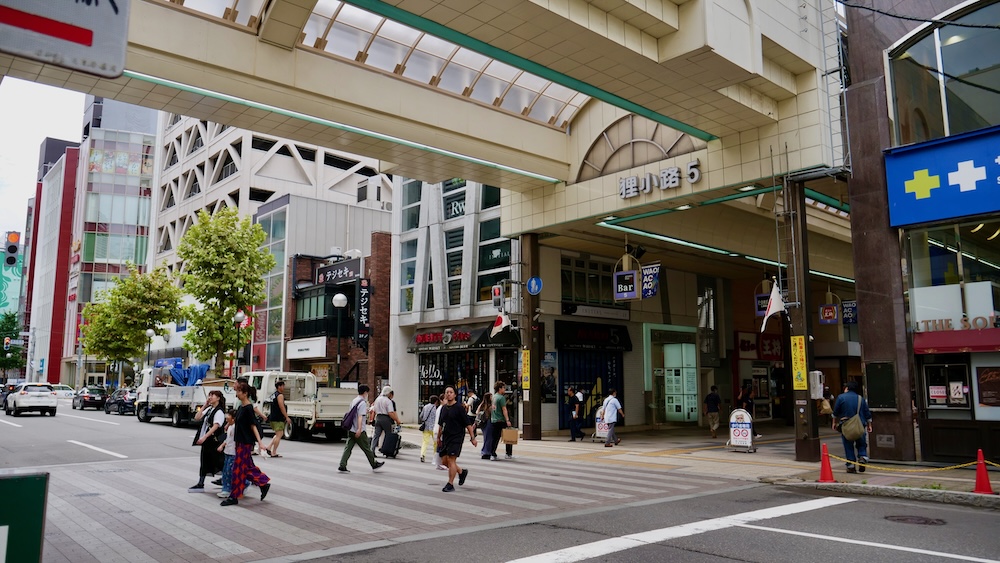
We also walked over to the historic Clock Tower, wandered around Odori Park and explored the shopping streets. All worthwhile parts of a city visit. None was the sort of experience I’d build an entire Japan itinerary around. That’s hardly an insult. Plenty of places I love lack a destination-defining monument.
Then there’s the less conventional side of the city. Audrey surprised me with a trip to Makomanai Takino Cemetery, out on the southern outskirts. After a long journey by subway and bus, we arrived in an area of forests and mountains, and I caught sight of Moai statues. I’d previously visited Easter Island, so being greeted by something so familiar in northern Japan was a fairly ridiculous and delightful surprise. We also saw Hill of the Buddha, the giant seated statue incorporated into a landscape designed by Tadao Ando, and a replica of Stonehenge. As cemetery visits go, this one wasn’t remotely ordinary.
We followed that general excursion with outdoor art at Sapporo Art Park, walking through a leafy setting with sculptures scattered along the paths. I enjoyed the contrast between those experiences and the compact downtown landmarks. It also took real effort to get out there. Hill of the Buddha has its own bus arrangements and seasonal visitor conditions; Sapporo Art Park is another separate site, not the next stop along a central shopping street.
If the idea of juggling those longer transfers doesn’t appeal, there’s a guided Sapporo day trip covering Hokkaido Jingu, Hill of the Buddha and several other city sights. The currently listed outing lasts ten hours and includes bus transport, although meals and paid attraction admissions are separate. We didn’t take this tour, and it isn’t a substitute for the forest walking or Art Park exploration we enjoyed. It’s an option for someone who wants to visit several spread-out places without organizing the transport independently.
So yes, Sapporo has distinctive sights, including some I was delighted to discover. If you have only a few hours and expect its biggest hits to rival famous landmarks elsewhere in Japan, you may wonder what the fuss is about. Give yourself room to explore its different sides, and my experience suggests the payoff becomes much more convincing.
Why I thought Sapporo might be Japan’s most livable big city
At the end of our visit, I found myself saying that Sapporo might be the most livable big Japanese city I’d experienced. That’s a rather grand claim from somebody who was there on holiday, not spending a winter commuting to work or comparing monthly bills. I meant how it felt to walk around, move between neighbourhoods and imagine an ordinary day there.
Tokyo had overwhelmed us with its scale and crowds. Osaka felt substantial too, but somehow more approachable. Kyoto was beautiful and immensely rewarding, though its tourism intensity was hard to ignore. Sapporo struck me as a working city where everyday life carried on without constantly arranging itself around visitors. We could be near commercial streets one moment and somewhere leafy and calm not long afterward. I found that refreshing.
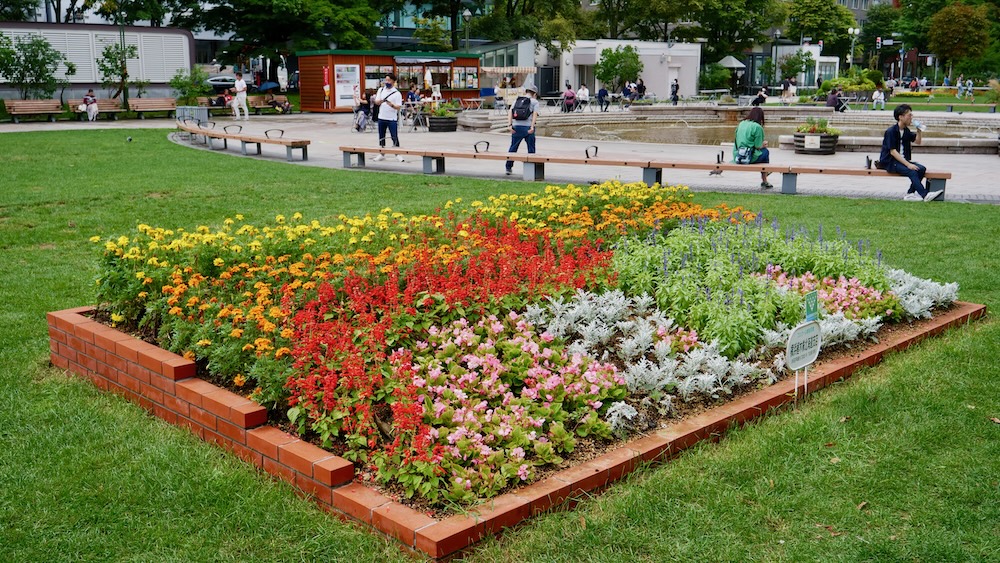
Audrey noticed the greenery straight away. She kept coming back to the avenues lined with trees and the number of parks, particularly compared with Tokyo. Once we explored Maruyama and Nakajima, I understood exactly what she meant. Even Odori Park, right through the central city, stretches roughly 1.5 kilometres. It isn’t a tiny square wedged between office towers; the greenery is a noticeable part of how central Sapporo feels.
Our hotel overlooked Nakajima Park. Its exact name has escaped me, but I remember that we liked the location, with a subway station nearby and the park practically on the doorstep. We went into the park to see the pond, walking paths, Japanese Garden and the old Hoheikan building. The interior of Hoheikan felt a bit bare to us, so that part was a fairly short visit. The Japanese Garden appealed to me much more. Having that sort of place near our accommodation made the city enjoyable between the headline activities as well as during them.
If you like that quieter side of Sapporo, you can compare accommodation around Nakajima Park. That’s an area recommendation based on where we stayed, not an endorsement of a particular hotel I can’t reliably name. I’d still check the walking distance to the nearest subway station before booking, especially if you plan to spend a lot of time exploring elsewhere.
And we didn’t need a car for the city experience we had. We walked, used Kitaca cards on public transport and took the subway to different areas, with buses for more distant outings. Of course, efficient public transport doesn’t make Sapporo small. We discovered that the hard way when we started venturing toward the outskirts. But around the central neighbourhoods, I felt comfortable exploring independently. Imagining those ordinary trips—groceries, food, an evening walk—probably best explains my livability comment.
The food and odd surprises helped seal the deal
Food has to figure in my verdict. We ate extremely well, occasionally abandoning our plans when something more interesting appeared.
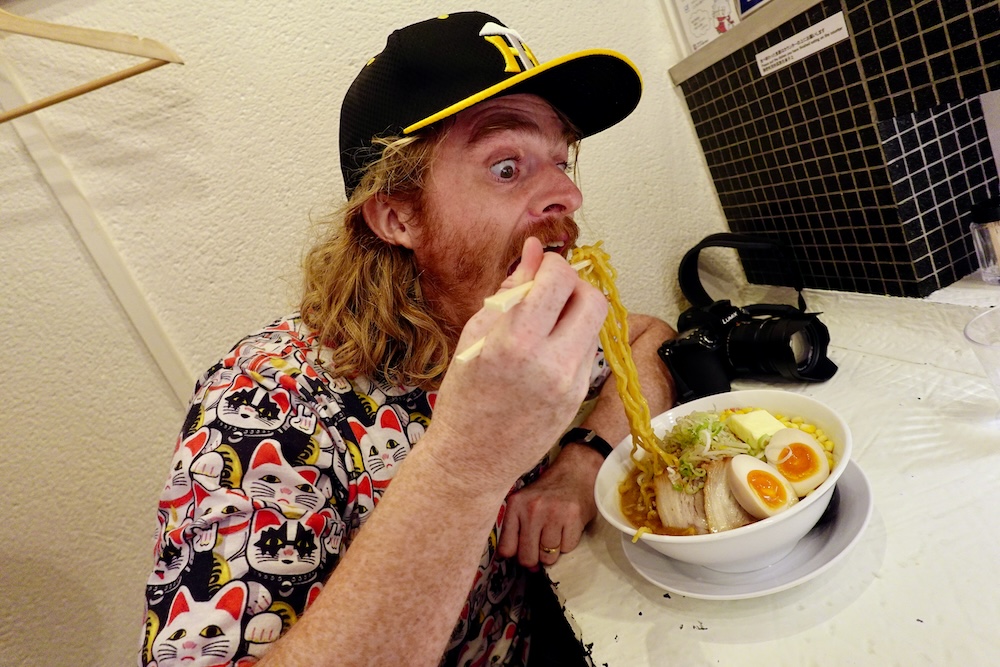
Our butter-corn miso ramen at Ganso Ramen Yokocho was a particular highlight. We chose one of those tiny shops in the alley, ordered using a ticket machine and somehow added more extras than intended. I ended up with a wonderfully excessive arrangement of egg and butter, though the soup was already rich enough to stand on its own. The pork was tender, the broth was delicious, and I wasn’t about to complain that my inability to resist pressing a few more buttons had made dinner even more substantial. I called it the best ramen I’d eaten so far in Sapporo, not that I’d sampled every shop in the alley.
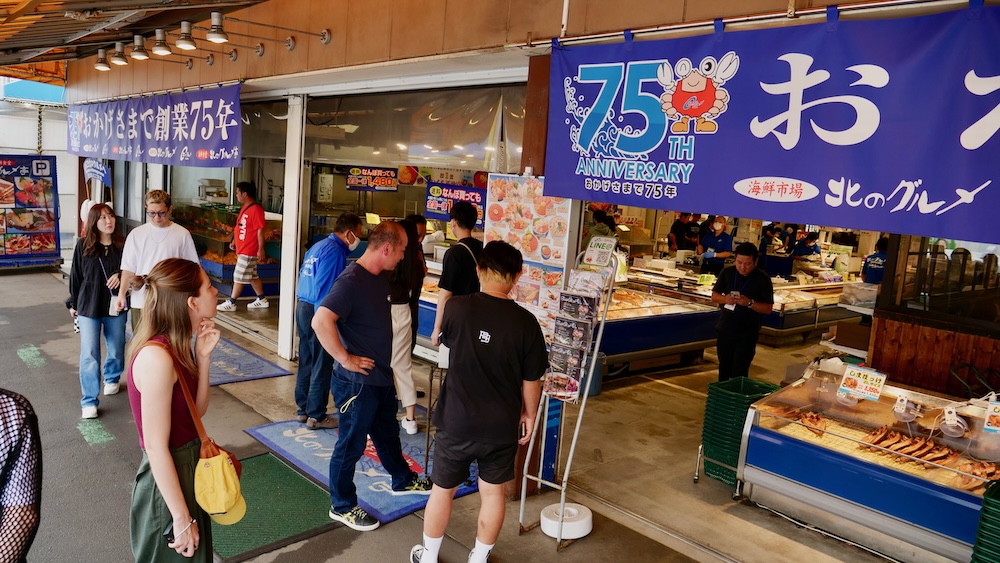
For seafood, we went to the Curb Market beside Sapporo Central Wholesale Market. That’s a different market from Nijo, and the distinction is worth making if you’re trying to find the place. We stopped for a late breakfast and ended up with quite the spread. Audrey ordered a rice bowl with four kinds of crab; I went for crab soup and sashimi. I generally don’t have a seafood feast before most people have finished their morning coffee, but Hokkaido seemed as good a place as any to make an exception.
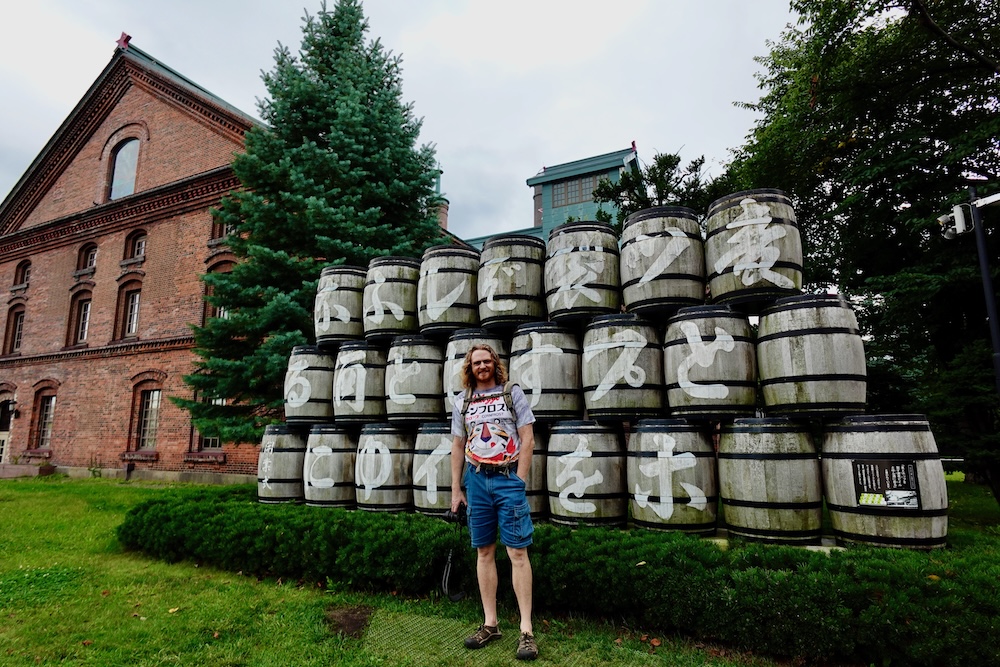
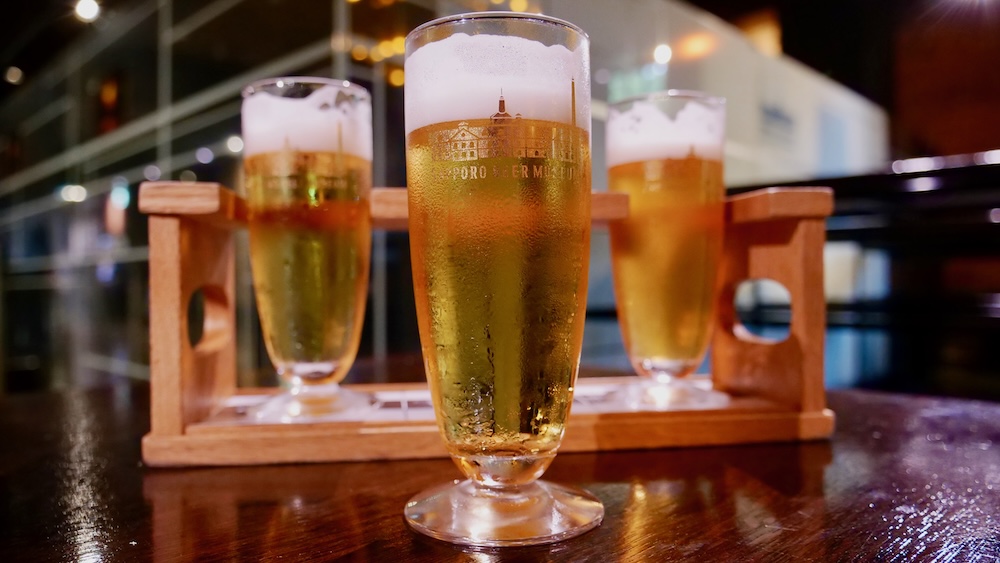
We toured the Sapporo Beer Museum, too, where I enjoyed the Black Label best during our tasting. Audrey’s experiment with corn tea was considerably less successful. She thought it smelled like the water left over from boiling corn. Then we happened upon Sapporo Autumn Fest in Odori Park and abandoned our original lunch idea in favour of wandering between food stalls. There was tempura, Indian food and sweets, and no pressing reason to insist on the meal we’d planned before arriving.
We preferred exploring the food scene on our own, and I’m glad we did. But if choosing restaurants and figuring out where to try different specialties sounds more like work than fun, you can compare guided food tours and tasting experiences in Sapporo. There are different formats to consider, so I’d look at which dishes and neighbourhoods each one actually covers instead of assuming every food tour will take you to the same places we visited.
None of that depended on a famous monument. Neither did Audrey’s surprise cemetery excursion or our meandering around the outdoor sculptures at Art Park. Sapporo kept producing enjoyable experiences from quite different directions. It was the accumulation that won me over, even if it meant accepting that the city’s attractions weren’t conveniently gathered into one compact area.
Who is most likely to enjoy Sapporo?
I have a soft spot for what I call secondary and tertiary destinations. I don’t necessarily mean small places; I’m talking about cities that aren’t the first names everyone puts on a country itinerary, where I can enjoy the local rhythm without feeling that my whole visit has to revolve around an internationally famous attraction. Sapporo, despite being a major city, scratched that itch for me.
If you enjoy using public transport to get beyond the central tourist streets, having a long wander through a park, eating your way through neighbourhoods and seeing what a place is like on an ordinary day, I think you’ll find plenty to appreciate here. I just wouldn’t judge the city solely on its Clock Tower or observation deck.
A traveller who prefers a more concentrated run of famous cultural landmarks might feel differently. I wouldn’t tell someone visiting Japan for the first time to sacrifice the places they’ve dreamed of seeing just because I found Sapporo charming. Those other cities offer different experiences; Sapporo doesn’t need to win an imaginary competition with them. The reason to choose Sapporo is that you want this particular combination of big-city life, food and nearby greenery.
Audrey is a good reminder that enjoying a place and preferring that kind of travel are different things. She really liked Sapporo. The trees, parks and space made a strong impression on her, and we both came away happy we’d visited. Yet if you ask her to choose broadly between urban and rural Japan, she still gravitates toward the countryside. Her enthusiasm for Sapporo doesn’t erase that preference, and there’s no reason yours needs to either.
When the detour to Hokkaido makes sense—and when it doesn’t
Here’s where I’d be careful with the recommendation. If a friend said they had 14 days in Japan and asked whether they should include Sapporo, my instinct would be yes. Then I’d want to see the rest of the route. Getting there might mean sacrificing somewhere else you wanted to see.
From Tokyo, direct flights to New Chitose take roughly 1 hour 40 minutes from Haneda or 1 hour 50 minutes from Narita. From Osaka’s main airports, the flights are around two hours. Those are flying times, not the time you’ll spend travelling from one hotel to the next. You’ve still got the departure-airport journey, check-in and security, the flight itself, and whatever comes after landing. The train from New Chitose into Sapporo Station takes approximately 33 to 43 minutes depending on the service, before you reach your accommodation.
If you’d prefer to travel from Tokyo entirely by rail, it’s an even bigger commitment: roughly four hours on the Shinkansen to Shin-Hakodate-Hokuto, then about three and a half hours on the limited express toward Sapporo, plus the connection. I’m not saying that journey couldn’t be worthwhile, especially if the train ride itself appeals to you. But it certainly isn’t a quick hop between sightseeing districts.
When Hokkaido is already part of your plans, the argument changes. Sapporo is an important transport hub, and New Chitose can be the natural entry point for a trip focused on the island. You may find that including the city fits your travel direction rather than dragging you away from it. Hokkaido is vast, though, so don’t assume every other destination on the island sits conveniently next door.
Once you’ve decided to include Sapporo, accommodation is one decision I’d make with the itinerary in mind. We liked having Nakajima Park nearby, but travellers expecting lots of transfers between the station, central attractions and other parts of Hokkaido might prefer Odori for its subway connections. You can compare hotels in the Odori area and decide whether that central location suits your plans better. I wouldn’t choose a hotel just because it appears closest to the biggest tourist attraction on a map.
| If your Japan trip looks like this | How I’d approach Sapporo |
|---|---|
| You’re already visiting Hokkaido | I’d make a strong case for including its capital if your schedule allows. |
| You’ve got a longer, flexible Japan itinerary | I’d consider Sapporo if you enjoy characterful cities, parks and food as much as famous landmarks. |
| You’re squeezing Tokyo, Kyoto and Osaka into a short holiday | I’d hesitate before adding another flight and two airport journeys. Look at what you’d have to remove. |
| You primarily want rural Japanese experiences | I wouldn’t assume a major city is the best place to spend your spare days, however pleasant Sapporo may be. |
There’s no magic minimum number of nights. What I’d look at is how much usable time you actually have after getting there. If the travel leaves you with little more than a rushed look at the Clock Tower, Odori Park and a bowl of ramen, you’re seeing only part of what persuaded me. The more interesting green spaces and unusual southern attractions are spread out, and they reward an itinerary that isn’t constantly racing the clock.
The question isn’t whether Sapporo is good enough for Japan. For me, it unquestionably is. The question is whether Sapporo is the right use of your particular days in Japan.
Would I go back to Sapporo?
When we finished our visit, I was surprised by how quickly our time had gone. We’d arrived with plenty to see and somehow kept discovering new sides to the city. The September heat had tested our patience, especially Audrey’s, and I’d seriously underestimated the distances involved in reaching some attractions. We also hadn’t been handed a single life-changing landmark to justify everything. Yet the experience had been enormously enjoyable.
Maruyama explains that feeling better than any ranking. The cedar trees, the quiet woodland, the shrine, then sitting down with Japanese sweets: none required Sapporo to put on a grand performance for tourists. I liked being there, and that simple fact carried more weight than whether its most famous clock tower measured up to a temple in Kyoto.
Could I see myself making time for Sapporo again during another journey through Hokkaido? Absolutely. Would I tell somebody with a tightly packed first trip to Japan that they must make the same detour? No. Those two answers are perfectly compatible.
My verdict is yes: Sapporo is worth visiting, especially if you enjoy cities for their atmosphere and the variety of experiences they offer. If the trip north fits comfortably into your plans, I’d encourage you to see it for yourself. If reaching it would mean sacrificing the Japanese destinations you’ve wanted to visit for years, save Sapporo for a journey when you can enjoy more than its downtown landmarks. That’s the city that won me over, and I’d hate for you to miss that side of it by rushing through.
Frequently Asked Questions
Is Sapporo worth visiting on a first trip to Japan?
Yes, I think Sapporo is worth visiting, especially if you enjoy characterful cities, food, parks and unusual attractions. But if your first Japan itinerary is already packed with Tokyo, Kyoto and Osaka, consider whether travelling north would mean sacrificing places you’re more excited about.
What makes Sapporo worth visiting?
For me, it was the combination of experiences rather than one extraordinary landmark. I particularly loved our outing to Hokkaido Jingu and the forest around Maruyama, followed by traditional Japanese sweets. The ramen, green spaces and unusual attractions added to the city’s appeal.
Is Sapporo worth visiting if you’re already travelling around Hokkaido?
I’d make a strong case for including Sapporo if your schedule allows. It’s a major transport hub with food, cultural attractions and green spaces to explore. Just remember that Hokkaido is large, so travelling from another destination on the island isn’t necessarily quick.
Can you visit Sapporo without renting a car?
Audrey and I explored independently using the subway, buses and walking. That worked well for our trip, although attractions on the southern outskirts required more planning and longer journeys than central landmarks.
Does Sapporo have any must-see attractions?
Sapporo has interesting and distinctive sights, including Hill of the Buddha, Hokkaido Jingu, Sapporo Art Park and the TV Tower. My main criticism is that no single attraction defined the trip for me. The city’s overall variety was what made it worthwhile.
Is it better to visit Sapporo or spend more time in Tokyo and Kyoto?
That depends on what you’re looking for. If famous landmarks and major cultural sights are your priority, I’d be cautious about sacrificing time in Tokyo or Kyoto. If you enjoy exploring less obvious urban destinations, Sapporo offers a different experience that I found genuinely rewarding.
Is Sapporo a good destination for food lovers?
Food was a major highlight of our visit. We enjoyed butter-corn miso ramen at Ganso Ramen Yokocho, seafood at Sapporo’s Curb Market, beer tasting at the Sapporo Beer Museum and an unexpected visit to Sapporo Autumn Fest.
Is Sapporo worth the flight from Tokyo or Osaka?
I’d consider it if you have enough time to explore beyond the central landmarks. Direct flights take roughly one hour and forty to fifty minutes from Tokyo or around two hours from Osaka, but airport transfers add considerably to the journey. For a tightly scheduled trip, I’d weigh that travel commitment against what you’d miss elsewhere.
This article is also available in Spanish. [Leé la versión en castellano: ¿Vale la pena visitar Sapporo? Nuestro veredicto sincero tras el primer viaje]
This article contains affiliate links. If you book through one of these links, I may earn a commission at no extra cost to you.