
Five days in Sapporo is enough time to get beyond the Clock Tower photograph, eat your way through seafood and ramen, and explore proper woodland trails without leaving the city. You can also visit two places that feel nothing like Sapporo: Otaru’s old port and volcanic Noboribetsu.
For this trip, I’d spend three days exploring Sapporo, one day in Otaru and one day in Noboribetsu Onsen, using a single Sapporo hotel throughout. Otaru is an easy rail excursion; Noboribetsu involves a limited express, a connecting bus and hard choices about how much walking or bathing fits before the return journey.
Audrey and I visited all three destinations on a longer Hokkaido journey, travelling from Hakodate through Noboribetsu and Sapporo to Otaru, and we stayed overnight in both excursion towns. This Sapporo-based itinerary draws on what we enjoyed and would prioritize, while making room for the transport and shorter sightseeing windows. A day trip cannot reproduce every part of an overnight stay.

Your five days in Sapporo at a glance
| Day | Where to go | Main experiences |
|---|---|---|
| 1 | Central Sapporo | Clock Tower, TV Tower, Odori Park, Beer Museum and Ramen Alley |
| 2 | Sapporo’s greener side | Curb Market seafood, Hokkaido Jingu, Maruyama forest and optional Nakajima Park |
| 3 | Southern Sapporo | Makomanai Takino Cemetery, Moai, Hill of the Buddha and possibly Sapporo Art Park |
| 4 | Otaru | Canal, warehouse district, Sakaimachi, glass shops, Kitaichi Hall and optional cruise |
| 5 | Noboribetsu Onsen | Hell Valley, volcanic walks, natural footbath or a full onsen bath |
This plan assumes five complete sightseeing days, not five calendar dates with two partly consumed by flights. If you’re short on time, cut optional Sapporo stops rather than rushing Noboribetsu. No car is needed, though Days 3 and 5 require careful transport planning.
I would normally book somewhere convenient to JR Sapporo Station for this particular itinerary. We stayed around Nakajima Park, lovely for greenery and quieter evenings, but two rail excursions change the calculation. It makes sense to compare hotels near JR Sapporo Station before choosing your base; I’ll explain the neighbourhood trade-off below.

Day 1: Central Sapporo, the Beer Museum and butter-corn ramen
Start with Sapporo Clock Tower, Sapporo TV Tower and a stroll along Odori Park. We went inside the Clock Tower and up the TV Tower for views across the city and that long strip of greenery below. The present adult admission prices are ¥350 for the Clock Tower and ¥1,200 for the TV Tower observation deck, with their respective opening and closure schedules worth checking before you set out.
I liked the TV Tower view, even if the exposed ascent had me sweating more than I’d care to admit. Once back at ground level, Odori Park is a good place to let the day unfold rather than immediately chasing another paid attraction. Sapporo may lack some of the enormous headline sights you find elsewhere in Japan, but its broad streets, parks and ease of movement made a strong impression on me. I even wondered if it might be the most livable big Japanese city I’d visited, a conclusion that came from exploring rather than one viewpoint.
Our September visit also delivered some ridiculous heat, around 30°C, which Audrey found particularly draining. We stopped for ice cream and appreciated the covered Tanukikoji Shopping Street when we needed a break from the sun. If you’re in town during Sapporo Autumn Fest, as we were, Odori Park also becomes a tempting place to eat; treat that as a seasonal bonus rather than a guaranteed part of this itinerary.

Make the Beer Museum your afternoon outing
The Sapporo Beer Museum sits away from the central landmark cluster, so give it its own afternoon slot and allow time to get there. We enjoyed the historic brick building and exhibits before sampling a three-beer tasting set. I was partial to Black Label, although the real pleasure was combining a bit of local beer history with a leisurely tasting instead of racing between attractions.
The current standard self-guided adult admission is ¥1,000, with tasting extra. The exhibition takes roughly 15–30 minutes; ordinary museum hours are around 11 a.m.–6 p.m., with earlier last admission and separate tasting-hall limits. Guided formats differ, so allow time for transport as well as beer.
Save dinner for Ganso Ramen Yokocho in Susukino. Our Sapporo-style miso ramen came loaded with corn and butter, to which I added still more butter and an egg. Subtlety wasn’t really the objective. The rich broth was one of the highlights of our food adventures in the city, and finishing the first day with a warming bowl of noodles makes far more sense to me than squeezing in yet another museum.

Day 2: Seafood breakfast, Hokkaido Jingu and a forest walk
Begin in the public-facing Sapporo Curb Market beside the Central Wholesale Market, which is a different place from downtown’s Nijo Market. Audrey ordered a donburi with four varieties of crab, comparing their flavours while cheerfully admitting she wasn’t an expert. Between the bowls, soup and other seafood, this was a proper meal rather than a quick breakfast stop.
For the transport, take the Tozai subway toward Nijuyonken and walk to the market; check individual restaurant hours, as this is not an all-day dining district. From there, continue toward Maruyama Park and Hokkaido Jingu, pairing breakfast with a very different side of Sapporo instead of going back and forth through the centre.
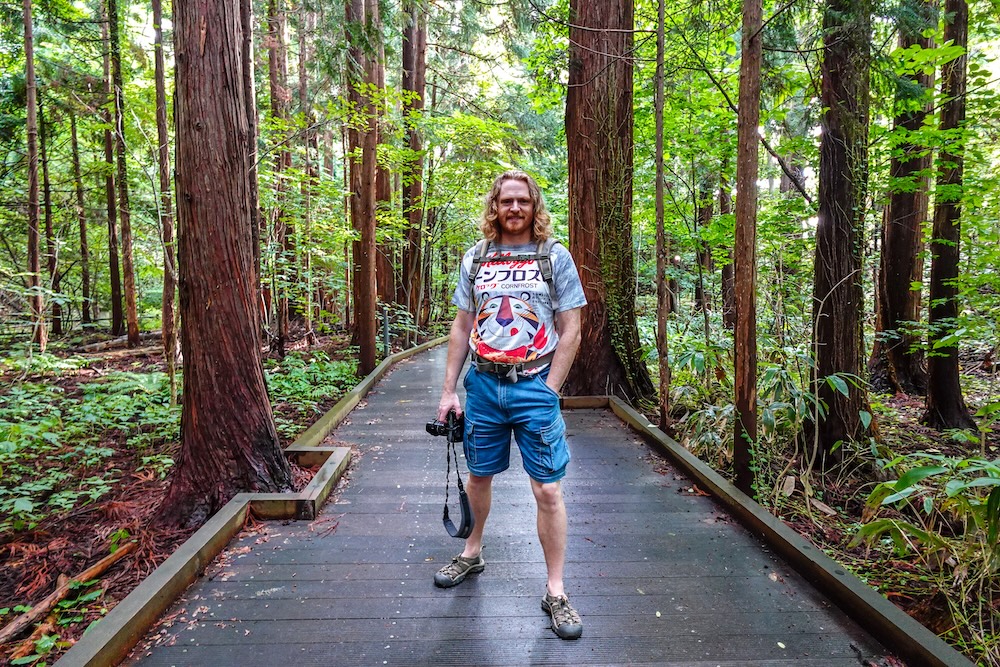
After a spell of rain, the park and surrounding woods were intensely green when we visited. We explored the shrine grounds, enjoyed a break for tea and Japanese sweets, and headed along woodland paths in the Maruyama area. I loved how quickly the urban city disappeared beneath the trees, while Audrey separately remarked on how spacious and green Sapporo felt compared with Tokyo. These moments did more to shape our opinion of the city than ticking off extra famous buildings would have done.
We encountered bear-warning signs in the Maruyama primeval forest, so check current wildlife and trail notices before heading in. You can enjoy the shrine and park without committing to a long woodland walk, especially if your morning at the market has run late.
Nakajima Park makes a gentle optional stop later in the day, especially if you’re staying nearby. We wandered around its pond, Hoheikan and Japanese Garden, though garden access is seasonal. I’d leave this flexible: after an extravagant seafood breakfast and a good walk among the trees, an unhurried afternoon is hardly a failed itinerary.

Day 3: Moai statues, Hill of the Buddha and art in the woods
On our trip, Audrey kept the destination of this excursion partly secret. We took the subway to Makomanai, continued by bus and eventually arrived at Makomanai Takino Cemetery, where a row of enormous Moai statues was waiting. I joked that we’d somehow landed back on Easter Island. There’s even a Stonehenge replica.
The centrepiece, however, is Hill of the Buddha, where a huge seated figure is partly concealed by a landscaped hill and framed by a circular opening above. The approach is striking, with wooded scenery far removed from the streets of central Sapporo, and I found the unusual excursion worth the journey.
The cemetery is an active place of remembrance, so keep to the visitor routes and be respectful. Published visiting windows for Hill of the Buddha are 9 a.m.–4 p.m. from April through October and 10 a.m.–3 p.m. from November through March, with ¥1,000 adult admission. The outdoor water feature also changes with the seasons. For public transport, the listed connection is bus 108 from Makomanai Station’s terminal 2, with a published ¥500 adult fare for the specified journey. Confirm the departure point, seasonal timetable and return bus before heading out; the trip involved a noticeable amount of public transport for us.

Add Sapporo Art Park only when the connections work
Sapporo Art Park is another place where we thoroughly enjoyed being outdoors, exploring its sculpture forest, paths and streams. The wooded sculpture trails have steps and changes in elevation; even on our visit, we deliberately didn’t try to see everything.
The two can connect by bus, but not from the stop where you arrived at the cemetery. The city describes travelling via Takino Toge near the cemetery entrance to Geijutsu no Mori Center for the sculpture area, with services roughly hourly. Check the actual timetable and return journey before committing; a taxi is another option if available. Nearby on a map does not mean effortless by public transport.
The outdoor Sculpture Garden normally operates April 29–November 3, with current adult admission ¥800 and cash payment specified. Other parts of the Art Park have their own arrangements, but this exact outdoor combination isn’t available as written throughout winter. I’d prioritize Hill of the Buddha early, add the Sculpture Garden if the transfers are sensible, and refuse to spend the best part of an afternoon staring at a timetable simply because two attractions looked close on a map.
Day 4: A day in Otaru, from the canal to Kitaichi Hall
Otaru is the easier of the two regional excursions, and a lovely change after three days in Sapporo. Faster direct trains from JR Sapporo take roughly 30–40 minutes, with the current ordinary unreserved fare ¥800 each way.
We originally came to Otaru near the end of a longer Hokkaido journey, with roughly 24 hours before catching a ferry. The canal and Sakaimachi area felt compact and enjoyable on foot; a day works well for this corridor, though not Otaru’s outer attractions. If you’d rather have a guide, check this private Otaru day trip from Sapporo. It’s an optional guided alternative, not a necessity for a straightforward train outing; confirm how much free time you get and whether a canal cruise would fit.
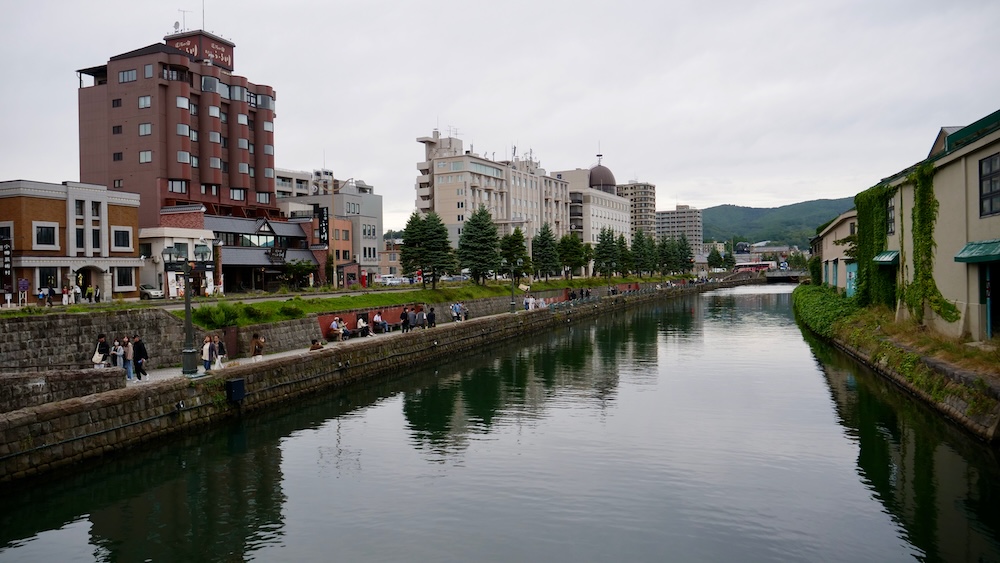
Start around Otaru Canal, where the old stone and brick warehouses make the waterfront feel distinctly different from Sapporo. We noticed a canal boat preparing to leave, bought tickets on the spot and hopped aboard. It took us beyond the familiar waterfront view, past former industrial buildings that made Otaru’s working-port history more tangible.
The current Otaru Canal Cruise lasts roughly 35–40 minutes, with adult fares of ¥1,800 during the day and ¥2,000 at night. Boats depart near Chuo Bridge, about ten minutes’ walk from Otaru Station; arrive 15 minutes early. Sailing times, weather and capacity vary, so check the official canal cruise reservation schedule if cruising matters to you.

Sakaimachi’s glass shops, music boxes and a memorable café
Give the rest of the day to Sakaimachi, where we spent ages looking through shops filled with glass ornaments, jewellery, cups and elaborate pieces of craftsmanship. We watched some workshop activity, although we didn’t participate in a class. We joked about how expensive one accidental collision with a glass display could become. I watched my elbows.
We also stopped for the Steam Clock and explored the main building of the Otaru Music Box Museum. With music boxes playing everywhere, the interior felt almost Christmas-like. I kept expecting a conventional exhibition, but the Main Hall felt mostly like an enormous shop—enjoyable, provided you know what you’re walking into.
The indoor stop I’d protect is Kitaichi Hall. We entered a dimly illuminated room with high ceilings, chandeliers and petroleum lamps, then settled down for drinks and cake. Audrey loved the magical lighting, while I was particularly impressed by the height and character of the room; it felt almost like being inside an old wooden ship. We took our time over dessert; it was possibly my favourite experience in central Otaru, unexpectedly for a café.
Kitaichi Hall generally operates around 9 a.m.–5:30 p.m., with last orders earlier. Plan to visit before late afternoon rather than assume you can stop after an evening canal cruise. If you only have a day, I’d sooner shorten your shopping time than rush this café experience.
Where to eat, and whether to stay for the illuminated canal
Our Otaru meals also included a beef-cutlet lunch where we cooked the meat ourselves on a little tabletop grill. The English instructions came in handy, and the cutlet was far better than the cheaper hamburger option we compared it with. You needn’t replicate our lunch; choose somewhere that fits the walking route.
We also visited Otaru Beer in Warehouse No. 1, surrounded by brewing equipment and a wonderfully German-inspired atmosphere. I loved my beer and the warm pretzel; our currywurst and fries were more underwhelming, so the beer hall’s character did most of the heavy lifting. Importantly, a renovation closure is announced for January 1–April 11, 2027, with reopening planned for April 12. Check the latest notice if your trip overlaps those dates.
We later sampled surprisingly sweet sake at a shop whose name I no longer remember. Audrey admitted she was more of a wine person; neither of us was claiming sake expertise. Leave room for such spontaneous stops.
For a daylight-focused visit, you can often finish your Sakaimachi walk near Minami-Otaru Station instead of retracing all the way to Otaru Station. If you’d rather see the canal illuminated, return to the waterfront after the shops and café, then take a later train back to Sapporo. Choose an illuminated canal visit or an earlier return.

Day 5: Noboribetsu’s Hell Valley and its natural hot river
Noboribetsu is the excursion that needs discipline. We stayed a couple of nights in Noboribetsu Onsen at Park Hotel Miyabitei, arriving by train from Hakodate and continuing by public bus. We enjoyed geothermal walks and repeated hotel baths; a day trip demands tighter priorities.
A limited express from JR Sapporo to JR Noboribetsu Station takes roughly 70–80 minutes, with a regular reserved-seat fare currently ¥4,890 each way. From the station, Donan Bus takes you uphill to Noboribetsu Onsen, where Hell Valley and most of the attractions are located. The published adult bus fare is ¥450 each way, and ordinary Kitaca/Suica cards aren’t accepted on this service. Check the bus’s payment methods and both connections; the station isn’t Hell Valley.
The return bus sets your sightseeing budget
Here are two sample combinations from the rail and bus schedules effective in late October 2026. They illustrate why checking connections matters; you’ll need to verify the timetable for your actual date.
An early 6:53 a.m. Sapporo departure reaches JR Noboribetsu at 8:03 a.m. The 8:23 a.m. bus reaches Noboribetsu Onsen at 8:42 a.m. If you use the 4:18 p.m. return bus, you have approximately 7 hours 36 minutes in the onsen district. That leaves time for Hell Valley, lunch and a substantial extra activity.
Leave Sapporo at 8:43 a.m. instead and the connecting bus gets you to Noboribetsu Onsen at 10:39 a.m. Your available time before that same return bus drops to 5 hours 39 minutes. Nearly two hours have vanished before sightseeing even starts, which is why an overnight attraction list won’t work here.
That 4:18 p.m. bus is scheduled to reach JR Noboribetsu Station at 4:40 p.m., connecting with a 5:05 p.m. limited express due in Sapporo at 6:23 p.m. Check reservations and changes. The town is walkable once you arrive, though we waited around half an hour for a bus on our original trip. If you’d rather skip the transfers, review this guided Noboribetsu and Lake Toya day tour. It stops at Hell Valley for about 35 minutes before heading to other Hokkaido sights, so it is a different, faster-paced outing with no time promised for our favourite natural footbath.
Hell Valley first; everything else is negotiable
Head for Jigokudani (Hell Valley), which is walkable from the onsen bus terminal. We followed paths and boardwalks beside fumaroles, bubbling pools and rock stained vivid orange and pale grey. There was sulfur in the air and, in places, enough heat coming out of the ground that we could feel it independently of the day’s weather. The landscape is extraordinary.
Discovering one steaming landscape after another made these some of my favourite daytime walks in Japan, but on a day trip I’d explore the main Hell Valley paths before heading farther into the woods. Stay on marked routes and obey geothermal access restrictions.
The Oyunuma River Natural Footbath is my favourite extension
If the trails are open and your return time allows it, continue toward the Oyunuma River Natural Footbath. The walk toward Oyunuma from Hell Valley can take roughly 20–30 minutes, and you still have the connecting woodland section to the river, time to sit and the return journey.
When Audrey and I arrived, steam was rising through the trees and the river had a greyish, milky-blue colour. We took off our shoes, lowered our feet into water that felt surprisingly hot at first and dug our toes into the fine, dark volcanic sand beneath. During our visit, bamboo seating and padded mats were available; we lingered for half an hour, and I could easily have stayed all day.
Audrey, meanwhile, had an important question about the sulfur smell: was that the volcanic landscape, or was it me? Given the steaming valley around us, I felt unfairly accused. That footbath remains one of my strongest Noboribetsu memories.
The footbath itself is free, although its approach trails can close, particularly in winter. Bring a small towel and shoes suitable for woodland paths, and don’t assume the seating or access arrangements we encountered will always be identical. If conditions are poor or you’ve taken the later train, enjoy Hell Valley and save the longer walk for an overnight visit.
Demons, Enma Ramen and the choice to soak properly
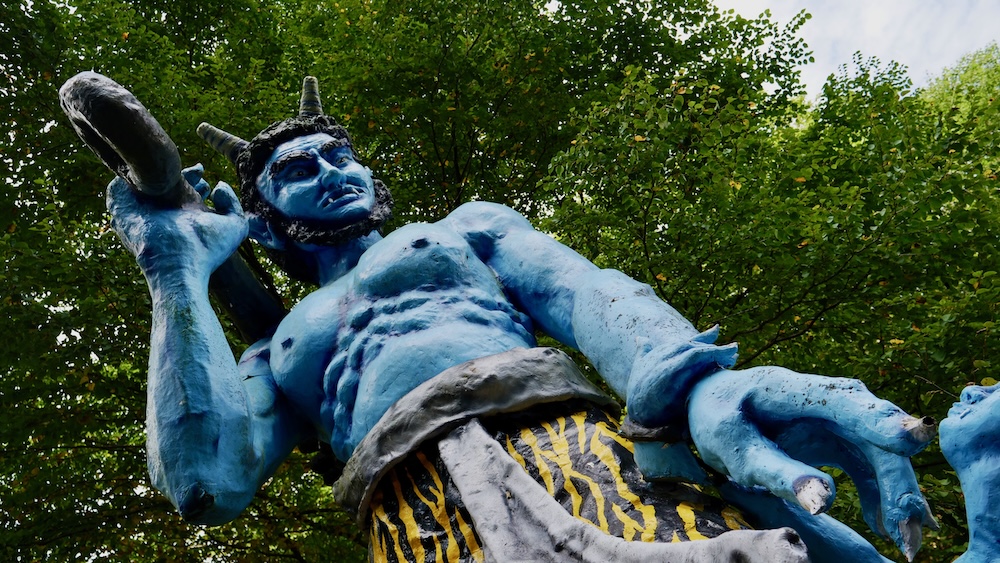
There’s more to Noboribetsu than steaming rock. The onsen town has colourful oni demon statues, the Enmado King Enma attraction and a geyser at Sengen Park. The geyser behaved differently on our separate visits, so enjoy the town sights as you pass rather than counting on a particular eruption or performance.
Our lunch was another standout. Audrey ordered spicy Enma Ramen, packed with colour and a nutty, fiery flavour; I had a different miso-based bowl with generous pieces of pork. Then I tasted hers and declared it the best ramen I’d ever had. She’d thoroughly out-ordered me, and we even talked about coming back for another bowl. Menus change, so don’t count on finding the exact bowl we ate, but I’d protect time for lunch in town.
A full onsen bath is the alternative to spending extra time on the trails. Day-use options currently include Yumoto Sagiriyu, around ¥550, and Dai-ichi Takimotokan, around ¥2,500, with different hours, admission conditions and towel arrangements. We used our hotel’s hot-spring facilities as overnight guests, not either of those day tickets, so check the specific arrangement before showing up ready to bathe.
At Park Hotel Miyabitei, Audrey found quieter periods in the women’s baths, and we enjoyed repeated soaking, buffet meals and a Japanese-style room. It was a large resort rather than an intimate ryokan, but bathing without watching a train timetable was wonderful. If you decide that experience matters more than keeping one Sapporo base, check current rooms at Park Hotel Miyabitei for an overnight instead.
For a Noboribetsu day trip, I’d choose Hell Valley plus either the natural footbath or a full onsen bath, with lunch and a few town sights as time permits. If the walking experience matters, give the river priority. If relaxation matters more, choose the paid bath and cut the longer trail. Trying to do everything is where the day becomes an endurance test.

Where to base yourself, and whether the rail pass is worth it
For this five-day itinerary with one hotel base, the main argument for staying near JR Sapporo Station is simple: on Day 4 you need a regional train, and on Day 5 you might want the 6:53 a.m. departure. Odori works well for central sightseeing and access to the subway, while Susukino makes restaurant and evening choices easy. Our Nakajima Park neighbourhood was appealingly quiet and green, but adds a journey to the JR platforms. I wouldn’t claim one district wins for every traveller; if you value restaurants and evenings more than train access, compare hotels across Sapporo by area before deciding.
Keeping your Sapporo room avoids extra packing and check-ins, while staying in Noboribetsu gives you the repeated baths and unhurried trail time we enjoyed. This plan favours one base, with Noboribetsu treated as a highlights excursion.
Compare individual JR tickets with the Sapporo–Noboribetsu Area Pass
At the regular fares used for this itinerary, Sapporo–Otaru return costs ¥1,600 on ordinary unreserved tickets, while Sapporo–Noboribetsu return costs ¥9,780 using regular reserved-seat limited expresses. That’s ¥11,380 in JR tickets before the local bus to Noboribetsu Onsen.
The Sapporo–Noboribetsu Area Pass is currently ¥10,000 with qualifying advance purchase or ¥11,000 at designated Japanese stations. On the equivalent rail journeys above, that represents a potential saving of ¥1,380 or ¥380, respectively. Discounts and train choices can change the calculation; compare your actual fares. JR Hokkaido’s larger advertised Otaru saving assumes reserved rapid-train seats, while this calculation uses the cheaper ordinary unreserved fare.
Although this is a five-day itinerary, the pass is valid for four consecutive days, which is enough because the long JR trips fall on Days 4 and 5. The pass is limited to non-Japanese passport holders, requires an original passport and still involves limited-express seat reservations; check the current JR Hokkaido pass rules before buying. Crucially, it doesn’t cover Sapporo’s subway or the Donan Bus up to Noboribetsu Onsen. The latter adds ¥900 return whether you buy the pass or ordinary rail tickets, making the comparable rail-plus-onsen-bus totals ¥12,280 individually or ¥10,900 with the qualifying advance pass.
Why the two Hokkaido days need different expectations
| Practical question | Otaru | Noboribetsu Onsen |
|---|---|---|
| Getting there | Direct train from Sapporo | Limited express, then separate local bus |
| Travel time | About 30–40 minutes on faster rail services, plus local walking | About 70–80 minutes by rail, plus waiting and bus transfer |
| Best use of time | Historic centre, canal, crafts, café and optional boat trip | Hell Valley and one larger geothermal or bathing extension |
| Physical demands | Mostly town walking | Boardwalks, hills and optional forest paths |
| Biggest constraint | Cruise departure or desire to see the evening canal | Return bus, train reservation and trail conditions |
| What a day trip misses | Outlying Otaru and a slower evening | Extra trails, repeated bathing and the full onsen-resort stay |
Otaru leaves more room to improvise, whereas Noboribetsu demands planning around the final bus and train connection. If you rearrange the days for weather, recheck your pass validity and reserved seats.
A closer onsen alternative, and how winter changes the plan
If Noboribetsu sounds too far for what you really want—a hot bath and a quiet break—consider Jozankei instead. It’s closer to Sapporo, with the reserved Kappa Liner bus taking roughly an hour under favourable conditions, although the timetable and a suitable day-use bath still need planning. We haven’t personally visited Jozankei, so I can’t compare its bathing experience firsthand. It’s an alternative for a different priority, rather than an equivalent replacement for Noboribetsu’s extraordinary volcanic walking.
Our Hokkaido experiences weren’t winter trips, and I wouldn’t use this five-day schedule unchanged during snow season. Sapporo Art Park’s outdoor Sculpture Garden normally closes after November 3, Hill of the Buddha has shorter visiting hours, and parts of Noboribetsu’s woodland trail system—including the footbath approach—may be closed. Otaru’s central walking route remains a more flexible excursion, although the canal cruise can still depend on weather and its operating schedule.
In winter, I’d rebuild Day 3 around open attractions and make Day 5 a shorter, more conditional Hell Valley-and-onsen visit, checking the paths and return transport before leaving Sapporo. A workable shorter day beats an impossible checklist.

Is five days in Sapporo too much?
For this style of trip, I don’t think so. Sapporo itself earned three days with its food, excellent green spaces and gloriously odd southern attractions; Otaru offered us historic streets, glass craftsmanship and that wonderful lamp-lit café; Noboribetsu supplied some of the most extraordinary walking and bathing experiences of our Hokkaido journey.
I’d happily stay overnight in Noboribetsu again to enjoy the baths without a timetable. But if the goal is to unpack once in Sapporo and see three quite different sides of southwestern Hokkaido, this five-day split works as a practical plan. Enjoy Otaru at an unhurried pace, be selective in Noboribetsu and let the final bus—not your ambition—decide when Day 5 ends. There will always be ramen waiting back in Sapporo.

Frequently Asked Questions
Is five days enough for Sapporo and two Hokkaido day trips?
Yes, provided you have five full sightseeing days. I would spend three days in Sapporo, one exploring central Otaru and one in Noboribetsu Onsen, keeping a single hotel base in Sapporo.
Where should I stay in Sapporo for this itinerary?
For this particular route, I would favour accommodation near JR Sapporo Station because Days 4 and 5 involve regional trains, including a potentially early departure to Noboribetsu. Odori and Susukino are alternatives if central sightseeing or evenings matter more.
Can I visit Otaru independently from Sapporo?
Yes. Faster direct trains take around 30–40 minutes, and the ordinary unreserved fare used in this itinerary is ¥800 each way. The canal and central Sakaimachi shopping area are suitable for a day on foot; a canal cruise is optional.
Is Noboribetsu realistic as a day trip from Sapporo?
It is, but the bus connection and return train matter. From JR Noboribetsu Station you still need a separate bus to the onsen district. I would prioritize Hell Valley, lunch and either the natural footbath or a full onsen bath rather than attempt every attraction.
Is the Sapporo–Noboribetsu Area Pass worth it for this route?
It can be. Using the article’s regular rail fares, the Otaru and Noboribetsu return trips total ¥11,380. The qualifying advance-purchase pass costs ¥10,000, potentially saving ¥1,380, but it does not cover the Donan Bus to Noboribetsu Onsen or Sapporo’s subway.
Can I combine Hill of the Buddha and Sapporo Art Park in one day?
Potentially, but only if the bus connections work for your date. We enjoyed both southern Sapporo attractions; I would visit Hill of the Buddha first because of its visiting hours, then add the outdoor Sculpture Garden if you have a workable transfer.
Does this five-day itinerary work in winter?
Not unchanged. The outdoor Sculpture Garden at Sapporo Art Park normally closes after November 3, Hill of the Buddha has shorter hours, and parts of the Noboribetsu forest trails may close. I would rebuild the southern Sapporo day and check Hell Valley access before travelling.
This guide is also available in Spanish. [Leé la versión en castellano: Itinerario de 5 días en Sapporo: atractivos de la ciudad, Otaru y excursiones por Hokkaido]
This article contains affiliate links. If you book through one of these links, I may earn a commission at no extra cost to you.