
Audrey and I are corn people. Back home in southern Alberta, late summer means Taber corn from the back of a farm truck, and as far as I’m concerned it’s the best corn there is. I’m also a popcorn man, and Audrey enjoys it too. So when we arrived in Sapporo and found corn heaped on ramen, brewed into a tea and stacked up at the festival stalls in Odori Park, we noticed. Hokkaido’s love of corn is real, but the corn most visitors end up eating isn’t the corn that made Hokkaido famous. Below is why corn turns up everywhere in this city, what we ate and drank, what we walked past, and which kinds of Sapporo corn deserve your stomach space depending on when you’re in town.

Why Corn Is Everywhere in Hokkaido
The first answer is farming. Hokkaido is Japan’s biggest sweet corn producer by a wide margin. Depending on the year and how it’s counted, the island grows roughly two-fifths of the country’s sweet corn harvest and accounts for close to half of what gets shipped to market. In one recent year’s figures, the second-ranked prefecture produced barely a fifth of Hokkaido’s crop. When a menu anywhere in Japan wants to say “northern,” corn is one of the easiest ways to do it.
The sweetness is usually credited to the growing conditions: long summer days followed by cool nights, which are said to let the sugars built up in daylight stay in the kernel. Taber growers talk about their sunshine the same way. What matters most for a visitor is that corn starts losing its sweetness soon after it’s picked, which is why eating it fresh close to the field is a different experience from eating it anywhere else. That point shapes everything that follows.

Corn itself came to Japan with Portuguese traders in the 16th century, but serious cultivation in Hokkaido is generally traced to the Meiji era, when sweet and dent varieties were brought over from America as the island was opened up for farming. People here still often call it tōkibi instead of the standard Japanese tōmorokoshi, so expect to see that word on signs and menus.
Sapporo adds a street-level chapter. Grilled corn has been sold in the city since the middle of the Meiji period, when farmers from what was then Hiragishi village are said to have roasted cobs and sold them on street corners. The habit stuck so firmly that the poet Ishikawa Takuboku, more than a century ago, wrote a short poem about the smell of corn roasting on an autumn night along a wide, hushed street, usually read as Odori Park, where a monument to him stands today. The corn carts you’ll pass near the TV Tower have a long pedigree behind them.
We pieced that story together after the fact, and if you’d rather hear the background behind Hokkaido’s ingredients while you’re actually eating, that’s the pitch of this four-hour private food walk in Sapporo. A local guide takes you through markets, food streets and small eateries, with local snacks, Hokkaido dairy treats and street bites along the way. The route is shaped around your interests and finalized with the guide the day before, so if farm produce is what you’re curious about, say so when you book. We haven’t done it ourselves.

Butter Corn Ramen: Where Most Visitors Meet Hokkaido Corn
Our first attempt at butter corn ramen happened earlier in the trip, in Hakodate. We stood at a ticket machine fully intending to order it and walked away with salt ramen. It was a good bowl, just not the one we’d come for. By the time we reached Sapporo, getting it right had become a small personal mission.
In Ramen Alley we chose our shop the most reliable way I know: by the pictures. Misogin had a bright yellow sign covered in photos of bowls that looked like a field of corn with noodles hiding underneath, and one look at the menu photos got an “oh, just corn, pure corn” from our end of the alley. That settled it.
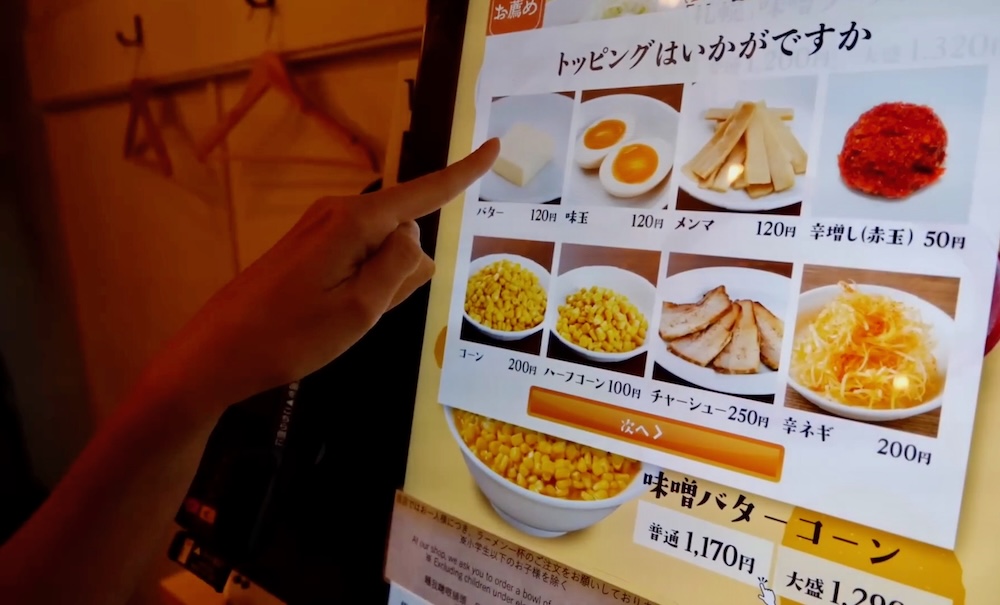
What happened next is how first-timers end up overdoing it. You order on a touchscreen machine, and the menu did include a dedicated Miso Butter Corn bowl. We skipped it in favour of the Kiwami, the shop’s loaded “everything on top” miso ramen, which already came with chashu, egg, corn and a pat of butter. Then, once you pick a bowl, a second screen pops up asking if you’d like toppings: butter, egg, bamboo shoots, extra spice, a full portion of extra corn or a half portion. We pressed a lot of buttons. I added extra butter to a bowl that already had butter, and Audrey doubled up on egg. When we visited, the Kiwami was ¥1,200, half extra corn was ¥100 and extra butter ¥120, and with everything we stacked on, lunch came to about ¥2,800 for the two of us. A straightforward bowl each would have cost closer to ¥1,000 to ¥1,300 per person.
It was worth it, mostly. The corn gave the bowl a nice sweetness against the salty, slightly nutty miso and a really nice texture, and I stirred my butter down into the kernels to let it melt there, which is the whole idea of the combination. We agreed the extra toppings earned their place, with one exception. I didn’t need double butter. It made the bowl very rich, and I’m now in a position to tell you that one pat does the job.

Corn isn’t standard on every bowl of Sapporo ramen, despite the image most people carry around, Japanese diners included. Plenty of shops in the city serve their miso ramen without it. Butter and corn became the classic pairing with Sapporo miso ramen in the decades after miso ramen itself appeared in the mid-1950s, a natural fit for an island known for its dairy and its farms. If corn is the point of your bowl, check the menu photos or that topping screen rather than assuming it comes on top, and remember the half portion exists if you want more corn without doubling everything else.
Ramen Alley is easy to do on your own; we managed it with nothing more than menu photos and a willingness to press buttons. What we couldn’t do was compare, because one bowl each was already a stretch. If you’d like to taste more than one shop’s take, the two-hour guided Ramen Alley crawl visits two selected shops with a ¥1,000 tasting credit at each, while the guide walks you through how miso ramen took hold in the alley. It meets in front of a FamilyMart in Susukino, and the shops along the alley put their own spin on the bowl, butter and corn included. Hold off on the three-mini-bowl ramen tasting tour if corn is your goal. It’s built for comparing styles, and its sample lineup is seafood, game fowl or dipping noodles, and pork bone, with no miso bowl in sight, so it suits a different mission. And if you’d rather make the noodles than queue for them, there’s a hands-on ramen-making class in the city.
Ramen Alley sits in Susukino, Sapporo’s nightlife district, which makes it an easy late bowl if you’re staying in the area. It comes with neon and late-night foot traffic, so it suits night owls better than light sleepers, but if that’s you, you can compare hotels within walking distance of Ramen Alley in Susukino.
Corn Tea: The Corn We’d Skip
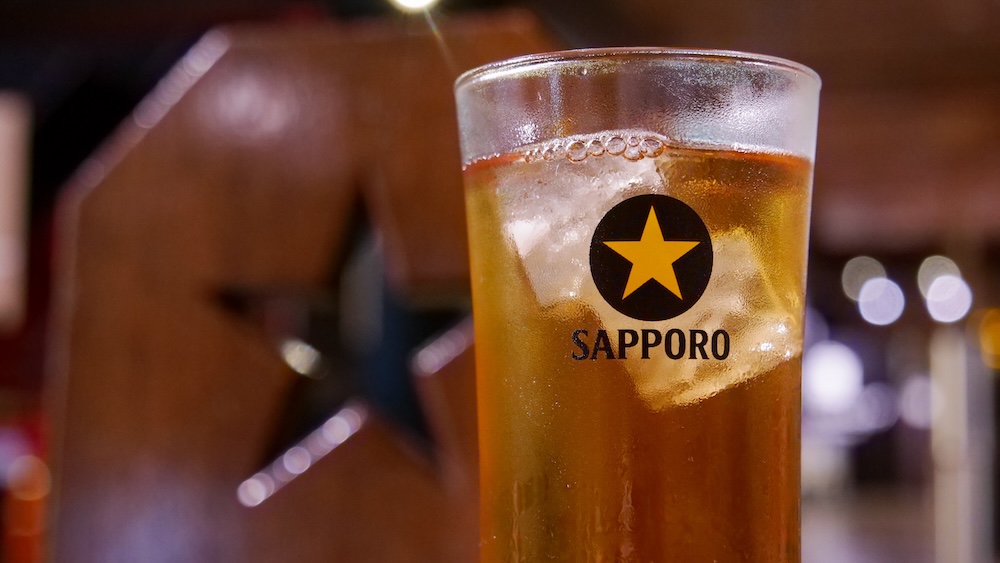
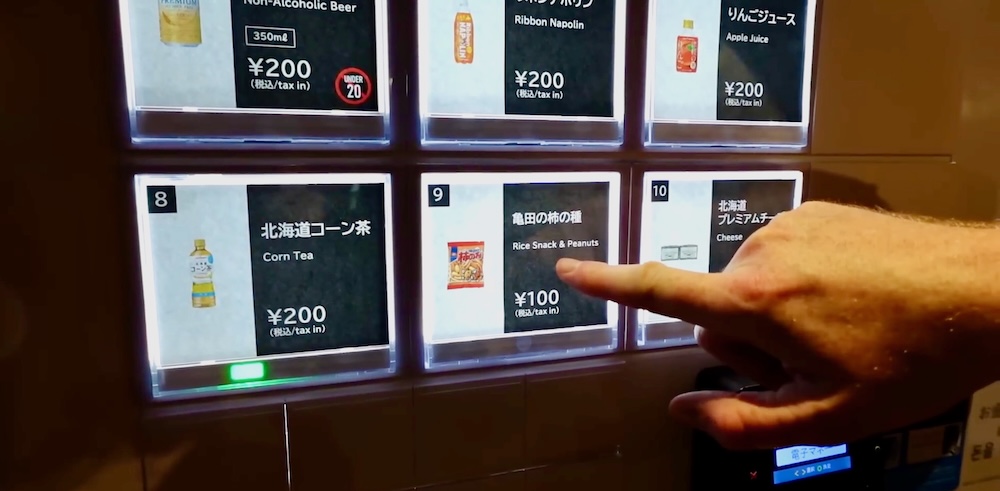
The corn tea happened at the Sapporo Beer Museum, of all places, ordered from the same machine as the beer tasting. The panel listed it as 北海道コーン茶, Hokkaido Corn Tea, and it came in its own glass just like the beer, looking enough like a lager to cause a moment of confusion at the table.
It was probably Pokka Sapporo’s Hokkaido corn tea, a caffeine-free drink made from roasted Hokkaido corn. Corn tea is a popular drink in Korea and has been catching on in Japan, where convenience stores now sell versions made with Hokkaido corn, so plenty of people clearly drink it on purpose.
We were not converts. The smell was the first warning: as it was put at our table, it smelled exactly like the water you boil corn in, and the taste followed suit. Corn water, basically. Neither of us liked it. I couldn’t call it bad, but I’d have preferred plain water, or given where we were sitting, a beer over corn water any day. That surprised me a little, because there aren’t many things I eat or drink that I don’t enjoy, and I genuinely wanted to like this one. If you’re curious, borrow a sip from someone braver and save your yen for the tasting set.
23:26 – Sapporo Ramen Alley or Ganso Ramen Yokocho
The Corn We Saw but Didn’t Eat
Here’s where two self-described corn lovers admit their limits. The ramen and the tea were the only corn we actually consumed in Sapporo. We walked past corn at the Autumn Fest stalls in Odori Park and noticed it elsewhere around the city, and we didn’t try any of it. Everything in this section is what you’ll find, not what we tasted.
The best known is the tōkibi wagon in Odori Park, the modern descendant of those Meiji street sellers. The wagons currently run from late April to early October, selling grilled or boiled cobs for ¥500, with a half-grilled, half-boiled set for ¥600 if you can’t choose. There are two locations. The 3-chome wagon stays open until early evening and keeps selling in the rain, while the 4-chome wagon closes a couple of hours earlier and shuts when it’s wet. Hours shift through the season, so check the current wagon notice (in Japanese) before building a plan around it.

The wagons open months before Hokkaido’s main harvest, which runs roughly from July through September. If you want corn at its freshest, the kind that built Hokkaido’s name, aim for late summer, when roadside stations and farm-direct shops across Hokkaido sell freshly picked cobs, including Pure White, a pale variety known for being sweet enough to eat raw.
At the far end of the spectrum, corn has worked its way into the souvenir aisle, with corn-flavoured snacks such as rice crackers studded with freeze-dried kernels sold at New Chitose Airport and elsewhere. They’re easy to carry home and a long way from a fresh cob.
11:32 – Sapporo Beer Museum
Can Hokkaido Corn Beat Taber Corn?
I can’t answer this yet, and it bugs me. Taber, about 50 kilometres east of Lethbridge, calls itself the Corn Capital of Canada on the strength of its sunshine. Its corn starts appearing at stands in August, and the town holds a Cornfest in the last week of that month. Hokkaido corn runs on a similar late-summer calendar and a similar sunshine story, which makes the two feel like natural rivals.
A fair fight would be a freshly picked Hokkaido cob against a Taber cob, each eaten within hours of harvest. We were in Sapporo in late September, still inside Hokkaido’s harvest window, and the only Hokkaido corn I ate came in a bowl of ramen. That corn was sweet and had good bite. It tells me nothing about how a Hokkaido cob would hold up against one bought from a truck on a southern Alberta roadside. Until that rematch happens, Taber keeps its title by default.

Which Sapporo Corn Is Worth Trying?
Your best option depends mostly on when you’re visiting and how much freshness matters to you.
| Corn form | Where you’ll find it | When | What we did | Our take |
|---|---|---|---|---|
| Butter corn ramen | Ramen shops, including Ramen Alley | Year-round | Ate it | Worth ordering; the extra corn earned its place, the double butter didn’t |
| Corn tea | Vending machines, convenience stores | Year-round | Drank it | A curiosity; we’d skip it |
| Grilled or boiled tōkibi | Odori Park wagons | Late April to early October | Didn’t try | Sapporo’s classic street-corn tradition |
| Fresh-picked corn | Roadside stations, farm-direct shops | Late summer | Didn’t try | The real test of Hokkaido’s sweet corn |
| Corn snacks | Souvenir shops, New Chitose Airport | Year-round | Didn’t try | Easy gifts, not the main event |
Corn is only one thread in Sapporo’s food scene, and the parts we found hardest to crack on our own weren’t the ramen counters but the places without picture menus. For an evening where someone else handles the ordering, the guided Sapporo food tour with 10+ dishes and drinks spends about four hours working through several venues in a small group, and part of its pitch is explaining how izakaya menus, seat charges and ordering actually work, which is exactly the know-how a topping screen doesn’t teach you. If you’d rather sort by time of day, budget or group size, you can browse the full range of current Sapporo food tours, from morning market walks to private evenings. None of the tours I’ve looked at is built around corn, so treat them as a way to eat more of Sapporo, with corn as a bonus when it turns up.
Whenever you visit, a bowl of butter corn ramen is the easiest and most rewarding way into Hokkaido corn. Order the corn, think twice about the second slab of butter, and let someone else take the corn tea. If your trip falls in late summer, though, the ramen is only a warm-up. Find a cob picked that week and you’ll be eating the corn Hokkaido is actually famous for, which is more than this pair of Taber loyalists managed.

Frequently Asked Questions
Why is corn everywhere in Sapporo?
It comes down to farming and street history. Hokkaido grows roughly two-fifths of Japan’s sweet corn harvest and close to half of what gets shipped, and its long summer days and cool nights are said to make the corn sweet. Sapporo has also sold grilled corn on its streets since the middle of the Meiji period, so the corn carts and corn toppings feel like a long habit and not a gimmick.
Is butter corn ramen worth ordering in Sapporo?
Yes, mostly. At Misogin in Ramen Alley, the corn gave our bowl a nice sweetness against the salty miso and a really nice texture, and I’d order the corn again. The double butter I added was too much, so one pat does the job, and half extra corn was plenty. Corn also isn’t standard on every Sapporo ramen bowl, so check the menu photos or the topping screen first.
How much did butter corn ramen cost at Misogin?
When we visited, the loaded Kiwami miso ramen was ¥1,200, half extra corn was ¥100 and extra butter was ¥120. Because we stacked on more toppings than we needed, lunch for two came to about ¥2,800, while a straightforward bowl each would have cost closer to ¥1,000 to ¥1,300 per person. Treat those as our prices from that day, not current ones.
What does Hokkaido corn tea taste like?
Corn tea is a caffeine-free drink made from roasted corn, and the glass we tried at the Sapporo Beer Museum was probably Pokka Sapporo’s Hokkaido version. It smelled like the water you boil corn in and tasted like it, too. Neither of us liked it: Audrey wouldn’t call it her favourite, and I’d have preferred plain water. If you’re curious, borrow a sip instead of ordering a glass.
Where can you buy grilled corn in Odori Park?
The tōkibi wagons in Odori Park currently run from late April to early October, selling grilled or boiled cobs for ¥500. The 3-chome wagon keeps selling in the rain, while the 4-chome wagon shuts when it’s wet. We didn’t try them, so check the current wagon notice for hours before you plan around one.
When is the best time to eat fresh Hokkaido corn?
Aim for late summer. Hokkaido’s main harvest runs roughly from July through September, and corn starts losing its sweetness soon after it’s picked, so freshly picked cobs from roadside stations and farm-direct shops are the real test. We were in Sapporo in late September and only ate corn in ramen, so I still can’t say how Hokkaido corn compares with Taber corn.
Is there a Sapporo food tour built around corn?
Not as the main event. A two-hour guided Ramen Alley crawl visits two shops with a ¥1,000 tasting credit at each, and the shops along the alley put their own spin on the bowl, butter and corn included, but corn isn’t what the tour is built around. Treat a tour as a way to eat more of Sapporo, with corn as a bonus when it turns up.
This article is also available in Spanish. [Leé la versión en castellano: La obsesión de Hokkaido por el choclo: ramen con manteca y choclo, té de choclo y por qué hay choclo por todos lados en Sapporo]
This article contains affiliate links. If you book through one of these links, I may earn a commission at no extra cost to you.
Walking up to the ticket machine in Hakodate meaning to order butter corn and walking away with salt ramen. Has anyone at Taber’s Cornfest tried putting butter corn on ramen yet?